INTERNACIONAL
Liberal justices look for ‘escape hatch’ as high-stakes climate case lands at Supreme Court, experts say

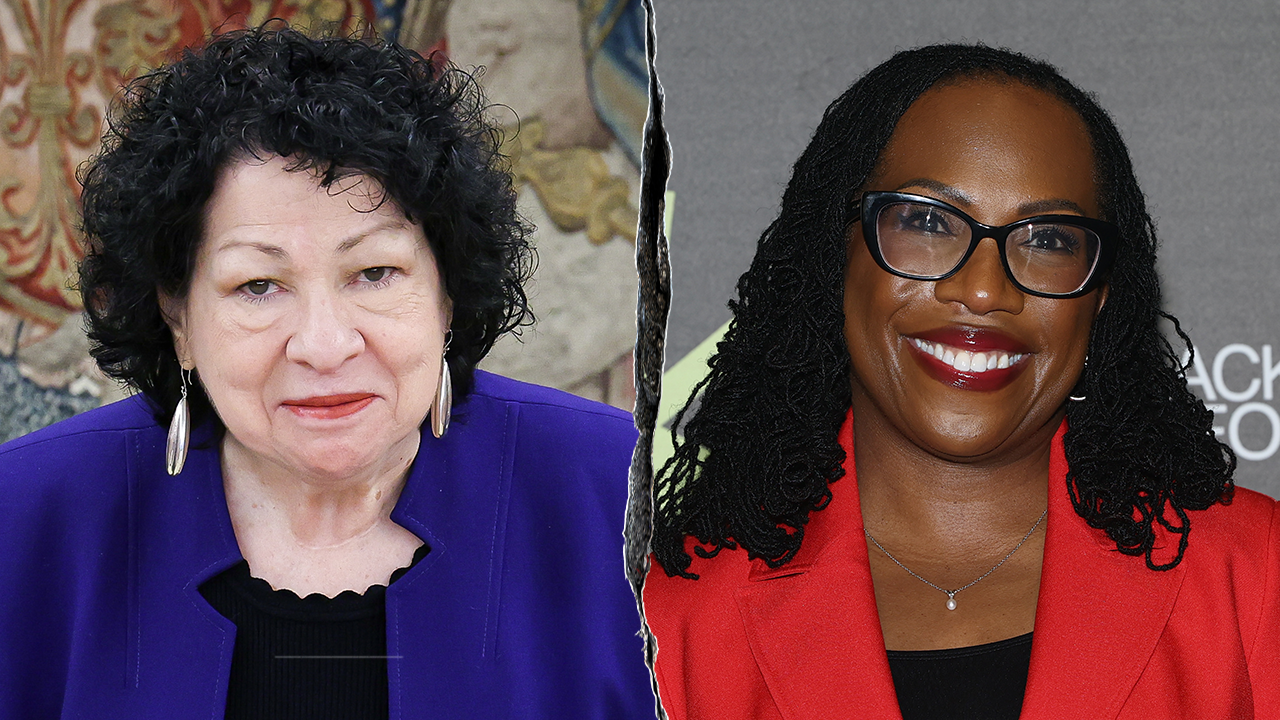
Justices Ketanji Brown Jackson and Sonia Sotomayor’s repeated questions concerning whether the Supreme Court has jurisdiction to hear a high-profile climate case that could expose oil companies to lawsuits across the country steered conservative lawyers to believe that the liberal justices are seeking an «off-ramp.»
«The fact that they kept going back to trying to create a jurisdictional problem tells me they don’t feel confident that they have the votes in this space,» Carrie Severino, president of JCN, a conservative judicial group, told Digital. «Jackson and Sotomayor were looking for an escape hatch.»
The Supreme Court began its new term Monday, hearing its first oral arguments for Suncor v. Boulder, in which they will rule on whether state tort laws can be used to seek damages from oil companies for climate change, even when the alleged harms are occurring outside the state or continent. The justices will also rule on whether the Supreme Court has jurisdiction to hear this case now, as the case is still before the Colorado Supreme Court.
The case before the high court is in an unusual procedural posture, meaning the justices could resolve it without ever reaching the blockbuster state-versus-federal power fight at its center. That dispute centers on whether Colorado can use its own laws to seek damages for alleged harms caused by emissions from other states or whether it’s an issue for the federal government and Congress to regulate.
SUPREME COURT BEGINS NEW TERM WITH HIGH-PROFILE LOOK AT CLEAN AIR AND FEDERAL AUTHORITY
«The questions by Jackson and Sotomayor trying to say it would be premature for the court to issue an opinion are simply the liberal justices trying to find an off-ramp for the case because they are afraid they will be outvoted on the main issue: does federal law such as the Clean Air Act preempt all state claims like those asserted here,» Hans von Spakovsky, senior legal fellow with Advancing American Freedom, told Digital.
While questioning Suncor attorney Kannon Shanmugam, Jackson suggested the dispute may have reached the Supreme Court too soon, calling it «premature from the standpoint of this court exercising its jurisdiction.»
She also repeatedly questioned why the court couldn’t wait to hear the case, saying the court doesn’t «have the whole set of facts» and that the court doesn’t «really know enough to be confident» that the theories posed are applicable.
«It feels to me like the defendants … are bringing it back to federal court before the state courts have really had a chance to sort out who is the source, what is their allegation with respect to how this causation is happening,» Jackson told Principal Deputy Solicitor General Sarah Harris, who argued in support of Suncor.
Meanwhile, Sotomayor refused to drop her line of questioning on jurisdiction with Shanmugam, proposing that the Supreme Court send the case back to the Colorado Supreme Court.
«If we’re unsure of your characterization, because there’s certainly a number of amici brief who disagree with that characterization, shouldn’t we be certifying this question to the Colorado court instead of us deciding it? We have to be sure of our jurisdiction before we take it,» Sotomayor said.
Republican Alabama Attorney General Steve Marshall told Digital it was clear that the liberal justices were trying to cast doubt on whether they have jurisdiction.
SUPREME COURT CAN RESTORE SANITY AND STOP THE LEFT’S RADICAL CLIMATE AGENDA
«Well, I think you saw both Justice Jackson and Justice Sotomayor try to find an out for this court, basically saying the court doesn’t have jurisdiction at this stage of the case to be able to make a final ruling. I think that you saw the advocates on behalf of Suncor be able to distinguish that.»
If the Supreme Court declines to reach the federalism issue, the Colorado Supreme Court’s ruling allowing Boulder’s state-law claims to proceed would remain in place, leaving the broader question of how far states can use tort law to pursue climate claims against energy companies unresolved.
Chief Justice John Roberts pressed Boulder attorney Kevin Russell on whether a Boulder win could trigger similar lawsuits nationwide. Russell said there are legal limits, but acknowledged to Justice Clarence Thomas that Boulder’s theory could allow other fossil-fuel businesses to be sued.
«The chief justice and the court do not like issuing rulings with no limiting principles, rulings that could open up unlimited litigation and claims. Kannon Shanmugam, the lawyer for Suncor, emphasized this again at the very end of the oral argument when he pointed out that there are not only 90,000 political jurisdictions that could sue, but individuals could also sue claiming damages from global warming,» von Spakovsky said.
«And he also pointed out something the conservative majority frowns upon: that Boulder is trying to resolve a major policy issue in the courts instead of in the legislative branches,» von Spakovsky continued.
SUPREME COURT KICKS OFF NEW TERM WITH FRESH QUESTIONS OVER ITS LEGITIMACY AND ITS FUTURE
Supporters of Suncor say the lawsuits could «bankrupt» oil companies and cause the price for consumers to go up.
«It’s to basically create a carbon tax on both producers and emitters across the country, which would include, by the way, my cattlemen in Alabama producing beef for our country, those that are creating concrete to be able to build structures and be able to grow our economy,» Marshall told Fox News. «They ultimately want to bankrupt that industry to have their preferred climate change policies be in play.»
«They’re literally addressing behavior that takes place all over the world,» Utah Attorney General Derek Brown told Digital. «They want to regulate not just what happens in Colorado, but what happens in my state of Utah or in Saudi Arabia. That’s not the way the system works. So, really, this case comes down to one main issue and that is who gets to decide things like energy policy. And ultimately, under our system, it should be Congress.»
Meanwhile, Boulder alleged ExxonMobil and Suncor knew for decades about the climate risks associated with fossil fuels but misled the public about those risks. The communities estimate that taxpayers could face more than $100 million in costs to adapt to climate-related impacts, including wildfires, drought and damage to roads and other infrastructure.
Former Washington Gov. Jay Inslee, a Democrat and longtime advocate for aggressive action on climate change, argued those costs are already being felt by communities across the country.
«As governor, I’ve worked with so many families who’ve lost their homes,» Inslee told Digital. «So many communities have essentially burned down, and they ought to be able to have a day in court to hear the evidence, to determine whether the lies of the oil and gas industry legitimately, they make it so that they’re held accountable.»
The complaint pointed to a 1977 internal memo from ExxonMobil that circulated among the company’s highest-level managers. The memo reported that «current scientific opinion overwhelmingly favors» that fossil fuels contribute to the rise in CO2 emissions.
«Their own scientists knew that their product was dangerous, that it was going to cause more fires. And they knew this for decades, 1967, their own scientists told them it could be catastrophic, so they knew about it, they lied about it,» Inslee said. «Now it’s an American right to be in court. Nobody should bar an American from their day in court.»
supreme court, politics, federal courts, law, colorado, controversies state and local







NEWYou can now listen to Fox News articles!
FIRST ON FOX: President Donald Trump warned Tuesday that France’s escalating riots were being driven by «out of control mass migration,» as U.S. Ambassador to the U.N. Mike Waltz echoed those concerns and blamed unchecked immigration and broader European policy failures for helping fuel the unrest.
Asked by Fox News Digital about Trump’s comments and the scenes emerging from France, Waltz condemned the violence while also linking the unrest to European immigration and economic policies.
«I think we would always condemn lawlessness, condemn the violence that we’re seeing in Paris,» Waltz told Fox News Digital. «But I think we also have to recognize that when you have open borders, when you [have] this pro-migration, unchecked immigration kind of policy, coupled with policies over the years that deny people basic energy, that overspend on all kinds of other government programs, that you see a level of frustration boiling to the surface.»
FRANCE EXPLODES AGAIN AS STUDENTS RIOT OVER EDUCATION
Protesters hold a Palestinian flag during demonstrations in Strasbourg, France, on Tuesday, Oct. 6, 2026. (Kai Pfaffenbach/Reuters)
Trump weighed in as the unrest intensified, arguing that what was unfolding went beyond the students’ complaints about France’s education system. «What’s happening in France is nothing less than out of control mass migration. This isn’t about schools, this is about Islam wanting to take over a once great Country!» Trump wrote on Truth Social Tuesday.
«Unfortunately, I think you’re seeing the results of some of that, and President Trump has brought that to light,» Waltz added.
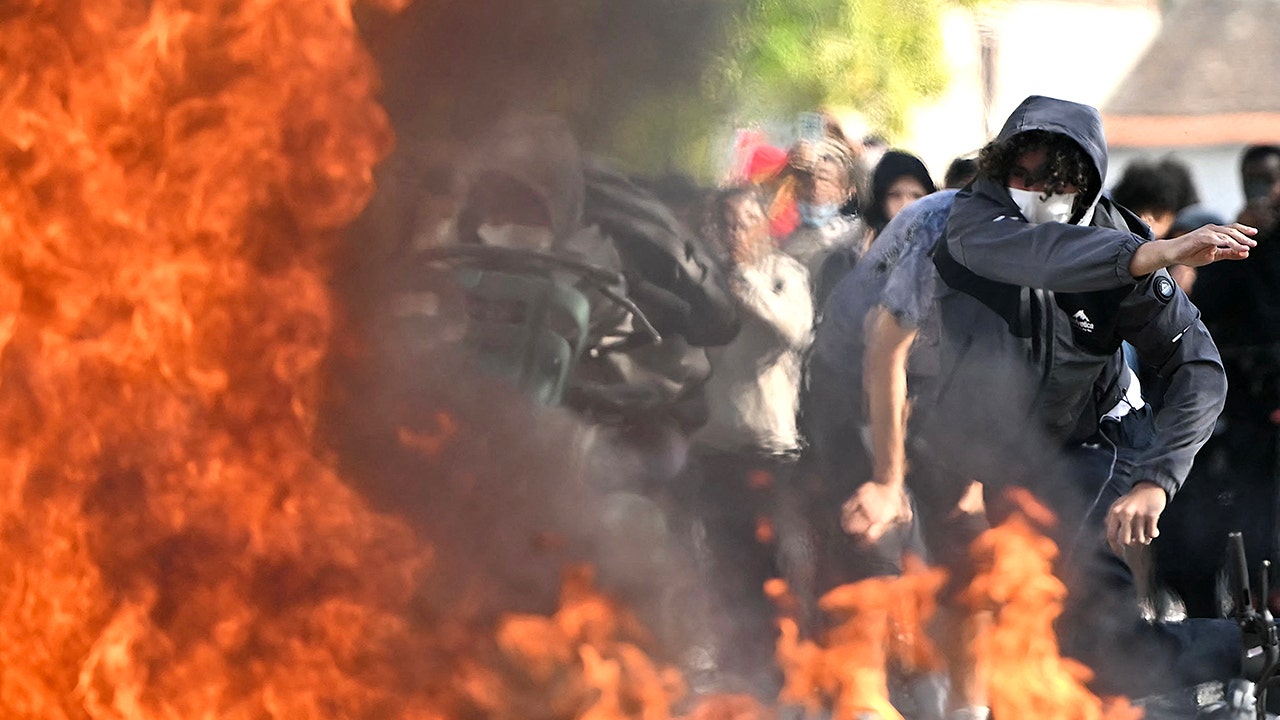
The comments came as France faced its biggest day of school unrest since the protests began in September. On Tuesday, police fired tear gas in Paris and other major cities, protesters lit fires and hurled projectiles, and France’s Interior Ministry said 6,100 people had been arrested, the overwhelming majority of them minors, according to Reuters. Prime Minister Sébastien Lecornu described the clashes as producing the school system’s «heaviest toll in decades».
FRANCE’S VIOLENT STUDENT PROTESTS RAISE WARNING FOR AMERICA: ‘A CAUTIONARY TALE’
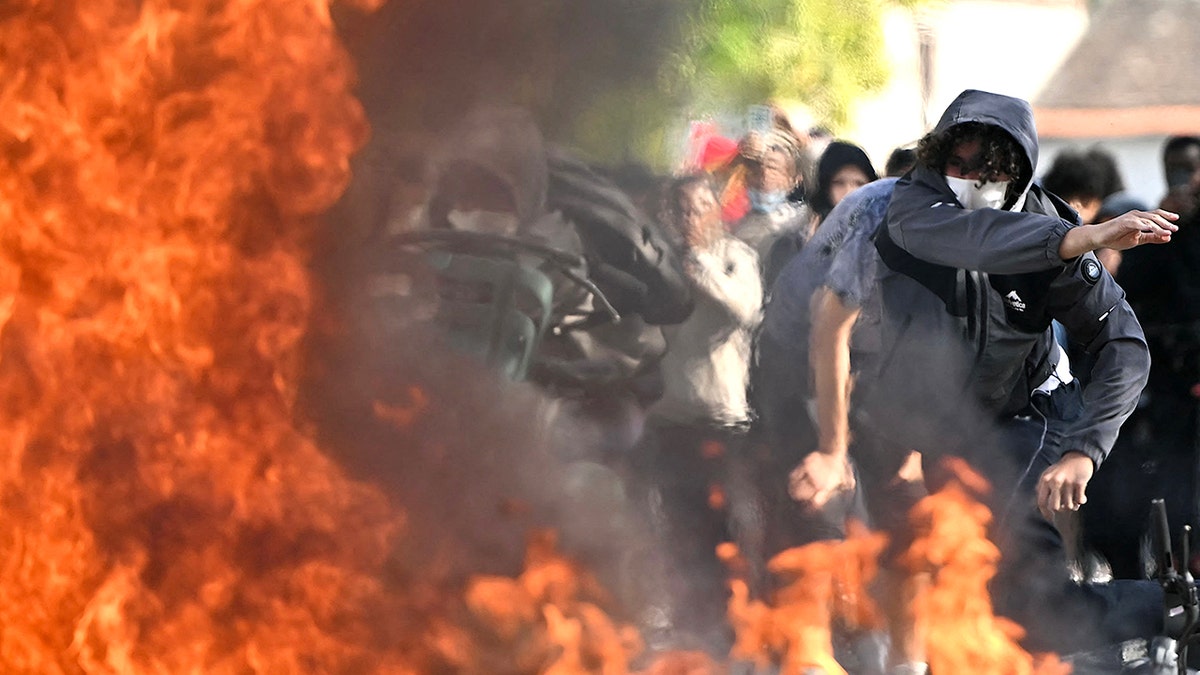
A protester feeds a burnt barrier during a blockading action outside the secondary school Le Corbusier, in Aubervilliers, northern Paris on Oct. 1, 2026. (Lou Benoist/AFP via Getty Images)
France’s Interior Ministry said 6,100 people have been arrested so far, the overwhelming majority of them minors. Lecornu told lawmakers Tuesday that at least 215 teenagers and 85 school staff members have been injured, while his office said more than 700 police officers have also been hurt, according to Reuters.
The latest demonstrations brought clashes in Paris, Lyon, Strasbourg and Rennes, where police fired tear gas as protesters lit fires and hurled projectiles. More than half of France’s roughly 3,700 high schools were blockaded or expected to close Tuesday, according to the High School Students Union. The Paris police said the clashes there had come about when some 300 people attempted to face off against security forces, adding that the protest was generally unfolding well elsewhere.
Theo Wold, a former assistant attorney general and former White House deputy assistant for domestic policy under Trump, also argued that immigration was contributing to the unrest.
FRANCE ROCKED BY STUDENT RIOTS AS HUNDREDS ARRESTED, VIOLENCE SPREADS NATIONWIDE
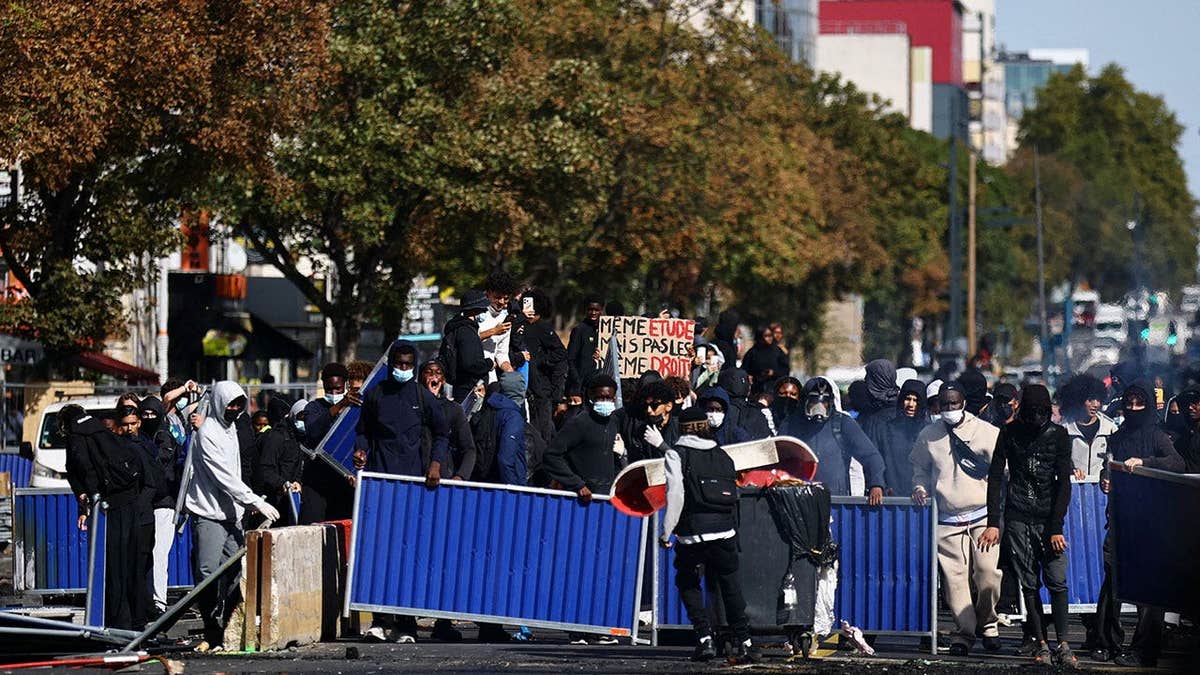
Masked protesters install a barricade amid clashes with police during a protest near the Lycee Berthelot high school in Aubervilliers, near Paris, Oct. 2, 2026. (Sarah Meyssonnier/Reuters)
«The French are notorious for strikes, labor stoppages and street demonstrations. It’s a core part of the Fifth Republic’s civic culture,» Wold told Fox News Digital. «What’s new is the violence, lawlessness and rioting. This is a consequence of mass immigration.»
While Trump, Waltz and Wold linked the violence to immigration, Reuters and AP have reported that the protest movement began over school conditions, including teacher shortages, overcrowded classrooms, deteriorating buildings and education funding. Students have cited overcrowded classrooms, teacher shortages and deteriorating school buildings — including water leaks and rat infestations — among their grievances.
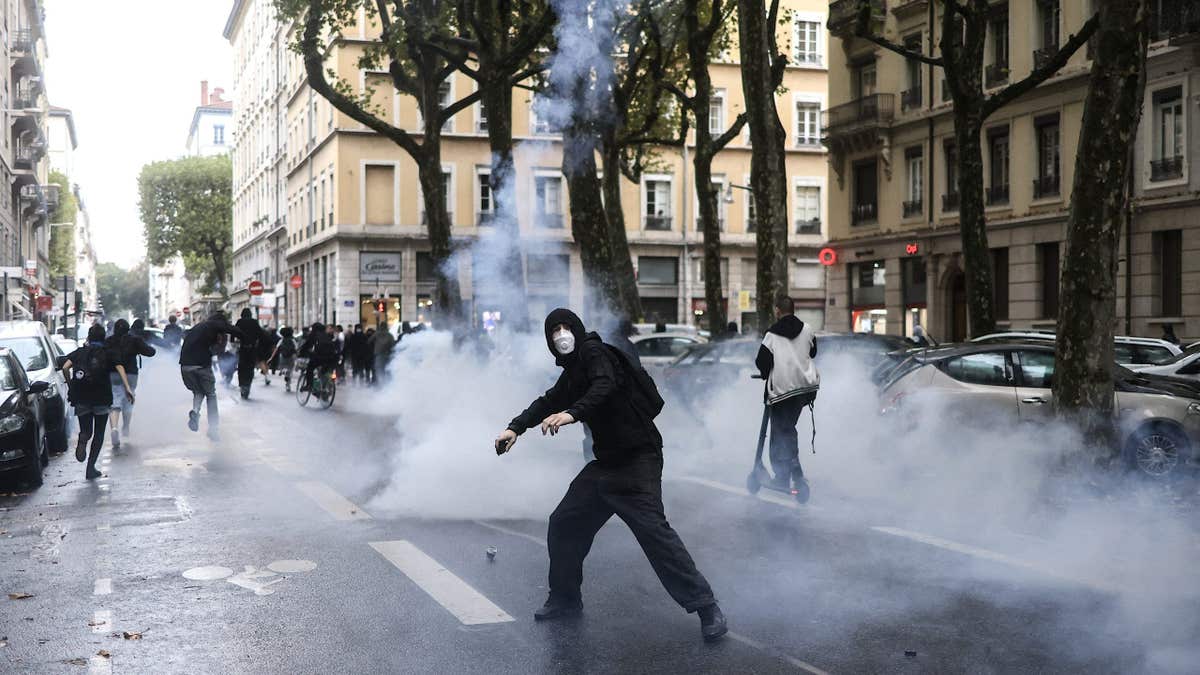
Rioters clash with police in Lyon, central eastern France, on Oct. 1, 2026. (Alex Martin AFP via Getty Images)
The unrest has increasingly become part of a broader political fight ahead of France’s presidential election in April and May 2027. Reuters reported last week that French authorities and political opponents have accused lawmakers and mayors from the hard-left France Unbowed party, or LFI, of stoking the demonstrations. LFI has denied the accusations.
Fox News Digital’s Greg Norman-Diamond and Reuters contributed to this story.
france, world protests, world, donald trump, united nations
INTERNACIONAL
Russian researcher’s mystery death could be ‘far worse’ than the plague, former senior Trump official warns
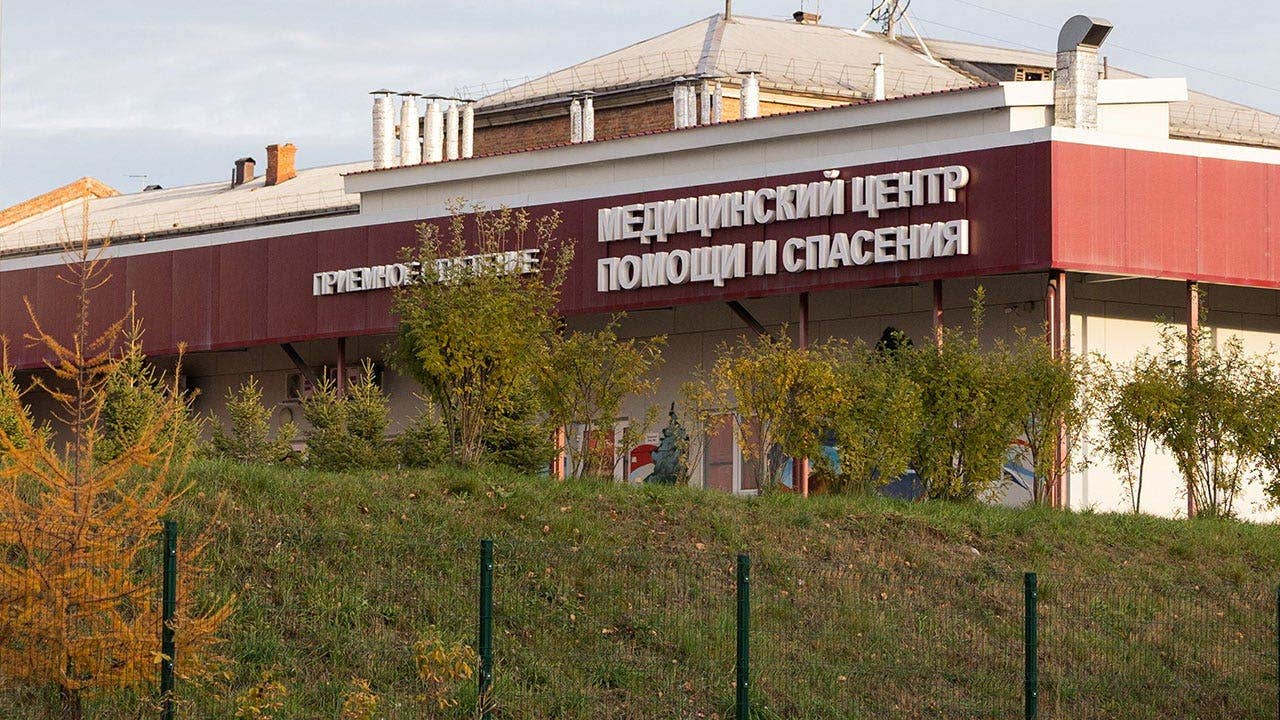
The unexplained death of a researcher at a Russian anti-plague institute has one former senior U.S. arms official warning it could be ‘far worse’ than the bacteria that caused the Black Death.
Marshall Billingslea, who served as President Donald Trump’s special presidential envoy for arms control, said a top Soviet bioweapons defector told him decades ago about secret work on antibiotic-resistant plague at the same facility where the recent plague-related death occurred.
«This may not be just ‘the plague.’ It may be far worse,» Billingslea wrote on X.
He spent much of the 1990s working on proliferation and arms control issues on the Senate Foreign Relations Committee — and during that time worked with Ken Alibek, the former No. 2 official in the Soviet biological weapons program who defected to the U.S.
BIOWEAPON THREAT EXPOSED AS ANTHROPIC SOUNDS ALARM ON FOREIGN ACTORS PLOTTING VIRUS EXPERIMENTS
«He claimed that they had engineered a strain of plague that was antibiotic-resistant & that they had worked on plague chimeras (fusing 2 or more pathogens),» Billingslea wrote of Alibek.
«He specifically called out Irkutsk for being involved in the BW program,» he added.
Billingslea’s warning comes after a 28-year-old employee of the Irkutsk Anti-Plague Institute of Siberia and the Far East died last week from what Russian authorities have described as pneumonia of undetermined origin.
Russia has not said the woman died of plague and said testing found no microorganisms in her body linked to her work.
The World Health Organization (WHO) said Tuesday that Russian officials told the agency no plague or other high-threat pathogen had been detected among her close contacts, though they are still awaiting confirmation of what caused her fatal pneumonia.
DEFENSE DEPARTMENT SCIENTIST’S ACCIDENTAL DEATH RAISES QUESTIONS AS PROBE INTO MISSING SCIENTISTS GROWS
About 60% of the woman’s identified contacts have been tested so far, according to Russian authorities, with two cases of COVID-19 and two rhinovirus infections detected — but no other infectious disease pathogens.
Still, the unexplained death at a facility that works with dangerous pathogens has drawn scrutiny from biosecurity experts — including questions about why the cause remains unknown.
Kevin Esvelt, an MIT professor who studies biological security and catastrophic pandemic risks, said Russia’s latest explanation suggests the researcher did not die from plague while leaving unanswered what killed her.
«If we take the Russian authorities at their word, it is not plague,» Esvelt wrote Tuesday.
«But untargeted research-grade sequencing reliably identifies pathogens, and people seldom die of pneumonia without pathogens, let alone 28-year-olds,» he added. «It would be surprising if they did not know the cause.»
Esvelt cautioned that more alarming explanations remain hypothetical.
«The concerning possibility is still only a possibility,» he wrote.
The questions surrounding the death come against the backdrop of the Soviet Union’s documented history of secretly developing biological weapons, including weaponized plague, and U.S. assessments that elements of that program continued after the Soviet collapse.
In its 2025 arms control compliance report, the State Department assessed that Russia maintains an offensive biological warfare program in violation of the Biological Weapons Convention and that the Soviet program was «absorbed, not dismantled» after the Soviet collapse.
The department said the program «has continued and evolved» under the Russian Federation and that Moscow continues activities prohibited under the convention. Russia has repeatedly denied maintaining an offensive biological weapons program.
The U.S. assessment does not establish any connection between Russia’s biological weapons program and the researcher’s death in Irkutsk, and no such connection has been confirmed.
NEW YORK DECLARES MEASLES DISASTER EMERGENCY AS CASES SURGE IN PENNSYLVANIA
The Soviet program Billingslea referenced was one of the world’s largest clandestine biological weapons efforts. Alibek, born Kanatjan Alibekov, rose to become the first deputy chief of Biopreparat, the ostensibly civilian network that formed a major part of the Soviet biological weapons apparatus, before defecting to the United States in 1992.
After his defection, Alibek provided U.S. officials with extensive information about the scale and capabilities of the Soviet program. He described Soviet scientists working to weaponize pathogens including plague and developing strains designed to withstand antibiotics.
His claims about some aspects of the Soviet program have faced scrutiny over the years, making independent documentation particularly important. But the existence and enormous scale of the Soviet biological weapons effort — conducted despite Moscow’s 1975 ratification of the Biological Weapons Convention — is well established.
The Irkutsk institute says it was founded in 1934 as a scientific and operational center for combating plague. Its mission later expanded to other highly dangerous diseases, including cholera and anthrax, and it describes itself today as a research and anti-epidemic facility responsible for helping protect the region from infectious disease.
The Trump administration has said it is closely monitoring the situation and pressed Moscow for greater transparency about what happened.
Secretary of State Marco Rubio said Monday that while travel between the U.S. and Russia remains limited, an infectious disease could quickly spread beyond Russia’s borders.
«If something like that gets out, it could quickly spread,» Rubio said.
President Donald Trump said the U.S. would offer assistance to Russia if needed.
«I hate to see them having it,» Trump told reporters Monday. «It’s a rough disease.»
russia, world, health, science, national security, world health organization, politics
INTERNACIONAL
Después de su prohibición, las plataformas de apuestas deportivas y los casinos en línea ya están fuera de servicio en Brasil

Las plataformas de apuestas deportivas y los casinos en línea, así como toda su publicidad, quedaron fuera de servicio este martes en Brasil, en medio de un creciente clima electoral de cara al balotaje del 25 de octubre.
La medida entró en vigencia unos diez días después que el presidente, Lula da Silva, dictó su prohibición.
Desde hoy, los usuarios que intentan entrar a estas plataformas son redireccionados a una web gestionada por el Gobierno que informa sobre el bloqueo de los servicios y la suspensión de todo tipo de anuncios publicitarios relacionados con el sector.
“Acceso bloqueado. La plataforma a la que usted intentó entrar está fuera de servicio por determinación de la Medida Provisoria nª 1.394/26, que prohíbe las apuestas deportivas y los casinos digitales en Brasil desde el 25 de septiembre de 2026″, se exhibe en letras grandes.
Brasil elegirá en el balotaje del 25 de este mes a su nuevo presidente entre Lula y su rival de ultraderecha Flávio Bolsonaro, ganador de la primera vuelta celebrada el domingo pasado.
Retiro voluntario de fondos
La pantalla ofrece enlaces directos para gestionar la devolución del dinero remanente de las cuentas, un canal para denunciar páginas irregulares que continúen activas y accesos al sistema público de salud para atender eventuales problemas derivados del juego.
El plazo para que los apostadores solicitaran el retiro voluntario de sus fondos venció este lunes.
Hasta el lunes, el Gobierno informó que había un saldo remanente de 1330 millones de reales (unos 266 millones de dólares) pendiente de rescate.
Asimismo, detalló que la inmensa mayoría de estas cuentas registran montos pequeños, pues cerca del 92 % tienen menos de 10 reales (2 dólares) y más del 96 % no superan los 25 reales (5 dólares).
Para recuperar estos fondos, el proceso continuará mediante una devolución coordinada entre las empresas, las instituciones financieras y las autoridades estatales.
EFE)
Brasil

Trump, Waltz link France riots to mass immigration as thousands are arrested

Russian researcher’s mystery death could be ‘far worse’ than the plague, former senior Trump official warns

El Gobierno regularizará deudas por obra pública con bonos: qué impacto tendrá en el resultado fiscal

El gobierno de Entre Ríos avanza con una reforma laboral para terminar con la industria del juicio en la provincia

Tras los reparos de Jorge Macri a la reforma electoral de Milei, los libertarios piden eliminar las PASO en la Ciudad

Graciela Alfano recordó cuando Ernesto Sábato la disuadió de dejar Ingeniería: “Dedicate al espectáculo, te vas a divertir más”

DHS exposes dilemma behind SCOTUS deportation fight: ‘We have two choices’

El Reino Unido anunció que las nuevas licencias de hidrocarburos en las Islas Malvinas requerirán su autorización final

El pedido de Abel Pintos que sorprendió a Guido Kaczka: “Necesito renovarlos”

El guiño de Cristina Kirchner a Uñac, las dudas en el PJ sobre las PASO y el mensaje de Kicillof al interior

 POLITICA1 día ago
¡Precios de Manhattan con sueldos de Argentina! Cómo los créditos hipotecarios inflaron las propiedades y congelaron el sueño de la casa propia
- POLITICA3 días ago
En la antesala de la discusión electoral, el peronismo buscará un gesto de unidad en la Legislatura bonaerense
- POLITICA3 días ago
El Senado se prepara para el último tramo de sesiones ordinarias: cuáles son los desafíos para el oficialismo