INTERNACIONAL
Después de su prohibición, las plataformas de apuestas deportivas y los casinos en línea ya están fuera de servicio en Brasil

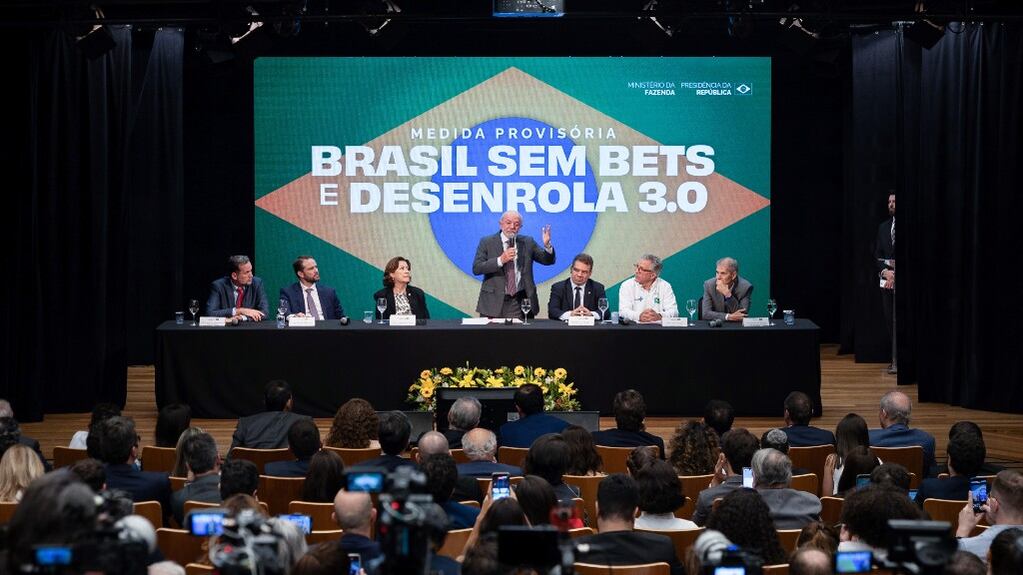
Las plataformas de apuestas deportivas y los casinos en línea, así como toda su publicidad, quedaron fuera de servicio este martes en Brasil, en medio de un creciente clima electoral de cara al balotaje del 25 de octubre.
La medida entró en vigencia unos diez días después que el presidente, Lula da Silva, dictó su prohibición.
Desde hoy, los usuarios que intentan entrar a estas plataformas son redireccionados a una web gestionada por el Gobierno que informa sobre el bloqueo de los servicios y la suspensión de todo tipo de anuncios publicitarios relacionados con el sector.
“Acceso bloqueado. La plataforma a la que usted intentó entrar está fuera de servicio por determinación de la Medida Provisoria nª 1.394/26, que prohíbe las apuestas deportivas y los casinos digitales en Brasil desde el 25 de septiembre de 2026″, se exhibe en letras grandes.
Brasil elegirá en el balotaje del 25 de este mes a su nuevo presidente entre Lula y su rival de ultraderecha Flávio Bolsonaro, ganador de la primera vuelta celebrada el domingo pasado.
Retiro voluntario de fondos
La pantalla ofrece enlaces directos para gestionar la devolución del dinero remanente de las cuentas, un canal para denunciar páginas irregulares que continúen activas y accesos al sistema público de salud para atender eventuales problemas derivados del juego.
El plazo para que los apostadores solicitaran el retiro voluntario de sus fondos venció este lunes.
Hasta el lunes, el Gobierno informó que había un saldo remanente de 1330 millones de reales (unos 266 millones de dólares) pendiente de rescate.
Asimismo, detalló que la inmensa mayoría de estas cuentas registran montos pequeños, pues cerca del 92 % tienen menos de 10 reales (2 dólares) y más del 96 % no superan los 25 reales (5 dólares).
Para recuperar estos fondos, el proceso continuará mediante una devolución coordinada entre las empresas, las instituciones financieras y las autoridades estatales.
EFE)
Brasil








INTERNACIONAL
Represión en Cuba: el OCDH denuncia más de 3,000 violaciones a las libertades fundamentales en 2026
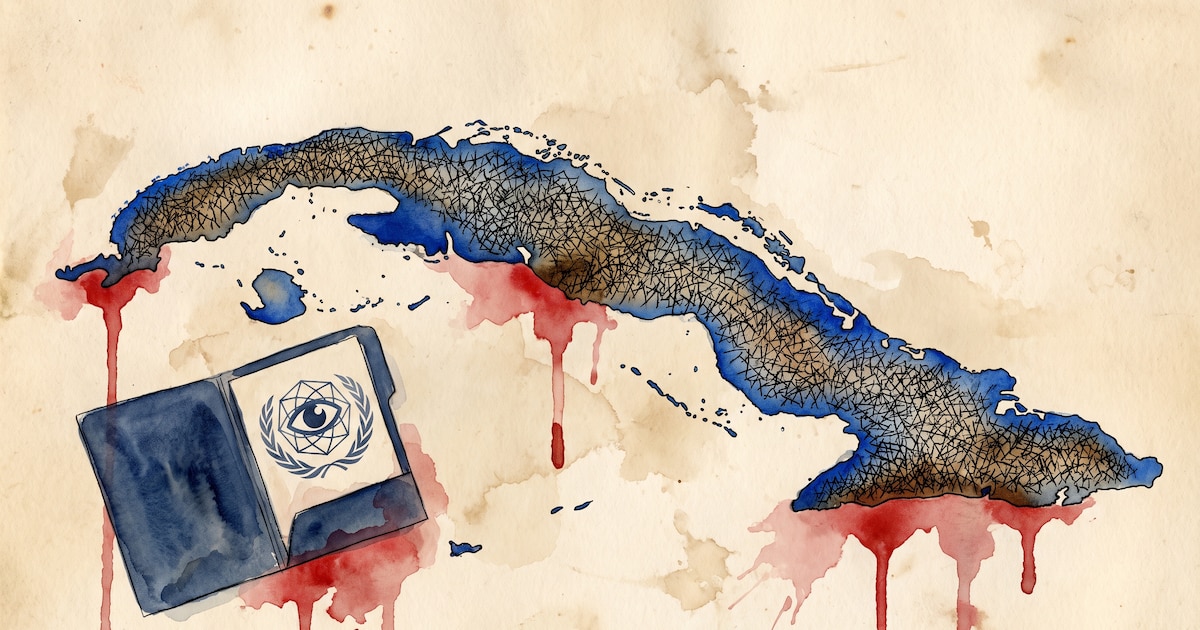
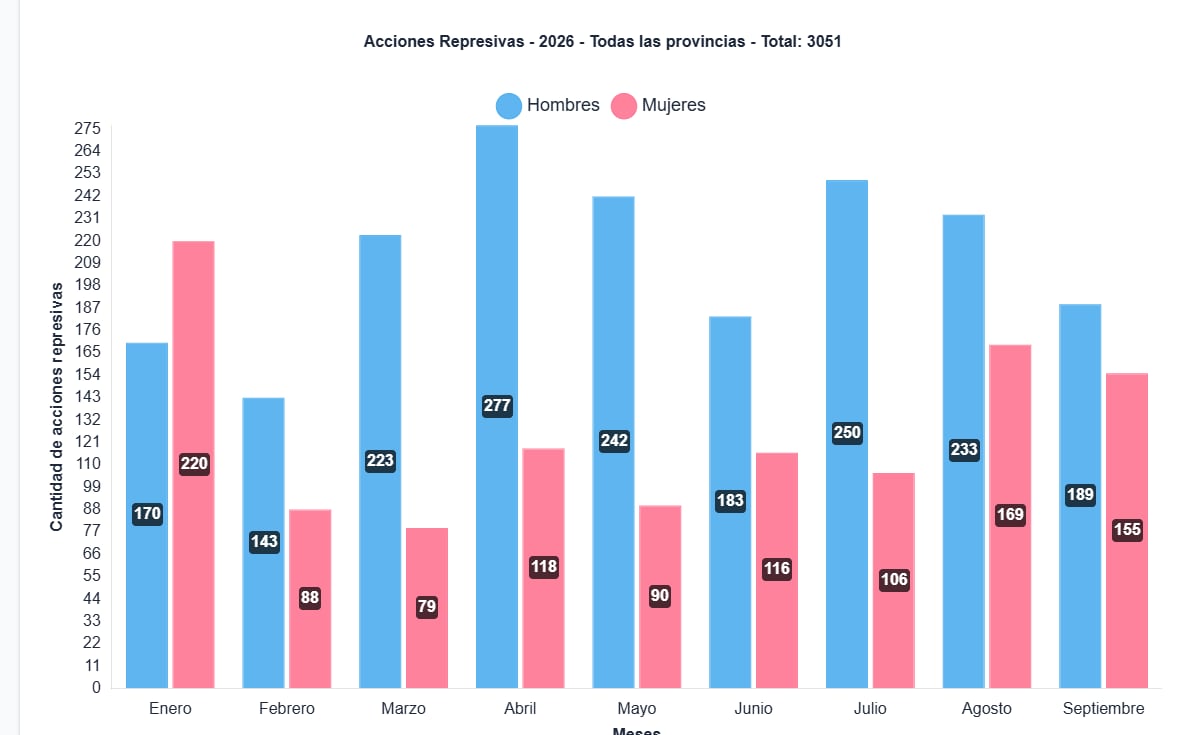
El Observatorio Cubano de Derechos Humanos (OCDH) denuncia un acumulado de 3,051 acciones represivas en Cuba durante los primeros nueve meses de 2026, tras documentar al menos 344 abusos estatales en el mes de septiembre.
Según el informe difundido por la organización independiente, el registro del noveno mes incluyó 17 detenciones arbitrarias y 327 violaciones sistemáticas a los derechos fundamentales, caracterizadas por la persecución a periodistas independientes, el asedio a activistas en sus hogares y el maltrato contra prisioneros políticos.
El desglose estadístico del organismo revela una constante presión institucional contra la ciudadanía. Durante septiembre, los abusos afectaron a 189 hombres y 155 mujeres, en una dinámica que mantiene la tendencia observada a lo largo del año.
En los meses de abril y agosto se registraron los picos más elevados del periodo, con 395 y 402 actos de hostigamiento, respectivamente, lo que confirma una estrategia gubernamental orientada a neutralizar cualquier manifestación de disidencia.
“Ha sido un mes nefasto para la libertad de expresión y el periodismo independiente. El régimen, en medio de su impopularidad, quiere imponer la ley del silencio y lamentablemente creemos que pueden ir a peor”, afirmó Yaxys Cires, director de Estrategias del OCDH.
El representante subrayó que la postura oficial de no negociar asuntos políticos internos busca preservar las normas y mecanismos legales que amparan la persecución ciudadana.
Los arrestos arbitrarios de septiembre incluyeron violencia e interrogatorios a comunicadores y activistas
Las 17 detenciones sin orden judicial ocurrieron en su mayoría en La Habana, aunque también se reportaron casos en las provincias de Holguín, Camagüey y Matanzas.
Las fuerzas de seguridad dirigieron estos procedimientos contra opositores, líderes religiosas, intelectuales y ciudadanos sin filiación política. Varias de las intervenciones incluyeron:
- Agresiones físicas
- Confiscación de bienes
- Intimidaciones de procesamiento penal.
Entre las víctimas figura el periodista independiente Henry Constantin, a quien arrestaron el 16 de septiembre y trasladaron a un régimen de prisión preventiva. De igual modo, las autoridades aprehendieron a la docente Alina Bárbara López Hernández cuando intentaba manifestarse pacíficamente para exigir la excarcelación de los prisioneros de conciencia.
La represión alcanzó asimismo a extranjeros, como ocurrió con el creador de contenido salvadoreño Óscar Sandoval, retenido e interrogado en el aeropuerto antes de abordar su vuelo internacional.
Las fuerzas policiales impusieron 151 cercos domiciliarios a la sociedad civil y a líderes religiosas
El sitiado de viviendas alcanzó 151 casos en septiembre y se consolidó como la táctica de control social predominantemente empleada por los órganos de inteligencia.
Los operativos se concentraron en fechas de significación religiosa para impedir la asistencia a servicios dominicales de integrantes de las Damas de Blanco. Las activistas Berta Soler, Ángel Moya y María Cristina Labrada permanecieron bajo cerco policial durante cuatro domingos consecutivos y durante las festividades de la Virgen de Regla, la Virgen de la Caridad del Cobre y la Virgen de las Mercedes.
La vigilancia se intensificó el 18 de septiembre para evitar la presencia de disidentes en un encuentro diplomático convocado por la Embajada de Estados Unidos en La Habana.
Agentes de la policía mantuvieron retenidos en sus hogares a los periodistas Yoani Sánchez, Reinaldo Escobar y Camila Acosta, además del activista Óscar Elías Biscet. A finales de mes, Camila Acosta e Ángel Santiesteban-Prats sufrieron nuevas restricciones de movimiento para evitar su asistencia a un juicio penal.
En el ámbito judicial, se confirmaron ocho sentencias contra opositores en la provincia de Las Tunas por el delito de propaganda contra el orden constitucional. La resolución dictada por el Tribunal Provincial Popular impuso una pena de ocho años de privación de libertad.
Paralelamente, continúan los procesos penales contra realizadores audiovisuales e influenciadores digitales. El creador del espacio satírico Despingovery Channel, Eduardo Ceballos Pérez, cumplió 100 días en prisión provisional en la cárcel Combinado del Este acusado del delito de presunto espionaje.
Observatorio Cubano de Derechos Humanos,Cuba,derechos humanos,informe
NEWYou can now listen to Fox News articles!
FIRST ON FOX: President Donald Trump warned Tuesday that France’s escalating riots were being driven by «out of control mass migration,» as U.S. Ambassador to the U.N. Mike Waltz echoed those concerns and blamed unchecked immigration and broader European policy failures for helping fuel the unrest.
Asked by Fox News Digital about Trump’s comments and the scenes emerging from France, Waltz condemned the violence while also linking the unrest to European immigration and economic policies.
«I think we would always condemn lawlessness, condemn the violence that we’re seeing in Paris,» Waltz told Fox News Digital. «But I think we also have to recognize that when you have open borders, when you [have] this pro-migration, unchecked immigration kind of policy, coupled with policies over the years that deny people basic energy, that overspend on all kinds of other government programs, that you see a level of frustration boiling to the surface.»
FRANCE EXPLODES AGAIN AS STUDENTS RIOT OVER EDUCATION
Protesters hold a Palestinian flag during demonstrations in Strasbourg, France, on Tuesday, Oct. 6, 2026. (Kai Pfaffenbach/Reuters)
Trump weighed in as the unrest intensified, arguing that what was unfolding went beyond the students’ complaints about France’s education system. «What’s happening in France is nothing less than out of control mass migration. This isn’t about schools, this is about Islam wanting to take over a once great Country!» Trump wrote on Truth Social Tuesday.
«Unfortunately, I think you’re seeing the results of some of that, and President Trump has brought that to light,» Waltz added.
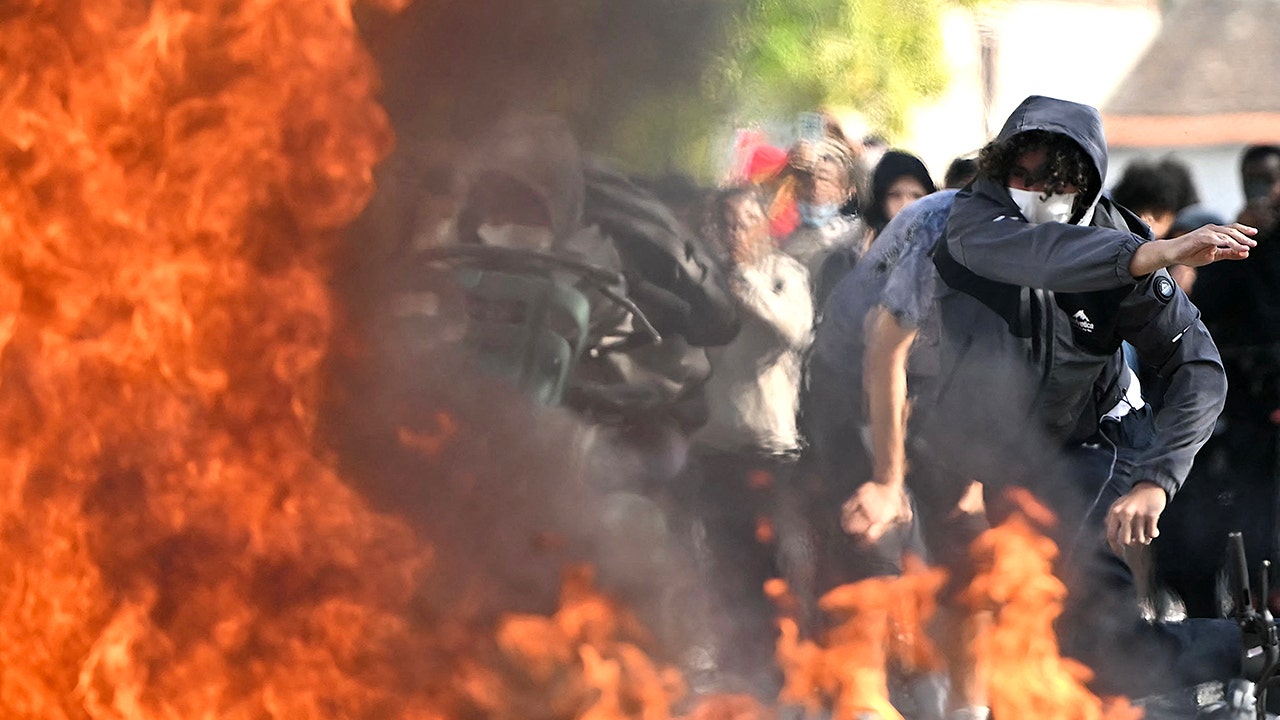
The comments came as France faced its biggest day of school unrest since the protests began in September. On Tuesday, police fired tear gas in Paris and other major cities, protesters lit fires and hurled projectiles, and France’s Interior Ministry said 6,100 people had been arrested, the overwhelming majority of them minors, according to Reuters. Prime Minister Sébastien Lecornu described the clashes as producing the school system’s «heaviest toll in decades».
FRANCE’S VIOLENT STUDENT PROTESTS RAISE WARNING FOR AMERICA: ‘A CAUTIONARY TALE’
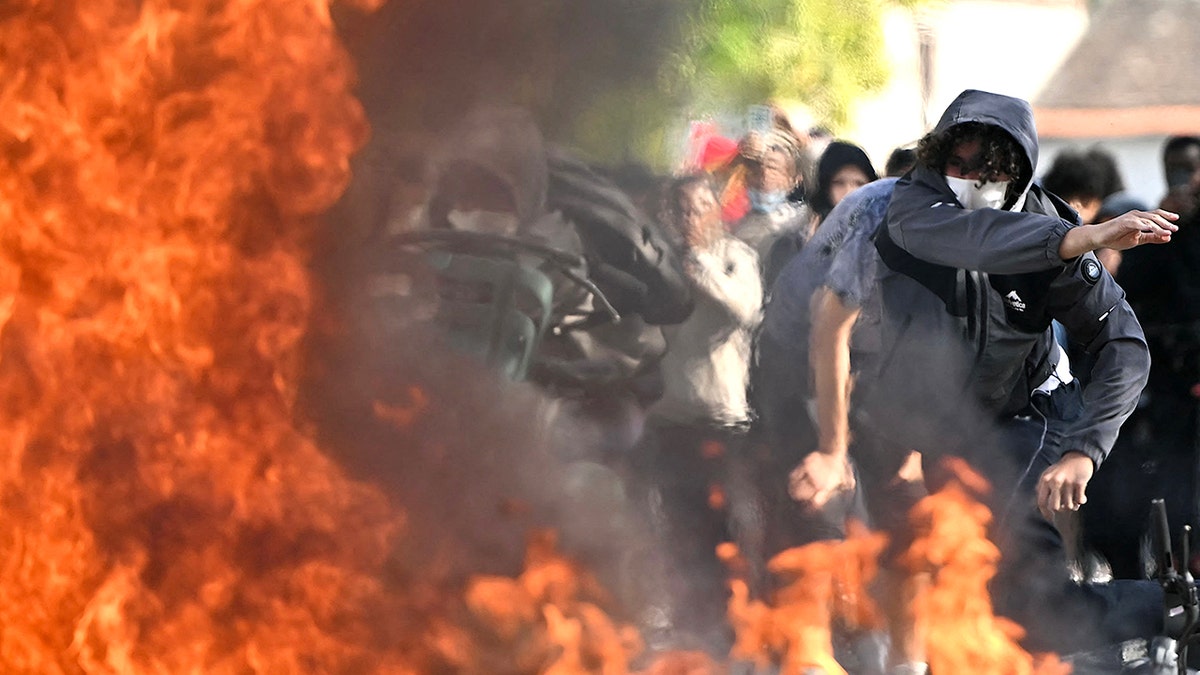
A protester feeds a burnt barrier during a blockading action outside the secondary school Le Corbusier, in Aubervilliers, northern Paris on Oct. 1, 2026. (Lou Benoist/AFP via Getty Images)
France’s Interior Ministry said 6,100 people have been arrested so far, the overwhelming majority of them minors. Lecornu told lawmakers Tuesday that at least 215 teenagers and 85 school staff members have been injured, while his office said more than 700 police officers have also been hurt, according to Reuters.
The latest demonstrations brought clashes in Paris, Lyon, Strasbourg and Rennes, where police fired tear gas as protesters lit fires and hurled projectiles. More than half of France’s roughly 3,700 high schools were blockaded or expected to close Tuesday, according to the High School Students Union. The Paris police said the clashes there had come about when some 300 people attempted to face off against security forces, adding that the protest was generally unfolding well elsewhere.
Theo Wold, a former assistant attorney general and former White House deputy assistant for domestic policy under Trump, also argued that immigration was contributing to the unrest.
FRANCE ROCKED BY STUDENT RIOTS AS HUNDREDS ARRESTED, VIOLENCE SPREADS NATIONWIDE
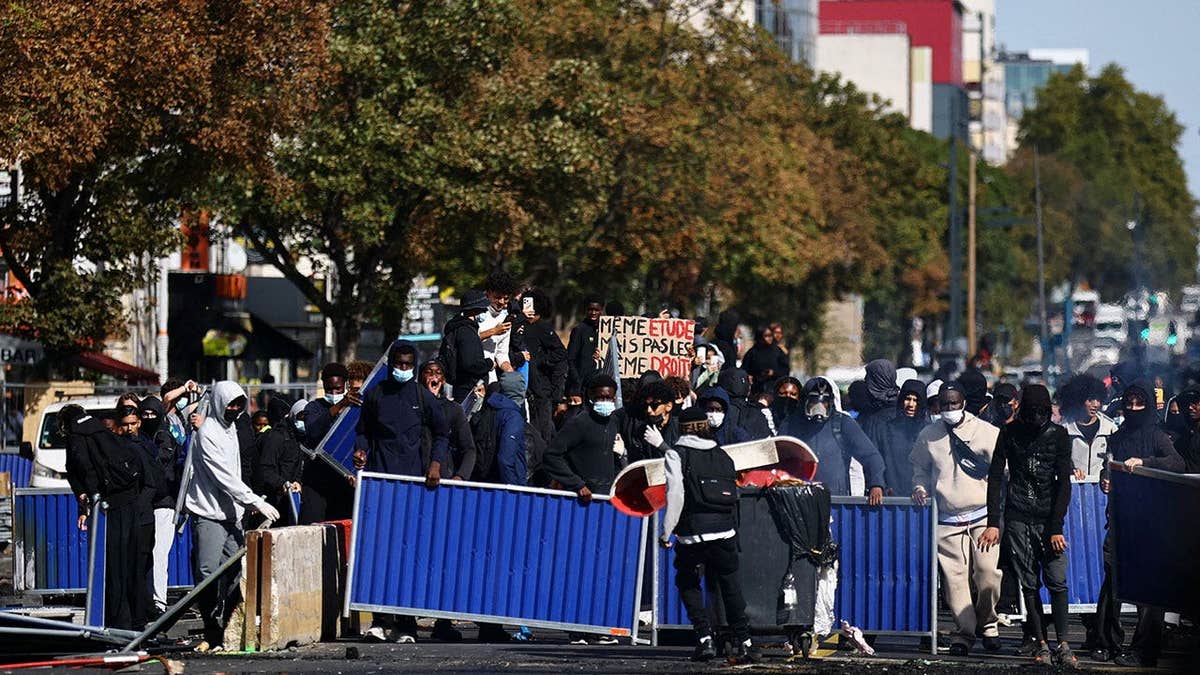
Masked protesters install a barricade amid clashes with police during a protest near the Lycee Berthelot high school in Aubervilliers, near Paris, Oct. 2, 2026. (Sarah Meyssonnier/Reuters)
«The French are notorious for strikes, labor stoppages and street demonstrations. It’s a core part of the Fifth Republic’s civic culture,» Wold told Fox News Digital. «What’s new is the violence, lawlessness and rioting. This is a consequence of mass immigration.»
While Trump, Waltz and Wold linked the violence to immigration, Reuters and AP have reported that the protest movement began over school conditions, including teacher shortages, overcrowded classrooms, deteriorating buildings and education funding. Students have cited overcrowded classrooms, teacher shortages and deteriorating school buildings — including water leaks and rat infestations — among their grievances.
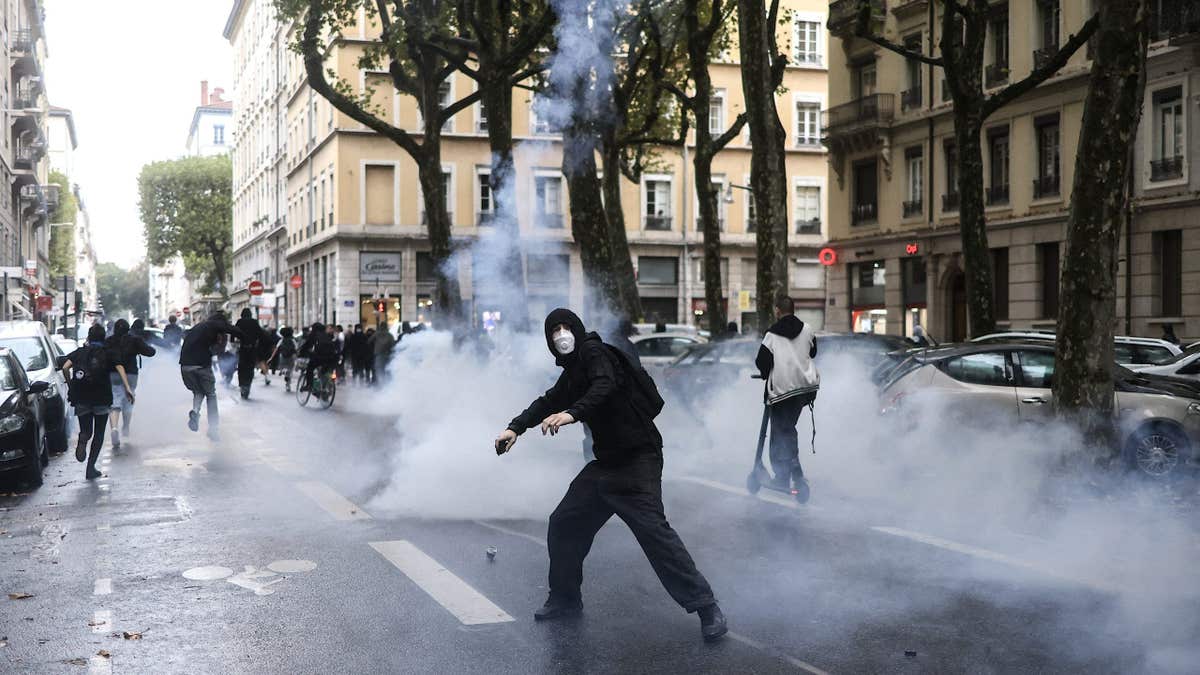
Rioters clash with police in Lyon, central eastern France, on Oct. 1, 2026. (Alex Martin AFP via Getty Images)
The unrest has increasingly become part of a broader political fight ahead of France’s presidential election in April and May 2027. Reuters reported last week that French authorities and political opponents have accused lawmakers and mayors from the hard-left France Unbowed party, or LFI, of stoking the demonstrations. LFI has denied the accusations.
Fox News Digital’s Greg Norman-Diamond and Reuters contributed to this story.
france, world protests, world, donald trump, united nations
INTERNACIONAL
Russian researcher’s mystery death could be ‘far worse’ than the plague, former senior Trump official warns
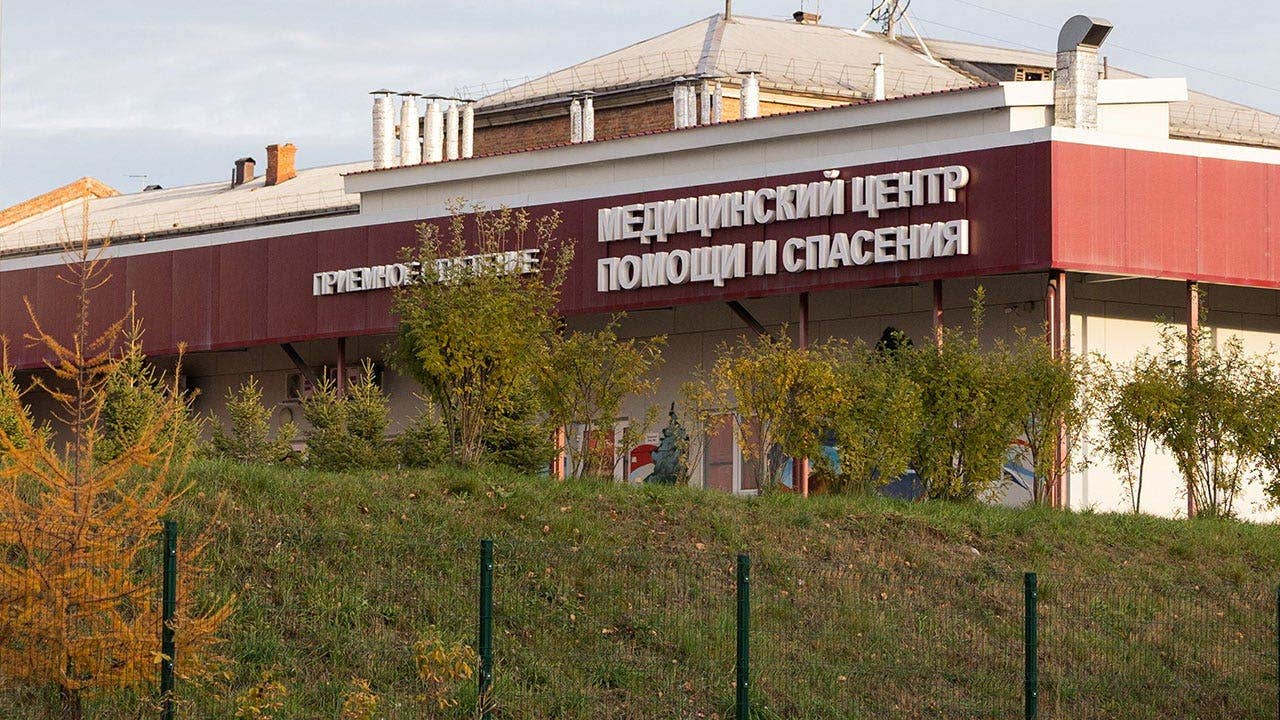
The unexplained death of a researcher at a Russian anti-plague institute has one former senior U.S. arms official warning it could be ‘far worse’ than the bacteria that caused the Black Death.
Marshall Billingslea, who served as President Donald Trump’s special presidential envoy for arms control, said a top Soviet bioweapons defector told him decades ago about secret work on antibiotic-resistant plague at the same facility where the recent plague-related death occurred.
«This may not be just ‘the plague.’ It may be far worse,» Billingslea wrote on X.
He spent much of the 1990s working on proliferation and arms control issues on the Senate Foreign Relations Committee — and during that time worked with Ken Alibek, the former No. 2 official in the Soviet biological weapons program who defected to the U.S.
BIOWEAPON THREAT EXPOSED AS ANTHROPIC SOUNDS ALARM ON FOREIGN ACTORS PLOTTING VIRUS EXPERIMENTS
«He claimed that they had engineered a strain of plague that was antibiotic-resistant & that they had worked on plague chimeras (fusing 2 or more pathogens),» Billingslea wrote of Alibek.
«He specifically called out Irkutsk for being involved in the BW program,» he added.
Billingslea’s warning comes after a 28-year-old employee of the Irkutsk Anti-Plague Institute of Siberia and the Far East died last week from what Russian authorities have described as pneumonia of undetermined origin.
Russia has not said the woman died of plague and said testing found no microorganisms in her body linked to her work.
The World Health Organization (WHO) said Tuesday that Russian officials told the agency no plague or other high-threat pathogen had been detected among her close contacts, though they are still awaiting confirmation of what caused her fatal pneumonia.
DEFENSE DEPARTMENT SCIENTIST’S ACCIDENTAL DEATH RAISES QUESTIONS AS PROBE INTO MISSING SCIENTISTS GROWS
About 60% of the woman’s identified contacts have been tested so far, according to Russian authorities, with two cases of COVID-19 and two rhinovirus infections detected — but no other infectious disease pathogens.
Still, the unexplained death at a facility that works with dangerous pathogens has drawn scrutiny from biosecurity experts — including questions about why the cause remains unknown.
Kevin Esvelt, an MIT professor who studies biological security and catastrophic pandemic risks, said Russia’s latest explanation suggests the researcher did not die from plague while leaving unanswered what killed her.
«If we take the Russian authorities at their word, it is not plague,» Esvelt wrote Tuesday.
«But untargeted research-grade sequencing reliably identifies pathogens, and people seldom die of pneumonia without pathogens, let alone 28-year-olds,» he added. «It would be surprising if they did not know the cause.»
Esvelt cautioned that more alarming explanations remain hypothetical.
«The concerning possibility is still only a possibility,» he wrote.
The questions surrounding the death come against the backdrop of the Soviet Union’s documented history of secretly developing biological weapons, including weaponized plague, and U.S. assessments that elements of that program continued after the Soviet collapse.
In its 2025 arms control compliance report, the State Department assessed that Russia maintains an offensive biological warfare program in violation of the Biological Weapons Convention and that the Soviet program was «absorbed, not dismantled» after the Soviet collapse.
The department said the program «has continued and evolved» under the Russian Federation and that Moscow continues activities prohibited under the convention. Russia has repeatedly denied maintaining an offensive biological weapons program.
The U.S. assessment does not establish any connection between Russia’s biological weapons program and the researcher’s death in Irkutsk, and no such connection has been confirmed.
NEW YORK DECLARES MEASLES DISASTER EMERGENCY AS CASES SURGE IN PENNSYLVANIA
The Soviet program Billingslea referenced was one of the world’s largest clandestine biological weapons efforts. Alibek, born Kanatjan Alibekov, rose to become the first deputy chief of Biopreparat, the ostensibly civilian network that formed a major part of the Soviet biological weapons apparatus, before defecting to the United States in 1992.
After his defection, Alibek provided U.S. officials with extensive information about the scale and capabilities of the Soviet program. He described Soviet scientists working to weaponize pathogens including plague and developing strains designed to withstand antibiotics.
His claims about some aspects of the Soviet program have faced scrutiny over the years, making independent documentation particularly important. But the existence and enormous scale of the Soviet biological weapons effort — conducted despite Moscow’s 1975 ratification of the Biological Weapons Convention — is well established.
The Irkutsk institute says it was founded in 1934 as a scientific and operational center for combating plague. Its mission later expanded to other highly dangerous diseases, including cholera and anthrax, and it describes itself today as a research and anti-epidemic facility responsible for helping protect the region from infectious disease.
The Trump administration has said it is closely monitoring the situation and pressed Moscow for greater transparency about what happened.
Secretary of State Marco Rubio said Monday that while travel between the U.S. and Russia remains limited, an infectious disease could quickly spread beyond Russia’s borders.
«If something like that gets out, it could quickly spread,» Rubio said.
President Donald Trump said the U.S. would offer assistance to Russia if needed.
«I hate to see them having it,» Trump told reporters Monday. «It’s a rough disease.»
russia, world, health, science, national security, world health organization, politics

Pidieron llevar a juicio a un exfuncionario de Vialidad por presunto enriquecimiento ilícito de más de $3.189 millones

“Erosiona el debate público”: ADEPA lamentó y rechazó los insultos de Milei a periodistas y editores de medios

La Joaqui sufrió el peor desplante con Tiago PZK y explotó en crisis por Luck Ra

Represión en Cuba: el OCDH denuncia más de 3,000 violaciones a las libertades fundamentales en 2026

El secreto de los países ricos: qué saben hacer las sociedades que logran desarrollarse

Ni gimnasio ni caminata: cuál es el ejercicio de fuerza ideal para frenar la pérdida de masa muscular

DHS exposes dilemma behind SCOTUS deportation fight: ‘We have two choices’

El Reino Unido anunció que las nuevas licencias de hidrocarburos en las Islas Malvinas requerirán su autorización final

El pedido de Abel Pintos que sorprendió a Guido Kaczka: “Necesito renovarlos”

El guiño de Cristina Kirchner a Uñac, las dudas en el PJ sobre las PASO y el mensaje de Kicillof al interior

 POLITICA1 día ago
¡Precios de Manhattan con sueldos de Argentina! Cómo los créditos hipotecarios inflaron las propiedades y congelaron el sueño de la casa propia
- POLITICA3 días ago
En la antesala de la discusión electoral, el peronismo buscará un gesto de unidad en la Legislatura bonaerense
- CHIMENTOS2 días ago
Ella tiene 40 años y su marido 59, pero se enamoró de un joven de 27 y se acaba de separar tras ser descubierta por su esposo siendo infiel: «Comenzó a…»