INTERNACIONAL
Thune weighs nightmare scenario for GOP as Democrats threaten to flip House

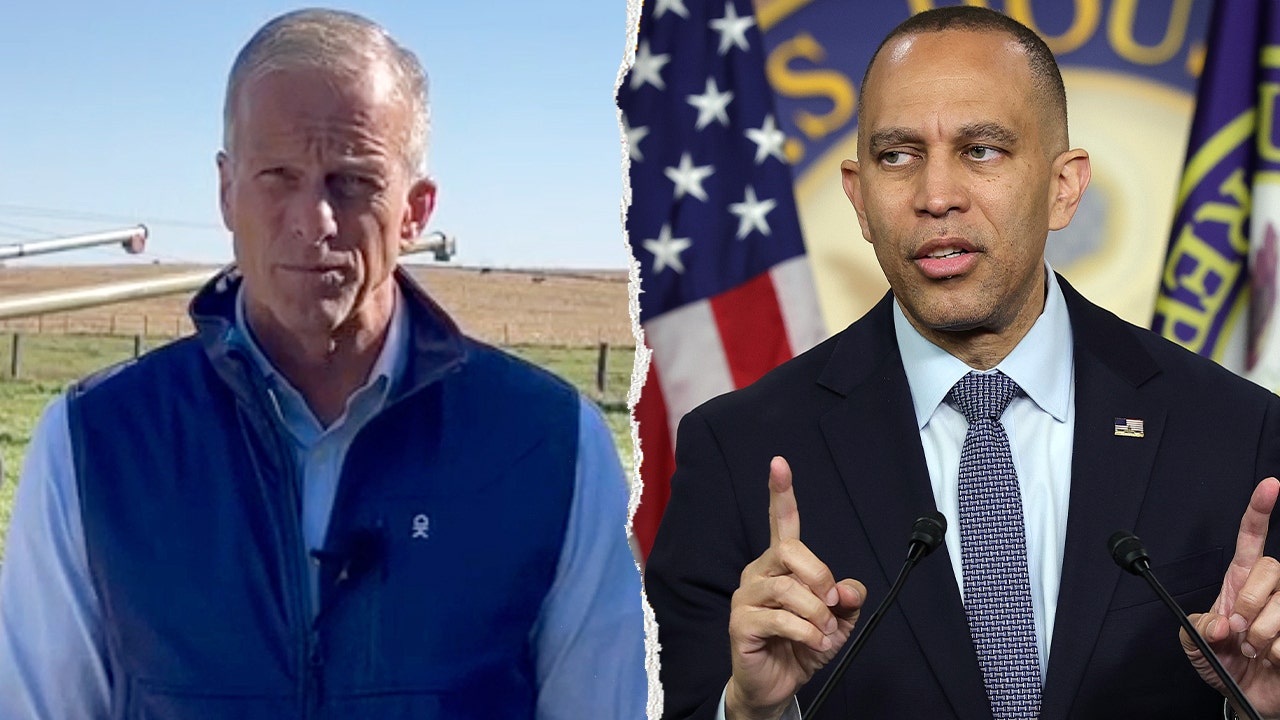
FREMONT, Neb. — If Democrats are able to gain control of the House of Representatives, one relationship between the top two lawmakers on both sides of Congress could define the remainder of President Donald Trump’s time in office.
If that’s the outcome on Election Night, Senate Majority Leader John Thune, R-S.D., would have to work with the Democratic leader who rises in the House, and that is expected to be House Minority Leader Hakeem Jeffries, D-N.Y., who has led Democrats in the lower chamber since 2023.
But Thune, in an interview with Digital on the campaign trail in Nebraska, remained confident that wouldn’t be the outcome.
THUNE MAKES BOLD PREDICTION ABOUT REPUBLICANS’ SENATE CHANCES AS GOP PULLS MILLIONS FROM KEY RACES
«Well, I mean, I think obviously that’s an entirely different dynamic,» Thune said. «You’ve got a situation with divided government and that creates a different incentive structure in terms of if you want to be able to get things done, but I don’t assume for a minute that’s going to happen.»
«I still think that when push comes to shove and people look at the choices in front of them that we have a really good shot at hanging on both the House and the Senate,» he continued.
Election forecasters predict that the Senate could stay in Republican control, though seven total races are considered toss-ups by the Cook Political Report. Republicans’ chances of holding onto power in the House, however, are murkier, given that dozens of battleground seats are in play that have shifted favorably toward Democrats.
The GOP has had a grip on the lower chamber since 2022, when it flipped the House during former President Joe Biden’s presidency. But a deeply unpopular Trump, whose approval ratings have dipped to historic lows, and continued economic pressures could contribute to Democrats regaining power.
JOHNSON DOWNPLAYS GOP’S MIDTERM WOES AS DEMOCRATS EYE HOUSE TAKEOVER: ‘I AM VERY BULLISH’
Jeffries’ office did not respond to an inquiry from Digital asking whether he could work with Thune if both won their respective leadership spots.
There has been no love lost between the two men during this congressional term so far, with each sharply criticizing the other during key legislative fights.
Thune blasted Jeffries and Senate Minority Leader Chuck Schumer, D-N.Y., earlier this year as talks began to break down over funding the Department of Homeland Security (DHS). The top Republican accused both of being «afraid of their shadows,» and being controlled by their left flank.
That prompted Jeffries to retort to reporters that it was Thune who was «scared of his own shadow» during the partisan standoff. During the 2025 government shutdown, Jeffries accused Thune of «trying to bluff his way into an agreement» on federal spending.
Congress is no stranger to a divided government, either. From 2023 to early 2025, Republicans controlled the House and Democrats held a razor-thin majority in the Senate.
SCHUMER WARNS OF REPUBLICAN ADVANTAGE THAT COULD CHANGE THE BATTLE FOR SENATE CONTROL
During that time, according to data collected by the Pew Research Center, the split Congress produced 106 laws. This version of Congress has so far produced 121 laws, with some major legislative action happening, like the «big, beautiful bill» and a major housing affordability package, passing between historically long government shutdowns.
Thune is laser-focused on keeping the GOP’s control of the Senate, which was under Democratic control until 2024, when Trump and Republicans clinched a trifecta in Washington, D.C.
He’s crisscrossed the country for the last several weeks of the homestretch heading into the election on Nov. 3, boosting candidates in competitive races that could determine the balance of power in the Senate.
Republican control of the upper chamber, he contended, would be vital to continuing key chunks of Trump’s agenda, including confirming his judicial and other executive branch nominations.
«So if you want to see the country succeed and move forward, we’ve got to have a majority in the U.S. Senate to work with this president,» Thune said. «Hopefully with a majority in the House as well, but I am very committed to doing whatever I can in the next couple of weeks getting around the country on behalf of our candidates to ensure that we have that majority in the Senate.»
politics, john thune, midterm elections, house of representatives, congress











NEWYou can now listen to Fox News articles!
Secretary of State Marco Rubio urged Cubans seeking political change Friday to discreetly cooperate with the CIA as President Donald Trump separately floated sending Rubio to the communist-run island to negotiate a deal.
«To those who seek to create positive change in Cuba – now is the time,» Rubio wrote in a post on X.
«The disappointment of failed promises, corruption, and the privileged lives of only a few; seize this opportunity to create the change you desire through a discrete partnership with the CIA.»
RUBIO WARNS CUBA HAS INFILTRATED US WITH SPIES, CALLS COMMUNIST REGIME AN ‘ESPIONAGE SUPERPOWER’
Rubio’s message explicitly encouraged Cubans to work with the U.S. intelligence agency but did not identify a specific operation or explain what such cooperation would involve.
Rubio, the son of Cuban immigrants, has long advocated for a tougher U.S. approach toward the Cuban government.
The former Florida senator has been a prominent critic of the communist leadership in Havana and opposed efforts to normalize relations without political reforms.
Trump, meanwhile, raised the possibility of U.S. ships stopping near Cuba while discussing Iran during a midterm rally in Fort Myers, Florida, Friday.
TRUMP EXPANDS CUBA SANCTIONS BEYOND US COMPANIES IN MAJOR CRACKDOWN ON FOREIGN ENABLERS
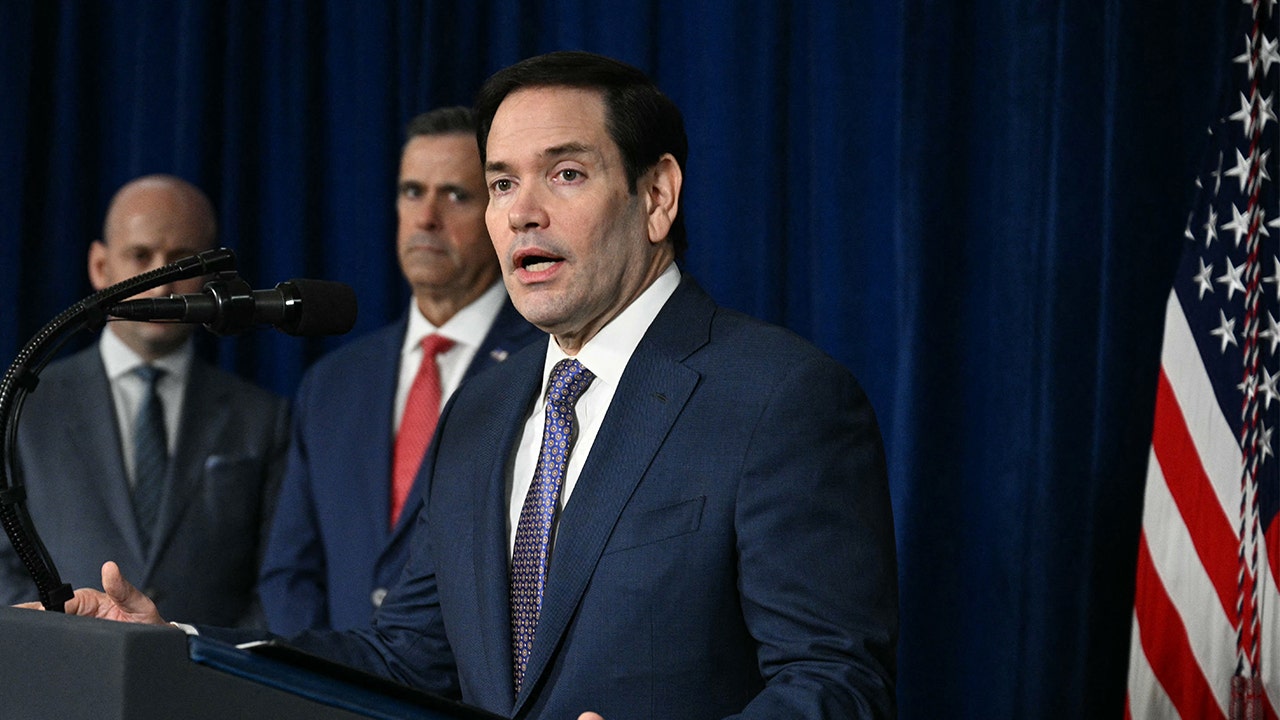
Secretary of State Marco Rubio speaks to reporters alongside White House deputy chief of staff Stephen Miller, left, and CIA Director John Ratcliffe, center, after U.S. military actions in Venezuela at his Mar-a-Lago residence in Palm Beach, Fla., Jan. 3, 2026. (Jim Watson/AFP via Getty Images)
«Don’t worry. We’ll take care of Cuba on our way back from Iran with it. We’ll do a little stopover now. We’ll do a little stopover,» Trump told the crowd.
«Actually, what we’re going to do with Cuba is we’re going to come back from Iran. Those beautiful ships will pass Cuba. We’ll have one of them stop about 50 yards off the coast. They’ll raise up their hands.»
Trump then suggested Rubio could handle negotiations with the communist-run island.
IRANIAN NEGOTIATORS KICKED OUT OF US AS TALKS STALL, TRUMP LAYS OUT ‘POSSIBLE’ TIMELINE FOR MORE STRIKES

Secretary of State Marco Rubio and US President Donald Trump speak to the press following US military actions in Venezuela, at Trump’s Mar-a-Lago residence in Palm Beach, Fla., Jan. 3, 2026. (Jim Watson/AFP via Getty Images)
«And then we’re going to send Marco Rubio in to finish up the deal. We’ll have Marco. Marco. We don’t even have to stop. We could just put him in there and he’ll figure it out. He’s a great guy.»
Trump did not provide details about any proposed agreement with Cuba or indicate whether his remarks reflected an actual military or diplomatic plan.
Fox News Digital reached out to the CIA, State Department, White House and Cuban Embassy in Washington, D.C., for comment.
cuba, marco rubio, donald trump, cia, world
INTERNACIONAL
Reporter’s Notebook: Congress braces for post-election game of musical chairs as leadership battles loom
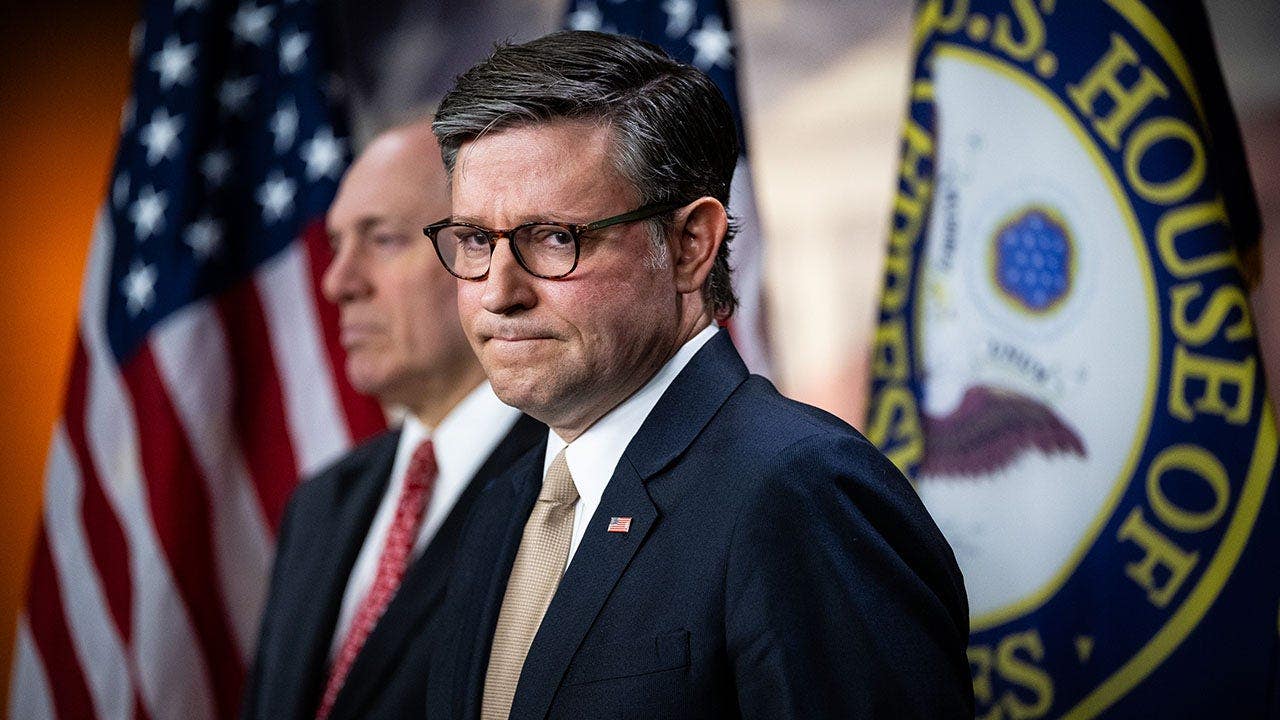
Capitol Hill is about to embark on a biennial game of musical chairs.
Everyone needs to find a seat when the music stops. Those who don’t are out.
There are four sets of leadership elections pending in Congress over the next few weeks. House Republicans and Democrats will pick their top leaders. The same with Senate Republicans and Democrats. The entire House must elect a speaker when the new Congress convenes on Jan. 3. The full Senate chooses the majority leader. That’s decided individually by the majority party in the Senate.
We anticipate a scramble for leadership positions in the days following the election, depending on which party captures the majority of each body for the new Congress.
JORDAN EMERGES AS POTENTIAL NEXT GOP LEADER IF DEMS SEIZE HOUSE
Let’s start with House Republicans.
If Republicans maintain control of the House, the GOP will likely maintain its current leadership team of House Speaker Mike Johnson, R-La., Majority Leader Steve Scalise, R-La., and Majority Whip Tom Emmer, R-Minn. However, if the GOP loses control of the House, recriminations — and an epic game of vicious political musical chairs likely commences.
The reason? In the minority, a party only has two top leadership positions compared to three in the majority. Will Johnson slide to minority leader? Does he want that slot? Does President Donald Trump want him in that position? Or someone else?
Regardless, whoever Trump wants as the top House Republican is the one who gets that slot in the new Congress.
Would Scalise become minority leader? Would he slide to minority whip? Where does Emmer fit in here? Could Emmer become the top House GOPer?
Then there is Rep. Jim Jordan, R-Ohio.
It’s clear that Jordan wants to become the top Republican in the House. He’s campaigned for Republican candidates and members for months and has raised money on the GOP’s behalf for years. It’s unclear if Jordan might be in a race against Johnson or any of the others soon.
Keep in mind that Scalise, Emmer and Jordan all lost bids to become speaker when the House dismissed former House Speaker Kevin McCarthy, R-Calif., in the fall of 2023. In fact, Jordan lost multiple floor votes for speaker before the House Republican Conference nixed him as the GOP nominee.
In the interim, Jordan has worked to build bridges among Republicans who opposed him three years ago. The Ohio Republican also remains a close ally of Trump. Jordan also maintains strong ties to the conservative House Freedom Caucus.
JEFFRIES WELCOMES DEMOCRATIC SOCIALISTS INTO THE FOLD AS CRITICS WARN PARTY IS REVEALING ‘EXACTLY WHO IT IS’
The question is what rank-and-file Republicans want to do if they find themselves in the minority? Some might prefer a wholesale set of changes among the GOP leadership team. But it will come down to musical chairs. And somebody — if not several somebodies — probably lack a seat when the music stops.
For the Democrats, their situation is easier. Let’s say Democrats do win control of the House. Yes, the Democratic Socialists of America and some possible members have reservations about promoting House Minority Leader Hakeem Jeffries, D-N.Y., to become speaker of the House. But it’s hard to see that Democrats wouldn’t tap him as the first Black speaker in American history. House Minority Whip Katherine Clark, D-Mass., would matriculate to majority leader. House Democratic Caucus Chairman Pete Aguilar, D-Calif., would likely become majority whip.
However, if Democrats don’t win the House, would their top leaders remain in place? Unclear. Democrats have established high expectations. So one can envision a scenario where rank-and-file Democrats are so exercised about a midterm loss that they call for some new leaders if Democrats fail to flip the House in such a toxic political environment for Republicans.
Then, there’s the Senate.
Senate Majority Leader John Thune, R-S.D., does not wield the same political currency with Trump as Johnson. The president has started to make demands of the Senate schedule or what he wants passed. The South Dakota Republican has resisted many of those entreaties. But what happens if Republicans lose control of the Senate?
Many Senate Republicans are apoplectic at how the president treated Sen. John Cornyn, R-Texas, who formerly served as Senate GOP whip. They will rage if the president calls for the dismissal of Thune — in the minority but especially the majority. So far, Trump has kept things in check and not expressed direct displeasure with Thune personally. But one wonders how long that would continue. Especially considering what the president said about former Senate Majority Leader Mitch McConnell, R-Ky. – who ushered three Supreme Court nominees to confirmation under dramatic circumstances.
THUNE MAKES BOLD PREDICTION ABOUT REPUBLICANS’ SENATE CHANCES AS GOP PULLS MILLIONS FROM KEY RACES
Who could step into a possible Senate GOP leadership void?
Senate Majority Whip John Barrasso, R-Wyo., is the obvious choice. Barrasso appears closer to the president than Thune — and remains airtight when given the opportunity to criticize Trump. That could work in Barrasso’s favor if there’s an opening.
But leadership elections are always about opportunities. And sometimes those figures with certain bona fides have too much baggage from being on the job for a while. Here are the names to watch if there’s a push for changes inside the GOP leadership ranks: Sens. Katie Britt, R-Ala., John Kennedy, R-La., and Rick Scott, R-Fla.
A former Senate aide, Britt has a solid «inside game» and works well with the administration. Kennedy’s folksy manner makes him a darling of TV appearances. He also spent lots of time on the road campaigning for Senate Republican candidates. Scott ran for majority leader two years ago and lost to Thune and Cornyn in the first round.
Then there are Senate Democrats.
Some have lobbed gobs of criticism at Senate Minority Leader Chuck Schumer, D-N.Y. His age. His style of politics seems archaic to some. But it’s hard to argue with success. Schumer likely becomes majority leader if Democrats flip the Senate. But things could change if Democrats fail to gain control of the body. Political observers don’t think Democrats have as good a chance at flipping the Senate as the House. So it’s not a done deal that Democrats will want new leadership if Democrats fail to gain control.
The one «known» is the pending candidacy of Sen. Brian Schatz, D-Hawaii, to succeed retiring Senate Minority Whip Dick Durbin, D-Ill. However, one could envision a scenario where Schatz becomes the top Senate Democrat if Schumer departs. Like Britt, Schatz is an intense internal operator and understands the subtleties of the Democratic Caucus.
Others who may have an interest in a leadership post — if they don’t run for president — include Sens. Cory Booker, D-N.J., Chris Murphy, D-Conn., Elissa Slotkin, D-Mich., Elizabeth Warren, D-Mass., and Chris Van Hollen, D-Md.
Booker has credibility for his record-breaking 25-hour speech last year. Murphy appeals to the party as a telegenic spokesperson — and spoke on the floor for nearly 15 hours on gun violence in 2015. Slotkin is a moderate Democrat in a purple state who likes to tangle with the Trump administration — despite picking some of her spots to address the press corps. She’s said that the «old» Senate leadership models are no longer working. Warren commands the support of progressives. And Van Hollen already has the backing of Michigan Democratic Senate nominee Abdul El-Sayed.
This is a lot to sort out. And it all hinges on the election outcomes. Leadership elections usually take place in mid to late November. It’s possible there could be a delay in leadership elections if it takes a while to sort out which party controls which body of Congress.
But the music is already playing. And everyone is jockeying for a seat because the music is about to stop.
politics, congress, midterm elections, senate, mike johnson, house of representatives politics

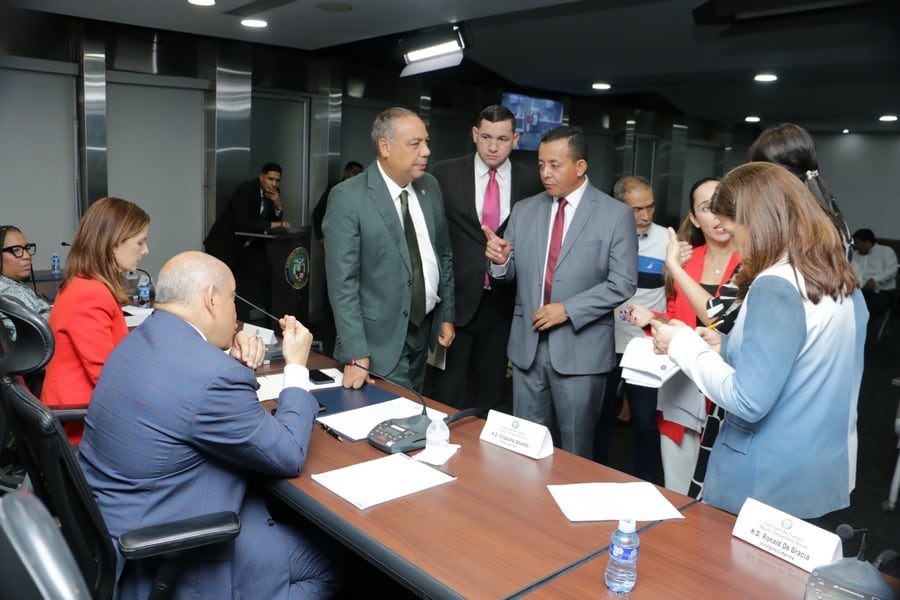
La Asamblea Nacional retomó la ampliación de los descuentos para jubilados, pensionados y adultos mayores con la aprobación en primer debate del proyecto de ley 746.
La nueva iniciativa revisa varios beneficios y contempla mecanismos de compensación para los comercios, después de que el presidente José Raúl Mulino objetara una propuesta similar.
La Comisión de Trabajo, Salud y Desarrollo Social, presidida por Crispiano Adames, aprobó el proyecto tras modificar, eliminar e incorporar artículos durante su discusión. El documento deberá superar el segundo y tercer debate legislativo antes de ser remitido al Ejecutivo para su eventual sanción y promulgación.
El antecedente es el proyecto 226, aprobado por la Asamblea en agosto de 2026, que fue objetado totalmente por Mulino el 20 de septiembre. El mandatario invocó razones de inconveniencia e inexequibilidad, en medio de cuestionamientos sobre las obligaciones económicas que las nuevas rebajas impondrían a distintos sectores.

La comparación de las iniciativas muestra una reducción de algunos porcentajes originalmente propuestos. El proyecto 226 contemplaba inicialmente descuentos del 35% en restaurantes y establecimientos de comida rápida, mientras que el texto presentado del 746 establece una rebaja del 25% sobre el consumo individual, incluidas las franquicias nacionales e internacionales.
En medicamentos, el nuevo documento presentado contempla un descuento del 25% sobre el precio de venta, mientras que el proyecto anterior había planteado porcentajes superiores durante su tramitación. La propuesta también incorpora beneficios específicos para tratamientos oncológicos, incluidos medicamentos, procedimientos e insumos relacionados con la atención de pacientes con cáncer.
Los servicios médicos forman parte de los beneficios que se busca ampliar o actualizar. El proyecto 746 contempla descuentos del 25% en consultas generales y especializadas, 20% en exámenes de laboratorio y 30% en servicios radiológicos y determinados tratamientos oncológicos, según las condiciones previstas en su articulado.
En electricidad, la iniciativa establece una rebaja del 30% para consumos residenciales de hasta 600 kilovatios hora, frente al límite de 700 contemplado en el proyecto anterior. También propone descuentos del 30% en agua, telefonía e internet, sujetos a requisitos relacionados con los contratos y los límites de facturación.
Otros beneficios incluyen rebajas en pañales desechables, productos de higiene y equipos de movilidad, así como descuentos en servicios funerarios y tasa de aseo. El documento incorpora además incentivos para adaptar las viviendas a las necesidades de accesibilidad, especialmente en instalaciones destinadas a mejorar la seguridad y el desplazamiento.
Una diferencia relevante es la creación de un mecanismo para compensar económicamente a las microempresas que otorguen los descuentos. El proyecto propone establecer un fideicomiso destinado a reembolsar hasta el 100% de los beneficios debidamente facturados por negocios inscritos y acreditados ante la Autoridad de la Micro, Pequeña y Mediana Empresa.
La propuesta también contempla el reconocimiento tributario de los descuentos concedidos por los establecimientos y mecanismos de fiscalización para verificar su aplicación. En la administración y supervisión del sistema participarían la Ampyme, el Ministerio de Economía y Finanzas y la Contraloría, conforme a las disposiciones que se establezcan.
Estas modificaciones buscan responder a las preocupaciones expresadas por gremios empresariales durante la discusión del proyecto 226, posteriormente objetado por el Ejecutivo. En aquel debate, la Cámara de Comercio, Industrias y Agricultura de Panamá cuestionó el aumento de los descuentos obligatorios y sus posibles consecuencias para las actividades económicas.

La Asociación Panameña de Hoteles también advirtió sobre el impacto de ampliar las rebajas y las dificultades para deducirlas fiscalmente. Representantes del sector farmacéutico expresaron inquietudes sobre los márgenes de ganancia y la sostenibilidad de los establecimientos, especialmente de los pequeños negocios obligados a conceder beneficios adicionales.
Durante la discusión de aquella propuesta, el Consejo Nacional de la Empresa Privada solicitó una evaluación técnica de las medidas, mientras la Asociación Bancaria de Panamá planteó preocupaciones sobre sus posibles efectos en el acceso al crédito. El Ministerio de Economía y Finanzas también advirtió sobre las implicaciones fiscales de los descuentos.
Las diferencias llevaron a revisar las disposiciones y buscar mecanismos de compensación para los comercios, mediante conversaciones entre representantes empresariales, organizaciones de jubilados y autoridades. Adames destacó que la nueva discusión incorporó una mesa técnica para conciliar los intereses económicos y sociales involucrados.
Con el avance del proyecto 746, queda pendiente conocer la evaluación del sector privado sobre los cambios introducidos, particularmente los porcentajes de descuento y el mecanismo de compensación.

La reacción de los gremios será importante para determinar si las modificaciones atienden las preocupaciones que marcaron la iniciativa anterior.
Guillermo Cortés, dirigente del Movimiento Mundo de Jubilados, sostuvo que los beneficios alcanzarán también a adultos mayores que no reciben pensión. Por su parte, el diputado Javier Sucre, proponente de la iniciativa, estimó en 270 millones de dólares anuales el valor de los beneficios, una cifra presentada durante la discusión legislativa.
Los promotores esperan que el proyecto avance a segundo debate durante la próxima semana y complete su trámite antes del 31 de octubre. Sin embargo, su aprobación definitiva todavía depende del pleno legislativo y del Ejecutivo, mientras permanecen abiertas las interrogantes sobre el financiamiento de las compensaciones y su aplicación.
24 julio 2023,ancianos,calor,canas,carro de la compra,category_code_new,eduardo parra,mayores,persona mayor,población mayor,salud,tercera edad

Lali Espósito invitó a Tini Stoessel a su casamiento y le hizo una llamativa aclaración: “Tomá tu decisión tranquila”

Diario de un día de gira con Los Palmeras: 16 hombres de negro, 60 minutos de fiesta y Santa Fe a sus pies

Rubio urges Cubans to work with CIA to bring political change to communist-run island

Reporter’s Notebook: Congress braces for post-election game of musical chairs as leadership battles loom

La preocupante frase de Franco Colapinto tras conocerse su penalización en el Gran Premio de los Estados Unidos de la F1

Flamengo pidió los puntos ante Estudiantes por la inclusión de Marcos Rojo

Javier Milei y sus medidas, en vivo: el mandatario dijo que piensa un proyecto a “100 años” para la Argentina

Contratar pensando en el futuro: qué cambia en la selección y el liderazgo con la IA en el mercado silver

La joven cantante que provocó la separación de Julieta Prandi y Ortega contó detalles muy íntimos: “Es una persona amorosa y muy…”

“Dios me puso ahí”: fue quien le dejó su lugar a Maradona el día de su debut y desde hace 42 años trabaja en una inmobiliaria

 POLITICA19 horas ago
Javier Milei y sus medidas, en vivo: el mandatario dijo que piensa un proyecto a “100 años” para la Argentina
- ECONOMIA2 días ago
Cuáles son las condiciones que enfrentan las pymes para financiarse en el mercado de capitales
- INTERNACIONAL3 días ago
Honduras: DAET niega detenciones de policías tras operativo en San Pedro Sula y alerta sobre posible atentado