
INTERNACIONAL
Bolivia: el gobierno de Rodrigo Paz resistió la presión y anunció el fin de los cortes de rutas y el desabastecimiento

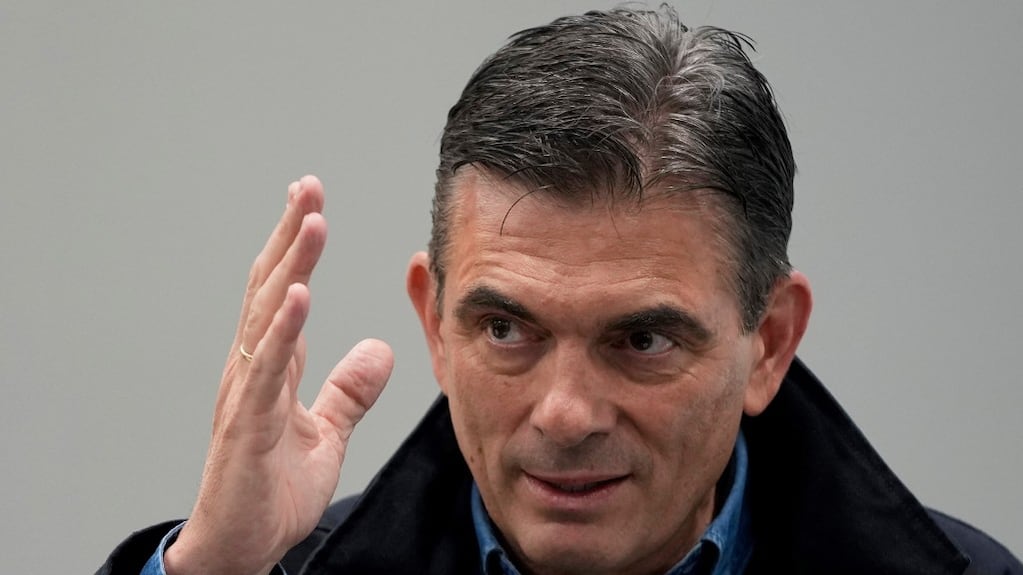
“El bloqueo ha sido derrotado”. El presidente Rodrigo Paz anunció este martes el fin de los cortes de rutas que desestabilizaron su gobierno y causaron un grave desabastecimiento de alimentos, medicinas y combustibles durante más de un mes y medio en La Paz y otras zonas de Bolivia.
Los nueve departamentos del país amanecieron este martes sin ningún punto de bloqueo por motivos sociales, anunció la Administradora Boliviana de Carreteras (ABC).
Pero el alerta se mantiene. El mandatario, que asumió hace siete meses después de 20 años de gobiernos del izquierdista Movimiento Al Socialismo (MAS), ratificó la vigencia del estado de excepción aprobado el sábado por el Congreso y que autoriza a su gobierno a sacar a los militares a la calle para reprimir cualquier protesta y piquete.
Las autoridades aseguraron que las carreteras quedaron completamente despejadas este martes, lo que augura el fin del desabastecimiento generalizado de productos de primera necesidad.
Los manifestantes, en su mayoría campesinos indígenas, trabajadores y mineros motorizados por la Central Obrera Boliviana (COB), exigían la renuncia del mandatario.
“Rodrigo Paz resistió la presión y la convulsión se desgastó al punto que el estado de excepción llevó a la disolución pacífica de los bloqueos sin que se produjera un solo disparo”, dijo a TN el analista Ricardo Calla, exministro de Asuntos Indígenas y Pueblos Originarios durante el primer gobierno de Evo Morales, uno de los promotores de las protestas.
El expresidente izquierdista anunció el lunes “un cuarto intermedio” en las protestas que sus seguidores mantuvieron en la zona del Trópico de Cochabamba, su bastión, tras 53 días de conflicto.
“Por ahora, un cuarto intermedio. No es rendirnos, pero la gran ventaja que tenemos las seis federaciones (organización sindical y agraria de productores de hoja de coca) es que nunca nos vendemos”, dijo Morales, citado por la agencia Fides.
La decisión de levantar los cortes, según advirtieron analistas, se sustentó en la presión ejercida por el gobierno después de declarar el estado de excepción que abrió las puertas a una intervención militar contra los manifestantes.
¿El fin del conflicto?
El presidente centroderechista está convencido de que la crisis fue superada.
“Nos vamos a organizar para construir, no para destruir, porque creo que el bloqueo ha sido derrotado, no puede retornar al país. Nosotros estamos como siempre con el diálogo como línea principal», dijo Paz citado por la prensa local.
Una vendedora coloca cajas de carne de pollo en La Paz, Bolivia, el martes 23 de junio de 2026. (Foto AP/Juan Karita)
El desbloqueo de las carreteras ocurrió en forma paulatina desde el sábado, en respuesta a la declaratoria del estado de excepción en el país. Pero a pesar de que las rutas están libres, el gobierno decidió mantener vigente la medida.
«Este estado de excepción continúa porque tenemos muchas cosas que ordenar. Bolivia se tiene que ordenar porque no se puede volver a repetir lo que ocurrió estos últimos 50 días. Y este estado de excepción es el instrumento legal que nos permite ordenar el país”, afirmó Paz.
Leé también: Violencia, déficit fiscal y crisis sanitaria: los desafíos que enfrentará el próximo presidente de Colombia
Para Calla, la oposición no alcanzó su objetivo de desestabilizar al presidente.
“Fue puesto bajo presión por los dirigentes de los bloqueos para dictar un estado de excepción que manchara de sangre su gobierno. Esos dirigentes pretendieron sacrificar a algunos de los pobladores movilizados para atizar la convulsión y manchar políticamente al gobierno”, dijo el analista.
La Central Obrera Boliviana (COB) finalmente pactó con el gobierno y abandonó las protestas. Evo Morales impulsaba el último reducto rebelde, que abandonó las rutas el lunes.
“Ahora Paz debe asumir la difícil tarea de que Bolivia supere su gravísima crisis económica, agravada por el bloqueo de 53 días. Será una ardua tarea. A cambio, los dirigentes de la convulsión fueron políticamente arrollados por el desenlace. El liderazgo local de Evo Morales en el Chapare ha de entrar en crisis. La era post Evo ya es un hecho consolidado ahora”, opinó Calla.
Pero la difícil situación social, agravada por el conflicto, sigue siendo un caldo de cultivo para nuevas protestas.
En su reducto del Chapare, el “evismo” advirtió que las protestas se retomarán cuando concluya el indefinido “cuarto intermedio” y denunció que el movimiento fracasó por la “traición” de la COB y del dirigente de la Federación de Campesinos de la Paz Tupac Katari, Vicente Salazar.
Bolivia, Rodrigo Paz, Evo Morales











NEWYou can now listen to Fox News articles!
DETROIT — The Democratic Party’s progressive wing was aiming to notch its biggest victory yet Tuesday and deliver a high-profile blow to the center-left establishment in an intensifying ideological battle.
But the anticipated triumph in battleground Michigan’s Democratic Senate primary will have to wait.
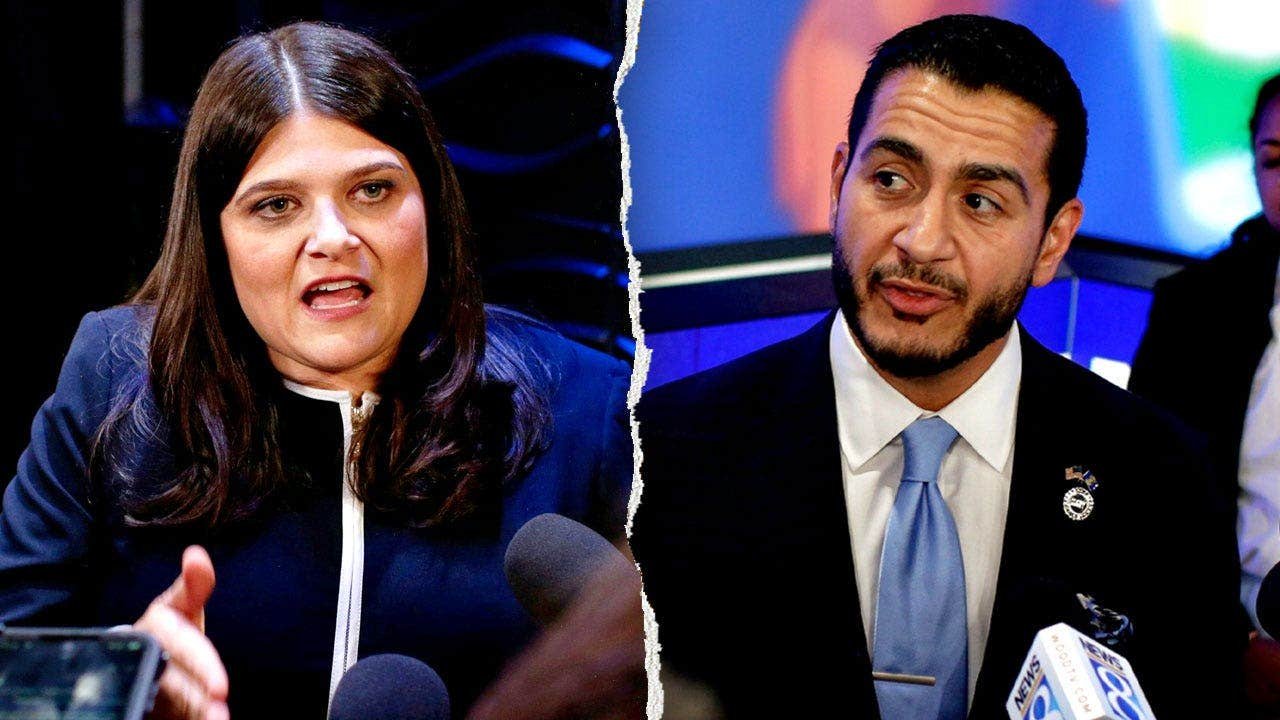
The race between progressive candidate Abdul El-Sayed, a former Wayne County health director, and Rep. Haley Stevens, a more moderate contender, remained too close to call early Wednesday.
THE MIDTERM SENATE RACES THAT COULD FLIP THE BALANCE OF POWER IN CONGRESS
Abdul El-Sayed, a progressive candidate in the Democratic primary for U.S. Senate in Michigan, speaks during a primary election night event Wednesday, Aug. 5, 2026, at the Majestic Theatre in Detroit. (Julia Demaree Nikhinson/AP Photo)
While the night’s biggest prize remained undecided as five states held primary elections, Democratic establishment candidates scored several victories. Those included Rep. Wesley Bell of Missouri defeating Democratic Socialists of America-backed challenger and former Rep. Cori Bush, a onetime «Squad» member, in a rematch of their 2024 showdown.
Meanwhile, President Donald Trump’s powerful sway over the Republican Party was reaffirmed as two Trump-backed candidates won gubernatorial nominations in Michigan and Kansas.
Here are the top takeaways from a busy primary night across the country.
Verdict still out in high-stakes showdown
«We’re going to have to wait a little longer to see the outcome of this race,» El-Sayed told supporters at a primary night event in Detroit early Wednesday morning.
El-Sayed, who was backed by prominent progressive leaders including Sen. Bernie Sanders of Vermont and Rep. Alexandria Ocasio-Cortez of New York, held a razor-thin lead over Stevens as votes continued to be counted. Stevens was supported by establishment figures including Sen. Chuck Schumer of New York, the longtime Senate Democratic leader.
«I know it’s been a long night because that’s the Michigan way. But I want to give you all an update. We knew that this was going to be a close race, and that’s exactly what we’ve got. A close race,» Stevens said.
MIKE ROGERS ARGUES ABDUL EL-SAYED IS ‘A SPECIAL SAUCE OF CRAZY’
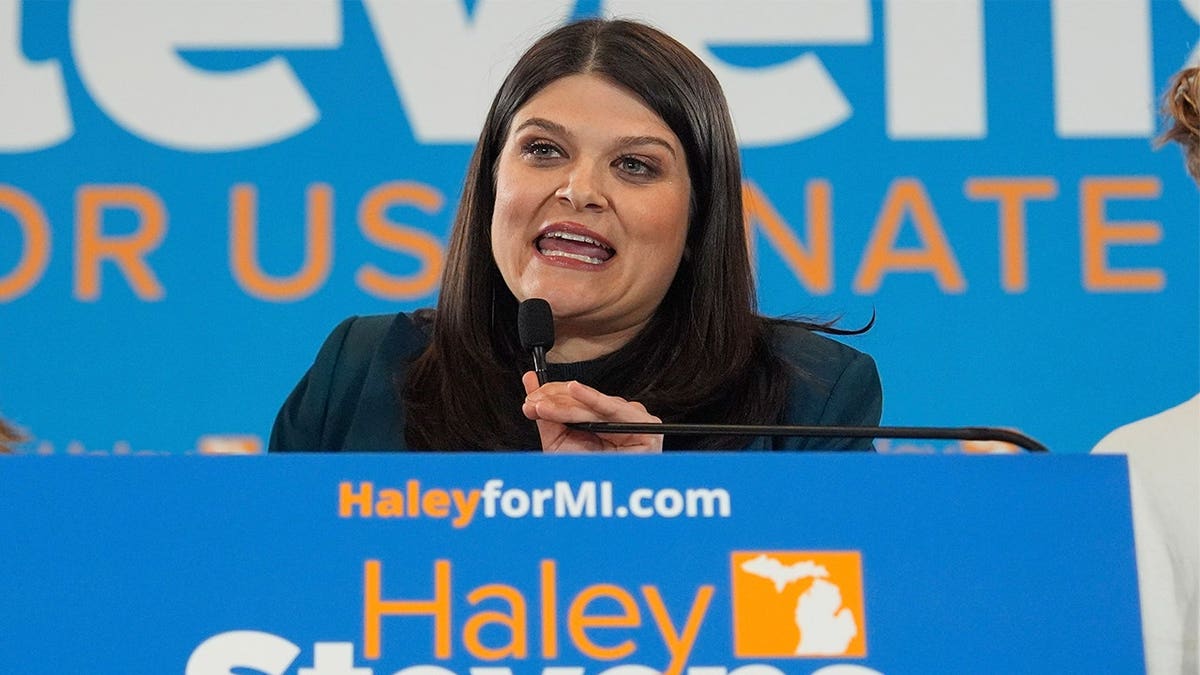
Rep. Haley Stevens, D-Mich., a candidate in the Democratic primary for U.S. Senate in Michigan speaks to supporters election night Tuesday, Aug. 4, 2026, in Detroit. (Paul Sancya/AP Photo)
The race to succeed retiring Democratic Sen. Gary Peters, who backed Stevens, is a must-win contest for Democrats and one of roughly a dozen Senate races expected to determine whether Republicans retain their narrow majority.
Boosted by a string of victories this spring in predominantly Democratic congressional districts, the party’s progressive wing brought its ideological battle with the establishment to the Great Lakes battleground. The combustible and expensive contest became the biggest stage yet in the intraparty fight.
El-Sayed, an epidemiologist who unsuccessfully ran for governor as an insurgent candidate in 2018, would become the nation’s first Muslim senator if elected. He has made support for «Medicare for All» a major component of his campaign.
He has also called for abolishing Immigration and Customs Enforcement and has been a vocal critic of Israel during its war against Hamas, characterizing Israel’s actions in Gaza as «genocide» against Palestinians.
Schumer and other establishment Democrats view Stevens, who flipped a Republican-held district during her first election to Congress in 2018, as more electable than El-Sayed, whose past comments have drawn controversy.
More than $80 million was spent on the primary, making it the most expensive Democratic Senate nomination contest in history. Much of the money came from outside groups supporting Stevens or opposing El-Sayed. The largest spender was United Democracy Project, a political action committee aligned with the American Israel Public Affairs Committee.
«We all knew that we’re going to spend their money. We didn’t know they were going to spend $70 million of their money. We didn’t know that they were going to outspend us $11 to $1. And yet we’re still standing,» El-Sayed highlighted in his speech.
El-Sayed urged party unity and took aim at former Rep. Mike Rogers, the Republican Senate nominee.
Stevens also targeted Rogers during her primary night speech.
DEMOCRACY ’26: STAY UP TO DATE WITH THE FOX NEWS ELECTION HUB

Republican Senate candidate former Rep. Mike Rogers of Michigan stands for a Fox News Digital interview, on August 2, 2026, in Farmington Hills, Michigan (Paul Steinhauser/Fox News)
«Whoever wins is going to go and take on Mike Rogers. Republicans are going to do everything they can to throw all the dirt, all the mud, the kitchen sink at us because they want to keep the U.S. Senate red, so Mike Rogers can keep rubber-stamping Donald Trump’s ridiculous agenda,» she argued.
The progressive-versus-establishment battle also played out in Michigan’s 7th Congressional District, a Republican-controlled swing seat that is among roughly two dozen races expected to help determine control of the House.
William Lawrence, a co-founder of the Sunrise Movement climate advocacy group, edged out two more moderate Democrats. Lawrence was backed by Sanders and El-Sayed, as well as several prominent progressive groups. He will face Republican Rep. Tom Barrett in the general election.
The party’s internal battle was also on display in Michigan’s heavily Democratic 13th Congressional District, where the Associated Press had not projected a winner early Wednesday.
Rep. Shri Thanedar, who is supported by top House Democratic leaders, was being challenged by state Rep. Donovan McKinney. McKinney was backed by Sanders, El-Sayed and «Squad» members Reps. Ilhan Omar of Minnesota, Ayanna Pressley of Massachusetts and Summer Lee of Pennsylvania.
Wins for centrists to cheer
The party’s ideological warfare was front and center in Missouri’s St. Louis-based, heavily Democratic 1st Congressional District.
Bell, who was backed by House Democratic Leader Hakeem Jeffries of New York and other establishment figures, defeated Bush, the former two-term representative whom Bell ousted in the 2024 primary.
DEMOCRACY ’26: STAY UP TO DATE WITH THE FOX NEWS ELECTION HUB
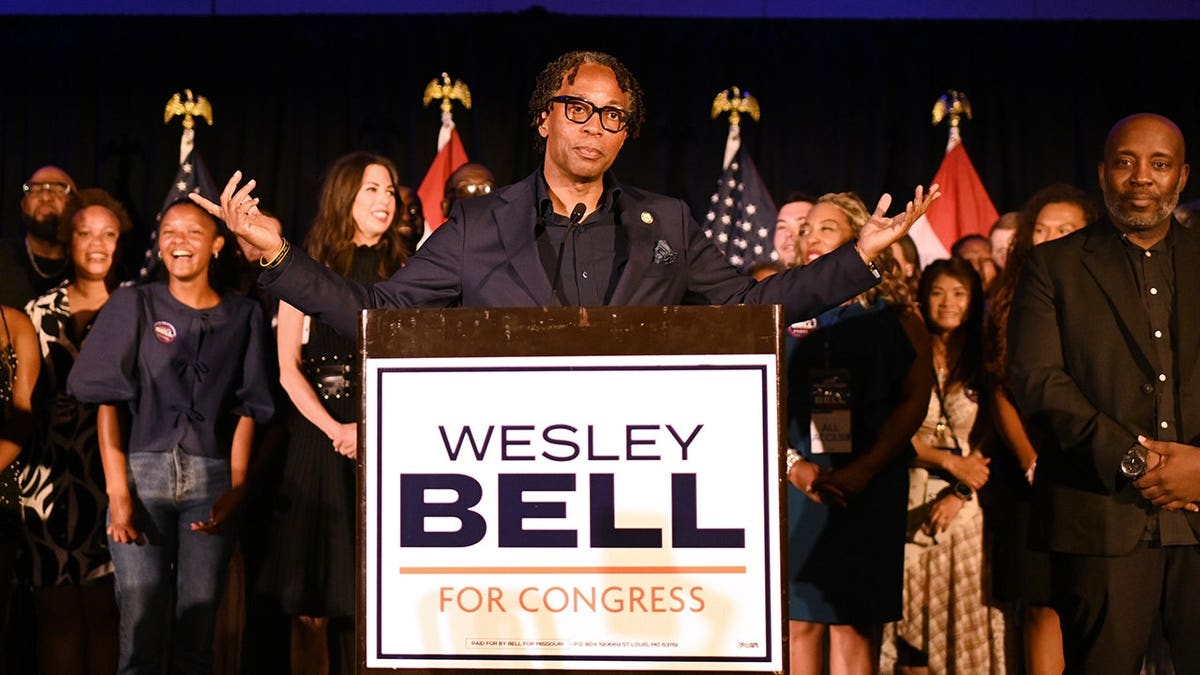
Democratic Rep. Wesley Bell speaks at his Democratic primary victory celebration, on August 4, 2026 in St. Louis, Missouri (Michael Thomas/AP Photo)
Bell was again boosted by a major infusion of outside money, allowing him to substantially outspend Bush and her allies. Much of the funding and advertising targeting Bush came from United Democracy Project, the super PAC aligned with AIPAC.
Bush was among the first House Democrats to accuse Israel of committing genocide against Palestinians during its war against Hamas in Gaza.
«Two years ago, St. Louis voted for better and more accountable representation. We have kept that promise, whether it’s bringing federal resources home to our neighborhoods, standing with working folks when they needed someone in their corner, or helping families cut through red tape,» Bell said following his victory. «That work does not stop tonight.»
Bush, however, lashed out at Bell, criticizing him for skipping candidate forums and claiming he was controlled by billionaires.
«It pisses me off that for the next two years, this community will be represented by someone that didn’t deem you valuable enough to show up to one candidate forum where there were audience comments, even though I showed up to every one,» Bush emphasized.
MEET THE FAR LEFT INSURGENTS WAGING WAR ON THE DEMOCRATIC PARTY IN THE 2026 MIDTERMS

Former Rep. Cori Bush speaks after losing the Democratic Congressional primary in Missouri’s 1st District, on August 4, 2026, in St. Louis, Missouri (Matthew Donnell/Fox News)
Back in Michigan, two candidates who are far from left-wingers captured Democratic nominations in statewide contests. Michigan Secretary of State Jocelyn Benson won the Democratic gubernatorial primary in the race to succeed term-limited Gov. Gretchen Whitmer and Attorney General Dana Nessel was renominated.
«It’s not all that clear that the party has shifted that far to the left,» Matt Bennett, one of the leaders at the Third Way, a leading center-left Democratic organization, told Fox News Digital.
Pointing to increasingly intense Democratic opposition to Trump, Bennett said the Michigan Senate result may reflect «a unique situation where candidates matter.»
«And in this moment, Democratic voters everywhere are very very angry at Trump and they’re flipping over the tables and taking it out on the establishment and Haley, for better or worse, has run as the establishment.»
Trump flexes political muscle
Trump’s clout within the GOP and the power of his endorsements in Republican primaries were tested again Tuesday, and the president’s preferred candidates prevailed in two gubernatorial contests.
Trump-backed Rep. John James of Michigan, a West Point graduate and two-time Republican Senate nominee, defeated multimillionaire businessman Perry Johnson, a former gubernatorial and presidential candidate, to capture the party’s gubernatorial nomination.
James will face Benson in the race to succeed term-limited Democratic Gov. Gretchen Whitmer.

Republican gubernatorial candidate in Michigan, Rep. John James, R-Mich., speaks during a breakfast at Fireside Grill & Patio on Aug. 3, 2026 in Novi, Michigan. (Finn Gomez/Getty Images)
In Kansas, Trump-endorsed state Senate President Ty Masterson prevailed in a crowded field of Republican gubernatorial contenders.
Democratic Gov. Laura Kelly is term-limited, making the race to succeed her a leading pickup opportunity for Republicans.
Fox News’ Matthew Donnell and Luke Trevisan contributed to this report.
state and local primaries, midterm elections, elections, democrats elections, republicans, donald trump, michigan
INTERNACIONAL
Gustavo Petro llama a organizar una «milicia popular» en Colombia para la defensa ciudadana tras el cambio de gobierno
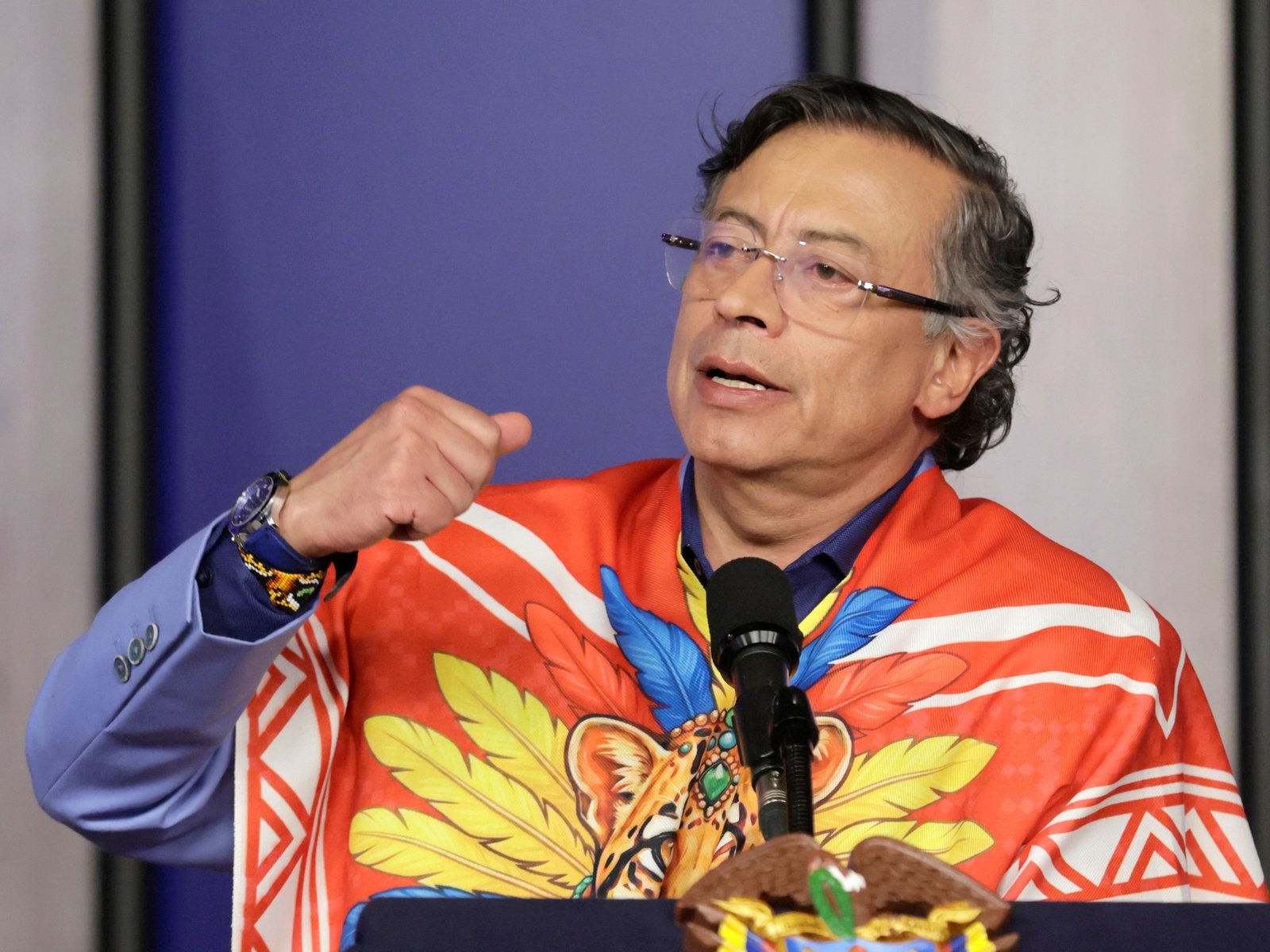
El presidente de Colombia Gustavo Petro, quien termina su mandato este viernes y dejará el lugar al populista de derecha Abelardo De la Espriella, instó el lunes a los movimientos sociales a organizar una “milicia popular” para defenderse de eventuales agresiones de lo que denominó el “fascio narcotraficante”, luego de ataques contra un líder indígena y un político de su partido el fin de semana.
“Le solicito al movimiento indígena, campesino, popular y estudiantil del Cauca (suroeste) organizar las guardias libertadoras para contrarrestar a los asesinos organizados con la fuerza de la red y el poder popular”, afirmó el mandatario en la red social X.
Petro, quien militó en su juventud en la extinta guerrilla M-19, considera las “guardias libertadoras” como formas de “milicia popular que deben actuar en coordinación con el ejército nacional” en los lugares donde las “mafias” busquen dominar a los militares, a quienes instó a desobedecer si les ordenan “asesinar al pueblo”.
Andrés Macías, investigador de conflicto y temas de paz de la Universidad Externado, explicó a The Associated Press que las declaraciones de Petro resultan delicadas porque “introducen la posibilidad de legitimar el uso de las armas por parte de actores civiles en un contexto donde Colombia ya enfrenta una alta fragmentación de la violencia” por parte de grupos armados ilegales.
En regiones como Cauca, donde las comunidades padecen la presencia de actores armados, Macías advierte que se podría aumentar la desconfianza en las instituciones y dificultar la “diferenciación entre organizaciones comunitarias legítimas y estructuras armadas ilegales”.
Petro aseguró a la prensa que tienen “información de decenas de toneladas de explosivos en Cali, Valle del Cauca y otros lugares” que se trata de neutralizar, sin indicar si podrían ser usadas en el marco de la posesión presidencial.
En los últimos días de su gobierno Petro ha insistido en que su sucesor, el abogado y empresario de derecha Abelardo de la Espriella, representa la llegada del “fascismo” a Colombia.
Petro insistió el lunes en un presunto fraude “algorítmico sistemático” en las elecciones presidenciales, desconociendo la victoria de De la Espriella, basado en “70.000 testigos digitales”, como llamó a ciudadanos voluntarios que revisaron las actas de votación.
“Se me exige para no ponerme en una cárcel, que la quieren aquí o en el extranjero, que me porte bien, pero, ¿cómo un demócrata puede aceptar el fraude electoral?”, afirmó Petro, quien sostuvo que teme que lo “extraigan” en aparente referencia a lo ocurrido en Venezuela en enero cuando Estados Unidos capturó al mandatario Nicolás Maduro.
De la Espriella, respaldado por el presidente Donald Trump, se posesionará el 7 de agosto en Cali, la principal ciudad del suroeste del país, para enviar un mensaje a los grupos armados ilegales que operan en esa zona y a los que promete combatir con mano dura.
Petro instó a los movimientos sociales a reunirse el 7 de agosto en Cali para “organizar las guardias libertadoras y las formas de la resistencia”. Se espera que en el marco de la posesión presidencial se registren manifestaciones de sectores opositores a De la Espriella.
“Las guardias libertadoras sólo obedecen órdenes de su comunidad en asamblea, es la comunidad la que decide si deben armarse o no, de acuerdo a la magnitud de la agresión”, aseguró Petro.
El ex militar y representante por el Partido Conservador Guillermo Blanco, advirtió en X que lo propuesto por Petro “choca con el orden constitucional y sólo alimenta el riesgo de fortalecer estructuras armadas paralelas”.
De la Espriella enfrentó críticas en campaña por declararse enemigo de los “señores de la izquierda” a quienes había que “destriparlos”. Luego matizó su discurso diciendo que se refería a una confrontación ideológica en el “marco de la ley”.
Petro enmarcó en un supuesto plan de exterminio de su corriente política el ataque contra el líder indígena Julián Mauricio Gutiérrez, quien falleció por la gravedad de las heridas, perpetrado el sábado en Florida, municipio aledaño a Cali; así como el ataque con disparos el domingo contra el diputado Yesid Sandoval del oficialista Pacto Histórico, del que salió ileso.

NEWYou can now listen to Fox News articles!
Brazilian lawmakers preparing to conduct official business found themselves sharing the halls of a state legislature with several uninvited — but unusually relaxed — guests.
A group of capybaras entered the Mato Grosso Legislative Assembly in Cuiabá on July 30, briefly drawing attention away from an upcoming vote as they explored the government building.
Video recorded by legislative staffer Nayara Bueno showed the animals moving calmly through the entrance while workers sought to steer them outside.
BLACK BEAR CAUGHT ON VIDEO WANDERING INTO CALIFORNIA WATER DISTRICT OFFICE AFTER PUSHING OPEN FRONT DOOR
A group of capybaras has increasingly been crashing into a Brazilian state legislature’s voting sessions. (UGC via AP)
«They show up here quite often, so we’ve gotten used to seeing them,» Bueno told The Associated Press.
The rodents’ guest appearance did not cause any damage to the Mato Grosso state legislature, according to officials.

The animals appeared calm as they wandered through the front door of the local legislative building in Cuiaba. (UGC via AP)
The legislature borders a park that is home to wildlife, giving the animals easy access to the surrounding government complex.
Native to South America, capybaras are semiaquatic mammals commonly found around wetlands and other bodies of water. They are highly social, generally travel in groups and can reach weights of about 175 pounds.
ROGUE PARROT ATTACKS PLAYERS DURING BRAZILIAN U-15 SOCCER GAME-THEN COMES BACK AND DOES IT AGAIN

The legislative building is located near a park filled with wildlife, where the capybaras had wandered away from. (UGC via AP)
The world’s largest living rodents have also become internet favorites, with social media users frequently highlighting their laid-back behavior around other animals and people.
The Associated Press contributed to this report.
odd news, brazil, south america, mammals, world

Fentanilo mortal: el juez Kreplak indagará a las dos ex funcionarias detenidas que estaban a cargo de los controles de los laboratorios

Declararon responsable a un hombre por abusar sexualmente a una adolescente en Neuquén

Democrats’ bitter civil war hits Michigan, but biggest prize still up for grabs

Tigre vs. Belgrano: formaciones, hora y dónde ver por tv

Los cuatro signos del horóscopo chino que saldrán ganando si dejan de insistir en agosto, según Ludovica Squirru

Conflicto en los puertos: el Gobierno anunció que suspenderá el decreto de desregulación y reducirá un 20% las tarifas de practicaje

“Vamos a acelerar con todo”: el objetivo del Gobierno por las reformas y la agenda electoral de cara al 2027

Javier Milei cruzó a Victoria Villarruel y elevó la tensión: “Es una opositora, replica los argumentos kirchneristas”

Reelecciones indefinidas: el oficialismo bonaerense niega que busque ampliar la Legislatura como parte de una reforma política para beneficiar a los intendentes

¡Chau Luck Ra! La salida de soltera de La Joaqui, muy bien acompañada, a días de su separación
-
 POLITICA3 días ago
“Vamos a acelerar con todo”: el objetivo del Gobierno por las reformas y la agenda electoral de cara al 2027
-
 POLITICA1 día ago
Javier Milei cruzó a Victoria Villarruel y elevó la tensión: “Es una opositora, replica los argumentos kirchneristas”
-
 POLITICA2 días ago
Reelecciones indefinidas: el oficialismo bonaerense niega que busque ampliar la Legislatura como parte de una reforma política para beneficiar a los intendentes