INTERNACIONAL
El presidente de Bolivia declaró el estado de excepción para liberar las rutas: “Los bolivianos no pueden seguir siendo rehenes”

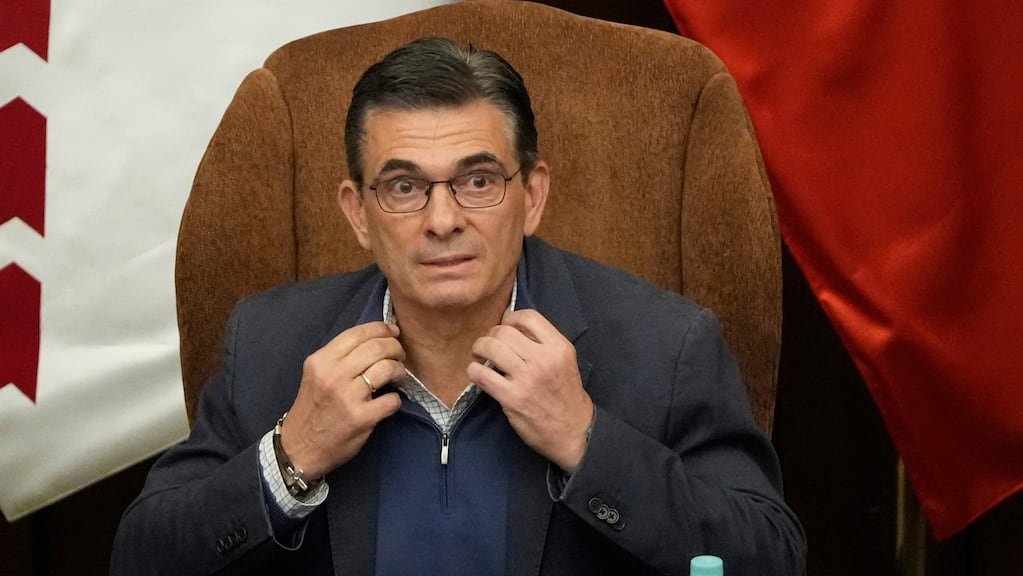
La tensión en Bolivia escaló al máximo este sábado, cuando el presidente Rodrigo Paz decretó el estado de excepción en todo el país y ordenó la movilización de policías y militares.
La medida llegó después de más de seis semanas de protestas y bloqueos encabezados por indígenas aimaras y campesinos afines a Evo Morales, que reclaman la renuncia del mandatario.
El viernes, Paz había logrado un acuerdo con la poderosa Central Obrera Boliviana (COB) para intentar pacificar el país. Sin embargo, los indígenas de la Federación Túpac Katari y los cocaleros vinculados al expresidente Evo Morales decidieron mantener los cortes de rutas y endurecer la protesta.
El Gobierno denuncia un “intento de golpe de Estado”
En un mensaje transmitido por el canal estatal desde el Palacio de Gobierno, Paz anunció: “Hemos tomado la decisión de declarar el estado de excepción en todo el territorio nacional”.
“Los bolivianos no pueden seguir siendo rehenes de bloqueos que impiden trabajar, estudiar, recibir atención médica, abastecerse y llevar sustento a sus hogares», afirmó en X.
El presidente justificó la medida ante lo que calificó como “un intento de golpe de Estado desde el narcoterrorismo”. El viernes, Paz había logrado un acuerdo con la poderosa Central Obrera Boliviana (COB) para intentar pacificar el país. REUTERS/Claudia Morales
El gobierno de centroderecha, que asumió en noviembre tras dos décadas de poder de izquierda, acusa a Evo Morales de impulsar las manifestaciones y de financiarse con dinero del narcotráfico, aunque hasta ahora no presentó pruebas.
Morales, que está oculto en la región cocalera de Chapare para evitar una orden de captura por un caso de trata de menor que él niega, también rechazó cualquier vínculo con el narcotráfico.
Un país paralizado por la crisis y los bloqueos
Las protestas comenzaron a principios de mayo, cuando obreros, campesinos e indígenas lanzaron una huelga y cortes de rutas para exigir soluciones a la crisis económica más grave en 40 años y rechazar la venta de gasolina de mala calidad, que generó malestar generalizado.
Con el correr de los días, la falta de acuerdos llevó a que todos los sectores exigieran la renuncia presidencial y los bloqueos se extendieran a todo el país. En La Paz y El Alto, la situación se volvió crítica: hubo enfrentamientos con la policía y una fuerte escasez de alimentos, medicinas y combustibles.
Militares y policías, en las calles
Paz declaró que instruyó a la Policía Boliviana y a las Fuerzas Armadas a “ejecutar las acciones necesarias para restablecer el libre tránsito, recuperar las carreteras y garantizar la seguridad de la población”.
El decreto, publicado horas después en la Gaceta de Bolivia, tendrá una vigencia máxima de 90 días. Además, los ministerios de Gobierno y Defensa podrán restringir los derechos a la circulación, locomoción y reunión cuando lo consideren necesario. El Congreso deberá ratificar la medida en las próximas horas.
El acuerdo con la COB y el rechazo de los cocaleros
El decreto de excepción se firmó tras el acuerdo del viernes entre el Gobierno y la COB. Mario Argollo, líder sindical, anunció: “Desde este momento se están levantando las medidas de presión a nivel nacional”. Además, destacó el compromiso del Gobierno de cumplir de inmediato lo pactado.
Paz celebró el acuerdo y afirmó: “El diálogo es más fuerte que la propia fuerza, no sobreviven los más fuertes, sobreviven los que se saben adaptar”.
Leé también: Israel bombardeó el sur de Líbano, pese a a la tregua: hay al menos 16 muertos
Sin embargo, los sindicatos de campesinos y cocaleros rechazaron el pacto y anunciaron que los bloqueos —que ya suman medio centenar en todo el país— continuarán. “Se ha determinado radicalizar las piquetes de huelgas de carreteras”, advirtió el dirigente campesino Antonio Mallku.
Los cocaleros, en un comunicado, ratificaron que mantendrán la movilización y calificaron como “una traición la firma del convenio”.
Más de un centenar de detenidos y promesas de no privatizar
El Gobierno abrió la semana pasada un diálogo con Argollo y se formaron mesas de trabajo entre sindicalistas y ministros. Los acuerdos incluyen estudiar la liberación de los detenidos en marchas y bloqueos, que según la Defensoría del Pueblo ya superan el centenar. Además, la administración de Paz se comprometió a no privatizar empresas estatales, como reclamaban los sindicatos.
Mientras tanto, la tensión sigue en aumento y Bolivia permanece en vilo, con las calles militarizadas y la incertidumbre sobre el futuro político del país.
Bolivia, protestas, Rodrigo Paz









NEWYou can now listen to Fox News articles!
For months, President Donald Trump has fixated on one legislative priority. Now, its repeated failure may be costing Senate Majority Leader John Thune, R-S.D., the president’s support.
Trump has badgered Republicans to pass the SAVE America Act, his missing legislative crown jewel, turning support for the bill into a loyalty test.
Thune has become the target for those irritated that the bill hasn’t moved in the Senate. For months, Trump largely spared him from criticism over the bill’s stalled progress. That appears to have changed.
The hairline fractures in their relationship stem from Thune doing what few Republicans are willing to do: tell Trump no.
GOP RIFT GROWS AS THUNE HITS BRAKES ON TRUMP’S ELECTION BILL TO AVERT SHUTDOWN
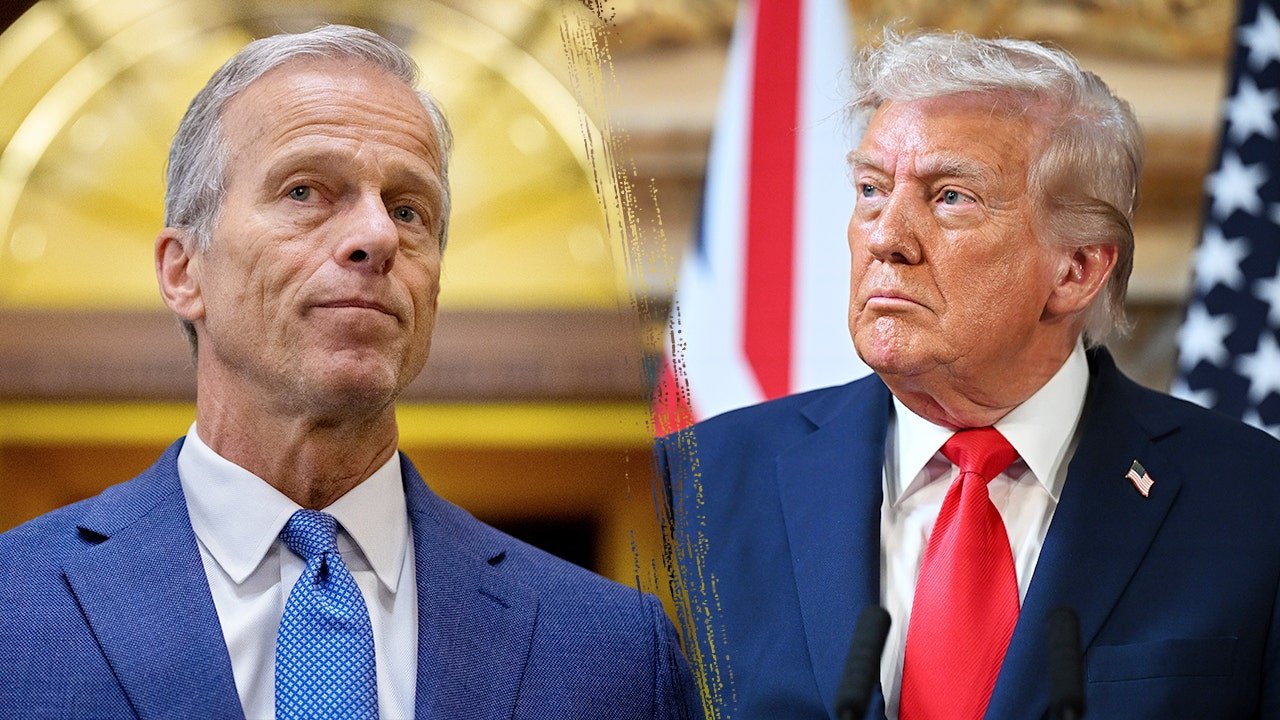
Congressional Republicans, President Donald Trump and the GOP base want voter ID turned into law, but one barrier stands in the way: the political reality of the Senate. (Leon Neal/Getty Images; Andrew Harnik/Getty Images)
«Well, that’s too bad for him,» Trump said when asked about Thune not having the votes to move the SAVE America Act. «I mean, that’s too bad for him and too bad for the Republican Party.»
«He’s got the votes,» he continued. «He should get it done. He should be able to get it done.»
And, though he’s backed him before, Trump appeared to waver in his support of Thune when asked if he was the right man for the job.
«Well, we’re going to find out, and I’ll let you know,» Trump said.
TRUMP THREATENS TO YANK HIS OWN AG NOMINEE AS GOP REVOLT GROWS
On his way to and from the Senate floor, Thune was pressed on Trump’s comments. When asked about Trump wavering on him as the leader of the Senate GOP, Thune signaled it wasn’t up to him.
«I don’t know what you say on that,» he said. «That’s a decision made by my colleagues.»
He also pushed back on the president’s assertion that Republicans could pass the SAVE America Act.
«That must be a different form of math,» Thune said.
Thune has repeatedly argued Republicans simply don’t have the votes to pass the SAVE America Act, a position that has increasingly put him at odds with Trump. A bloc of Republicans has never supported the legislation, while Senate Democrats overwhelmingly oppose it, leaving Thune without the votes.
TRUMP DEMANDS THUNE KEEP SENATE IN SESSION UNTIL SAVE AMERICA ACT PASSES
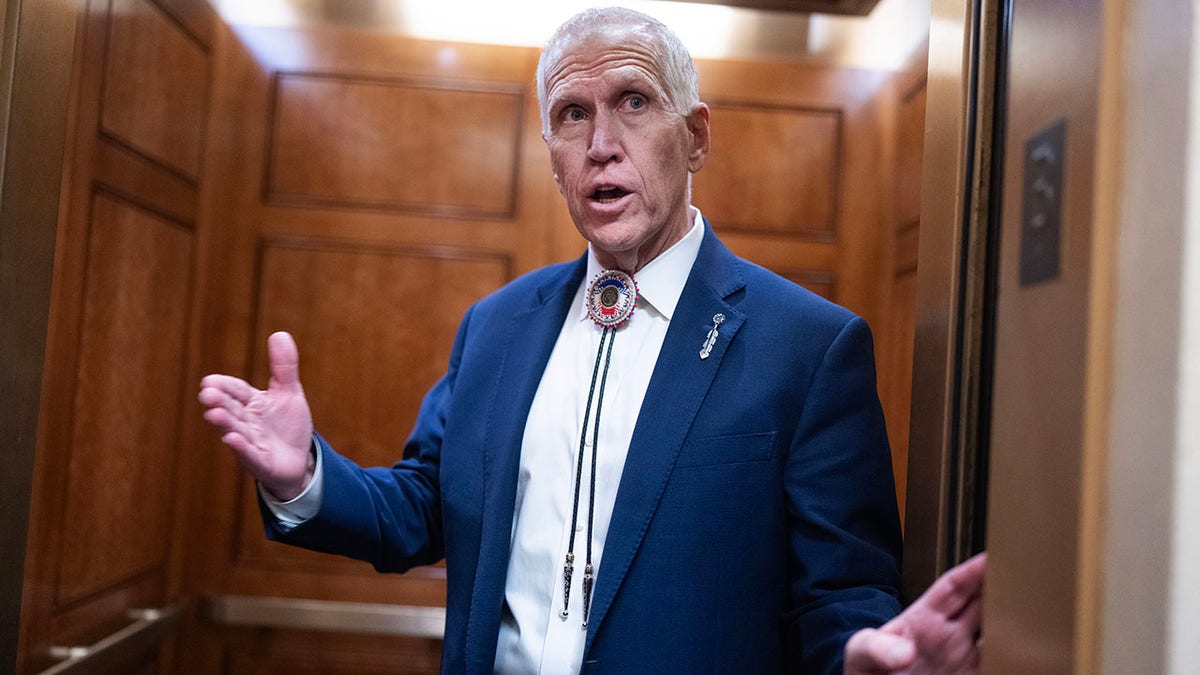
Sen. Thom Tillis, R-N.C., said he hopes the next Senate shows more independence from President Donald Trump while crediting Senate Majority Leader John Thune with steering Republicans through a difficult political landscape. (Tom Williams/CQ-Roll Call, Inc. via Getty Images)
«I think it’s wrong to blame Thune for this — Senator Thune,» Sen. Roger Marshall, R-Kan., told Fox News Digital. «This is not his fault.»
Still, Thune has moved major legislation backed by the president and has the Senate on a record pace for nominee confirmations, all while dealing with vulnerable Republicans taking tough political votes and Democrats who are bound to kneecap Trump’s agenda at every turn.
«I hope that the next Congress, the people with the election certificates as U.S. senators who actually make that decision, show some independence and courage,» Sen. Thom Tillis, R-N.C., told Fox News Digital. «And recognize that Thune has helped navigate an almost impossible scenario to navigate with this president.»
The legislation has been tested several times in a variety of forms, and has never gotten the needed votes to pass. And Thune has said the votes aren’t there to nuke the filibuster, which Trump has pushed for throughout his second term.
Even as Trump publicly questions Thune, the Senate GOP leader intends to seek another term as the top Republican.
Leadership is elected internally by Senate Republicans, not by the president. Thune came out of a crowded field to replace Sen. Mitch McConnell, R-Ky., battling Sen. John Cornyn, R-Texas, and Sen. Rick Scott, R-Fla., to get the top spot in the Senate GOP.
And his colleagues, so far, have his back.
Scott, who ran against Thune, told Fox News Digital that he had no intention of running for the top gig in the Senate again. He also noted that even though he wanted it, it’s a difficult profession to take on.
«John’s a smart guy,» Scott said. «He is working really hard. So I think he shouldn’t — you know, it’s tough to be the leader.»
«We’ve got a lot of issues we haven’t addressed, so it’s hard,» he continued. «I assumed it was gonna be hard.»
politics, donald trump, john thune, senate elections, republicans elections
INTERNACIONAL
Crisis en Ceuta: Finlandia apoya a Italia para suspender a España del espacio Schengen por la avalancha migratoria desde Marruecos
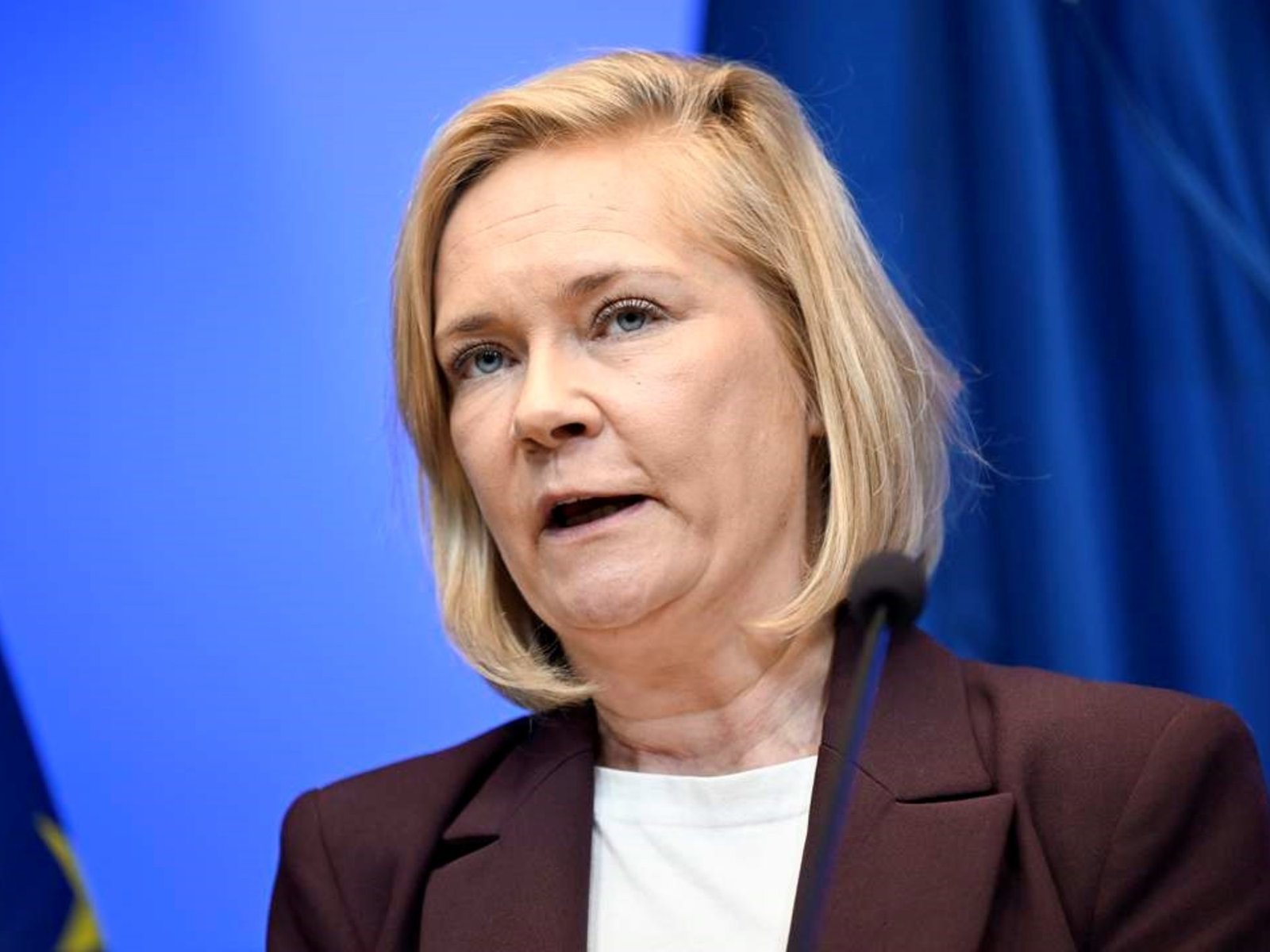
Finlandia respaldó este viernes la propuesta italiana de suspender a España del espacio europeo Schengen de libre circulación de personas tras la entrada ilegal de decenas de miles de migrantes al enclave español de Ceuta procedentes de Marruecos.
«Los países que no cumplen con su obligación de proteger la frontera exterior no pueden ser miembros de Schengen», escribió la ministra finlandesa de Interior, Mari Rantanen.
En este sentido, el gobierno de Pedro Sánchez está de vuelta en la mira de un grupo de mandatarios de derecha, tras la masiva entrada de migrantes marroquíes al enclave español de Ceuta (África). La primera ministra de Italia, Giorgia Meloni, confirmó que estudian la suspensión del espacio Schengen entre Italia y España que garantiza la libre circulación entre los países que firmaron el tratado.
«Las imágenes que llegan desde Ceuta son impresionantes y demuestran, una vez más, que la inmigración clandestina fuera de control representa una amenaza concreta para la seguridad de las fronteras europeas», escribió en X la líder italiana.
Este jueves miles de migrantes han accedido a la ciudad autónoma española desde Marruecos cruzando a pie por el espigón fronterizo sur del Tarajal, una situación que se ha repetido horas después con otros miles accediendo de forma irregular a la ciudad.
«Italia no se quedará de brazos cruzados. Estamos convocando a los organismos competentes, y al término de estas reuniones estamos preparados para intervenir también con instrumentos extraordinarios para defender las fronteras y la seguridad de los ciudadanos, como la suspensión del espacio Schengen con España«, señaló la mandataria, que previamente se había reunido con el ministro de Interior, Matteo Piantedosi.
«Sobre la inmigración clandestina no retrocederemos ni un milímetro: defender las fronteras, detener a los traficantes de seres humanos y garantizar repatriaciones efectivas seguirá siendo la línea de este Gobierno», cerró Meloni.
Le immagini che arrivano da Ceuta sono impressionanti e dimostrano, ancora una volta, che l’immigrazione clandestina fuori controllo rappresenta una minaccia concreta per la sicurezza dei confini europei.
Mi sono confrontata con il Ministro dell’Interno Matteo Piantedosi.…
— Giorgia Meloni (@GiorgiaMeloni) July 30, 2026
El gobierno español reaccionó al pedido de Meloni. Consideró que se trata de una medida demagógica y convocó al embajador italiano.
El ministro italiano de Relaciones Exteriores, Antonio Tajani, también se mostró a favor del cierre del espacio Schengen con España: «La inmigración irregular e incontrolada representa un peligro para la seguridad nacional«, señaló el ministro en X.
«Las imágenes que llegan desde Ceuta demuestran cómo la decisión del Gobierno de Madrid de otorgar la ciudadanía española, por tanto europea, a más de 500.000 inmigrantes irregulares es profundamente errónea e incentiva el tráfico de seres humanos», agregó.
Por su parte, la Casa Blanca atribuyó este jueves a las «políticas globalistas de extrema izquierda» de España la situación en Ceuta. «El presidente Trump lleva tiempo advirtiendo a Europa de las consecuencias de seguir implementando políticas globalistas de extrema izquierda, como facilitar la migración masiva. España y otros países que han adoptado esta filosofía destructiva deberían rectificar de inmediato o se arriesgan a su propia desaparición«, portavoz de la Casa Blanca, Ana Kelly, a EFE.
En las últimas horas el Gobierno informó de que las Fuerzas Armadas reforzarán a la Guarda Civil para mantener la seguridad en la ciudad de Ceuta.
El presidente del Gobierno español viajará este viernes a Ceuta para conocer sobre el terreno la situación. El mandatario español afirmó este jueves que el Ejecutivo está volcado en dar una respuesta inmediata a la situación y preparaba todas las medidas necesarias para recuperar la normalidad lo antes posible.
Sánchez también indicó que España y Marruecos acordaron reforzar la coordinación y los esfuerzos para hacer frente a la crisis migratoria y se comprometieron a revisar e implementar medidas para la entrega, lo antes posible, de todas las personas que entraron de forma irregular.
La Guardia Civil recuperó este jueves los cadáveres de once personas que habrían intentado entrar a nado en Ceuta y Salvamento Marítimo otro más.
Las autoridades marroquíes han comenzado a usar material antidisturbios, gases lacrimógenos y cañones de agua, para dispersar a la multitud congregada en los alrededores de la frontera con Ceuta. Miles de personas siguen llegando durante todo el día a la localidad de Castillejos con la intención de cruzar a la ciudad española, una marea humana de más de cinco kilómetros que ha terminado por desbordar a la policía marroquí.
INTERNACIONAL
Habló el guardavidas de 16 años que salvó a un nene en California: “Se iba a ahogar y no iba a dejar que eso pasara”
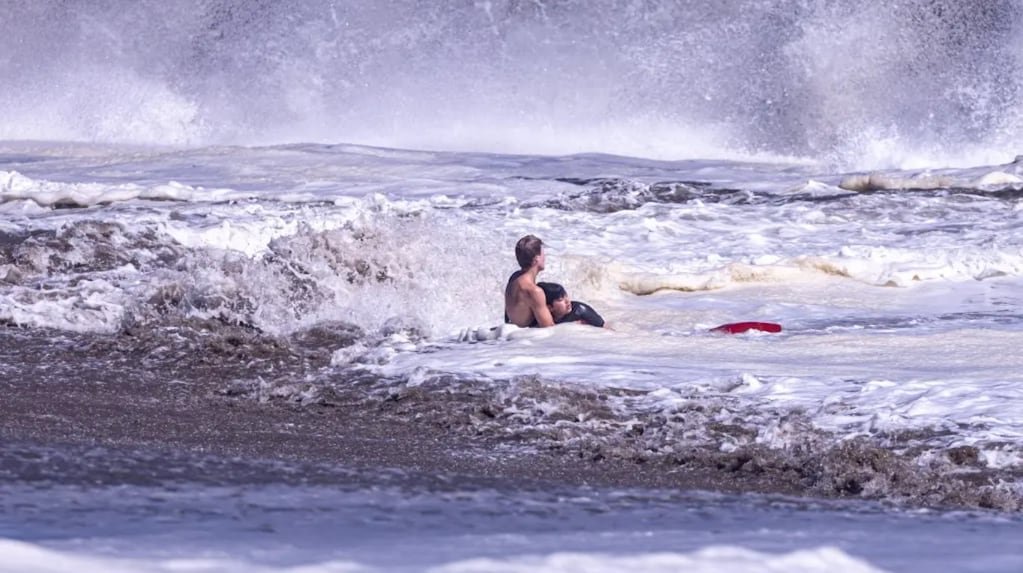
El sábado, en la playa Seabright State Beach de Santa Cruz, Ryder Williams, un guardavidas de apenas 16 años, se convirtió en protagonista de una historia que recorrió todo Estados Unidos. En medio de un mar agitado y con la costa repleta de gente, el adolescente rescató a Nathaniel Rai, un nene de 10 años que había sido arrastrado por las olas.
Williams, que está en su primer año como guardavidas de California State Parks, contó que vio cómo el chico perdió el equilibrio en la orilla y fue arrastrado hacia aguas profundas por la fuerza del mar.
Sin dudarlo, avisó por radio, dejó sus cosas en la base de la torre y corrió hacia el agua con sus aletas y el flotador. Ryder Williams salvó a Nathaniel Rai, de 10 años, en medio de un fuerte oleaje (Foto: Instagram/@Santacruznow).
“No iba a soltar a ese chico”, le contó después a su papá, Shane Williams, un bombero retirado. “Se iba a ahogar y no iba a dejar que eso pasara”, agregó el joven, que no dudó en lanzarse al mar pese a las condiciones peligrosas.
El dramático rescate en medio de olas gigantes
Williams explicó que, debido a la violencia del agua, no pudo colocarle el tubo de rescate al nene, que llegó a quedarse inmóvil mientras las olas los golpeaban una y otra vez.
“Después de la primera ola, no pude sacarlo porque estaba flácido y las olas empujaban con mucha fuerza”, señaló en un comunicado.
El Servicio de Parques de California, que emplea a los salvavidas en esa playa, indicó que el niño fue arrastrado unos 13,7 metros mar adentro antes de que el Ryder lograra alcanzarlo

Ryder Williams con su papá, Shane, un exbombero. (Foto: gentileza The New York Post).
En el video que grabaron testigos. se ve a Williams zambullirse en una ola que venía mientras se aferra con fuerza al niño.
Otro salvavidas, Aaron Bohnen, se lanzó para ayudar, junto con algunos bañistas, a quienes Williams pidió que volvieran a la orilla para no poner más vidas en riesgo.
Williams y Bohnen consiguieron sacar a Nathaniel del agua y llevarlo a la playa, donde Williams buscó el equipo médico para asistir al chico.
Reconocimiento nacional y una invitación especial
El rescate no solo evitó una tragedia, sino que también le valió a Ryder Williams el reconocimiento a nivel nacional. El propio presidente de Estados Unidos, Donald Trump, anunció que planea invitarlo a la Casa Blanca para entregarle una distinción civil por su valentía. Trump anunció que condecorará a Ryder Williams por su valentía. (Foto: captura de X).
Las autoridades destacaron que Williams estuvo asignado a la Torre 2 durante toda la jornada, haciendo controles de seguridad por la gran cantidad de gente y el mar peligroso.
Tras el rescate, el joven volvió a su puesto y terminó su turno como cualquier otro día.
“Estoy agradecido de haber podido devolver al chico a su familia sano y salvo. Este es mi trabajo y amo lo que hago”, expresó Williams en su primer comunicado tras el hecho.
“Estoy agradecido con mis compañeros salvavidas, que realizan rescates como este todos los días”, agregó.
El niño no sufrió lesiones graves y, tras una evaluación médica, se fue con su familia.
El dramático testimonio del padre del nene que fue rescatado
Sumit Rai, el papá del nene, le expresó su gratitud a Ryder en declaraciones a la agencia de noticias AP. “Lo que hizo, nunca jamás podré pagarlo”, afirmó. “Le estaré agradecido para siempre”, manifestó.
El hombre alabó el coraje del adolescente. “Se metió en ese agua pese a esas condiciones mortales. Había olas de 3 metros; hay resacas y corrientes que entran”, dijo Rai “Es peligroso meterse allí, así que estaba arriesgando su propia seguridad”, añadió sobre Ryder.
El hombre, que estaba en Dallas, se enteró de lo que había pasado al hablar por teléfono con su hijo horas después del rescate. “Mi hijo me dijo que se ahogó y que perdió el conocimiento”, comentó.
Y agregó: “Estaba muy apagado, todavía en estado de shock”.
Además, el nene le contó que le entró arena en los pulmones y que la estuvo expulsando al toser después de llegar a la orilla. Según dijo, el nene tuvo pesadillas tras el duro momento: “Fue traumático”
Estados Unidos, guardavidas

Prohibieron el Squeezy Dumpling en la Argentina: qué hacer con el juguete que presenta un “grave riesgo químico”

Milei rechazó que EEUU haya “salvado” a Argentina con el desembolso de dólares: “Su aporte fue de menos del 5%”

¡La sorprendente guerra de los meteorólogos! José Bianco se fue de TN y disparó contra todos: «Roggiano el de Telefe me da bronca…»

Casemiro dio un emotivo discurso tras firmar con Inter Miami y aseguró que pretende ayudar al “Dios del fútbol” Lionel Messi a ganar más títulos

Frases de la cadena nacional: qué dijo Javier Milei contra Cristina Kirchner en su discurso

Trump questions Thune’s leadership as SAVE America Act stalls

La pelea con Lula y el verdadero desafío que enfrenta Milei

Cómo manejar en el hielo y la nieve: técnicas y precauciones para usar el auto en la montaña en vacaciones de invierno

El BCRA cortó la racha de compra y en el mercado vuelan rumores de maniobras para frenar al dólar

World-famous Catholic shrine torched, ‘Devil in a skirt’ scrawled on Virgin Mary statue

 POLITICA3 días ago
La pelea con Lula y el verdadero desafío que enfrenta Milei
- ECONOMIA3 días ago
El BCRA cortó la racha de compra y en el mercado vuelan rumores de maniobras para frenar al dólar
- INTERNACIONAL2 días ago
World-famous Catholic shrine torched, ‘Devil in a skirt’ scrawled on Virgin Mary statue