INTERNACIONAL
Clinton judge indefinitely blocks Trump’s $1.776B anti-weaponization fund


NEWYou can now listen to Fox News articles!
A federal judge on Friday indefinitely blocked the Trump administration’s $1.776 billion Anti-Weaponization Fund, even as another federal judge earlier this week declined to intervene after the Justice Department said the fund was no longer moving forward.
The court disputes have heightened pressure on the administration to formally dismantle the fund. While Deputy Attorney General Todd Blanche told Congress the fund would not move forward, the settlement agreement and departmental directives that created the fund have not been formally rescinded. Critics argue this leaves open the possibility that the fund could still proceed in the future.
U.S. District Judge Leonie Brinkema, a Clinton-appointed judge, extended a court order Friday preventing implementation of the fund, concluding that public assurances from administration officials were insufficient to eliminate concerns that it could later be revived.
Brinkema noted how Trump, «says he’s disappointed that something is not going forward,» suggesting this was evidence that the fund may «rear its head» at some point in the future.
JUDGE TEMPORARILY BLOCKS TRUMP DOJ’S NEARLY $2B ‘ANTI-WEAPONIZATION’ FUND
President Donald Trump signs an executive order during an event in the Oval Office of the White House in Washington, D.C., on June 3, 2026. (Kevin Dietsch/Getty Images)
Over the weekend Trump shared on «Meet the Press» that he’d like to continue with the fund.
«If it was up to me, I’d pay them the kind of money that they deserve. People have been destroyed. Lives have been destroyed,» Trump said.
Brinkema gave the Justice Department a week to put in writing that the Anti-Weaponization Fund is being terminated and will not be reinstated.
The ruling comes days after U.S. District Judge Richard Leon rejected a separate request from Citizens for Responsibility and Ethics in Washington (CREW) seeking emergency intervention, saying he was willing to rely on Justice Department representations that the fund had effectively been abandoned.
ACTING AG BLANCHE REVEALS FATE OF TRUMP’S ‘ANTI-WEAPONIZATION FUND’ UNDER PRESSURE FROM HOUSE LAWMAKERS
But Leon, a George W. Bush-appointed judge, simultaneously warned administration officials not to treat his decision as permission to revive the program.
«I give the Justice Department this warning: Don’t play possum with me,» Leon said from the bench.
Blanche announced during a hearing earlier this month that the Anti-Weaponization Fund, which was born out of President Donald Trump’s lawsuit settlement with the IRS, would not be proceeding. The fund was intended to compensate alleged victims of government «lawfare,» but its creation sparked immediate backlash from Democrats, who characterized it as a «slush fund» that could ultimately benefit Trump’s political allies and individuals charged in the Jan. 6 Capitol riot.
TRUMP ADMIN PUSHES BACK ON ‘SLUSH FUND’ ATTACKS AGAINST ANTI-WEAPONIZATION FUND AND LAYS OUT WHO QUALIFIES
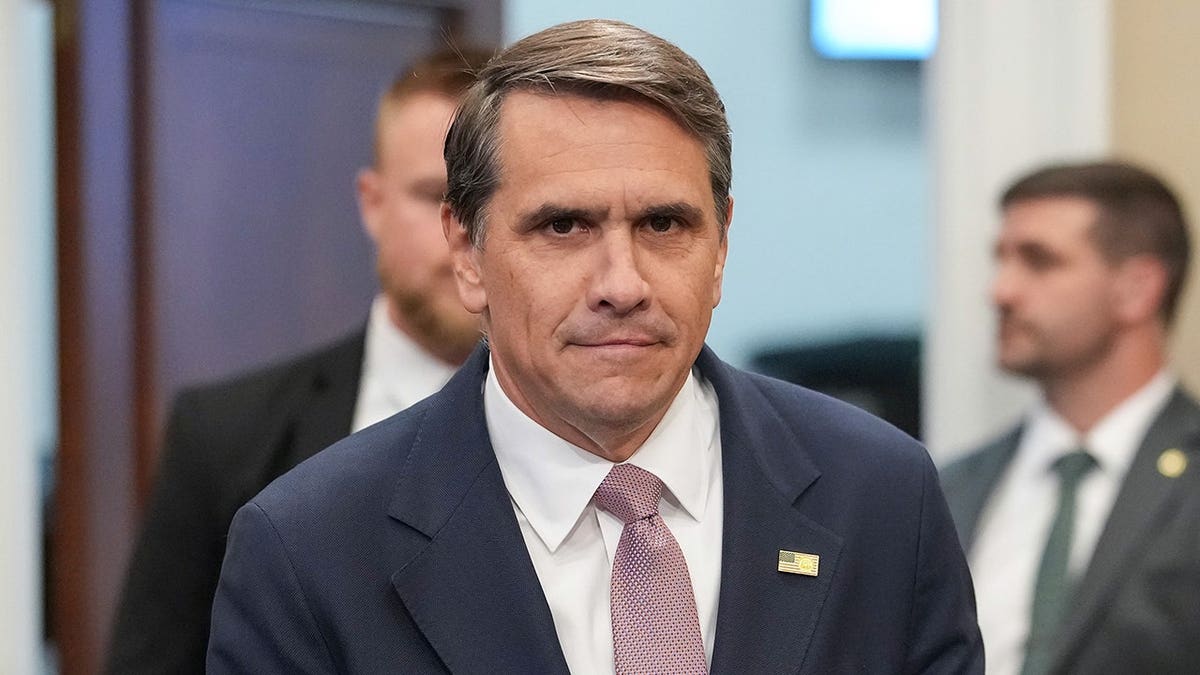
FILE – Acting U.S. Attorney General Todd Blanche was directed to obtain a certificate of pardon for Buyer. (Andrew Harnik/Getty Images)
Justice Department attorney Andrew Block argued before Leon that Blanche’s congressional testimony effectively mooted CREW’s challenge because the government had publicly committed not to move forward.
Leon repeatedly questioned why Blanche has not formally rescinded a May 18 order that established procedures for the fund in the first place, a question Block could not answer.
CREW attorney Nikhel Sus argued the settlement agreement that established the fund remains legally operative and contains upcoming deadlines requiring action.
WAY HARDER THAN IT SHOULD BE: WHY CONGRESS MAY BALK ON $1.7B COMPENSATION FUND
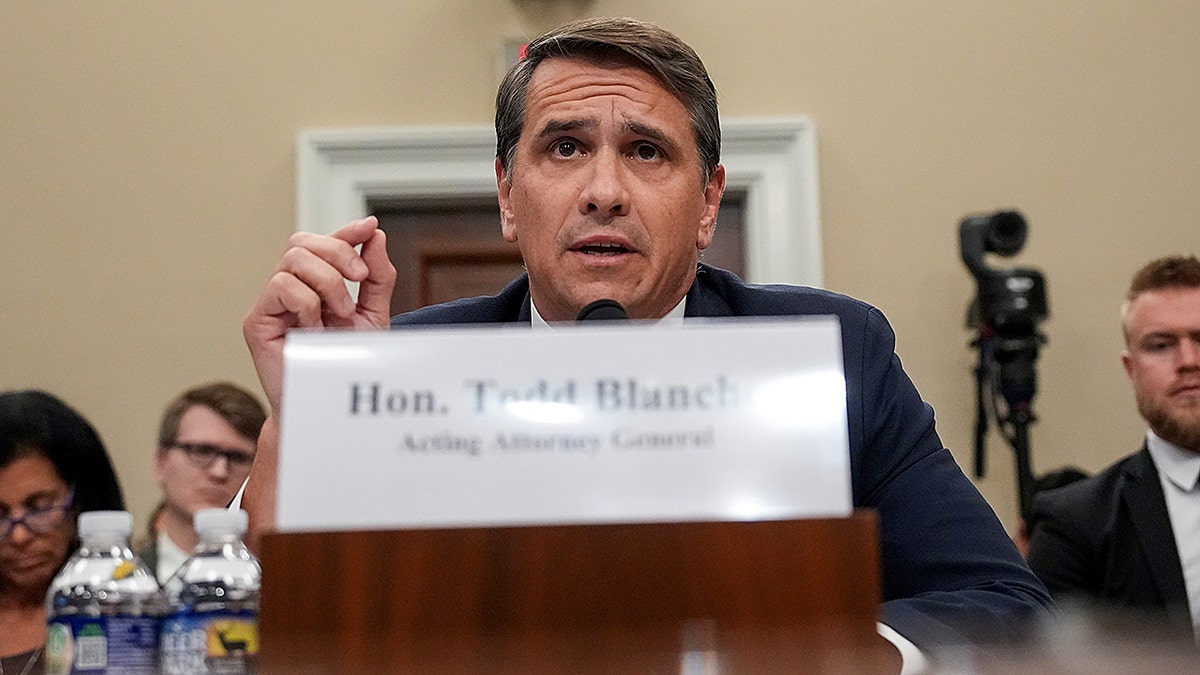
Acting U.S. Attorney General Todd Blanche testifies during a House Committee on Appropriations subcommittee hearing in the Rayburn House Office Building in Washington, D.C., on June 2, 2026. (Andrew Harnik/Getty Images)
According to Sus, a five-member board overseeing the fund must be established by June 17, while funding transfers are scheduled by July 17.
«On paper, the fund is still a legally operating entity,» Sus argued.
However, Leon ultimately accepted the government’s assurances for now that the fund is moot, but he noted that he can sanction attorneys who make false representations to the court.
CLICK HERE TO DOWNLOAD THE FOX NEWS APP
He also indicated he will continue considering CREW’s request for a preliminary injunction and suggested he could intervene if evidence emerges that the administration is attempting to revive the fund.
federal courts, federal judges, administration, congress, justice department













INTERNACIONAL
Turs, el primer agente turístico digital impulsado por Inteligencia Artificial en El Salvador

La industria turística de El Salvador incorpora una nueva herramienta digital con el lanzamiento de Turs, el primer super agente turístico impulsado por Inteligencia Artificial en el país.
La plataforma, presentada oficialmente el miércoles, busca transformar la forma en que los viajeros descubren y experimentan los destinos nacionales a través de la integración de tecnología avanzada y ofertas personalizadas.
Turs ofrece un sistema que conecta a turistas con una amplia variedad de opciones, desde rutas y atractivos hasta experiencias culturales y gastronómicas. El proyecto pone un énfasis especial en la interacción directa entre visitantes y anfitriones locales, con el propósito de destacar las historias y el valor humano detrás de cada recorrido.
El objetivo central, según los responsables de la plataforma, consiste en “mostrarle al mundo lo mejor de nuestro país” y fortalecer la reputación de El Salvador como destino turístico.
El lanzamiento de Turs representa un avance relevante para el sector turismo en un contexto de creciente digitalización global.

La plataforma se describe como una oportunidad para que millones de viajeros accedan a información actualizada, asesoría personalizada y una visión auténtica de la cultura salvadoreña. Los creadores del proyecto subrayan que cada experiencia promovida por el sistema lleva el sello de quienes hacen posible la hospitalidad local.
El sitio oficial de la plataforma, www.turslatam.com, ya se encuentra disponible para usuarios interesados en planificar su próxima visita a El Salvador.
Con esta iniciativa, el país busca posicionarse en el mapa internacional de innovación turística y responder a las nuevas tendencias de viaje que privilegian el acceso digital y las experiencias personalizadas.
El evento contó con la presencia de altos funcionarios y representantes del sector turístico, quienes destacaron el avance en políticas de seguridad y la apuesta por la innovación tecnológica para fomentar el turismo nacional e internacional.
La ministra de Turismo, Morena Valdez, y la viceministra de Relaciones Exteriores, Adriana Mira, participaron activamente en la presentación de la plataforma. Ambas funcionarias destacaron la importancia de la colaboración interinstitucional para fortalecer el sector y destacaron el respaldo del gobierno a la transformación digital como motor de desarrollo económico. “Esta nueva plataforma, Turs, está dando un valor agregado, que es que te ofrece una experiencia con los operadores turísticos locales en cada reservación”, expresó Valdez, citada por la Presidencia a través de su Secretaría

Por su parte, durante el evento, Raymond Villalta, fundador y presidente de Turs, resaltó el impacto positivo de las políticas de seguridad implementadas por el gobierno en la percepción internacional del país.
“El Salvador ahora lo podemos recorrer libremente, gracias a Dios, con seguridad, hacia todos lados. Gracias por todo ese apoyo, pero pasa algo; yo creo que le pasa mucho más al extranjero, que no conocemos todas las experiencias que se pueden vivir en El Salvador; conocemos las pupusas, la playa El Tunco, El Zonte y otros lugares preciosos; el lago de Coatepeque, lago de Ilopango y cada vez más cosas que hacer en el país”, afirmó Villalta, de acuerdo con la comunicación oficial de la Secretaría de Prensa de la Presidencia.

En el marco del acto, Villalta entregó un reconocimiento a la ministra de Turismo, Morena Valdez, por el reciente nombramiento de El Salvador como sede del Día Mundial del Turismo 2026.
Este logro fue celebrado como un hito sin precedentes para el país, ya que por primera vez será anfitrión de este evento internacional.
“Vamos a ser sede del Día Mundial del Turismo 2026 por primera vez en la historia de El Salvador; la verdad, me alegra ver a muchísimos actores del sector turístico de todas partes del territorio nacional”, señaló Valdez.
El Salvador,Turs,Turismo de El Salvador,Morena Valdez
INTERNACIONAL
The hidden left-wing network powering a ‘conservative’ rebellion against a major Trump priority

The AI data center backlash
Paul Gigot, Kim Strassel, Allyssia Finley, and Jason Riley discuss the growing progressive backlash against AI data centers. Citing environmental concerns, increased electricity prices, and potential job displacement, Bernie Sanders and AOC introduced legislation for a nationwide moratorium on new data center construction. The panel explores the economic implications and highlights the lack of clear evidence supporting claims of rising energy costs directly tied to data centers.
NEWYou can now listen to Fox News articles!
A group billing itself as a grassroots conservative movement against new data centers carried out a series of nationwide protests enlisting the help of Green Party figures and Democratic-aligned activists, a Fox News Digital review found.
Though initially launched as a bipartisan project, Humans First has since become — in its own words — a «conservative social movement that is dedicated to ensuring that the future of AI is in the hands of everyday people.» Humans First’s nascent movement was supposed to build up to mass protests on July 18, when the organization says it sought to rally conservatives against the construction of new data centers.
The push put Humans First in tension with one of President Donald Trump’s major economic priorities — accelerating the data-center buildout needed to power America’s AI race.
TOP ENERGY GROUP WARNS WEALTHY FOREIGNERS ARE POTENTIALLY BANKROLLING ANTI-DATA CENTER CAMPAIGNS ACROSS US
Nevada Big Blind center. (Zanskar)
While right-wing activist Amy Kremer is the public face of Humans First, the group’s paper trail shows that the organization didn’t start with her or even another conservative. Incorporation records reviewed by Fox News Digital list staffers from the Center for AI Safety, a San Francisco-based nonprofit, as Humans First’s initial employees. The Center for AI Safety also provided a loan to Humans First to serve as start-up capital, NBC News previously reported.
In a similar vein, several of the local organizers named on Humans First’s website as planning the July 18 protests had backgrounds in left-of-center politics.
«I was one of the earliest leaders of the Tea Party movement in 2009, and I can tell you that the disconnect between the elites and the base that gave rise to the Tea Party movement can be seen today in the battle over AI data centers,» Kremer, chair of Humans First, told Axios in June.
During the Obama administration, Kremer was a top Tea Party activist and, more recently, she was one of the organizers of the «Save America» rally that preceded the Jan. 6 attack on the U.S. Capitol — a role that later became a focal point during her unsuccessful 2022 run for a Georgia congressional seat.
Her group says the July 18 protests were meant to «give grassroots Americans, particularly grassroots conservatives, a voice in the critical debate over policies relating to the building of massive AI data centers.»
Despite Kremer’s GOP bona fides and her stated goal of mobilizing conservatives, Fox News Digital found that several listed protest organizers had left-wing, Green Party or Democratic-aligned backgrounds, including a transgender Green Party House candidate, local progressive activists and a Democratic state legislative candidate.
FIRST ON FOX: POWERFUL HOUSE WAYS AND MEANS CHAIR THROWS HAMMER DOWN ON ‘FOREIGN-ALIGNED INFLUENCE NETWORK’

The program offers paid training, travel support, lodging and a job offer for qualified graduates entering AI infrastructure work. (Meta)
At the bottom of the Humans First webpage advertising the protests, the organization stated that the events it is promoting have not «necessarily» been «fully vetted or endorsed by Humans First.»
Humans First’s website listed a chapter of the Illinois Green Party as organizers for a protest just outside Chicago.
Among other causes, the Illinois Green Party supports solidarity with Cuba, divesting from Israel, expanding abortion access, decriminalizing prostitution, restricting gun laws and impeaching Trump.
Also affiliated with the Illinois Green Party is Alexandria Keating-Sofiakis, a transgender activist and congressional candidate who organized a separate Humans First protest about 50 miles north-west of Chicago.
Kremer has repeatedly posted critical social media messages about transgender issues, Fox News Digital found.
Keating-Sofiakis’s campaign website lists support for the Green New Deal, expanded abortion rights, ending American support for Israel and Medicare-for-all. Though the two disagree on much, Keating-Sofiakis told Fox News Digital that opposition to data centers transcends traditional ideological boundaries and made working with Kremer feasible.
«Data centers are a cross-partisan problem,» Keating-Sofiakis said. «From a conservative worldview, the drop in property values, increase in water costs, as well as increase in electrical costs that are affiliated with data centers are all antithetical to conservative values. Likewise, from a progressive worldview, the ecological damage alone associated with data centers is more than enough justification to oppose them.»
Keating-Sofiakis also pointed out that local Green Party activists received support from prominent conservatives such as Tomi Lahren and Lara Trump in a recent effort to free dogs from a medical facility.
«I am no longer hesitant to work with conservative figures and organizations on issues we share in common,» Keating-Sofiakis told Fox News Digital.
600 GROUPS WITH $2B IN REVENUE MOBILIZE 3,000 MAY DAY PROTESTS IN A ‘RED-BLUE’ ALLIANCE, PROBE FINDS
Humans First defended its conservative credentials when reached by Fox News Digital.
«First off, we are happy to put our grassroots conservative and America First credentials up against anyone. I was one of the founders of the Tea Party movement back in 2009, and I was one of the earliest and most high profile Trump supporters back in 2015,» Kremer told Fox News Digital. «The men and women on our team are long-time conservative activists who have dedicated their lives to electing conservatives and fighting for conservative policies.»
Most of the official staff listed on Humans First’s website have spent a significant portion of their careers working in conservative politics.
«This line of attack is preposterous but not surprising. This is exactly the same line of attack we saw during the early days of the Tea Party. The establishment and their handmaidens in the media were willing to smear Tea Party activists as racists and bigots in their effort to defend the big interests of their corporate masters,» Kremer continued. «Instead of questioning our conservative credentials, how about asking how any so-called conservative can take money from the same big tech and big AI billionaires who have worked tirelessly to destroy the conservative movement over the last ten years.»
Fox News Digital obtained footage of five Humans First protests across California, Georgia, Missouri and South Carolina. Multiple demonstrators at the event in Gilroy, California, had signs protesting Immigration and Customs Enforcement — a common antagonist for those on the left. Some of the protests were sparsely attended.
Nearly 1,000 miles south of its Green Party-linked protests in Illinois, Humans First’s protest page listed a Georgia activist group called People for Progress as the organizer of a local demonstration. The group was founded after the 2024 election to resist Trump’s agenda and protect «diversity, equity & justice.»
In Missouri, Humans First’s protest page listed the founder of CleanEarth4Kids as an organizer for a Springfield protest. CleanEarth4Kids has publicly urged followers to oppose several Republican-backed measures and support Democratic-backed bills. Ferguson Advocates for Civic Transparency (FACT), another group run by left-of-center individuals, organized an additional Humans First demonstration just outside of St. Louis.
MARXIST ORGANIZER LEADS CAMPAIGN AGAINST VIRGINIA AI DATA CENTER AS FOREIGN INFLUENCE CONCERNS MOUNT
A press release obtained by Fox News Digital shows that the featured speakers at the event included a former Democratic state lawmaker, a current Democratic candidate for the state legislature and a member of the Party for Socialism and Liberation.
Lady Huston, one of the organizers leading FACT, told Fox News Digital that Humans First hosted weekly Zoom meetings for its organizers and sent out regular mass emails with directions and suggestions for them. She, like the other left-of-center organizers working with Humans First, also stressed the opposition to data centers should be a nonpartisan issue.
«[Sen. Josh Hawley] is making statements and saying we need to do something about [data centers]. So, I never thought I’d care about anything this man had to say. But he is in tune with what’s happening with AI … and that we need some better understanding about the effects of data centers,» Huston told Fox News Digital. «So, I’m with him on that. You know, so it doesn’t matter to me what political party you are, but the subject is what matters.»
Back north in Michigan, Humans First listed Mitchell Distin, a Democrat running for state House, as an organizer for a protest, but has since removed that demonstration from its webpage. Fox News Digital reviewed a prior version of the page listing Distin before the demonstration was removed.
«While you are correct in your assessment that I am, by no means, conservative, the data center issue isn’t a left-right issue,» Distin told Fox News Digital. «It’s an issue without precedent, as it transcends party boundaries. And for that reason alone, I believe it’s showing that every day, common Americans actually have far more in common than they realize. We actually agree on the futures we want, not the futures that Big Tech execs want for us.»
TOP ENERGY GROUP WARNS WEALTHY FOREIGNERS ARE POTENTIALLY BANKROLLING ANTI-DATA CENTER CAMPAIGNS ACROSS US

On what was recently farmland, Amazon data centers have been built as close as 50 feet from residential houses in the Loudoun Meadows neighborhood on January 20, 2023, in Aldie, VA. A Microsoft data center is under construction in at top right. As the data center industry expands its footprint in Northern Virginia, often building massive commercial structures near residential neighborhoods, communities push back with their concerns. (Photo by Jahi Chikwendiu/The Washington Post via Getty Images)
Not all the organizers who have signed up to facilitate Humans First’s nationwide protests are political liberals.
Cathy Latham, for example, is a longtime Georgia GOP official who is now working as a staffer with Humans First. She organized a July 18 protest in Waco, Texas. Latham was among the 18 defendants, including Trump, indicted in Georgia’s 2020 election-interference case.
Humans First claimed after July 18 that it had helped organize 142 protests across 42 states.
CLICK HERE TO DOWNLOAD THE FOX NEWS APP
Kremer, speaking to the Washington Examiner in May, expressed disgust with how AI companies have spent millions on lobbying and messaging campaigns to influence policy.
«I’m not for sale,» she told the Washington Examiner. «When I do something, I pour my whole heart and soul into it.»
big tech backlash, politics, artificial intelligence, technology, democratic party


Sofía Jujuy conoció a su sobrino Beltrán a 10 días de su nacimiento: el curioso regalo que le trajo del Mundial

Se demora la salida de un importante funcionario del Gobierno y emergen versiones cruzadas sobre su reemplazo

Jürgen Klopp, a horas de ser el DT de Alemania

El subsecretario de Deportes está a un paso de renunciar porque se niega a volver a estar bajo la órbita de Daniel Scioli

Cavalieri reelección del Sindicato de Empleados de Comercio y urgente actualización salarial

Quién era Facundo Rico, el ingeniero argentino asesinado de 13 puñaladas en España por un presunto ataque de celos

Escándalo Mundial: Las presiones secretas, la amenaza de la FIFA por Malvinas y la verdad detrás del partido contra España

Sin la Copa y sin Messi en el avión, vuelve Tapia y deberá enfrentar tres frentes de tormenta tras la pausa del Mundial

Samuel L. Jackson llamó a Argentina “el país más racista del mundo”: la contundente respuesta que le dejó Bárbara Lombardo

Le ganan a la inflación: los senadores pasarán a cobrar $12 millones brutos a partir de agosto

 DEPORTE2 días ago
Escándalo Mundial: Las presiones secretas, la amenaza de la FIFA por Malvinas y la verdad detrás del partido contra España
- CHIMENTOS3 días ago
Samuel L. Jackson llamó a Argentina “el país más racista del mundo”: la contundente respuesta que le dejó Bárbara Lombardo
- POLITICA3 días ago
Le ganan a la inflación: los senadores pasarán a cobrar $12 millones brutos a partir de agosto