INTERNACIONAL
Congressman Tom Barrett: ‘Being a socialist should disqualify him for people’s consideration in my district’

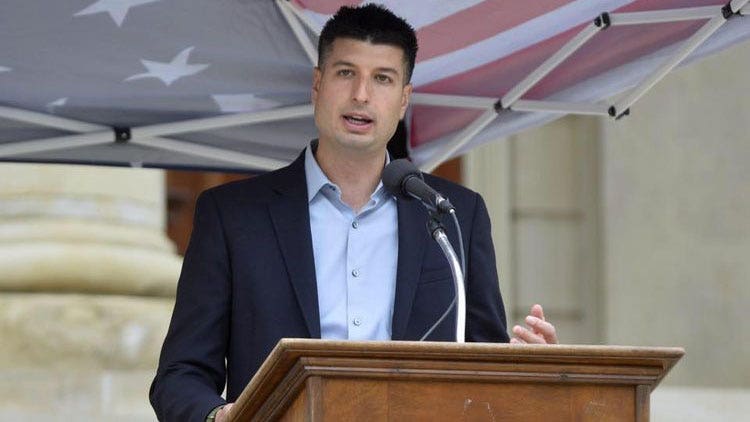
Control of Congress may very well run through Michigan’s seventh district. Anchored by Lansing, the state capital, it features a large blue city, surrounded by reddish suburbs, and deep red rural areas. It is consistently described as one of the closest swing districts in the country.
Freshman Congressman Tom Barrett narrowly won the district in 2024, and is now locked in a tight race with William Lawrence, an activist and founder of the climate change-focused Sunrise Movement.
Barrett is a 21-year Army veteran helicopter pilot, who served numerous deployments overseas, before returning to Michigan and spending nearly a decade in the state legislature.
7 REPUBLICANS REBEL AGAINST TRUMP, VOTE WITH DEMS TO REIN IN IRAN WAR POWERS
The race has recently been roiled by a series of controversial social media posts. In some of them, Lawrence called the nuclear family «an isolating, violent way of organizing society» and praised campaigns to abolish the police.
He now claims that his views have changed.
Barrett argues that the newfound shift is about political expediency, not genuine conviction:
«I think we got to take him at his word that this was his absolute true ideology and it wasn’t just this one statement that he made. He made repetitive statements against police, calling to not just defund but abolish the police altogether. He wanted to throw open the borders. He said if we’re a humane country, we’ve got to throw open the borders and redistribute all of the wealth.
«He called the nuclear family a violent way to organize society, as you said. Countless other statements that he’s made and other things that he has done that show a pattern of behavior that this is not an isolated incident.
«And obviously it’s clear to any neutral observer that he is doing this because he is running in a competitive district trying to get elected to Congress. He’s not running in Rashida Tlaib’s district or AOC’s district where they’re far more sympathetic to these DSA-aligned socialist candidates. He’s running in the district that I live in where I’m raising my own nuclear family.»
Barrett contends that the implementation of Lawrence’s border and immigration policies would pose a clear and present danger to the safety of Americans:
«Well, the foremost obvious risk of these open border policies of my opponent is just starting with the public safety threat. So take out all of the other economic factors: just the physical threats to our communities are substantial.
«There are criminal gang activities. We have cartels that were freely operating both ways across the border under the Biden administration. We had upwards of ten or even fifteen million illegal immigrants that came into our country completely unvetted.»
Barrett also argues that the fentanyl crisis is directly tied to border and immigration policies as well.
«The leading cause of death of Americans my age wasn’t cancer, wasn’t heart disease, it was fentanyl overdose deaths. People that I served with in the military that came home and survived combat and died of fentanyl overdose…because of drugs that were pouring across our border.
«For the first time in my life, we have seen a significant decline in fentanyl overdose deaths, really because of the efforts…to secure our border, and my opponent, William Lawrence, would entirely reverse that, throw the border open again, abolish the police at the same time.
«And we can only assume the outcome of that would be far more Americans dying of fentanyl deaths, as well as gang activity and other tragic circumstances that arise when you have an open border and no public safety to protect Americans.»
William Lawrence is also a longtime member of the DSA (Democratic Socialists of America), but recently claims that he let his membership lapse. Barrett argues that Lawrence remains a fervent believer in socialist ideology, but is merely trying to downplay his true beliefs to win a competitive race:
«Well, I think being a socialist should disqualify him for people’s consideration in my district. You look at the tenets of socialism and what they want to do and the endorsement of that.
MICHIGAN DEMOCRATIC CANDIDATE TRIES TO JUSTIFY DELETED POSTS THAT REVEAL FAR-LEFT BELIEFS
«My opponent…cleverly claims that he let his membership lapse, I don’t know, two weeks before the primary election on the eve of him winning…to face off against me in one of the most competitive congressional races in the country that will arguably decide control of the House of Representatives.
«So he doesn’t disavow the democratic socialists…He has embraced all of their positions, gathered all of their support, really benefited from the support of the democratic socialist movement.
«And then when the time comes to defend those positions, he wants to say, well I let my membership lapse so you can’t hold me accountable for all their positions. But I didn’t leave under any actual disagreement with them. I’m simply leaving for political reasons because he’s so focused on trying to win this election in a desperate attempt to not be accountable to his own record, but to distract away from the devastating effects of socialism and what that would mean for our country if he were to be elected.»
Perhaps the most controversial of Lawrence’s statements involved a post expressing frustration and outrage with politicians on climate policy. Lawrence, specifically targeting West Virginia Senator Joe Manchin, wrote: ‘Hurry up and die so that we can get started.»
Barrett believes that this type of rhetoric should put the voters of the seventh district on high alert:
«Obviously that’s entirely inappropriate, something that should really raise the attention of every single reasonable American to say that that’s not how we go about our rhetoric here in our country. Politics is a full contact sport…but I’ve never in my political life, in any campaign, called on political figures to ‘F you and hurry up and die.’
«And that shows the radicalization…He was a founding member of the Green New Deal Alliance in Michigan, calling to ban gasoline-powered vehicles that we build in my district that employ thousands of people in my district.»
Midterm elections generally hinge on economics and affordability issues are driving the political narrative today in tight races around the country. Barrett makes the case that congressional Republicans have delivered on everyday pocketbook issues:
«Well, we lowered costs on people’s taxes, certainly…and we expanded the child tax credit. We saved families taxes to the expanded standard deduction, streamlined filing for individuals. No taxes on tips, no taxes on overtime, no tax on Social Security. I wanna take that a step further and have no taxes health care. Give every American a tax-exempt health savings account and expand the things that they can use it for, for healthy groceries, gym memberships, fitness equipment.
«Obviously bring down the cost of gas as well with the conflict in Iran that I have again voted my conscience on as well and want to see gas prices come down and that will affect a lot of other parts of the economy as well around affordability. These are things that we can face.
«But if we hand our country over to radical socialists who are simply going to tax Americans to death and then pass on benefits to illegal immigrants and people who refuse to go to work and participate in the economy. We will be worse off for that.
«So this is a very, very important election. I stand on my own merits. I know what I’ve done here in Congress. It’s my job to go out and make the case to the voters in my district, and contrast that with the exact things that my opponent has said what he has stood for and what his pattern of behavior has shown in what he would do if he were elected to Congress.»
house of representatives politics, politics, michigan, midterm elections








INTERNACIONAL
Por qué el terremoto en Panamá se sintió durante varios segundos y las hipótesis sobre su origen tectónico
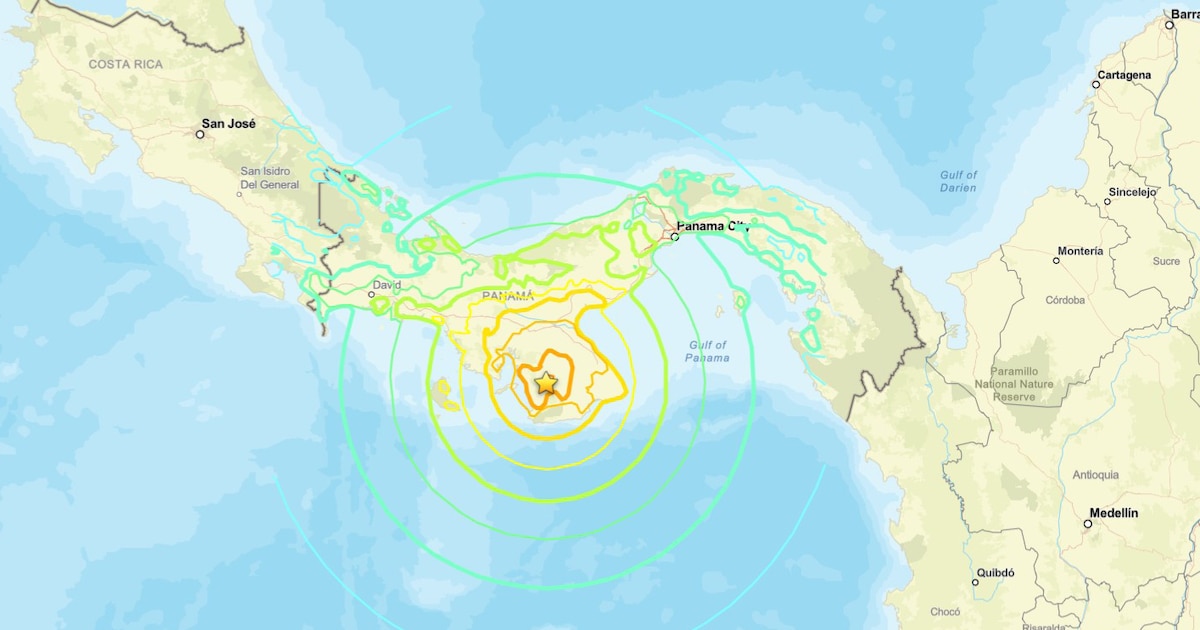
El movimiento pareció no terminar. El terremoto de magnitud preliminar 7,6 que sacudió Panamá y se sintió en Costa Rica se extendió durante varios segundos para quienes estaban lejos de su epicentro, una percepción que respondió a la forma en que viajaron las ondas sísmicas desde la península de Azuero. El evento, ocurrido este viernes 9 de octubre, es considerado el más fuerte registrado en el país en el último siglo y reabrió la atención sobre una zona donde interactúan estructuras tectónicas complejas.
El sismo ocurrió a las 12:56 (hora local, 14:56 de la Argentina) y tuvo su epicentro en la región panameña de Azuero. Las estimaciones iniciales ubicaron la profundidad entre 10 y 33 kilómetros, un rango que lo clasifica como un movimiento superficial. Esa combinación —una magnitud elevada y una fuente cercana a la superficie— ayudó a explicar por qué fue percibido en una amplia zona de Panamá y Costa Rica.
Según la información preliminar, el temblor alcanzó una magnitud de 7,6. El antecedente histórico más fuerte de Panamá se remonta al 7 de septiembre de 1882, cuando un terremoto estimado entre 7,7 y 7,9 afectó el golfo de San Blas, en la actual comarca de Guna Yala. Aquel evento produjo daños en Ciudad de Panamá y Colón, además de un tsunami en el archipiélago de San Blas.
Por qué el terremoto de Panamá se sintió durante tanto tiempo en Costa Rica
Para muchas personas, la duración fue uno de los aspectos más llamativos del movimiento. Leopold Linkimer, sismólogo de la Red Sismológica Nacional (RSN), explicó que la distancia con respecto al foco del sismo cambia la manera en que se percibe el paso de las ondas.
“Entre más distante estamos del epicentro, entonces las ondas sísmicas llegan con diferentes velocidades al lugar donde nos encontramos y por eso la totalidad del movimiento se siente como más extenso”, afirmó Linkimer, de acuerdo con CRHoy.
El terremoto no transmite un único impulso. Libera distintos tipos de ondas, que atraviesan el subsuelo a velocidades diferentes. Algunas llegan primero y otras lo hacen después. En las zonas alejadas del epicentro, esa separación temporal puede ser más perceptible y prolongar la sensación de sacudida.
De esta manera, una persona ubicada cerca de la ruptura puede sentir un movimiento más concentrado e intenso. En cambio, alguien situado a cientos de kilómetros recibe señales sísmicas que se suceden durante más tiempo. La duración percibida no implica que el terremoto haya sido más largo en todos los lugares, sino que las ondas alcanzaron cada región de una manera distinta.
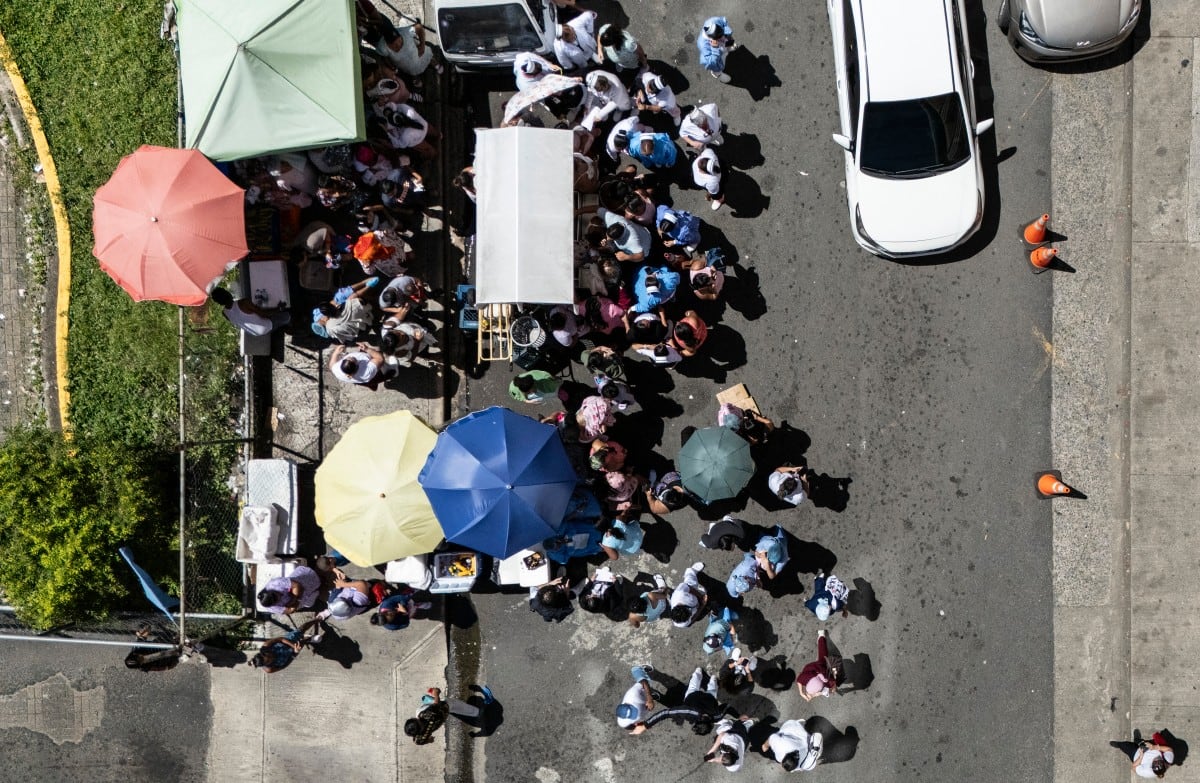
La magnitud también tuvo peso. Un evento de 7,6 libera mucha más energía que los sismos moderados que suelen registrarse en la región. Esa energía se propagó por el terreno y permitió que la sacudida llegara a buena parte del territorio costarricense.
Qué originó el terremoto de Panamá
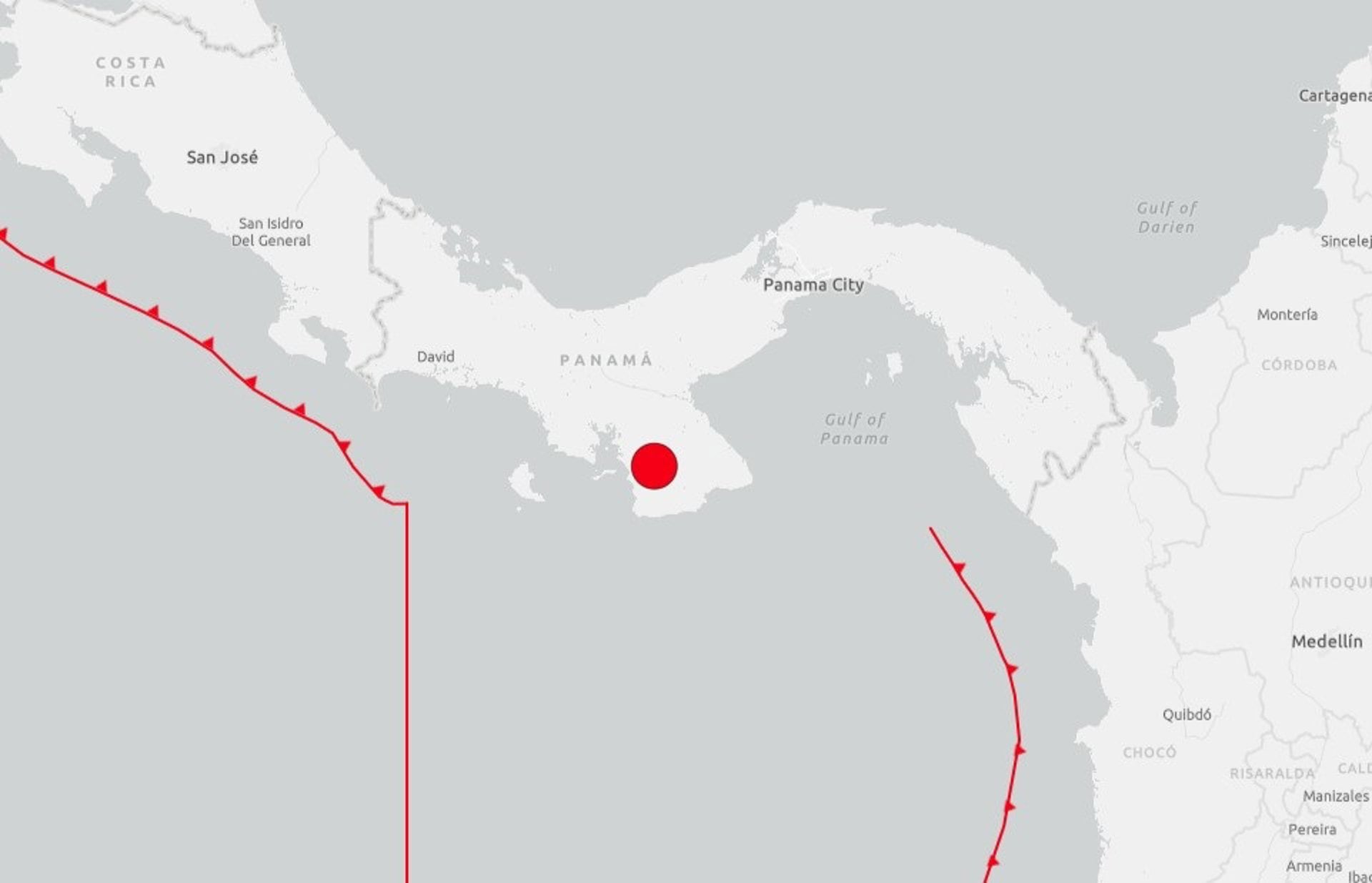
Una de las primeras hipótesis sitúa el terremoto en una zona de contacto entre la placa de Nazca y la microplaca de Panamá. La placa de Nazca es una gran porción de la corteza terrestre ubicada bajo el océano Pacífico, mientras que la microplaca de Panamá forma parte de un bloque más pequeño que incluye sectores del sur de Centroamérica.
Linkimer advirtió que los análisis todavía eran preliminares. “El terremoto habría ocurrido en la zona en límite entre las placas Nazca y la microplaca de Panamá”, señaló.
Ese contacto puede involucrar dos tipos de movimiento. Uno es la subducción, proceso por el cual una placa se introduce debajo de otra. El otro consiste en un desplazamiento lateral, cuando dos bloques se deslizan de forma horizontal. Ambos mecanismos pueden acumular tensión durante años y liberarla de forma repentina mediante un terremoto.
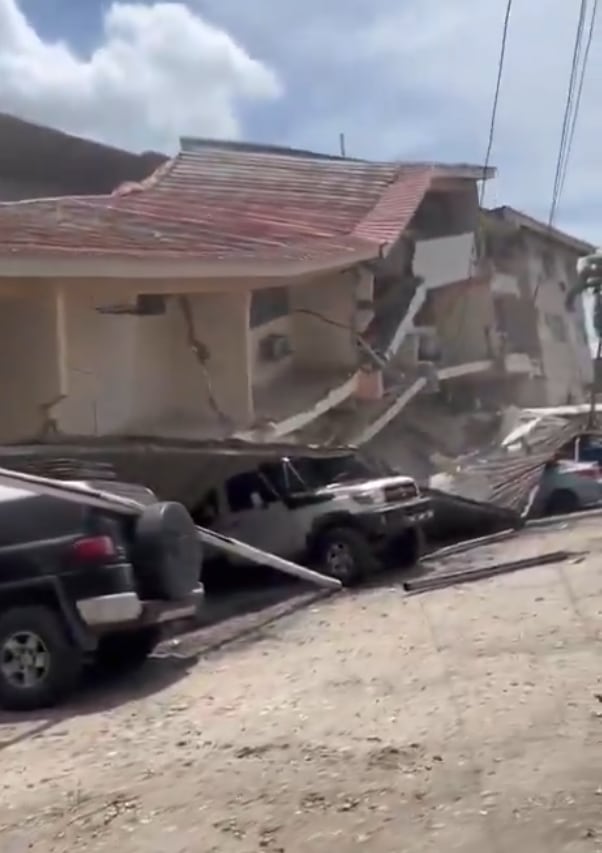
La profundidad estimada, entre 10 y 33 kilómetros, es otro dato relevante. Un sismo superficial ocurre relativamente cerca de la superficie terrestre. Por eso, aun cuando el epicentro se encuentre en una zona rural o poco poblada, puede sentirse a gran distancia si su magnitud es elevada.
La falla de Azuero, otra de las hipótesis bajo análisis
Los especialistas no descartaron que el evento se haya producido en una falla situada dentro de la placa superior. Entre las estructuras que deberán analizarse figura la falla de Azuero, una formación geológica de gran extensión ubicada en la península panameña del mismo nombre.
Una falla es una fractura de la corteza terrestre cuyos lados pueden desplazarse entre sí. Cuando la presión acumulada supera la resistencia de las rocas, se produce una liberación de energía. Esa liberación viaja en forma de ondas y genera el temblor que perciben las personas.

Por ahora, no hay una conclusión definitiva sobre el mecanismo que originó el terremoto. La RSN indicó que se requieren más estudios de los registros sísmicos para determinar si predominó la interacción entre placas, una falla local o una combinación de ambos procesos.
La revisión posterior de los datos puede ajustar la magnitud, la profundidad y la ubicación precisa de la ruptura. Esa tarea permite reconstruir cómo se movió el terreno y evaluar mejor la secuencia de sismos que siguió al evento principal.
Las réplicas pueden continuar durante días, semanas o meses
Tras el sismo principal, la RSN ya había contabilizado cerca de 10 réplicas considerables. Linkimer alertó que podrían ocurrir más durante las próximas horas, días, semanas e incluso meses, y que algunas podrían sentirse en Costa Rica.
Las réplicas son terremotos posteriores que ocurren en la zona afectada mientras la corteza busca un nuevo equilibrio. Suelen tener una magnitud menor que la del movimiento principal, aunque pueden resultar perceptibles y, en algunos casos, generar alarma entre la población.
La posibilidad de nuevas sacudidas no permite anticipar con precisión la fecha ni la intensidad de cada réplica. Lo que sí señalan los especialistas es que una secuencia de este tipo es esperable después de un terremoto de magnitud 7,6, sobre todo en un sector donde confluyen placas y fallas activas.
earthquake,horizontal
INTERNACIONAL
Massive 7.7 magnitude earthquake strikes Panama as officials investigate potential tsunami threat
NEWYou can now listen to Fox News articles!
A powerful 7.7 magnitude earthquake struck off Panama’s southern coast Friday, shaking the country’s capital as officials investigated a potential tsunami threat.
The U.S. Geological Survey initially measured the earthquake at magnitude 8.0 before lowering its estimate to 7.7. The quake struck at 1:56 p.m. ET, approximately 6 miles beneath the surface, near Pitaloza Arriba, Panama.
A 5.5 magnitude aftershock followed, with its epicenter approximately 50 miles east of the initial earthquake.
MORE THAN 3,000 MISSING AFTER COLOMBIA EARTHQUAKE AS TRUMP ADMINISTRATION PROVIDES $15.5 MILLION IN RELIEF
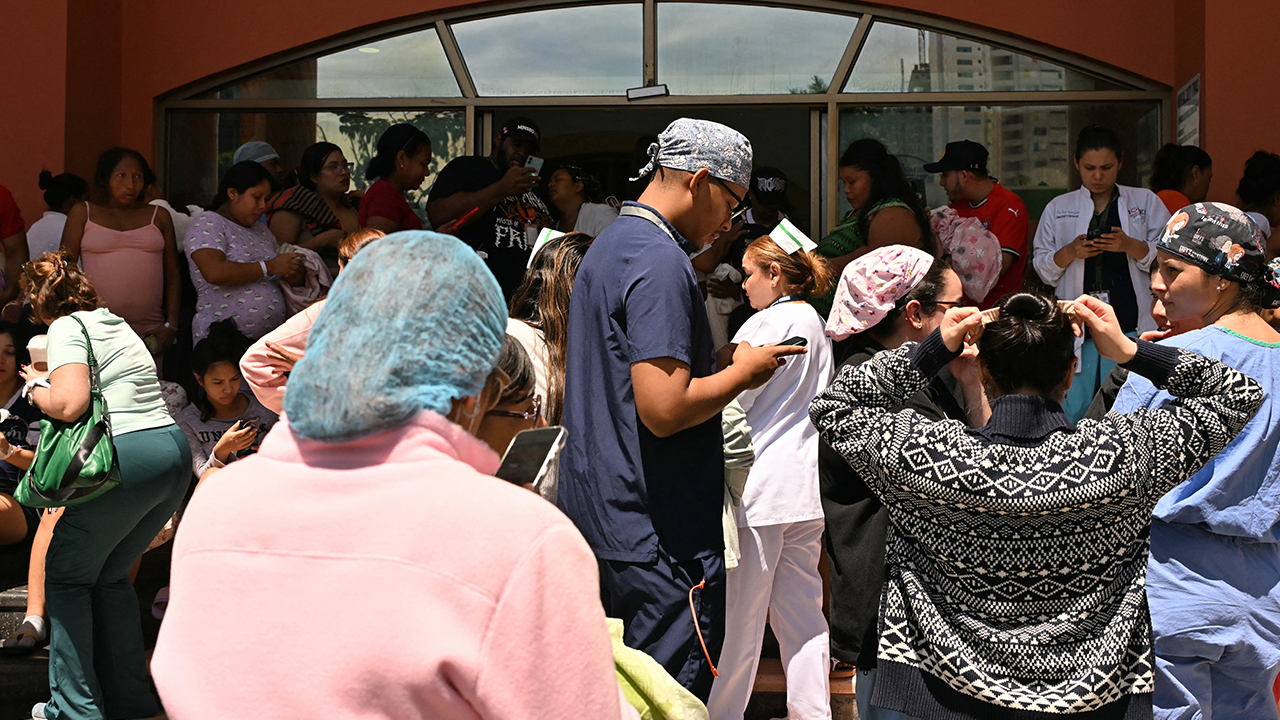
People stand outside the maternity ward of the Santo Tomas hospital after a severe magnitude 7.7 earthquake thet hit the country in Panama City Oct. 9, 2026. (Martin Bernetti/AFP via Getty Images)
The earthquake was felt in Panama City and in San José, the capital of neighboring Costa Rica, according to Reuters.
Tsunami officials warned that waves reaching 3 to 10 feet above tide levels were possible along some coastal areas of Panama, while parts of Ecuador could experience waves of approximately 1 to 3 feet.
Smaller tsunami waves of less than 1 foot above tide levels were forecast for coastal areas of Colombia, Costa Rica, Ecuador, El Salvador, Guatemala, Mexico, Nicaragua and Peru.
COLOMBIA BUILDING COLLAPSES ON CAMERA AS EARTHQUAKE BRINGS DEATH, DESTRUCTION
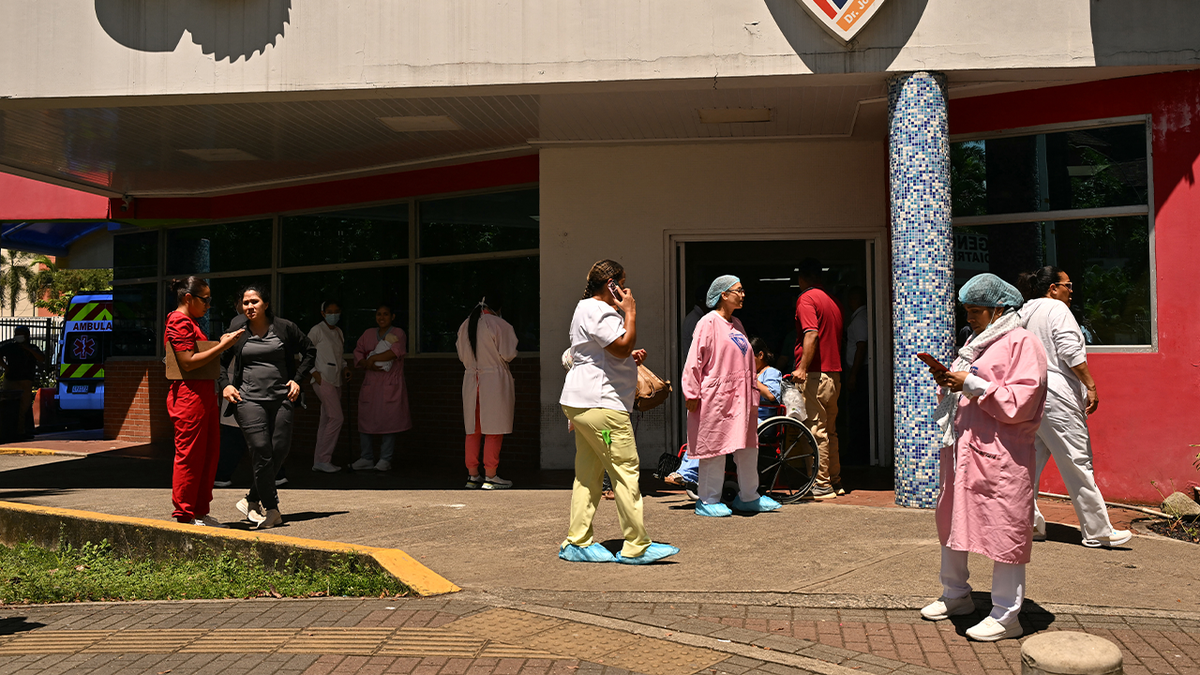
Medical workers and patients gather outside a hospital after a powerful earthquake in Panama Oct. 9, 2026. (Martin Bernetti/AFP via Getty Images)
Despite the potential danger to coastal communities near the earthquake, officials said a Pacific-wide tsunami was not expected.
Earthquakes measuring between 7.0 and 7.9 can cause serious damage, according to Michigan Technological University.
Information about possible damage or casualties from Friday’s earthquake was not immediately available.
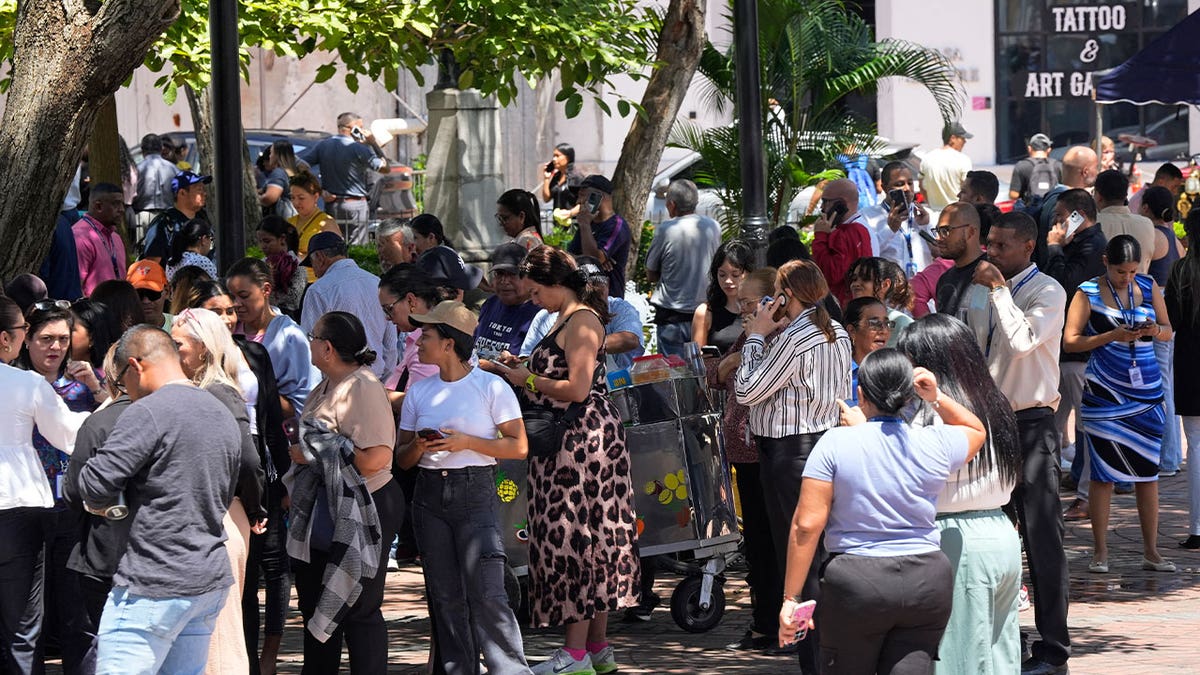
People gather in a Panama City square after evacuating a building after a powerful earthquake. (Arnulfo Franco/AFP via Getty Images)
This is a developing story; check back later for updates.
earthquakes, tsunami, world, natural disasters
INTERNACIONAL
Culture clash laid bare as violent Somali gangs grip suburban communities: ‘These kids are different’
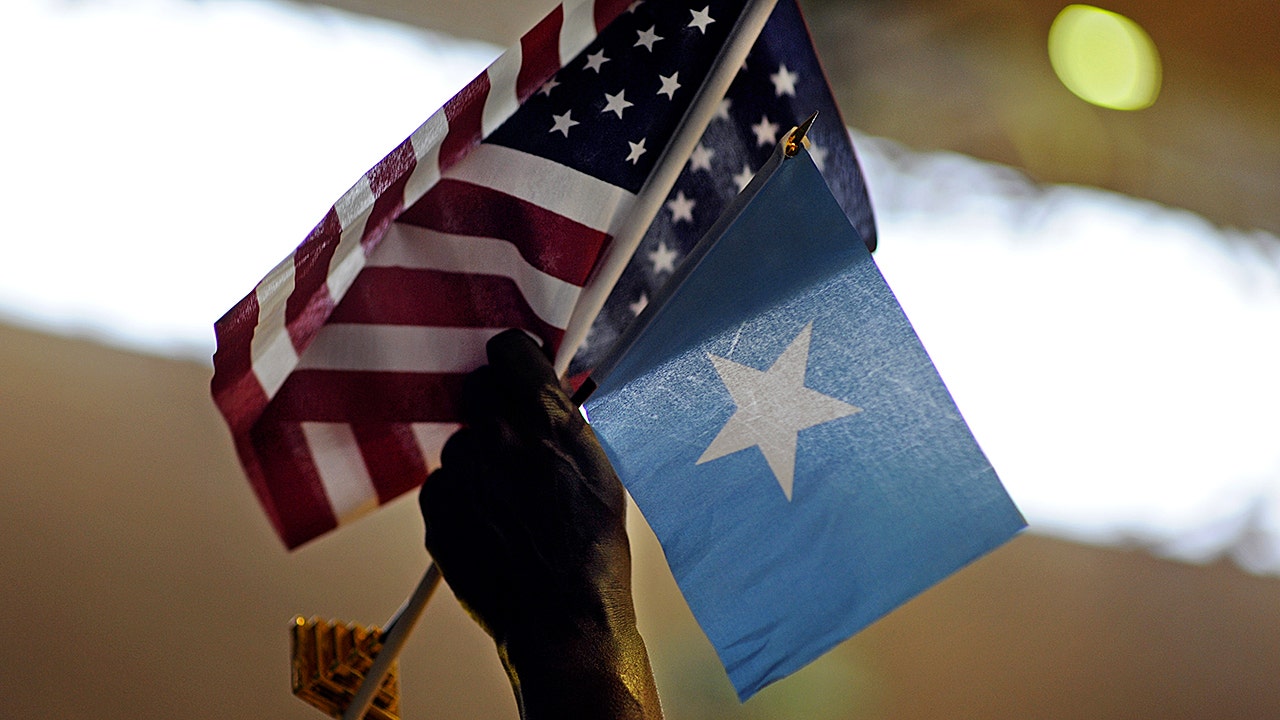
More than 100 rounds fired in a Minnesota neighborhood have left police struggling to explain a troubling pattern: Somali American youths from financially comfortable households are turning online disputes into gang violence.
The violence raises bigger questions about what is driving these gangs and whether struggles to fit into American life, cultural or clan ties, government policies or failures by schools and other institutions have played a role and what makes these youths different from traditional American street gangs.
«They’re coming from families. They got money, and they have resources,» Bloomington Police Chief Booker Hodges told Digital of the young Somali American gang members under investigation.
Those questions follow a late-night Bloomington gunfight that left one person injured during a string of shootings across suburban Minneapolis-St. Paul.
100-SHOT SOMALI GANG GUN BATTLE ROCKS MINNESOTA AS SHERIFF WARNS ‘WE’RE IN TROUBLE’
Hodges said the suspects defy traditional drug- or money-driven gang profiles. Asked what drives the violence beyond social media disputes, he acknowledged investigators lack a clear answer.
«I don’t know. I can’t tell you. I really wish I could,» Hodges said.
Somalia, long considered a failed state until the mid-2010s, according to the U.N., has endured decades of clan-based warfare and weak central government authority, including the 1993 Battle of Mogadishu depicted in «Black Hawk Down,» when Somali militiamen battled U.S. forces during an ill-fated military operation, part of the turmoil that drove waves of refugees to America.
More than 111,000 Somali refugees were admitted to the U.S. between 2001 and 2023 through the federal refugee resettlement program, spanning the George W. Bush, Barack Obama, Donald Trump and Joe Biden administrations. Minnesota became a major destination, alongside sizable Somali American communities in New York, Texas and Ohio.
Jessica Vaughan, director of policy studies at the Center for Immigration Studies, believes one possible explanation lies in how refugees have been resettled.
«We have to remember also that this population’s origins were as refugees who were a vulnerable population and traumatized in many cases,» Vaughan told Digital.
«But they were settled in clusters in certain places in the United States. And I believe that is a policy that has facilitated the formation of these gangs because it removes a lot of the incentives for people to assimilate.
«And it just makes assimilation to the larger society much more difficult because it’s not necessary for people to get by.»
Vaughan described an emphasis on preserving homeland cultures rather than encouraging integration as a «missed opportunity,» arguing it can leave immigrants in a «separate society within the larger Minnesota community.»
History, however, complicates the argument that maintaining strong ethnic ties necessarily prevents assimilation.
Stanford sociologist Tomás Jiménez cautioned against treating gang involvement among a small subset of second-generation immigrants as evidence that an entire community has failed to integrate.
«I would actually not think of it as, like, a failed assimilation, as much as a particular kind of assimilation,» Jiménez said.
He noted that Italian, Irish, Mexican and Salvadoran communities experienced gang activity while broader integration continued.
Jiménez emphasized that assimilation unfolds across generations, pointing out that the Italian American experience spanned roughly 75 years rather than occurring overnight. He identified education, economic advancement, language and intermarriage as important measures of integration.
NATION REVEALS HOW RUDY GIULIANI BROKE THE MAFIA’S GRIP ON NEW YORK
Donald Tricarico, an Italian American immigration scholar at Queensborough Community College, drew parallels between Italian and Irish immigrants, who established close-knit ethnic communities in New York. He said Italian families often followed relatives from the same villages into the same neighborhoods and occupations.
«They came to the same neighborhoods … what migration historians call ‘chain migration,’ and they … went to the same neighborhoods,» he said, citing his own family’s multigenerational experience in New York City.
«There isn’t a switch that gets flipped,» Tricarico said, challenging assumptions that Italian Americans assimilated quickly and noting that close-knit ethnic communities persisted into the 1980s in some cases.
WORKING-CLASS AMERICANS SAY THEIR TOWN IS THE NEXT DEARBORN — AND THEY’VE HAD ENOUGH
«Assimilation is a slow crawl,» he said, explaining that economic advancement and integration typically unfold across generations.
Tricarico noted that some Sicilian immigrants arrived with ties to existing Mafia networks overseas, a criminal element distinct from the broader Italian immigrant population. Hodges, meanwhile, said investigators have found no evidence that longstanding clan rivalries in Somalia are driving the Minnesota violence.
Somali American community figures have offered their own explanations, including the challenges facing immigrant parents.
At an Eden Prairie news conference Wednesday, Somali teacher Fardousa Yossuf suggested parents working long hours may have neglected their children’s needs and «expressed disbelief» that people raised with Islamic values could engage in gun violence, according to Alpha News.
Imam Yusuf Abdulle rejected characterizing the violence as a Somali problem in an interview with WCCO – CBS Minnesota posted on YouTube.
«These kids are Americans. They’re born and raised here,» Abdulle said. «It is an American problem. It is not a Somali problem.»
Vaughan, meanwhile, warned that the gangs have not reached the sophistication of transnational organizations such as MS-13 but could become more entrenched without intervention.
She pointed to families and schools as critical to preventing recruitment and argued that local institutions and law enforcement must intervene before the groups become more organized.
Vaughan acknowledged she had not established that specific Minnesota schools or resettlement policies prompted the shootings.
Asked whether longstanding Somali clan rivalries were fueling the shootings, Hodges said investigators found no evidence supporting that explanation.
«No, we have not seen that. I haven’t seen it,» he said.
He added that people from groups in conflict in Somalia can belong to the same cliques in Minnesota.
SIGN UP TO GET THE POLITICS NEWSLETTER
Hodges said police are redirecting task force resources toward the gangs and questioned whether some Hennepin County prosecution policies could limit intervention.
He warned the Bloomington gunfire could have endangered innocent bystanders had it occurred during daylight.
«If that had been one o’clock in the afternoon, it would have been a different story on that block,» he said.
minnesota, somali immigrant community, crime world, politics, minneapolis st paul, refugees, immigrant education, donald trump

Jornada financiera: las acciones y los bonos argentinos cayeron pese a la mejora global y el riesgo país tuvo una leve suba

A pesar del fallo de la Corte Suprema, la oposición insiste con rechazar el DNU que deroga la Ley de Tierras – Nexofin

Video: los periodistas panameños abandonaron el programa por el terremoto

Por qué el terremoto en Panamá se sintió durante varios segundos y las hipótesis sobre su origen tectónico

Qué es una medida cautelar “interina”, la herramienta que utilizó la Corte Suprema para reponer la ley de tierras

Massive 7.7 magnitude earthquake strikes Panama as officials investigate potential tsunami threat

Escándalo total en la AFA: reventa millonaria, un homenaje paupérrimo a Messi y el pedido urgente de renuncia a Chiqui Tapia

Después de su prohibición, las plataformas de apuestas deportivas y los casinos en línea ya están fuera de servicio en Brasil

Marcha contra la Corte: sectores del PJ, la izquierda, gremios y piqueteros protestan por el fallo que libera la venta de tierras para extranjeros

El discurso completo de Leo Messi en su despedida con Argentina: ‘Hoy me toca quizás el día más triste de mi carrera’

 DEPORTE2 días ago
Escándalo total en la AFA: reventa millonaria, un homenaje paupérrimo a Messi y el pedido urgente de renuncia a Chiqui Tapia
- DEPORTE3 días ago
El discurso completo de Leo Messi en su despedida con Argentina: ‘Hoy me toca quizás el día más triste de mi carrera’
- SOCIEDAD2 días ago
Tobey Maguire se quedaba ciego con el traje de Spider-Man y casi se desmaya durante una prueba: fabricar su disfraz fue una pesadilla