
INTERNACIONAL
Donald Trump habló tras la cumbre en China: “El presidente Xi Jinping no quiere una guerra en Taiwán”

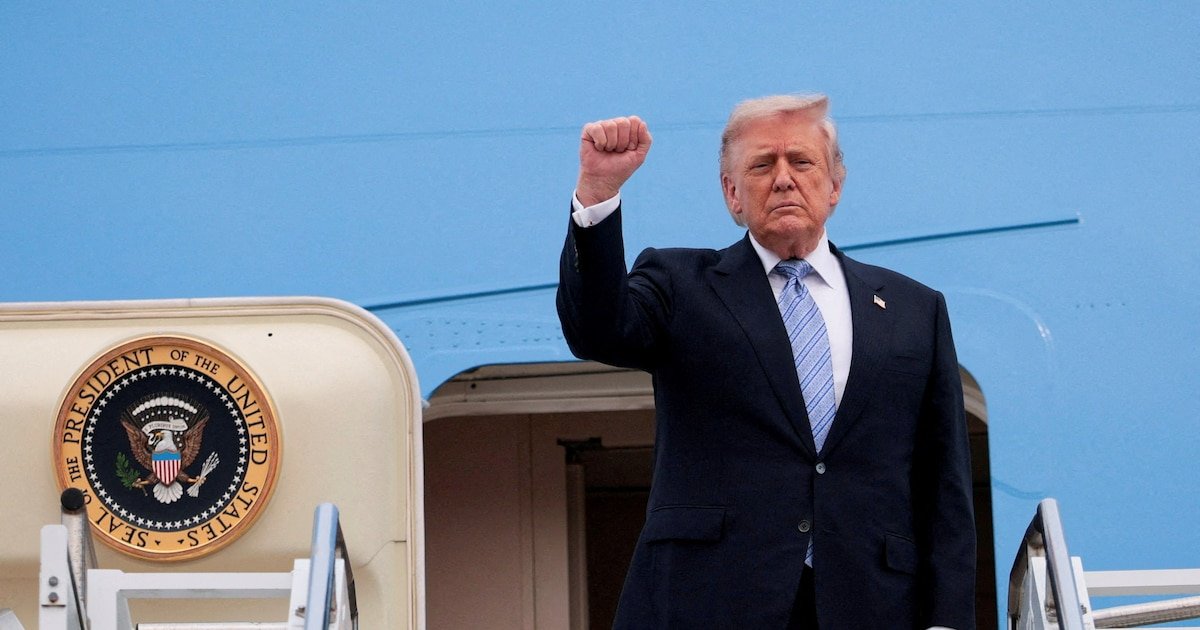
El presidente de Estados Unidos, Donald Trump, dijo este viernes que habló sobre el delicado tema de Taiwán con su homólogo chino, Xi Jinping, durante la cumbre bilateral en Pekín. “No quiere una guerra en Taiwán”, indicó.
“El presidente Xi y yo hablamos mucho sobre Taiwán”, dijo Trump a los periodistas a bordo del Air Force One, de regreso a Washington. “Él no quiere ver una lucha por la independencia”, agregó. “Yo no hice ningún comentario al respecto, lo escuché”.
Trump añadió: “En cuanto a Taiwán, él tiene sentimientos muy fuertes; yo no asumí ningún compromiso en ningún sentido”.
Antes de la cumbre, Trump había dicho que hablaría con Xi sobre la venta de armas estadounidenses a Taiwán, afirmaciones que se alejaban de la postura histórica de Washington de no consultar a Pekín sobre ese asunto.
Hablando con los periodistas, de camino a Washington, Trump dijo sobre el tema de la venta de armas: “Tomaré una decisión en un periodo de tiempo relativamente corto”.
Estados Unidos solo reconoce a China, pero su legislación le exige proporcionar armas a la democracia autogobernada de Taiwán para su defensa. China ha jurado recuperar la isla y no ha descartado el uso de la fuerza, incrementando la presión militar en los últimos años.
Trump también afirmó que Xi está firmemente convencido de que Irán no debería poseer armas nucleares. “Él está firmemente convencido de que no pueden tener armas nucleares y quiere que abran el estrecho”, declaró el norteamericano, refiriéndose al estrecho de Ormuz, una vía marítima clave bloqueada por la guerra.
En otro orden, manifestó que está considerando levantar sanciones a las empresas chinas que compran petróleo iraní y que tomará una decisión al respecto en breve, sin dar más detalles, indicó Reuters. Tras ser consultado, dijo que no habló de aranceles con Xi.
Más temprano, el jefe de Estado norteamericano indicó que alcanzó “acuerdos comerciales fantásticos” con el líder chino durante la jornada final de la cumbre celebrada en Beijing, en un encuentro marcado además por la guerra en Irán, la situación del estrecho de Ormuz y las advertencias chinas sobre Taiwán.
“Cerramos unos acuerdos comerciales fantásticos, excelentes para ambos países”, declaró Trump mientras recorría junto a Xi los jardines de Zhongnanhai, el complejo central del liderazgo chino ubicado junto a la Ciudad Prohibida. “Hemos resuelto muchos problemas diferentes que otras personas no habrían podido resolver”, añadió, aunque sin ofrecer detalles concretos sobre los pactos.
La visita representó el primer viaje de un presidente estadounidense a China desde 2017 y tuvo como eje central las negociaciones económicas en sectores como agricultura, aviación, energía e inteligencia artificial. Trump también buscó apoyo chino para abordar la crisis en Medio Oriente y el impacto de la guerra con Irán sobre el comercio energético mundial.
Xi calificó el encuentro como una “visita histórica” y afirmó que ambas potencias establecieron “una nueva relación bilateral, que es una relación de estabilidad estratégica constructiva”. Durante la reunión, el mandatario chino también prometió enviar semillas para la Rosaleda de la Casa Blanca después de conversar con Trump sobre las flores de los jardines de Zhongnanhai.

La cuestión iraní ocupó parte importante de las conversaciones. En una entrevista con Fox News tras la primera jornada de la cumbre, Donald Trump aseguró que Xi Jinping le transmitió que China no planea brindar asistencia militar a Teherán en medio de la crisis regional. “Dijo que no suministraría material militar (…) Lo afirmó con rotundidad”, señaló Trump. El mandatario estadounidense agregó además que Xi manifestó disposición para colaborar en la reapertura del estrecho de Ormuz, una vía marítima clave para el comercio mundial de hidrocarburos.
“Le gustaría que se abriera el estrecho de Ormuz, y dijo: ‘Si puedo ser de alguna ayuda, estaré encantado de ayudar’”, afirmó Trump.
Por su parte, el Ministerio de Relaciones Exteriores de China publicó este viernes un comunicado en el que reclamó “un alto el fuego integral y duradero” en Medio Oriente. “Las rutas marítimas deben reabrirse lo antes posible en respuesta a los llamamientos de la comunidad internacional”, indicó el texto.
Diplomacy / Foreign Policy












Senate panel moves to vote on Fauci contempt resolution
Fox News correspondent Lucas Tomlinson reports on a Senate panel’s upcoming vote to hold former NIAID Director Dr. Anthony Fauci in contempt of Congress. The resolution follows a contentious COVID-19 hearing where Fauci invoked his Fifth Amendment rights more than one hundred times.
NEWYou can now listen to Fox News articles!
Fox News Digital has confirmed that a key investigative panel in the Senate has obtained Dr. Anthony Fauci’s pandemic-era cellphone.
The cellphone was transferred from the Department of Health and Human Services (HHS) to the Senate Homeland Security Permanent Subcommittee on Investigations chaired by Sen. Ron Johnson, R-Wis.
A spokesperson for the senator told Fox News Digital the subcommittee «obtained a copy of Dr. Fauci’s iPhone that was used during his time at HHS.»
Whether the panel has access to the phone remains unclear.
RAND PAUL SEEKS CONTEMPT CHARGES AFTER FAUCI INVOKES FIFTH AMENDMENT MORE THAN 100 TIMES
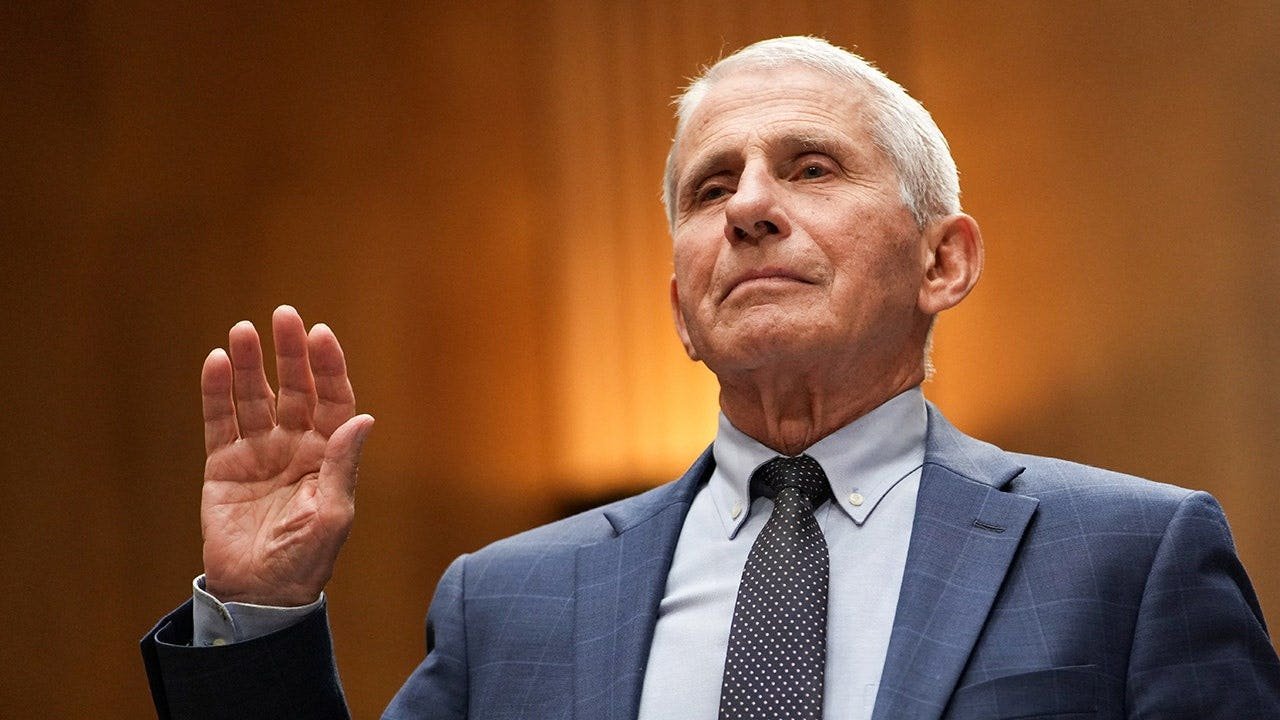
Anthony Fauci, the former director of the National Institute of Allergy and Infectious Diseases and medical advisor to several U.S. presidents, testifies under subpoena about his role in the national response to the COVID-19 pandemic at a U.S. Senate Homeland Security and Governmental Affairs Committee hearing on Capitol Hill in Washington, D.C., July 29, 2026. (Reuters/Nathan Howard)
The committee’s procurement of the phone, first reported by The Wall Street Journal, comes as the Senate Homeland Security and Governmental Affairs Committee readies to decide whether to hold Fauci in contempt of Congress. It also follows the HHS’ move to dump over 1,000 pages of Fauci’s personal diary to the panel just days before the blockbuster hearing.
The hearing, slated for Thursday morning, comes after the panel’s chair, Sen. Rand Paul, R-Ky., subpoenaed Fauci to testify on his alleged role in funding «risky» gain-of-function research in Wuhan, China, where the COVID-19 virus originated.
A source close to Paul’s office told Fox News Digital that the lawmaker is also in possession of the phone.
Last week’s testimony was meant to serve as the climatic duel between Fauci and Paul, who has demanded Fauci be thrown into prison for his role in the nation’s pandemic policy and alleged lies to Congress.
But it didn’t turn out that way.
TOP 5 MOMENTS FROM FAUCI’S HEARING: PAUL BOOTS LAWYER, MORENO ERUPTS AS CONTEMPT VOTE LOOMS
Fauci, on advice from his lawyers, opted to plead the Fifth Amendment out of concern about self-incrimination before a panel that he charged was designed to ensnare him.
«Although it pains me to do so because of the respect I have for the legislative branch of government and my decades-long record of cooperating with Congress under the advice of my attorneys, I will invoke my right under the Fifth Amendment of the Constitution to refrain from answering your questions,» Fauci said.
What ensued was Republicans on the panel peppering Fauci with questions probing his involvement in an alleged lab leak that led to the virus’ rapid spread to what day of the week it was. Democrats charged that his decision to activate his constitutional rights was the right call given Paul and his colleagues’ determination to catch him in a lie.
WATCH: RAND PAUL SAYS THERE’S ONE THING AMERICANS HAVE NEVER HEARD FROM FAUCI
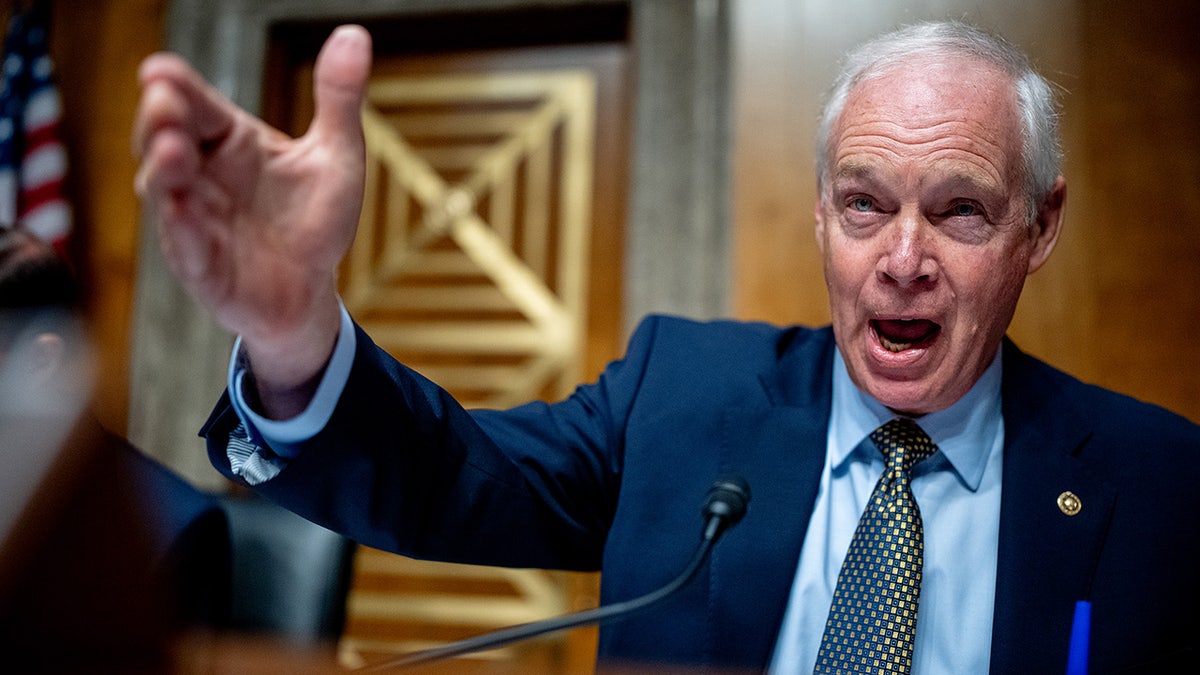
Ranking member Sen. Ron Johnson, R-Wis., speaks as U.S. Coast Guard Commandant Adm. Linda Fagan testifies at a Senate Homeland Security and Governmental Affairs Subcommittee on Investigations hearing on Capitol Hill June 11, 2024, in Washington, D.C. (Andrew Harnik/Getty Images)
And it culminated in Paul vowing that Fauci would face consequences for declining to comment and questioning whether his pardon from former President Joe Biden could protect him.
«I think there’s another legal question that the courts may have to decide upon, and that is whether or not a presidential pardon offers you complete immunity,» Paul said at the time.
Fox News Digital did not immediately receive comment from HHS on Fauci’s pandemic-era iPhone.
politics, senate elections, anthony fauci, rand paul, hearings, iphone
INTERNACIONAL
Quién es la niñera argentina que fue detenida por el ICE cuando iba a un partido del Mundial

INTERNACIONAL
Nuclear experts urge Trump not to let Iran steer talks away from regime’s atomic threat
NEWYou can now listen to Fox News articles!
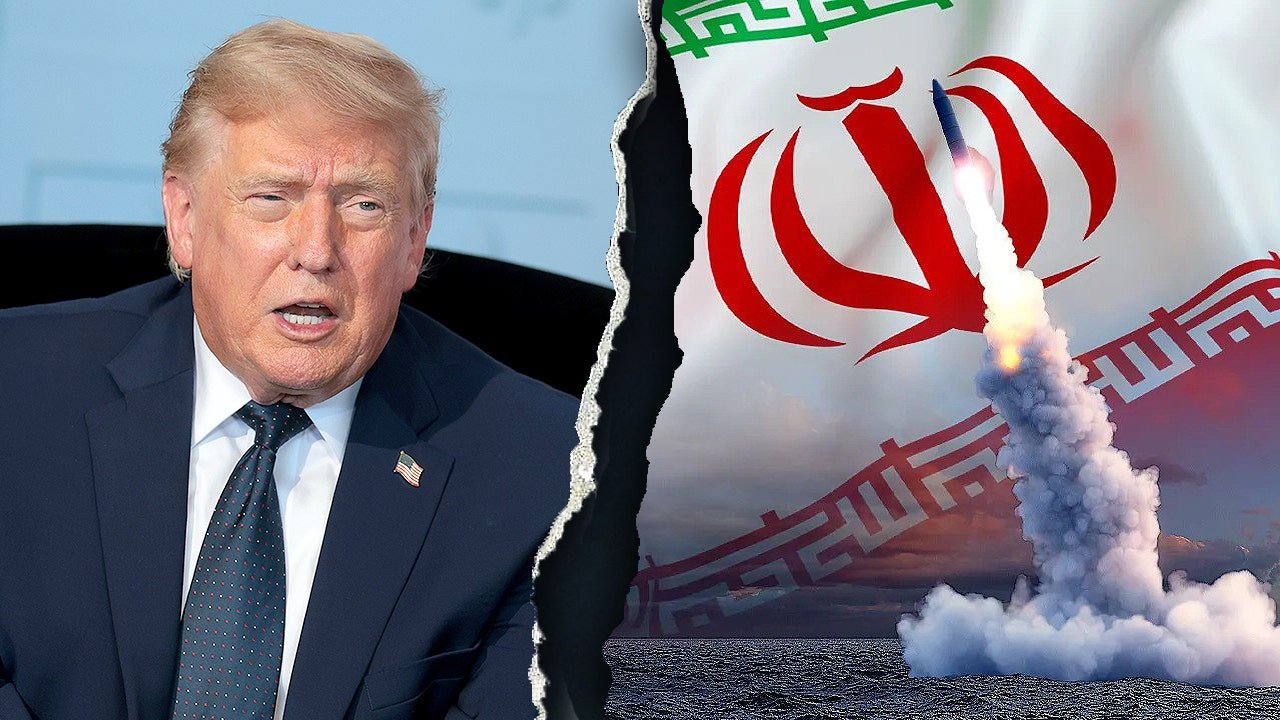
Iran’s top Revolutionary Guard commander declared Wednesday that Tehran would continue working on nuclear weapons as long as the United States and Israel possess them, intensifying concerns that Iran is using negotiations over the Strait of Hormuz to postpone concessions on its nuclear program.
«As long as the United States and Israel possess nuclear weapons, we will continue working on them for our national security,» IRGC commander-in-chief Ahmad Vahidi said, according to a translation of remarks circulating Wednesday. «If they disarm, we will disarm.»
Israeli Prime Minister Benjamin Netanyahu responded by vowing that Israel would continue preventing Iran from obtaining a nuclear weapon, with or without a diplomatic agreement.
WHO IS AHMAD VAHIDI? IRAN’S NEW IRGC CHIEF TIED TO GLOBAL ATTACKS AND ‘DEATH TO AMERICA’ IDEOLOGY
A map shows damage to Iran’s Fordow nuclear site after being struck by the United States in Operation Midnight Hammer on June 22, 2025. (Fox News)
«Today, we heard the commander of the Revolutionary Guards, Vahidi, explicitly declare Iran’s intention to continue developing nuclear weapons — ‘continue,’ as he put it,» Netanyahu said at a ceremony marking the reinterment of Shimon and Rivka Herzl, the grandparents of the founder of modern day Zionism, Theodor Herzl.
«Well, as prime minister of Israel, I too am determined to continue — to continue preventing Iran from possessing nuclear weapons,» he said.
Netanyahu praised President Donald Trump as Israel’s greatest friend in the White House and expressed appreciation for the two countries’ joint efforts against Iran’s nuclear ambitions.
«Israel’s existence is not subject to negotiation,» Netanyahu said. «With an agreement or without an agreement, I am determined — we are all determined — to do whatever is necessary to ensure our security and our future.»
NETANYAHU’S ISRAEL GRAPPLES WITH TRUMP-IRAN DEAL AS DETAILS REMAIN UNCLEAR
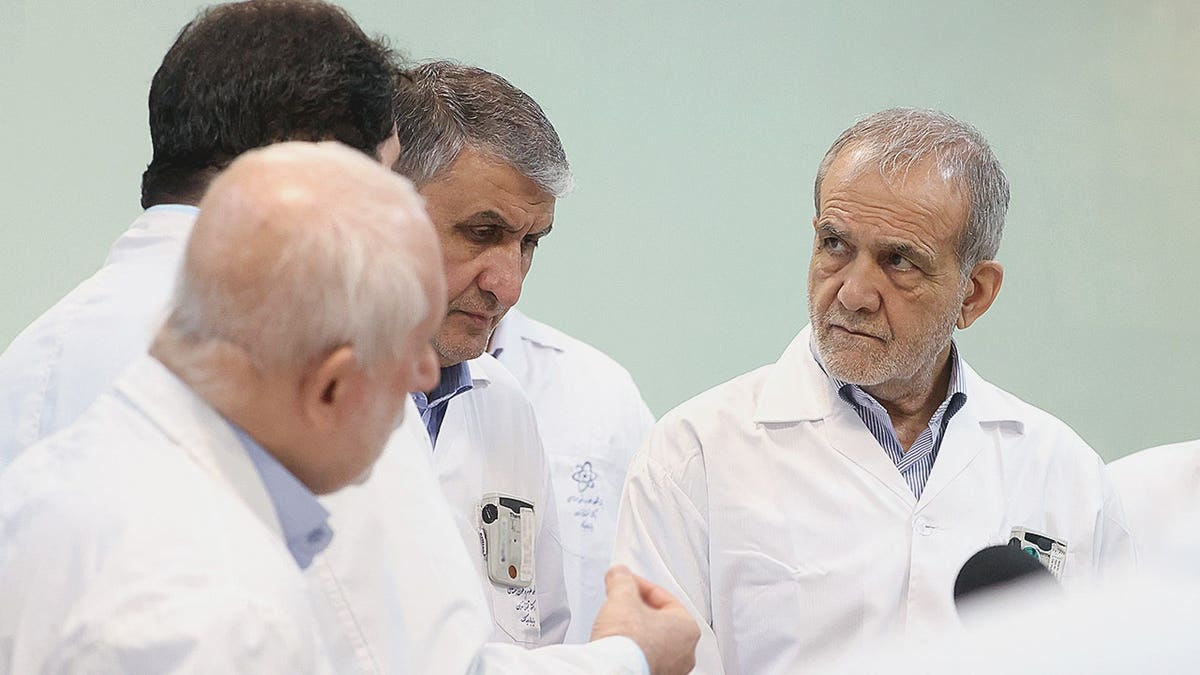
President Pezeshkian said Iran would rebuild the nuclear facilities targeted by the U.S. and make them stronger in 2025. (Iranian Presidency/Handout/Anadolu via Getty Images)
The exchange came as nuclear experts urged Trump to keep Iran’s nuclear program at the center of negotiations, warning that Tehran could use the Hormuz crisis to secure sanctions relief and other concessions before addressing its remaining nuclear capabilities.
Trump told «Fox News at Night» Tuesday that military force remained an option if Iran abandoned the talks, while insisting Tehran could not be allowed to obtain a nuclear weapon.
«If they back out again, they’re going to get hit really hard,» Trump told Fox News’ Trace Gallagher. «They know that. They understand that. I have no choice. They can’t have a nuclear weapon. It’s very simple.
«The hard hit is yet to come, and hopefully we won’t have to use it.»
Trump said negotiators held an «all-day negotiation» Tuesday and described the discussions as «very good.» He has said the talks would initially focus on reopening the Strait of Hormuz before turning to Tehran’s nuclear program.
TRUMP WARNS IRAN WILL BE HIT ‘REALLY HARD’ IF NUCLEAR NEGOTIATIONS COLLAPSE AGAIN
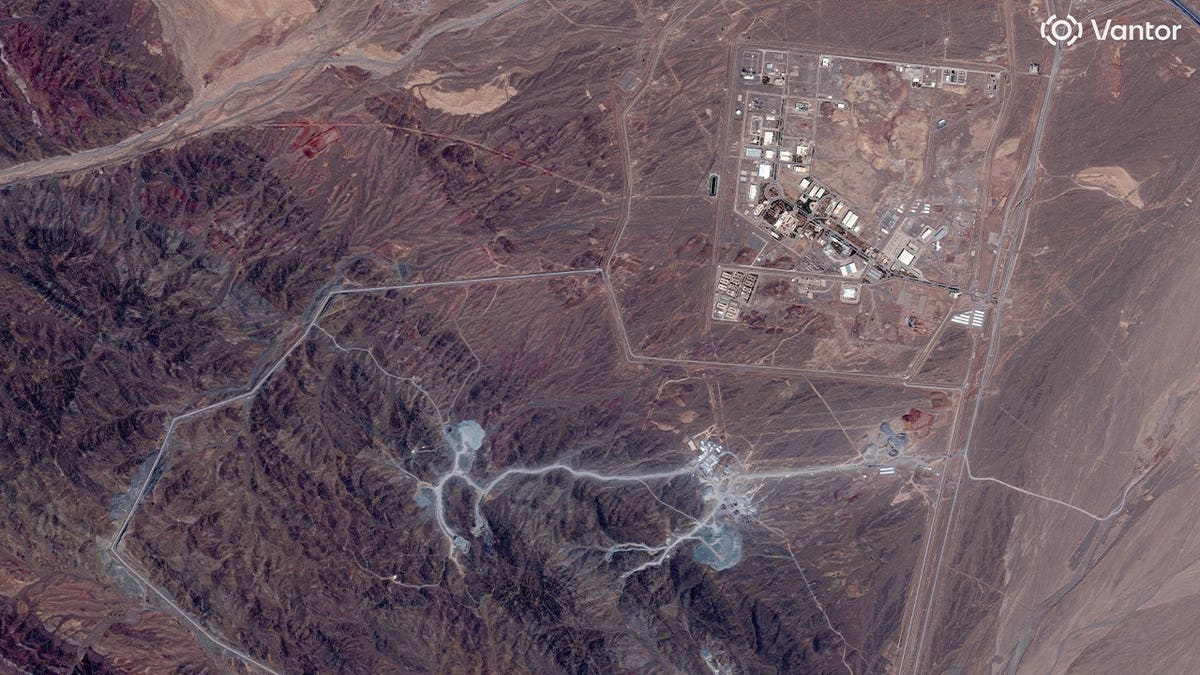
A satellite view of the Natanz nuclear facility and Pickaxe Mountain, near Natanz, Iran, June 30, 2026 (Vantor/Handout via Reuters)
Andrea Stricker, deputy director of the Foundation for Defense of Democracies’ Nonproliferation and Biodefense Program, said that sequence could play directly into Iran’s strategy.
«It is in the Iranians’ interest to steer the negotiations toward the issues that they most care about,» Stricker told Fox News Digital, including securing major U.S. concessions over Hormuz and «maintaining control of that crucial waterway that has proven a lifeline for Tehran to survive this war.»
She said Iran would also seek oil sanctions relief and potentially relief from all U.S. sanctions, before addressing the nuclear file.
«If Tehran is able to structure the talks that way — and I’m concerned that Trump appears to be going along with that approach — there may be little left in terms of leverage to get big concessions from the Iranians on the nuclear file down the line,» Stricker said.
There is evidence that Tehran has sought to sequence the talks in its favor. Axios reported in April that Iran proposed reopening the Strait of Hormuz and ending the war before beginning nuclear negotiations, potentially reducing U.S. leverage over enrichment and Iran’s enriched-uranium stockpile.
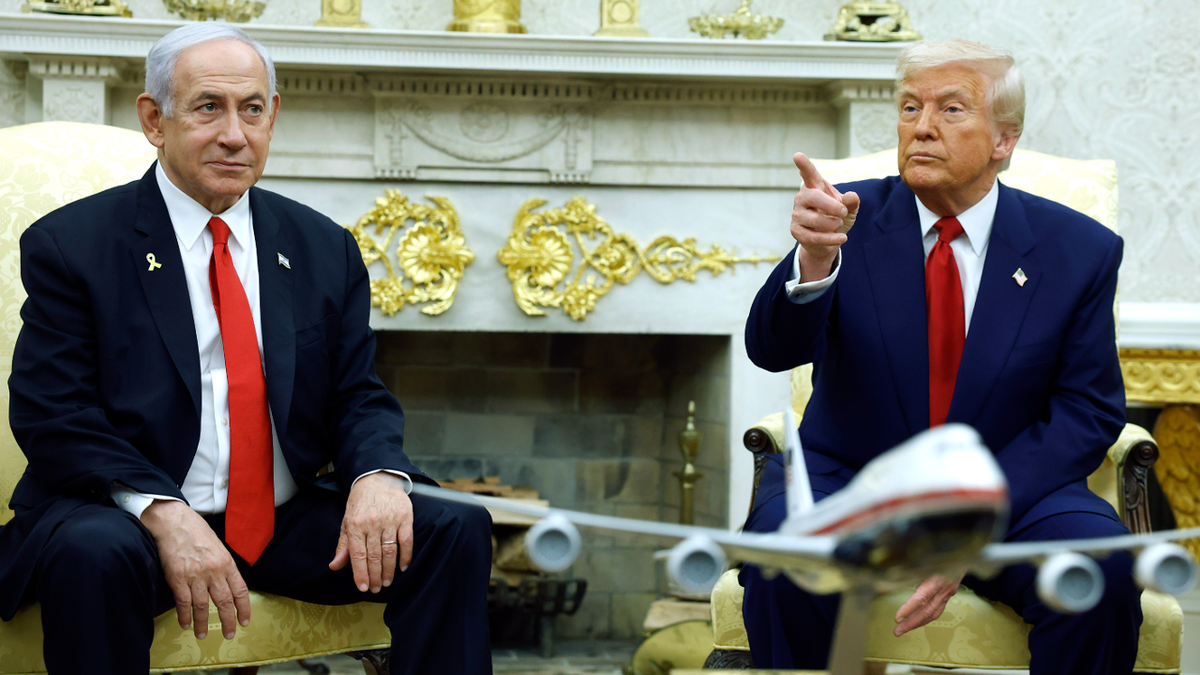
President Donald Trump, right, speaks alongside Israeli Prime Minister Benjamin Netanyahu with a model of Air Force One on the table during a meeting in the Oval Office of the White House April 7, 2025, in Washington, D.C. (Kevin Dietsch/Getty Images)
The Washington Post later reported that Tehran was focused on preserving its leverage over Hormuz rather than engaging deeply on major nuclear restrictions.
Kelsey Davenport, director for nonproliferation policy at the Arms Control Association, agreed Iran is seeking to capitalize on the leverage it gained by disrupting maritime traffic through the Strait of Hormuz.
«The current focus on the Straits of Hormuz is not surprising. Iran is looking to capitalize on leverage gained by disrupting maritime traffic through the waterway and test if Trump is willing to negotiate in good faith,» Davenport told Fox News Digital.
TRUMP WARNS IRAN FIGHTING ISN’T OVER AS HE VOWS US WILL ‘WIN’ AS TALKS FADE
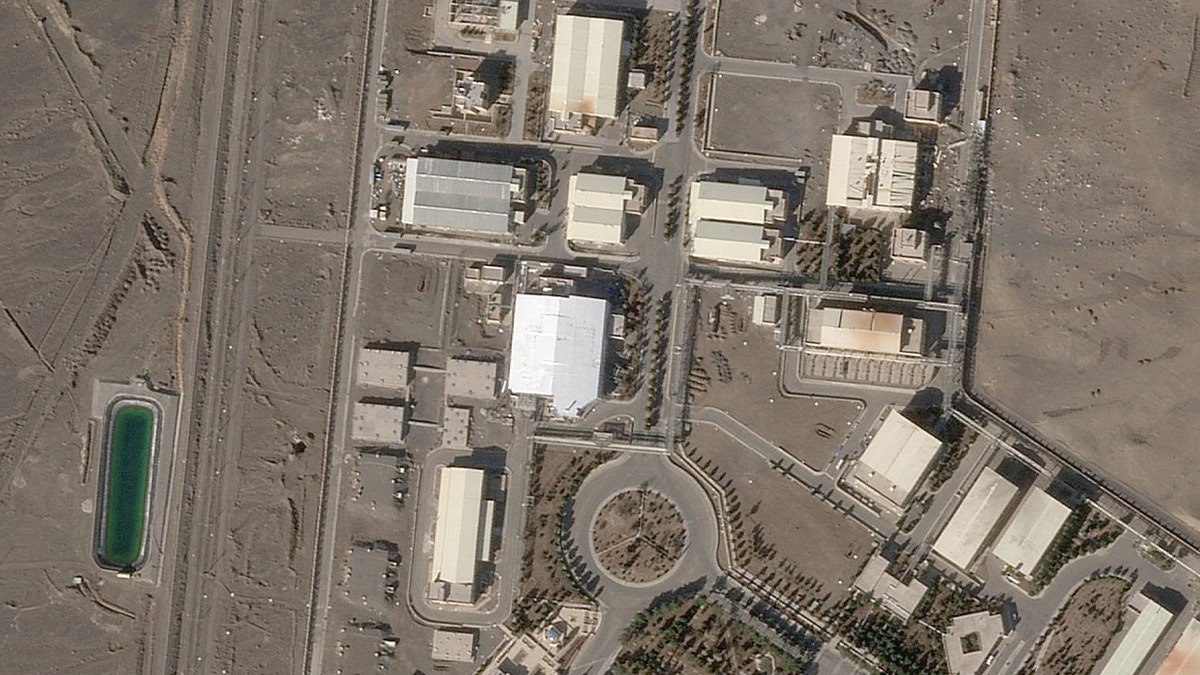
Satellite imagery taken Jan. 30, 2026, shows a new roof over a previously destroyed building at Natanz nuclear site. (2026 Planet Labs PBC/Handout via Reuters)
She said Tehran understands that any durable agreement will ultimately have to address its nuclear program but said, «At the end of this conflict, Iran will still possess the capabilities necessary to build a bomb,» Davenport said, «The relevant knowledge and nuclear expertise cannot be bombed away.
«Tehran retains key materials and technologies necessary to build a bomb,» she added. «If left unchecked, the nuclear program will be a source of instability and renewed conflict, even if Iran does not resume more proliferation-sensitive nuclear activities.»
A proposed agreement between Iran and Oman could give Tehran some control over ships entering the Persian Gulf through the Strait of Hormuz, a senior Iranian source and two regional officials told Reuters Wednesday. One regional source described the arrangement as a concession that had already been made, although the precise meaning of Iranian «control» remained under negotiation.
Iran is also seeking fees from ships traveling through the waterway, according to Reuters, while Washington has opposed both Iranian control and mandatory transit charges.
Stricker said postponing the nuclear issues would allow the regime to preserve its remaining enriched-uranium stockpiles and avoid fully dismantling its nuclear infrastructure.
She said Iran also wants to avoid accounting for its past nuclear weapons-related work or committing to end uranium enrichment and plutonium reprocessing.
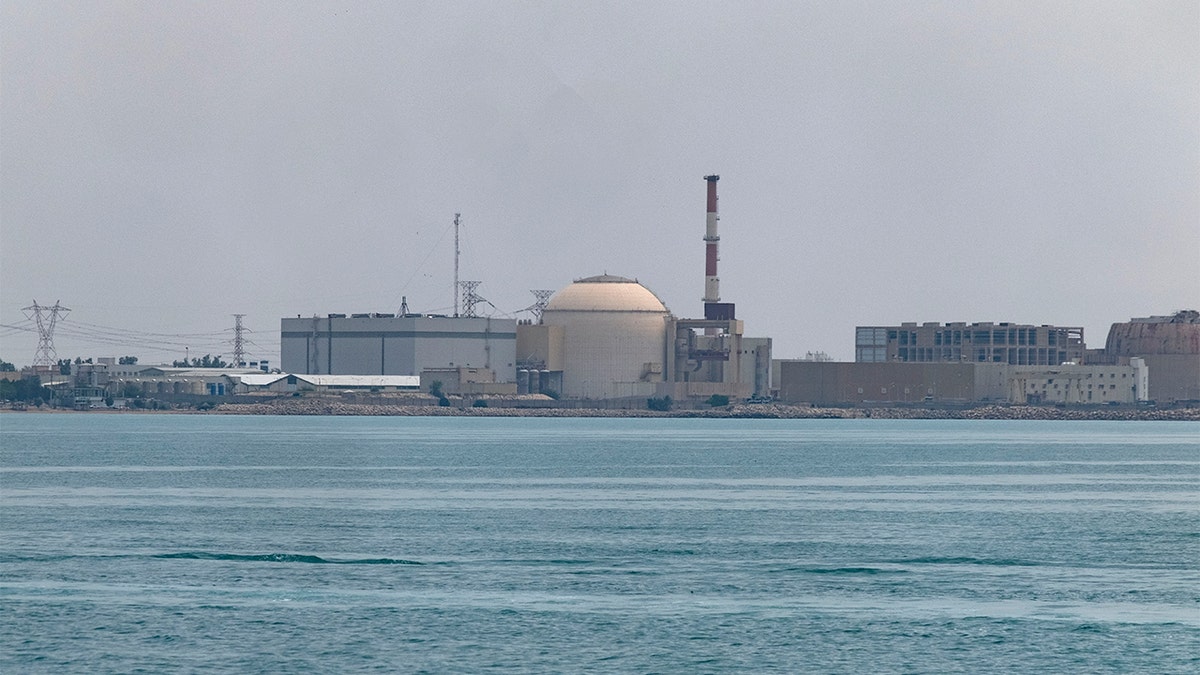
The Bushehr nuclear plant in Iran April 29, 2024 (Morteza Nikoubazl/NurPhoto via Getty Images)
«Leaving them as a last-order issue in the negotiations likely means that we will not see the Iranians make big concessions and make a solid nuclear deal,» Stricker said.
Davenport said the administration should prioritize restoring access for inspectors from the International Atomic Energy Agency before beginning detailed nuclear negotiations.
«The IAEA has not visited key Iranian nuclear sites in more than a year,» she said. «It remains unclear how much of Iran’s nuclear infrastructure remains and where any gaps might be in trying to account for Iran’s nuclear materials.»
She said renewed inspections would give Washington a clearer picture of Iran’s remaining facilities and materials, while helping negotiators design a verification regime capable of addressing any gaps.
Davenport also recommended pairing sanctions relief with specific, verifiable Iranian steps rather than negotiating one sweeping package.
«A series of smaller deals could build confidence in the process,» she said.
Stricker urged the administration to link every concession involving Hormuz, sanctions or the U.S. blockade to a measurable Iranian step on the nuclear file.
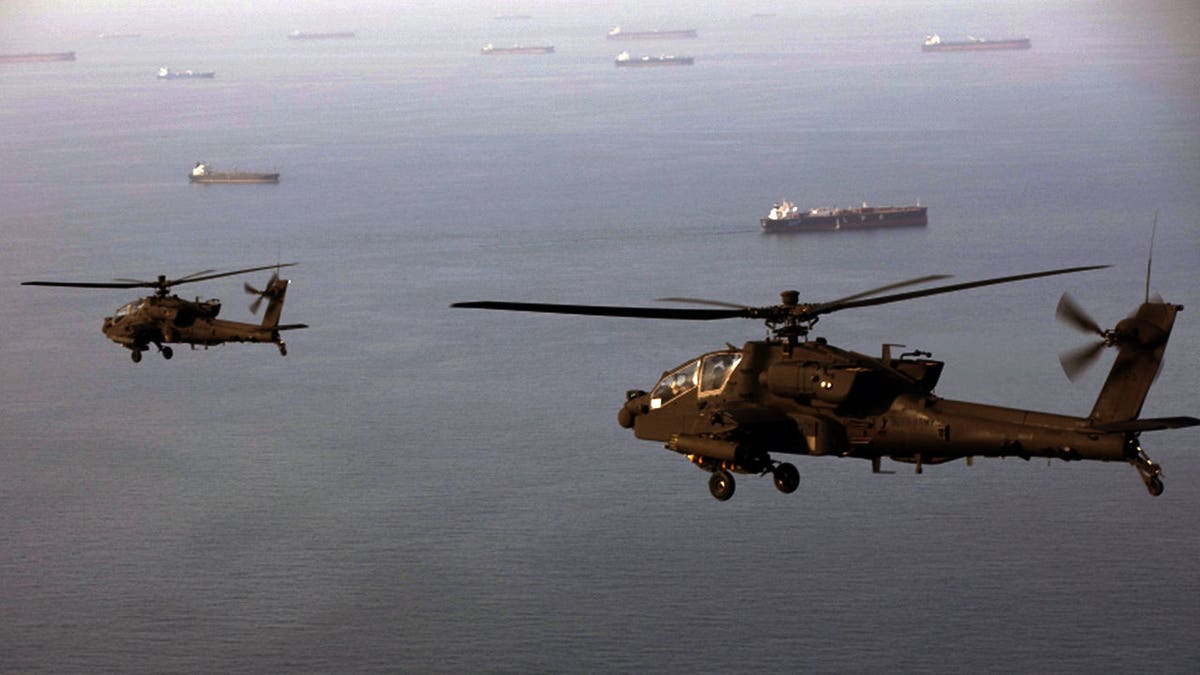
The U.S. military has been enforcing a naval blockade in the Strait of Hormuz, even during the ceasefire. (U.S. Central Command)
«The best approach to ensure a solid deal is to make the nuclear issues just as important as the Strait of Hormuz, removing the blockade and other top Iranian priorities,» she said.
war with iran, national security, nuclear proliferation, iran, benjamin netanyahu, world

La CGT reduce su presencia en la marcha contra la Ley de Tierras y priorizará una fuerte movilización por San Cayetano

Doblete de Lionel Messi en el Inter Miami: así quedó la batalla vs Cristiano Ronaldo para ser el máximo goleador de la historia

De la sobreexposición al anonimato: Luis Novaresio estrena “La vida después”, el nuevo ciclo de Infobae Studio

Square Enix comparte el cuidado que está teniendo al llevar el contenido de Final Fantasy VII a Final Fantasy XIV – Nintenderos

Fauci’s HHS iPhone turned over to Senate investigators as contempt vote looms

Quién es la niñera argentina que fue detenida por el ICE cuando iba a un partido del Mundial

“Vamos a acelerar con todo”: el objetivo del Gobierno por las reformas y la agenda electoral de cara al 2027

Javier Milei cruzó a Victoria Villarruel y elevó la tensión: “Es una opositora, replica los argumentos kirchneristas”

Reelecciones indefinidas: el oficialismo bonaerense niega que busque ampliar la Legislatura como parte de una reforma política para beneficiar a los intendentes

¡Chau Luck Ra! La salida de soltera de La Joaqui, muy bien acompañada, a días de su separación
-
 POLITICA2 días ago
Javier Milei cruzó a Victoria Villarruel y elevó la tensión: “Es una opositora, replica los argumentos kirchneristas”
-

 ECONOMIA18 horas ago
Dólar hoy en vivo: a cuánto se negocian todas las cotizaciones minuto a minuto este miércoles 5 de agosto
-

 POLITICA3 días ago
Inédito boicot a un decreto para bajar costos portuarios: el Gobierno envió intimaciones con Prefectura