
INTERNACIONAL
GOP can’t agree on key part of Trump’s housing affordability push as infighting continues


NEWYou can now listen to Fox News articles!
President Donald Trump is leaning on Congress to tee up an affordability win ahead of November’s midterm elections, but entrenched GOP disagreement on a sweeping housing proposal threatens to derail it.
Trump on Monday called on the House to swiftly approve Senate-passed legislation aimed at easing housing affordability that has languished in the lower chamber for several months. House Republicans, however, have balked at that request and are pitching a rival plan.
House Speaker Mike Johnson, R-La., teased earlier in the week that Republicans and Democrats would come together to bring a «bipartisan, bicameral bill to the president’s desk.»
«I think everybody feels like it’s important, so we’re just working out some nuances,» Johnson said.
Speaker of the House Mike Johnson speaks at a press conference with House Republican leaders at the Republican National Committee headquarters in Washington, D.C., on May 13, 2026. (Nathan Posner/Anadolu via Getty Images)
TRUMP-BACKED AFFORDABLE HOUSING OVERHAUL CLEARS SENATE, WHILE HOUSE GOP RAISES RED FLAGS
Senior House lawmakers on Thursday unveiled a modified version of the Senate’s 21st Century ROAD to Housing Act, which is expected to receive a vote in the lower chamber as early as next week.
Any changes to the Senate’s proposal would force the upper chamber to consider the measure again, prolonging the timeline lawmakers can send legislation to Trump’s desk.
Sen. Elizabeth Warren, D-Mass., one of the chief architects of the Senate’s bill, declined to say whether she was speaking with her counterparts in the House about tweaks to the bill, and argued that lawmakers were running out of time to do something.
«There’s a housing crisis out there,» Warren said. «This bill can pass today if the House would just put it on the floor and vote on it. We need to get started, and if the House has more ideas than they’d like to add, start another bill.»
Some GOP lawmakers are not sweating the wait.
«We cannot take the Senate bill to the floor,» House Freedom Caucus Chairman Andy Harris, R-Md., told Fox News Digital in an interview earlier this week.
The political dynamics are much different in the Senate, however. And the housing bill passed with fewer than a dozen defectors in March — a rare feat in such a hyper-partisan Congress.
Senate Majority Leader John Thune, R-S.D., argued that the easiest route to putting the legislation on Trump’s desk is passing the Senate’s version.
«It’s been sitting over there for a while and the president’s weighed in on it. I think, you know, the White House made it clear, they would like to see the House pick up and pass the Senate bill,» Thune said. «We’ve done what we can do. It’s in the court of the House now.»
The House product struck out a controversial provision taking aim at the build-to-rent market that drew the opposition of conservatives, who argued the language amounted to excessive government interference in the housing market.
The clause in the Senate’s proposal would have specifically required some developers to sell single-family homes built for the purpose of renting within seven years after construction. The build-to-rent industry and opponents of the provision argued their properties provide a more affordable option for some Americans priced out of the housing market and could imperil the supply of rentals across the country.
«We’ve got to make sure we do it in a right way that continues to keep free markets,» Rep. Michael Cloud, R-Texas, said, adding that the clause in the Senate bill could make it «impossible» for some people to access housing.

Senate Majority Leader John Thune, R-S.D., and House Speaker Mike Johnson, R-La., are pitching rival housing bills as President Donald Trump looks for a legislative win on affordability. (Anna Moneymaker/Getty Images; Kent Nishimura/Getty Images; Kevin Dietsch/Getty Images)
FOREIGNERS ARE SNAPPING UP US HOMES AND STEALING THE AMERICAN DREAM OUT FROM UNDER FAMILIES
The proposal, however, would also weaken a ban on large institutional investors from purchasing single-family homes — a priority of the Trump administration.
The House’s rival housing bill notably preserves a ban on central bank digital currencies (CBDC) through 2030 that was included in the Senate’s legislation.
House conservatives raged at the Senate bill for stopping short of enacting a permanent CBDC ban — a top priority of GOP privacy hawks, who have sought to add the language to various legislative vehicles.
«It has to be permanent,» Cloud said. «We’ve got to put the nail in the coffin on it.»
House Financial Services Chairman French Hill, R-Ark., a co-author of the House’s rival housing package, said he shared Trump’s goal of expanding access to affordable homeownership in a statement Thursday.
«It cuts unnecessary barriers to new home construction, modernizes HUD programs, and allows banks to more freely deploy funding into their communities,» Hill said regarding the lower chamber’s proposal. «We must get this right — and I am committed to working hard to do that.»
Not everyone in the Senate is upset by the House’s decision to modify the bill.
Sen. Rick Scott, R-Fla., was one of the few lawmakers to vote against the 21st Century ROAD to Housing Act, and told Fox News Digital that housing affordability isn’t something that’s dictated by the federal government.

Prospective buyers arrive during an open house in Rancho Cucamonga, Calif., on May 9, 2026, amid rising mortgage rates that could slow the spring home sales season. (Kyle Grillot/Bloomberg via Getty Images)
CLICK HERE TO DOWNLOAD THE FOX NEWS APP
«If you wanted to actually reduce housing costs, it’s local governments who are gonna have to allow more houses to be built,» Scott said.
The legislative standoff comes as a recent Fox News poll found that nearly 80% of voters said housing costs were a problem for them or their family. The same survey also found that Democrats hold a lead over Republicans on inflation and the economy.
politics, midterm elections, mike johnson, housing, republicans, senate elections











INTERNACIONAL
Federal judge acknowledges Supreme Court ruling clearing path for Trump to end Haiti TPS

NEWYou can now listen to Fox News articles!
President Donald Trump on Wednesday notched a major immigration victory after a federal judge acknowledged that the court order blocking the administration from ending temporary protected status (TPS) for hundreds of thousands of Haitians is no longer in effect after the Supreme Court’s ruling in Mullin v. Doe.
The ruling marks the culmination of a yearslong legal battle over the Biden administration’s expansion of Haiti’s TPS designation and delivers a significant immigration victory for Trump, who repeatedly campaigned on ending the Biden administration’s expanded TPS protections for Haitians.
The issue became a centerpiece of the 2024 election after Trump and running mate JD Vance blamed the Biden administration’s Haiti TPS policies for the influx of Haitian migrants into Springfield, Ohio, where residents raised concerns about traffic safety, strained public services and cultural clashes.
BLUE STATE LEADERS ERUPT AFTER SUPREME COURT’S DECISION ENDING TPS PROTECTIONS FOR HAITIANS, SYRIANS
A federal judge acknowledged that the court order blocking the Trump administration from ending temporary protected status for hundreds of thousands of Haitians is no longer in effect. (Joseph Prezioso/AFP via Getty Images, File)
The controversy later exploded onto the national stage after Trump referenced residents’ claims that migrants were taking ducks and geese from parks and eating household pets.
The White House did not respond to Fox News Digital’s request for comment by publication time.
U.S. District Judge Ana Reyes wrote Wednesday that her earlier order staying the Department of Homeland Security’s (DHS) termination of Haiti’s TPS designation «is no longer in effect» after the Supreme Court’s decision and the D.C. Circuit’s subsequent mandate.
While the underlying lawsuit will continue, the administration is no longer barred by the injunction from moving forward with ending TPS protections for an estimated 330,000 to 350,000 Haitians living in the U.S.
The remaining litigation centers on whether the administration acted with unconstitutional racial animus in terminating the designation.
LIBERAL COURT STUNS WITH RULING THAT HANDS TRUMP MAJOR IMMIGRATION WIN
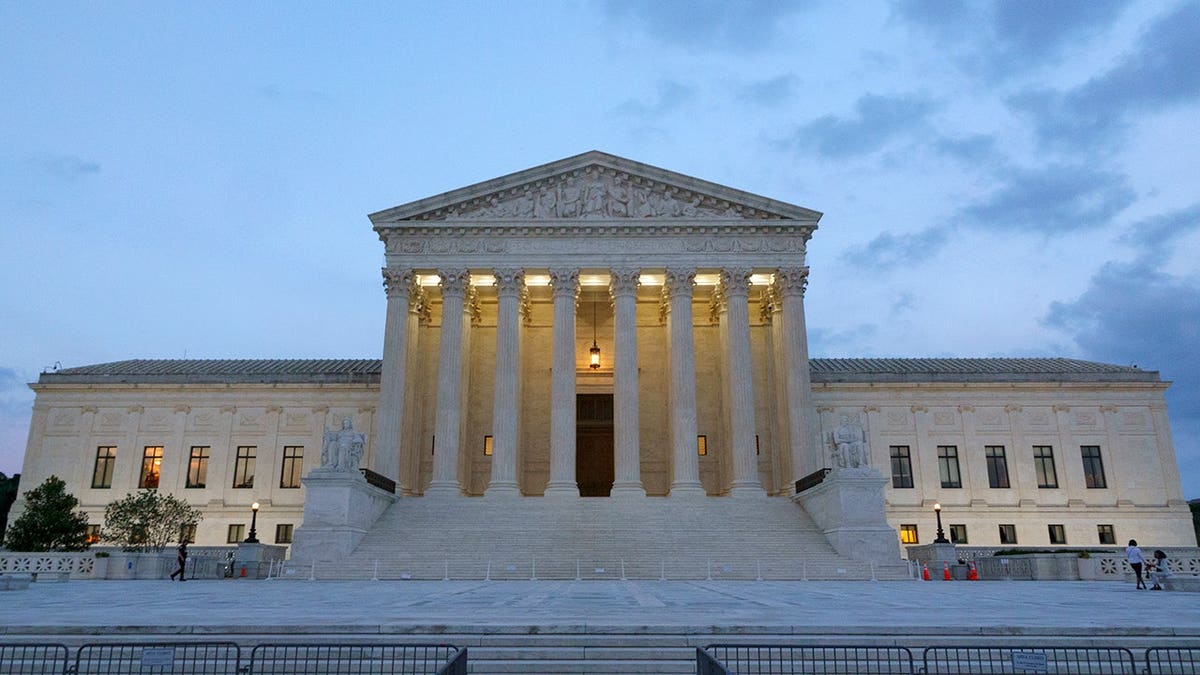
The Supreme Court ruling in Mullin v. Doe ended TPS for Haitian migrants. (Kevin Carter/Getty Images, File)
The Supreme Court ruled in June that the TPS statute bars judicial review of the administration’s non-constitutional decisions to terminate TPS designations and found the plaintiffs’ equal protection challenge was unlikely to succeed. The court reversed the lower courts and remanded the case for further proceedings.
DHS General Counsel James Percival pushed back on reports suggesting Wednesday’s order itself ended Haiti’s TPS designation, arguing the protections effectively expired when the Supreme Court’s mandate was issued July 27 and that Reyes’ order merely acknowledged that legal reality.
«Haiti TPS ended when the Supreme Court mandate issued on July 27,» Percival wrote on X. «I will give Judge Reyes kudos though for taking the L with grace and not doing something bonkers like many of her colleagues.»
Haiti first received TPS after the country’s devastating 2010 earthquake, but the designation remained in place for 16 years through multiple administrations. The Biden administration later expanded and extended protections for hundreds of thousands of Haitians already living in the U.S.
MORE THAN 100 HAITIAN IMMIGRANTS WITH VIOLENT OFFENSE AND SEX CRIME CONVICTIONS DEPORTED: DHS
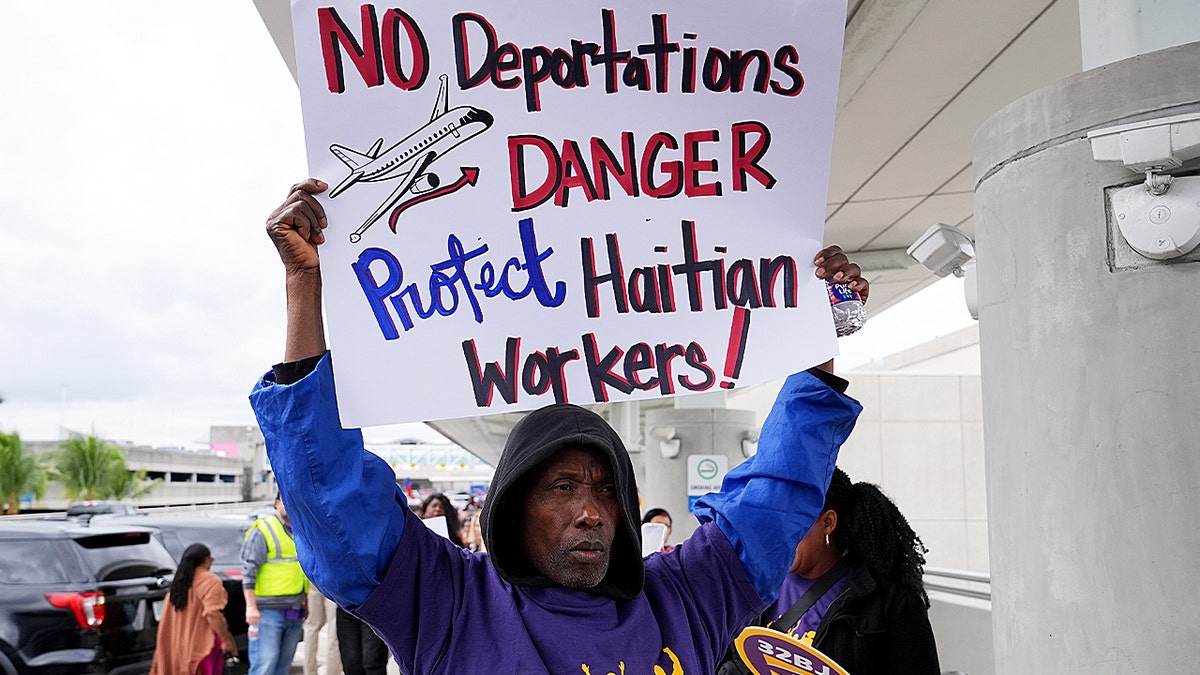
Temporary protected status for Haitian immigrants was lifted late last month. (Lynne Sladky/AP Photo, File)
After reviewing conditions in Haiti, former DHS Secretary Kristi Noem determined the country no longer met the statutory requirements for TPS and announced the administration’s decision to terminate the designation, arguing the humanitarian program had been extended well beyond its intended temporary purpose. The move triggered the legal challenge that ultimately reached the Supreme Court.
After the SCOTUS decision, the DHS announced Haiti’s TPS designation would be terminated, effective July 27, and that employment authorization documents issued under the designation were no longer valid. The department instructed employers to reverify the work authorization of affected employees.
The State Department maintains a Level 4 «Do Not Travel» advisory for Haiti because of widespread gang violence, kidnappings and civil unrest.
Fox News Digital’s Danielle Wallace and Michael Lee contributed to this report.
immigration, donald trump, homeland security, federal judges, federal courts, supreme court, politics
INTERNACIONAL
Rusia y Ucrania luchan ahora por el control del espacio aéreo: el futuro de la guerra se juega en el cielo



INTERNACIONAL
Crowded Russian beach descends into chaos after alleged Ukrainian drone incident kills 7, including 4 children

NEWYou can now listen to Fox News articles!
Vacationers were sent scrambling for safety Monday after a projectile struck a crowded beach in a Russian Black Sea resort town, killing seven people, including four children, and injuring dozens more, officials said.
Video footage captured the incident in the village of Arkhipo-Osipovka near Gelendzhik, where the beach was packed with visitors at the time of the strike.
The Russian Mission in Geneva said in a post on X that the «bloody attack» was carried out by a drone launched by Ukraine, accusing Kyiv of targeting civilians.
UKRAINE LAUNCHES WHAT APPEARS TO BE ONE OF ITS LARGEST DRONE ATTACKS AGAINST RUSSIA: REPORT
A projectile flies overhead near Arkhipo-Osipovka, Russia, on Monday. (Social media via Reuters)
«The attack targeted civilian infrastructure. Emergency and special services are working at the crash site,» regional Gov. Veniamin Kondratyev said in a post on Telegram.
«What happened today is a targeted attack by the Kyiv regime against civilians who have no connection to the military infrastructure. This cynical and inhumane terrorist attack against children cannot be justified.»
UKRAINE UNLEASHES MORE THAN 400 DRONES NEAR MOSCOW IN ONE OF WAR’S BIGGEST ATTACKS

A fiery explosion rocks a Black Sea beach resort in Russia on Monday. (Social media via Reuters)
Andriy Kovalenko, an officer with Ukraine’s Defense Forces, disputed Russia’s account, saying the deaths were directly caused by Russian air defenses that intercepted a drone, sending debris onto the beach.
«Russian air defense shot down a drone over people lying on the beach,» Kovalenko said on Telegram.
In the video, sounds resembling gunfire were heard just seconds before a drone struck the beach, causing a fireball explosion that sent bystanders screaming. As the gunfire was heard, the drone appeared to veer sharply before diving toward the beach.
Preliminary Russian reports also found that several of the deaths were caused by «falling drone debris,» Kondratyev said.
ZELENSKYY SAYS PUTIN ‘LOST THE INITIATIVE’ AS UKRAINE’S TECH INDUSTRY RESHAPES THE WAR
In another Telegram post, Kovalenko indicated that Ukraine uses its weapons against Russian military-industrial infrastructure to affect Moscow’s ability to finance the war.
He further accused Russian President Vladimir Putin of creating an «illusion» that Russia would remain safe from the war by downplaying daily explosions as falling debris, limiting air raid warnings, and positioning air defenses near populated areas such as the Black Sea resort.

Smoke rises after a deadly blast along a Russian resort beach on Monday. (Social media via Reuters)
«Putin deliberately killed these people. Because if he had not started the war and struck Ukraine, they would be alive,» Kovalenko said.
«It was Putin, his air defense, who killed these Russians. His decisions in response to their decisions launched a chain of death for Russians.»
russia, conflicts, ukraine, wars

Qué participantes quedaron en la placa de nominados en Gran Hermano Generación Dorada: la jugada que lo cambió todo

La Anmat retiró del mercado un producto de una reconocida marca de crema antiinflamatoria tras un robo

YPF vendió dos bloques petroleros en Mendoza por USD 405 millones para financiar su expansión en Vaca Muerta

Los árbitros para la fecha 4 del Torneo Clausura de la Liga Profesional

Federal judge acknowledges Supreme Court ruling clearing path for Trump to end Haiti TPS

Los universitarios reclaman que no se cumplió con el financiamiento y anunciaron un nuevo paro nacional

“Vamos a acelerar con todo”: el objetivo del Gobierno por las reformas y la agenda electoral de cara al 2027

Javier Milei cruzó a Victoria Villarruel y elevó la tensión: “Es una opositora, replica los argumentos kirchneristas”

Reelecciones indefinidas: el oficialismo bonaerense niega que busque ampliar la Legislatura como parte de una reforma política para beneficiar a los intendentes

¡Chau Luck Ra! La salida de soltera de La Joaqui, muy bien acompañada, a días de su separación
-
 POLITICA2 días ago
Javier Milei cruzó a Victoria Villarruel y elevó la tensión: “Es una opositora, replica los argumentos kirchneristas”
-

 ECONOMIA15 horas ago
Dólar hoy en vivo: a cuánto se negocian todas las cotizaciones minuto a minuto este miércoles 5 de agosto
-

 POLITICA3 días ago
Inédito boicot a un decreto para bajar costos portuarios: el Gobierno envió intimaciones con Prefectura