INTERNACIONAL
El nuevo primer ministro de Hungría cuestionó a Viktor Orbán y aseguró que desarmará «el régimen mafioso»

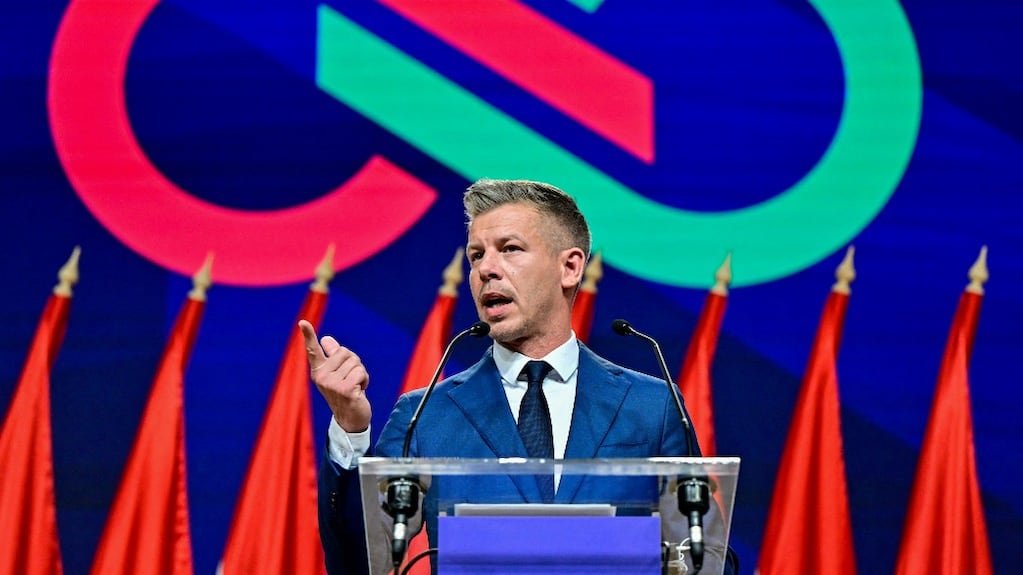
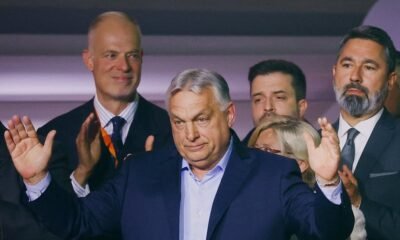
El futuro primer ministro de Hungría, el conservador Péter Magyar, dijo este lunes que quiere una transición “corta y rápida” para empezar a desmontar lo que llamó como el “régimen mafioso” creado por el ultranacionalista Viktor Orbán en los 16 años que gobernó el país con mayorías absolutas.
“No tenemos tiempo que perder, el país fue robado y endeudado. Somos el país más pobre y corrupto de la Unión Europea ahora. Los húngaros votaron por el cambio. Tenemos que cambiar el régimen, porque el país fue dirigido por un grupo criminal organizado”, afirmó Magyar, cuyo partido Tisza logró 138 de los 199 escaños del Parlamento en las elecciones del domingo.
Magyar fue hasta hace sólo dos años un miembro del Fidesz, el partido de Orbán, y reconoció que fue un gran admirador del político ultranacionalista.
“Queremos construir un país basado en el Estado de derecho democrático, que respeta a los mayores, protege a los menores y la propiedad privada”, afirmó el líder de Tisza. Además, acusó a Orbán de haber hecho propaganda de odio y de haber dividido a los húngaros.
Las violaciones de normas comunitarias deterioraron las relaciones de Hungría con la Unión Europea, que mantiene congelados miles de millones de fondos por la vulneración de Orbán del Estado de derecho.
Acercamiento a la UE
Magyar adelantó, en un encuentro con los medios, que planea mejorar las deterioradas relaciones de Hungría con la UE y con Ucrania y devolver al país a la Corte Penal Internacional (CPI), de la que Orbán la sacó en apoyo del primer ministro israelí, Benjamín Netanyahu, a quien ese tribunal acusa de crímenes de guerra en Gaza.
También afirmó que mantendrá una relación pragmática con Israel y se refirió a los vínculos entre los dos países y a la presencia de una importante comunidad judía en Hungría. “No vamos a aceptar ninguna forma de antisemitismo”, aseguró. Peter Magyar derrotó a Viktor Orban en las elecciones del domingo en Hingría (Foto: REUTERS/Bernadett Szabo)
En relación a Ucrania, prometió que no aplicará el veto de Orbán al préstamo de 90.000 millones de la Unión Europea (UE) a Ucrania, para apoyarla frente a la invasión rusa, ya que Hungría negoció en su momento no tener que participar en ese crédito.
Orbán, el principal aliado de Moscú dentro de la UE, bloqueó esa ayuda en represalia por el corte de los suministros de petróleo ruso que llegan a Hungría a través de territorio ucraniano por el oleoducto Druzhba, dañado por ataques de Moscú en enero pasado.
Leé también: De “el Papa es débil” a “no le tengo miedo”: el fuerte cruce entre Donald Trump y León XIV
Pero Magyar respaldó la postura de Orbán de cuestionar la entrada de Ucrania en la UE, y argumentó que un país en guerra no puede negociar ese proceso y que está aún muy lejos de cumplir las condiciones para el ingreso.
El futuro primer ministro adelantó que quiere que Hungría ingrese en la Fiscalía Europea y crear una oficina para localizar los fondos europeos que, aseguró, fueron malversados durante los gobiernos de Orbán.
Magyar afirmó que el entorno de Orbán, incluido el ministro de Exteriores, Péter Szijjártó, está en estos momentos destruyendo documentos, entre ellos algunos sobre sus relaciones con Rusia.
Por otra parte, prometió reformar la Constitución del país para que el jefe del Gobierno no pueda ejercer durante más de dos mandatos, y explicó que esa restricción se aplicará en retrospectiva a Orbán.
Duro con la inmigración
El futuro primer ministro adelantó que seguirá aplicando una dura política antiinmigración y que mantendrá las vallas que Orbán levantó en 2015 en la frontera sur del país para impedir las entradas irregulares.
El tema migratorio fue uno de los puntos de choque entre la UE y Orbán, que lleva años hablando de supuestos planes para traer a Europa a millones de inmigrantes de África y Asia.
En todo caso, Magyar se mostró convencido de que puede lograr un acuerdo con la UE para dejar de pagar una multa diaria de un millón de euros por violar la legislación europea en materias de asilo.
Más moderado, sin anunciar grandes cambios, se mostró con la comunidad LGBTI, que fue criminalizada especialmente durante los últimos años de Orbán en el Gobierno.
“Todo el mundo debe vivir como quiera y amar a quién quiera, mientras no dañe a otros”, afirmó.
(Con información de EFE)
hungria, Viktor Orban






NEWYou can now listen to Fox News articles!
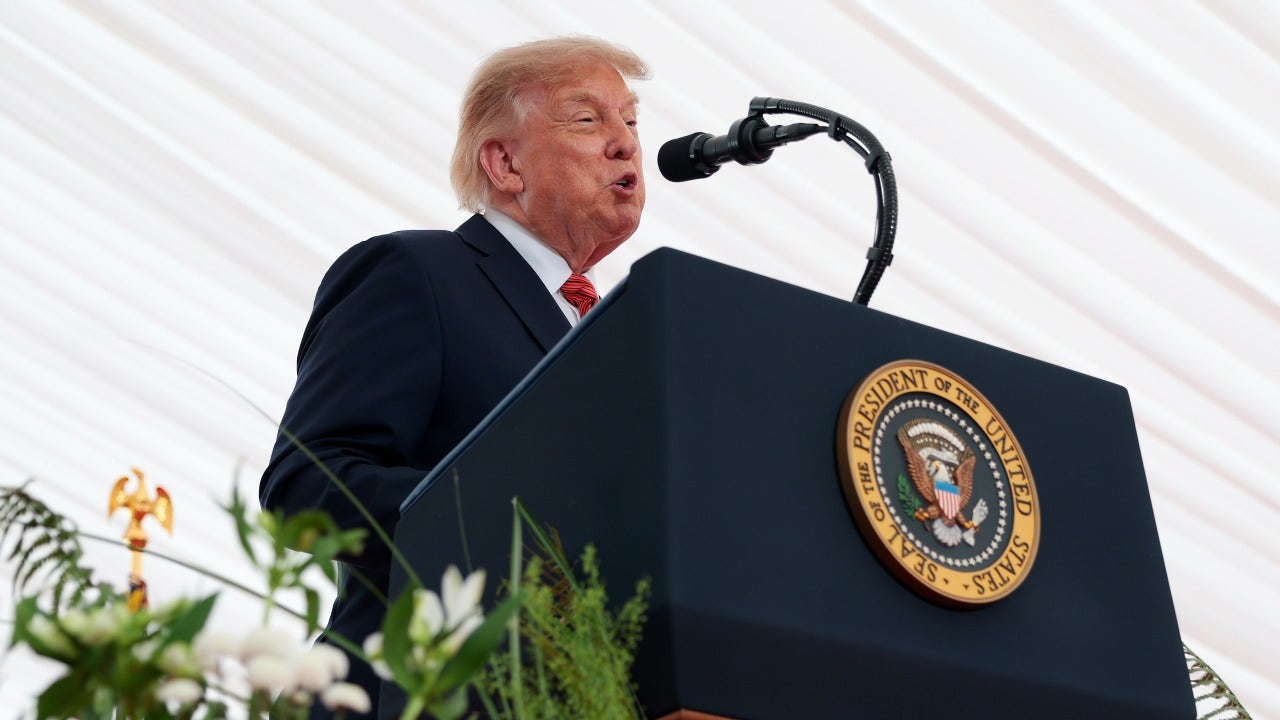
President Donald Trump said Saturday during a trip to Ireland that he would love to see the country unified.
The Republic of Ireland gained independence from the United Kingdom in 1922, while Northern Ireland, established in 1921, has remained part of the U.K.
«I don’t want to cause any problems, but I will tell you, I’d love to see it unified. I have friends on both sides, great people. They’re Irish people. How can they be bad, right?» Trump said in Dublin while on stage with Ireland’s prime minister, Micheál Martin. «I’d like to see a unified country. I think it would be a great feather in everybody’s cap if that happened. It’s going to happen eventually.»
He added that the U.K. «will have something to say about it obviously,» but reiterated that unification would be a «great thing.»
TRUMP SAYS IRAN CONFLICT COULD END AFTER MIDTERMS
President Donald Trump meets with Ireland’s Prime Minister Micheál Martin at Farmleigh House in Phoenix Park in Dublin on Sept. 12, 2026. (Brendan Smialowski/AFP via Getty Images)
In response to Trump’s comments, British Prime Minister Andy Burnham said in a statement that the U.K. government’s stance on reunification remains unchanged.
«I am not aware that there is majority public support for another referendum, and until that changes, there will not be one,» Burnham told reporters in Parliament, according to Reuters.
Later Saturday, Trump addressed a crowd at the Deerfield Residence, the official home of the U.S. ambassador to Ireland.
U.S. Ambassador Edward S. Walsh introduced the president, who took the stage to the sound of Lee Greenwood’s «God Bless the USA.»
Early in his remarks, Trump revisited the question a reporter had asked during his meeting with Martin about the prospect of Irish reunification.
«That’s one of those questions where no matter what you say, no matter how well you say it, there’s no good answer, right?» he said, before saying reunification would be a «cool thing.»
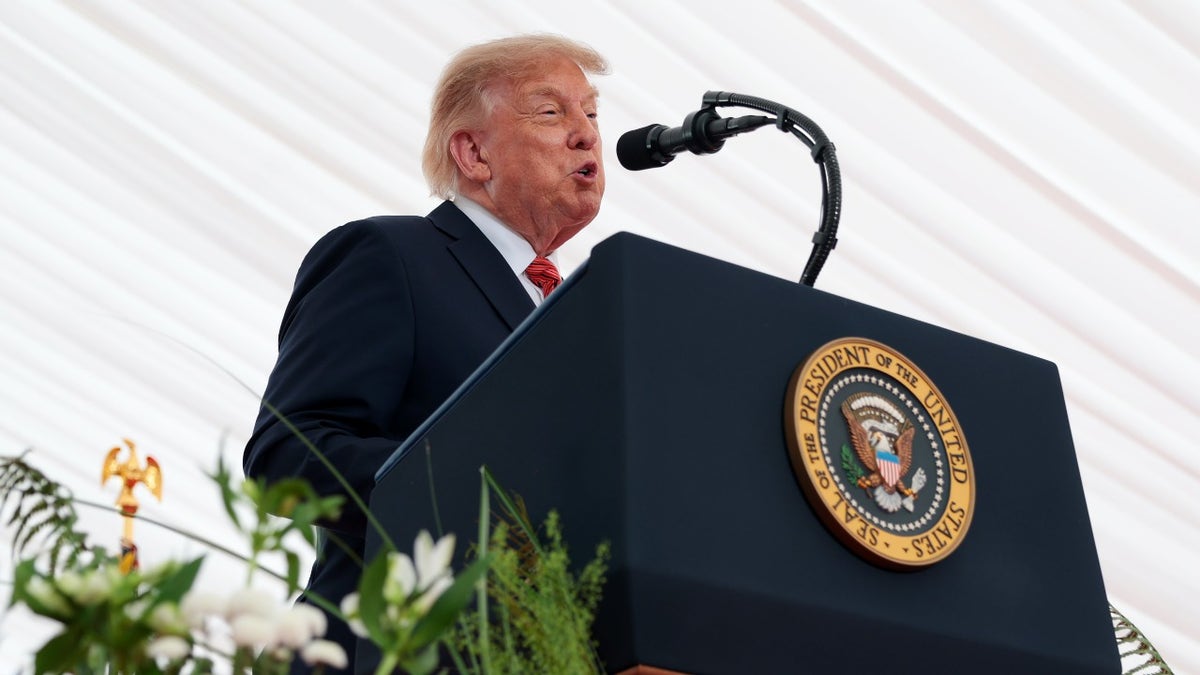
President Donald Trump delivers remarks to U.S. Embassy personnel and business leaders at Deerfield Residence on Sept. 12, 2026, in Dublin, Ireland. (Anna Moneymaker/Getty Images)
IRISH AUTHORITIES SEEK EXTRADITION WARRANT FOR SUSPECT IN MURDER OF AMERICAN MOM JAMEY CARNEY: REPORT
The debate over whether Ireland should be one country has been one of the island’s most divisive political issues for decades.
At times, it was far more than a war of words. From the late 1960s through the late 1990s, Northern Ireland was gripped by decades of sectarian violence known as «the Troubles.»
Irish nationalists and republicans — drawn largely from Northern Ireland’s Catholic minority — sought to reunite the island under a single Irish state.
Unionists and loyalists, who mostly belonged to the Protestant majority, wanted Northern Ireland to remain part of the U.K.
Throughout the conflict, more than 3,500 people were killed in violence involving Irish republican and loyalist paramilitary groups, as well as British security forces.
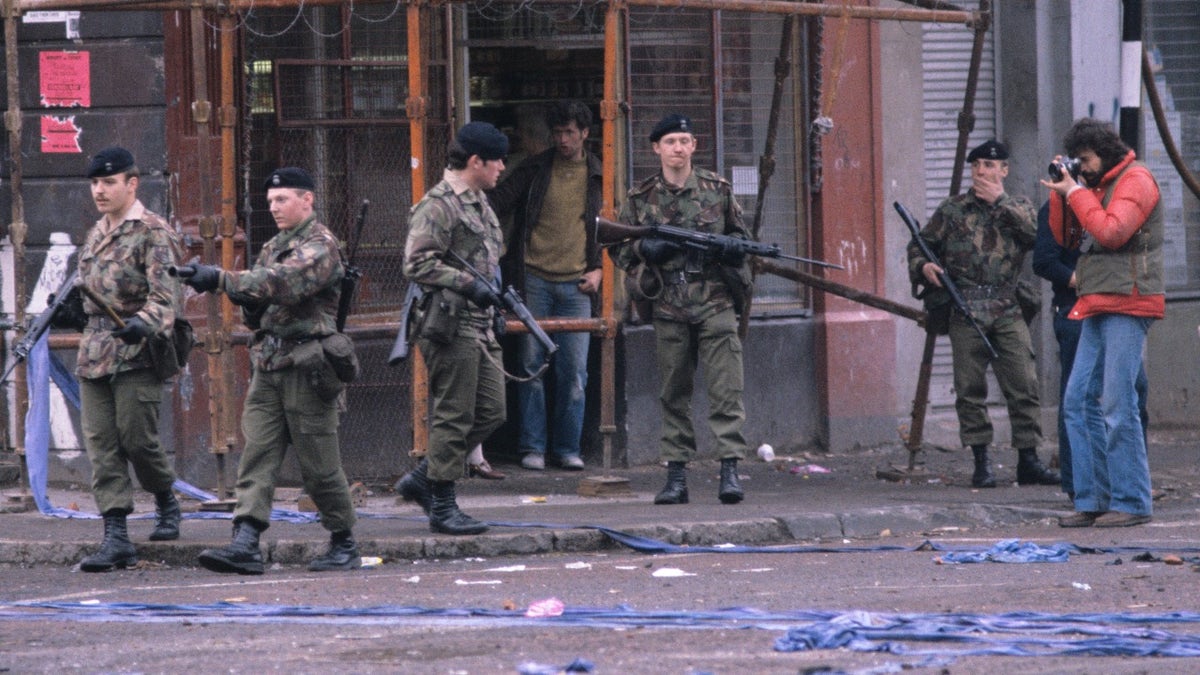
A photographer captures a scene of soldiers in front of a building in May 1981 in Northern Ireland. (Joe McNally/Getty Images)
The fighting largely ceased with a peace deal in 1998, but in the decades since, tensions remain between Protestants and Catholics in Northern Ireland.
A 2024 U.K. Parliament report found that 90% of students in Northern Ireland attend schools that «are effectively segregated along religious lines.»
The peace deal signed in 1998 — known as the Good Friday Agreement or the Belfast Agreement — set up a new government that had representation for both nationalists and unionists.
It also established that Northern Ireland will remain part of the U.K. unless a majority of citizens vote to leave through a referendum.
Brexit reignited debate over Ireland’s future, with Northern Ireland voting to remain in the European Union even as the U.K. as a whole voted to leave. Still, no referendum has been proposed or scheduled on whether Northern Ireland should leave the United Kingdom.
Reuters contributed to this report.
ireland, donald trump, uk politics, united kingdom
INTERNACIONAL
Los bloqueos por el alza de combustibles dejan seis agentes heridos y varios arrestos en Guatemala
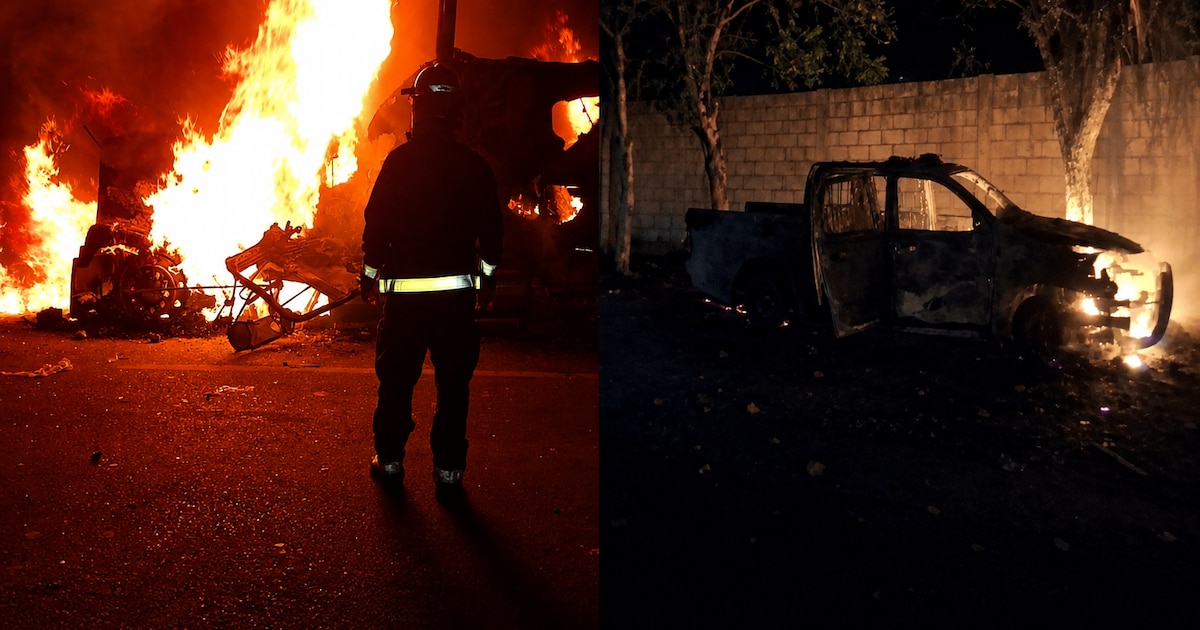
La Policía Nacional Civil (PNC) confirmó que seis agentes resultaron heridos durante el desalojo de un bloqueo el viernes 11 de septiembre, en el kilómetro 168 de la ruta a Cuyotenango, Suchitepéquez, en una jornada de protestas contra el aumento de los combustibles que también dejó vehículos incendiados en Zacapa y cortes en varios departamentos de Guatemala.
Un cierre continuaba activo el sábado 12 de septiembre a las 06:45 en el kilómetro 225 de la ruta departamental QUE-03, en la aldea Santo Domingo, Colomba Costa Cuca. El bloqueo había comenzado cuatro minutos antes, afectaba ambos sentidos de circulación y era el único punto cerrado en el reporte matutino de la Dirección General de Protección y Seguridad Vial (Provial); las demás rutas figuraban habilitadas.
El policía Ronal Gavino Morales Chávez sufrió un disparo en el estómago y fue trasladado en helicóptero a un centro asistencial de la Ciudad de Guatemala, después de ser estabilizado en el Instituto Guatemalteco de Seguridad Social de Mazatenango. Los otros cinco efectivos padecieron lesiones por explosiones de morteros, el impacto de una piedra en el cráneo y golpes en distintas partes del cuerpo.
La corporación indicó que sus Fuerzas Antidisturbios despejaron más del 90% de los puntos bloqueados en el país. El despliegue respondió a una orden de la Corte de Constitucionalidad para liberar las rutas con apoyo del Ministerio de Gobernación y el Ejército.
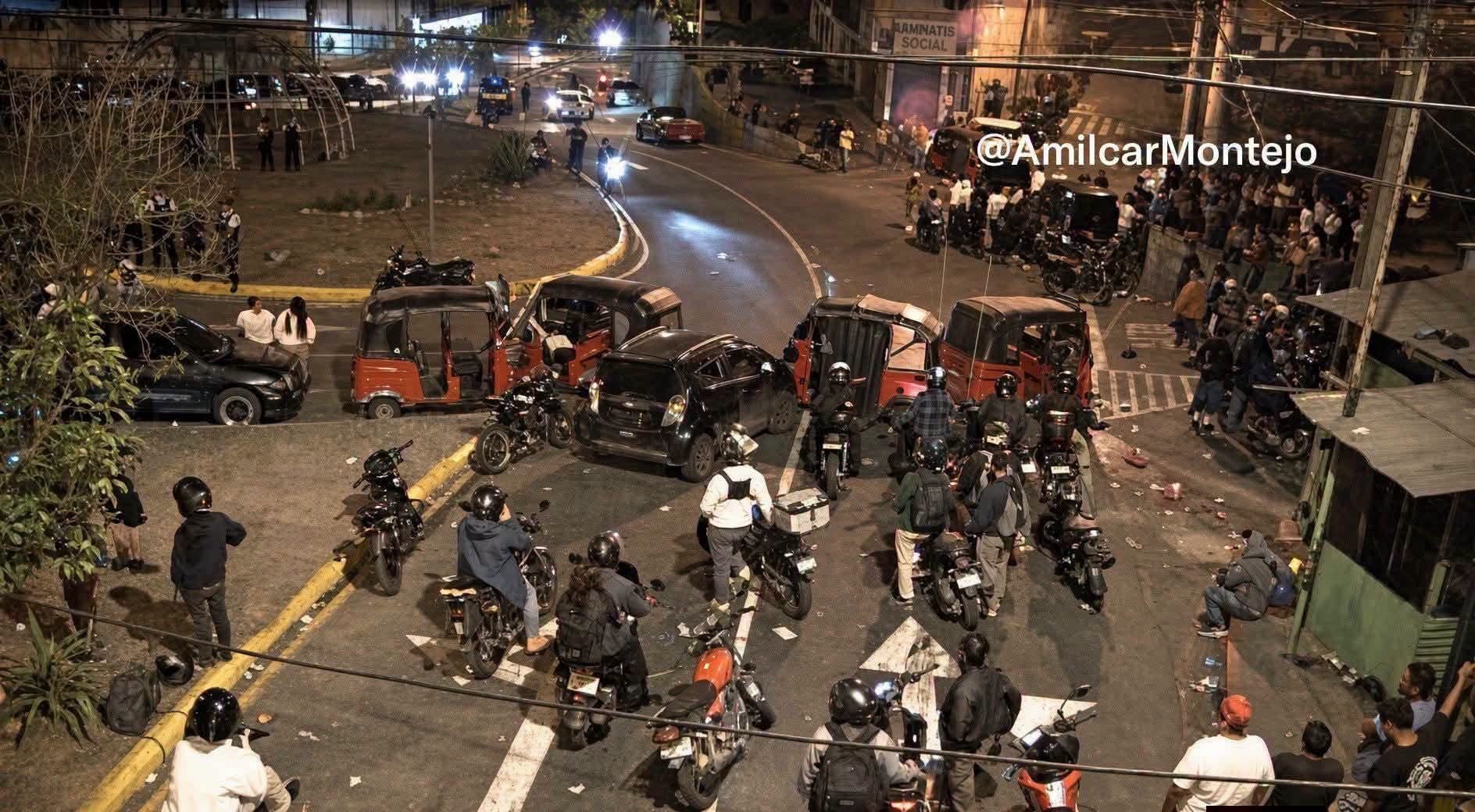
Dos focos de conflicto en Zacapa y Villa Nueva
Los incidentes persistían al cierre de la jornada en sectores de Zacapa y Villa Nueva, donde la PNC afirmó haber detectado la presencia de pandillas y estructuras del crimen organizado dentro de las manifestaciones. La institución acusó a esos grupos de usar a mujeres, adultos mayores y niños como escudos humanos.
La fuerza de seguridad solicitó la intervención de la Procuraduría de los Derechos Humanos y de la Procuraduría General de la Nación para proteger las garantías de los menores y las mujeres presentes en las zonas de conflicto. También pidió a los habitantes de los lugares donde continuaban los enfrentamientos que permanecieran en sus hogares mientras avanzaba el operativo.
“Atentar contra la paz en presencia de la niñez guatemalteca es un acto criminal que no quedará impune”, advirtió la policía. La institución requirió denuncias anónimas sobre actividades delictivas, instigación o presencia de personas infiltradas.
La PNC señaló que, con base en el artículo 257 del Código Procesal Penal, detendría en flagrancia a quienes obstruyeran las vías. Los vehículos y camiones utilizados deliberadamente para bloquear carreteras serían puestos a disposición de los tribunales para su comiso.
“Los promotores e instigadores de estos ataques violentos están debidamente perfilados e individualizados y enfrentarán todo el peso de la ley”, sostuvo la corporación.
Durante el operativo en Cuyotenango, las autoridades detuvieron a Armando Constancia Martínez, a quien le decomisaron piedras, hondas, morteros y otros objetos presuntamente utilizados para agredir a los agentes. El arresto se sumó a cuatro capturas previas por disturbios en San Miguel Petapa y Suchitepéquez.
En la zona cinco de Mixco, sobre la calzada San Juan, agentes de la comisaría 16 arrestaron a Juan “N”, de 44 años, y Joseline “N”, de 29, cuando arrojaban objetos contundentes contra policías que buscaban despejar la cuarta avenida.
Otros dos hombres fueron capturados en el kilómetro 19,5 de la ruta al Pacífico. William “N”, de 33 años, y Hugo “N”, de 28, estaban en un bloqueo que reunía a 150 personas, donde también se registró el lanzamiento de piedras contra los efectivos de seguridad.
La presencia policial fue reforzada en la colonia Bethania, el Anillo Periférico, Villa Nueva, la ruta al Atlántico y los sectores de Río Hondo y Zacapa, que concentraron algunos de los cierres más prolongados.
Camiones incendiados y reclamo de estado de excepción
La Cámara Guatemalteca de Transporte de Carga condenó los hechos de violencia, vandalismo y destrucción registrados durante las protestas, con especial referencia a la quema de vehículos y camiones de transporte pesado en la aldea Santa Cruz, en el kilómetro 124 de Zacapa.
“El derecho a manifestar nunca puede convertirse en una licencia para delinquir”, expresó la organización. El gremio sostuvo que ninguna causa justifica la destrucción de propiedad privada, las agresiones contra trabajadores ni la interrupción forzada de las principales vías de comunicación.
La cámara exigió al Gobierno de Guatemala el restablecimiento inmediato del orden y de la libre circulación en la carretera CA-9 y en todos los sectores afectados por bloqueos violentos. También reclamó al Ministerio Público una persecución penal inmediata contra los responsables materiales e intelectuales de la destrucción, los incendios de vehículos y las amenazas contra transportistas.
“Solicitamos respetuosamente, pero con absoluta firmeza”, al presidente que evalúe declarar un estado de excepción en los municipios donde la violencia haya superado la capacidad ordinaria de las autoridades, planteó el gremio.
Las movilizaciones surgieron después de que el Congreso de la República aprobara, con trámite de urgencia nacional, un decreto que establece precios máximos de referencia para el diésel y las gasolinas, además de un fondo de compensación para los importadores. Diversos sectores del transporte consideran insuficiente la medida frente al aumento de los combustibles registrado en los últimos meses.
Policía Nacional Civil,detención,seguridad pública
INTERNACIONAL
Blue state governor’s pardon of convicted felon torpedos a major Supreme Court immigration fight
Judge called out for releasing MS-13 murder suspect in California
DHS general counsel James Percival warns of an ‘epidemic of judicial activism’ after a federal judge in California orders the release of an MS-13 murder suspect. Percival argues that individuals wanted for murder must remain in immigration detention during removal proceedings.
NEWYou can now listen to Fox News articles!
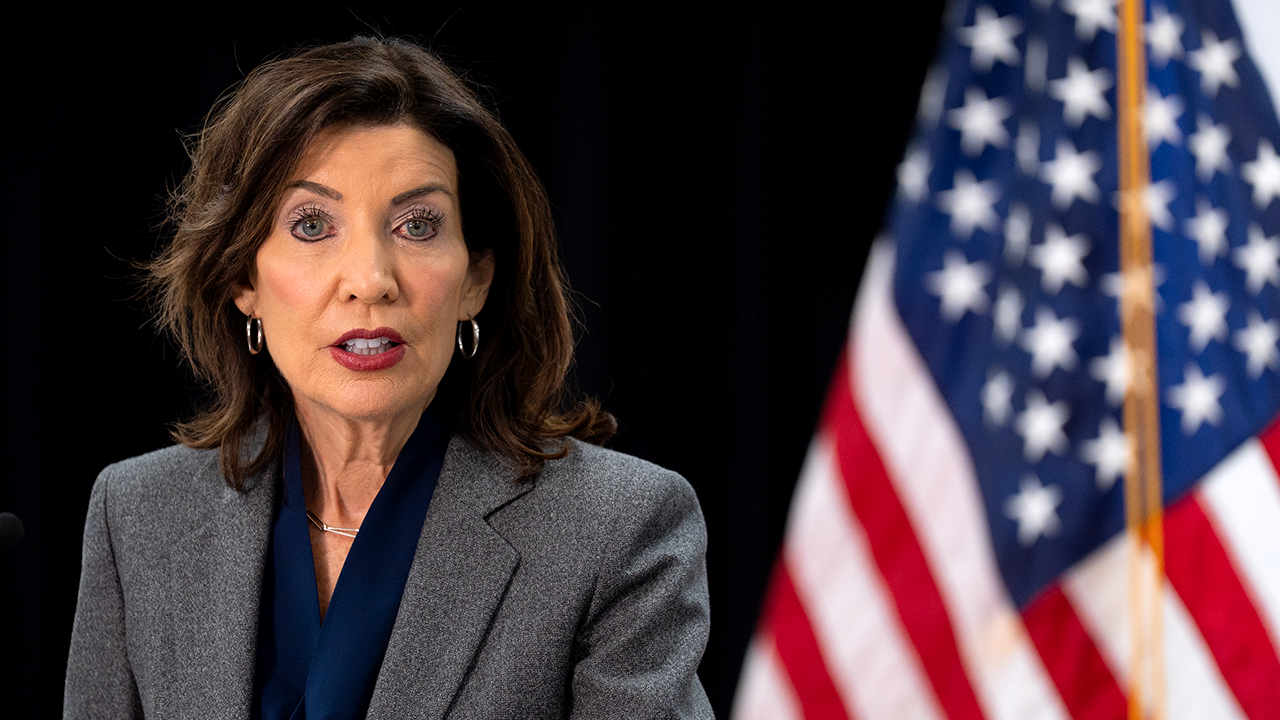
The Supreme Court will no longer hear an oral argument for a case centered on bond rights for noncitizens detained for lengthy periods, ruling the case moot after New York Democratic Gov. Kathy Hochul pardoned a lawfully present Dominican citizen, who pleaded guilty to second-degree assault.
Hochul pardoned Keisy Guerrero Mariano, who is identified in court documents as «Keisy GM,» in late August, effectively killing the Trump administration’s appeal to the Supreme Court arguing that noncitizens, including those with green card status, do not have a legal right to a bond hearing for a prolonged detention if they have committed crimes that are grounds for mandatory deportation.
Hochul, who is staunchly opposed to President Donald Trump’s immigration enforcement crackdown, issued the pardon for Mariano just as the brief was due.
FEDERAL APPEALS COURT COMPARES TRUMP MIGRANT DETENTION POLICY TO JAPANESE AMERICAN INTERNMENT
FILE – New York Democratic Gov. Kathy Hochul pardoned Keisy Guerrero Mariano in late August. (Adam Gray/Bloomberg via Getty Images)
Solicitor General John Sauer agreed Friday that Genalo v. Black is now moot, but said the Trump administration will seek an «alternative vehicle» to challenge the Second Circuit’s 2024 ruling that prolonged immigration detention can trigger a constitutional right to a bond hearing.
Sauer said the administration intends to find another case through which the Supreme Court can resolve the issue during its 2026-27 term.
The lawsuit centered on the challenges of plaintiffs Carol Williams Black, a Jamaican national with lawful standing, and Mariano — both convicted criminals detained by ICE.
APPEALS COURT BLOCKS TRUMP ADMIN FROM HOLDING MIGRANTS WITHOUT BOND FOR OVER 90 DAYS
Mariano was first arrested by Immigration and Customs Enforcement officers in 2020 over a 2015 second-degree assault conviction for which he served time, making him eligible for deportation.
He spent nearly two years in ICE detention, but was released in 2022 due to a nationwide injunction that required the release of detainees because of COVID-19 health risks.
Prior to his release, Judge John P. Cronan of the U.S. District Court for the Southern District of New York denied Mariano’s habeas corpus request in November 2021.
FILE – Mariano was released in 2022 after spending nearly two years in ICE detention. (Getty Images)
But in May 2024, the Second Circuit overruled Cronan’s decision, ruling that the government must grant noncitizens a bond hearing once detention becomes «unreasonably long.» Failure to do so, the court ruled, would violate the Fifth Amendment’s due process clause.
The case was appealed to the Supreme Court, which agreed to hear the case June 15; however, the high court ruled Black’s case moot because he had left the United States and filed a court declaration that he would not be returning to the country.
Black was convicted in New York in 2000 of sexually abusing a minor under the age of 11.
FILE – Following an appeal, the Second Circuit ruled the government must grant noncitizens a bond hearing once detention becomes «unreasonably long.» (Dominic Gwinn/Middle East Images/AFP via Getty Images)
DHS BLASTS MINNESOTA BOARD FOR UNANIMOUSLY PARDONING ILLEGAL IMMIGRANT CONVICTED OF 3 ASSAULTS
Hochul’s decision to issue a pardon to Mariano has garnered fierce criticism from legal experts.
«Pretty wild to fully pardon an aggravated felon to (1) stop the felon from getting deported and (2) stop the Supreme Court from ruling on an issue. (Especially as this litigation has been going on for years),» Eric Wessan, Iowa’s solicitor general, posted on X.
He praised Sauer’s decision to fight back on the Second Circuit’s ruling.
«I wonder how many non-American felons Governors like Hochul will choose to fully pardon and free to avoid them facing consequences for their actions,» Wessan added.
Fox News Digital reached out to Hochul’s office for comment.
kathy hochul, immigrant rights, judiciary, latino, deportation, supreme court

Trump says he would ‘love’ to see Ireland unified as one nation

Las paradisíacas vacaciones de María Susini junto a India Arana en Bali: cascadas, playas y templos

Base Naval Integrada: el Gobierno asegura que la obra “pertenece 100% a la Argentina” y no incluye a otros países

Cómo está la clasificación a las Copas Libertadores y Sudamericana en la Tabla Anual a la espera de Atlético Tucumán-River Plate

Jubilaciones y deuda, los dos rubros que más se adelantaron en las partidas para este año antes del Presupuesto 2027

Reforma política: el oficialismo incorpora Ficha Limpia y PASO optativas al debate en el Senado

El día que Owen Wilson se emocionó por el abrazo que le dio Lionel Messi tras un partido

La desafiante aventura de Carolina Baldini en moto por Europa: desde Edinburgo a Liverpool en dos ruedas

Berni se diferenció de Kicillof en la aplicación de la baja de la edad de imputabilidad

Cuánto cuesta comprar una pick up en la Argentina y cuáles son los modelos más baratos en septiembre

 POLITICA1 día ago
“¿Dónde está Kicillof?”: Patricia Bullrich cruzó al gobernador por la inseguridad en la Provincia
- POLITICA3 días ago
La intendenta de José C. Paz criticó a Kicillof por la inseguridad tras el crimen de un joven de 23 años
- ECONOMIA2 días ago
Así es la primera pickup compacta nacional: diseño, cuándo empezará a venderse y el novedoso sistema híbrido que tendrá