INTERNACIONAL
En Panamá la propina en los restaurantes continuará siendo opcional, afirman las autoridades


“¿Quiere que le incluya el 5%, 10%, 20% o 30% de propina?”. La pregunta de los meseros es habitual en los restaurantes de Panamá al entregarle la factura a los comensales, por lo que la Autoridad de Protección al Consumidor y Defensa de la Competencia (Acodeco) reiteró que la gratificación por el servicio recibido es completamente voluntaria.
Por ello, ningún establecimiento puede exigirla, y menos incluirla de antemano en la factura.
La disposición, según la entidad gubernamental, está contemplada en la Ley 45 de 2007, específicamente en su artículo 56 sobre la información de precios, el cual fue modificado por la Ley 34 de 2 de agosto de 2016.
Ante esta norma, se reitera que sin un restaurante incluye la propina dentro del total de la cuenta, el cliente tiene el derecho de decidir si la paga o no.
En cuanto al porcentaje sugerido, el jefe del Departamento de Investigación de la Acodeco, Jaime Guzmán, señaló que en algunos comercios oscila entre el 10% y el 30%.

Aclaró que no existe una regulación al respecto, aunque manifestó que la práctica más común es sugerir un 10%.
“El agente económico puede sugerir la propina, pero su pago no es obligatorio”, enfatizó.
Guzmán manifestó que el monto de la propina queda a criterio del consumidor, quien puede determinarlo según la calidad del servicio, la atención recibida y su nivel de satisfacción.
Muchas de las denuncias que se presentan ante la entidad de protección al consumidor surgen cuando en la factura no se detalla claramente el consumo y la propina sugerida, lo que puede generar confusión en el cliente.
La Acodeco también informó que entre 2019 y marzo de este año ha impuesto un total de 393 sanciones, que suman $98,435.00, por incumplimientos a la ley que regula el uso de bolsas reutilizables.

En Panamá es común que los comercios vendan las bolsas reutilizables, que vienen en diferentes materiales con la publicidad del establecimiento incluida.
Al detallar el principal motivo de estas sanciones, se indicó que corresponde al incumplimiento del requisito de contar con el certificado de conformidad, con 317 casos que representan multas por $74,500.00.
Este documento es indispensable para la comercialización de bolsas reutilizables y debe ser obtenido por los agentes económicos ante la Dirección General de Normas y Tecnología Industrial del Ministerio de Comercio e Industrias, entidad encargada de los procesos de normalización técnica, evaluación de la conformidad y certificación de calidad.
La entidad también registró 47 sanciones por no declarar el costo de las bolsas reutilizables, por un monto de $13,885.00, mientras que se impusieron 22 multas por cobrar precios superiores al costo declarado ($8,850.00) y siete sanciones por no mantener los precios a la vista ($1,200.00).
De acuerdo con la normativa vigente, la Acodeco es la entidad responsable de fiscalizar que las bolsas reutilizables se vendan al precio de costo declarado por los agentes económicos, así como de aplicar las sanciones correspondientes conforme a la Ley 45 de 2007.

Esta legislación fue creada con el objetivo de reducir el uso de bolsas plásticas de polietileno y fomentar el uso de alternativas biodegradables, para tratar de disminuir la contaminación ambiental y el impacto negativo en la fauna.
La medida entró en vigencia el 20 de julio de 2019 para supermercados, farmacias y comercios minoristas, y desde el 20 de enero de 2020 para mayoristas.
La normativa establece que estas bolsas deben venderse al precio de costo o por debajo del mismo, o de lo contrario los establecimientos se exponen a sanciones, indicó en una nota de prensa la entidad de protección al consumidor.
Kansas City,restaurante,propina,servicio,turismo,FIFA,Mundial,cuenta,comensales,hospitalidad












INTERNACIONAL
Italy shuts down effort linked to Gaza flotilla group to track Jewish, Israeli tourists
NEWYou can now listen to Fox News articles!
Italian authorities shut down an anonymous online effort that asked the public to report the locations of Israeli tourists, Italian Jews and businesses believed to have ties to Zionism, drawing condemnation from senior government officials and Jewish leaders who compared the initiative to fascist-era persecution.
«I think we’re going back to the 1930s, to hunting Jews,» Walker Meghnagi, president of the Jewish Community of Milan, said after the Google form began circulating on social media and messaging platforms.
The questionnaire said it was intended to «map Zionist tourism,» property purchases and what it described as «Zionist neo-colonization» in Italy, according to reports. It asked users to identify Jews, Israelis and people believed to be connected to Zionism at hotels, vacation rentals, businesses and other public places.
ISRAEL, JEWS TARGETED WORLDWIDE AS WELL-FUNDED LEFTIST, ISLAMIST GROUPS JOIN FOR ‘NAKBA 78’ PROTESTS
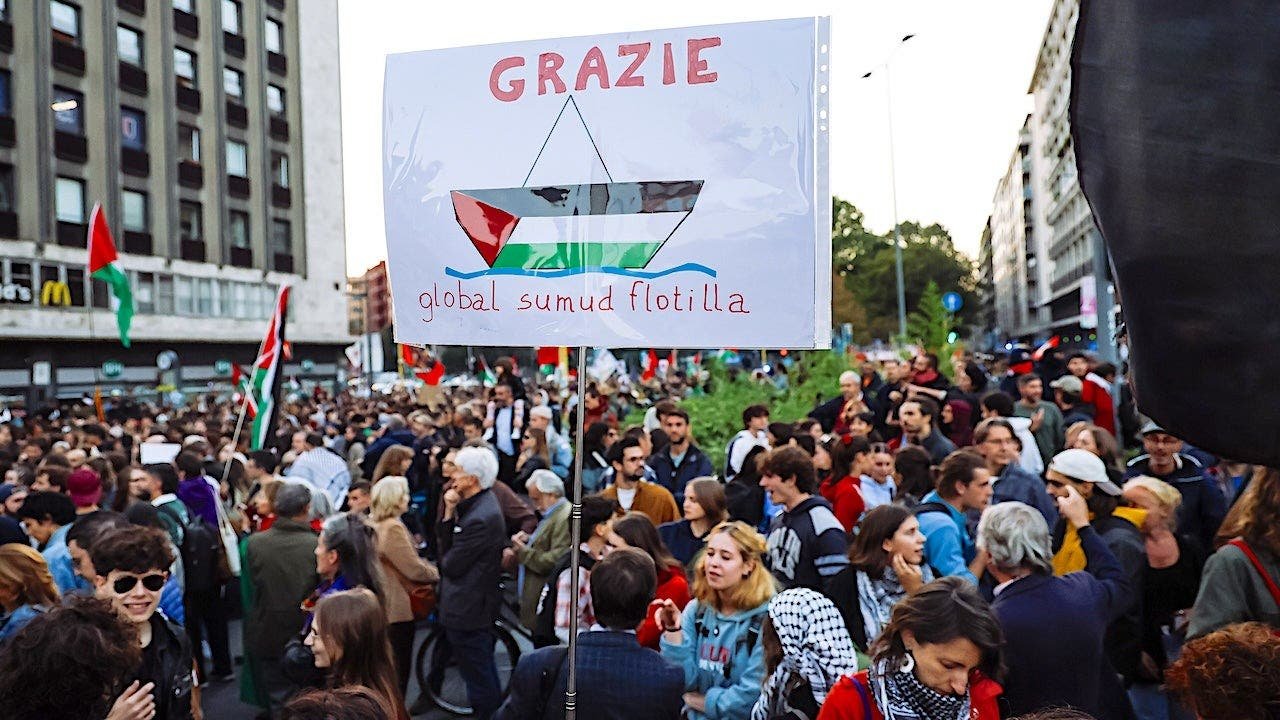
People take part in a flash mob entitled «In the same boat» to protest the detention and treatment of activists participating in the Global Sumud Flotilla in Milan, northern Italy, on May 21, 2026. (AFP via Getty Images)
«The online mapping of so-called ‘Zionist tourism,’ rightly denounced by the president of the Jewish Community of Milan, Walker Meghnagi, is an aberrant initiative, in direct violation of fundamental human rights and the constitutional principles on which our nation is founded,» Italian Senate President Ignazio La Russa wrote in a statement, as translated to English.
«No form of cataloguing of persons on the basis of their religious belief or their connection with Israel is acceptable or justifiable. Behind all this lies a profound anti-Semitism that must be unanimously, firmly, and determinedly rejected,» he added. «We cannot remain motionless in the face of such serious facts that recall the ghosts of the past. To the Jewish Community all my closeness.»
The form was removed following the intervention of Gen. Pasquale Angelosanto, Italy’s national coordinator for the fight against antisemitism, according to Italian and Israeli media reports.
‘NOT ON OUR WATCH’: GLOBAL LAW ENFORCEMENT LEADERS UNITE IN POLAND AGAINST HATE
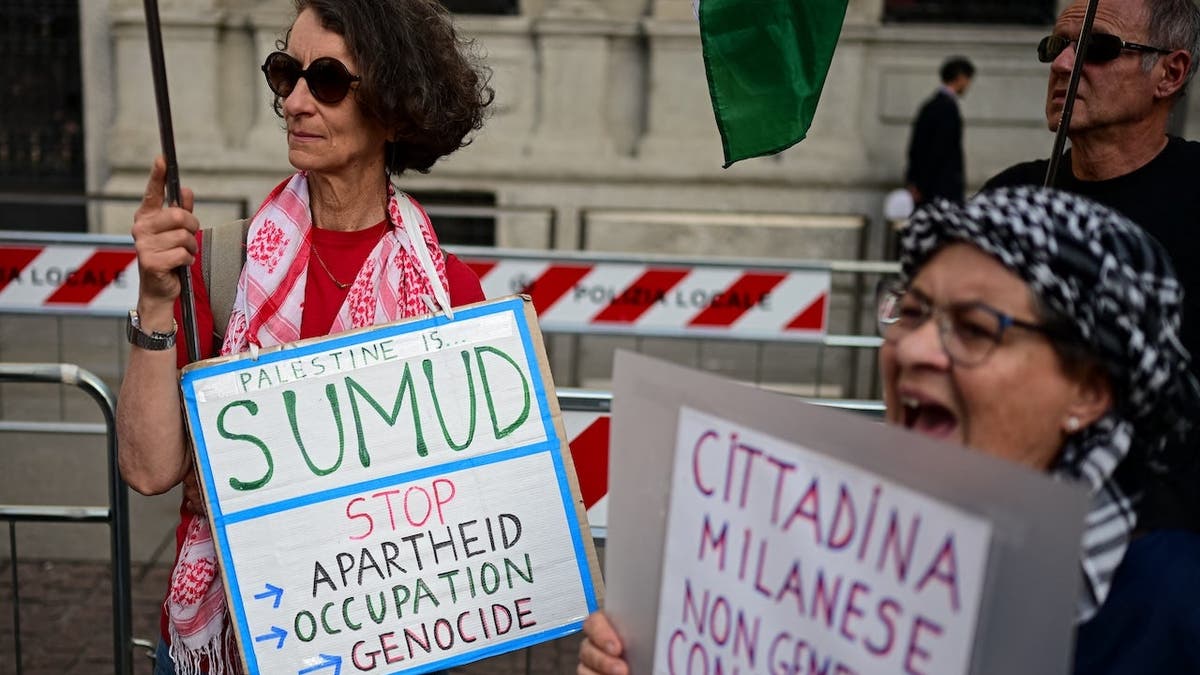
A view of participants in a May 21 flash mob demonstration in Milan, northern Italy, with people gathered in public space to show solidarity with detained Global Sumud Flotilla activists. (AFP via Getty Images)
«This form is intended to record cases of Zionist tourism, property purchases, and, more generally, Zionist neo-colonization in Italy,» the questionnaire stated.
It said the information collected would be received by the Global Sumud Movement, an activist network associated with flotilla efforts to reach the Gaza Strip, and would remain confidential. Respondents were asked to provide sources so the reports could be verified and used to coordinate unspecified «initiatives.»
The Global Sumud Movement denied commissioning the form or knowing about it before the controversy erupted, according to The Jerusalem Post.
«Zionism is one of the issues we work on, but we do not hunt Jews, and we know nothing about this questionnaire,» the group told the Italian newspaper La Repubblica. «We did not commission it and had not even seen it before it was taken offline.»
EXILED MUSLIM SCHOLAR WARNS FAR-LEFT–ISLAMIST ALLIANCE BEHIND ANTI-ISRAEL PROTESTS ECHOES IRAN’S RISE
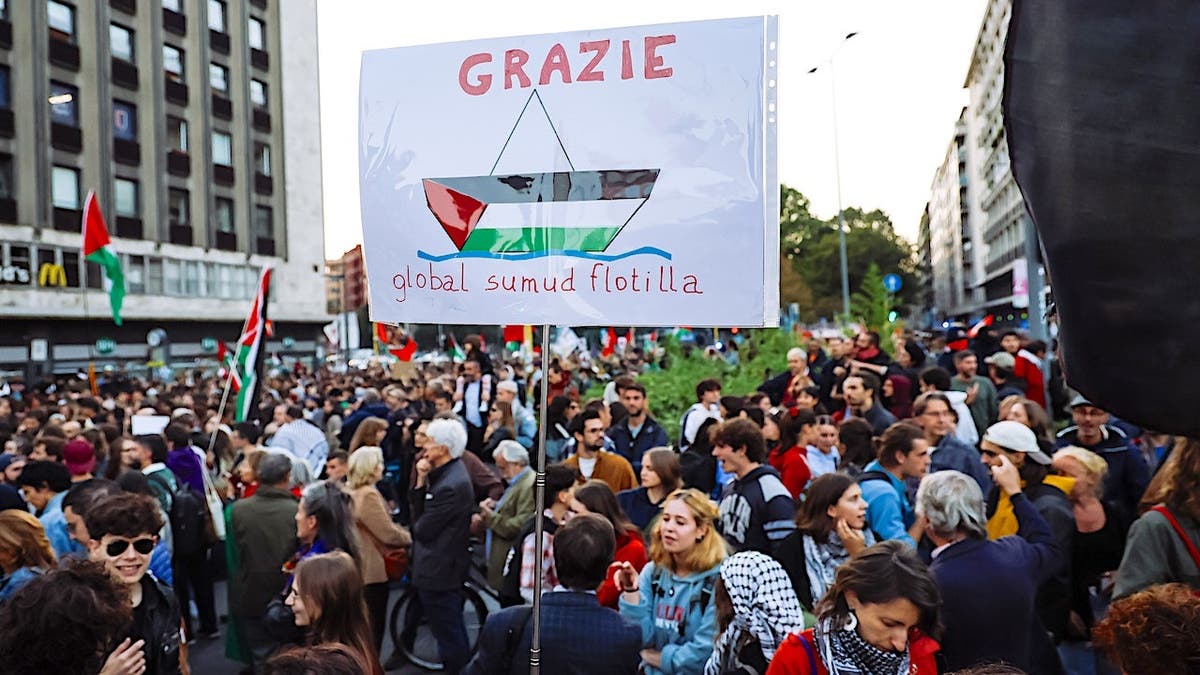
Seen Oct. 2, 2025, in Piazzale Loreto in Milan, Italy, demonstrators participate in a protest supporting the Global Sumud Flotilla after its interception by the Israeli army off the Gaza coast. (Alessandro Bremec/NurPhoto)
The organization said it learned about the questionnaire through news reports and reserved the right to take further action, including issuing a formal statement.
According to La Repubblica, later sections of the form asked respondents to name locations where Jewish or Israeli visitors had been seen and to indicate whether local organizations or activist groups were already «managing the phenomenon.»
Meghnagi warned that collecting and circulating such information could encourage extremists to target Jews and Israelis.
«What is happening today shows that there are unbalanced individuals out there, and if this kind of message spreads widely enough, you are certain to find someone willing to act on it,» he said. «For this reason, mapping where Jews are is extremely serious.»
CLICK HERE TO DOWNLOAD THE FOX NEWS APP
Alessandro Morelli, an Italian deputy secretary of state, ripped the form as «abhorrent» and said those responsible should not go unpunished.
italy, anti semitism, israel, hate crime, religion, world, world politics
INTERNACIONAL
Mamdani dodges on ‘political theater’ of empty Netanyahu arrest threat, calls for US action and NYC protests
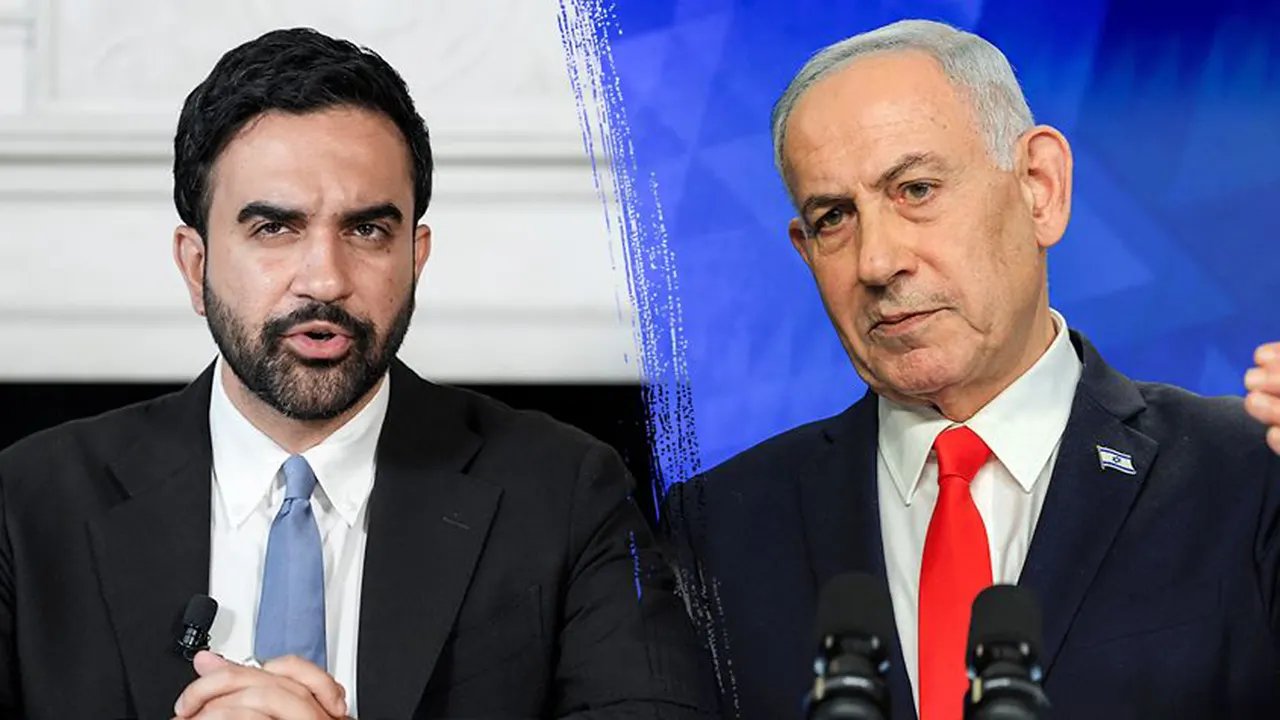
NEWYou can now listen to Fox News articles!
New York City Mayor Zohran Mamdani declined Wednesday to say when he learned the city had no authority to arrest Israeli Prime Minister Benjamin Netanyahu, after repeatedly campaigning on a promise to detain the Israeli leader if he came to New York.
Pressed over whether the now-abandoned arrest threat amounted to «political theater,» Mamdani said his administration had reviewed the applicable laws and concluded that only the federal government could execute the International Criminal Court warrant.
«It’s clear that the city does not have the authority to execute this warrant,» Mamdani admitted at a New York City Hall news conference Wednesday, urging the federal government to act on the ICC warrant even though the U.S. is not a member of the ICC and does not recognize the court’s jurisdiction in the U.S. or over Israel, which is also not a member.
With the Trump administration already fully rejecting his call to arrest Netanyahu for being a «war criminal,» Mamdani called for New Yorkers to take to protest «if anyone feels a level of frustration or opposition.»
MAMDANI GOES BACK ON CAMPAIGN PROMISE, SAYS NYC CAN’T ARREST NETANYAHU
New York City Mayor Zohran Mamdani has been forced to admit his threat to arrest Israeli Prime Minister Benjamin Netanyahu has no force or measure in the law. (Getty Images)
«I believe that this is an arrest warrant that should be executed, and also that I would follow the laws that we had, and I would be respectful of those laws,» he added. «And that is why I asked my administration to review of all applicable laws. And I believe, however, in that same finding, that the United States government does have the ability to both joining the International Criminal Court and executing that work, and that is something that I want to see happen.»
Short of that, Mamdani suggested that people protest when the Israeli leader visits for the United Nations General Assembly, potentially in September.
«This is a city where, if anyone feels a level of frustration or opposition, protest is something that we will always respect,» Mamdani told reporters. «I leave it to New Yorkers themselves to make that decision.»
The mayor was repeatedly asked why he did not resolve the legal question before taking office, given that experts had challenged the legality of his arrest pledge during the campaign.
HAMAS, HEZBOLLAH FLAGS FLY AT ANTI-ISRAEL PROTEST MINUTES AFTER MAMDANI CONDEMNS TERROR PLOT AGAINST JEWS
Mamdani would not provide a date for when his administration informed him that the city lacked the power to carry out the ICC warrant.
«That’s a review that I asked them to do,» he said. «They made it clear that this is not possible through applicable law.»
Mamdani said Palestinian New Yorkers disappointed that he cannot fulfill his arrest promise had reason to be frustrated, declaring that Netanyahu would no longer be welcomed by City Hall.
«I understand it because we are talking about someone who has been charged with crimes against humanity, someone who has visited the city on many an occasion and who has been welcomed by previous mayors,» Mamdani said.
«I want to make it very clear that that welcome ends with me,» he continued. «I will not be welcoming Benjamin Netanyahu or any other war criminals when they come to this city.»
NYC REPUBLICAN LAWMAKER SLAMS MAMDANI ANTISEMITISM OFFICE AS A ‘BLACK HOLE’ LACKING PUBLIC-FACING RESOURCES
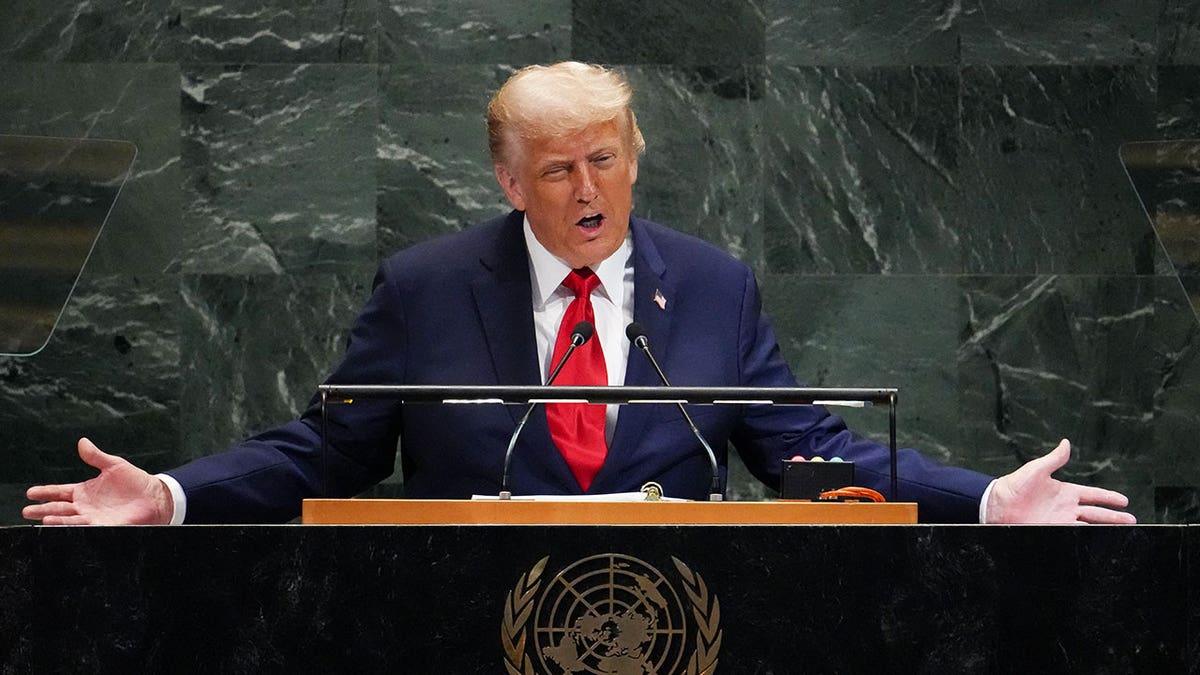
President Donald Trump has forcefully rejected New York City Mayor Zohran Mamdani’s threats to arrest Israeli Prime Minister Benjamin Netanyahu under an unenforceable International Criminal Court arrest warrant that the U.S. nor Israel are a party to. (Timothy A. Clary/AFP via Getty Images)
Mamdani also faced questions over criticism that his focus on Netanyahu created a one-sided account of the Israel-Hamas war.
Asked directly whether he considered Hamas’ Oct. 7, 2023, terrorist attack to be genocide, Mamdani did not use that term.
«I consider Oct. 7 to be a horrific war crime,» he said. «I’ve considered it to be something that should be deeply opposed with every single fiber of our being.»
Mamdani said his approach was rooted in what he called the «universality of humanity,» arguing that officials should not «pick and choose which crimes against humanity we oppose.»
The mayor also said he would support honoring ICC warrants against Hamas leaders as well as Netanyahu.
«My interest in executing that warrant is not specific to Benjamin Netanyahu, but to anyone who they put a warrant towards for war crimes and crimes against humanity,» Mamdani said.
He accused Netanyahu of having «orchestrated this genocide» in Gaza and described the Israeli prime minister as a «war criminal.» Israel has repeatedly rejected genocide allegations and condemned the ICC case as illegitimate.
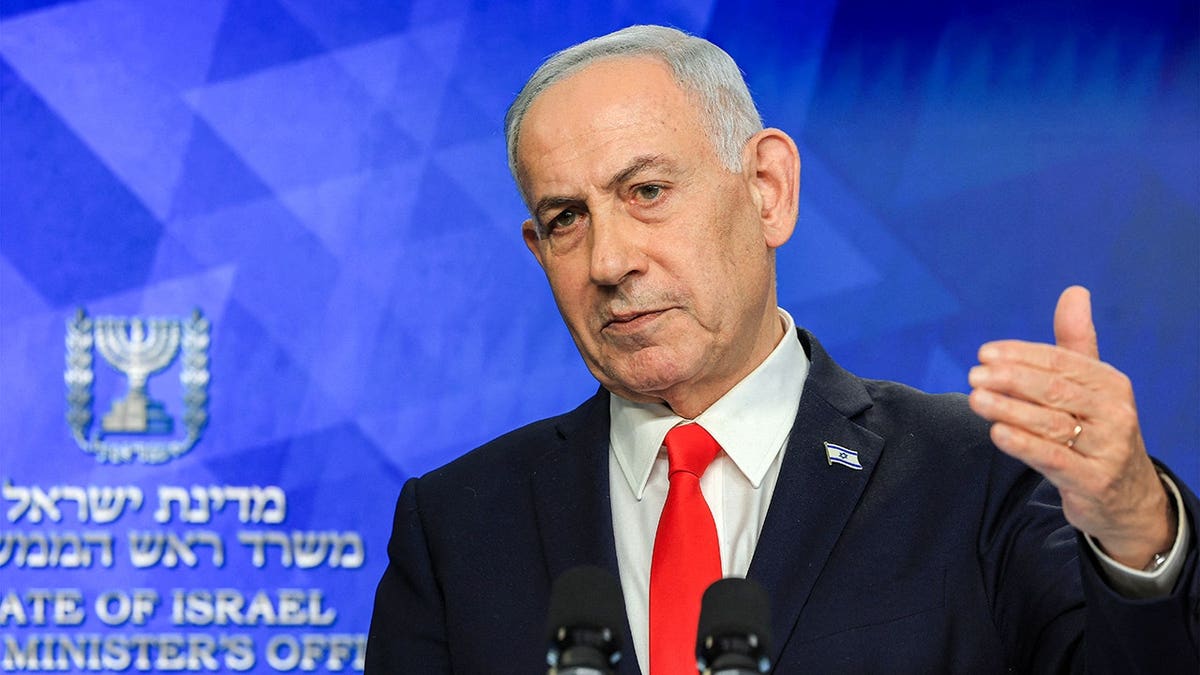
New York City Mayor Zohran Mamdani said his administration is exploring whether the city has legal authority to arrest Netanyahu if he visits for the U.N. General Assembly. (Ronen Zvulun/Pool/AFP via Getty Images)
CLICK HERE TO DOWNLOAD THE FOX NEWS APP
Mamdani said he remained committed to protecting Jewish New Yorkers, including those who disagree with his position.
«My responsibility to them is to ensure that they are cherished, they are celebrated and they are safe in their city,» he said, «and that never are they made to feel as if their opinions on any one issue is the precondition for that safety.»
zohran mamdani, benjamin netanyahu, new york city, international law, politics

Inter Miami presentó a una ex estrella del Real Madrid como flamante refuerzo: llega tras jugar el Mundial con Brasil

La respuesta de un exsecretario de la CGT a Pérez-Reverte tras las críticas a la selección argentina: “No sabe nada”

Italy shuts down effort linked to Gaza flotilla group to track Jewish, Israeli tourists

Pampa prevé exportar crudo de Vaca Muerta por u$s17.000 millones bajo el RIGI

Llega al país el nuevo embajador del Vaticano y crece la expectativa sobre la visita del papa León XIV

Tres líderes mundiales. Tres decisiones increíblemente equivocadas

Sin la Copa y sin Messi en el avión, vuelve Tapia y deberá enfrentar tres frentes de tormenta tras la pausa del Mundial

Samuel L. Jackson llamó a Argentina “el país más racista del mundo”: la contundente respuesta que le dejó Bárbara Lombardo

Escándalo Mundial: Las presiones secretas, la amenaza de la FIFA por Malvinas y la verdad detrás del partido contra España

Le ganan a la inflación: los senadores pasarán a cobrar $12 millones brutos a partir de agosto

 POLITICA2 días ago
Sin la Copa y sin Messi en el avión, vuelve Tapia y deberá enfrentar tres frentes de tormenta tras la pausa del Mundial
- CHIMENTOS2 días ago
Samuel L. Jackson llamó a Argentina “el país más racista del mundo”: la contundente respuesta que le dejó Bárbara Lombardo
- POLITICA2 días ago
Le ganan a la inflación: los senadores pasarán a cobrar $12 millones brutos a partir de agosto