
INTERNACIONAL
Experts urge extreme caution on Iran’s ‘crown jewel’ Hezbollah — terror group with US blood on its hands

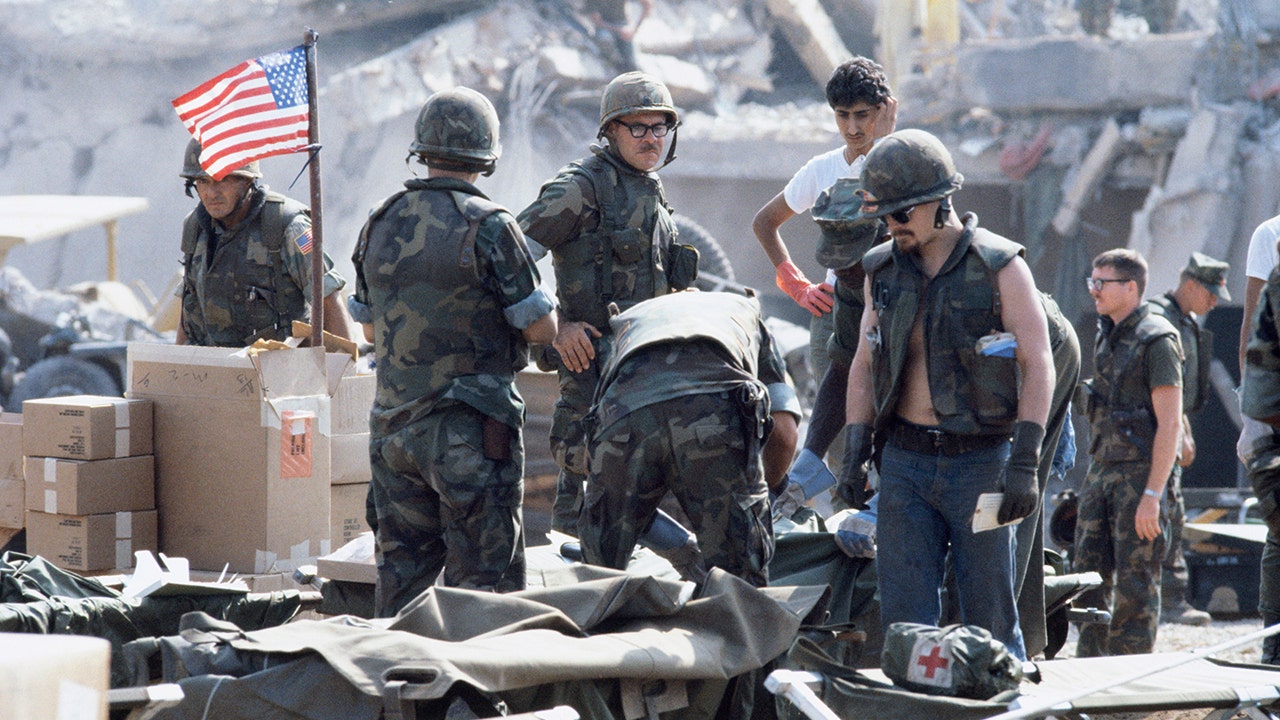
Sen Sheehy warns of Iran’s ‘murderous regime’ as nuclear deal sparks debate
Sen. Tim Sheehy, R-Mont., reacts to the latest Iran nuclear peace talks, warning that the Iranian regime is merely buying time. He highlights Iran’s stated goal to ‘wipe our civilization off the map’ and its decades-long funding of terrorist organizations like Hezbollah and Hamas. He stresses the importance of supporting U.S. allies in the Middle East, including Israel and the UAE, against this global threat.
NEWYou can now listen to Fox News articles!
Foreign policy experts are advising the Trump administration to continue to carefully watch Iran’s behavior over its terror proxy Hezbollah — a group with American blood on its hands.
The importance of Hezbollah to the Tehran regime is clear in the comprehensive U.S.-Iran memorandum of understanding. While the agreement does not mention the group by name, clause one of the 14-point MOU calls for the permanent termination of military operations on all fronts, including the cessation of conflict in Lebanon.
Lisa Daftari, editor-in-chief, told Fox News Digital that, «Hezbollah isn’t just the Iran regime’s most prized proxy; it’s the crown jewel of the regime’s forward defense. For almost five decades, the Islamic Republic has invested billions building Hezbollah into a forward-deployed missile arsenal aimed directly at Israel’s heart.» She said «Losing Hezbollah would hurt the mullahs more than losing the Strait of Hormuz or anything else in their arsenal. That’s why Hezbollah is clause one,» of the MOU.
TOP SENATE REPUBLICAN RIPS INTO TRUMP’S IRAN DEAL, SAYS $300 BILLION MAKES OBAMA DEAL LOOK LIKE ‘A PITTANCE’
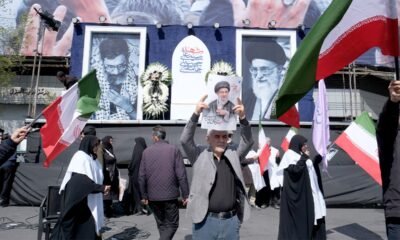
Hezbollah al-Mahdi scouts parade with large portraits of Iran’s late leader Ayatollah Khomeini and Supreme Leader Ayatollah Ali Khamenei during an event for Jerusalem Day in Nabatiyeh, Lebanon, on Aug. 1, 2013. (Hussein Malla/AP Photo)
Daftari said Hezbollah is «a forward-deployed arm of the IRGC Quds Force taking Lebanon hostage,» She said that «the IRGC created Hezbollah in 1982, trained it, armed it, funded it, and to this day embeds Quds Force commanders inside its command structure. Treating them as separate organizations is a fiction Tehran exploits.»
While the State Department didn’t answer Fox News Digital questions over concerns raised by critics regarding the administration’s handling of Hezbollah, Secretary of State Marco Rubio took a tough line on the terror group when asked by reporters in the United Arab Emirates Tuesday about Tehran’s terror proxies and why Iran’s ballistic missile program was left out of the recent Islamabad memorandum of understanding (MOU).
Rubio insisted that regional proxy threats are fundamentally covered by the framework. «I think a careful reading of the MOU will see that when you talk about, for example, a complete – an end of hostilities in the entire region, well, that’s not possible. You can’t have the end of hostilities and conflicts in the region as long as Iranian proxies are launching missiles and drones from Iraq and are participating in terrorism like Hamas did and like Hezbollah did. So I do think it’s covered by the MOU, and it is an issue that will be gotten to at the appropriate time in these negotiations.»
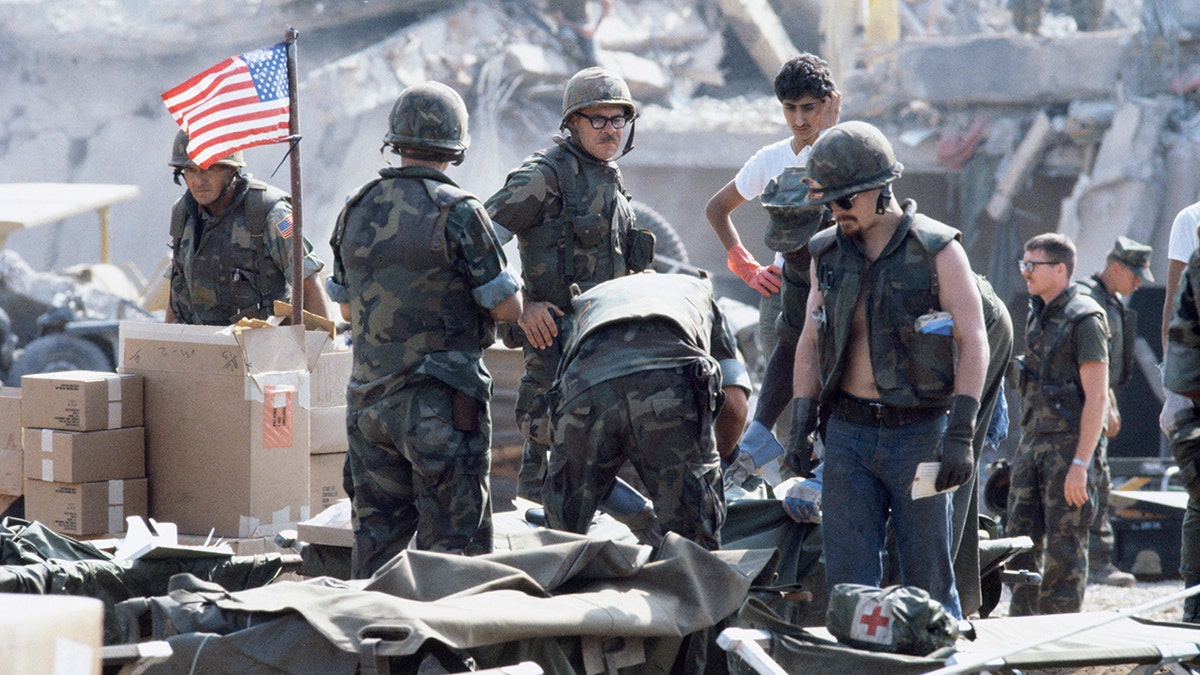
American Marines search for survivors and bodies in the rubble of their barracks headquarters in Beirut, Lebanon, after a suicide car bomb killed 241 U.S. servicemen and wounded over 60 on Oct. 24, 1983. (Peter Charlesworth/LightRocket)
Hezbollah was designated as a Foreign Terrorist Organization by the U.S. in 1997. Bill Roggio, senior fellow at the Foundation for Defense for Democracies (FDD) and editor of its Long War Journal, told Fox News Digital that «Hezbollah has a five-decade-long track record of killing Americans, starting with the Marine barracks bombing in Beirut in 1983, attacks on U.S. embassies and airplane hijackings.»
Roggio said the efforts «continue to this day,» with Hezbollah playing «a key role in establishing, training, advising and supporting the Iraqi militias, which are responsible for killing more than 600 American soldiers. Hezbollah also trained al Qaeda to use suicide car bombs, which it implemented in the 1998 suicide attacks on the U.S. embassies in Kenya and Tanzania and perfected in theaters such as Iraq, Afghanistan and Somalia.»
In May 2025, A U.S. District Court determined that the torture of Lebanese American Amer Fakhoury was the responsibility of Iran, through its proxy Hezbollah. Fakhoury lost sixty pounds during a six-month period of captivity after being kidnapped by Hezbollah in Lebanon in September 2019. He died six months after his return to the U.S. of cancer that was diagnosed in prison in Lebanon.
FAMILY OF AMERICAN HOSTAGE TORTURED IN LEBANON WINS LANDMARK CASE AGAINST IRAN
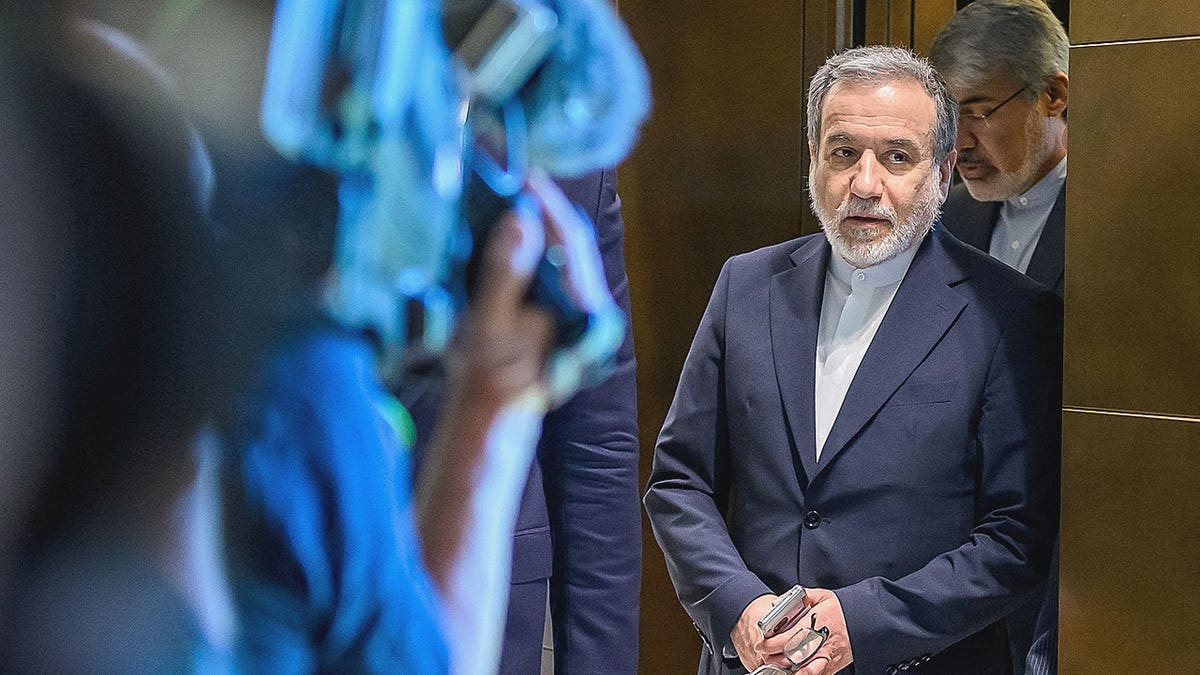
As U.S.-Iran talks opened Sunday in Switzerland, a dispute over who controls and monitors billions of dollars in potentially unfrozen Iranian assets emerged (Fabrice Coffrini/Pool via REUTERS)
Zoya and Guila Fakhoury, Amer’s daughters and co-founders of the Amer Foundation, told Fox News Digital that their «family wants to see a peaceful, sovereign, and prosperous Lebanon» and welcomes «any effort that genuinely reduces violence and helps Lebanon move toward stability.»
The Fakhoury’s said that «lasting peace cannot come at the expense of accountability. True stability in Lebanon requires ensuring that terrorist organizations like Hezbollah no longer hold the power to intimidate, detain, and silence innocent people.»
They expressed disappointment that there has been «little public focus on the Americans who remain unjustly detained by the Iranian regime.» They added that «Any meaningful agreement with Iran should include concrete progress toward bringing every wrongfully detained American home.»
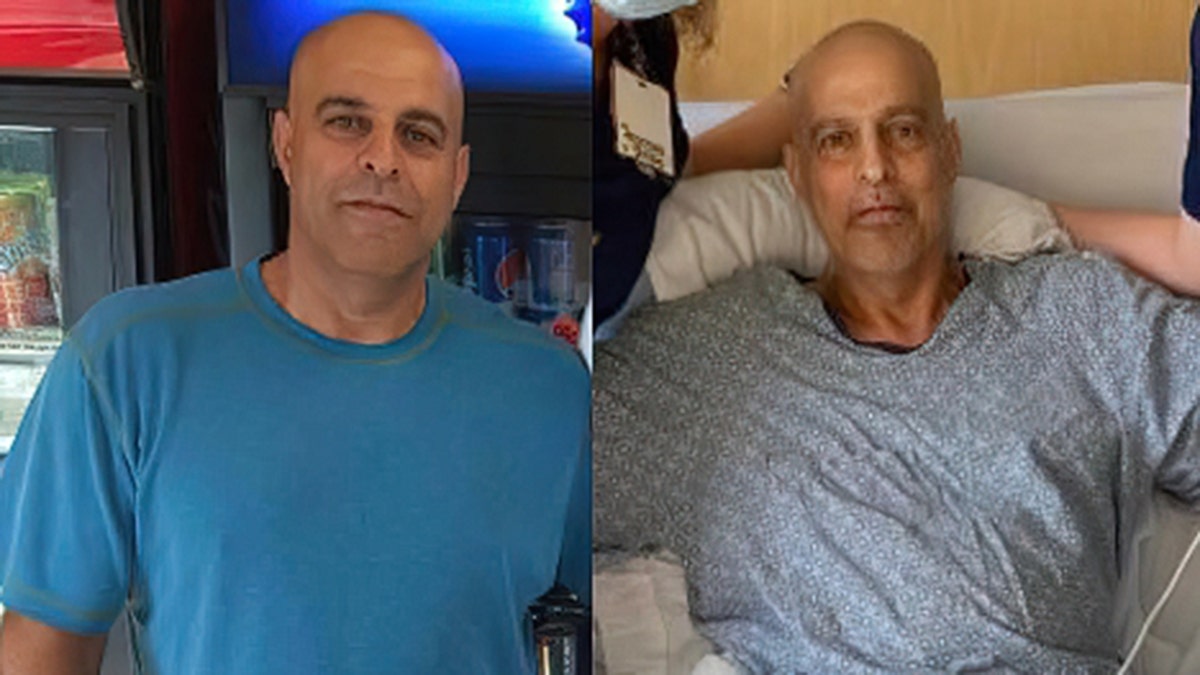
Amer Fakhoury is shown before his illegal detention in Lebanon and after his rescue from hospital with cancer. His New Hampshire family seeks justice from Iran for his imprisonment. (Fakhoury Family)
A U.S. official told Fox News Digital that «The Trump Administration is committed to securing the release of all Americans unjustly detained in Iran and around the world. The Iranian regime has a long and shameful history of unjustly detaining U.S. nationals and other foreign citizens. The Iranian regime should immediately release all Americans unjustly detained in Iran. To ensure the safety and security and security of those Americans, we have nothing further to share at this time.»
As talks brokered by the U.S. between Lebanese and Israeli officials resumed in Washington, the Lebanese president, Joseph Aoun, released a statement on his X account Tuesday, thanking the Vice President and Secretary of State, stating in part «for the attention that the United States is showing toward Lebanon, aimed at ending the war there, strengthening the authority of the Lebanese state, and the independence of its decision-making, considering it solely responsible for preserving national sovereignty, the dignity of the Lebanese people, and their safety.»
ISRAEL POUNDS HEZBOLLAH TARGETS, DARING LEBANON TO RECLAIM SOVEREIGNTY FROM IRAN-BACKED TERROR PROXY
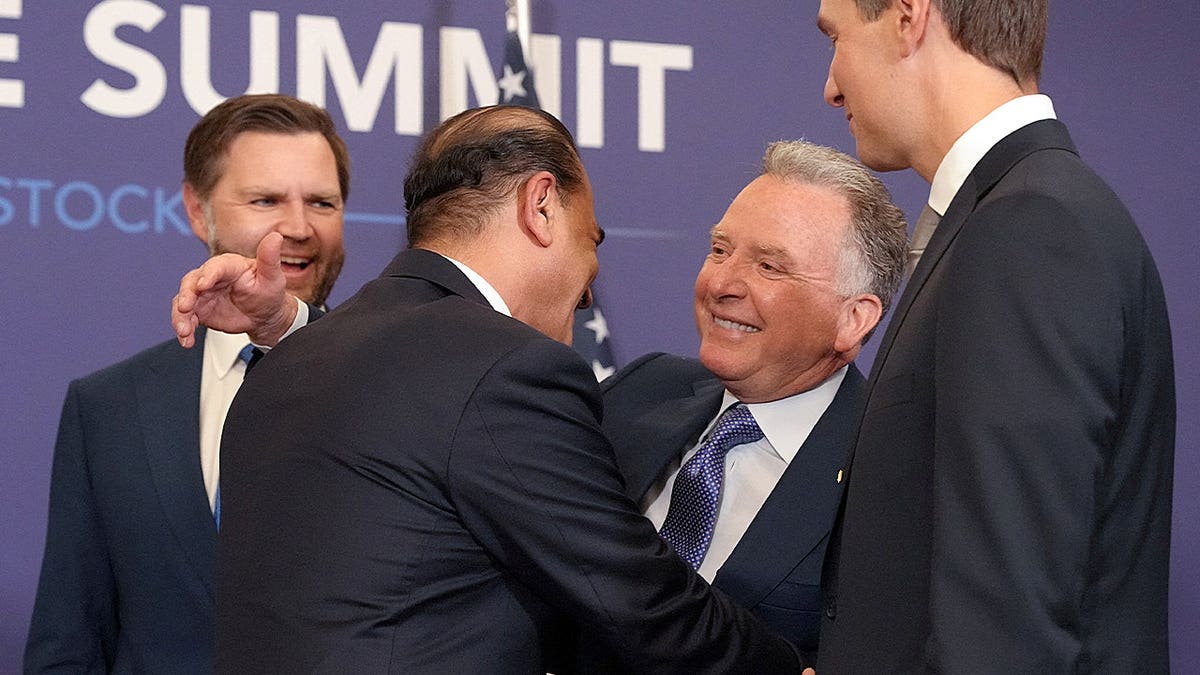
The U.S. delegation including Steve Witkoff, JD Vance and Jared Kushner arrived in Switzerland on Sunday (REUTERS/Nathan Howard/Pool)
Walid Phares, a foreign policy expert and author of ‘Iran: An Imperialist Republic and U.S. Policy,’ told Fox News Digital that it was «a major mistake…to give the Islamic regime in Iran a power to include Lebanon and Hezbollah in the talks. He warned that «putting Lebanon on the agenda of the talks with the regime in Switzerland could collapse the Washington, D.C. platform.»
Pressed by reporters while in Kuwait on Wednesday about Israel’s continued military presence, Rubio drew a firm line on the administration’s expectations, stating its hope is «that the Lebanese Armed Forces and the legitimate, sovereign Lebanese government will continue to be able to control and secure more and more of their own territory – because that’s who needs to control Lebanese territory, not a terrorist group like Hezbollah. So that’s the goal. And I think the Israelis have been clear. They don’t have any quarrels with the Lebanese people, they don’t have any claims on the territory of Lebanon.»
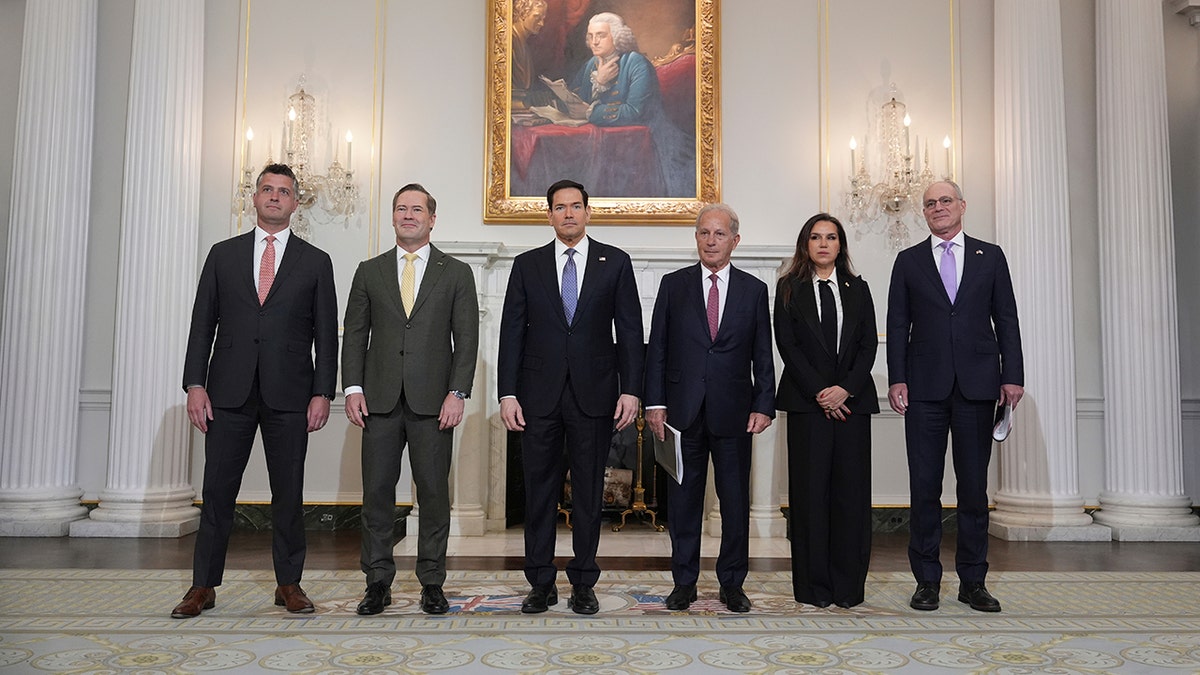
Michael Needham, counselor for the U.S. Department of State, U.S. Ambassador to the United Nations Mike Waltz, Secretary of State Marco Rubio, U.S. Ambassador to Lebanon Michel Issa, Lebanese Ambassador to the U.S. Nada Hamadeh Moawad, and Israeli Ambassador to the U.S. Yechiel Leiter pose for a photo before a meeting at the State Department in Washington, D.C., on April 14, 2026. (Jacquelyn Martin/AP Photo)
Jonathan Conricus, a former international spokesman for the Israel Defense Forces, told Fox News Digital that «From an Israeli perspective, Hezbollah is not an organization that we can talk with or expect them to change their ways.» He said that as a jihadi organization, «their primary objective in life is to wage holy war against the Jews, and then against Christians and against other what they consider to be infidels and Westerners. These are not people that you can negotiate or talk sense with.»
Conricus, a senior fellow at the FDD, added that «there’s a unique chance here to roll back Iranian aggression in the region and to dismantle the most important Iranian proxy Hezbollah.» To do so, he called for «political pressure, information pressure and…economic pressure on Hezbollah [and] on all of its financial institutions.»
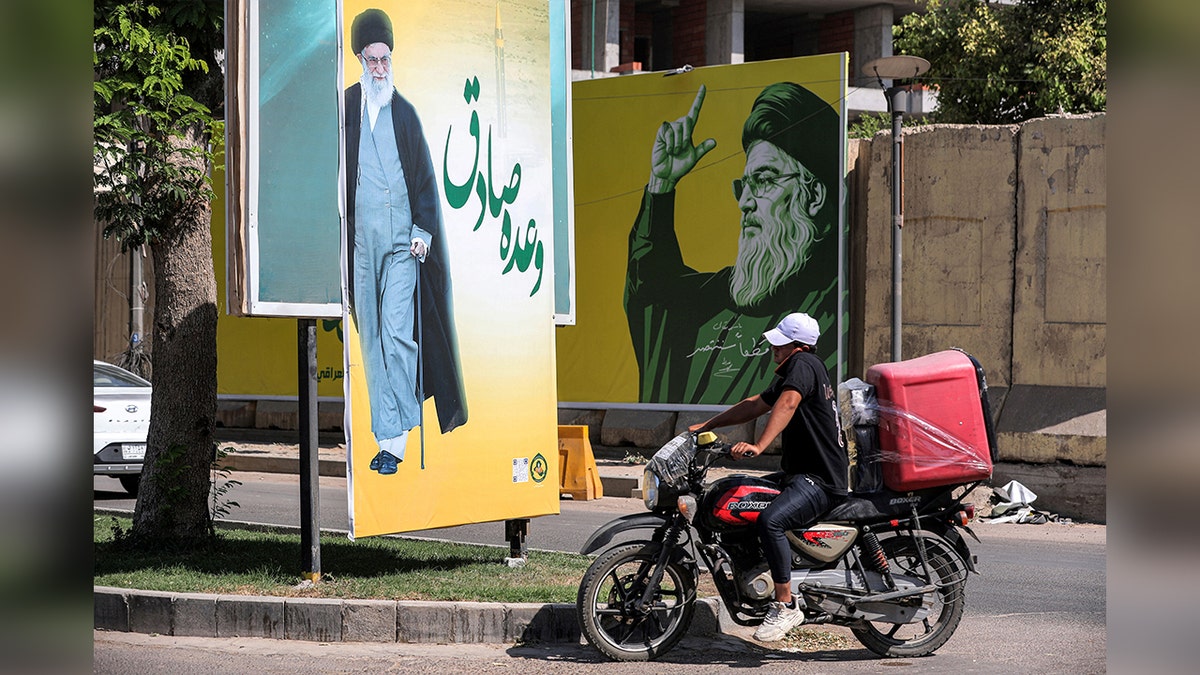
A deliverman rides a motorcycle along a road in Baghdad past billboards showing Iran’s Supreme Leader Ali Khamenei and Hassan Nasrallah, the slain leader of Hezbollah, on Oct. 7, 2024. (Ahmad Al-Rubaye/AFP)
CLICK HERE TO DOWNLOAD THE FOX NEWS APP
A U.S. government official told Fox News Digital that «Secretary Rubio spoke to both [Israeli Prime Minister Benjamin Netanyahu] and Aoun on Friday about solidifying ceasefire and future talks. As a result of those calls, the U.S. started a monitoring mechanism via [U.S. Central Command] so that our policymakers have real-time and accurate information about fighting in Lebanon.»
The Washington talks between Lebanon and Israel are expected to continue into Thursday.
war with iran, lebanon, israel, terrorism, ali khamenei, mojtaba khamenei








Una primaria ajustada en Michigan
Un triunfo con señales ambiguas

Michigan, uno de los territorios más disputados del país
INTERNACIONAL
El-Sayed campaign backed by over $100,000 from dozens of members of group with alleged terror ties
NEWYou can now listen to Fox News articles!
FIRST ON FOX: GRAND RAPIDS, MI – Michigan Democratic Senate nominee Abdul El-Sayed’s campaign has collected more than $115,000 from individuals who work for or have held leadership roles with the Council on American-Islamic Relations (CAIR), which has been designated a terrorist organization by the United Arab Emirates and formally designated or labeled as such in Florida and Texas.
A Fox News Digital review found that El-Sayed, who has made getting «money out of politics» a central campaign rallying cry, has accepted donations from at least 41 individuals who either work for CAIR, formerly worked for CAIR, or have served in leadership positions with the organization.
The donor list includes several of CAIR’s highest-ranking officials, including national Board Chair Manal Fakhoury, national Board Treasurer Eyas Abdeen, national Vice Chair Emad Sabbah, and CAIR-Michigan board member Jukaku Tayeb, El-Sayed’s father-in-law.
Tayeb has been one of the largest financial backers of the super PAC supporting El-Sayed’s campaign and is also part of the founding committee of the Islamic Society of North America (ISNA), a group linked to Hamas and Muslim Brotherhood funding, Washington Free Beacon first reported.
DEMS CLASH OVER AIPAC MONEY, ‘OGRE’ ATTACK AND ELECTABILITY DURING CRUCIAL SENATE DEBATE
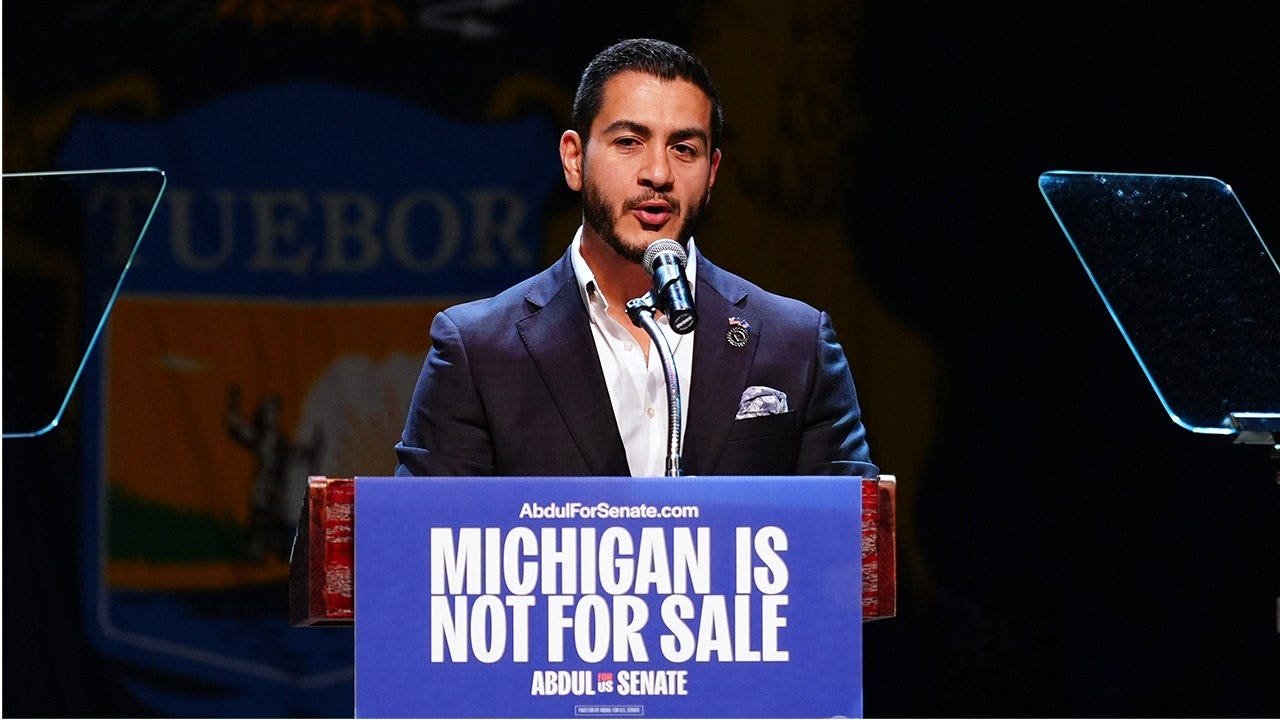
Abdul El-Sayed, a progressive candidate in the Democratic primary for U.S. Senate in Michigan, speaks during a primary election night event Wednesday, Aug. 5, 2026, at the Majestic Theatre in Detroit. (Julia Demaree Nikhinson/AP Photo)
One donor, CAIR Executive Director Nihad Awad, listed in FEC records under the name Nehad Hammad, drew national condemnation after saying he was «happy» to see Hamas break out of Gaza on Oct. 7, 2023, and arguing Israel «does not have the right to self-defense» as an occupying power.
The contributions were not limited to Michigan. Fox News Digital identified donations from CAIR national leaders and officials affiliated with chapters in California, Arizona, Texas, Georgia, Washington, Illinois, Minnesota and Ohio, among other states, illustrating the breadth of support El-Sayed received from within the organization’s leadership ranks.
Other names on the donor list include CAIR-California Governance Board Treasurer Rubina Alvi, CAIR-California Governance Board Chair Asaad Traina, CAIR-Michigan board member Muzammil Ahmed, who contributed $11,600 to El-Sayed’s campaign, CAIR-California Governance Board member Atef Ibrahim, CAIR-California Governance Board member Dina Ezzeddine, and former CAIR National Board Chair Roula Allouch.
EL-SAYED PALS AROUND WITH FAR-LEFT STREAMER HASAN PIKER THE DAY BEFORE CRUCIAL MICHIGAN SENATE ELECTION
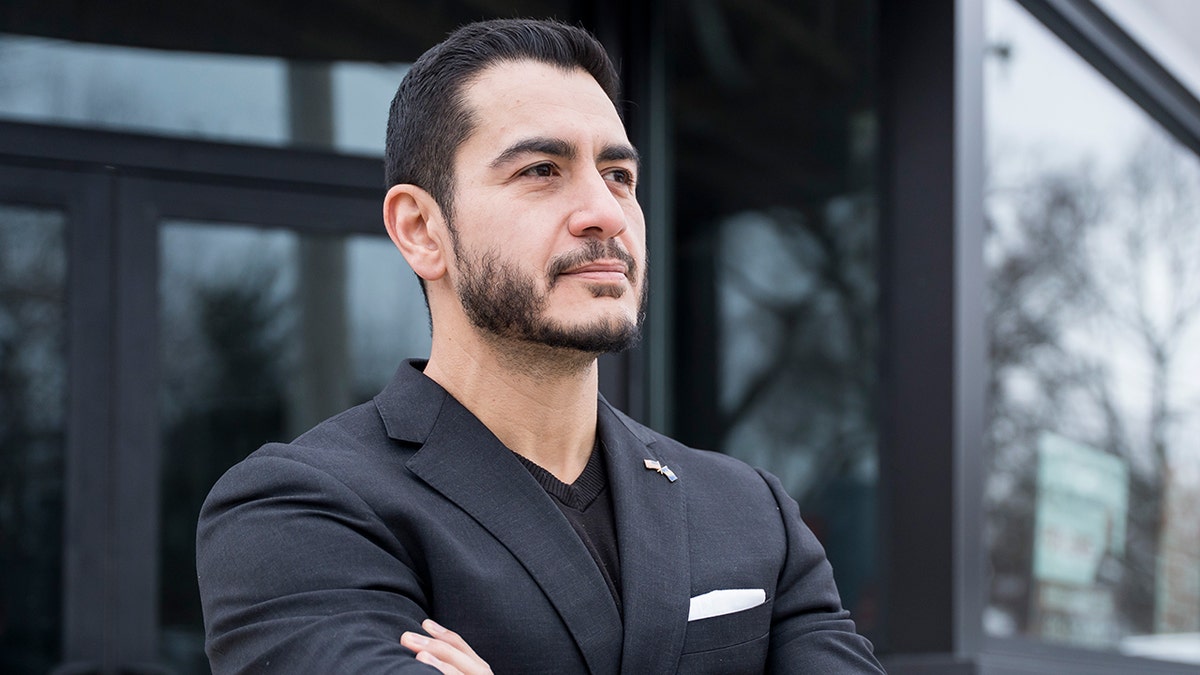
Michigan Senate candidate Abdul El-Sayed poses for a portrait in Grand Rapids, Michigan, on Saturday, Feb. 21, 2026. (Evan Cobb for The Washington Post via Getty Images)
El-Sayed has maintained ties to CAIR beyond campaign fundraising. In 2022, he appeared at a CAIR event and was paid for a speaking engagement, where he criticized Oklahoma’s ban on Sharia law and compared it to the Trail of Tears, Washington Free Beacon reported.
CAIR has long been the subject of controversy over its alleged ties to Hamas. In 2007, federal prosecutors named the organization an unindicted co-conspirator in the Holy Land Foundation terrorism financing case, the largest terrorism financing prosecution in U.S. history.
Although CAIR was never charged with a crime, federal prosecutors argued the organization was part of a network created to support Hamas in the United States. CAIR has denied the allegations and has challenged its inclusion as an unindicted co-conspirator.
In recent years, Florida and Texas have formally designated or labeled CAIR a terrorist organization, while the United Arab Emirates designated the group a terrorist organization in 2014 which is widely understood to stem from the UAE’s view that CAIR has ties to the Muslim Brotherhood.
In response to Fox News Digital’s request for comment, CAIR denied allegations that it has ties to terrorism, citing its «Dispelling Rumors About CAIR» webpage and a memorandum stating it has «repeatedly condemned antisemitism throughout our 30 years of existence» and has «for decades» maintained a statement condemning «terrorist attacks committed by Hamas and other designated terrorist groups.»
CAIR also highlighted a previous statement «has appeared on CAIR’s website since 2009» saying, «We unequivocally condemn all acts of terrorism, whether carried out by al-Qa’ida, the Real IRA, FARC, Hamas, ETA, or any other group designated by the U.S. Department of State as a ‘Foreign Terrorist Organization.»
Additionally, CAIR cited a National Board statement condemning antisemitism and the Oct. 7, 2023, attacks, along with a 2023 editorial in which National Executive Director Nihad Awad said he agreed with the organization’s condemnation of attacks on civilians.
Fox News Digital reached out to the El-Sayed campaign for comment.
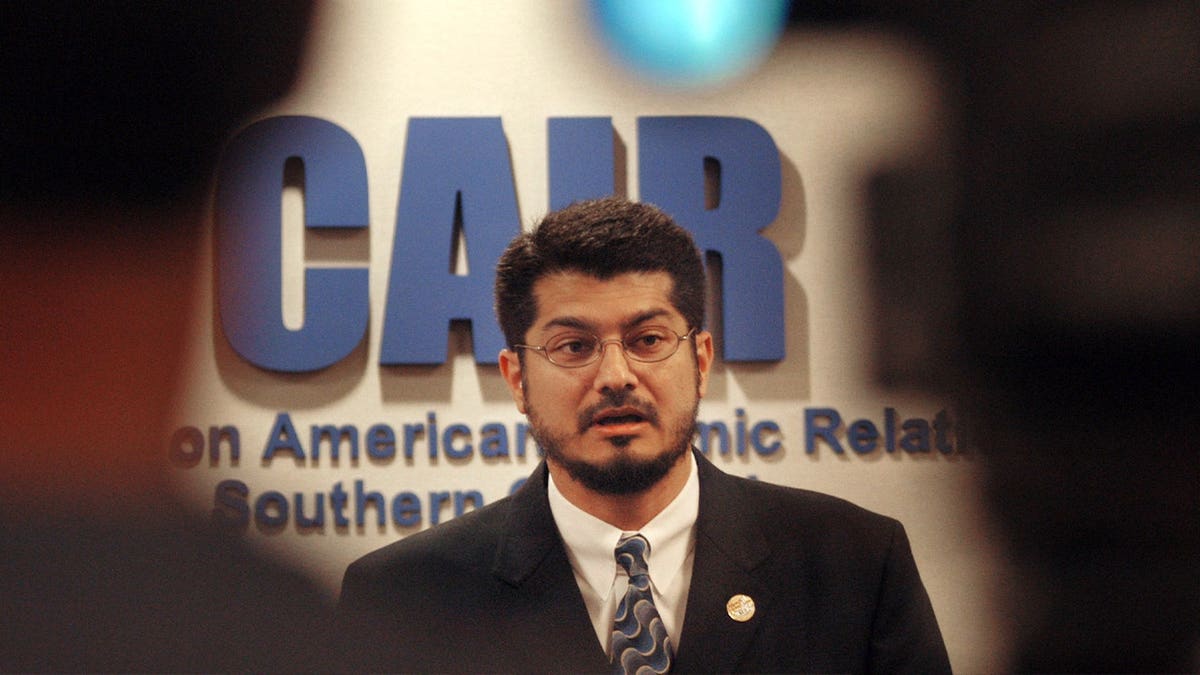
Hussam Ayloush, an executive director of CAIR, speaks during a press conference. (Marc Martin/Los Angeles Times via Getty Images)
El-Sayed has repeatedly drawn criticism from Republicans and pro-Israel advocates over his associations and comments related to the Middle East, including campaigning with far-left streamer Hasan Piker, his response to an attack targeting a Detroit synagogue, and declining to comment on the death of Iran’s supreme leader, citing constituents in Dearborn who were mourning.
El-Sayed defeated Dem. Rep. Haley Stevens in the Democratic Senate primary on Tuesday night in a race that was much closer than most pundits expected. El-Sayed will face off against Republican Mike Rogers, a former congressman, in November.
hamas, politics, midterm elections, senate, michigan, terrorism
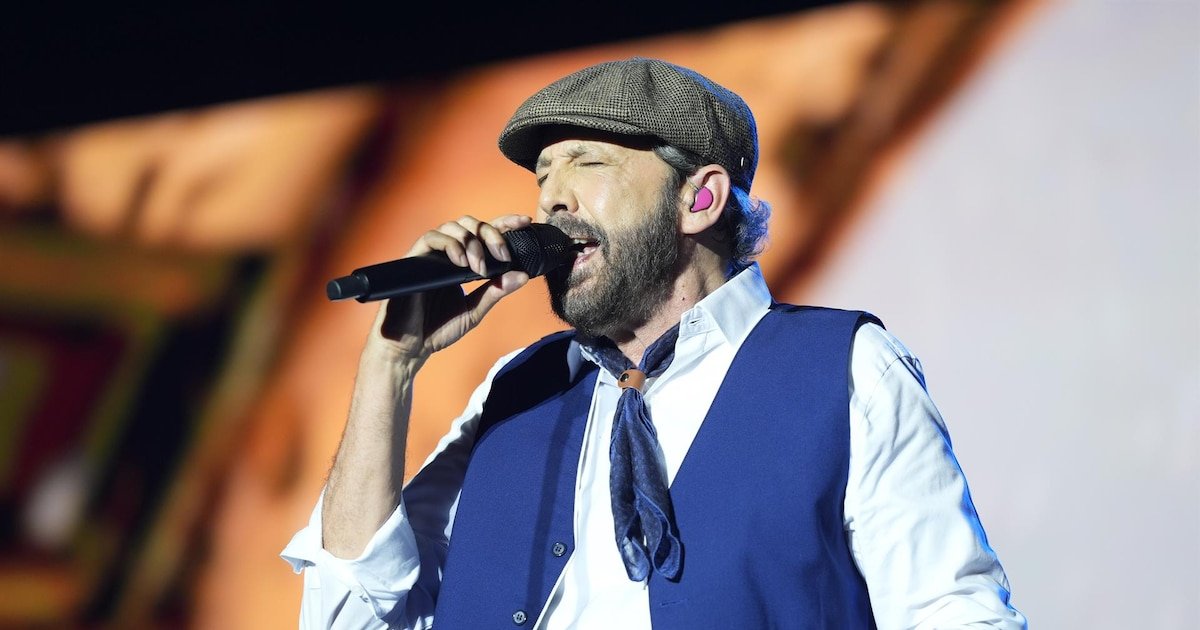
Juan Luis Guerra cerrará el 8 de agosto los Juegos Centroamericanos y del Caribe Santo Domingo 2026 con Canto a la Patria, obra que compuso y donó al Estado dominicano en 2006. La clausura será a las 18:00 hora horas en la Arena Banreservas Virgilio Travieso Soto, tras 16 días de competencia.
El acto de cierre pondrá fin a los XXV Juegos Centroamericanos y del Caribe y servirá como despedida formal de Santo Domingo 2026. La organización indicó, citada por el medio dominicano El Día, que la noche evocará la gesta deportiva vivida en el país y recordará la participación de atletas de distintas naciones que compitieron por las medallas.
El coro Más que Vencedores formará parte de esa presentación, en un segmento concebido como tributo tanto a la nación como a quienes sostuvieron la producción de las ceremonias. La publicación señaló que el homenaje alcanzará al personal que trabajó en esos actos conmemorativos.
Alberto Zayas, productor general y director creativo de las ceremonias, definió la presencia del artista como un gesto nacional. “Recibir este regalo del maestro es un honor para todo el país. Cerrar el centenario de los Juegos con su voz será un momento inolvidable”.

José P. Monegro, presidente del Comité Organizador de Santo Domingo 2026, sostuvo que la participación del cantante refuerza el sentido que la organización quiso darle al evento desde su apertura. “Que el maestro Juan Luis Guerra esté en el cierre de estos Juegos confirma lo que han sido desde el primer día: una causa de país”.
Monegro añadió que la organización asumió esa confirmación como una muestra de respaldo institucional y simbólico. “El Comité Organizador recibe su gesto con profunda gratitud, y lo devuelve con el compromiso de una clausura a la altura de estos dieciséis días inolvidables”.
De acuerdo con el medio dominicano Listín Diario, Juan Luis Guerra llegará a esta clausura con una trayectoria de más de 4 décadas y decenas de premios internacionales. El medio subrayó que su carrera lo ha convertido en una de las figuras que más han proyectado el nombre de la República Dominicana en el exterior.

Juan Luis Guerra nació en Santo Domingo el 7 de junio de 1957 y construyó una carrera que, según la biografía publicada en su sitio oficial, convirtió al merengue y la bachata en repertorios de alcance internacional, con discos de alto impacto comercial, premios Grammy y Latin Grammy, giras mundiales y reconocimientos académicos y culturales.
Entre los datos más contundentes de ese recorrido figuran ventas de más de nueve millones de copias para Bachata Rosa, más de siete millones para la compilación Grandes Éxitos y una convocatoria superior a 400,000 personas en el cierre del Festival de Tenerife, en España. La publicación también ubica entre sus hitos un concierto agotado para más de 60,000 personas en el Estadio Olímpico Félix Sánchez de Santo Domingo.
El músico dominicano estudió Filosofía y Letras en la Universidad Autónoma de Santo Domingo y luego ingresó al Conservatorio Nacional de Música de la capital dominicana. Más tarde se trasladó a Boston para formarse en Berklee College of Music, donde obtuvo una licenciatura en Composición de Jazz y años después recibió un doctorado honoris causa.
De regreso en República Dominicana, grabó en 1984 su primer álbum, Soplando, junto a un grupo de músicos y vocalistas locales que después sería conocido como Juan Luis Guerra y 4.40.
Citado por la biografía oficial, el artista definió ese debut como “una fusión de merengue tradicional con jazz unido a una vocalización al estilo del grupo vocal estadounidense Manhattan Transfer”.

Ante la presión de los aliados, el Gobierno retiró el polémico capítulo de extranjerización de tierras

Reino Unido eleva la alerta tras descubrir conductas peligrosas de la IA de Anthropic y OpenAI: “Es el primer engaño dirigido a una persona real”

La visita del papa León XIV a Argentina modifica la agenda de Kicillof: qué viaje evalúa posponer para estar en Luján

Fue a esquiar a Bariloche en plena temporada, mostró cuánto cuesta un día en las pistas y su gasto total se viralizó

Crece la tensión en la FIFA tras la reunión de emergencia en Marruecos: la estrategia de Infantino para afrontar la crisis luego de retirar su proyecto

Juicio por Sueños Compartidos: la UIF pidió seis años de prisión para los hermanos Schoklender, Julio De Vido y José López

“Vamos a acelerar con todo”: el objetivo del Gobierno por las reformas y la agenda electoral de cara al 2027

Javier Milei cruzó a Victoria Villarruel y elevó la tensión: “Es una opositora, replica los argumentos kirchneristas”

Reelecciones indefinidas: el oficialismo bonaerense niega que busque ampliar la Legislatura como parte de una reforma política para beneficiar a los intendentes

¡Chau Luck Ra! La salida de soltera de La Joaqui, muy bien acompañada, a días de su separación
-
 POLITICA2 días ago
Javier Milei cruzó a Victoria Villarruel y elevó la tensión: “Es una opositora, replica los argumentos kirchneristas”
-
 POLITICA3 días ago
Reelecciones indefinidas: el oficialismo bonaerense niega que busque ampliar la Legislatura como parte de una reforma política para beneficiar a los intendentes
-

 CHIMENTOS3 días ago
Zaira Nara realizó un topless en Formentera y un comentario de un seguidor generó debate: “¿Nunca vestida?»