INTERNACIONAL
FAA unveils new air traffic controller hiring plan after chief warned system was ‘chronically understaffed’

NEWYou can now listen to Fox News articles!
The Federal Aviation Administration (FAA) unveiled an aggressive new workforce overhaul on Friday aimed at tackling chronic staffing shortages, excessive overtime and aging technology across the nation’s air traffic control system.
The newly released 2026-2028 Air Traffic Controller Workforce Plan calls for hiring thousands of new controllers, modernizing scheduling systems and replacing aging infrastructure across the National Airspace System.
The plan comes months after FAA Administrator Bryan Bedford warned lawmakers that air traffic control towers would «never» reach full staffing levels if the agency continued operating under its current structure.
«We’ll never catch up,» Bedford said during a December congressional hearing. «The system is designed to be chronically understaffed.»
PRIVATIZE THE TSA: 3 STEPS TO BETTER SERVICE AND ENHANCED SECURITY
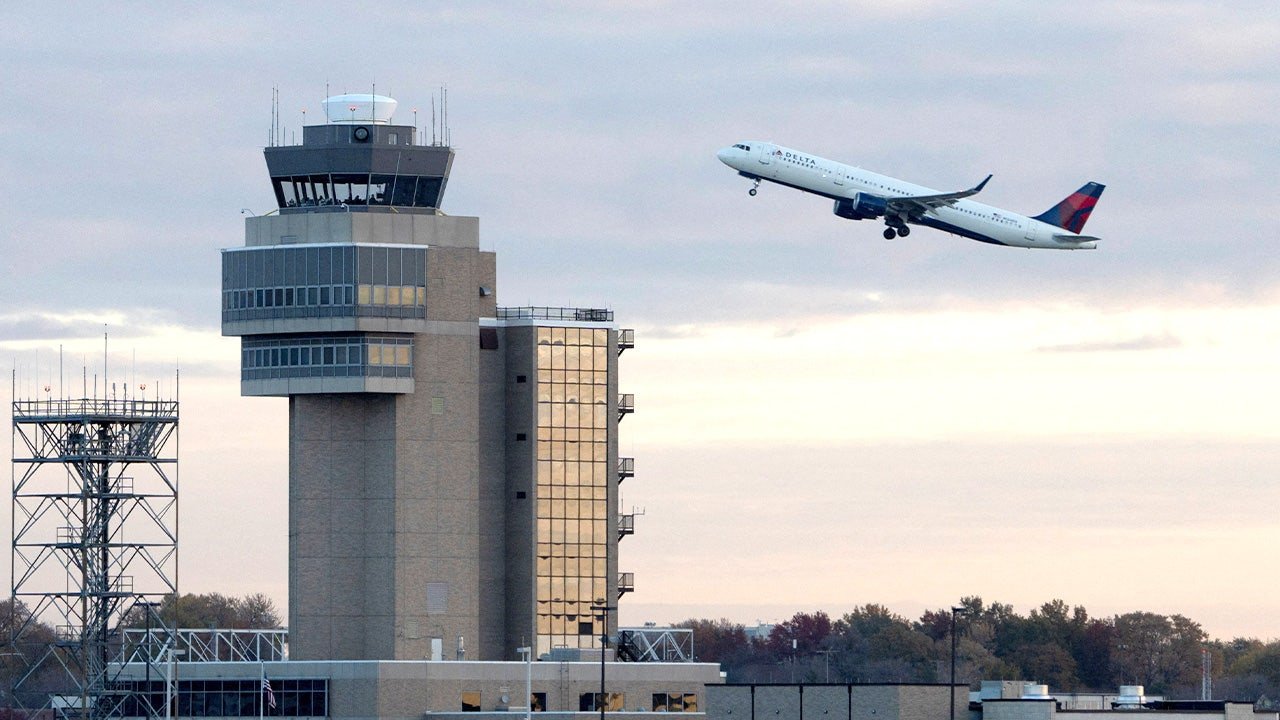
A Delta Air Lines plane takes off with the air traffic control tower visible at Minneapolis–Saint Paul International Airport on Nov. 7, 2025. (Tim Evans/Reuters)
The overhaul also comes amid heightened scrutiny of aviation safety following a series of airport disruptions, delays and close-call incidents that have raised fresh questions about whether the nation’s air traffic control infrastructure is keeping pace with growing travel demand.
«This forward-thinking plan delivers on President Donald J. Trump’s promise to provide the American flying public with a world-class air traffic control system, and that starts with highly trained, professional air traffic controllers,» Bedford said in a statement.
«We can’t continue to operate the same way and expect better results,» he added. «We’re changing how we hire, train and schedule our controller workforce — and providing them with the state-of-the-art tools they need to succeed.»
AI AIR TRAFFIC SYSTEM PROMISES FEWER FLIGHT DELAYS

Transportation Secretary Sean Duffy speaks during a press briefing on flight safety at the U.S. Department of Transportation in Washington on April 21, 2026. (Tom Brenner/AP)
The FAA said the plan identifies a full staffing target of 12,563 certified professional controllers based on forecast demand. As of April 2026, the agency said roughly 11,000 certified professional controllers were deployed across more than 300 air traffic facilities.
The agency also has an additional 4,000 controllers in the training pipeline, including about 1,000 who were previously fully certified but are now training at new facilities, according to the plan.
Rebuilding the workforce will take time. The FAA said it can take more than two years to fully certify a new-hire controller depending on the complexity of the facility where they are assigned.
FAA SCRAMBLES TO HIRE 8,900 AIR TRAFFIC CONTROLLERS BY 2028 AS SHORTAGE REACHES CRISIS LEVELS

A traveler walks near an air traffic control tower at Philadelphia International Airport in Philadelphia on March 27, 2026. (AP)
The agency plans to hire 2,200 new air traffic controllers in fiscal year 2026, 2,300 in fiscal year 2027 and 2,400 in fiscal year 2028 while expanding partnerships with colleges, universities and technical schools.
The workforce plan also acknowledges the strain excessive overtime has placed on controllers.
«Use of a limited amount of overtime is a reasonable means of addressing unexpected variances of work demands,» the plan states. «However, the levels reached in FY 2023 – FY 2025 far exceed any reasonable use of mandatory overtime.»
«Chronic use of overtime leads to fatigue, controller burnout and ultimately loss of retention,» the report says.
The plan also notes that workforce scheduling and controller timekeeping are still handled manually by local facility managers.
«It is difficult to understand why no automation tools have been deployed to schedule our workforce or track time, attendance and functional work accomplished,» the report states.
TRANSPORTATION DEPARTMENT DEPLOYING ARTIFICIAL INTELLIGENCE TO SPOT AIR TRAFFIC DANGERS, DUFFY SAYS

Travelers walk through Terminal 1 at San Francisco International Airport in San Francisco, Calif., on Nov. 7, 2025. The FAA is reducing flights by 10 percent at 40 major airports nationwide, including SFO, due to air traffic control staffing shortages amid the federal government shutdown. (Justin Sullivan/Getty Images)
The FAA said improving average controller time on position from about four hours to more than five hours per eight-hour shift could increase effective workforce availability enough to meet current staffing targets.
The workforce plan also calls for replacing decades-old infrastructure with a fully digital system, expanding simulator-based training and using artificial intelligence and machine learning tools to better manage air traffic demand.
Lawmakers also raised concerns during Bedford’s December testimony about the age of some FAA systems, including reports that certain facilities still rely on floppy disks.
«When you’re still using floppy disks, that makes everybody less safe, that makes the agency less effective,» Rep. Brad Knott, R-N.C., said during the hearing.
Rep. Laura Gillen, D-N.Y., also said she saw floppy disks still in use during a visit to the FAA’s terminal radar approach control facility on Long Island, which manages traffic into major New York-area airports.
Bedford told lawmakers the FAA had committed more than $6 billion of the $12.5 billion it received under Trump-backed legislation, including investments in telecommunications infrastructure and new radar surveillance systems.
SEAN DUFFY PROPOSES BIG PLANS TO UPGRADE AIR TRAFFIC CONTROL SYSTEMS, USE AI TO FIND ‘HOT SPOTS’
The new workforce plan says the FAA will replace «decades-old, unreliable, analog infrastructure» with a «fully digital network system,» arguing that modern tools will improve reliability, reduce outages and give controllers a more stable working environment.
The FAA said the plan builds on its fiscal year 2025 hiring surge, when the agency hired 2,028 air traffic controller trainees, its highest total since 2008.
The agency also raised starting salaries for academy students by nearly 30% and implemented financial incentives for academy completion.
Still, the FAA said total workforce losses in fiscal year 2025 — including retirements, resignations, promotions, removals, training failures and academy attrition — totaled 1,460.
Nearly 400 retirement-eligible controllers were retained through a new bonus structure, according to the agency.
The Transportation Research Board of the National Academies previously found that about 30% of FAA facilities were staffed more than 10% below staffing targets, while another 30% were staffed 10% or more above targets.
The FAA said prior hiring disruptions, including sequestration, government shutdowns and the COVID-19 pandemic, had long-term effects on staffing levels, particularly at major facilities serving some of the nation’s largest airports.
Even with thousands of hires planned, FAA officials acknowledged the air traffic controller shortage will not be solved quickly.
CLICK HERE TO DOWNLOAD THE FOX NEWS APP
Between years-long training, retirements, staffing imbalances and modernization challenges, the agency’s own projections make clear the pressure on America’s air traffic control system is expected to continue even as air travel demand continues rising.
Fox News Digital’s Ashley Carnahan contributed to this reporting.
airports, infrastructure across america, administration, jobs, tech












INTERNACIONAL
Irán informó que un petrolero explotó tras chocar con una mina marina en el Estrecho de Ormuz
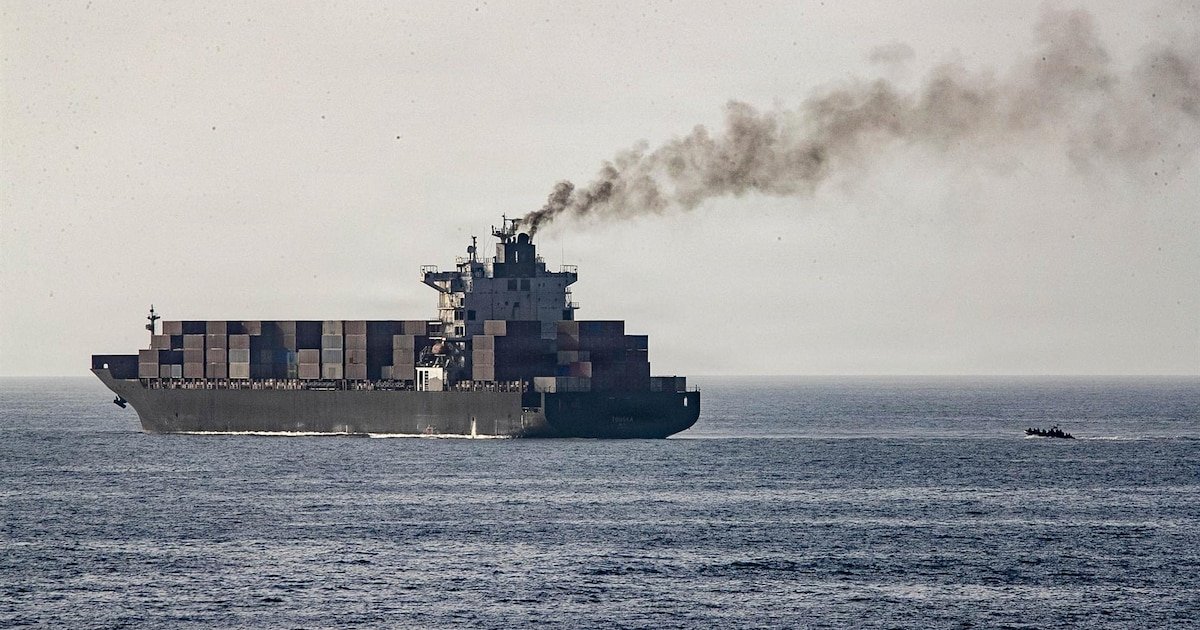
Las autoridades iraníes anunciaron este domingo que una mina explotó al paso de un petrolero en el estrecho de Ormuz, según informaron fuentes de la Defensa iraní al portal especializado Defence Press y a la agencia semioficial Mehr. La explosión ocurrió en torno al mediodía y no hay constancia de víctimas por ahora, ni más datos sobre el barco más allá de que “se desvió de la ruta especificada por Irán” en su paso por el estrecho.
El tráfico en Ormuz sigue en mínimos históricos debido al doble bloqueo impuesto por Irán y Estados Unidos desde la reanudación de las hostilidades. Según datos de MarineTraffic, el tráfico por el estrecho se redujo el viernes a solo seis cruces confirmados, una caída del 60% respecto al día anterior.
Cinco de esos seis buques siguieron el plan unilateral iraní —la ruta designada por Teherán para el paso de las embarcaciones—, lo que puso de manifiesto la continua concentración del tráfico a lo largo de ese corredor específico. En paralelo, el estrecho de Bab el Mandeb, en la entrada del mar Rojo, registró 49 cruces confirmados, entre ellos cinco buques autorizados, 11 clandestinos y cuatro tránsitos no oficiales, de acuerdo con datos recogidos por la agencia oficial turca Anatolia.

El incidente se produce en medio de una disputa que se arrastra desde hace meses por el control de la navegación en Ormuz, corredor por el que normalmente circula cerca del 20% del petróleo comercializado por vía marítima en el mundo. Irán restringió el paso por la vía cuando comenzó la guerra el 28 de febrero, disparando contra petroleros y cargueros, lo que disparó los precios del petróleo durante todo el conflicto.
Tras la firma de un acuerdo de alto el fuego provisional en junio, estalló una disputa por el control del estrecho: Irán exigió que los barcos usaran una ruta cerca de su litoral y advirtió que podría cobrar tarifas, mientras los buques navegaban cada vez más por una ruta meridional junto a la costa de Omán, dentro de una operación de vigilancia de Estados Unidos. Cuando Irán atacó algunas de esas embarcaciones, Washington reanudó los ataques contra las defensas costeras iraníes y luego amplió sus objetivos hacia puentes e infraestructura en el sur y el centro del país.
Tras la firma de un acuerdo de alto el fuego provisional en junio, estalló una disputa por el control del estrecho: Irán exigió que los barcos usaran una ruta cerca de su litoral y advirtió que podría cobrar tarifas, mientras los buques navegaban cada vez más por una ruta meridional junto a la costa de Omán, dentro de una operación de vigilancia de Estados Unidos. Cuando Irán atacó algunas de esas embarcaciones, Washington reanudó los ataques contra las defensas costeras iraníes y luego amplió sus objetivos hacia puentes e infraestructura en el sur y el centro del país.
A comienzos de julio, Teherán volvió a declarar cerrado el estrecho y Estados Unidos restableció el bloqueo naval sobre puertos y buques iraníes en la zona, medida que había sido suspendida tras el memorando de entendimiento alcanzado a mediados de junio.
La incertidumbre en Ormuz golpea de lleno a las economías del Golfo Pérsico, que dependen fuertemente de la exportación de hidrocarburos. Ante el cierre parcial del estrecho, países como Kuwait han buscado alternativas para sostener su producción: la petrolera estatal Kuwait Petroleum Corporation firmó recientemente un acuerdo de infraestructura de oleoductos valorado en 16.000 millones de dólares con los fondos internacionales Blackstone, KKR y Brookfield, en un intento por diversificar sus rutas de exportación.
La escalada en Ormuz también repercutió en otros puntos calientes de la región: los rebeldes hutíes de Yemen, respaldados por Irán, incrementaron sus ataques contra buques y bases sauditas en el estrecho de Bab el Mandeb, aumentando la presión sobre la otra vía marítima clave para el comercio energético.
En paralelo, Irán y Omán mantuvieron el fin de semana varias rondas de conversaciones técnicas en Teherán para intentar definir mecanismos que garanticen la navegación segura por Ormuz, aunque sin que hasta el momento se hayan registrado cambios en el tráfico marítimo de la zona. Un funcionario regional involucrado en la mediación calificó la actual pausa en los combates como una “señal positiva” para destrabar ese tipo de acuerdos, aunque advirtió que aún no está claro si se trata de una tregua duradera o de una simple pausa operativa.
Environment
European wildfires force more than 250K evacuations across Spain, France
Wildfires are sweeping across Spain and France, forcing more than 250,000 people to evacuate. One blaze is threatening France’s famed Bordeaux wine region, while Spain has declared a national emergency. France has deployed the military, and the Tour de France has been shortened as firefighters battle the massive blazes.
NEWYou can now listen to Fox News articles!
More than a quarter-million people have been driven from their homes in southwest France as a massive wildfire barrels toward the famed wine capital of Bordeaux, with officials warning the fast-moving inferno has become so fierce it’s creating its own winds and behaving erratically.
French authorities ordered another 55,000 people to evacuate overnight Sunday from communities south of Bordeaux, bringing the total number of evacuees in the region to about 250,000. Gusty winds, dry conditions and repeated heat waves have fueled a fire that has burned out of control since midweek.
Interior Minister Laurent Nunez said firefighters faced a «difficult» night and warned Sunday that «the situation remains very unfavorable.»
EUROPE’S FIRES REVEAL DEADLY MIX OF RECORD HEAT, HUMAN ERROR, ARSON AND LAND MISMANAGEMENT
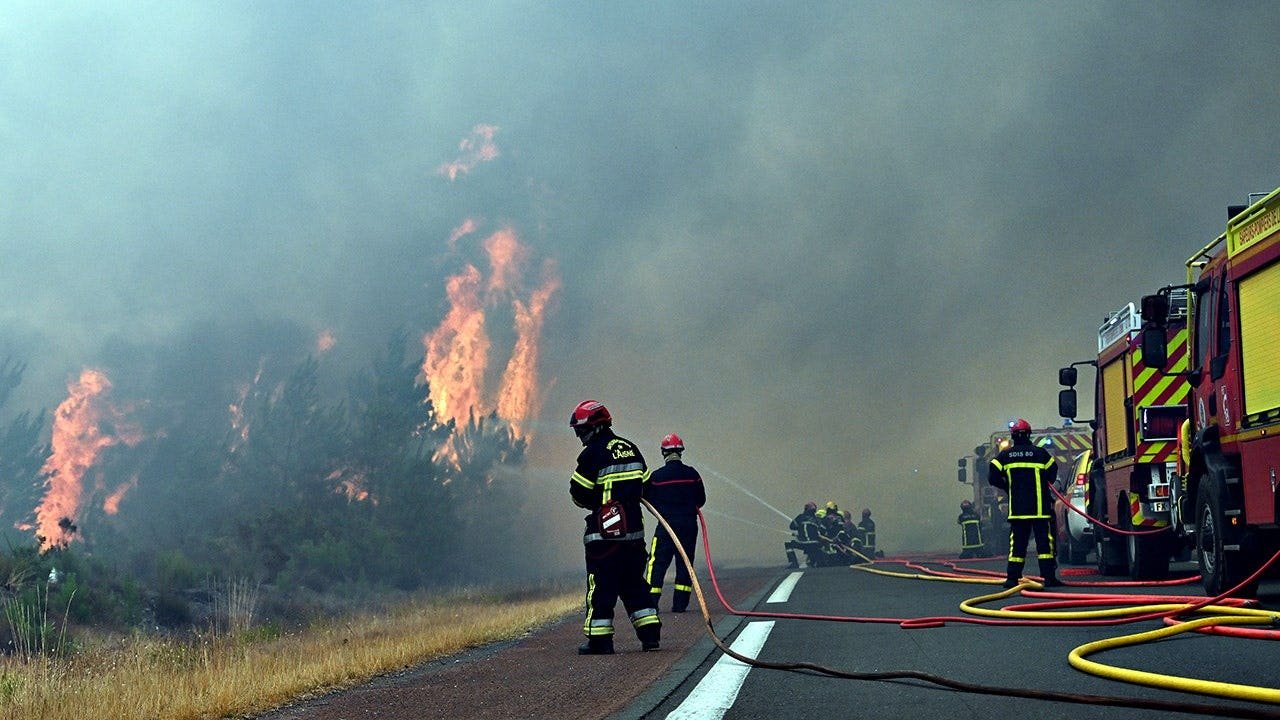
Firefighters spray water in a burning forest near Lacanau, southwestern France, Saturday, July 25, 2026. (AP Photo/Emma Da Silva)
«The fire again became extremely virulent again and unpredictable, generating its own winds and advancing erratically toward the Bordeaux metropolitan area,» Nunez posted on X, adding that the blaze «became calmer by the end of the night.»
The fire has now burned an estimated 42,000 hectares, or about 162 square miles — roughly four times the size of Paris — in the Gironde region. Bordeaux Mayor Thomas Cazenave said the flames came within about 9 miles of the city, prompting officials to partially close a major highway into and out of the region.
More than 2,500 firefighters, backed by 18 planes and helicopters, are working to slow the fire’s advance. France has also deployed 1,500 soldiers to help clear vegetation and build firebreaks, while several European countries have sent aircraft and firefighting crews to assist.
FRANCE RECORDS MORE THAN 5,700 EXCESS DEATHS DURING HISTORIC EARLY SUMMER HEAT WAVE
Nunez said 450 volunteers have also pitched in to help.
«We came to lend a hand because if it were our region, we’d want others to do the same,» 65-year-old farmer Pascal Roudier told Reuters. «And given the scale of the disaster, we think our efforts are very welcome too.»
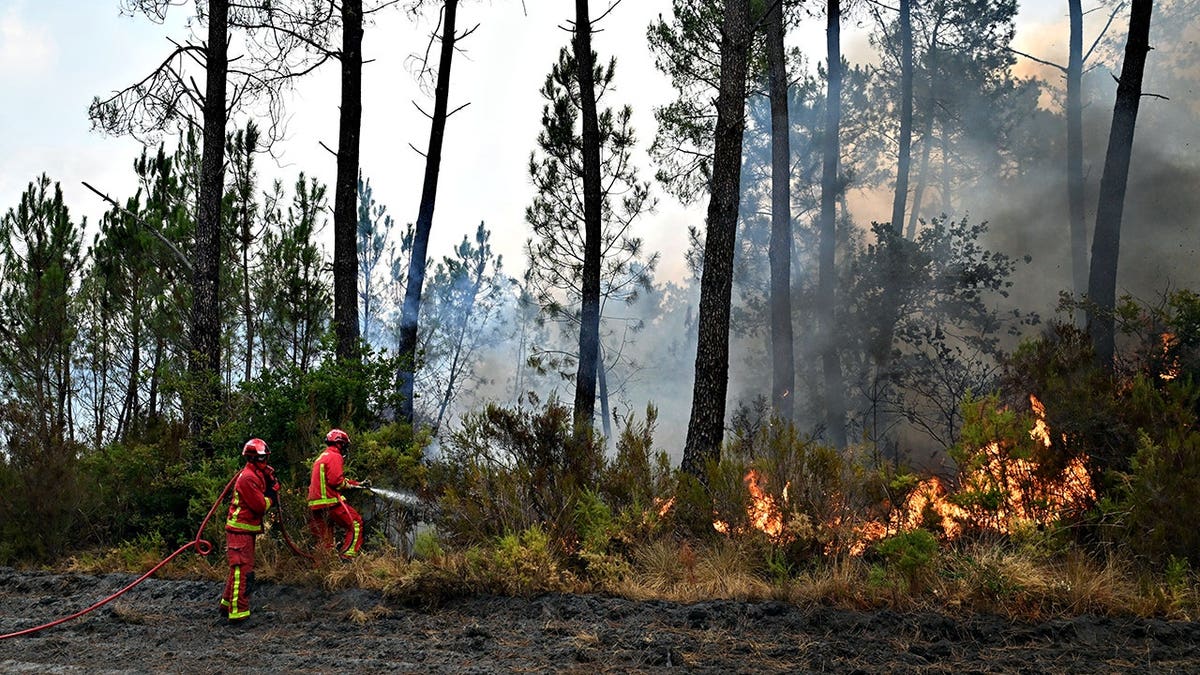
Firefighters battle a wildfire near Marcheprime, outside, Bordeaux, France, Sunday, July 26, 2026. (AP Photo/Emma Da Silva)
The Bordeaux-area fire is one of several major wildfires burning across France. A separate blaze in the neighboring Landes region has forced another 36,000 people to evacuate, while nearly 3,000 others have left their homes in southern France’s Var region along the Mediterranean coast.
Neighboring Spain is facing its own wildfire emergency.
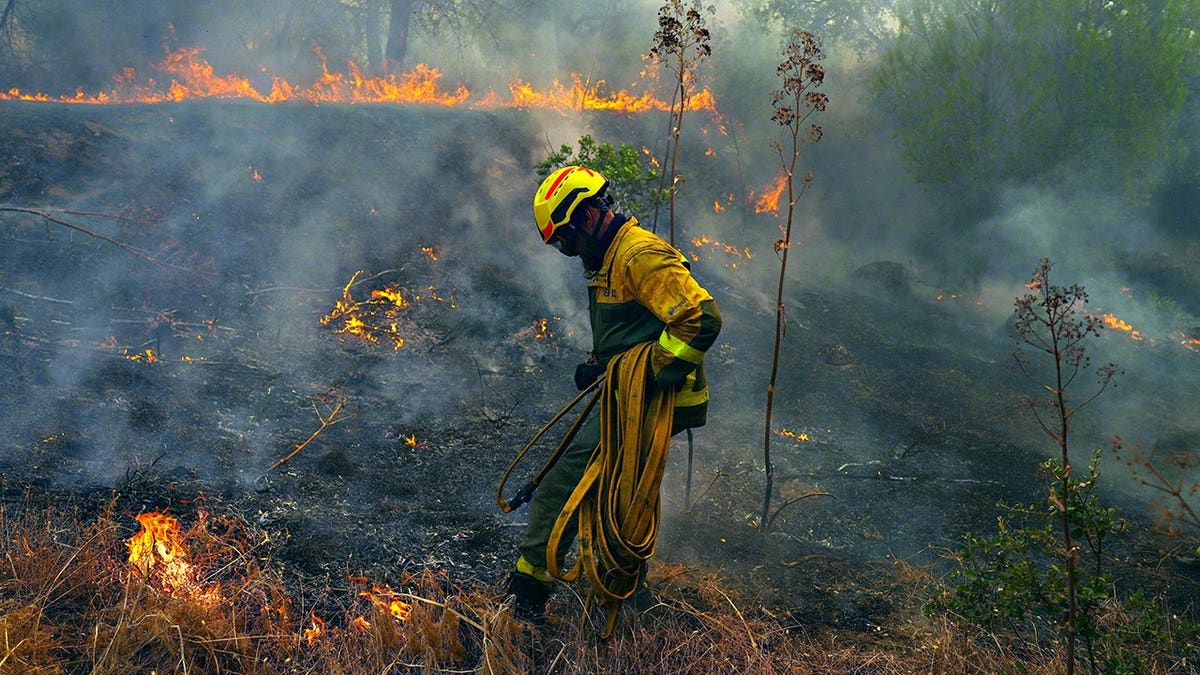
A firefighter carries a hose while battling a wildfire in San Martin de Valdeiglesias, west of Madrid, Spain, Sunday, July 26, 2026. (AP Photo/Manu Fernandez)
Authorities there have evacuated about 116,000 people in recent days as fires burned across the Valencia region and west of Madrid. A fast-moving fire in a Valencia suburb killed one man Saturday, marking Spain’s first wildfire death in the latest wave of fires.
CLICK HERE TO DOWNLOAD THE FOX NEWS APP
Earlier this month, 13 people were killed in southern Spain in the country’s deadliest wildfire in recent memory.
The Associated Press contributed to this report.
france, europe, fires disasters, natural disasters, world
INTERNACIONAL
La policía busca al sospechoso del ataque mortal en el desfile del Orgullo en Berlín: sería un joven islamista de 21 años



Irán informó que un petrolero explotó tras chocar con una mina marina en el Estrecho de Ormuz

El goleador argentino que estaría a punto de llegar a la Roma por una cifra millonaria

Wildfires displace more than 250,000 in France, threaten famed wine region

Música, inteligencia artificial y el valor de lo humano

La contundente decisión de José María Muscari con su obra “El Divorcio del Año” luego de la muerte de Ernestina Pais

El Como sigue el consejo de Raphael Varane y limita los remates de cabeza en su cantera

Jorge Berredo, general retirado de las FFAA, asumió como Secretario de Seguridad en San Isidro

Sin la anestesia mundialista, aflora la crisis del conurbano y Milei necesita reconectar con lo popular

Senado: Bullrich y Sturzenegger cierran filas para tratar de avanzar con la extranjerización de tierras
Marc Stanley destacó el potencial de Vaca Muerta para “estabilizar la economía” y evitó hablar de política interna

 POLITICA3 días ago
Senado: Bullrich y Sturzenegger cierran filas para tratar de avanzar con la extranjerización de tierras
- INTERNACIONAL3 días ago
Recuperaron ADN de un tenedor plástico y acusaron a una mujer de haber apuñalado 100 veces a su mejor amiga hace 14 años
- INTERNACIONAL3 días ago
Khanna demands answers from CCP-linked company accused of undercutting US manufacturers