
INTERNACIONAL
Federal appeals court blocks mailing of abortion pills in ruling with nationwide effect


NEWYou can now listen to Fox News articles!
A federal appeals court on Friday blocked the mailing of the abortion pill mifepristone under current Food and Drug Administration (FDA) rules, a move the court acknowledged would «as a practical matter, have a nationwide effect,» and one that sets up a likely Supreme Court battle over abortion access.
The 5th U.S. Circuit Court of Appeals ruling could restrict abortion pill access across the country, restoring rules supporters say protect patient safety and state authority, while critics warn it will make access harder even in states where abortion remains legal.
The decision means women will now have to see a medical professional in order to obtain a mifepristone prescription, restoring a requirement that had been lifted during the COVID-19 pandemic under former President Joe Biden.
Mifepristone is one of two drugs commonly used in medication abortions and accounts for a majority of abortions in the U.S., according to research from the Guttmacher Institute.
ABORTION PILL MIFEPRISTONE STAYS AVAILABLE BY MAIL FOR NOW AS FDA FACES 6-MONTH REVIEW DEADLINE
A packet of Misoprostol abortion pills. (Sergei Gapon/AFP)
The court’s order blocks mail-order distribution of the drug and effectively halts pharmacy-based dispensing allowed under recent FDA rule changes, requiring it to be dispensed in person under earlier safety protocols.
«It is true, as the district court noted, that a § 705 stay ‘would, as a practical matter, have a nationwide effect.’» the court wrote, putting in plain terms the sweeping implications of the decision.
Judges sharply criticized the FDA’s handling of the drug’s safety data, saying the agency had «previously eliminated the requirement to report mifepristone’s adverse events,» and calling it «unreasonable» to remove reporting requirements and then rely on the resulting lack of data to justify expanded access.
The ruling also sided with arguments from pro-life states, including Louisiana, which said federal policy undermined their abortion laws.
«Every abortion facilitated by FDA’s action cancels Louisiana’s ban,» the court wrote, adding that the state’s policy recognizes «every unborn child is [a] human being… from the moment of conception.»
REPUBLICAN SENATORS BLAST FDA FOR EXPANDING ABORTION PILL ACCESS

Pro-life demonstrators march to the Supreme Court for the annual March for Life in Washington, D.C. in 2025. (Bryan Dozier/Middle East Images/AFP via Getty Images, File)
«Once lost, that sovereign prerogative of protecting unborn life cannot be regained,» the court added.
The ruling marks a major escalation in the legal fight over abortion drugs, pitting federal regulators against states seeking to enforce stricter abortion laws in the wake of the Supreme Court’s 2022 decision overturning Roe v. Wade.
Pro-life groups quickly praised the decision.
«This is a win we’ve been waiting for, and we pray it holds,» Students for Life President Kristan Hawkins said.
«We can’t remain the United States of America if abortion loving states allow criminal enterprises to be set up, breaking the laws of their pro-life neighbors,» she added.
NEW YORK DOCTOR INDICTED FOR ALLEGEDLY PRESCRIBING ABORTION PILL TO PATIENT VIA TELEMEDICINE IN LOUISIANA

Boxes of mifepristone used for medical abortions. (Evelyn Hockstein/Reuters, File)
Family Research Council President Tony Perkins called the ruling «great news for the unborn,» adding that the issue «should be before the U.S. Supreme Court soon.»
Pro-choice advocates sharply criticized the decision.
New York Attorney General Letitia James said mifepristone is «safe, effective, and essential,» calling the ruling «yet another cruel attack on abortion access.»
«Restrictions on abortion care are restrictions on life-saving health care,» she added.
As Fox News Digital previously reported, a federal judge had allowed mifepristone to remain available by mail on a temporary basis last month while legal challenges and federal review efforts continued.
PRO-LIFE MOVEMENT CONFRONTS HIGH ABORTION RATES THREE YEARS AFTER DOBBS

Pro-life supporters hold signs outside the Supreme Court in Washington, D.C. (Olivier Douliery/AFP via Getty Images, File)
Judge David C. Joseph previously cautioned against «government by lawsuit,» emphasizing that the FDA’s ongoing safety review, not litigation, should determine long-term policy.
That review remains underway, with the Department of Health and Human Services (HHS) and the FDA tasked with examining safety data, adverse events and the regulatory framework on mifepristone.
CLICK HERE TO DOWNLOAD THE FOX NEWS APP
Louisiana Attorney General Liz Murrill had argued the policy caused «irreparable harm every day» it remained in place, warning expanded access was designed to «reach into jurisdictions like Louisiana» despite state-level abortion restrictions.
Friday’s ruling now sets up a likely appeal to the Supreme Court, where a new challenge to federal authority over abortion drug regulation could take center stage.
The Associated Press contributed to this reporting.
federal courts, abortion, appeals, federal judges, reproductive health, politics, supreme court











INTERNACIONAL
El Partido de los Trabajadores proclamó a Lula como candidato para un cuarto mandato en Brasil

El Partido de los Trabajadores (PT) de Brasil oficializó este domingo la candidatura del mandatario Luiz Inácio Lula da Silva para las elecciones presidenciales de octubre, en las que buscará un histórico cuarto mandato no consecutivo con la mayoría de las encuestas a su favor.
“Quiero decir para toda la militancia de los partidos que están aquí: homologamos, oficializamos ahora. Lula, presidente; Geraldo Alckmin, vice», dijo el presidente del PT, Edinho Silva, en una entrevista previa a la ceremonia, celebrada en el centro de convenciones Expo Center Norte, en São Paulo, el mayor colegio electoral del país.
El evento, que comenzó puntual a las 10:00 hora local (13:00 GMT), selló la reedición de la alianza con el moderado Alckmin como candidato a la vicepresidencia, ante cientos de militantes, ministros y dirigentes del bloque oficialista.
A sus 80 años, Lula encara su séptima carrera a la Jefatura de Estado, tras haber gobernado entre 2003 y 2010 y regresar al poder en 2023.
“Tengo la misma energía de cuando tenía 30 años”, ha reiterado el veterano líder sindical para disipar dudas sobre su salud.
La “soberanía” como bandera frente a Trump

La campaña se abre bajo la sombra de Donald Trump, aliado de la familia Bolsonaro y que ha respaldado a varios candidatos en América Latina. “En Brasil no aceptamos que nadie meta la nariz donde no lo llaman”, advirtió Lula la semana pasada.
Estados Unidos impuso en julio dos rondas de aranceles a productos brasileños, tras acusar al país de prácticas comerciales desleales. Alentado por Eduardo Bolsonaro, hijo del ex presidente, Washington ya había aplicado gravámenes similares en 2025 —luego suspendidos en buena parte— en represalia por el juicio contra Jair Bolsonaro. Ante la nueva presión, Lula prometió una «guerra de la verdad contra la mentira» frente a su par estadounidense y acusó a Flávio Bolsonaro de ser un “traidor a la patria” por, según él, alentar el castigo económico a Brasil.
“La narrativa sobre la soberanía le calza como un guante a Lula: en un momento de caída de su popularidad, logra identificar a un enemigo allá afuera”, dijo a la agencia AFP el politólogo Leonardo Paz, de la Fundación Getúlio Vargas.
El clima bilateral sigue deteriorándose: la semana pasada Brasilia negó las visas a dos funcionarios estadounidenses que pretendían viajar al país para hablar de “integridad electoral”.

Lula defiende los avances de su gestión en la caída del desempleo y la reducción de la pobreza, en un contexto de desaceleración económica, con un crecimiento del PIB en torno al 2 % para este año electoral, tras el 3,4 % de 2024 y el 2,3 % de 2025.
La presión inflacionaria —marcada por factores internos y por el alza de precios de alimentos y combustible en el contexto geopolítico— mantiene la tasa básica de interés en 14,25 %, junto a un déficit nominal cercano al 10 % del PIB y una deuda pública que superó el 80 %. Son puntos que la oposición busca explotar, junto con la lucha contra el crimen organizado, que controla barrios populares donde viven millones de personas.
La corrupción también pesa sobre ambos candidatos. Esta semana, un juez de la Corte Suprema autorizó dos investigaciones por tráfico de influencias contra el hijo mayor de Lula, Fábio Luís Lula da Silva, conocido como “Lulinha”, por presuntas gestiones ante el Ministerio de Salud. Del lado opositor, Flávio Bolsonaro enfrenta cuestionamientos por el financiamiento de una película sobre su padre, para la cual habría pedido dinero a un banquero acusado de una megaestafa.

Los comicios de octubre se perfilan como una nueva disputa polarizada entre el progresismo de Lula y la extrema derecha que encarna Flávio Bolsonaro, de 45 años, oficializado la semana pasada como heredero político del espacio conservador. Su padre, Jair Bolsonaro, está inhabilitado, condenado a 27 años de prisión domiciliaria por intento de golpe de Estado, tras perder las elecciones de 2022 ante Lula.
Según la última encuesta de Datafolha, Lula obtendría un 48 % de la intención de voto en un eventual balotaje, frente al 43 % de Flávio Bolsonaro — una diferencia estrecha, similar a la de la ajustada campaña de 2022.
(Con información de EFE y AFP)
South America / Central America

NEWYou can now listen to Fox News articles!
A sanctioned tanker loaded with crude is leaving a growing trail of oil in protected waters off the coast of Oman, according to newly reviewed satellite images, as experts warn the stranded vessel could break apart during the region’s rough monsoon season.
Satellite images reviewed by The Associated Press show an oil sheen covering roughly 20 square kilometers, or about 8 square miles, around Dhofar’s Qibliyah Island, part of Oman’s protected Hallaniyat Islands. Dark patches of crude have also reached the shoreline. Experts say the leak has worsened in recent days, fueling fears that rough weather could trigger a much larger spill.
«The last few days, the imagery indicates an increase in oil coming out, as the size of the sheen is growing,» Wim Zwijnenburg, an environmental expert with the Dutch peace organization PAX, told the AP.
REPORT WARNS RUSSIA USING SHADOW FLEET TO PROBE NATO DRONE DEFENSES
This satellite image from Planet Labs PBC shows crude oil leaking and spreading from the sanctioned Suezmax tanker Caroline Bezengi grounded off the coast of Oman, on Friday, July 31, 2026. (Planet Labs PBC via AP)
He said the biggest risk is that the vessel could break apart as strong winds and rough seas during the annual monsoon season continue to pound the ship’s hull.
The 899-foot, Cameroon-flagged Caroline Bezengi has been stranded off Oman’s southern coast since June after its crew reported an onboard explosion, according to maritime news outlets. Reuters, citing maritime security sources, reported the vessel first ran into trouble on June 8 near the Yemeni port of Mukalla, where initial assessments suggested a blast may have occurred. The cause has not been confirmed.

This satellite image from Planet Labs PBC shows crude oil leaking and spreading from the sanctioned Suezmax tanker Caroline Bezengi grounded at Qibliyah Island, off the coast of Oman, on Friday, July 31, 2026. (Planet Labs PBC via AP)
Ship-tracking data reviewed by Reuters showed the tanker had loaded Russian crude at the Black Sea port of Novorossiysk before its latest voyage. The vessel has been sanctioned by the United Kingdom, the European Union, Canada and Switzerland for allegedly transporting Russian oil as part of Moscow’s so-called «shadow fleet» — a network of aging tankers used to bypass Western sanctions imposed after Russia’s invasion of Ukraine.
HUNDREDS OF RUSSIAN SHADOW TANKERS TRIGGER MILITARY ALARM TRANSITING NATO WATERS: REPORT
Zwijnenburg estimated the tanker is carrying more than 800,000 barrels of crude oil and said recent imagery suggests at least one section of the hull has been breached. Other maritime specialists who reviewed the images told Reuters the vessel also appears to be listing, adding to concerns that it could eventually break apart.

A satellite image shows an oil slick next to the Caroline Bezengi, a sanctioned vessel off the coast of the Dhofar Governorate, Oman, July 28, 2026. (Planet Labs PBC/Handout via REUTERS)
The spill threatens a protected marine reserve in the Arabian Sea that is home to endangered petrels and other rare wildlife. Greenpeace Germany warned that oil has already polluted stretches of coastline and damaged the area’s fragile ecosystem.
«With oil apparently continuing to leak and the tanker stranded in a difficult location, there is a serious risk of a much larger oil disaster, with even more devastating consequences for the region’s coastlines and marine ecosystems,» Greenpeace Germany’s Nina Noelle told the AP.
The U.N.’s International Maritime Organization said earlier this week it is monitoring the situation, adding that while the vessel has not broken apart, authorities are continuing to assess the safety and environmental risks.
Oman’s Ministry of Transport, Communications and Information Technology ordered the vessel’s owners to remove the ship and its cargo by July 23. It is unclear whether that deadline was met or whether the owners have responded.
middle east, environment world, oceans, world, environmental disasters
NEWYou can now listen to Fox News articles!
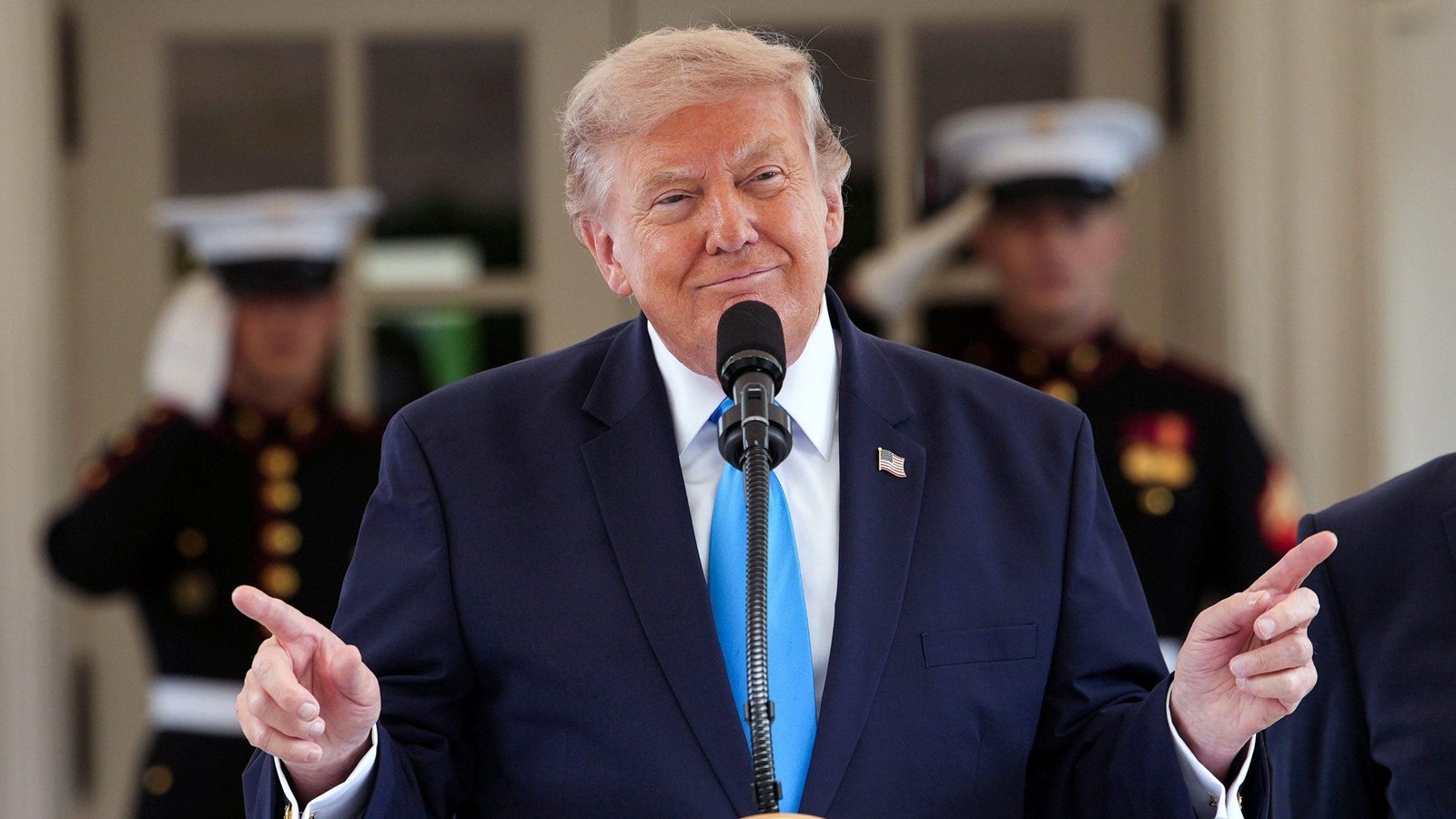
Republicans are sounding the alarm that President Donald Trump’s demand to cancel August recess could cost the GOP seats in the midterms.
As the upcoming jailbreak from Washington, D.C., fast approaches, Trump’s most-prized legislative push remains stalled. He wants Republicans to stay put until it’s finished, but the political reality says otherwise.
And it comes as Republicans are desperate to get out of the Beltway and sell their accomplishments, rather than their shortcomings, to voters on the campaign trail. The GOP has more to lose than Democrats this cycle, too, with three vulnerable incumbents and a handful of others on the periphery.
REPUBLICAN SAYS TRUMP’S TOP ELECTION PRIORITY ‘DEAD’ IN SENATE AS GOP FRACTURES AHEAD OF MIDTERMS
President Donald Trump announces the Freedom Haulers initiative on West Executive Avenue in Washington, D.C., on July 30, 2026. (Andrew Harnik/Getty Images)
«Canceling August recess, where we have to have our members out campaigning and connecting with their voters, and people not understanding that, is about as tone-deaf as telling everybody to stay home in 2020 when we lost [Kelly] Loefler and [David] Purdue,» Sen. Thom Tillis, R-N.C., told Fox News Digital.
«It’s the same sort of thought process,» he continued. «It’s thinking that one branch runs this country and it doesn’t. If we don’t keep majorities, people are gonna regret it.»
Several of Tillis’ colleagues, however, disagree, and want the Senate to stay put until the SAVE America Act passes, be it through the party-line budget reconciliation process or by nuking the filibuster.
GOP RIFT GROWS AS THUNE HITS BRAKES ON TRUMP’S ELECTION BILL TO AVERT SHUTDOWN
Trump’s pressure, the online zeitgeist and the political hot potato of the situation have put incumbents in a tough spot: go home and admit defeat, or stay put and push legislation that so far has not gone anywhere.
For many Republicans, they openly acknowledge that it’s a math problem in the Senate — the GOP does not have the votes to pass the SAVE America Act. Some argue that keeping the Senate in town likely wouldn’t change the minds of those who oppose it.
«If it would make a difference in the outcome, I’m fine with that, but it won’t make a difference, which I don’t believe it will, that it’s an act of futility,» Sen. John Cornyn, R-Texas, told Fox News Digital.
TRUMP UNLOADS ON CORNYN, TIES AG NOMINATION FIGHT TO BITTER TEXAS PRIMARY
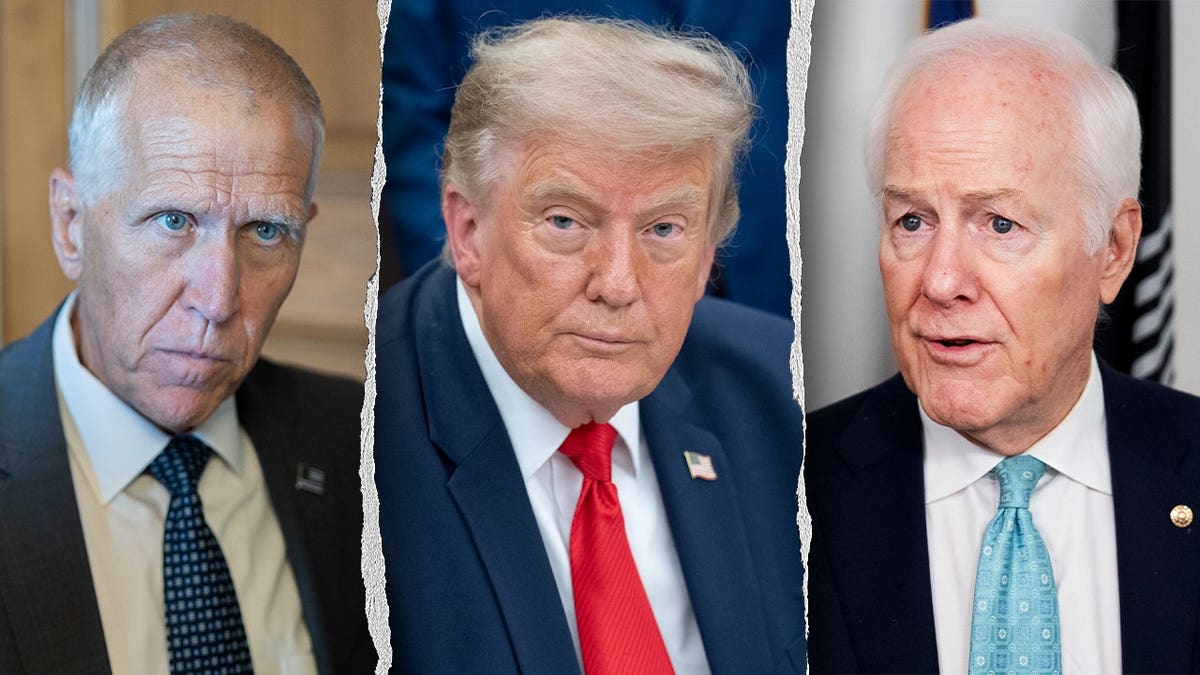
Republican Sens. John Cornyn and Thom Tillis are obstructing President Donald Trump’s attorney general nominee Todd Blanche. (Nathan Posner/Anadolu via Getty Images; Aaron Schwartz/CNP/Bloomberg via Getty Images; Tom Williams/CQ-Roll Call, Inc. via Getty Images)
Both Cornyn and Tillis are retiring — Tillis opted to get out during the tumultuous period that was passing the «big, beautiful bill,» and Cornyn was kneecapped by Trump, who backed Texas Attorney General Ken Paxton over him in a grueling primary battle.
But Cornyn noted that if he was still running for office, he might have a change of heart.
«I don’t know how that would come out, but if I was running for reelection, I would vote to stay,» he said.
Cornyn’s point is the line that some vulnerable Republicans are toeing. Two Republicans running in tight races, Sens. Jon Husted, R-Ohio, and Dan Sullivan, R-Alaska, told Fox News Digital that they have been voraciously pushing for the SAVE America Act.
But, Sullivan said that he didn’t want to comment on the president’s push to cancel recess, while Husted said it was always preferable to be back in Ohio with his constituents.
«But I also have a job here, and if the job requires me to be here, then I’ll be here,» he said.
Others in less tight races who support the legislation still understand the reality in the upper chamber: without changing the minds of a cohort of Republicans who have voted against it and flipping several Democrats, the SAVE America Act is going nowhere.
«I think to cancel the whole recess would be a problem, but I think to keep us up here another week or 10 days, certainly, I’m willing to do it. I’d stay here till November if I thought it would change things,» Sen. Roger Marshall, R-Kan., told Fox News Digital.
But he acknowledged that coming home empty-handed was a problem, too.
«The base would be mad if we don’t make the best effort possible to get this voter ID across the finish line,» Marshall said.
politics, senate elections, republicans, midterm elections, congress

La inesperada reacción de Evelyn Botto cuando Mirtha Legrand le preguntó si se casaría con Fede Bal

El Partido de los Trabajadores proclamó a Lula como candidato para un cuarto mandato en Brasil

El Gobierno avanza con una revisión integral del Estado y prepara más recortes del gasto público antes de 2027

Se formó en River y sigue jugando a los 41 años: el argentino que llegó a 550 partidos con un mismo club en Ecuador

Horror en Mar del Plata: salió a una entrevista de trabajo y la encontraron muerta

Satellite images show evidence of oil leak spreading from sanctioned vessel near Oman

Trump admin invokes 30-year dormant terror court as it seeks to deport Afghan woman tied to Election Day plot

“Casta”, “parásito” y “sea democrático”: fuerte respuesta de Victoria Villarruel a Diego Santilli

Dem senator swipes credit for bill he opposed amid heated reelection bid: ‘Disturbing pattern’

“Vamos a acelerar con todo”: el objetivo del Gobierno por las reformas y la agenda electoral de cara al 2027
-
 POLITICA2 días ago
“Casta”, “parásito” y “sea democrático”: fuerte respuesta de Victoria Villarruel a Diego Santilli
-
 INTERNACIONAL3 días ago
Dem senator swipes credit for bill he opposed amid heated reelection bid: ‘Disturbing pattern’
-
 POLITICA3 horas ago
“Vamos a acelerar con todo”: el objetivo del Gobierno por las reformas y la agenda electoral de cara al 2027