INTERNACIONAL
Hamas influence looms over Gaza elections as experts warn vote could backfire

NEWYou can now listen to Fox News articles!
On Saturday, Gazans in Deir al-Balah will go to the polls to elect new local leaders for the first time in 22 years — a move experts warn could allow Hamas room to maintain influence as it refuses to comply with ceasefire disarmament terms.
The Foundation for Defense of Democracies’ Executive Director Jonathan Schanzer told Fox News Digital that «when you hold elections in the Palestinian Authority and the timing’s not right and the circumstances are still dicey, you get Hamas victories.»
Schanzer said the Bush administration’s 2006 decision to advocate for elections, which «led to Hamas winning, and it led to a standoff which led to a civil war,» adding that «you’ve got to be really careful when it comes to holding elections with a territory like Gaza in particular, where Hamas has so much control, and where terrorist organizations are still considered to be legitimate players.»
EXPERTS URGE TRUMP TO BAN TERROR-LINKED UN AGENCY FROM HIS GAZA PEACE PLAN
Gazan journalists and media personnel continue to be posthumously identified as members of terrorist groups, highlighting the difficulty of distinguishing terror affiliates from civilians.
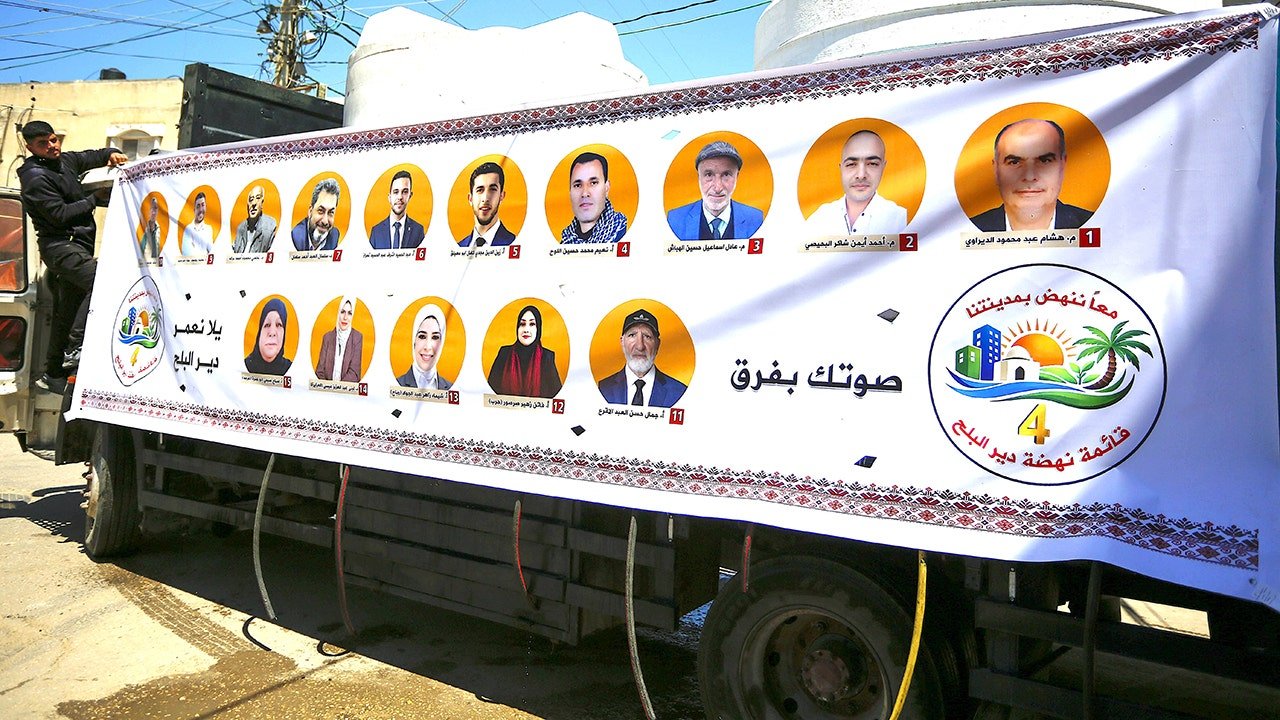
Election campaign banners showing candidates for the upcoming municipal elections hang on a building in Deir el-Balah in the central Gaza Strip on April 21, 2026. On April 25, voters will choose representatives in cities, towns and villages across the West Bank, with the ballot happening in part of the Gaza Strip in the first such election since the start of the war there in Oct. 2023. (Eyad Baba / AFP via Getty Images)
Four parties are contesting the election in Deir al-Balah. To be eligible, candidates were asked to accept the Palestine Liberation Organization and the terms of agreements it has previously made, including recognition of the State of Israel and endorsement of a two-state solution, according to reporting by the Center for Peace Communications.
However, many are concerned that one party, Deir al-Balah Unites Us, is affiliated with Hamas. Two of its candidates have been pictured with Hamas officials or police officers.
Ahmed Fouad Alkhatib, resident senior fellow at the Atlantic Council, posted on X that «holding elections in Gaza at this time is extremely reckless and irresponsible,» noting that «Gazans are being arrested, jailed, tortured, shot, and killed daily for social media posts and anything they say that’s perceived as being critical of Hamas. These elections should be halted and prevented from proceeding, for they are meddling with the transition process that the Board of Peace, [National Council for the Administration of Gaza], and the international community have planned for Gaza, with Hamas’s disarmament and relinquishment of power being the first necessary step.»
TRUMP SAYS ‘REAL CHANCE FOR GREATNESS’ AS NETANYAHU WHITE HOUSE MEETING LOOMS FOR GAZA TALKS
Disarmament of Hamas, a key demand within the second phase of President Donald Trump’s ceasefire agreement, has yet to be completed. Reports indicate that Hamas has increased its hold in Gaza as of March, continuing to tax locals, building education systems, and placing police throughout the territory they hold.
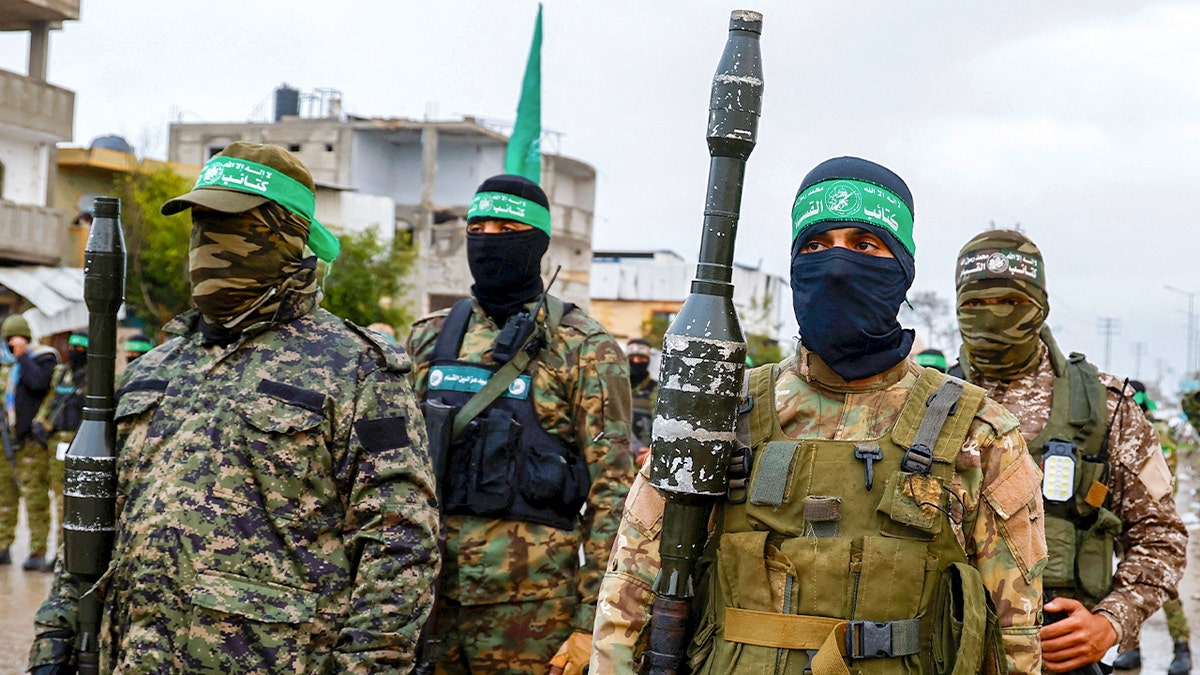
Hamas terrorists stand guard in Rafah in the southern Gaza Strip on Feb. 22, 2025, during the handover of hostages as part of a ceasefire and hostages-prisoners swap deal with Israel. (Hatem Khaled/Reuters)
Schanzer says that Hamas is unlikely to hand over its arms. If they were to do so, he said that they «will try to make distinctions between weapons,» possibly offering to give up heavy weapons like RPGs while maintaining a large arsenal of automatic weapons.
Hamas appears to have made a partial disarmament offer. The New York Times reported on April 19 that two Hamas officials said they would hand over thousands of weapons from their police force and other security institutions. The officials «did not provide a clear answer» when asked if weapons from Hamas’ so-called military wing would be included.
HAMAS FACES ‘LEGITIMACY CRISIS’ AS DESPERATE GAZANS FLOCK TO US-BACKED AID CENTERS
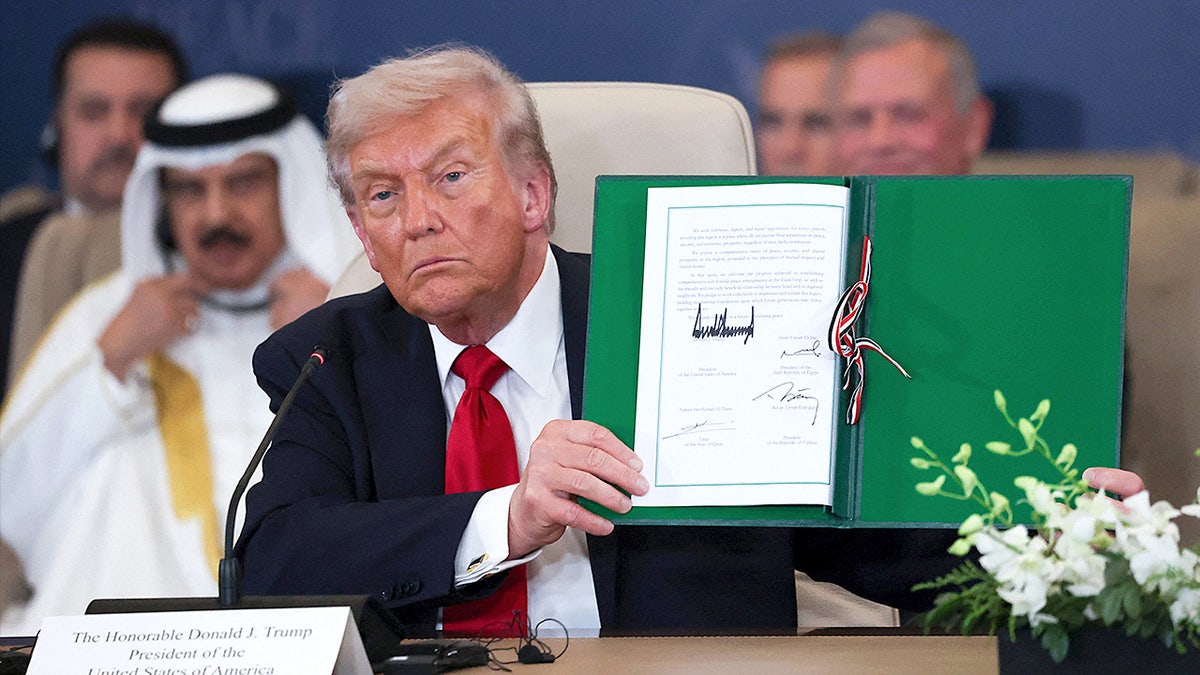
President Donald Trump holds up a signed agreement during a world leaders summit focused on ending the Gaza war in Sharm El-Sheikh, Egypt, on Oct. 13. (Suzanne Plunkett/Getty Images)
Schanzer pushed back on claims that Hamas’ political and military wings operate separately. «That is a fiction. The idea that they are separate in any way or that there is a firewall between them is asinine.» He said that this is «a distinction that has been made up by the West in order to be able to have political relations with Hamas, or to justify elections. It’s a mistake to buy into that fiction.»
Schanzer said weakening Iran could be key to minimizing Hamas’ influence. «The psychological impact of their top patron being defeated on the battlefield, I can’t overstate how important that event could be,» he said. «It would be a gut punch to Hamas.»
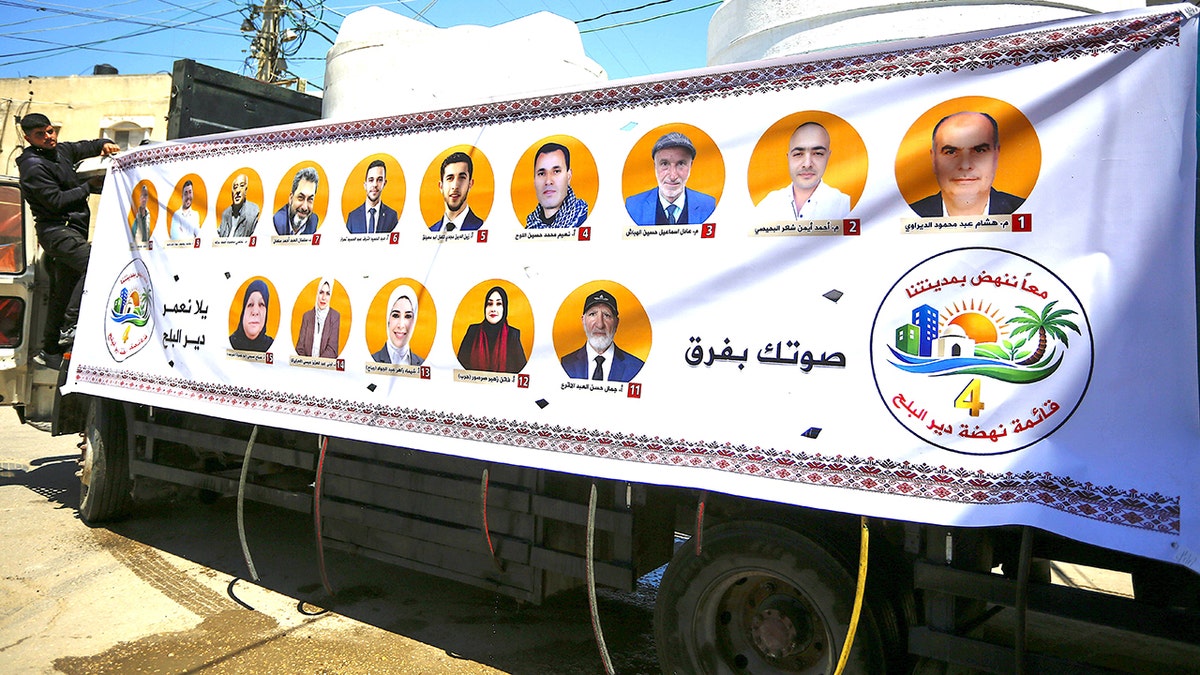
An election campaign starts in the city of Deir al-Balah, Gaza on April 12, 2026, as part of the local elections scheduled for April 25. While posters and works regarding the election process continue in the city, citizens follow the developments closely. (Mohammed Eslayeh/Anadolu via Getty Images)
CLICK HERE TO DOWNLOAD THE FOX NEWS APP
With Israel controlling about 53% of the Gaza Strip and Hamas the remaining 47%, Schanzer said «we could continue to see the erosion of Hamas control» amid the «slow and steady process of Israel winning on the ground.» He said patience, though, is necessary, adding that «the enemies of the United States and Israel and the West have a very different timeline. They want to wait out everybody because they know that we’d like to move on.»
The Trump administration did not respond to Fox News Digital’s questions about whether a partial disarmament would satisfy its ceasefire terms, or if it would take action to stall elections until there’s more stability in Gaza
hamas, war with iran, israel, terrorism











INTERNACIONAL
German officials want to know why Berlin attack suspect was free despite alleged ISIS support

NEWYou can now listen to Fox News articles!
In the wake of the recent violent attack in Berlin near a pride festival, German officials are left to contend with the questions surrounding why suspect Abdul Ballout was free to perpetrate the assault despite his recent conviction related to supporting ISIS.
German Chancellor Friedrich Merz on Monday wished to know how the violent assault could have been prevented.
«We must do everything to protect people in Germany as best possible from such criminals, from dangerous people who for whatever reason can’t be taken into custody,» Merz said, according to The Associated Press.
German Interior Minister Alexander Dobrindt told public broadcaster ZDF during an interview that in light of the 21-year=old suspect’s conviction and record of backing the Islamic State, it did not make sense that the man was roaming free.
«You can assume that it certainly would have made sense to put this person in custody,» he noted, according to the report.
BERLIN PRIDE ATTACK SUSPECT KILLED IN POLICE CONFRONTATION: AP
A suspect with alleged ties to Germany’s Islamist scene is on the run after authorities say he plowed a van into a crowd near Berlin’s Pride festival before attacking others with a machete in what officials believe was an Islamic terror attack that left one person dead and at least 29 others injured. (AP Photo/Markus Schreiber; Berlin Police)
Berlin Mayor Kai Wegner told regional broadcaster RBB in an interview that while he did not wish to question the independence of the court system, when it comes to the matter of this attack, «words fail me.»
The suspect in the recent Berlin attack went to Lebanon last year with the goal of traveling to Syria to join ISIS, according to an English translation of a joint release from the Berlin Public Prosecutor’s Office and the Berlin Court of Appeal, which noted that the man «was born and raised in Berlin and is a German citizen.»
The attack on Saturday night left one dead and 29 injured, according to the AP, which reported that 21-year-old Abdul Ballout is suspected of plowing a van into people near a pride festival prior to apparently slashing people with a machete in what authorities think was a terror attack.
The suspect was killed by authorities on Sunday.
«According to current information, the 21-year-old allegedly attacked the special forces officers with a bladed weapon, whereupon they used their firearms,» an English translation of a July 26 joint press release from the Berlin Police and public prosecutor’s office noted. «The man suffered fatal injuries and died at the scene. The investigation is ongoing.»
ISIS POISED TO EXPLOIT HISTORIC US IRAQ EXIT, TERROR GROUP ‘ACTIVELY WAITING IN THE GAPS,’ EXPERT WARNS

Police officers stand near a vehicle crashed into a tree after driving into a crowd near Berlin’s annual Pride event, in Berlin, Germany, Sunday, July 26, 2026. (AP Photo/Markus Schreiber)
Earlier this year, a Berlin juvenile court convicted Ballout of preparing a serious act of violence endangering the state, and publishing propaganda supporting ISIS.
A news release from the Berlin Public Prosecutor’s Office and Berlin Court of Appeal said the court sentenced Ballout to one year and 10 months in youth custody before prosecutors appealed.
Officials have stated that the man was granted a suspended sentence, but the news release states: «The decision regarding the suspension of this sentence on probation was deferred for six months pursuant to Section 57 in conjunction with Section 61 Paragraph 1 of the Juvenile Courts Act. The court also imposed various conditions on Abdul B., including placing him under the supervision of a probation officer. The court lifted the existing arrest warrant, as pretrial detention primarily serves to secure the criminal proceedings and does not constitute a prejudicial punishment.»
FBI ARRESTS 3 MEN WHO ALLEGEDLY PLEDGED ALLEGIANCE TO ISIS, FUNDED DRONE ATTACKS TARGETING US TROOPS OVERSEAS
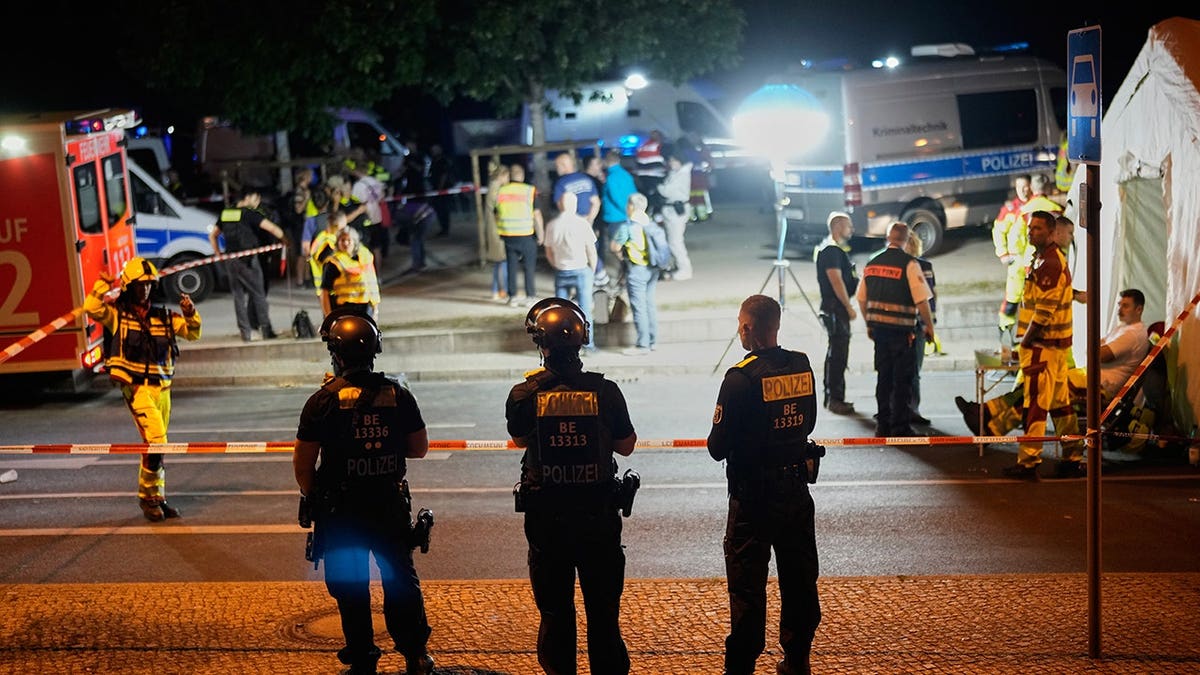
Emergency personnel and police gather in Berlin, early Sunday, July 26, 2026, following the cancellation of Christopher Street Day festivities. (AP Photo/Ebrahim Noroozi)
CLICK HERE TO DOWNLOAD THE FOX NEWS APP
The news release noted that the case was not over, given that the appeals process had yet to play out.
«This conviction is not yet legally binding, as the Berlin Public Prosecutor’s Office has filed an appeal. The Public Prosecutor’s Office had requested a longer, non-probationary sentence for a juvenile and the continuation of the arrest warrant,» the release noted.
world, terrorism, germany, crime world, isis
INTERNACIONAL
San Salvador Centro prevé 1.2 millones de visitantes en Sívarland durante las Fiestas Agostinas de 2026

Más de 1.2 millones de visitantes se esperan en Sívarland durante las Fiestas Agostinas 2026, según anunció el alcalde de San Salvador Centro, Mario Durán, en conferencia de prensa.
Las celebraciones se llevarán a cabo del 1 al 6 de agosto en San Salvador, con el parque de diversiones como centro de las actividades culturales, artísticas y recreativas de la temporada. La organización prevé una afluencia récord de salvadoreños y turistas, así como estrictas medidas de orden, seguridad y ambiente familiar para todos los asistentes.
Como cada año, el evento rinde homenaje al Divino Salvador del Mundo y suma programación en distintos puntos de la ciudad, con la participación de artistas nacionales e internacionales, innovaciones logísticas y la habilitación de piscinas municipales gratuitas hasta el 9 de agosto. La información completa sobre actividades, mapas y horarios está disponible en sivarland.com.
Sívarland 2026: parque de diversiones y expectativa de récord
La apertura de Sívarland, ubicada en el complejo del Estadio Cuscatlán, está programada para el sábado 1 de agosto a las 3:00 pm, después del tradicional desfile del correo.
El alcalde de San Salvador Centro, Mario Durán, afirmó: “Nos estamos preparando para superar los 1.2 millones de visitantes y demostrar nuevamente que Sívarland es el parque de diversiones más grande y moderno de El Salvador y que las Fiestas Agostinas son los festejos más esperados del país”.
El parque ofrecerá juegos mecánicos, espectáculos musicales, presentaciones de DJ y una zona exclusiva para Uber. Las actividades se extenderán desde el mediodía hasta la medianoche, del 2 al 6 de agosto. El año pasado, la asistencia superó el millón de personas y se busca mantener esa cifra.

En el recinto se ofrecerán comidas típicas, artesanías y una variedad de puestos de venta, bajo controles de higiene implementados en conjunto con el Ministerio de Salud y la alcaldía.
El 1 de agosto a las 5:00 am inicia la alborada al Divino Salvador del Mundo en la Plaza Salvador del Mundo, con un ensamble de 60 mariachis y la repartición de atol shuco. El desfile del correo se desarrollará a partir de las 9:00 am, avanzando por el Paseo General Escalón y la Alameda Roosevelt hasta llegar al Parque Cuscatlán.
Durante la tarde, Sívarland abrirá sus puertas con presentaciones musicales, espectáculos infantiles y la actuación de agrupaciones como Grupo Melao, Julissa Ventura y la Sonora Maya. Las actividades artísticas y recreativas continuarán todos los días con conciertos, mezclas de DJ, juegos y presentaciones para distintos públicos.

El domingo 2 de agosto, la tarde infantil contará con el show de Cocolito, un concierto de Los Redd y un cierre bailable a cargo de Marito Rivera y su Grupo Bravo. El lunes 3 de agosto, a las 9:00 am, iniciará el Desfile del Comercio desde la Plaza Salvador del Mundo. Por la tarde, Sívarland tendrá música electrónica y el concierto de La Sonora Dinamita.
El martes 4 de agosto, la programación continuará con la Orquesta Salzón y la Orquesta Platinum. El miércoles 5 de agosto se dedicará al entretenimiento infantil, sets de DJ en vivo y conciertos de Faro y su banda junto a La Auténtica Banda LL.
El jueves 6 de agosto, el cierre incluirá ambiente familiar, música electrónica, la presentación de Los Corsarios y el concierto de gala de la Orquesta de Los Hermanos Flores.
El Centro Histórico de San Salvador albergará eventos como el concierto de la Orquesta de San Salvador el sábado 1 de agosto en la Plaza Gerardo Barrios, a las 6:00 pm. El domingo 2 de agosto, el Mercado Hula Hula será sede del Gran Social de Salsa, con la presentación especial de Salsalvador All Stars, una clase magistral con la participación de más de 10 academias nacionales y amenización de DJs.
El lunes 3 de agosto, desde las 3:00 pm, las plazas principales tendrán la primera jornada del Festival Tradiciones, con juegos típicos (trompo, yoyo, capirucho y saltacuerdas), talleres de dibujo, pintura y elaboración de piscuchas, el taller de pintura Fernando Llort, presentaciones de la marimba de San Salvador, ballet folclórico de Casa Maya, la Banda del Bicentenario y un concierto de la Big Band de la Orquesta Sinfónica de San Salvador Centro.

El martes 4 de agosto se llevará a cabo el concurso SívarBand 2026. Las actividades iniciarán a la 1:00 pm con el desfile de las 16 bandas participantes, desde la Plaza Simón Bolívar, pasando por la calle Rubén Darío, hasta la Plaza Gerardo Barrios. La municipalidad entregará $17,000 en premios, distribuidos en ocho categorías y un reconocimiento especial.
El miércoles 5 de agosto, el Parque Cuscatlán tendrá la segunda jornada del Festival Tradiciones desde las 2:00 pm, con talleres creativos, juegos tradicionales y una variedad de platillos típicos preparados por emprendedores locales, además de presentaciones de la marimba de San Salvador, danza folclórica de Casa Maya, música andina, intervención de Los Historiantes de San Antonio Abad y muestras de talento cultural.
La Alcaldía de San Salvador Centro desplegará un operativo de seguridad, limpieza y atención de emergencias en todos los espacios de actividades. El Cuerpo de Agentes Metropolitanos (CAM) instalará una sala de monitoreo con 100 cámaras de videovigilancia conectadas al sistema Sívar Seguro. Mil agentes municipales, policías y efectivos militares estarán en patrullaje constante, y se habilitará el número 2204-6800 para denuncias.
Habrá una zona Uber exclusiva sobre la calle Los Viveros, que facilitará el acceso y la salida de los visitantes. Este modelo, implementado por segundo año consecutivo, fue destacado por la empresa Uber como pionero para eventos masivos en Centroamérica, el Caribe y la región andina.

En el ámbito de limpieza, cerca de 600 empleados de Desechos Sólidos trabajarán de forma permanente en todos los puntos de actividad. Más de 100 recipientes estarán distribuidos para los residuos. La campaña “Los buenos salvadoreños no ensucian” busca la colaboración ciudadana en el cuidado del espacio público.
El dispositivo incluye 500 puestos de venta, áreas de sanitarios, puestos de primeros auxilios con ambulancias y medidas de higiene supervisadas por el Ministerio de Salud.
Del 1 al 9 de agosto, la Alcaldía de San Salvador Centro habilitará los complejos municipales para que las familias puedan disfrutar de piscinas gratuitas en horario de 8:00 am a 4:00 pm. La medida contempla la apertura de todos los complejos municipales bajo administración de la alcaldía, permitiendo el ingreso sin costo a niños, jóvenes y adultos. El servicio estará disponible durante nueve días consecutivos, cubriendo tanto el periodo principal de las Fiestas Agostinas como los días inmediatamente posteriores.
corresponsal:Desde San Salvador, El Salvador
NEWYou can now listen to Fox News articles!
President Donald Trump doesn’t want the Senate to leave town with his flagship election security measure still on the line.
It’s less than two weeks until the upper chamber makes a jailbreak from Washington, D.C., and the schedule is already jam-packed with key items, from blockbuster confirmations to a long-awaited sanctions package targeting Russia.
But only one legislative priority matters to Trump: the SAVE America Act. And despite the political reality in the Senate, the president wants the bill passed by any means necessary.
TRUMP’S SAVE AMERICA ACT STALLS AS MCCONNELL’S ABSENCE COMPLICATES SENATE PATH
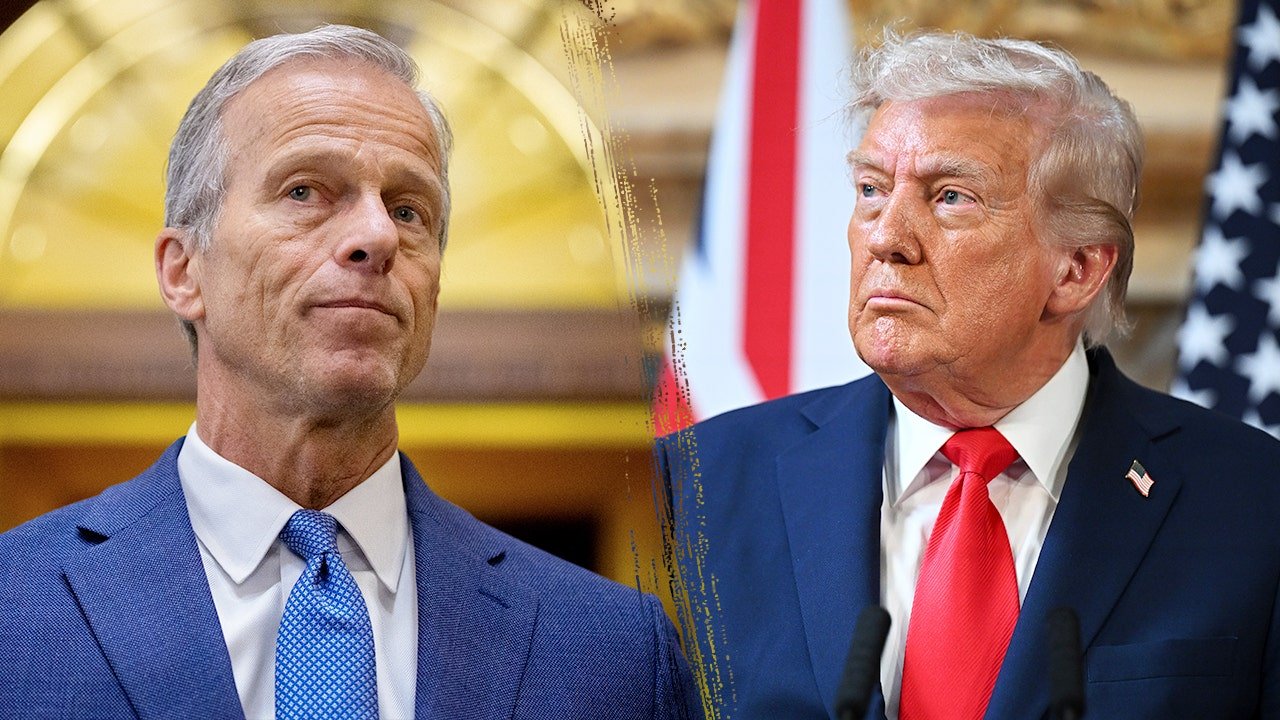
Congressional Republicans, President Donald Trump and the GOP base want voter ID turned into law, but one barrier stands in the way: the political reality of the Senate. (Leon Neal/Getty Images; Andrew Harnik/Getty Images)
«John Thune should not allow the United States Senate to ‘leave town’ until it passes The Save America Act or, far better still, TERMINATES THE FILIBUSTER, where Republicans can then quickly pass everything they ever dreamed of, including a full and deep-throated SAVE AMERICA ACT, the Budget, and the ever looming Debt Ceiling disaster, 1929,» Trump declared on Truth Social.
«The Dumocrats will do it on day one and can’t believe how lucky they got with this Senate leadership,» he continued. «Remember, stupidity always brings LOSING & DEATH!»
GOP RIFT GROWS AS THUNE HITS BRAKES ON TRUMP’S ELECTION BILL TO AVERT SHUTDOWN
While Congress’ annual break during August is often viewed outside the Beltway as vacation time for lawmakers, during a midterm election year, it allows for crucial hours on the road for incumbents to have face time with voters and make their pitch to keep their seat.
Republicans are hungry to campaign and sell their agenda, particularly last year’s tax cut package, Trump’s «one big, beautiful bill,» but are facing headwinds from the war in Iran and affordability issues.
And there are three races on the 2026 map that are troubling for the Senate GOP in its quest to maintain its majority: Maine, Alaska and Ohio.
Still, Trump has warned that unless the Senate passes the SAVE America Act, they will suffer the consequences at the ballot box, and he has routinely called for the elimination of the filibuster for many of his priorities, but neither has the votes to happen in the upper chamber.
TRUMP’S PATIENCE ‘RUNNING OUT’ AS THUNE FIRES BACK OVER STALLED ELECTION SECURITY BILL
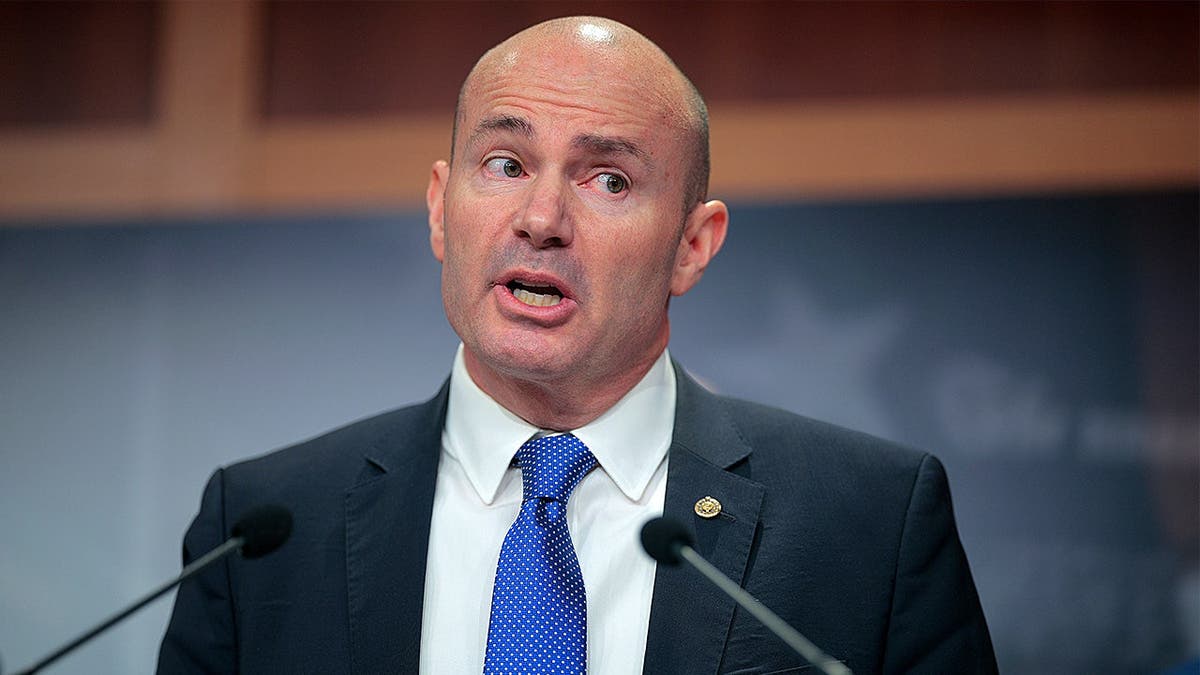
Sen. Mike Lee, R-Utah, spoke during a news conference about the SAVE America Act at the U.S. Capitol on March 19, 2026, in Washington, D.C. (Chip Somodevilla/Getty Images)
It comes as tensions between the White House and Senate Majority Leader John Thune, R-S.D., are on the rise.
Last week, White House Press Secretary Karoline Leavitt warned that Trump’s patience was «running out» with Thune over the legislation, which prompted the top Senate Republican to fire back that the White House should focus its energy on Democrats blocking the SAVE America Act and work the phones to get Republicans to a «yes» vote.
Trump is also not alone in his push for Thune to cancel the upcoming break.
Sens. Mike Lee, R-Utah, Rick Scott, R-Fla., and Ashley Moody, R-Fla., have all announced their intent online to object to Thune calling for recess toward the end of this work period.
«I hereby object to any effort to put the Senate into recess in August — at least until such time as the Senate has passed the SAVE America Act — and hereby request a roll call vote,» Lee said on X.
«Do not assume you have my consent,» he continued. «You do not.»
Typically, recess or state work periods are a consent exercise in the Senate, meaning that all lawmakers agree to skip town and head back to their states to do work on the ground. But a single senator can object on the Senate floor and force a vote to decide whether the upper chamber stays or goes.
Trump and the GOP trio’s demands come at an inflection point in the Senate.
Thune has prioritized averting a government shutdown and is encouraging ongoing negotiations between Republicans and Democrats to hammer out a deal before the break begins. He’s threatened to hold the House-passed budget resolution that would, among other things, set up a rough framework to pass the SAVE America Act through budget reconciliation.
All that comes after he and other Republicans have made clear the political reality that SAVE America Act, as written, does not have the votes to pass in the upper chamber, neither from Democrats nor the GOP.
CLICK HERE TO DOWNLOAD THE FOX NEWS APP
And whether the legislation, or a version of it, can survive the reconciliation process remains to be seen, given that, as written, the SAVE America Act is primarily policy and doesn’t have a budgetary impact — a key requirement of the party line process.
«It’s still likely to be a 60-vote exercise, even if it’s done with a budget resolution,» Thune told Fox News Digital. «Unless it’s done with, you know, structured to allow grants to states that’s incentive-based, and principally budgetary, not policy.»
politics, donald trump, john thune, senate elections, congress

¿Tienes juegos de Ubisoft en XBOX? Pues mira tu PC, porque quizás has recibido muchos regalos. Microsoft anuncia una nueva ventaja que alegrará a más de uno

Reelecciones indefinidas: Kicillof las respaldó y el peronismo busca un camino para que intendentes vayan por otro mandato

Más crisis en Italia: Paolo Maldini, muy cerca de renunciar a la dirección de selecciones

Máximo Kirchner propuso limitar el endeudamiento con el FMI y renegociar parte del préstamo de 2018

Tensión y reproches en la noche de nominados en Gran Hermano: Mariela y Cola marcaron el clima de la casa

Famosa marca de cereales y snacks despide empleados y sufre el derrumbe del consumo alimenticio

Senado: Bullrich y Sturzenegger cierran filas para tratar de avanzar con la extranjerización de tierras

La mayor estafa ganadera de Uruguay dejó un rojo de USD 272 millones: Justicia confirmó cifras de Conexión Ganadera

Mientras espera la vuelta de Macri, el PRO ya activó contactos con LLA: cómo sería la estrategia electoral en la Provincia

Río Negro: Alberto Weretilneck anunció un proyecto para eximir de Ingresos Brutos a los turistas extranjeros

 ECONOMIA3 días ago
Vocero de Milei dijo que un dólar a $1.800 es «posible» y la City alerta por fin de la paz cambiaria
- POLITICA3 días ago
Convivencia pacífica o tensión administrada: el PRO define cómo pararse frente al gobierno de Milei rumbo a 2027
- POLITICA2 días ago
Cuentapropismo emocional en lo profundo del conurbano