INTERNACIONAL
Hezbollah ‘human shield’ strategy behind Lebanon ambush, bomb detonation – Macron drawn in

Lebanon, Israel agree to 10-day ceasefire as Trump continues Iran talks
The Strait of Hormuz reopens, a crucial development in ongoing Iran talks. Iran’s Foreign Minister Seyed Abbas Araghchi confirms passage is open, but President Donald Trump’s optimism for a peace deal is met with Iranian contradiction. Domestically, severe storms impact 50 million Americans while Trump rallies young voters, touting successes and falling gas prices, averaging $4.07 per gallon.
NEWYou can now listen to Fox News articles!
The 10-day Israel-Lebanon ceasefire was tested April 18 after an ambush in southern Lebanon killed a French soldier, highlighting Hezbollah’s alleged «human shield» tactics and drawing another nation into the conflict, a defense analyst said.
An IDF reservist was also killed, and nine soldiers were wounded—one seriously—on the same day, when an engineering vehicle drove over a bomb planted by Hezbollah in southern Lebanon, the military said.
Kobi Michael, a senior researcher at the INSS and the Misgav Institute in Tel Aviv, said the Iranian-backed group had spent years preparing the region for Israel’s arrival, relying on its entrenched, signature terror strategy—even after the latest ceasefire and the IDF’s re-entry into southern Lebanon in March.
«This is the rationale of human shields, using the population and sensitive civilian facilities in order to store weapons and use places for terror and operational purposes,» Michael told Fox News Digital.
LAWMAKERS QUESTION WHETHER US MOVING FAST ENOUGH TO CAPITALIZE ON HEZBOLLAH’S WEAKENED STATE
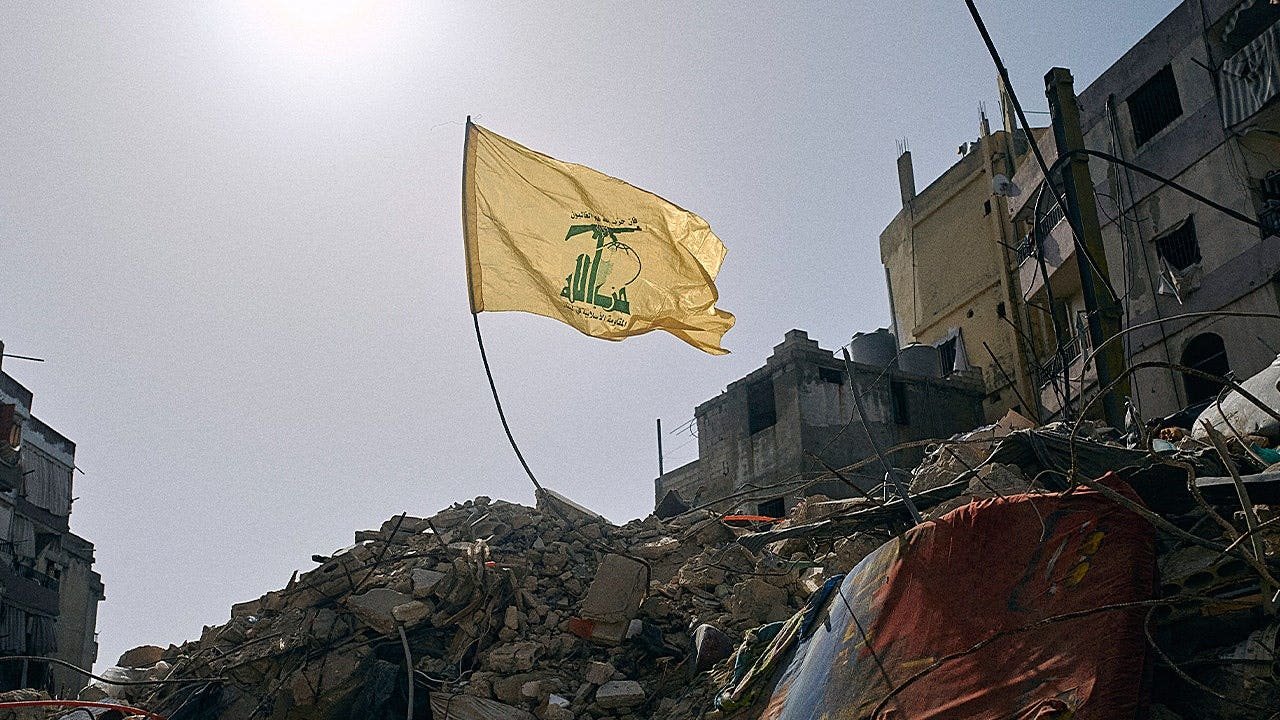
A displaced resident carrying flag of Hezbollah, travels through the Qasmieh area on the way back to her home in the southern Lebanon (Ibrahim AMRO / AFP via Getty Images)
«Hezbollah worked for decades to build an entire facility, part of it underground, below private residential buildings and houses, preparing themselves for a surprise attack on Israel,» Michael added.
«They were well-prepared to defend themselves once the IDF entered and tried to fight them,» he said.
France’s foreign minister said the soldier was killed in a close-range ambush and struck by a direct shot.
The minister said the attack happened during a patrol clearing explosives near Ghandouriyeh, when troops came under small-arms fire from «non-state actors,» a term often used to refer to groups like Hezbollah.
«They operate in the Shiite villages and among the Shiite population who are supported by Hezbollah,» Michael said, before describing how «most people in these southern villages are connected to Hezbollah» in one way or another and are «heavily dependent on the terror organization.»
IRAN THREATENS TO END CEASEFIRE OVER HEZBOLLAH’S EXCLUSION FROM TRUCE DEAL
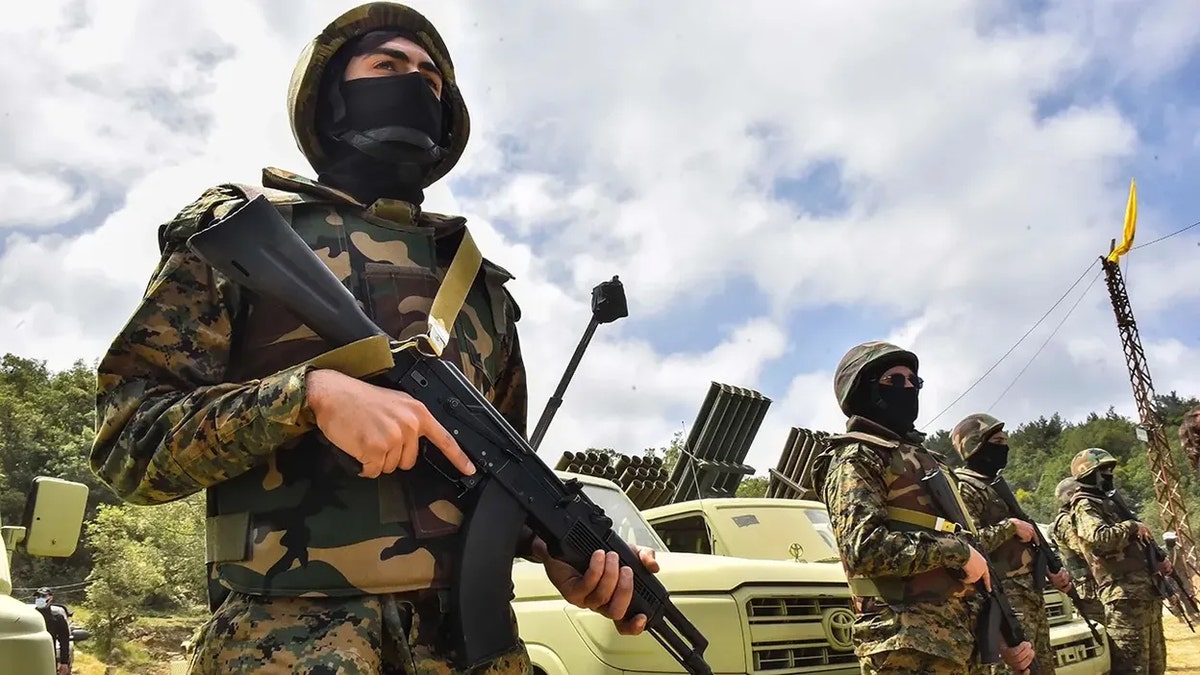
Hezbollah terrorists are shown in this image. A «terrorist network» funded and operated by Hezbollah and Iran has been foiled in the United Arab Emirates, according to a report. (Fadel Itani/NurPhoto via Getty Images)
«All community life and infrastructure in these Shiite villages and towns are an effective cover for terror purposes and Hezbollah activities,» he added.
French President Emmanuel Macron confirmed the soldier’s death.
«Sgt. Maj. Florian Montorio of the 17th Parachute Engineer Regiment in Montauban was killed this morning in southern Lebanon during an attack against UNIFIL (United Nations Interim Force in Lebanon),» Macron said. «Three of his comrades were wounded and evacuated.»
«All indications suggest that Hezbollah is responsible for this attack. France demands that the Lebanese authorities immediately arrest those responsible and take responsibility alongside UNIFIL,» Macron added.
Michael, however, claimed Macron’s response was, in some ways, inconsistent, as the president has been drawn into the war.
At first, France had called Israeli strikes on Lebanon on April 8 «intolerable» and opposed a ground offensive.
ONE AMERICAN’S DETENTION IN LEBANON EXPOSED A TRUTH THAT IS NOW DEVASTATING AN ENTIRE COUNTRY
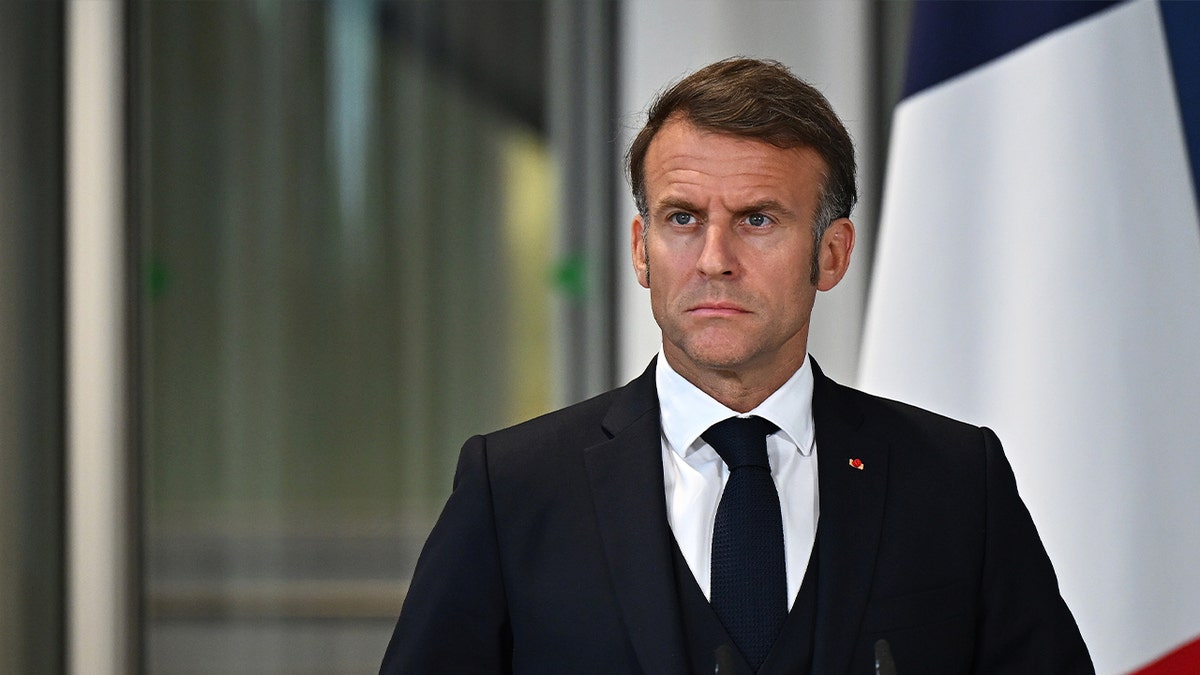
French President Emmanuel Macron hold a press conference on July 10, 2025 in London, England. (Leon Neal)
Israel’s ambassador to Washington, Yechiel Leiter, also expressed his wish to keep Macron out of ceasefire negotiations, highlighting tensions surrounding his policy.
«When it comes to Hezbollah breaches against Israel, the French demand Israel restrain and contain, but when it comes to one of their soldiers, they are furious at Hezbollah,» Michael said.
«That said, Hezbollah has breached the ceasefire agreement since its first moment,» Michael added.
Hezbollah has since denied the ambush, with the soldier’s death still underscoring the volatility of the 10-day ceasefire, which came into effect April 16.
UN Secretary-General Antonio Guterres condemned the attack in a statement and said an initial assessment by the UN Interim Force in Lebanon found it was carried out by Hezbollah.
According to the U.S. State Department, under the terms of the 2026 ceasefire, brought about by negotiations between Israel and Lebanon, Israel retains the right to act in self-defense against threats, while Lebanon must take steps to prevent attacks by Hezbollah and other armed groups.
ISRAELI STRIKE ON HEZBOLLAH MORE DEVASTATING THAN 2024 PAGER ATTACK, IDF SAYS
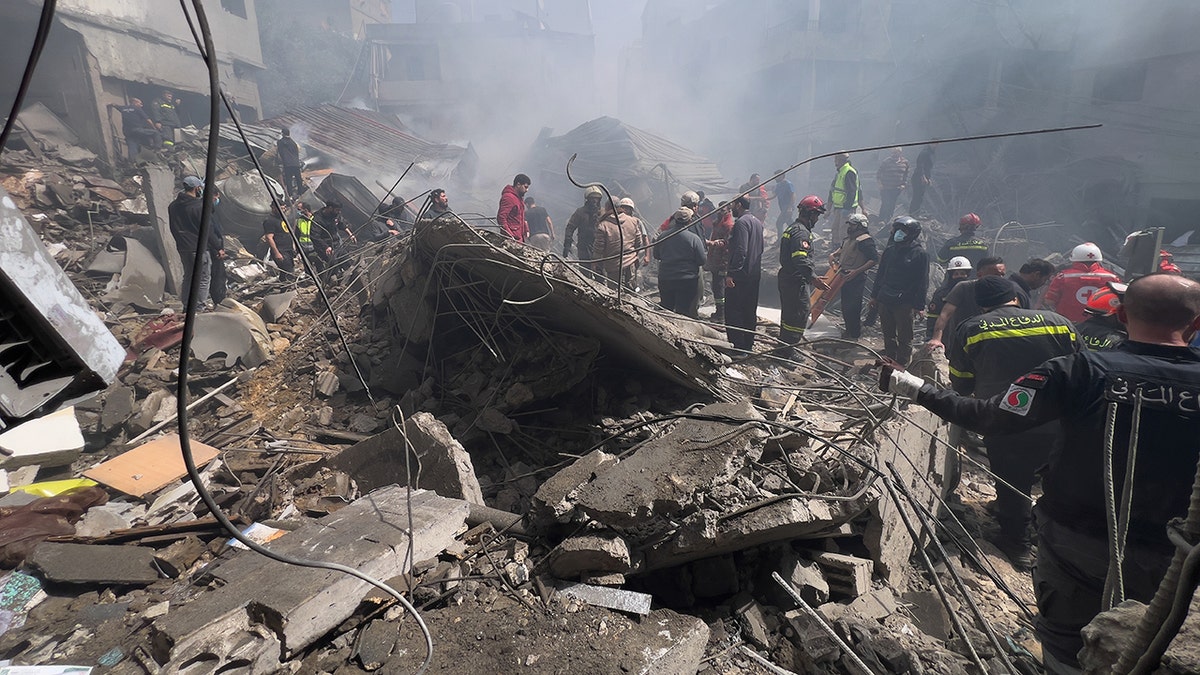
Rescue workers search for victims at the site of an Israeli airstrike that hit a crowded neighbourhood south of Beirut, Lebanon, Sunday, April 5, 2026. (Hussein Malla/AP Photo)
Lebanon’s security forces are solely responsible for national security, and both sides have asked the U.S. to continue facilitating talks to resolve remaining issues.
The Israel Defense Forces (IDF) also said it carried out strikes in response to what it described as «ceasefire violations by Hezbollah.»
Michael also emphasized Iran’s continued influence as Hezbollah operates in southern Lebanon as an «unrestrained political force.»
«Iran’s Islamic Revolutionary Guard Corps (IRGC) is still in charge of Hezbollah,» he added, before saying that the Lebanese army is also «unwilling to fight or confront Hezbollah.»
CLICK HERE TO DOWNLOAD THE FOX NEWS APP
«First, because of the Shiite segment of this army that identifies with Hezbollah, and secondly, because it is afraid that confronting Hezbollah will lead to a civil war, a trauma they still have since the first one in 1975, lasting 15 years — until 1990.»
Michael added: «The Shiite militia, also controlled by Iran, is not subordinate to state authority, enabling Hezbollah to operate as an unrestrained political force within the Lebanese political system.»
middle east, lebanon, counter terrorism, iran, israel











INTERNACIONAL
Johnson’s strategy to bypass Democrats’ SAVE Act blockade survives key vote, handing GOP big win

President Trump urges lawmakers to pass the SAVE America Act
President Trump used his nationwide address to demand Congress pass the Save America Act, believing it will tighten election security. Chad Pergram, Chief Congressional Correspondent, reports on the legislation’s challenging path forward. While most House Republicans are on board, some GOP Senators remain skeptical, highlighting concerns about its implementation and potential impact on election integrity.
NEWYou can now listen to Fox News articles!
Speaker Mike Johnson’s latest bid to skirt Democrats’ opposition to an election integrity bill backed by President Donald Trump survived a key hurdle on Monday evening.
The Safeguarding American Voter Eligibility (SAVE) America Act has faced significant headwinds in Congress despite having Trump’s full-throated support. While it passed the House, the legislation has struggled in the Senate where at least several Democratic votes are needed to break a filibuster and advance to final passage.
But the new plan by Johnson, R-La., which would allow key parts of the bill to skirt Democrats entirely, is one step closer to getting a House-wide vote sometime this week.
TRUMP INTERVENES AS HOUSE GOP REVOLT PUTS SAVE AMERICA ACT AT CENTER OF SPENDING SHOWDOWN
Speaker of the House Mike Johnson, R-La., and House Minority Leader Hakeem Jeffries, D-N.Y., attend the U.S. Holocaust Memorial Museum’s National Commemoration of the Days of Remembrance ceremony in Emancipation Hall on Tuesday, April 14, 2026. (Tom Williams/CQ-Roll Call, Inc. via Getty Images)
Republicans would erase the need for any Democratic buy-in by putting key elements of the SAVE America Act into a larger budget reconciliation bill. The reconciliation process allows the party in power to pass sweeping fiscal policy reforms without input from their opposition by lowering the Senate’s threshold for passage to line up with the House’s simple majority requirement.
But there are strict guidelines for what can be in a reconciliation bill. Such legislation must deal with yearly federal spending and revenues, meaning issues that do not directly affect fiscal policy are generally excluded.
House Republicans are aiming to use this reconciliation bill to fund states’ election integrity efforts, replenish military funding amid the U.S. war with Iran, and dole out aid to American farmers.
GOP’S $95B DEFENSE PACKAGE SURVIVES CRITICAL HURDLE AMID FISCAL HAWK REVOLT
In total, the legislation would set the stage for $95 billion in new federal spending across the next 10 years.
The first chamber-wide step in the reconciliation process is to pass a framework that directs the relevant committees to then craft details dealing with their allocated budgets. Those details are then put back into a single sweeping bill that must pass the House and Senate before getting to Trump’s desk for his signature.
Passing the House Rules Committee means the bill will see a chamber-wide test vote that, if adopted, will set the stage for lawmakers to debate the bill before a final vote.
GOP CIVIL WAR ERUPTS OVER TRUMP’S LATEST AGENDA PUSH AS KEY REPUBLICANS THREATEN TO SINK MEGABILL
That vote is expected to occur Tuesday afternoon, with the final vote taking place the following day at 3:30 p.m., according to a preliminary schedule obtained by Fox News Digital.
Trump urged Republicans to advance the bill earlier Monday, arguing it would «get AS MUCH of THE SAVE AMERICA ACT as possible in a Budget Bill, along with aid to our incredible Farmers, and funding for our Military.»
Democrats, meanwhile, have accused Republicans of trying to unfairly sway elections with their SAVE America Act push.
«This is a phony issue that Donald Trump is creating. What’s amazing to me is that Donald Trump had the nerve to say to the Speaker of the House, who apparently didn’t object, that the most important thing that Republicans should focus on is voter suppression legislation, and that housing doesn’t matter, healthcare doesn’t matter, grocery bills don’t matter,» House Minority Leader Hakeem Jeffries, D-N.Y., said earlier this year.
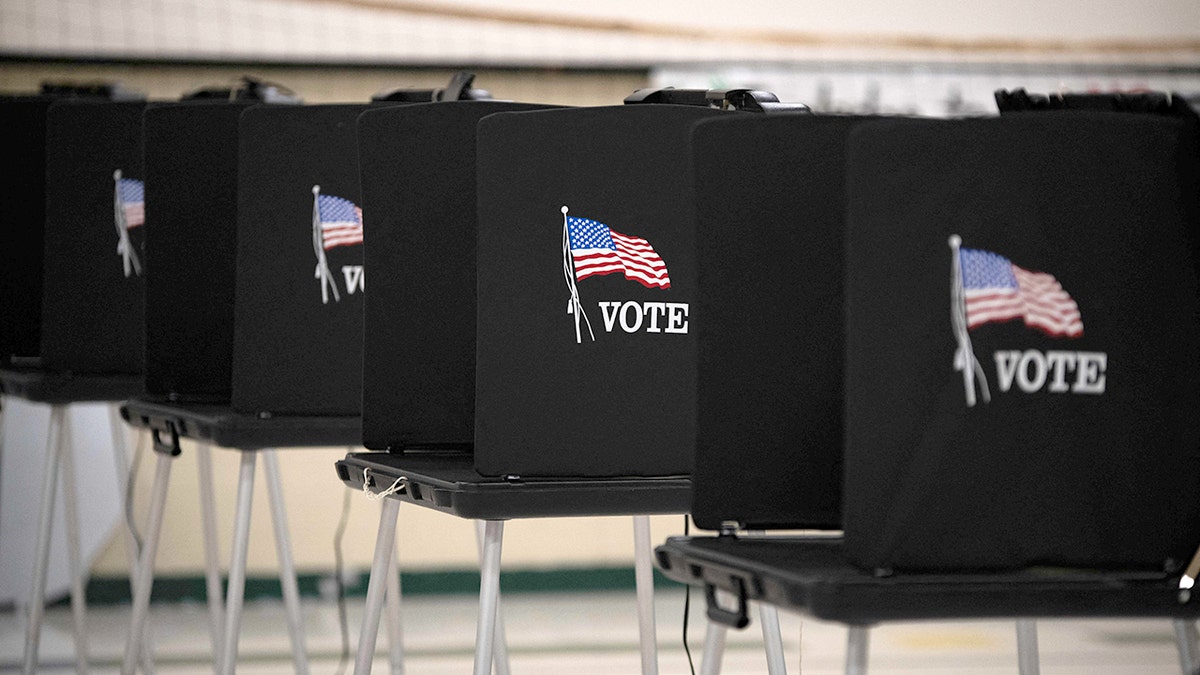
Voting booths are seen at Glass Elementary School’s polling station in Eagle Pass, Texas, on November 8, 2022. (MARK FELIX/AFP via Getty Images)
Senate Minority Leader Chuck Schumer, D-N.Y., has repeatedly referred to the legislation as «Jim Crow 2.0.»
CLICK HERE TO DOWNLOAD THE FOX NEWS APP
«While the specific policies may have changed since the days of the Jim Crow South, the goal of the SAVE Act is the same: disenfranchising American citizens and making it harder for eligible people to vote, particularly low income Americans and people of color,» he said in February.
Republicans argue that the SAVE America Act — which would implement federal voter ID requirements and a proof of citizenship mandate in the voter registration process — would make American elections safer and more secure.
elections, congress, voting, mike johnson, politics
INTERNACIONAL
Basado en hechos reales: cuando el dolor se transforma en un libro capaz de iluminar a sus lectores
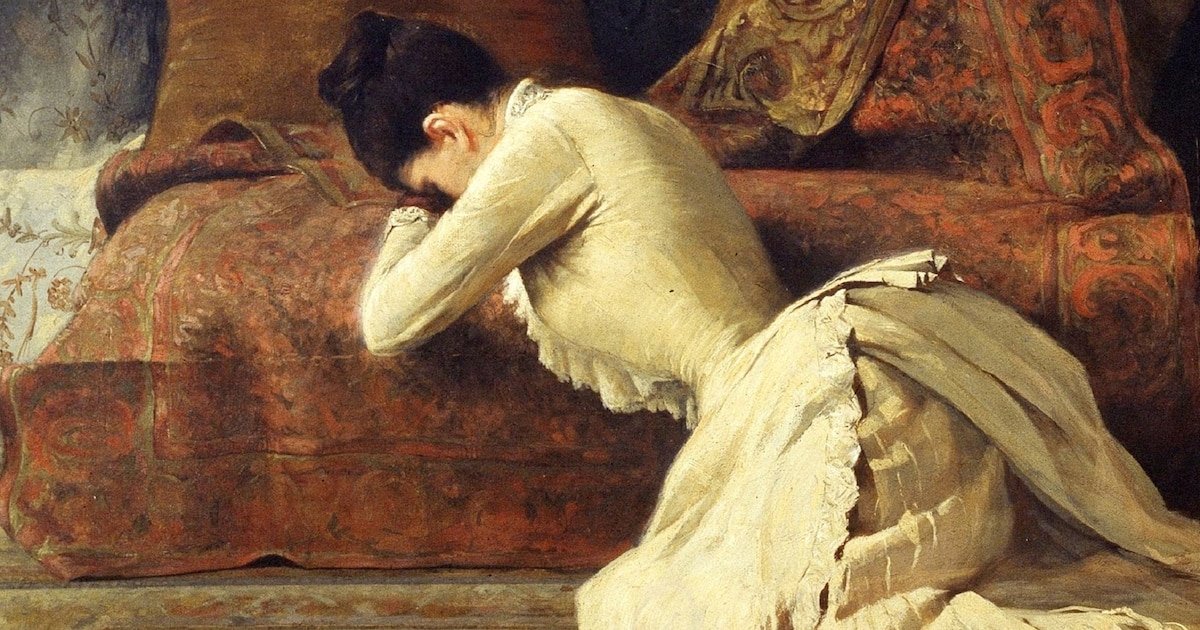
Las tres parten de una tragedia íntima. Y las tres de circunstancias distintas: un aborto clandestino, la supervivencia al Holocausto y la muerte de un ser amado. ¿El punto de contacto? la escritura como forma de procesar lo vivido y encontrar un sentido que trascienda lo personal.
En El acontecimiento, la francesa Annie Ernaux, Premio Nobel de Literatura, reconstruye el aborto clandestino al que debió someterse en la Francia de 1963, cuando interrumpir un embarazo era un delito. Y lo hace con una honestidad brutal. Ernaux no pretende despertar compasión ni hacer un alegato sentimental. Solo escribe y, de esa forma, rescata de la oscuridad una experiencia compartida por miles de mujeres, demostrando cómo la memoria individual puede convertirse en colectiva.
“Una tarde salí decidida a encontrar un médico que aceptara ayudarme a abortar. Ese ser tenía que existir en algún lugar. (…) Las chicas como yo estropeábamos el día a los médicos. Sin dinero y sin relaciones – de lo contrario no hubiéramos ido a parar a ciegas a su consulta- les obligábamos a recordar la ley que podía llevarles a la cárcel y prohibirles para siempre el ejercicio de su profesión. No se atrevían a decir la verdad: que no iban a arriesgarse a perderlo todo por la cara bonita de una señorita lo bastante estúpida como para haberse dejado preñar. (…) Y como de costumbre, era imposible determinar si el aborto estaba prohibido porque estaba mal, o si estaba mal porque estaba prohibido. Se juzgaba con relación a la ley, no se juzgaba la ley”.

Diferente es la travesía de la sicóloga húngara Edith Eger, con La bailarina de Auschwitz. Deportada al campo de concentración nazi, con solo 16 años, pudo sobrevivir al horror después de perder a sus padres y de convivir con el hambre, el miedo y la muerte.
“El doctor Menguele es un asesino refinado y amante de las bellas artes. Por las noches busca entre los barracones a presas con talento para que lo entretengan. Esta noche entra con su séquito de ayudantes y lanza una mirada sobre las recién llegadas. (…) Permanecemos inmóviles, con las espaldas pegadas a las literas de madera que rodean la habitación. Nos examina. (…) Los ojos de Menguele me miran fijamente. (…) ¡Baila! Me ordena. (…) Puedo oír su voz por encima de la música. Habla con el otro oficial acerca de cuáles de las cien chicas presentes serán las próximas en morir. Si doy un mal paso, si hago algo que le desagrade, podría ser yo”.
Décadas más tarde, convertida en psicóloga clínica, encontró en la escritura una manera de integrar el pasado y de transmitir una enseñanza que atraviesa todo el texto: incluso después del sufrimiento más extremo, siempre está la posibilidad de elegir cómo vivir con eso que nos pasó. Su relato evita el resentimiento y apuesta por la resiliencia como una forma de libertad interior. La historia real que escribe Eger, es un análisis exhaustivo del alma humana y de cómo recuperarla luego de un episodio traumático. Y es posible. Al menos así lo asegura.

“Estamos abrumados por la pérdida y creemos que nunca recuperaremos el sentido de identidad y de realización, que nunca mejoraremos. Pero, a pesar de las dificultades y las tragedias de nuestras vidas y, en realidad, gracias a ellas, todos tenemos la posibilidad de adoptar una perspectiva que nos transforme de víctimas en triunfadores. Podemos elegir asumir la responsabilidad de nuestras dificultades y nuestra curación. Podemos elegir ser libres.”
En línea con la pérdida y el duelo, en El año del pensamiento mágico, la periodista y escritora norteamericana Joan Didion enfrenta una tragedia diferente pero igualmente devastadora: la muerte repentina de su esposo, el escritor John Gregory Dunne. Con la lucidez que la caracteriza, Didion registra el desconcierto del duelo, “la vida cambia en un instante, Te sientas a cenar y la vida que conocías se acaba”, esa etapa en la que la razón convive con la idea irracional de que el ser querido pueda regresar.
“Todavía no estaba preparada para enfrentarme a los trajes camisas y chaquetas, pero sí pensé que podía encargarme de los zapatos que quedaban, lo cual era un principio. Me detuve en la puerta de la habitación. No pude dar el resto de los zapatos. Me quedé allí un momento plantada y entonces me di cuenta de por qué: si John quería volver, le iban a hacer falta zapatos. El ser consciente de esta idea no la erradicó en absoluto. (…) Cómo podía volver John si le sacaban los órganos, ¿cómo iba a volver si no tenía zapatos?”.

La obra es una exploración minuciosa de la pérdida, pero también un testimonio contundente sobre los mecanismos con los que la mente intenta sobrevivir cuando el mundo conocido se derrumba.
Final. Más allá de sus diferencias, las tres obras comparten una convicción: contar la verdad, incluso cuando duele, puede ser un acto profundamente transformador. Y que el medio para ese relato sea la literatura pone de relieve la función catalizadora que puede llegar a tener la acción de contarlo, pero por escrito.
Las tres autoras eligieron escribir desde la herida, convirtiéndose en protagonistas y narradoras de su propia tragedia. Esa condición les permitió construir textos reflexivos y de alto impacto emocional a la vez. En tiempos en que las fronteras entre ficción y realidad son cada vez más difusas, Ernaux, Eger y Didion demuestran que la experiencia propia puede alcanzar una dimensión universal. Sus relatos hablan de ellas, pero también de cualquier persona que haya atravesado la pérdida, la incertidumbre o el miedo. Porque, al final, estas lecturas celebran algo valioso: la capacidad humana para encontrar sentido en medio del dolor y transformar una vivencia límite en una obra capaz de acompañar, consolar e iluminar la vida de los lectores.
INTERNACIONAL
Sinaloa Cartel boss ‘El Mayo’ sentenced to life, ordered to pay $15B in drug trafficking profits

Mexico questions FBI role in Sinaloa Cartel abduction
Mexican President Claudia Sheinbaum strongly criticizes the U.S. government for its alleged involvement in the 2024 abduction of former Sinaloa Cartel boss ‘El Mayo’ Zambada. Sheinbaum explicitly states the U.S. lied about its participation, claiming a violation of Mexican sovereignty. This incident raises serious questions about diplomatic relations between the two nations and American intervention in Mexico.
NEWYou can now listen to Fox News articles!
Sinaloa Cartel co-founder Ismael «El Mayo» Zambada Garcia, of Mexico, was sentenced on Monday to life in a U.S. prison and ordered to forfeit $15 billion in drug trafficking profits, according to the U.S. Department of Justice.
U.S. District Judge Brian Cogan said that while he had no choice but to give a life sentence since the charges carried a mandatory term of life imprisonment, he believed it was the right punishment.
«The almost unimaginable amount of drugs attributable to him and the number of murders that we can document is enough to justify Congress’s decision to make this a mandatory life sentence,» the judge said.
He is one of the most high-profile Mexican drug traffickers to be sentenced by a U.S. judge since fellow Sinaloa leader Joaquin «El Chapo» Guzman was sentenced to life in prison in 2019.
ICE RENEWS HUNT FOR EL CHAPO’S ;AST TWO FUGITIVE SONS WITH MASSIVE REWARD
A photo of former Sinaloa Cartel leader Ismael «El Mayo» Zambada Garcia being detained by federal agents is displayed next to a Beechcraft King Air aircraft, used in July 2024 to transport Garcia and Joaquin Guzman Lopez, the son of notorious narco leader «El Chapo» Guzman, to the U.S., at the War Eagles Air Museum, in Santa Teresa, New Mexico. (REUTERS/Paul Ratje)
Garcia, 76, agreed to plead guilty in August 2025 to multiple charges, including racketeering conspiracy and continuing criminal enterprise, after the DOJ said it would not pursue the death penalty.
He was arrested in July 2024 alongside Joaquin Guzman Lopez, one of Guzman’s sons, after their plane landed in the U.S. Guzman Lopez has since pleaded guilty to multiple charges, including drug trafficking and a July 2024 kidnapping.
Joseph Nocella, a federal prosecutor, told reporters after Garcia’s sentencing that Guzman Lopez had admitted to kidnapping Garcia in an attempt to secure leniency and credit from U.S. law enforcement.

A reward sign for former Sinaloa Cartel leader Ismael «El Mayo» Zambada Garcia standing next to a Beechcraft King Air aircraft, used in July 2024 to transport Garcia and Joaquin Guzman Lopez, the son of notorious narco leader «El Chapo» Guzman, at the War Eagles Air Museum in Santa Teresa, New Mexico. (REUTERS/Paul Ratje)
«The United States made perfectly clear that we do not condone kidnapping and that he would receive no credit,» Nocella said.
Guzman Lopez has not yet been sentenced.
Garcia told the court during his sentencing on Monday that he took responsibility for the harm he had caused.
«No one wins in a war like this. To the next generation, I say, choose a different path,» he said.
US CHARGES MEXICAN GOVERNOR, TOP OFFICIALS IN CARTEL CONSPIRACY AS MEXICO FIRES BACK OVER PROOF
Cogan suggested that Garcia be placed in a facility where he would receive adequate medical care since he was suffering from several progressive health ailments.
«Ismael Zambada Garcia spent nearly four decades poisoning American communities to make billions of dollars in profit and ordering the murders of anyone who stood in his way. Today, that chapter closes for good,» Nocella said in a statement.
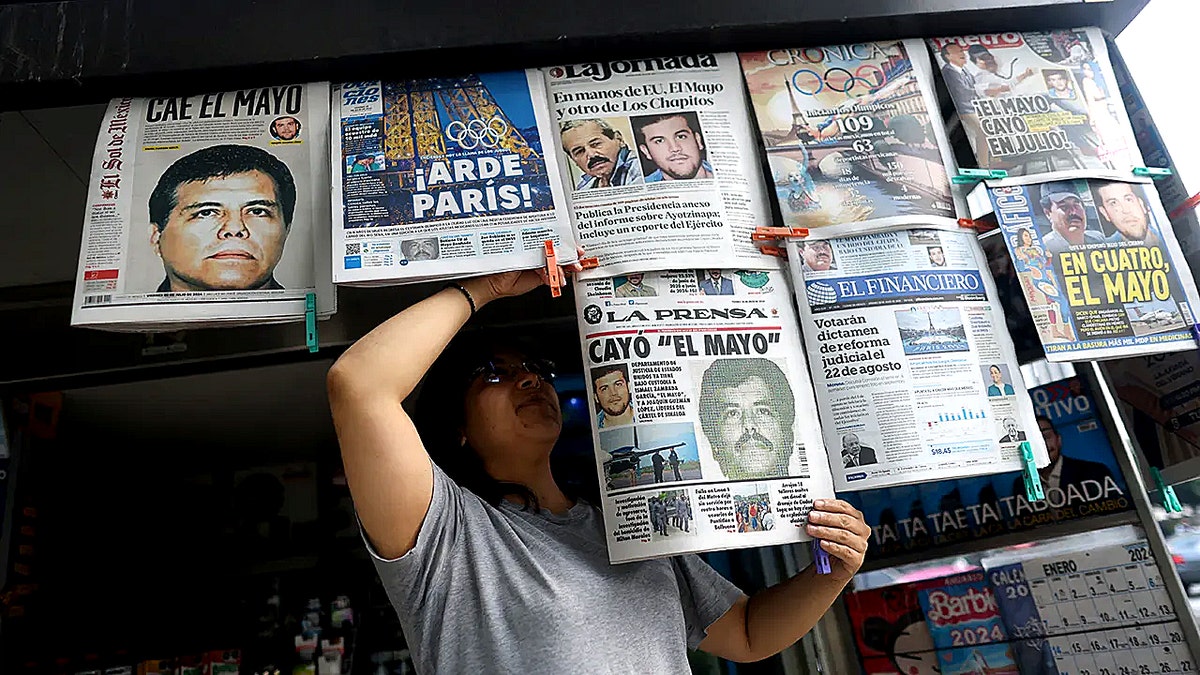
Sinaloa Cartel co-founder Ismael «El Mayo» Zambada Garcia was sentenced to life in a U.S. prison. (REUTERS/Gustavo Graf)
CLICK HERE TO DOWNLOAD THE FOX NEWS APP
«He will spend the rest of his life in a U.S. prison, exactly where he belongs,» he added. This sentence was made possible by the tireless bilateral cooperation between U.S. and Mexican law enforcement, who refused to let El Mayo’s years of evading justice become a permanent state of affairs. We hope that today’s sentence brings some measure of justice to the countless victims of the Sinaloa Cartel’s narcotics trafficking and violence.»
Reuters contributed to this report.
mexican cartel violence, mexico, world, crime, justice department, us

“Nuestros campeones eternos”: la emotiva historia detrás del primer saludo a la Selección al llegar a Argentina tras el Mundial

“La Misa”, desde adentro: el ritual del “Gordo Dan” que fanatiza a la militancia digital de Javier Milei

Johnson’s strategy to bypass Democrats’ SAVE Act blockade survives key vote, handing GOP big win

Basado en hechos reales: cuando el dolor se transforma en un libro capaz de iluminar a sus lectores

Impulsadas por los combustibles y el agro, las exportaciones sumaron casi USD 50.000 millones en el primer semestre

Gran Hermano Generación Dorada: Emanuel Di Gioia vs Solange Abraham quedaron en uno de los mano a mano más esperados

Rubio’s call to combat global funders of far-left terrorism could put Singham in crosshairs

Sismo de 7.4 sacude a Guatemala: Autoridades declaran alerta anaranjada por daños y descartan tsunami

Canales para ver EN VIVO el San Lorenzo vs. Deportivo Riestra por la Copa Argentina

Rogelio Frigerio presentó un seguro multirriesgo con un fondo de USD 1 millón para el maíz en Entre Ríos

 POLITICA16 horas ago
Sin la Copa y sin Messi en el avión, vuelve Tapia y deberá enfrentar tres frentes de tormenta tras la pausa del Mundial
- INTERNACIONAL3 días ago
Estados Unidos cambia una regla histórica del jugo de naranja vigente desde 1963 y afecta a toda la industria
- CHIMENTOS3 días ago
Es el conductor más querido de la tele y tan argentino como el mate, pero pocos saben que nació en España: ¿a quién alentará en la final?