INTERNACIONAL
Israel lanzó una nueva oleada de bombardeos contra Hezbollah en el Líbano tras la orden de Netanyahu

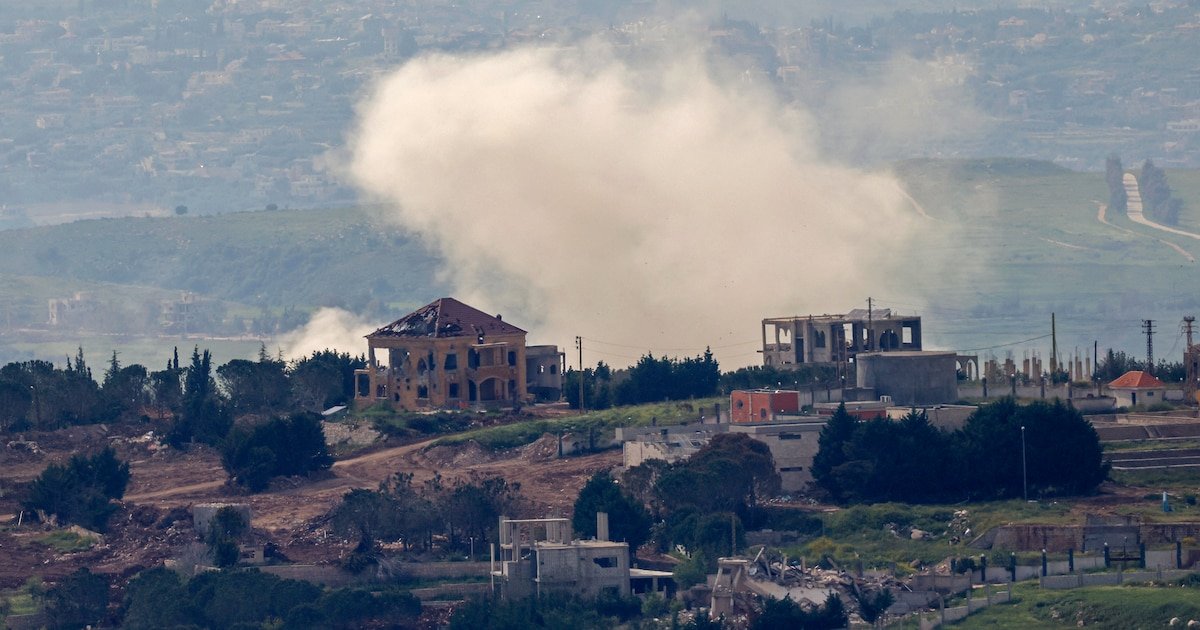
Los medios de comunicación estatales libaneses informaron de una serie de nuevos ataques israelíes en el sur del país durante la noche del sábado, después de que unos ataques perpetrados ese mismo día causaran la muerte de seis personas, a pesar de la reciente prórroga del alto el fuego en la guerra entre Israel y Hezbollah.
Los nuevos ataques se produjeron tras las órdenes del primer ministro israelí, Benjamin Netanyahu, al ejército de “atacar con contundencia los objetivos de Hezbollah”, después de que el ejército acusara a este de violar la tregua.
El Ministerio de Sanidad del Líbano había declarado anteriormente que “los ataques del enemigo israelí contra un camión y una motocicleta en la localidad de Yohmor al-Shaqeef, en el distrito de Nabatieh, causaron la muerte de cuatro personas”.
Otro ataque “contra la localidad de Safad al-Battikh, en el distrito de Bint Jbeil, se saldó con dos muertos y 17 heridos”, informó.
El ejército israelí afirmó que el sábado “eliminó” a tres miembros de Hezbollah que conducían “un vehículo cargado de armas”, así como a otro que circulaba en motocicleta y a otros dos miembros armados del grupo en otros lugares.

También afirmó haber identificado dos proyectiles lanzados desde el Líbano, denunciando “una violación flagrante de los acuerdos de alto el fuego” por parte de Hezbollah, y más tarde interceptó otro “objetivo aéreo sospechoso”.
Hezbollah, por su parte, afirmó que había atacado un vehículo del ejército israelí en el sur del Líbano en represalia por el ataque contra Yohmor al-Shaqeef.
Tras la orden de Netanyahu de atacar al grupo, la Agencia Nacional de Noticias (NNA) del Líbano, de titularidad estatal, informó de dos ataques sucesivos en una localidad del distrito de Bint Jbeil, otro en una localidad del distrito de Tiro y ataques contra otras dos localidades del distrito de Nabatieh.
El ejército israelí afirmó que había “atacado infraestructuras terroristas de Hezbollah utilizadas con fines militares en todo el sur del Líbano” y que “seguiría actuando con firmeza contra las amenazas”.
Israel afirma que se reserva el derecho a responder militarmente a amenazas inminentes en virtud de los términos del alto el fuego.
Un corresponsal de la AFP informó de que algunas personas huyeron de los suburbios del sur de Beirut —un bastión de Hezbollah que ha sido bombardeado repetidamente durante la guerra— tras la declaración de Netanyahu.

El presidente de EE. UU., Donald Trump, había anunciado el jueves que el alto el fuego de 10 días en el Líbano, que comenzó el 17 de abril, se había prorrogado por tres semanas.
Hezbollah, respaldado por Teherán, arrastró al Líbano a la guerra de Oriente Medio el 2 de marzo al lanzar cohetes contra Israel para vengar la muerte del líder supremo de Irán, Ali Jamenei, en ataques estadounidenses e israelíes.
La NNA informó de bombardeos de artillería israelí sobre varias localidades del sur del Líbano el sábado.
También informó de una “violenta explosión” en Khiam, una localidad estratégica situada al este de la frontera del Líbano con Israel, donde la agencia había señalado anteriormente que el ejército israelí había estado destruyendo “sistemáticamente” casas y otros edificios.
Un corresponsal de la AFP vio una enorme nube de humo elevándose sobre la localidad.
El ejército israelí volvió a emitir el sábado una advertencia a los residentes para que no regresaran a decenas de localidades del sur del Líbano situadas dentro de la denominada “línea amarilla”, que delimita una franja de territorio libanés de unos 10 kilómetros (seis millas) de ancho a lo largo de la frontera.
Los ataques israelíes han causado la muerte de al menos 2.496 personas en el Líbano desde el 2 de marzo, según las autoridades.
El viernes, el diputado de Hezbollah Ali Fayad afirmó que el grupo se reservaba el derecho a responder a cualquier agresión israelí, y añadió que prorrogar el alto el fuego “no tiene sentido” a la luz de los continuos “actos hostiles”.
horizontal












INTERNACIONAL
¿Fueron nazis tus abuelos? La base de datos que revela el pasado oculto de millones de alemanes
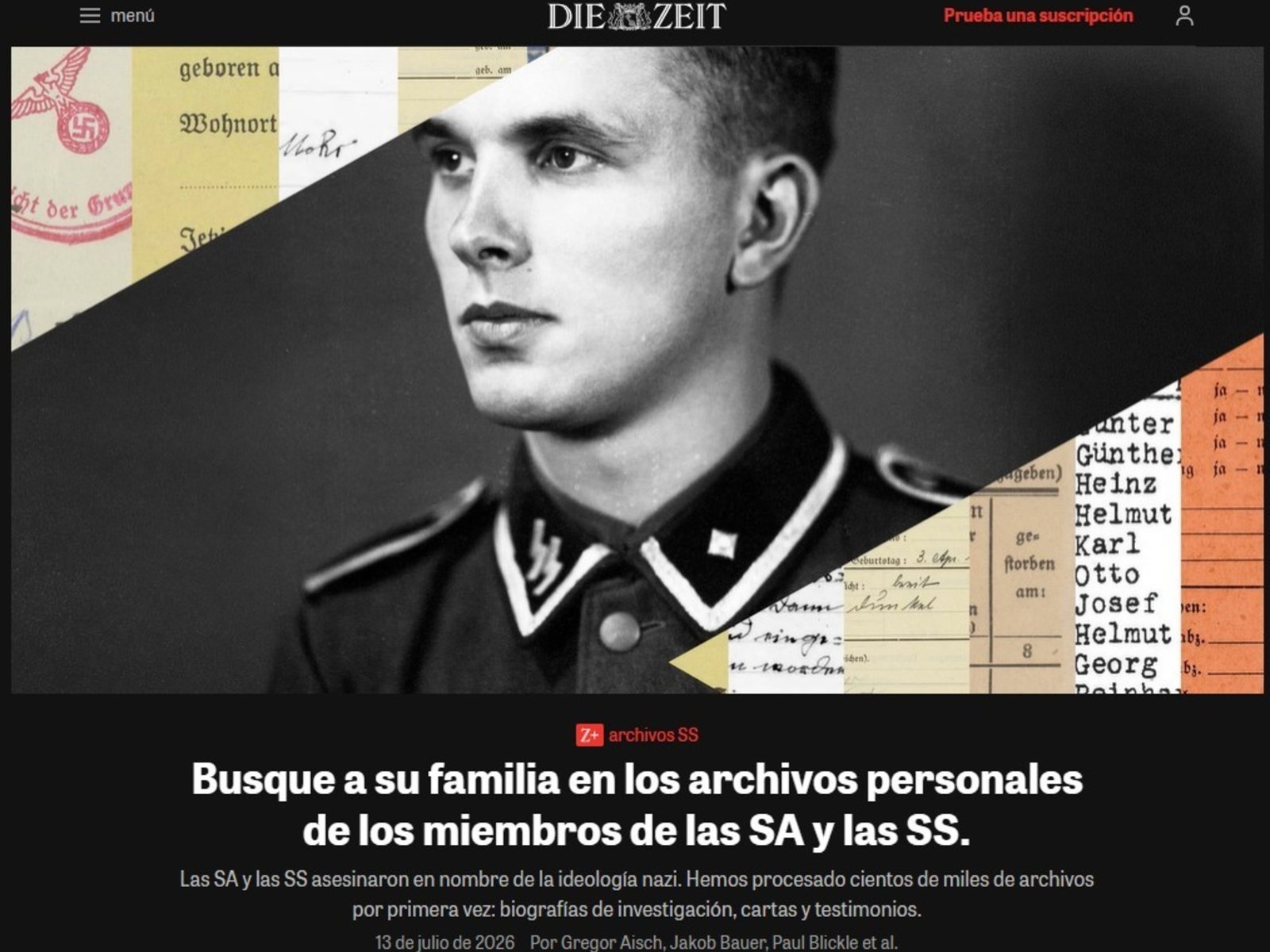
Millones de alemanes tuvieron un carnet del NSDAP (el partido nazi de Adolf Hitler) desde mediados de los años 30 y hasta 1945. No era obligatorio en la Alemania nazi ser miembro del partido, pero abría puertas, además de que muchos lo fueron por convencimiento.
Décadas después, los alemanes empezaron a interesarse por el pasado de sus padres y abuelos. ¿Fueron nazis? Durante muchos años la única forma de saberlo era acudir a un archivo nacional, hacer una solicitud formal y esperar meses. Muchas veces la respuesta, si llegaba, era incompleta. El proceso era largo y pesado y con los años se fue usando cada vez menos y quedaran básicamente para el acceso de historiadores.
En febrero, el Archivo Nacional de Estados Unidos completó la digitalización de los microfilmes que el Ejército estadounidense había incautado en 1945 en Múnich tras la ocupación de Alemania.
Aquellos microfilmes fueron al Berlin Document Center, controlado por el ocupante estadounidense. En total, entre el archivo de Berlín y varios archivos regionales, había 10,9 millones de fichas de miembros del partido nazi. El archivo que fue creando la democracia alemana tras la guerra, que heredó todos esos fondos en 1994, suma 12,7 millones de fichas.
Esos 12,7 millones de documentos ya estaban digitalizados, pero no se podía acceder a ellos online debido a las leyes de protección de datos personales. El acceso seguía siendo a través de solicitudes individuales. Los documentos originales fueron devueltos por Estados Unidos a Alemania en la década de los 90 del siglo pasado y forman parte del Archivo Federal Alemán (Bundesarchiv).
Estados Unidos acabó con esos obstáculos. La publicación en internet del archivo estadounidense hizo que los grandes medios de comunicación alemanes, como Die Zeit, Der Spiegel o Süddeutsche Zeitung, crearan motores de búsqueda propios conectados a esa base de datos. Con ayuda de tecnología de reconocimiento óptico de caracteres e inteligencia artificial, esos motores de búsqueda llegan a las fichas en cuestión de segundos.
En las primeras semanas más de un millón de alemanes se volcó a investigar si sus antepasados habían sido oficialmente miembros del partido de Hitler. Der Spiegel llegó a preguntar directamente a sus lectores si sus abuelos habían sido nazis.
Las fichas que tiene online el archivo estadounidense incluyen fecha y lugar de nacimiento, profesión y, en algunos casos, una fotografía, además del número de carnet del afiliado al partido nazi y la fecha de su afiliación. Los expertos consultados por los medios alemanes aseguran que casi el 90% de los afiliados al partido nazi están en esos archivos.
Mientras muchos alemanes se van llevando la mala sorpresa de descubrir que sus parientes habían ingresado en el partido nazi, los historiadores recuerdan que hay un dato importante que sirve para contextualizar esa afiliación: la fecha.
En Alemania siempre se ha entendido que cuanto antes sea la afiliación al partido, más convencimiento personal de las bondades del nazismo tenía esa persona. Y que quienes se afiliaron antes de 1933, antes de la toma del poder por Adolf Hitler, tenían en su inmensa mayoría una convicción ideológica real.
Cuando Hitler llega al poder hay una masiva afiliación, que se entiende porque los alemanes empiezan a darse cuenta de que sin estar afiliado al partido todo se hace más difícil social y laboralmente. Los expertos también explican que, para hacer un informe correctamente habría que cruzar las fichas de afiliación al partido nazi con informes posteriores a la derrota alemana sobre desnazificación y con historiales militares.
La puesta a disposición de cualquier persona de esos millones de fichas llega cuando el partido Alternativa por Alemania (AfD), de los más a la ultraderecha de Europa y con altos cargos conectados con grupúsculos neonazis y el servicio secreto tras sus pasos, aparece en los sondeos electorales como la primera fuerza política alemana de convocarse hoy unas elecciones legislativas.
AfD reclama desde su nacimiento hace más de una década que el país debe abandonar de una vez su culpa histórica por su pasado nazi y dedicarse al orgullo nacional. Ochenta y un años después del final de la Segunda Guerra Mundial y del nazismo apenas quedan alemanes vivos que recuerden aquellos años. Los protagonistas del nazismo están todos muertos.
German police on manhunt for Berlin Pride attack suspect
Fox News’ Chanley Painter reports Berlin police are conducting a manhunt for 21-year-old Abdul B, identified as the suspect in a deadly van attack at a German Pride Festival. One person was killed and 16 others were injured after the van crashed into a crowd near the parade route. Authorities are investigating reports of additional stab wounds and suspect terrorism, noting the individual’s ties to Islamic groups.
NEWYou can now listen to Fox News articles!
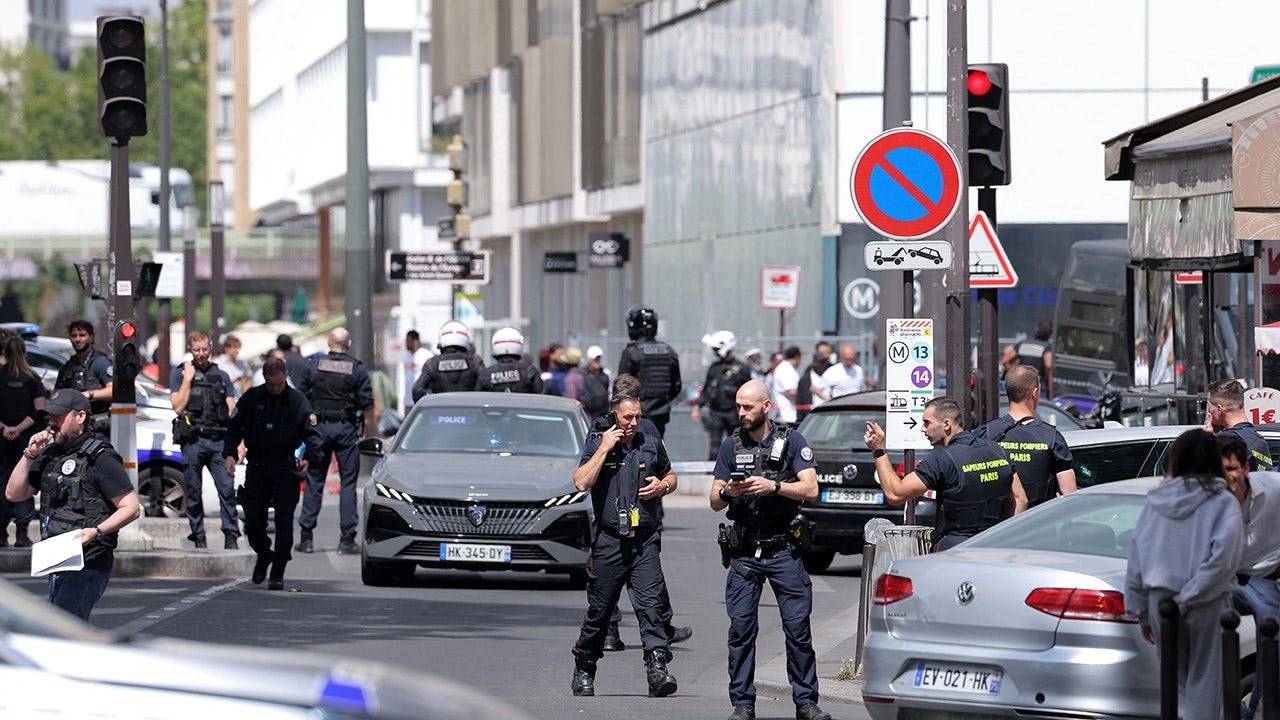
The suspect subdued after allegedly stabbing three women in Paris on Monday uttered, «it is Allah who commanded me» to a crowd that appeared to be holding him down after the apparent terror attack.
The incident comes just days after another stabbing attack in England and a vehicular attack on a Pride parade in Berlin, Germany.
A 31-year-old man, whose name was not immediately released, was seen on the ground after allegedly stabbing three women, one of whom was reportedly pregnant.
WITNESSES RECOUNT ‘SCARY’ NYC STABBING AFTER SUSPECT ALLEGEDLY YELLED ‘ALLAHU AKBAR’ DURING ATTACKS
Law enforcement patrol immediately following a stabbing attack in Paris on July 27, 2026. (Kenzo Tribouillard/Getty Images)
French outlet «Le Figaro» reported his utterances translated to «it is Allah who commanded me» as police sources told the outlet the suspect has an «unbalanced» profile.
While many observers, including on X, immediately pointed to Islamic terrorism, French Interior Minister Laurent Nunez said he wanted to be «very careful about the motive for this violent act,» pointing to the suspect’s «incoherent remarks.»
Another translation of the exchange quotes one man as responding, «there is no Allah, bro,» after the suspect allegedly attributed the stabbing to Allah, while another person says the crowd must «stampede this son of a b—-.»
AMERICAN TOURISTS STABBED OUTSIDE ATHENS’ ACROPOLIS AS POLICE DETAIN SUSPECT IN APPARENT RANDOM ATTACK
«No, seriously, he’s crazy,» a third person is quoted as saying in French.
«He stabbed my girl here,» a woman says in French.
The suspect reportedly attacked women at the Two Domes brewery in the Porte de Clichy section of the French capital.
AT LEAST 1 DEAD, SEVERAL INJURED AFTER VAN RAMS INTO CROWD AT PRIDE FESTIVAL; SUSPECT ‘KNOWN TO POLICE’
Two victims were listed in «absolute emergency» condition, while the third was listed in «relative emergency» condition, according to local press.
Reuters reported it had verified imagery of the suspect stabbing one woman while holding a knife in each hand.
The Paris-area attack comes two days after six men were arrested for «suspicion of murder» in connection with the stabbing of a 22-year-old man in Clapham, southwest London, United Kingdom, last week.
Metropolitan Police told the BBC the victim died after being stabbed at around 4:30 a.m. local time Saturday near Clapham High Street.
In Berlin, one person was pronounced dead and 29 were wounded after a suspect — later killed by German police — allegedly drove a vehicle into the public gathering.
The suspect in that case, Abdul Ballout, had German citizenship but «Lebanese roots,» according to the Associated Press.
The outlet reported German officials are considering whether it was an act of Islamic extremism.
The cascade of violent incidents comes months after the White House released a National Security Strategy warning of «civilizational erasure» in Europe due to mass migration and demographic shifts, while highlighting a spate of terror attacks carried out by migrants.
SIGN UP TO GET THE POLITICS NEWSLETTER
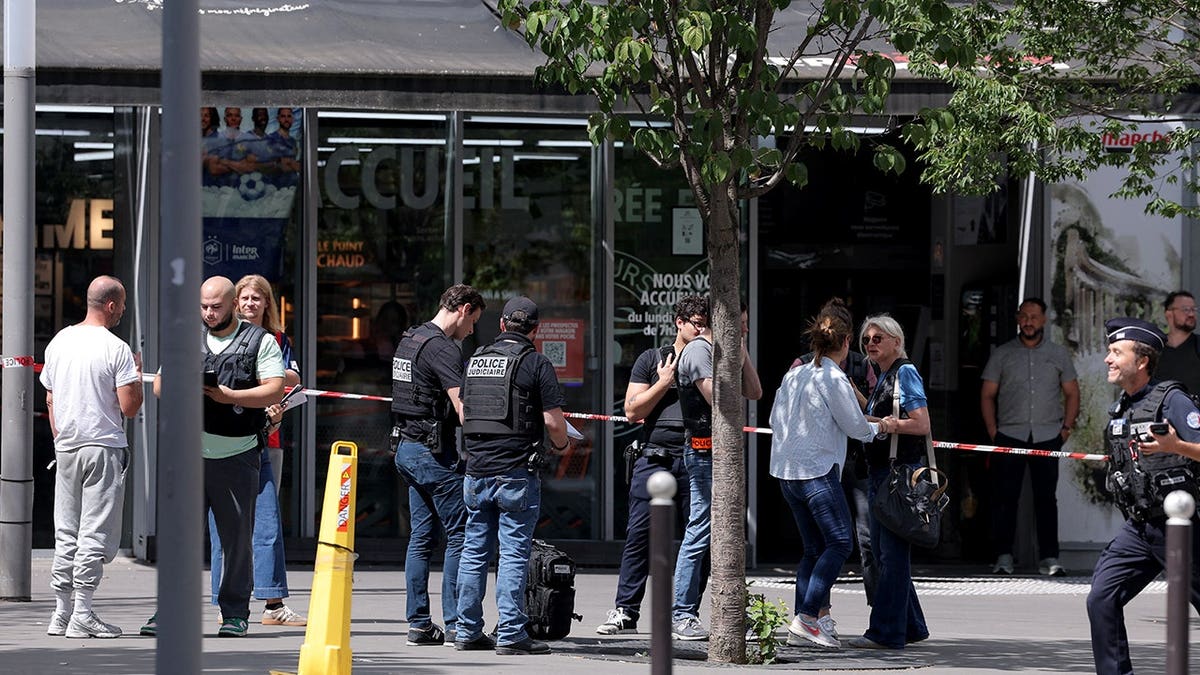
French police work a crime scene in Paris on July 27, 2026 following a stabbing attack. (Kenzo Tribouillard/Getty Images)
The White House pointed to a range of European data to support the administration’s concerns, citing studies showing asylum migration costing the Netherlands €475,000 per migrant, illegal immigration costing France €1.8 billion in 2023 and non-Western migrants committing disproportionate shares of violent crime in Denmark and Germany.
CLICK HERE TO DOWNLOAD THE FOX NEWS APP
The immigration status of the suspects in the three most recent attacks was not immediately confirmed.
Fox News Digital’s Michael Dorgan and the Associated Press contributed to this report.
terrorism, crime, europe, france, politics, immigration
INTERNACIONAL
Exposed Fauci diary shows he estimated COVID-19 death rate to be much lower than what he told Congress
NEWYou can now listen to Fox News articles!
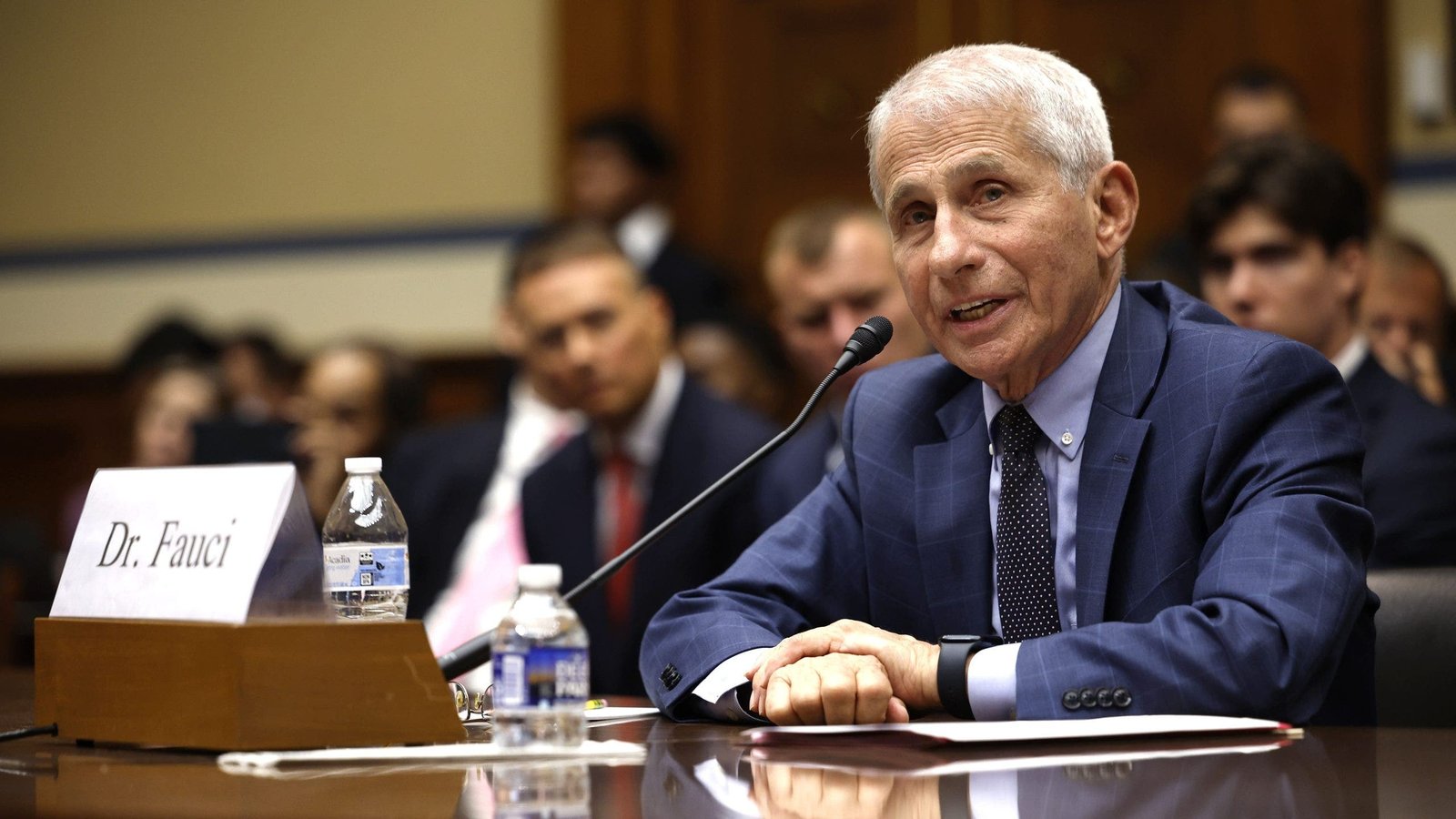
Entries from early 2020 in a now-exposed personal diary kept by Dr. Anthony Fauci during the COVID-19 pandemic show that he privately estimated the death rate from the illness was significantly lower than what he told Congress under oath only weeks later.
Fauci, 85, has come under intense scrutiny for years regarding his approach leading the U.S. response to the coronavirus pandemic, and his alleged links to the Chinese lab where the virus originated. He will return to Capitol Hill on Wednesday before the Senate Homeland Security and Governmental Affairs Committee to speak about his newly publicized personal records.
«The stated mortality over all of this when you look at all the data including China is about three percent. It first started off as two and three,» Fauci said in testimony before the House Oversight Committee on March 11, 2020, according to a transcript of the hearing.
National Institute of Allergy and Infectious Diseases Director Anthony Fauci prepares to testify before the Senate Health, Education, Labor, and Pensions Committee about the ongoing response to the COVID-19 pandemic in the Dirksen Senate Office Building on Capitol Hill on November 4, 2021, in Washington, D.C. Senators questioned Fauci and other witnesses about the approval of the Pfizer-BioNTech coronavirus vaccine for children between 5 and 11 years old this week. (Photo by Chip Somodevilla/Getty Images)
LEGACY MEDIA IGNORES MASSIVE ANTHONY FAUCI DOCUMENT RELEASE ALLEGING HE MISLED CONGRESS ON COVID ORIGINS
During the hearing just weeks into the virus reaching the U.S., he was asked by Rep. Michael Cloud, R-Texas, to compare the mortality from COVID-19 to the mortality of the seasonal flu.
«I think if you count all the cases of minimally symptomatic or asymptomatic infection, that probably brings the mortality rate down to somewhere around one percent, which means it is 10 times more lethal than the seasonal flu,» Fauci continued. «I think that is something that people can get their arms around and understand.»
But on Feb. 8, 2020, about a month before that congressional testimony, Fauci expressed privately that he believed the virus’s mortality rate was much lower than what he later told lawmakers.
«[Former CDC Director] Tom Frieden called me this AM and we discussed various aspects of the outbreak,» Fauci wrote. «He and I are on the same page in thinking tht [sic] this is acting like a bad influenza in its transmissibility and that the denominator is much greater than 34,867 (above) making the case fatality rate (CFR) more like 0.2-0.3 % rather than 2.0%.»
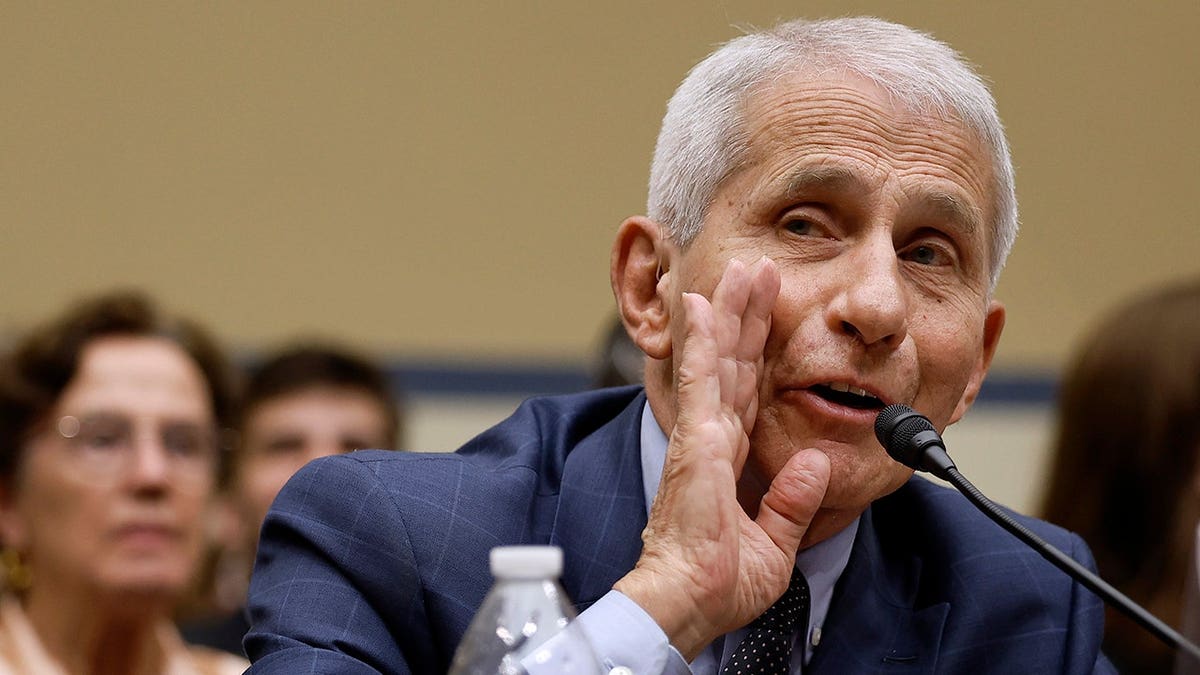
Dr. Anthony Fauci testifies before the House Oversight and Accountability Committee Select Subcommittee on the Coronavirus Pandemic at the Rayburn House Office Building in Washington, D.C., on June 3, 2024. The hearing covers findings from a 15-month Republican-led probe into Fauci and the origins of the COVID-19 pandemic. (Chip Somodevilla/Getty Images)
FAUCI’S NEWLY RELEASED COVID DIARIES REVEAL BIZARRE FIXATION ON FAME AS PANDEMIC DEATHS MOUNTED
At that time, Fauci had counted 34,687 cases of the virus and 724 fatalities, according to his diary, which equals just over 0.2%.
Fauci was the director of the National Institute of Allergy and Infectious Diseases (NIAID) during the pandemic, and first became the face of combatting COVID-19 at the onset of the pandemic during President Donald Trump’s first term, and remained in the role under President Joe Biden until retiring in 2022.
The very influential position wasn’t lost on Fauci. His diary entries tracked his rising influence and press appearances, and he meticulously kept track of how he was portrayed.
«Big front page article abut me appeared in the Washington Post. Very flattering. The situation with my national and international fame is explosive and really unimaginable,» he wrote in a diary entry on May 21, 2020.
«It is not hyoperbole [sic] to say that today I am the most famous and talked about person in the country and one of the most recognizable peson in the world,» he continued.

Dr. Anthony Fauci, director of the National Institute of Allergy and Infectious Diseases, throws out the ceremonial first pitch before the game between the New York Yankees and Washington Nationals at Nationals Park on July 23, 2020, in Washington, D.C. (Getty Images)
INSIDE FAUCI’S PRIVATE DIARY: WHAT HE WROTE ABOUT TRUMP, TV PERSONALITIES AND CELEBRITIES
Fauci noted that he was developing a «very unique and interesting relationship» with Trump.
His diary is adorned with screenshots of headlines that mentioned him, including a New York Times story from March 2020 titled, «Not His First Pandemic, Dr. Anthony Fauci Sticks to the Facts.»
He referenced another Washington Post article in his diary on Aug. 8, 2020, titled, «As Fauci battles the pandemic and politics, his grateful neighbors celebrate him as a hero.»
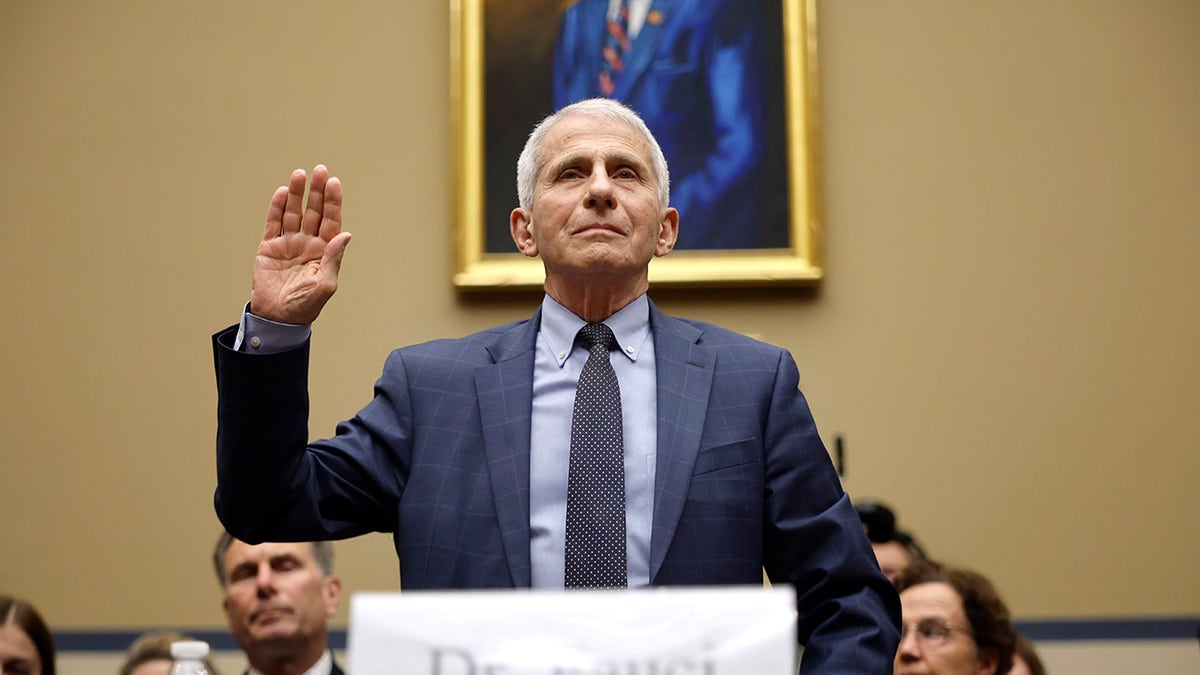
Dr. Anthony Fauci, former Director of the National Institute of Allergy and Infectious Diseases, is sworn-in before testifying before the House Oversight and Accountability Committee Select Subcommittee on the Coronavirus Pandemic at the Rayburn House Office Building on June 3, 2024, in Washington, D.C. The Subcommittee is holding a hearing on the findings from a 15-month Republican-led probe of former Director of the National Institute of Allergy and Infectious Diseases Dr. Anthony Fauci and the COVID-19 pandemic’s origins. (Chip Somodevilla/Getty Images)
CLICK HERE TO DOWNLOAD THE FOX NEWS APP
Fox News Digital reached out to Georgetown University and the Georgetown University Department of Public Health, where Fauci serves as a distinguished professor at the university’s school of medicine, seeking comment on the journal entries versus public statements.
Fox News Digital also reached out to Paul’s office but did not hear back by time of publication.
anthony fauci, health, politics, white house, fox news media, coronavirus

El nutricionista de la Selección declaró en el juicio por Maradona y recordó la tarde que Diego le gritó a Luque

Máximo Kirchner presentó un proyecto para que los acuerdos con el FMI deban ser aprobados por el Congreso

Aceiteros cerraron paritaria para rama clave y el sueldo rondará los 2 millones de pesos

Javier Milei acusa a gobierno de Brasil de financiar campaña antiArgentuina en el Mundial 2026: «El 25% de los recursos salió de ahí»

Pablo Quirno, el canciller militante que sigue el modelo de Marco Rubio y suma tensión a la pelea con Lula

¿Fueron nazis tus abuelos? La base de datos que revela el pasado oculto de millones de alemanes

Senado: Bullrich y Sturzenegger cierran filas para tratar de avanzar con la extranjerización de tierras

La mayor estafa ganadera de Uruguay dejó un rojo de USD 272 millones: Justicia confirmó cifras de Conexión Ganadera

Cosquín Rock 2027 ya tiene fecha: cuándo será y cómo comprar las primeras entradas

El disgusto de Luis de la Fuente ante la actitud de Argentina tras perder la final: «Es inadmisible, no se puede permitir»

 ECONOMIA3 días ago
Vocero de Milei dijo que un dólar a $1.800 es «posible» y la City alerta por fin de la paz cambiaria
- POLITICA3 días ago
Convivencia pacífica o tensión administrada: el PRO define cómo pararse frente al gobierno de Milei rumbo a 2027
- POLITICA2 días ago
Cuentapropismo emocional en lo profundo del conurbano