INTERNACIONAL
Israel unveils game-changing artillery against Iran-backed Hezbollah amid fragile ceasefire

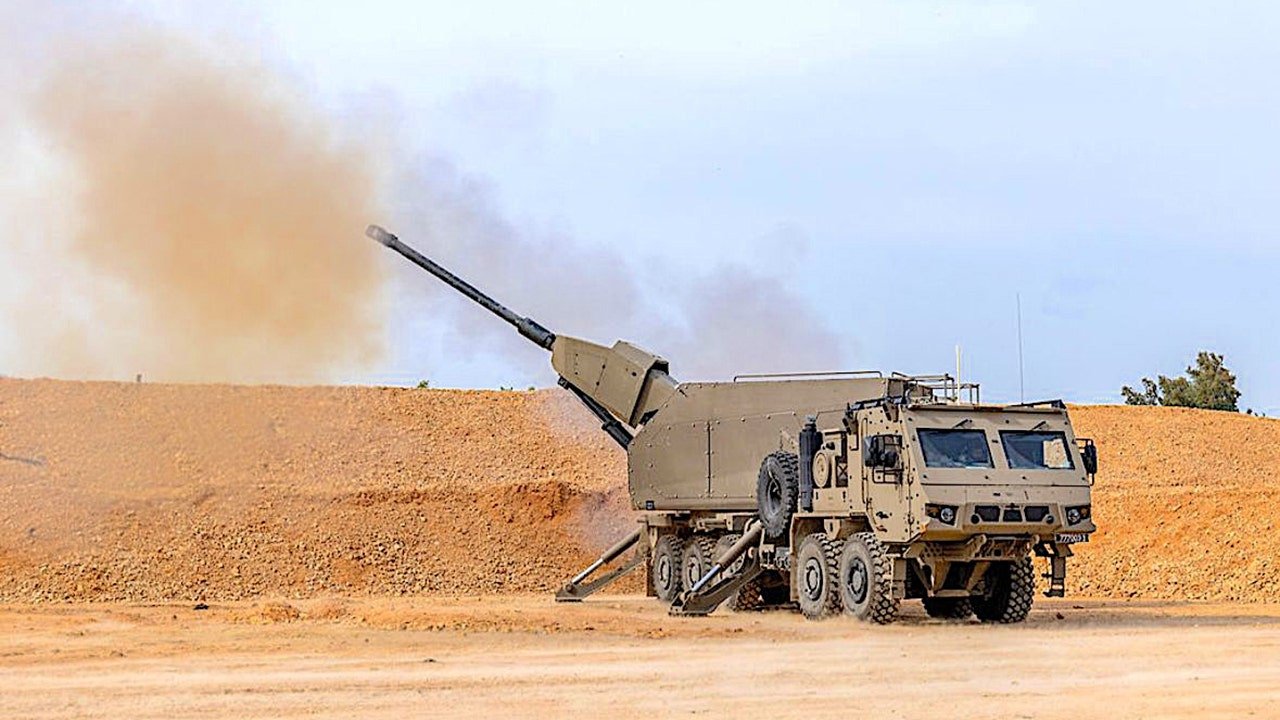
Israel unveils game-changing artillery technology
An Israeli Ro’em self-propelled artillery system, whose name means «thunder» in Hebrew, is seen in action. Ehud Bibi, the IDF’s chief artillery officer, said the system marks «a new era» of faster, more precise battlefield fire. (IDF Video.)
NEWYou can now listen to Fox News articles!
JERUSALEM: The Israel Defense Forces (IDF) have introduced a new self-propelled howitzer to combat Hezbollah terrorists in Lebanon as a defensive weapon against Hezbollah attacks.
Ro’em, the Hebrew word for thunder, could play an important role if the 10-day fragile ceasefire breaks down between Israel and Hezbollah. A second round of talks aimed at disarming Hezbollah between the ambassadors of Lebanon and Israel are slated for Thursday in Washington D.C. The ceasefire went into effect Thursday.
Ehud Bibi, Chief Artillery Officer for the IDF, told Fox News Digital that «The Ro’em brings a new capability to the Artillery Corps and the IDF as a whole, reshaping how firepower is employed on the battlefield. This marks a historic milestone, introducing a new era of more precise, faster, and more flexible fire enabling us to support troops on the ground more effectively.»
LAWMAKERS QUESTION WHETHER US MOVING FAST ENOUGH TO CAPITALIZE ON HEZBOLLAH’S WEAKENED STATE
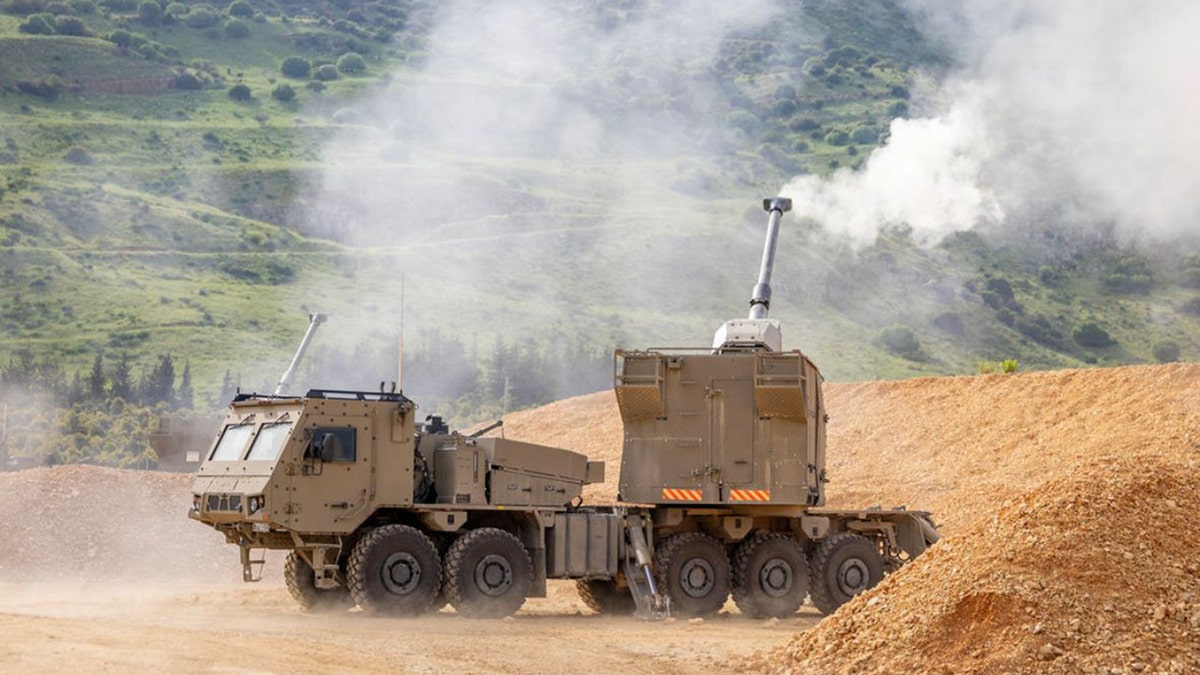
Israeli Ro’em self-propelled artillery system is seen in an undated image, part of the IDF’s next-generation artillery capabilities. (IDF)
According to the IDF statement, «During the activity, the troops conducted precise artillery fire on several Hezbollah anti-tank and surface-to-surface missile launch positions, from which attacks had been launched against IDF troops. The firing was effective, achieving operational results and introducing new artillery capabilities, thereby reducing the threat posed to IDF troops and Israeli civilians.»
The IDF said the launches were purely defensive attacks against Iran-backed Hezbollah terrorists during the truce. The howitzer can fire roughly 40 kilometers (about 25 miles). A team of three IDF soldiers operate the Ro’em.
Elbit Systems stated on its website that it’s «capable of automatic loading and laying of the gun system, rapid in-and-out action times and high rate of fire. It offers a protected cabin for a crew of three.» Adding that, «Depending on the mission, SIGMA is capable of automatically selecting and loading the required projectile, propellant and fuze and laying the gun to optimally engage targets.» Also known as SIGMA, the Ro’em is produced by South Carolina-based subsidiary of Elbit Systems of America.
Israeli Ro’em self-propelled artillery system is seen in an undated image, part of the IDF’s next-generation artillery capabilities. (IDF)
Hezbollah violated a previous November 2024 ceasefire, which was brokered by the U.S., when it launched missiles into Israel on March 2 in response to the joint Israel-Iran war on Iran’s regime. The Lebanese government and the Lebanese Armed Forces failed to adhere to a deadline in 2025 to disarm Hezbollah.
The United Nations Security Council resolution 1701 also required that Hezbollah be disarmed following the 2006 war between Israel and Lebanon.
MACRON UNDER FIRE OVER IRAN, HEZBOLLAH POLICY AS TRUMP ADMIN HOSTS ISRAEL-LEBANON TALKS
According to an IDF statement sent to Fox News Digital about the modern howitzer, last Tuesday, «Troops from the 282nd Fire Brigade of the Artillery Corps, led by the ‘Ro’em’ branch at the Mali (Ground Training Center) Fire Center, conducted… their first operational firing using the «Ro’em» howitzer, in support of IDF troops operating in northern Israel.»
The statement continued that «The ‘Ro’em»’is a new howitzer recently introduced into IDF service, bringing advanced and innovative capabilities to the battlefield. It significantly increases the rate of fire, enables engagement at longer ranges compared to existing systems, and provides enhanced mobility and maneuverability in the field.
Hezbollah attacks on Israel since March 2 resulted in the killing of 2 civilians and 15 Israeli soldiers. Reuters reported that Hezbollah has not disclosed its casualty figures.
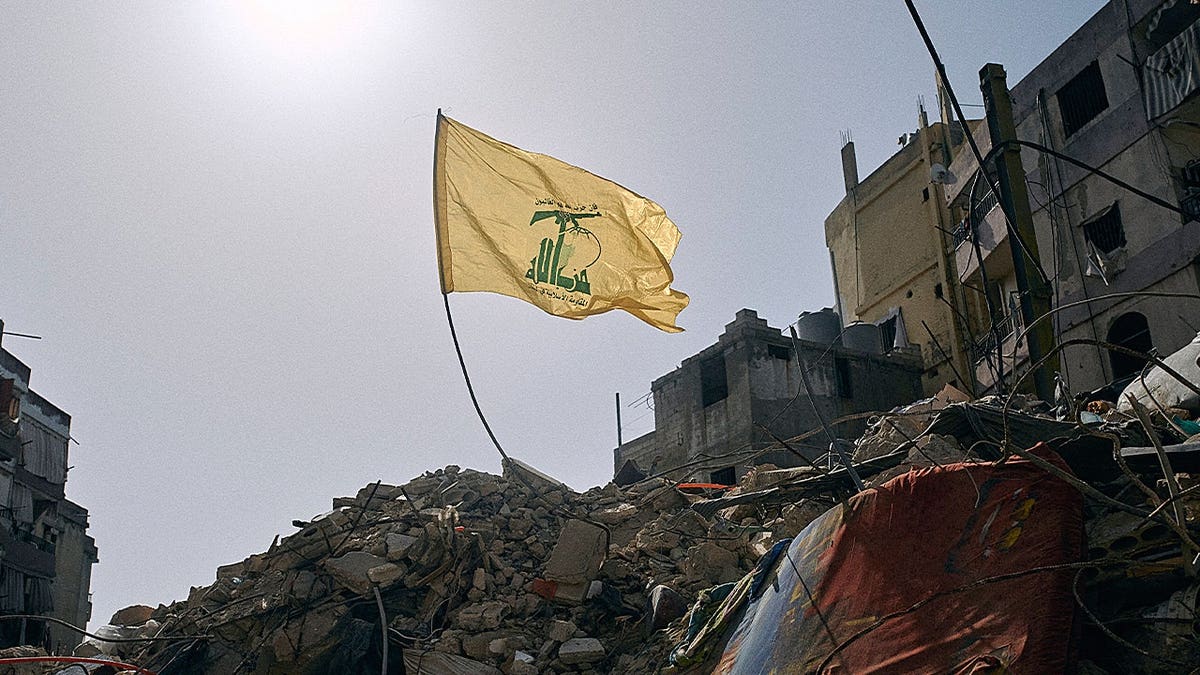
Hezbollah worked to build facilities below private residential buildings and houses. (Benoît Durand / Hans Lucas / AFP via Getty Images)
Lebanese authorities report that nearly 2,300 people in Lebanon have been killed since March 2. Those figures don’t differentiate between Hezbollah terrorists and civilians.
Speaking at a Memorial Day event for the country’s fallen troops, the country’s defense Minister Israel Katz pledged to ensure that Israelis in the north, who have faced massive aerial attacks from Hezbollah, will be secure.
CLICK HERE TO DOWNLOAD THE FOX NEWS APP
«Even as we gather here to honor our fallen, after weeks of determined operations by IDF forces in southern Lebanon, our commitment to the residents of the north remains clear and unequivocal, to bring them security,» Katz said. He noted that «If the Lebanese government continues not to fulfill its obligations, the IDF will do so through continued military activity.»
Reuters contributed to this report.
israel, middle east, lebanon, war with iran, military, terrorism









INTERNACIONAL
¿Escasez de petróleo?: el FMI advirtió que la continuidad de la guerra en Medio Oriente está agotando las reservas mundiales
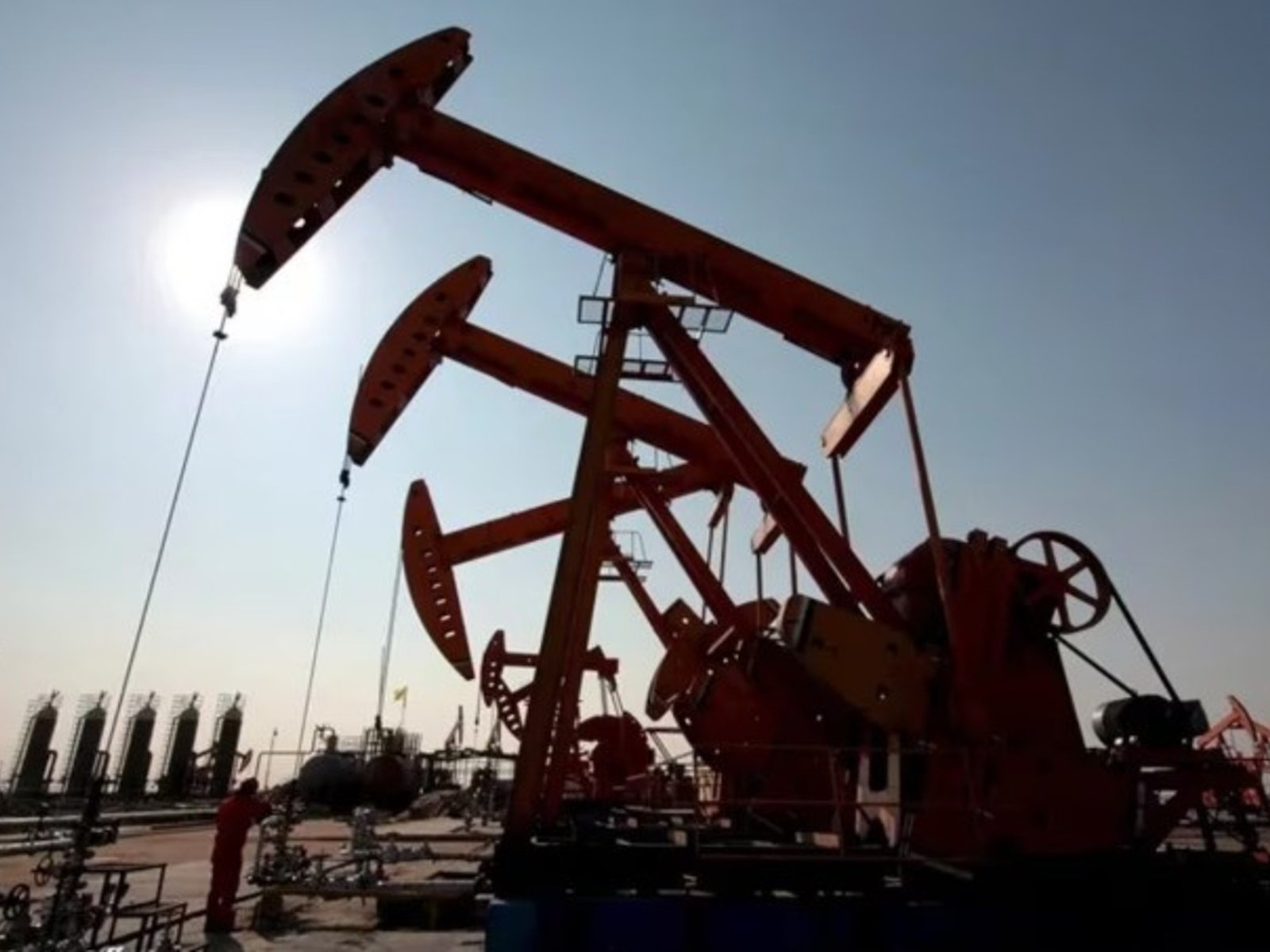
La nueva disparada en los precios del petróleo a nivel mundial por la reanudación de la guerra en Medio Oriente podría no ser el mayor dolor de cabeza para la economía global. Esto como consecuencia de un informe del Fondo Monetario Internacional (FMI) en el que se advierte sobre el agotamiento de las reservas como consecuencia de la continuidad del conflicto bélico.
En este sentido, el organismo multilateral de crédito señaló en un nuevo reporte publicado este miércoles que «si bien el mercado petrolero absorbió el impacto de la guerra, las reservas se están agotando».
Dentro de su análisis, la entidad presidida por Kristalina Georgieva reveló que hacia fines de mayo pasado más de 1100 millones de barriles de crudo (equivalentes a unos 10 días de consumo en todo el planeta) no habían llegado al mercado. Un déficit que superó los de la crisis del petróleo de 1973, la guerra Irán-Irak y la Guerra del Golfo Pérsico.
La guerra entre Estados Unidos, Israel e Irán provocó el cierre del Estrecho de Ormuz. Una decisión clave que cortó el suministro de unos 20 millones de barriles diarios de crudo y productos refinados, lo que equivale a una quinta parte del consumo mundial.
A su vez, algunos países que integran la OPEP en la zona redirigieron todo el petróleo que pudieron. Por un lado, Arabia Saudita envió crudo a través de su oleoducto hacia el puerto de Yanbu, en el mar Rojo. Mientras que Emiratos Árabes llevó a su terminal marítima de Fujairah, ubicada fuera del estrecho, casi hasta el límite de su capacidad.
Sin embargo, ambos esfuerzos sólo pudieron compensar una parte del volumen perdido por la clausura del estratégico paso marítimo impuesta por el régimen iraní.
A fines de febrero, cuando los gobiernos de Trump y Netanyahu iniciaron la guerra con una serie de bombardeos sobre Irán, la oferta de crudo en todo el mundo superaba a la demanda en casi dos millones de barriles diarios. Pero entre marzo y mayo hubo una serie de factores que impulsaron el cierre de esta brecha.
Por un lado la contracción de la demanda fue fundamental, en particular en Asia, ya que los precios más altos redujeron el consumo y las economías recurrieron a alternativas como el carbón y las energías renovables. No obstante, la demanda de transporte se mantuvo más estable, en parte por los topes de valores de los combustibles, los subsidios y las desgravaciones fiscales que contuvieron el impacto, aunque a un costo fiscal.
Asimismo, la producción fuera del Golfo Pérsico se incrementó más de lo previsto, en casi dos millones de barriles diarios por encima de los niveles de 2025. Estados Unidos lideró el aumento, seguido por Venezuela, Guyana y Rusia, que también vieron un alza en sus bombeos de crudo según el relevamiento del FMI.
En esta misma línea, el déficit de mercado estimado en unos cuatro millones de barriles diarios entre marzo y mayo fue saldado casi en su totalidad con la puesta a disposición de una buena parte de las reservas mundiales, incluidos los inventarios comerciales en China y los stocks estratégicos.
Si bien el acuerdo marco que semanas atrás habían alcanzado Washington y Teherán provocó en aquel momento un derrumbe en los precios de los hidrocarburos, los nuevos ataques cruzados agudizaron la incertidumbre sobre cuándo se podrá restablecer la libre navegación en Ormuz y con qué rapidez se recuperará la confianza del transporte marítimo, las aseguradoras y los operadores.
Las estimaciones de la industria recabadas por el Fondo alertan que se necesitarán entre dos y tres meses para que se reanude una parte significativa del flujo de crudo luego que se produzca la efectiva reapertura total de la vía marítima.
Una preocupación a largo plazo es que las interrupciones prolongadas de la producción podrían causar pérdidas de forma permanente, en particular donde la financiación para reactivar los pozos es escasa. Y esto a pesar de que este miércoles el petróleo del tipo Brent, que se extrae del Mar del Norte, se encontraba en casi US$ 84 por barril, lejos todavía de los 72 dólares en los que se encontraba el valor del crudo cuando a fines de febrero pasado volvieron a sonar las sirenas en Medio Oriente.
NEWYou can now listen to Fox News articles!
American mother Jamey Carney was remembered at her funeral as a devoted parent who had built a happy life in Ireland before her life was violently cut short.
Carney, 43, a New York native who moved to Ireland in 2021 with her teenage daughter, was violently beaten and suffocated in her home in Killarney, County Kerry, last week. A Jordanian failed asylum seeker who was living in Ireland and was romantically involved with Carney was arrested in relation to the case in his home country after fleeing Ireland via Istanbul after her death, according to Irish media.
Mourners gathered at St. Mary’s Cathedral in Killarney to pay their final respects during a service celebrating Carney’s life. The service was livestreamed, allowing friends and family around the world to join in mourning before a private cremation.
AMERICAN MOTHER MURDERED IN IRISH TOURIST TOWN AS INTERNATIONAL MANHUNT TARGETS ALLEGED ASYLUM SEEKER
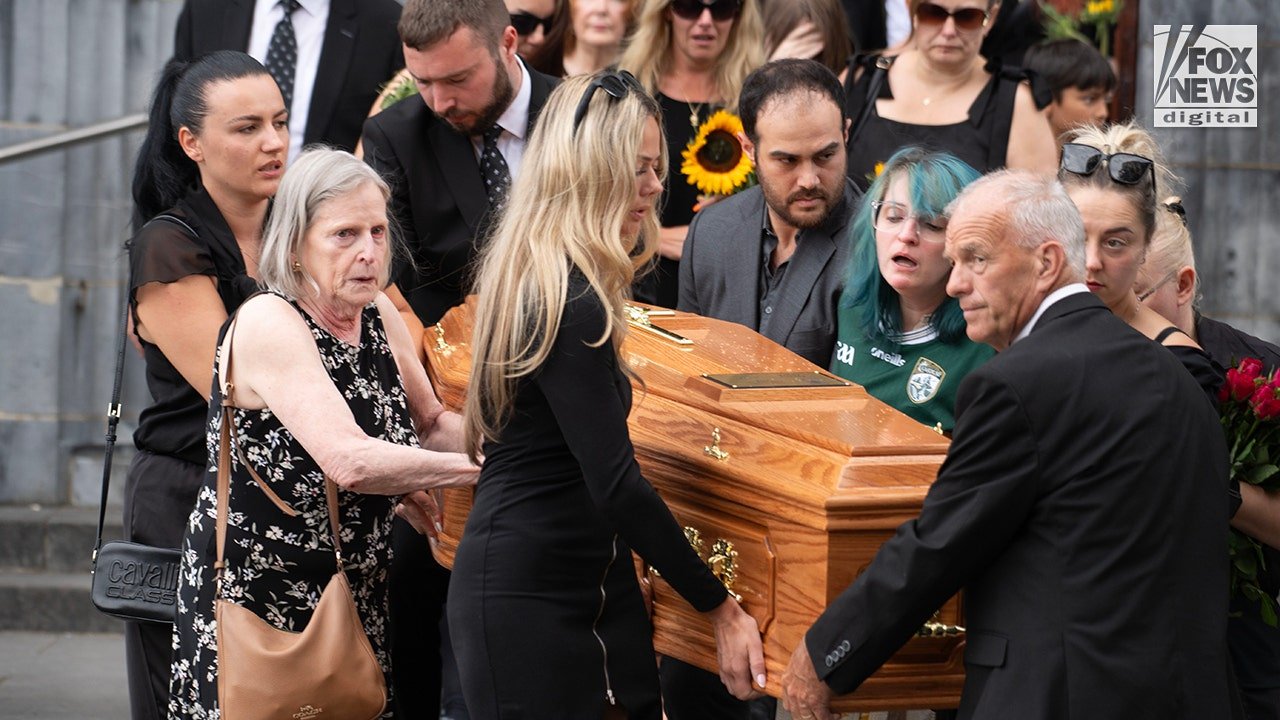
The remains of Jamey Carney are carried from St Mary’s Cathedral, Killarney by her mother Kathleen (left), sister Devon (blue hair) and relatives in Killarney, Kerry, Ireland, Wednesday, July 15, 2026. The 43 year-old New York native was found dead in her home on July 7. (Michael Mac Sweeney/Provision for Fox News Digital))
«Today we don’t dwell on Jamey’s death, but we dwell on her life,» Fr. Kieran O’Brien told mourners.
During the service, O’Brien reflected on Carney’s life growing up in New York alongside her sister, Devon, before recalling her «big decision» to move to Killarney—a choice he described as «the best decision of her life.»
He said she and her daughter, Michaela, had found a place they proudly called home, with Michaela settling into school and becoming actively involved in Irish sports.
The priest described Carney as a woman whose «joy radiated» from her, saying she had built a close circle of friends after moving to Killarney and found happiness in simple things. He recalled her love of country music, travel, shopping, going to concerts and spending time with friends.
«She was happy in life and she was happy with life because life was good to her,» he said.
«But her real love in life was you, Michaela,» he added, addressing Carney’s daughter.
«We thank God for Jamey’s life, remembering at all times her joy, and the ray of sunshine that she brought to all of your lives,» he added.
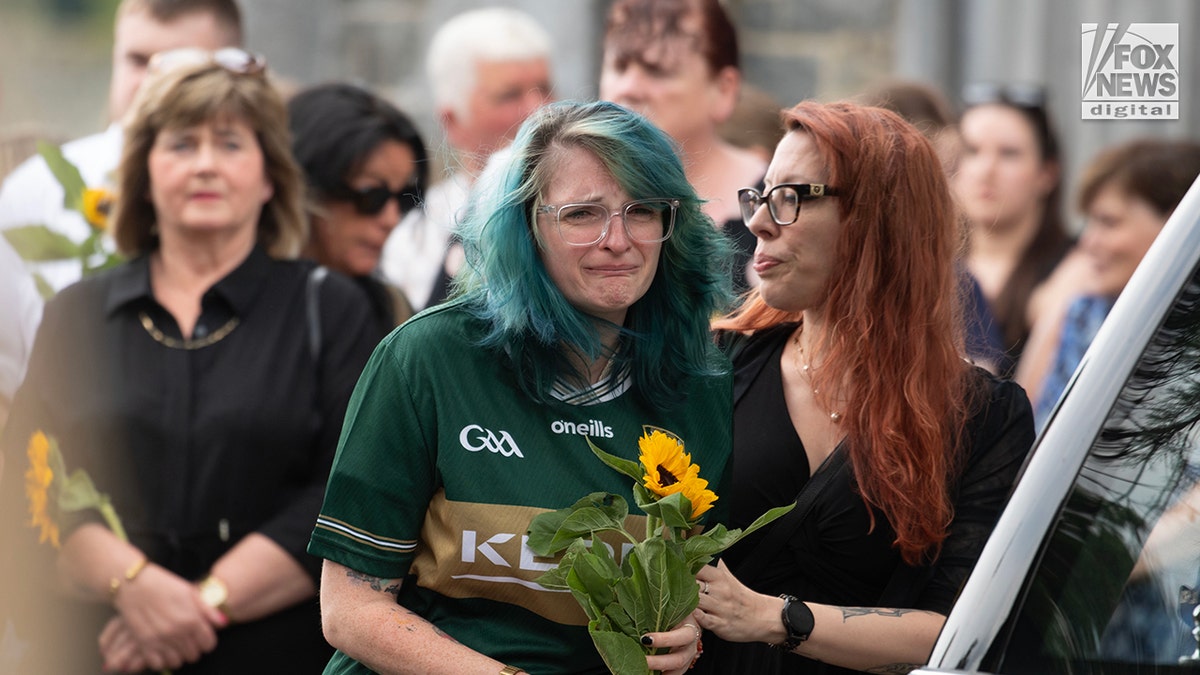
Jamey Carney’s sister Devon, is consoled at the funeral for the 43 year-old at St Mary’s Cathedral, Killarney, Kerry, Ireland, Wednesday, July 15, 2026. The New York native was found dead in her home on July 7. (Michael Mac Sweeney/Provision for Fox News Digital) ( )
Family members carried a series of personal items to the altar celebrating Carney’s life, including photographs of her daughter, Michaela, and her dog, Penny. A cowboy hat symbolizing her love of country music, the passports she and Michaela used to start their new life together in Ireland and an angel statue were also brought forward.
A framed photograph of Carney rested atop her coffin, which was positioned before the altar and draped in a white pall.
As Carney’s coffin departed St. Mary’s Cathedral following the funeral mass, young members of Dr. Crokes GAA Club formed a guard of honor outside the church. Carney’s grieving sister, Devon, wearing a Kerry GAA jersey and clutching a sunflower, was distraught as family members gathered around the hearse.
The service centered on celebrating Carney’s life, her family and the community she built in Ireland rather than the disturbing circumstances surrounding her death and subsequent murder investigation.
Detectives believe Carney was killed around 11 p.m. Monday, roughly 14 hours before her 13-year-old daughter discovered her body at about 1:30 p.m. Tuesday. By then, the man had traveled roughly 200 miles by bus to Dublin Airport and boarded a flight to Istanbul, according to the Irish Independent.
Irish police have yet to publicly identify the person they want to question in the investigation or release his name, photograph or any physical description.
Irish police confirmed to Fox News Digital they were aware «of the arrest of a male in Jordan by the Jordanian authorities,» but did not identify the man or confirm he was the person of interest in the investigation. Police also confirmed they «have not made any request to the Jordanian authorities for the arrest of any person at this time.»
WATCH: Person of interest detained in murder of US mom in Ireland
MIGRANT WHO FLED IRELAND AFTER AMERICAN MOTHER’S MURDER IS ARRESTED IN JORDAN
Irish media have widely identified the man as the person of interest in the investigation, though Irish police have not publicly confirmed his identity.
Ireland does not have an extradition treaty with Jordan, where the man is being detained, according to the Irish Independent.
Fox News Digital asked Irish police and Ireland’s Department of Justice to confirm reports that the man had previously been refused asylum while appealing that decision. Neither agency confirmed the reports.
The man had been living in state-run accommodation for asylum seekers in Killarney before spending increasing amounts of time at Carney’s home after they became romantically involved, according to the Irish Mirror.

American citizen Jamey Carney, left, was found dead at her home in Killarney, County Kerry, last week. Irish police have launched a murder investigation into her death. (Jamey Carney/Facebook | iStock)
He first arrived in the United Kingdom before traveling through Northern Ireland and eventually settling in County Kerry, according to the Irish Mirror.
His social media accounts contain posts from the United Kingdom and Turkey in recent years.
Meanwhile, the FBI told Fox News Digital it stands ready to assist Irish authorities if requested.
CLICK HERE TO DOWNLOAD THE FOX NEWS APP
«Through our Legal Attaché in London, we have strong, established relationships and stand ready to assist in any way that the Irish government may request,» the FBI said in a statement.
The State Department told Fox News Digital it is providing consular assistance to the family.
ireland, homicide, crime world, us, police and law enforcement, investigations, world, immigration
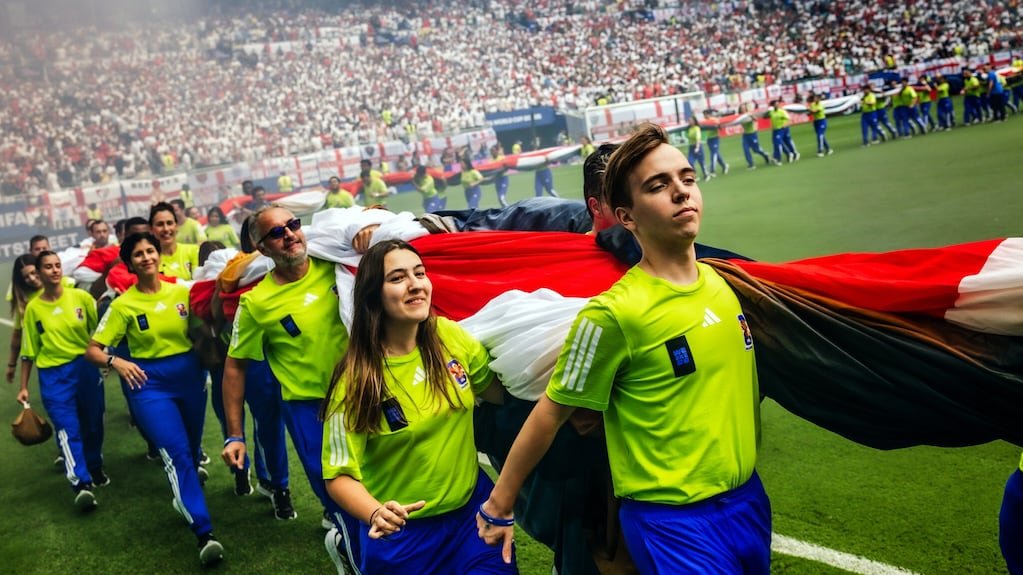
Poco más de cinco horas antes de que iniciara el partido de cuartos de final de la Copa Mundial entre Noruega e Inglaterra el sábado, el equipo encargado de la ceremonia previa al partido en el Hard Rock Stadium, cerca de Miami, se topó con un problema inesperado.
La bandera de Inglaterra -esa enorme que se despliega antes de que los jugadores salgan a la cancha- tenía manchas de moho. Al parecer, ni siquiera una tela 100 por ciento poliéster reciclado podía escapar de los estragos del calor y la humedad del verano en el sur de Florida.
A estas alturas, el equipo de las banderas ya estaba acostumbrado a resolver problemas. Era el sexto partido en Miami Gardens y el número 99 en el extenso torneo de futbol de este año. Los equipos encargados de las ceremonias, uno en cada una de las 16 sedes de la Copa Mundial, habían superado todo tipo de obstáculos logísticos con sus banderas gigantes, incluyendo al menos una bandera a la que le pusieron la etiqueta del país equivocado durante el envío y otra infestada de ratones. Cada bandera de estadio mide unos 53 metros por 38.
El sábado por la mañana, el equipo de Miami tuvo que improvisar. Tanto los tramoyistas como los supervisores tomaron escobas y líquido limpiador y consiguieron eliminar gran parte del moho.
El equipo trabajó en el estacionamiento de un estadio rodeado de remolques de cadenas de televisión, con el espacio justo para desplegar la bandera. Aunque el día estaba nublado, el Servicio Meteorológico Nacional había advertido que la sensación térmica podría alcanzar los 43 grados Celsius, en parte debido a la humedad.
A continuación, los 22 tramoyistas se prepararon para doblar la bandera de tal forma que un pequeño ejército de abanderados voluntarios pudiera desplegarla rápida y fácilmente en la cancha. Al ritmo de la cuenta rítmica y repetitiva de “¡Uno, dos, tres… ya!”, agarraron la bandera al unísono por uno de sus extremos largos y la enrollaron. Se echaron el rollo a los hombros y lo llevaron al interior para colocarlo a lo largo de uno de los túneles de entrada del estadio, listo para más tarde..
Las banderas se han convertido en iconos instantáneos de este Mundial, y los aficionados publican fotos de ellas desde el estadio. Llevar la bandera correcta al partido adecuado -hay dos de cada una, por si acaso, que se envían en cajas de madera- y averiguar cómo desplegarlas y doblarlas rápidamente en la cancha requiere una cuidadosa coreografía por parte de los equipos de ceremonias, que, en la práctica, montan un espectáculo previo de siete u ocho minutos antes de cada partido.
Antes del torneo, el equipo de Miami organizó dos días de ensayos fuera del recinto para practicar con los voluntarios que llevan las banderas; se tomaron en cuenta sus edades, estaturas y fuerza física para decidir quién debía llevar cada parte de la bandera y se les infundió un sentido de responsabilidad y orgullo por su tarea. Cada bandera pesa unos 230 kilos (y más si llueve y se moja). Los abanderados que van en el centro tienen que cargar más peso.
Ninguna ceremonia es exactamente igual a otra. En los cuartos de final del sábado se utilizaron efectos pirotécnicos, lo que complicó los movimientos de los portabanderas. En el primer partido en Miami el mes pasado, entre Arabia Saudita y Uruguay, la amenaza de rayos casi impidió que el equipo desplegara las banderas. Durante esa ceremonia, los voluntarios sujetaron ambas banderas -en lugar de extenderlas en la cancha como se hace en la mayoría de los partidos- para seguir un estricto protocolo de respeto hacia la inscripción sagrada de la bandera de Arabia Saudita.
El sábado, los voluntarios que llevaban las banderas -unas 70 personas por cada bandera- formaron una fila en el túnel. Estaban rebosantes de emoción; al parecer, la novedad de su tarea aún no se les había pasado, a pesar de que ya era su sexto partido. Posaron para las fotos y presumieron los pines de la Copa Mundial que habían coleccionado durante el torneo.
Y entonces llegó el momento del espectáculo. Veinte minutos antes del saque inicial, programado para las 5 p. m., los voluntarios levantaron ambas banderas. A 17 minutos de que iniciara el partido, un grupo empezó a desfilar con la bandera de Inglaterra. La bandera de Noruega entró un minuto después. Exactamente a las 4:50 p. m., cuando muchos telespectadores sintonizaron el partido, los voluntarios extendieron las banderas, las sujetaron con pesos y se quedaron de pie respetuosamente. Estaban a punto de sonar los himnos nacionales.
—-
Patricia Mazzei es la reportera principal del Times en Miami y cubre Florida y Puerto Rico.
The New York Times, data-cc, data-cc-nyt

¿Escasez de petróleo?: el FMI advirtió que la continuidad de la guerra en Medio Oriente está agotando las reservas mundiales

Así formará Argentina ante Inglaterra en la semifinal del Mundial: Scaloni anunció un cambio en el equipo titular

El impacto del Mundial en la gestión y los desafíos del Gobierno para retomar la agenda la próxima semana

Gran Bretaña expresó su “preocupación” por las acusaciones de Villarruel y pide “concentrarse en el partido”

En el 67% de las empresas hubo despidos en 2026, con reducción de costos como motivo principal

Giro en la causa: el llamativo dato que arrojó la autopsia al cuerpo incinerado en Fuerte Apache

El álbum de las vacaciones soñadas de Darío Barassi con su familia: “Ibiza, nos vas enamorando”

“Hablame bien”: el tenso cruce de Lionel Messi con el árbitro en la victoria de Argentina ante Suiza en el Mundial

El petróleo sube más de 3% tras la reanudación de los ataques de EEUU contra Irán y la amenaza de cierre del estrecho de Ormuz

Cámara de Comercio panameña cierra filas y llama a fortalecer la Zona Libre de Colón

 CHIMENTOS3 días ago
El álbum de las vacaciones soñadas de Darío Barassi con su familia: “Ibiza, nos vas enamorando”
- ECONOMIA3 días ago
El petróleo sube más de 3% tras la reanudación de los ataques de EEUU contra Irán y la amenaza de cierre del estrecho de Ormuz
- INTERNACIONAL3 días ago
Lluvias en el norte de Guatemala activan un puente aéreo, pero el riesgo de nuevas crecidas sigue en aumento