INTERNACIONAL
LA mayoral race heads to November runoff as Karen Bass faces Mamdani-style socialist

NEWYou can now listen to Fox News articles!
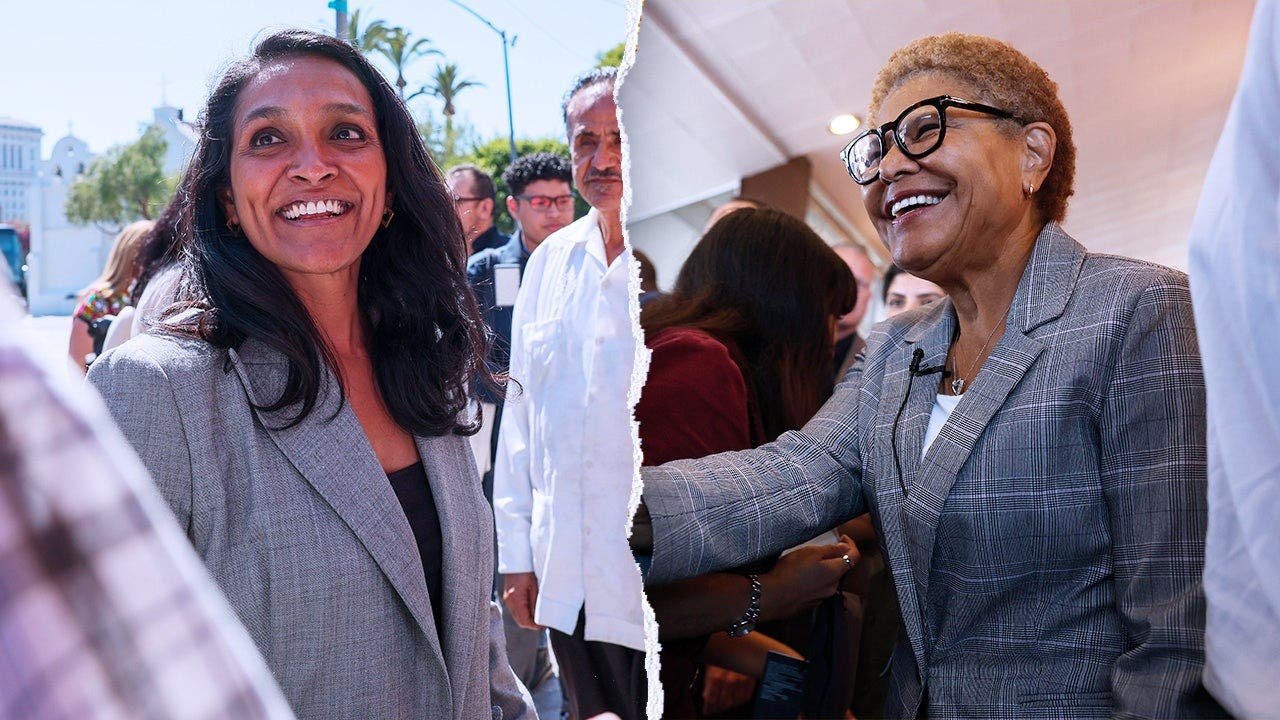
Los Angeles City Councilwoman Nithya Raman advanced Monday evening to a runoff election against Mayor Karen Bass in a heated race that has garnered national attention.
The outcome sets up a general election that pits Bass, an incumbent fending off criticism about her record, against Raman’s progressive message of government-led affordability measures. The result means Spencer Pratt, a Republican and former «The Hills» reality TV star, is out of the race, according to The Associated Press.
Voters will decide the overall winner on Nov. 3.
«I’m incredibly honored that voters have given us the opportunity to advance to the general election for Mayor of Los Angeles,» Raman said in a statement. «… If you’re as frustrated by the broken status quo as I am, I hope you’ll join our movement to build a city that works for everyone.»
LA CITY COUNCILWOMAN PREVIOUSLY BACKED BY DSA RUNNING FOR MAYOR IN PRIMARY CHALLENGE TO BASS
A Los Angeles city councilwoman and progressive candidate for mayor Nithya Raman, left, pictured alongside incumbent mayor Karen Bass, right (Ronaldo Bolaños / Los Angeles Times via Getty Images; Photo by Justin Sullivan/Getty Images)
In a post on X, Bass took aim at both Pratt and what she characterized as the «MAGA agenda,» while also criticizing Raman.
«We won on Tuesday — and LA rejected Spencer Pratt and the MAGA agenda. Next, we’ll win in November!» Bass wrote. «Because this is an election with a choice between whether we keep making change together or Nithya Raman, who allows encampments near schools and fights against hiring more cops, yet is MIA on saving Hollywood jobs and fighting back when ICE invades LA.»
Raman, a member of the Los Angeles City Council and Democratic Socialists of America, has served as chair of the Housing and Homelessness Committee since 2023. She has also been dubbed a Mamdani-style socialist, referring to far-left New York City Mayor Zohran Mamdani.
In her view, there is more the city could be doing to address not just its homelessness problem, but also increasing housing supply, maintaining public safety, furthering climate goals and pushing back against federal immigration enforcement efforts.
SPENCER PRATT TELLS BILL MAHER HE WOULD ARREST HIM AS LA MAYOR FOR SMOKING POT IN FRONT OF KIDS
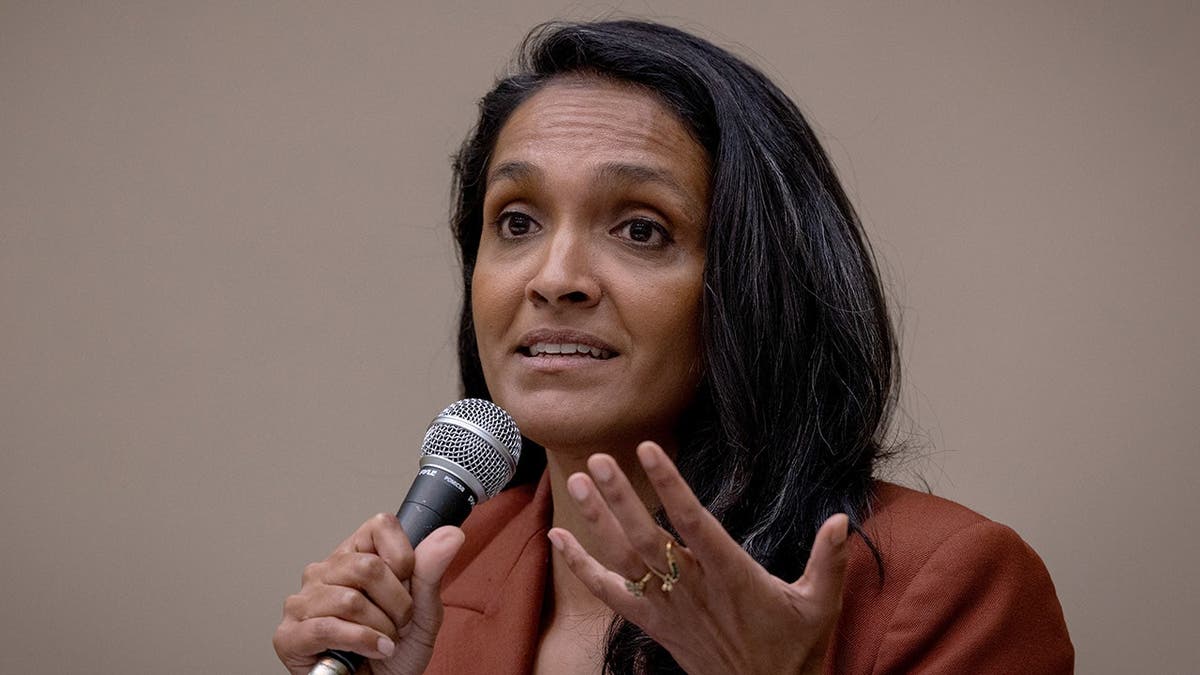
Raman has also been dubbed a Mamdani-style socialist, referring to far-left New York City Mayor Zohran Mamdani. (Eric Thayer/Getty Images)
«We can bring LA back to what it really is: one of the most creative, beautiful and most hopeful places in the world. But only if we come together to fight for it,» Raman said in a campaign video.
During the race, Raman pitched herself as a hopeful alternative to Bass’ leadership and what she called a fear-fueled campaign from Spencer Pratt, a rightward-leaning independent who gained traction in the closing weeks of the campaign.
«We have a mayor who has failed to lead this city and, on the other hand, a right-wing extremist, powered by MAGA, who’s channeling people’s frustrations about this city into fear and anger and hatred,» Raman said.
Bass, who first came into office in 2022, argues she has a track record that is taking the city in the right direction.
Despite fending off criticisms about the Palisade fires, a stubbornly visible homelessness population and budget deficits, Bass argued she’s taken steps to address all of those areas in her three years in the role.
LOS ANGELES MAYOR BASS SAYS ‘HELL YEAH’ SHE REGRETS GHANA TRIP AFTER WILDFIRES RAVAGED CITY

Los Angeles Mayor Karen Bass said «it depends» when asked whether noncitizens should be allowed to vote in local elections. (Getty Images)
CLICK HERE TO DOWNLOAD THE FOX NEWS APP
«Los Angeles is at a turning point. After decades of rising homelessness, under-built housing and a shrinking police force, it’s Mayor Karen Bass who finally stepped up to change how City Hall works,» Bass’s website reads.
«Homelessness is down, more housing is being built and LAPD is hiring new officers.»
Democratic California Gov. Gavin Newsom endorsed Bass on May 28.
Bass originally won election in 2022 in a 54.8% to 45.2% victory over independent challenger Rick J. Caruso.
elections, gavin newsom, democrats elections, primary results, homeless crisis










INTERNACIONAL
Estados Unidos desvió siete buques comerciales en el mar Arábigo para garantizar el bloqueo sobre los puertos iraníes

El Comando Central de Estados Unidos (CENTCOM) informó este lunes que las fuerzas estadounidenses redirigieron siete buques comerciales y dejaron fuera de servicio otra embarcación como parte de las operaciones destinadas a reforzar el bloqueo naval impuesto sobre los puertos iraníes. La medida forma parte de la campaña militar lanzada por Washington para restringir el tráfico marítimo vinculado con Irán en el estrecho de Ormuz, uno de los corredores energéticos más importantes del mundo.
A través de un comunicado publicado en la red social X, el mando militar estadounidense señaló que las operaciones continúan desde el mar Arábigo con el apoyo del buque de asalto anfibio USS Boxer.
“El 20 de julio, las fuerzas estadounidenses han redirigido siete buques comerciales y han inutilizado a otro para evitar que partieran o arribaran a los puertos iraníes”, indicó el CENTCOM.
La institución agregó que efectivos desplegados a bordo del USS Boxer mantienen operaciones aéreas durante el día y la noche mientras se ejecuta el bloqueo naval contra Irán.
El anuncio representa una actualización de las medidas adoptadas por Washington desde que restableció, el pasado 14 de julio, las restricciones marítimas contra la república islámica.

Las autoridades estadounidenses no ofrecieron detalles sobre la identidad de las embarcaciones afectadas por las interceptaciones ni precisaron el lugar exacto donde fueron desviadas o inmovilizadas.
El comunicado fue difundido el mismo día en que trascendió un nuevo incidente en el estrecho de Ormuz que involucró a dos petroleros operados por una empresa griega.
De acuerdo con información proporcionada por la consultora especializada MARISKS, los buques cisterna Kavomaleas, con bandera de Malta, y VLCC Acheloos, registrado en Liberia, fueron alcanzados por misiles mientras navegaban por el corredor sur del estrecho frente a las costas de Omán.
Ambas embarcaciones son operadas por la compañía Dynacom, con sede en Atenas, y fueron atacadas casi de manera simultánea durante la noche. Hasta el momento, las autoridades no han identificado el origen de los proyectiles.
En el caso del Kavomaleas, dos misiles impactaron en la sala de máquinas, lo que provocó un incendio que pudo ser controlado mediante los sistemas automáticos de extinción del propio buque. Posteriormente, la tripulación abandonó la nave y fue rescatada sin sufrir lesiones.
El Acheloos, por su parte, recibió el impacto de un misil en la popa, lo que ocasionó daños estructurales. A pesar de la avería, el petrolero logró dirigirse a una zona de fondeo y todos sus tripulantes permanecieron a salvo.

Poco después del ataque, la Guardia Revolucionaria iraní afirmó que dos buques cisterna que utilizaban una ruta marítima considerada “insegura” habían quedado fuera de servicio. Sin embargo, el régimen iraní no asumió la autoría del lanzamiento de los misiles.
La consultora MARISKS advirtió que estos episodios reflejan un deterioro de las condiciones de seguridad para la navegación comercial en la región, donde continúan los enfrentamientos entre Estados Unidos e Irán.
La escalada coincide con la intensificación de las operaciones militares estadounidenses. El domingo, el CENTCOM anunció una nueva ronda de bombardeos contra objetivos iraníes, correspondiente a la novena jornada consecutiva de ataques desde la reanudación del conflicto.
Según el mando militar, las operaciones buscan destruir capacidades utilizadas por Irán para atacar embarcaciones mercantes y buques civiles que transitan por el estrecho de Ormuz.
La nueva ofensiva fue anunciada pocas horas después de que Estados Unidos confirmara la muerte de un tercer militar estadounidense en Irak. Ese fallecimiento se sumó al de otros dos soldados que perdieron la vida recientemente en Jordania, en los primeros casos registrados desde el fin del alto el fuego entre Washington y Teherán.

Con esas bajas, el número de militares estadounidenses muertos desde el inicio de la guerra el 28 de febrero ascendió a 17, según el balance difundido por las autoridades estadounidenses.
Mientras continúan los bombardeos y el refuerzo del bloqueo marítimo, Irán ha respondido con ataques contra posiciones militares estadounidenses en países aliados del Golfo y ha advertido que adoptará nuevas represalias si Washington mantiene sus operaciones militares en la región.
INTERNACIONAL
Trump admin taunts left for ‘praying’ for World Cup disaster as DOT touts record numbers
NEWYou can now listen to Fox News articles!
EXCLUSIVE: President Donald Trump’s Transportation Secretary Sean Duffy is claiming victory over the left after a successful FIFA World Cup tournament that saw record-shattering numbers of fans moving through the U.S.
Several million FIFA fans flocked to American stadiums this year, putting an enormous strain on federal, state and local transportation networks. However, aided in part by a more than a $100 million DOT infrastructure investment to World Cup host cities, the tournament went off without any major incidents, prompting Duffy to taunt doomsayers who predicted the country would fall on its face.
«The Left was praying for an American transit disaster as we hosted the most important international sporting event in modern history,» Duffy told Fox News Digital.
«They were wrong, and President Trump was right.»
FBI BOSS KASH PATEL DETAILS HOW AGENCY AND PARTNERS SECURED RECORD-SHATTERING FIFA WORLD CUP
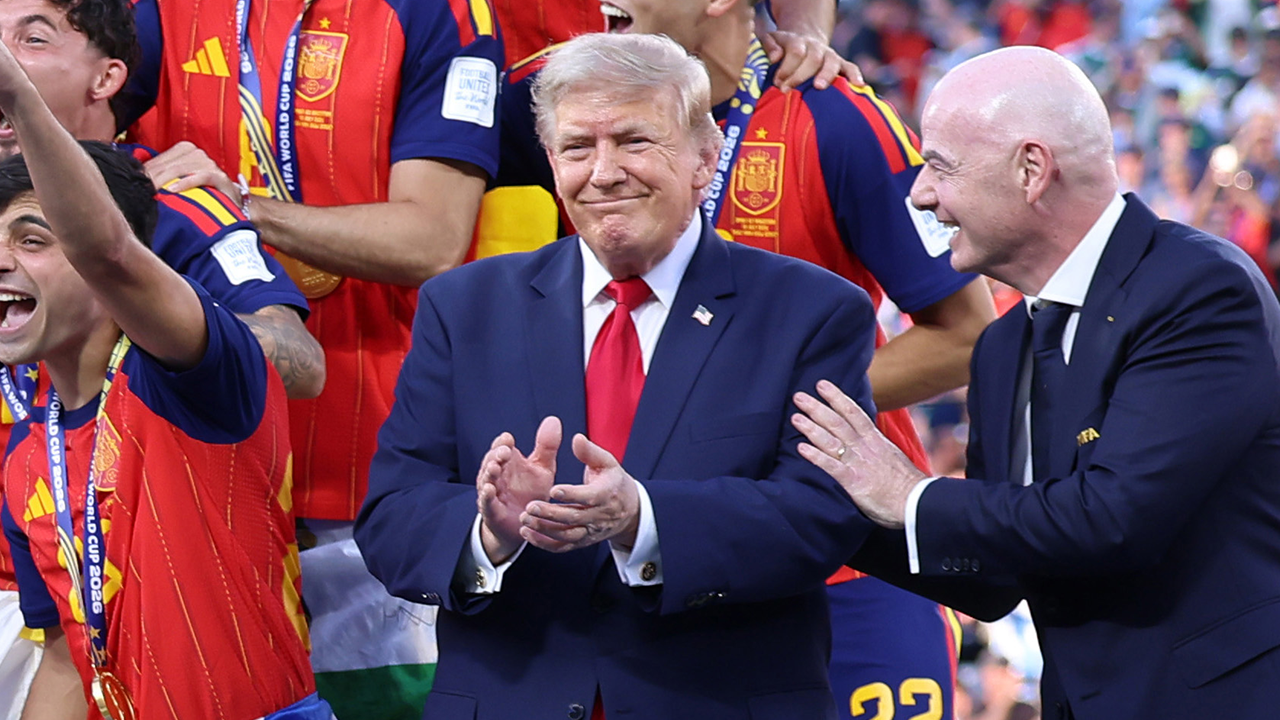
FIFA President Gianni Infantino (right) with President Donald Trump as Spain lifts the FIFA World Cup trophy after the FIFA World Cup 2026 Final match at New York New Jersey Stadium on July 19, 2026 in East Rutherford, New Jersey. (Catherine Ivill – AMA/Getty Images)
Among the naysayers was Sen. Ruben Gallego, D-Ariz., who in April accused the Trump administration of endangering FIFA fans by «systematically dismantling security agencies, delaying critical security assistance, and initiating a war with Iran.» All this, Gallego said, made the country’s top security agency, the Department of Homeland Security, «woefully unprepared to accomplish its mission.»
Gallego remarked that «if state and local officials do not trust that federal employees will coordinate in lockstep and operate as partners, they will be unable to protect their communities—increasing threat risk and compromising Americans’ safety in the process.» He added that «this self-imposed chaos extends to the Trump administration’s management of federal departments and agencies.»
Senate Minority Leader Chuck Schumer, D-N.Y., took a similar tone, asserting ahead of the tournament that «Trump cares more about being on international TV at midfield on match day than actually hosting successful games.»
In May, The Atlantic published a piece titled «Another Way America Will Choke at the World Cup,» in which the author predicted that «in the coming months, America’s patchwork railway system will be similarly challenged—and its weaknesses exposed—across all 11 U.S. sites of World Cup matches.»
Nathaniel Sizemore, a spokesperson for the agency, told Fox News Digital that it was «the Left’s TDS [Trump derangement syndrome]» that «put them in the absurd position of praying for an American transit disaster.»
PRESIDENT TRUMP STEALS PART OF SPOTLIGHT AS SPAIN CELEBRATES WORLD CUP TITLE OVER ARGENTINA
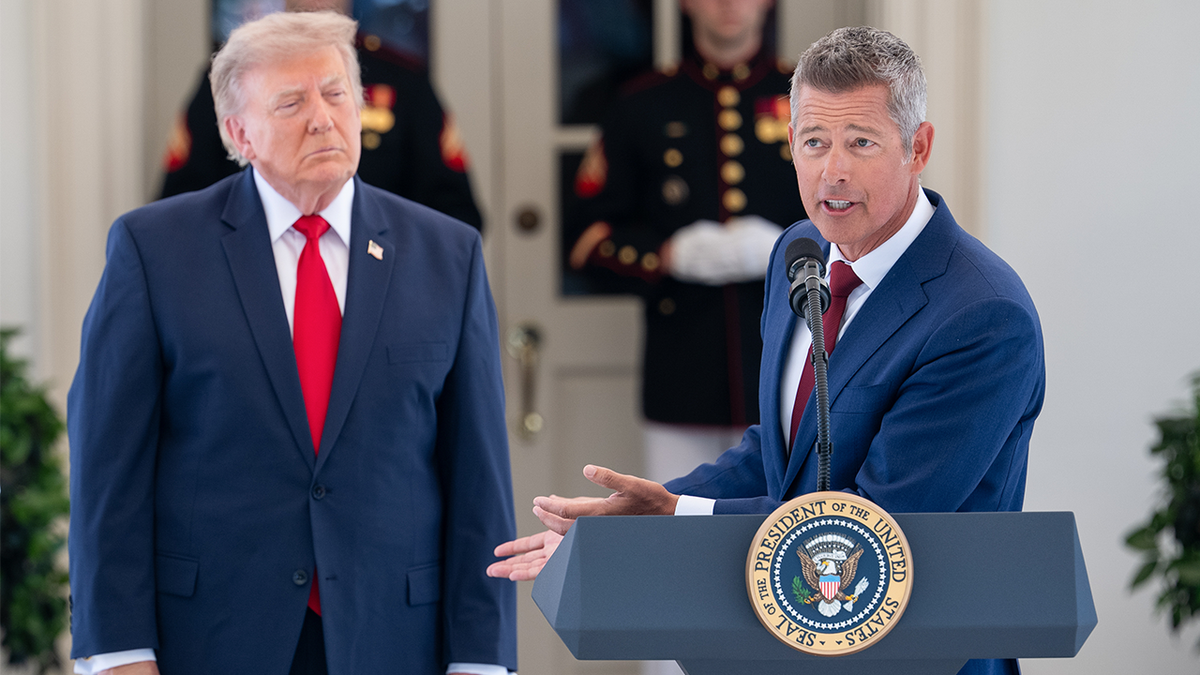
President Donald Trump and Transportation Secretary Sean Duffy during a Freedom 250 Grand Prix showcase at the White House in Washington, DC, US, on Monday, July 13, 2026. (Aaron Schwartz/CNP/Bloomberg via Getty Images)
However, with the World Cup officially concluded, the results are in and, according to DOT, they are conclusive. The department said that, aided by its $100.3 million in federal funding to host cities, local transit systems accommodated record-breaking numbers.
During the World Cup, Atlanta saw more than 2 million riders use public transit to get to matches, fan fests, and other events, with match-day ridership reaching up to three times the typical average.
In Seattle, DOT said that more than 1.1 million combined riders used city public transit during the first two matches alone. On July 6, the city’s light rail system accommodated 309,000 riders, blowing well past the system’s single-day record of 220,000 riders.
Meanwhile, Philadelphia, which also hosted this year’s MLB All-Star Game, saw an average of 27,000 riders using public transit per match. The city’s PHLASH bus service recorded a 500 percent increase in ridership.
Even cities not previously known for their public transit systems accommodated record numbers. Kansas City saw a one-day record for streetcar riders at 48,260 on June 27. Los Angeles saw a 598 percent increase in rider taps on World Cup match day compared to a typical Friday.
To put it further in perspective, DOT said that in San Francisco, an average of more than 38,000 fans moved to and from World Cup matches using public transit, exceeding Super Bowl LX’s numbers by nearly 8,000.
DOT is not the only one that noticed the U.S. public transit system performing.
At the start of the tournament, Vox ran a piece titled «The World Cup has a Trump problem.» In the piece, the outlet accused Trump of «actively hindering» the World Cup and other sporting events, especially through the president’s «hostility to all immigrants … especially to non-white ones.» Yet, ahead of the final match, Vox wrote that «the nation’s widely expected World Cup public transit meltdown has simply not materialized.»
RILEY GAINES: WORLD CUP VISITORS ARE REMINDING AMERICANS WHAT MAKES THIS COUNTRY GREAT

General view inside the stadium during the halftime show in East Rutherford, N.J. (Mike Segar/Reuters)
The outlet said that «to the surprise of pretty much everyone, US cities have managed to absorb the influx of fans with relative ease, even under the pressure of record ridership en route to stadiums, watch parties, and fan zones.»
Duffy, however, was not surprised.
«Whether they flew, took passenger rail, hopped on public transit, or hit the open road, Americans and visitors alike saw the best of our nation over the last month,» he told Fox News Digital.
CLICK HERE TO DOWNLOAD THE FOX NEWS APP
He added that «from the FTA’s investment into local public transit to the FAA’s work keeping our skies safe, we were proud to help FIFA fans get to the games safely and on time.»
Fox News Digital reached out to Gallego, Schumer, The Atlantic and Vox for comment.
the world cup, transportation, donald trump, sports, politics
INTERNACIONAL
El dilema del rearme europeo: se protege de Rusia, pero beneficia a China y a Vladimir Putin
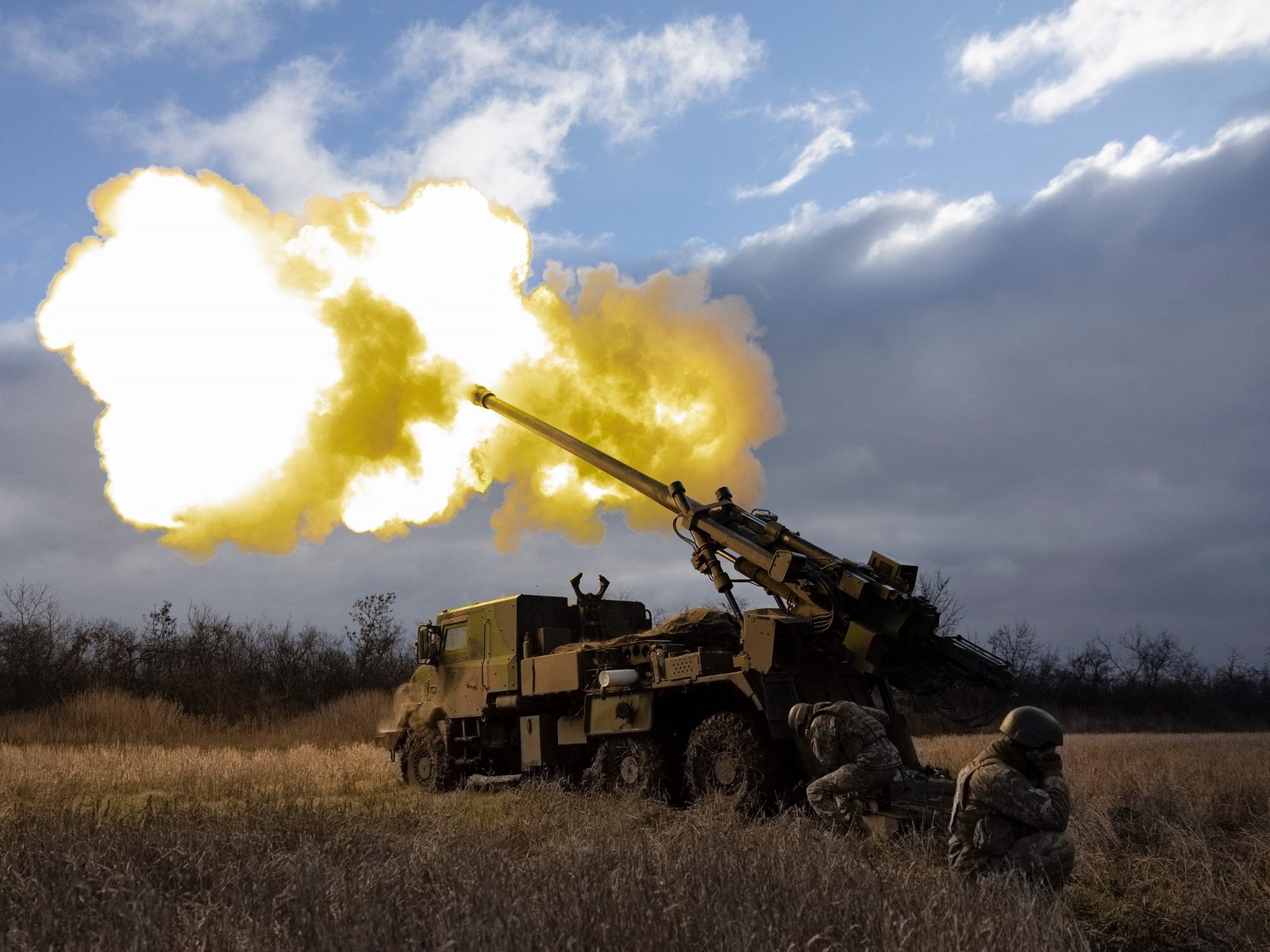
Europa decidió rearmarse incluso antes de la llegada de Donald Trump a la Casa Blanca, aunque ese acontecimiento acelerara los planes. El año pasado los 27 países de la Unión Europea aumentaron un 20% de media su gasto militar para llegar a un porcentaje de gasto sobre PBI que no se veía desde el fin de la Guerra Fría.
Europa se rearma por miedo a Rusia y porque desconfía de que Estados Unidos vaya a cumplir con sus obligaciones como miembro de la OTAN y vaya a acudir en su ayuda si al Kremlin se le ocurre atacar más países, además de Ucrania.
Pero el rearme, más allá de los problemas políticos que provoca en algunos países, de que el dinero tiene que salir de otras partidas de gasto o de más impuestos y de que ni siquiera la industria militar está siendo capaz de seguir el ritmo, genera un dilema. Porque rearmándose Europa está financiado a su enemiga rusa y a una potencial enemiga, China.
La industria europea necesita materias primas que debe importar, principalmente, de esos dos países, dos superpotencias mineras. Porque a Europa le falta titanio, tungsteno, grafito, galio, germanio y otros metales que vienen principalmente de Rusia y China. Además, Moscú y Beijing podrían en cualquier momento bloquear las exportaciones de esos minerales a Europa o incluso a terceros países si saben que terminarán en la industria militar europea.
El debate no es nuevo. El Tribunal de Cuentas de la Unión Europea publicó el febrero un extenso informe sobre los problemas europeos para conseguir los minerales y tierras raras para la transición energética. Informe que es aplicaba a la industria militar porque parte de los insumos necesarios son los mismos.
Ese informe, que ha servido de base para propuestas europeas de Defensa en las últimas semanas y que deberían tener el visto bueno de los gobiernos en una cumbre de ministros de Defensa a finales de agosto, señala la vulnerabilidad europea a la hora de conseguir los minerales necesarios para fabricar desde munición hasta radares pasando por aviones de combate, drones o sistemas de guerra electrónica. Sin suficiente titanio, tungsteno, grafito, galio, germanio y otros es imposible sostener la producción industrial de maquinaria bélica al ritmo que quieren los europeos.
Europa tiene principalmente dos problemas. El primero tiene poca solución. Los recursos mineros en el Viejo Continente son limitados en esos minerales. Pero tiene un segundo problema que sí podría solucionar y que ahora mismo la hace depender de China. Beijing concentra buena parte de la capacidad mundial de procesamiento de esos minerales.
Esa concentración en manos del Gobierno chino (porque aunque las minas en ocasiones son de gestión privada es el Gobierno quien da las licencias de exportación) es un riesgo para los europeos. En marzo de 2024 la Unión Europea aprobó su Reglamento de Materias Primas Fundamentales. Cubre 34 materiales que Europa considera estratégicos para transición energética, tecnología en general e industria militar en particular.
Ese reglamento pone objetivos. Asegura que la UE debe conseguir reducir sus dependencias de China. Ese reglamento sirvió para aprobar el pasado diciembre para lanzar planes para coordinar almacenamiento en Europa y para diversificar los proveedores, para que no todo dependa de China.
El objetivo es que en 2029 ningún proveedor tenga más del 50% del mercado europeo. Uno de los planes es desarrollar más la minería de esos minerales en Europa para explotar lo que quede en el subsuelo. Pero el propio Tribunal de Cuentas señala que la concesión de permisos sigue siendo lenta y que siete de los 27 países del bloque reciclan entre el 1% y el 5% de esos minerales después de usados y 10 países no reciclan nada. El informe afea que abrir una mina lleva prácticamente una década entre permisos ambientales y financiación. Si no hay oposición social y termina por abandonarse el proyecto.
El Tribunal de Cuentas retoma un eslogan muy repetido por los responsables europeos en los últimos años, el de la “autonomía estratégica” para recordar que “sin materias primas estratégicas no habrá autonomía estratégica”.
Europa sabe que tiene que acelerar porque, además, China usó en el pasado y puede volver a usar las licencias de exportación de minerales y tierras raras como arma de presión política. En caso de crisis comercial o de otra índole entre Bruselas y Beijing, el Gobierno chino podría suspender la exportación de esos minerales.

“Imágenes épicas”: los videos inéditos del espectacular doble sobrepaso de Colapinto en el GP de Bélgica de F1

Viaje a la frontera norte. Las seis rutas principales de la Argentina para el contrabando y el narcotráfico

Estados Unidos desvió siete buques comerciales en el mar Arábigo para garantizar el bloqueo sobre los puertos iraníes

Milei dijo que los jugadores de la Selección no quisieron festejar tras la final y habló sobre los próximos pasos del Gobierno

Mercados: subieron las acciones argentinas y cedió el riesgo país por la firmeza de los bonos

Una multitud recibió a la selección de España en Madrid: así fue la fiesta

Rubio’s call to combat global funders of far-left terrorism could put Singham in crosshairs

Sismo de 7.4 sacude a Guatemala: Autoridades declaran alerta anaranjada por daños y descartan tsunami

Canales para ver EN VIVO el San Lorenzo vs. Deportivo Riestra por la Copa Argentina

Rogelio Frigerio presentó un seguro multirriesgo con un fondo de USD 1 millón para el maíz en Entre Ríos

 INTERNACIONAL2 días ago
Estados Unidos cambia una regla histórica del jugo de naranja vigente desde 1963 y afecta a toda la industria
- CHIMENTOS3 días ago
Es el conductor más querido de la tele y tan argentino como el mate, pero pocos saben que nació en España: ¿a quién alentará en la final?
- DEPORTE3 días ago
Antes de la clasificación, Franco Colapinto afrontará la última práctica libre del GP de Bélgica: hora, TV y todo lo que hay que saber