INTERNACIONAL
Lebanon accuses Iran of inserting IRGC terrorists into country ‘under guise of diplomatic activity’

NEWYou can now listen to Fox News articles!
The Lebanese government filed a sharply worded complaint with the United Nations arguing that the Islamic Republic of Iran has abused diplomatic immunity by refusing to recall its ambassador after Beirut demanded his expulsion and to stop alleged terrorist activities on its soil, according to a recently surfaced letter from late April.
The disclosure of the letter, which is reportedly a precedent-setting move by Lebanon, comes amid a second day of talks in Washington between Israel and Lebanon to normalize relations (the countries are in a state of war) and dismantle the Iranian-regime-backed Hezbollah terrorist movement in Lebanon.
A U.S. State Department spokesperson told Fox News Digital on Friday that «The United States facilitated talks between Israel and Lebanon have resumed today and are ongoing. The atmosphere of talks has been very positive, even exceeding expectations.»
FAMILY OF AMERICAN HOSTAGE TORTURED IN LEBANON WINS LANDMARK CASE AGAINST IRAN
A mourner holds a portrait of Iran’s supreme leader Ayatollah Ali Khamenei during a funeral procession on March 5, 2026, for members of Iraq’s pro-Iran paramilitary group Kataeb Hezbollah killed in a strike in Baghdad the previous day. (Ahmed Al-Rubaye/AFP via Getty Images)
State Department spokesman Tommy Pigott wrote on X on Friday that «On May 14 and 15, the United States hosted two days of highly-productive talks between Israel and Lebanon. The April 16 cessation of hostilities will be extended by 45 days to enable further progress. The State Department will reconvene the political track of negotiations on June 2 and June 3.»
He added that, «In addition, a security track will be launched at the Pentagon on May 29 with military delegations from both countries. We hope these discussions will advance lasting peace between the two countries, full recognition of each other’s sovereignty and territorial integrity, and establishing genuine security along their shared border.»
As the sides report back to their capitals, the potentially game-changing letter in which Lebanese ambassador to the U.N. Ahmad Arafa, slammed Iran for inserting alleged terrorists from Iran’s Islamic Revolutionary Guard Corps (IRGC) into Lebanon «under the guise of diplomatic activity,» has given hope to critics of Iran and Hezbollah.
Arafa said, according to the letter, that Iran committed «unlawful acts in blatant defiance of the decisions of the Government of Lebanon.» He continued, «This Iranian conduct constitutes direct and blatant interference in the internal affairs of Lebanon and drags the country into a war it did not choose to become involved in.»
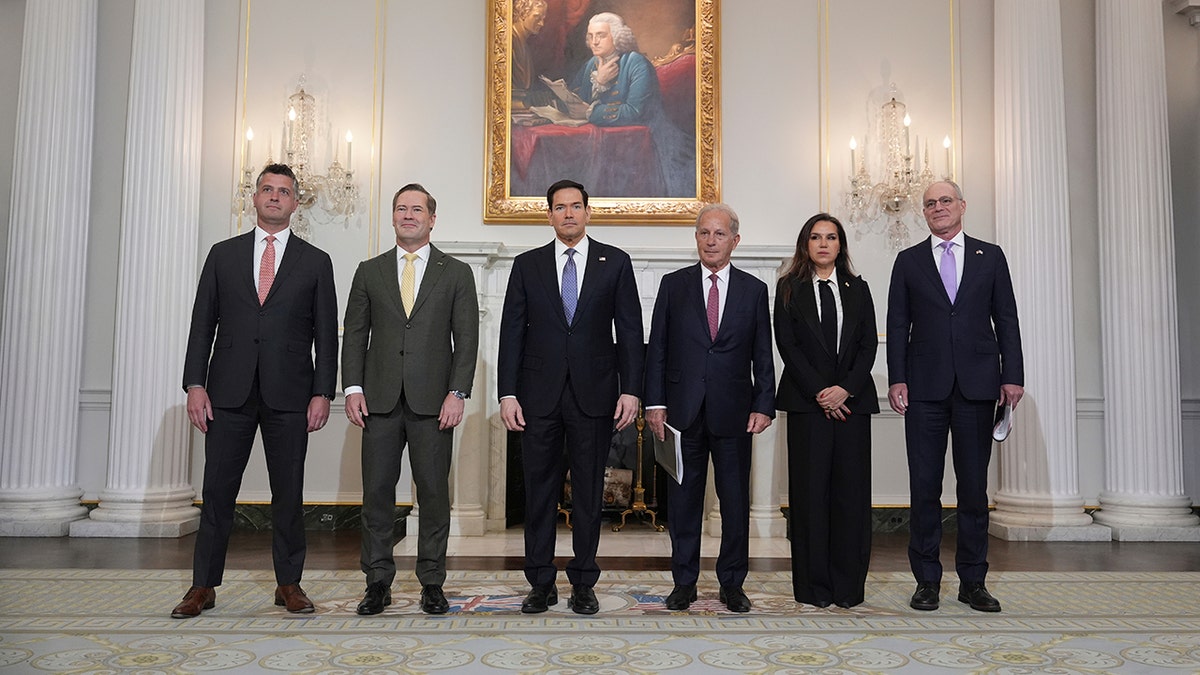
Michael Needham, counselor for the U.S. Department of State, U.S. Ambassador to the United Nations Mike Waltz, Secretary of State Marco Rubio, U.S. Ambassador to Lebanon Michel Issa, Lebanese Ambassador to the U.S. Nada Hamadeh Moawad, and Israeli Ambassador to the U.S. Yechiel Leiter pose for a photo before a meeting at the State Department in Washington, D.C., on April 14, 2026. (Jacquelyn Martin/AP)
The U.S. and the European Union have classified the IRGC as a terrorist entity.
The letter took the Iranian Ambassador to Beirut, Mohammad Reza Sheibani, to task for «blatant interference» in Lebanon.
According to Lebanon’s U.N. letter, Beirut argued that Iran is violating the 1961 Vienna Convention on Diplomatic Relations and interfering in Lebanon’s state of affairs.
IDF SOLDIERS ACCUSE UN PEACEKEEPERS OF ENABLING HEZBOLLAH TERRORISTS AMID INCREASING CEASE-FIRE VIOLATIONS
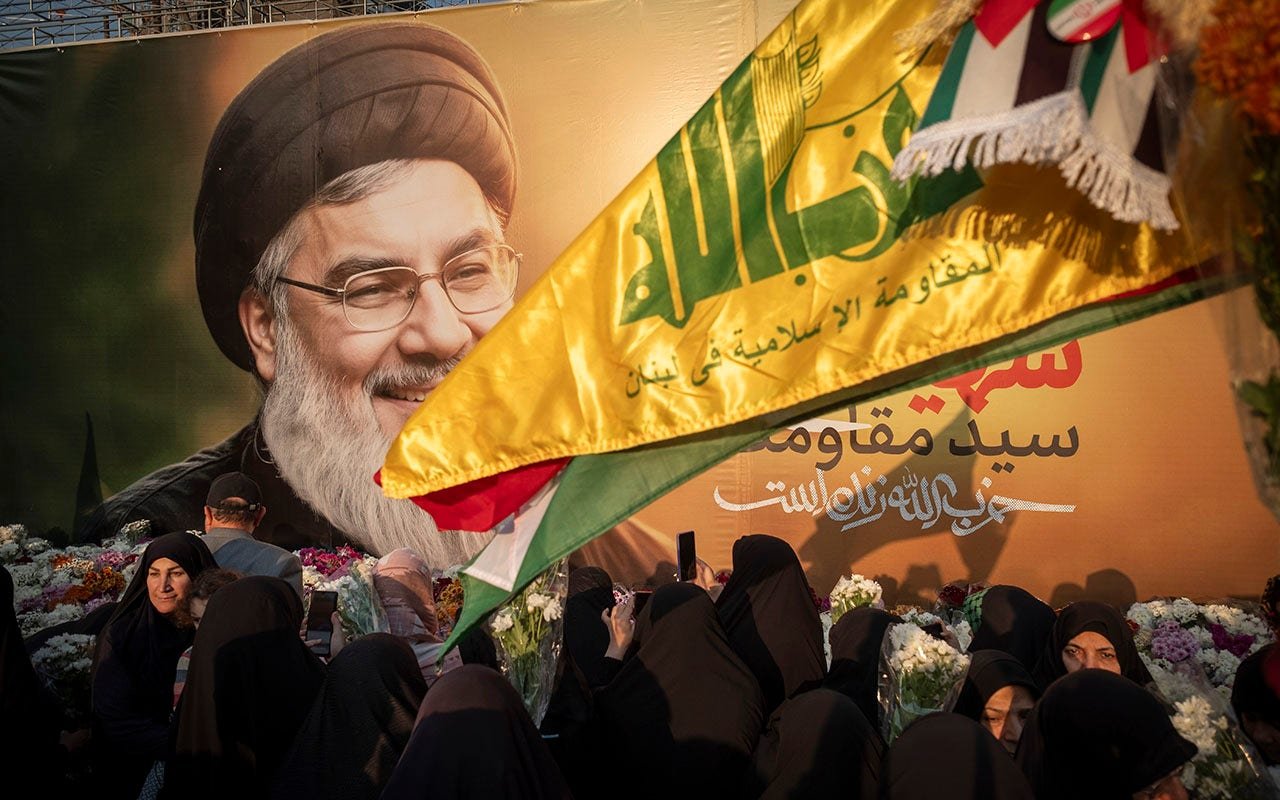
Iranian protesters carry flowers in front of a large banner of Hezbollah Secretary General Hassan Nasrallah during a protest in Tehran on Sept. 30, 2024, condemning an Israeli air strike on Hezbollah’s Beirut headquarters and the killing of Nasrallah and IRGC Quds Force commander General Abbas Nilforoushan. (Morteza Nikoubazl/NurPhoto)
When asked about the details of the letter, a spokesperson for Lebanon’s ambassador to the U.S. declined to comment. The spokesperson also declined to weigh in on the current talks with Israel in Washington.
Walid Phares, a leading U.S. expert on Lebanon and the Mideast, told Fox News Digital that «Many have considered the Lebanese memo to the U.N. as the start of the Lebanese government change of attitude towards Iran and a sign of escalation by Beirut. While the tone of the letter and its narrative make people feel that there is a government resistance to Iran and Hezbollah reality is still lesser.»
He added that «The subject of the last quarrel is a legal change of status regarding the presence of Iranians on Lebanese soil. The Lebanese government has decided not to grant Iranians, government, and private citizens an automatic visa waiver, which upset Iran and Hezbollah. Besides, Tehran is furious at the fact that the Lebanese government has not been helpful in dealing with the elimination of a number of IRGC members killed in Lebanon by Israel. Tehran blames the foreign ministry of Lebanon, particularly foreign minister Youssef Raggi, for the ‘lessening of solidarity with Iran.»‘
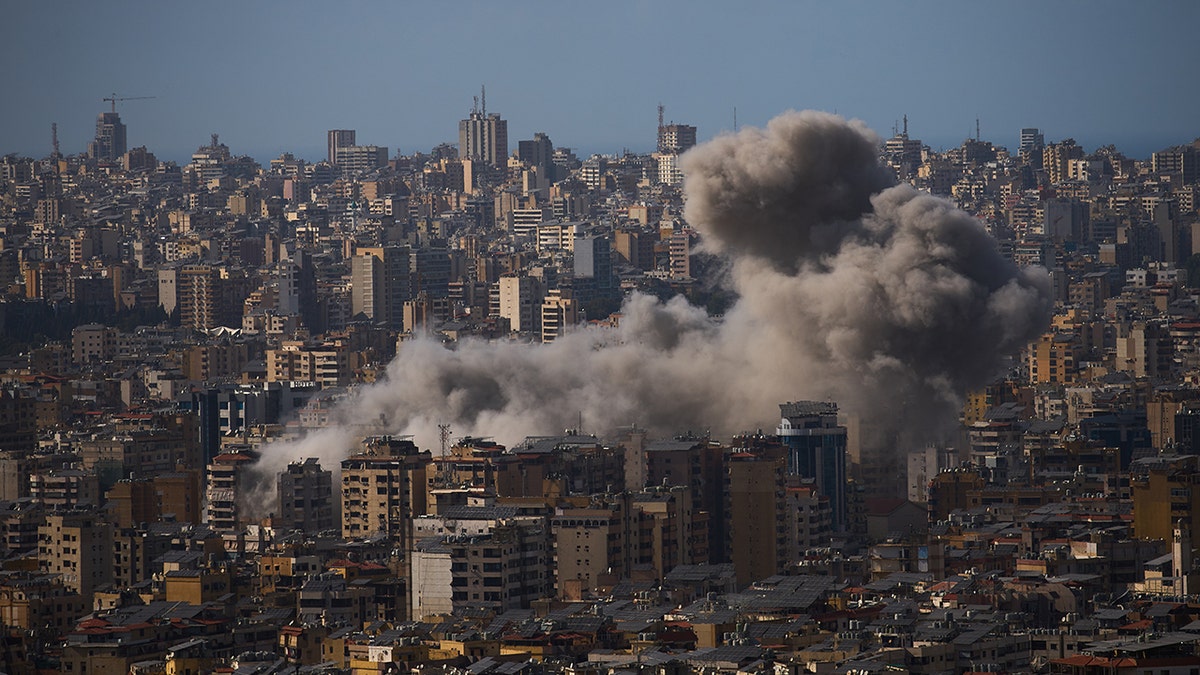
Smoke rises from Israeli airstrikes in Dahiyeh, a southern suburb of Beirut, Lebanon, on April 5, 2026. (Emilio Morenatti/AP)
According to Phares, «Raggi represents a Lebanese Christian bloc in the parliament, who is not sympathetic to the regime. However, the actual talks in D.C. are designed by the Lebanese government to show the Trump administration that the ‘state wants to talk’ but not to reach an agreement that would trigger Hezbollah’s wrath. The leaders of the Lebanese state are not yet where the U.S. and Israel expect them to be.»
CLICK HERE TO DOWNLOAD THE FOX NEWS APP
A regional official well-versed in the U.N. dispute told Fox News Digital that Lebanon «argued that Iran had not given the Lebanese foreign ministry the list of all Iranians and the details about their place of stay. And that’s why Israel targeted that hotel in Lebanon in which six were killed, which is true.»
The official said that «Iran had not told the foreign ministry of Lebanon about those six people.»
war with iran, lebanon, united nations, israel, state department, terrorism






INTERNACIONAL
Indonesian passenger ship carrying 240 people loses contact in Java Sea, search underway

NEWYou can now listen to Fox News articles!
A passenger ship carrying 240 people vanished from contact in the Java Sea on Sunday local time, triggering an urgent search as Indonesian crews raced to locate the vessel.
The Virgo Transport 8 was traveling from Surabaya, East Java, to Banjarmasin on the island of Borneo when communications with the ship were lost, the Associated Press reported, citing Indonesia’s Banjarmasin Search and Rescue Office.
Authorities said the vessel was last tracked roughly 92 miles from a pier in Banjarmasin, the capital of South Kalimantan province.
MOM LOSES GRIP ON DAUGHTER AS PASSENGER FERRY CAPSIZES WITH 20 PEOPLE STILL MISSING
Authorities are searching for the Virgo Transport 8 after the passenger ship lost contact while traveling from East Java to South Kalimantan. (EyesWideOpen/Getty Images)
Search-and-rescue teams launched an operation after receiving a report that the ship had suffered a communications failure during the voyage, according to the AP.
Officials had not reported any deaths or injuries as of Sunday, and it was not immediately clear what caused the vessel to lose contact or whether weather conditions were affecting the search.
MULTIPLE RESCUED FROM PONTOON BOAT NEAR ALCATRAZ AS SEARCH CONTINUES FOR MISSING PERSONS

The Virgo Transport 8 lost contact while traveling from Surabaya to Banjarmasin, according to officials. (EyesWideOpen/Getty Images)
The Virgo Transport 8 departed Surabaya, Indonesia’s second-largest city, before losing contact while crossing the Java Sea toward South Kalimantan.
The search remains underway.
The Associated Press contributed to this report.
world, asia world regions, missing persons
INTERNACIONAL
‘Trump-level’ smackdown earns Vance roaring praise as 2028 buzz builds at GOP convention
NEWYou can now listen to Fox News articles!
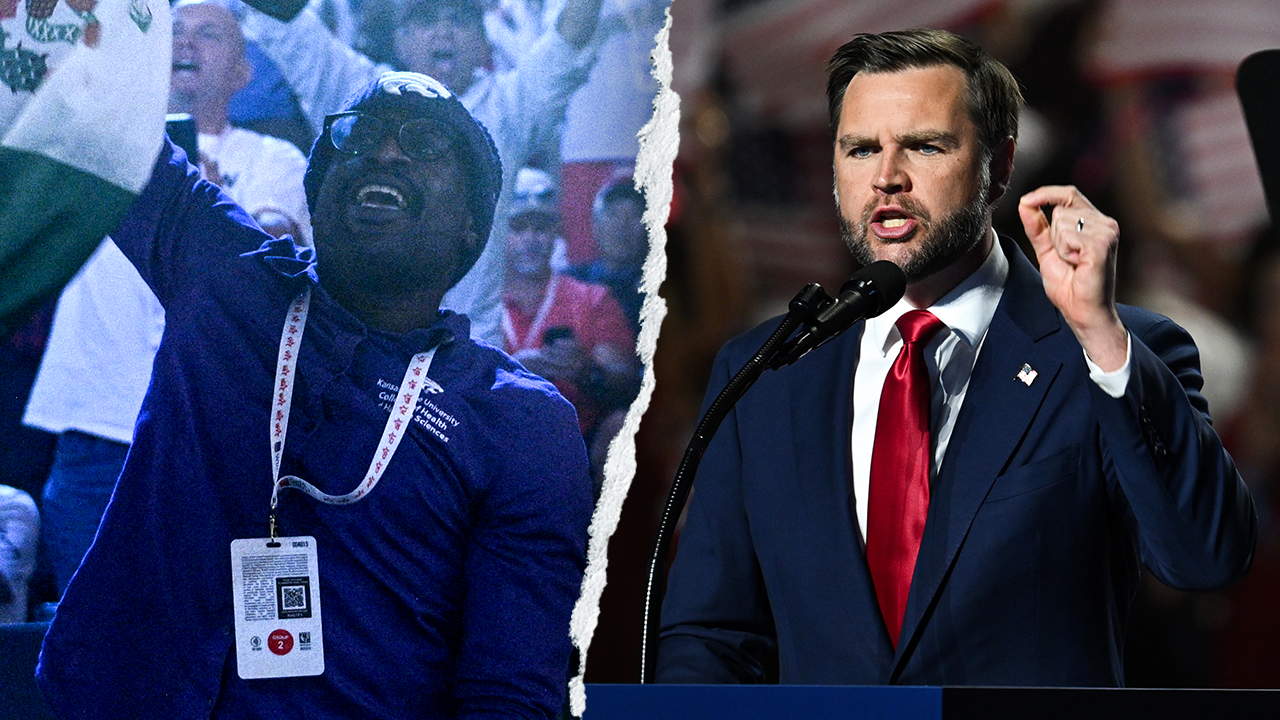
Republicans reached a consensus that Vice President JD Vance solidified his position as the presumptive 2028 presidential candidate with his «Trump-level» smackdown of a foreign flag-waving protester who disrupted his speech at the Republican National Convention.
Vance did not hesitate after a protester interrupted his primetime speech in Dallas on Thursday by waving the flags of the Palestinian Authority and Mexico. He recalled to those watching his speech on TV: «What the people at home missed is that we just had a protester interrupting us and waving the Mexican flag.»
«Well, my friend, if you love Mexico so much, get your a– over there. I’ll buy you the plane ticket,» the VP said, to which the crowd erupted into applause.
«JD Vance just MIC DROPPED a leftist heckler who interrupted him waving a Mexican flag…this place is DEAFENING,» conservative commentator Eric Daugherty wrote on X, adding, «TOTAL PANDEMONIUM.»
CROWD ERUPTS AS VANCE SMACKS DOWN PROTESTER WAVING MEXICAN FLAG: ‘GET YOUR A– OVER THERE’
A protestor throws a Mexican flag as Vice President JD Vance speaks during the second day of the Republican National Committee midterm convention at the American Airlines Center in Dallas, Texas on September 10, 2026. (Brendan SMIALOWSKI / AFP via Getty Images)
Popular conservative pundit Benny Johnson called Vance’s quick wit an «epic response.» President Donald Trump supporter and activist Scott Pressler similarly praised Vance for reacting «without missing a beat,» and called it «an iconic moment.»
«This was masterful. A Trump-level move from JD Vance,» wrote Overton, a conservative commentary and news account. «Vice President Vance perfectly handled a protestor waving a Mexican flag at the RNC in Dallas. Then he fired back with a savage one-liner that sent the American Airlines Center into absolute bedlam.»
The moment was capped off with a «USA!» chant from those in the crowd at the GOP Midterm Convention.
Students for Trump co-founder Ryan Fournier wrote, «JD Vance just absolute [sic] WIPED THE FLOOR with a leftist heckler who interrupted his rally waving a Mexican flag.»
«The crowd went completely WILD. Unbelievable energy,» wrote Fournier.
VANCE DECLARES DEMOCRATS ‘PARTY OF HATRED,’ SAYS PARTY HAS MOVED BEYOND BIG GOVERNMENT, CENSORSHIP

Vice President JD Vance introduces U.S. President Donald Trump to speak on stage on the second day of the 2026 Republican National Convention at the American Airlines Center on September 10, 2026, in Dallas, Texas. (Justin Sullivan/Getty Images)
«JD Vance just notched the most iconic moment of the RNC when he told a protester waving a Mexican flag exactly what all red blooded Americans were thinking,» wrote Turning Point USA spokesman Andrew Kolvet.
Commentator Brilyn Hollyhand put it simply, posting on X, «Yea JD for President after this.»
Vance recovered from the interruption quickly, telling the crowd, «Ladies and gentlemen, I had a whole speech written. But I think I’ve got to change it because we just discovered the symbol of the far left — an idiot waving … a Mexican flag at a protest when he should be waving the flag of the United States of America.»
«Now, we all know, of course, that as much as that person might wave around a foreign flag, he’d much rather live in Dallas, or in Cincinnati, or in any one of our great cities than Mexico,» President Donald Trump’s No. 2 continued. «But while we wave the American flag and fight for the American dream, we have to remind ourselves tonight that the good life that is the foundation of this country’s promise is not guaranteed.»
CHARLIE KIRK HONORED AT GOP CONVENTION WITH CALL TO REJECT ‘COMFORTABLE LOSING’

People hold signs on the first day of the 2026 Republican National Convention at the American Airlines Center on September 9, 2026, in Dallas, Texas. (Photo by Tasos Katopodis/Getty Images)
«Every generation of Americans has had to fight for these things when it’s our turn,» he went on.
«And this fall, the Democrats are running candidates who will tell your children what they’re allowed to say, how they’re allowed to live, and importantly, who they ought to hate, because that’s what the Democrat Party is about in 2026,» Vance continued. «It’s not about you, it’s about foreign fraudsters, and it’s about who they hate. And we got to send their a–es back in November.»
Speculation has swirled over who will be the heir to Trump’s MAGA throne in 2028. The consensus so far among Republicans appears to be split between Vance and Secretary of State Marco Rubio — but a lot could change before the next presidential election.
jd vance, republican convention, politics, dallas fort worth, texas, donald trump, us protests
NEWYou can now listen to Fox News articles!
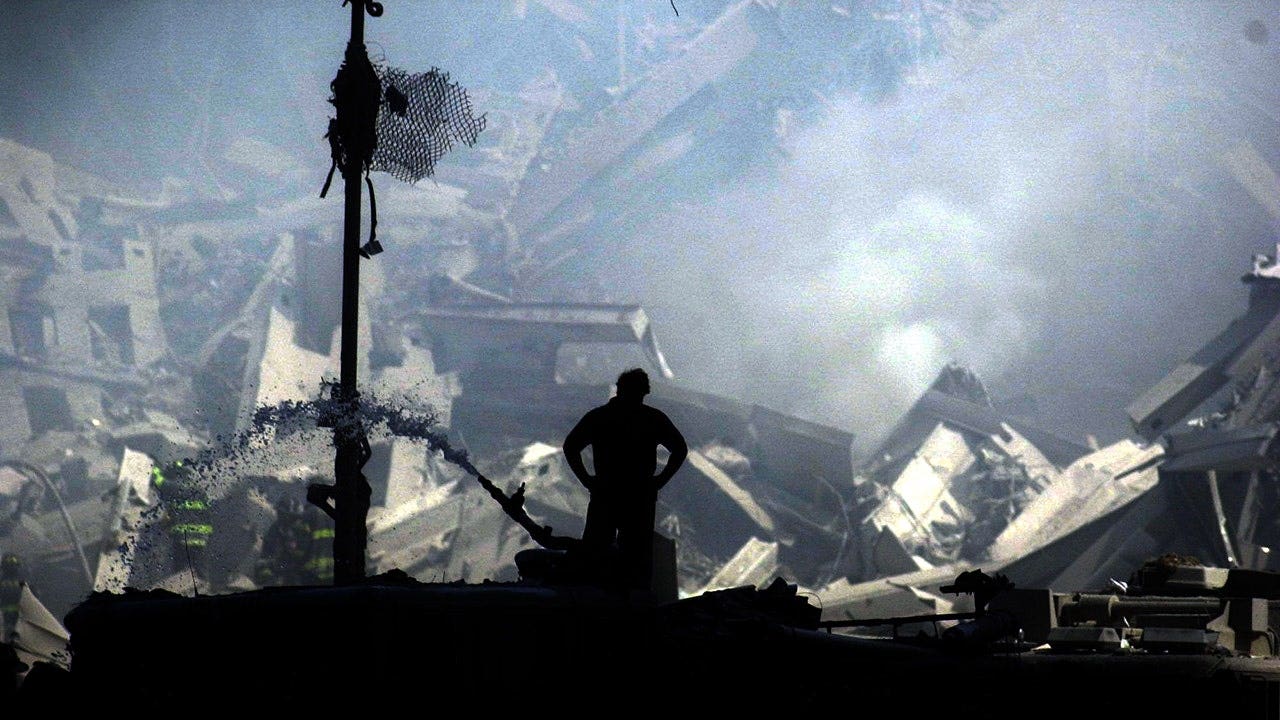
House Homeland Security Committee Chairman Andrew Garbarino, R-N.Y., remembers exactly where he was when the World Trade Center was attacked on Sept. 11, 2001.
«I was a senior in high school. I was in Mr. Ponzi’s government class. And that’s when the first plane hit. And one of the other teachers came in and was telling Mr. Ponzi about it,» he told Fox News Digital. «We all thought it was a little plane. And then we went to the next class. And then the second plane hit, and everybody realized that stuff was wrong.»
Twenty-five years later, Garbarino leads a congressional committee that oversees a Cabinet department created explicitly after the terror attack. He’s warning that Congress needs to change how it deals with potential threats to avoid another tragedy of that scale.
«Being chairman of the committee, being a New Yorker, it’s one of those things you focus on, and you want to make sure another 9/11 doesn’t happen, and doesn’t ever happen again. And that’s my goal. That’s my priority,» he said.
House Homeland Security Committee Chairman Andrew Garbarino, R-N.Y., is sounding the alarm against congressional «complacency,» 25 years after the Sept. 11, 2001, terrorist attacks. (Newspix via Getty Images)
9/11 IS BECOMING HISTORY. MY GENERATION MUST MAKE SURE AMERICA NEVER FORGETS
«Congress is very good at being reactive… We don’t want another 9/11. So if I could leave my fingerprints on something here, it’s the fact that the focus, Congress’ focus on national security, Congress’ focus on homeland security or safety, is that we address an issue before something happens.»
HOW 9/11 TRANSFORMED SYNAGOGUE SECURITY INTO A NEW REALITY FOR THE JEWISH COMMUNITY
He said Congress needed to get into the habit of passing laws ahead of time, «instead of being like, ‘Oh my God I can’t believe this happened, how did this happen, let’s fix it now.’»
«That’s why 9/11 happened. 9/11 happened because our intelligence agencies, they were siloed, they were not sharing information. I don’t know if it was a complacency or whatever, but there were a lot of problems,» Garbarino said. «I don’t want to fall into that same complacency.»
Garbarino represents New York’s 2nd Congressional District, part of Long Island’s south shore. As a suburb of New York City, its residents are deeply attuned to that tragedy 25 years ago.
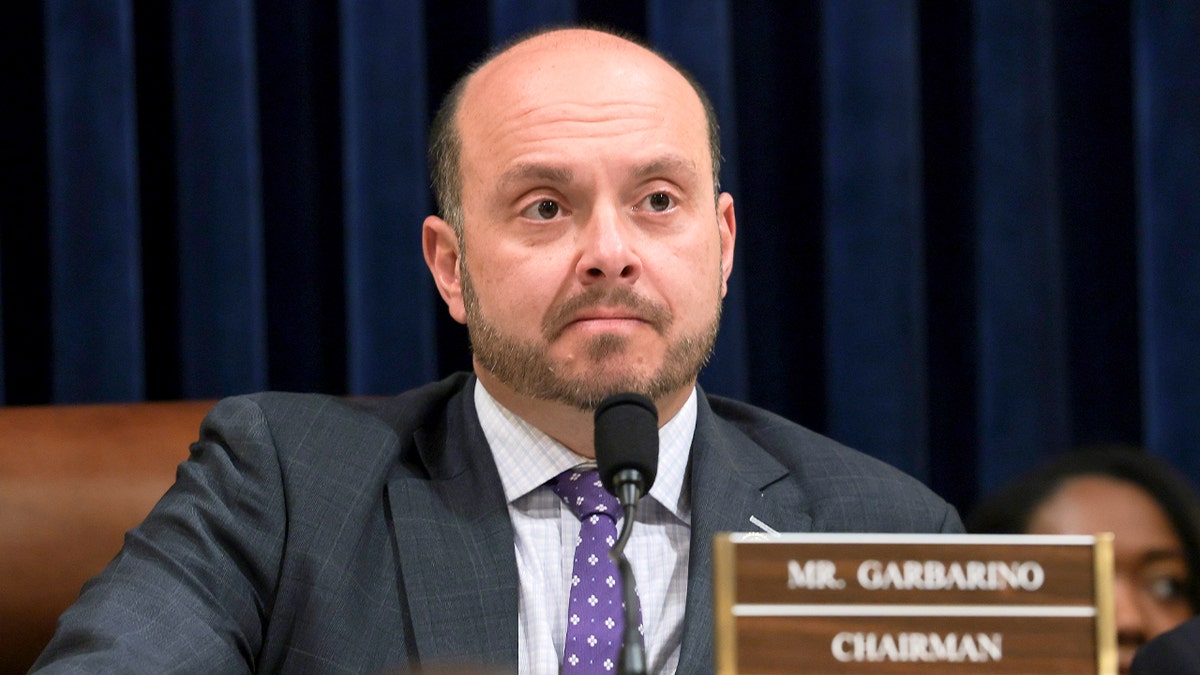
House Homeland Security Committee Chairman Rep. Andrew Garbarino presides over a hearing in the Cannon House Office Building in Washington on Dec. 11, 2025. (Anna Moneymaker/Getty Images)
«We have people that lost loved ones that day that are still dealing with it 25 years later,» Garbarino said. «So the scar is still there.»
His district and others are also still dealing with illnesses stemming from that day, including first responders who bravely rushed to the collapsing twin towers.
«There are now more people that have died from 9/11-related illnesses than died on the actual day. So it’s a day that keeps taking people away from us,» Garbarino said.
«You have firemen who, 9/11 was their first call. They were 21, 22 years old. They’re now 47… And a lot of these, some of these cancers, they take a while to take hold, and they’re now just getting sick.»
SCIENTISTS DISCOVER POSSIBLE LINK BETWEEN 9/11 AND ACCELERATED AGING
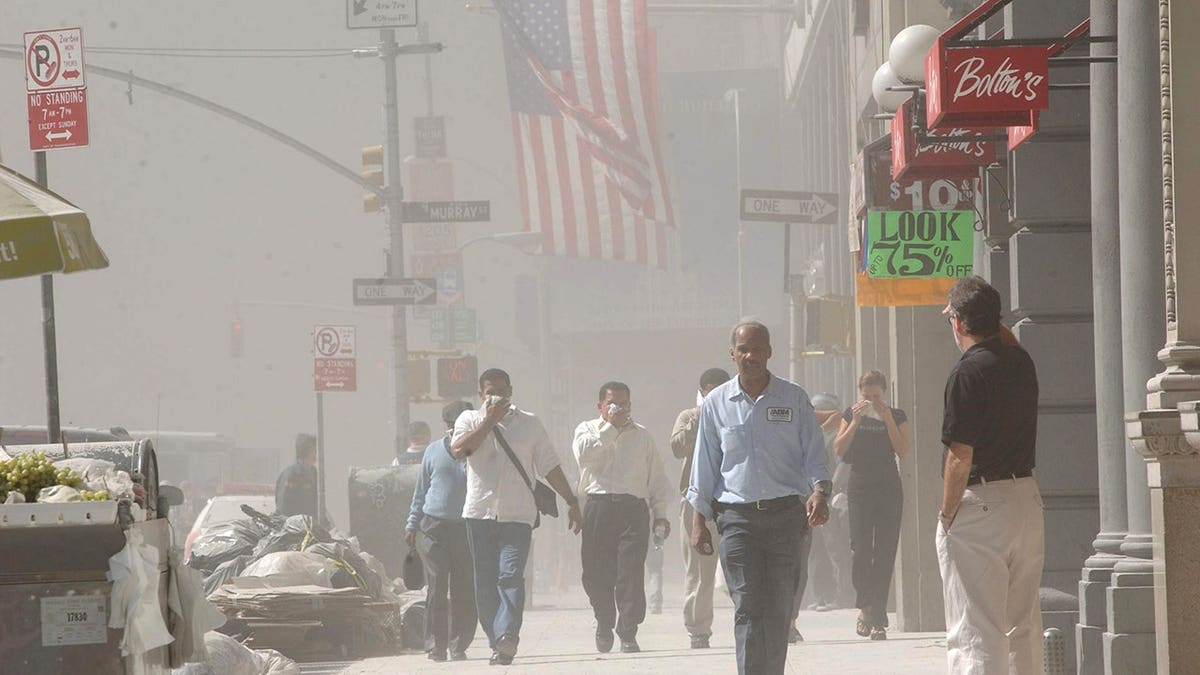
People rush away from the collapsing World Trade Center on Sept. 11, 2001, after two hijacked airplanes hit the twin towers in New York City in a terrorist attack. (Getty Images)
Earlier this year, President Donald Trump signed legislation led by Garbarino and others to address a projected funding shortfall for the World Trade Center Health Program, which helps survivors pay for their medical treatment.
He said nearly all congressional districts across the country have at least one person participating in the program, a testament to how widespread the tragedy’s effects are.
«People moved out of New York, people who came from all over the country after 9/11 to help, they all went back home, they also got sick. So this does affect the entire country,» Garbarino said.
september 11, politics, new york city, homeland security, terror

De la economía de la supervivencia a la economía de la productividad

Unidad Básica San José 1111: El senador K Mariano Recalde tiene un departamento en donde Cristina Kirchner cumple su condena

Así es el plan del básquet argentino para captar nuevos talentos fuera del país: los perfiles que se buscan y el caso testigo

Tras los resultados de las pruebas PISA 2025, Maximiliano Abad propuso rediseñar el sistema educativo nacional

Ricardo Delgado, de Analytica: “La industria y la construcción no sólo generan empleo, generan territorialidad”

El fuerte llanto de Pamela David al recordar las críticas que más le duelen: “Me duele el prejuicio y…”

El día que Owen Wilson se emocionó por el abrazo que le dio Lionel Messi tras un partido

Berni se diferenció de Kicillof en la aplicación de la baja de la edad de imputabilidad

Cuánto cuesta comprar una pick up en la Argentina y cuáles son los modelos más baratos en septiembre

La desafiante aventura de Carolina Baldini en moto por Europa: desde Edinburgo a Liverpool en dos ruedas

 ECONOMIA3 días ago
Así es la primera pickup compacta nacional: diseño, cuándo empezará a venderse y el novedoso sistema híbrido que tendrá
- DEPORTE3 días ago
Alarmante frase de Pierre Gasly antes del estreno del circuito de Fórmula 1 en Madrid
- POLITICA2 días ago
“¿Dónde está Kicillof?”: Patricia Bullrich cruzó al gobernador por la inseguridad en la Provincia