INTERNACIONAL
New Ebola outbreak leaves 65 dead as officials warn of cross-border spread

NEWYou can now listen to Fox News articles!
Africa’s top public health agency confirmed a new Ebola outbreak in Congo on Friday after 65 deaths and 246 suspected cases were recorded in the country’s remote Ituri province.
Health officials are now investigating whether the outbreak involves the Ebola Zaire strain — the deadliest and most well-known version of the virus — or a different variant, according to the Africa Centers for Disease Control and Prevention.
Neighboring Uganda also confirmed one Ebola-related death involving a Congolese man whose case officials said was imported from Congo.
The outbreak has been concentrated in the Mongwalu and Rwampara health zones in eastern Congo, an area near the borders of Uganda and South Sudan that officials warned could become a regional transmission risk because of mining-related travel, weak infrastructure and ongoing insecurity.
EBOLA OUTBREAK REPORTED IN AFRICAN COUNTRY — HERE’S WHAT YOU NEED TO KNOW
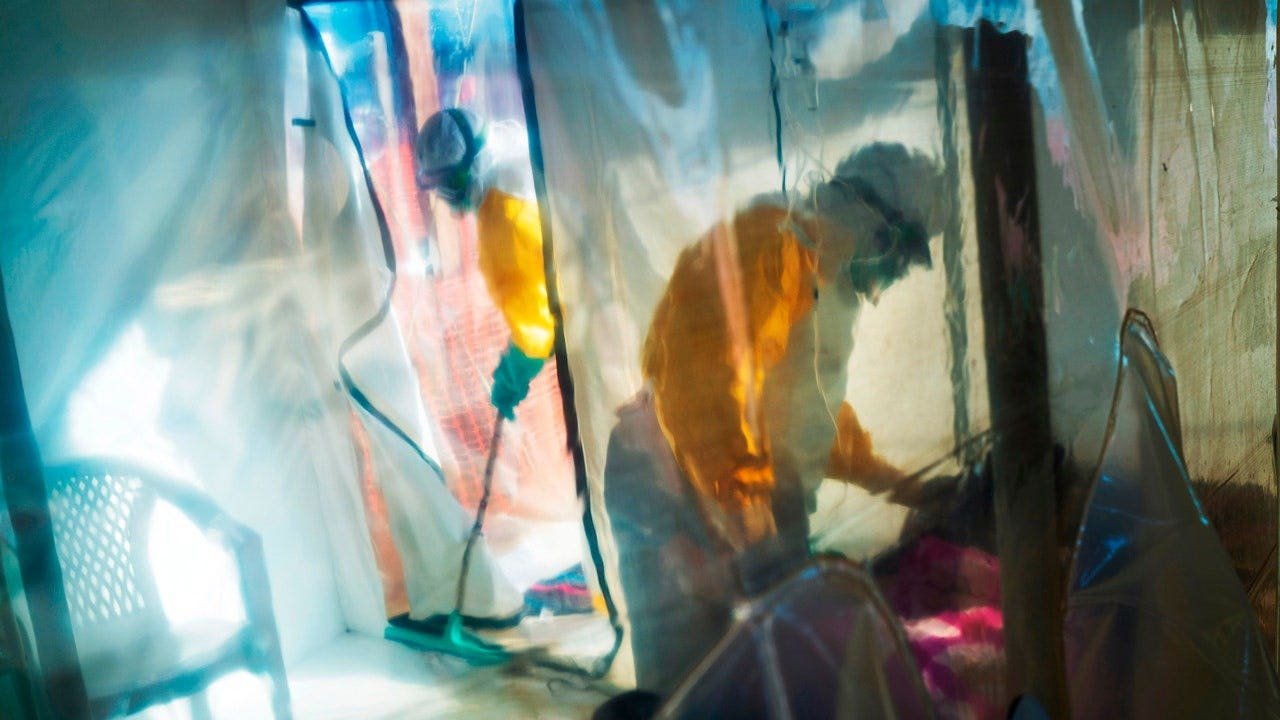
Health workers wearing protective suits tend to an Ebola victim in an isolation tent in Beni, Congo, on July 13, 2019. (Jerome Delay/AP)
Ebola is a highly contagious and often fatal disease spread through bodily fluids including blood, vomit and semen. Symptoms can include fever, vomiting, diarrhea, muscle pain and internal bleeding.
The Africa CDC said only four of the deaths have so far been laboratory confirmed, while testing and sequencing efforts continue to determine the exact strain involved in the outbreak.
Initial tests suggested the outbreak may not involve the Ebola Zaire strain, which was responsible for Congo’s devastating 2018-2020 epidemic that killed more than 1,000 people.
UGANDA STARTS CLINICAL TRIAL OF VACCINE FOR SUDAN STRAIN OF EBOLA AMID NEW OUTBREAK
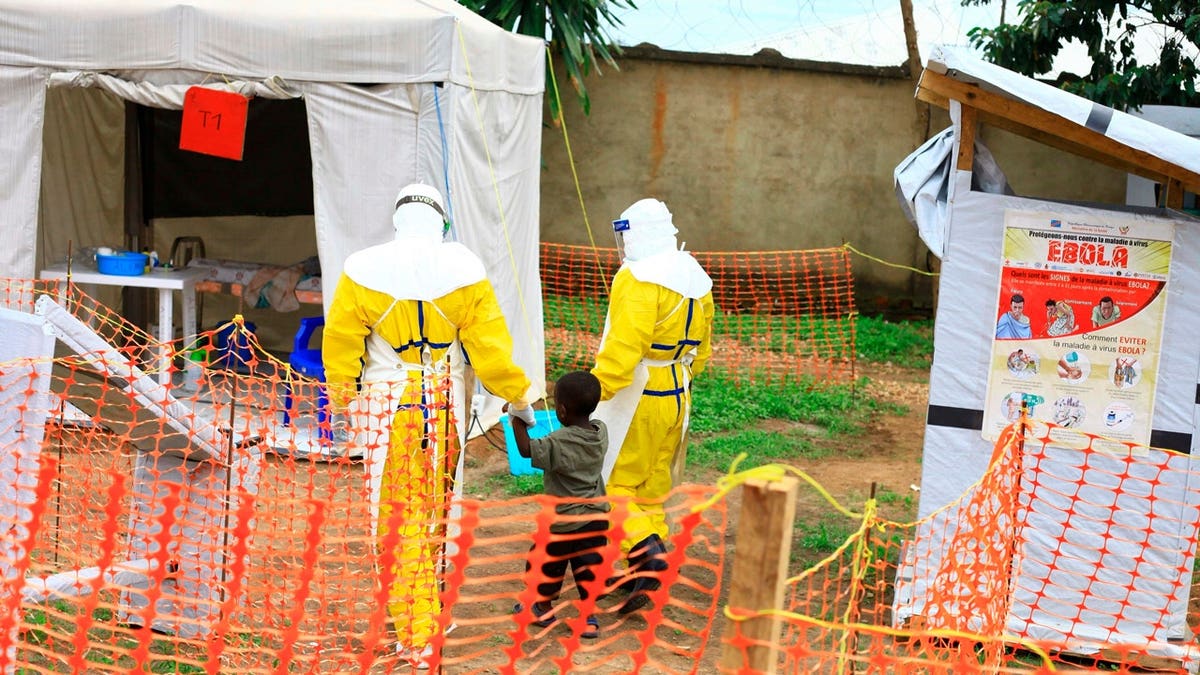
Health workers walk with a boy suspected of having the Ebola virus at a treatment center in Beni, eastern Congo, on Sept. 9, 2018. (Al-hadji Kudra Maliro/AP)
The World Health Organization (WHO) said it sent a response team to the region last week to help local officials investigate the outbreak and collect samples.
WHO Director-General Tedros Adhanom Ghebreyesus said Congo has a «strong track record» responding to Ebola outbreaks and announced the agency is releasing $500,000 in emergency funding to support containment efforts.
Health authorities said Congo has stockpiles of Ebola treatments and approximately 2,000 doses of the Ervebo vaccine, though officials cautioned the vaccine is only effective against the Ebola Zaire strain and not against Sudan or Bundibugyo variants.
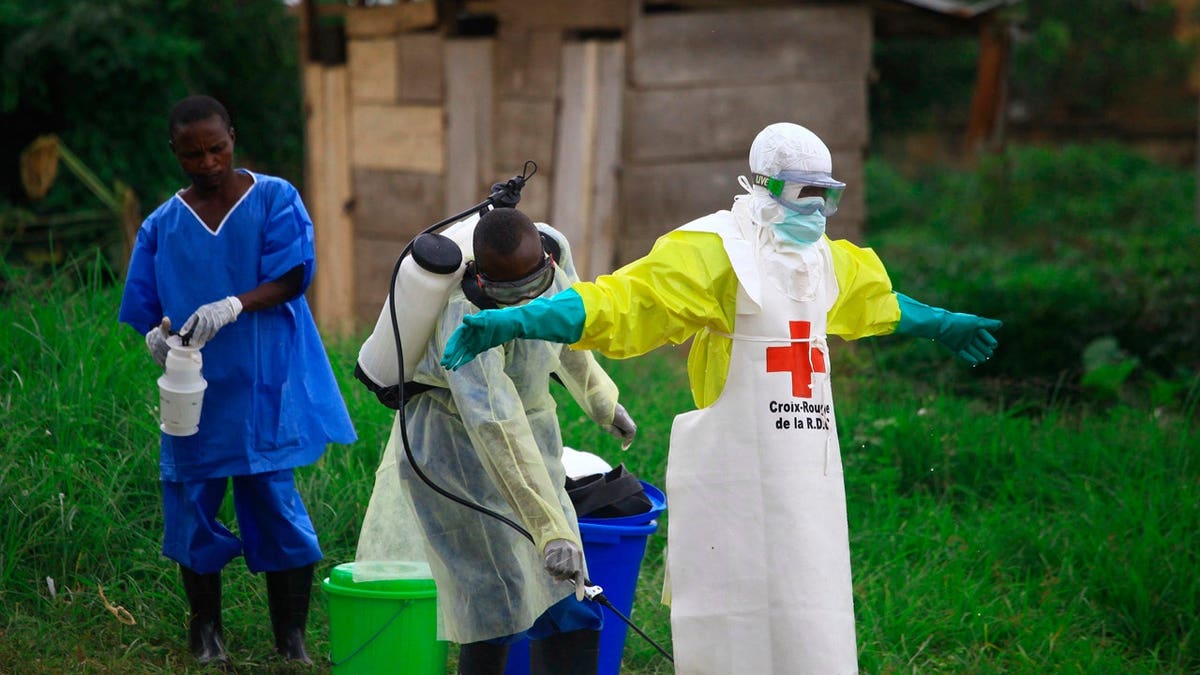
A health worker sprays disinfectant on a colleague after working at an Ebola treatment center in Beni, eastern Congo, on Sept. 9, 2018. (Al-hadji Kudra Maliro/AP)
CLICK HERE TO DOWNLOAD THE FOX NEWS APP
This marks Congo’s 17th recorded Ebola outbreak since the virus was first identified in the country in 1976.
The Associated Press contributed to this reporting.
ebola, world health organization, infectious disease, africa, outbreaks












INTERNACIONAL
Sismo de 7.4 sacude a Guatemala: Autoridades declaran alerta anaranjada por daños y descartan tsunami
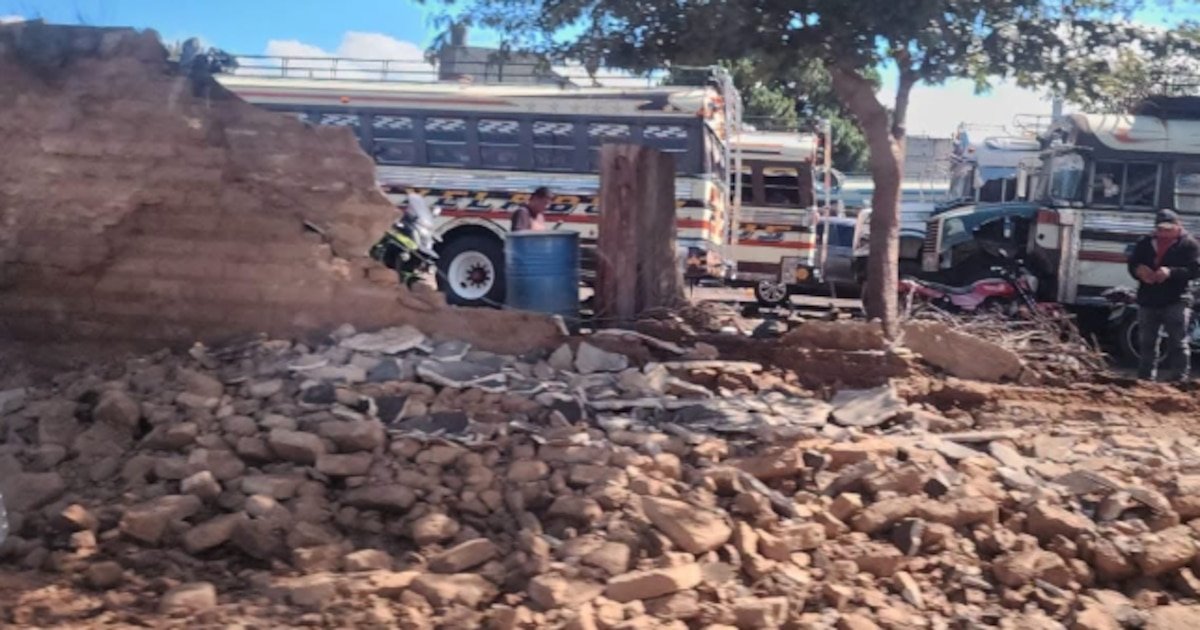
Un potente sismo de magnitud 7.4 con epicentro en las costas de Chiapas, México, provocó fuertes sacudidas en Guatemala y El Salvador. (Infobae Centroamérica/Emerson Del Cid)
La mañana de este viernes, 17 de julio, la Costa del Pacífico y la región sur-occidente del territorio guatemalteco se vieron sacudidas por un potente movimiento telúrico.
De acuerdo con el reporte oficial de la Red Sismológica Nacional del Instituto Nacional de Sismología, Vulcanología, Meteorología e Hidrología (INSIVUMEH), el evento sísmico se registró inicialmente a las 08:48 horas.
Aunque en un principio los sistemas automatizados arrojaron una magnitud preliminar de 5.8 con un supuesto epicentro dentro de la soberanía nacional, los expertos de la Sección de Sismología procedieron a realizar la revisión manual de los datos.
Tras analizar el volumen completo de la información a disposición, el instituto actualizó los parámetros oficiales, confirmando que el sismo tuvo una magnitud definitiva de 7.4 y que su epicentro se localizó realmente en las costas del Pacífico, en territorio de México, muy cercano a la frontera con Guatemala.
A raíz de la considerable magnitud de este terremoto y de su ubicación marítima, el Centro de Alerta de Tsunamis del Pacífico emitió una notificación preliminar para la región centroamericana.
No obstante, las autoridades científicas del INSIVUMEH, en su boletín de seguimiento técnico, aclararon que la clasificación de la amenaza para las costas de Guatemala es estrictamente Baja.
Los expertos detallaron que, si bien se descarta por completo un fenómeno de tsunami devastador o destructivo para el país, la población costera debe comprender el comportamiento de la naturaleza.
Un tsunami consiste en una serie de olas sucesivas y, aunque en esta ocasión no se presentará una catástrofe, los modelos hidrológicos prevén fluctuaciones en el nivel de la marea que no superarán los 100 centímetros (1 metro) de altura, viniendo acompañadas de un incremento en la fuerza de las corrientes y del oleaje convencional.
Las estimaciones de arribo de la primera perturbación marina comenzaron a registrarse a partir de las 09:35 horas en el departamento de San Marcos, extendiéndose de manera paulatina hacia Suchitepéquez, Escuintla, Santa Rosa, Retalhuleu y el puerto de Champerico.
Como parte de las acciones inmediatas de respuesta ante el potente sismo de las 08:48 horas, las autoridades han declarado formalmente la alerta anaranjada institucional.
Esta medida busca agilizar la movilización de recursos y la coordinación interinstitucional, dado que ya se reportan daños materiales en distintas partes del país. De manera preliminar, el sistema de emergencia contabiliza hasta el momento un total de 20 emergencias registradas. La distribución geográfica de estos incidentes se concentra principalmente en el occidente y centro de la República:
- Siete emergencias en el departamento de Quetzaltenango
- Cinco en Sololá
- Tres en San Marcos
- teres en Guatemala
- Una en Totonicapán
- Una en Retalhuleu.
Ante este escenario, la recomendación principal hacia las comunidades costeras y el sector pesquero artesanal es mantener la prudencia y alejarse temporalmente de la línea de playa hasta nuevo aviso, con el fin de evitar percances por los cambios súbitos en la fuerza del mar. Mientras tanto, en el territorio mexicano, las réplicas del sismo principal no han cesado; los servicios geológicos del vecino país del norte ya contabilizan más de 30 réplicas en las zonas colindantes al epicentro original, manteniendo en alerta a los cuerpos de socorro de ambos lados de la frontera.
En seguimiento directo al sismo registrado esta mañana y con el firme objetivo de salvaguardar la vida de los estudiantes guatemaltecos, el Ministerio de Educación (Mineduc), liderado por sus autoridades centrales, ha tomado medidas drásticas de carácter preventivo.
A través de una disposición oficial de última hora, la cartera educativa anunció la suspensión total de las clases presenciales para este viernes 17 de julio de 2026.
Esta orden de restricción temporal aplica estrictamente para los departamentos de San Marcos, Quetzaltenango, Suchitepéquez y Retalhuleu, las regiones del país que percibieron el movimiento telúrico con mayor intensidad y donde se concentra el mayor riesgo de réplicas.
La autoridad ministerial enfatizó que la medida de suspensión posee un carácter integral, por lo que abarca de forma obligatoria a todos los centros educativos que operan en las jurisdicciones mencionadas. Esto incluye a los establecimientos del sector público, del sector privado, los institutos por cooperativa, las escuelas municipales y todos los programas del sistema de educación extraescolar.
INTERNACIONAL
Democrat scrambles to meet Angel Mom after she blasts lawmakers to their faces for ignoring families’ pleas
NEWYou can now listen to Fox News articles!
Senate Judiciary Committee ranking member Sen. Dick Durbin, D-Ill., offered to promptly meet with an Angel Mom after she said during the second day of Acting Attorney General Todd Blanche’s confirmation hearing that she and other Angel Parents have been «completely ignored» in their push for immigration reform.
«Miss Bos, anxious to meet with you,» Durbin said. «I hope we can do it soon, maybe right after this.»
Jennifer Bos, whose daughter’s body was found in a bleach-filled container in a case in which an illegal immigrant was charged with concealing her death, appeared before the Senate Judiciary Committee in support of Blanche’s nomination, underscoring the Trump administration’s focus on violent crime and immigration enforcement.
Bos is among the Angel Families — relatives of people killed or harmed in crimes involving illegal immigrants — who have pushed lawmakers for stricter immigration enforcement.
EXCLUSIVE: DHS HONORS ANGEL FAMILIES DURING NATIONAL CRIME VICTIMS WEEK, CALLS CRIMES ‘COMPLETELY PREVENTABLE’
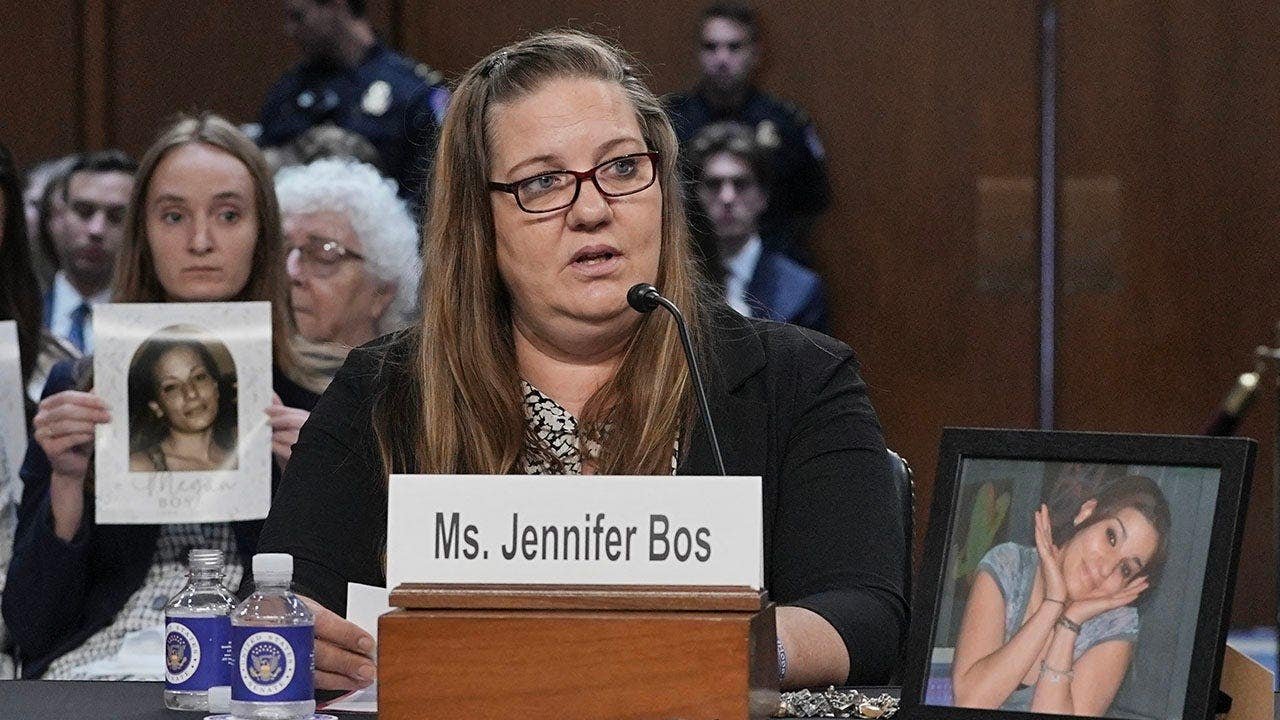
Jennifer Bos, mother of Megan Bos, dries her tears as she speaks during the second day of acting US Attorney General Todd Blanche’s Senate Judiciary Committee confirmation hearing on his nomination to be attorney general, on Capitol Hill in Washington, DC, on July 16, 2026. President Donald Trump’s pick to be the next US attorney general — his former personal defense lawyer Todd Blanche. (Ken Cedeno / AFP via Getty Images)
Durbin’s offer to meet with Bos, one of his constituents, came as Bos revealed during an exchange with Sen. Katie Britt, R-Ala., that it was very difficult for Angel Moms to meet with their lawmakers.
«This is the first time I’ve ever spoken with him,» Bos said. «I haven’t spoken with them. He spoke to me.»
«Well, I hope—and I’m sure that—I hope I heard the ranking member yesterday talked about the need for the attorney general to meet with victims, which I support,» Britt said in response. «And I certainly am hopeful that he will, and others, will meet with you.»
Bos went on to say that several pieces of legislation introduced last session have been ignored by Democratic officials.
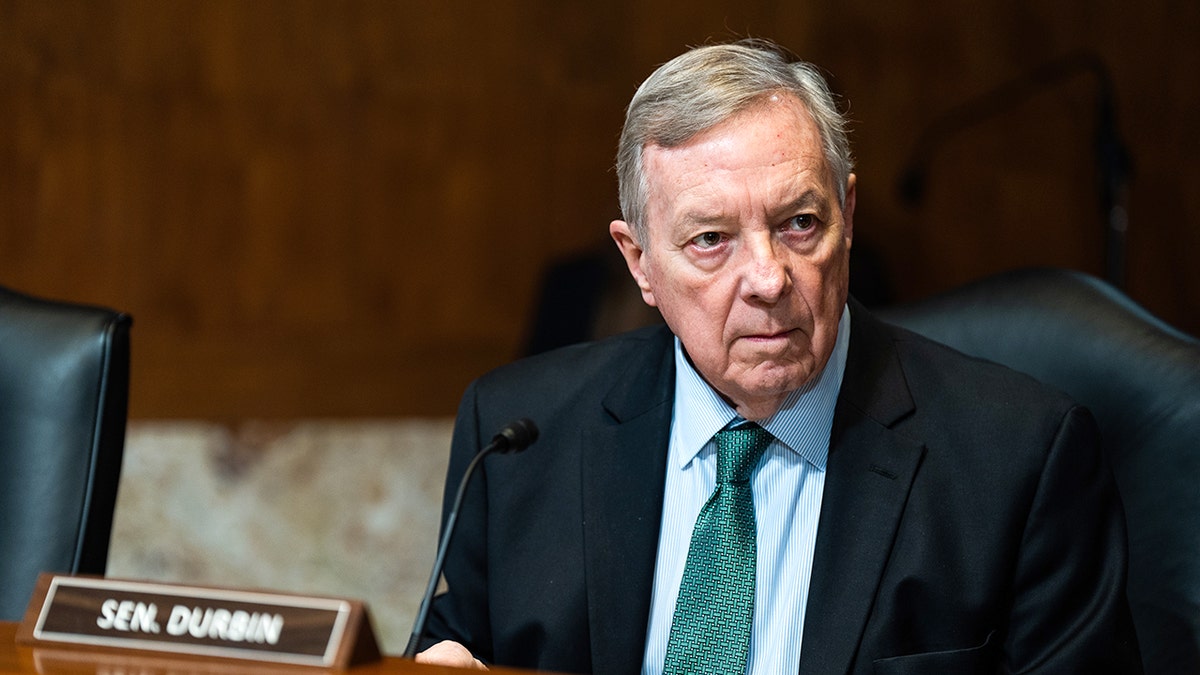
Sen. Dick Durbin (D-IL) during a hearing to examine the abduction of Ukrainian children by the Russian Federation on Capitol Hill on Wednesday December 3, 2025 (Demetrius Freeman/The Washington Post via Getty Images)
«And there hasn’t been any way to really get in and talk to anybody, especially those who are opposed to those legislations for whatever reason,» said Bos.
At the end of the hearing, Durbin addressed Bos for a second time, offering to meet with her immediately after the hearing ended.
«I didn’t know it was a hardship for you to make this journey here, testify, from Illinois,» Durbin continued in his remarks to Bos, offering to meet her. «And I don’t want you to have to wait to see me. I want to meet with you now, and we can talk as soon as this meeting adjourns, if it’s okay with you, if it fits in your schedule.»
TODD BLANCHE ‘HONORED AND HUMBLED’ BY TRUMP’S AG NOMINATION AFTER EXPLOSIVE WEEK OF FEDERAL ARRESTS

Megan Bos was allegedly found dead in Luis Mendoza-Gonzalez’ backyard in Illinois in April 2025. (Fox News)
Bos told senators during the second day of Blanche’s confirmation hearing about the «unbearable agony» her family endured after her daughter, Megan Bos, was found partially decomposed inside of a garbage can in April 2025, following a 51-day search. The Lake County Coroner’s Office ruled Bos’ cause of death «undetermined,» saying the autopsy could not determine how she died or whether her death was a homicide or drug-related.
TODD BLANCHE EARNS ATTORNEY GENERAL BID ENDORSEMENT FROM LAW ENFORCEMENT ALLIANCE AHEAD OF CONFIRMATION
Jose Luis Mendoza-Gonzalez, an illegal immigrant from Mexico charged in the case, was initially released from local custody after an Illinois judge determined the state charges against him — including two counts of concealment of a death, abuse of a corpse and obstruction of justice — did not qualify for pretrial detention under state law.
ICE then arrested Mendoza-Gonzalez in Chicago in July 2025, after federal authorities said he was in the country illegally.
Bos praised Blanche for stepping in after local officials failed to secure justice.
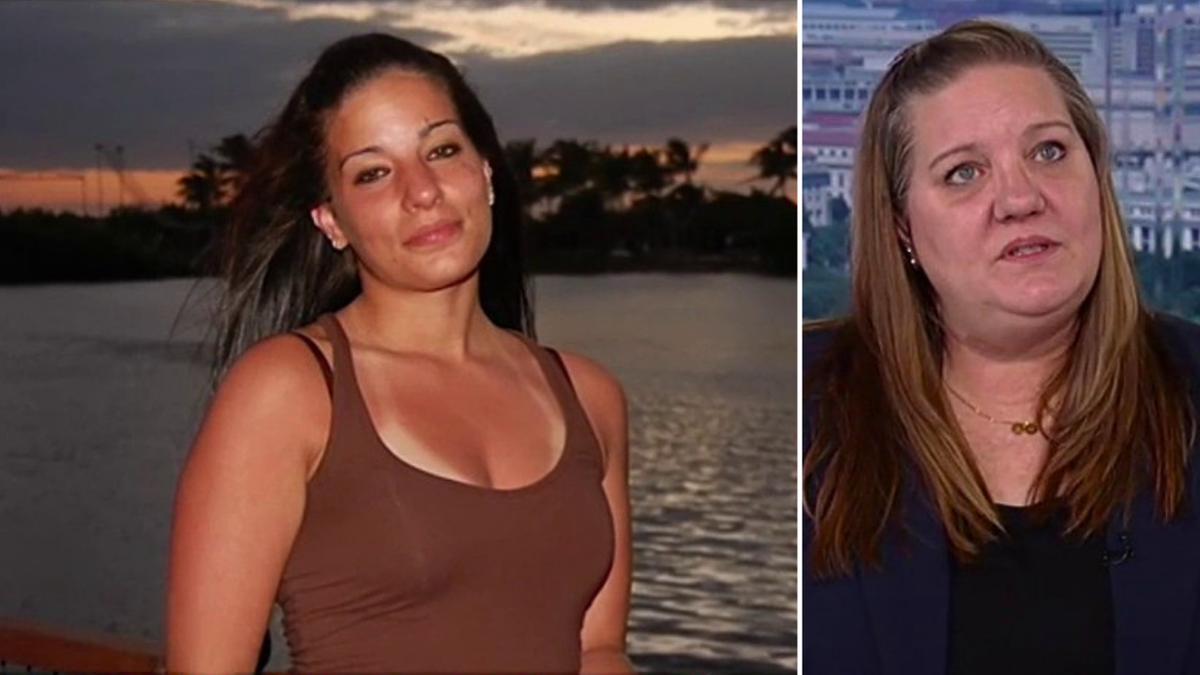
Jennifer Bos said ICE’s VOICE office comforted her after her daughter’s alleged killer was temporarily let free under Illinois sanctuary law. (Fox News)
CLICK HERE TO DOWNLOAD THE FOX NEWS APP
«I’m asking the committee not to wait until another mother is sitting where I am,» Bos said during her opening remarks. «Confirm Todd Blanche. He is a leader who will uphold the law, honor victims, confront dangerous criminal organizations, and fight to give other American families the safety and lasting protection that came too late for mine.»
Mendoza-Gonzalez remains in federal immigration custody after being arrested by ICE in July 2025.
He was arrested on charges related to his immigration status.
He also faces state charges stemming from Bos’ death.
Fox News Digital reached out to Durbin’s office for comment.
katie britt, kristi noem, tom homan, hearings, todd blanche
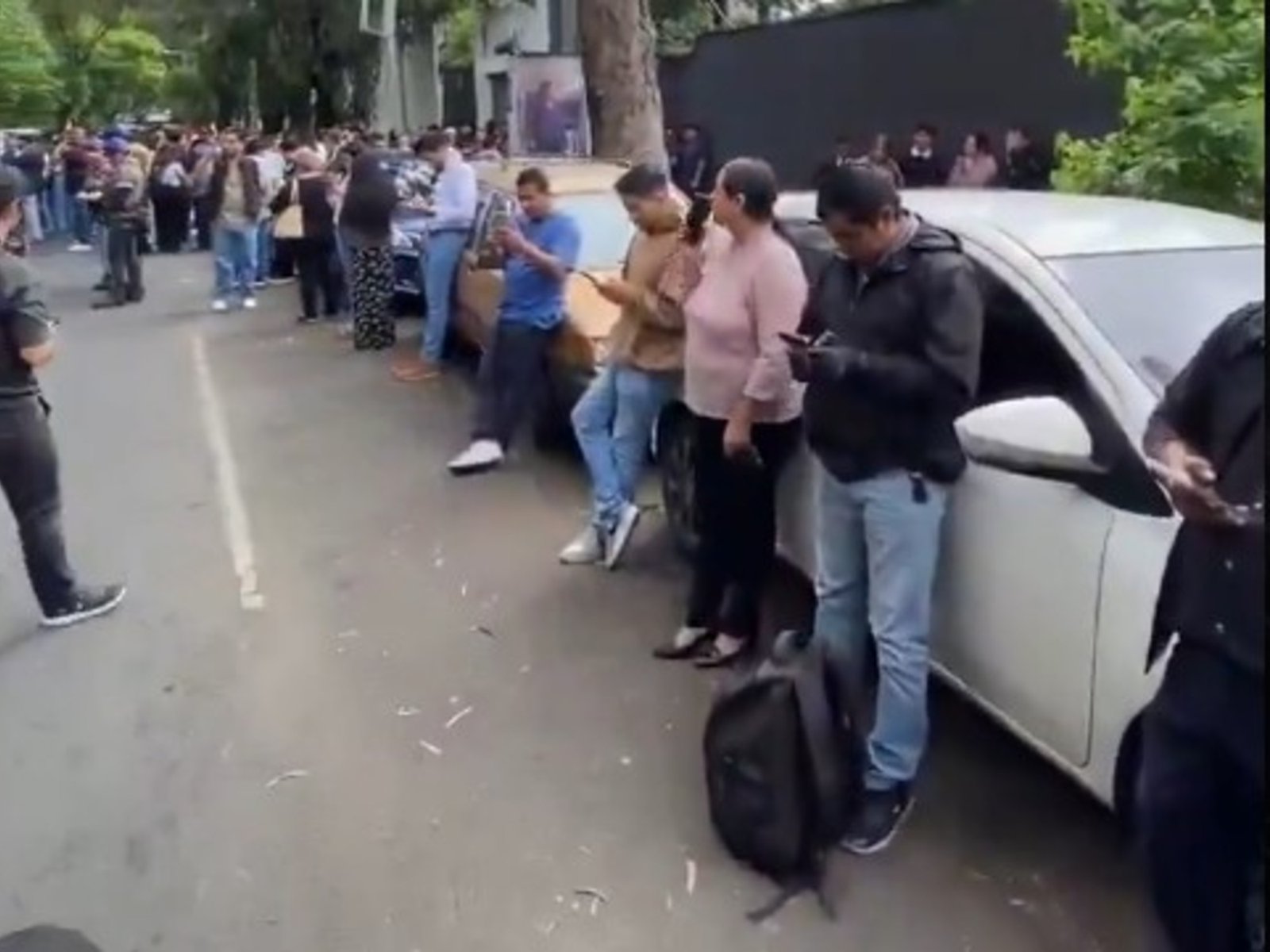
Un fuerte sismo azotó el viernes la costa del Pacífico Sur mexicano justo en la frontera con Guatemala y fue sentido desde Ciudad de México hasta El Salvador, aunque en la capital mexicana no hizo sonar el alerta sísmica.
El Centro de Alerta de Tsunamis de Estados Unidos emitió dos alertas de tsunami para México y Guatemala.
Según el Servicio Geológico de Estados Unidos (USGS, por sus siglas en inglés), el terremoto tuvo una magnitud de 7,3 con epicentro cerca de la costa de Chiapas y a 15 kilómetros de profundidad.
Las autoridades no han informado de daños de manera inmediata.
Guatemala earthquake and tsunami threat LATEST
A magnitude 7.4 earthquake struck the coast of Chiapas state in southern Mexico, near the border with Guatemala.
A tsunami warning was issued in the area. Eyewitnesses told Reuters news agency that in Guatemala ‘buildings shook.’… pic.twitter.com/6JVBs1CfTJ
— Abhijit Pathak (@aajtakabhijit) July 17, 2026
El terremoto tuvo lugar a las 11:48, hora argentina, según notificó el Servicio Sismológico Nacional.
Minutos después, se registró una réplica perceptible para la población, lo que prolongó la incertidumbre y llevó a muchas personas a permanecer fuera de sus viviendas, en amplias zonas de Chiapas.
La Secretaría de Protección Civil de Chiapas explicó, en su cuenta de X, que se encuentra «activa» y en «constante monitoreo» sobre la situación en las distintas regiones del estado, sin ofrecer por el momento más detalles.
En la localidad mexicana de Suchiate, junto al río que separa México de Guatemala, se realizaban monitoreos en las zonas costeras por peligro de tsunami, confirmó su alcalde Elmer Vázquez Gallardo.
En Tapachula, la principal ciudad de la frontera sur mexicana, el temblor empezó leve pero se fue intensificando.
“Estábamos arriba en el segundo piso cuando empezó a temblar, pensamos que iba pasar pero de ahí se sintió más fuerte y bajamos todos, evacuamos ordenados al patio frontal”, dijo a The Associated Press Alejandra Mendoza, una empleada administrativa de un hospital público de la ciudad.
En la capital mexicana, donde edificios de ciertas zonas crujieron y cimbraron, no sonó el alerta sísmica porque, según explicó el gobierno, “la energía radiada por el sismo durante los primeros segundos no superó los niveles de activación”.
Entre las recomendaciones difundidas por las autoridades destacan la revisión de instalaciones de gas y energía eléctrica, mantenerse alejados de estructuras que pudieran representar un riesgo y reportar cualquier incidente al número de emergencias 911.
Uno de los aspectos que generó inquietud entre habitantes de San Cristóbal de Las Casas fue la ausencia de una alerta sísmica audible, por lo que muchas personas reaccionaron únicamente al percibir el movimiento telúrico.
México se encuentra en una de las regiones sísmicas más activas del mundo debido a la interacción de las placas tectónicas de Cocos, Norteamérica, Rivera, Pacífico y Caribe. Los estados del sur y la costa del Pacífico, como Chiapas, Oaxaca y Guerrero, registran con frecuencia movimientos telúricos de intensidad considerable.
El sismo ocurre además en una zona históricamente vulnerable a este tipo de fenómenos. En septiembre de 2017, un terremoto de magnitud 8,2 con epicentro frente a las costas de Chiapas dejó decenas de muertos y severos daños en el sur del país, siendo uno de los más fuertes registrados en la historia reciente de México.
En la Ciudad de Guatemala, el terremoto sacudió los edificios y provocó que algunos residentes salieran corriendo de sus casas a la calle. Medios locales de Guatemala mostraron imágenes del personal evacuando un edificio gubernamental mientras se activaban los protocolos de seguridad.
El temblor también se sintió en El Salvador, según informó la agencias Reuters.
En el estado sureño mexicano de Oaxaca, el gobernador Salomón Jara dijo en las redes sociales que el terremoto se sintió con intensidad moderada en la capital del estado, pero no se reportaron daños graves de inmediato.
Con información de agencias

El peritaje de los bienes de Insaurralde: de gastos millonarios en viajes a costosas refacciones en la mansión de San Vicente

Canales para ver EN VIVO el San Lorenzo vs. Deportivo Riestra por la Copa Argentina

Arden los pronósticos para la final de Argentina con España y esto predicen gurús y astrólogos

El Gobierno evalúa dar asueto para el día que la selección de fútbol llegue al país

Guido Kaczka prepara la versión de Es mi sueño con famosos: quién es el periodista que se animará a cantar en TV

La ONU comenzó a trabajar en una convención internacional sobre los derechos de las personas mayores y la Argentina lidera el proceso

El machete del arquero inglés en una botella que sorprendió a Messi tras el triunfo: el dardo de un ayudante de Scaloni a Inglaterra

Aumentó 900% la cantidad de repartidores de plataforma en los últimos 6 años

El fuerte cruce público entre Victoria Villarruel y Patricia Bullrich tras los chats filtrados antes de la sesión del Senado

El mensaje de Messi tras la última práctica de Argentina en Kansas antes de la semi contra Inglaterra: las cuatro fotos que eligió

 DEPORTE1 día ago
El machete del arquero inglés en una botella que sorprendió a Messi tras el triunfo: el dardo de un ayudante de Scaloni a Inglaterra
- POLITICA19 horas ago
El fuerte cruce público entre Victoria Villarruel y Patricia Bullrich tras los chats filtrados antes de la sesión del Senado
- ECONOMIA3 días ago
Vaca Muerta promete renta anual del 15% y desata una fiebre inmobiliaria sin precedentes