
INTERNACIONAL
Padres ejecutados, hijos raptados: la desaparición forzada de más de 50 niños salvadoreños en la “Guinda de Mayo”

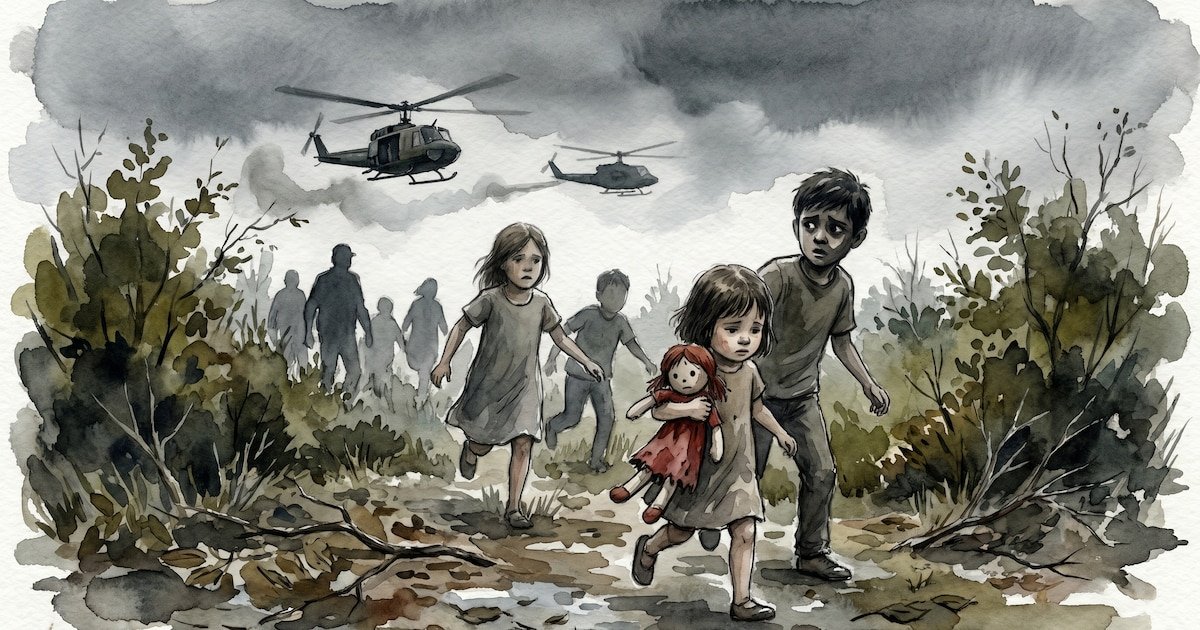
El estruendo de las hélices rasgaba el cielo plomizo de Chalatenango entre el 27 de mayo y el 9 de junio de 1982. No eran misiones de rescate; eran los helicópteros del ejército salvadoreño que descendían en las inmediaciones de los ríos Sumpul y Gualsinga para ejecutar el operativo militar “Limpieza”, conocido entre las familias sobrevivientes como la “Guinda de Mayo”.
Mientras las comunidades campesinas huían despavoridas entre la maleza para salvaguardar la vida, un engranaje estatal y militar se activaba con un propósito tan silencioso como estremecedor: separar a los hijos de sus padres mediante el terror, la muerte y el desarraigo.
En total, 55 niños y niñas se desvanecieron en el torbellino de aquella ofensiva bélica. 44 años después, Margarita Zamora, especialista en investigación de la Asociación Pro-Búsqueda, revela en entrevista exclusiva con Infobae los detalles de una de las prácticas más macabras del conflicto armado salvadoreño: un modus operandi sistemático diseñado para el tráfico humano de menores, camuflado bajo el ropaje del auxilio humanitario.
“La práctica del ejército era asesinar a los padres y llevarse a los niños. De esa manera, no había nadie que los reclamara”, explica Zamora con una serenidad dolorosa. El desparpajo de las familias en la huida facilitaba la captura. Madres exhaustas que arrastraban a dos o tres infantes, cargando bebés en brazos mientras esquivaban las ráfagas de fusilería, se ponían en total vulnerabilidad.
Al ejecutar a los progenitores en el terreno, las guarniciones militares transportaban a los sobrevivientes en helicópteros hacia sectores como La Sierpe o Victoria, en Cabañas.
El horror militar daba paso inmediato a la burocracia civil. Los niños eran entregados a la Cruz Roja, a damas voluntarias y a orfanatos locales bajo actas falsas que declaraban un “abandono moral y material total”.
Se borraba su identidad y se catalogaban como huérfanos extraviados. “En ningún momento fueron extraviados”, enfatiza la investigadora. “Ellos no andaban paseando; andaban guindeando, corriendo para salvar sus vidas”.
Detrás del discurso institucional de “salvación” operaba una red clandestina integrada por abogados locales y altos mandos castrenses mencionando reportes históricos de entrevistas a miembros del Estado Mayor de la época que convirtieron el drama en un negocio millonario.
Los trámites de adopción internacional se cotizaban entre los 5,000 y 15,000 dólares por niño. Abogados con rutas comerciales ya establecidas los distribuyeron por el mundo:
- Francia
- Italia
- Estados Unidos
- Suiza
- Holanda
- España
- Inglaterra
- Suecia.
Parejas extranjeras pagaban la cifra creyendo que auxiliaban a huérfanos desamparados, desconociendo que la sangre de los padres biológicos aún manchaba los expedientes de origen.

El desglose de las víctimas de la Guinda de Mayo, sistematizado recientemente por Pro-Búsqueda, reconstruye las identidades rotas del operativo.
La cifra exacta de infantes desaparecidos la componen 27 niños y 27 niñas. El último caso es el más perturbador: un bebé cuyo sexo se desconoce porque el ejército capturó a su madre embarazada en plena fuga, perdiéndose el rastro de ambos hasta el día de hoy.
Las edades de todos ellos oscilaban entre los cero y los diez años, al momento de ser arrebatados. De los 55 casos documentados en este operativo, Pro-Búsqueda ha logrado resolver 31 casos; 17 ya experimentaron el “abrazo postergado” al reencontrarse vivos con sus raíces familiares.
Sin embargo, 13 han sido localizados fallecidos; la investigación confirmó que fueron ejecutados de forma masiva en un solo lugar aniquilado por las tropas, aunque la falta de voluntad judicial solo ha permitido la exhumación de seis de ellos.
El caso número 31 constituye una paradoja del trauma: un joven localizado en Francia, cuya identidad biológica fue confirmada mediante pruebas de ADN, pero de momento ha decido no reencontrarse con su familia biológica.
Rosa Rivera, sobreviviente, relata los desgarradores eventos de la «Guinda de Mayo» de 1982. Un operativo militar en Chalatenango que se convirtió en una masacre, dejando cientos de desaparecidos, incluyendo a muchos niños, cuyas familias aún buscan justicia.
Aún quedan 24 nombres flotando en la incertidumbre absoluta de Chalatenango. Entre ellos se encuentran los expedientes de las hermanas Erlinda y Ernestina Serrano Cruz, un caso paradigmático con sentencia internacional que obliga al Estado salvadoreño a investigar el paradero y castigar a los responsables individuales de la masacre. Sin embargo, la impunidad se mantiene incólume.
“El principal obstáculo sigue siendo la negación del Estado a abrir los archivos militares. Los oficiales que participaron en estas masacres tienen la información; estos hechos no se borran de la memoria. Falta voluntad política para darnos la verdad”, denuncia Zamora.

Los padres de las víctimas envejecen y mueren con las manos vacías. Ante esto, Pro-Búsqueda resguarda un banco de perfiles genéticos diseñado gracias al impulso pionero del padre Jon de Cortina (Q.E.P.D.) y el doctor Cristian Orrego.
Aunque los padres biológicos mueran, sus códigos genéticos permanecen listos para cotejar el ADN de cualquier adulto en el mundo que hoy, superando los 40 años, dude de su procedencia y sospeche haber sido un bebé extraído de la guerra salvadoreña.
La búsqueda no cesa. Es el intento tardío pero firme de escribir las líneas de una página en blanco para decenas de identidades robadas que aún ignoran que, en un rincón de El Salvador, hay una raíz destruida que jamás dejó de esperarlos.
acuarela,madre,niño,río Sumpul,río Gualsin,conflicto,pérdida,desaparición,helicóptero,El Salvador













Dos pueblos en «guerra»
El debate sobre las indemnizaciones

En el Var
El estado de los incendios
Vuelve la ola de calor
INTERNACIONAL
Costa Rica vuelve a destacar entre los mejores destinos del mundo para jubilados, según Forbes

Costa Rica fue incluida nuevamente entre los mejores lugares del mundo para que ciudadanos disfruten su etapa de retiro, según la edición 2026 del ranking de destinos internacionales para jubilados elaborado por la revista Forbes.
La clasificación analizó 96 destinos ubicados en 24 países de cinco continentes, tomando en cuenta factores como costo de vida, impuestos, calidad y precio de los servicios médicos, seguridad, estabilidad política, facilidad para regresar a Estados Unidos, integración social, requisitos migratorios y riesgos asociados al cambio climático.
El país centroamericano destacó por una combinación de características que durante años han atraído a jubilados extranjeros: naturaleza, tranquilidad, acceso a servicios, cercanía con Norteamérica y un estilo de vida menos acelerado que el de muchas ciudades estadounidenses.
Según Forbes, Costa Rica mantiene un atractivo especial para quienes buscan retirarse cerca de espacios naturales. Sus playas en ambos océanos, los bosques tropicales y la diversidad ecológica fueron señalados como algunos de los principales motivos por los cuales el país continúa apareciendo en este tipo de rankings internacionales.
Además, el informe resalta que el costo de vida es considerablemente menor al promedio estadounidense, mientras que la seguridad es valorada como relativamente alta en comparación con otros destinos internacionales y el sistema político es considerado estable.

Sin embargo, el análisis también menciona algunos desafíos. Entre ellos destaca el impacto de la temporada lluviosa, especialmente las inundaciones que afectan distintas zonas del territorio nacional y que representan uno de los principales riesgos para residentes locales y extranjeros.
Uno de los puntos destacados por Forbes fue el sistema de salud costarricense. El ranking señala que en las principales ciudades del país existe atención médica de alta calidad a costos accesibles y menciona la posibilidad de que residentes extranjeros jubilados se incorporen a la Caja Costarricense de Seguro Social (CCSS).
El informe indica que algunos jubilados pueden pagar alrededor de $150 mensuales por la cobertura, aunque en la práctica la contribución depende de los ingresos declarados y de la situación particular de cada residente extranjero.
El idioma español aparece como un elemento recomendable para facilitar la adaptación, aunque Forbes señala que no representa una barrera determinante debido a la presencia de comunidades extranjeras y servicios orientados a residentes internacionales.
En materia migratoria, el país también conserva una ventaja competitiva. La publicación destaca la categoría de residencia para pensionados, conocida como “pensionado”, que permite a extranjeros con ingresos permanentes solicitar autorización para vivir legalmente en Costa Rica.
Este régimen exige demostrar una pensión vitalicia de al menos $1,000 mensuales y otorga una residencia temporal renovable por periodos de dos años, de acuerdo con la normativa migratoria costarricense. Además, el país permite a visitantes estadounidenses permanecer como turistas durante varios meses mientras completan sus trámites de residencia.
Otro aspecto señalado fue el sistema tributario. Forbes resalta que Costa Rica no grava los ingresos generados fuera del territorio nacional, una característica relacionada con su modelo de tributación territorial. Aunque Estados Unidos y Costa Rica no cuentan con un tratado específico para evitar la doble imposición, los ingresos extranjeros de muchos jubilados no son sujetos al impuesto costarricense.
Entre las zonas recomendadas aparecen San José, el Valle Central y comunidades como Atenas, reconocida internacionalmente por su clima templado. También se menciona Santa Cruz, en Guanacaste, como una alternativa atractiva para quienes buscan cercanía con playas y comunidades de extranjeros.
El Valle Central continúa siendo una de las regiones preferidas por jubilados internacionales debido a su cercanía con hospitales, servicios, el aeropuerto internacional y costos generalmente más bajos que algunas zonas costeras de alta demanda.

Costa Rica comparte la lista con otros destinos que compiten por atraer a esta población, entre ellos Panamá, México, Belice, Colombia, Uruguay, Portugal, España, Francia, Italia, Tailandia y Vietnam.
El ranking de este año también incorporó con mayor peso los riesgos climáticos. Algunos destinos europeos fueron retirados debido a factores como incendios forestales y temperaturas extremas, mientras que otros países fueron descartados por altos niveles de vulnerabilidad ante fenómenos naturales.
Costa Rica, que ha aparecido durante años en listas similares, mantiene su presencia gracias a una combinación de factores que siguen siendo valorados por los jubilados extranjeros: estabilidad, naturaleza, servicios médicos, cercanía geográfica con Estados Unidos y opciones migratorias accesibles.
No obstante, el escenario internacional cambia constantemente y cada edición de estos rankings refleja nuevas prioridades, especialmente aquellas relacionadas con seguridad, sostenibilidad y capacidad de los países para enfrentar los efectos del cambio climático.
Costa Rica,adultos mayores,casa de montaña,balcón,estadounidenses,paisaje montañoso

NEWYou can now listen to Fox News articles!
President Ronald Reagan met with Soviet leader Mikhail Gorbachev five times in the late 1980s. The first such meeting was in Geneva, Switzerland in November 1985 when the two leaders began to form a relationship. It was the second meeting in Reykjavik, Iceland, where Reagan and Gorbachev began to find trust.
«The reason I wanted to do it really, truly, was because I think these days we’ve gotten so good at yelling at one another that we are not talking anymore,» said «The Brink of War» director Michael Gunn. «What blew me away about the story when Secretary Schultz told me about it was that these were two guys who had every reason to hate each other, had every reason to be enemies, and they sat down in a room together and tried to make a better world.»
US RAMPS NUCLEAR WEAPONS PRODUCTION TO COLD WAR LEVELS AS CHINA PURSUES ‘UNPRECEDENTED’ BUILDUP
Jeff Daniels stars as President Ronald Reagan in «The Brink of War,» a film centered on the 1986 Reykjavik summit with Soviet leader Mikhail Gorbachev. («The Brink of War» / Angel Studios)
Jeff Daniels stars as Reagan in «The Brink of War,» which follows the Reykjavik summit with Gorbachev, played by Jared Harris. Reagan’s Secretary of State George Schultz, played by J.K. Simmons, was instrumental in giving Gunn behind-the-scenes details for his film.
«We spent hours and hours together. I interviewed him. He gave me the declassified transcripts that informed the script. He’s a hero of mine. The movie is dedicated to him, for him, for his public service,» Gunn said.
NEW FOX NATION DOCUMENTARY CHRONICLES 20-YEAR JOURNEY BEHIND ‘REAGAN’ FILM

«The Brink of War» explores how Reagan and Mikhail Gorbachev built trust during nuclear arms negotiations in Iceland. («The Brink of War» / Angel Studios)
«The Brink of War» not only highlights the Reagan administration’s ambitions for peace but also their disappointments. One scene shows Reagan’s doubt over trusting Gorbachev amid the negotiations as Schultz assures him it was not the end of talks to find common ground between the two global powers.
«This moment where they figured out just the two of them in a room that they could trust one another, I think led to all that. The first arms reduction agreement in human history,» Gunn said.
While no final agreement was reached in Iceland, the summit paved the way for several more meetings between Reagan and Gorbachev. It also led to several peace treaties — like the Intermediate-Range Nuclear Forces Treaty (INF), which required both sides to liquidate a class of nuclear weapons.
PRESIDENT TRUMP’S NEGOTIATING TEAM PRAISED BY NUCLEAR EXPERTS FOR WALKING AWAY FROM PAKISTAN TALKS

Director Michael Gunn says Reagan and Gorbachev’s willingness to keep talking offers a lesson for leaders confronting conflicts today. («The Brink of War» / Angel Studios)
«For the first time on the highest level, we and the Soviets came close to an agreement on real reductions of both strategic and intermediate-range weapons,» President Reagan said after his meeting with Gorbachev in Iceland. «We were in sight of an historic agreement on completely eliminating the threat of offensive ballistic missiles by 1996. I can help remembering being told just a few years ago. Radical arms reduction was an impossible dream, but now it’s on the agenda for both sides.»
Gunn believes the Reagan and Gorbachev’s discussions should be an inspiration for ending today’s conflicts.
«I think the lesson for today is that we have to continue dialog,» Gunn said. «As tough as it gets, I want people to walk out of the theater with hope that if we engage, if we’re strong, if we are seeking peace in a genuine way and we find a genuine partner that we can make a better safer world even today.»
«The Brink of War» debuts in theaters Aug. 14.
media, reagan, foreign affairs, geopolitics, russia

Tras el paro docente, el Gobierno destacó a las provincias que garantizaron el servicio mínimo y criticó la posición bonaerense

Gasly encendió las alarmas en Alpine antes del Gran Premio de Países Bajos: “Es crítico”

Entre el fuego y el abandono: el calor extremo y los incendios dividen a Francia

Los cuatro signos del horóscopo chino que podrán destrabar proyectos importantes en agosto, según Ludovica Squirru

Cepo más flexible: las empresas aceleraron el giro de dividendos y utilidades al exterior en el primer semestre

Milei abre la puerta a un acuerdo con aliados para definir su compañero de fórmula en las elecciones de 2027

“Vamos a acelerar con todo”: el objetivo del Gobierno por las reformas y la agenda electoral de cara al 2027

Reelecciones indefinidas: el oficialismo bonaerense niega que busque ampliar la Legislatura como parte de una reforma política para beneficiar a los intendentes

“Casta”, “parásito” y “sea democrático”: fuerte respuesta de Victoria Villarruel a Diego Santilli

¡Chau Luck Ra! La salida de soltera de La Joaqui, muy bien acompañada, a días de su separación
-
 POLITICA2 días ago
“Vamos a acelerar con todo”: el objetivo del Gobierno por las reformas y la agenda electoral de cara al 2027
-
 POLITICA1 día ago
Reelecciones indefinidas: el oficialismo bonaerense niega que busque ampliar la Legislatura como parte de una reforma política para beneficiar a los intendentes
-
 CHIMENTOS2 días ago
¡Chau Luck Ra! La salida de soltera de La Joaqui, muy bien acompañada, a días de su separación