INTERNACIONAL
Record antisemitic incidents in Canada fuel criticism of Carney government response


NEWYou can now listen to Fox News articles!
The Canadian government led by Prime Minister Mark Carney is facing renewed criticism that it is not doing enough to curb antisemitism as a new report shows record numbers of hate crimes against the nation’s Jewish population.
On Monday, human rights organization B’nai Brith Canada’s League for Human Rights released a report showing that 6,800 antisemitic incidents took place in the country in 2025, representing a 9.4% increase over 2024. On average, this represented 18.6 incidents a day, and was the «highest volume» the group has recorded since it began tracking incidents.
Just last week, Canada’s Standing Senate Committee on Human Rights released a report on the rise of antisemitism in Canada following the Hamas attacks of Oct. 7, 2023. The committee issued 22 recommendations for the Canadian government to address the tide of anti-Jewish hate.
FROM AUSCHWITZ, HOLOCAUST SURVIVOR ISSUES URGENT WARNING OVER RISING ANTISEMITISM IN CANADA
The Montreal Torah Center is shown in Hampstead, Quebec, on Nov. 14, 2023, amid concerns over a rise in antisemitic acts, including attacks on Jewish schools and a synagogue in Montreal. (Alexis Aubin/AFP via Getty Images)
The recommendations span the gamut of expanding research into hate crime data, improving security funding, addressing the display of hate symbols, expanding social media and digital literacy, and increasing educational resources for professionals teachers and students.
In one recommendation, the report addressed the prime minister directly, asking that he reinstate the position of a Special Envoy on Preserving Holocaust Remembrance and Combating Antisemitism. Carney eliminated this position in February along with the combating Islamophobia position, integrating them into a different office. His office did not respond to Fox News Digital’s inquiry about whether he intends to follow the recommendation.
While some welcomed the report, several Jewish Canadians expressed concern whether it accurately identified drivers of antisemitism.
The report does not mention Islamic extremism, and only occasionally mentions anti-Zionist fervor, often describing it using the words of other institutions and respondents.
VIOLENT MOB ATTACKS PRO-ISRAEL GATHERING IN TORONTO DAYS AFTER MAYOR’S ‘GENOCIDE IN GAZA’ REMARKS

Masked pro-Palestinian protesters stormed a pro-Israel event in Toronto, breaking glass and allegedly attacking attendees on Nov. 5, 2025. (Jonathan Karten)
«It is deeply troubling and bewildering that the Senate report doesn’t even reference religious radicalism as a problem,» Rabbi Elchanan Poupko, host of The Jewish World podcast, told Fox News Digital.
«The reluctance to identify the radicals is itself evidence of ignorance and bias,» he said. «By their silence, politicians are implying that they think the broad Muslim community is supportive of the radicals and therefore fear alienating that community by denouncing the radicals. Truth be told, it is often that moderate Muslims are the first who suffer at the hands of radical elements.»
Poupko added that it «is notoriously difficult to quantify with any degree of certainty what percentage of Canadian Muslims support the radicals,» but said «it is certainly far from a majority.»
CANADA’S CARNEY UNDER PRESSURE TO ACT AFTER SYNAGOGUES SHOT AT IN LATEST ANTISEMITIC INCIDENTS

Anti-Israel protesters gather outside the Beth Avraham Yoseph synagogue in Toronto on March 7, 2024. The synagogue was one of three targeted in shootings during the first week of March 2024. (Mert Alper Dervis/Anadolu)
The Canadian Muslim Public Affairs Council raised concerns of its own about the Senate’s recommendations. Though it «reaffirm[ed] that combating antisemitism is essential to protecting all communities in Canada,» the group stated on X that «certain recommendations… raise serious concerns about potential impacts on Charter-protected freedoms, including protest and expression» and suggested «efforts to address hate» should «not inadvertently limit civil rights, restrict lawful advocacy or disproportionately marginalize communities.»
Aviva Klompas, CEO and co-founder of Boundless Israel, told Fox News Digital that she applauds the report’s recommendations of «creating safety zones around religious institutions and community spaces, strengthening hate crime enforcement and education,» but does not «think it fully accounts for the multiple dimensions driving this immediate surge, including Islamic extremism and the ways anti-Zionism is used as a cover to target Jews.»
There are concerns about whether the Senate’s recommendations are sufficient to address the current climate of anti-Jewish hate. Poupko said, «Antisemitism is too generic a term to describe what is now the problem,» adding that the «‘old’ solutions, like education, police training and Holocaust awareness are clearly insufficient to meet the challenge.»

Canadian Prime Minister Mark Carney faces criticism over the rise in antisemitic attacks after shootings at synagogues in the Toronto area earlier this year. (Renaud Philippe/Bloomberg via Getty Images/Nick Lachance/Toronto Star via Getty Images)
Klompas says she «appreciate[s] that a plan is being put into place» but is concerned «that it doesn’t meet the urgency of the moment. Jewish schools have been shot at, synagogues repeatedly targeted and Jewish-owned businesses vandalized.»
She questioned whether anyone would «gamble on a new task force or education training programs to keep your family and friends safe at a moment when they are actively under attack?»
Ian McLeod, senior media relations advisor at the Canadian Department of Justice, told Fox News Digital, «The Government of Canada is taking concrete action to counter hate in all its forms, including antisemitism, and reinforce that our society will not tolerate anyone being made to feel afraid because of who they are, how they worship or where they gather.» The spokesperson noted that many of the Senate’s recommendations «reflect these actions.»

Temple Emanu-El in Toronto was shot at on March 3, 2026. No injuries were reported. (Nick Lachance/Toronto Star via Getty Images)
CLICK HERE TO DOWNLOAD THE FOX NEWS APP
Among the initiatives McLeod said were already underway is Canada’s Action Plan on Combating Hate (CAPCH), launched in September 2024, «which brings new and existing initiatives together to foster greater coordination and collaboration among federal organizations to prevent and address hate.»
During the same year, McLeod said the Canadian government «announced over $273 million to support community safety, improve responses to hate crimes, help victims, and counter radicalization.»
anti semitism, canada, hate crime, mark carney













INTERNACIONAL
Descubren cómo una proteína cerebral expande la enfermedad de Alzheimer de neurona a neurona

Científicos de los Estados Unidos descubrieron que una proteína cerebral llamada Arc transporta la Tau tóxica, la sustancia que destruye neuronas en Alzheimer, desde células enfermas a células sanas y acelera así el avance de la enfermedad.
El hallazgo, publicado en la revista Cell, puede cambiar la forma de entender cómo progresa el Alzheimer y abre una vía para frenarlo.
Ese trastorno es la forma más frecuente de demencia: destruye las neuronas del cerebro de manera progresiva y afecta la memoria, el lenguaje y la capacidad de realizar tareas cotidianas.
La proteína Tau, que en condiciones normales ayuda a mantener la estructura interna de las neuronas, se deforma en esta enfermedad, se vuelve tóxica y forma grumos que matan las células.
Se estima que más de 55 millones de personas viven con demencia en el mundo, según la organización Alzheimer’s Disease International (ADI). Alzheimer representa cerca del 70% de esos casos.
Arc: el mensajero con un pasajero clandestino

Arc tiene una función normal y vital: empaqueta información dentro de pequeñas burbujas llamadas vesículas extracelulares —algo así como sobres microscópicos— y las envía de neurona en neurona. El problema surge cuando la Tau tóxica se cuela dentro de esos “sobres” y viaja con ellos hacia células que aún están sanas.
Mitali Tyagi, investigadora de la Universidad de Washington en St. Louis y primera autora del estudio, comparó las acumulaciones de Tau con “monstruos de pegamento” porque, “se pegan entre sí y bloquean el transporte dentro de la neurona”.
Pero también se fragmentan en piezas menores que migran a nuevas células y corrompen la Tau sana que encuentran allí.

El equipo comparó ratones con Alzheimer que tenían Arc con ratones que carecían de ella. En los segundos, las vesículas extracelulares contenían apenas rastros de Tau tóxica y ya no podían dañar neuronas sanas.
“Cuando eliminamos Arc, vimos que la transferencia de Tau se redujo de manera drástica. Casi desapareció”, afirmó la científica.

Arc presenta un dilema: aunque facilita el avance de la enfermedad, también protege a las neuronas enfermas en etapas tempranas al expulsar el exceso de Tau hacia afuera. Sin esa válvula de escape, las células enfermas mueren más rápido.
Eliminar Arc de raíz, entonces, no sería la solución. El equipo apunta a algo más preciso: interceptar las vesículas con Tau tóxica después de que salen de la neurona enferma, pero antes de que lleguen a una sana.
Esa ventana —entre la expulsión y la infección— es donde los investigadores ven la mayor oportunidad terapéutica.
Ahora se sabe que Arc cumple un papel doble: propaga la enfermedad pero también protege a las neuronas enfermas en etapas tempranas. El gran desafío es cómo diseñar una terapia que bloquee su efecto dañino sin eliminar su función protectora.
Desde los Estados Unidos, el doctor Jason Shepherd, profesor de neurobiología de la Universidad de Utah y autor principal del estudio, contestó a Infobae: “Creemos que la clave está en intervenir sobre el momento en que las neuronas vecinas absorben la Tau que viene dentro de las vesículas extracelulares. Si logramos bloquear esa absorción, las células enfermas seguirían expulsando su exceso de Tau —y así se protegerían— pero la Tau tóxica ya no podría entrar en las células sanas. Eso detendría la propagación sin eliminar el efecto protector de Arc».

Para pacientes con Alzheimer en etapa temprana, detener ese tráfico podría frenar el deterioro cognitivo futuro.
Una terapia de ese tipo no repararía el daño ya existente en el cerebro, pero podría evitar que la enfermedad avance hacia nuevas regiones. Para millones de pacientes en etapas iniciales, eso marcaría una diferencia real.
¿En qué plazo realista podría traducirse ese enfoque en un tratamiento para pacientes con Alzheimer en etapa temprana?, preguntó Infobae al doctor Shepherd. “Sí, esa es exactamente la idea. Todavía hay mucho por resolver y la mayor parte de este trabajo se realizó en ratones. El próximo paso es trabajar con células humanas y, a partir de ahí, avanzar hacia el desarrollo de fármacos. Ese camino llevará tiempo”, contestó.
El equipo también encontró vesículas con Arc y Tau en tejido cerebral humano, una pista de que el mecanismo podría operar de forma similar en personas.
Shepherd fue cauteloso al respecto: “La mayor parte del trabajo lo hemos hecho en ratones, no en humanos. Tenemos algunas pistas, pero aún no lo sabemos con certeza”.

En diálogo con Infobae, el doctor Ricardo Allegri, investigador del Conicet, jefe de neurología cognitiva de Fleni y director de la carrera de posgrado de Psicología con Orientación en Neurociencia de la Universidad Maimónides (UMAI), comentó sobre el nuevo estudio publicado en Cell.
“La hiperfosforilación de la proteína Tau desestabiliza los microtúbulos y lleva a la muerte neuronal. La patología Tau está directamente relacionada con la sintomatología del Alzheimer, a diferencia de la patología amiloide, que no lo está”, aclaró.
“Ya sabíamos que la Tau patológica se contagia de neurona a neurona siguiendo los circuitos funcionales neuronales. Pero no conocíamos cómo pasaba de una neurona a otra. El nuevo estudio aporta resultados en esa dirección”, resaltó.
“La proteína Arc interviene en la formación de las vesículas y en su volcado. Este hallazgo es sumamente importante porque, si podemos intervenir sobre este mecanismo, podríamos frenar el avance de la enfermedad y sus síntomas”, sostuvo el doctor Allegri.
El estudio contó con financiamiento de los Institutos Nacionales de Salud (NIH), la Asociación de Alzheimer y la Iniciativa Chan-Zuckerberg, entre otras organizaciones.

Detectar la enfermedad en sus primeras etapas es la mejor forma de actuar antes de que el daño se extienda. Las señales de alerta más frecuentes son la pérdida de memoria reciente, la dificultad para encontrar palabras, la desorientación en lugares conocidos y los cambios repentinos de humor o personalidad.
Ante esos síntomas, la recomendación de los especialistas es consultar a un médico clínico o neurólogo sin demora.
Un diagnóstico temprano permite iniciar tratamientos que, aunque no curan la enfermedad, pueden ralentizar su progresión y mejorar la calidad de vida del paciente y su entorno.
adult,checkup,clinic,computer,corridor,ct,diagnosis,diagnostic,discussion,doctor,equipment,exam,examination,expertise,explaining,health,healthcare,healthy,hospital,illness,man,medic,medical,medicine,monitor,mri,occupation,patient,radiologist,radiology,ray,scan,senior,sick,treatment,uniform,visit,wheelchair,woman,women,work,workplace,x-ray,xray,young,young adult
INTERNACIONAL
Dem running for Pelosi’s seat mocked after anti-Israel hecklers chase him from SF Trans March

NEWYou can now listen to Fox News articles!
California state Sen. Scott Wiener, D-San Francisco, was widely mocked by conservatives on social media over two videos of him being shouted down by anti-Israel activists in his own district over his stance on Israel, despite his progressive track record.
The first video showed several people surrounding Wiener, running for Congress to replace Speaker Emerita Nancy Pelosi, as he walked through San Francisco’s Trans March at Dolores Park on Friday, with multiple hecklers shouting profanity-laced insults.
«We f—ing hate you!» Wiener was told in the video that was viewed over 11 million times on X, posted by Dimitry Yakoushkin, who could be heard criticizing Wiener’s position on the war in Gaza as the Democratic lawmaker moved away from the crowd.
Conservatives on social media widely mocked Wiener and pointed to the fact that he is considered one of the most progressive Democrats in the country and yet was still attacked by his own constituency for not being critical enough of Israel.
PRO-ISRAEL DEMOCRAT CALIFORNIA STATE SENATOR HECKLED AT TRANS MARCH OVER GAZA, ‘WE F—ING HATE YOU’
CA Democratic state Sen. Scott Wiener was heckled in San Francisco over his stance on Israel in two separate viral incidents over the past week. (Dimitry Yakoushkin via X; Frisco_lens via Instagram)
«No one more richly deserves this humiliation than Scott Wiener, who learns the hard lesson that you can be a militant for trans radicalism, a full-scale Israel-hater, and an all-around moral derelict…and the hard Left will still yell at you for being a Jew,» conservative commentator Ben Shapiro posted on X. «10/10, no notes.»
«Hey, Wiener guy!» Reality TV star and former Los Angeles mayoral candidate Spencer Pratt posted on X. «Remember when you called me a ‘McBigot’? How does it feel now that the Frankenstein you created is coming for you? Every stupid communist learns this history lesson the hard way. Enjoy!»
«I have zero sympathy for eat me last Democrats like Wiener who enabled anti-white bigotry to fester, threw open our borders to foreigners with alien ideologies, and poured gasoline on the dumpster fire of the trans contagion and LGBTQ insanity,» Charlie Kirk Show executive producer Andrew Kolvet posted on X.
CALIFORNIA STATE SEN. SCOTT WIENER LABELS CHARLIE KIRK ‘A VILE BIGOT WHO’ NORMALIZED ‘DEHUMANIZATION’
«The left deserves itself,» political commentator Tim Pool posted on X.
Wiener, who is gay and Jewish, was also the target of a second incident last Wednesday that went viral, when he was harassed at a San Francisco bar over Israel as he attempted to watch a World Cup game.
A DETRANSITIONER CONFRONTED A CALIFORNIA LAWMAKER ON THE HARMS OF GENDER TRANSITION. HERE’S WHY HE SPOKE OUT
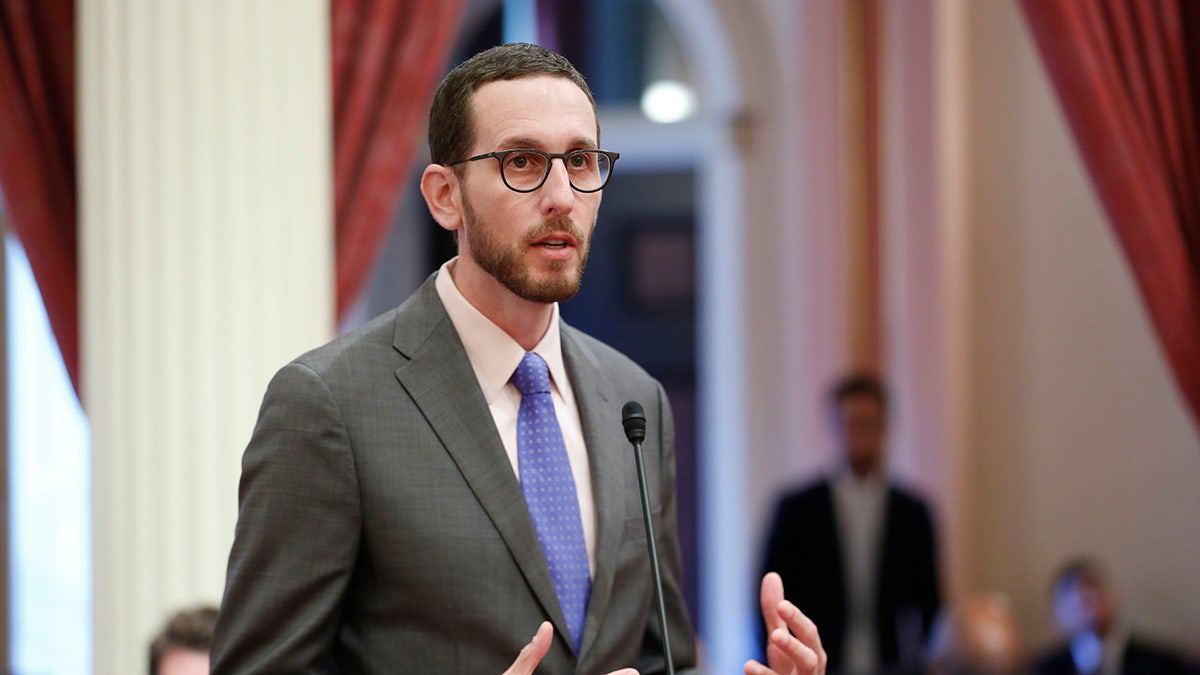
State Sen. Scott Wiener of California, who previously refrained from calling Israel’s actions in Gaza a «genocide,» reversed course in January. (Sen. Scott Wiener/California Senate)
«For the Jews thinking you can play footsie with these people… they just hate you because you’re a Jew,» XX-XY Athletics founder and CEO Jennifer Sey, posted on X. «That’s it. That’s what it comes down to. Wiener is Jewish. Never bend a knee. It won’t go well.»
«Once they’re done with Zionism, they’ll come after democracy, capitalism, and the foundation of Western society and government,» Hussain Abdul-Hussain, research fellow at the Foundation for Defense of Democracies, posted on X.
«Palestine is the tip of the iceberg. The iceberg is ‘Islam is the solution,’ the alternative to Enlightenment ideas, as imagined by Muslim Brotherhood ideology.»
CLICK HERE TO DOWNLOAD THE FOX NEWS APP
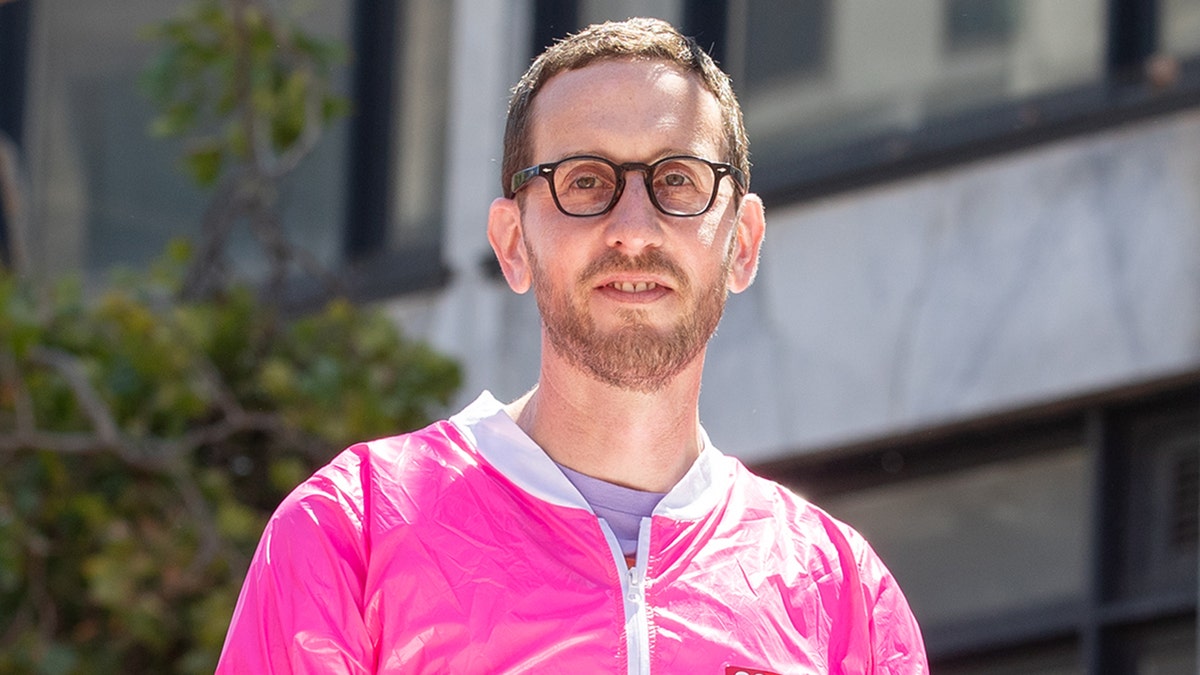
California state Sen. Scott Wiener participates in the 54th Annual San Francisco Pride Parade on June 30, 2024, in San Francisco, Calif. (Miikka Skaffari/Getty Images)
«You can see the fear in his eyes, and while I have little in common with him, there is something relatable about this moment,» California Post opinion editor Joel Pollak posted on X. «It’s no real consolation to point out that he tried appeasing the hatred (letting the rest of us be victimized). This is what we look like before the end.»
Wiener’s office released a lengthy statement about the two incidents, posting online that Wiener was «harassed, threatened, and physically intimidated while attending public events to engage with the San Francisco community.»
«I have no objection whatsoever to anyone disagreeing with me, opposing me, or protesting me,» Wiener said in the statement. «All of that is core to democracy. I also have no issue when people talk to me on the street and ask questions or express opposition. That’s democracy, even when the people engaging in this conduct misrepresent my views.»
«But when opposition and disagreement transition to harassment, including cornering me, touching me, or trying to physically bully me out of a public event, that crosses a line. We’re living in a time when violence is all too often threatened or used against people in public life. In San Francisco, we’re better than that.»
Wiener, who had previously stopped short of using the word «genocide,» reversed course in January and said he believed Israel’s actions in Gaza qualified as genocide. The California Post editorial board commented on the shift in a recent piece ,saying, «The irony: It wasn’t enough,» the outlet wrote. «Nothing is ever enough. Wiener remains a target, even though he changed his mind, because he is Jewish.»
Fox News Digital’s CJ Womack contributed to this report.
politics, wars, ben shapiro, nancy pelosi, san francisco
INTERNACIONAL
Con casi 200 millones de personas afectadas, la ola de calor en Europa se corre hacia el Este y se espera otro fenómeno en los próximos días

La ola de calor que afectó en los últimos días el oeste europeo, con especial incidencia en Francia y Bélgica, donde se rompieron récords de temperaturas máximas, se mueve desde el domingo hacia el centro, el este del continente y la región de los Balcanes. Los europeos entienden que el calor, que en algunas zonas de Europa supera en más de 10 grados las temperaturas medias de la época, no termina de irse, sólo da vueltas por el continente.
Después de unas tormentas también inéditas por su fuerza durante la noche del sábado al domingo en el norte de Francia y en Bélgica, que ayudaron a hacer bajar las temperaturas, las masas de aire caliente que sostienen estos episodios se movieron hacia Chequia, Eslovaquia, Hungría, Polonia o los países de los Balcanes.
En total, según estimaciones de la agencia AFP, en los últimos días hasta 191 millones de europeos vivieron con temperaturas diurnas superiores a los 35 grados, muchos de ellos en regiones muy pocos acostumbradas al calor.
La Organización Mundial de la Salud calcula que desde el 21 de junio hubo en Europa un exceso de fallecimientos de más de 1.300 personas. Estima que esas muertes son achacables al excesivo calor.
Esta ola de calor, cuyo inicio oficial se fija en el 21 de junio, es la más severa desde que hay registros fiables en Europa, y según la comunidad científica, “hubiera sido virtualmente imposible” tan temprano en verano sin la crisis climática. Se han roto récords máximos de temperaturas en Alemania, Polonia, Chequia para cualquier época del año y para junio en Reino Unido y Suiza.
El patrón de la Organización Mundial de la Salud, Adhanom Ghebreyesus, escribió en X: “Ahora mismo 150 millones de personas viven en condiciones de extremo calor, cientos han muerto, las escuelas cierran, las redes (de transporte de electricidad) están colapsando”. “Europa es el continente que se calienta más rápido”, añadió. Una especie de justicia divina, porque también han sido los europeos los que más tiempo llevan calentando el planeta.
Uno de los temas de conversación habituales en los últimos días en Bruselas es el hecho de que media Europa no está hecha para sostener estas temperaturas. En Alemania ha habido que cerrar carreteras porque el asfalto se derrite, en Bélgica estallaron las vías de metal por donde pasan algunos tranvías porque no soportaron la dilatación provocada por el calor.
Pero, sobre todo, en Bruselas, como en buena parte del norte del continente, las viviendas se diseñan con el objetivo de que en invierno consuman la menor cantidad de calefacción posible. Se intenta que tengan ventanas lo mayor posibles, que su aislamiento impida que se escape el calor y se construyen, siempre que se puede, con sus fachadas mirando al sur o suroeste porque es la forma en que tienen más horas de sol. Mecanismos que ayudan a ahorrar en calefacción pero que en episodios de calor excesivo empeoran la situación de esas viviendas.
El aire acondicionado, imprescindible en edificios públicos en España, Portugal, Grecia o Italia, en viviendas, edificios oficiales, escuelas u hospitales, es un rara avis en el norte de Europa, donde ni siquiera es común en hospitales y es rarísimo en restaurantes y tiendas.
El dato de los 1.300 muertos es provisional, y las autoridades temen números mucho mayores. La ola de calor de 2003, con la que se compara la actual, mató a más de 15.000 europeos. Y aunque por ahora se mantiene esa cifra de 1.300 muertes, informes de la prensa francesa hablan de funerarias en el centro del país desbordadas por los pedidos de féretros.
En la ciudad alemana de Colonia este pasado fin de semana hubo que montar de urgencia hospitales de campaña porque los hospitales de la ciudad estaban desbordados por la cantidad de personas mayores hospitalizadas con problemas de salud provocados por el calor.
Las autoridades sanitarias francesas dijeron que sólo desde el día 24 al 28 calculan más de 1.000 muertes debidas al calor. Eso es sólo en cuatro días y sólo en Francia, por lo que el dato de 1.300 a nivel europeo es probablemente una estimación muy conservadora. España calcula unos 800 fallecimientos adicionales en la última semana.
Los servicios meteorológicos europeos estiman que dentro de entre 10 y 15 días llegará la segunda gran ola de calor, otra vez con temperaturas rondando los 40 grados en el norte del continente. Polonia, el este de Alemania o Chequia rozaron el domingo los 42 grados, todos con registros históricos.

Argentina, campeón invicto del Sudamericano Sub-12: el proyecto que apuesta al futuro del tenis nacional

Se disparó el impacto del aumento de tarifas en las familias más pobres: ya se llevan más del 20% de su ingreso

Llevar una ramita de canela envuelta en papel aluminio: para qué sirve y por qué algunos lo recomiendan

Sergio Berni criticó el armado de Axel Kicillof y condicionó el apoyo de un sector del peronismo

Qué es la cumbre regional de aliados de Israel que encabeza Javier Milei

El crudo relato de dos futbolistas argentinos en medio de los terremotos en Venezuela: “Escuchaba la tierra quebrándose”

El punto de quiebre que sentó la suerte de Manuel Adorni y los preparativos que hace el Gobierno ante su inminente salida

La bomba de Nico Occhiato tras el escándalo de Florencia Peña con Messi: “Lo más groso que pudimos haber logrado”

Una escena estremecedora: el dato más doloroso de los minutos posteriores a la muerte de Ernestina Pais

Cómo ganar $20 millones con Mercado Pago: el paso a paso para quienes cobran ANSES

 POLITICA2 días ago
El punto de quiebre que sentó la suerte de Manuel Adorni y los preparativos que hace el Gobierno ante su inminente salida
- CHIMENTOS2 días ago
La bomba de Nico Occhiato tras el escándalo de Florencia Peña con Messi: “Lo más groso que pudimos haber logrado”
- CHIMENTOS2 días ago
Una escena estremecedora: el dato más doloroso de los minutos posteriores a la muerte de Ernestina Pais