INTERNACIONAL
República Dominicana ha incautado 16,671 kilogramos de drogas durante el segundo trimestre de 2026


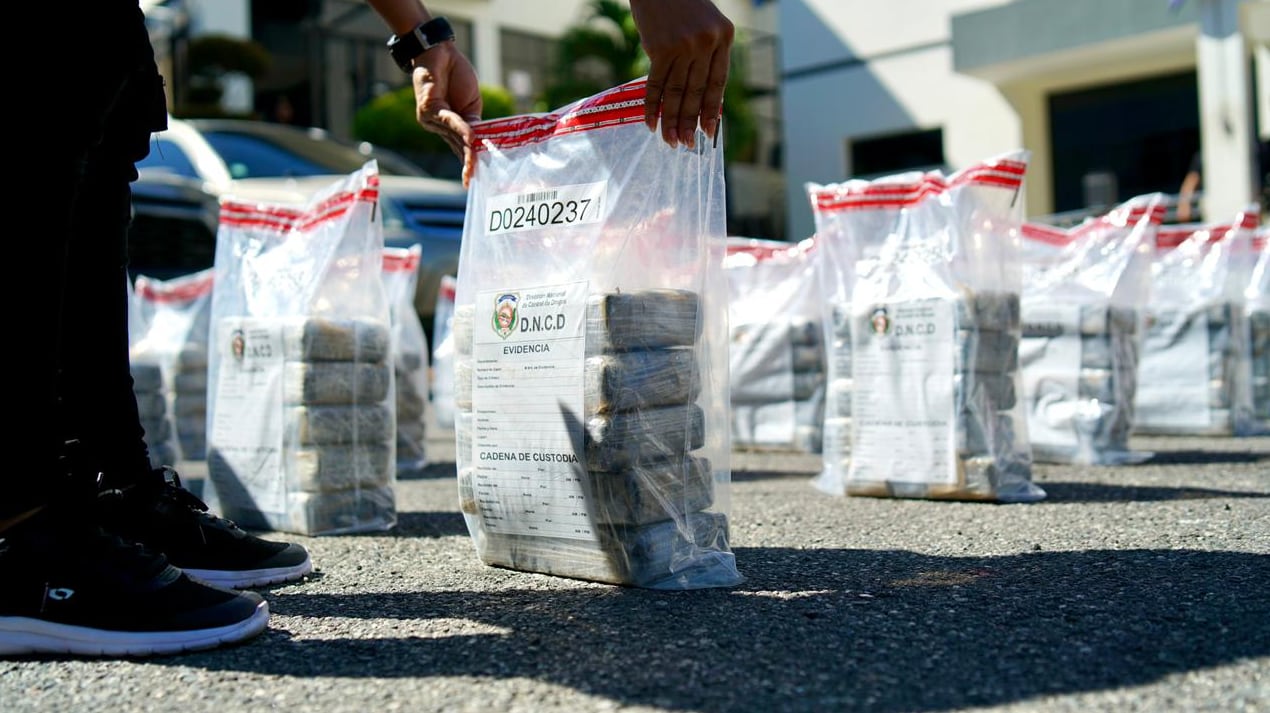
La Dirección Nacional de Control de Drogas (DNCD) decomisó 16,671.16 kilogramos de sustancias narcóticas entre abril y junio de 2026, según el Resumen Estadístico correspondiente al segundo trimestre elaborado con datos del Sistema de Administración de Información Criminal (SAIC).
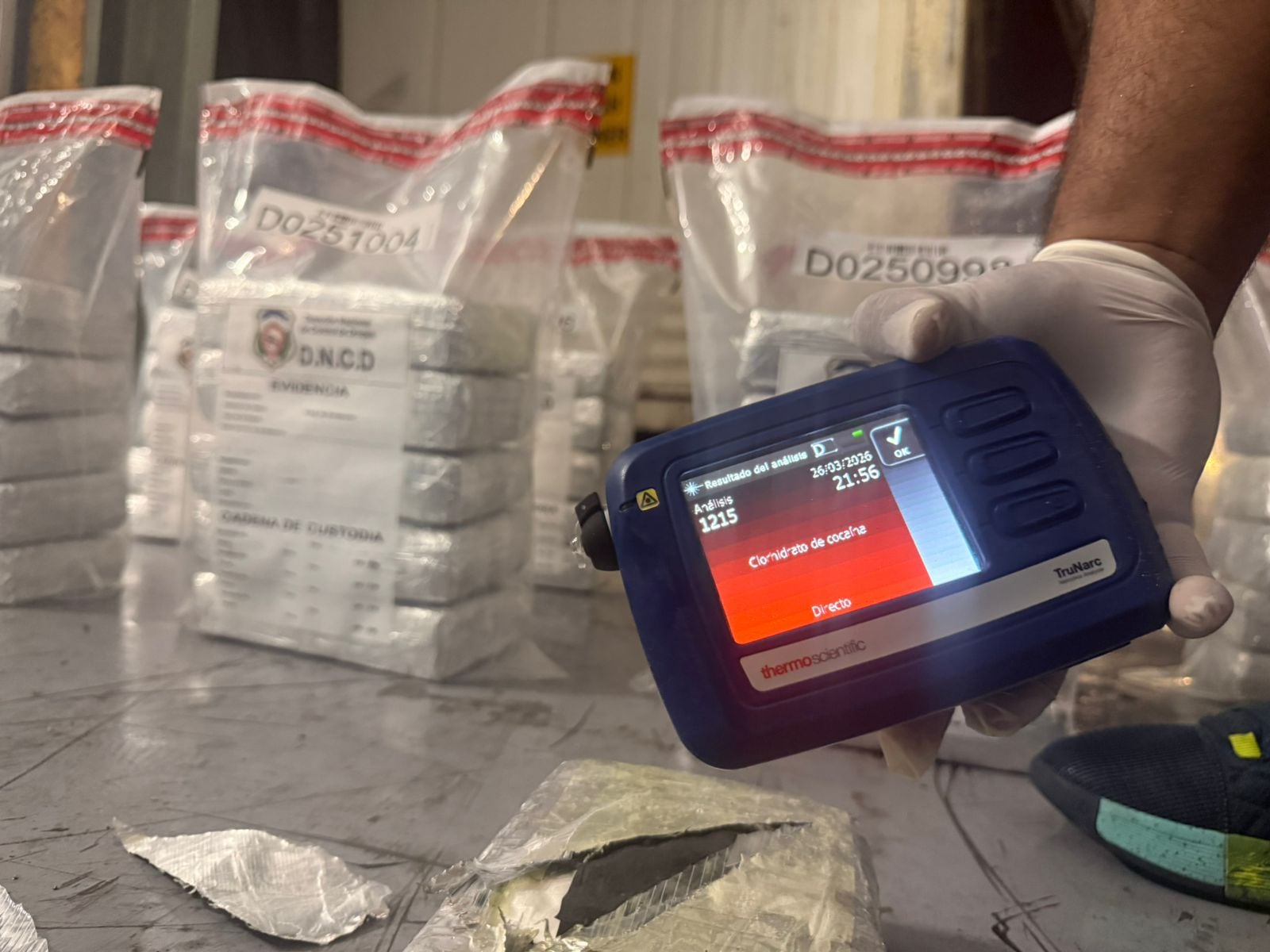
La mayor parte de los decomisos correspondió a marihuana, con 11,065.01 kilogramos incautados durante los tres meses. La cocaína ocupó el segundo lugar, con 5,542.47 kilogramos, mientras que las autoridades también reportaron ocupaciones de crack, hachís, opio y éxtasis.
El consolidado mensual refleja que junio fue el período con mayor volumen de droga ocupado, al registrar 9,513.83 kilogramos. En abril fueron decomisados 4,372.85 kilogramos y en mayo otros 2,784.48 kilogramos.
La marihuana marcó la diferencia en junio, cuando fueron ocupados 9,011.14 kilogramos, equivalente a más del 81 % del total de esa sustancia incautada durante el trimestre. En abril se decomisaron 1,253.83 kilogramos de marihuana y en mayo 800,04 kilogramos.
Dentro de los decomisos de marihuana de junio, el reporte atribuye a San José de Ocoa la ocupación de 7,789.97 kilogramos, seguida por Peravia, con 1,022.69 kilogramos. Santo Domingo registró 63.04 kilogramos, mientras que otras provincias presentaron cantidades menores.
En cuanto a la cocaína, abril concentró el mayor volumen, con 3,089.81 kilogramos, seguido de mayo, con 1,965.70 kilogramos, y junio, con 486.97 kilogramos. Durante abril, los mayores decomisos de esa droga fueron reportados en Pedernales, con 1,707.95 kilogramos, y Peravia, con 1,021.63 kilogramos.
En mayo, Santo Domingo encabezó los decomisos de cocaína con 1,297.57 kilogramos, mientras Pedernales acumuló 370.42 kilogramos. Para junio, Santo Domingo volvió a figurar como la provincia con mayor cantidad incautada, al registrar 303.30 kilogramos de cocaína.

El informe de la DNCD indica además la incautación de 39.85 kilogramos de crack en el trimestre: 12.84 kilogramos en abril, 18.28 en mayo y 8.73 en junio. También fueron decomisados 16.44 kilogramos de hachís, 7.14 kilogramos de opio y 0.24 kilogramos de éxtasis.
Como resultado de las operaciones antidrogas, las autoridades reportaron 12,548 personas detenidas entre abril y junio. Del total, 10,682 eran dominicanos y 1,866 extranjeros. La mayor cantidad de arrestos se registró en junio, con 4,309 detenidos, seguido de mayo, con 4,304, y abril, con 3,935.
Los hombres representaron la mayoría de las detenciones, con 12,422 casos, frente a 126 mujeres. Por edades, el grupo de 18 a 25 años concentró 2,395 detenidos, mientras que 2,440 personas arrestadas tenían 51 años o más, de acuerdo con el documento oficial.
La DNCD también informó la incautación de 546 vehículos, entre motocicletas, passolas, carros, camionetas, jeepetas, camiones y embarcaciones. Las motocicletas fueron el tipo de vehículo más ocupado, con 416 unidades durante el trimestre.
Asimismo, fueron confiscadas de manera preliminar 121 armas de fuego: 36 en abril, 45 en mayo y 40 en junio. Entre ellas figuran pistolas, revólveres, escopetas, fusiles y armas de fabricación casera.
En materia de dinero, las autoridades ocuparon RD$11,003,406.10 (USD 185,008.93), además de US$36,686, 150 euros (USD 170.49) y sumas menores en dólares canadienses, pesos mexicanos, bolívares venezolanos, pesos colombianos y gourdes haitianos.
El combate al narcotráfico
La República Dominicana ha concentrado su política antidrogas en la interdicción de cargamentos, la persecución del microtráfico y la cooperación con Estados Unidos. El país ocupa un lugar relevante en las rutas de cocaína que conectan América del Sur con Estados Unidos y Europa.
Un análisis sobre el Caribe de Insight Crime sostiene que los grupos dominicanos coordinan envíos con redes colombianas y europeas, mientras la Oficina de las Naciones Unidas contra la Droga y el Delito identifica al país como un punto de tránsito en la ruta oriental del Caribe.

La ofensiva de seguridad contrasta con las debilidades señaladas en materia de reducción de la demanda. La Comisión Interamericana para el Control del Abuso de Drogas (CICAD) indicó, en su evaluación sobre República Dominicana, que no existen estudios recientes de impacto sobre los programas de prevención del consumo.
La brecha limita la posibilidad de medir si las campañas comunitarias, escolares y de tratamiento reducen el consumo problemático. Las estadísticas oficiales permiten seguir decomisos, arrestos y extradiciones, pero ofrecen menos información sobre acceso a rehabilitación, reinserción social y resultados sanitarios.
justicia e interior,narcotráfico











INTERNACIONAL
America’s Arctic war machine roars to life as commander reveals chilling new reality on Russia’s doorstep
NEWYou can now listen to Fox News articles!
Across one of the coldest, most remote and strategically exposed corners of the United States, American forces are practicing how to fight on land, at sea and in the air — rapidly moving rocket systems into western Alaska, sending F-35s and F-16s toward simulated threats, and coordinating U.S. and Canadian warships in the Bering Sea.
The operations are part of Tundra Merlin, an enduring U.S. military campaign aimed at proving that even across Alaska’s vast distances and extreme Arctic conditions, American and allied forces can rapidly assemble combat power to defend the northern approaches to the homeland.
And behind that show of force is a changing security environment increasingly shaped by Russia and China.
TWO ICEBREAKERS HEADED TO ALASKA AS US COMBATS RUSSIAN, CHINESE INFLUENCE IN ARCTIC
U.S. Army Spcs. Cole Garretson, left, and Kori Cook, assigned to 1st Battalion, 5th Infantry Regiment, 1st Mobile Brigade Combat Team (Air Assault), 11th Airborne Division, during Operation Tundra Merlin near Nome, Alaska, Aug. 4, 2026. (Christopher Chen/U.S. Air Force)
«I think what’s changed is primarily two things,» Lt. Gen. Robert Davis, commander of Alaskan Command, told Fox News Digital. «One is that the melting sea ice has made the Arctic more accessible. And we’re seeing increased activity both commercially and militarily in the Arctic, particularly during the summer months.»
«The other factor is that China and Russia and others are continuing to advance their military capabilities and capacity with an interest in showing that they can use them in the Arctic as well,» Davis said.
The Pentagon has reached a similar conclusion. Its 2024 Arctic Strategy warned that growing Russia-China cooperation could «alter the Arctic’s stability and threat picture,» and called for greater U.S. presence, exercises and military preparedness in a region becoming increasingly accessible. Defense officials have said forces operating there must be able not merely to train in extreme conditions, but survive them.
RUSSIA PULLED BACK FROM THE ARCTIC, FOR NOW. NATO MUST ACT BEFORE THOSE TROOPS RETURN
Few places illustrate the stakes better than Alaska.
The state sits at the intersection of the Arctic and Pacific and serves as a critical hub for homeland defense and a platform for projecting U.S. military power toward the Indo-Pacific and beyond. The Russian and American mainlands are only about 55 miles apart at their closest points across the Bering Strait, while Russia’s Big Diomede Island and Alaska’s Little Diomede Island are separated by roughly 2.5 miles.
Alaska also hosts major air bases, early-warning and missile-defense infrastructure, and tens of thousands of military personnel. U.S. Northern Command says Alaskan Command has more than 22,000 active-duty personnel from across the services, along with approximately 4,700 Guard and Reserve members.
Air Force officials have described Alaska as the «crossroads of the Arctic and the Pacific,» providing U.S. forces with reach and domain awareness for both homeland defense and global power projection.
Davis put that geography in even starker terms.
Pointing to the fifth-generation fighters positioned in Alaska, he told Fox News Digital that U.S. forces can «project from the Arctic to almost anywhere in the Northern Hemisphere in about 10 hours of flight time.»
RUSSIA’S QUIETER NUCLEAR SUBMARINES THREATEN NATO, FORMER COMMANDER WARNS

USS Spruance deploys to U.S. Northern Command Area of Responsibility. (U.S. Navy)
Tundra Merlin is designed to turn that geographic advantage into combat capability.
Davis described the operation as a collection of military options — essentially «plays in a playbook» — that can be activated either to deter an adversary or respond if one begins acting aggressively.
«Our hope is that we don’t have any adversarial activity because we’ve effectively deterred it,» Davis said. «But if we do see it and we have kind of a play in the playbook ready to go. For a response.»
One of the most striking demonstrations came recently, on Alaska’s western edge.
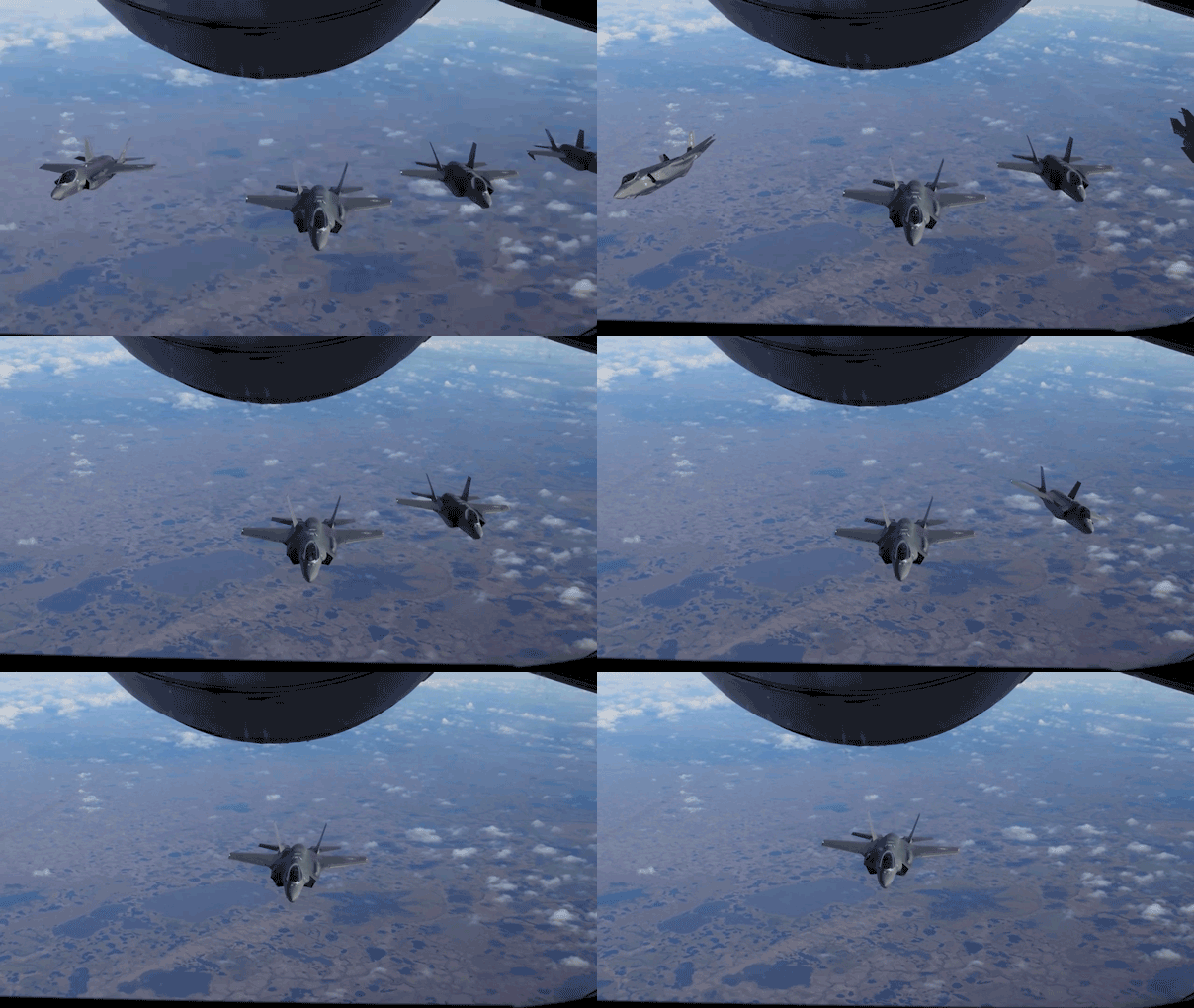
U.S. and Canadian forces rapidly moved a U.S. Army HIMARS mobile rocket system and an AN/TPQ-53 radar into western Alaska aboard a Royal Canadian Air Force C-17, then connected those ground forces with American F-35s, F-16s and a KC-135 tanker operating overhead.
CHINA, RUSSIA, IRAN AND NORTH KOREA FORM ‘AXIS OF AGGRESSORS’ THAT COULD OVERWHELM US, BOOK WARNS
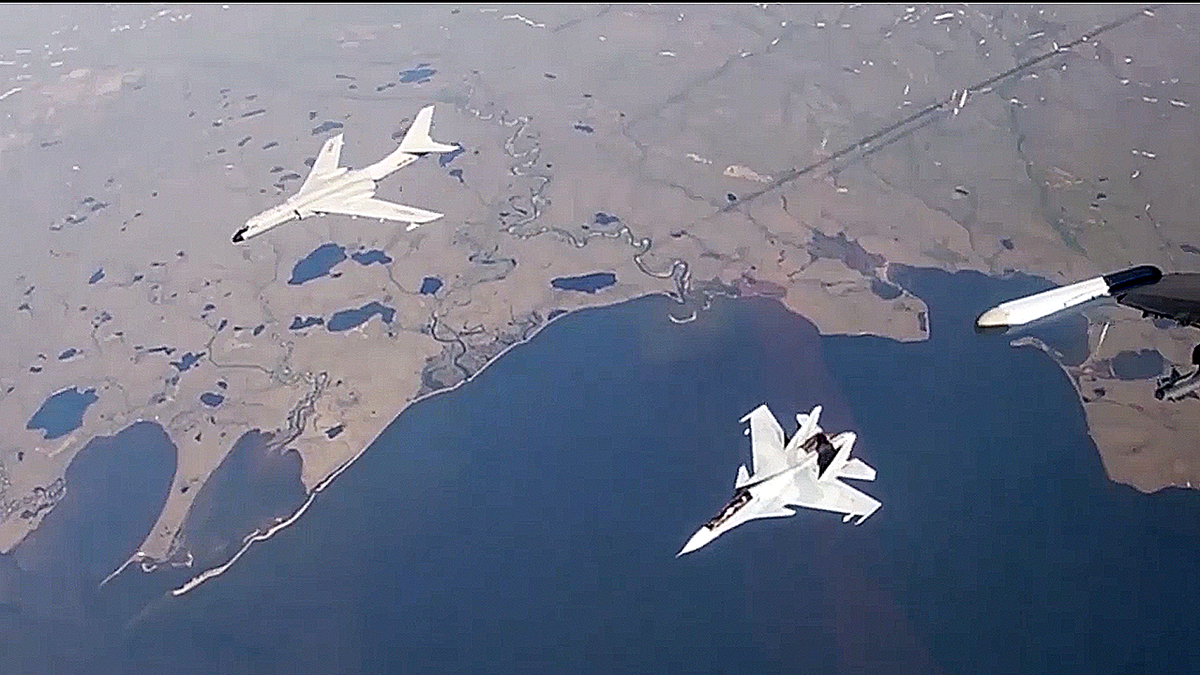
Russia and China make joint air patrols near Alaska. (Russian Defense Ministry/Getty Images)
The mission brought air defense and long-range offensive firepower together in a single operation. F-35s and HIMARS synchronized against a simulated ground target approximately 135 miles away, while F-16s simultaneously intercepted F-35s acting as simulated incoming aerial threats, according to U.S. Northern Command.
Davis said the point was not simply to prove the individual weapons worked, but to show how quickly forces could be moved into a remote part of Alaska and linked together.
The operation demonstrated that U.S. forces can rapidly move capabilities into Alaska «both to defend Alaska, but also, if necessary, to put other adversary targets at risk,» he told Fox News Digital.
Tundra Merlin pushed that same concept out to sea in September.
From Sept. 18–22, U.S. and Canadian forces conducted a joint maritime strike scenario roughly 100 nautical miles north of Dutch Harbor, integrating U.S. Coast Guard and Royal Canadian Navy surface and subsurface vessels with Canadian maritime patrol aircraft and Alaska-based U.S. Air Force F-35 fighters and E-3 airborne warning and control aircraft.
The forces practiced multiple simulated maritime target engagements, testing whether information collected by different ships and aircraft could be rapidly passed across the force and used to identify, track and engage a potential threat.
«The most impressive part to me was seeing the high degree of cooperation and integration among units that day in and day out don’t necessarily operate together,» Davis said.
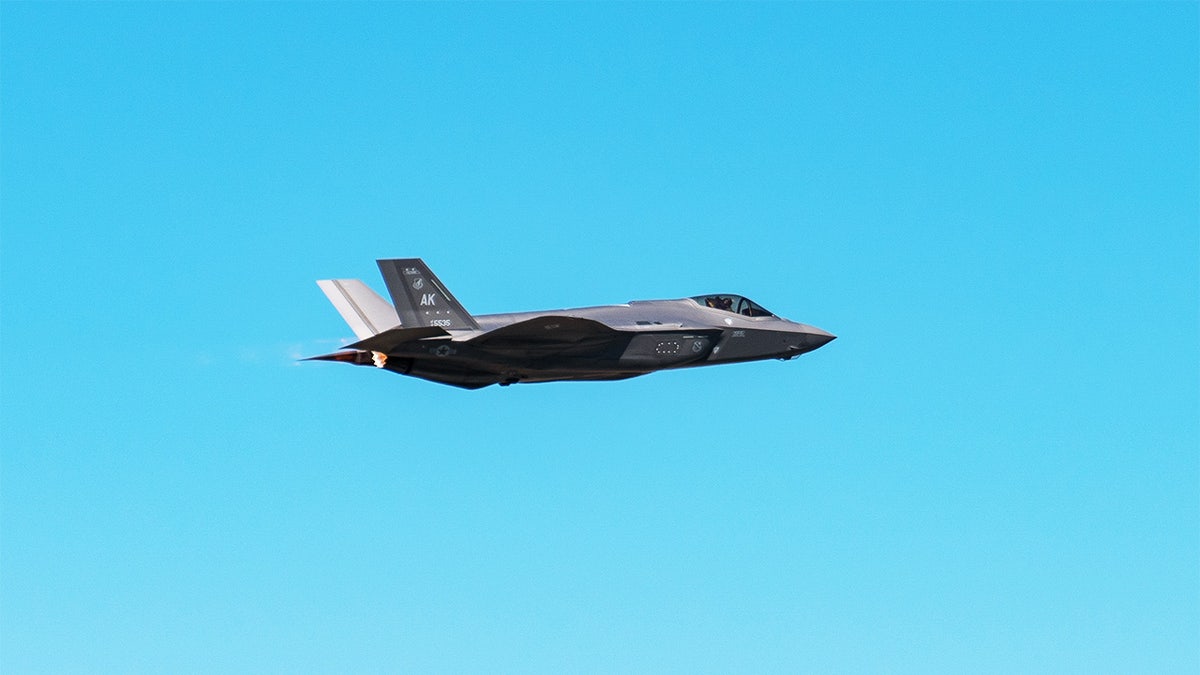
Arctic Thunder Air Show is performed at Joint Base Elmendorf-Richardson in Anchorage, Alaska, on July 22, 2024. (Hasan Akbas/Anadolu via Getty Images)
«To see the joint nature on the U.S. side integrated together with the inter-agency of the U.S. Coast Guard and with our allies, with Canada as an example, was just an amazing thing to see,» he added.
That ability to operate at scale is complicated by Alaska itself.
Extreme cold can affect equipment and personnel, while the enormous distances and limited infrastructure of the North American Arctic make moving and sustaining forces unusually difficult. The Pentagon’s Arctic Strategy specifically identifies those distances and the region’s infrastructure limitations as obstacles to military operations and says maintaining infrastructure in Alaska is essential for missile defense, surveillance and rapid power projection.
Davis said military equipment brought into Alaska cannot simply be expected to function as it would elsewhere.
«It needs to be conditioned. It needs to be properly outfitted to operate in sub-zero temperatures for a long period of time,» he said, adding that troops also require specialized clothing, training and procedures to avoid cold-weather injuries and continue fighting in Arctic conditions.
The pressure to master that environment comes as Russia and China increasingly demonstrate their own ability to operate near North America.
In July 2024, the North American Aerospace Defense Command, or NORAD, detected and intercepted two Russian Tu-95 bombers and two Chinese H-6 bombers flying together in the Alaskan Air Defense Identification Zone. It was the first time NORAD had intercepted Russian and Chinese military aircraft operating together in the zone. The aircraft remained in international airspace and did not enter U.S. or Canadian sovereign territory, and NORAD said the flight itself was not considered a threat.
The episode nevertheless highlighted the very kind of cooperation U.S. defense planners are watching.
For now, Davis said Alaska is positioned to deal with the military threats commanders expect under normal conditions.
«We’re postured very well for any of the anticipated threats that we think would come our way in the very near term,» he said. But if commanders saw indications of a significant escalation, Davis said Alaskan Command would likely request additional forces and capabilities.
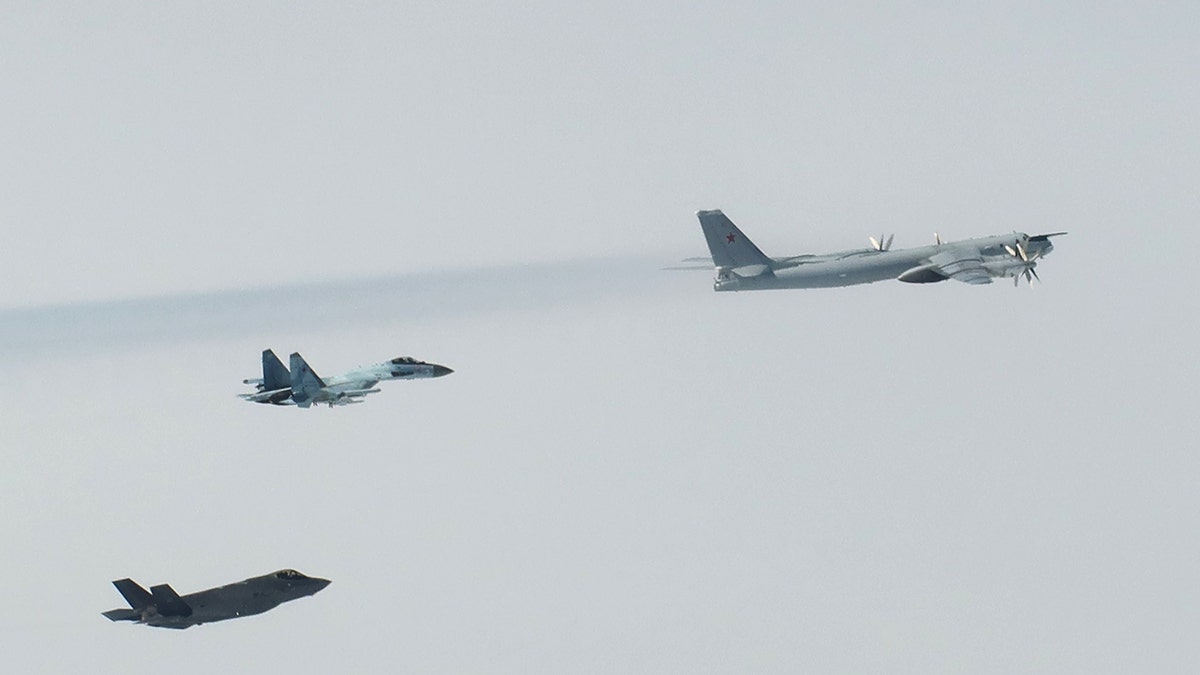
In July, NORAD said U.S. fighter jets intercepted Russian aircraft that were flying in the Alaskan Air Defense Identification Zone. (North American Aerospace Defense Command)
That, ultimately, is what Tundra Merlin is intended to prove: that in a theater defined by enormous distances, punishing weather and growing Russian and Chinese activity, the United States can move forces across Alaska, connect them across land, sea and air, and have combat power ready before a potential adversary decides to test the northern edge of the homeland.
us army, us navy, russia, military, world, alaska

DALLAS — The question hanging over the Texas Senate race is not simply whether Democrat James Talarico can win over voters in one of the nation’s reddest states. It is whether Black voters will turn out in numbers large enough to help him break the GOP’s decadeslong statewide winning streak.
Voters interviewed at the Texas State Fair broadly agreed that Black turnout could be crucial to Talarico’s chances against Republican Ken Paxton.
«I definitely do think, if there’s any time for Texas to get a Democrat elected, this is the time to strike,» Mike, a military veteran from Dallas, told Digital. «I think it depends on whether the Black and Brown voters come out for Talarico.»
Talarico is seeking to become the first Democrat in more than 30 years to win a statewide race in the Lone Star State.
POLL: TALARICO TIES PAXTON IN TEXAS SENATE RACE, THREATENING GOP STRONGHOLD
«Everyone says, ‘Hey, we are Texas and we want change here, we want change there,’» Mike added. «Well, this is an opportunity for you guys to get change. Are you going to come out and show up at the polls? He’s got all the momentum in the world. He’s got everything going for him.»
Mike’s comments reflect the challenge facing Talarico as he works to build support among Black and Hispanic voters and motivate them to turn out in November.
Texas has more Black eligible voters than any other state, with roughly 2.7 million. That puts voters in Houston, Dallas-Fort Worth and East Texas in a potentially decisive position in any Democrat’s bid to win statewide.
Former President Barack Obama’s appearance with Talarico at a May campaign stop in Austin underscored the stakes for Democrats to leverage a massive voting bloc in Texas. The party’s effort to win over Black voters could help determine whether Texas remains reliably red or becomes more competitive for Democrats in future elections.
TEXAS VOTERS HAVE PLENTY TO SAY ABOUT WHETHER LONE STAR STATE COULD TURN BLUE
But Talarico faces an uphill battle in uniting Democrats behind his campaign after a divisive primary against Rep. Jasmine Crockett, D-Texas. Talarico defeated Crockett in the Democratic primary earlier this year, and the outgoing congresswoman has not endorsed his Senate campaign.
Crockett has said she supports the Democratic ticket in Texas, but her political action committee has not endorsed Talarico or campaigned for him.
Rashaun, of Forney, Texas, said the primary loss may have left some Black voters frustrated.
«Everyone was behind Jasmine,» Rashaun said. «So that’s what’s blocking, I’m going to say for my people, that was blocking their minds.»
Still, Rashaun said she plans to vote for Talarico and hopes Texas will turn blue in November.
«Yes, we are voting in November and it’s going to be Talarico,» she said. «We need Texas to flip. We can wish and hope and pray. But we need to get out and vote.»
TEXAS VOTERS HAVE PLENTY TO SAY ABOUT WHETHER LONE STAR STATE COULD TURN BLUE
Mike said the election may ultimately come down to whether voters are willing to act.
«Right now it is on the Texas voters to get out and support James Talarico or sit at home if you don’t want to see that change,» he said.
Bryant, of Coppell, Texas, likewise pointed to frustration with Gov. Greg Abbott and Attorney General Ken Paxton, both Republicans, as a potential motivator for people to support Talarico’s candidacy.
«This is a critical election,» Bryant said. «I think we all can feel it in Texas, the need to get Greg Abbott out.»
REPUBLICANS JUST GOT A POWERFUL NEW PLAYBOOK FOR THE BATTLE FOR CONGRESS. HERE’S WHAT’S INSIDE
«It’s time for a change,» he added. «Plus, on the other side, you see how bad Ken Paxton is and his track record and just some of the things that he’s done. It’s no longer working and we need to do something different.»
Ava, a college student from Denton, said Talarico’s outreach to younger voters has helped him connect with a generation that often feels overlooked.
«I do think he’s going to pull through,» she said. «He engages with the younger community, which is important because we feel like we’re not represented.»
She added that his social media presence has also helped younger voters connect with his campaign. She first learned about Talarico after meeting him at the Texas State Fair last year and later followed him online.
«I think he’s going to flip the state.»
While Ava focused on Talarico’s appeal among younger voters, Kiara, of Dallas, said supporters must turn that enthusiasm into votes.
«I live in Texas, and I’ve been here for a really long time, and it’s time for a change, a positive change,» she said. «And I think Talarico is definitely going to bring that.»
«We just have to vote,» Kiara added. «We can’t complain about the problems if you don’t want to vote to fix them.»
midterm elections, politics, texas, elections, elections state and local, greg abbott, republicans elections
INTERNACIONAL
Diputados de la Comisión de Seguridad Alimentaria cuestionan la demora del Gobierno ante la emergencia alimentaria por la sequía en Guatemala

Los diputados de la Comisión de Seguridad Alimentaria del Congreso de la República cuestionaron al Gobierno de Guatemala por la demora en responder a la emergencia alimentaria causada por la sequía, mientras las pérdidas de cultivos y el déficit de lluvias anticipan una mayor demanda de asistencia para los hogares rurales.
Durante una citación en el Congreso de la República, los legisladores señalaron que las instituciones conocían las previsiones de escasez de precipitaciones asociadas al fenómeno El Niño y sus posibles efectos sobre la producción agrícola. También advirtieron que los recursos previstos no alcanzarían para asistir a todas las familias afectadas.
El Ministerio de Agricultura, Ganadería y Alimentación (MAGA) registraba hasta ese momento 571.000 familias con cultivos perdidos. La secretaria ejecutiva de la Coordinadora Nacional para la Reducción de Desastres (CONRED), Claudinne Ogaldes, calculó que la cantidad de hogares perjudicados podría ascender a 1,2 millones.

Un presupuesto insuficiente frente a la pérdida de cosechas
Los diputados alertaron que los 500 millones de quetzales asignados para comprar alimentos serían insuficientes, dado que el plan contempla una ración mensual para las familias que perdieron sus cosechas. La cifra de posibles beneficiarios continúa creciendo a medida que se profundizan las consecuencias de la sequía prolongada.
Ogaldes indicó que serían necesarios cerca de 3.000 millones de quetzales para proporcionar raciones durante seis meses a 670.000 familias. Esa proyección podría requerir una ampliación presupuestaria si se confirma el aumento de hogares afectados.
La funcionaria explicó que los ministerios revisan los fondos no ejecutados para destinarlos a la adquisición de más alimentos. “De acuerdo con las instrucciones que se giraron, los ministerios están viendo lo no ejecutado para poder utilizar esos fondos en compra de más alimento”, afirmó ante los legisladores.
Los cuestionamientos también alcanzaron el proyecto de presupuesto de 2027. Según los diputados, la propuesta no incluye recursos específicos para atender la emergencia alimentaria vinculada con El Niño, pese a que los pronósticos oficiales prevén que sus efectos se extiendan hasta mayo del año siguiente.
La titular de la CONRED sostuvo que todavía falta un período móvil para que el fenómeno se consolide y que el Instituto Nacional de Sismología, Vulcanología, Meteorología e Hidrología (INSIVUMEH) prevé oficializarlo en octubre. La expectativa es de un déficit de precipitaciones durante el resto del período y los primeros meses del año.
“Vamos a tener realmente un déficit de lluvias para el resto del periodo y los primeros meses del año. Las lluvias que estamos viendo en septiembre son convectivas; llueve mucho en muy poco tiempo y no sirven para la cosecha”, expresó Ogaldes ante la sala legislativa.
La CONRED ya dispone de los 500 millones de quetzales para adquirir las raciones, pero todavía no cuenta con un listado definido de las familias que recibirán la ayuda. La institución propuso utilizar los registros de inseguridad alimentaria validados por la Secretaría de Seguridad Alimentaria y Nutricional (SESAN).
Los diputados objetaron ese mecanismo porque los registros de la SESAN no identifican necesariamente a agricultores que hayan perdido sus cultivos por la falta de lluvias. La preocupación se concentra en que la asistencia alcance a hogares cuyo sustento dependía directamente de la producción agrícola.
“Los listados de SESAN no necesariamente tienen identificados a los agricultores que perdieron su sustento, el problema es que no hay un listado de familias agricultoras, no existen. Estamos buscando el mejor mecanismo para identificar a estas familias. Todavía no están definidas”, reconoció la secretaria ejecutiva.
Las entregas previstas entre octubre y noviembre
Con los recursos disponibles, la CONRED comprará 671.000 raciones mediante un convenio firmado el 24 de septiembre con el Programa Mundial de Alimentos (PMA). Cada entrega incluirá unos 45 kg de maíz (100 libras), 13,6 kg de frijol (30 libras) y 4,5 kg de arroz (10 libras).
La asistencia está pensada para distribuirse durante seis meses. Ogaldes explicó que la emergencia impedía realizar una licitación, por lo que se recurrió a un convenio directo con el organismo de Naciones Unidas para asegurar la provisión de alimentos.
El PMA debía entregar los productos en octubre para que la distribución escalonada comenzara en noviembre. Mientras el Congreso examinaba el manejo de los fondos, el Ejecutivo avanzaba con la planificación operativa de las entregas.
El 30 de septiembre, durante la tercera reunión ordinaria del Consejo Nacional de Seguridad Alimentaria y Nutricional (CONASAN), presidida por la vicepresidenta de la República, Karin Herrera, se definió un cronograma inicial. La primera fase contempla 38.141 raciones desde el 6 de octubre.
Una segunda tanda de 82.879 unidades comenzará a distribuirse a partir de noviembre, según los insumos que el PMA prevé aportar entre la segunda y la tercera semana de octubre. Las municipalidades deberán activar sus Centros de Operaciones de Emergencia y trasladar las solicitudes al nivel departamental correspondiente.
Los requerimientos que no puedan resolverse en los departamentos pasarán al Centro de Operaciones de Emergencia Nacional. La ministra de Agricultura, María Fernanda Rivera, sostuvo durante la reunión del CONASAN que la respuesta había sido solicitada con anticipación ante las proyecciones para el cierre del año.
“Esto no es lo que debía estar ahorita respondiendo, sino que es lo que previmos, proyectamos que va a pasar en noviembre, final de noviembre y diciembre”, afirmó Rivera.
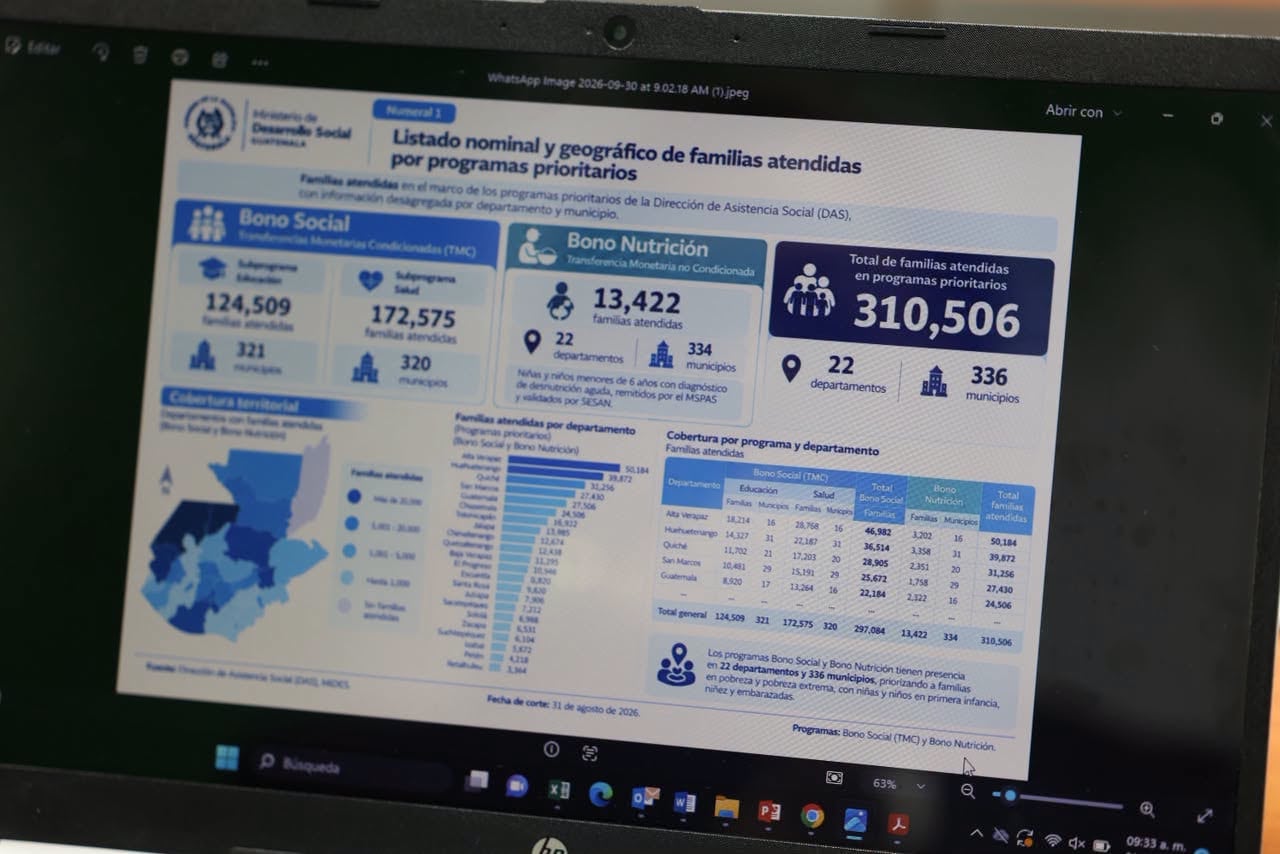
El CONASAN también aprobó la actualización del Protocolo Interinstitucional para el Abordaje Municipal de la Desnutrición Aguda. Además, evaluó imponer condiciones al Bono Nutrición para los hogares con menores que padecen ese diagnóstico.
El Plan Operativo Anual de Seguridad Alimentaria y Nutricional 2026 alcanzaba una ejecución de 62,09% al 31 de agosto. Herrera pidió a las instituciones con avances inferiores a los esperados que hicieran más eficiente el gasto.
Durante la misma reunión se informó la compra de 800.000 bolsas de Incaparina y de 27.272 raciones adicionales con fondos por 20 millones de quetzales. El MAGA realizará nuevas mediciones del déficit de lluvias en noviembre, enero y abril para ajustar la asistencia destinada al sector agrícola.
Unidad Nacional de la Esperanza,Guatemala,reunión política,conferencia de prensa

Causa Malvinas: el Gobierno rechazó las críticas de Reino Unido y desafía a las autoridades británicas a dirimir el caso Sea Lion en la justicia internacional

El llanto de Nelson Castro en TN por la reacción de la gente al verlo en la Peregrinación a Luján: “Es muy difícil”

America’s Arctic war machine roars to life as commander reveals chilling new reality on Russia’s doorstep

Meet the voters who could break the GOP’s decadeslong grip on a Republican stronghold

Los detalles del operativo en CABA por la visita del papa León XIV: cuatro anillos de seguridad y un despliegue de 10.000 personas

República Dominicana ha incautado 16,671 kilogramos de drogas durante el segundo trimestre de 2026

Ley de Tierras: la CGT repudió el fallo de la Corte Suprema y le exigió a Diputados que rechace el DNU de Milei

Milei volvió a dar un discurso en la Argentina Week de París y se emocionó en el cierre

Capcom ha admitido su destino con los remakes de Resident Evil y muchos jugadores se hacen la misma pregunta: ¿Qué pasa con Resident Evil 5 y 6?

Caso Mariaca: un ministro paraguayo acusó a funcionarios bolivianos de proteger al narco Sebastián Marset

 POLITICA2 días ago
Milei volvió a dar un discurso en la Argentina Week de París y se emocionó en el cierre
- INTERNACIONAL3 días ago
Caso Mariaca: un ministro paraguayo acusó a funcionarios bolivianos de proteger al narco Sebastián Marset
- POLITICA3 días ago
Desde San Juan y en modo campaña, Máximo Kirchner dijo que los jueces de la Corte “desconocen la soberanía”