INTERNACIONAL
Sen Tom Cotton urges DOJ to probe Chinese bid to ‘kneecap’ American AI

NEWYou can now listen to Fox News articles!
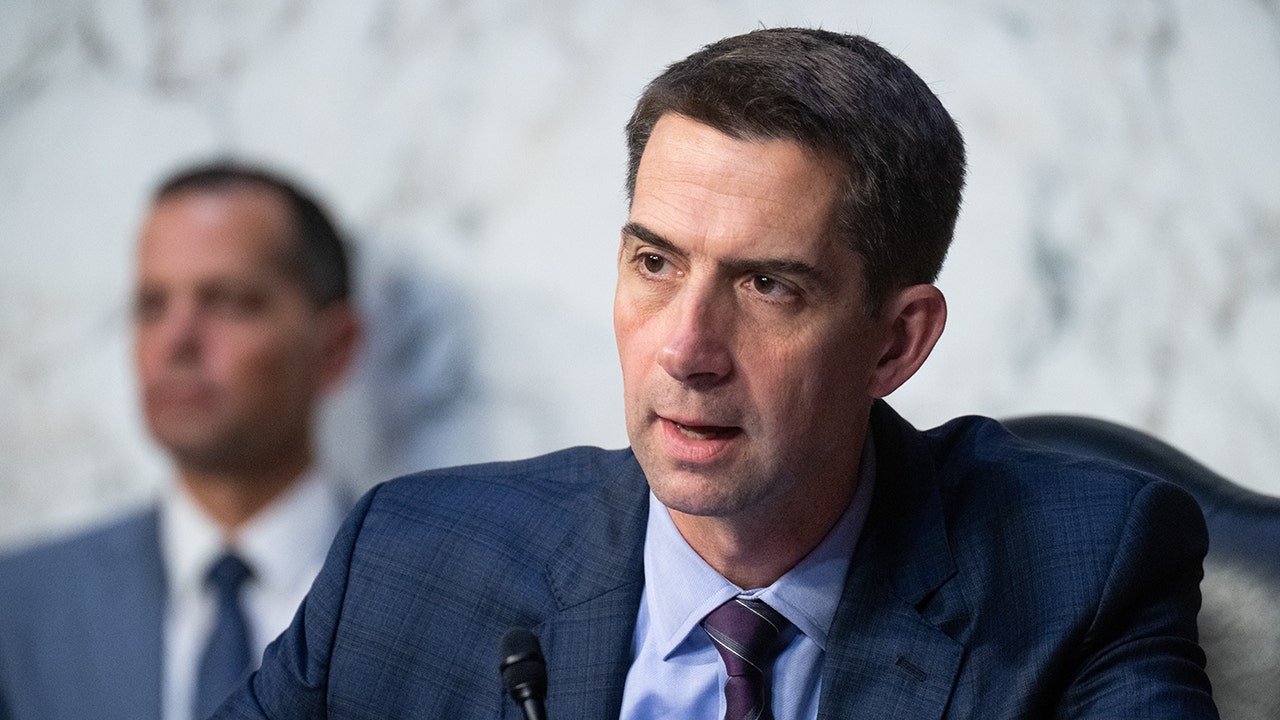
Sen. Tom Cotton urged the Justice Department to investigate a covert campaign linked to China designed to «kneecap» America’s rapidly expanding artificial intelligence infrastructure in a letter obtained exclusively by Fox News Digital.
In the letter to Acting Attorney General Todd Blanche, the Arkansas Republican calls for federal investigators to examine whether foreign actors are attempting to shape U.S. public opinion and policy against data centers and AI development as Washington and Beijing compete for dominance in artificial intelligence.
As a network of organizations supported by far-left activist Jodie Evans (second from left) and her husband Neville Roy Singham (right) protest America’s AI development, data centers and other technology advancements, Sen. Tom Cotton (left) sends a letter to Acting Attorney General Todd Blanche, urging him to investigate the groups for possible violations of the Foreign Agent Registration Act (FARA). (Bill Clark/CQ-Roll Call, Inc via Getty Images, Chip Somodevilla/Getty Images, Dave Kotinsky/Getty Images)
«Recent reports show that Communist China is attempting to influence our policy and public opinion on data centers. The reason is obvious: they want to kneecap our processing power to win the AI race,» Cotton told Fox News Digital.
«Americans should decide their own future free of communist propaganda. I’m encouraging the Department of Justice to investigate,» Cotton said.
REPORT: CHINESE PROPAGANDA, SINGHAM NETWORK, FOREIGN DARK MONEY LINKED TO CAMPAIGNS AGAINST DATA CENTERS
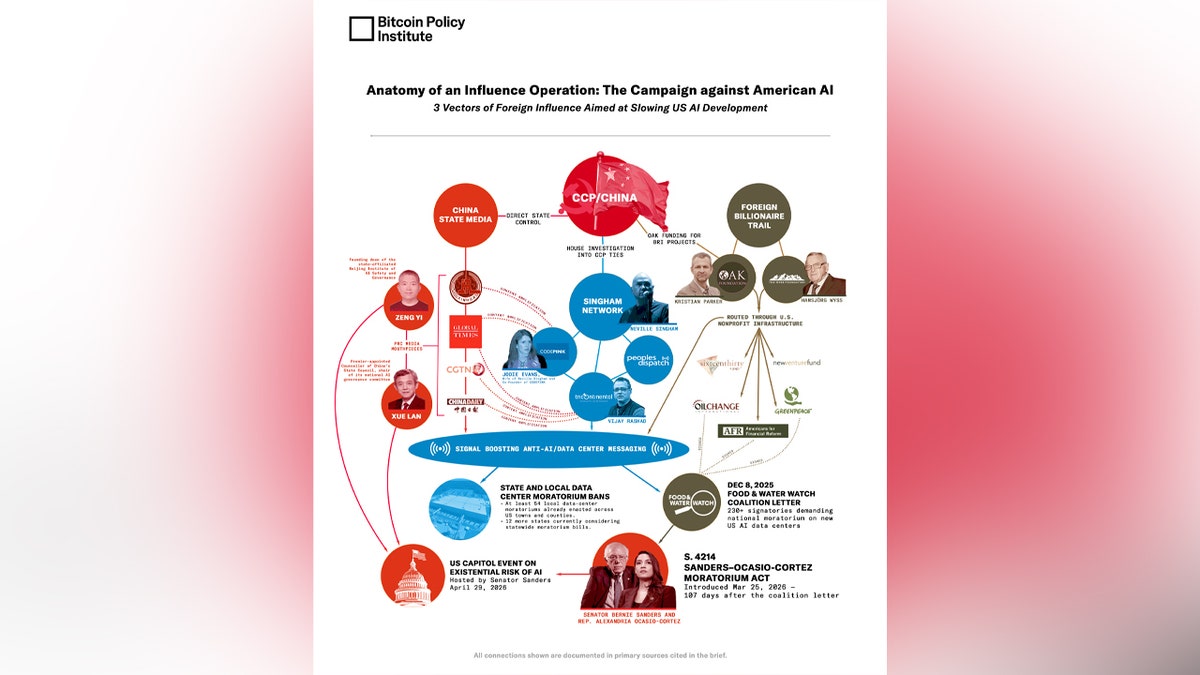
The Bitcoin Policy Institute released a report alleging that nonprofits aligned with Chinese interests are driving a campaign against U.S. data centers. (Bitcoin Policy Institute)
Cotton’s request follows the release of a report last week from the Bitcoin Policy Institute, a think tank based in Washington, D.C., alleging that Chinese state media, foreign-funded advocacy groups and a network of organizations funded by American tech tycoon Neville Roy Singham have spent years building opposition to U.S. data center construction and AI infrastructure projects.
Singham, an avowed Marxist and the founder of a Chicago-based company, Thoughtworks, that he sold in 2017, now lives in Shanghai, and has become a growing focus of congressional scrutiny and federal investigations. In March, as members of the Singham network were journeying to Havana to support the Communist Party of Cuba, Earlier this year, Fox News Digital published a five-part series documenting how Singham has funneled $278 million into a series of nonprofits, including groups at the heart of the protests against AI, data centers and technology firms in the U.S.
As Fox News Digital has reported, 501(c)(3) nonprofits from the Singham network, including CodePink, the People’s Forum, Tricontinental and BreakThrough News, have participated and led campaigns opposing AI development, semiconductor export controls and large-scale data center projects. Singham, a self-avowed communist, started pumping the money into the groups after his 2017 marriage to Jodie Evans, the co-founder of CodePink.
POWER COUPLE OF CHAOS: HOW A TYCOON AND ACTIVIST BUILT A ‘REVOLUTIONARY BASE’ AT THE HOUSE OF SINGHAM
For years, groups funded by Singham have worked closely with two self-described communist groups in the U.S. — the ANSWER Coalition and the Party for Socialism and Liberation — that have organized foot soldiers to protest major U.S. technology, defense and logistics companies, such as Palantir Technologies, Lockheed-Martin and Google, to try to name-and-shame the firms for doing business with the U.S. government on issues from immigration to global geopolitics where China has major interests, including in Israel, Iran, Venezuela, Cuba, South Korea and even Greenland.
Pro-China protestors have seized on high electrical costs associated with operating a data center. One of the key themes of new protests is the rising electricity bills that consumers have been seeing in recent months. Earlier this year, Cotton introduced a bill, called the «DATA Act of 2026,» that would lift regulatory controls to allow manufacturers, data centers and other energy-intensive industries to build new electricity systems separate from the consumer electrical grid.
More widely, Senate and House lawmakers have launched inquiries into the nonprofits in the Singham network, while questioning whether the groups should be required to register as «foreign agents» under the Foreign Agents Registration Act, called FARA, which demands that entities or individuals working for the interests of foreign interests register with the U.S. Justice Department as foreign lobbyists.
«Alarming reports indicate that a network of foreign actors, led by the Chinese Communist Party (CCP), is attempting to manipulate U.S. policy and public opinion on data centers,» Cotton wrote in the letter.
AGITATORS UNITED BY CHINESE MONEY, HATE FOR AMERICA TARGET DATA CENTERS, EXPERTS WARN
Climate activists, anti-Israel protesters and other activist movements with very different agendas have become strange bedfellows united by a shared disdain for America and funding from China, according to experts who warn the trend is weakening the United States amid a rapidly accelerating AI race. They are seen as part of a «red-green-green alliance,» an ideological overlap between three elements: communist movements, characterized by the color red; Islamist activism, described as green; and environmental protest groups, symbolized as green.
Cotton argued that America’s position in artificial intelligence will have sweeping implications for the country’s economic strength, military capabilities, diplomatic influence and national security. He warned that foreign adversaries shouldn’t be allowed to exploit public concerns over energy use, utility costs and water consumption to slow U.S. technological development.
The Bitcoin Policy Institute report, «Foreign Influence in the Campaign Against American AI,» alleges that three separate streams of influence — Chinese state media, the Singham network and foreign-funded advocacy organizations — have increasingly aligned around efforts to block or delay new AI-related infrastructure in the United States.
LAWMAKERS RAISE ALARM OVER NEVILLE ROY SINGHAM’S $278M NETWORK SPREADING CCP PROPAGANDA IN THE U.S.
After their wedding in early 2017, Singham and Evans have transformed far-left protests in the United States, creating a machine that sounds the alarm for new protests from clear command-and-control centers within the Singham network, churns out pre-printed protest signs, shares common messaging and galvanizes around common themes that support China and condemn «AmeriKKKa,» as an «imperiaist nation,» borrowing on Russian and Chinese propaganda.
According to the report by the Bitcoin Policy Institute, the Singham network «has spent nearly five years producing parallel domestic content opposing U.S. AI infrastructure, AI labs, and AI export controls.»
The report argues that the campaign against American AI infrastructure creates a strategic advantage for Beijing at a time when China is aggressively investing in its own AI capabilities.
«While Beijing’s state media warns American audiences that data centers are environmentally and economically dangerous, the Chinese state subsidizes up to half of the energy costs of its own AI data center operators,» the report states.
KEVIN O’LEARY WARNS CHINA ‘KICKING OUR HEINIES’ IN AI RACE AS REGULATORY ROADBLOCKS STALL US
The issue has become increasingly prominent as policymakers, investors and technology leaders warn that the U.S. risks falling behind China if it fails to rapidly expand the computing infrastructure needed to power next-generation AI systems.
One of the most vocal advocates for expanded AI infrastructure has been billionaire investor Kevin O’Leary, who has argued that data centers, power generation and advanced computing capacity are now strategic assets in the global competition for artificial intelligence leadership.
The broader concern raised by Cotton, O’Leary, the Bitcoin Policy Institute and others is that pro-China campaigns opposing U.S. AI infrastructure are advancing narratives that ultimately benefit Beijing as the U.S. States and China battle for technological and economic supremacy.
BERNIE SANDERS’ PLANS TO SCHMOOZE WITH TOP BEIJING AI EXPERTS IGNITES BACKLASH: ‘HOLY SH–‘
Earlier this year, Sen. Bernie Sanders (I-VT) and Rep. Alexandrio Ocasio-Cortez (D-NY), both leaders in the Democratic Socialists of America, organized an event on the «existential threat of AI.» The event featured speakers closely affiliated with the Chinese Communist Party, including Zeng Yi of the Beijing Institute of AI Safety and Governance and Xue Lan, a counselor to China’s State Council and chairman of China’s national AI governance committee. Sanders, Ocasio-Cortez, Yi and Lan didn’t respond to requests for comment.
Cotton noted in his letter that Lan is affiliated with Tsinghua University, an institution frequently scrutinized by U.S. officials because of its role in China’s military-civil fusion strategy.
As reported, last fall, during a conference of the «Global South Academic Forum,» which Fox News Digital first reported, Singham publicly praised the Chinese Communist Party and Chinese President Xi Jinping’s global campaign for a «new world order.»
CLICK HERE TO DOWNLOAD THE FOX NEWS APP
artificial intelligence, national security, congress, investigations, xi jinping











INTERNACIONAL
Nicaragua’s parliament plans to eliminate elections to codify President Ortega’s declaration
Sen. Ron Johnson: Election integrity should be a nonpartisan issue
Sen. Ron Johnson responds to New Jersey Governor Mikie Sherrill’s admission of 6,600 non-citizens improperly registered to vote due to a software error, with 400 actually voting. Johnson, from Wisconsin, stresses that election integrity, including voter ID and cleaning voter rolls, should be a non-partisan issue to restore public confidence in U.S. elections.
NEWYou can now listen to Fox News articles!
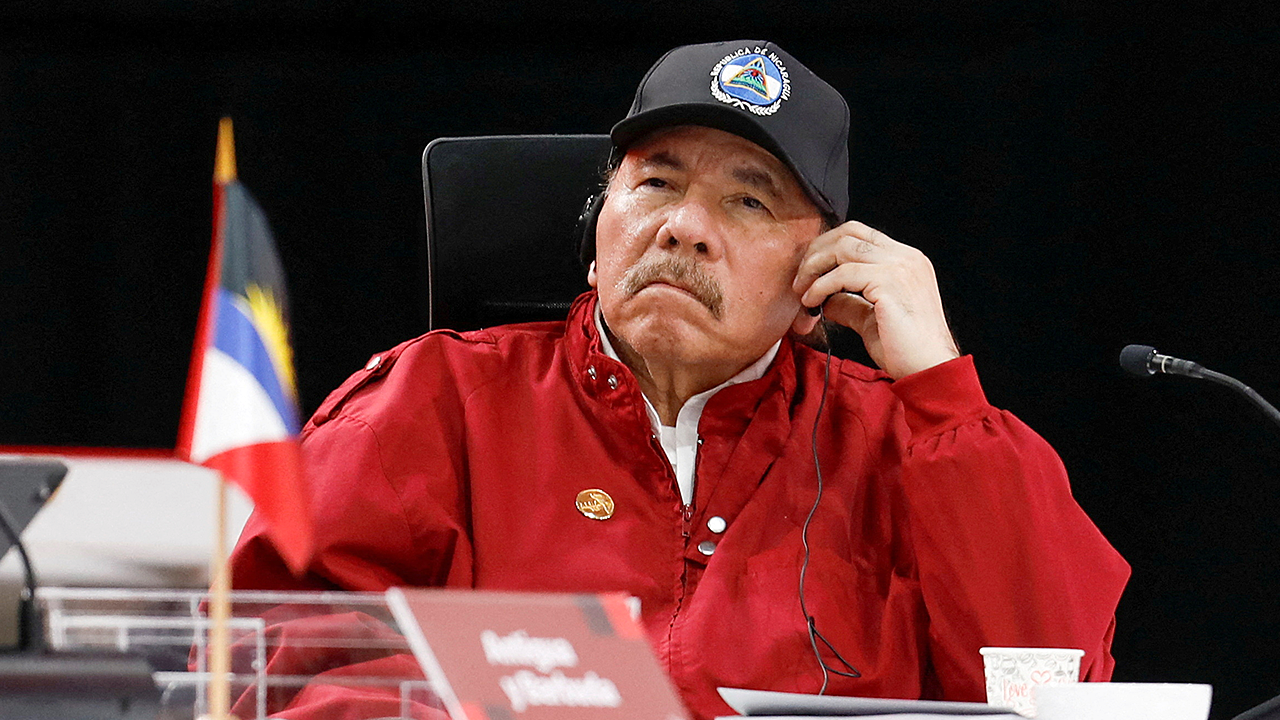
Nicaragua’s lawmakers announced plans to abolish elections in the Central American country, following through on President Daniel Ortega’s declaration over the weekend that there would be no more elections, which enraged the international community.
The move was revealed on Tuesday by Nicaragua’s congress, which is firmly in the hands of Ortega and his wife, Rosario Murillo. Lawmakers said planned constitutional overhaul will ensure Nicaragua’s «peace, security and stability.»
With the announcement, lawmakers are making good on Ortega’s promise of no more elections, further closing off any potential path for the opposition to challenge the government he leads with Murillo, whom constitutional reforms elevated from vice president to «co-president.»
«There won’t be any more elections here for them to try to seize the government and seize power,» Ortega said on Sunday during a speech commemorating the 1979 Sandinista revolution, in which Ortega participated in the overthrow of the U.S.-backed dictatorship of Anastasio Somoza.
NICARAGUA’S ORTEGA SAYS COUNTRY WILL ‘NEVER AGAIN’ HOLD ELECTIONS, SHUTTING OUT OPPOSITION
Nicaragua’s President Daniel Ortega said officials in the Central American country will no longer hold elections. (REUTERS/Leonardo Fernandez Viloria)
«The days when parties backed by the Yankees (United States) and the Somocistas would return to power are over — never again,» he declared.
The declaration appeared to eliminate the possibility of a future electoral challenge as Ortega and Murillo continue consolidating control over the country’s political institutions.
Ortega and Murillo expanded their authority through sweeping constitutional changes that took effect in 2025. The reforms included extending the presidential term from five years to six and placing the legislative, judicial and electoral institutions under the authority of the presidency.
The pair now exercise control over nearly every branch of government, including the armed forces, police and judiciary.
Ortega, Nicaragua’s longest-serving leader, has remained in power until early 2028, although his statement on Sunday effectively canceled Nicaragua’s next elections, which had been scheduled for November 2027.
Critics say Ortega had already effectively eliminated meaningful electoral competition during elections in 2011, 2016 and 2021.
REPUBLICAN REP MARÍA ELVIRA SALAZAR DECLARES, ‘AFTER CUBA, NICARAGUA IS NEXT’
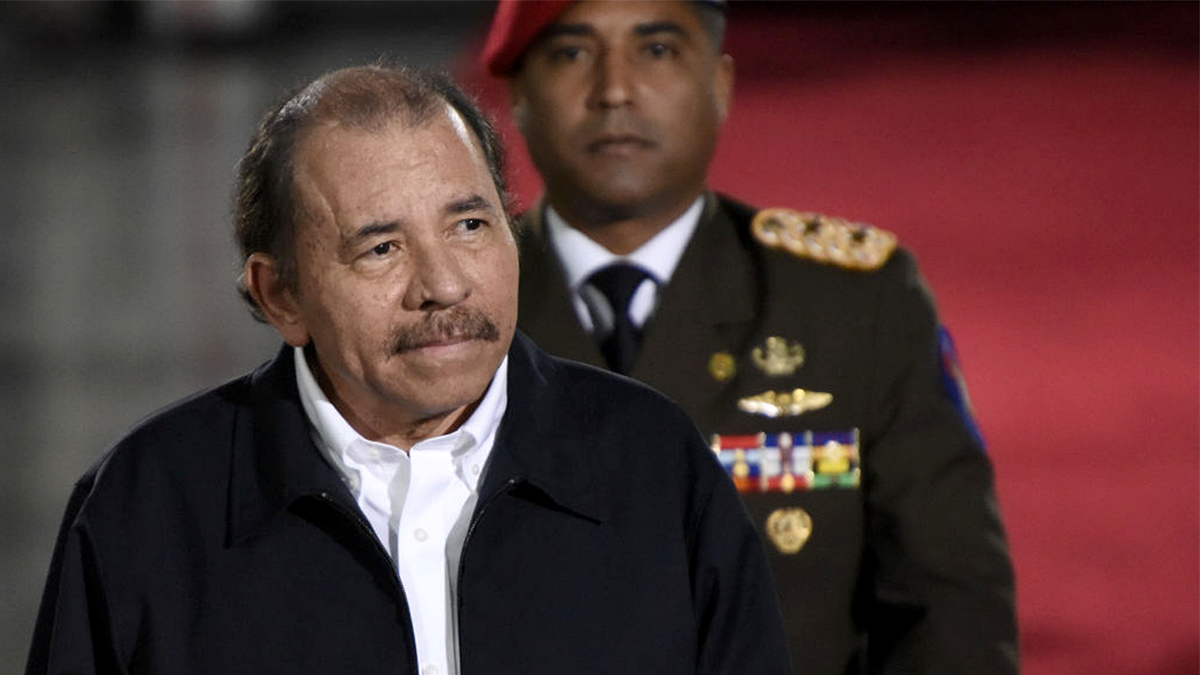
President Daniel Ortega’s promise to abolish elections prompted widespread condemnation from the international community. (Carlos Becerra/Bloomberg)
Many prominent opposition leaders have been imprisoned, forced into exile or stripped of their Nicaraguan citizenship, while opposition parties and independent civic organizations have lost their legal status.
A United Nations group of experts has accused the Ortega-Murillo government of systematically violating human rights as part of a campaign to eliminate criticism and preserve its hold on power. The experts said some alleged violations may amount to crimes against humanity.
The government launched a violent crackdown on anti-government protests in 2018. More than 300 people were killed during the unrest, according to international human rights groups.
Ortega’s effort to abolish elections prompted widespread condemnation from foreign governments, including the U.S.
«Daniel Ortega’s declaration that under his family’s dictatorship, Nicaragua will never again hold elections lays bare their true authoritarian nature. Daniel Ortega and Rosario Murillo have abandoned even the pretense of popular consent,» U.S. Secretary of State Marco Rubio said on Tuesday.
«The Nicaraguan people have the right to choose their own leaders through democratic elections. The United States calls on the international community to join forces to demonstrate to the Murillo-Ortega dictatorship that it cannot expect to maintain business as usual with other nations when it is thwarting the basic tenets of our democratic hemisphere,» he added.
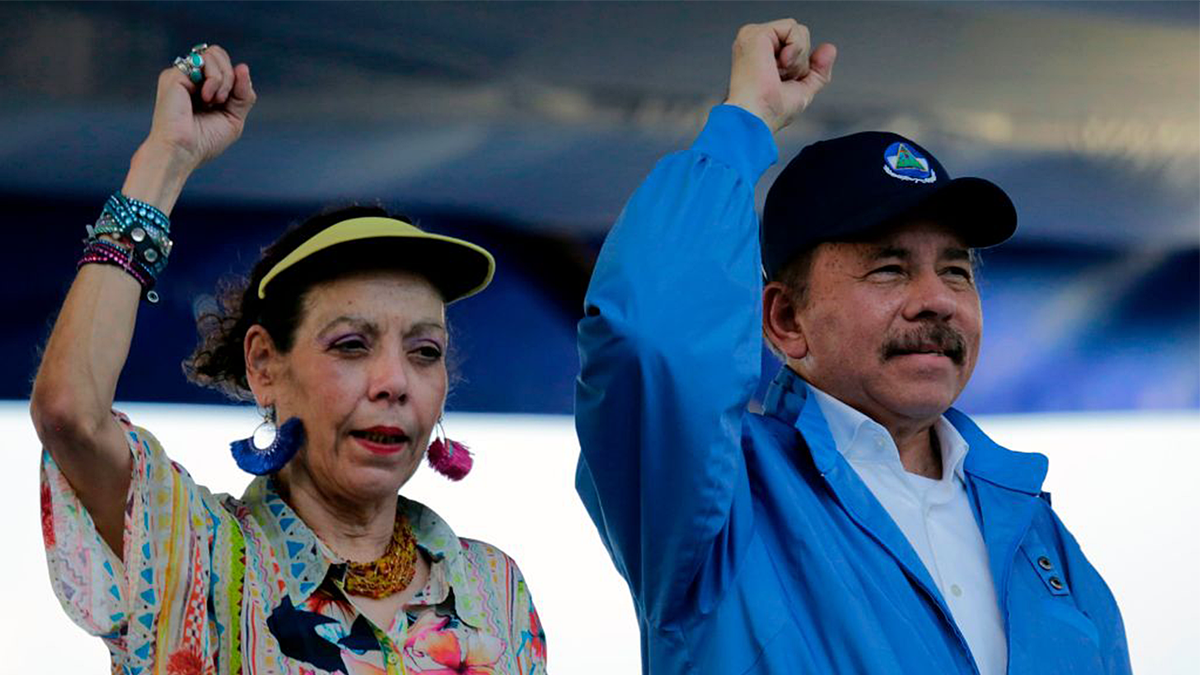
The move to abolish elections was announced by Nicaragua’s congress, which is firmly in the hands of President Daniel Ortega and his wife, Rosario Murillo. (INTI OCON/AFP)
CLICK HERE TO DOWNLOAD THE FOX NEWS APP
The Trump administration has described the Ortega-Murillo government as a dictatorship and imposed sanctions on members of the government and their allies. The State Department has also enacted visa restrictions targeting more than 2,350 Nicaraguan officials and their family members.
Volker Türk, the United Nations’ high commissioner for human rights, denounced Nicaragua’s legislative ambitions on Wednesday, saying that «people of all political viewpoints must be allowed to vote and run for office.»
«These latest developments further deepen the severe restrictions on fundamental freedoms, the dismantling of civic space, and the steady erosion of the rule of law,» Türk said in a statement.
The Associated Press and Reuters contributed to this report.
central america, latin america, elections, world, politics
INTERNACIONAL
Ministra de Educación en Honduras descarta denuncias de extorsión en escuelas y colegios públicos

La titular de la Secretaría de Educación, Arely Argueta, afirmó que hasta el momento no se han recibido denuncias de extorsión contra docentes, escuelas o colegios del sistema público de Honduras.
No obstante, reconoció que los reportes surgidos en instituciones privadas también generan preocupación para las autoridades educativas.
“En el sistema público no hemos tenido denuncias de extorsión para docentes; sin embargo, los casos en el sector privado también nos preocupan, porque nuestro deber es velar por todos los maestros a nivel nacional”, expresó la funcionaria.
Las declaraciones de Argueta se produjeron luego de que la Federación Nacional de Instituciones Educativas Privadas de Honduras (Fenieph) denunciara que algunos colegios han cerrado sus puertas o cambiado de ubicación debido a amenazas y cobros ilegales atribuidos a estructuras criminales.

Ante el contexto de inseguridad, la ministra informó que la Secretaría de Educación mantiene coordinación con la Secretaría de Seguridad para reforzar los patrullajes policiales en los alrededores de escuelas y colegios.
Argueta pidió a padres de familia, estudiantes y docentes no alarmarse al observar presencia policial cerca de los centros educativos, ya que se trata de medidas preventivas orientadas a fortalecer la seguridad en las comunidades escolares.
También subrayó que la denuncia ciudadana es clave para atender cualquier situación irregular, incluyendo casos de narcomenudeo o amenazas contra miembros de la comunidad educativa.
“Si tenemos denuncias, las vamos a atender directamente desde el centro educativo afectado”, aseguró.
El presidente de la Fenieph, Carlos Sabillón, sostuvo que la extorsión afecta desde hace varios años a instituciones privadas, principalmente en Tegucigalpa y San Pedro Sula.
Según explicó, algunos colegios cerraron operaciones como consecuencia de las amenazas, mientras otros, especialmente aquellos que funcionan en locales alquilados, se trasladaron a diferentes barrios o colonias para intentar reducir el riesgo.
Sabillón indicó que las llamadas extorsivas se han convertido en una de las principales formas de intimidación. Por esa razón, algunos centros educativos decidieron cancelar sus líneas telefónicas fijas.

El dirigente advirtió que este delito, históricamente relacionado con el transporte público, pequeños negocios y comerciantes, se ha extendido hacia el sector educativo y pone en riesgo la estabilidad financiera de las instituciones privadas.
Aunque Educación descarta reportes en el sistema público, Argueta insistió en que cualquier denuncia será atendida en coordinación con las autoridades de Seguridad.
Por su parte, Sabillón pidió fortalecer las acciones contra las estructuras criminales y evitar que más colegios tengan que cerrar o abandonar las comunidades donde prestan sus servicios.

La situación evidencia una diferencia entre ambos sectores: mientras las autoridades no registran denuncias en escuelas públicas, los representantes de la educación privada aseguran que la extorsión ya provocó cierres, traslados y medidas internas de protección.
El contraste también ha llevado a las autoridades a reforzar la vigilancia preventiva y a solicitar que cualquier amenaza sea comunicada de inmediato.
Educación sostiene que la ausencia de denuncias formales no elimina la necesidad de mantener controles, mientras la Fenieph reclama una respuesta más contundente para proteger a estudiantes, docentes, propietarios y trabajadores de los centros afectados.
Corresponsal:Desde Tegucigalpa, Honduras
INTERNACIONAL
Trump gives emotional tribute to fallen Army Lt Tyler Feehan after flying grieving family on Air Force One
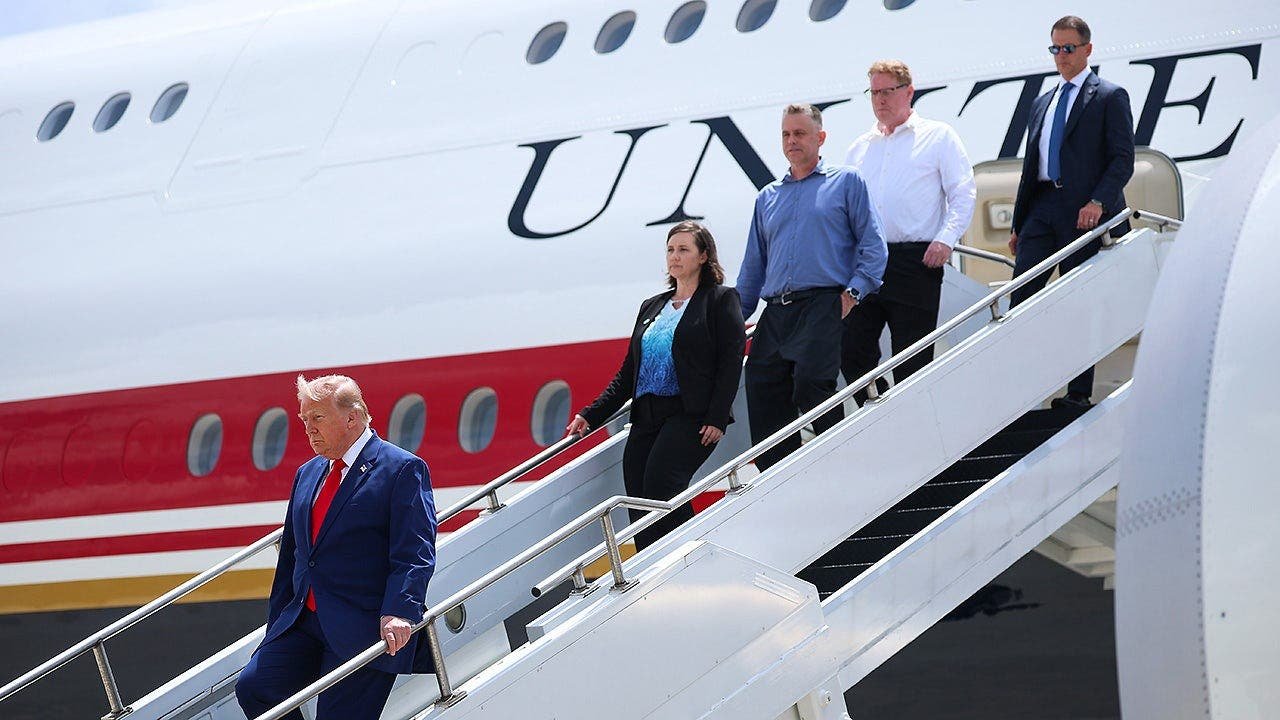
Trump honors fallen soldier after flying grieving family on Air Force One
President Donald Trump paid tribute to Army 1st Lt. Tyler James Feehan during remarks at Wheeler High School in Marietta, Georgia, revealing he flew the fallen soldier’s family aboard Air Force One, and they were in the crowd for Wednesday’s speech at Dover Air Force Base after a dignified transfer ceremony.
NEWYou can now listen to Fox News articles!
President Donald Trump paid an emotional tribute to fallen Army 1st Lt. Tyler James Feehan during an event Wednesday at Wheeler High School in Marietta, Georgia, revealing he invited the slain soldier’s grieving family aboard Air Force One.
The family was in the crowd after Trump met with them earlier in the day at Dover Air Force Base in Delaware.
Trump traveled to Georgia after attending the dignified transfer ceremony of four U.S. service members killed in Jordan, including Feehan, and the president met Feehan’s parents, Shari and Stephen, and his uncle David.
Speaking to the crowd, Trump recounted learning the family was also headed to Georgia after the ceremony.
TRUMP TAKES INAUGURAL FLIGHT ABOARD NEW AIR FORCE ONE AHEAD OF LIBRARY DEBUT HONORING FAMED OUTDOORSMAN
Shari and Stephen Feehan react as President Donald Trump honors their son, Army 1st Lt. Tyler James Feehan, during remarks Wednesday at Wheeler High School in Marietta, Ga. (Julia Demaree Nikhinson/AP Photo)
«I said, ‘If you want, I’ll give you a ride on Air Force One,’» Trump told the audience. «Today they were on Air Force One, and it’s quite nice, I must say.»
Trump said the family was «heartbroken» but grateful for the gesture.
«They couldn’t believe it,» he said. «They live minutes away. We’re here today.»
ARMY IDS 2 VICTIMS KILLED IN JORDAN AIR BASE ATTACK; TRUMP: IRAN WILL PAY ‘MANY TIMES OVER’
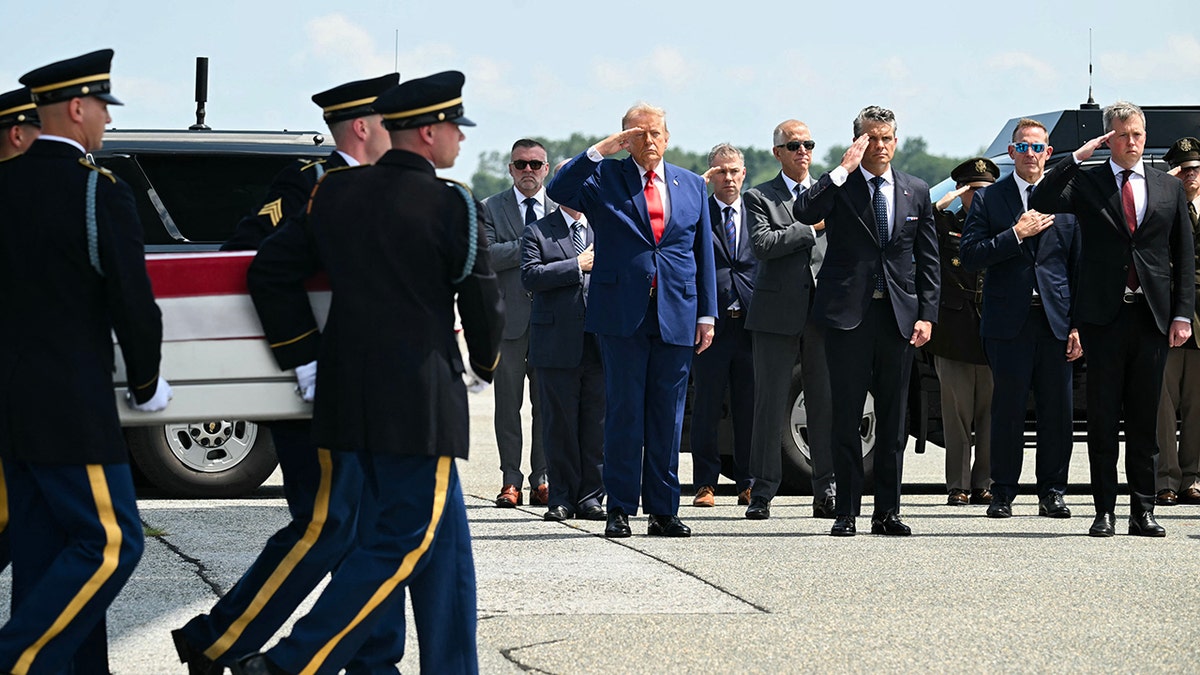
President Donald Trump salutes the flag-draped transfer case containing the remains of Army 1st Lt. Tyler James Feehan, 25, Wednesday, during a dignified transfer for U.S. service members killed during operations in the Middle East, at Dover Air Force Base in Dover, Del. (Saul Loeb/AFP via Getty Images)
Feehan, 25, of Ewa Beach, Hawaii, was among four U.S. service members killed in Jordan while supporting a U.S. mission. He was assigned to the 2nd Battalion, 55th Air Defense Artillery Regiment, 32nd Army Air and Missile Defense Command at Fort Bragg, North Carolina.
Pvt. Isabella Gonzales, 19, of Carrollton, Texas, was also among those killed. U.S. Central Command announced the deaths Saturday.
Trump said he reviews biographies of fallen service members before each dignified transfer and described Feehan as an exceptional young officer with a promising future.
DEMOCRATIC MARYLAND GOV WES MOORE PRAISES TRUMP ACCOUNTS AS ‘SMART POLICY’
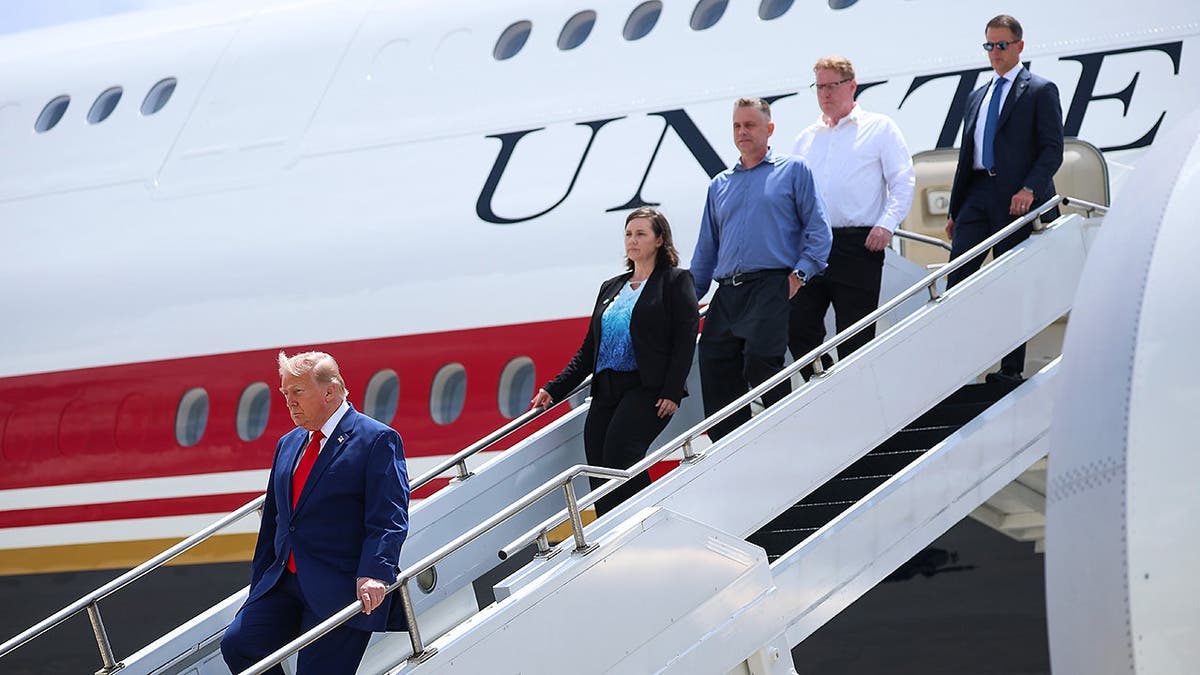
The family of Army 1st Lt. Tyler James Feehan departs Air Force One with President Donald Trump at Dobbins Air Reserve Base in Marietta, Ga., on Wednesday. (Kevin Dietsch/Getty Images)
«Lieutenant Tyler Feehan … he was a person that was going all the way,» Trump said. «He was going to be a general. He would have been a general very quickly. He was heading in that path.»
Trump then thanked Feehan’s family, whom he said he got to know during the flight from Dover to Georgia aboard Air Force One.
«But I just want to thank Tyler’s mother, Shari; his father, Stephen; and his uncle David. Great people. I got to know them a little bit on the plane and standing there and watching this site,» he said.

The first victims of restarted hostilities were identified as Lt. Tyler James Feehan, 25, of Ewa Beach, Hawaii, and Pvt. Isabella Gonzales, 19, of Carrollton, Texas. (U.S. Army)
Calling dignified transfers the most difficult responsibility of the presidency, Trump said he would never forget the family.
«I think it’s the toughest thing I do,» Trump said. «But to Shari and Stephen and David, we will carry Tyler’s memory in our hearts forever. I just want to thank you. It’s an honor to have you here today.»
The audience responded with sustained applause before Trump addressed Feehan’s mother directly.
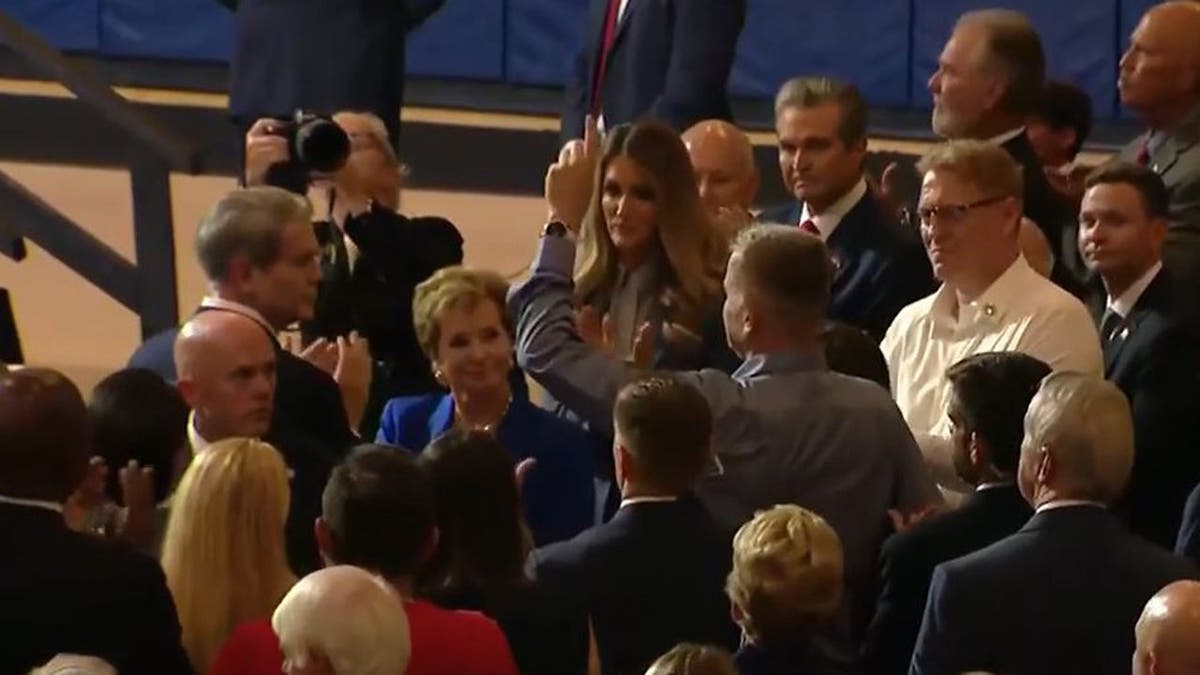
Family members of fallen Army 1st Lt. Tyler James Feehan react as President Donald Trump talks about their son at Wheeler High School Wednesday in Marietta, Ga. (Fox News Channel)
«Shari, he’s looking down right here,» Trump said. «He’s so proud right now.»
CLICK HERE TO DOWNLOAD THE FOX NEWS APP
Trump visited Georgia on Wednesday to tout his administration’s Trump Accounts initiative, saying the program would help families build long-term savings for their children as part of what he described as America’s «Golden Age.»
donald trump, army, georgia, military families, war with iran, politics, us

Gobierno busca cobrar universidad y salud a extranjeros en plena campaña antiargentina post Mundial

Se suele decir que los jugadores obligaron a BioWare a cambiar el final de Mass Effect 3. La respuesta no es tan simple

De “Siempre nos quisieron ganar” a “no estamos en el radar de nadie”: el debate por la supuesta “campaña anti-Argentina”

Sin Messi ni De Paul, el grosero error del arquero del Inter Miami ante el equipo de Lewandowski en la MLS

Carolina Losada: “No voy a estar con Pullaro después de las PASO porque tengo diferencias éticas y morales”

Ángel de Brito destrozó a Wanda Nara por sus polémicas: «Enloqueció, no puede inventar así»

Sin la Copa y sin Messi en el avión, vuelve Tapia y deberá enfrentar tres frentes de tormenta tras la pausa del Mundial

Escándalo Mundial: Las presiones secretas, la amenaza de la FIFA por Malvinas y la verdad detrás del partido contra España

Samuel L. Jackson llamó a Argentina “el país más racista del mundo”: la contundente respuesta que le dejó Bárbara Lombardo

Le ganan a la inflación: los senadores pasarán a cobrar $12 millones brutos a partir de agosto

 POLITICA3 días ago
Sin la Copa y sin Messi en el avión, vuelve Tapia y deberá enfrentar tres frentes de tormenta tras la pausa del Mundial
- DEPORTE1 día ago
Escándalo Mundial: Las presiones secretas, la amenaza de la FIFA por Malvinas y la verdad detrás del partido contra España
- CHIMENTOS2 días ago
Samuel L. Jackson llamó a Argentina “el país más racista del mundo”: la contundente respuesta que le dejó Bárbara Lombardo