INTERNACIONAL
Socialist Zohran Mamdani launches Elon Musk-style ‘COGE’ chaired by Soros-aligned Dem

NEWYou can now listen to Fox News articles!
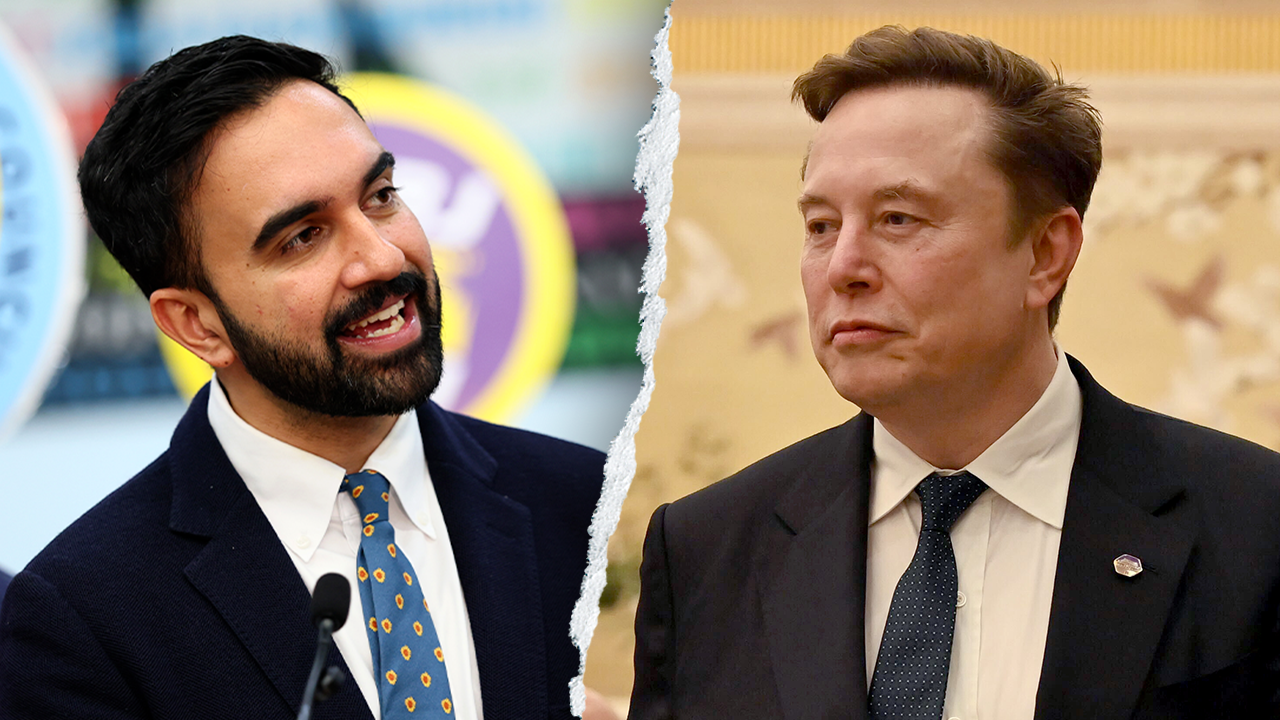
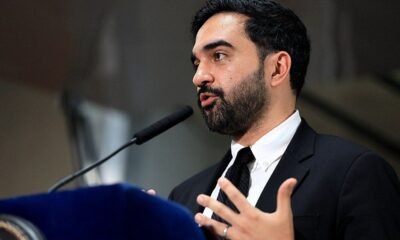
Several months into his administration, New York City socialist Mayor Zohran Mamdani is taking a page from Elon Musk’s book by launching a city Commission on Government Efficiency, or «COGE.»
Mamdani’s commission, however, will be staffed by a group of progressives and Democrats, including a George Soros-aligned chair, according to a statement from New York City.
The mayor said on Thursday that the commission «will find ways for our city to work smarter, faster, and more effectively for working people.» He emphasized that «New Yorkers deserve a city government as careful with their money as they are.»
A statement by the city said COGE will be chaired by Patrick Gaspard, a longtime Democratic operative who formerly worked as executive director of the Democratic National Committee and president of the Soros family’s Open Society Foundation.
MAMDANI AVOIDS QUESTION ON KEN GRIFFIN, ADMITS NO RESPONSE AFTER TRYING TO WALK BACK ATTACK ON THE BILLIONAIRE
New York City socialist Mayor Zohran Mamdani is launching an Elon Musk-style government efficiency commission called «COGE.» (Michael M. Santiago/Getty Images; Johannes Neudecker/picture alliance via Getty Images)
The statement said Mamdani has charged the commission with reviewing the «entire New York City Charter» to determine ways to «better support public excellence by improving efficiency, modernizing city government and ensuring government keeps pace with New Yorkers’ needs.»
According to the statement, COGE is expected to remove «outdated bureaucratic barriers that slow infrastructure projects and delay services»; equip city agencies with the authority, enforcement tools and flexibility they need to deliver programs effectively; and modernize government to improve efficiency and savings, reserve and budget practices.
The commission will also hold 10 public hearings across New York’s five boroughs, after which proposals will be brought to voters through the upcoming November ballot.
Mamdani emphasized in the statement that «for too long, bureaucracy has stood in the way of delivering the housing, transit, child care and public services our city needs.» He added that «restoring faith in government starts with proving government can actually deliver.»
This comes after Mamdani met with current Open Society Foundation board chair Alex Soros, George Soros’ son, at his Manhattan residence.
‘WASTEFUL DISTRACTION’: EXPERTS SLAM MAMDANI’S TAXPAYER-FUNDED GROCERY STORES

Alex Soros, son of billionaire megadonor George Soros, congratulates Mayor-elect Zohran Mamdani on his New York City election victory. (Fox News)
The city wrote on X that it is «excited» to work with Gaspard on the commission.
Gaspard, who chaired the Open Society Foundation between 2017 and 2020 and previously served as a senior advisor to former president Barack Obama, said that «New Yorkers deserve and need a government of the possible — one that can urgently build infrastructure, promote small business growth, and make the city more livable with accessible childcare and affordable groceries.»
Gaspard added, «I am grateful to Mayor Mamdani for the opportunity to chair this commission, and I look forward to listening to New Yorkers to develop the charter for the 21st century government we need.»
In an Open Society Foundation statement announcing his departure in 2020, Gaspard called it a «profound honor» to lead the Soros-linked organization. He wrote that «fundamental social change doesn’t customarily occur in a revolutionary moment. Instead, what is needed is the partnership of activists, government, and the nonprofit sector, collaborating over time and space in unity and solidarity.»
«This is what I worked to do at Open Society,» he said, adding, «My commitment now will be to re-enter the world of politics and ideas, where I can continue the struggle against oppression everywhere.»
According to the city, the commission will also include Susan Kang, a member of the New York City chapter of the Democratic Socialists of America and author of the book «Human Rights and Labor Solidarity: Trade Unions in the Global Economy.»
Theodore Moore, executive director of ALIGN, a progressive advocacy organization, where the city said he has focused on «setting the organization’s strategic vision for worker power and climate justice.»
NYC MAYOR ZOHRAN MAMDANI RELEASES AUDIT ACCUSING FEDERAL IMMIGRATION AGENTS OF MISLEADING TACTICS
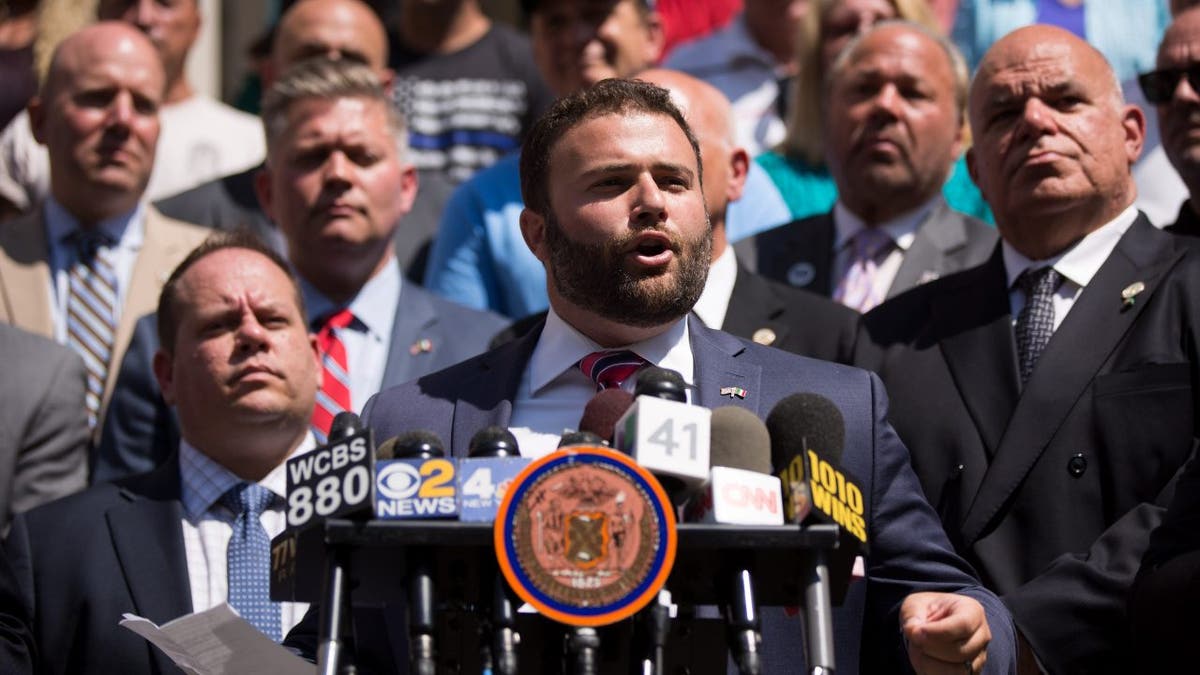
Then New York City Council member Joe Borelli, a Republican from Staten Island, speaks outside City Hall during a press conference and rally supporting the Christopher Columbus statue in Manhattan on Aug. 24, 2017. (Drew Angerer/Getty Images)
Besides them, there were several other activists and community leaders, most of whom are associated with the Democratic Party in various forms. Notably absent from the commission, however, were any New York Republicans.
Joe Borelli, a former Republican New York City councilmember who has long advocated for city government reform, responded to COGE’s launch by commenting on X, «How haven’t I been appointed to this already, @ZohranKMamdani?»
CLICK HERE TO DOWNLOAD THE FOX NEWS APP
Borelli told Fox News Digital that «as the new mayor and his team are taking socialist governance out for its American test drive, they are realizing that there needs to be a constant source of revenue to pay for all.»
«Ironically,» he continued, «they are coming to see that it’s big government that stands in the way of most economic growth.»
Fox News Digital reached out to the mayor’s office, the Open Society Foundation, Gaspard, Moore and Kang for comment.
zohran mamdani, george soros, elon musk, socialism, new york city, new york, woke










INTERNACIONAL
Crece la ola de incendios en Europa: las llamas se extienden a Grecia, Portugal, Inglaterra y Turquía

Francia y España atraviesan este jueves una tregua frente a algunos de los peores incendios forestales de la historia reciente, pero las llamas se propagan en otros países de Europa, como Grecia, Portugal, Inglaterra y Turquía.
El presidente del Gobierno español, Pedro Sánchez, levantó el estado de emergencia decretado la semana pasada por un incendio forestal que amenazaba zonas cercanas a Madrid, después de que las autoridades anunciaran que ya no quedaban “focos activos”.
Más de 60.000 personas habían sido evacuadas en el peor momento de los incendios, pero la mayoría ya ha podido regresar a sus hogares.
Al menos cien viviendas quedaron destruidas solo en la región de Madrid, según una evaluación inicial, pero se espera que esa cifra aumente, dijo la presidenta regional Isabel Díaz Ayuso. En la colindante provincia de Ávila, el fuego también está estabilizado.
Unas 50.000 hectáreas quemadas en España
El incendio -el más grande en España desde que comenzaron los registros en 1961- quemó unas 50.000 hectáreas y estuvo a punto de fusionarse con el de Madrid.
Pero España enfrenta esta semana una nueva ola de calor y las autoridades advierten que el riesgo sigue siendo “muy alto”. Bomberos utilizan quemas controladas para detener un incendio que sigue expandiéndose cerca de Cebreros, Ávila, España, el martes 28 de julio de 2026. (AP Foto/Manu Fernández)
De hecho, un nuevo incendio en el oeste del país, cerca de Portugal, obligó a evacuar el jueves a más de 600 personas.
Primer día “optimista” en Francia
En la vecina Francia, el jueves fue el primer día “un poco optimista” desde que se originó la semana pasada un megaincendio que destruyó cerca de 240 viviendas en el suroeste del país.
“Es el primer día un poco optimista, ya que tenemos la impresión de que estamos volviendo al camino de una vida normal y de que las cosas empiezan a mejorar claramente”, dijo a la prensa la prefecta del departamento de Gironda, Sophie Brocas.
Leé también: Nueva reacción de Lula tras los insultos de Milei: “Ustedes vieron la payasada que hizo aquí”
Tras una ligera lluvia matutina, el servicio regional de bomberos también se mostró “razonablemente optimista”, ya que el fuego no se extendió más allá de las 42.000 hectáreas desde el fin de semana, si bien se mantienen “seis focos activos”.
El peor incendio forestal en Francia desde 1949 obligó a evacuar a más de 220.000 personas de esta región turística cercana a la ciudad de Burdeos, en plena temporada alta de verano.
Actualmente, más de la mitad de los evacuados pudieron regresar a sus hogares, entre ellos 84.000 que fueron autorizados este jueves.
“Es el inicio del fin del fuego, pero es el comienzo de la crisis”, advirtió Nina Rosazza, administradora de una metalúrgica en Andernos-les-Bains, quien acudió como voluntaria a la zona en el bosque devastado de Lanton.
“Turísticamente, ecológicamente, visualmente, es una catástrofe a largo plazo”, resume.
Aunque no hubo pérdidas humanas, los rescatistas viven con la “obsesión” de encontrar animales muertos, mientras gatos, gallinas, perros y conejos deambulan por las localidades evacuadas.
Incendios más pequeños afectaban a otras partes del sur de Francia, incluido uno declarado la noche del miércoles en Brignoles, que obligó a George Clooney y su familia a abandonar su propiedad.
“Días difíciles” en Grecia
Aunque la atención actual se centra en Europa occidental, la Unión Europea advirtió que las condiciones propicias para incendios se extenderán hacia el centro del continente en los próximos días.
En la isla griega de Creta, 8000 personas fueron evacuadas la noche del miércoles ante los incendios declarados durante la jornada y avivados por fuertes vientos cambiantes, que causaron la muerte de dos bomberos.
Un tercero falleció combatiendo las llamas cerca del puerto de Gitión, en el Peloponeso, mientras el primer ministro griego advirtió que se avecinan “días difíciles”.
En la vecina Turquía, los bomberos intentaban extinguir al menos 115 fuegos activos, especialmente en las provincias de Antalya y Mugla, en la turística Riviera Turca, y en la costa de los Dardanelos (oeste).
No obstante, las autoridades indicaron que 110 estaban completamente bajo control.También en Portugal, cerca de 800 bomberos combatían un incendio forestal en la localidad norteña de Valpaços, que causó cinco heridos, según el servicio de protección civil.
También Inglaterra fue afectada por incendios.
Los bomberos luchan este jueves “en condiciones difíciles” contra un incendio en Suffolk, en el este del país, que arrasó un centenar de hectáreas y obligó a algunos habitantes y turistas a evacuar.
El fuego, que se propaga en una zona costera al sur del municipio de Dunwich, se declaró el miércoles y fue catalogado como “incidente grave” por las autoridades.
“El incendio se extiende por unas 100 hectáreas, por lo que 18 vehículos de bomberos y medios de refuerzo están en el lugar”, indicó el jueves el consejo local de Suffolk.
(Con información de AFP)
Europa, Incendios
INTERNACIONAL
White House blasts Spanish government as thousands of migrants surge from Morocco, emergency request denied

NEWYou can now listen to Fox News articles!
The White House bashed Spain’s left-wing government after the border between Spain’s North African enclave of Ceuta and Morocco collapsed Thursday.
«President Trump has long warned Europe what would happen if they continue to implement far-left, globalist policies – including enabling mass migration. Spain and other countries who have adopted this destructive philosophy should immediately reverse course or risk their own demise,» White House principal deputy press secretary Anna Kelly told Fox News in a statement.
Ceuta’s president formally requested a national emergency declaration Thursday after more than 2,000 migrants crossed the border from Morocco in the past 10 days, as videos showed chaotic scenes of migrants pouring into the Spanish territory.
Video shows hordes of apparently military-aged men smiling and posing for cameras, some carrying swimming flippers, and sprinting through the streets as authorities struggle to corral the unruly masses.
TRUMP CRITICIZES SPAIN AMID IRAN, NATO RIFT AS PM SANCHEZ FACES QUESTIONS OVER POLITICAL MOTIVES
Migrants run and cheer as they cross on foot into the North African enclave of Ceuta from Morocco, after swimming over from the Moroccan side and overwhelming police at the city’s breakwater, according to Spain’s Guardia Civil, in Ceuta, Spain, July 30, 2026. (FARO TV via Reuters)
Other footage shows crowds of migrants emerging from the sea, climbing up onto Ceuta’s rocky shores and working their way around border fences.
Ceuta President Juan Jesús Vivas formally requested that Spanish Prime Minister Pedro Sánchez declare a national emergency to help respond to the border crisis, Spanish media outlets reported. Madrid, however, denied the request.
DEM REP SETH MOULTON SAYS PARTY HAS NO IMMIGRATION PLAN, IS ONLY ‘OPPOSITION TO TRUMP’
«The declaration of a national emergency is part of the state civil protection regulations, which do not consider migratory flows as a risk to the National Civil Protection System, nor do they establish special plans, basic guidelines, or specific civil protection instruments for their management. Therefore, it is not possible to activate this mechanism, as requested by the president of the Government of Ceuta, Juan Jesús Vivas,» Spain’s Ministry of the Interior said in a statement, according to Spanish outlet El Pais.
Ceuta’s government, in their request for a national emergency declaration, noted that immigration from Moroco is always a problem for the Spanish enclave, but claimed the last 10 days represented a peak «of particular intensity.» That peak has seen more than 2,000 migrants cross the border in the past 10 days, Ceuta officials said, according to El Pais.
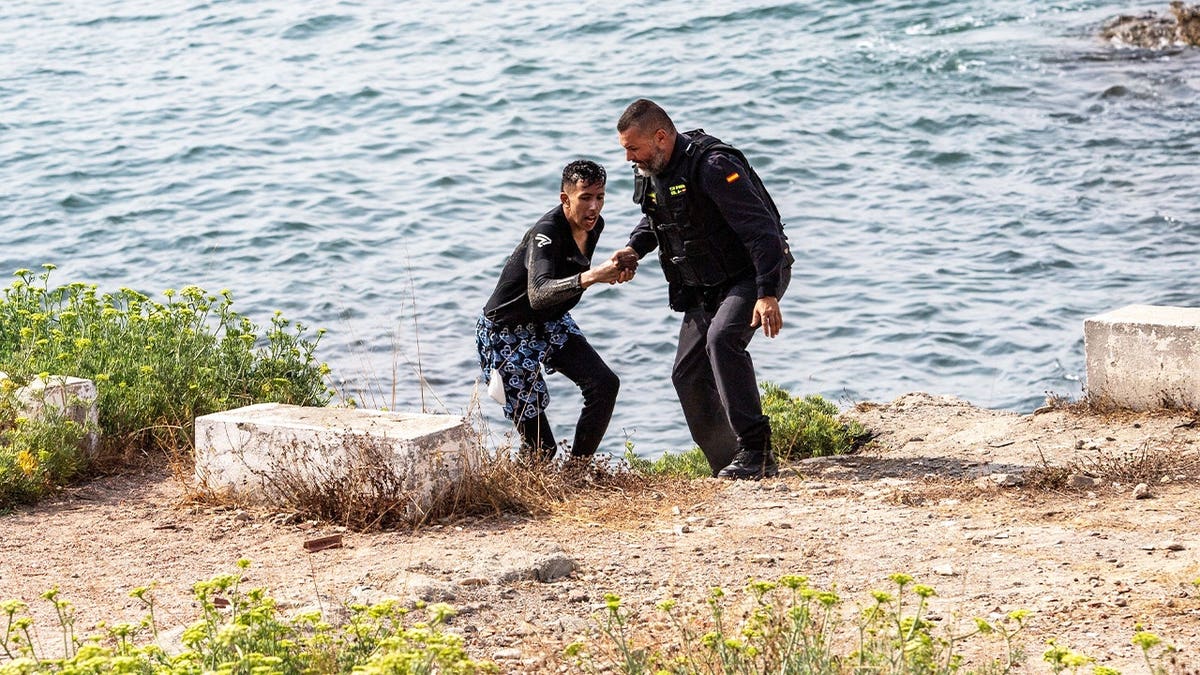
Spanish and Moroccan maritime patrols, supported by Spain’s Maritime Rescue service, conduct rescue operations off the southern coast of Ceuta after a sharp increase in migrant arrivals to the Spanish enclave in North Africa. (Antonio Sempere / JNA Press/Sipa USA)
«The Government of Spain is fully committed to providing an immediate response to the situation in Ceuta. We are mobilizing all necessary resources, working with Moroccan and international authorities, and preparing the necessary measures to restore normalcy as soon as possible,» Sánchez wrote in a Thursday post on X.
BIDEN ADMINISTRATION FORCED A FALSE CHOICE ON AMERICANS ABOUT IMMIGRATION
Sánchez has faced considerable backlash from his country’s conservatives for his policies on immigration, with many arguing that Spain’s policy of guaranteeing social services to minors who illegally enter the country incentivizes mass migration.
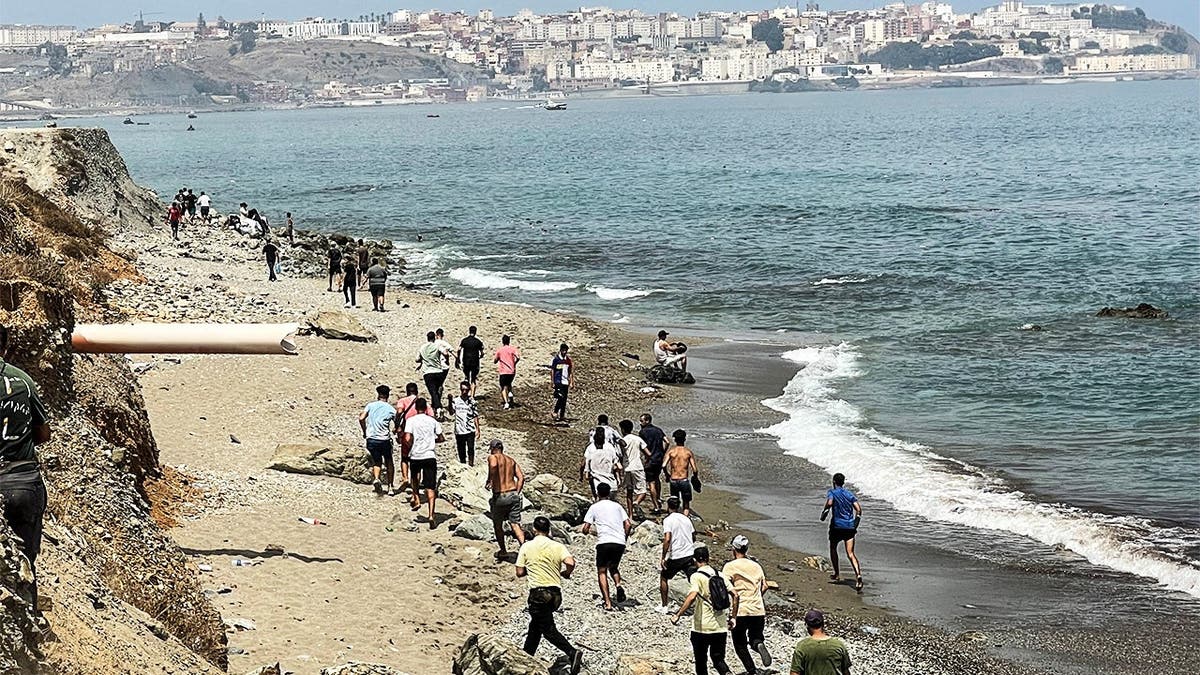
Migrants cross on foot into the North African enclave of Ceuta from Morocco by attempting to swim, according to Spain’s Guardia Civil, near the border with Ceuta, in Fnideq, Morocco, July 30, 2026, in this still image obtained by Reuters (Reuters)
«When they cross the border as minors, you cannot send them back to Morocco,» Javier Negre, a conservative Spanish journalist and owner of La Derecha Diario and UHN Plus, told Fox News Digital.
«The Spanish state has to take care of them and pay money to NGOs to care for these minors until they turn 18,» he continued.
«It’s proof that Europe and Spain are on the verge of becoming a failed continent because of the future policies and promotion of this illegal invasion under Pedro Sánchez,» Negre criticized.
Sánchez, for his part, has claimed that accepting migrants is necessary to keep Spain’s economy alive, arguing the country’s low birth rates necessitate accepting immigrants.
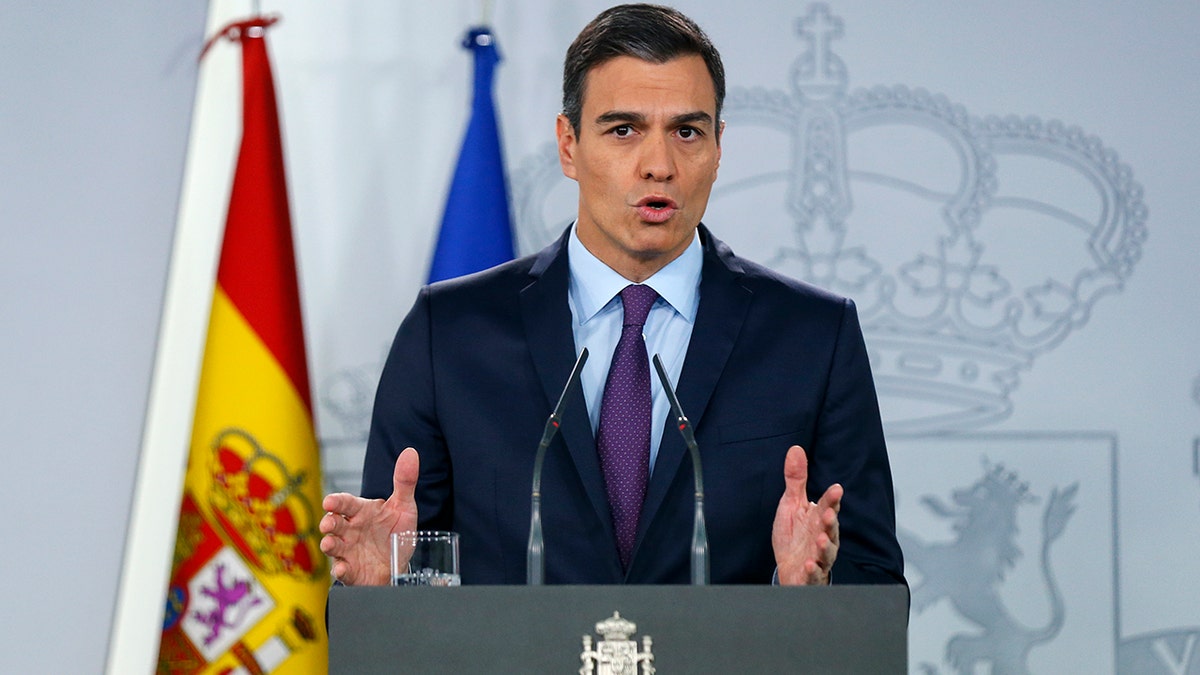
Spain’s Prime Minister Pedro Sanchez delivers a statement at the Moncloa Palace in Madrid, Spain. (AP Photo/Andrea Comas)
«The West needs people. Currently, few of its countries have a rising population growth rate. Unless they embrace migration, they will experience a sharp demographic decline that will prevent them from keeping their economies and public services afloat. Their gross domestic product will stagnate. Their public healthcare and pension systems will suffer. Neither AI nor robots will be able to prevent this outcome… The only option to avoid decline is to integrate migrants in the most orderly and effective way possible,» Sánchez wrote in a February op-ed in The New York Times.
CLICK HERE TO DOWNLOAD THE FOX NEWS APP
Fox News Digital contacted the offices of Sánchez and Vivas for further comment.
Fox News’ Patrick Ward contributed to this report.
illegal immigrants, border security, spain, world, europe, africa
NEWYou can now listen to Fox News articles!
Florida Attorney General James Uthmeier said he will be opening up an investigation into former National Institutes of Allergy and Infectious Diseases (NIAID) Dr. Anthony Fauci following Fauci’s explosive decision to invoke his Fifth Amendment right and not answer any questions during a congressional hearing Wednesday.
«Fauci’s lack of candor to Congress is unbelievable. My office is launching an investigation into Dr. Fauci. It’s past time we get the truth of what happened during COVID,» Uthmeier wrote in a Wednesday post on X.
Uthmeier further expanded on his decision in an exclusive statement to Fox News Digital.
FAUCI PLEADS FIFTH WITH ‘ZERO LEGAL JUSTIFICATION’ AS CRITICS ERUPT AND DEMAND CONTEMPT CHARGES
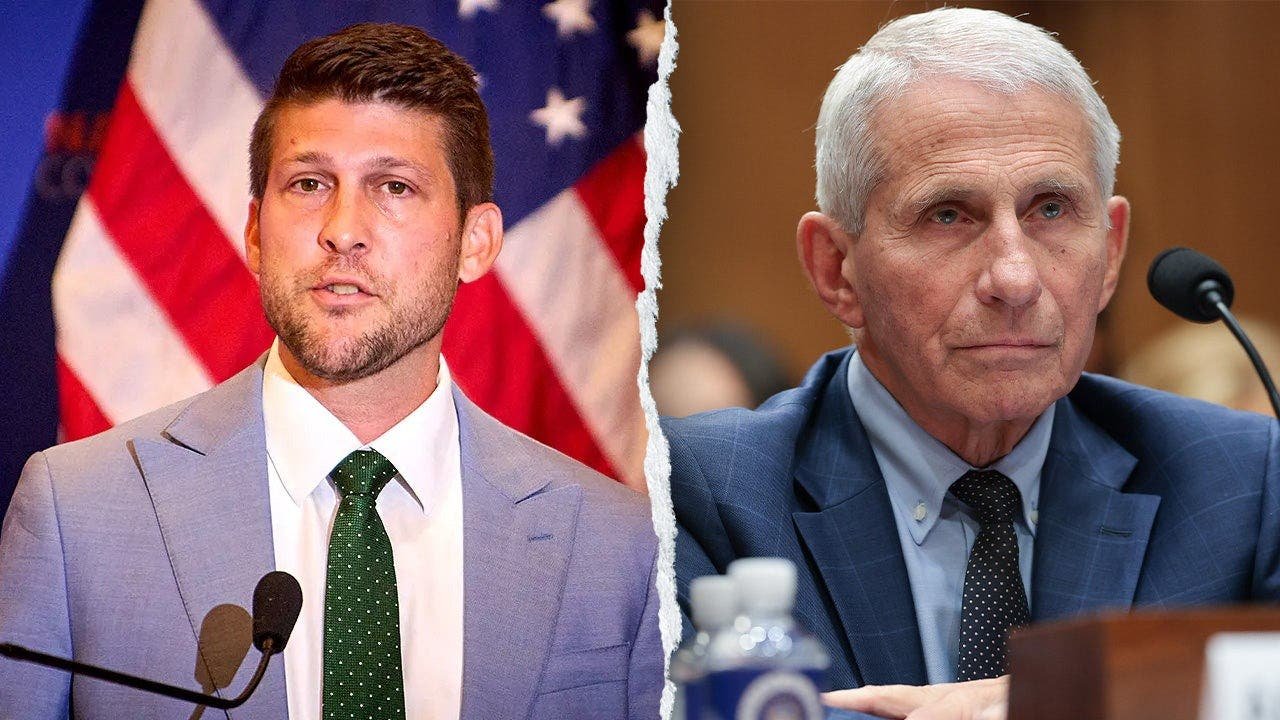
James Uthmeier spoke at the National Conservative Convention on Sept. 3, 2025, in Washington, D.C. (Dominic Gwinn/Middle East Images/AFP via Getty Images)
«In light of recent reports exposed by Senator Rand Paul, we will investigate any and all potential violations of Florida law involving Anthony Fauci,» Uthmeier told Fox News Digital.
«Our inquiry will focus on what Fauci knew, when he knew it, and how he misled the American people. We will examine the physical and monetary harms to Floridians that may have resulted from his deceptions and determine whether his conduct exposes him to liability under state law,» Uthmeier’s statement concluded.
Uthmeier cited revelations published by Senate Homeland Security and Governmental Affairs Committee Chairman Sen. Rand Paul, R-Ky., which revealed internal notes Fauci wrote on government computers during his time at NIAID.
FAUCI’S NEWLY RELEASED COVID DIARIES REVEAL BIZARRE FIXATION ON FAME AS PANDEMIC DEATHS MOUNTED
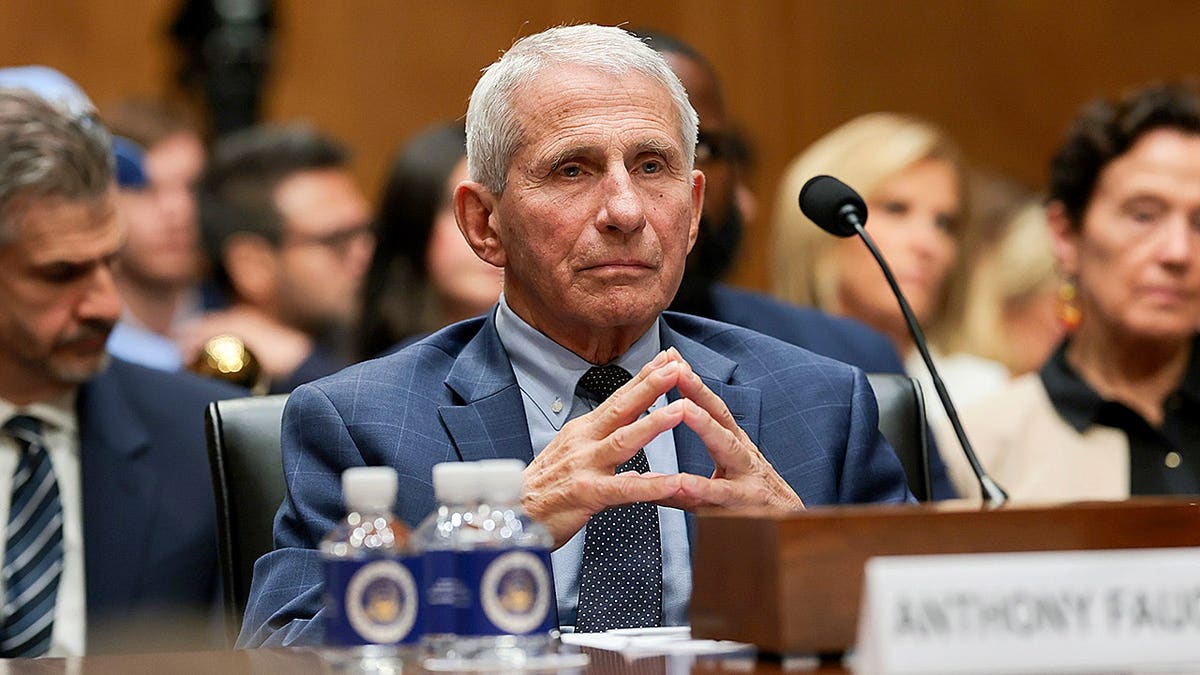
Former NIH Director Anthony Fauci listens during a Senate Homeland Security and Governmental Affairs Committee hearing on July 29, 2026, in Washington, D.C. Fauci declined to answer questions, asserting his Fifth Amendment right. (Anna Moneymaker/Getty Images)
The internal notes, which Paul and others have taken to referring to as Fauci’s «diary,» suggest Fauci appeared to publicly overstate the death rate from COVID-19 compared to what he wrote privately.
«[Former CDC Director] Tom Frieden called me this AM and we discussed various aspects of the outbreak,» Fauci wrote on Feb. 8, 2020.
«He and I are on the same page in thinking tht [sic] this is acting like a bad influenza in its transmissibility and that the denominator is much greater than 34,867 (above) making the case fatality rate (CFR) more like 0.2-0.3 % rather than 2.0%,» Fauci’s entry concluded.
However, a month later, in congressional testimony to the House Oversight Committee on March 11, 2020, Fauci pegged the mortality rate at 1%.
«I think if you count all the cases of minimally symptomatic or asymptomatic infection, that probably brings the mortality rate down to somewhere around one percent, which means it is 10 times more lethal than the seasonal flu,» he testified.
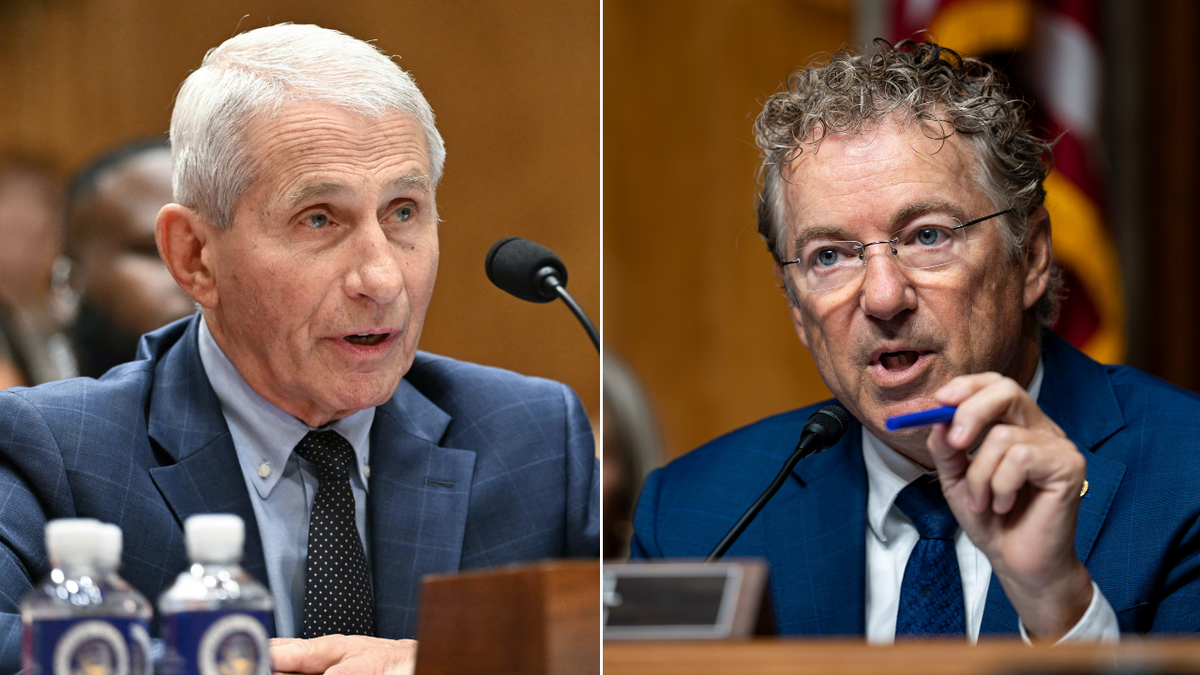
Anthony Fauci declined to testify in a Senate committee hearing on his role in the US response to COVID-19, invoking his Fifth Amendment rights. (Left (Alex WROBLEWSKI / AFP via Getty Images), Right (Al Drago/Bloomberg via Getty Images))
When called to testify on the revelations before the Senate Homeland Security and Governmental Affairs Committee on Wednesday, Fauci exercised his Fifth Amendment right and refused to answer legislators’ questions 111 times.
Uthmeier is not the only Republican to take aim at the former COVID czar Fauci in light of the revelations.
Sen. Ted Cruz, R-Texas, said Wednesday that Fauci should be held in congressional contempt for refusing to answer questions despite receiving a presidential pardon.
CLICK HERE TO DOWNLOAD THE FOX NEWS APP
«I think Anthony Fauci has had contempt for Congress and contempt for the American people for decades,» he said. «His diary shows that he deliberately lied to the American people over and over and over again,» Cruz said.
Paul, for his part, said his committee will vote on whether to hold Fauci in contempt next week.
investigations, anthony fauci, politics, florida, trending news

Elijah Wood, Frodo en El Señor de los Anillos: "Trabajar con Tim Schafer fue literalmente un sueño hecho realidad"

Rosalía en Buenos Aires: vuelo privado, suite presidencial, hermetismo y pocos fans en la puerta

Crece la ola de incendios en Europa: las llamas se extienden a Grecia, Portugal, Inglaterra y Turquía

White House blasts Spanish government as thousands of migrants surge from Morocco, emergency request denied

La oposición rechazó el DNU migratorio de Milei y buscará frenarlo en el Congreso y la Justicia

Lionel Messi se reincorporó a los entrenamientos con Inter Miami ¿Cuándo volverá a jugar?

Crisis entre Milei y Lula: la trama política, personal y geopolítica detrás del mayor choque diplomático entre Argentina y Brasil

La pelea con Lula y el verdadero desafío que enfrenta Milei

San Isidro: la ballena que quedó varada en un banco de arena murió pese al operativo de rescate

Cómo manejar en el hielo y la nieve: técnicas y precauciones para usar el auto en la montaña en vacaciones de invierno

 POLITICA2 días ago
La pelea con Lula y el verdadero desafío que enfrenta Milei
- ECONOMIA2 días ago
Cómo manejar en el hielo y la nieve: técnicas y precauciones para usar el auto en la montaña en vacaciones de invierno
- ECONOMIA2 días ago
El BCRA cortó la racha de compra y en el mercado vuelan rumores de maniobras para frenar al dólar