INTERNACIONAL
Trump blockade squeezing Iran so hard regime may be dumping oil into Gulf, experts say

US and Iran trade fire in Strait of Hormuz as tensions escalate with ongoing blockade
Bill Hemmer and Dana Perino lead coverage on escalating U.S.-Iran tensions in the Strait of Hormuz, with new U.S. airstrikes against tankers trying to breach Iran’s blockade. President Trump dismissed previous Iranian attacks as a «love tap» while Secretary of State Marco Rubio affirmed strong U.S. retaliation for threats against Americans. Michael Allen, former NSC senior director, highlighted the U.S. economic stranglehold, noting over 70 tankers were blocked.
NEWYou can now listen to Fox News articles!
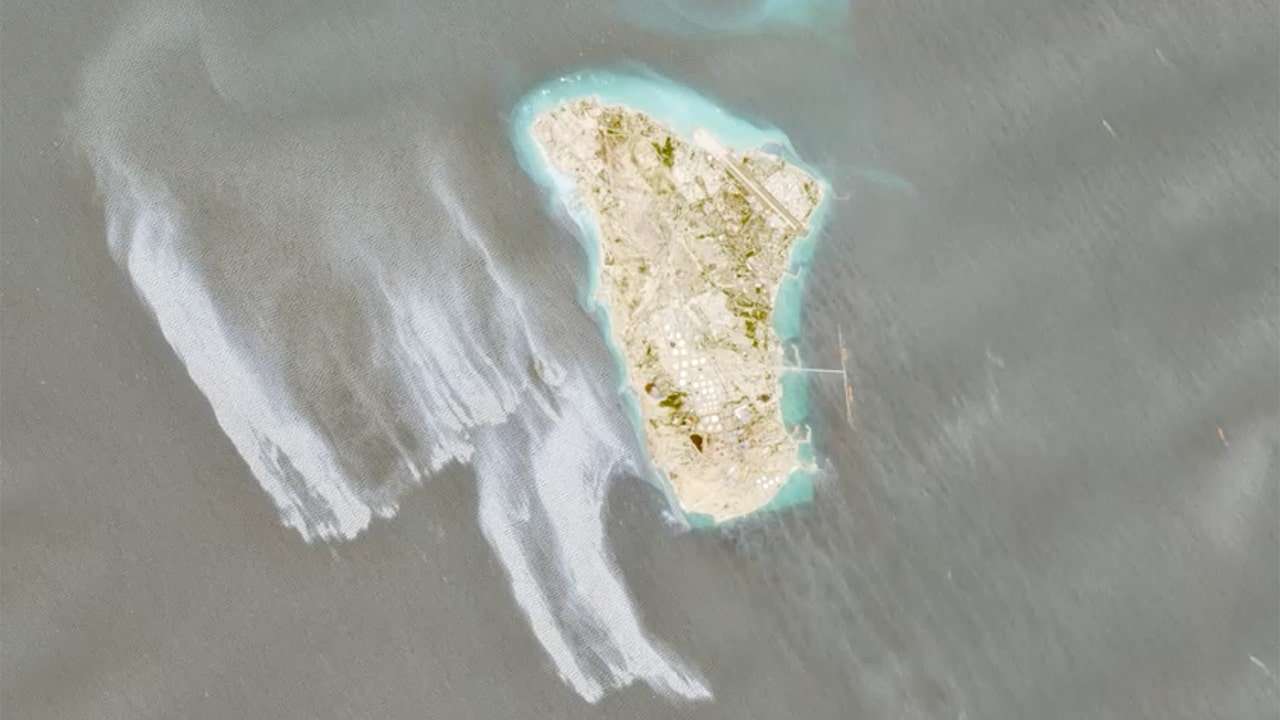
Satellite imagery revealed a massive suspected oil slick spreading near Kharg Island, Iran’s main oil export terminal, in what experts say could be evidence that Tehran’s oil infrastructure is buckling under mounting U.S. pressure.
The slick, seen in Copernicus Sentinel satellite images between Wednesday and Friday, covered roughly 45 square kilometers west of the island, according to analysts cited by Reuters.
The incident is emerging as a potential sign that Trump’s maritime pressure campaign is achieving one of its central objectives: overwhelming Iran’s export system to the point where Tehran can no longer move or store crude fast enough to sustain normal production.
US ECONOMIC CHOKEHOLD ON IRAN REACHES PEAK LEVERAGE AS COLLAPSE RISKS EMERGE
The suspected spill near Iran’s main oil hub is raising concerns that mounting U.S. pressure is overwhelming Tehran’s ability to store or export crude, potentially forcing risky workarounds with environmental consequences in the Gulf.
The slick, seen in Copernicus Sentinel satellite images between Wednesday and Friday, covered roughly 45 square kilometers west of the island, according to analysts cited by Reuters. (Reuters)
«At this stage I see two plausible explanations, and they’re not mutually exclusive,» Miad Maleki, an Iran sanctions and energy expert at the Foundation for Defense of Democracies, told Fox News Digital.
«One is operational: they simply didn’t ramp down extraction fast enough relative to their true onshore capacity and over-counted on empty tankers slipping through the blockade,» he said.
«Now they’ve effectively over-delivered crude into the export system, with more oil at or near the terminals than they can actually load, and the ‘solution’ is to push some of that excess into the water.»
Maleki said another possible explanation is mechanical failure tied to Iran’s use of aging tankers as floating storage or sanctions-busting carriers.
TRUMP CLAIMS IRAN ‘STARVING FOR CASH,’ ‘COLLAPSING FINANCIALLY’ AFTER EXTENDING CEASEFIRE
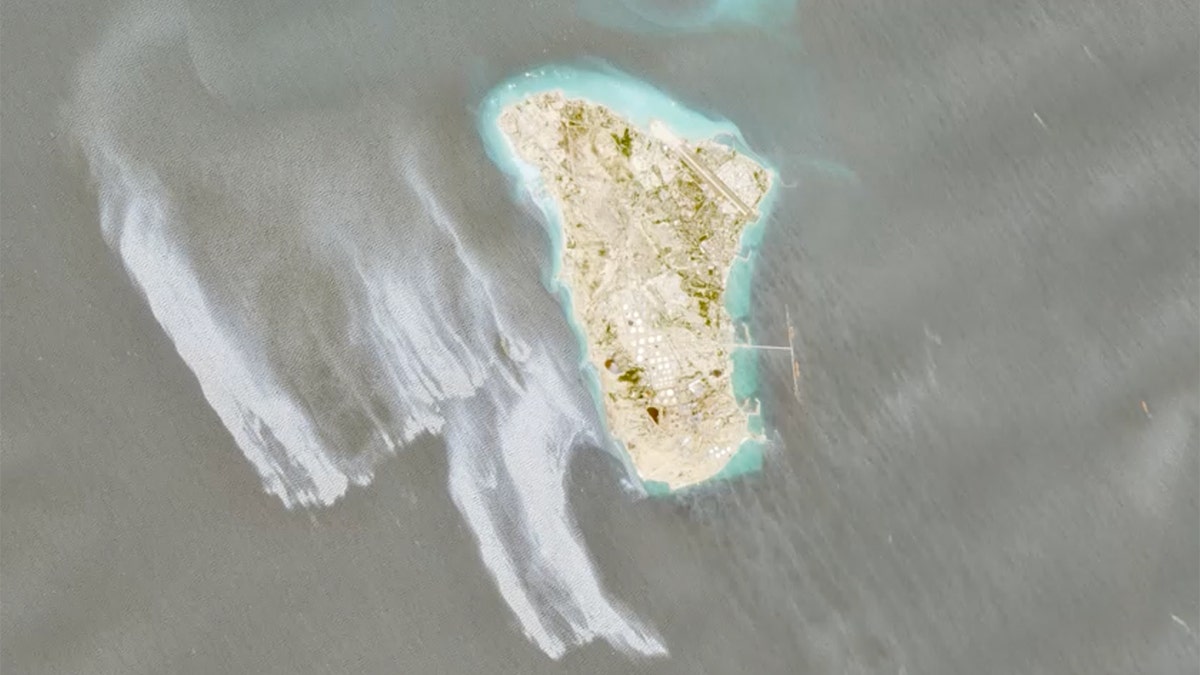
A suspected oil spill covering dozens of square kilometers of sea near Iran’s main oil hub of Kharg Island has been seen on satellite imagery this week. (European Union/Copernicus Sentinel-2 via Reuters)
«They’ve dragged older, marginal tonnage into service as floating storage or sanctions-busting carriers, and some of those retired or poorly maintained hulls are now leaking,» he said.
«Either way, the common denominator is the same — storage and evacuation capacity are out of sync with upstream output, and the Gulf is paying the price for that mismatch.»
The incident comes as the Trump administration continues pressing its «Economic Fury» campaign against Iran, combining sanctions enforcement with a growing U.S. naval presence around the Strait of Hormuz aimed at restricting Iran’s oil exports.
Before the conflict, Iran exported roughly 1.5 million barrels of oil per day, much of it to China. Analysts say the blockade and the threat of sanctions on shipping companies and financial institutions have made it increasingly difficult for Tehran to move crude out of Kharg Island.
Reuters reported the slick appeared as a «grey and white» plume west of the 8-kilometer-long island.
Leon Moreland, a researcher at the Conflict and Environment Observatory, told Reuters the slick was «visually consistent with oil,» while Louis Goddard, co-founder of consultancy Data Desk, said it could be the largest spill since the start of the U.S.-Israel war against Iran roughly 70 days ago.
Kharg Island handles roughly 90% of Iran’s oil exports and has become a critical choke point in the Trump administration’s effort to cut off the regime’s main source of revenue during the ongoing war.
Energy analysts say Iran is now facing a dangerous dilemma. If Iran cannot export oil or find additional storage capacity, it may be forced either to shut down wells, risking long-term damage to oil fields, or dispose of excess crude in ways that could trigger environmental fallout across the Gulf.
US STRIKE ON KEY IRAN OIL HUB WOULD FIT TRUMP’S ‘ENERGY DOMINANCE DOCTRINE,’ SAYS EXPERT
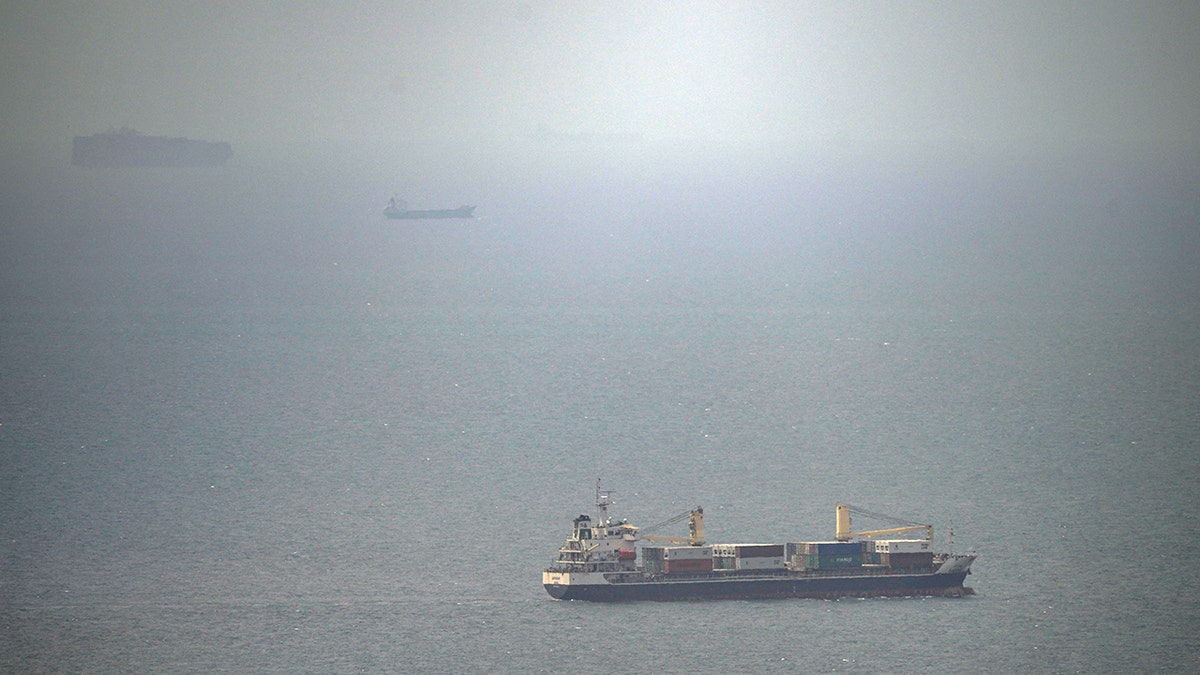
A cargo ship sails in the Persian Gulf toward the Strait of Hormuz on April 22, 2026. (AP Photo)
«They’ve already reduced extraction. In a true blockade scenario, the constraint isn’t production at the wellhead, it’s the inability to load tankers at export terminals,» Maleki said.
«Once onshore storage nears capacity, output has to be cut to match remaining headroom or wells get shut in,» he added. «In Iran’s case, that’s roughly 13 days.»
The environmental implications are also raising alarm across the Gulf.
Windward, a maritime risk intelligence firm, estimated the slick was moving southeast at roughly 2 kilometers per hour and warned it could reach Qatar’s exclusive economic zone within days and potentially drift toward the United Arab Emirates within two weeks.
The Gulf’s desalination infrastructure, relied upon by millions across the region, remains especially vulnerable to major oil contamination events.
The spill also is unfolding amid heightened military tensions in the Gulf. The war has trapped hundreds of vessels in the region and caused one of the largest disruptions to global crude and liquefied natural gas supplies in recent years.
CLICK HERE TO DOWNLOAD THE FOX NEWS APP
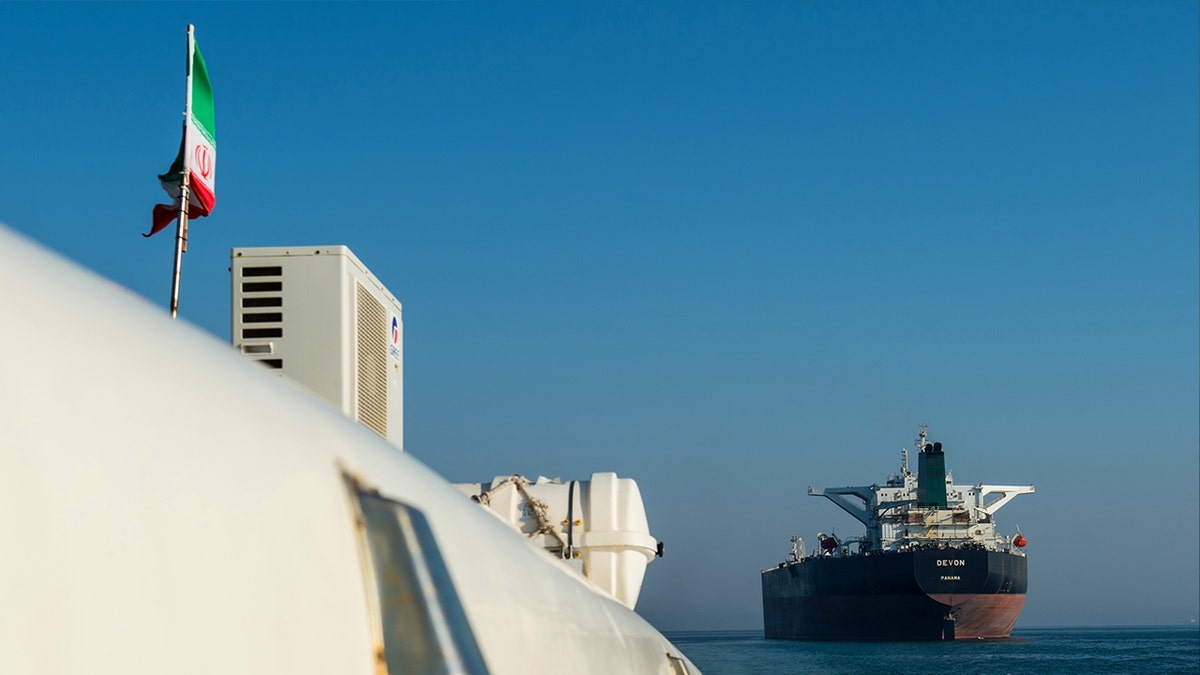
An oil tanker is seen near the terminal at Kharg Island, Iran, as U.S. officials and analysts consider whether seizing the island could significantly impact Iran’s oil exports. (Ali Mohammadi/Bloomberg via Getty Images)
Iranian authorities have not publicly commented on the suspected spill or its possible causes.
Fox News Digital reached out to the Iran mission to the U.N. for comment.
Reuters contributed to this report.
war with iran, energy, middle east, iran, sanctions








INTERNACIONAL
La guerra con Rusia: renunció la primera ministra de Ucrania y Zelenski anuncia más cambios en el gobierno
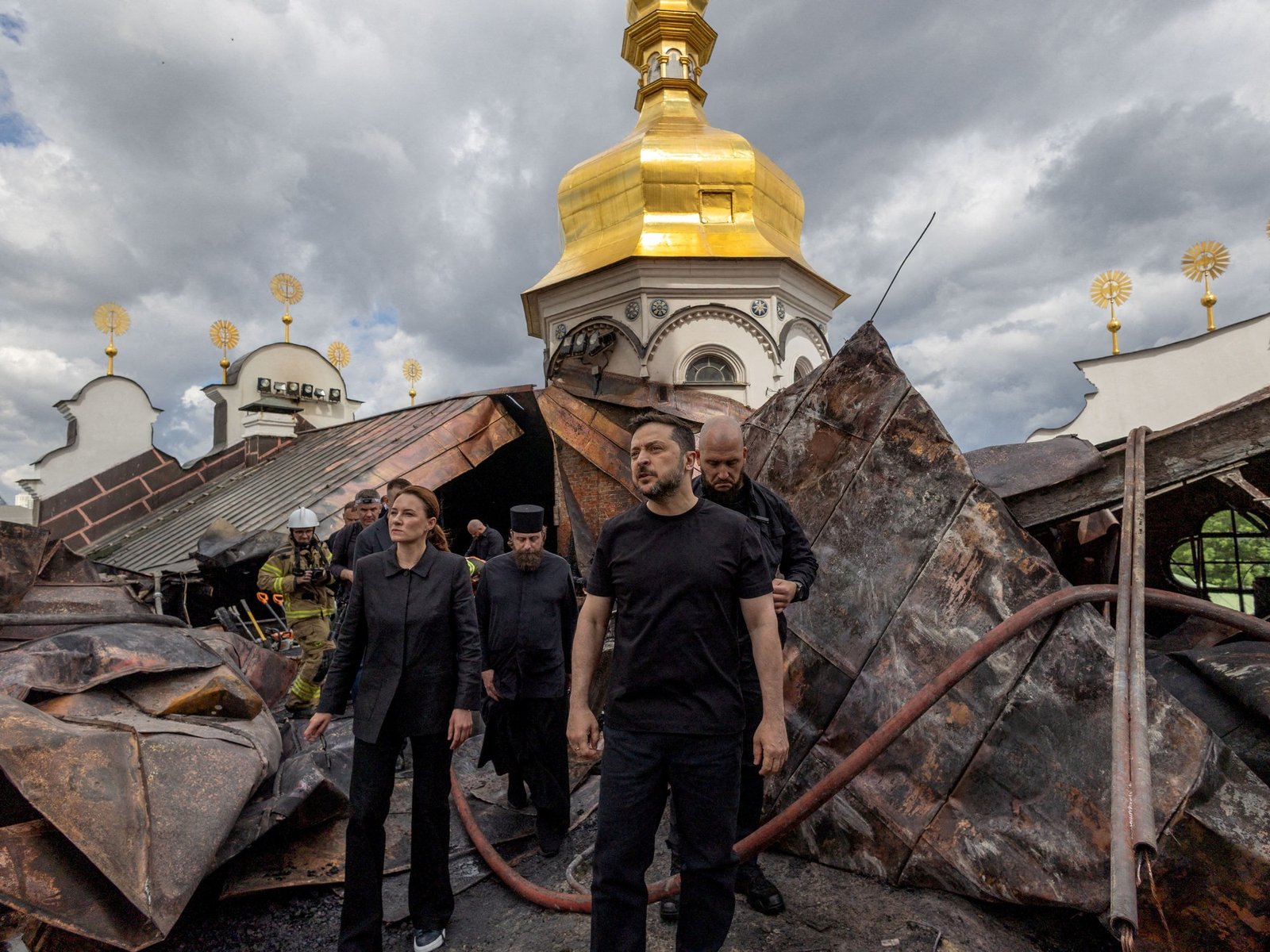
La primera ministra ucraniana Yulia Svyrydenko renunció este domingo mientras el presidente Volodymir Zelenski anunciaba nuevos cambios en el gobierno.
En una declaración en redes sociales, Svyrydenko declaró que estaba “orgullosa de haber tenido el honor de liderar el gobierno durante uno de los períodos más difíciles en la historia moderna de Ucrania”. Añadió que habló de los “próximos pasos” con Zelenski, pero no proporcionó más detalles.
“Estoy lista para servir al Estado ucraniano y llevar a cabo cada tarea destinada a fortalecer la posición de Ucrania, defender nuestros intereses nacionales y acercar una paz justa”, dijo.
Svyrydenko, exministra de Economía, fue nombrada primera ministra en julio de 2025 a los 39 años después de desempeñar un papel principal en la obtención de un acuerdo sobre minerales con Estados Unidos, considerado una forma importante de vincular los intereses norteamericanos con la seguridad de Ucrania.
Zelenski anunció la renuncia de la primera ministra en una publicación en la que dijo que Ucrania estaba “cambiando su estrategia política”.
Indicó que ofreció a Svyrydenko la oportunidad de liderar “una nueva e importante área” en las relaciones de Ucrania con un socio internacional clave.
“Cada área prioritaria de la política exterior será asignada a una persona específica con una experiencia sustancial que sea capaz de implementar lo que acordamos a nivel de líderes y lo que el pueblo ucraniano espera”, señaló Zelenski, al describir la inminente reorganización. Agregó que habrá cambios entre los altos rangos de las agencias policiales del país.
Zelenski se reunió con una serie de altos funcionarios tras el anuncio, entre ellos el ministro de Energía Denys Shmyhal, el ministro del Interior Ihor Klymenko y el ministro de Defensa Mykhailo Fedorov.
La reforma, que Zelenski aún no ha explicado en detalle, sería la cuarta gran reorganización de su gobierno desde el inicio de la invasión rusa.
Zelenski, que ha permanecido en el cargo bajo la ley marcial porque las elecciones en tiempos de guerra están prohibidas, ha reorganizado periódicamente su gobierno en un esfuerzo por aportar un nuevo impulso a su administración.
Un ataque ucraniano en el suroeste de Rusia mató a una persona e hirió a otras tres, informaron funcionarios locales el domingo, mientras las fuerzas de Kiev continuaban bombardeando las instalaciones petroleras de Rusia.
El jefe de la región rusa de Samara, el gobernador Vyacheslav Fedorishchev, indicó que entre los heridos había un niño. Viviendas y edificios de apartamentos, agregó, resultaron dañados en el ataque, al igual que un “sitio industrial” no especificado.
Medios rusos informaron que el objetivo del ataque fue la refinería de petróleo de Syzran, y muchos compartieron imágenes que parecían mostrar columnas de humo negro elevándose sobre el lugar. La refinería, que pertenece al gigante del petróleo y el gas Rosneft y se encuentra a unos 800 kilómetros (500 millas) al este de la frontera, ha sido un objetivo repetido de las fuerzas de Kiev.
Mientras tanto, el gobernador de la región rusa de Rostov, Yuri Slyusar, indicó que un petrolero había resultado dañado en un ataque con drones en el canal marítimo Azov-mar Negro. El barco estaba vacío y no hay amenaza de un derrame de petróleo, afirmó Slyusar.
Los ataques con drones de Ucrania contra refinerías de petróleo y otra infraestructura en toda Rusia han desencadenado una crisis generalizada de combustible, con escasez de gasolina y racionamiento en múltiples regiones, y esperas de horas en las estaciones de servicio para repostar. Moscú ha respondido intensificando sus bombardeos sobre Kiev y otras ciudades, lo que deja en evidencia la vulnerabilidad de Ucrania ante ataques con misiles balísticos.
Zelenski ha descrito los ataques contra la infraestructura energética de Rusia como parte de la campaña de Kiev de “sanciones de largo alcance”, llevada a cabo en respuesta a la negativa de Moscú a detener su invasión de cuatro años contra su vecino.
Mientras tanto, el Ministerio ruso de Defensa informó el domingo que había atacado los puertos de Odesa y Chornomorsk, en la región ucraniana de Odesa. Funcionarios ucranianos aún no habían hecho comentarios sobre esas afirmaciones.
INTERNACIONAL
Trump’s ambitious energy bet could be a winning hand as the world burns more oil, gas than ever
NEWYou can now listen to Fox News articles!
The world consumed more energy than ever before in 2025, with fossil fuels still supplying the vast majority of global energy despite record growth in renewable power, according to a new report.
The findings come as President Donald Trump pushes to expand U.S. oil and gas production, arguing domestic energy is key to lowering prices, strengthening national security and boosting economic growth.
The Energy Institute’s 2026 Statistical Review of World Energy found oil, natural gas and coal accounted for 86% of global energy use last year, underscoring that despite years of investment in wind and solar power, the world continues to rely overwhelmingly on fossil fuels to power homes, businesses, transportation and industry.
Overall, the world consumed more energy than at any point on record.
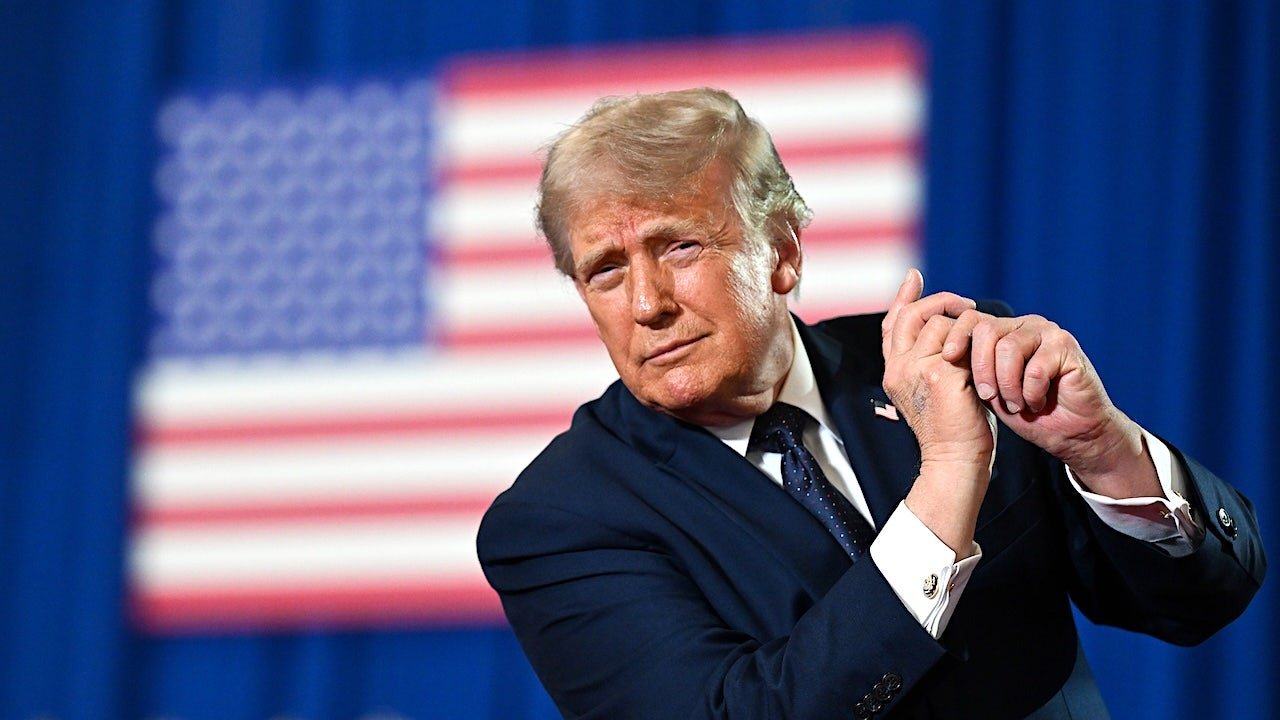
President Donald Trump has made increasing U.S. oil and natural gas production a cornerstone of his economic agenda. (Roberto Schmidt/AFP/Getty Images)
GAS SURGE TIED TO IRAN CONFLICT HITS SWING STATES, TESTING TRUMP’S LOW-PRICE PITCH
The findings align with the Trump administration’s argument that expanding domestic oil and gas production is critical to lowering energy costs, strengthening U.S. energy security and fueling economic growth ahead of next year’s midterm elections, where both parties are expected to make the economy and inflation central campaign issues — but for very different reasons.
America’s dominant position in global energy markets was on full display in the report — and Trump is taking a victory lap.
«Even left-wing studies are finding that President Trump’s energy dominance agenda has been undeniably successful in unleashing reliable, affordable, and secure energy,» White House spokeswoman Taylor Rogers told Fox News Digital.
«Thanks to the President, U.S. oil, natural gas, and coal production has increased – which benefits American families and businesses by lowering prices, creating jobs, and strengthening our energy security,» she added. «America has abundant resources—President Trump is unleashing them.»
WHY THE STRAIT OF HORMUZ MATTERS AS TRUMP ISSUES FRESH ULTIMATUM TO IRAN
U.S. oil production reached a record 21.1 million barrels a day in 2025, nearly matching the combined output of Saudi Arabia and Russia. The U.S. also remained the world’s largest natural gas producer and the world’s leading exporter of petroleum products.
The report also comes as the conflict with Iran has renewed concerns about energy security and shipping through the Strait of Hormuz. Although its data predate the conflict, the report underscores how geopolitical tensions can threaten global energy supplies.
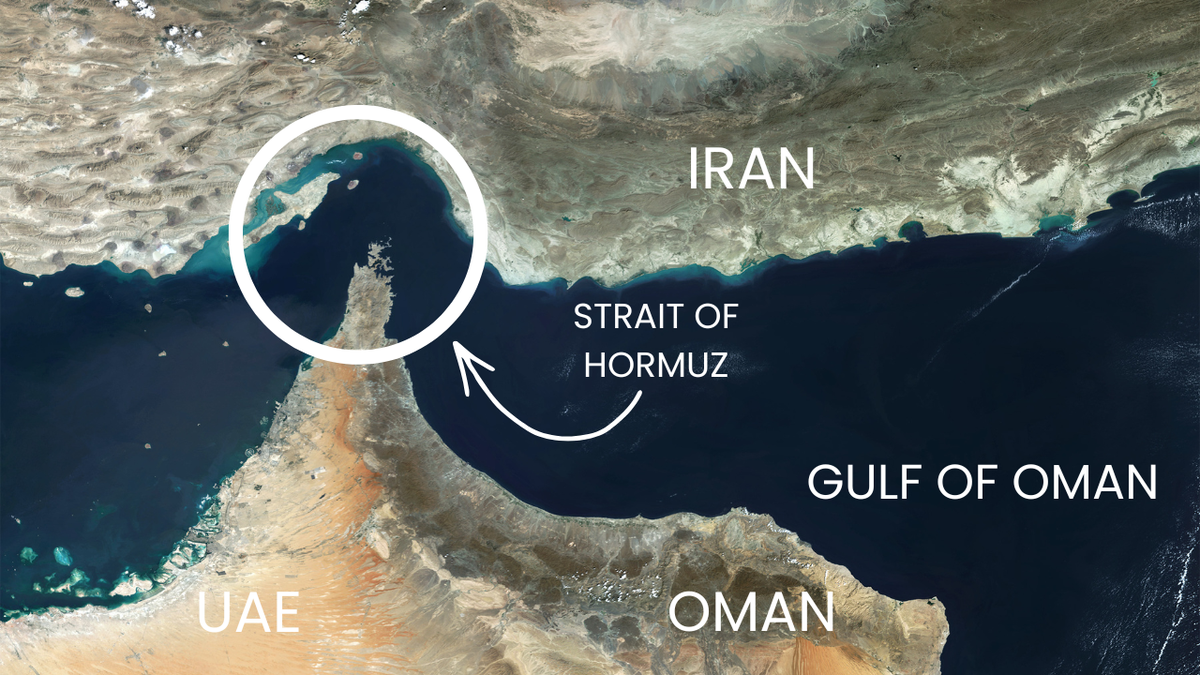
A satellite image shows the Strait of Hormuz, a key maritime passage connecting the Persian Gulf to the Gulf of Oman, vital for global energy supply. (Amanda Macias/Fox News Digital)
Few places are more important to global energy markets than the Strait of Hormuz.
About 20 million barrels of oil and one-fifth of the world’s liquefied natural gas pass through the waterway each day, along with shipments of gasoline, diesel and jet fuel.
Economist Steve Moore said the latest conflict illustrates why the U.S. should continue expanding domestic energy production.
«Every time we’ve had flare-ups in the Middle East, this has caused a lot of disruption to the energy markets,» he told Fox News Digital.
Moore said the conflict has once again exposed the world’s dependence on oil flowing through the Strait of Hormuz, putting upward pressure on energy prices.
BBQ LOVERS BEWARE: MIDDLE EAST CONFLICT MIGHT DISRUPT YOUR SUMMER PLANS THIS YEAR
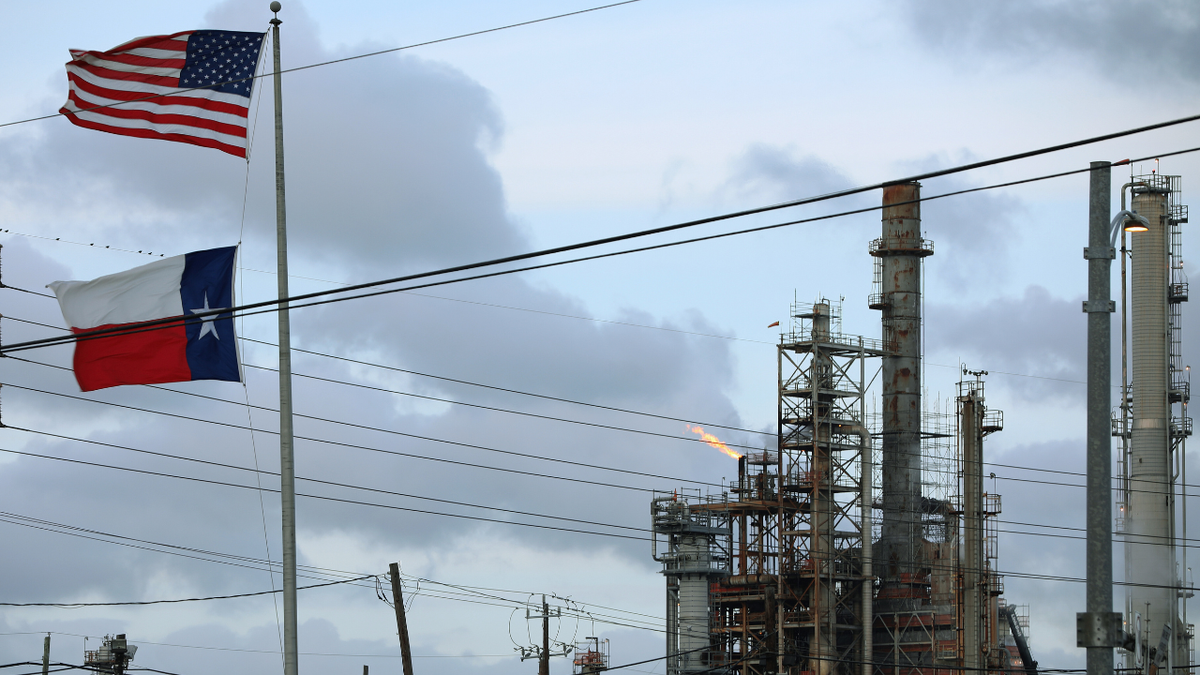
An oil pumpjack operates in the Permian Basin in Texas. The Energy Institute’s latest global energy report found the U.S. maintained its position as a global energy powerhouse. (Sharon Steinmann/Bloomberg/Getty Images)
Heritage Foundation chief economist EJ Antoni said the conflict underscores the need for the U.S. to move beyond energy independence and embrace what Trump has called «energy dominance.»
«The Iran war has shown us it’s not simply enough for America to be pumping at current levels. America needs to be not just energy independent, but energy dominant,» Antoni told Fox News Digital.
He said the U.S. should continue expanding domestic energy production and refining capacity to strengthen its energy security.
CLICK HERE TO DOWNLOAD THE FOX NEWS APP
The White House has argued that increasing domestic oil and natural gas production will help shield Americans from geopolitical shocks while lowering energy costs, a key pillar of Trump’s broader economic agenda.
Read the full report here:
energy, global economy, politics, donald trump, war with iran
INTERNACIONAL
El drama de los chicos que quedaron huérfanos por los terremotos en Venezuela: “Tienen miedo y no pueden dormir”

A 18 días del doble terremoto que dejó 4490 muertos y más de 16 mil heridos, Venezuela intenta ponerse de pie mientras enfrenta otra tragedia: la de los chicos que sobrevivieron a la catástrofe y que quedaron en una situación de extrema vulnerabilidad. Muchos de ellos perdieron a sus padres y son huérfanos.
TN dialogó con representantes de organizaciones humanitarias, entre ellas UNICEF, que asisten a las víctimas. Todos advirtieron que la situación es absolutamente crítica.
“En este tipo de desastres, y especialmente en éste, vemos un enorme sufrimiento entre los chicos. Por eso brindamos apoyo psicosocial tanto a ellos como a sus familias, porque hoy esa es una de las necesidades más urgentes”, explicó Margarita, representante de UNICEF.
En ese sentido, sumó: “Lo que vemos son niños y niñas con miedo en la noche, que no pueden dormir, con traumas que necesitan ser atendidos. Lo que hacemos es brindar esos espacios para que vuelvan a ser niños después de una situación tan traumática”. Uno de los campamentos que montó UNICEF para atender a los niños. (Foto: TN)
“Es enternecedor escuchar a los niños porque ellos tienen una resiliencia natural aún mayor que los adultos y pueden, incluso en el peor escenario, encontrar momentos para vincularse desde el juego, la risa y la alegría”, indicó a este medio otra voluntaria.
Entre los sobrevivientes hay familias que lo perdieron todo. Uno de ellos tiene un bebé de 10 meses y quedó en la calle, sin un lugar al que regresar.
Leé también: Encontraron otros 157 cuerpos en Venezuela y ya son 4490 las víctimas fatales por los terremotos
Génesis también logró sobrevivir a la tragedia y hoy está en un refugio junto a sus tres hijos, de 5, 6 y 7 años. El terremoto se llevó a la abuela y a una tía de los chicos. “Nos faltan juguetes”, respondió uno de los niños cuando le preguntaron qué necesitaban con mayor urgencia.
El caso de Fabiana, la niña del milagro
En medio del dolor también surgen historias de esperanza. Una de ellas es la de Fabiana, la nena de 12 años que fue rescatada con vida tras permanecer 32 horas bajo los escombros.
En diálogo con TN, ella contó que cuando empezó el terremoto estaba sola en su departamento de La Guaira, una de las zonas más afectadas, porque su madre había salido a trabajar. “Estaba en mi cuarto, mirando mi teléfono, cuando salgo a la cocina a tomar agua y ahí fue cuando el terremoto me agarra muy fuerte. Todo se movía, todo se tambaleaba y el edificio se iba de lado”, relató.

Fabiana en el hospital luego de ser rescatada. (Foto: TN).
Fabiana recuerda con detalles lo que pasó después: “Segundos más tarde, comienzan a caer escombros a mi alrededor. Cuando todo terminó de caer, todo quedó en un silencio matador y yo me quedé pensando: ‘¿ahora qué voy a hacer?’. Después de 32 horas mirando el techo que tenía en mi cara, empecé a escuchar mi nombre a lo lejos. Escuchaba que me hablaban y lloré de felicidad porque me iban a sacar. Iba a verme con mi familia».
Ella quiso dejar un mensaje para el resto de las víctimas del terremoto en su país. “Siempre confíen en Dios porque él va a tener sus razones para todos. Y que nunca apaguen su sonrisa”, reflexionó.
Cuando logró reencontrarse con su madre, le dijo “no me vuelvo a quedar nunca más sola”.
Los números de la tragedia
El doble terremoto que golpeó Venezuela el 24 de junio causó 4490 fallecidos, según el último balance oficial difundido por el gobierno chavista. De esa manera, sumó otras 157 víctimas fatales al último informe. La cifra de heridos se mantiene en 16.740.
El presidente del Parlamento, Jorge Rodríguez, indicó que 120.794 familias fueron atendidas y que hay 19.583 personas en un total de 108 campamentos transitorios habilitados en escuelas de Caracas y los estados aledaños Miranda y La Guaira, la región más afectada.
Leé también: Padres desesperados: buscan a sus hijos desaparecidos a casi dos semanas del doble terremoto en Venezuela
De acuerdo a este reporte, hay 14 nuevos refugios temporales respecto al sábado, cuando había 94.
También informó que hubo 1.222 réplicas desde el 24 de junio. La Guaira, Venezuela. (Foto: Reuters/Gaby Oraa).
Cerca de 18.000 personas perdieron sus casas, pero las autoridades creen que ese número subirá a medida que avance el proceso de inspección de las edificaciones que no se desplomaron, pero que sufrieron daños.
Venezuela, Terremoto, tragedia

La guerra con Rusia: renunció la primera ministra de Ucrania y Zelenski anuncia más cambios en el gobierno

El violento episodio de Martín Salwe cuando quiso entrevistar a Tini Stoessel en el partido de Argentina vs Suiza

Trump’s ambitious energy bet could be a winning hand as the world burns more oil, gas than ever

La euforia de los hijos de una leyenda del rock tras ver en vivo el triunfo de Argentina ante Suiza: “¡Increíble!”

Karina Milei ya empieza a pensar en las listas: las internas que se reeditan y el nuevo factor Patricia Bullrich

La demora de los cambios a la ley de Inocencia Fiscal genera expectativas de una nueva prórroga para Ganancias

“Hablame bien”: el tenso cruce de Lionel Messi con el árbitro en la victoria de Argentina ante Suiza en el Mundial

Contundente respaldo de la FIFA tras las críticas a los árbitros de Argentina-Egipto: “Las acusaciones infundadas no tienen cabida”

Hackearon a la AFA y enviaron correos con falsas denuncias sobre el arbitraje ante Egipto

Shutdown en Argentina: la razón detrás de la idea de Milei de avanzar con un «apagón» del Estado

 DEPORTE1 día ago
“Hablame bien”: el tenso cruce de Lionel Messi con el árbitro en la victoria de Argentina ante Suiza en el Mundial
- POLITICA3 días ago
Hackearon a la AFA y enviaron correos con falsas denuncias sobre el arbitraje ante Egipto
- ECONOMIA6 horas ago
El petróleo sube más de 3% tras la reanudación de los ataques de EEUU contra Irán y la amenaza de cierre del estrecho de Ormuz