INTERNACIONAL
Trump criticizes Spain amid Iran, NATO rift as PM Sanchez faces questions over political motives

NEWYou can now listen to Fox News articles!
Prime Minister Pedro Sanchez of Spain has tried to position himself as the European counterweight to President Donald Trump, but his motives are being questioned by critics.
Sanchez, who is hosting a conference of leftist leaders from around the world in Barcelona this weekend, has rejected increasing Madrid’s NATO spending while positioning Spain against the Trump administration on several key policy issues.
More recently, the Spanish politician has taken a belligerent stand against the U.S. and Israeli military campaign against the Iranian regime, forbidding the U.S. from using its military bases in Spain to refuel aircraft or prepare for military action, decrying the campaign as illegal while staying quiet on the regime’s murder of thousands of protesters and its increased drive to produce ballistic missiles and acquire nuclear weapons-grade enriched uranium.
NATO CHIEF SIGNALS ALLIES MAY ACT ON HORMUZ, WARNS OF ‘UNHEALTHY CODEPENDENCE’ ON US
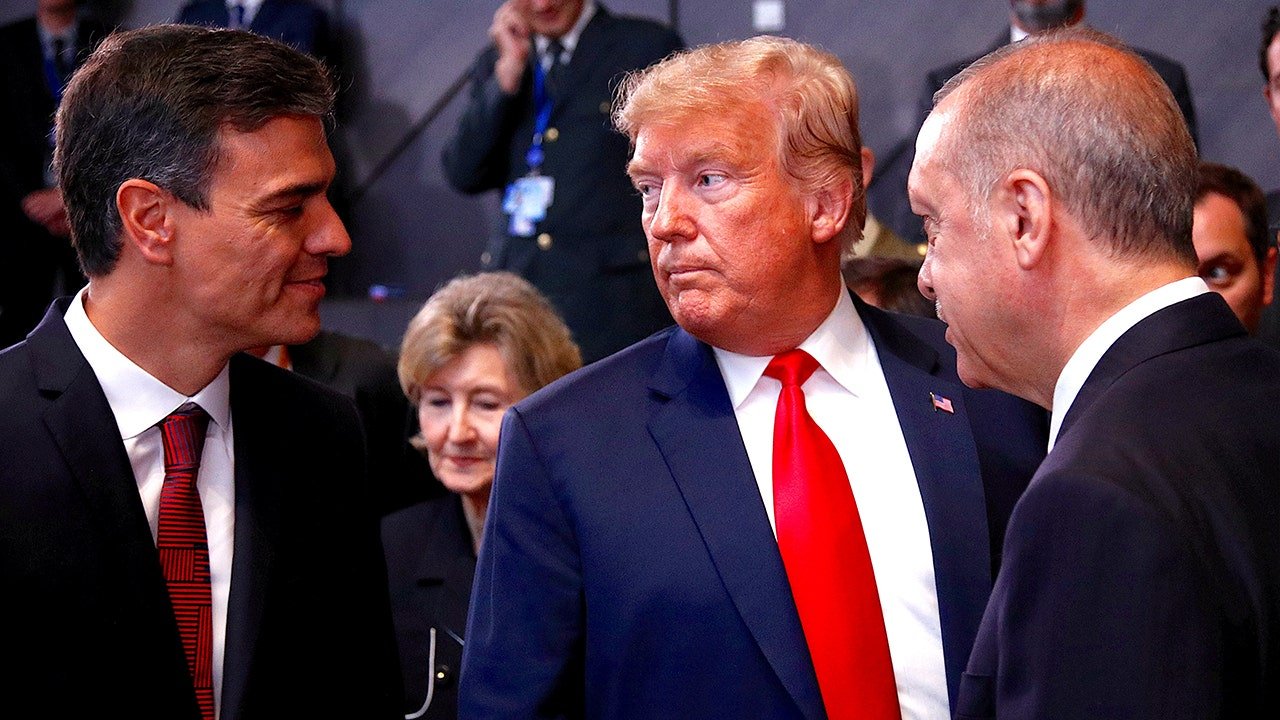
President Donald Trump, Spain’s Prime Minister Pedro Sanchez and Turkish President Recep Tayyip Erdogan, attend a North Atlantic Council meeting during a NATO summit in Brussels, Belgium, on July 11, 2018 during Trump’s first term in office. (Francois Lenoir/Reuters)
A few days after the war began with Iran, Sanchez said, «We are not going to be complicit in something that is bad for the world and is also contrary to our values and interests, just out of fear of reprisals from someone,» Sánchez said, using the slogan «No to the war,» the Associated Press reported.
On Saturday, Trump took aim at Sanchez’s policies in a Truth Social post, asking: «Has anybody looked at how badly the country of Spain is doing. Their financial numbers, despite contributing almost nothing to NATO and their military defense, are absolutely horrendous. Sad to watch!!!»
In March, Trump said he had asked Treasury Secretary Scott Bessent «to cut off all dealings with Spain.»
WALZ RIPS TRUMP AND VANCE IN EUROPE, SAYS ‘FEEBLE-MINDED, TRIGGER-HAPPY PRESIDENT’ HAS NO EXIT PLAN FOR IRAN
Critics charge that Sanchez, already well known for his fervently anti-Israel views, has increased his public pronouncements to take pressure off him due to a series of corruption scandals involving family members, something he and his supporters have denied.
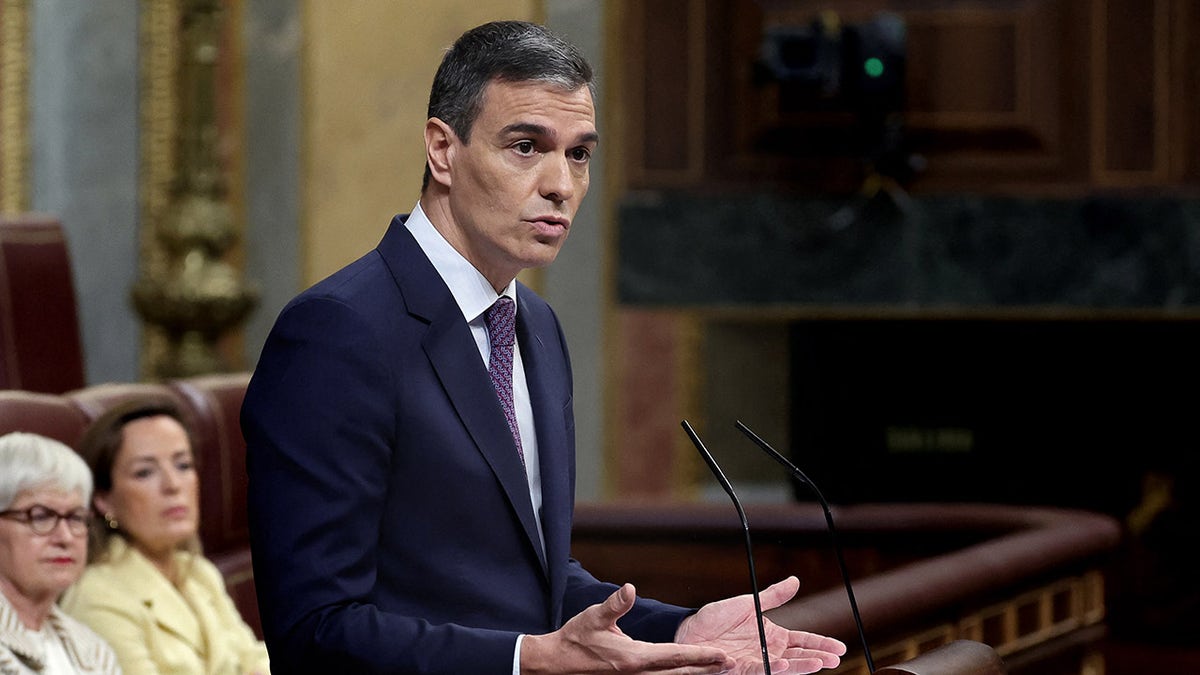
TOPSHOT – Spain’s Prime Minister Pedro Sanchez delivers a speech to announce that Spain will recognise Palestine as a state on May 28, at the Congress of Deputies in Madrid on May 22, 2024. «Next Tuesday, May 28, Spain’s cabinet will approve the recognition of the Palestinian state,» he said, adding that his Israeli counterpart Benjamin Netanyahu was putting the two state solution in «danger» with his policy of «pain and destruction» in the Gaza Strip. (Thomas Coex/AFP via Getty Images)
Javier Negre, a conservative Spanish journalist and owner of La Derecha Diario and UHN Plus told Fox News Digital. «The stance of President Pedro Sánchez against President Donald Trump is neither improvised nor based on convictions. It is purely electoral marketing. He has realized that by confronting the most powerful president in the world and getting Trump to speak about him, he achieves two things: first, he positions himself in the media as the leading figure of the global left and globalism against the new right.»
Negre said Sánchez’s position also «diverts attention from the corruption scandals that have led to investigations involving his wife and his brother and to the imprisonment of people close to him
A Madrid judge formally charged Sanchez’s wife, Begona Gomez, with corruption Monday, creating a political storm for the PM, who’s already embattled in another corruption case involving his brother.
TRUMP SAYS HE MIGHT HAVE ‘FORCED ISRAEL’S HAND’ IN IRAN STRIKE DECISION AS CRITICS QUESTION WAR POWERS
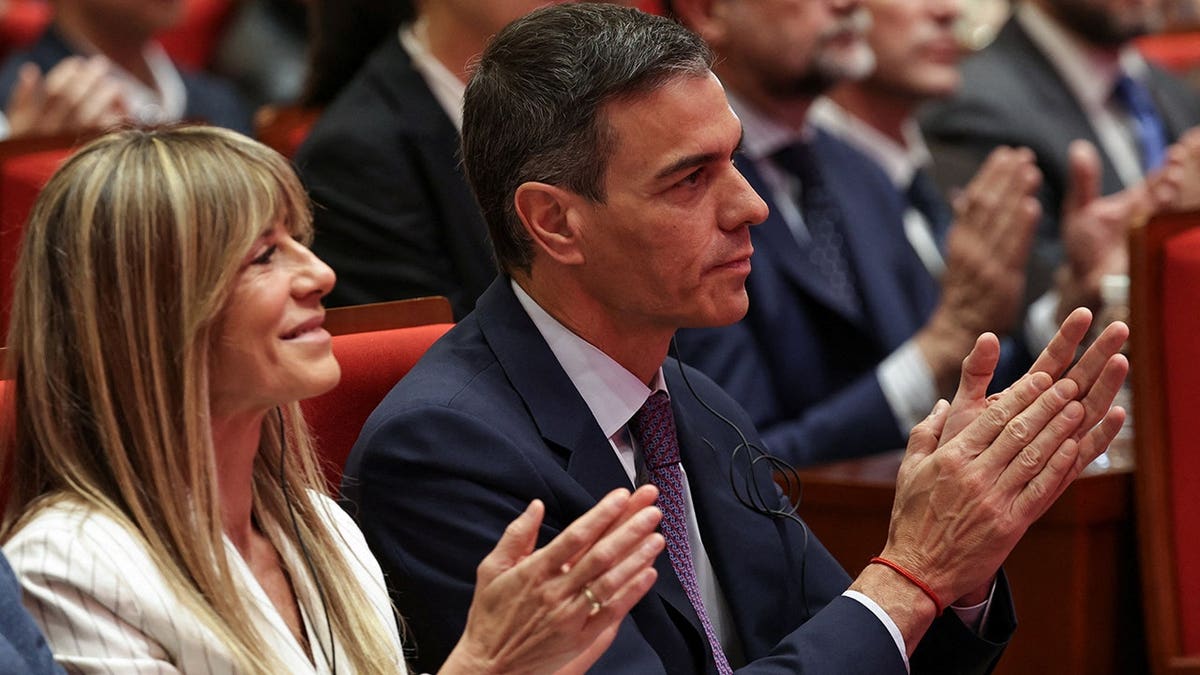
Spanish Prime Minister Pedro Sanchez (R), and his wife Begona Gomez, attend a speech in Beijing, China, 13 April, 2026. (Andres Martinez Casares/Pool via Reuters)
Gómez’s 39-page indictment follows a two-year investigation charging her with embezzlement, influence peddling in her position at Madrid’s Complutense University, corruption in business dealings and misappropriation of funds to advance her personal interests. She has denied all charges while her husband says the allegations are an attempt by right-wing parties to undermine his coalition.
The charges came as the couple was on a state visit to China last week, during which Sanchez said, «I find it very difficult to find other interlocutors, beyond China, who can resolve this situation in Iran and the Strait of Hormuz,» the Associated Press reported.
The complaint against Gomez was brought forward by anti-corruption group Manos Limpias.
The prime minister’s family scandals also encompass his brother, David Sanchez, who was implicated in a separate influence-peddling scandal for accepting a bespoke job with a regional government in 2017, right after the Spanish leader became the secretary-general of Spain’s Socialist Workers Party (PSOE).
From 2018 to 2024, Sanchez’s government reportedly authorized exports of over €6 million ($7.2 million) in dual technology equipment to Iran. While not a significant sum, the move, critics say, would contravene U.N.-approved sanctions and embargoes against Iran. Leading opposition Spanish politician Santiago Abascal denounced Sanchez in Spain’s Congress, accusing him of selling detonators and explosives to Iran.
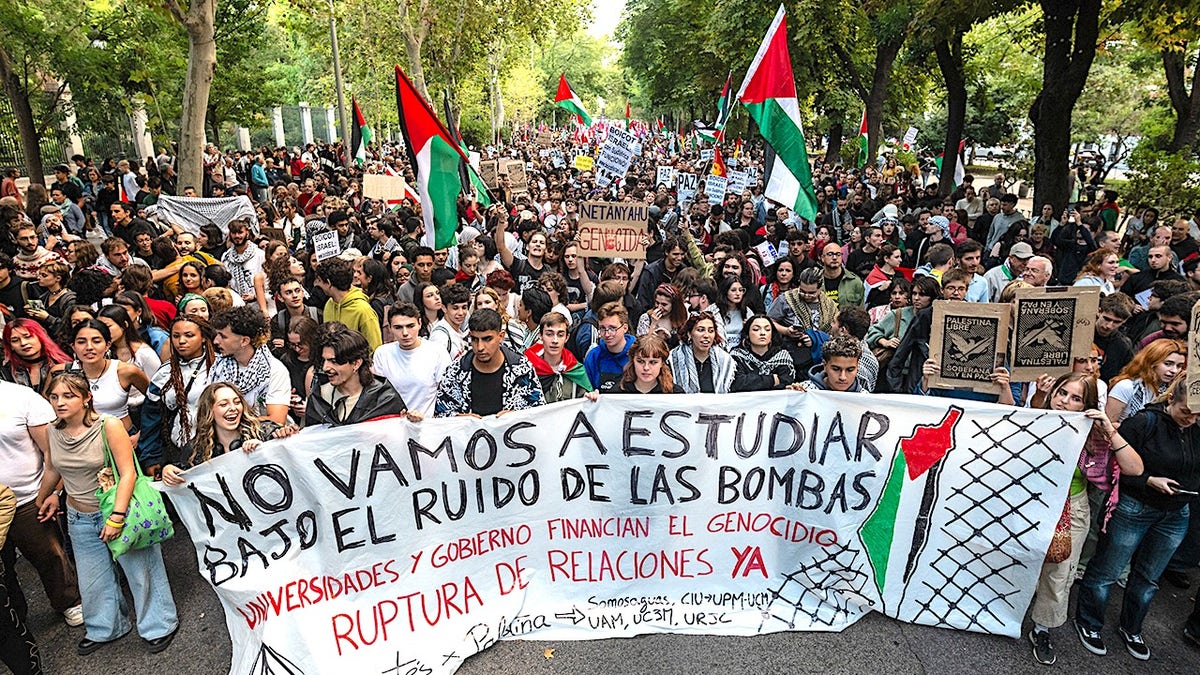
Spaniards protesting against Israel. Unions have called for a general strike day in solidarity with the Palestinians and Lebanon demanding the Spanish government break relations with Israel. Sept. 2024. (Marcos del Mazo/LightRocket via Getty Images)
Following the accusations, Shurat Hadin Israel Law Center filed a complaint with the International Criminal Court in the Hague against the Spanish PM on Friday, claiming Spain assisted the Ayatollah’s regime by transferring tech related to explosives at the tune of around $1.5 million in 2024 and 2025 despite international sanctions against the regime for the support of terrorism.
NATO HEAVYWEIGHTS BALK AT HORMUZ MISSION AS TRUMP WARNS ALLIANCE AT RISK
In March, Iran’s regime reportedly plastered a thank-you note with a picture of Spain’s Sanchez to a missile fired against Israel, according to footage from Iran-controlled Press TV obtained by the Middle East Media and Research Institute (MEMRI.)
The Spanish leader has also faced criticism for his anti-Israel views and its war in Gaza after the Palestinian terrorist group Hamas carried out the worst attack in the history of the Jewish state, killing 1,195 people and kidnapping 251 nationals and foreigners in 2023.
Sanchez has repeatedly called Israel a genocidal state, downgraded Spain’s diplomatic relations with Jerusalem, imposed a total arms embargo and sanctions on the Jewish state, recognized a Palestinian state, despite wide opposition, and along with Belgium, has received praise from Hamas due to his «clear and bold stance regarding the Gaza war» since the onset of the conflict.
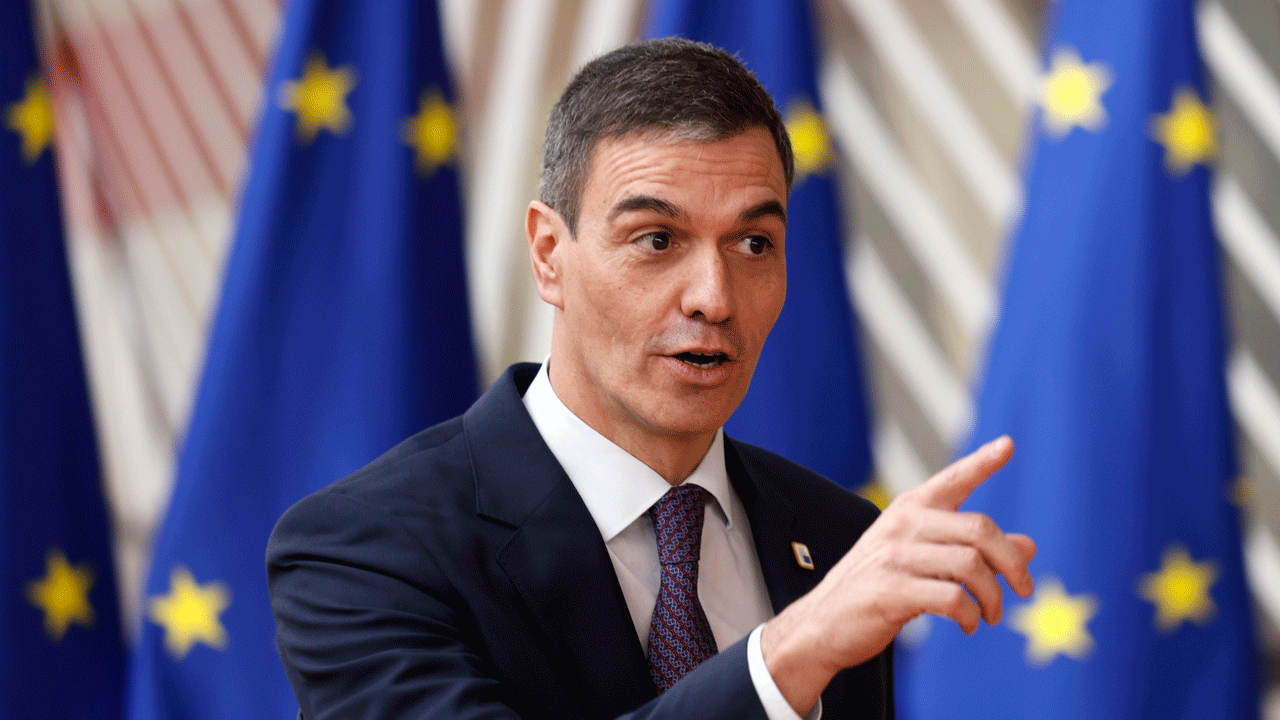
Spain’s Prime Minister Pedro Sanchez arrives for a EU Summit in Brussels, Thursday, March 21, 2024. European Union leaders are gathering to consider new ways to help boost arms and ammunition production for Ukraine. Leaders will also discuss in Thursday’s summit the war in Gaza amid deep concern about Israeli plans to launch a ground offensive in the city of Rafah.
While still popular among the left, the Spanish politician has seen a steady decline in his popularity over the past few months, with 61% of Spaniards holding an unfavorable view of their prime minister, according to a YouGov poll from March — his lowest approval ratings since assuming office in 2018.
CLICK HERE TO DOWNLOAD THE FOX NEWS APP
Fox News Digital reached out to La Moncloa (the Spanish Prime Minister’s office) and to Spain’s foreign minister with a request for an interview or official comment regarding Sanchez’s diplomatic positions relating to the wars in the Middle East, the alleged sales of technology to Iran, the use by American forces of bases built under NATO in Spanish territory, and relations with the White House.
Spanish authorities told Fox News Digital, «the prime minister was not giving new interviews due to conflicts in his schedule» and that information regarding the prime minister’s positions «could be found in his many public declarations over the past few days.»
war with iran, spain, donald trump, sanctions, nato, israel, hamas









NEWYou can now listen to Fox News articles!
President Donald Trump doesn’t want the Senate to leave town with his flagship election security measure still on the line.
It’s less than two weeks until the upper chamber makes a jailbreak from Washington, D.C., and the schedule is already jam-packed with key items, from blockbuster confirmations to a long-awaited sanctions package targeting Russia.
But only one legislative priority matters to Trump: the SAVE America Act. And despite the political reality in the Senate, the president wants the bill passed by any means necessary.
TRUMP’S SAVE AMERICA ACT STALLS AS MCCONNELL’S ABSENCE COMPLICATES SENATE PATH
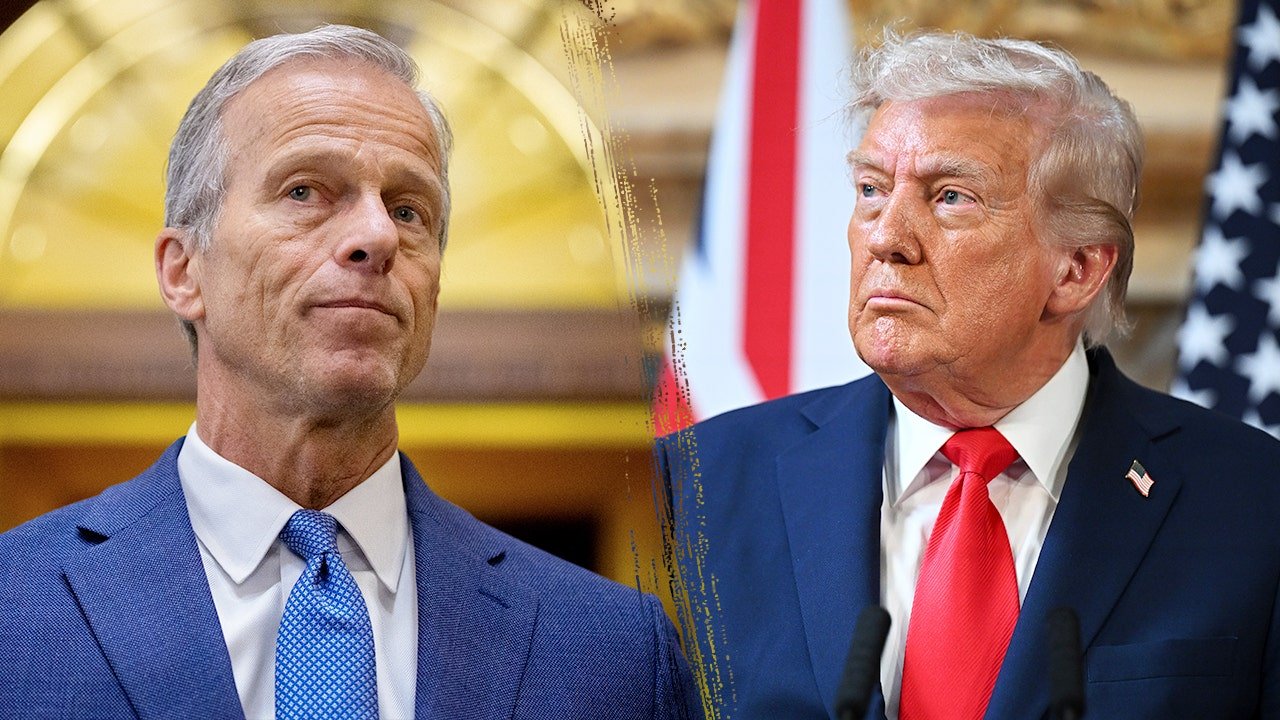
Congressional Republicans, President Donald Trump and the GOP base want voter ID turned into law, but one barrier stands in the way: the political reality of the Senate. (Leon Neal/Getty Images; Andrew Harnik/Getty Images)
«John Thune should not allow the United States Senate to ‘leave town’ until it passes The Save America Act or, far better still, TERMINATES THE FILIBUSTER, where Republicans can then quickly pass everything they ever dreamed of, including a full and deep-throated SAVE AMERICA ACT, the Budget, and the ever looming Debt Ceiling disaster, 1929,» Trump declared on Truth Social.
«The Dumocrats will do it on day one and can’t believe how lucky they got with this Senate leadership,» he continued. «Remember, stupidity always brings LOSING & DEATH!»
GOP RIFT GROWS AS THUNE HITS BRAKES ON TRUMP’S ELECTION BILL TO AVERT SHUTDOWN
While Congress’ annual break during August is often viewed outside the Beltway as vacation time for lawmakers, during a midterm election year, it allows for crucial hours on the road for incumbents to have face time with voters and make their pitch to keep their seat.
Republicans are hungry to campaign and sell their agenda, particularly last year’s tax cut package, Trump’s «one big, beautiful bill,» but are facing headwinds from the war in Iran and affordability issues.
And there are three races on the 2026 map that are troubling for the Senate GOP in its quest to maintain its majority: Maine, Alaska and Ohio.
Still, Trump has warned that unless the Senate passes the SAVE America Act, they will suffer the consequences at the ballot box, and he has routinely called for the elimination of the filibuster for many of his priorities, but neither has the votes to happen in the upper chamber.
TRUMP’S PATIENCE ‘RUNNING OUT’ AS THUNE FIRES BACK OVER STALLED ELECTION SECURITY BILL
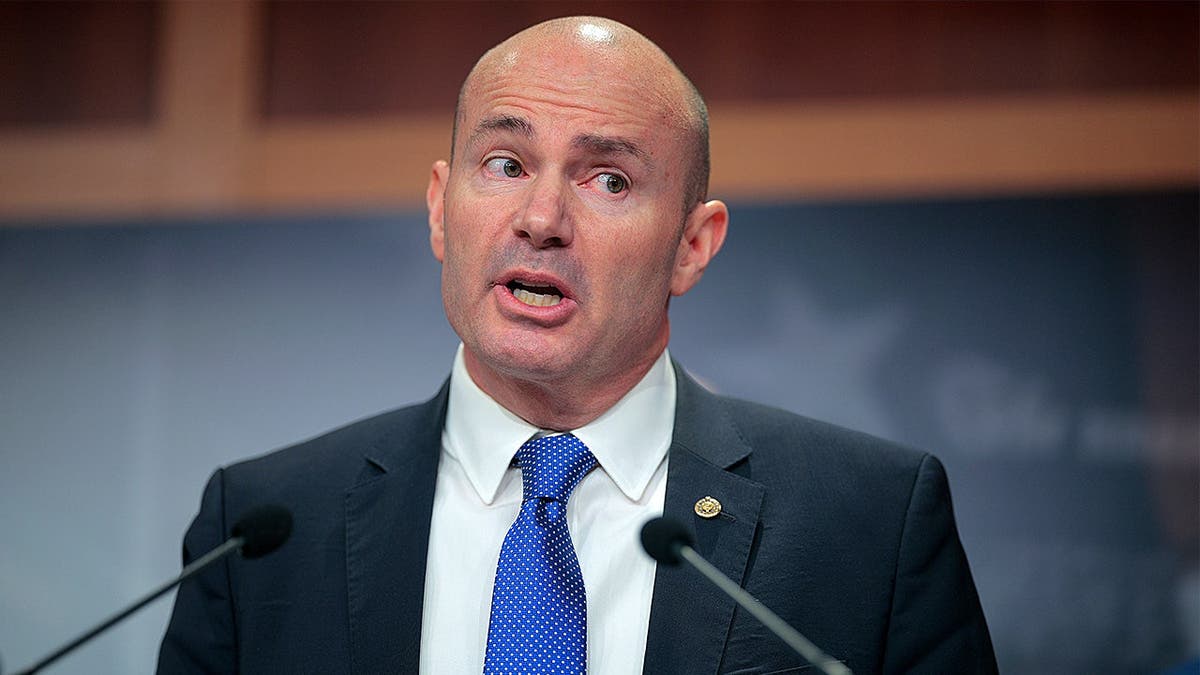
Sen. Mike Lee, R-Utah, spoke during a news conference about the SAVE America Act at the U.S. Capitol on March 19, 2026, in Washington, D.C. (Chip Somodevilla/Getty Images)
It comes as tensions between the White House and Senate Majority Leader John Thune, R-S.D., are on the rise.
Last week, White House Press Secretary Karoline Leavitt warned that Trump’s patience was «running out» with Thune over the legislation, which prompted the top Senate Republican to fire back that the White House should focus its energy on Democrats blocking the SAVE America Act and work the phones to get Republicans to a «yes» vote.
Trump is also not alone in his push for Thune to cancel the upcoming break.
Sens. Mike Lee, R-Utah, Rick Scott, R-Fla., and Ashley Moody, R-Fla., have all announced their intent online to object to Thune calling for recess toward the end of this work period.
«I hereby object to any effort to put the Senate into recess in August — at least until such time as the Senate has passed the SAVE America Act — and hereby request a roll call vote,» Lee said on X.
«Do not assume you have my consent,» he continued. «You do not.»
Typically, recess or state work periods are a consent exercise in the Senate, meaning that all lawmakers agree to skip town and head back to their states to do work on the ground. But a single senator can object on the Senate floor and force a vote to decide whether the upper chamber stays or goes.
Trump and the GOP trio’s demands come at an inflection point in the Senate.
Thune has prioritized averting a government shutdown and is encouraging ongoing negotiations between Republicans and Democrats to hammer out a deal before the break begins. He’s threatened to hold the House-passed budget resolution that would, among other things, set up a rough framework to pass the SAVE America Act through budget reconciliation.
All that comes after he and other Republicans have made clear the political reality that SAVE America Act, as written, does not have the votes to pass in the upper chamber, neither from Democrats nor the GOP.
CLICK HERE TO DOWNLOAD THE FOX NEWS APP
And whether the legislation, or a version of it, can survive the reconciliation process remains to be seen, given that, as written, the SAVE America Act is primarily policy and doesn’t have a budgetary impact — a key requirement of the party line process.
«It’s still likely to be a 60-vote exercise, even if it’s done with a budget resolution,» Thune told Fox News Digital. «Unless it’s done with, you know, structured to allow grants to states that’s incentive-based, and principally budgetary, not policy.»
politics, donald trump, john thune, senate elections, congress
INTERNACIONAL
¿Fueron nazis tus abuelos? La base de datos que revela el pasado oculto de millones de alemanes

Millones de alemanes tuvieron un carnet del NSDAP (el partido nazi de Adolf Hitler) desde mediados de los años 30 y hasta 1945. No era obligatorio en la Alemania nazi ser miembro del partido, pero abría puertas, además de que muchos lo fueron por convencimiento.
Décadas después, los alemanes empezaron a interesarse por el pasado de sus padres y abuelos. ¿Fueron nazis? Durante muchos años la única forma de saberlo era acudir a un archivo nacional, hacer una solicitud formal y esperar meses. Muchas veces la respuesta, si llegaba, era incompleta. El proceso era largo y pesado y con los años se fue usando cada vez menos y quedaran básicamente para el acceso de historiadores.
En febrero, el Archivo Nacional de Estados Unidos completó la digitalización de los microfilmes que el Ejército estadounidense había incautado en 1945 en Múnich tras la ocupación de Alemania.
Aquellos microfilmes fueron al Berlin Document Center, controlado por el ocupante estadounidense. En total, entre el archivo de Berlín y varios archivos regionales, había 10,9 millones de fichas de miembros del partido nazi. El archivo que fue creando la democracia alemana tras la guerra, que heredó todos esos fondos en 1994, suma 12,7 millones de fichas.
Esos 12,7 millones de documentos ya estaban digitalizados, pero no se podía acceder a ellos online debido a las leyes de protección de datos personales. El acceso seguía siendo a través de solicitudes individuales. Los documentos originales fueron devueltos por Estados Unidos a Alemania en la década de los 90 del siglo pasado y forman parte del Archivo Federal Alemán (Bundesarchiv).
Estados Unidos acabó con esos obstáculos. La publicación en internet del archivo estadounidense hizo que los grandes medios de comunicación alemanes, como Die Zeit, Der Spiegel o Süddeutsche Zeitung, crearan motores de búsqueda propios conectados a esa base de datos. Con ayuda de tecnología de reconocimiento óptico de caracteres e inteligencia artificial, esos motores de búsqueda llegan a las fichas en cuestión de segundos.
En las primeras semanas más de un millón de alemanes se volcó a investigar si sus antepasados habían sido oficialmente miembros del partido de Hitler. Der Spiegel llegó a preguntar directamente a sus lectores si sus abuelos habían sido nazis.
Las fichas que tiene online el archivo estadounidense incluyen fecha y lugar de nacimiento, profesión y, en algunos casos, una fotografía, además del número de carnet del afiliado al partido nazi y la fecha de su afiliación. Los expertos consultados por los medios alemanes aseguran que casi el 90% de los afiliados al partido nazi están en esos archivos.
Mientras muchos alemanes se van llevando la mala sorpresa de descubrir que sus parientes habían ingresado en el partido nazi, los historiadores recuerdan que hay un dato importante que sirve para contextualizar esa afiliación: la fecha.
En Alemania siempre se ha entendido que cuanto antes sea la afiliación al partido, más convencimiento personal de las bondades del nazismo tenía esa persona. Y que quienes se afiliaron antes de 1933, antes de la toma del poder por Adolf Hitler, tenían en su inmensa mayoría una convicción ideológica real.
Cuando Hitler llega al poder hay una masiva afiliación, que se entiende porque los alemanes empiezan a darse cuenta de que sin estar afiliado al partido todo se hace más difícil social y laboralmente. Los expertos también explican que, para hacer un informe correctamente habría que cruzar las fichas de afiliación al partido nazi con informes posteriores a la derrota alemana sobre desnazificación y con historiales militares.
La puesta a disposición de cualquier persona de esos millones de fichas llega cuando el partido Alternativa por Alemania (AfD), de los más a la ultraderecha de Europa y con altos cargos conectados con grupúsculos neonazis y el servicio secreto tras sus pasos, aparece en los sondeos electorales como la primera fuerza política alemana de convocarse hoy unas elecciones legislativas.
AfD reclama desde su nacimiento hace más de una década que el país debe abandonar de una vez su culpa histórica por su pasado nazi y dedicarse al orgullo nacional. Ochenta y un años después del final de la Segunda Guerra Mundial y del nazismo apenas quedan alemanes vivos que recuerden aquellos años. Los protagonistas del nazismo están todos muertos.
German police on manhunt for Berlin Pride attack suspect
Fox News’ Chanley Painter reports Berlin police are conducting a manhunt for 21-year-old Abdul B, identified as the suspect in a deadly van attack at a German Pride Festival. One person was killed and 16 others were injured after the van crashed into a crowd near the parade route. Authorities are investigating reports of additional stab wounds and suspect terrorism, noting the individual’s ties to Islamic groups.
NEWYou can now listen to Fox News articles!
The suspect subdued after allegedly stabbing three women in Paris on Monday uttered, «it is Allah who commanded me» to a crowd that appeared to be holding him down after the apparent terror attack.
The incident comes just days after another stabbing attack in England and a vehicular attack on a Pride parade in Berlin, Germany.
A 31-year-old man, whose name was not immediately released, was seen on the ground after allegedly stabbing three women, one of whom was reportedly pregnant.
WITNESSES RECOUNT ‘SCARY’ NYC STABBING AFTER SUSPECT ALLEGEDLY YELLED ‘ALLAHU AKBAR’ DURING ATTACKS
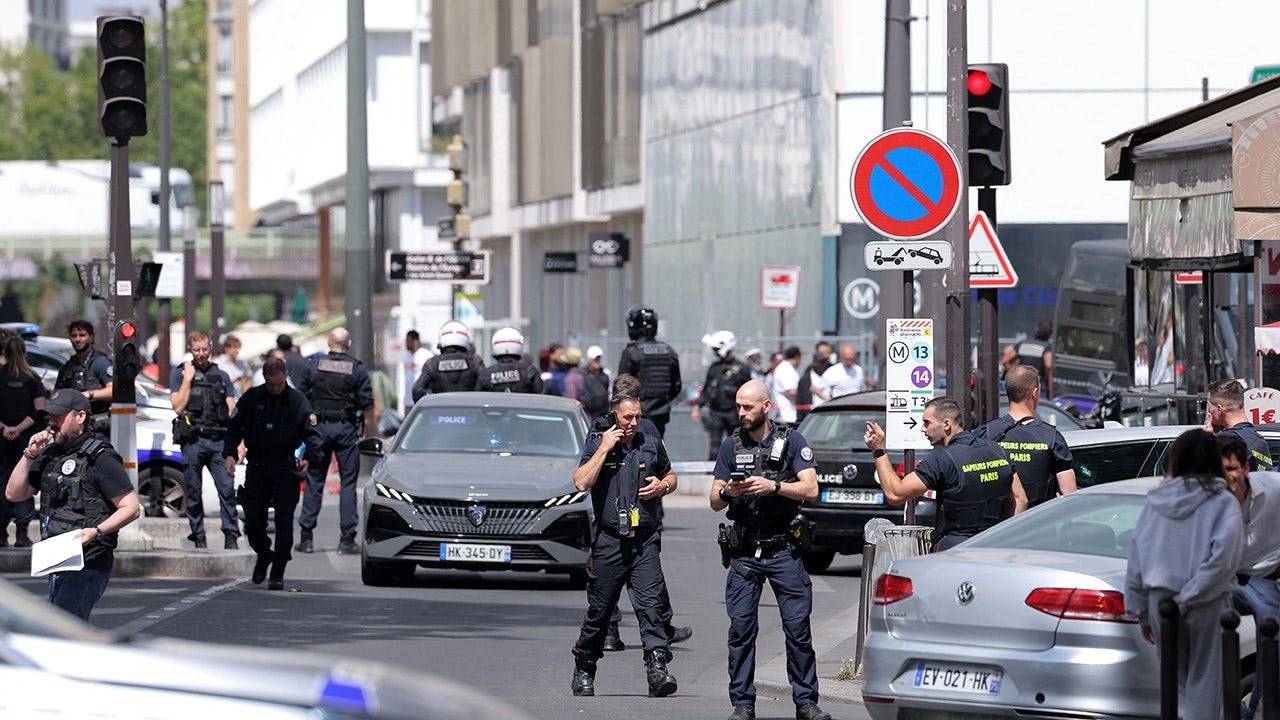
Law enforcement patrol immediately following a stabbing attack in Paris on July 27, 2026. (Kenzo Tribouillard/Getty Images)
French outlet «Le Figaro» reported his utterances translated to «it is Allah who commanded me» as police sources told the outlet the suspect has an «unbalanced» profile.
While many observers, including on X, immediately pointed to Islamic terrorism, French Interior Minister Laurent Nunez said he wanted to be «very careful about the motive for this violent act,» pointing to the suspect’s «incoherent remarks.»
Another translation of the exchange quotes one man as responding, «there is no Allah, bro,» after the suspect allegedly attributed the stabbing to Allah, while another person says the crowd must «stampede this son of a b—-.»
AMERICAN TOURISTS STABBED OUTSIDE ATHENS’ ACROPOLIS AS POLICE DETAIN SUSPECT IN APPARENT RANDOM ATTACK
«No, seriously, he’s crazy,» a third person is quoted as saying in French.
«He stabbed my girl here,» a woman says in French.
The suspect reportedly attacked women at the Two Domes brewery in the Porte de Clichy section of the French capital.
AT LEAST 1 DEAD, SEVERAL INJURED AFTER VAN RAMS INTO CROWD AT PRIDE FESTIVAL; SUSPECT ‘KNOWN TO POLICE’
Two victims were listed in «absolute emergency» condition, while the third was listed in «relative emergency» condition, according to local press.
Reuters reported it had verified imagery of the suspect stabbing one woman while holding a knife in each hand.
The Paris-area attack comes two days after six men were arrested for «suspicion of murder» in connection with the stabbing of a 22-year-old man in Clapham, southwest London, United Kingdom, last week.
Metropolitan Police told the BBC the victim died after being stabbed at around 4:30 a.m. local time Saturday near Clapham High Street.
In Berlin, one person was pronounced dead and 29 were wounded after a suspect — later killed by German police — allegedly drove a vehicle into the public gathering.
The suspect in that case, Abdul Ballout, had German citizenship but «Lebanese roots,» according to the Associated Press.
The outlet reported German officials are considering whether it was an act of Islamic extremism.
The cascade of violent incidents comes months after the White House released a National Security Strategy warning of «civilizational erasure» in Europe due to mass migration and demographic shifts, while highlighting a spate of terror attacks carried out by migrants.
SIGN UP TO GET THE POLITICS NEWSLETTER
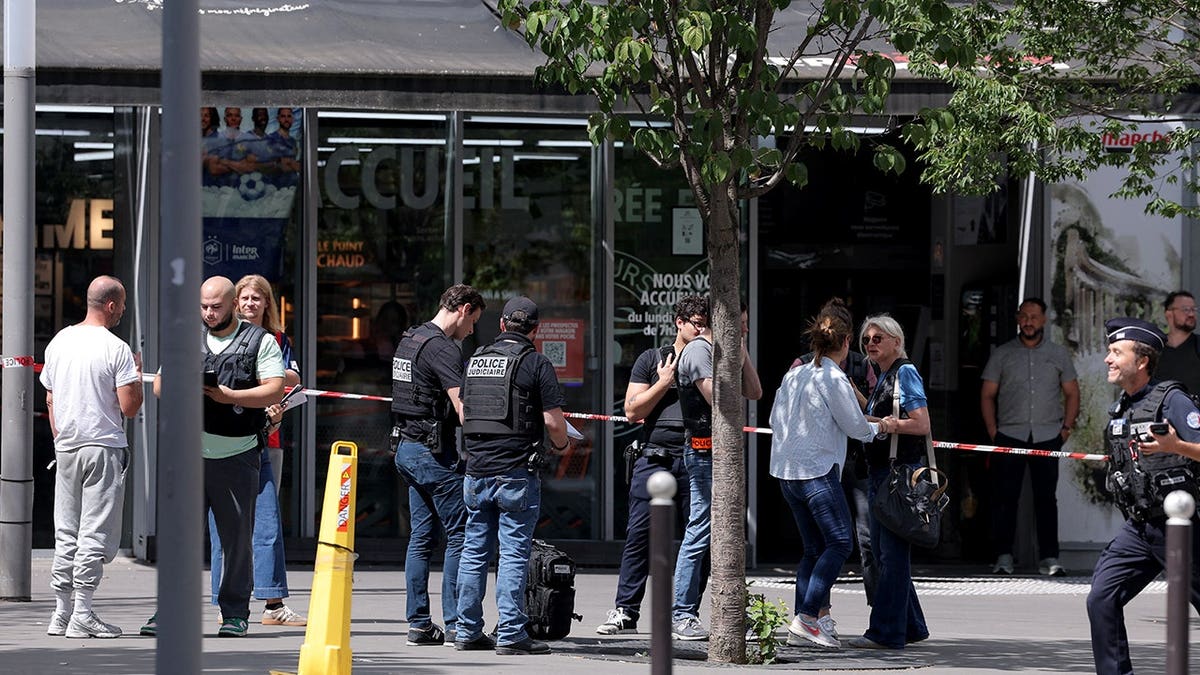
French police work a crime scene in Paris on July 27, 2026 following a stabbing attack. (Kenzo Tribouillard/Getty Images)
The White House pointed to a range of European data to support the administration’s concerns, citing studies showing asylum migration costing the Netherlands €475,000 per migrant, illegal immigration costing France €1.8 billion in 2023 and non-Western migrants committing disproportionate shares of violent crime in Denmark and Germany.
CLICK HERE TO DOWNLOAD THE FOX NEWS APP
The immigration status of the suspects in the three most recent attacks was not immediately confirmed.
Fox News Digital’s Michael Dorgan and the Associated Press contributed to this report.
terrorism, crime, europe, france, politics, immigration

Kristalina Georgieva celebró la acumulación de reservas por parte del Banco Central: “Sigan comprando”

¡Orgullo de La Scaloneta! El Cuti Romero se fue de vacaciones después del Mundial y llamó la atención una foto que dejó todo al descubierto: «Es de un tamaño descomunal»

Trump demands Thune keep Senate in session until SAVE America Act passes

El golazo que le convirtieron a la selección argentina que fue elegido como el mejor del Mundial 2026: “No me lo podía creer”

El nutricionista de la Selección declaró en el juicio por Maradona y recordó la tarde que Diego le gritó a Luque

Máximo Kirchner presentó un proyecto para que los acuerdos con el FMI deban ser aprobados por el Congreso

Senado: Bullrich y Sturzenegger cierran filas para tratar de avanzar con la extranjerización de tierras

La mayor estafa ganadera de Uruguay dejó un rojo de USD 272 millones: Justicia confirmó cifras de Conexión Ganadera

Cosquín Rock 2027 ya tiene fecha: cuándo será y cómo comprar las primeras entradas

Mientras espera la vuelta de Macri, el PRO ya activó contactos con LLA: cómo sería la estrategia electoral en la Provincia

 ECONOMIA3 días ago
Vocero de Milei dijo que un dólar a $1.800 es «posible» y la City alerta por fin de la paz cambiaria
- POLITICA3 días ago
Convivencia pacífica o tensión administrada: el PRO define cómo pararse frente al gobierno de Milei rumbo a 2027
- POLITICA2 días ago
Cuentapropismo emocional en lo profundo del conurbano