Connect with us

INTERNACIONAL

Una noche junto a los rescatistas argentinos en Venezuela: el pedido urgente por los perros, la tensión por buscar vida y el mural de Maradona

Published

on


«¡Necesitamos a sus perros! Tenemos una persona atrapada y a la tarde se escuchó que dio prueba de vida». Dos jóvenes venezolanos irrumpen apurados en el campamento de rescatistas argentinos. Faltan dos minutos para las 21 del martes y el calor húmedo no cede en la cancha de fútbol de Playa Lido, la base del comando conjunto de policías federales, bomberos bonaerenses y militares del Ministerio de Defensa en La Guaira, Venezuela.

Comparten el césped sintético con los rescatistas de Brasil. Los militares argentinos eligieron el lado oeste, donde hay un mural de Diego Maradona. Un equipo de Clarín pasó la noche con ellos para vivir en la primera línea cómo trabajan, la organización con otros equipos internacionales y desentrañar la gestión de la ayuda humanitaria en una tragedia como la que dejaron los dos terremotos consecutivos.

Advertisement

Los cinco escalones con butacas de plástico que hasta el miércoles de la semana pasada eran gradas, ahora es parte del vivac de los militares argentinos. Entre los asientos están las cuatro cuchas, incluida la de Bart, el pastor belga malinois que ayudó a encontrar dos nenes con vida debajo de los escombros.

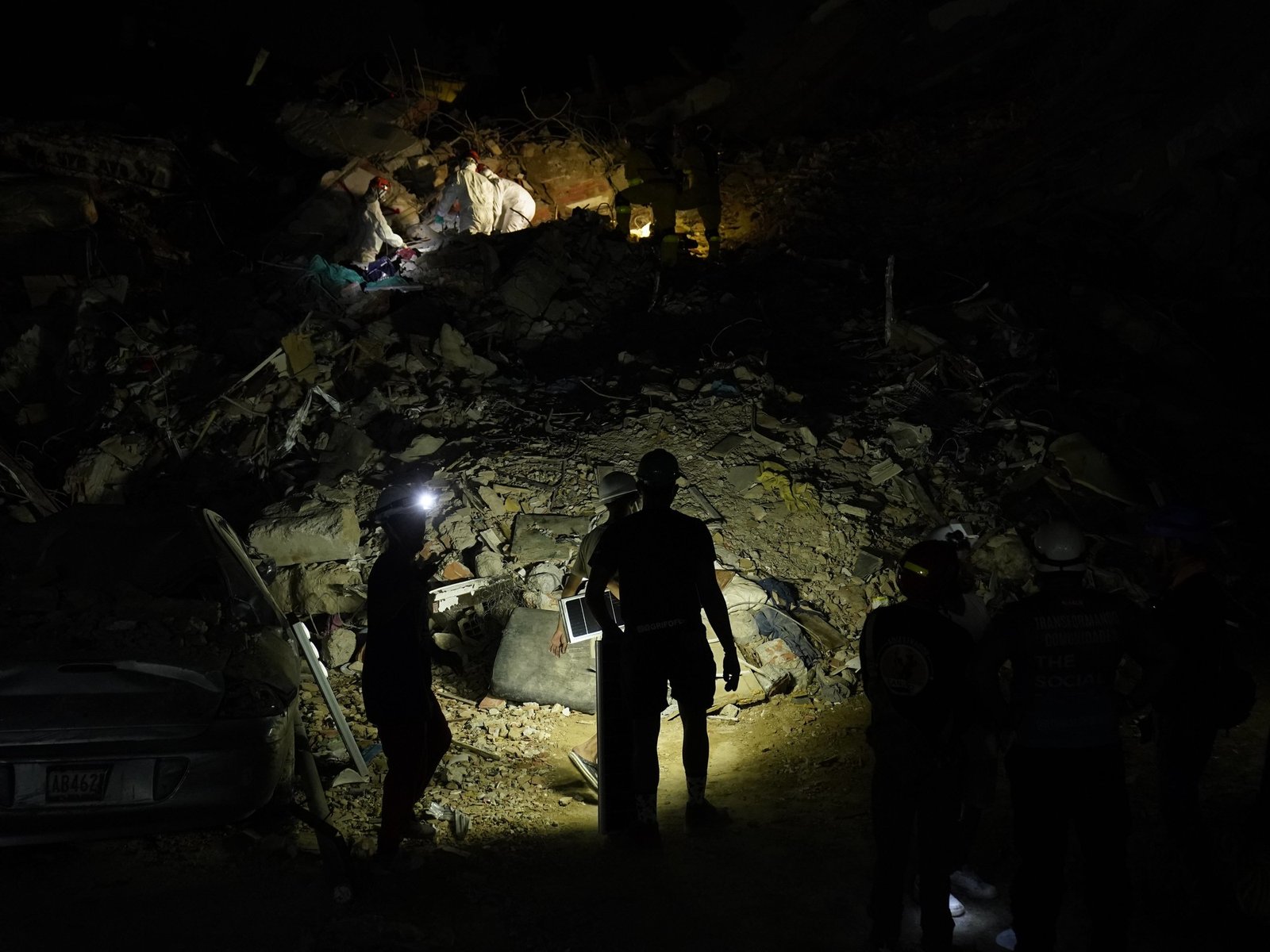
Una patrulla se alista para salir con dos perros. Por la rotación les toca a Gina, algo temeroso a los ruidos, y a Brooklyn, un poco más agresivo. Los dos venezolanos guían la caminata por la costanera que tiene unas pocas luces encendidas. En medio de la oscuridad, los haces de luces de motos y autos generan penumbras, entre las que se divisan las ruinas de edificios de más de diez pisos aplastados. El paisaje es apocalíptico.

Por una entrada vehicular destruida, el equipo llega a la parte trasera del edificio La Gabarra. Hay que atravesar una pileta con trampolín que está llena de escombros. Entre las ruinas, hacia adentro se ve que cuelga una pierna. El olor a putrefacción solo se detiene con los barbijos.

Advertisement

Hay un equipo de brasileños que trabaja en la recuperación de cuerpos sin vida. Los retiran y los ponen en unas bolsas blancas. Los argentinos tienen que esperar que los de Brasil se retiren para poder entrar con los perros.

«Hay un audio y unos perros ladraron a las cuatro de la tarde. Ayer también ladraron perros y había fe de vida. Mi papá vivía en el quinto piso de esta torre que tenía doce pisos. El edificio cayó hacia abajo y los pisos del cuarto al sexto se fueron hacia atrás y quedaron aprisionados. La hipótesis es que mi papá podría estar en las escaleras y hay una cámara», dice Juan Pablo Peñaloza.

La angustia en la búsqueda de personas del edificio La Gabarra, de La Guaira. Foto: Fernando de la Orden / Enviado Especial

Pero la espera se hace larga. Los brasileños trajeron un equipo capaz de detectar latidos. A los argentinos les toca esperar, e hidratar a los perros. Pasadas más de dos horas, no hay respuestas y los rescatistas y la familia concuerdan en que seguirán los trabajos con la luz del día.

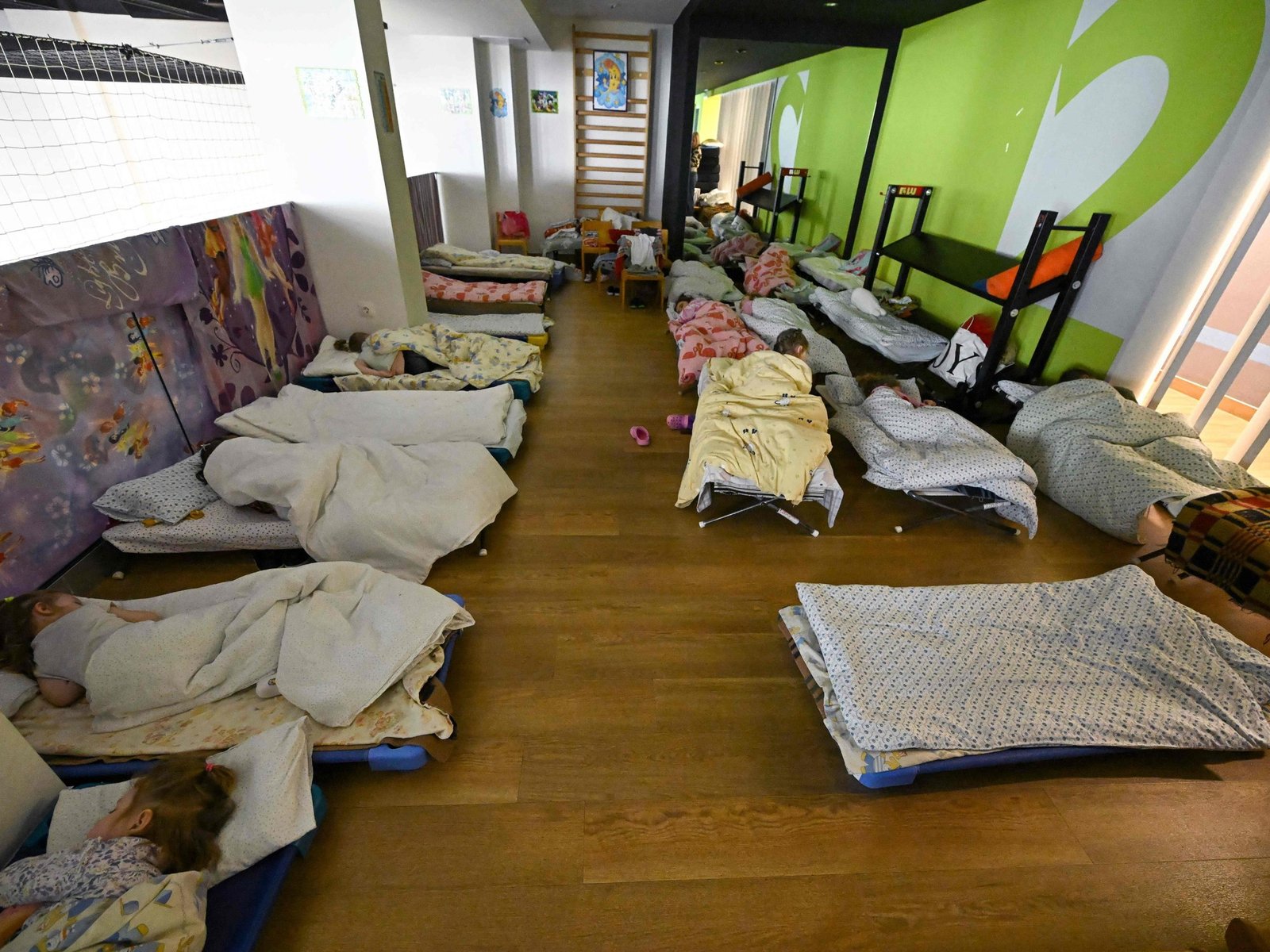
Mientras tanto, a 600 metros, en el campamento argentino, los que no harán tareas nocturnas preparan la cena. El sonido de los grupos electrógenos para tener energía es insoportable. Algunos descansan en camas plegables con ese ruido constante. Lograron recuperar los reflectores caídos de la cancha de fútbol. Apoyados en las gradas iluminan el centro de comando de los militares, con el mate siempre en la mesa.

Advertisement

Los militares son 30, con cuatro perros. Responden al coronel Miguel Wissinger, de las Fuerzas Armadas. Durante la noche que compartió Clarín, llegó otro refuerzo de militares argentinos y el grupo completó los 78 integrantes. «Como fuimos de los primeros que llegamos, el sábado, se nos asignó Caraballeda, que es el epicentro dentro de La Guaira», señala el coronel Wissinger.

El campamento de los militares argentinos en La Guaira. Foto: Fernando de la Orden / Enviado Especial

Pegados, hay otros 45 personas y tres perros bajo las órdenes de Gonzalo Dominique, subcomisario de la Policía Federal y líder del equipo USAR (Búsqueda y Rescate Urbano, según sus siglas en inglés).

En el puesto de comando tienen planos, la estructura del equipo, pizarras para el armado del cronograma de trabajo. “Llegamos el sábado, la célula de coordinación internacional nos asignó los edificios que están a un kilómetro a la redonda por una cuestión de logística y no tener que trasladar en vehículos”, explica Dominique a Clarín.

Los equipos están divididos en grupos de trabajo, con la premisa de que siempre haya turnos operativos. Mientras unos están en terreno, otros descansan.

Advertisement
El campamento de la Policía Federal en La Guaira. Foto: Fernando de la Orden / Enviado Especial

Cerca de la 1 de la mañana del miércoles, baja el ritmo. Se ve poco movimiento entre las grandes carpas de la Policía Federal y en las del Ejército.

Los vecinos brasileños coparon su mitad de cancha con muchas carpas individuales y alojaron también a los rescatistas británicos que pedían un lugar. El césped sintético es algo más cómodo que la pista de karting contigua, que es el campamento base para otros países.

Las luces se empiezan a apagar. La humedad sigue alta, se siente el polvo pegado en la piel. Desde la vereda, una tienda del Alto Comisionado de las Naciones Unidas para los Refugiados mantiene prendido un generador. Es el único que queda. El ruido tapa el sonido de las olas que rompen a muy pocos metros de donde descansan los argentinos.

Miguel Wissinger, Comandante Conjunto Protección Civil Emergencia. Foto: Fernando de la Orden / Enviado Especial
Gonzalo Dominique, subcomisario PFA y líder misión argentina. Foto: Fernando de la Orden / Enviado Especial

Saben que minutos antes de las seis empezará a aclarar y se va a volver a sentir el calor, que al mediodía no se tolera. Pese a que es la sexta noche desde la tragedia, entre los argentinos mantienen la esperanza.

Hidratan a los perros y descansan como pueden. Cuando se les pregunta si aún pueden aparecer personas vivas, en los dos campamentos con bandera de argentina tienen la misma respuesta: “Para esto estamos acá”.

Advertisement

Cómo se organiza una operación internacional de ayuda humanitaria

El trabajo nocturno de los rescatistas en La Guaira, Venezuela. Foto: Fernando de la Orden / Enviado Especial

Los dos terremotos consecutivos en Venezuela provocaron una tragedia humanitaria que de manera oficial lleva 2.295 muertos, 11.267 heridos y más de 50 mi desaparecidos. La contigencia de esta catástrofe, que cuenta con ayuda internacional se organiza con un protcolo en el que lidera el primer país que llega, y donde el segundo que arriba hace de soporte.

«Está regido por la ONU, a través de su grupo asesor, que establece normas de trabajo. El primero en llegar fue Chile, que hace el control de la recepción del resto de los países. Mientras que el segundo fue Colombia, que tomó la coordinación y se establece un enlace con la autoridad local», explica Dominique, de la Policía Federal.

Los equipos se dividen en livianos, medianos y pesados, que se diferencian en cantidad de personas y desarrollo técnico de cada uno. El de Argentina es mediano, al igual que los de Chile y Colombia. Estados Unidos llegó con un equipo pesado, por lo que se sentó en la mesa de organización junto a chilenos y colombianos.

Advertisement
Retiran el cuerpo de una persona en un edificio de Caraballeda, La Guaira. Foto: Fernando de la Orden / Enviado Especial
Advertisement

INTERNACIONAL

En medio del recuento de obras, Mulino promete 80,000 empleos y lanza una nueva etapa de su gobierno

Published

on


José Raúl Mulino presentó ante la Asamblea Nacional el balance de sus dos primeros años de gobierno y anunció el inicio de una nueva etapa de gestión. Tomada de Presidencia

El presidente de Panamá, José Raúl Mulino, presentó este 1 de julio ante la Asamblea Nacional el inicio de una segunda etapa de su gobierno, después de dos años que describió como un periodo de ordenamiento económico, ajuste gradual y recuperación de la confianza del país tras recibir, según dijo, unas finanzas públicas deterioradas y una administración con obras detenidas.

En su informe de gestión al comenzar su tercer año al frente del Ejecutivo, Mulino afirmó que el país entra ahora en una fase más enfocada en empleo, crecimiento económico y bienestar directo para las familias.

Advertisement

El eje de esa nueva etapa será el programa “Panamá Pa’ Ti”, una estrategia que concentrará los esfuerzos del Gobierno en cuatro prioridades: empleo, salud, canasta básica y agua.

El mandatario construyó buena parte de su discurso sobre una idea central: los primeros dos años fueron para “limpiar la tierra antes de sembrar”. Con esa metáfora, defendió el ajuste aplicado por su administración y aseguró que rechazó medidas como reducir en 20% la planilla estatal o aumentar impuestos, porque —según dijo— habrían trasladado el costo de la crisis a los panameños.

“No fui elegido para trasladarles el problema a los panameños, fui elegido para resolverlo”, sostuvo Mulino, al explicar que su gobierno optó por sanear las cuentas públicas, bajar el déficit fiscal, desacelerar el endeudamiento y recuperar la credibilidad internacional de Panamá. También defendió que la estabilidad macroeconómica no era una preocupación de técnicos o calificadoras, sino una condición para evitar créditos más caros, menos inversión y menos empleo.

Advertisement
Vista de un sitio de obra con dos edificios de hormigón en construcción, cinco trabajadores con chalecos amarillos y cascos, andamios y varillas de acero.
La construcción será uno de los pilares de la estrategia oficial para impulsar la creación de empleo en los próximos años. (Imagen Ilustrativa Infobae)

Pero el propio presidente reconoció que esos resultados todavía no se sienten con suficiente fuerza en los hogares. “Ningún panameño vive del déficit fiscal”, dijo, en una de las frases más políticas de su intervención. A partir de allí, intentó mover el foco del discurso desde el reacomodo fiscal hacia la generación de oportunidades.

El primer eje de “Panamá Pa’ Ti” será el empleo. Mulino prometió impulsar la creación de 80.000 nuevos empleos privados, no estatales, mediante una alianza con el sector productivo. En ese punto colocó a la construcción como uno de los motores principales de la nueva fase económica, con un programa de viviendas al alcance de las familias panameñas, especialmente en el interior del país.

El mandatario insistió en que cada vivienda construida genera movimiento económico, activa comercios, demanda mano de obra y dinamiza comunidades. También pidió a los empresarios de la construcción contratar trabajadores de las zonas donde se desarrollen las obras, para que los proyectos tengan un impacto más directo en las economías locales.

En infraestructura, Mulino repasó proyectos que, según dijo, muestran el avance de la gestión. Mencionó la Línea 3 del Metro, el Cuarto Puente sobre el Canal, el Corredor de las Playas, el Corredor del Caribe, la carretera Loma Campana-Santiago y más de 700 obras públicas en ejecución. Sobre el Cuarto Puente, afirmó que pasó de menos de 1% de avance al inicio de su administración a 38%, con 2.000 trabajadores y otros 2.000 previstos para los próximos meses.

Advertisement
Tren01: Recorrido del tren Panamá-David
El presidente de Panamá, José Raúl Mulino, reiteró que el proyecto del tren Panamá-David continuará su proceso de validación antes de que se adopte una decisión definitiva.

La construcción, sin embargo, no fue el único sector que el presidente presentó como fuente de empleo. También anunció una ley de incentivos turísticos, un programa nacional de formación con prácticas remuneradas en turismo y la iniciativa Talent Up Panamá, en alianza con Google, para capacitar gratuitamente a 10.000 panameños en inteligencia artificial, computación en la nube, ciberseguridad y análisis de datos.

Mulino también habló de una alianza con BID Invest por $1.000 millones para financiar directamente al sector privado, especialmente a pequeñas y medianas empresas. Según explicó, los recursos no pasarán por el Gobierno, sino que estarán dirigidos a empresas con capacidad de generar empleo.

En Colón, anunció que en noviembre comenzarán las obras de expansión de la Zona Libre por $250 millones, mientras que en el sector agropecuario adelantó el programa Primer Empleo Agro, que beneficiará a unos 2.000 jóvenes en Los Santos, Herrera, Veraguas y Darién.

El presidente también dedicó una parte breve, pero sensible, a la mina. Dijo que el informe técnico elaborado por expertos internacionales ya está disponible en la página del Ministerio de Ambiente y que será analizado por un equipo de Gobierno encabezado por el ministro Roberto Linares Montoto, junto con los ministros Felipe Chapman y Juan Carlos Navarro. Mulino evitó adelantar una decisión, pero sí marcó distancia de los extremos: dijo que las posturas del “sí porque sí” y del “no porque no” evaden la argumentación lógica.

Advertisement
La Asamblea Nacional inició un nuevo período legislativo con la elección de Shirley Castañeda, del partido Realizando Metas, como presidenta del Órgano Legislativo. Tomada de la Presidencia

rte fue el tren Panamá-David, una de sus principales promesas de campaña. Mulino afirmó que el proyecto ya no se concibe únicamente como un tren, sino como una obra de integración nacional. Aseguró que un estudio internacional concluyó que es viable, aunque será sometido a una validación independiente antes de avanzar. También admitió que no será una obra que termine durante su administración, pero defendió que debe asumirse como un proyecto de Estado, similar al Metro de Panamá.

El discurso se produjo el mismo día en que la Asamblea Nacional instaló su nuevo periodo ordinario y eligió a su Junta Directiva para los próximos 12 meses. La diputada Shirley Castañeda, del partido Realizando Metas, colectivo que impulsó la candidatura presidencial de Mulino, fue electa presidenta del Legislativo con 42 votos. Su rival, Grace Hernández, postulada por la bancada independiente Vamos y Seguimos, obtuvo 21 votos.

La nueva directiva quedó completada con Manuel Cohen Salerno, de Cambio Democrático, como primer vicepresidente, y Manuel Chen, de Realizando Metas, como segundo vicepresidente. La votación confirmó el control de las bancadas tradicionales y oficialistas sobre la Asamblea, en una jornada marcada por tensiones, cuestionamientos de diputados independientes sobre presunta injerencia del Ejecutivo y la abstención del Partido Panameñista.

Mulino cerró su discurso con un mensaje directo a su gabinete. Dijo que los anuncios realizados no eran simples promesas, sino una “orden de proceder para ministros, directores y funcionarios. También felicitó a la nueva presidenta de la Asamblea y pidió una relación de independencia, pero también de unidad.

Advertisement

El tono fue claro: el presidente quiere dejar atrás el relato de la crisis heredada y pasar a la ejecución. El reto, como siempre, será que el discurso no se quede en aplausos de pleno. Panamá ya ha escuchado muchas veces que vienen buenos tiempos; ahora Mulino tendrá que demostrar que esta vez vienen con fecha, presupuesto y resultados.


construcción,edificio,obra,trabajadores,hormigón,infraestructura

Advertisement
Continue Reading

INTERNACIONAL

Government watchdog targets ‘weapons of mass reproduction’ after Supreme Court ruling

Published

on


NEWYou can now listen to Fox News articles!

A top government watchdog group released a multipoint plan to protect the homeland and the integrity of U.S. citizenship after the Supreme Court’s 6-3 ruling affirming birthright citizenship as enshrined in federal law.

Advertisement

Conservatives across the country criticized Chief Justice John Roberts, Associate Justices Amy Coney Barrett and Brett Kavanaugh, along with the court’s three liberal justices, arguing that the ruling opens the door to citizenship for children born to foreign nationals illegally present in the U.S. and dilutes American citizenship.

The Oversight Project shared its «Keeping Families Together Plan» with Fox News Digital, arguing the ruling did not grant legal status to the parents of so-called anchor babies, a premise central to its proposal.

«Now that the illegal alien community has achieved weapons of mass reproduction… you need to turn off that multiplying effect. And if the goal of mass deportation is quantitative, which of course it is, you need go [to] places where legal immigration spreads the most or is concentrated the most,» said Mike Howell, an attorney and president of the Oversight Project.

Advertisement

SUPREME COURTS LATEST IMMIGRATION RULING WILL CAU.S.E AMERICANS TO ‘DIE AND SUFFER’ ATTORNEY WARNS

Demonstrators rally in support of birthright citizenship outside the US Supreme Court in Washington, DC on April 1, 2026. President Donald Trump attended in person as the US Supreme Court heard a landmark case weighing the constitutionality of his contentious bid to end birthright citizenship, an extraordinary and possibly unprecedented move for the nation’s highest office. (Mandel Ngan/Getty Images)

«That’s why I’ve advocated so long for worksite enforcement,» he said, noting farms and factories need enforcement rather than «playing onesies and twosies» in sanctuary cities.

Advertisement

An increase in deportations, particularly of the parents of potential anchor babies, is key now that unfettered naturalization is a real possibility, he added.

BIDEN JUDGE OVERRULED ON KEY TRUMP IMMIGRATION POLICY

illegal migrants arrested by ICE

U.S. Immigration and Customs Enforcement (ICE) and other federal law enforcement agencies have arrested more than 80 illegal migrants, including several with criminal records, during a worksite enforcement operation at a Louisiana racetrack on June 17th. (U.S. Immigration and Customs Enforcement)

«Go to ‘red’ places and deport.»

Advertisement

By deporting parents of so-called «anchor babies,» in most cases the child would be deported with the parent — and if not, that parent would have the «moral onus» of abandoning the child, Howell said.

«If you are truly committed to the idea that birthright citizenship is absurd in its application, then it should be preventative,» he added, saying part of the plan to keep foreign families together would entail throwing roadblocks up to pregnant foreigners having children in the U.S.

Positioning ICE at certain hospitals would help prevent that, he said.

Advertisement

Turning to combating «birth tourism» — in which organizations help foreign nationals travel to the U.S. for the purpose of giving birth to U.S.-citizen children — Howell said China is the biggest source of the practice and other economic threats.

Asked how to thread the needle with the U.S.’ economic reliance on Beijing, Howell said Tuesday’s ruling shows it is time to play «hardball.»

He criticized President Donald Trump’s blessing of thousands of Chinese students continuing to study in America, which, in Howell’s words, would «prop up our failing university system.»

Advertisement

«The elite regions of [China’s] upper class love access to the U.S. financial system and coming here and taking advantage of it. And so if you’re negotiating and it’s the art of the deal… take away the thing they want.»

Howell claimed one Chinese billionaire has been «shipping his sperm» to California to inseminate women, resulting in children being born with U.S. citizenship.

«What kind of serious country allows [that],» he said. Reports from outlets including Fortune have described wealthy Chinese businessmen engaging in repeated surrogacy arrangements involving American women.

Advertisement

Howell said that despite talk of President Donald Trump’s «mass deportation» agenda, the numbers don’t match the boasts so far.

«The fact remains there isn’t a mass deportation campaign underway. And that’s why we’ve been pushing this Mass Deportation Coalition, which has so many members across the country and a policy framework for them to do it,» he said, acknowledging that Trump has had «special interests» buffeting his attempts because they don’t want their workforces deported, and setbacks like the public outcry over agent-involved shootings in Minneapolis that led to «cold feet.»

Asked about the Oversight Project’s plan and Howell’s comments, the White House said Trump remains «totally committed» to protecting the «value of natural-born citizenship.»

Advertisement

«[That] is why, following yesterday’s ruling, he directed Congress to take immediate action to address this. Simultaneously, the administration will double down on our efforts to keep the border secure and deport illegal aliens.»

Spokesperson Abigail Jackson added that the DOJ will prioritize birth-tourism schemes, some of which Howell laid out.

Howell’s plan also includes a veiled shot at Roberts — who, despite being a Republican’s appointee, is often the swing vote in favor of the court’s liberal minority as he was Tuesday.

Advertisement

The George W. Bush appointee famously roiled Republicans after deeming ObamaCare constitutional by defining its no-insurance penalty as a «tax,» while writing in the same 2012 ruling that Congress could not force Americans to buy insurance.

«The question is not whether that is the most natural interpretation of the mandate, but only whether it is a ‘fairly possible’ one,» Roberts wrote in NFIB v. Sebelius.

Howell said lawmakers could therefore create a mechanism through congressional reconciliation to punish birth-tourists — but define the penalty as a «tax.»

Advertisement

«Much like the ObamaCare plan being upheld as a tax by the Supreme Court, this would survive constitutional scrutiny,» the Oversight Project’s plan read.

The plan also goes farther, calling on DHS to suspend all visas for countries like China that engage in birth tourism.

SIGN UP TO GET THE POLITICS NEWSLETTER

Advertisement

The key, Howell said, is to start ignoring the noise from the left and from critics and power through the end of the congressional term with attainable goals in mind no matter how controversial critics say they are.

«We took a hit today, a big hit, but the damage can be mitigated and the overall problem can be solved with a lot political backbone and using the money from the Big Beautiful Bill quickly and without fear of what the left-wing media might say about it,» he said.

«Reconciliation is a beautiful vehicle to achieve those kind of cost-cutting measures. ObamaCare was a tax. The rule is a tax, so why can’t we use a tax here? I’m sure the legal pundits will have much to say about that one,» Howell remarked.

Advertisement

«But by any hook, nook, or cranny, we need to fight this policy,» he went on, adding the mainstream media and some moderates will be lambasting the social repercussions of the plan.

«If the administration’s going to take to the airwaves and say this is like a disgraceful ruling that undermines our sovereignty, then they need to act.»

«The suburban moms will be angry. They will say all that kind of stuff. But I want them to follow through because there’s 77 million Americans who sent Trump back to the White House after everything we went through.»

Advertisement
No human is illegal sign holder at protest

Protesters demonstrate against illegal immigrants being deported. (Allen Schaben/Getty Images)

CLICK HERE TO DOWNLOAD THE FOX NEWS APP

In the interim, Rep. Andy Ogles IV, R-Tenn., and Sens. Eric Schmitt, R-Mo., and Rand Paul, R-Ky., have unveiled constitutional amendment proposals to overturn the court’s ruling, though observers say the efforts appear politically untenable at present.

When asked about characterizations of DHS’ efforts, an agency spokesperson told Fox News Digital, «we disagree with the ruling. Congress must get to work to end birthright citizenship immediately.»

Advertisement

«In President Trump’s first year back in office, more than 3 million illegal aliens have left the U.S. because of the Trump administration’s crackdown on illegal immigration including an estimated 2.2 million self-deportations. As of June 24, we have now deported over 948,000 illegal aliens and arrested over 981,000 illegal aliens,» the spokesperson said, adding that since the first day of Trump’s administration, DHS has been delivering on the promise to «Make America Safe Again» and more than 3 million have been deported.

«Our message is clear: if you come to our country illegally, we will find you, we will arrest you, and we will deport you.»

Advertisement

illegal immigrants, politics, immigration, deportation, homeland security, china, supreme court, donald trump

Advertisement
Continue Reading

INTERNACIONAL

Russian generals’ assassinations expose growing rift inside Putin’s security apparatus

Published

on


NEWYou can now listen to Fox News articles!

For the second time in little more than a year, a blast tore through the Moscow suburb of Balashikha, Russia, and left a Russian military figure dead.

Advertisement

On June 9, explosives planted under a BMW detonated as the driver began leaving a parking lot, according to independent Russian outlet The Insider. The outlet identified the man killed as Lt. Gen. Damir Davydov, a Russian Defense Ministry official responsible for supplying missiles and artillery ammunition to Russian forces fighting in Ukraine.

The location was striking. The explosion occurred roughly 1,150 feet from the site where Lt. Gen. Yaroslav Moskalik, deputy chief of the Main Operations Directorate of Russia’s General Staff, was killed in a car bombing in April 2025, according to the French newspaper Le Monde.

‘PURE HELL’ IN MOSCOW AS UKRAINIAN DRONES STRIKE MAJOR REFINERY SUPPLYING CAPITAL’S FUEL MARKET

Advertisement

A screen grab from a video shows the car in which Russian Gen. Yaroslav Moskalik was killed, confirmed by Russia’s Investigative Committee, on April 25, 2025, in the Moscow region. (Russian Investigative Committee / Handout/Anadolu via Getty Images)

Months before Moskalik’s death, another senior Russian officer was assassinated in Moscow. 

Lt. Gen. Igor Kirillov, the head of Russia’s nuclear, biological and chemical protection troops, was killed when a bomb hidden in an electric scooter exploded outside an apartment building. A source in Ukraine’s Security Service, known as the SBU, told Reuters the agency carried out the operation.

Advertisement

Together, the attacks are part of a broader pattern of assassinations and attempted assassinations targeting senior Russian military figures — a campaign that a European intelligence source says is now exposing tensions inside Putin’s own security system.

Since Russia launched its full-scale invasion of Ukraine in February 2022, senior Russian military figures have been killed in missile strikes, drone attacks, car bombings, crashes and frontline combat — a toll that, according to a European intelligence source, is now fueling internal tensions between Russia’s military and the FSB, Russia’s powerful domestic security service and successor to the Soviet KGB.

«There are internal frictions between Russian security institutions,» a European intelligence source told Fox News Digital. «The Russian military wants the FSB to guarantee physical protection for Russian generals, but the FSB is opposed to taking responsibility for the military.»

Advertisement

The dispute reflects a deeper rivalry inside Russian President Vladimir Putin’s system, where the security services have long held a privileged position over the armed forces, according to multiple sources.

‘PURE HELL’ IN MOSCOW AS UKRAINIAN DRONES STRIKE MAJOR REFINERY SUPPLYING CAPITAL’S FUEL MARKET

«This goes back to Soviet times,» the European intelligence source said. «The security services do not like the military, and the military does not like the security services.»

Advertisement

The central tension, according to the European intelligence source and Russian opposition figure Maxim Katz, is inside Putin’s own system: the war has elevated the importance of the military on the battlefield, while the political structure in Moscow still treats generals as a potential threat.   

The result is a paradox for the Kremlin. Russia needs its military commanders to sustain the war, but the security services that dominate Putin’s system appear reluctant to take responsibility for protecting them. 

 Lieutenant General Fanil Sarvarov, head of the Russian General Staff's army operational training directorate, was killed in a car bomb in Moscow

The damaged Kia Sorento lies at the scene where Lt. Gen. Fanil Sarvarov, head of the Russian General Staff’s army operational training directorate, was killed in a car bomb in Moscow, Dec. 22, 2025. (Anastasia Barashkova/Reuters)

At least 15 Russian generals have been confirmed killed since the full-scale invasion began, according to independent Russian outlet Mediazona. 

Advertisement

The toll includes five lieutenant generals, seven major generals and three former generals.

Some died far from Moscow, closer to the battlefield. 

Lt. Gen. Oleg Tsokov, deputy commander of Russia’s Southern Military District, was killed in July 2023 in a Ukrainian Storm Shadow missile strike on the Russian-occupied city of Berdiansk. Maj. Gen. Sergei Goryachev, chief of staff of the 35th Combined Arms Army, was killed in June 2023 during Ukraine’s counteroffensive in the Zaporizhzhia region. Maj. Gen. Vladimir Zavadsky, deputy commander of the 14th Army Corps, was killed near Krynky in southern Ukraine in November 2023.

Advertisement

Others were struck inside Russia or in Russian-controlled territory. 

Lt. Gen. Alexander Otroshchenko, a senior Russian air force commander, died in a military transport plane crash over occupied Crimea in March 2026. Retired Maj. Gen. Kanamat Botashev, flying for the Wagner Group, was killed in May 2022 after his Su-25 was shot down over Ukraine’s Luhansk region.

‘PURE HELL’ IN MOSCOW AS UKRAINIAN DRONES STRIKE MAJOR REFINERY SUPPLYING CAPITAL’S FUEL MARKET

Advertisement
Igor Kirillov, head of the Russian Defence Ministry's radiological, biological and chemical protection unit

Igor Kirillov was killed Dec. 17, 2024, when an explosive device hidden in a scooter went off outside a building in Moscow, officials said.   (AFPTV/AFP via Getty Images)

The losses began in the opening weeks of the invasion of Ukraine, when Maj. Gen. Andrei Sukhovetsky, deputy commander of Russia’s 41st Combined Arms Army, and Maj. Gen. Vladimir Frolov, deputy commander of the 8th Army, were killed.

Katz said the military has long occupied a vulnerable position inside the Russian power structure.

«In Russia, the FSB is the biggest and most powerful security organization, and Putin himself comes from that system,» Katz told Fox News Digital. «The army, on the other hand, has always been viewed by these people as a threat.»

Advertisement

Katz said the Kremlin historically has feared popular military figures because the army is one of the few institutions with the capacity to challenge political power.

«You will not find Russian military men in senior government positions,» Katz said. «Since Stalin, they have been afraid of the army. Whenever there is a relatively well-known military figure with a name of his own, they deal with it somehow — legally, or like with Prigozhin, or like with other generals. In Russia, there is no such thing as a popular general.»

Katz argued that even during wartime, when the military might be expected to gain status, Putin’s system keeps the army politically weak.

Advertisement

«The army does not take part in decision-making,» Katz said. «It is funded now, but everything goes to the war. The generals are rich, but not like ministers or FSB people. Among the elites, they are the most deprived.»

UKRAINE LAUNCHES WHAT APPEARS TO BE ONE OF ITS LARGEST DRONE ATTACKS AGAINST RUSSIA: REPORT

Photograph of Major General Mikhail Gudkov, the deputy head of the Russian Navy

A view shows flowers placed on a table in front of a board with a photograph of Maj. Gen. Mikhail Gudkov, who, according to local authorities, was recently killed in the Kursk region amid Russia-Ukraine conflict, during an exhibition of soldiers’ portraits in the far eastern city of Vladivostok, Russia, July 3, 2025. (Tatiana Meel/Reuters)

That dynamic, Katz said, helps explain why Russian generals may not want the FSB responsible for their protection.

Advertisement

«For them, the FSB is a much bigger threat than the Ukrainian army,» Katz said. «The Ukrainian army kills a general once in a while. The FSB puts generals in prison much faster.»

The European intelligence source said the killings matter not only because of the operational losses, but because of the psychological effect inside the Russian army.

«Putin understands that losing prominent Russian generals can affect morale within the Russian army, which is already low from the Russian perspective,» the source said.

Advertisement

The apparent compromise, according to the European intelligence source, was to shift responsibility away from the FSB.

«The FSB did not want to deal with military protection, so the security service of the Russian presidential administration would take care of those generals,» the source said.

Katz said the internal pressure on Putin may also collide with Russia’s parliamentary elections in September — a moment he believes Western observers are largely ignoring.

Advertisement

RUSSIAN DRONES TEST NATO’S ARTICLE 5 DEFENSE GUARANTEE AHEAD OF FRIDAY SANCTIONS DEADLINE

Russian President Vladimir Putin has been blamed for ordering numerous assassinations of critics and defectors.

Russian President Vladimir Putin has been blamed for ordering numerous assassinations of critics and defectors. ( )

He said the vote will not be free, and the Kremlin is expected to manipulate the results. 

But he argued that if public support for Putin’s United Russia party has fallen sharply, it may become harder for the regime to make the official results appear believable.

Advertisement

«Everyone already knows what results they will announce,» Katz said. «The question is whether anyone will believe those results.»

Katz said Putin’s system has long depended not only on control, but on the perception that the Kremlin still commands broad public support.

«Putin has never ruled in a situation where he does not have a majority,» Katz said. «His legitimacy rests on everyone believing that he has majority support. Once everyone believes he does not have a majority, and that he did not just cheat a little but simply drew the results, that is a different story.»

Advertisement

CLICK HERE TO DOWNLOAD THE FOX NEWS APP

Prigozhin ceremony

A portrait of Wagner Group’s chief Yevgeny Prigozhin, who died in a plane crash two months after launching his brief rebellion, lies on flowers on the grave at the Porokhovskoye cemetery in St. Petersburg, Russia, on Aug. 30, 2023. (AP Photo/Dmitri Lovetsky)

He compared the potential challenge to authoritarian systems that are forced to move from managed popularity to open coercion.

«Putin cannot lose like Orban,» Katz said. «But if everyone in Russia knows that everyone voted against him and he drew the results in his favor, that would be a new situation. He has never been in that position before.»

Advertisement

Fox News Digital reached out to the Russian and Ukrainian governments for comment but did not receive responses in time for publication.


russia, vladimir putin, ukraine, wars

Continue Reading

Tendencias