INTERNACIONAL
US-backed pipeline proposal targets global reliance on Strait of Hormuz amid Iran threats

US launches Project Freedom in Strait of Hormuz amid escalating Iran tensions
Dana Perino and Bill Hemmer announce the US initiative ‘Project Freedom’ to ensure freedom of navigation through the Strait of Hormuz. President Trump issues a stern warning to Iran against any interference with shipping lanes. Bryan Llenas reports from Tel Aviv on recent drone attacks attributed to Iran by the UAE, and South Korea’s investigation into a vessel attack in the volatile region.
NEWYou can now listen to Fox News articles!
A new U.S.-backed proposal to build a network of overland energy pipelines bypassing the Strait of Hormuz is gaining attention as tensions in the region expose a critical vulnerability in the global energy system.
A policy memo reviewed by Fox News Digital outlines the concept, known as «ARAM Express,» a proposed consortium between the United States and Gulf partners to develop a multidirectional overland network for oil, gas and petrochemicals, originating with Richard Goldberg of the Foundation for Defense of Democracies.
The plan envisions pipelines extending westward to the Red Sea and Mediterranean, as well as southern routes toward the Arabian Sea, creating multiple export pathways that would reduce reliance on the strait, through which roughly one-third of the world’s seaborne oil currently flows.
TRUMP OPENS HORMUZ UNDER FIRE WITH ‘PROJECT FREEDOM’ AS IRAN WARNS OF ATTACKS
USS George H.W. Bush transits the Arabian Sea as U.S. forces enforce a naval blockade against Iran and support Project Freedom in the Strait of Hormuz, according to U.S. Central Command. (Fox News)
The proposal would rely on broad international participation, with European and Asian buyers investing in infrastructure and securing long-term supply agreements.
«European buyers are desperate for long-term supply resilience, and Asian customers are equally exposed,» Goldberg said. «Even China cannot tolerate the risk of a sustained disruption.»
The push comes as Iran’s threats to commercial shipping and ongoing U.S. efforts to secure the waterway under President Donald Trump’s «Project Freedom» highlight the risks posed by a single chokepoint to global energy flows.
Roughly one-third of the world’s seaborne oil passes through the narrow waterway, making it a critical artery for global markets. With Iran threatening shipping and U.S. forces now guiding vessels through the strait under President Donald Trump’s «Project Freedom,» the White House is framing the crisis in global terms.
«The President will not allow Iran to hold the global economy hostage and undermine the free flow of energy,» said White House spokeswoman Taylor Rogers, describing the launch of «Project Freedom» as a humanitarian effort to restore navigation through the strait.
That framing aligns with a growing view among U.S. officials and analysts that the risk is not only immediate but also structural.
U.S. Ambassador to the United Nations Mike Waltz signaled that Washington’s partners are already looking beyond the strait itself.
«I know our Gulf partners and allies are seriously thinking through that,» Waltz told Fox News Digital when asked about long-term alternatives during a conference call with reporters Monday.
«I know they’re looking at additional alternatives to frankly diversify their pathways and diversify their economies,» he added.
MIKE WALTZ PUSHES UN RESOLUTION TO STOP IRAN MINING KEY GLOBAL SHIPPING ROUTE
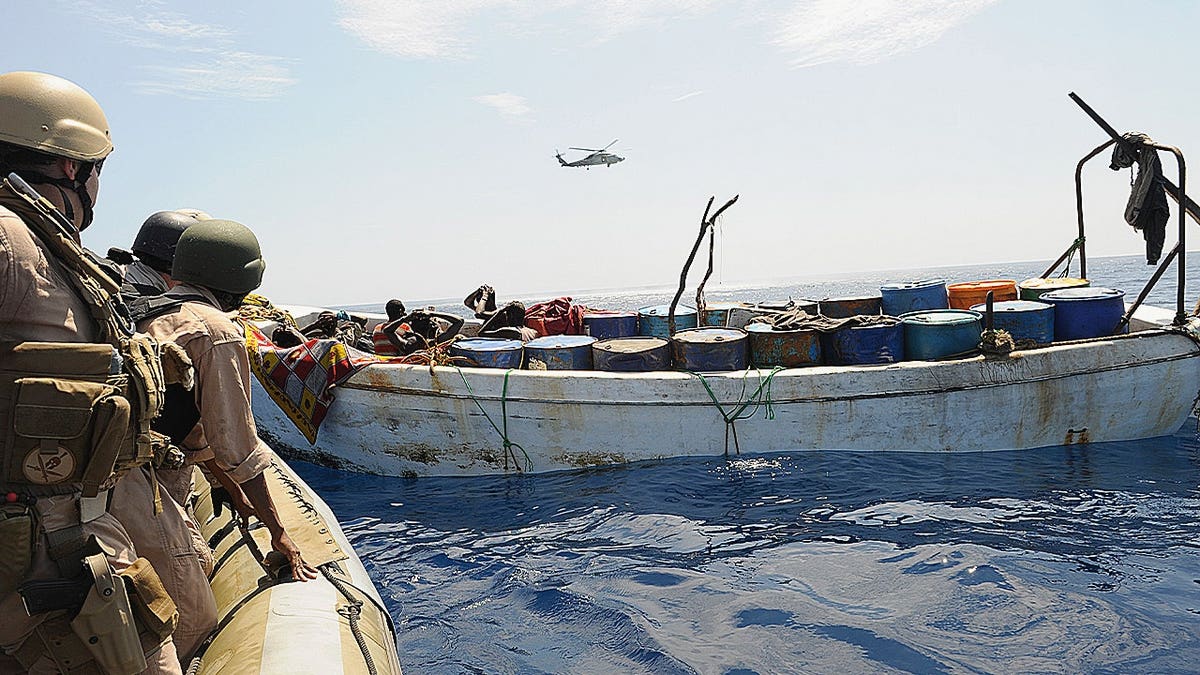
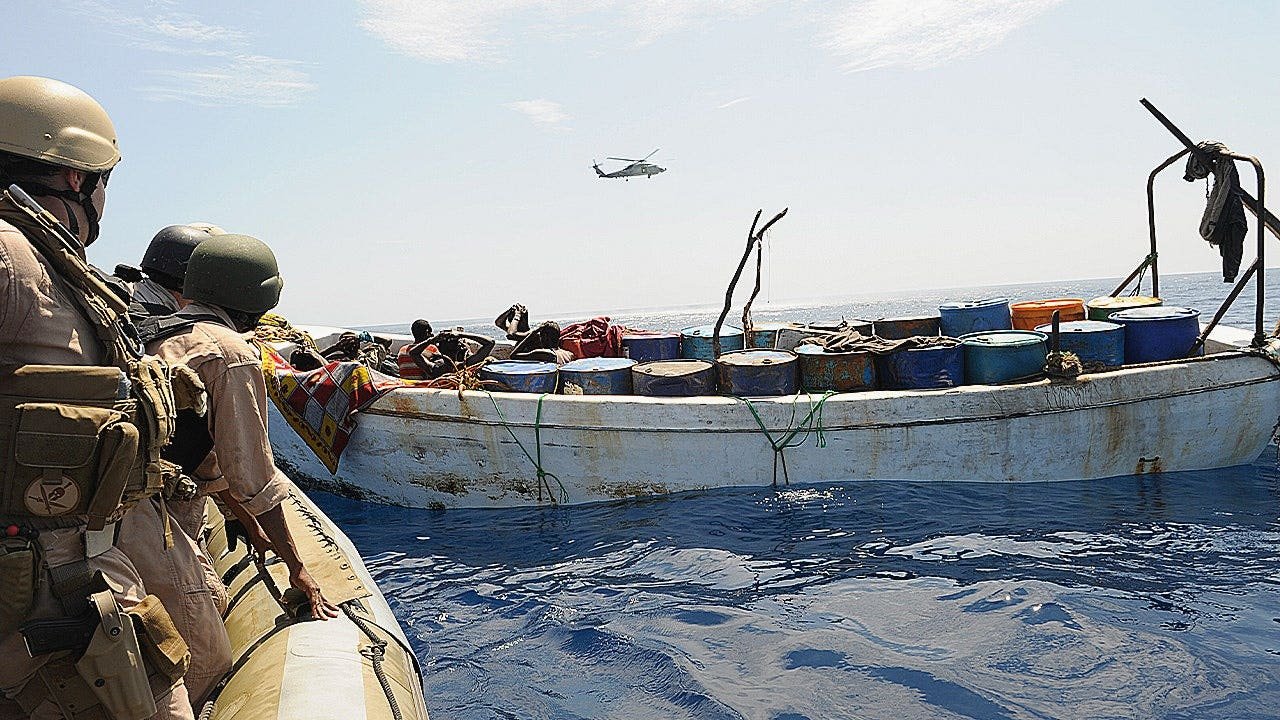
The surge in regional piracy risk is exacerbated by the volatility of the Strait of Hormuz as Iranian-backed threats persist in the Persian Gulf and global energy flows are shifting. (Mass Communications Specialist 1st Class Cassandra Thompson/U.S. Navy via Getty Images)
A vulnerability years in the making
The idea that Hormuz represents a structural weakness is not new. But until now, it has largely been tolerated, with global markets relying on stability in the Gulf to keep energy flowing.
That assumption is now under strain.
Even with U.S. naval power deployed to secure the waterway, the current crisis has highlighted how quickly disruption, or even the threat of it, can ripple through global supply chains.
«This isn’t just a long-term idea anymore,» said Rich Goldberg of the Foundation for Defense of Democracies think tank. «There is a real threat to the Strait of Hormuz that isn’t going away so long as the regime in Tehran remains.»
AS IRAN WEAKENS, QUESTIONS GROW OVER MOHAMMED BIN SALMAN’S REGIONAL AMBITIONS
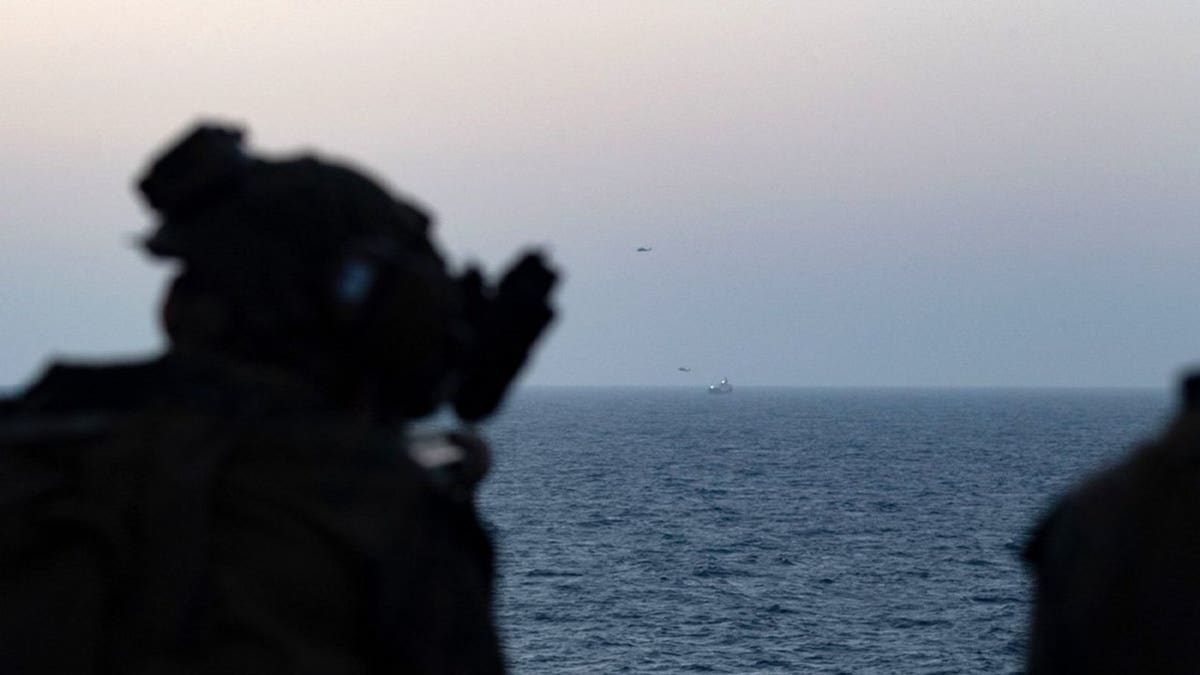
The proposal would rely on broad international participation, with European and Asian buyers investing in infrastructure and securing long-term supply agreements. (U.S. Central Command)
Saudi Arabia: Building around the risk
Saudi Arabia stands out as the country among Gulf states that has invested most heavily in reducing reliance on Hormuz.
Its East-West pipeline allows crude oil to travel from eastern fields on the Gulf to the Red Sea port of Yanbu, bypassing the strait entirely. From there, shipments can move toward Europe, Africa and Asia without entering the chokepoint.
«Saudi Arabia has treated the Strait of Hormuz risk with planning, not panic,» said Salman Al-Ansari, a Saudi geopolitical analyst.
«The East-West pipeline is strategic insurance,» he told Fox News Digital, «A Hormuz closure would be disruptive, but not paralyzing. Saudi Arabia has spent years reducing that vulnerability, and today it is uniquely positioned to absorb shocks and keep global flows moving.»
Al-Ansari argued that the kingdom’s strategy goes beyond energy exports, positioning the country as a broader logistics hub.
«Ports, pipelines, land bridges, storage and Red Sea access are all part of one Saudi contingency architecture,» he said.
HORMUZ CHOKE POINT PERSISTS AS IRAN HALTS OIL TRAFFIC DESPITE TRUMP CEASEFIRE
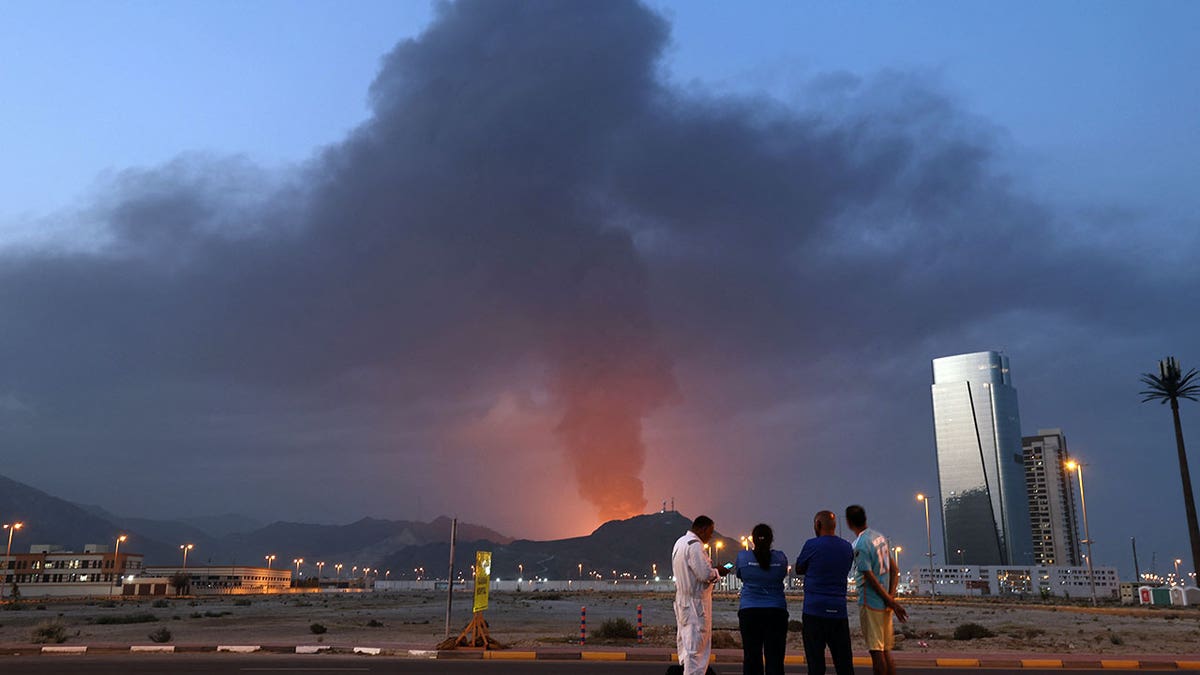
The plan envisions pipelines extending westward to the Red Sea and Mediterranean, as well as southern routes toward the Arabian Sea, creating multiple export pathways that would reduce reliance on the strait, through which roughly one-third of the world’s seaborne oil currently flows. (Fadel Senna / AFP via Getty Images)
UAE and the fragmentation of the Gulf model
Saudi Arabia is not the only player adapting.
The United Arab Emirates also has developed alternative export capacity through its pipeline to Fujairah, outside the Strait of Hormuz.
At the same time, some analysts argue that recent regional dynamics point to a deeper shift, one that goes beyond infrastructure and into the political structure of the Gulf itself.
Yonatan Adiri, an Israeli entrepreneur and former adviser to former Israeli President Shimon Peres, said the traditional model of a unified Gulf energy system centered on Hormuz is beginning to break down.
«The whole arrangement … it’s starting to expire,» Adiri said, referring to the long-standing reliance on the strait as a central artery for Gulf exports.
He pointed to emerging economic and geopolitical realignments, including new corridors and shifting alliances, that are fragmenting the region’s traditional energy architecture.
«The UAE stepping away from OPEC is not just about production policy,» Adiri said, referring to the country’s decision to leave the Organization of the Petroleum Exporting Countries effective May 1, 2026. «It reflects a broader shift toward an independent strategy — building its own routes, partnerships and leverage rather than relying on a collective system.»
These changes are driven in part by broader global competition, according to Adiri, particularly efforts by the United States and its partners to counter China’s Belt and Road Initiative.
«The entire system is being rethought,» he said, describing a shift toward diversified routes that reduce reliance on single choke points.
WHY GULF STATES AREN’T JOINING THE WAR AGAINST IRAN — DESPITE ATTACKS ON THEIR SOIL
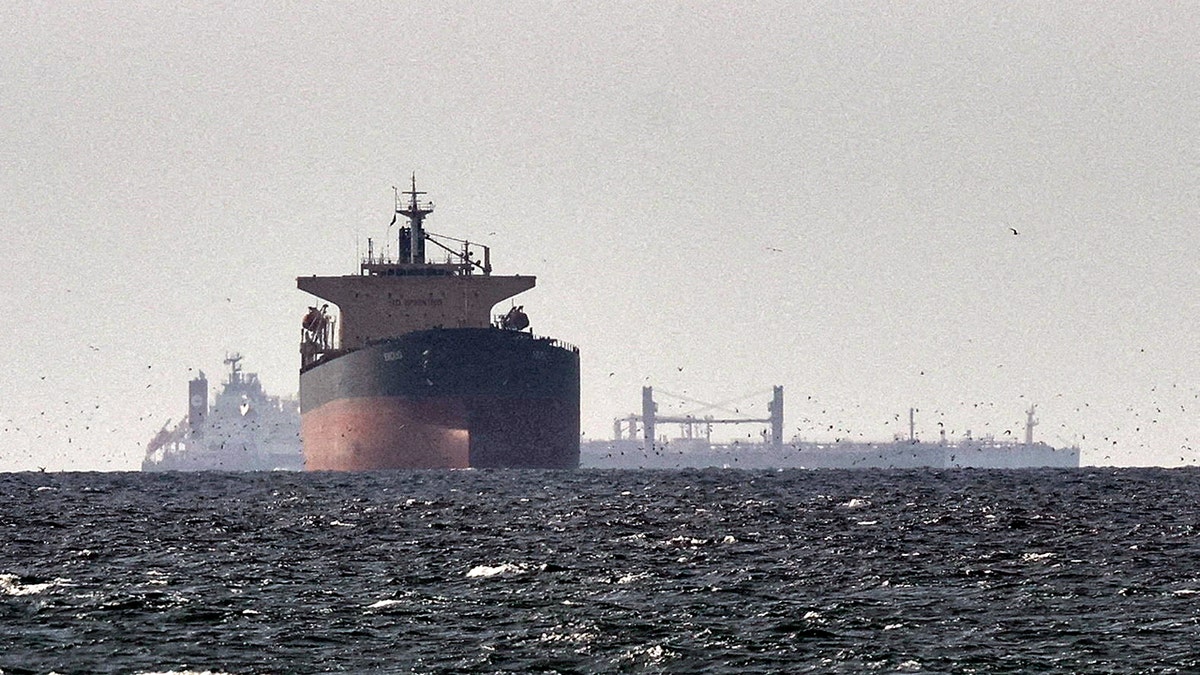
Cargo ships are anchored in the Gulf near the Strait of Hormuz as seen from northern Ras al-Khaimah, United Arab Emirates, March 11, 2026. (Reuters/Stringer/File Photo/File Photo)
Uneven exposure across the Gulf
Despite these developments, not all Gulf states are equally prepared.
«If you’re Kuwait, you’re in a world of hurt,» Goldberg said, pointing to countries that lack meaningful alternatives to maritime exports.
Qatar, one of the world’s largest exporters of liquefied natural gas, remains heavily dependent on the strait, with limited options to reroute supply if shipping is disrupted.
This uneven exposure could reshape regional dynamics, giving countries with alternative routes greater resilience and leverage in future crises.
Political limits and long-term questions
While the technical case for alternative routes is growing stronger, political constraints remain.
One of the most sensitive issues is whether future corridors could involve Israel, even indirectly.
«As for routes involving Israel, even indirectly, the politics are extremely difficult under current circumstances,» Al-Ansari said. «I genuinely do not see it happening now.»
At the same time, he suggested that such cooperation could become more realistic in the future under different political conditions.
A system in transition
For now, the U.S. and its allies remain focused on stabilizing the immediate situation in the Strait of Hormuz, ensuring that ships can pass safely and global markets continue to function.
But as tensions persist, the current crisis is forcing a broader reassessment.
CLICK HERE TO DOWNLOAD THE FOX NEWS APP
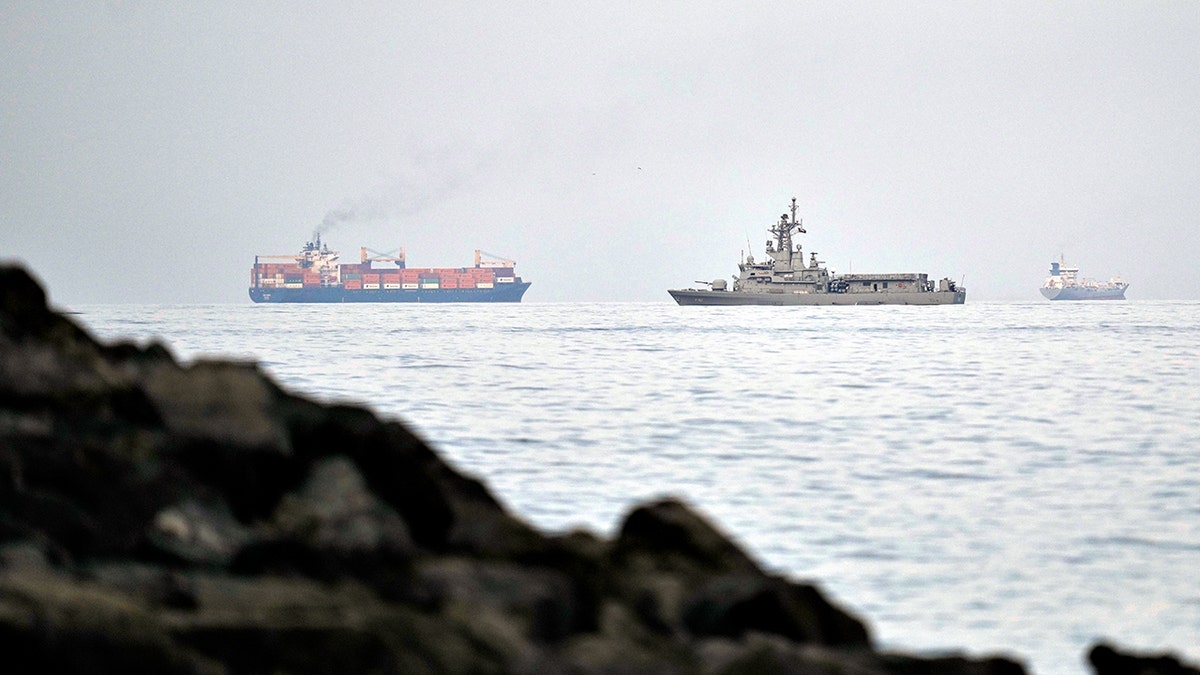
While the technical case for alternative routes is growing stronger, political constraints remain. (Altaf Qadri/The Associated Press )
The question is no longer just how to secure the strait, but whether the global energy system can afford to depend on it to the extent it has for decades.
If the current trajectory continues, Hormuz may remain critical, but no longer dominant, experts argue, as countries invest in new routes, new partnerships and a more diversified energy map.
Fox News Digital reached out to Saudi Arabia and the UAE for comment but did not receive a response in time for publication.
war with iran, middle east, saudi arabia, trade, iran, geopolitics, energy









NEWYou can now listen to Fox News articles!
A shocking new report says 2025 was the deadliest year for antisemitic attacks worldwide since 1994.
The J7 Large Communities’ Task Force Against Antisemitism released its second annual report, which tracks antisemitic hatred in the seven countries outside of Israel where over 90% of Jews live. According to the report, 20 people were killed in antisemitic attacks in 2025. All of the deadly attacks took place in J7 countries.
The Anti-Defamation League (ADL) is one of two organizations representing the Jewish diaspora in the U.S. in the J7, which includes similar organizations from Australia, Canada, Argentina, the U.S., the U.K., Germany and France.
CHRISTIAN LEADERS HOLD EMERGENCY SUMMIT IN JERUSALEM TO CONFRONT GLOBAL RISE IN ANTISEMITISM
Police cordon off an area at Bondi Beach after a terrorist attack at a Hanukkah celebration in Sydney, Australia, on Dec. 14, 2025. (Mark Baker/AP Photo)
The ADL’s Senior Director of Global Research and Diplomatic Affairs, Aykan Erdemir, told Fox News Digital that the report’s findings show «there’s no time to waste» in combating hate.
«This isn’t a warning sign anymore, it’s already happening,» Erdemir said. «If governments let antisemitism take root and perpetrators walk free, the violence won’t stop with Jewish communities. History shows Jews are the canary in the coal mine: when hatred against Jews rises unchecked, it’s an early warning that everyone’s safety and rights are at risk.»
The J7 report finds that there were over 23,000 antisemitic incidents in J7 countries throughout 2025 – this represented a 97% increase in violent incidents and a 136% increase in total antisemitic incidents since 2022.
The Hamas terror attacks of Oct. 7, 2023, sent antisemitic hate skyrocketing worldwide.
GERMAN OFFICIALS WARN ISLAMIST, FAR-LEFT RHETORIC DRIVING SPIKE IN ANTISEMITIC ATTACKS
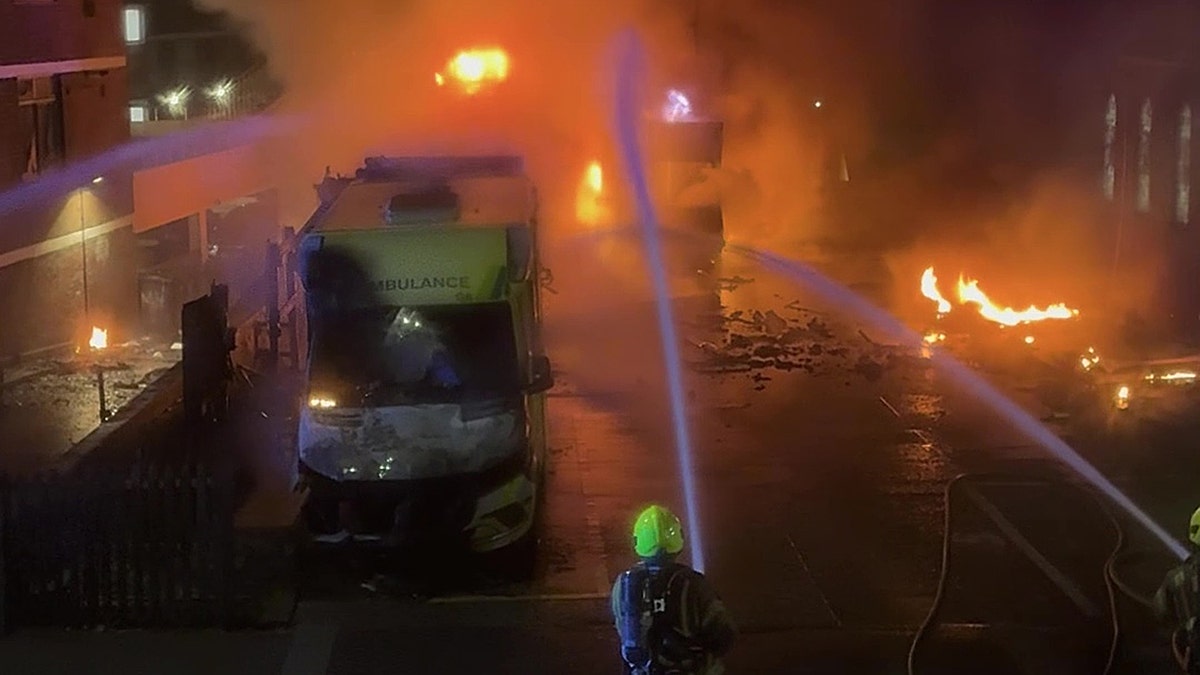
Firefighters are seen tackling a blaze at Highfield Road in the Golders Green neighborhood of London, following an arson attack on four charity ambulances belonging to the Jewish Community volunteer Ambulance Service. (PA/PA Images via Getty Images)
According to the report, each of the countries face an environment where antisemitism is «no longer confined to the fringes.» Countries are witnessing anti-Zionism associated with the conflict in Gaza becoming «a vehicle for antisemitic expression» and educational institutions becoming an «acute flashpoint» for hatred. Combined with growing online extremism, Jewish people «across the globe report hiding their Jewish identity in public» and question «whether they have a future in their home countries.»
Individually, the report shows how countries face their own unique challenges in quashing hatred.
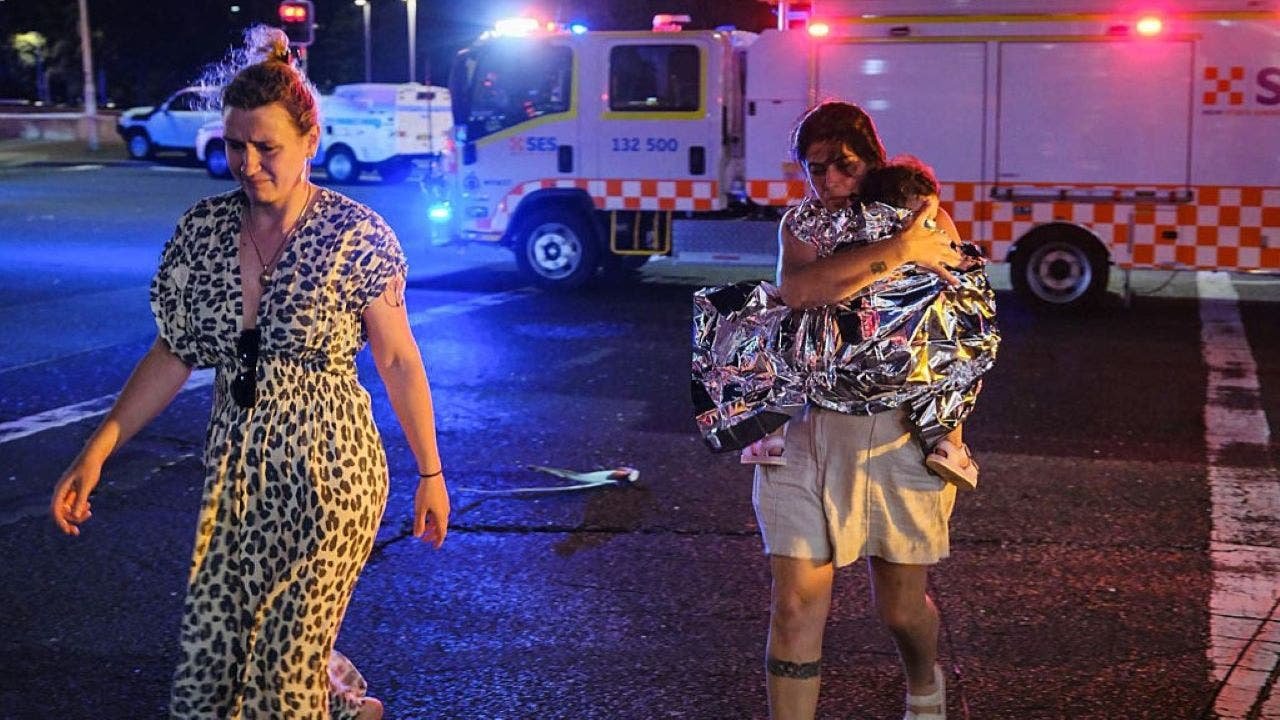
A member of the public leaves the scene with her child, who is covered in an emergency blanket, after a terrorist attack at a Hanukkah celebration at Bondi Beach on December 14, 2025, in Sydney, Australia. Two terrorists dressed in black fired several shots at Sydney’s world-famous Bondi Beach, that led to the deaths of 15 people and many others injured. (Photo by George Chan/Getty Images)
Australia, which has seen a 270% increase in antisemitic incidents since 2021, was home to the Bondi Beach terror attack in December 2025, during which 15 people were killed. The report says that both Islamist and left-wing extremist threats in the country «need to be prioritized, and dealt with effectively.»
In Germany, a 215% increase in antisemitic incidents has been coupled with the highest per capita rate of incidents, with 69.8 incidents per 1,000 Jewish residents in 2025 for a total of 8,725 incidents.

Antisemitic hate on display at an anti-Israel protest in London. Antisemitism in the UK is hitting record levels since the Hamas terror attacks on Oct. 7 (Campaign Against Antisemitism on X)
The report said that normalization of hate «remains the most pressing challenge» in Germany, with the rise in incidents attributed to the «confluence of far-right ethno-nationalism, left-wing anti-Zionism, and Islamist extremism simultaneously.»
In Canada, which has experienced a 60% rise in antisemitic incidents since 2021, there is a concern that «foreign state interference» is at play, in addition to «the exploitation of domestic institutions by extremist networks.»
SIGN UP FOR ANTISEMITISM EXPOSED NEWSLETTER
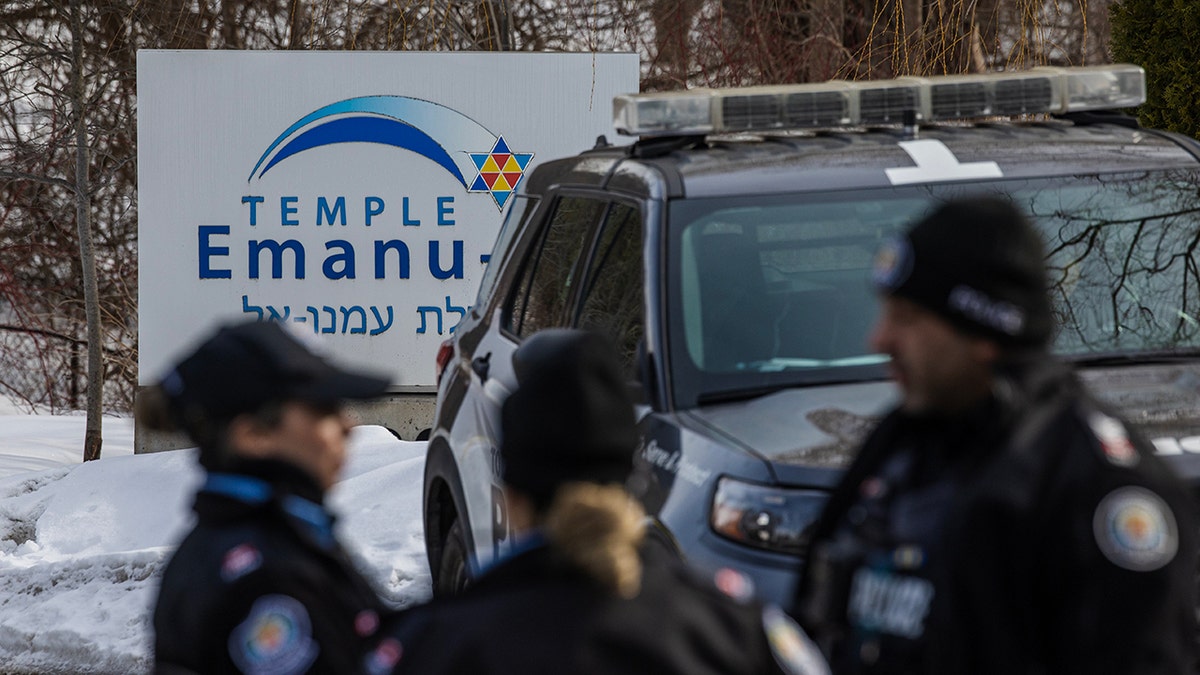
Temple Emanu-El in Toronto, Canada was shot at on March 3, 2026. No injuries were reported. (Nick Lachance/Toronto Star via Getty Images)
The U.S. has had a 131% increase in antisemitic incidents since 2021. Though antisemitic incidents declined significantly from 2024, the 6,274 antisemitic incidents tracked in 2025 included 300 reports of physical assault.
France has witnessed a rise in antisemitic incidents of 124% since 2021. The report notes that there is «a growing climate of discrimination» where Jews in France report being refused service, denied contracts and excluded from events.
In the U.K., which has experienced a 64% increase in antisemitic incidents since 2021, 48% of 3,700 antisemitic incidents were motivated by anti-Zionism, and 53% included references to the conflict involving Gaza.
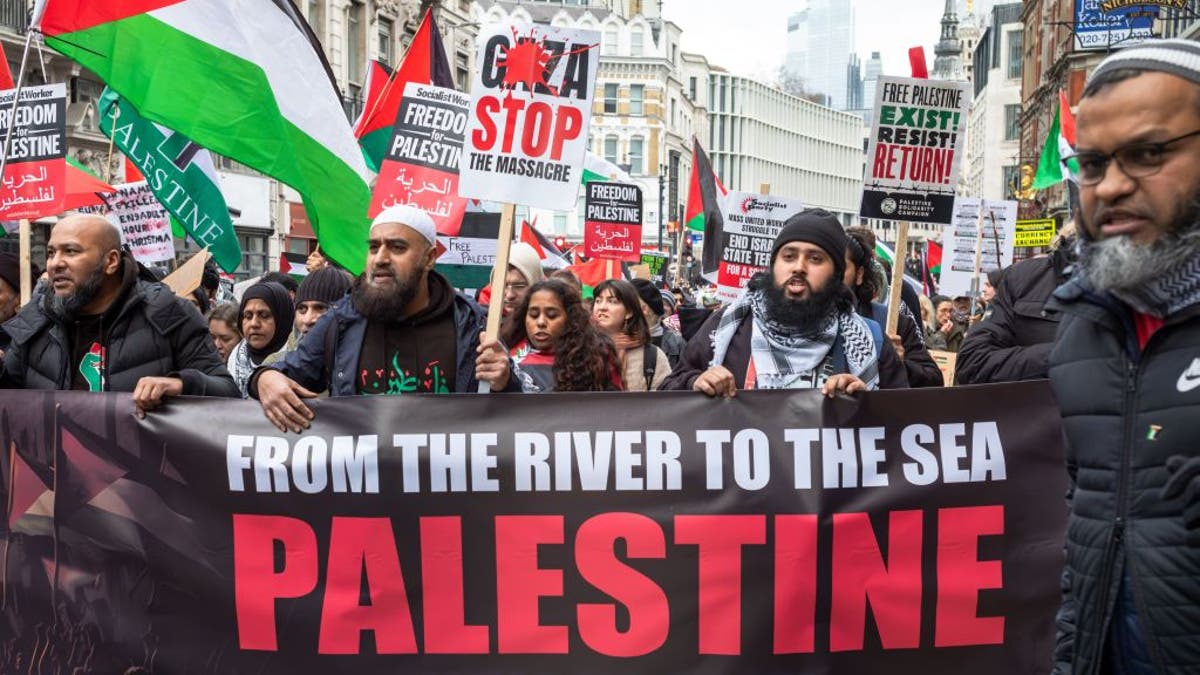
London, UK, Dec 9 2023, anti-Israel protesters hold a banner saying «From the river to the sea..» Andy Soloman/UCG/Universal Images Group via Getty Images (Andy Soloman/UCG/Universal Images Group via Getty Images)
Though the government in Argentina is pro-Israel, the country «has generated conspiratorial antisemitic backlash from the left and from fringe nationalist movements,» the report said. Since 2021, Argentina has seen a 46% increase in antisemitic incidents.
The J7 report also added a special chapter on antisemitism in Ireland, which is not a J7 country. While Ireland has only a 2,200-person Jewish community, it has reported 143 incidents of antisemitism. Despite antisemitism in Ireland taking hold «primarily in everyday settings,» unlike J7 countries, Ireland has no national plan for combating antisemitism and no security funding for the Jewish population.
CLICK HERE TO DOWNLOAD THE FOX NEWS APP

An FBI team is investigating an attack on demonstrators calling for the release of Israeli hostages held in Gaza, at the scene on Pearl Street in Boulder, Colorado, on June 1, 2025. Several people suffered burns and other injuries June 1st in the US state of Colorado in what the FBI called a «targeted terror attack» against demonstrators seeking the release of Israeli hostages held in Gaza. Police in the city of Boulder said a man was taken into custody. They were more cautious in presuming a possible motive for the attack, which multiple sources said was committed against members of the Jewish community during a peaceful gathering. (ELI IMADALI/AFP via Getty Images)
Erdemir said that «the most urgent priority for every government should be protecting Jewish communities and institutions before they’re attacked, not after.» He called on law enforcement to «hold perpetrators fully accountable,» but said that «the real goal has to be stopping attacks before they happen and preventing Jews from being driven out of public spaces, not just responding once the damage is done.»
Erdemir said, «Governments can’t rely on security alone. It takes a whole-of-society effort, government, business, schools, civil society and everyday citizens, to root out the hate targeting Jewish communities worldwide. And because this hate crosses borders, so must the response: governments, international bodies and NGOs around the world need to work together, not in isolation.»
anti semitism, hate crime, terrorism, united kingdom, australia, canada
INTERNACIONAL
Santiago Peña se reunió con Felipe VI para abordar los desafíos globales y la cooperación de cara a la Cumbre Iberoamericana
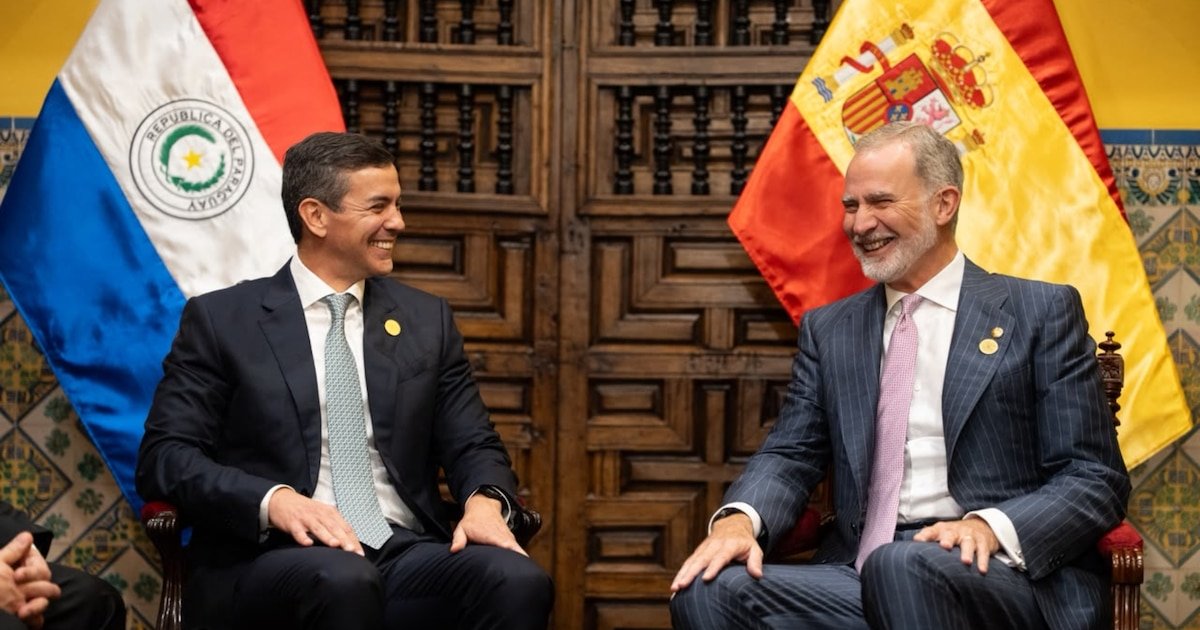
El presidente de Paraguay, Santiago Peña se reunió con el rey de España, Felipe VI, el martes en Lima en el marco de la juramentación de Keiko Fujimori como presidenta de Perú. En el encuentro bilateral, analizaron los grandes desafíos globales, la cooperación entre ambos países y temas sustantivos de cara a la próxima Cumbre Iberoamericana, que se celebrará en noviembre en Madrid, según informaron fuentes oficiales.
Durante su visita a la capital de Perú, Felipe VI y Peña abordaron prioridades comunes en materia internacional. “Durante un excelente encuentro bilateral con el rey Felipe VI de España evaluamos los grandes desafíos globales que enfrentan nuestros continentes”, publicó Peña en la red social X.
El jefe de Estado paraguayo resaltó que en la conversación también se incluyó la cooperación ambiental ante emergencias climáticas actuales, así como la importancia de la transición energética y el papel de las inversiones españolas en proyectos solares en Paraguay. Además, ambos mandatarios trataron la lucha conjunta contra el crimen organizado. “Definimos temas sustantivos para seguir fortaleciendo los lazos de cara a la próxima Cumbre Iberoamericana de noviembre”, agregó el presidente paraguayo.
Por su parte, la Casa Real de España comunicó, a través de la misma red social, que la reunión entre Felipe VI y Peña se realizó en el contexto de los actos de transmisión de mando presidencial en el país latinoamericano.

En junio, el ministro de Relaciones Exteriores de Paraguay, Rubén Ramírez, y su homólogo de Asuntos Exteriores, Unión Europea y Cooperación de España, José Manuel Albares, conversaron telefónicamente sobre el acuerdo comercial entre la Unión Europea (UE) y el Mercosur. Dicho acuerdo entró en vigor parcialmente el 1 de mayo. En ese diálogo también incluyeron temas vinculados a la Cumbre Iberoamericana.
El Ministerio de Relaciones Exteriores de Paraguay informó en un comunicado que Albares agradeció la confirmación de la participación de Paraguay “al más alto nivel” en la XXX Cumbre Iberoamericana, que se desarrollará en Madrid del 3 al 5 de noviembre. La cita, que tendrá como lema “Iberoamérica: juntos construimos nuestra comunidad, juntos la proyectamos hacia el futuro”, fue resaltada por la Cancillería asuncena.
La secretaria de Estado de Comercio del Gobierno de España, Amparo López Senovilla, afirmó el 14 de julio en Asunción que el intercambio comercial entre España y Paraguay posee margen para crecer, en particular tras la entrada en vigor del acuerdo entre la Unión Europea (UE) y el Mercosur. En declaraciones a la agencia EFE, la funcionaria sostuvo: “Las relaciones comerciales con Paraguay son unas relaciones buenas, con unas cifras de comercio bilateral que, sin embargo, creo que tienen que mejorar, porque ambos países tenemos más potencial para aumentar nuestro comercio bilateral”.

Durante su visita oficial a la capital de Paraguay, López Senovilla mantuvo un encuentro con empresarios españoles y con el embajador de España en Asunción, Javier Parrondo. La funcionaria desarrolló su agenda en el país como parte de una gira por los Estados miembros del Mercosur —entre ellos Brasil, Argentina, Uruguay y Paraguay, con Bolivia en proceso de adhesión— orientada a destacar la relevancia del reciente pacto de libre comercio suscrito entre el bloque suramericano y la UE en enero.
En ese contexto, López Senovilla subrayó que el acuerdo brinda “certidumbre y seguridad jurídica” a los empresarios españoles interesados en iniciar o ampliar inversiones en Paraguay. De acuerdo con la secretaria de Estado, España se posiciona como el quinto inversor extranjero en el país, con unos 190 millones de euros combinados.
“La previsibilidad, esa certidumbre y esa seguridad jurídica muchas veces son los factores que buscan los inversores para incrementar esas inversiones en distintos países y, creo que, en ese sentido Paraguay se verá beneficiado de esa estabilidad”, puntualizó López Senovilla a EFE.
La funcionaria destacó además el papel de Paraguay como miembro del Mercosur señalando que el país “tiene mucho que ofrecer” por su ubicación estratégica dentro del bloque y por la proyección de sus industrias manufacturera, agroindustrial y energética.
(Con información de EFE)
Diplomacy / Foreign Policy,South America / Central America,Government / Politics,Royals
NEWYou can now listen to Fox News articles!
City Hall repeatedly touted New York City Mayor Zohran Mamdani’s 19-member judiciary advisory panel as a «truly representative cross-section» of New York City’s legal profession — but four Jewish bar associations say not one Jewish member was appointed.
The groups, backed by the Anti-Defamation League (ADL), are demanding Mamdani correct what they called a profound omission from the influential committee, which screens and recommends candidates for judgeships across the five boroughs and across various different courts, including Criminal Court, Family Court and, on an interim basis, Civil Court.
City Hall touted Mamdani’s 19-member judiciary advisory panel as a «truly representative cross-section» when it was announced July 22. Meanwhile, Mamdani’s own Jan. 2 executive order establishing the committee stated that its membership «shall reflect the cosmopolitan population of the City of New York.»
«The members announced today offer a truly representative cross-section of the legal profession in New York City, bringing a wide range of professional experience from all five boroughs to the Mayor’s Advisory Committee on the Judiciary,» said Ramzi Kassem, Chief Counsel to the Mayor and City Hall, who supervises the activities of the Committee.
BLUE STATE MOCKED AFTER ‘SEX AND THE CITY’ ACTRESS TAPPED TO RECOMMEND TOP JUDGES
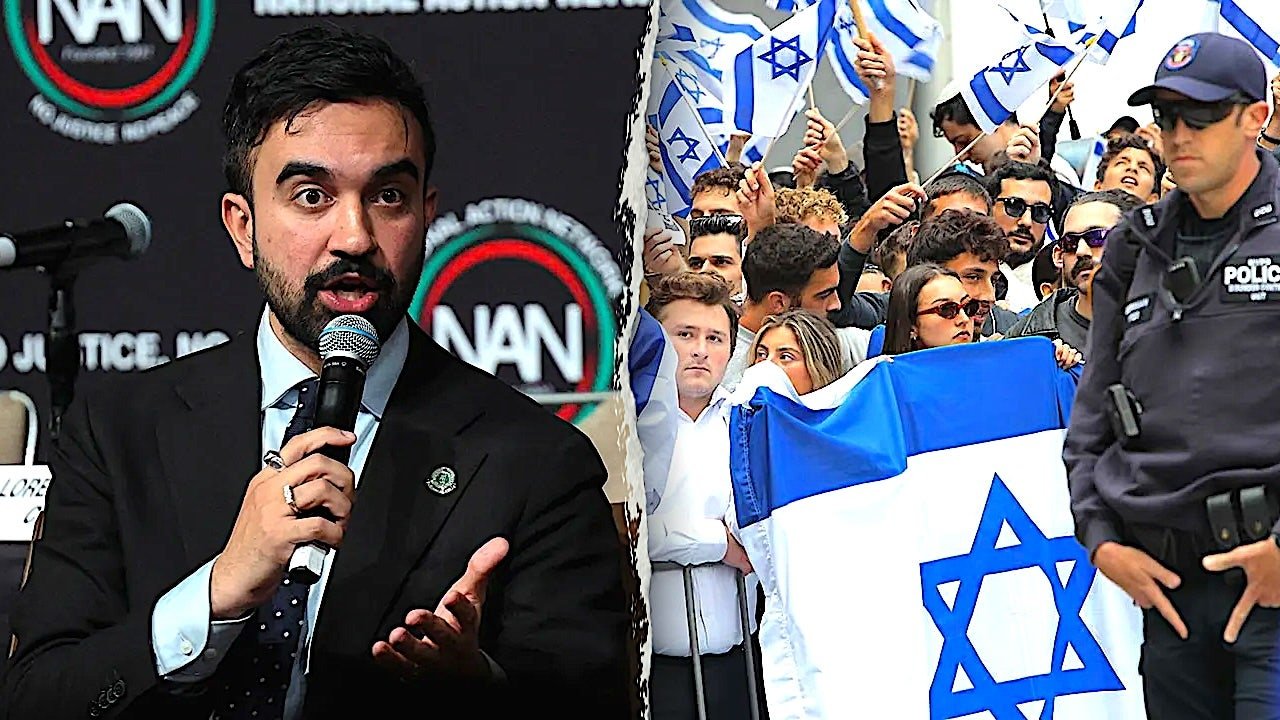
Left: Then New York City mayoral candidate, now mayor, Zohran Mamdani speaks during the National Action Network National Convention in New York City, U.S., April 3, 2025. Right: Demonstrators attend an «emergency rally for Gaza» outside of the Israeli Consulate in New York City, New York on Monday, Oct. 9, 2023. Supporters of both Palestine and Israel clashed at the event as Israel remains at war with Hamas. (Reuters/Jeenah Moon and Jennifer Mitchell for Fox News Digital)
«Under Mayor Mamdani’s leadership, [Mayor’s Advisory Committee on the Judiciary] will reach across the legal community to build a broad and highly qualified pool of judicial applicants,» Kassem continued. «An independent and impartial judiciary composed of jurists who have served their fellow New Yorkers in a range of legal circumstances is essential to a healthy democracy, and these appointments reflect our administration’s commitment to a fair, inclusive and transparent judicial selection process.»
But the Brandeis Association, Jewish Lawyers Guild, Brooklyn Brandeis Society and Queens Brandeis Association — along with other critics — say the absence of even one Jewish member from the 19-person panel exposes a glaring contradiction between City Hall’s rhetoric and its appointments.
«At a time when antisemitism is rising and Jewish communities are increasingly under threat, excluding Jewish voices from this influential body is not only disheartening, it is dangerous,» the groups wrote in a joint letter they sent to Mamdani on Monday. «The absence of Jewish representation on a committee entrusted with shaping the future of our judiciary sends a deeply troubling message to the Jewish community and undermines the committee’s credibility and ability to serve all New Yorkers fairly.»
NY ASSEMBLYMAN CALLS FOR DOJ TO INVESTIGATE MAMDANI, PROTECT JEWISH NEW YORKERS AFTER STABBING ATTACKS
In addition to Mamdani, the four groups sent the letter to New York Gov. Kathy Hochul, New York Attorney General Letitia James and New York Chief Judge Rowan Wilson, along with other state, city and judicial officials.
The letter’s warning, which included calls to «correct this exclusion,» came amid renewed fears over Jewish safety in the city.
On Tuesday, a hammer-carrying intruder entered the grounds of the Jewish Institute of Queens and shoved an 8-year-old boy into a fence during a struggle with security, leaving the child with a head injury, authorities said. Police did not believe the boy was the intended target, and investigators have not established a motive.
The frightening episode followed last week’s alleged hate-crime attack on an Orthodox Jewish man who was stabbed in the chest with a screwdriver shortly after leaving an Upper West Side synagogue. Prosecutors say the suspect shouted «Justice for Islam» and «Allahu Akbar» before committing the attack.
SUSPECT ARRESTED AFTER ALLEGEDLY YELLING ‘ALLAHU AKBAR,’ STABBING 2 MEN IN NYC ATTACK

Two men were stabbed in unprovoked attacks near Central Park by a suspect who allegedly shouted «Allahu Akbar,» police said. Investigators are examining possible hate and mental health motives. (WNYW)
The mayor’s office, the Mayor’s Advisory Committee on the Judiciary and committee Chairman Ali Najmi did not respond to Fox News Digital’s request for comment by publication time. However, Mamdani press secretary Joe Calvello told NBC New York that any suggestion the appointments to the Mayor’s Advisory Committee on the Judiciary were motivated by religion was «false.»
Calvello said Mamdani had appointed «a dozen qualified judges from a range of backgrounds, including Jewish judges,» and said the administration declined to appoint retired Justice John Leventhal, who is Jewish, after learning he had served on Ghislaine Maxwell’s legal team.
«Make no mistake, the leader of the Democrat Party, Mayor Mamdani, is working to bulldoze the rest of New York government to fit his ideology,» Mark Bednar, a principal at Monument Advocacy who previously led communications for former House Speaker Kevin McCarthy and served as communications director for then-Rep. Sean Duffy, told Fox News Digital. «Americans of all backgrounds should take notice of the threat his ideology poses, and to sound the alarm about anyone he appoints to important positions.»
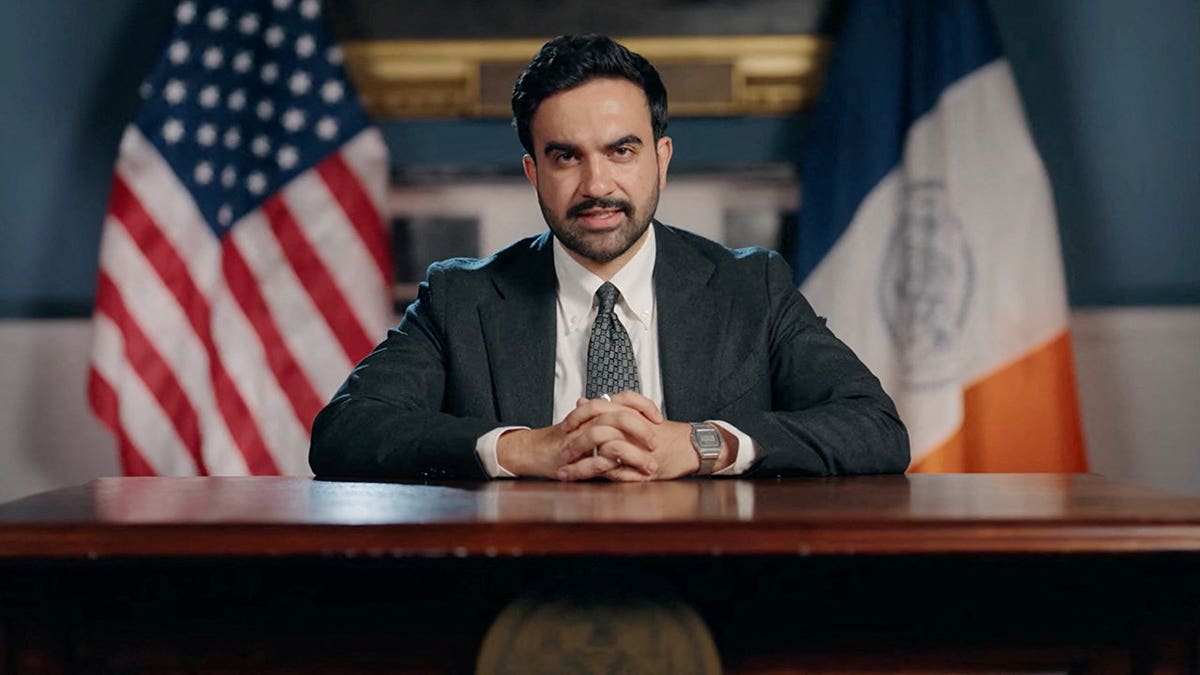
New York City Mayor Zohran Mamdani speaks about Israeli Prime Minister Benjamin Netanyahu in a still image taken from handout video released on July 21, 2026. (Reuters)
CLICK HERE TO DOWNLOAD THE FOX NEWS APP
Jewish civil rights attorney Gerard Filitti argued that the absence of Jewish members was particularly glaring in a city with the largest Jewish population in the country. He also pointed out the committee’s influence over the courts that hear hate-crime cases.
«His own chief counsel called the slate a truly representative cross-section of the city’s legal profession, in the city with the largest Jewish population in America, on the panel that will pick the judges who hear hate-crime cases,» Filitti wrote on X. «City Hall did not deny the exclusion. It changed the subject to judges Mamdani appointed elsewhere. Jewish New Yorkers are owed the same representation as everyone else, and this mayor just seated a panel that gives them none.»
zohran mamdani, new york city, judaism, politics, judiciary

Antisemitic violence reaches deadliest level since 1994, new global report finds

Después de la reforma del BCRA, el Gobierno buscará blindar en el Congreso la permanencia de Santiago Bausili

Cambia Ganancias para asalariados y jubilados con nuevo piso y devoluciones en 2027

Frantzdy Pierrot, futbolista de Haití que disputó el Mundial: ‘Mi padre tenía que decidir si comprarme las botas de Cristiano o pagar la luz’

Gustavo Garzón recordó la insólita táctica que usó para encontrar a su hijo después de que se extraviara en el parque

Santiago Peña se reunió con Felipe VI para abordar los desafíos globales y la cooperación de cara a la Cumbre Iberoamericana

Crisis entre Milei y Lula: la trama política, personal y geopolítica detrás del mayor choque diplomático entre Argentina y Brasil

Cuentapropismo emocional en lo profundo del conurbano

San Isidro: la ballena que quedó varada en un banco de arena murió pese al operativo de rescate

Joaquín Furriel contó cómo fue ver la final del Mundial con su novia española: “Una situación incómoda”

 POLITICA2 días ago
Crisis entre Milei y Lula: la trama política, personal y geopolítica detrás del mayor choque diplomático entre Argentina y Brasil
- SOCIEDAD3 días ago
San Isidro: la ballena que quedó varada en un banco de arena murió pese al operativo de rescate
- POLITICA3 días ago
Milei cruzó al aire a De Mendiguren, exministro de Duhalde: “Vos, sí, ladrón”