INTERNACIONAL
Walz administration ignored fraud warnings as billions vanished, House oversight report alleges

NEWYou can now listen to Fox News articles!
A Republican-led congressional oversight report alleges that senior Minnesota officials, including Gov. Tim Walz, D-Minn., failed for years to act on warnings about fraud in the state’s social services programs, allowing hundreds of millions of dollars in confirmed or alleged losses and placing billions more at risk.
The Walz administration had the power to stop fraudulent payments to high-risk entities receiving federal nutrition and Medicaid funds, but the state «repeatedly failed to act» after officials raised concerns, according to a 205-page final staff report released by the House Oversight Committee on Monday.
Congressional investigators found that concerns about potential racial discrimination claims — rather than legal constraints — contributed to the Walz administration’s decision to continue paying providers suspected of fraud. The committee also spoke to nearly 30 whistleblowers, some of whom accused the Walz administration of retaliation against state employees for sounding the alarm about potential fraud.
«Fraud warnings were elevated to the most senior levels of the Minnesota state government, meaningful corrective action was delayed or avoided, and payments continued long after credible signs of fraud emerged,» the report reads in part.
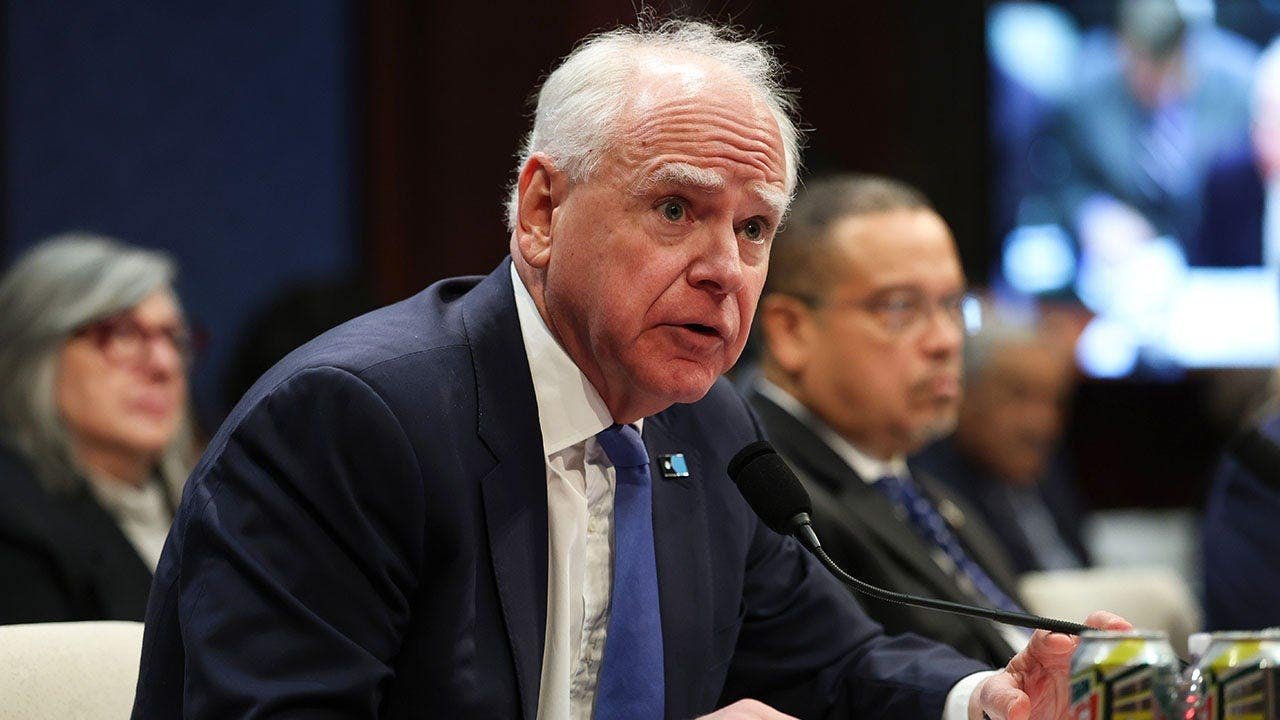
House Oversight Committee Chairman James Comer, R-Ky., has asked Vice President JD Vance to scrutinize fraud prevention deficiencies in Minnesota’s social services programs after the release Monday of his committee’s 205-page final staff report. (Andrew Harnik/Getty Images)
OWNER OF DAYCARE IN VIRAL NICK SHIRLEY VIDEO CHARGED IN $4.6M DAYCARE FRAUD SCHEME, PROSECUTORS SAY
The committee found Minnesota is estimated to have lost $300 million in stolen federal nutrition funds intended to feed hungry children during the COVID-19 pandemic and that as much as $9 billion in Medicaid billing may have been fraudulent, an estimate attributed to a federal prosecutor and disputed by Walz administration officials.
Walz was allegedly aware of fraud associated with the now-defunct Feeding Our Future nonprofit that operated a constellation of fake meal sites as early as 2020, but payments continued flowing to the group for roughly two more years. The oversight panel also found Walz gave conflicting answers about when he first learned of the sweeping meal fraud.
Federal prosecutors have charged more than 110 individuals in connection with various fraud schemes in the state. Many defendants in the Feeding Our Future case have been identified as members of Minnesota’s Somali immigrant community, in connection with various fraud schemes in the state. Some of the convicted fraudsters used the stolen money for luxury purchases and state officials have investigated whether a portion of it was funneled overseas to aid terrorist groups in Somalia and the Middle East.
«Minnesota Governor Tim Walz and Attorney General Keith Ellison are responsible for one of the most stunning oversight failures this Committee has ever examined,» Comer said in a statement. «It is now clear the Walz Administration chose to protect the system rather than protect the taxpayer.»
The report caps a months long investigation into the Walz administration’s handling of widespread fraud, which began in late 2025 and included hearing testimony from Walz and Attorney General Keith Ellison as well as members of the Minnesota state legislature’s fraud committee. Nine current and former state officials also participated in transcribed interviews with congressional investigators.
The panel is also probing alleged health care fraud in California and Ohio as part of Republicans’ ongoing «war on fraud.»
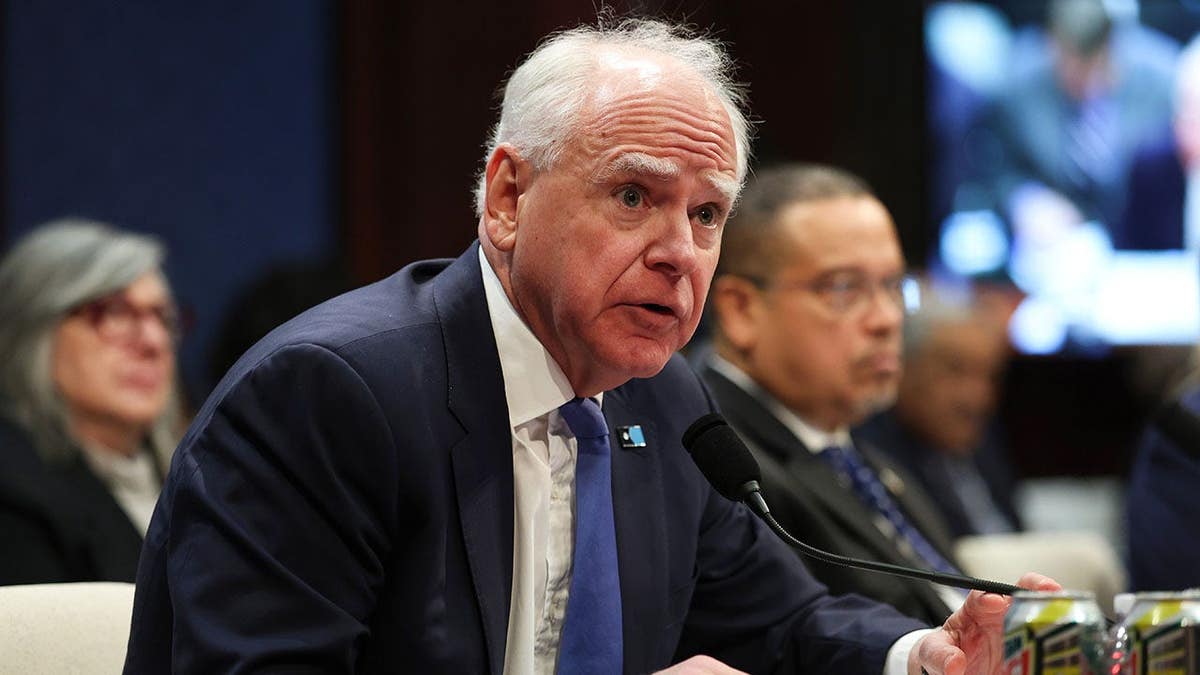
Minnesota Gov. Tim Walz testifies during a House Oversight and Government Reform Committee hearing in the U.S. Capitol in Washington, D.C., on March 4, 2026. The hearing examined alleged misuse of federal funds for Minnesota social services and Medicaid programs. (Anna Moneymaker/Getty Images)
MINNESOTA TAXPAYER DOLLARS FUNNELED TO AL-SHABAAB TERROR GROUP, REPORT ALLEGES
The committee sent a letter to Vice President JD Vance urging a full review of Minnesota’s social services programs for potential fraud vulnerabilities, following the report’s findings.
Vance’s anti-fraud task force has led to the arrest of at least eight people who allegedly participated in health care fraud schemes and the freezing of $1.3 billion in payments to home health and hospice providers suspected of defrauding the government.
Earlier this year, the Trump administration suspended nearly $260 million in federal Medicaid funding to Minnesota over the Walz administration’s alleged failure to crack down on fraud.
The Trump administration has also required states to show they are aggressively probing potential Medicaid fraud or risk losing federal funding.

Vice President JD Vance joined by White House deputy chief of staff and Homeland Security advisor Stephen Miller and Federal Trade Commission (FTC) Chair Andrew Ferguson during a roundtable discussion on anti-fraud initiatives on May 26, 2026, in Washington, D.C. (Andrew Harnik/Getty Images)
CLICK HERE TO DOWNLOAD THE FOX NEWS APP
The report also comes as the House is expected to consider a slate of fraud-prevention bills this week. Republicans have argued that new legislative tools are necessary to prevent fraud at the state level amid alleged inaction.
The federal government loses an estimated $233 billion to $521 billion annually to fraud, according to a 2024 Government Accountability Office report.
politics, somali immigrant community, minnesota, minnesota fraud exposed, investigations, tim walz














NEWYou can now listen to Fox News articles!
Ukraine launched one of its largest drone attacks of the war against Moscow and the surrounding region overnight, striking an oil depot and logistics facilities more than 250 miles from the Ukrainian border, according to Ukrainian and Russian officials.
Moscow Mayor Sergei Sobyanin said more than 400 Ukrainian drones were launched toward the Moscow region between Sunday evening and early Monday, including 85 that were destroyed while approaching the Russian capital. Russia’s Defense Ministry separately claimed that its forces intercepted 381 drones across Russian regions, the Black Sea and the Sea of Azov.
The Russian claims could not be independently verified by Fox News Digital.
At least 10 people were wounded in the Moscow region, including three Chinese nationals, according to regional authorities cited by Reuters. Seven of the injuries were reported in Domodedovo, Russia, where officials said a residential building was struck and a fire broke out at an industrial park near one of Moscow’s main airports.
The scale and reach of the operation suggest Ukraine is moving beyond occasional symbolic attacks on Moscow and building a sustained campaign against the infrastructure that supports Russia’s war.
UKRAINE LAUNCHES WHAT APPEARS TO BE ONE OF ITS LARGEST DRONE ATTACKS AGAINST RUSSIA: REPORT
By simultaneously targeting oil facilities, transportation networks and logistics hubs hundreds of miles from the front, Kyiv is seeking to disrupt the flow of fuel and supplies to Russian forces, reduce revenue available to the Kremlin and force Moscow to divert air-defense systems away from the battlefield.
Ukrainian attacks on Russian refineries had doubled since the beginning of 2026, Reuters reported, contributing to refinery shutdowns and reduced production of gasoline, diesel and jet fuel.
Smoke and flames rise from an industrial facility in Podolsk, Russia, in the Moscow region, after a large-scale Ukrainian drone attack overnight July 20, 2026. (East2west news)
Ukrainian President Volodymyr Zelenskyy confirmed that Ukrainian forces targeted logistics facilities and an oil depot in the Moscow region.
«Our long-range sanctions have produced results against logistics facilities and an oil depot,» Zelenskyy wrote on X, adding that the targets were more than 400 kilometers (roughly 250 miles) from Ukraine’s border. «We are responding, justly, to every Russian strike against our cities and communities.»
Wildberries, a company known as «Russia’s Amazon,» said its logistics center in the Podolsk district of Russia was temporarily evacuated as a precaution before resuming normal operations, East2West News reported. Ukraine has accused the company of selling supplies used by the Russian military.
RUSSIA UNLEASHES NEARLY 600 MISSILES AND DRONES ON KYIV IN DEADLIEST STRIKE SINCE MAY

Smoke rises from the Guinea-Bissau-flagged cargo ship Golden Leo after it was struck near Odesa on July 20, 2026. Ukrainian officials said 10 people were killed in the Russian missile attack. (East2west news)
Ksenia Svetlova, associate fellow at Chatham House policy institute based in London, argued that the disruption caused by strikes on fuel infrastructure and companies such as Wildberries is unlikely, by itself, to change President Vladimir Putin’s approach to the war.
«The hardship of the Russian citizen who suffers because of fuel shortages, the strike on a Wildberries warehouse, or forced recruitment does not interest him,» Svetlova said. «The war machine is operating at full force, and he has neither the desire nor the ability to stop it.»
Svetlova said Putin remains reluctant to announce another mass mobilization after large numbers of young Russians fled the country during the Kremlin’s previous call-up. At the same time, she said, Russia’s military still needs additional troops after recruiting heavily from its prison population and is increasingly pressuring ordinary civilians accused of relatively minor offenses to sign military contracts.
The sweeping Ukrainian operation followed one of Russia’s largest ballistic missile attacks of the war against Kyiv. Ukraine’s air force said Russia launched 41 missiles of various types in the overnight barrage, which killed at least one person and wounded 16, Reuters reported Sunday.
The Russian attack also spread into the Black Sea, where a Russian missile attack on the Guinea-Bissau-flagged cargo ship Golden Leo killed 10 people near Odesa, Reuters reported Monday.
‘A NEW KIND OF WAR’: INSIDE UKRAINE’S HIDDEN FACTORIES MASS-PRODUCING COMBAT DRONES

An explosion strikes a building in Domodedovo, in the Moscow region, during a large-scale Ukrainian drone attack overnight on July 20, 2026. (East2West news)
Ukrainian officials said the vessel, which was carrying corn, was struck by three cruise missiles and caught fire. Nine crew members and a Ukrainian maritime pilot were killed, while eight other crew members were rescued. The ship’s crew included Indian and Syrian nationals, according to Reuters.
The escalation comes as Zelenskyy faces growing domestic pressure over his removal of Defense Minister Mykhailo Fedorov, a 35-year-old reformer credited with expanding Ukraine’s drone capabilities and seeking to modernize military procurement and management. Fedorov’s supporters viewed him as a rare official willing to challenge entrenched practices, improve oversight of defense spending and push a technology-centered approach to the war.
Thousands of demonstrators gathered following Fedorov’s dismissal, demanding his reinstatement and the removal of commander-in-chief Gen. Oleksandr Syrskyi. Protesters have accused Syrskyi of resisting modernization and retaining a rigid command structure that they say contributes to high troop losses. Syrskyi has defended his wartime record and called for unity.
Fedorov publicly accused Syrskyi of blocking his initiatives and sabotaging his work. Zelenskyy said their relationship had deteriorated so badly that the two could no longer work together, but provided little additional explanation for removing Fedorov.
CLICK HERE TO DOWNLOAD THE FOX NEWS APP

People protest against Ukrainian President Volodymyr Zelenskiy’s decision to replace Mykhailo Fedorov as defense minister, amid Russia’s attack on Ukraine, in Kyiv, Ukraine, July 18, 2026. (Thomas Peter/Reuters)
Zelenskyy indicated Monday that consultations over Ukraine’s military leadership were continuing, saying he had spoken with Maj. Gen. Mykhailo Drapatyi about ensuring that the experience of every branch of Ukraine’s defense forces was applied in a coordinated manner. He did not announce any decision on Syrskyi’s future.
Reuters contributed to this report.
russia, ukraine, military, volodymyr zelenskyy



INTERNACIONAL
FIRST ON FOX: Trump admin freezes out Minnesota of the Caribbean over alleged hurricane-aid abuses

NEWYou can now listen to Fox News articles!
FIRST ON FOX: The Trump administration suspended a U.S. territory’s housing-finance authority from receiving further federal funding after the Department of Housing and Urban Development cited years of alleged financial mismanagement, dire audit findings and the conviction of a former executive in a disaster-recovery contracting scheme.
The suspension over alleged waste and abuse at the Virgin Islands Housing Finance Authority (VIHFA) comes as HUD Secretary Scott Turner, a member of the White House Task Force to Eliminate Fraud, ramps up the administration’s scrutiny of federal grant recipients following a series of high-profile investigations nationwide.
«The Trump administration is changing the game when it comes to who we entrust with taxpayer dollars. Organizations riddled with corruption, mismanagement, and crime will no longer be allowed to squander billions,» Turner, also a former NFL cornerback, told Fox News Digital.
TIM WALZ BECOMES GOP PUNCHLINE IN SWEEPING NEW WAR ON WELFARE FRAUD
«[VIHFA] officials cannot be allowed to prioritize kickbacks over helping families recover from disasters. I promised that HUD would be a faithful steward of the American people’s hard-earned money, and we are keeping that promise.»
Turner said the suspension is «effective immediately,» as the HUD chief’s deputy Andrew Hughes fired off a 13-page letter to VIHFA official Dayna Clendinen laying out HUD’s findings and alerting that they are barred from future federal procurement while an investigation takes place.
When approached for comment, a representative who picked up the phone at VIHFA on Monday directed Fox News Digital to a full voicemail box. Fox News Digital then reached out via VIHFA’s contact page for comment.
Fox News Digital also reached out to Del. Stacey Plaskett, D-VI, and Democratic Virgin Islands Gov. Albert Bryan’s office for additional comment.
VANCE REFERS TIM WALZ, MINNESOTA ATTORNEY GENERAL TO DOJ FOR CRIMINAL INVESTIGATION OVER STATE’S ALLEGED FRAUD
A destroyed home is seen from a Marine Corps MV-22 Osprey surveying damage from Hurricane Maria in St. Croix, , U.S. Virgin Islands, September 21, 2017. REUTERS/Jonathan Drake TPX IMAGES OF THE DAY – RC1AA78A7300 ( )
In the letter, HUD claimed the nearly-$2 billion appropriation to VIHFA was intended for recovery after Hurricanes Irma and Maria devastated the American archipelago in 2017 – calculated to about $20,000 per USVI resident.
«Nine years later, because of VIHFA’s blatant mismanagement of these critical disaster funds, USVI citizens still do not have the housing and electrical power they were promised nearly a decade ago,» the agency said, citing the prevalence of blue-tarped roofs and shoddy infrastructure including a teetering power grid in the time since.
HUD said audits found disaster recovery spending lagged badly while administrative spending consumed a disproportionate share of available funds. The agency also cited the former COO’s criminal kickback scheme as evidence of weak internal controls.
JACOB FREY PRAISES SOMALI COMMUNITY AS MINNESOTA FACES RENEWED SCRUTINY OVER FRAUD INVESTIGATIONS

This image shows Trunk Beach on the island of St. John in the U.S. Virgin Islands. (Jeffrey Greenberg/Getty Images)
VIHFA’s former chief operating officer, Darin Richardson, was sentenced in March to 36 months in prison after being convicted of bank fraud, money laundering, making false statements and criminal conflict of interest. Prosecutors said Richardson received $107,000 from a contractor in connection with the scheme. HUD said the misconduct occurred «during execution of his duties» at VIHFA.
That contract was later inflated by 50% from $3 million to $4.5 million, HUD said in its letter, adding that much of the lumber then was allowed to rot in the tropical sun.
HUD said Richardson’s conduct, standing alone, was sufficient to call into question VIHFA’s responsibility to receive additional federal funds.
HUD informed VIHFA it has «substantial evidence» of failure-to-comply with aid obligations, a lack of internal controls over financial matters, fraud risks and conflict-of-interest situations.
«[VIHFA] has failed to implement effective fraud controls despite the indictment and conviction of its former COO in a federal contracting fraud scheme. It has repeatedly made false certifications to HUD that it has proficient financial controls, has safeguards to prohibit conflicts of interest, has not obtained duplicate federal benefits, and complies with applicable laws and regulations,» HUD alleged in their suspension notice.
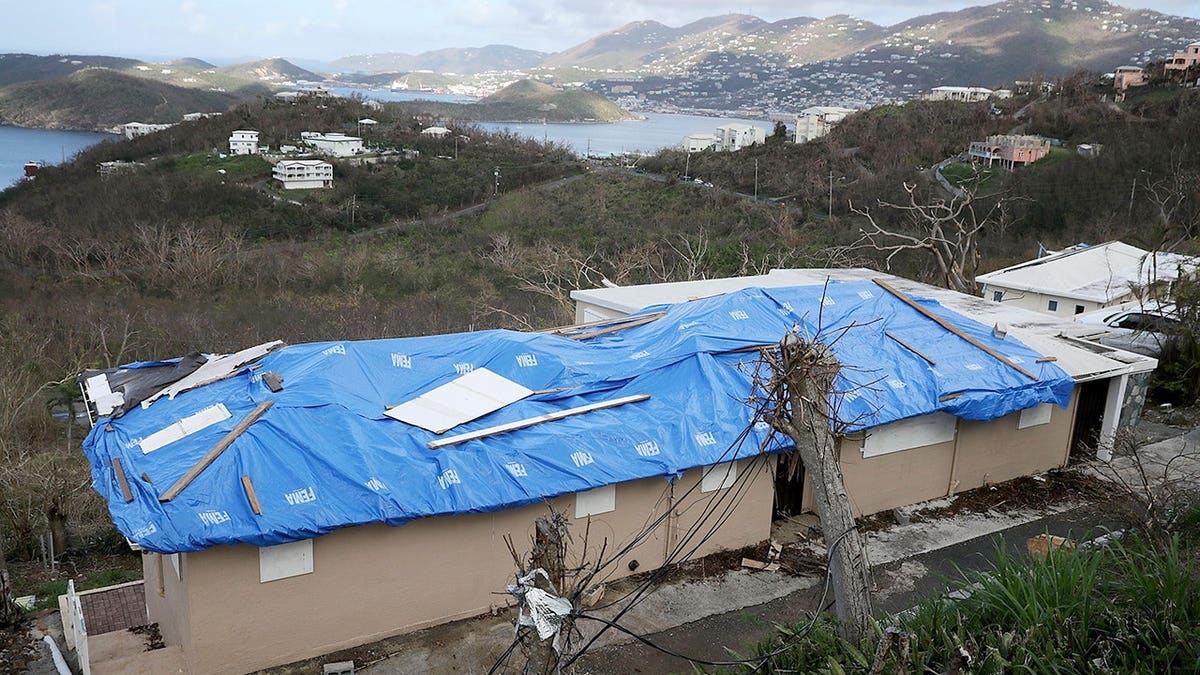
Blue tarp stamped with the FEMA logo covers the roof of a home more than a week after Hurricane Irma made landfall, on September 18, 2017 in the hills above Charlotte Amalie, St Thomas, U.S. Virgin Islands. (Chip Somodevilla/Getty Images)
HUD cited multiple audits spanning a decade that raised «significant concerns» about funding-related activities – which collectively questioned millions in costs and uncovered weak financial controls, inadequate project oversight, poor fraud-risk management and inaccurate reporting. A 2026 audit concluded VIHFA had failed to implement a structured fraud prevention framework despite overseeing $1.9 billion in disaster recovery funding.
Further condemning the «glacial» pace of storm recovery, HUD found that only 2% of planned single-family rental, 16% of single-family homeowner and 19% of multi-family rental projects had been completed since the storms struck nearly a decade ago.
None of 329 housing-work mitigation projects had been finished, while HUD found a «yawning gap» between high expenditures by VIHFA on administrative concerns and low expenditures on residents and their homes.
«Whether poor management or something worse, the consequences are unacceptable– the residents of the USVI who were devastated by disaster are not getting what they need from VIHFA,» HUD wrote to the authority. VIHFA spent $52.6 million on administrative costs alone, according to its report.
HUD also found VIHFA’s divisions unwisely «operate in silos,» hindering communication and fraud-risk management.
The agency told VIHFA that the HUD inspector general’s office also found that employees had personal knowledge of fraud or suspected fraudulent activity – but then VIHFA failed to conduct further investigations or alert its senior management.
The auditing apparatus of VIHFA only notified then-directors of the divisions involved, who allegedly «sat on the findings» according to HUD’s recounting of a 2023 IG probe.
That along with the material facts behind Richardson’s convictions bolster Turner’s decision to cut off VIHFA, the agency wrote.
SIGN UP TO GET THE POLITICS NEWSLETTER
«An officer corruptly awarding disaster clean up contracts violates, at minimum, HUD rules on oversight of contractors,» HUD said, citing Richardson’s kickbacks of at least $107,000 in one case.
CLICK HERE TO DOWNLOAD THE FOX NEWS APP

The Department of Housing and Urban Development announced on Dec. 11 that it was opening an investigation into the city of Boston, alleging the city’s Diversity, Equity, and Inclusion housing practices violate federal anti-discrimination laws. (Getty Images; Kevin Dietsch/Getty Images)
VIHFA will have 30 days to request a hearing on the matter or HUD’s funding suspension will be final, Hughes said.
The suspension marks the latest front in the feds’ anti-fraud campaign, which has now stretched from the massive Feeding Our Future prosecution in the cold northern reaches of Minnesota now to the southern, sunny confines of Charlotte Amalie.
investigations, corruption, state and local, u s virgin islands, aid, donald trump, cabinet, minnesota fraud exposed

El costo de la construcción se encareció en pesos pero bajó medido en dólares

Sabrina Garciarena celebró su cumpleaños junto a la final de la Selección: “Qué orgullo ser argentinos”

Cuándo juega Boca vs. O’Higgins, por los playoffs de la Copa Sudamericana

Ukraine unleashes more than 400 drones near Moscow in one of war’s biggest attacks

El Gobierno llamó a concursar la vacante del camarista Irurzun y busca completar un tribunal clave

EA Sports FC mantiene su increíble racha: España es el quinto campeón que ha predicho correctamente – Nintenderos

El fuerte cruce público entre Victoria Villarruel y Patricia Bullrich tras los chats filtrados antes de la sesión del Senado

Adrián Ravier, vocero de Milei: “No coincidimos en el Gobierno con esto de que la gente no llega a fin de mes”

Rubio’s call to combat global funders of far-left terrorism could put Singham in crosshairs

Sismo de 7.4 sacude a Guatemala: Autoridades declaran alerta anaranjada por daños y descartan tsunami

 INTERNACIONAL3 días ago
Rubio’s call to combat global funders of far-left terrorism could put Singham in crosshairs
- INTERNACIONAL3 días ago
Sismo de 7.4 sacude a Guatemala: Autoridades declaran alerta anaranjada por daños y descartan tsunami
- DEPORTE3 días ago
Canales para ver EN VIVO el San Lorenzo vs. Deportivo Riestra por la Copa Argentina