
INTERNACIONAL
Viktor Orbán concedes defeat as opposition leader heads for potential supermajority win

NEWYou can now listen to Fox News articles!
Hungarian Prime Minister Viktor Orbán conceded defeat Sunday in the country’s parliamentary election, calling the result «clear» and «painful» as partial vote counts showed a decisive win for opposition leader Péter Magyar.
Magyar said Orbán phoned him to concede, according to a post on social media.
With roughly 53% of votes counted, projections showed Magyar’s Tisza party on track for a landslide victory that could give it a two-thirds parliamentary supermajority.
The result could mark a dramatic political shift in Hungary, where Orbán has led the country for more than a decade.
HUNGARIANS VOTE IN RECORD NUMBERS AS TRUMP-ALLY VIKTOR ORBÁN FACES BIGGEST ELECTORAL THREAT SINCE 2010
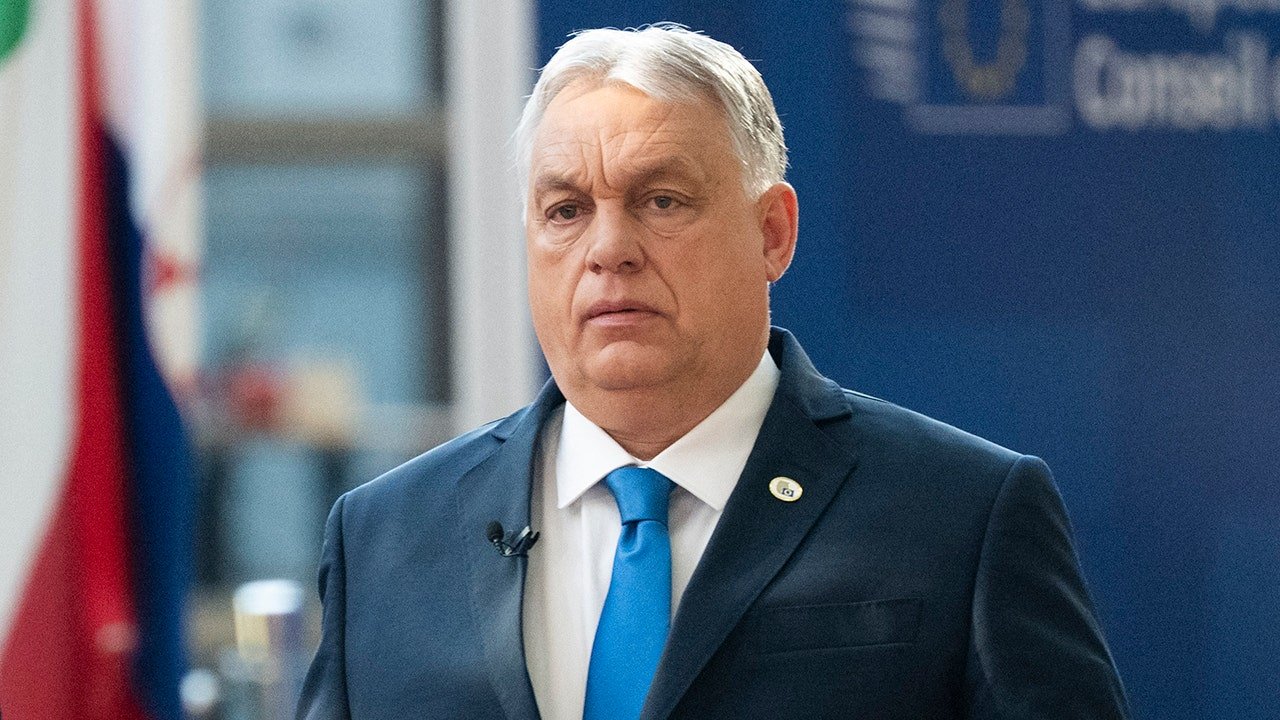
Viktor Orban arrives for an EU Summit at the EU headquarters in Brussels, on March 19, 2026. (Magali Cohen / Hans Lucas / AFP via Getty Images)
Orbán, a close ally of President Donald Trump, had received strong backing from the White House in the final days of the campaign.
RUBIO SEALS CIVIL NUCLEAR COOPERATION AGREEMENT WITH HUNGARY

President Donald Trump greets Prime Minister of Hungary Victor Orbán as he arrives at the White House on November 7, 2025 in Washington, DC. (Roberto Schmidt/Getty Images)
Days before the election, Trump reiterated his support for Orbán in a post on Truth Social.
«My Administration stands ready to use the full economic might of the United States to strengthen Hungary’s Economy, as we have done for our great allies in the past, if Prime Minister Viktor Orbán and the Hungarian People ever need it,» Trump said. «We are excited to invest in the future prosperity that will be generated by Orbán’s continued leadership!»
Trailing in opinion polls ahead of the vote, Orbán faced his most serious electoral challenge since 2010, with surveys showing Magyar’s Tisza party holding a significant lead.
TRUMP HAILS VANCE AND RUBIO AS ‘EXTRAORDINARY’ DUO: HAMMER AND VELVET GLOVE
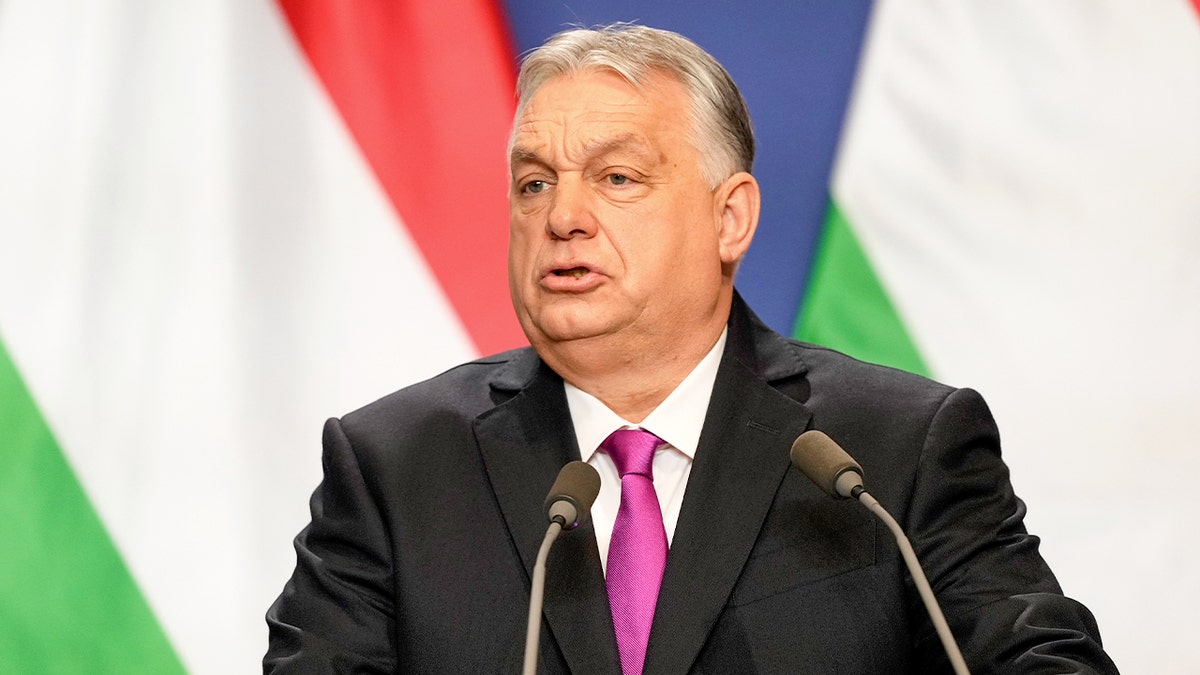
Hungary’s Prime Minister Viktor Orbán speaks during a news conference with U.S. Secretary of State Marco Rubio in Budapest, Hungary, Monday, Feb. 16, 2026. (Alex Brandon, Pool/AP Photo)
Orbán, who has led Hungary for 16 years, has drawn scrutiny from the European Union over his positions on migration, Russia’s war against Ukraine and his government’s policies, while maintaining strong support among many rural and older voters.
His strained relationship with the European Union stems in part from his stance on Russia’s war against Ukraine, his firm support of Israel and his hardline position on migration, which has led to financial penalties from the bloc.
During Orbán’s time in power, Hungary’s economy has grown relatively quickly for an EU country, though inflation has remained elevated and business sentiment has been negative in recent years.
Before the vote, Orbán had expressed confidence in his campaign, calling it «a great national moment on our side» and telling reporters, «I’m here to win.»
Magyar, meanwhile, framed the election as a turning point for the country’s future, warning that Hungary’s direction in recent years had drifted from its Western alliances.
CLICK HERE TO DOWNLOAD THE FOX NEWS APP
«I think this really will be a referendum on our country’s place in the world,» Magyar said.
Fox News Digital’s Eric Mack and Simon Constable contributed to this report.
europe, elections, voting











INTERNACIONAL
A días del inicio de las maniobras anuales Han Kuang, Taiwán aseguró que la cooperación militar con EEUU supera lo imaginado
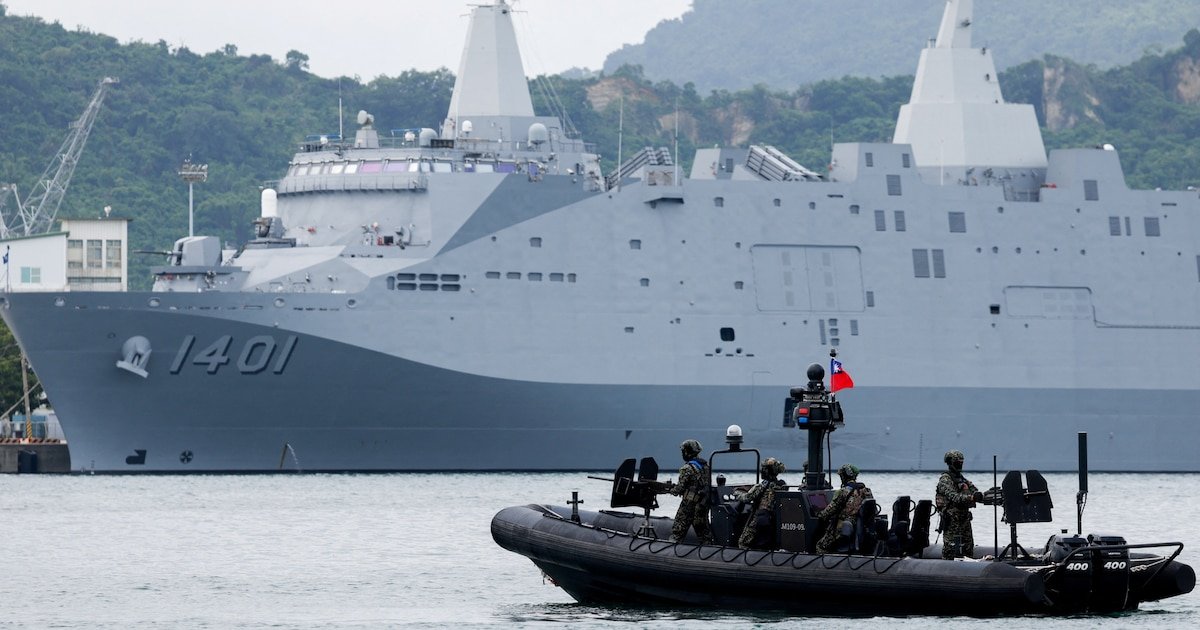
Taiwán aseguró que los intercambios militares con Estados Unidos son “estrechos” y se desarrollan en “todos los niveles”, a pocos días del inicio de la fase con fuego real de las maniobras Han Kuang, los ejercicios anuales de las Fuerzas Armadas taiwanesas destinados a evaluar la preparación de la isla ante un eventual intento de invasión por parte del régimen de China. Las declaraciones pertenecen al ministro de Defensa, Wellington Koo, y fueron publicadas este lunes por la agencia oficial CNA.
Koo sostuvo que la cooperación entre Taipéi y Washington supera la percepción pública. “(La cooperación militar con EEUU) es incluso mayor de lo que ustedes imaginan”, afirmó el ministro durante la entrevista. Además, expresó su reconocimiento al Comando del Pacífico de Estados Unidos por su aporte al fortalecimiento de las capacidades defensivas de las fuerzas taiwanesas.
El funcionario también destacó el papel estratégico que Estados Unidos asigna a Taiwán dentro de la denominada primera cadena de islas del Pacífico, una franja geográfica que se extiende desde Japón hasta Borneo, con paso por Taiwán y Filipinas, y que constituye un elemento central de la estrategia de contención frente al régimen chino.
Según Koo, la estrategia estadounidense para el Indopacífico promueve los principios de “defensa colectiva y responsabilidad compartida”, por lo que consideró necesario que los países de la región incrementen sus presupuestos de defensa y fortalezcan sus capacidades militares para consolidar una capacidad de disuasión conjunta.
En ese contexto, el ministro planteó que un mayor nivel de preparación regional modificaría los cálculos estratégicos de Beijing. “Una vez que se consolide esa postura de disuasión colectiva, cuando el líder del Partido Comunista chino (PCCh), Xi Jinping, quiera adoptar medidas que socaven la paz en el estrecho, los cálculos que deberá sopesar se volverán extremadamente complejos”, sostuvo.

Las declaraciones también incluyeron referencias al proceso de modernización de las Fuerzas Armadas de Taiwán. El jefe del Departamento de Planificación Estratégica del Ministerio de Defensa, Huang Wen-chi, explicó que buena parte de la cooperación bilateral permanece bajo reserva, aunque aseguró que sus resultados pueden apreciarse en la preparación de las tropas.
“Si bien los intercambios entre ambas partes no pueden hacerse públicos, basta con observar cómo adiestraban las tropas taiwanesas hace cinco años y cómo lo hacen ahora para hacerse una idea de todo lo que han aprendido”, señaló Huang.
El funcionario agregó que las modificaciones implementadas en la preparación militar responden a objetivos concretos. “Todos ellos son cambios concretos fruto del entrenamiento orientado al combate real”, afirmó.
Las manifestaciones de ambos funcionarios se conocieron dos días antes del comienzo de la etapa con fuego real de las maniobras Han Kuang, consideradas los principales ejercicios militares anuales de Taiwán. Los simulacros buscan comprobar la capacidad operativa de las fuerzas de la isla frente a distintos escenarios de conflicto, incluido un eventual intento de invasión por parte del régimen chino.
En los últimos años, el Gobierno taiwanés incrementó el presupuesto destinado a Defensa como respuesta a la creciente presión militar de Beijing. La dictadura china considera a Taiwán una “parte inalienable” de su territorio y sostiene que la reunificación constituye un objetivo irrenunciable. Las autoridades chinas tampoco descartan el uso de la fuerza para asumir el control de la isla.

La relación entre Washington y Taipéi constituye uno de los principales factores de tensión entre Estados Unidos y China. Aunque Estados Unidos no mantiene relaciones diplomáticas formales con Taiwán, permanece como el principal proveedor de armamento de la isla y conserva una política que contempla la posibilidad de asistirla en caso de un conflicto con China.
(Con información de EFE)
Asia / Pacific,Defense,KAOHSIUNG
NEWYou can now listen to Fox News articles!
Acting Attorney General Todd Blanche moved closer to Senate confirmation Sunday after formally rescinding a controversial $1.8 billion «anti-weaponization fund» and narrowing tax protections included in President Donald Trump’s IRS settlement.
A spokeswoman for Sen. John Cornyn, R-Texas, confirmed an agreement had been reached after Cornyn and Sen. Thom Tillis, R-N.C., held up Blanche’s nomination. The agreement could clear the way for Cornyn to support Blanche at a Senate Judiciary Committee meeting Tuesday. Tillis had not publicly commented on the agreement as of Sunday night.
The committee is scheduled to vote on the nomination Tuesday, needing all Republicans on board to counter Democrats, who remain entirely opposed to Blanche’s confirmation. An earlier committee vote was postponed after Cornyn and Tillis said they needed a written commitment from the administration.
Blanche formally met the senators’ demands by terminating the fund and clarifying that tax-related protections in the settlement apply only retroactively and do not cover future tax filings.
TRUMP BLASTS ROGUE GOP SENATORS FOR BLOCKING BLANCHE NOMINATION, VOWS ANTI-WEAPONIZATION BILL FIGHT
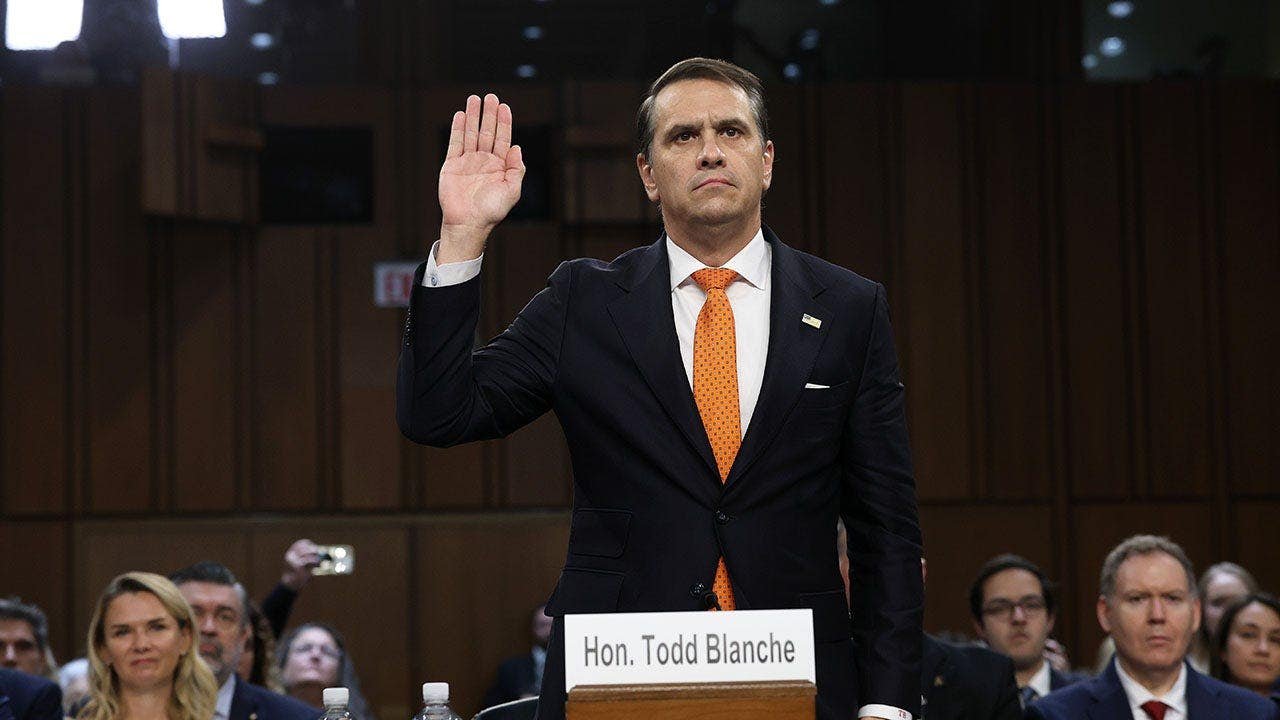
Acting Attorney General Todd Blanche is sworn in during his confirmation hearing before the Senate Judiciary Committee on Capitol Hill in Washington, D.C. (Win McNamee/Getty Images)
The fund never became operational: no members were appointed, no money was transferred, no claims process was established and no payments were made, according to the Justice Department.
«My team and I have met with committee members and Senators over the past several weeks and addressed any concerns or outstanding questions,» Blanche said in a post on X Sunday.
«We have enjoyed good faith discussions, and as a result issue the following order and update with regard to the May IRS settlement. The Department always welcomes and appreciates productive engagement with all members of Congress,» he added.
Blanche’s order formally rescinded the May 18 directive establishing the fund and clarified that tax-related protections in the settlement apply only retroactively, not to future filings.
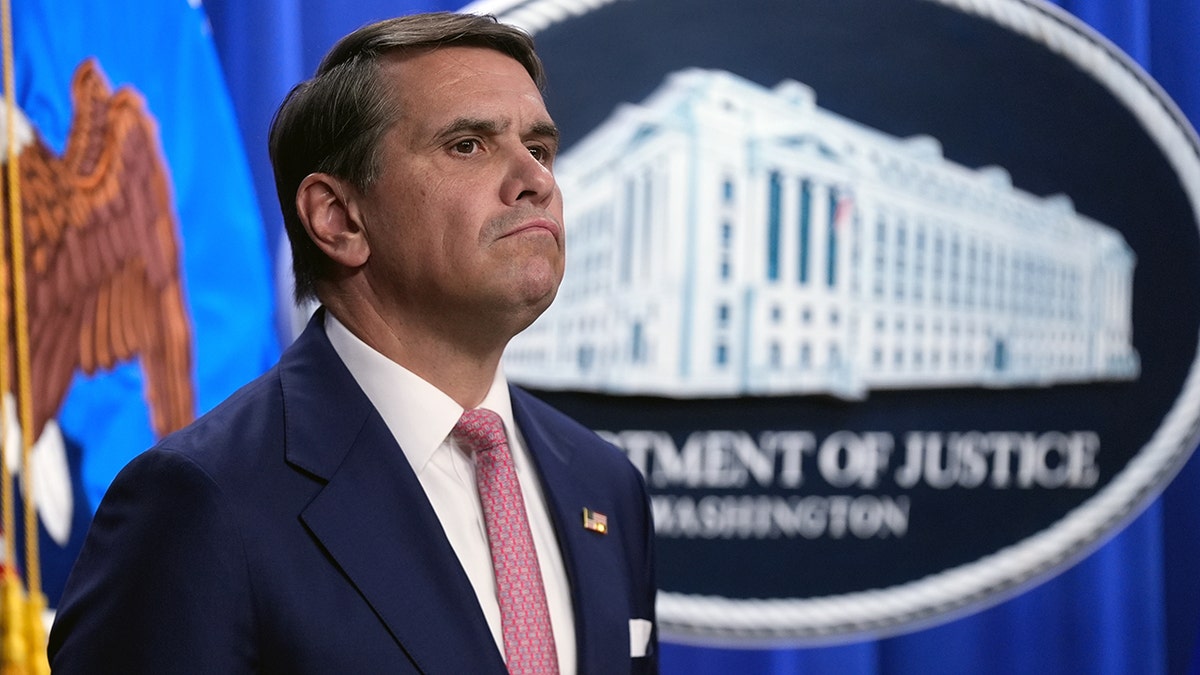
Acting Attorney General Todd Blanche listens during a news conference at the Justice Department on Wednesday, July 1, 2026, in Washington, D.C. (Manuel Balce Ceneta/AP)
Cornyn and Tillis had sought the commitment in writing amid concerns that the fund could be revived, particularly as Trump continued to publicly support the idea. Lawmakers had also raised concerns that people convicted in connection with the Jan. 6, 2021, Capitol riot could be eligible for payments.
«Sen. Cornyn has reached an agreement with the Department of Justice, which will be issuing a formal order permanently terminating the anti-weaponization fund and making clear in a binding written document that the scope of the audit settlement is limited to only the plaintiffs, including the President, and the IRS,» Natalie Yezbick, a Cornyn spokesperson, told Politico.
Tillis had not announced whether the agreement was enough to secure his support.
Tills is expected to follow Cornyn in backing Blanche on Tuesday after saying on Saturday, before the agreement was reached, that Trump «clearly intends to resurrect the payout pot for punks either by inappropriately establishing another bogus fund or pushing Congress to vote for a bill that the majority of Republicans in the Senate would be against.»
TRUMP THREATENS TO YANK HIS OWN AG NOMINEE AS GOP REVOLT GROWS

Sen. John Cornyn, R-Texas, talks with Sen. Thom Tillis, R-N.C., during a Senate Finance Committee hearing in the Dirksen Senate Office Building on Capitol Hill on July 30, 2026, in Washington, D.C. (Win McNamee/Getty Images)
«It’s unfortunate that Todd Blanche, who I consider qualified for the job, will not be confirmed because of this reversal. Hopefully, we can resolve this by Tuesday,» Tillis said at the time.
Blanche has been serving as acting attorney general since he took over for Pam Bondi in April.
Senate Republicans hope to advance Blanche’s nomination before the end of the week.
todd blanche, justice department, politics, donald trump
INTERNACIONAL
Crisis en Cuba: la isla sufrió un nuevo apagón nacional y ya acumula seis colapsos de su sistema eléctrico en 2026

Cuba sufrió el domingo por la noche un nuevo apagón nacional después de que el Sistema Eléctrico Nacional registró una “desconexión total”, según informó la empresa estatal Unión Eléctrica (UNE). El colapso dejó sin suministro a gran parte del país, incluida La Habana, y marcó el sexto apagón generalizado de la isla en lo que va de 2026.
La interrupción ocurrió apenas 24 horas después de otro incidente que dejó sin electricidad a cinco de las 15 provincias cubanas. Desde finales de 2024, el país acumuló 11 colapsos masivos de su red eléctrica.
La Unión Eléctrica comunicó a través de sus redes sociales que ocurrió una “desconexión total” del Sistema Eléctrico Nacional. El Ministerio de Energía informó que “se estaban aplicando los protocolos para reactivar la red”, con el objetivo de restablecer el suministro en todo el territorio.
El corte sorprendió a miles de personas en La Habana, donde numerosos residentes permanecían en las calles para aliviar las altas temperaturas del verano cuando la electricidad se interrumpió de forma repentina. La falta de suministro volvió a afectar el funcionamiento cotidiano de hogares, comercios y servicios básicos.
La crisis energética cubana se prolonga desde hace varios años y responde a las limitaciones estructurales del sistema eléctrico. Las siete centrales termoeléctricas que sostienen la mayor parte de la generación nacional superan los 40 años de funcionamiento y presentan distintos niveles de deterioro.

A esa situación se suma la escasez de combustible disponible para alimentar las plantas generadoras. Según las autoridades del régimen cubano, el embargo energético de Estados Unidos limitó el acceso regular a los suministros necesarios para mantener la producción eléctrica.
Washington autorizó este año la llegada de un único petrolero ruso con 100.000 toneladas de crudo, que arribó a la isla en marzo. Sin embargo, esas reservas ya se agotaron, según la información oficial.
Además del bloqueo petrolero, la administración del presidente Donald Trump intensificó las sanciones contra empresas estatales cubanas, una medida que provocó que varias compañías extranjeras suspendieran sus operaciones en la isla, de acuerdo con el régimen cubano.
La Habana sostiene que las sanciones estadounidenses representan el principal factor detrás del deterioro del sistema eléctrico. En cambio, Estados Unidos atribuye la crisis energética a problemas de gestión económica interna y al estado de la infraestructura del país.
Los cortes de electricidad también afectan otros servicios esenciales. Cada interrupción reduce el suministro de agua potable debido a la paralización de los sistemas de bombeo y deja sin funcionamiento ventiladores y equipos de refrigeración en medio del verano caribeño.
La reiteración de estos episodios alteró la rutina de millones de cubanos. Las interrupciones prolongadas del servicio dificultan la conservación de alimentos, limitan la actividad comercial y afectan el funcionamiento de hospitales, escuelas y otras instalaciones que dependen del suministro eléctrico continuo.

Con una población cercana a los 9,4 millones de habitantes, Cuba enfrenta uno de los períodos más complejos para su sistema energético. Los seis apagones nacionales registrados desde enero reflejan la fragilidad de una infraestructura que también sufrió cinco colapsos generalizados entre finales de 2024 y el cierre de 2025.
Frente a este escenario, el régimen cubano impulsó una serie de reformas de libre mercado con el objetivo de fortalecer la economía y generar nuevas fuentes de ingresos que permitan atender las dificultades estructurales del país. Mientras tanto, las autoridades energéticas trabajan para restablecer el servicio tras un nuevo colapso que volvió a dejar a la isla completamente a oscuras.
(Con información de AFP)

Inédito boicot a un decreto para bajar costos portuarios: el Gobierno envió intimaciones con Prefectura

¿Qué va a pasar con las acciones argentinas?: el S&P Merval sube 8% en 2026, pero pierde contra la inflación

Fue campeón con Boca, estuvo a un paso de ser citado por Bielsa y hoy maneja una empresa de demoliciones: “Tenía que seguir el legado”

A días del inicio de las maniobras anuales Han Kuang, Taiwán aseguró que la cooperación militar con EEUU supera lo imaginado

Se reactiva el Senado: audiencias por jueces, inicio del Súper RIGI y día “D” para una ley mileísta

Pokémon Champions anuncia mantenimiento para este 5 de agosto – Nintenderos

“Vamos a acelerar con todo”: el objetivo del Gobierno por las reformas y la agenda electoral de cara al 2027

Reelecciones indefinidas: el oficialismo bonaerense niega que busque ampliar la Legislatura como parte de una reforma política para beneficiar a los intendentes

“Casta”, “parásito” y “sea democrático”: fuerte respuesta de Victoria Villarruel a Diego Santilli

Dem senator swipes credit for bill he opposed amid heated reelection bid: ‘Disturbing pattern’
-
 POLITICA20 horas ago
“Vamos a acelerar con todo”: el objetivo del Gobierno por las reformas y la agenda electoral de cara al 2027
-
 POLITICA8 horas ago
Reelecciones indefinidas: el oficialismo bonaerense niega que busque ampliar la Legislatura como parte de una reforma política para beneficiar a los intendentes
-
 POLITICA2 días ago
“Casta”, “parásito” y “sea democrático”: fuerte respuesta de Victoria Villarruel a Diego Santilli