INTERNACIONAL
Estados Unidos negocia un acuerdo con Irán que le daría más tiempo, otra vez


NEWYou can now listen to Fox News articles!
This is part six of a series examining the challenges confronting the NATO alliance.
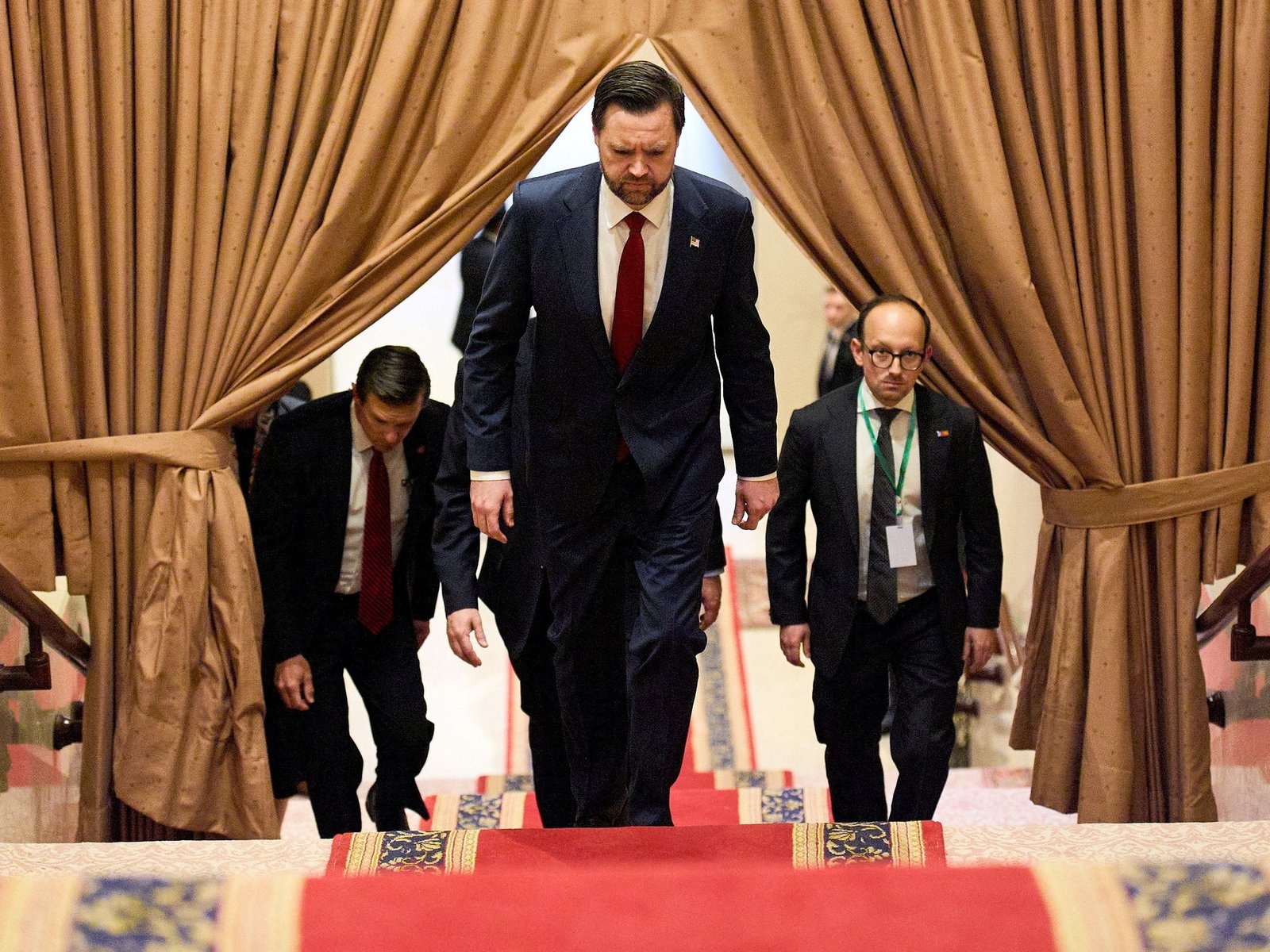
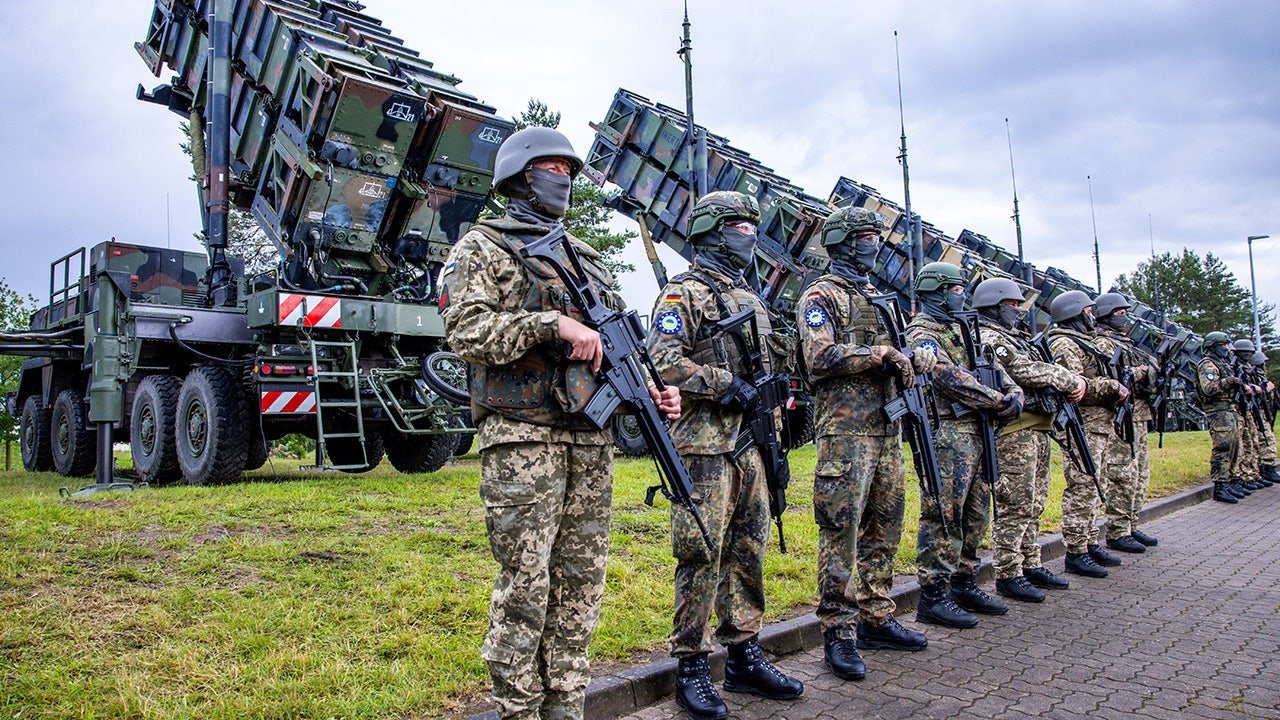
Germany is pledging to become a more powerful military force inside NATO, with Berlin’s ambassador to Washington telling Fox News Digital that the country is ready to assume greater responsibility for European security after decades in which the United States carried much of the alliance’s military burden.
«Germany is stepping up — we heard the call!» German Ambassador to the United States Jens Hanefeld told Fox News Digital in an exclusive interview.
Chancellor Friedrich Merz has said Germany’s armed forces should become the strongest conventional army in Europe, a goal Hanefeld said is now backed by Berlin’s new military strategy.
UK, GERMAN DEFENSE OFFICIALS DEFEND MILITARY BUILDUP UNDER RUSSIAN THREATS
Germany is pledging to become a more powerful military force inside NATO, with Berlin’s ambassador to Washington telling Fox News Digital that the country is ready to assume greater responsibility for European security. (Kira Hofmann/Photothek via Getty Images)
«Russia’s illegal war of aggression has shaken old certainties in Europe and Germany as the international rules we have relied on are being challenged,» Hanefeld said. «This changes the strategic environment we operate in.»
«Today, Germany is Ukraine’s largest supporter,» Hanefeld said in written answers. «Germany’s decision to become Europe’s strongest conventional army, well anchored in the NATO alliance, is an ongoing commitment.»
Germany’s historic military shift
The shift marks a historic turn for a country whose postwar military identity was built around restraint.
After World War II, West Germany was allowed to rearm only within a Western alliance framework, joining NATO in 1955 and building the Bundeswehr as a force embedded in collective defense rather than independent German power. For decades after reunification, Germany relied heavily on the U.S. security umbrella and often lagged behind NATO spending targets, feeding repeated American complaints that Europe’s largest economy was not pulling its weight.
Russia’s full-scale invasion of Ukraine in 2022 forced Berlin to begin rethinking that posture. Then-Chancellor Olaf Scholz called the shift a «Zeitenwende,» or turning point. Merz is now seeking to turn that phrase into a long-term military buildup.
In Germany, Hanefeld said, the changes underway are often described as a «Zeitenwende,» but he acknowledged that the transformation does not come easily given the country’s history.
GERMAN DEFENSE MINISTER SAYS MILITARY DRAFT COULD RETURN IF VOLUNTEER NUMBERS FALL SHORT
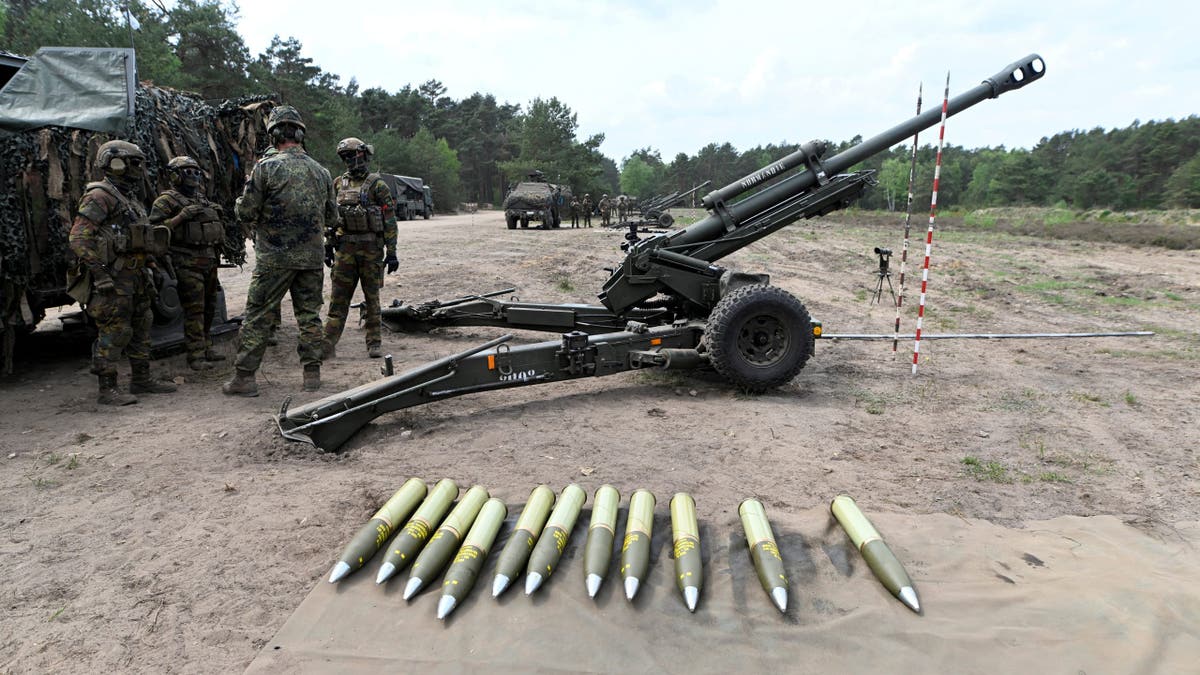
Ammunition for a howitzer is displayed during NATO training at a German army base in Munster, Germany, on May 10, 2022, involving up to 7,500 soldiers from nine nations. (Fabian Bimmer/Reuters)
Trump–Merz tensions complicate NATO politics
The effort is unfolding against a backdrop of public friction between President Donald Trump and Merz, a dispute that a U.S. defense expert warned could complicate critical decisions on deterring Russia.
The tension escalated after Merz criticized Washington’s handling of the Iran war, saying the United States was being «humiliated» by Iran’s leadership in negotiations and questioning the Trump administration’s exit strategy. Trump fired back by accusing Merz of being soft on Iran’s nuclear program, even though Merz has said Iran must not obtain a nuclear weapon.
The dispute quickly spilled into NATO politics. Trump later threatened to review possible U.S. troop reductions in Germany and said Merz should spend more time ending the war in Ukraine and «fixing his broken country» than commenting on Iran.
Then Merz added another irritant. Speaking to a young audience in Germany, he said he would not advise his children to live, study or work in the United States «today,» citing America’s changing social climate, while also saying he remained «a great admirer of America,» but «My admiration isn’t growing at the moment.»
GERMANY’S MERZ TO ‘ADAPT’ TO TRUMP DURING HIGH-STAKES MEETING ON TARIFFS, DEFENSE
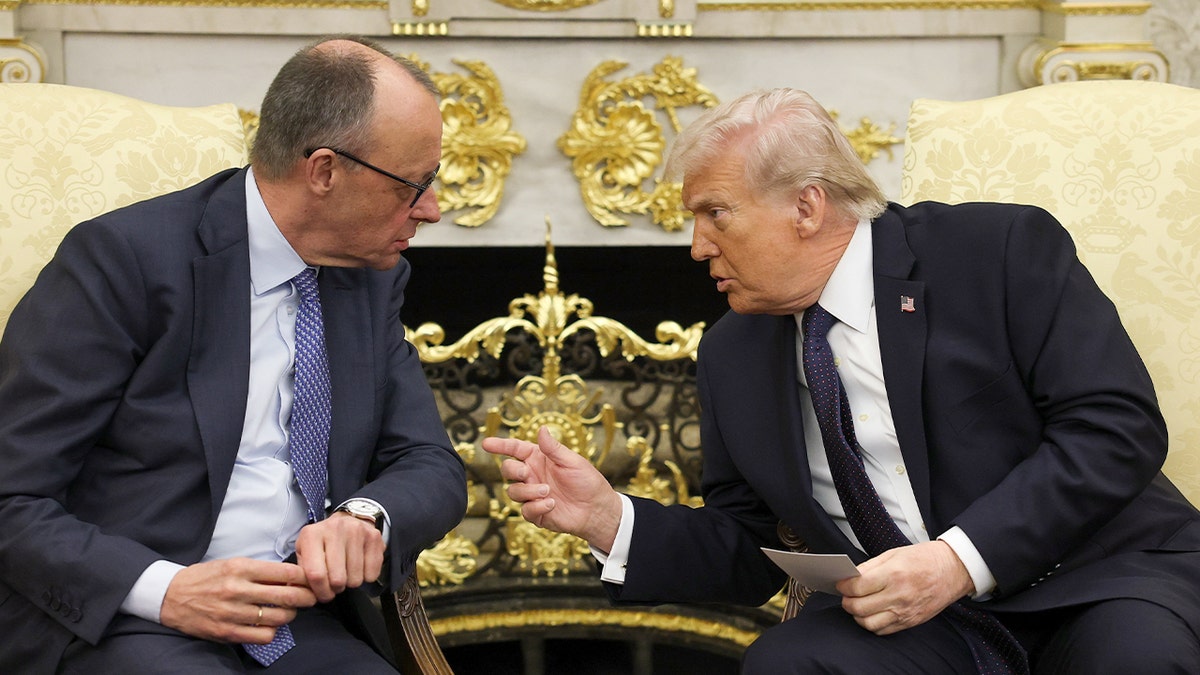
President Donald Trump and German Chancellor Friedrich Merz met in the Oval Office at the White House in Washington, D.C., on March 3, 2026, to discuss issues including recent U.S. and Israeli strikes on Iran. (Win McNamee/Getty Images)
Retired Rear Adm. Mark Montgomery, a senior fellow at the Foundation for Defense of Democracies and former U.S. European Command official, told Fox News Digital that Merz was wrong to speak that way about Trump at a moment when Germany needs Washington’s support.
«Talking trash about the president at a meeting with school kids in Germany is not professional diplomacy, and especially a president who is well-known to be prickly as President Trump,» Montgomery said. «Germany is not the big country in this relationship, the United States is, and Merz needed to show more discipline as a national leader.»
Montgomery said those tensions risk affecting hard security decisions, including long-range strike capabilities in Germany.
He criticized recent U.S. moves to delay or potentially cancel a rotational deployment of long-range strike systems to Germany, which he said would have included Tomahawk, SM-6 or Precision Strike Missile capabilities. Reuters reported in May that Germany’s defense ministry said there had been no «definitive cancellation» of the deployment.
«Both of these are bad decisions being made by our Department of Defense,» Montgomery said. «These are weapons systems that are incredibly important to deterring Russia.»
He said the goal is not to fight Russia in Poland, the Baltics or the Suwałki Gap, but to prevent Moscow from attacking in the first place.
«And those long-range strike weapons are a big part of that. And I’m very disappointed in our Department of Defense,» Montgomery said.
A source with knowledge of the matter said that despite briefings about possible decreases in U.S. involvement, the U.S.–Germany defense relationship remains strong and cooperation remains close.
‘PUTIN IS PUSHING THE LIMITS’: EASTERN ALLIES WARN TRUMP NOT TO PULL US TROOPS
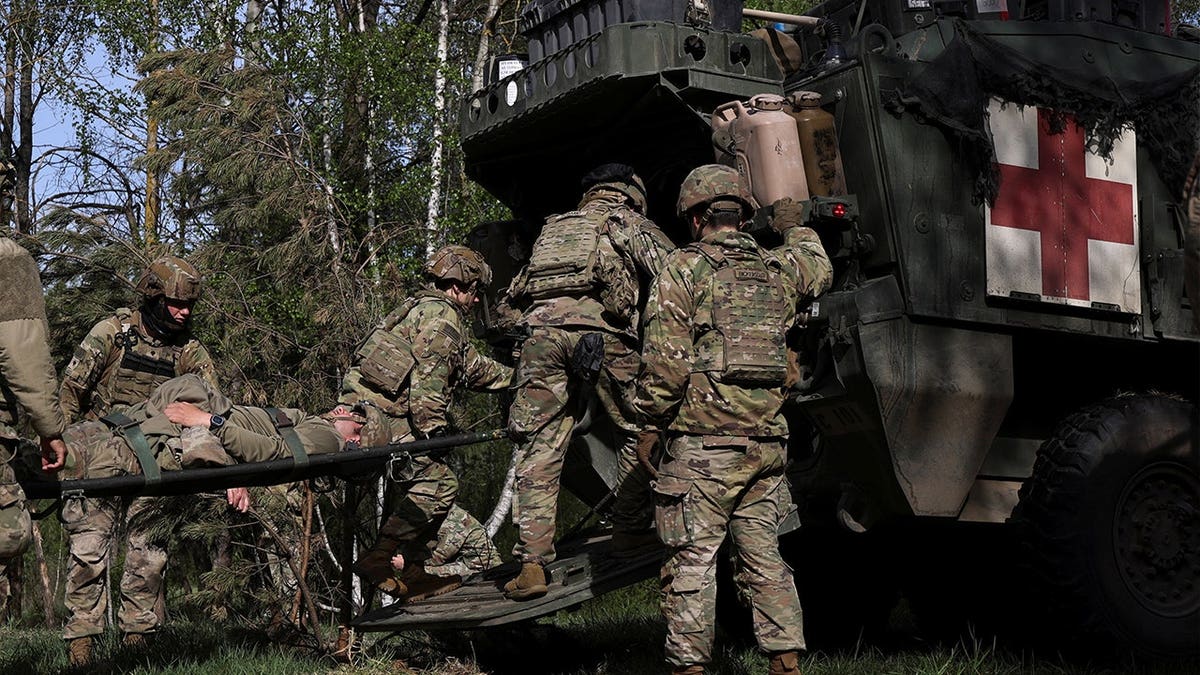
U.S. Army soldiers carry a simulated casualty into a MEDEVAC vehicle during NATO’s Sword 26 exercise, which tests new battlefield evacuation methods using drones and AI-assisted medical technology in Bemowo Piskie, Poland, May 11, 2026. (Kuba Stezycki/Reuters)
Europe’s future defense industrial base
«Germany developing a large, impressive defense industrial base is good for NATO, it’s good for Western security, and it’s even good for our primes,» Montgomery said, arguing that Germany, not Poland, France or the United Kingdom, is most likely to become the «beating heart» of Europe’s future defense industrial base.
Germany has long been central to the U.S. military presence in Europe. Hanefeld pointed to Ramstein Air Base, Landstuhl Regional Medical Center and the training area in Grafenwöhr as examples of Germany’s continuing importance to American power projection and NATO deterrence.
«These facilities serve U.S. national security interests and U.S. military personnel and further NATO’s ability to deter and defend,» he said. «I am confident: NATO will remain transatlantic at its core, but will become more European over the next decade.»
At the 2025 NATO summit in The Hague, allies agreed to invest 5% of GDP annually in defense and defense-related spending by 2035, including core military spending and broader security investments. Merz said at the time that the decision was meant to safeguard «freedom, security and prosperity,» according to the German government.
Hanefeld said Germany is already moving to meet that standard, saying Berlin will increase defense spending to 5% of GDP «well before» 2035 and recruit almost 100,000 new active-duty soldiers into the Bundeswehr.
He also pushed back against U.S. critics who argue that Germany and other European allies are still not carrying their fair share of the defense burden. Hanefeld said Germany has signed more than 380 contracts worth more than $33 billion with U.S. defense companies to procure and manufacture fighter jets, transport helicopters, air defense systems and ammunition.
«It’s a down payment on the transatlantic future and on our political commitment to shift the burden for deterrence and defense to Europe,» Hanefeld said.
TRUMP PUSHED NATO TO SPEND BIG — NOW COMES THE HARDER QUESTION: CAN EUROPE ACTUALLY FIGHT?
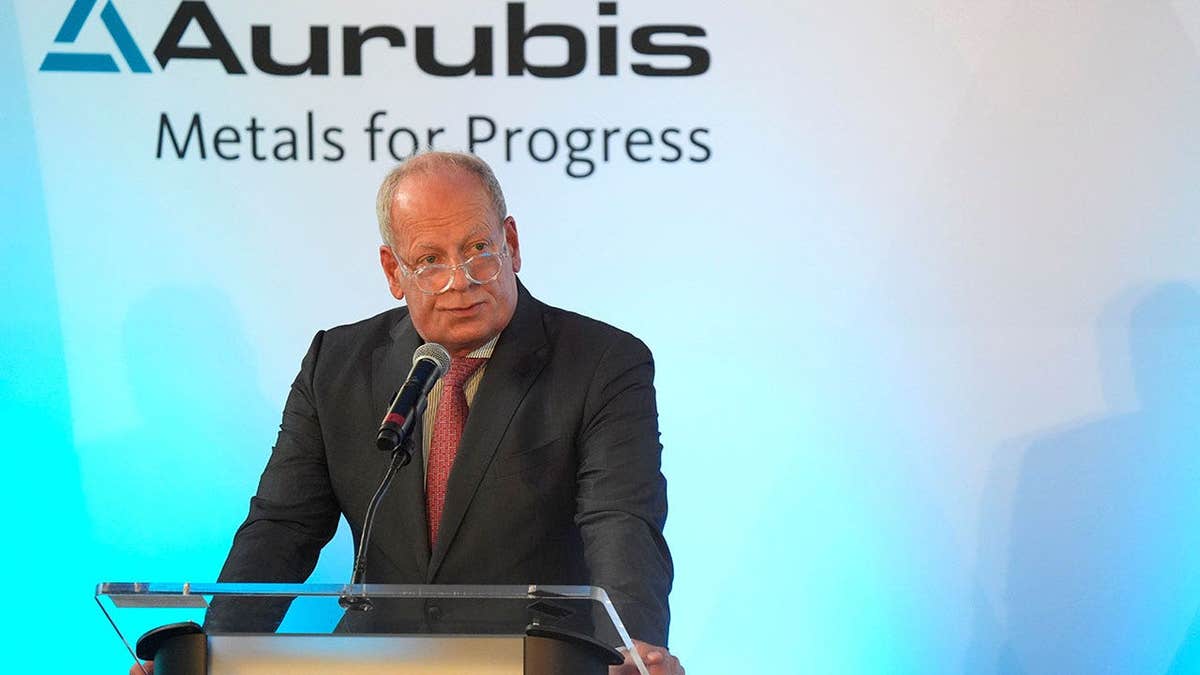
Sept 24, 2025; Augusta, Georgia, USA; H.E. Jens Hanefeld, Ambassador of the Federal Republic of Germany to the U.S., speaks during the Aurubis first melt ceremony at Aurubis Richmond. Aurubis is a metal recycling plant. (Katie Goodale – Augusta Chronicle/USA TODAY NETWORK)
Defending NATO’s eastern flank
One of Germany’s most visible commitments is its permanent brigade in Lithuania, expected to include around 5,000 German military and civilian personnel. The Bundeswehr says the force is intended to become fully operational for the defense of NATO’s eastern flank in the Baltic region within three years.
Hanefeld called the brigade one of Germany’s «signature efforts» to reassure Baltic allies that NATO «will defend every inch of allied territory.»
For Germany, the change is not only about money. It is a political and cultural break with decades of caution about military power. For the United States, it is also a test of whether the ally long criticized by Trump and other U.S. leaders for underspending can now become the European backbone Washington has demanded.
CLICK HERE TO DOWNLOAD THE FOX NEWS APP
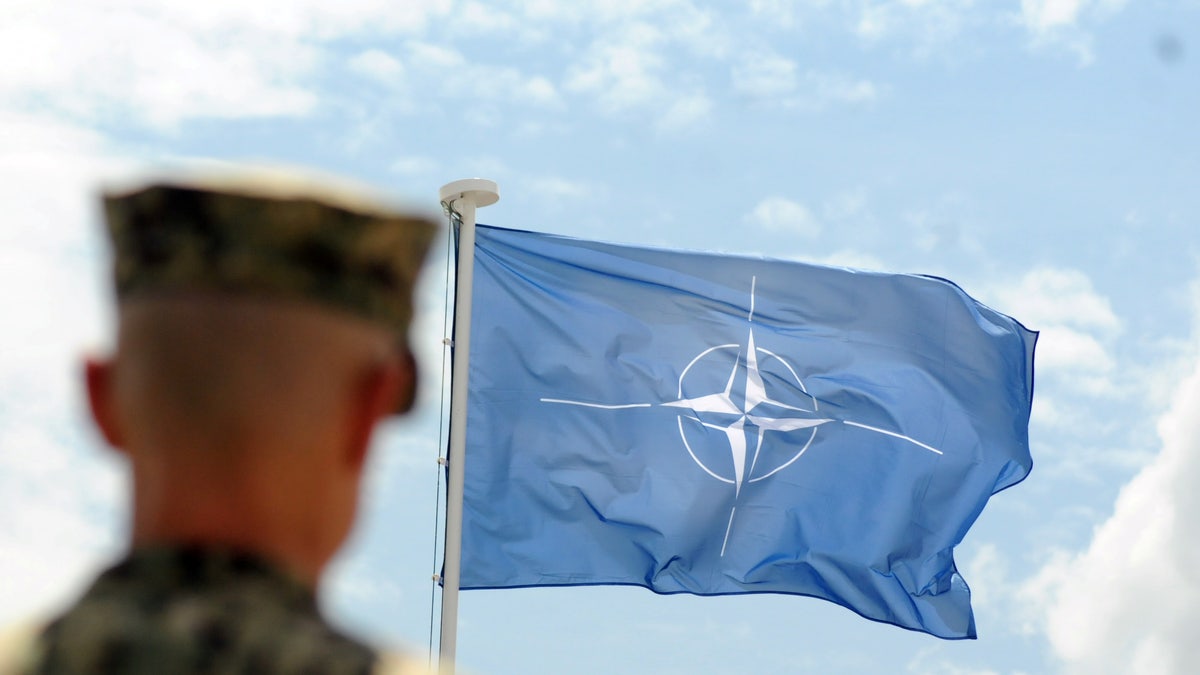
NATO peacekeeping mission KFOR marks its 20th anniversary during a ceremony in Pristina. (Laura Hasani/Reuters)
Hanefeld said that is exactly where Berlin intends to go.
«NATO will remain transatlantic at its core,» he said, «but will become more European over the next decade.»
nato, ukraine, germany, spending, military
INTERNACIONAL
Rusia pierde otro aliado estratégico: Armenia mira a Europa y Putin lanza sanciones bajo la sombra de Ucrania
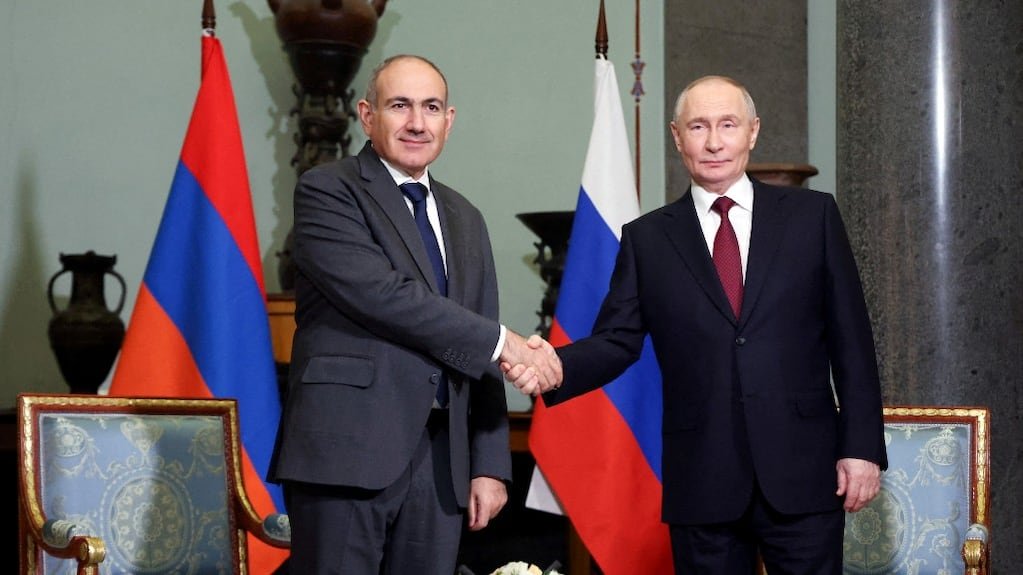
A Rusia le nació otro aliado rebelde. Armenia, su socia histórica, inició un proceso de distanciamiento de Moscú y de fuerte acercamiento a Europa, lo que abrió serios interrogantes sobre el futuro de las relaciones bilaterales ruso-armenias.
El partido del primer ministro armenio, Nikol Pashinián, ganó ampliamente las recientes elecciones legislativas en su país con la promesa de afianzar su convergencia con la Unión Europea e incluso con Estados Unidos. En Moscú ya se encendieron todas las alarmas.
El partido oficialista Contrato Civil obtuvo un 49,8% de los votos con una amplia ventaja sobre la alianza Armenia Fuerte del multimillonario ruso-armenio Samvel Karapetián, que alcanzó el 23,3%, según cifras oficiales.
La oposición pidió anular los comicios por supuestas irregularidades y el arresto de activistas. Teme que el gobierno armenio oficialice pronto su intención de iniciar un proceso de adhesión a la UE.
¿Qué está pasando en Armenia?
El país, de mayoría católica, atraviesa un momento histórico difícil.
Hace tres años perdió en una guerra relámpago el disputado enclave de Nogorno Karavaj (Artsaj para los armenios) a manos de su vecino Azerbaiyán. La población local debió huir y refugiarse en Armenia. No fue el primer conflicto armado por ese territorio, pero las autoridades se sintieron abandonadas por Rusia, que mantenía tropas de paz en la región. Acusan a Vladimir Putin de no hacer absolutamente nada a pesar de las estratégicas relaciones bilaterales de más de dos siglos para no dañar sus vínculos con los azeríes.
Desde entonces, la relación entre Ereván y Moscú no fue la misma. Pashinián, en el poder desde 2018, inició un proceso que muchos analistas compararon con la “perestroika”, la reforma política y económica que terminó por disolver la Unión Soviética. Pero el principal plato fuerte de este vuelco político fue su acercamiento con el mundo occidental y una velada intención de adherirse a la UE en el futuro. El primer ministro armenio, Nikol Pashinian (Foto: Reuters)
“Todos vemos lo que está ocurriendo ahora con Ucrania (…) ¿Cómo empezó todo? Con el intento de Ucrania de unirse a la UE”, advirtió Putin en mayo.
El distanciamiento entre estas dos exrepúblicas socialistas soviéticas llevó a algunos analistas a alertar sobre el peligro de que Armenia se convierta en una nueva Ucrania, invadida por Rusia en febrero de 2022 y cuya guerra se extiende desde hace más de tres años.
Oleg Ignatov, analista de asuntos rusos del Crisis Group, una ONG especializada en la resolución de conflictos, dijo a TN que estos “son casos completamente diferentes. Hay muy pocos rusos étnicos en Armenia, por ejemplo”.
Leé también: El lado político del Mundial: qué pone en juego Trump entre polémicas, abucheos y redadas migratorias
“El conflicto entre Armenia y Rusia se está desarrollando no por las elecciones, sino porque, desde la perspectiva del Kremlin, el liderazgo de Armenia —a la que Moscú considera su aliado militar y geopolítico— decidió cambiar por completo su política exterior en medio de la guerra en Ucrania”.
Para el analista, “este conflicto podría seguir escalando”.
Rusia anunció sanciones comerciales contra Armenia
De hecho, Rusia llamó a consultas a Moscú a su embajador en Armenia, Serguéi Kopirkin, a finales de mayo. ¿La causa?: “Las medidas adoptadas por el liderazgo armenio para acercarse a la Unión Europea, las cuales son perjudiciales para la cooperación dentro de la Unión Económica Eurasiática (UEE)”, según la Cancillería rusa.
El Kremlin fue contundente: Armenia debe elegir entre la Unión Económica Euroasiática, liderada por Moscú, o la Unión Europea. Incluso llegó a exigir un referéndum nacional.
No solo la presión viene desde la retórica diplomática. También hubo sanciones. En los últimos días, Moscú prohibió la totalidad de las importaciones de productos sujetos a cuarentena procedentes de Armenia. Se trata de bienes agrícolas, forestales o animales sometidos a medidas de bioseguridad para prevenir la introducción o propagación de plagas y enfermedades.
La lista incluye flores, verduras, frutas, bayas, cereales, tabaco y madera, entre otros productos.
Leé también: Balotaje en Colombia: quién es Abelardo de la Espriella, el “outsider” que admira a Trump y promete mano dura
“Rusia se toma muy en serio las amenazas de revocar las preferencias comerciales para Armenia”, dijo Ignatov.
Según el analista, “Pashinian tiene la oportunidad de calmar las cosas ahora que han terminado las elecciones”.
“La retórica preelectoral es una cosa, la política real es otra. En Europa no se habla de la integración de Armenia en la UE. Se trata más bien de una cuestión a muy largo plazo. El propio Pashinian lo reconoce. Por lo tanto, Armenia no tiene motivos para deteriorar sus relaciones con Moscú en este momento, y creo que Pashinian tomará algunas medidas para apaciguar la situación”, indicó. El presidente ruso, Vladimir Putin (Foto: Sputnik/Vyacheslav Prokofyev/Pool via REUTERS)
“Diálogo y diversificación económica”
Hovhannes Virabyan, embajador de Armenia en la Argentina, dijo a TN que su país “ha seguido en los últimos años una política exterior activa y equilibrada”.
“En este marco, también ha establecido asociaciones estratégicas con diversos países, incluidos varios Estados miembros de la Unión Europea y los Estados Unidos. Estas asociaciones están orientadas al desarrollo del diálogo político y a la diversificación económica, y se fortalecen mediante importantes proyectos mutuamente beneficiosos, visitas de alto nivel y diversas iniciativas”, sostuvo.
“Sin embargo —advirtió—, esto no se lleva a cabo a expensas de las relaciones con otros socios ni en contra de ellos. Armenia aspira a mantener relaciones de cooperación mutuamente beneficiosas con todos los países, sobre la base de los principios de soberanía y respeto mutuo, en función de los intereses nacionales del Estado armenio”, concluyó.
La gran duda es saber si Putin permitirá que otro aliado histórico regional abandone el ala del Kremlin para acercarse a la UE y, por ende, quedar más cerca de la OTAN.
Armenia, Rusia, Vladimir Putin, Sumario
INTERNACIONAL
‘The Office’ star blasts political ‘hypocrisy,’ explains why sitcom couldn’t be made today

WATCH: Rainn Wilson says ‘The Office’ couldn’t be made today
‘The Office’ star says cancel culture and political division have made it harder for modern-day comedies to thrive, shares frustration with partisan double standards and growing political division. (Credit: Nicholas Ballasy for Fox News Digital)
NEWYou can now listen to Fox News articles!
Rainn Wilson, best known for playing Dwight Schrute on hit sitcom «The Office,» says partisan hypocrisy on both sides of the political aisle is fueling America’s divisions, while arguing that cancel culture has stifled modern-day comedy.
Wilson told Fox News Digital that cancel culture, a result of growing political divisions, has damaged the ability for a comedy in a show like «The Office» to thrive and be acceptable in today’s society.
«I do feel like you couldn’t make The Office today,» Wilson said. «I think that would be too hard to be as politically incorrect as the show was. And I do, I do kind of miss that.»
He explained how, despite that both his character and actor Steve Carell’s role as Michael Scott, were purposely portrayed as lacking «self-awareness» and «a boob,» the humor still would not fly or be viewed as socially acceptable in today’s society.
DAVID MARCUS: 20 YEARS AFTER ‘THE OFFICE,’ ‘THE PAPER’ TACKLES THE POST ME-TOO WORKPLACE
John Krasinski as Jim Halpert, Rainn Wilson as Dwight Schrute, Jenna Fischer as Pam Beesly, and Steve Carell as Michael Scott appear in a scene from the pilot episode of «The Office.» (Chris Haston/NBCU Photo Bank)
«We milked that for a lot of great, really inappropriate stuff,» Wilson said. «But even with the fact that painting that character as just an idiot, I don’t think you could get away with it today.»
Aside from comedy, Wilson said one of the biggest drivers of America’s political dysfunction is what he described as partisan hypocrisy, with both Republicans and Democrats quick to condemn misconduct of the opposing party while overlooking similar behavior on their own side.
Wilson used the response to Maine Democratic Senate nominee Graham Platner’s list of growing scandals throughout his campaign as an example, specifically citing the reaction to his Nazi tattoo as racist or religious discrimination.
WHITNEY CUMMINGS CALLS OUT LIBERAL HYPOCRISY ON CLIMATE CHANGE AND VACCINE MANDATES DURING PODCAST APPEARANCE

Graham Platner, a Democratic candidate for U.S. Senate in Maine, points to a covered tattoo that was previously recognized as a Nazi symbol during an interview in Portland, Maine, on Oct. 22, 2025. (WGME via AP)
«The political right is all up in arms about that ‘Oh, he’s a racist, see,’» Wilson explained. «But they won’t look at their own side when people show racist tendencies or say racist things. And it’s the same on the left. They’re willing to overlook the Platner Nazi tattoo, but if it was someone from the other side that had a tattoo that was questionable, they would be all over MSNBC about it.»
«It’s the hypocrisy that gets me the most. It’s the hypocrisy of like, both sides need to have, kind of, equal standards of behavior.»
Despite his concerns about political division, Wilson argued that faith and spirituality remain one of the country’s most overlooked sources of common ground.
«There’s not any topic that has more commonality and mutuality than spiritual ideas,» Wilson said.
«The ideas around spirituality have kind of been weaponized in terms of the national discussion, but actually the two sides have more in common than you would think.»
PRIEST, PASTOR, RABBI ADDRESS ‘CRISIS’ OF DECLINING FAITH POPULATION IN DIVIDED AMERICA: IT’S AN ‘OPPORTUNITY’
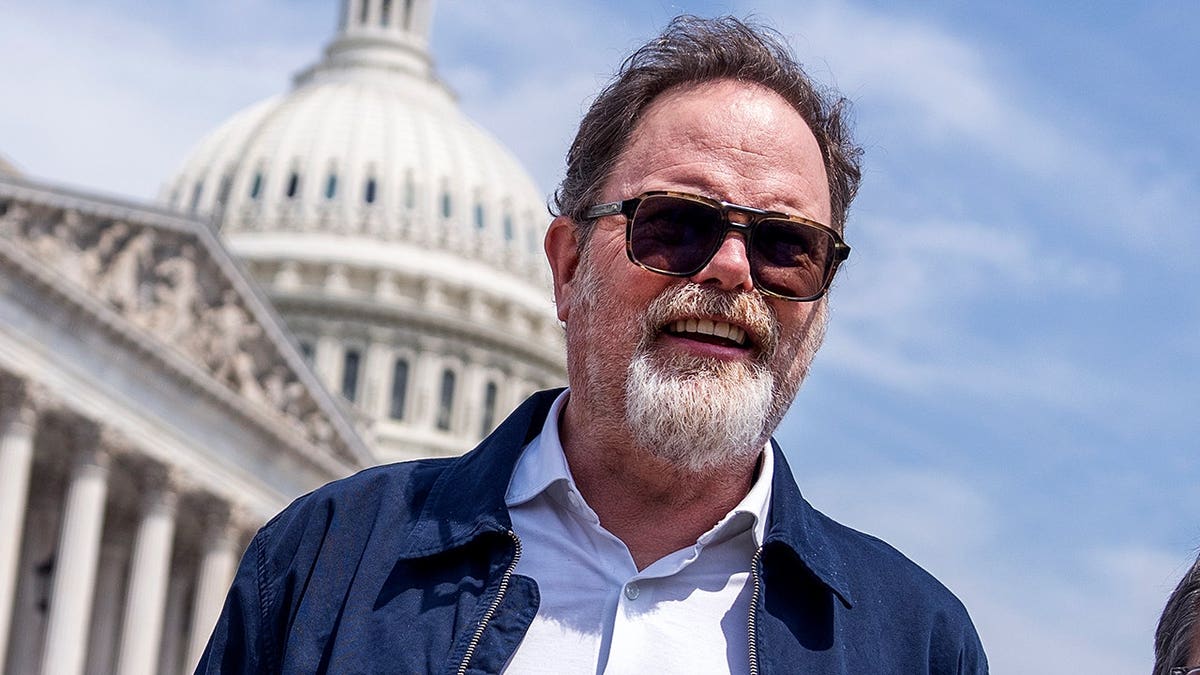
Rainn Wilson addresses a Capitol Hill press conference in Washington, D.C., as part of an effort promoting dialogue across political and ideological divides. (Tom Williams/CQ-Roll Call, Inc via Getty Images)
Wilson made the remarks while appearing on Capitol Hill alongside Reps. Brendan Boyle, D-Pa., and Gus Bilirakis, R-Fla., and religious leaders for the public release of A Common Endeavor: Realizing the Promise of America, a five-part letter backed by leaders of the Baha’i faith that works to bridge political polarization and focus on shared American values.
CLICK HERE TO DOWNLOAD THE FOX NEWS APP
«The partisan divide and toxic partisanship, and corruption in partisanship, is something that the American people are very passionate about,» Wilson said.
«The people want this fixed. There is an outcry from people. They want it fixed.»
sitcom, graham platner, issues, cancel culture, republicans

Germany pledges to build Europe’s strongest army as NATO allies answer Trump pressure

La economía todavía no se lleva puesta a la política

El error que podemos repetir

Alemania vs Curazao, EN VIVO, por el Mundial 2026: hora, TV, formaciones y todo lo que hay que saber

La decisión final de Karina, los motivos que sostienen a Adorni y por qué el mercado no tiene miedo a una crisis política

Dictaron prisión preventiva para dos médicos tras el hallazgo de casi 300 ampollas de fentanilo y morfina

“Me parece una vergüenza”: la dura crítica de Victoria Villarruel a la declaración jurada de Manuel Adorni

Se viralizó un tuit en el que Adorni contaba que en 2018 le habían cortado la luz por falta de pago

Manuel Adorni y su esposa decidieron acogerse al régimen de “inocencia fiscal” aunque aseguran que no declararán dólares

Diputados de la Coalición Cívica denunciaron penalmente a Manuel Adorni por presuntas irregularidades en sus declaraciones juradas

 POLITICA2 días ago
Se viralizó un tuit en el que Adorni contaba que en 2018 le habían cortado la luz por falta de pago
- POLITICA2 días ago
Diputados de la Coalición Cívica denunciaron penalmente a Manuel Adorni por presuntas irregularidades en sus declaraciones juradas
- ECONOMIA1 día ago
Jan De Nul defendió el proceso de licitación de la Hidrovía con una carta a las principales entidades vinculadas a la vía navegable