INTERNACIONAL
La IA y la capacitación tecnológica impulsan aumentos salariales de hasta 30% en Chile


Durante los últimos tres años, Chile ha consolidado su liderazgo en inteligencia artificial (IA) en América Latina. Según el último Índice Latinoamericano de Inteligencia Artificial (ILIA), el país alcanzó 70.5 puntos, reflejando la solidez de su industria tecnológica y el impulso de políticas públicas orientadas a la innovación y la formación de talento.
El crecimiento no es solo institucional. La inteligencia artificial ya impacta directamente el mercado laboral: de acuerdo con datos de la plataforma Buk, el 23% de los trabajadores en Chile se está capacitando en IA, posicionando al país como el más activo de la región en este campo.

A este indicador se suma un alto interés por la especialización: el 57% de los trabajadores en Chile busca formación técnica y el 54% participa en procesos de transformación digital dentro de sus empresas. Estas cifras no solo reflejan una tendencia interna, sino que también superan el promedio de la región, donde el interés en formación técnica alcanza el 38% y la participación en transformación digital el 41%.
En este contexto, Chile se ha consolidado como un “hub” de talento digital en la región. Factores como los programas del Servicio Nacional de Capacitación y Empleo (SENCE), incentivos fiscales y el crecimiento del ecosistema tecnológico han facilitado el acceso a formación avanzada, incluso en sectores tradicionales. Como resultado, las habilidades digitales están siendo valoradas en el mercado laboral, con incrementos salariales que pueden alcanzar hasta un 30%.
Del aprendizaje a la productividad
Más allá del acceso a la formación, el foco ahora está en su aplicación. Según Buk, uno de los principales desafíos es lograr que el conocimiento adquirido se traduzca en resultados concretos en el trabajo. Sin una aplicación práctica inmediata, hasta el 70% de la información técnica puede perderse en las primeras 48 horas.

La plataforma señala que, cuando el aprendizaje se aplica de manera efectiva, se generan tres beneficios clave en las organizaciones:
- Reducción de errores: los trabajadores que implementan nuevas técnicas digitales cometen menos fallas, ahorrando tiempo y recursos.
- Mayor autonomía: los colaboradores pueden tomar decisiones sin depender constantemente de supervisores, agilizando la cadena de mando.
- Optimización de procesos: los empleados capacitados sugieren mejoras en los flujos de trabajo, generando un retorno de inversión real.

De acuerdo con la información de Buk, las empresas líderes y exitosas en capacitación en 2026 han adoptado el modelo 70-20-10, en el que el 70% del aprendizaje ocurre en la práctica, el 20% a través de interacción social y solo el 10% en cursos teóricos. Esta metodología ha demostrado su eficacia al reducir errores, aumentar la autonomía y optimizar los procesos internos.
Persisten, no obstante, barreras que pueden limitar el impacto de la capacitación: la falta de tiempo, la resistencia al cambio en los mandos medios y la ausencia de herramientas adecuadas. Para superarlas, Buk recomienda estrategias como proyectos piloto, formación de líderes y personalización de contenidos según los indicadores clave de cada área.
El resultado de estas prácticas es lo que algunos expertos identifican como el “modelo chileno de productividad digital”. En este esquema, la capacitación tecnológica no solo impulsa la eficiencia, sino que también fortalece la competitividad nacional.
inteligencia artificial,educación,universidad,robótica,tecnología,estudiantes,aula,capacitación,innovación,futuro digital











INTERNACIONAL
US won’t move troops despite ‘signed’ Iran deal, as doubts linger over Tehran’s next move
Iran deal could be ‘deadly’ for Israel, former Israeli ambassador argues
Former Israeli Ambassador Michael Oren discusses the Iran deal, warning its specific details could be «deadly» for Israel’s security. Oren notes the deal fails to address key goals like eliminating Iran’s nuclear program, ballistic missile system, and state-sponsored terror. He expresses «great concern» that the nuclear stockpile and control of the Strait of Hormuz remain unanswered questions.
NEWYou can now listen to Fox News articles!
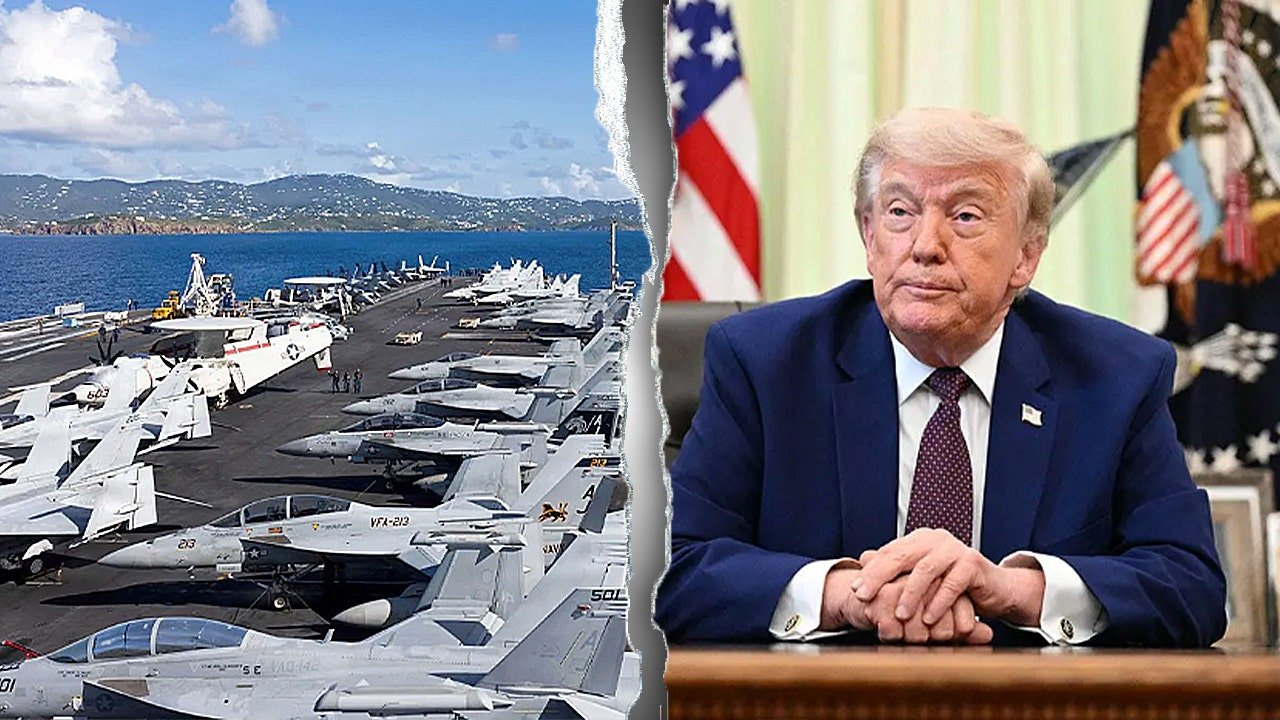
The Trump administration will keep its military buildup in the Middle East in place despite signing a new agreement with Iran, underscoring Washington’s continued distrust of Iran as the two sides enter a 60-day negotiating period.
«The plan is to keep the current force posture during the 60-day negotiations,» a senior U.S. official told reporters on a call Monday. «We hope to draw them down, but we’re not doing that yet.»
«The agreement contemplates the reduction of military forces in the region upon the agreement of a final deal,» the official added.
Officials said President Donald Trump, Vice President JD Vance and Iranian Parliament Speaker Mohammad Bagher Ghalibaf already have signed the memorandum, and that the details of the agreement will be released publicly within the next 24 to 48 hours. A formal signing ceremony is expected later in the week.
The Trump administration will keep its military buildup in the Middle East in place despite signing a new agreement with Iran, underscoring Washington’s continued distrust of Tehran as the two sides enter a 60-day negotiating period. (Mandel Ngan/AFP)
BUILT FOR WEEKS OF WAR: INSIDE THE FIREPOWER THE US HAS POSITIONED IN THE MIDDLE EAST
The decision means the Pentagon will maintain a military posture that recently included roughly 50,000 troops deployed across the Middle East, one of the largest U.S. force concentrations in the region in more than two decades. Publicly available fleet tracking data indicate at least two carrier strike groups remain in the U.S. Central Command area of responsibility.
Officials repeatedly stressed that any sanctions relief, asset releases or future concessions would be tied to verification and Iranian performance, not promises alone, with one senior official acknowledging the two sides remain in the early stages of «building trust.»
That lack of trust was evident in the administration’s description of the agreement, which differs in key respects from accounts published by Iranian officials and state-linked media.
VANCE SAYS TRUMP ADMINISTRATION’S KEY OBJECTIVES HAVE BEEN REACHED IN US-IRAN DEAL
White House officials insisted Monday that no frozen Iranian assets have been released and said any sanctions relief would be conditioned on Iranian performance during the upcoming negotiations.
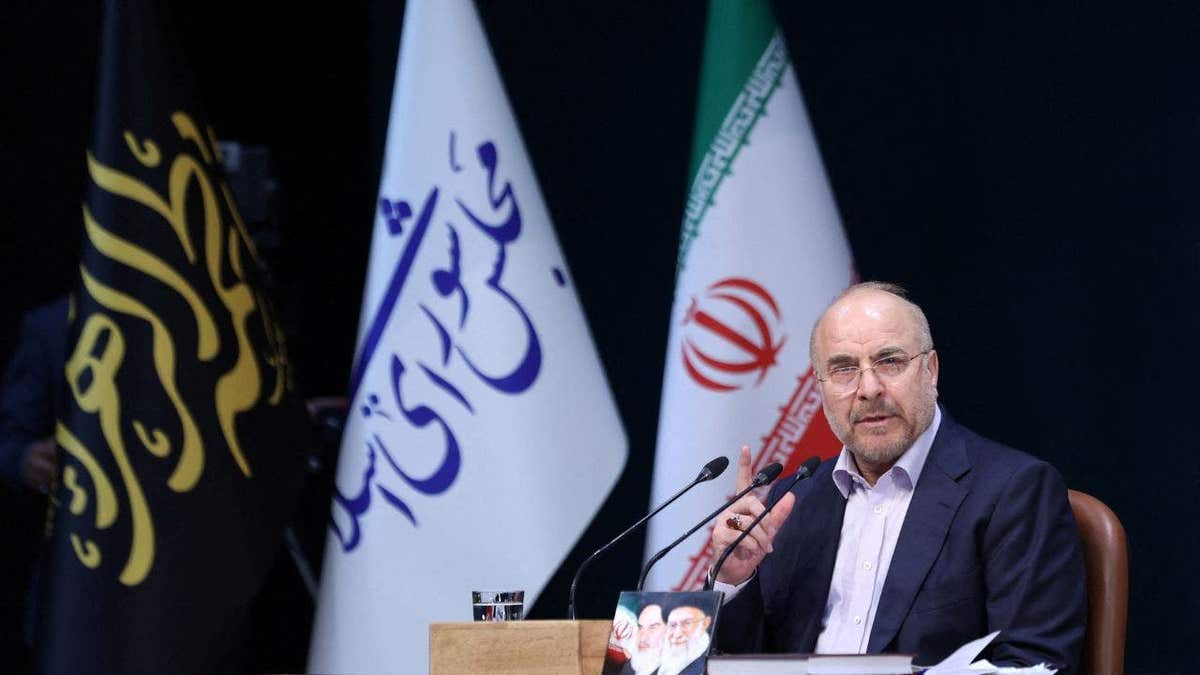
Officials said President Donald Trump, Vice President JD Vance and Iranian Parliament Speaker Mohammad Bagher Ghalibaf, pictured above, have already signed the memorandum with Iran. (Majid Asgaripour/WANA (West Asia News Agency) via REUTERS)
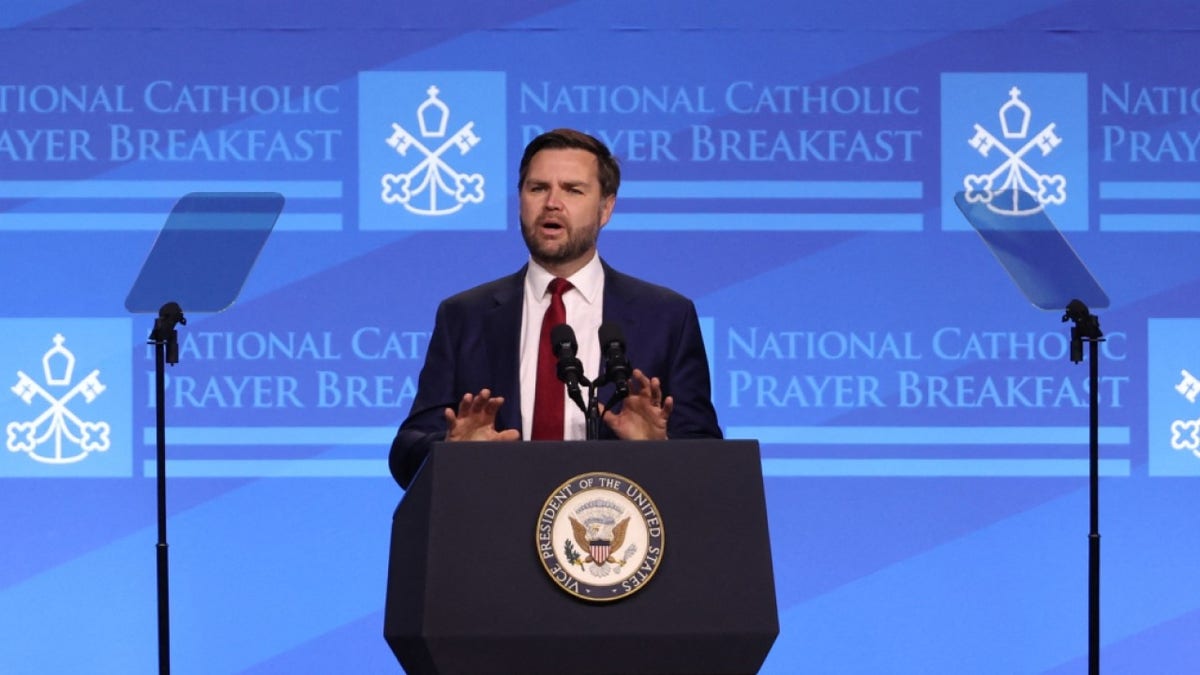
Officials said President Donald Trump, Vice President JD Vance and Iranian Parliament Speaker Mohammad Bagher Ghalibaf have already signed the memorandum. (Ting Shen/AFP via Getty Images)
«The very simple fact is, $0 of unfrozen assets have been released by the United States or any other country,» one official said.
Iranian officials and state-linked media, meanwhile, have described the framework as paving the way for the release of roughly $24 billion in frozen Iranian funds and broader economic relief during the negotiation period.
White House officials disputed reports that any funds have already been released and repeatedly emphasized that future economic concessions would be earned through compliance rather than granted upfront.
IRAN’S REGIME SPINS NUCLEAR AND STRAIT OF HORMUZ DEAL WITH TRUMP AS VICTORY OVER US, ISRAEL
«We’ll do some small gestures of that in the beginning, if they make some small gestures to us,» an official said.
While Trump has portrayed the agreement as a potential turning point in U.S.–Iran relations, the memorandum itself is narrower in scope. The framework extends the ceasefire, establishes a 60-day negotiating window and seeks to reopen the Strait of Hormuz, the strategic waterway through which roughly one-fifth of the world’s oil and liquefied natural gas shipments normally pass.
The reopening of the Strait may prove to be the agreement’s most immediate and economically significant effect. White House officials said the memorandum provides for the opening of the waterway and the lifting of the naval blockade, though they cautioned that commercial shipping could take days or weeks to return to normal levels as mines are cleared and shipping companies regain confidence in the route.
Officials also said the agreement requires the Strait to remain open toll-free during the 60-day negotiating period. The administration expects shipping traffic to increase significantly over the coming days, easing pressure on global energy markets.
The deal, officials said, creates a framework under which Iran could eventually receive sanctions relief and broader access to the global economy in exchange for verifiable steps to ensure it does not rebuild its nuclear program and curbs support for terrorism and regional instability.
CLICK HERE TO DOWNLOAD THE FOX NEWS APP
«If they’re willing to behave like a normal country, then we’re willing to treat them like a normal country,» one official said.
The prospect of renewed traffic through the Strait has already reverberated through global markets. Oil prices fell following news of the agreement as traders bet that one of the world’s most important energy choke points could soon return to normal operations.
war with iran, middle east foreign policy, pentagon, treaties, iran, sanctions
INTERNACIONAL
Medio Oriente: el acuerdo presenta más dudas que certezas y deja para más adelante la cuestión nuclear iraní
Irán y Estados Unidos acordaron un memorando de entendimiento para poner fin a la guerra y reabrir el estratégico estrecho de Ormuz que se firmará el viernes en Suiza, pero aún quedan en el aire varias cuestiones y muchas discrepancias entre las partes.
El acuerdo preliminar deja para más adelante la espinosa cuestión del programa nuclear iraní, que se discutirá en los 60 días siguientes a la firma del acuerdo.
El contenido no se hizo público y las filtraciones citadas por medios iraníes y estadounidenses muestran grandes divergencias en el texto.
Cuáles son las cuestiones pendientes
El anuncio de un acuerdo significó un alivio para la región, aunque dejó a Israel en una posición difícil. Analistas consideran que fue el gran perdedor en esta guerra, más allá de los inobjetables triunfos militares de la coalición estadounidense-israelí.
Estas son las cuestiones principales pendientes entre los dos rivales:
- El estrecho de Ormuz. Irán levantará el bloqueo que impuso en el estrecho de Ormuz tras el inicio de la guerra el 28 de febrero, mientras que Estados Unidos suspenderá el cerco a buques y puertos iraníes que estableció como respuesta a Teherán tras la firma del acuerdo en Ginebra.
Pero Teherán insiste en que cobrará unas tasas por el paso por el que transitaba el 20 % del petróleo mundial antes del comienzo de la guerra.
El portavoz del Ministerio de Exteriores iraní, Ismail Bagaei, reiteró este lunes que Teherán cobrará unas tasas por servicios de seguridad y medioambiente, aunque no especificó la cantidad.
Desde Estados Unidos se asegura que esto no es así. El propio presidente estadounidense, Donald Trump, aseguró a periodistas que el acuerdo con Irán garantiza un Ormuz “libre de peajes de forma permanente”, según el diario The New York Times. Un buque portacontenedores anclado, con un pequeño bote de motor en primer plano, en el estrecho de Ormuz frente a Bandar Abbas, Irán, el sábado 2 de mayo de 2026. (Amirhosein Khorgooi/ISNA vía AP)
- Fondos iraníes congelados en el extranjero e indemnizaciones. Teherán asegura que recibirá 12.000 millones de dólares de su propiedad bloqueados por Washington en bancos extranjeros antes del inicio de las conversaciones nucleares que seguirán a la firma del acuerdo, según la agencia Mehr, que dice tener el texto. Y antes del fin del plazo de 60 días para cerrar un acuerdo nuclear recibirá otros 12.000 millones de dólares.
Teherán también insiste en el pago de indemnizaciones por los daños causados por la guerra en suelo iraní, según dijo Bagaei, que no ofreció más detalles.
Mehr asegura que Estados Unidos y sus aliados presentarán un plan para la reconstrucción del país persa por valor de 300.000 millones de dólares.
Desde Estados Unidos se asegura que todo esto no es cierto y que Irán irá recibiendo parte de los fondos bloqueados conforme vaya cumpliendo con sus compromisos adquiridos en el acuerdo.
Leé también: Condenaron a cuatro años de cárcel al hijo de la princesa de Noruega por dos casos de violación y maltrato
- Sanciones a la venta del petróleo. Las sanciones estadounidenses e internacionales prohíben la venta y compra de petróleo a Irán, que vende en el mercado negro sus productos petroquímicos, sobre todo a China.
Bagaei aseguró que, como parte del memorando de entendimiento, “estas restricciones deberán desaparecer e Irán tendrá que poder vender petróleo, productos petroquímicos y derivados del petróleo sin ningún obstáculo ni problema”.
Estados Unidos no confirmó este extremo y países europeos como Alemania, Francia, Reino Unido e Italia se mostraron hoy dispuestos a levantar sanciones a Irán “en respuesta a medidas claras y verificables por parte de Irán en relación con su programa nuclear”, algo muy lejos de lo planteado por Teherán.
- Programa nuclear. Irán insiste en que en el memorando de entendimiento que se firmará el viernes se comprometerá a “no fabricar armas nucleares”, según Mehr, algo que ha reiterado el país en numerosas ocasiones.
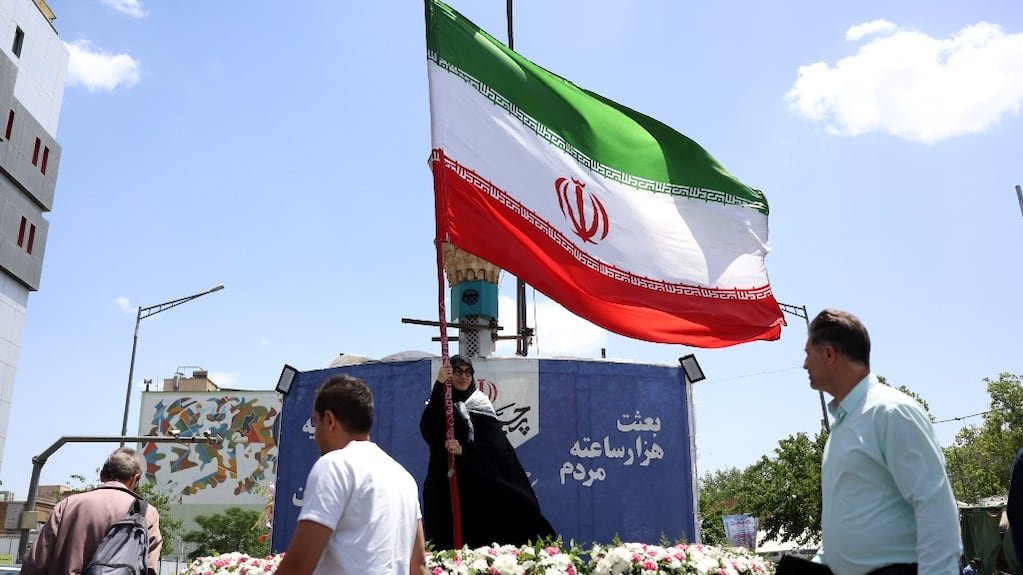
El resto de la cuestión nuclear será tratado en los siguientes 60 días a la firma, según Teherán, que no dio más información al respecto. Un iraní sostiene una bandera nacional y un retrato del líder supremo, Mojtaba Jamenei, en una calle de Teherán (Foto: Majid Asgaripour/WANA (West Asia News Agency) via REUTERS)
Trump, por su parte, aseguró que el país persa suspenderá el enriquecimiento de uranio por entre 15 y 20 años, y que además “nunca” enriquecerá a niveles que pueda usarse para fines nucleares.
Además, la República Islámica diluirá los 440 kilogramos de uranio enriquecido al 60 % en su posesión.
- Líbano. El canciller iraní, Abás Araqchí, insistió este lunes en “la necesidad de un cese total de la agresión” de Israel contra el Líbano para que se cierre el acuerdo con Estados Unidos.
Para Teherán se trata de una “línea roja”, pero no está claro que Trump pueda garantizar que Israel no vuelva a atacar al país árabe.
(Con información de EFE)
Irán, Donald Trump, Israel
INTERNACIONAL
Trump admin puts alleged ‘birth tourism’ scheme on notice as expert delivers warning to hospitals
NEWYou can now listen to Fox News articles!
The Trump administration is using visa enforcement to target «birth tourism,» an alleged scheme utilized by foreign nationals to obtain visitor visas for the primary purpose of giving birth in the U.S. and securing American citizenship for their children.
The Trump administration recently announced that it disrupted «a sophisticated birth tourism network» in West Africa involving more than 100 foreign nationals utilizing false documents and, what the State Department described as «fixers,» to get themselves visas to go to the United States to give birth so their children would be born on U.S. soil and treated as American citizens.
But that was just one of the networks the State Department indicated it had uncovered. The agency’s announcement said U.S. officials identified more than 400 suspected birth tourism cases emanating from Europe since 2024, and tied to at least six companies that helped coach applicants on what to say during their visa interview, arranged housing and set-up delivery plans.
«We shut it down, revoked these foreign nationals’ visas, and are coordinating with local authorities to systematically identify and cut off any similar operations,» the State Department said in its announcement. «A U.S. visa is a privilege, not a right. The State Department is taking action around the world to stop this abuse, dismantle birth tourism networks, and hold accountable those who try to scam our system.»
SEN. BLACKBURN TARGETS BIRTH TOURISM, ‘BUYING AMERICAN CITIZENSHIP’ IN SUPPORT OF TRUMP’S IMMIGRATION AGENDA
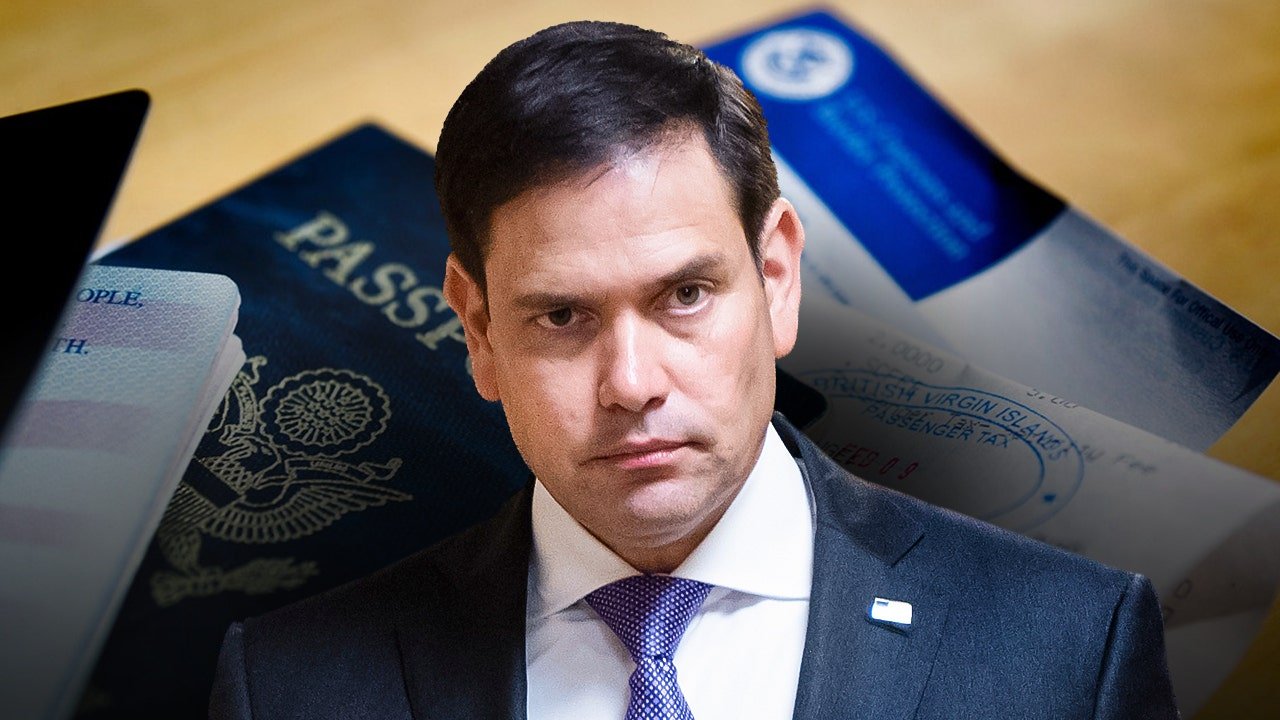
Secretary of State Marco Rubio boards his plane at Joint Base Andrews, Md., Wednesday, April 2, 2025, en route to NATO in Belgium. (AP Photo/Jacquelyn Martin)
The effort comes as Trump has renewed his long-running criticism of birthright citizenship, including through a 2025 executive order seeking to narrow who is automatically treated as a U.S. citizen at birth. It also builds on a first-term Trump administration rule from 2020 that instructed consular officers to deny visitor visas to foreign nationals believed to be traveling to the U.S. primarily to give birth and obtain American citizenship for their children.
«President Trump will always put the American people first. Uninhibited birth tourism poses a tremendous cost to taxpayers and threatens our national security,» White House spokesperson Anna Kelly told Fox News Digital. «The Trump administration is effectively ending this practice, which brings the United States in line with the policy of most countries around the world.»
TRUMP LOCKS IN ICE FUNDING THROUGH END OF PRESIDENCY AFTER HOUSE PASSES $70B PACKAGE
Federation for American Immigration Reform’s Ira Mehlman noted to Fox News Digital that visa fraud is «a significant issue,» pointing out it is a problem even outside the framework of birth tourism.
«The prospect of birthright citizenship is undeniably an inducement for people to commit visa fraud,» Mehlman said. «Birth tourism would not exist otherwise.»
«Obviously, any woman who does not disclose her intention to have her baby in the U.S. when she applies for a visa is committing fraud. Remove the incentive of automatic birthright citizenship for people who are not citizens and legal permanent residents, and the reason for committing this sort of fraud goes away,» he continued.

A woman pushing stroller on street. (iStock)
Birth tourism has surfaced repeatedly in the U.S. in recent years, particularly through operations accused of coaching foreign nationals to obscure the purpose of their travel.
In California, federal prosecutors secured convictions against the operators of USA Happy Baby, a company accused of helping Chinese women travel to the U.S. to give birth to American-citizen children, while a separate operator from a business called You Win USA pleaded guilty in another case stemming from a broader federal crackdown.
CLICK HERE TO DOWNLOAD THE FOX NEWS APP
More recently, Texas Attorney General Ken Paxton sued a Houston-area postpartum center accused of facilitating more than 1,000 births for primarily Chinese clients, while House Oversight Republicans launched an inquiry into several U.S.-based companies allegedly advertising birth-tourism services.

A pair of migrant families from Brazil pass through a gap in the border wall to reach the United States after crossing from Mexico to Yuma, Ariz., to seek asylum. (AP Photo/Eugene Garcia, File)
Mehlman urged Congress to do more to enhance vetting of visa applicants, prosecute those who commit fraud and put an end to birth tourism. He said there were avenues for legal action against the entities allegedly facilitating the scheme.
«To the extent that we can take legal action against companies that are outside the United States, we should, much like we prosecute other types of transnational crime and fraud operations,» Mehlman told Fox News Digital. «But each one of these companies works with service providers here in the U.S., including hospitals.»
administration, immigration, enforcement, naturalization, state department

Bielsa autocrítico: «No conseguimos la versión que somos capaces»

US won’t move troops despite ‘signed’ Iran deal, as doubts linger over Tehran’s next move

El mercado ya habla de una verdadera «avalancha» de dólares por Vaca Muerta, campo y minería

Escándalo en Gran Hermano: una participante tiene miedo que la acuchillen

“Marcelo Bielsa” descolocó a Tinelli en Infobae Mundial con una insólita conferencia tras el empate de Uruguay

El Gobierno modificará por decreto el sistema de selección de jueces de la Corte Suprema de Justicia

Se viralizó un tuit en el que Adorni contaba que en 2018 le habían cortado la luz por falta de pago

Jan De Nul defendió el proceso de licitación de la Hidrovía con una carta a las principales entidades vinculadas a la vía navegable

Diputados de la Coalición Cívica denunciaron penalmente a Manuel Adorni por presuntas irregularidades en sus declaraciones juradas

La polémica por las criptomonedas de Adorni: cómo funciona la trazabilidad y qué puede revelar una billetera

 ECONOMIA3 días ago
Jan De Nul defendió el proceso de licitación de la Hidrovía con una carta a las principales entidades vinculadas a la vía navegable
- POLITICA2 días ago
La polémica por las criptomonedas de Adorni: cómo funciona la trazabilidad y qué puede revelar una billetera
- POLITICA2 días ago
Tras las explicaciones de Adorni, el PRO y la UCR se distancian del oficialismo y cruje el apoyo legislativo