INTERNACIONAL
Trump’s favorite field marshal: Who is Pakistan’s powerful army chief Asim Munir with deep intel ties

Mark Dubowitz says Trump holds ‘maximum leverage’ over Iran as ceasefire begins
Mark Dubowitz, CEO of the Foundation for Defense of Democracies, analyzes President Trump’s firm Iran policy following a two-week ceasefire agreement. He highlights the regime’s weakened state after 15 months of Trump’s administration, making Iran’s 10-point peace plan with «ridiculous demands» unlikely to be accepted. Dubowitz discusses the choice facing Iran’s new regime.
NEWYou can now listen to Fox News articles!
President Donald Trump publicly thanked what he called Pakistan’s «great prime minister and field marshal, two fantastic people!!!» in a Truth Social post Friday praising Prime Minister Shehbaz Sharif and Pakistan’s military chief, Asim Munir.
Sharif quickly responded on X, «On behalf of the people of Pakistan, Field Marshal Syed Asim Munir, and on my behalf, I express my deep and profound appreciation for your kind and gracious words.»
The public exchange capped a remarkable rise for Munir, who has become one of the few foreign officials trusted both by Trump and by Iran’s security establishment.
TRUMP AGREES TO 2-WEEK CEASEFIRE IF IRAN OPENS STRAIT OF HORMUZ
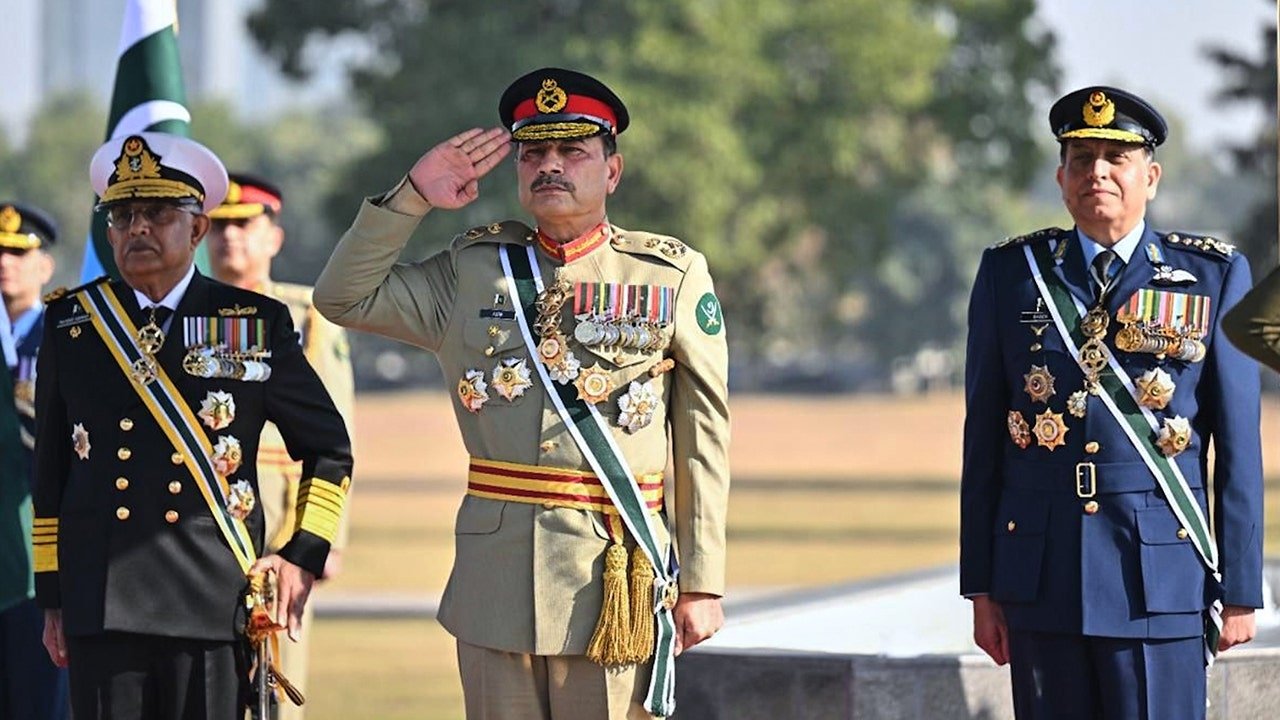
In this photo released by the Inter Services Public Relations, Pakistan’s Chief of Defense Forces and Army Chief Gen. Asim Munir, center, Pakistan Naval Chief Admiral Naveed Ashraf, left, and Pakistan Air Force Chief Air Chief Marshal Zaheer Ahmed Babar attend a guard of honor ceremony at the joint military command headquarters in Rawalpindi, Pakistan, Monday, Dec. 8, 2025. (Inter Services Public Relations via AP)
Munir recently became the first foreign military leader to visit Iran since the latest escalation between the United States and Iran, according to Pakistani and Iranian reports. Arriving in full military uniform, he was warmly greeted by Iranian Foreign Minister Abbas Araghchi and held meetings with senior Iranian military officials.
Retired Pakistani Gen. Ahmed Saeed told Fox News Digital that Munir has for months served as an informal back channel between Washington and Tehran, Iran, as the Trump administration tries to negotiate an end to the conflict, Iran’s nuclear program and the naval blockade in the Persian Gulf.
Few foreign figures appear to have closer ties both to Trump and to Iran’s military hierarchy.
That has raised a striking question: How did the same man become close both to Trump and to some of Iran’s most powerful commanders?
Saeed, who said he has known Munir personally for years, told Fox News Digital that Munir began building ties with Iran while serving as Pakistan’s director general of military intelligence in 2016 and 2017.
«He has been interacting with the leadership. He has been interacting with the intelligence community. He has been interacting with the IRGC,» or the Islamic Revolutionary Guard Corps, Saeed said.
According to Saeed, Munir built ties not only with the Islamic Revolutionary Guard Corps but also with Iran’s regular army and intelligence apparatus. Saeed said Munir had longstanding contact with former Islamic Revolutionary Guard Corps Quds Force commander Qassem Soleimani, who was killed in a U.S. strike in 2020, commander Hossein Salami, who was killed in an Israeli strike in June 2025, and other Iranian military figures.
JD VANCE SAYS THE BALL IS ‘IN IRAN’S COURT’ AFTER PAKISTAN PEACE TALKS STALL
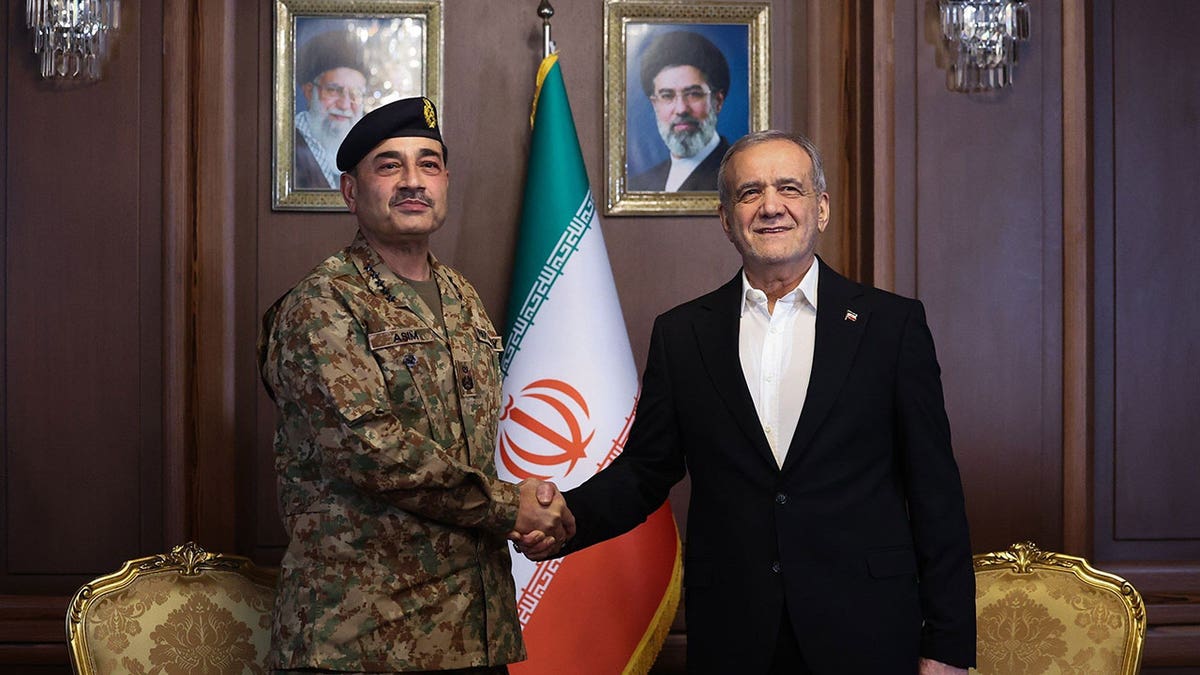
Few foreign figures appear to have closer ties both to Trump and to Iran’s military hierarchy. (Iranian Presidency / Handout/Anadolu via Getty Images)
«He continues to be a figure internationally who has personal interactions, a personal equation in the intelligence community in Iran, in the military hierarchy in Iran, in the diplomatic corps of Iran and also on the side of the political leadership,» Saeed said.
That longstanding relationship appears to explain why Iran welcomed him so warmly, even as he remains in direct contact with Trump and his team.
Foundation for Defense of Democracies’ Bill Roggio told Fox News Digital that, «Trump should not trust the Pakistanis. Pakistan was a perfidious ‘ally’ in Afghanistan, backing the Taliban while pretending to be our friends. Munir’s ties to the IRGC should be a massive red flag for the Trump admin.»
Munir’s relationship with Trump dates back to the India–Pakistan crisis of May 2025. Munir played a key role in helping de-escalate the confrontation, and afterward Pakistan formally nominated Trump for the Nobel Peace Prize, a move widely viewed by Pakistani analysts as encouraged by Munir.
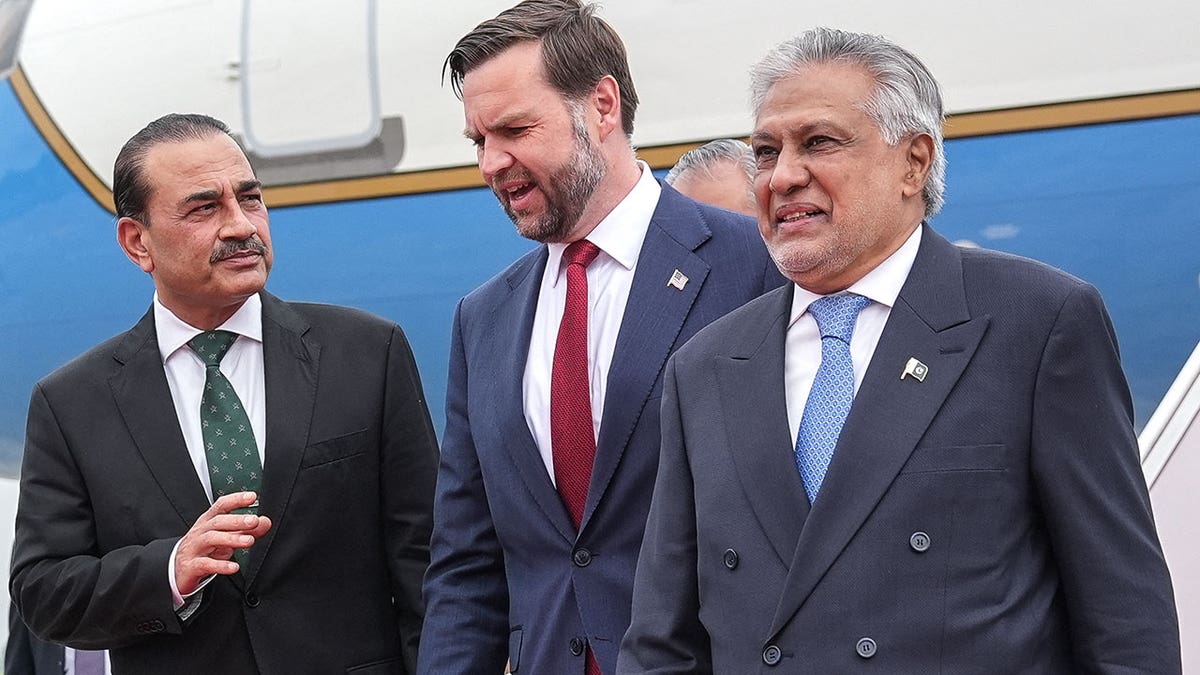
Pakistan’s Asim Munir has become one of the few foreign officials trusted by both President Donald Trump and Iran’s security establishment, according to Pakistani analysts and officials. (Jacquelyn Martin / POOL / AFP via Getty Images)
Since then, Trump repeatedly has praised him. Trump has called Munir an «exceptional man,» a «great fighter» and «my favorite field marshal.»
Pakistani officials and media reports say the two men now speak directly.
Pakistani analyst Raza Rumi told Fox News Digital that Munir’s appeal to Trump is not surprising.
«Trump has long shown a preference for strong, decisive leaders,» Rumi said. «Munir fits that mold as a centralized authority figure who can deliver outcomes.»
WHY TRUMP, IRAN SEEM LIGHT-YEARS APART ON ANY POSSIBLE DEAL TO END THE WAR
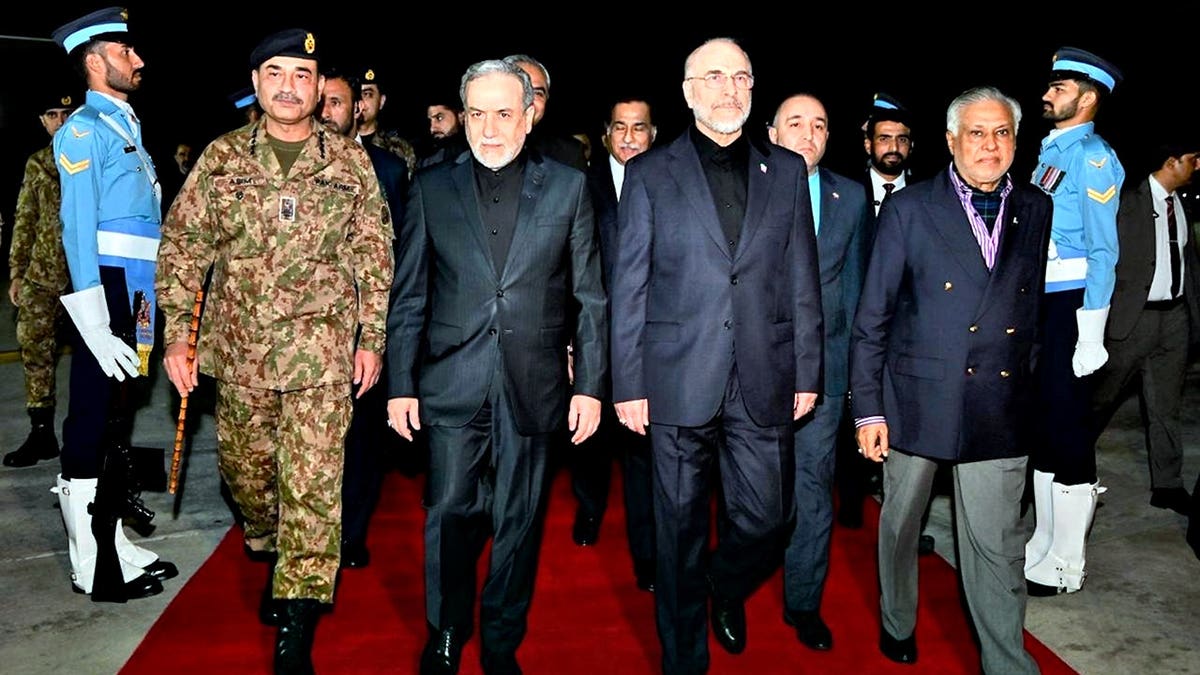
Iran’s Parliament Speaker Mohammad Bagher Qalibaf and Foreign Minister Abbas Araghchi were greeted by Pakistan Foreign Minister Ishaq Dar and Army Chief Field Marshal Gen. Asim Munir upon their arrival at Nur Khan airbase in Rawalpindi, Pakistan, April 11, 2026. (Pakistan Ministry of Foreign Affairs/AP)
Rumi described Munir as «a disciplined, institution-first leader with a strong emphasis on order, hierarchy and strategic clarity.»
«Unlike more publicly charismatic military figures, his style is relatively understated, shaped by intelligence work and operational experience rather than overt political signaling,» Rumi said.
Munir’s background helps explain both his style and his influence.
Munir studied at the Fuji School in Japan, the Command and Staff College in Quetta, the Malaysian Armed Forces College in Kuala Lumpur, and Pakistan’s National Defence University, where he earned an master of philosophy degree n public policy and strategic security management, according to Pakistan’s Geo News. Munir was the first army chief in Pakistan to receive the Sword of Honour, the military’s highest distinction for a cadet. The outlet also described him as an avid reader, traveler and sportsman.
Munir is also a Hafiz-e-Quran, meaning he has memorized the entire Quran by heart.
A former head of both Pakistan’s Military Intelligence and Inter-Services Intelligence agencies, Munir spent years overseeing Pakistan’s most sensitive regional relationships, including with Iran, Afghanistan and India.
TRUMP AGREES TO 2-WEEK CEASEFIRE IF IRAN OPENS STRAIT OF HORMUZ
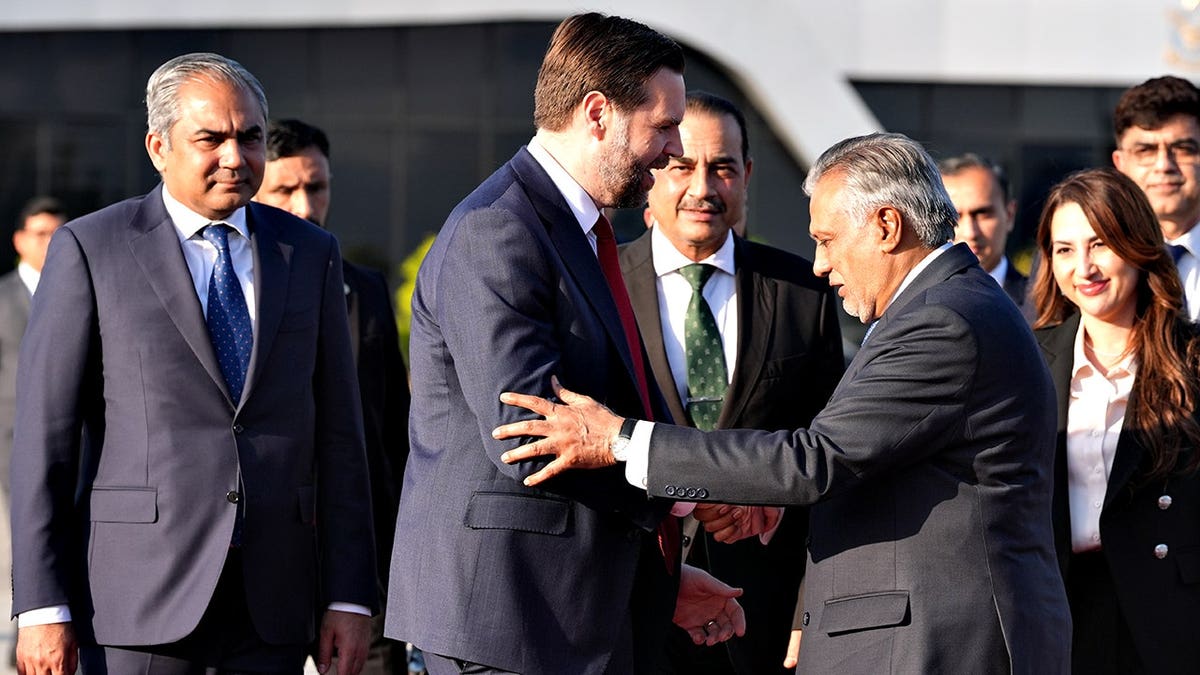
Vice President JD Vance shakes hands with Pakistani Deputy Prime Minister and Foreign Minister Mohammad Ishaq Dar in Islamabad on April 12, 2026, after talks on Iran. Pakistan’s Interior Minister Mohsin Naqvi, Chief of Defence Forces Chief of Army Staff Field Marshall Asim Munir, and U.S. Embassy Charge d’Affaires Natalie A. Baker look on as Vance prepares to board Air Force Two. (Jacquelyn Martin/AP)
In 2025, after the India-Pakistan crisis, he was elevated to field marshal, the first Pakistani officer to hold the rank since former military ruler Ayub Khan.
Pakistani officials say that later that year, he also was given the newly created title of chief of defense forces, further cementing his authority above the country’s military branches.
Munir rarely gives interviews, but his speeches offer clues to his worldview.
WHO ACTUALLY RUNS IRAN RIGHT NOW? THE KEY POWER PLAYERS AS TRUMP CLAIMS TALKS TO ‘TOP’ OFFICIAL
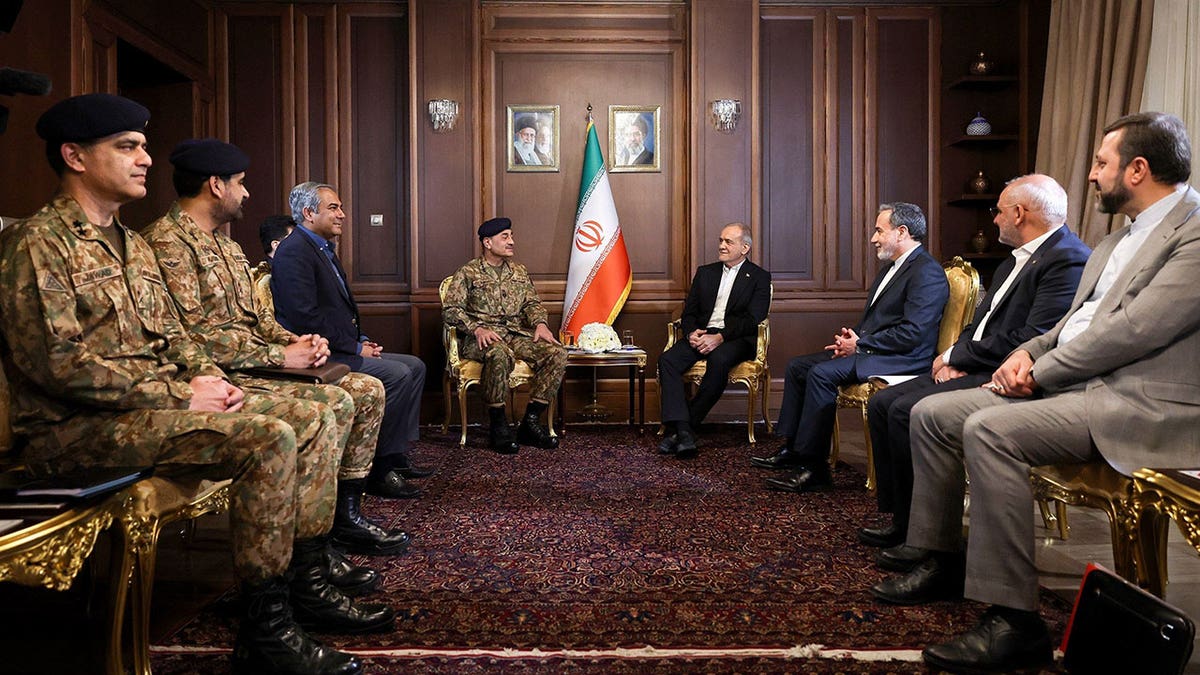
A former head of both Pakistan’s Military Intelligence and Inter-Services Intelligence agencies, Munir spent years overseeing Pakistan’s most sensitive regional relationships, including with Iran, Afghanistan and India. (Iranian Presidency / Handout/Anadolu via Getty Images)
At the Margalla Dialogue in Islamabad in November 2024, he warned that «absence of proper regulations for freedom of expression is leading to the deterioration of moral values in societies worldwide.»
The remark reflected a broader emphasis on order, discipline and centralized authority.
Rumi said Munir operates from «a transactional, state-centric worldview rather than an ideological one.»
Yet critics argue that his rise has come at a cost to Pakistan’s democracy.
After becoming army chief in 2022, Munir focused heavily on domestic politics, including what critics described as a crackdown on political opposition and an unprecedented concentration of military power, according to The Guardian, which reported that key negotiations with the United States and Iran have been coordinated not from Islamabad, Pakistan’s civilian capital, but from Rawalpindi, the headquarters of the military.
CLICK HERE TO DOWNLOAD THE FOX NEWS APP
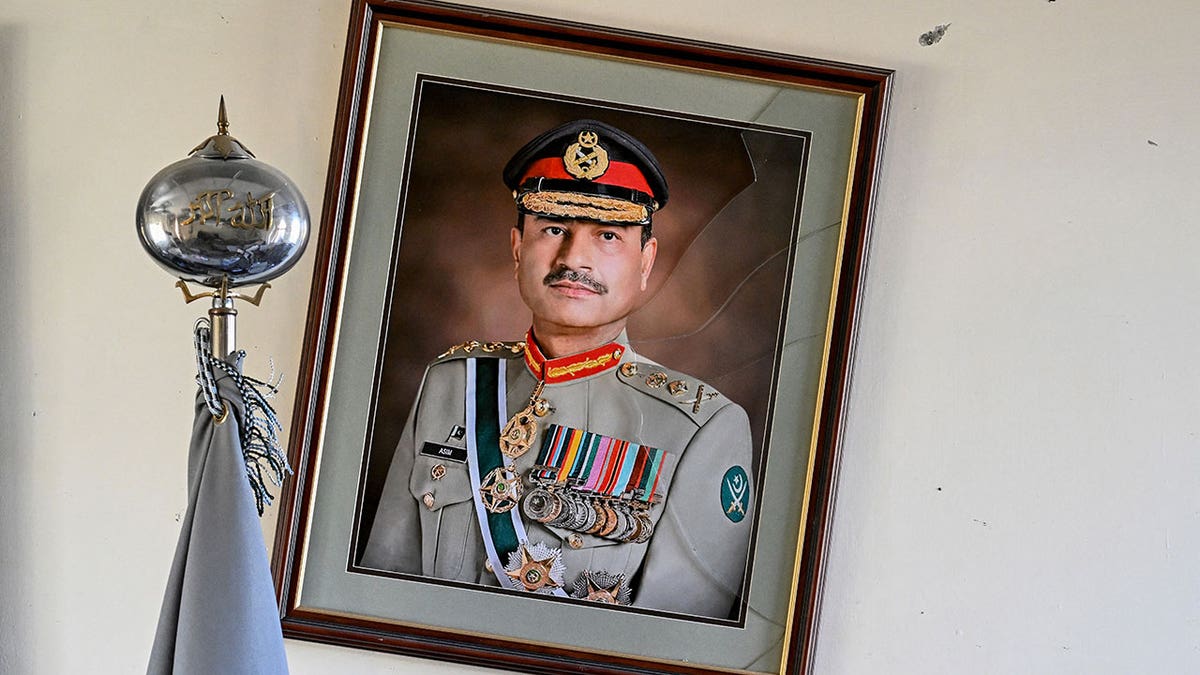
A broken frame of Pakistan’s field marshal and army chief, Asim Munir, hangs on the wall after an attack at the Cadet College Wana, a military-linked school, in the South Waziristan district near the Pakistan-Afghanistan border, Nov. 13, 2025. (Aamir Qureshi / AFP via Getty Images)
Critics say that reflects a broader reality: Pakistan’s foreign policy is increasingly being run by the army rather than the elected government.
Rumi said Munir’s rise reflects «the military increasingly eclipsing civilian leadership in Pakistan.»
As the current negotiations continue, much appears to rest on Munir. Saeed said that is because Munir has spent years building trust on both sides and is unlikely to stop now.
«Knowing our field marshal, and from my own personal knowledge of him, he is relentless. He would not give up,» Saeed said.
donald trump, pakistan, iran, military










INTERNACIONAL
Reforma fiscal de Luis Abinader queda lista para promulgación tras su aprobación de urgencia en el Congreso dominicano
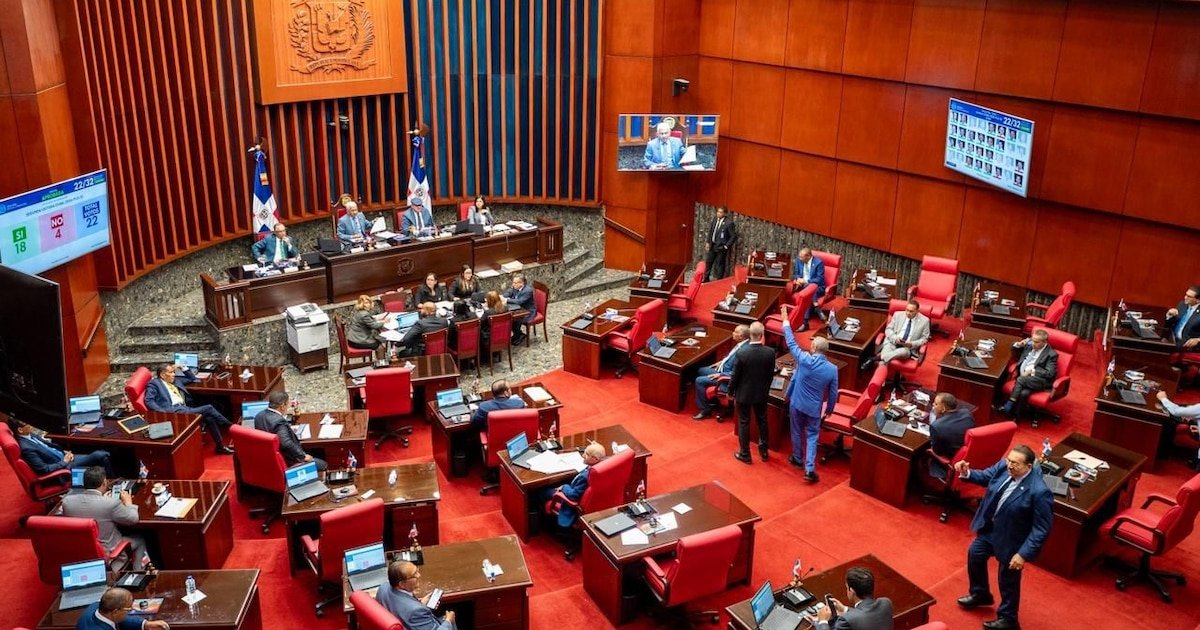
La reforma fiscal impulsada por el presidente Luis Abinader fue aprobada de urgencia por la Cámara de Diputados y el Senado, convertida en ley y enviada al Poder Ejecutivo para su promulgación u observación. La norma busca sumar RD$50.000 millones al Presupuesto General del Estado, equivalentes aproximadamente a 850 millones de dólares estadounidenses (USD), mediante un aumento de la carga tributaria, según medios locales.
La norma deroga los anticipos para las microempresas, crea una amnistía para deudas tributarias y reduce de 25% a 10% el Impuesto Sobre la Renta por ganancia de capital en la venta de inmuebles, según Diario Libre. También elimina las leyes de los fósforos y del control a las estampillas, de acuerdo con el mismo diario.
Entre las medidas incluidas, el texto indexa los salarios para que solo quienes ganen más de 39.900 pesos mensuales (unos 678 dólares estadounidenses) paguen el impuesto sobre la renta y eleva la deducción de gastos educativos de 25% a 30%, según Diario Libre. Además, restablece el impuesto selectivo sobre el alcohol etílico usado en la fabricación de medicamentos y sube a 30% la tasa del impuesto sobre la renta empresarial para los grandes contribuyentes, según ese medio.
El proyecto fue presentado como una ley de medidas pro crecimiento económico, simplificación fiscal y mitigación de la crisis internacional, según Diario Libre. Según Listín Diario, su objetivo central es elevar la recaudación tributaria con mayores cargas sobre distintos sectores de la sociedad.

En la comisión bicameral, la primera reunión estuvo dedicada a la lectura íntegra del proyecto y en la segunda se escucharon observaciones del ministro de Hacienda y Economía, Magín Díaz, y de representantes de la Asociación de Industrias de la República Dominicana, según Diario Libre. Al cierre de ese encuentro, la comisión aprobó un informe favorable que luego pasó al Senado para su votación, de acuerdo con el medio.
Entre las propuestas de cambio impulsadas por la oposición figuraban eliminar impuestos a las telecomunicaciones en zonas rurales, mantener sin cambios la tasa por transferencias bancarias, indexar los salarios inferiores a 52.000 pesos mensuales (alrededor de 885 dólares estadounidenses) y aplicar la eliminación del anticipo a las pequeñas empresas, según Diario Libre. Ninguna de esas sugerencias prosperó en la votación final.
El presidente de la Cámara de Diputados, Alfredo Pacheco, defendió la aprobación y afirmó ante Diario Libre que las medidas responden a “la consecuencia de todos estos años de crisis”. También pidió “comedimiento” a la oposición al recordar que durante la presidencia de Leonel Fernández se aprobaron dos reformas fiscales.
Desde la comisión que estudió el proyecto, el diputado Francisco Javier Paulino dijo a Diario Libre que las medidas benefician a más del 90% de la población porque muchas disposiciones están dirigidas a los grandes contribuyentes. Desde la oposición, el diputado Rafael Castillo, vocero de Fuerza del Pueblo, cuestionó ante el mismo medio la rapidez del trámite y dijo que otras reformas estructurales no recibieron la misma urgencia.

El opositor Carlos de Pérez afirmó a Diario Libre que solo en mayo la nómina pública creció en alrededor de 3.180 millones de pesos (unos 54 millones de dólares estadounidenses) y cuestionó que la reforma termine destinada al pago de gastos corrientes como viáticos y publicidad.
Luis Abinader,Rendición de Cuentas,Congreso Nacional,República Dominicana,política,gobierno,evento,oficial,Presidente,Dominicana

NEWYou can now listen to Fox News articles!
As artificial intelligence (AI) companies race toward IPOs and scramble to construct data centers, a new Fox News Poll finds voters now view Big Tech — not Big Government — as the greater threat to the nation’s future, a striking turnaround from seven years ago.
By a 5 percentage-point margin, more see Big Tech as the greater threat to the outlook of the country rather than big government (52% vs. 47%). That’s a 28-point reversal since 2019 — three years before ChatGPT burst onto the scene — when more were concerned about the government (58%) than tech companies (35%).
FOX NEWS POLL: VOTERS DOUBT NEW AGREEMENT WILL STOP IRAN FROM DEVELOPING NUKES
The swing toward a greater dread of Big Tech can be seen across most groups, with only a few exceptions, like very conservative voters (by 11 points) and moms (+8), who view big government as the bigger villain. Republicans and independents are split on which is worse.
«As AI integrates into daily life, voters are reevaluating where power resides,» says Democratic pollster Chris Anderson, whose firm Beacon Research conducts the poll with Republican Daron Shaw. «Concerns about government overreach are shifting toward tech companies, as voters question whether rapid growth has concentrated too much power in institutions largely outside of public accountability.»
Feelings on AI remain a mixed bag. Equal numbers describe it as either innovative or helpful or a bad idea (14% each). Another 12% are cautious, 10% say afraid or dangerous, 9% have mixed feelings, while excitement and curiosity/interested sit at 7% each. Fewer mention threats to jobs (5%), general confusion (4%), potential for abuse (3%), more research and privacy and regulation issues (2% each), fears of science fiction (1%), and preventing data centers (1%).
FOX NEWS POLL: MOST RATE THE ECONOMY NEGATIVELY, INCLUDING HALF OF REPUBLICANS
The share saying they’re afraid of AI, or it is dangerous has dropped from 16% in 2023 to 10% today, as most demographics feel less negative about AI. The clear exception is voters ages 65 and up, who mostly still feel afraid, concerned, or just don’t like it.
There is also a modest rise in those who feel cautious or distrust the booming technology: from 8% in 2023 to 12% today.
On the flip side, the number saying they find AI to be innovative and helpful has doubled from 7% in 2023 to 14% today. While most demographics feel more positive toward AI compared to 2023, this tendency is especially pronounced among voters under age 30 and nonwhite voters, each seeing double-digit increases in positive sentiment.
Daily AI usage is on the rise: 18% of voters say they use the technology every day, up from 11% last June.
The increase mainly comes from more men (+10 points since June 2025) and independents (+13) saying they use AI daily. Despite their skepticism, voters 65 and over say they are using it more as well (+4). Daily usage for voters under 30 is up 8 points since last summer.
Still, many say they rarely (21%) or never (32%) use it, roughly the same as last summer.
Voters balk at building AI infrastructure in their backyard. Two-thirds (67%) oppose having data centers in their area, including 43% who strongly oppose it, while one-third favor it (32%).
Most groups oppose data centers, but the strength of opposition varies. Fewer than 6 in 10 men, Hispanic voters, voters under 30, and Republicans oppose them, while opposition increases to roughly 7 in 10 or more among women, White voters, those ages 65+, and Democrats.
Some of the only groups to favor data centers being built are those who find AI innovative (68% favor) and those who use AI at least weekly (54%).
CLICK HERE FOR CROSSTABS AND TOPLINE
«AI data centers emerging as a political issue is one of the most intriguing storylines of 2026,» says Shaw. «Opposing them is a short-term win, but attitudes about AI efficacy and regulation remain fluid.»
Even with mixed views on AI, a large majority remain confident they control technology (79%), rather than tech controlling them (20%) — the same as nearly 30 years ago.
Women, voters ages 65+ and Republicans are slightly more likely to feel they have a grip on technology compared to men, those under 30, and Democrats.
Conducted June 12-15, 2026, under the direction of Beacon Research (D) and Shaw & Company Research (R), this Fox News survey includes interviews with a sample of 1,002 registered voters randomly selected from a national voter file. Respondents spoke with live interviewers on landlines (101) and cellphones (644) or completed the survey online after receiving a text (257). Results based on the full sample have a margin of sampling error of ±3 percentage points. Sampling error for results among subgroups is higher. In addition to sampling error, question wording and order can influence results. Weights are generally applied to age, race, education, and area variables to ensure the demographics are representative of the registered voter population. Sources for developing weight targets include the most recent American Community Survey, Fox News Voter Analysis, and voter file data.
fox news poll, politics, artificial intelligence, technologies, republicans, democratic party, understanding ai
INTERNACIONAL
Tensión en el final de la campaña en Colombia: temen protestas si gana el candidato de derecha y escalan las acusaciones cruzadas



El fuerte cruce entre los técnicos de Canadá y Qatar en el Mundial 2026: el gesto provocador tras el 6-0

Rafael Grossi celebró el memorándum de EE.UU. con Irán y habilitó el trabajo técnico para avanzar en el control nuclear

Hay alerta amarilla por tormentas y lluvias fuertes para este viernes 19 de junio: las provincias afectadas

El horóscopo de hoy: viernes 19 de junio

Un repartidor fue baleado en la cabeza durante un robo en Laferrere y se salvó de milagro

¿La Argentina dejará de ser un mercado aislado?: se conoció un informe clave de MSCI que miran todos los inversores

Patricia Bullrich: “El Presidente considera que Adorni dio una explicación razonable”

El Gobierno envía señales de que Adorni tiene las horas contadas para evitar que sesione el Senado

La secuencia del golazo de Messi para Argentina ante Argelia en el debut en el Mundial 2026 y los récords que rompió

El Gobierno modificará por decreto el sistema de selección de jueces de la Corte Suprema de Justicia

 POLITICA1 día ago
Patricia Bullrich: “El Presidente considera que Adorni dio una explicación razonable”
- POLITICA2 días ago
El Gobierno envía señales de que Adorni tiene las horas contadas para evitar que sesione el Senado
- DEPORTE2 días ago
La secuencia del golazo de Messi para Argentina ante Argelia en el debut en el Mundial 2026 y los récords que rompió