INTERNACIONAL
Moscow-born gunman dead after Kyiv shooting rampage leaves at least 6 dead, 14 wounded: Zelenskyy


NEWYou can now listen to Fox News articles!
A Russian gunman was killed by special forces Saturday in Ukraine after opening fire at a supermarket in Kyiv, killing six people and wounding 14 others — including a 12‑year‑old boy.
The 58-year-old shooter long resided in the Donetsk region and was born in Moscow, according to Ukrainian President Volodymyr Zelenskyy and Interior Minister Ihor Klymenko.
He took at least four hostages, killed one of them, and fatally shot four others on the street, Zelenskyy said. Another woman died at a hospital from her injuries.
Graphic video captured by witnesses showed the gunman shooting at a victim within close range on the street. Other bodies were seen lying on the pavement and in courtyards.
The gunman was seen walking with a weapon on the street. (Obtained by Will Stewart)
MANHUNT UNDERWAY AFTER GUNMEN STORM CHICK-FIL-A LEAVING 1 DEAD
Ukranian special forces stormed the convenience store after 40 minutes of failed negotiations, according to Klymenko.
At least fourteen people were wounded in the attack, though officials cautioned the number may rise as people continue to seek medical assistance.
Among the injured is a 12‑year‑old boy and a supermarket security guard, according to Kyiv Mayor Vitali Klitschko.

The gunman was pictured dead in the convenience store. (Obtained by Will Stewart)
NINE DEAD, 13 WOUNDED IN SECOND TURKISH MASS SHOOTING IN TWO DAYS
Zelenskyy said the shooter also set fire to an apartment prior to the attack, though it is unclear if any injuries resulted from the arson.
«My condolences to the families and loved ones of the victims,» Zelenskyy wrote in an X post. «…We wish all the wounded a swift recovery.»
The gunman had previously been prosecuted for criminal offenses, but held a valid weapons permit, according to authorities. Investigators from the National Police and the Security Service of Ukraine are investigating.

The gunman was seen holding and shooting a weapon in the street. (Obtained by Will Stewart)
GUNMAN OPENS FIRE AT HIGH SCHOOL IN TURKEY, WOUNDING AT LEAST 16
Ukraine’s security service labeled the attack an act of terrorism.
«All available information about him and the motives behind his actions is being thoroughly investigated,» Zelenskyy said. «Every detail must be verified.»
CLICK HERE TO DOWNLOAD THE FOX NEWS APP
One of the shooter’s neighbors, Hanna Kulyk, 75, described him as an «educated, refined man,» who lived alone and did not socialize often.
«You’d never guess he was some kind of criminal,» Kulyk told The Associated Press.
ukraine, terrorism, mass shootings, volodymyr zelenskyy, mass murder, world













INTERNACIONAL
Colonos israelíes incendian dos mezquitas en Cisjordania ocupada, mientras Israel arresta a 80 palestinos

Dos mezquitas en la Cisjordania ocupada por Israel fueron incendiadas durante la noche en un aparente ataque de colonos israelíes, informaron funcionarios el domingo, tras una racha de violencia que dejó cuatro palestinos y dos soldados israelíes muertos.
La violencia se produce mientras los palestinos y la oposición israelí acusan al gobierno e del primer ministro Benjamin Netanyahu de hacer la vista gorda ante los ataques de colonos contra palestinos, lo que amenaza con encender una violencia generalizada en todo el territorio.
Soldados y policías israelíes se desplegaron por toda Cisjordania tras el ataque, cerrando carreteras principales y bloqueando el acceso a un hospital donde, según dijeron, se escondían dos milicianos. Israel también arrestó a unos 80 palestinos durante el fin de semana mientras intentaba contener la escalada de violencia.
Las mezquitas, en las aldeas de Qusra y Kour, en el norte de Cisjordania, sufrieron daños considerables por los incendios. En Qusra, los atacantes pintaron con aerosol “venganza por Benayahu”, en referencia a uno de los soldados israelíes muerto el viernes, y “la tierra de Israel se redime con sangre”. El soldado vivía en un asentamiento cercano.
Ahmed Abu Mahmoud, de 64 años, que vive al lado de la mezquita de Qusra, contó que oyó ruidos a las 3 de la madrugada y descubrió que la mezquita había sido incendiada. El fuego era demasiado grande para combatirlo solo, así que pidió ayuda. Mahmoud señaló que en el último mes habían robado ganado y un tanque de agua potable, pero que las autoridades israelíes no habían ayudado. “El ejército llegó aquí, lo vio con sus propios ojos y luego se fue”, manifestó el domingo.
Imágenes de seguridad en Kour obtenidas por The Associated Press mostraron a tres personas vestidas de civil provocando una gran explosión en la entrada de la mezquita en plena noche. El domingo, los residentes realizaron oraciones pese a los daños en la entrada.
El ejército de Israel dijo que estaba trabajando con la policía para investigar el ataque contra la mezquita.
“Las fuerzas de seguridad condenan enérgicamente incidentes de este tipo, incluido el daño a sitios religiosos, y seguirán actuando con determinación para mantener la seguridad y el orden público en la zona”, indicó.
El ejército israelí suele anunciar investigaciones sobre la violencia contra palestinos, pero rara vez realiza arrestos o procesa a los colonos implicados en hechos violentos.
Los militares también informaron que habían sellado las viviendas de dos milicianos palestinos sospechosos de matar a los soldados, como preparación para su demolición. Israel suele demoler las casas de los atacantes, alegando que eso disuade futuros ataques.
Netanyahu afirmó este domingo que las tropas entraron en aldeas de toda Cisjordania para incautar armas y efectuar arrestos. “También estamos preparados para operar a una escala más amplia contra los nidos terroristas”, declaró.
Las circunstancias exactas de los incidentes del viernes seguían sin estar claras, pero reportes de medios israelíes y entrevistas con funcionarios palestinos locales señalaron que se desencadenaron después de que un grupo de colonos entró en la aldea de Tell y fue confrontado por residentes que temían un ataque.
Según el ejército israelí, uno de los palestinos tomó una de las armas de los colonos y disparó contra el grupo, matando a Benayahu Mellet, de 32 años, un guardia de seguridad de un asentamiento cercano.
Las localidades y aldeas que rodean Nablus se encuentran en una de las zonas más violentas de la Cisjordania ocupada por Israel. Palestinos y grupos de derechos humanos han documentado la entrada de colonos israelíes armados en aldeas de la zona. Se reportan de forma habitual el robo de ganado, los incendios provocados y la profanación de mezquitas.
Según el Ministerio de Salud palestino, 87 palestinos han muerto en la Cisjordania ocupada este año, incluidos 21 a manos de colonos israelíes. Tres israelíes han muerto en ataques de milicianos palestinos en 2026, incluidos los dos soldados del viernes.
Más de 700.000 colonos israelíes viven en la Cisjordania ocupada y en Jerusalén oriental, territorios capturados por Israel en 1967 y que los palestinos reclaman para un futuro Estado independiente. La comunidad internacional, en su gran mayoría, considera que los asentamientos israelíes son ilegales y un obstáculo para la paz.
INTERNACIONAL
Científicas panameñas advierten sobre clínicas que ofrecen tratamientos de células madre no probadas
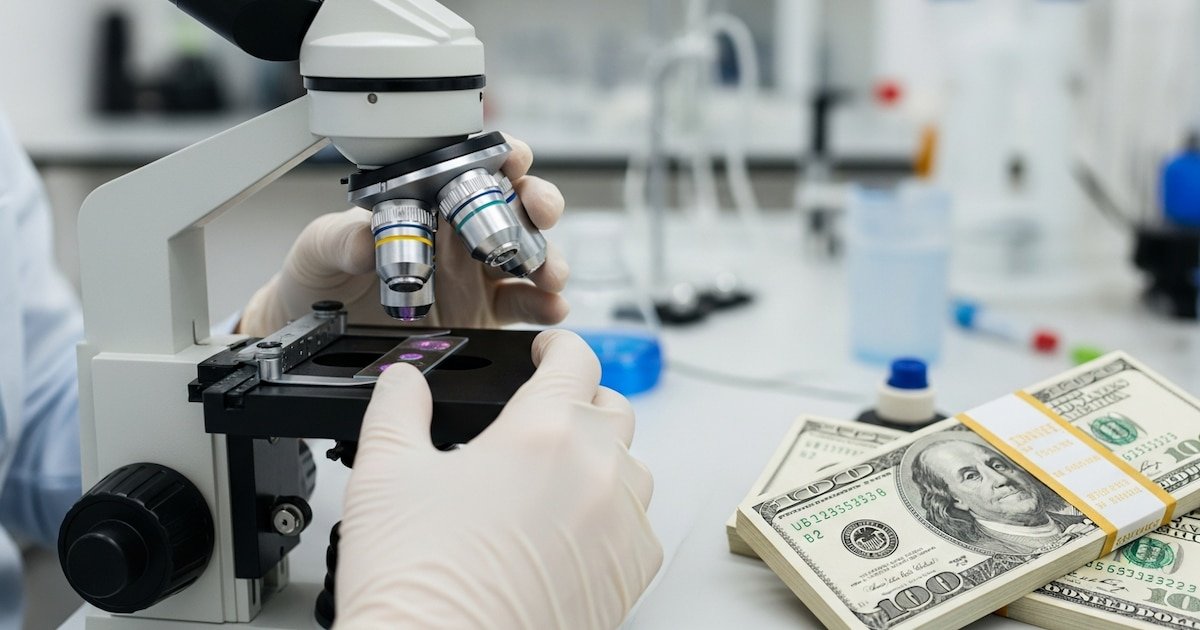
Científicas panameñas advierten que las clínicas que ofrecen terapias con células madre no probadas en Panamá ofrecen supuestas curas para enfermedades crónicas y degenerativas, sin el respaldo probatorio de seguridad y eficacia.
Una terapia experimental no puede presentarse como un tratamiento, señalan las profesionales, adscritas al Instituto Conmemorativo Gorgas de Estudios de la Salud y del Comité Nacional de Bioética de la Investigación.
Indican que para que una intervención sea incorporada a la práctica médica, debe demostrar seguridad y eficacia mediante estudios clínicos controlados.
La comercialización de intervenciones basadas en células madre no probadas plantea desafíos de salud pública, ética y regulatoria.
Un artículo en la revista especializada Stem Cell Reports examina el marketing online en Panamá, identifica nuevos negocios y sostiene que la falta de aplicación regulatoria ha contribuido a su expansión.

Durante más de una década, clínicas de todo el mundo se han establecido en América Latina para ofrecer intervenciones basadas en células madre no probadas para una amplia gama de enfermedades y afecciones, a pesar de carecer de evidencia sólida de seguridad y eficacia.
Los pacientes viajan a países con regulaciones flexibles para estos tratamientos, un fenómeno conocido como “turismo de células madre”, a pesar del posible daño.
La publicación indica que se han reportado extensamente eventos adversos graves tras células madre no probado, incluyendo tromboembolismo, fibrosis, tumores, pérdida de visión severa y muerte.
Varios estudios han identificado empresas en distintos países que ofrecen células madre no probado.
En Panamá, la revista revela que el primer negocio fue identificado en 2013, cuando se estableció el Instituto de Medicina Celular, anteriormente ubicado en India, México y Costa Rica.
Durante ese periodo, se publicaron numerosos anuncios en periódicos locales, revistas de viajes y en redes sociales, utilizando testimonios de celebridades sobre los “tratamientos” recibidos.

La grave brecha regulatoria, junto con el aumento de la comercialización de tratamientos no probado, puso de manifiesto la necesidad de un nuevo marco regulatorio, lo que llevó a la adopción del Decreto 179 por el Ministerio de Salud de Panamá.
En octubre de 2025 se descubrió que seis empresas comercializaban tratamientos no probados en Panamá, cinco de las que se habían reportado anteriormente.
Cada empresa, según la publicación, anunciaba entre seis y diez células madre no probados para una variedad de afecciones, incluyendo lesión medular, autoinmunidad, enfermedades cardiovasculares, autismo, esclerosis múltiple, fertilidad, neurológica, pulmonar, ortopédica, relacionada con la edad, dolor y parálisis cerebral.
Todas estas empresas comercializaban en sus sitios web el uso de células madre mesenquimales derivadas de sangre o tejido del cordón umbilical; dos empresas también declararon el uso de células madre derivado del adiposo; y células madres derivado de médula ósea. El método de administración fue intravenoso (83%), intratecal o intraarticular (33%) y intramuscular o perilinfático para un centro.
Los precios oscilaban entre $5.000 a $50.000 y las plataformas de redes sociales estaban integradas en sus sitios web, incluyendo Instagram o YouTube (67%), Facebook, LinkedIn o X/Twitter (33%).

Todas las empresas ofrecían paquetes de turismo médico, combinando “tratamiento” con servicios adicionales, como vuelos, alojamiento y visitas locales. Se identificaron más de 200 testimonios de pacientes, que van desde 13 hasta más de 170 por empresa.
Los posibles riesgos para la salud pública asociados a una célula madre no probada exigen acciones rápidas para reforzar el marco regulatorio nacional que garantice la protección de la salud pública.
A pesar de los avances en la regulación de la investigación con células madre y su aplicación clínica en Panamá, la publicación manifiesta que el creciente número de empresas que comercializan células madre no probado es preocupante. Los organismos reguladores deberían priorizar la estricta aplicación de cartas de advertencia o sanciones contra empresas que comercializan terapias no probadas.
La información precisa y científica sobre la validez y los riesgos de las aplicaciones de células madre es crucial para proteger al público, informar a los profesionales médicos y proteger los avances legítimos en investigación frente a afirmaciones infundadas, se comenta.
Los efectos positivos de las acciones regulatorias adoptadas por otros países en esta área son evidentes, por lo que la revista especializada dice que este enfoque podría adoptarse para mitigar la comercialización local de células madre no probadas y promover la seguridad del paciente, al tiempo que fomenta la investigación ética y científicamente fundamentada en células madre que abrirá nuevas posibilidades en este prometedor campo. No duda en afirmar que “es hora de que los organismos reguladores en Panamá tomen medidas”.
rejuvenecimiento celular,células madre,fibras musculares,regeneración,biología,microscopía,ciencia,salud,investigación,medicina
INTERNACIONAL
100 day sprint to the midterms kicks off as Republicans and Democrats clash for control across the country
GOP look to tie Dems to DSA in midterm strategy, panel debates influence
Evan Power and Morgan Harper discuss the impact of Democratic Socialists of America (DSA) on midterm elections. Power argues that linking Democrats to DSA’s radical agenda will benefit Republicans, especially in states like Florida. Harper contends that the Democratic base prioritizes winning candidates, such as Troy Jackson, who champion strong economic populist agendas.
NEWYou can now listen to Fox News articles!
The 2026 midterm elections are 100 days away as Republicans and Democrats will battle in Congress and statehouses across the country for control over the future of the country in what is expected to be a contentious and expensive campaign season.
Republicans currently hold narrow majorities in both chambers of Congress, controlling the House with a razor-thin 218-212 edge, with one independent and four vacancies, and the Senate with a 53-47 advantage, including two independents who caucus with Democrats.
With every House seat and 35 Senate seats on the ballot, Democrats need a net gain of just six House seats to reclaim the speaker’s gavel and four Senate seats to win back the upper chamber, making even a handful of competitive races capable of reshaping the balance of power in Washington.
The latest Fox News Power Rankings suggest a tough road ahead for Republicans as they go up against the historical headwind of the party not in power usually performing well in midterm elections, but the GOP will be bolstered in the House by redistricting wins in states like Florida and Texas.
FOX NEWS POLL: VOTERS WANT MAJOR CHANGE AMID ECONOMIC AND POLITICAL DISCONTENT
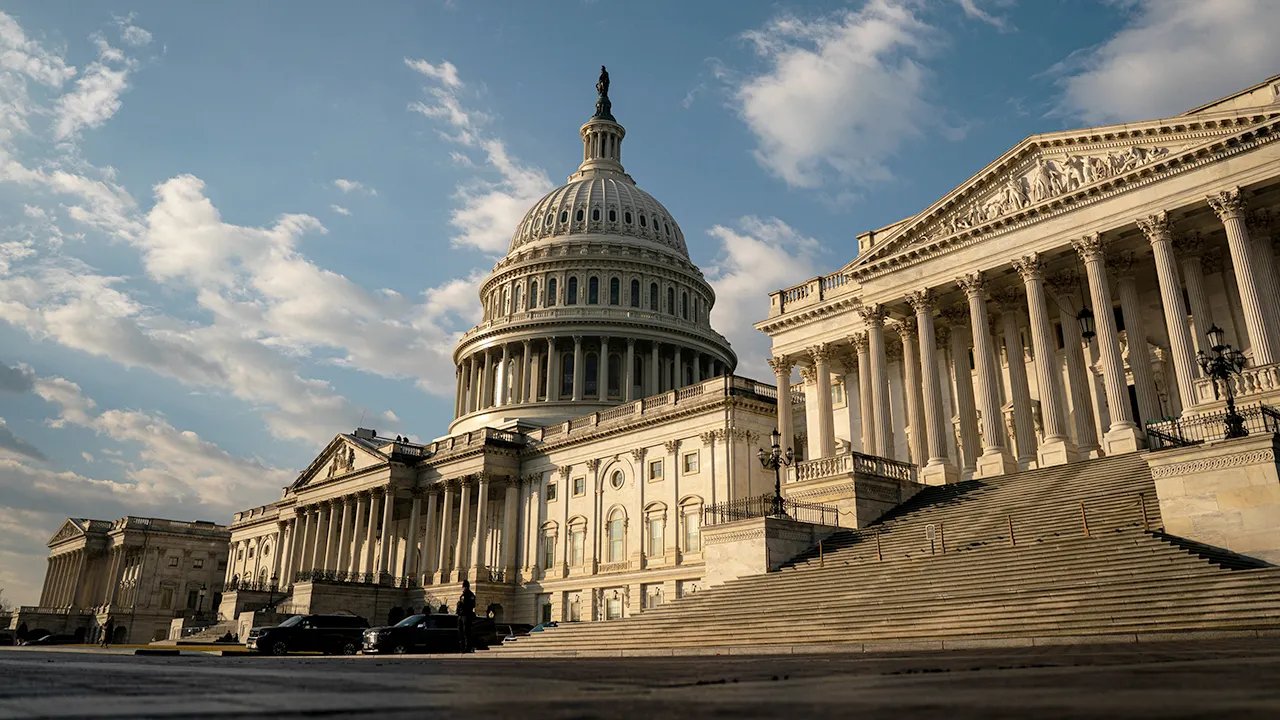
The U.S. Capitol in Washington, D.C., on Jan. 7, 2026. (Al Drago/Bloomberg via Getty Images)
«We are in a prime position to win it in November,» Republican National Committee (RNC) Chair Joe Gruters told Fox News this week. «Under Biden we had some of the highest inflation ever. Gas prices were high. And this president has gone to bat for average Americans every single day, starting with ‘Working Family Tax Cuts,’ no tax on tips, overtime, social security. The fact that he’s been going to bat for the American worker, bringing record setting investments. The fact that he closed the border down.»
The Democratic Congressional Campaign Committee (DCCC), has been focusing on the economy and affordability in its messaging over the last few days as they promote Democrats in House races.
«From groceries to gas to health care, House Republicans have bled Americans’ wallets dry with their cost-raising agenda,» DCCC spokesperson Nebeyatt Betre said in a press release. «Voters are exhausted by all the bad news vulnerable House Republicans have created, and the DCCC is working to make sure voters know they can hold Republicans accountable on Election Day.»
If the election were today, 53% of voters would back the Democratic candidate in their House district and 46% the Republican,» a Fox News poll released this week showed. That 7-point edge is just outside the poll’s margin of error.
Democrats were up by 5 points in April. Notably, 53% is the highest percentage either party has received on the generic House ballot in Fox News polling since 1996.
But helping the GOP in the battle for the House majority: the mid-decade redistricting fight over the past year between the two parties, which handed Republicans a net gain of roughly 10 additional right-leaning congressional districts.
DSA MEMBER LEADS DEM PRIMARY IN MIDWEST BATTLEGROUND BUT TRAILS LIKELY GOP NOMINEE: POLL
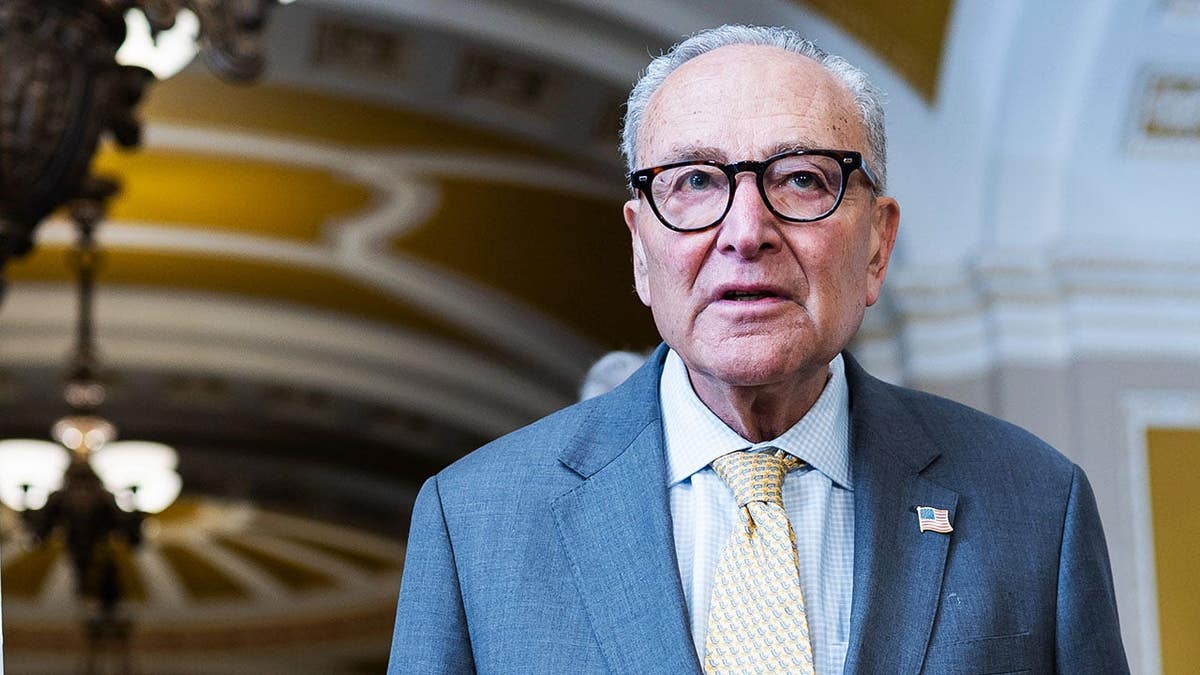
Senate Minority Leader Chuck Schumer, D-N.Y., prepares to speak during a press conference at the U.S. Capitol on July 21, 2026, in Washington, D.C. (Getty Images)
In the Senate, Republicans are looking to hold on to seats in Alaska, North Carolina, Ohio, and Maine with record amounts of spending already pouring into those states as Democrats hope to capitalize on the historic, economic, foreign policy and anti-incumbent mood among voters.
The upcoming November clash comes as the Democratic Party deals with a socialist wave of candidates taking more and more control and winning primary races across the country, causing headaches for establishment Democratic leaders like Sen. Chuck Schumer and Rep. Hakeem Jeffries, the top two Democrats in Congress.
Just 50% of voters have a positive view of capitalism, down from a high of 57% in 2019, Fox News polling shows. For socialism, it’s 30% favorable, up from 27% last year but below the 32% who said the same in 2021. The Democratic Socialists of America are viewed positively by 31%.
By an 11-point margin, more Democrats have a favorable opinion of socialism (52%) than capitalism (41%), while by a 50-point margin, more Republicans have a positive view of capitalism (61%) than socialism (11%).
GOP RIFT GROWS AS THUNE HITS BRAKES ON TRUMP’S ELECTION BILL TO AVERT SHUTDOWN

House Speaker Mike Johnson, Republican of Louisiana, speaks to members of the media after a meeting with House Republicans at the U.S. Capitol in Washington, D.C. on July 15, 2026. (Graeme Sloan/Bloomberg via Getty Images)
Republicans are hoping to capitalize on the socialist rise within the Democratic Party, particularly after the socialist victories in New York City that rocked the political landscape in recent months.
«Democrats want to export New York’s ‘commie corridor’ to a state near you, bringing crippling tax hikes, dismantled law enforcement, and bloated government spending with it,» NRSC national press decretary Bernadette Breslin said in a statement to Fox News Digital. «Americans will reject Democrats’ socialist spending spree this November and elect Republicans committed to advancing an affordability agenda that keeps the American Dream within reach.»
NRCC spokesman Mike Marinella told Fox News Digital that Republicans have the «momentum» and over the next 100 days, House Democrats will «spend every day trying to explain away their radical socialist record and why they opposed tax relief for working families, stronger border security, voter ID, and countless common-sense policies Americans overwhelmingly support.»
The RNC enters the final 100 days before the 2026 midterms with a significant financial advantage over its Democratic counterpart. According to the latest Federal Election Commission filings, the RNC has roughly $125.5 million in cash on hand, compared to about $14.9 million for the Democratic National Committee, which is also carrying approximately $18 million in debt.
While Democrats remain competitive through their congressional campaign committees and strong fundraising by individual candidates, the national party apparatus currently favors Republicans by a wide margin.
«So why does the DNC have less cash on hand than some expect?» DNC Chair Ken Martin wrote in a memo this week. «Because we made a conscious decision to invest money in the work required to win in 2025, 2026 and beyond. We are converting the cash we raise into electoral assets: more people, earlier organizing, better technology, and stronger state parties.»
Martin continued, «That answer may be unsatisfying to people who believe the purpose of a political party is to accumulate the largest possible bank balance until the final days before an election. But a party is not a savings account. Its purpose is to build power.»
Beyond Capitol Hill, control of governors’ mansions is also up for grabs as Republicans currently hold 26 governorships to Democrats’ 24, with 36 states electing governors this November, including a number of battlegrounds that will shape redistricting, election administration and state policy for years to come.
The results will help determine whether President Donald Trump enters the second half of his term with a Republican governing trifecta or faces a divided government that could dramatically alter the trajectory of his legislative agenda.
«We are nearly 100 days until Election Day, and the stakes for governor’s races across the country have never been higher,» Democratic Governors Association (DGA) Chair and Kentucky Gov. Andy Beshear said in a press release this week.
CLICK HERE TO DOWNLOAD THE FOX NEWS APP
Democrats need a net gain of just six House seats to reclaim the majority gavel and four seats to win back the Senate. (Adam Gray/Bloomberg via Getty Images)
«Donald Trump and Republican candidates for governor have a harmful, cost-raising agenda that is making life harder at every turn – and doing everything in their power to restrict our fundamental freedoms. But Democratic governors know how to fight back, and the DGA has the record to prove it.»
Republican Governors Association (RGA) spokesperson Kollin Crompton said in a statement to Fox News Digital that «the contrast couldn’t be clearer» between the two parties 100 days out from the midterms.
«Republican governors are leading the nation in jobs, wage growth, affordability, safety, and opportunity. Democrat governors are leading in higher taxes, higher costs, rising crime, and families fleeing their states,» Krompton said. «It’s common sense versus crazy. Results versus excuses. And we’ll spend every day until Election Day reminding voters which party is delivering.»
Several findings in the latest Fox News Poll show voters are unhappy and want major change, which bodes well for Democrats in November: Trump’s job approval remains near a record low, more Democrats are motivated to vote, Republicans join Democrats and independents in rating the economy negatively, and 4 in 10 voters want «dramatic» or «revolutionary» change. Plus, more view the GOP as tied to elites than the Democratic Party.
Voters say Democrats can better handle income inequality (+22 points), healthcare (+21), inflation (+10), the economy (+9), and foreign policy (+7). Republicans hold the advantage on crime (+7 points), while government spending (Democrats +3) and national security (R +2) are more evenly divided. On immigration, the GOP had an 8-point edge in April. Now, Democrats are preferred by one point.
More Democrats (68%) say they are extremely motivated to vote in November than Republicans (57%) by an 11-point margin. By a 25-point spread, more MAGA Republicans (66%) are extremely motivated than non-MAGA Republicans (41%).
Fox News’s Dana Blanton and Remy Numa contributed to this report.
elections, midterm elections, politics, house of representatives politics, senate

Argentinos Juniors vs Estudiantes de Río Cuarto: formaciones, hora y dónde ver por tv

Caputo defendió el plan económico, vaticinó años de crecimiento y cruzó a quienes criticaron al país tras el Mundial

Las indirectas entre La Joaqui y Luck Ra en medio de rumores de separación: “Una casa que no voy a volver a pisar”

Tres factores que pueden mantener al dólar quieto en los próximos meses

Colonos israelíes incendian dos mezquitas en Cisjordania ocupada, mientras Israel arresta a 80 palestinos

Video: el insólito penal de Kannemann para el primer gol de Hulk en Fluminense

Sin la anestesia mundialista, aflora la crisis del conurbano y Milei necesita reconectar con lo popular

Senado: Bullrich y Sturzenegger cierran filas para tratar de avanzar con la extranjerización de tierras
Marc Stanley destacó el potencial de Vaca Muerta para “estabilizar la economía” y evitó hablar de política interna

Mujeres libertarias: se declaran antifeministas, defienden con pasión las ideas de Milei y buscan pisar más fuerte

 ECONOMIA2 días ago
Vocero de Milei dijo que un dólar a $1.800 es «posible» y la City alerta por fin de la paz cambiaria
- ECONOMIA3 días ago
Polémica por el proyecto que busca desregular los planes de ahorro de autos 0 km: qué podría cambiar
- INTERNACIONAL3 días ago
Panorama internacional: Brasil, una batalla electoral no solo de los brasileños