INTERNACIONAL
GOP infighting erupts over immigration bill that would shield millions from deportation


NEWYou can now listen to Fox News articles!
House Republicans are sharply divided over a bipartisan immigration reform bill, with one GOP lawmaker calling on President Donald Trump to intervene.
For months, GOP lawmakers have fiercely debated the Dignity Act, whose Republican sponsor, Rep. Maria Elvira Salazar, R-Fla., is pushing for the immigration proposal to be marked up in committee and receive a vote on the floor.
The Miami Republican has quickly run into opposition from a swath of conservatives in the GOP conference, who have ripped the proposal as «mass amnesty» and a wholesale rejection of the president’s immigration enforcement agenda.
«The DIGNIDAD Act … is a betrayal of the values that we ran on last election cycle,» Rep. Brandon Gill, R-Texas, told Fox News Digital in an interview, referring to the bill’s original Spanish name. «We ran on mass deportations. We said we’re going to do that, so we should.»
Rep. Brandon Gill, R-Texas, has slammed the Dignity Act as «mass amnesty» and a betrayal of Republicans’ 2024 campaign promises. (Tom Williams/CQ-Roll Call, Inc. via Getty Images)
LATINO VOTERS ARE ‘NO LONGER SLEEPING,’ UNIVISION PRESIDENT WARNS GOP, DEMS
But Salazar, whose heavily Latino district Trump narrowly won in 2024, is offering a starkly different approach.
«Now that the border is secured … what are we going to do with those people who do not have a criminal record and have contributed to the economy,» Salazar said at a press conference on Wednesday. «The economy still needs them.»
The immigration standoff highlights the fissures in the coalition that elected a Republican trifecta in 2024. The Miami Republican is one of Democrats’ top targets in November’s midterm elections.
Salazar, who first introduced the legislation several years ago, said she has been in conversation with the White House, but did not specify whether she had talked directly with Trump.
«It’s up to him, as an elected official, to determine when is the right timing,» Salazar said of Trump. «When does he want to do this within his presidency?»
«No other president has the political guts to do this, Republicans or Democrats in the last 40 years,» she added.
When reached for comment, a White House official told Fox News Digital the administration is happy to review legislation but is «focused on enforcing the current immigration laws and deporting the millions and millions of criminal illegal aliens that Joe Biden let in our country.»
Salazar’s Dignity Act does not provide a pathway to citizenship, but it would make millions of migrants who came into the United States prior to Biden’s presidency eligible for work without fear of deportation.
The legislation would also increase funding for border security, require employers to use E-Verify to verify an individual’s legal status and create a pathway for DACA recipients to obtain permanent residency, among other provisions.

Rep. Maria Elvira Salazar, R-Fla., is urging President Donald Trump to support the Dignity Act, while Rep. Brandon Gill, R-Texas, has sharply criticized the legislation for breaking with the president’s mass deportation agenda. (Alexander Tamargo/Getty Images for Latino Wall Street; Kevin Dietsch/Getty Images)
HOUSE DEMS CLASH OVER SCHUMER-TRUMP DEAL AS JEFFRIES BLASTS LACK OF ICE REFORMS
GOP supporters say the bill is attempting to appeal to the «mass middle» who want some legal protections for long-term migrants with no criminal records who are contributing to their communities — while also slamming the door shut on those who illegally entered the country beginning in 2021.
«I think, frankly, this is what America is looking for,» Rep. Don Bacon, R-Neb., a Republican cosponsor of the bill, told Fox News Digital. «It covers a lot of concerns left and right.
«I think most people want some level of decency,» Bacon added. «You’ve been here for a while, you’ve got a family, you’re working, no criminal record.»
Conservative Republicans aren’t buying it.
«It’s just amnesty. That’s all that is,» Rep. Ralph Norman, R-S.C., an immigration hawk, told Fox News Digital.
Gill said he remains vigorously opposed to the bill after meeting with Salazar for nearly an hour Wednesday to discuss the Dignity Act.
«This is one we’re just diametrically opposed to in irreconcilable ways,» the Texas Republican said, adding that he and Salazar agree on many other policy issues. «I do believe that it very clearly constitutes amnesty.»
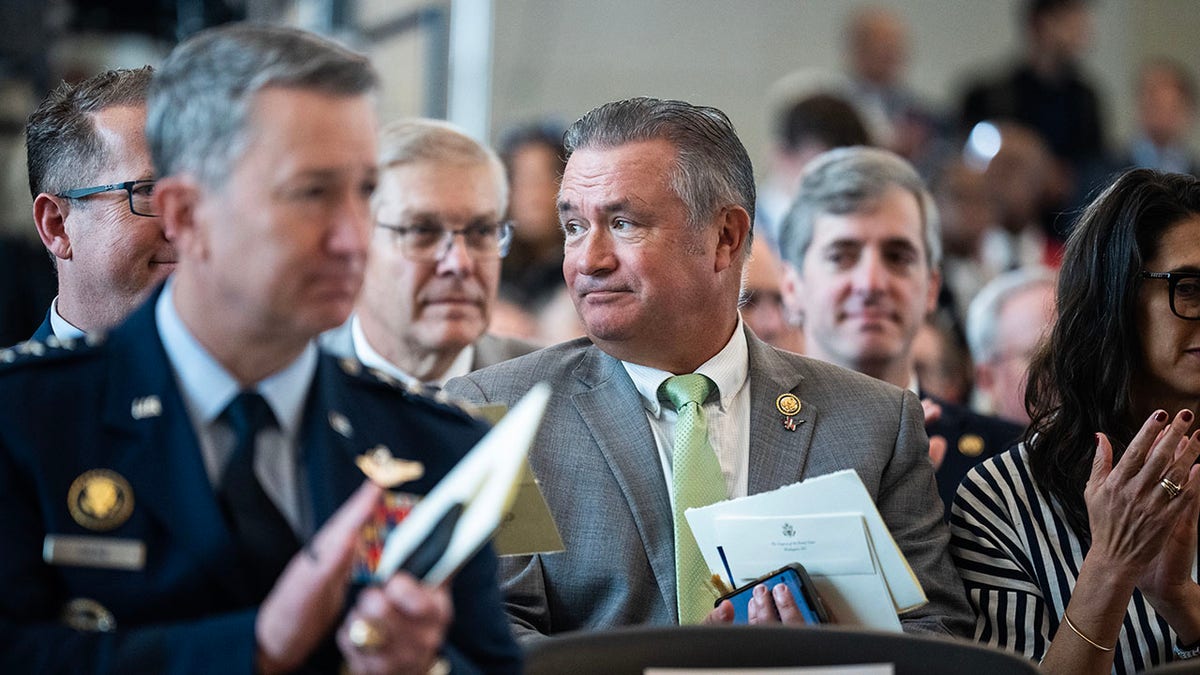
Rep. Don Bacon, R-Neb., is one of more than a dozen House Republicans who have cosponsored the Dignity Act. (Tom Williams/CQ-Roll Call, Inc. via Getty Images)
CLICK HERE TO DOWNLOAD THE FOX NEWS APP
Despite no clear path forward, Salazar has vowed to continue engaging skeptics about the immigration reform legislation.
She has also shot down the idea of using a discharge petition to team up with Democrats and force a vote on the House floor.
«I’m going to do it the hard way,» Salazar told Fox News Digital.
«I am sure we’re going to be able to get to a yes, and we’re going to be able to solve immigration within the Trump administration,» she added. «I have no doubt about that. Only God the Father knows the time. I’m just waiting.»
politics, immigration, republicans, border security













Por qué a un terremoto fuerte le siguió inmediatamente otro

¿Por qué fueron tan destructivos estos terremotos?

¿Esta zona es propensa a terremotos?

¿Habrá réplicas importantes?
Trump administration notches major immigration victories at Supreme Court
The Supreme Court delivers significant immigration victories for the Trump administration, affirming presidential authority to end temporary protected status and turn away asylum seekers at the border. Constitutional law attorney Jonathan Turley breaks down the impact of these crucial 6-3 decisions, highlighting their implications for border sovereignty and future immigration policy in the United States.
NEWYou can now listen to Fox News articles!
The Supreme Court’s Thursday decision to restrict asylum applications, hailed by immigration hawks, could actually end up increasing illegal crossings, according to the three dissenting justices and immigration nonprofit involved in the case.
On Thursday, the Supreme Court held in Mullin v. Al Otro Lado that migrants must physically set foot in the United States in order to be eligible for asylum, reversing lower court rulings that had required the government to process certain asylum seekers turned away at ports of entry. While the decision is broadly viewed as making asylum claims more difficult to secure, an objective of the Trump administration, Justice Sonia Sotomayor and Al Otro Lado both argue that it may have unintended consequences.
«This Court has previously recognized that immigration statutes and procedures should not be construed to ‘create a perverse incentive to enter at an unlawful rather than a lawful location. Yet, the majority’s construction does exactly that,» Sotomayor wrote in her dissent. «It tells asylum seekers that they may apply for asylum if they can make it across the border illegally but that they cannot apply if they patiently wait at the edge of a port of entry.»
Al Otro Lado argued on similar lines, stating in a court filing that restricting asylum access to those who physically enter the United States would»create a perverse incentive to cross the border between ports of entry» as people who do so will receive greater rights than those stopped at ports.
SUPREME COURT HANDS TRUMP TWO MAJOR IMMIGRATION VICTORIES
Asylum seekers seen walking toward the southern border in Tijuana, Mexico and a image of a courtroom in the Concord Immigration Court. Kyra Lilien, an immigration judge is suing the Trump administration over her termination, alleging she was fired because of her political affiliations. (Getty Images; Concord Immigration Court)
It is unclear if the Department of Homeland Security, which celebrated the decision, has prepared for the potential uptick in asylum seekers illegally crossing the border. DHS did not respond to a request for comment when reached by Fox News Digital on Thursday.
The conservative majority, led by Justice Samuel Alito, downplayed this possibility, calling the concern «overstated.»
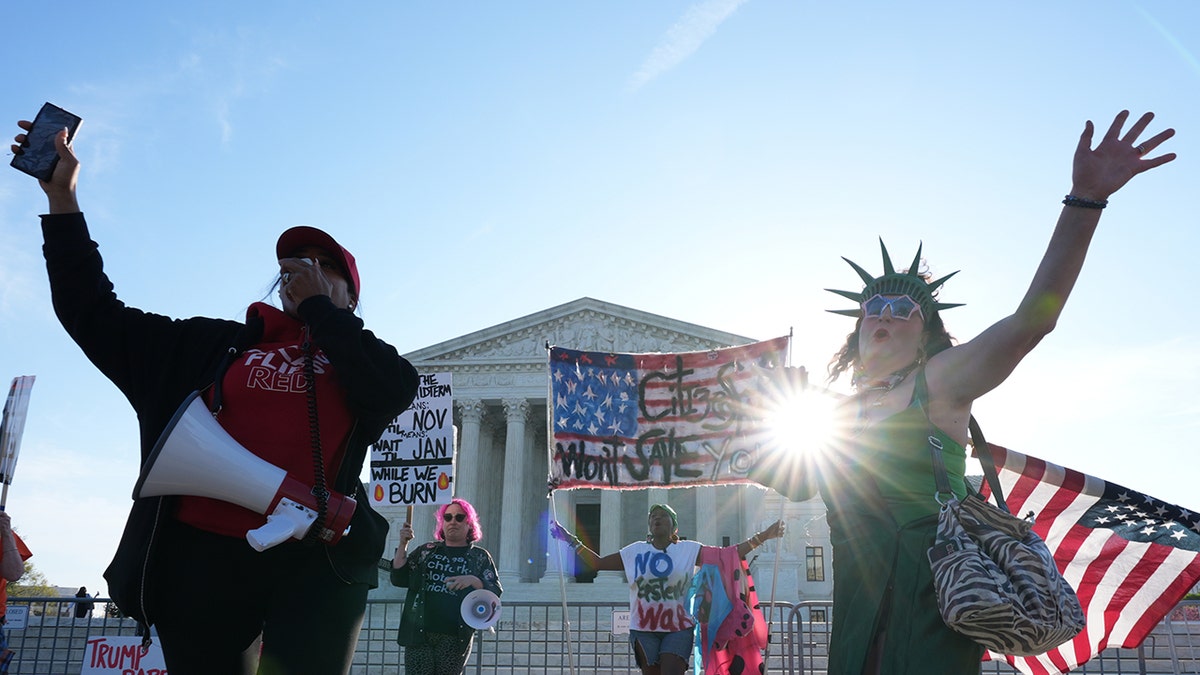
Pro and anti-Trump demonstrators rally outside the U.S. Supreme Court in Washington, D.C., on April 1, 2026, before justices hear oral arguments on whether President Donald Trump can deny citizenship to children born to parents who are in the United States illegally or temporarily. (J. Scott Applewhite/Associated Press)
DOJ ACCUSES COURTS OF UNDERCUTTING EXECUTIVE POWER IN HIGH-STAKES SUPREME COURT BORDER CASE
«Metering does not permanently bar any alien from arriving in the United States and then applying for asylum,» Alito wrote for the majority. «Illegal entry, on the other hand, may be expensive and dangerous, and it carries adverse legal effects. Entry at an improper location is a crime. An alien becomes ineligible for asylum if he unlawfully re-enters the country after having been removed.»
«An alien whose admission and inspection are delayed due to metering would need a powerful reason to apply for asylum immediately for it to be preferable to run all the risks of illegal entry,» he added.
TRUMP ADMIN EASES ASYLUM FREEZE FOR VETTED MIGRANTS, KEEPS BANS ON ‘HIGH-RISK’ NATIONS
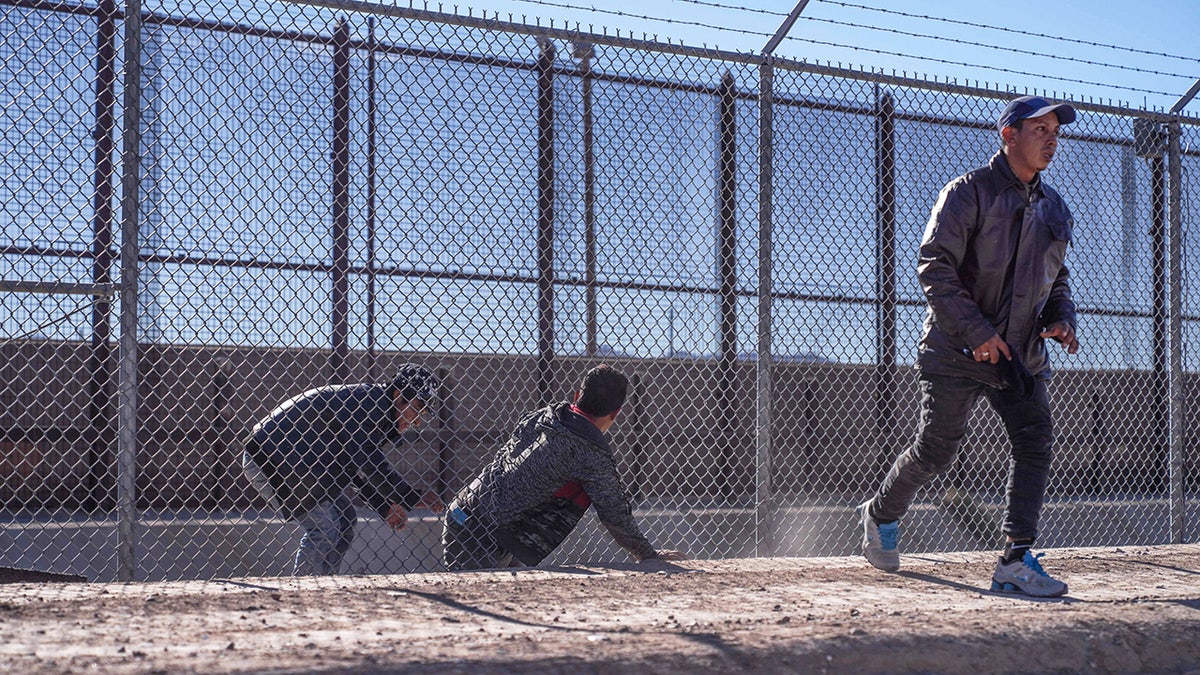
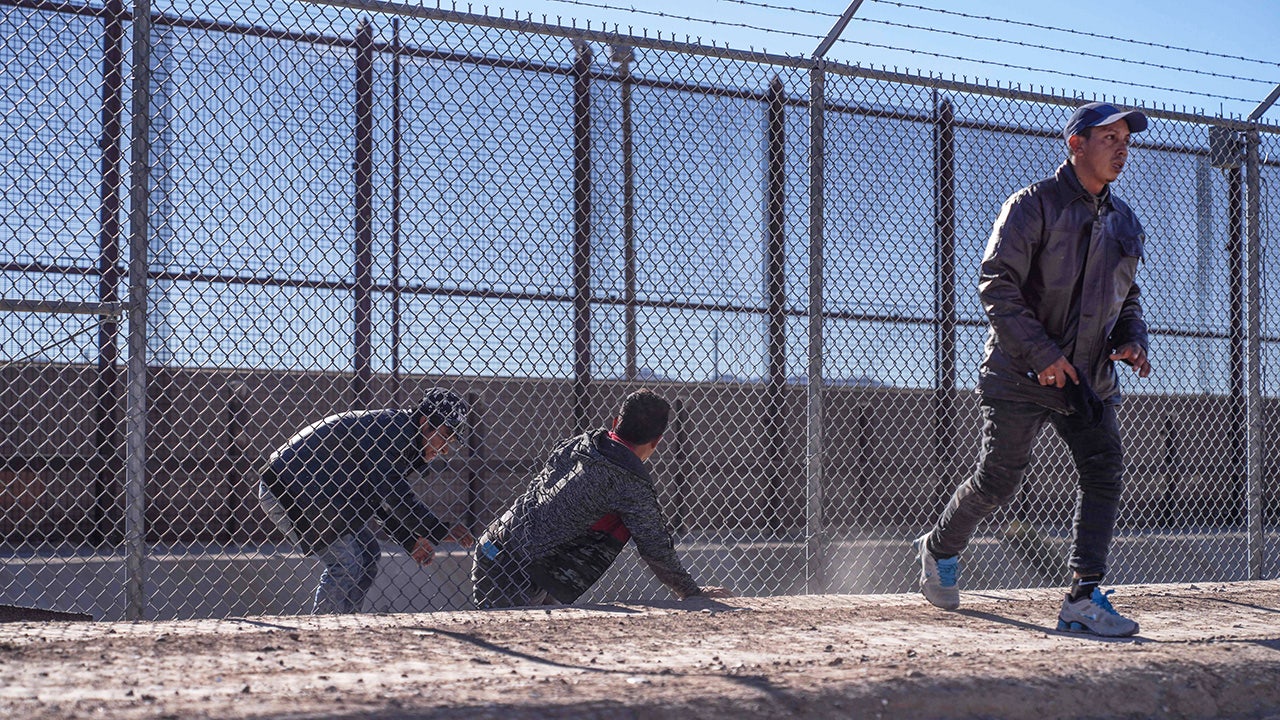
Migrants cross illegally through a hole in a fence near El Paso, Texas, on Dec. 22, 2022, after the U.S. Supreme Court halted the removal of Title 42, a policy used to block migrants at the southwest border. (Allison Dinner/AFP)
Metering refers to the practice of limiting how many asylum seekers can approach or enter a U.S. port of entry each day for processing. Under the policy, migrants were often told to wait in Mexico until U.S. officials determined the port had capacity.
Alito’s rationale was not enough to convince Sotomayor and the other dissenting justices.
«The point, however, is not that illegal entry always produces a net windfall for asylum seekers; it is that Congress was unlikely to devise a system in which asylum is available to those who unlawfully set foot over the border, but not to those who attempt to comply with the law and are physically blocked from entering at the threshold of a port of entry by an immigration officer,» she wrote. «It is also the unfortunate reality that, despite the adverse consequences the majority cites, many asylum seekers are desperate enough to flee the persecution they face in their home countries that they are willing to run significant risks to apply for asylum.»
Sotomayor went on to cite a 2018 DHS Office of the Inspector General report that found metering had «unintended consequences» which «le[d] some aliens who would otherwise seek legal entry into the United States to cross the border illegally.»
The report was published before lower courts held that migrants turned away at the border could apply for asylum, meaning that the conditions it covered are comparable to the new status quo set by the Supreme Court.
CLICK HERE TO DOWNLOAD THE FOX NEWS APP
«This administration has demonstrated that the border can be secured against illegal entries. As border wall construction continues, the ability to deter illegal crossings will only improve,» Matt Crapo, the director of litigation at the right-wing Federation for American Immigration Reform, told Fox News Digital.
«So long as the federal government makes border security a priority, illegal crossings should not be a major concern,» he added.
supreme court, homeland security, immigration, mexico, border security
INTERNACIONAL
El drama de una argentina de 79 años que quedó atrapada en los terremotos en Venezuela: está postrada, no tiene familia y pide ayuda para volver al país
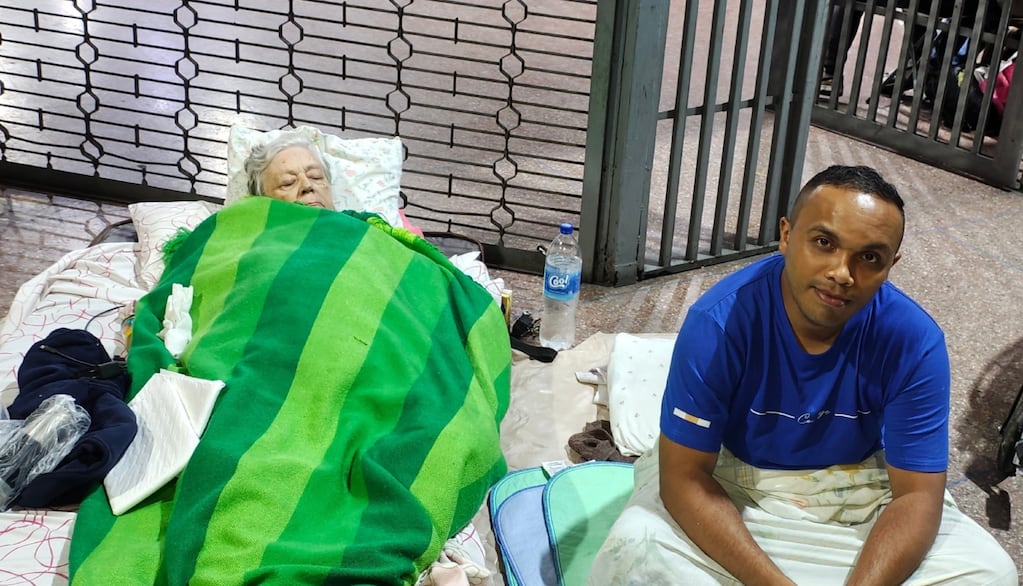
Los dos terremotos que sacudieron Venezuela dejaron al menos 188 muertos, cientos de heridos y miles de personas que quedaron sin un techo luego de que los sismos arrasaran con todo. Las imágenes dan cuenta del horror: edificios derrumbados, rescatistas buscando entre los escombros y la desesperación de aquellos que quedaron a la deriva.
Una de ellas es María Alicia Zurli Giraud Billoud, una argentina de 79 años que reside en Caracas desde su juventud y que pasó la noche en la calle porque su departamento quedó al borde del colapso.
“Estamos vivos y eso es ganancia”, dijo Luis Reyes, su cuidador, en diálogo con TN. Sin embargo, contó el drama que sufre la mujer y reclamó ayuda del Gobierno argentino.
María Alicia es de Tres Esquinas, Mendoza, y a sus veintes se casó con un argentino, con quien decidió instalarse en Venezuela en 1978. Después de muchos años, se separaron y ella quedó sola.
En 2023, la mujer se cayó en el baño y sufrió una fractura en la cadera, pero nunca se hizo ver la lesión y la situación, que podría no haber sido tan grave, terminó con ella postrada en la cama. Desde entonces, ella se adaptó a estar acostada y no se volvió a levantar.
Luis la conoció a través de una vecina de María Alicia, que lo contactó y le comentó lo que pasaba con ella. “Yo trabajo en un hospital y me dijo para ver qué podía hacer por ella. Cuando la conocí, estaba abandonada, en una situación muy vulnerable. Estaba deshidratada, llena de heces, en una situación complicada”, relató. El departamento de María Alicia quedó con terribles rajaduras y el edificio tiene peligro de derrumbe. (Foto: Gentileza Luis Reyes)
Él decidió documentar cómo la encontró y de qué manera fue evolucionando, ya que empezó a visitarla, le llevaba insumos médicos, pañales. Como vivía en otra ciudad y tenía que hacer largos viajes para cuidarla, María Alicia le ofreció quedarse con ella en San Martín y aceptó. “Se hizo costumbre. Si nadie la quiere ayudar, bueno, acá estoy. De alguna manera, la adopté”.
Respecto a la familia de la mujer, indicó que tiene dos hermanos de 76 y 73 años que están al tanto del estado de salud de María Alicia, pero que también tienen problemas de salud y decidieron no involucrarse.
“Ella es la mayor y todos saben cómo está. Hizo videollamadas con su hermano, pero no cambió nada. Su único contacto en Venezuela era su exmarido, que falleció hace unos años, y quedó totalmente sola”.
Leé también: Venezuela: salió a caminar por la playa 10 minutos antes de los terremotos y vio cómo se caía el edificio en el que vivía
Cuando todavía funcionaba la Cancillería argentina en Caracas, Reyes les acercó el caso con una carpeta y los detalles de la mujer, pero no tuvo éxito. “Les incomodaba mucho que yo fuera, no hicieron mucho por ella. Después intenté en la oficina de Colombia y elevaron el caso. El año pasado me contactaron para hacer un seguimiento, pero nunca vinieron a visitarla».
Y agregó: “Está lúcida, se acuerda de su familia y está bien. Su problema es físico-motor”.
“Estaba en crisis”: el momento del terremoto que los dejó en la calle
En la tarde del miércoles, Luis llegó un rato más temprano de lo esperado a la casa. Estaban hablando con María Alicia cuando su celular empezó a emitir una alarma fuerte que no paraba.
“No entendí que estaba pasando. A los diez segundos empezó a moverse el edificio. Primero fueron movimientos leves y después eran movimientos bruscos que nos hacían chocar contra la pared. Se movía para todos lados y no podíamos hacer nada”, describió.
Ambos comenzaron a pedir ayuda, desesperados, porque creían que se les venía el techo encima. Y esperaron. Y pensaron lo peor hasta que los temblores se calmaron.
“Estábamos en pánico los dos. Ella estuvo llorando, entró en crisis, tenía el corazón acelerado. Tenía miedo de que se derrumbara todo, así que la monté en una silla de ruedas y salimos. Por suerte estamos en un segundo piso y bajamos», sostuvo Luis.

Así quedó la zona de San Martín, en Caracas. (Foto: Gentileza Luis Reyes)
Desde ese momento permanecen en la calle, ya que el edificio tiene mucho daño estructural y no es seguro volver a entrar. “No es recomendable regresar porque podría ser trágico y anoche pasamos en la calle. Ella no puede estar a la intemperie mucho tiempo más y vamos a terminar entrando de nuevo al departamento aunque sea riesgoso, pero no hay alternativas”.
De acuerdo a su testimonio, la situación en el barrio es compleja: hay muchos lugares desplomados y, los que se mantuvieron en pie, están cerrados: “Nadie nos ayudó, cada uno carga su desgracia y es difícil incluso encontrar algún lugar para comprar comida”.
“Fue algo catastrófico y el Gobierno le está dando prioridad a los edificios derrumbados. Nosotros estamos en la última fila, pero necesitamos que alguien nos ayude. Estamos a la buena de Dios”, imploró.
Venezuela, Terremoto

El exsenador Edgardo Kueider suma una nueva causa en Paraguay por lavado de dinero

Karina Milei forcejea con Santiago Caputo después de los cambios para paliar las consecuencias del caso Adorni

Ley de GNL en Vaca Muerta crea un nuevo esquema de regalías en acuerdo con YPF

“Me pasó lo mismo”: Luis Suárez opinó sobre el conflicto de Julián Álvarez con Atlético de Madrid y lo comparó con el que vivió él

Daniela Celis impactó con un look a pura sensualidad tras su separación de Nick Sícaro: la audaz producción en topless

Javier Milei, sobre Manuel Adorni: “Si la Justicia lo considera culpable, lo eyecto de una patada”

“El mejor del mundo”: los elogios a Messi y a la selección argentina en el arco político tras el triunfo ante Austria

Violencia, déficit fiscal y crisis sanitaria: los desafíos que enfrentará Abelardo de la Espriella en Colombia

A los 100 años, murió Alan Greenspan, histórico presidente de la Reserva Federal de Estados Unidos

AI-first: los detalles de la estrategia de Inteligencia Artificial del banco Santander

 POLITICA3 días ago
Diputados: con el apoyo de bloques aliados, LLA logró frenar la sesión en la que la oposición buscaba interpelar a Adorni
- ECONOMIA3 días ago
ANSES: quiénes cobran hoy martes 23 de junio de 2026
- ECONOMIA2 días ago
Nuevos controles a las devoluciones de 30% por gastos en el exterior: cómo pedir el reembolso del dólar tarjeta ante ARCA