INTERNACIONAL
Major blow to Putin in Africa as Russian forces driven from Mali stronghold by separatists, jihadists


Mali unrest
Video shows armed militants gathering in Kidal, Mali as smoke rises. (Video: Reuters.)
NEWYou can now listen to Fox News articles!
JOHANNESBURG: A major defeat for Russia’s mercenary Africa Corps, in a battle with jihadist and tribal militia, is being reported in Mali. Deadly attacks by al Qaeda-linked rebels and mostly-Muslim Tuareg tribesmen across cities in the West African country are continuing Monday, also with reports of senior figures in Mali’s military junta being killed or injured.
Analysts say this could be a turning point in Moscow’s influence in West Africa. Russia has been grabbing Mali’s precious minerals, including gold, in return for promising to protect the country against the rebels. Sunday, though, rebels reported that Russian mercenaries have been forced to retreat from their base in the northern city of Kidal.
«The attacks are a major blow to Russia», Ulf Laessing, head of the Sahel program at the Konrad Adenauer Foundation, told the Associated Press. He added, «The (Russian) mercenaries had no intelligence about the attacks and were unable to protect major cities. They have unnecessarily worsened the conflict by not distinguishing between civilians and combatants.»
Video of dead soldiers who appear with their features to be Russian, and of Russian military vehicles reportedly leaving Kidal, has been seen by Fox News Digital.
US ALLOWING SOME NIGERIA EMBASSY STAFF TO EVACUATE OVER ‘DETERIORATING SECURITY SITUATION’
A column of black smoke rises above buildings as traffic passes the Africa Tower monument in Bamako on April 26, 2026. April 25, 2026’s shock attacks, synchronized by Tuareg rebels of the Azawad Liberation Front (FLA) coalition and the jihadist Group for the Support of Islam and Muslims (JNIM), targeted several areas in the vast arid country. Fighting resumed on April 26 in several areas, including Kita near Bamako, Kidal, Gao and Severe.Tuareg rebels meanwhile announced an agreement allowing Russian forces backing Mali’s army to withdraw from the northern city of Kidal, which they claimed was «totally» under their control. (AFP via Getty Images)
The Defense News Nigeria media site reported that Russia’s Africa Corps stated in Kidal «they were heavily outnumbered by a ratio of 6 to 1,» adding «the Corps claimed that between 10,000 and 12,000 fighters were involved in yesterday’s attacks. There are 2,000 Russian mercenaries operating in Mali. The Malian government pays Wagner $10 million per month for security,» according to the Nigerian publication.
A Russian blog on Telegram Monday, claiming to come from Kidal, stated «the units of the African Corps that were stationed and fought in Kidal left this settlement together with the military personnel of the Malian army. First of all, wounded servicemen and heavy equipment were evacuated. The personnel continues to carry out the assigned combat mission. The situation in the Republic of Mali remains difficult.»
A spokesperson for the Tuareg-led Azawad Liberation Front, or FLA, told the Associated Press that the Russian troops have withdrawn from the city after a «white» agreement was reached. This has not been confirmed by either Mali’s government or Russia’s Ministry of Foreign Affairs.
TRUMP’S APPROACH TO AFRICA LAUDED BY TOP REPUBLICAN AS RECENT AIRSTRIKES SHOW ‘OUTSIDE THE BOX’ THINKING

This undated photograph handed out by the French military shows three Russian mercenaries, right, in northern Mali. Russia has engaged in under-the-radar military operations in at least half a dozen countries in Africa in the last five years using a shadowy mercenary force analysts say is loyal to President Vladimir Putin. The analysts say the Africa Corps, formerly the Wagner Group, of mercenaries is also key to Putin’s ambitions to re-impose Russian influence on a global scale. (French Army via AP)
Russia’s ministry of foreign affairs said on its Telegram account that «two hundred and fifty militants attacked Bamako Senou International Airport and the military base located nearby. The Malian Armed Forces repelled the attack and are currently taking further steps to eliminate the militia that may have been, reportedly, trained by Western security agencies. Russia is deeply concerned about these developments. This terrorist activity poses a direct threat to the stability of friendly Mali and could have the most serious consequences for the entire region.»
Mali’s military junta, which first took power in a coup in 2020, Monday announced that both the chief of the armed forces’ general staff, Gen. Oumar Diarra, and the director of the national security agency, Gen. Modibo Koné, have been wounded in attacks.
The government confirmed earlier that Sadio Camara, said to be the second most important figure in Mali’s military junta, had been killed in the fighting. Camara was Mali’s defense minister, and is widely credited with bringing in Moscow’s mercenary Africa Corps to assist in battling the militia.
The rebels attempting to take over Mali are said to be jihadists from the Nusrat al-Islam (GSIM/JNIM) linked with the tribesmen of the FLA and other groups, including at least one linked with Islamic State. The GSIM’s declared aim is to turn Mali into an al Qaeda-linked Islamic caliphate with strict Sharia law.
«The United States strongly condemns the terrorist attack in Mali,» a State Department spokesperson told Fox News Digital Monday, adding: «We extend our deepest condolences to the victims, their families, and all those affected. We stand with the Malian people and government in the face of this violence. The United States remains committed to supporting efforts to advance peace, stability, and security across Mali and the region.»

File picture of Wagner group forces, now known as the Russia Corps, in Mali in 2024. (East2West)
CLICK HERE TO DOWNLOAD THE FOX NEWS APP
The U.S. Embassy in Mali warned Sunday on its website that «U.S. citizens should continue to shelter in place, remain alert, follow local news for updates, and avoid areas where security operations may be underway.»
On Monday, multiple reports said Malian troops and Russian mercenaries have also been forced by rebels to withdraw from the northern Malian city of Tessit. At the time of publication, this had not been confirmed by the Malian government.
The Associated Press contributed to this report.
mali, al qaeda, armed forces, africa, military












NEWYou can now listen to Fox News articles!
President Donald Trump’s immense clout over the GOP and the power of his endorsements in Republican nomination races faces its latest test Saturday, as Louisiana holds primary runoff elections for the U.S. Senate.
Six weeks after denying Trump-targeted GOP Sen. Bill Cassidy a third six-year term in the Senate, Republican voters in the solidly red Gulf Coast state will choose between Rep. Julia Letlow and state Treasurer John Fleming for the now open seat.
A Letlow victory in the GOP runoff would be another victory for Trump as he works to fill the halls of Congress with loyal lawmakers for his final two years in the White House. But a win by Fleming would be the third high-profile endorsement setback for Trump in this spring’s Republican primaries.
Five years after he voted to convict Trump in his second impeachment trial, Cassidy was sent packing.
WATCH: CASSIDY DETAILS NEW BEHIND CLOSED DOORS CLASH WITH TRUMP
Sen. Bill Cassidy of Louisiana fist bumps a supporter during a campaign stop at a gun retailer and firing range in Baton Rouge on May 15, 2026, the eve of the state’s Senate primary. (Paul Steinhauser/Fox News)
Letlow, who was backed by Trump even before she entered the race in January, grabbed 45% of the vote in the primary, with Fleming at roughly 28% and Cassidy at just under 25%. Since no candidate cracked 50% of the vote, Letlow and Fleming advanced to the runoff for the Republican nomination and Cassidy became the first elected Republican senator to lose renomination since Sen. Richard Lugar of Indiana in 2012.
Trump, celebrating Cassidy’s defeat, said on social media that «it’s nice to see that his political career is OVER!»
Cassidy, in a speech to supporters after conceding, took a jab at Trump, saying, «When you participate in democracy, sometimes it doesn’t turn out the way you want it to. But you don’t pout, you don’t whine. You don’t claim the election was stolen… You don’t manufacture some excuse.»
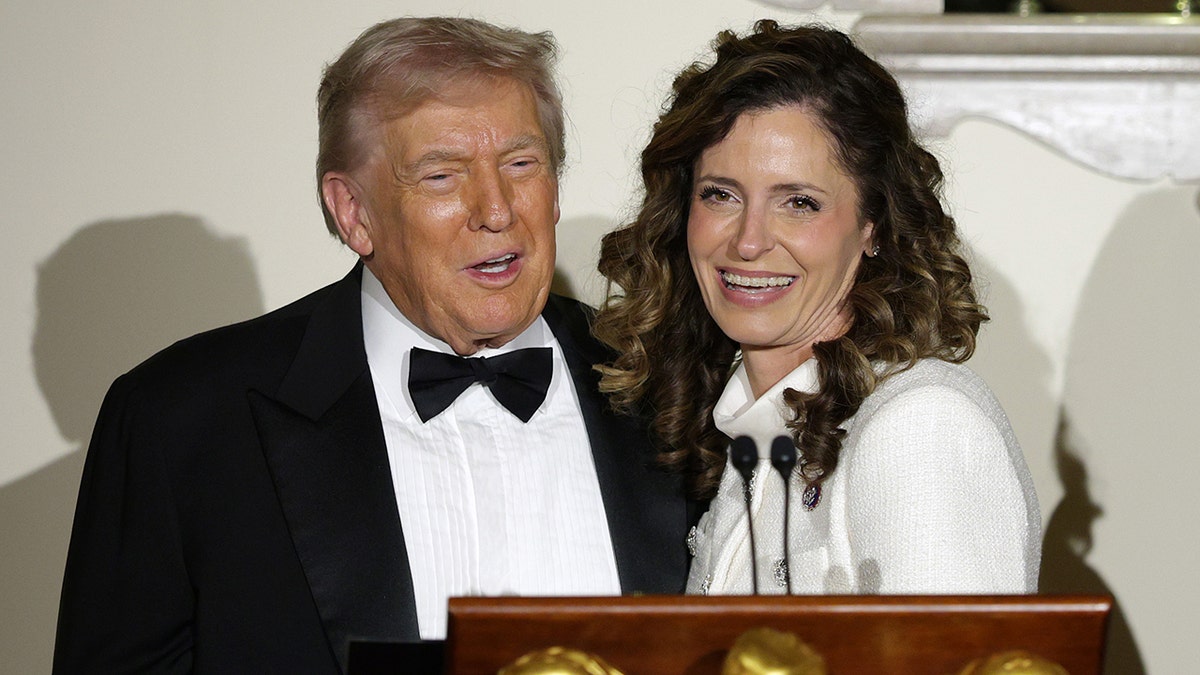
President Donald Trump stands with Rep. Julia Letlow during the Congressional Ball at the White House Grand Foyer in Washington, D.C., on Dec. 11, 2025. (Alex Wong/Getty Images)
Letlow, who is also backed by Louisiana Gov. Jeff Landry, a top Trump ally, won her congressional seat in 2021, after her husband, Luke Letlow, died five days before being sworn into the U.S. House after his 2020 election victory for the seat she now holds. She has highlighted her support from Trump throughout her Senate campaign.
The president headlined a tele-rally for Letlow in the closing days ahead of the runoff, and in an election eve social media post called her a «TOTAL WINNER!»
Fleming, who spent eight years in Congress before serving as a White House deputy chief of staff during Trump’s first term, has argued that he’s the most conservative candidate in the GOP Senate primary. During his tenure in Congress, he was a founding member of the conservative House Freedom Caucus.
Fleming, in a Fox News Digital interview last month, touted that voters saw him as «clearly MAGA.» And he highlighted that he «served as Trump’s deputy chief of staff for 10 months in the White House. I served in his entire first administration at various capacities. I was one of the first congressmen that endorsed him in 2016.»
DEMOCRACY ’26: STAY UP TO DATE WITH THE FOX NEWS ELECTION HUB
The GOP nominee will be considered the clear frontrunner in the midterm election against either farmer Jamie Davis or Navy veteran Gary Crockett, who are facing off in the Democratic Senate runoff.
The brute force of the president’s endorsement power has been on display in GOP primaries over the past two months, with his candidates ousting incumbents he targeted in showdowns in Indiana, Kentucky and Texas, as well as the Louisiana primary.
But Trump’s endorsement streak in statewide and congressional Republican primaries was snapped a few weeks ago when his last-minute endorsement of Republican Rep. Randy Feenstra of Iowa in the race to succeed retiring GOP Gov. Kim Reynolds wasn’t enough to propel the three-term congressman to victory.
Feenstra was narrowly edged by Zach Lahn, a businessman, farmer and former political strategist who was backed by the political wings of MAHA — the acronym for the Make America Healthy Again movement aligned with Trump’s Health Secretary Robert F. Kennedy Jr. — and Turning Point USA, the powerful conservative organization co-founded by the late Charlie Kirk.
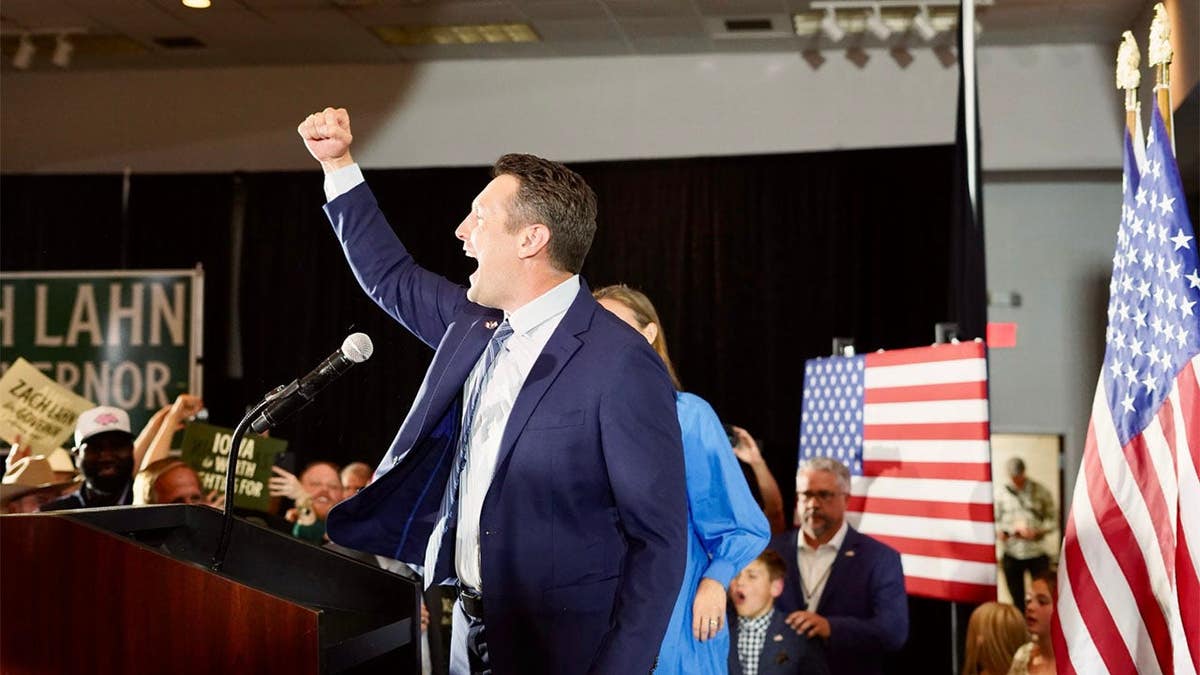
Zach Lahn raises his fist in celebration after defeating his primary opponent in Iowa’s GOP gubernatorial race on Tuesday, June 2, 2026. (Zach Lahn for Governor via Facebook)
The president rebounded three weeks ago in South Carolina, as Trump-backed Lt. Gov. Pam Evette finished first in the GOP gubernatorial primary and longtime Trump ally Sen. Lindsey Graham won a majority of the vote in the Republican Senate primary, and avoided a runoff.
Graham, who was endorsed by Trump, was facing primary challenges from five candidates, including conservative businessman Mark Lynch, who took aim at the senator over his support for the war in Iran. Lynch was backed by some MAGA leaders who have been critical of the president.
Two weeks ago, Trump-backed candidates won two of the three top races in Georgia and Alabama, with the one setback coming against a billionaire businessman who shelled out over $100 million of his own money to boost his campaign.
Rep. Barry Moore, a House Freedom Caucus member and longtime Trump supporter who was endorsed by the president, comfortably defeated rival Jared Hudson, a former Navy SEAL sniper who was supported by some top names on the right, in solidly red Alabama’s GOP Senate runoff.
In battleground Georgia’s Republican Senate runoff, an 11th-hour endorsement by Trump helped boost Rep. Mike Collins, a MAGA champion, to victory over former college football coach Derek Dooley, who was backed by popular conservative Gov. Brian Kemp.
TRUMP’S ENDORSEMENT FAILS TO SAVE MAGA CANDIDATE AS BILLIONAIRE ADVANCES IN KEY GOVERNOR RACE
Collins will face Democratic Sen. Jon Ossoff in the general election in a race that’s among a handful that will likely decide if the GOP holds its slim majority in the chamber in the midterms.
CLICK HERE TO DOWNLOAD THE FOX NEWS APP
But in Georgia’s GOP gubernatorial runoff, the candidate Trump backed, Lt. Gov. Burt Jones, who was also endorsed by Kemp this past weekend, was defeated by billionaire businessman Rick Jackson, who ran as an outsider.
On Tuesday, Trump-backed first-time candidate Anthony Constantino, a businessman and former boxer, defeated Robert Smullen, a retired Marine Corps colonel and New York assemblyman who had the backing of the state party, in the upstate New York race to succeed retiring GOP Rep. Elise Stefanik.
Meanwhile, in South Carolina’s Republican gubernatorial runoff, Trump couldn’t lose.
That’s because, besides backing Evette, he also gave a last-minute endorsement to state Attorney General Alan Wilson, who ended up winning the showdown in a landslide.
midterm elections, donald trump, senate elections, republicans elections, elections, louisiana, politics
INTERNACIONAL
Crecen las críticas al plan de la NASA de estrellar la Estación Espacial Internacional en el océano Pacífico

El fin de una era espacial llegará en menos de cinco años. La NASA y sus socios internacionales confirmaron que la Estación Espacial Internacional (ISS, por sus siglas en inglés), uno de los mayores logros de la cooperación científica y tecnológica global, terminará su misión a principios de la próxima década con una maniobra planeada para sumergir sus restos en el océano Pacífico.
El proceso, previsto para fines de 2030 o principios de 2031, será histórico por la magnitud del aparato a desorbitar —del tamaño de un campo de fútbol— y por el modo en que la comunidad internacional enfrenta la transición hacia nuevas plataformas orbitales privadas.
Sin embargo, la decisión de dirigir los escombros al Punto Nemo, una zona remota del Pacífico, ya genera cuestionamientos de expertos en derecho espacial y grupos de defensa de los océanos, que advierten sobre un vacío legal y la falta de estudios sobre el efecto en los ecosistemas marinos.

El plan técnico es claro: la ISS perderá altura en etapas, primero por fricción atmosférica y maniobras del segmento ruso, y luego mediante el acople de un Vehículo de Desorbitación Estadounidense (USDV) construido por SpaceX.
Este vehículo, equipado con 46 propulsores Draco, será el encargado de guiar la estación hacia su reingreso controlado en la atmósfera terrestre.
Según la NASA, la Estación Espacial Internacional será desorbitada mediante una serie de acciones. En primer lugar, entre principios y mediados de 2028, la ISS comenzará a descender debido a la fricción atmosférica natural de la Tierra y a las maniobras de reentrada del segmento ruso de la ISS.
Posteriormente, a mediados de 2029, la NASA planea lanzar un Vehículo de Desorbitación Estadounidense (USDV), suministrado por SpaceX y financiado por el gobierno, acoplarlo a la ISS. Este vehículo encenderá sus 46 propulsores Draco y empujará la estación hacia su destino final en el océano”.

Para la NASA, la ISS representa “uno de los mayores logros de cooperación e ingeniería de la humanidad”. Durante casi 30 años, más de 265 personas de 20 países habitaron la estación, que funcionó como plataforma para miles de experimentos en microgravedad, medicina, tecnología y ciencias de la vida. Las tripulaciones se ofrecieron como sujetos de prueba para estudios sobre adaptación humana al espacio, mientras que instrumentos y sensores desplegados a bordo aportaron datos valiosos sobre el clima terrestre, la materia oscura y el comportamiento de las estrellas de neutrones.
Según la agencia, la misión de la estación espacial es llevar a cabo investigación y desarrollo en órbita terrestre baja (LEO) para aprender cómo la humanidad puede vivir y trabajar mejor en el espacio y devolver los beneficios de esta investigación a las personas en la Tierra.
Sin embargo, el final planificado para la estación genera “serias preocupaciones para la salud de los océanos”, según Mark Spalding, presidente de la Ocean Foundation, organización con sede en Washington, D.C.
Spalding advierte que “la planeada desorbitación de la Estación Espacial Internacional plantea serias preocupaciones para la salud de los océanos que la comunidad espacial no ha abordado adecuadamente”.

El temor radica en la falta de información sobre qué materiales sobrevivirán al reingreso y cómo impactarán en el fondo marino. “La verdad es que no lo sabemos con certeza. Eso es muy preocupante para una estructura del tamaño de un campo de fútbol. Sabemos que no todo se quema al reingresar a la atmósfera. Los componentes más densos sobrevivirán y llegarán al fondo marino”, señaló Spalding.
La Oficina de Responsabilidad Gubernamental de Estados Unidos (GAO) publicó un informe donde también apunta a una “brecha preocupante” en el derecho internacional. El Convenio sobre Responsabilidad Espacial de 1972 obliga a indemnizar por daños en tierra firme o territorios nacionales, pero no contempla los daños ambientales en alta mar.
“Como resultado, cuando las agencias espaciales controlan dónde caen los desechos, apuntan a alta mar y, al hacerlo, no contraen ninguna obligación legal de pagar por la limpieza o la remediación ambiental”, explicó Spalding. La remota ubicación del Punto Nemo, elegida para minimizar riesgos a la población, no elimina el valor ecológico de los océanos ni su vulnerabilidad.

La Ocean Foundation reclama una evaluación completa del impacto ambiental del campo de escombros del fondo marino previsto y de los efectos atmosféricos y la divulgación pública de todos los materiales que sobrevivirán a la reentrada y llegarán al fondo del océano.
También pide un análisis jurídico riguroso de las obligaciones contraídas en virtud de la Convención de las Naciones Unidas sobre el Derecho del Mar (CNUDM), el Protocolo de Londres de 1996 y el Acuerdo BBNJ, que exige evaluaciones de impacto ambiental para actividades con efectos inciertos en el mar.
Spalding concluye: “En alta mar no existe un soberano que pueda exigir responsabilidades. Creemos que es necesario subsanar esta laguna en el derecho internacional, y la desorbitación de la ISS es un claro ejemplo de por qué”.

La NASA justifica la decisión de desorbitar la ISS en la seguridad y en la necesidad de liberar el espacio para futuras estaciones comerciales, pero reafirma el valor científico de sus casi tres décadas de operación. “Sin la continuación de estas demostraciones y experimentos de larga duración en el sistema conjunto humano-vehículo, la exploración humana del sistema solar no será posible”, subraya la agencia.
Los sensores climáticos validaron modelos globales y aportaron información sobre el clima cambiante, mientras que la colaboración internacional permitió avances en medicina, materiales y biología que impactan en la vida cotidiana en la Tierra.
La transición hacia nuevas plataformas orbitales implica riesgos y desafíos regulatorios. El informe de la GAO advierte sobre la posibilidad de un “vacío” en la presencia humana continua en la órbita terrestre baja, ya que la transición de la ISS a estaciones comerciales aún no está asegurada. La NASA y sus socios —CSA, ESA, JAXA y Roscosmos— aceleran los acuerdos y el desarrollo de infraestructuras privadas, pero la pregunta sobre el legado de la ISS y el futuro de la cooperación internacional en el espacio sigue abierta.

El debate por la caída controlada de la ISS revela la necesidad de actualizar el marco legal internacional para proteger los océanos como un bien común.
El Acuerdo BBNJ recién negociado en la ONU establece que “las partes realicen evaluaciones de impacto ambiental para las actividades que puedan afectar el medio marino más allá de la jurisdicción nacional cuando se desconozcan o no se comprendan bien los efectos”.
Spalding plantea: “Cabe preguntarse si la desorbitación de la ISS —la mayor reentrada de este tipo en la historia, dirigida a alta mar— debería activar esa obligación”.

El destino de la ISS será observado como un caso de estudio para el futuro de la basura espacial y la protección de los océanos. La comunidad internacional enfrenta el desafío de equilibrar los logros de la ciencia con la preservación de los ecosistemas marinos, en un contexto donde la lejanía del océano no debe confundirse con falta de valor o vulnerabilidad.
estación espacial internacional,NASA,Punto Nemo,desorbitación,medio ambiente,derecho espacial
INTERNACIONAL
South Korea’s proposed platform law could cost US states $525B over the next decade, model estimates
NEWYou can now listen to Fox News articles!
A new model shows devastating economic losses for U.S. companies if South Korea adopts controversial legislation that would regulate transactions with some American firms, and lawmakers warn that the country’s leadership is now «closely aligned with China.»
The Online Platform Fairness Act, which is spearheaded by the Korea Fair Trade Commission (KFTC), has gained steam in the Asian nation and is backed by far-left South Korean President Lee Jae-myung.
A Competere Foundation model estimates a $525 billion loss in economic activity in U.S. states over the next decade, including a $123 billion loss for California, a $48.7 billion loss for Texas, a $33.9 billion loss for New York and a $27.4 billion loss for Washington.
«South Korea is an American ally and an economic success story, which is why its recent and continuing actions restricting American companies — like its 20-year ban on Google Maps — are so troubling,» Rep. Darrell Issa, R-Calif., told Fox News Digital. «I remain concerned that its current trade commission resembles the worst of Lina Khan’s FTC, not the free market tradition that has helped to bring Seoul and Washington together.»
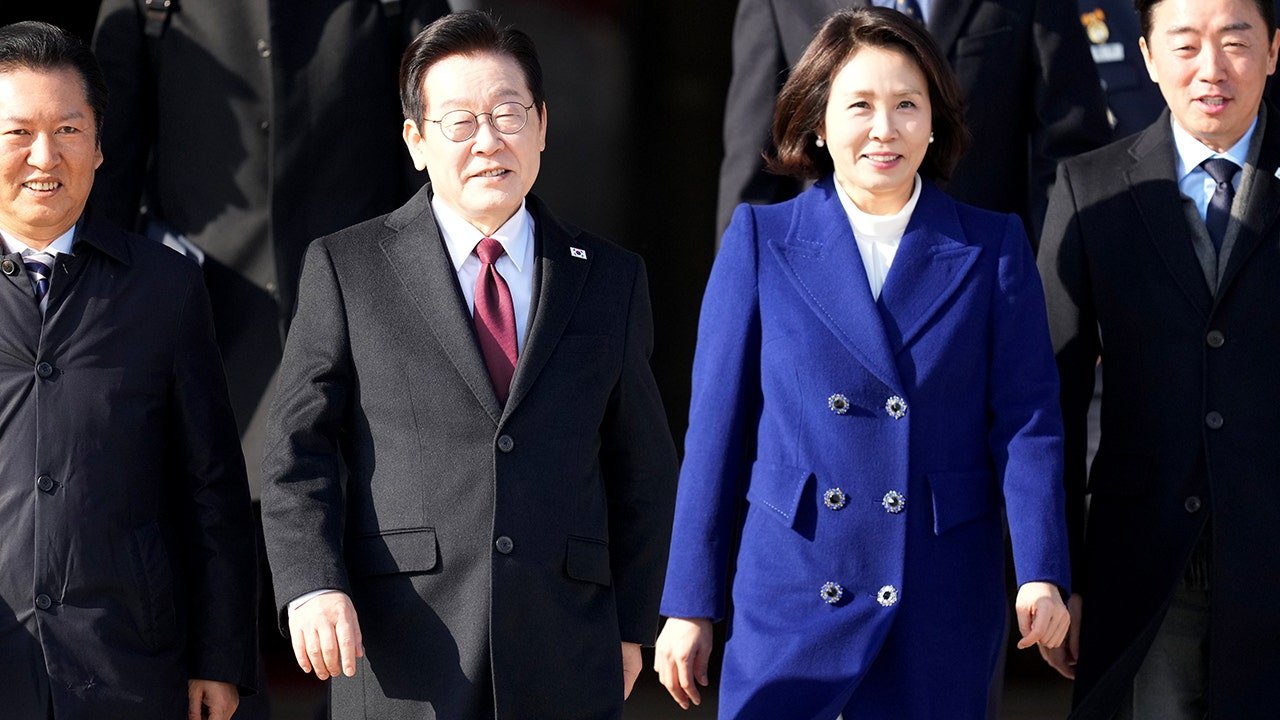
South Korean President Lee Jae-myung and his wife Kim Hea Kyung arrive at Seoul airport to depart for China on Jan. 4, 2026. (Lee Jin-man/AP Photo)
OVER 50 HOUSE MEMBERS ACCUSE SOUTH KOREA’S NEW LEFT-WING GOVERNMENT OF ATTACKING US COMPANIES, FAVORING CHINA
Issa told Fox News Digital in April that South Korean leadership and the nature of the Democratic majority in the country is «closely aligned with China.»
Yoon Suk-yeol, a conservative from the People Power Party, was elected president of South Korea in 2022 but was impeached in December 2024. His decision to impose martial law was a key factor in his ouster.
Lee narrowly lost to Yoon in the 2022 presidential election but won the presidency in 2025. The Democratic Party in South Korea already holds a substantial majority in the National Assembly. The country is now operating at a full Democratic majority.
SOUTH KOREA FLIPS LEFT IN PRESIDENTIAL RACE; LEE SECURES VICTORY AFTER CONSERVATIVE OPPONENT CONCEDES
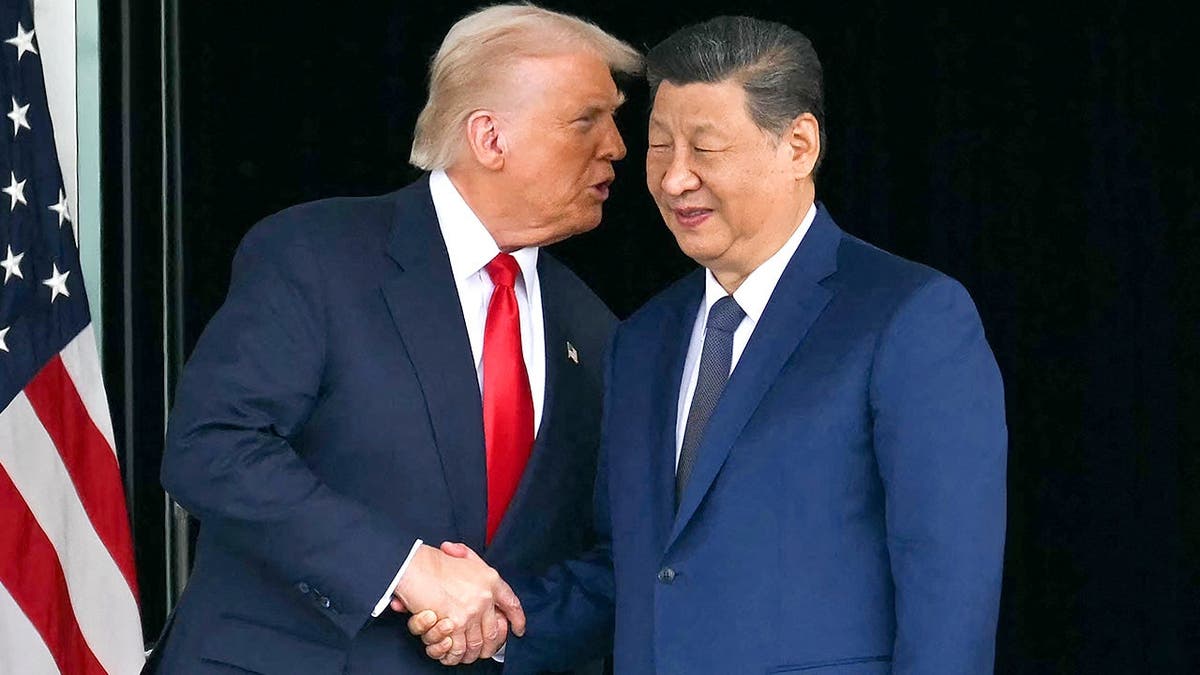
Trump is expected to press Xi on China’s economic and strategic support for both Iran and Russia, including oil revenue, dual-use components and potential weapons transfers, according to senior administration officials. (Andrew Caballero-Reynolds/AFP via Getty Images)
The Democratic Party is the main liberal force party in the country and favors progressive domestic policies as opposed to the conservative beliefs that have previously reduced political engagement with North Korea and promoted relations with the U.S.
The proposed bill, which remains pending in South Korea’s assembly, would broaden the power of the KFTC, the same agency members of Congress are criticizing for unfairly treating U.S. companies.
Shanker Singham, international trade and competition economist and CEO of the Competere Foundation, said, «Korea is already an increasingly unfriendly place for U.S. companies to do business,» adding the «looming regulations will make that environment even worse.»
SOUTH KOREA’S NEW LEFTIST PRESIDENT PULLS A FAST ONE ON DONALD TRUMP
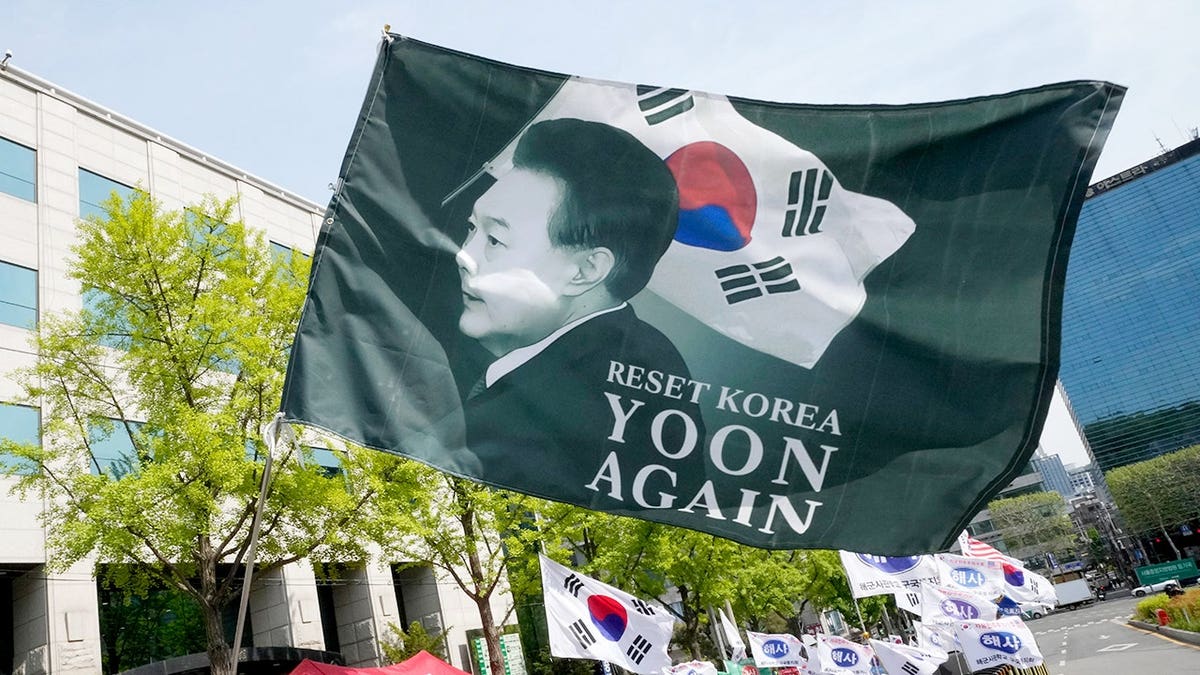
Supporters of former South Korean President Yoon Suk Yeol stage a rally outside the Seoul High Court in Seoul on April 29, 2026. (Ahn Young-joon/AP)
Former Utah Republican Rep. Chris Stewart also warned of South Korea’s posture to increase regulatory burdens for U.S. companies, telling Fox News Digital it could be devastating for more than just tech companies.
«South Korea’s campaign against American companies isn’t just a trade issue. It’s a strategic mistake that benefits China,» Stewart said. «Every time Korean regulators make it harder for U.S. innovators like Coupang, Google or Meta to compete, they create more room for Chinese companies to gain market share and influence in one of the world’s most important digital economies.»
Stewart noted that the cost would affect more than just Silicon Valley, tying the economic losses to a Chinese win, since Beijing would likely take up lost market share in South Korea if American companies were to reduce investment.
BEYOND MISPERCEPTION: A RENEWED KOREAN DEMOCRACY AND A RENEWED ALLIANCE
In early June, foreign policy experts Nicholas Eberstadt and Lawrence Peck published an editorial in the Wall Street Journal titled, «South Korea Takes a Hard Left Turn Against America,» which alleged that South Korean officials «stormed» U.S. air force bases as part of a domestic investigation.

Logos of internet company Coupang and security company SentinelOne are displayed on their shared headquarters in Mountain View, Calif., on Oct. 28, 2018. (Smith Collection/Gado/Sipa USA)
The investigation focused on Coupang, a U.S. tech company similar to Amazon. In early June, South Korea fined Coupang roughly $410 million for a data breach, the largest fine the country has ever issued for a similar charge.
South Korea’s science ministry said a Chinese national and former Coupang employee stole data and customer information from the American company, including information about South Korean citizens.
WILL SOUTH KOREA EXPEL THE US?
«The investigation into the case of Coupang is proportionate to the nature of the data breach and consistent with those applied to Korean companies in comparable cases,» South Korean embassy spokesperson Minseong Seo told Semafor.
In April, 50 members of the House of Representatives expressed their concern in a letter to Republic of Korea (ROK) Ambassador to the United States Kyung-wha Kang over what they deemed to be «discriminatory» business practices.
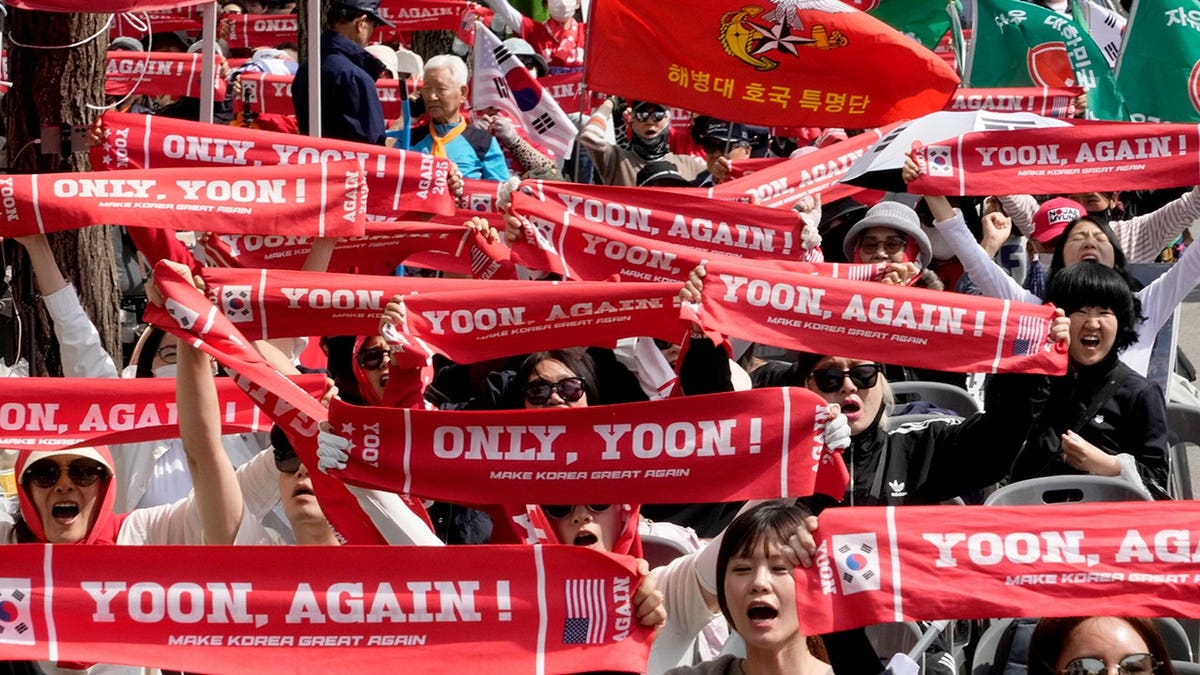
Supporters of former South Korean President Yoon Suk Yeol stage a rally outside the Seoul High Court in Seoul, South Korea, on April 29, 2026. (Ahn Young-joon/AP)
CLICK HERE TO DOWNLOAD THE FOX NEWS APP
The letter referenced a previous report from Competere that also addressed economic losses in the U.S. as a result of tighter regulations from South Korea.
«Many American tech companies have faced a range of regulatory actions that seek to punish them while shielding Korean domestic competition,» the letter reads. «Recent research by think tank Competere shows such regulatory actions by the ROK government will cost $1 trillion in combined economic damage to the U.S. and Korean economies over the next 10 years, with the U.S. economy losing $525 billion and American households losing nearly $4,000 each.»
congress, competition, south korea, trade, regulation

Drama en pleno Mundial: Cody Gapko, estrella de Países Bajos, anunció la muerte de su hijo

Trump’s endorsement power faces new test in Louisiana Republican Senate showdown

Crece la tensión entre el fiscal y el juez de la causa por el enriquecimiento de Martín Insaurralde y Jesica Cirio

Reelecciones indefinidas: los 80 intendentes de PBA que no podrán competir por un nuevo mandato si no cambia la ley

“¿De verdad me preguntas eso?”: la divertida respuesta de Scaloni cuando le consultaron por las indicaciones que le dio a Messi antes de su ingreso

Milei se sacó de encima a Adorni y apuesta todas las fichas a la economía para impulsar sus chances electorales

Desesperación y burocracia: Pacientes con cáncer denuncian esperas de más de 20 días en PAMI para recibir su medicación

Nuevos controles a las devoluciones de 30% por gastos en el exterior: cómo pedir el reembolso del dólar tarjeta ante ARCA

El CEO de Epic Games tiene claro por qué fracasan los nuevos juegos multijugador, y el culpable puedes ser tú y tus amigos

Far-left surge: Mamdani-backed candidates oust Dem establishment incumbents

 INTERNACIONAL3 días ago
Líderes mundiales ofrecieron ayuda humanitaria y equipos de rescate a Venezuela tras los devastadores terremotos
- POLITICA3 días ago
El Gobierno le ofreció asistencia humanitaria a Venezuela por los terremotos: «Acá no hay ideología que nos separe»
- POLITICA3 días ago
El oficialismo hizo caer la sesión del Senado para evitar la interpelación a Manuel Adorni