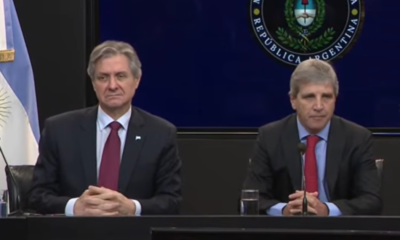
INTERNACIONAL
La Junta Monetaria en Guatemala mantiene en 3.50% la tasa líder por incertidumbre internacional

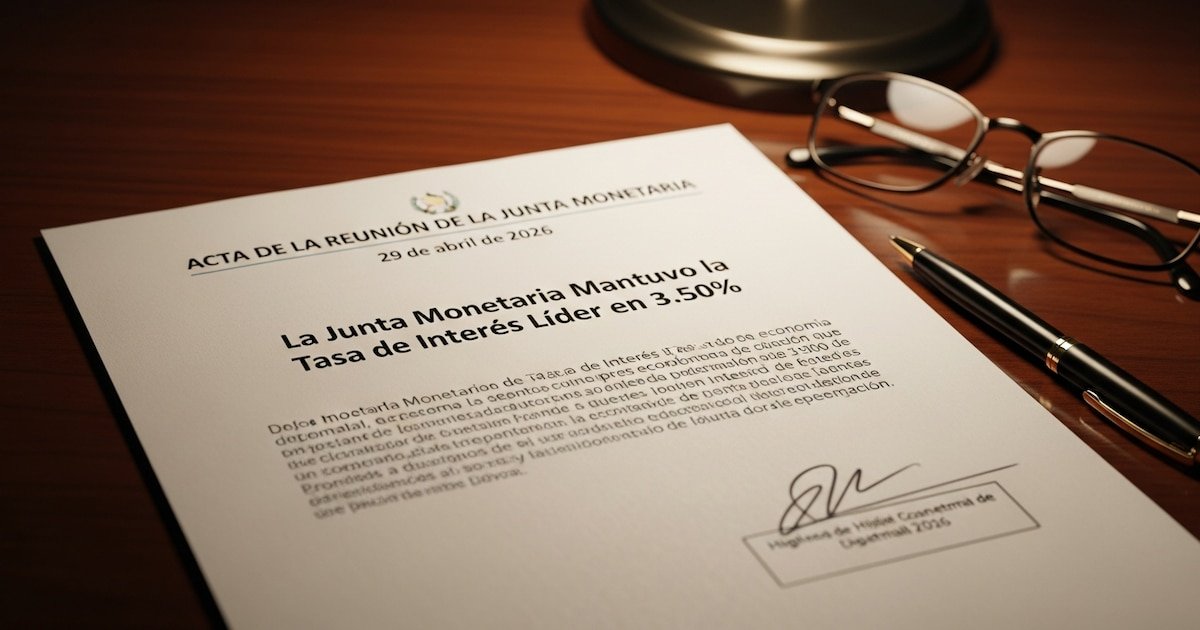
La Junta Monetaria decidió mantener en 3.50% la tasa de interés líder de política monetaria, una decisión adoptada de manera unánime el 29 de abril, en respuesta al actual panorama internacional y sus posibles implicaciones sobre la economía guatemalteca en lo que resta de 2026.
Según explicó Álvaro González Ricci, presidente de la Junta Monetaria, durante una conferencia de prensa citada en el comunicado oficial, el pronóstico de inflación para abril se ubica próximo al 3%, lo que refuerza la cautela frente a los riesgos derivados del escenario global.
El dato más reciente revela que la inflación en Guatemala alcanzó 2.50% en marzo de 2026, cifra que muestra un alza respecto a febrero, cuando se situó en 1.56%.
Sin embargo, este nivel permanece por debajo del límite inferior del objetivo definido por la Junta Monetaria —establecido en 4.0% +/- 1 punto porcentual—, lo que refleja condiciones de baja presión inflacionaria pese a los incrementos internacionales en los precios de los combustibles.

La Junta enfatizó que la reciente aceleración de la inflación está asociada principalmente a presiones de origen externo, específicamente al aumento de los precios internacionales del petróleo generado por el conflicto bélico en Oriente Medio y el correspondiente bloqueo del Estrecho de Ormuz.
La institución subrayó la persistencia de condiciones favorables para el crecimiento económico mundial en 2026 y 2027, impulsadas por la resiliencia del consumo privado y unas condiciones financieras internacionales aún ventajosas.
No obstante, la permanencia de conflictos geopolíticos y políticas comerciales restrictivas incrementa la incertidumbre y los riesgos a la baja.
El conflicto en Oriente Medio ha motivado un aumento pronunciado en el precio internacional del petróleo, factor que la Junta Monetaria considera determinante en la formación de expectativas inflacionarias. La institución advirtió que una prolongación o intensificación de la crisis podría generar presiones adicionales sobre la inflación importada, modificando el escenario inflacionario nacional.
Al respecto, González Ricci afirmó que las proyecciones actuales contemplan que la inflación se mantenga dentro del rango meta en 2026 y 2027, aunque las predicciones son susceptibles de cambios dependiendo de la evolución de los mercados energéticos internacionales.
La Junta también evaluó que la mayoría de los indicadores económicos de corto plazo mantienen un crecimiento positivo, en sintonía con las estimaciones de expansión económica que sitúan el crecimiento entre 3.1% y 5.1% para 2026 y entre 3.0% y 5.0% para 2027, según lo consignado por la Junta Monetaria en su sesión del 29 de abril. Este resultado refleja, en parte, la capacidad de la economía guatemalteca para enfrentar choques externos y mantener estabilidad en sus principales variables macroeconómicas.
El indicador de tasa de interés líder permanece en 3.50% por tercer mes consecutivo, reafirmando la postura de cautela adoptada en un entorno de alta volatilidad global.
La Junta Monetaria reiteró su compromiso de implementar las acciones necesarias para que la inflación se mantenga dentro del rango objetivo, mediante un monitoreo continuo de indicadores económicos nacionales e internacionales susceptibles de impactar en el nivel general de precios.
El comunicado reiteró que cualquier modificación futura en la política monetaria dependerá de la evolución del contexto internacional, especialmente en lo referente al mercado de energéticos y a los efectos derivados de crisis geopolíticas.
Junta Monetaria,Banco de Guatemala,reunión,funcionarios,economía,finanzas,gobierno,banca,directivos,Guatemala












INTERNACIONAL
With US unleashing attacks, Iranian official threatens that the Islamic Republic will deliver a ‘hard slap’
NEWYou can now listen to Fox News articles!
An Iranian official warned that the Islamic Republic will deliver a «hard slap» while another blatantly threatened the U.S. that «if you strike, you’ll get hit,» according to automatic translations from the two men’s Persian-language posts on X.
Ebrahim Rezaei, whose profile on the social media platform indicates that he is a representative in Iran’s Parliament and the spokesperson for the National Security and Foreign Policy Commission, wrote in a post on X, «The martyred Khamenei taught us not to fear America and showed that ‘falsehood will perish.’ Await the hard slap from the Iranians.»
The speaker of Iran’s Parliament, Mohammad Bagher Ghalibaf, warned, «America still hasn’t learned that bullying and breaking promises are no longer cost-free. Let me put it plainly: if you strike, you’ll get hit. Don’t flail around pointlessly, or you’ll sink even deeper: the Strait of Hormuz will only open with ‘Iranian arrangements,’ not American threats.»
Both of the men issued their posts on Wednesday after U.S. Central Command (CENTCOM) announced more strikes against Iran.
«At the direction of the Commander in Chief, U.S. Central Command forces have started conducting additional strikes against Iran to further degrade their ability to threaten freedom of navigation in the Strait of Hormuz. The United States is holding Iran accountable for recent unjustified aggression against commercial shipping and civilian crews freely navigating a vital international waterway,» CENTCOM had noted in a post on X.
TRUMP SAYS IRAN CEASEFIRE DEAL IS ‘OVER’ AFTER NEW ROUND OF STRIKES
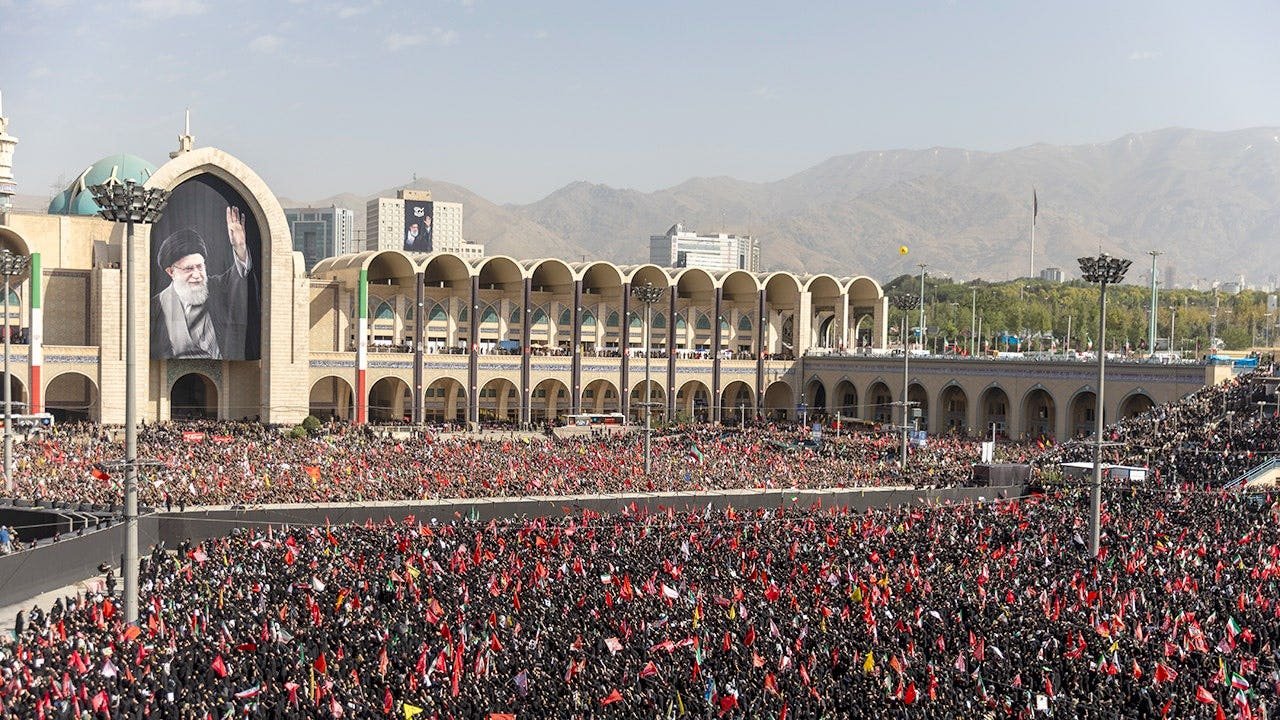
People gather at the Imam Khomeini Grand Mosalla for a farewell ceremony for Iran’s late Ayatollah Ali Khamenei on July 4, 2026, in Tehran, Iran. (Majid Saeedi/Getty Images)
The U.S. military later provided more information about the attacks.
«U.S. Central Command (CENTCOM) forces completed an additional round of strikes against Iran, July 8, to further degrade Iran’s ability to attack commercial shipping and innocent civilian mariners in the Strait of Hormuz,» CENTCOM noted on Wednesday night.
«U.S. forces struck approximately 90 Iranian military targets including air defense systems, coastal surveillance assets, missile and drone storage sites, naval capabilities, and military logistics infrastructure along Iran’s coastline. The latest strikes follow successful execution of offensive strikes in Iran the night before,» the announcement noted. «CENTCOM forces hit approximately 80 Iranian military targets July 7, including more than 60 Islamic Revolutionary Guard Corps small boats, to impose heavy costs for Iran violating the ceasefire by attacking three commercial vessels navigating the Strait of Hormuz.»
TRUMP DEMANDS END TO TRADE WITH KEY US ALLY, CALLS IT A ‘WASTED CAUSE’
President Donald Trump indicated on Wednesday that, as far as he was concerned, the U.S.-Iran Memorandum of Understanding ceasefire was «over.»
Kuwait and Bahrain have both reported coming under attack.
The Kuwait Army noted in a Thursday post on X, which was written in Arabic, «The Official Spokesman for the Ministry of Defense, Major General Saud Abdulaziz Al-Otaibi, stated that the armed forces detected, at dawn today, (3) ballistic missiles, (1) cruise missile, and (10) hostile drones within Kuwaiti airspace, which were successfully intercepted and dealt with.»
TRUMP SAYS ‘IRAN LIES AND CHEATS’ AS IRGC EMERGES AS DOMINANT FORCE IN NEGOTIATIONS WITH US
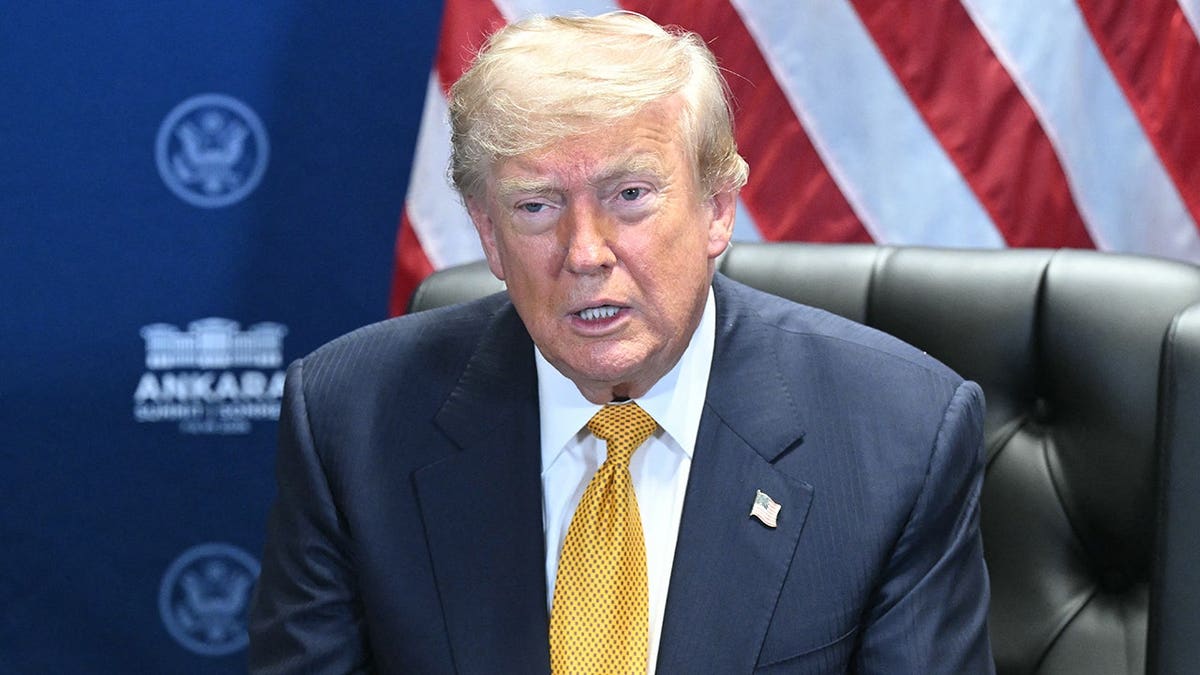
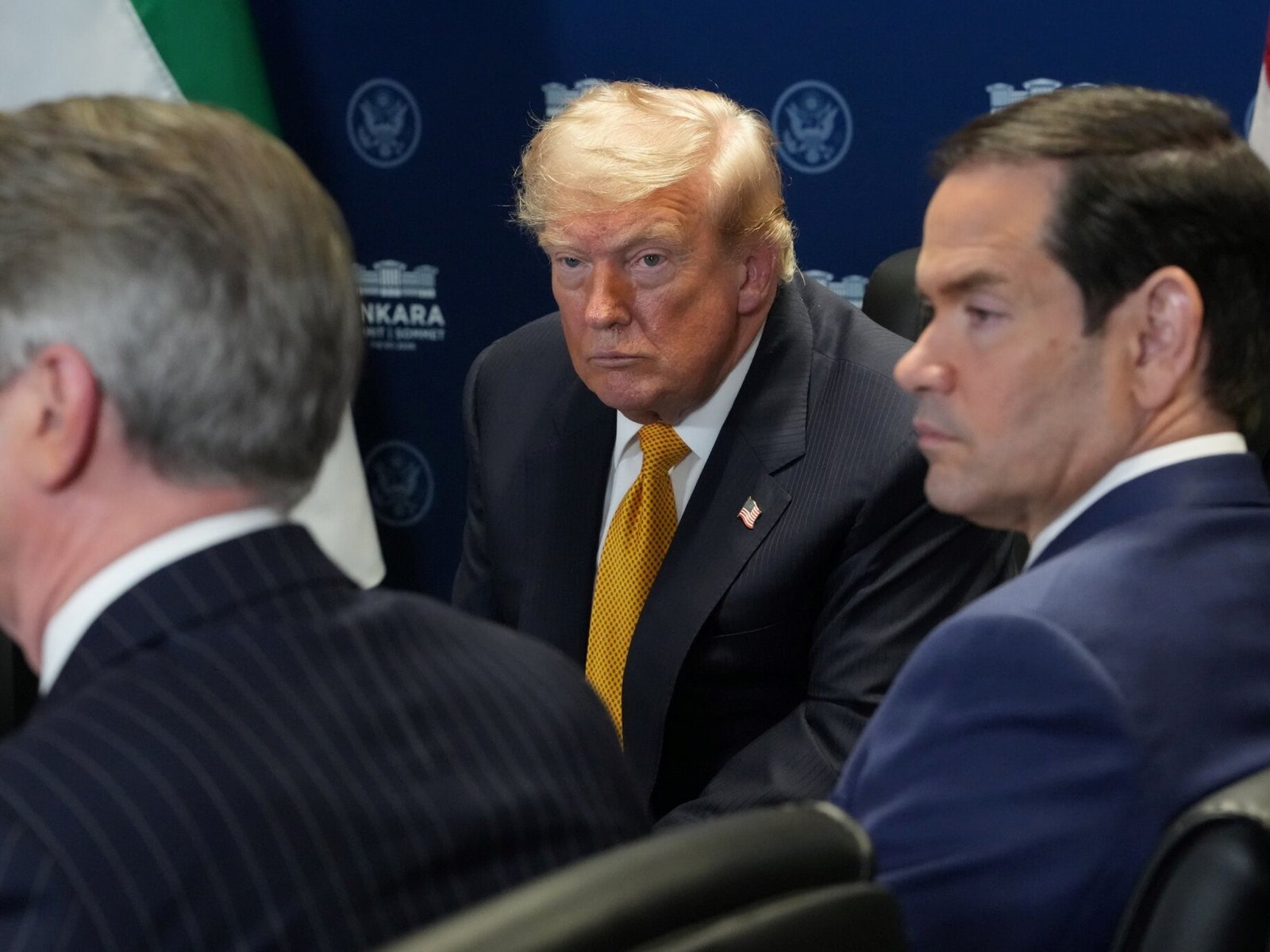
President Donald Trump speaks as he meets with NATO Secretary General Mark Rutte on the sidelines of the NATO summit in Ankara, on July 8, 2026. (SAUL LOEB / AFP via Getty Images)
CLICK HERE TO DOWNLOAD THE FOX NEWS APP
The Bahrain Defense Force noted in a post that was in Arabic, «The General Command clarifies that, with firm resolve and high combat readiness, the Bahrain Defense Force’s air defense systems confronted, intercepted, and destroyed several treacherous Iranian aerial attacks this morning, Thursday, July 9, 2026 CE.»
politics, war with iran, iran, military, world
NEWYou can now listen to Fox News articles!
An unlikely reason has chipped away, for now, at Senate Republican resistance against President Donald Trump’s flagship election priority.
The Safeguarding American Voter Eligibility (SAVE) America Act has hit brick wall after brick wall in the Senate, and has only twice mustered 50 votes. Still, Trump wants Republicans to pass it by any means necessary.
Republicans, however, aren’t unified behind it. One lawmaker, Sen. Mitch McConnell, R-Ky., has routinely voted against the bill in its variety of iterations, earning the personal ire of Trump.
MCCONNELL FACES FRESH CALLS TO COME CLEAN ABOUT HEALTH ISSUES
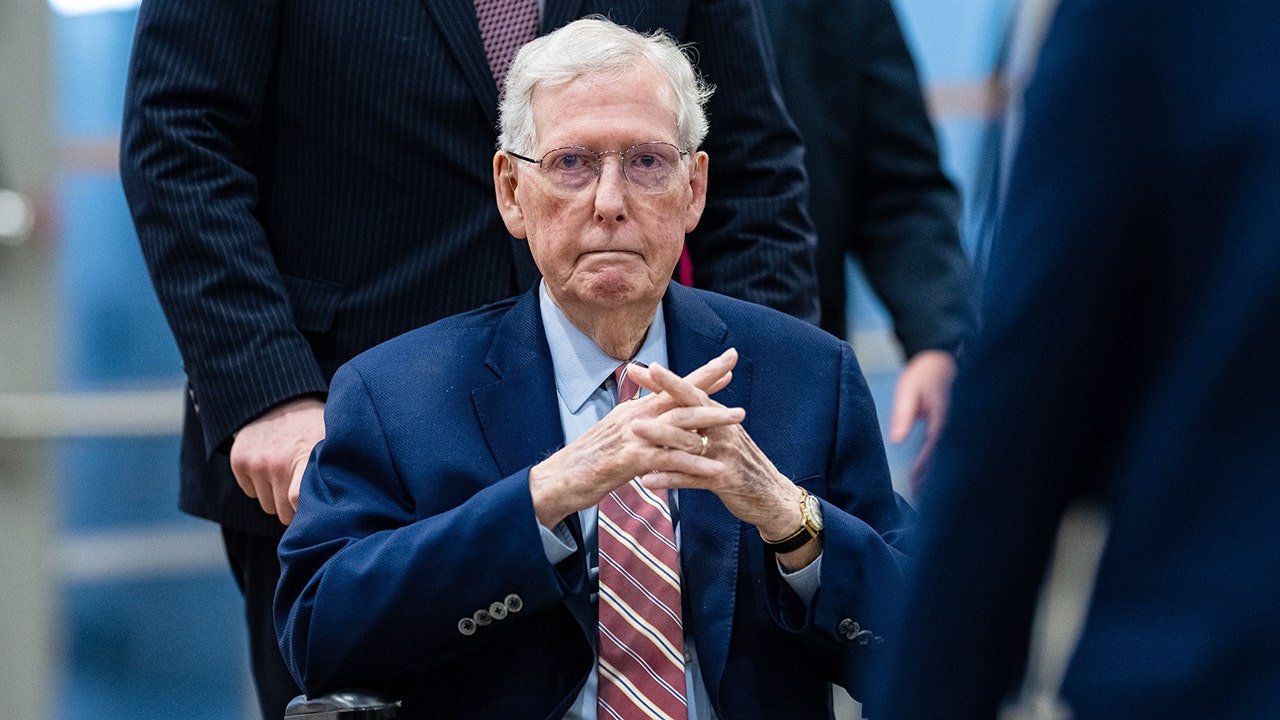
Sen. Mitch McConnell, a Republican from Kentucky, is pushed in a wheelchair in the Senate Subway of the U.S. Capitol in Washington, D.C., on March 4, 2026. (Graeme Sloan/Bloomberg via Getty Images)
«Mitch McConnell,» Trump told reporters last month. «He’s very disloyal to John Thune. You know, John Thune was a very good person for him. I mean, he’s a very loyal person, and Mitch McConnell’s against him almost all the time because he’s angry, I guess. Probably at me.»
McConnell has been absent from the Senate, which is currently in recess, for almost three weeks due to health issues. When he will return still remains unclear.
But without his resistance, that’s one less «no» vote that Republicans have to contend with.
REPUBLICAN SAYS TRUMP’S TOP ELECTION PRIORITY ‘DEAD’ IN SENATE AS GOP FRACTURES AHEAD OF MIDTERMS
Still, it doesn’t address the broader math problem in the Senate weighing down the chances of the SAVE America Act passing.
Senate Democrats are unified against it, meaning Trump and the SAVE America Act’s biggest proponents can’t break through the 60-vote filibuster, which has, in part, fueled the president’s demands to nuke the filibuster.
Senate Republicans don’t have the votes to do that, either.
«The only way you could get there is to undo or get rid of the legislative filibuster, and there aren’t even close to the votes here in the United States Senate in order to achieve that,» Senate Majority Leader John Thune, R-S.D., said last month.
There is the talking filibuster, which Sen. Mike Lee, R-Utah, has pushed for months, which Republicans have yet to turn to, largely over concerns of floor time being eaten away and fractured unity leading to Democratic wins.
Then there is the budget reconciliation route, which Trump has pushed Congress to consider. While Senate Republicans aren’t leaping at the prospect, the House is moving full steam ahead.
GOP INFIGHTING OVER TRUMP’S VOTER ID BILL ERUPTS AS TOP SENATOR CALLS STRATEGY ‘FANTASY’
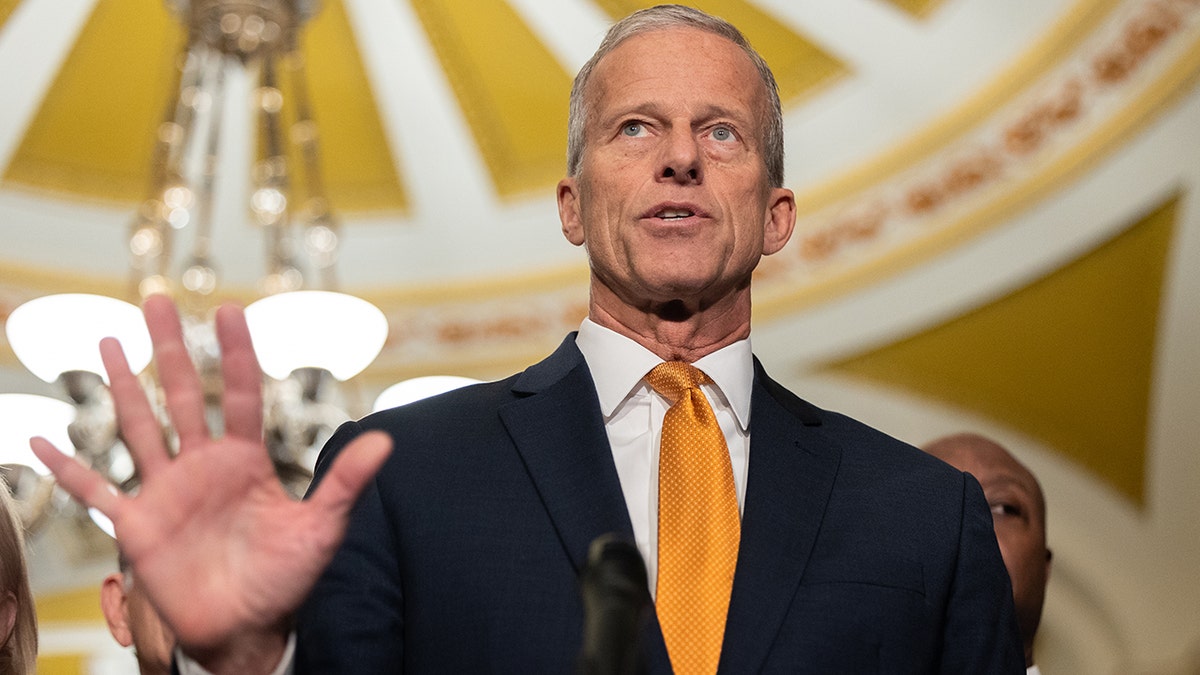
Senate Majority Leader John Thune, R-S.D., speaks at a press conference with other members of Senate Republican leadership after a policy luncheon in Washington, D.C., on Oct. 28, 2025. (Nathan Posner/Anadolu via Getty Images)
House Speaker Mike Johnson, R-La., told Fox News’ Shannon Bream that he would move ahead with the reconciliation plan.
«We passed it three times in the House. We’re going to try one more time on a budget reconciliation bill, and I think that will be the way to get it through the Senate, and finally, to the president’s desk.»
Notably, though, House Republicans have not passed the version of the SAVE America Act that Trump desires, which would include a strict crackdown on mail-in balloting, a ban on transgender athletes in women’s sports and a ban on transgender surgical procedures for minors.
But even the bill’s biggest backers see reconciliation as a far-fetched option.
CLICK HERE TO DOWNLOAD THE FOX NEWS APP
Lee last month told Fox News Digital that the SAVE America Act was «policy, it’s non-budgetary. Therefore, SAVE America itself is not eligible for consideration in a third reconciliation.»
There could be alterations, like giving states federal funding to start doling out enhanced REAL IDs with citizenship verification in a reconciliation package, while separately passing a voter ID bill.
However, Lee believed that there was «no evidence that there is a viable path to a third reconciliation bill.»
«I hope there is. I would love to be wrong on that. I want us to do that. I think we should do that. But the schedule that we’ve got, to my great disappointment, is not — it doesn’t accommodate any of it.»
politics, republicans, mitch mcconnell, senate elections, john thune, donald trump

El colapso del alto al fuego con Irán complica la agenda exterior de Trump

Muchas nubes y sin frío polar: así estará el tiempo en el AMBA en el fin de semana extralargo de julio

EEUU saludó a Argentina por el 9 de Julio y definió al país como un “socio indispensable” bajo el liderazgo de Milei

With US unleashing attacks, Iranian official threatens that the Islamic Republic will deliver a ‘hard slap’

El brutal accidente de una tenista con una alcanzapelotas que sembró preocupación durante un partido de Wimbledon

El increíble método japonés que sigue vigente para ahorrar dólares

La producción textil aceleró su caída y la capacidad instalada siguió entre las más bajas de la industria

Ojo con las multas de tránsito: las más caras llegan a $3.8 millones

Portugal vs España: formaciones, hora y dónde ver por tv