INTERNACIONAL
El colapso de la cartilla de racionamiento acentúa la crisis económica en Cuba: “Prácticamente vivimos del aire”

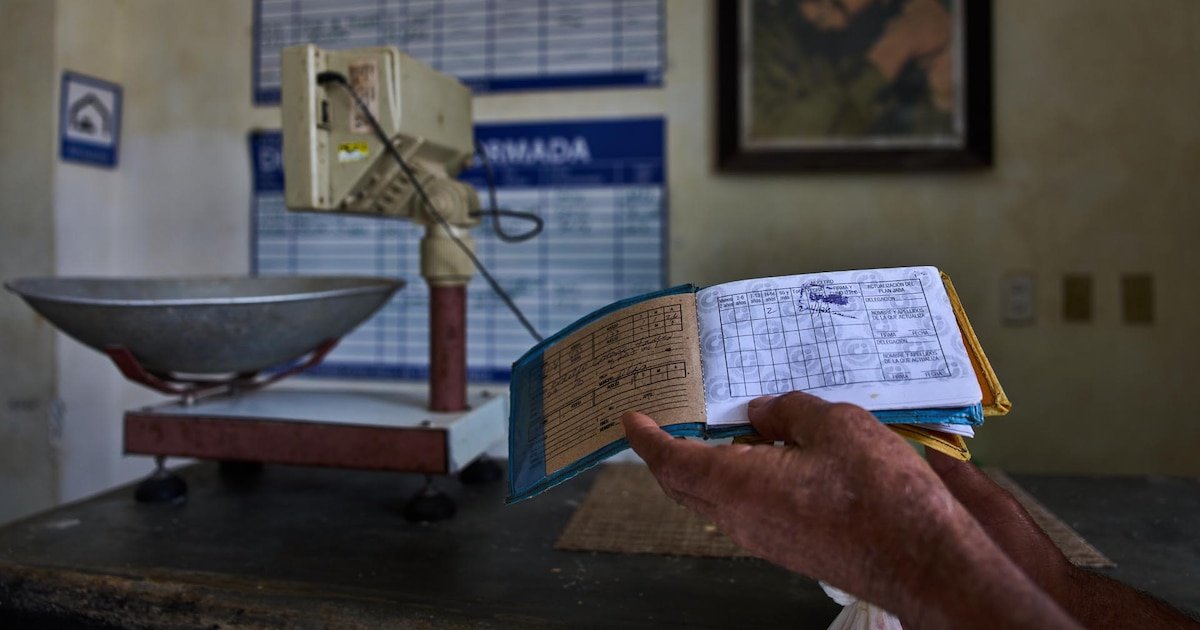
José Luis Amate López no ha tenido un cliente en casi dos semanas, sin contar al flacucho gatito marrón que merodea por la bodega donde trabaja en el centro de La Habana.
Los estantes que durante su infancia rebosaban de productos estaban casi vacíos a finales de abril, con apenas nada que ofrecer a los 5.000 clientes que dependen de la tienda estatal para obtener alimentos subvencionados.
Las cartillas de racionamiento del gobierno, que antes proporcionaban una dieta sana y mantenían a las familias bien alimentadas durante un mes, ahora se están reduciendo.
A medida que la economía se derrumba y los precios se disparan, un número creciente de cubanos se encuentra incapaz de permitirse alternativas a las tiendas estatales y lucha por subsistir con salarios ínfimos en un país socialista de casi 10 millones de habitantes donde los productos básicos se venden cada vez más en dólares estadounidenses.
“Ningún cubano puede sobrevivir realmente con los productos de la cartilla de racionamiento”, dijo Amate López.
El líder revolucionario Fidel Castro estableció la libreta de racionamiento —«la libreta»— a principios de la década de 1960. Esta ofrecía productos fuertemente subsidiados, desde leche y pescado hasta cigarrillos. Los cubanos sabían que su bodega asignada estaría abastecida con todo lo que necesitaban para el primer día del mes.

La cartilla de racionamiento se redujo durante el “Período Especial”, cuando la ayuda soviética se desplomó en la década de 1990 y la pobreza azotó Cuba. Durante ese tiempo, los cubanos perdieron un promedio del 5% al 25% de su peso corporal, según un estudio publicado en una revista médica, debido a la escasez de productos básicos como pan, leche, huevos y pollo.
Aun así, muchos cubanos que vivieron esa época afirman que la situación actual es peor.
Amate López recordó que hace décadas la bodega que le habían asignado estaba tan llena que “apenas se podía caminar”.
Ahora es una habitación vacía con viejos carteles polvorientos que detallan los precios y cantidades de casi dos docenas de productos que ya no están disponibles, incluyendo yogur, pasta y pastillas de jabón. Dos congeladores industriales que antes rebosaban de carne y pollo solo sirven para mantener fría la botella de agua de Amate López. En abril, los únicos productos que tenía para vender eran arroz, azúcar y garbanzos partidos.
Los adolescentes cubanos que cumplían 15 años, una fecha importante en Latinoamérica, solían recibir pastel y varias cajas de cerveza. Ahora solo reciben 3 kilogramos de carne molida. El gobierno optó recientemente por celebrar a quienes cumplen 65 años obsequiándoles sardinas, una pastilla de jabón y un paquete de papel higiénico. Pero Amate López dijo que no tiene esos artículos.
Ana Enamorado, de 68 años y residente de La Habana, dijo que en abril solo pudo comprar garbanzos partidos y 1 kilogramo de azúcar en la bodega que le correspondía.

Con un salario y una pensión que suman unos 8.000 pesos cubanos (160 dólares) al mes, le cuesta comprar los pocos productos básicos que le quedan en las pequeñas tiendas privadas conocidas como “mipymes”.
Una caja de 30 huevos cuesta aproximadamente 3.000 pesos (125 dólares), 2 libras de picadillo de carne cuestan casi 900 pesos (37 dólares) y 1 libra de harina de maíz cuesta aproximadamente 200 pesos (8 dólares).
“Apenas hay nada en la cartilla de racionamiento”, dijo. “Prácticamente vivimos del aire”.
Sus almuerzos y cenas consisten en una rotación de arroz, carne molida sazonada y harina de maíz, o a veces nada en absoluto. Recordó que hubo un tiempo en que podía comer cerdo, cordero, fricasé, rodajas de plátano frito y arroz con frijoles rojos.
“Ahora tenemos que recortar gastos, comer una sola vez al día y vivir de los recuerdos”, dijo Enamorado.
Cuba importa hasta el 80% de los alimentos que consume, incluidos productos que se ofrecen en las tiendas estatales y que cada vez están más agotados debido a la falta de recursos gubernamentales.

“Simplemente ya no tienen el dinero para hacerlo”, dijo William LeoGrande, profesor de la American University que ha seguido de cerca la situación en Cuba durante años, refiriéndose a la falta de fondos del gobierno. “Las cosas se resuelven de forma improvisada”.
LeoGrande afirmó que el gobierno “metió la pata” con la fusión de las dos monedas cubanas en 2021 y que la inflación resultante ha persistido porque el Estado gasta mucho más dinero del que ingresa.
El gobierno tiene que dejar de imprimir dinero y equilibrar su presupuesto sin recortar drásticamente los servicios sociales, lo cual es un reto, ya que la mayor parte de los fondos estatales se destinan a la sanidad, la educación, el bienestar social y la importación de alimentos, afirmó.
“Cualquier recorte importante en el gasto estatal va a tener un profundo impacto social, por eso no lo han hecho”, dijo LeoGrande, y agregó que la inversión del gobierno en turismo es “mucho mayor” que la demanda turística, que se ha desplomado.
En los últimos años, el gobierno cubano ha hablado de subsidiar a las personas necesitadas en lugar de proporcionarles bienes. Eso liberaría fondos para importar combustible, medicinas y otros artículos, dijo LeoGrande.
Pero muchos cubanos siguen dependiendo de sus cartillas de racionamiento mientras la crisis de la isla se agrava debido a los graves cortes de electricidad, la escasez de petróleo y el bloqueo energético estadounidense que persisten.

Los humoristas cubanos han parodiado la cartilla de racionamiento, creando un personaje llamado “Pánfilo” que canta un estribillo rimado en un vídeo publicado recientemente en internet: “Coloca la libreta en un cementerio, porque está lista para ser enterrada”.
En una soleada tarde reciente, Lázaro Cuesta, de 56 años, hacía fila para recibir su ración diaria de dos panecillos pequeños para él y su esposa.
“Antes eran 80 gramos y costaban 5 centavos (cubanos). Ahora son 40 gramos y cuestan 75 centavos”, dijo. “Y la calidad es peor”.
Cuesta trabaja en la preparación de alimentos y gana 6.000 pesos cubanos (250 dólares) al mes. Su esposa, enfermera jubilada, recibe una pensión mensual de 4.800 pesos. Además, reciben 200 dólares al mes de su hermano y su hija, que viven en el extranjero.
Según Cuesta, las remesas les permiten comer aguacates, huevos, frijoles rojos y arroz.
“Si no fuera por las remesas”, dijo mientras se agarraba el cuello con la mano derecha, “ahorcaos”.
Aproximadamente el 60% de los cubanos en la isla reciben remesas, pero Rosa Rodríguez, de 54 años y residente de La Habana, no es una de ellas.
“Aquí todo escasea, absolutamente todo, incluso ese miserable pan que nos dan”, dijo Rodríguez. Gana 4.000 pesos cubanos (166 dólares) al mes, lo que, según ella, no es un mal sueldo para Cuba, pero “por mucho que trabajes, simplemente no es suficiente”.
Rodríguez dijo que el único producto que obtuvo en la bodega que le fue asignada en abril fue una donación de 1,8 kilogramos de arroz, mientras que tiene dificultades para comprar otros productos básicos.
“Si compras frijoles, no puedes comprar azúcar”, dijo, señalando que la mayor parte de su sueldo se gasta en una caja grande de huevos. “Si me jubilo, me muero”.
(con información de AP)
Cuba,racionamiento,escasez,supervivencia,economía,libreta,alimentos,Fidel Castro,gobierno










INTERNACIONAL
Blue city gang bangers slapped with multiple charges after massive sex trafficking crackdown
Tom Homan: These politicians are ‘nuts’
ICE arrested Giovana Mercedes Moreno Ochompy, a former Illinois high school teacher and illegal immigrant, in connection with a triple murder involving the Venezuelan Tren de Aragua gang. Chicago police initially released her due to sanctuary city policies, without notifying ICE. Tom Homan, former acting ICE director, criticizes these policies, arguing they hinder federal law enforcement and endanger public safety.
NEWYou can now listen to Fox News articles!
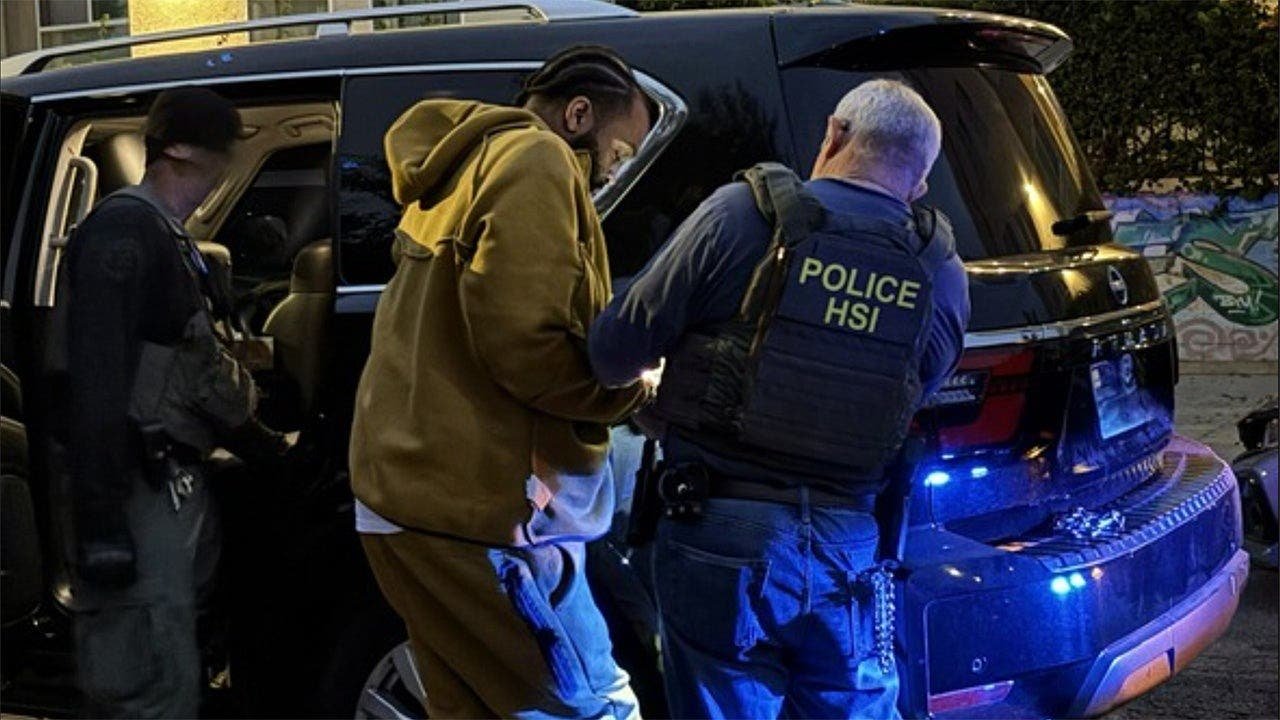
The Department of Homeland Security (DHS) announced that it had carried out 20 federal warrants and 10 arrests last Wednesday in connection with sex trafficking operations in Los Angeles by the Hoover Criminals Gang (HCG), a group known for its human exploitation.
Officials identified 51 victims in connection with the arrests, some of whom were as young as 14.
«[Homeland Security Investigations] remains steadfast in our mission to protect victims and pursue justice against human traffickers,» Special Agent Eddy Wang said in a statement to Fox News Digital.
DOJ SAYS 11 MIGRANTS INDICTED IN MULTI-STATE SEX TRAFFICKING, DRUG, FIREARMS CASE
The 10 suspects arrested as a part of Operation Broken Blade on July 1 (Department of Homeland Security)
The arrests are a part of Operation Broken Blade, an effort to target trafficking in Los Angeles’ Figueroa Corridor, a strip of neighborhoods south of the city, according to the agency. They also highlight the continued threats law enforcement face, even as illegal border crossings have plummeted during the second Trump administration.
Since the end of 2024, border crossings have fallen precipitously, going from over 144,000 encounters in December 2024 to just 13,500 in May — a 90% reduction.
Even so, Customs and Border Protection (CBP) and other federal agencies remain engaged in intercepting more organized smuggling operations that threaten to bring drugs, weapons and people illegally into the country.
In April, for example, CBP announced it had prevented a car carrying a rocket-propelled grenade launcher, 16 AK rifles, 24 rifle magazines, 16 rifle stocks, 20 pistol grips, and other weapon parts from crossing the border.
As a part of those continued efforts, Acting Assistant DHS Secretary of Public Affairs Lauren Bis said that DHS has made disrupting sex trafficking rings a priority.
«Under President Trump and Secretary Mullin, DHS is dismantling human and sex trafficking rings,» Bis told Fox News Digital.
MEXICAN NATIONAL SENTENCED IN BORDER CHILD SMUGGLING CASE INVOLVING THC-LACED CANDY

Caleed Mouton, a suspect, arrives to the Federal Building after his arrest. (Department of Homeland Security)
Bis noted that the suspects arrested last week will also face charges that go well beyond their human exploitation.
«This operation in Los Angeles resulted in the arrest of ten gang members, who now face federal racketeering charges including sex trafficking, money laundering, firearms offenses and narcotics offenses,» Bis said.
The agency described many of the suspects as «career criminals» with histories that include robbery, kidnapping and burglary.
Wednesday’s operation is the second round of arrests made under Broken Blade, an initiative originally launched in August 2025 by Homeland Security Investigations Los Angeles in cooperation with CBP, the Los Angeles Police Department and the California Highway Patrol.
FEDS DISMANTLE ALLEGED GUN TRAFFICKING RING THAT FUNNELED DOZENS OF FIREARMS FROM GEORGIA TO CHICAGO GANGS
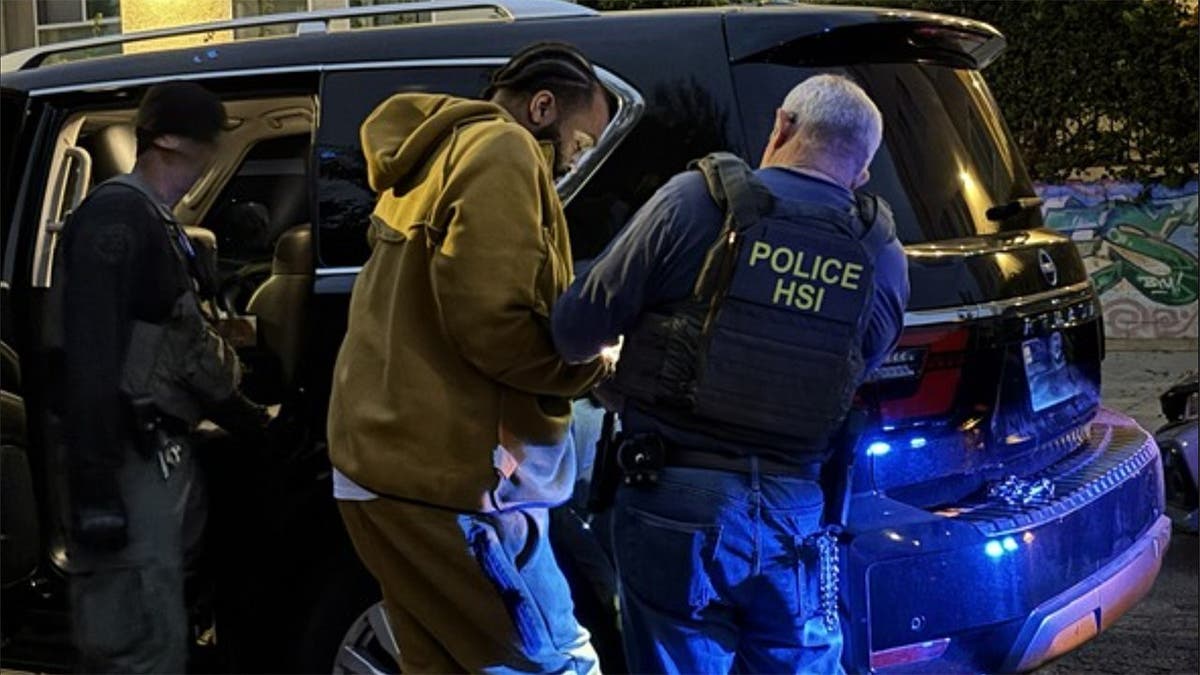
Nakahli Miller, a suspect, being prepared for transport after his arrest by a Homeland Security Investigation agent. (Department of Homeland Security)
CLICK HERE TO DOWNLOAD THE FOX NEWS APP
The 10 suspects are expected to stand trial in March 2027, according to DHS.
«The actions taken today by HSI are another decisive blow against those who have exploited the vulnerable people of our community, and they will now face the consequences of those actions,» Wang said.
crime, politics, los angeles, homeland security
INTERNACIONAL
Tras fallo sobre el TPS, Defensoría llama a hondureños a fortalecer trámites consulares
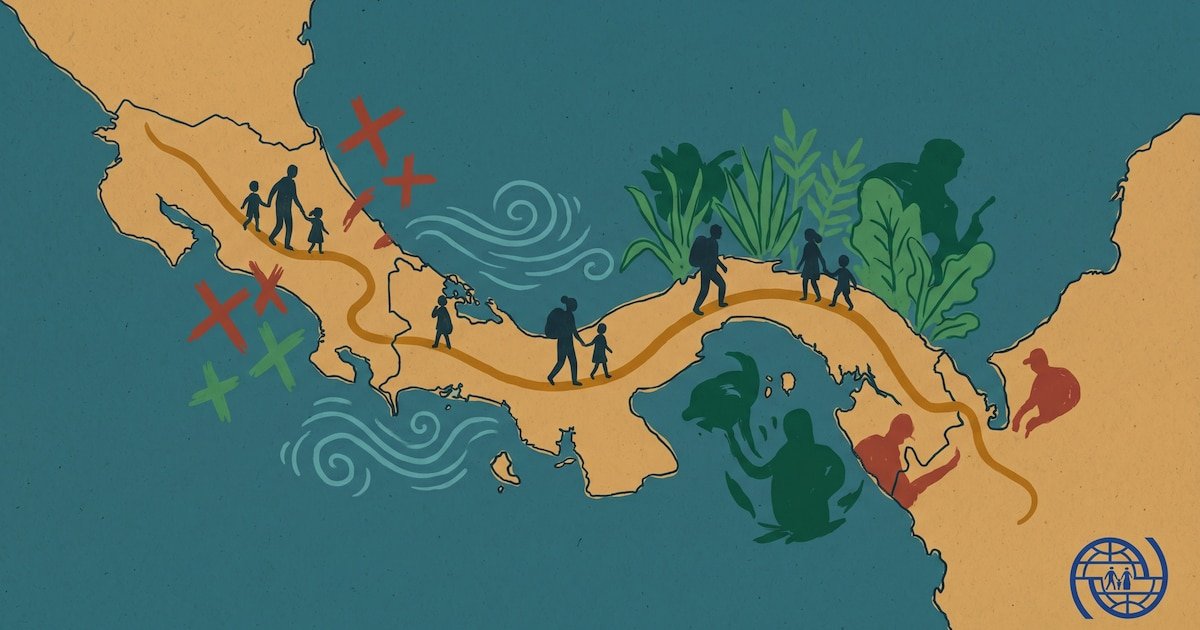
La doble nacionalidad de hijos de hondureños nacidos en Estados Unidos puede facilitar trámites si las familias deben regresar a Honduras.
La coordinadora de la Defensoría de Movilidad Humana del CONADEH, Elsy Reyes, pidió acudir a los consulados para hacer el registro correspondiente y obtener ese reconocimiento.
Según explicó, este procedimiento puede facilitar diversos trámites en caso de que las familias deban regresar al país y evitar complicaciones legales relacionadas con la documentación de los niños.
La funcionaria señaló que ya se han conocido casos de padres que enfrentan dificultades durante procesos de retorno porque sus hijos no cuentan con la documentación necesaria para viajar o establecerse en Honduras.
El llamado surgió después de que la Corte Suprema de Estados Unidos determinara que las decisiones del Departamento de Seguridad Nacional relacionadas con la terminación del TPS no pueden ser revisadas por tribunales federales.
Aunque el caso analizado correspondía a ciudadanos de Haití y Siria, el criterio adoptado por el máximo tribunal también alcanza a las demás designaciones vigentes del programa, incluida la de Honduras.

Para el CONADEH, este escenario reduce las alternativas legales disponibles para quienes buscan mantener esa protección migratoria.
Ante este panorama, la institución nacional de derechos humanos solicitó al Gobierno hondureño reforzar la atención que brindan los consulados en Estados Unidos.
Entre las acciones planteadas figuran agilizar la emisión de pasaportes, facilitar el registro civil de menores nacidos en territorio estadounidense y ampliar la orientación legal para las familias que enfrentan procesos migratorios.
El organismo considera que una respuesta oportuna permitirá reducir el impacto que podrían enfrentar miles de connacionales en caso de cambios en su estatus migratorio.
Además de fortalecer la red consular, el CONADEH recomendó que el Estado prepare estrategias de reintegración para los hondureños que eventualmente retornen al país.
La institución señaló que estas personas podrían requerir oportunidades de empleo, acceso a programas sociales, acompañamiento comunitario y atención psicológica para enfrentar las consecuencias derivadas de la migración y la separación familiar.
Dicha organización indicó que no todos los hondureños beneficiarios del TPS tienen previsto regresar a Honduras; sin embargo, considera necesario que el país cuente con mecanismos de respuesta ante cualquier eventualidad.

También advirtió que la incertidumbre migratoria no solo tiene implicaciones legales, sino también emocionales y económicas para miles de familias que durante años han construido su vida en Estados Unidos.
Así mismo, el acompañamiento consular cobra especial relevancia en momentos de cambios en las políticas migratorias, ya que las oficinas diplomáticas pueden orientar a los connacionales sobre la renovación de documentos, asistencia legal básica y protección de sus derechos.
La institución asegura que todos los connacionales deben mantenerse informado a través de canales oficiales es fundamental para evitar fraudes o desinformación relacionada con el TPS y otros procesos migratorios.
No obstante, el registro de doble nacionalidad también facilita el acceso de los menores a derechos como la identidad, la educación y los servicios públicos en Honduras, en caso de que la familia decida establecerse en el país. Además, permite realizar trámites migratorios y administrativos con mayor agilidad, reduciendo obstáculos legales durante procesos de reunificación familiar o retorno.
viaje internacional,menores de edad,autorización de viaje,aeropuerto,Perú,migraciones
NEWYou can now listen to Fox News articles!
An island-wide blackout plunged Cuba into darkness Monday as the country’s deepening energy crisis continues to strain its fragile power system.
The outage affected roughly 10 million people before limited electricity service was restored in some areas.
«A total disconnection of the National Electric Power System is occurring,» Cuba’s state-run Electric Union said Monday morning. «The causes are being investigated.»
Cuba has faced increasingly frequent power outages in recent years as the country struggles with chronic fuel shortages and deteriorating electrical grids. The crisis worsened when President Donald Trump imposed additional sanctions in January and threatened tariffs on countries that provide oil to the island.
MILLIONS LOSE POWER ACROSS CUBA AS TRUMP SANCTIONS CONTINUE TO FUEL ONGOING ENERGY CRISIS
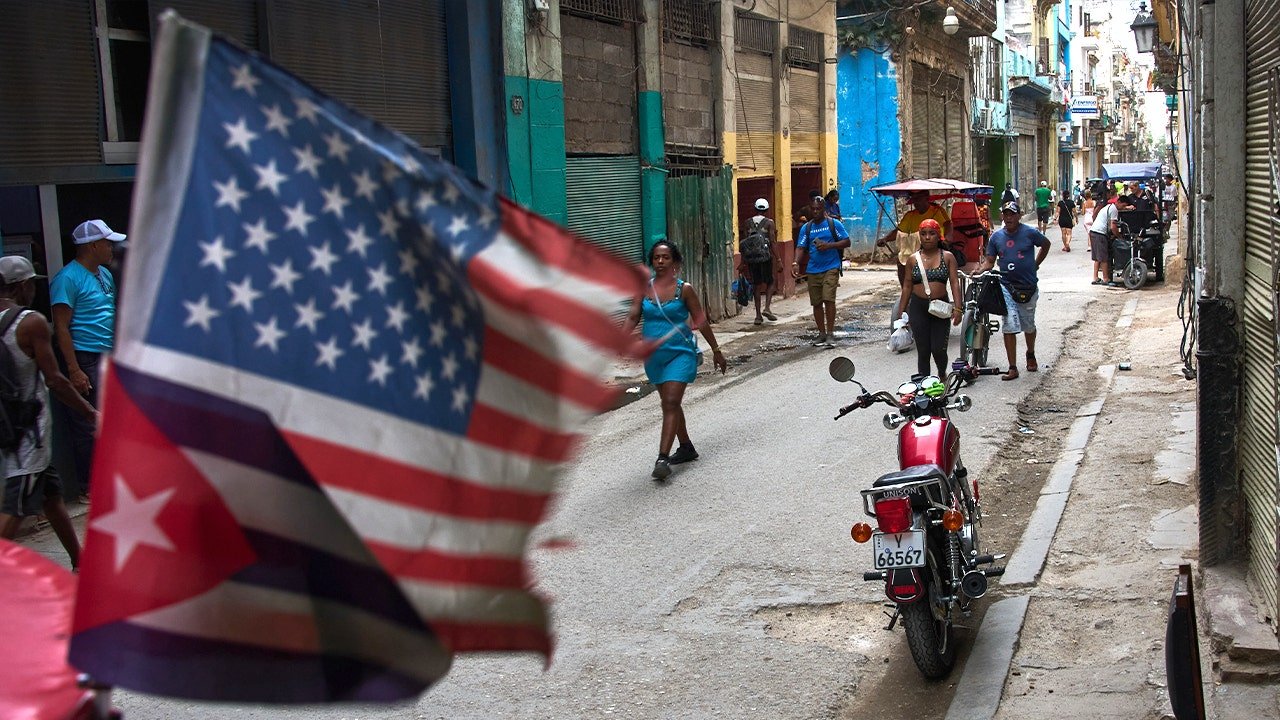
People walk on the street during a blackout in Havana, Cuba, Monday, July 6, 2026. (Ramon Espinosa)
During Monday’s blackout, public transportation was largely halted, and officials said tens of thousands of surgeries were canceled nationwide, according to The Associated Press (AP).
Authorities later said one generating unit had resumed operations roughly two hours after the collapse.
«Microsystems are already operational throughout the country, to ensure protection for vital services,» the Electric Union said.
RUSSIAN ‘DARK FLEET’ TANKER BELIEVED TO BE DELIVERING OIL TO CUBA, DETECTED OFF US COAST AMID TRUMP BAN
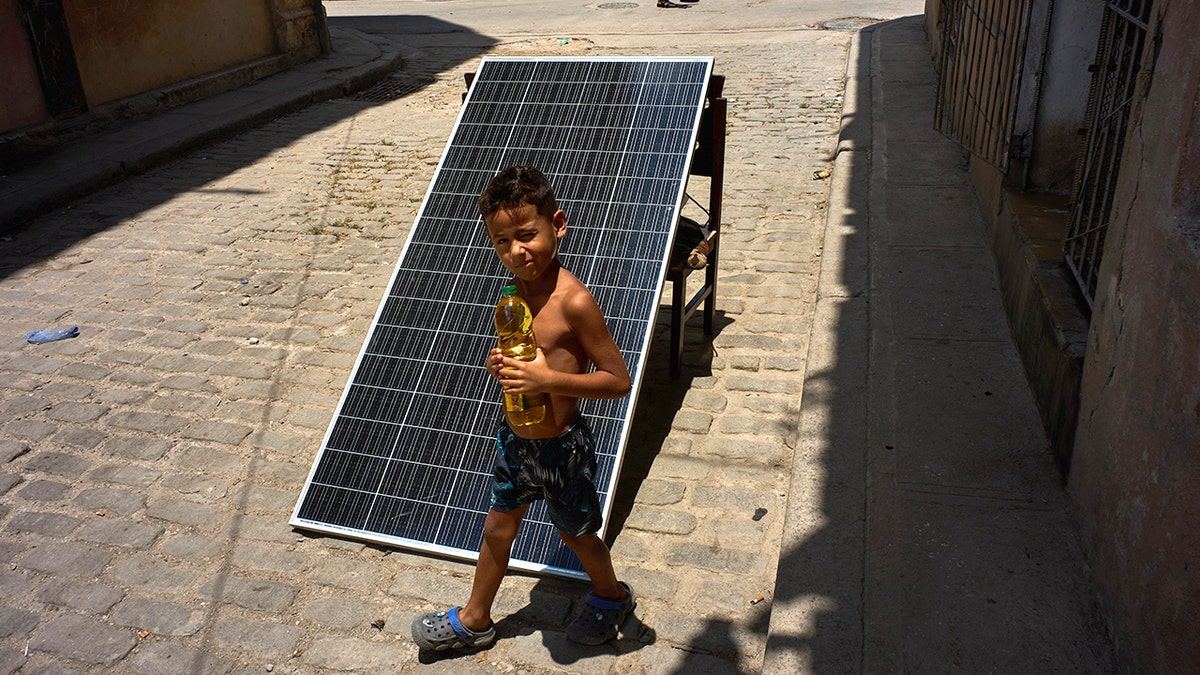
A child walks with a bottle of oil past a solar panel set up on the street to charge batteries during a blackout in Havana, Cuba, Monday, July 6, 2026. (Ramon Espinosa)
The energy minister said officials were working to restore power while accusing the U.S. of contributing to Cuba’s energy struggles.
«Vital services continue to be protected, amidst this complex situation exacerbated by the energy blockade we face,» Vicente de la O Levy said.
Cuban President Miguel Díaz-Canel also blamed U.S. policies, describing the energy blockade as a «genocidal» measure imposed by Washington.
«While the U.S. tries to induce a social explosion through asphyxiation by blocking fuel access to #Cuba, the UNE mobilizes to reverse the SEN outage,» Díaz-Canel said, referring to Cuba’s National Electric Power System.
«What the electrical workers are doing in the midst of a genocidal energy blockade is heroic.»
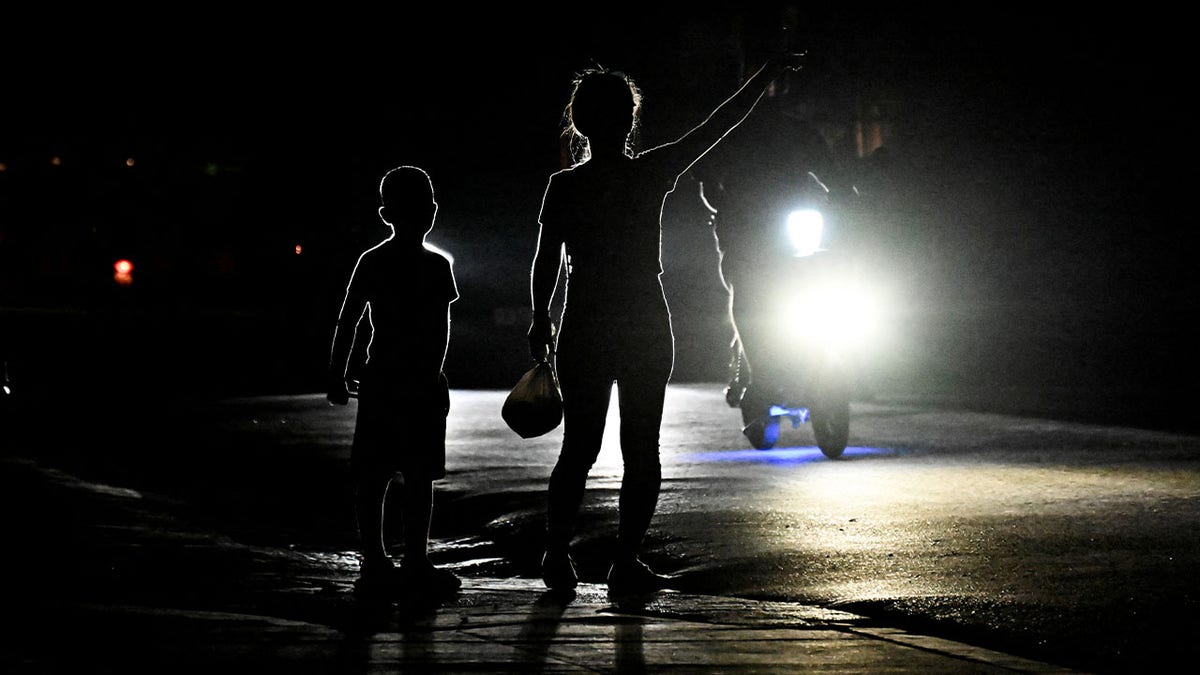
A woman with her son signals a car on a dark street during a blackout in Bauta municipality, Artemisa province, Cuba, on March 18, 2024. (YAMIL LAGE/AFP via Getty Images)
CLICK HERE TO DOWNLOAD THE FOX NEWS APP
Cuba’s energy crisis intensified earlier this year after a U.S. military operation captured Venezuelan President Nicolás Maduro and halted Venezuelan oil exports, cutting off a key source of fuel for the island.
While Cuba produces only about 40% of the fuel it needs, a Russian tanker delivered roughly 730,000 barrels of oil to the country in March, supplies that were depleted by the end of April, according to The AP.
To conserve fuel, the Cuban government has imposed scheduled power outages that have lasted more than 24 consecutive hours in some areas, the outlet said.
A blackout in early March affected Cuba’s western provinces, while a separate outage in mid-March plunged the entire island into darkness.
cuba, energy, sanctions

Cómo le fue a Messi todas las veces que jugó contra Salah

Agentes del FBI y fiscales federales toman testimonios para investigar operaciones financieras de la AFA en Estados Unidos

Kicillof desembolsó más de $14.000 millones a municipios y le hizo un reclamo a Diego Santilli

Blue city gang bangers slapped with multiple charges after massive sex trafficking crackdown

Dólar hoy en vivo: a cuánto se operan todas las cotizaciones minuto a minuto este lunes 6 de julio

Con España-Bélgica confirmado, así quedó el cuadro de cuartos de final del Mundial: la agenda completa

Nuevos CEDEARs de bonos y lo «positivo» de no ser mercado Emergente: definiciones del CEO de BYMA

Colombia vs Ghana: formaciones, hora y dónde ver por tv

The Democratic socialists are no longer on the fringe

Jornada financiera: el riesgo país bajó por cuarta rueda seguida y tocó un nuevo mínimo desde 2018

 POLITICA3 días ago
Javier Milei felicitó a Keiko Fujimori y anunció una nueva etapa en la relación bilateral con Perú
- POLITICA3 días ago
La posible implementación de las colectoras en 2027 genera rechazo en la oposición y dudas entre los aliados
- ECONOMIA3 días ago
Peter Thiel y el nuevo ideario libertario: el análisis de Martín Lousteau sobre un cambio de paradigma