INTERNACIONAL
Examining NATO: Inside the ‘commitment gap’ as US carries alliance deterrence

NEWYou can now listen to Fox News articles!
This is part one of a series examining the challenges confronting the NATO alliance.
As President Donald Trump ramps up pressure on NATO allies to increase defense spending — and orders the withdrawal of 5,000 U.S. troops from Germany over the next six to 12 months — a deeper issue is coming into focus: even as allied budgets rise, NATO still depends heavily on American military power to function.
NATO’s imbalance is not theoretical — and it is not new, retired Lt. Gen. Keith Kellogg told Fox News Digital, «I told the president… maybe you ought to talk about a tiered relationship with NATO,» Kellogg described conversations with Donald Trump in his first term about the alliance’s future. «…we need to develop a new, for lack of a better term, a new NATO a new defensive alignment with Europe.»
Kellogg, who served as a senior national security official during Trump’s first term, said the alliance has expanded politically but not militarily — creating what he sees as a growing gap between commitments and real capability.
NATO CHIEF SIGNALS ALLIES MAY ACT ON HORMUZ, WARNS OF ‘UNHEALTHY CODEPENDENCE’ ON US
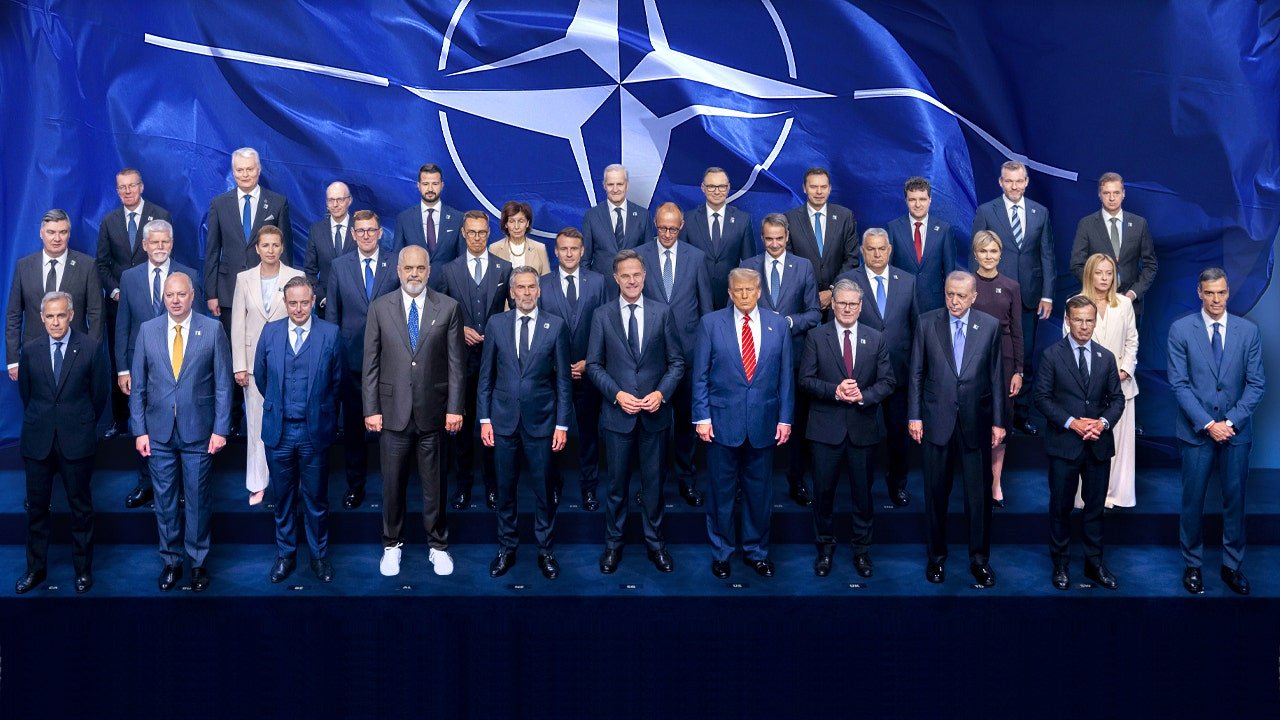
NATO Secretary General Mark Rutte, U.S. President Donald Trump and Britain’s Prime Minister Keir Starmer pose with NATO country leaders during the NATO Heads of State and Government summit in The Hague, Netherlands, on June 25, 2025. (Ben Stansall/Pool/Reuters)
«You started with 12, and you went to 32, and in the process, I think you diluted the impact,» he argued, calling today’s NATO «a very bloated architecture.»
«They haven’t put the money into defense. Their defense industry and defense forces have atrophied. When you look at the Brits right now, they could barely deploy forces: they have two aircraft carriers, both under maintenance. Their brigades are like one out of six that work. And you just look at the capability, it’s just not there. So I think we need to realize that and say, well, we need something different,» Kellogg, who is the co-chair of the Center for American Security at the America First Foreign Policy Institute, told Fox News Digital.
But not everyone agrees the alliance is losing relevance.
«It has never been more relevant,» said John R. Deni, a research professor at the U.S. Army War College, who says NATO remains central to U.S. national security.
«The reason for that is twofold,» he said. «One, it’s our comparative advantage versus the Chinese and the Russians… they don’t have anything like this.»
«And the second reason… NATO underwrites the security and stability of our most important trade and investment relationship,» he added, referring to economic ties between North America and Europe.
NATO ALLIES CLASH AFTER RUSSIAN JETS BREACH AIRSPACE, TESTING ALLIANCE RESOLVE
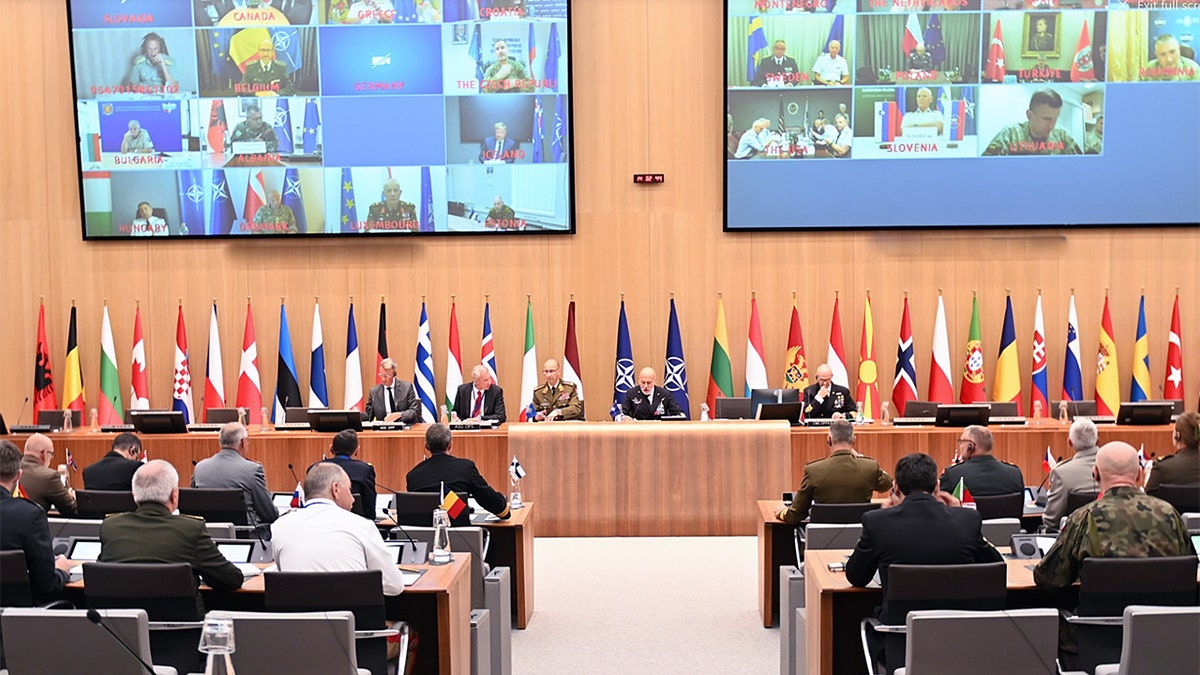
NATO Chiefs of Defense hold a hybrid meeting in Brussels on Aug. 20, 2025, with screens displaying allied leaders joining remotely to discuss Ukraine. (Fox News)
Dependence: Design or Weakness?
By around 2010, the United States accounted for roughly 65% to 70% of NATO defense spending, according to analysis provided by Barak Seener from the Henry Jackson Society, a London-based think tank.
«They’ve always been dependent on the U.S.,» Kellogg said of the European allies.
«The allies overall rely upon one another for deterrence and defense by design,» Deni said, explaining that alliances exist to «pool their resources» and «aggregate their individual strengths.»
Deni pointed to ground forces as a clear example of what the U.S. gains from the alliance, noting that «there are far more allied mechanized infantry forces on the ground than there are Americans.»
Still, he acknowledged that reliance has at times gone too far.
«In the past… it was fair to say that the European allies were overly reliant upon the Americans for conventional defense,» he said, pointing to the 2000s.
That, he said, was partly driven by U.S. priorities — as Washington pushed European allies to focus on wars in Afghanistan and Iraq rather than territorial defense.
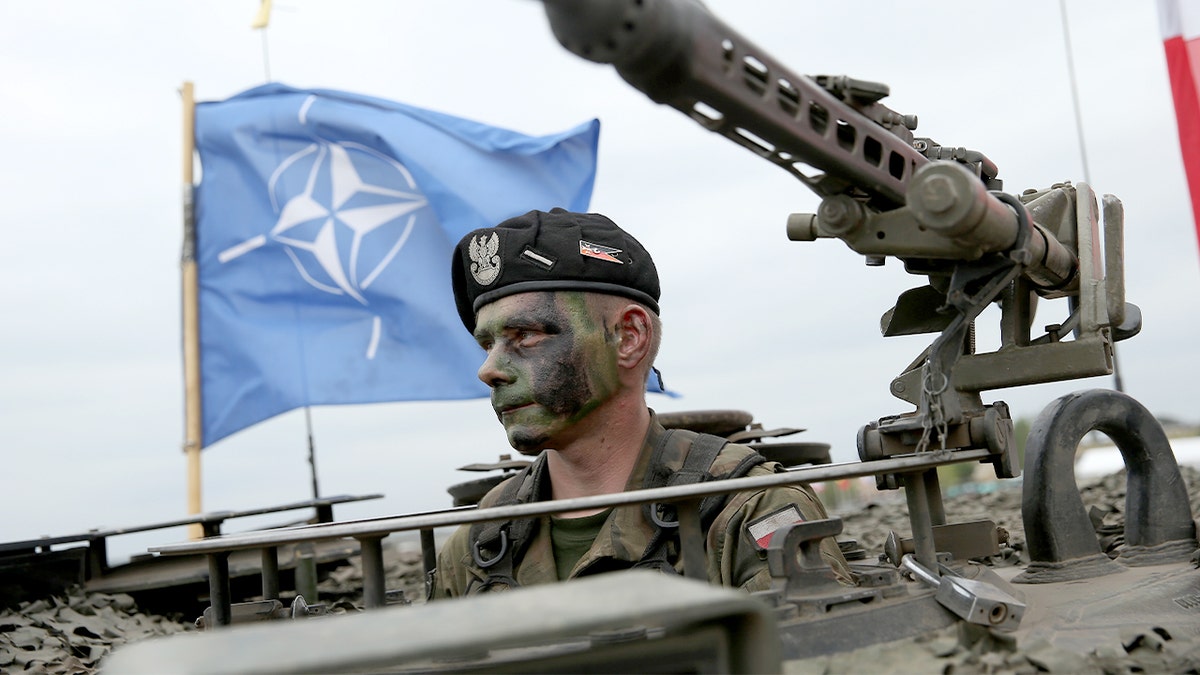
A Polish Army soldier sits in a tank as a NATO flag flies behind during the NATO Noble Jump VJTF exercises on June 18, 2015, in Zagan, Poland. (Sean Gallup/Getty Images)
Seener describes NATO as «formally collective, but functionally asymmetric,» with the U.S. providing a disproportionate share of «high-end capabilities.»
That asymmetry is most visible in nuclear deterrence.
Seener said the U.S. provides the overwhelming majority of NATO’s nuclear arsenal — including intercontinental ballistic missiles, submarine-launched systems and strategic bombers — meaning deterrence ultimately relies on the assumption of U.S. retaliation.
A NATO official told Fox News Digital that, «The U.S. nuclear deterrent cannot be replaced, but it is clear that Europe needs to step up. There’s no question. There needs to be a better balance when it comes to our defense and security. Both because we see the vital role the U.S. plays around the world and the resources that it demands, and also because it is only fair.»
«The good news,» the official added, «is that the Allies are doing exactly that. They are stepping up, working together — and with the U.S. — to ensure we collectively have what we need to deter and defend one billion people living across the Euro-Atlantic area.»
NATO LAUNCHES ARCTIC SECURITY PUSH AS TRUMP EYES GREENLAND TAKEOVER
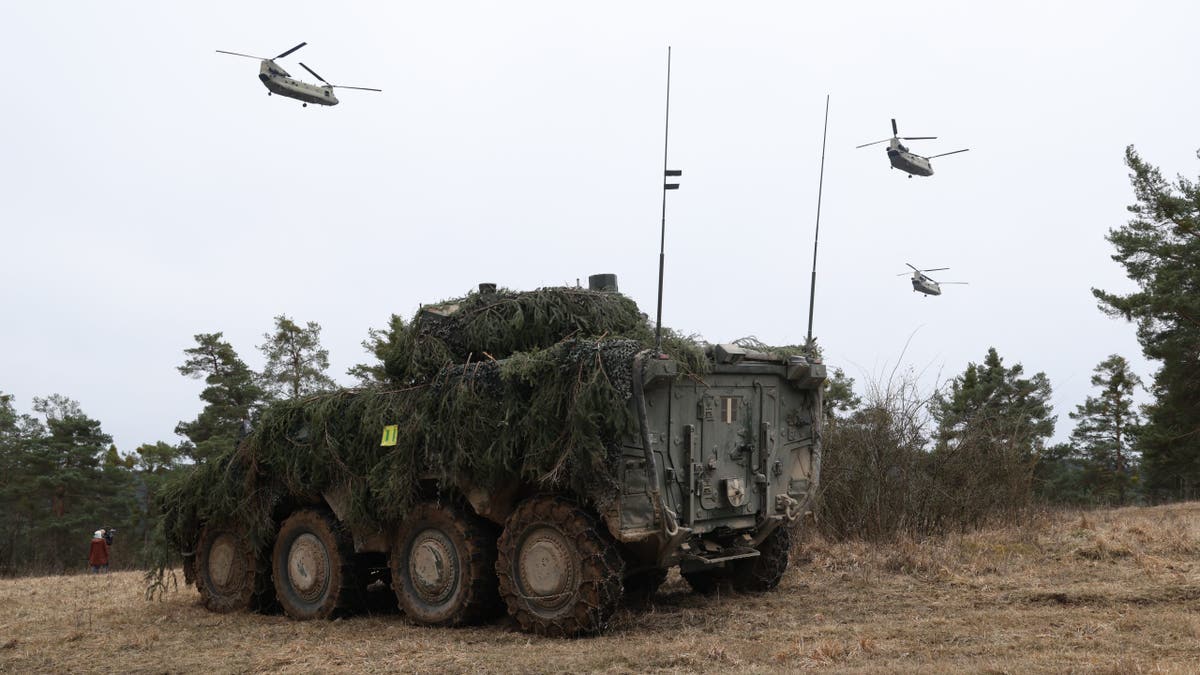
Boeing CH-47 Chinook helicopters of the U.S. Army 12th Combat Aviation Brigade fly over a Lithuanian Vilkas infantry fighting vehicle during the Allied Spirit 25 military exercise near Hohenfels, Germany, on March 12, 2025.
The Systems NATO Cannot Replace
Beyond nuclear weapons, the dependence runs through the alliance’s operational backbone.
Seener pointed to U.S.-provided intelligence, surveillance and reconnaissance — as well as logistics and command systems — as essential to NATO operations.
«Without U.S. intelligence and surveillance, NATO loses situational awareness and early warning capabilities,» Seener said, adding, «So that means that Russia, for example, can attack Europe. And theoretically, if there’s no NATO and the U.S. is not involved, Europe would not be aware, or it would take it too long to be able to defend itself.»
Kellogg also says that much of Europe’s military capability falls short of top-tier systems.
«For the most part, their equipment, if you had to grade it A, B, C, D, E, F, they’re kind of like B players or C players,» he said. «It’s not the first line of work.»
He pointed to air and missile defense as a key gap, noting that while European countries rely on U.S.-made systems such as Patriot and THAAD, «they don’t have a system that’s comparable.»
Kellogg attributed that to years of underinvestment, saying European defense industries «have atrophied,» adding that the United States is also now «relearning that as well.»
TRUMP AFFIRMS US ‘WILL ALWAYS BE THERE FOR NATO,’ WHILE EXPRESSING DOUBTS ABOUT ALLIANCE
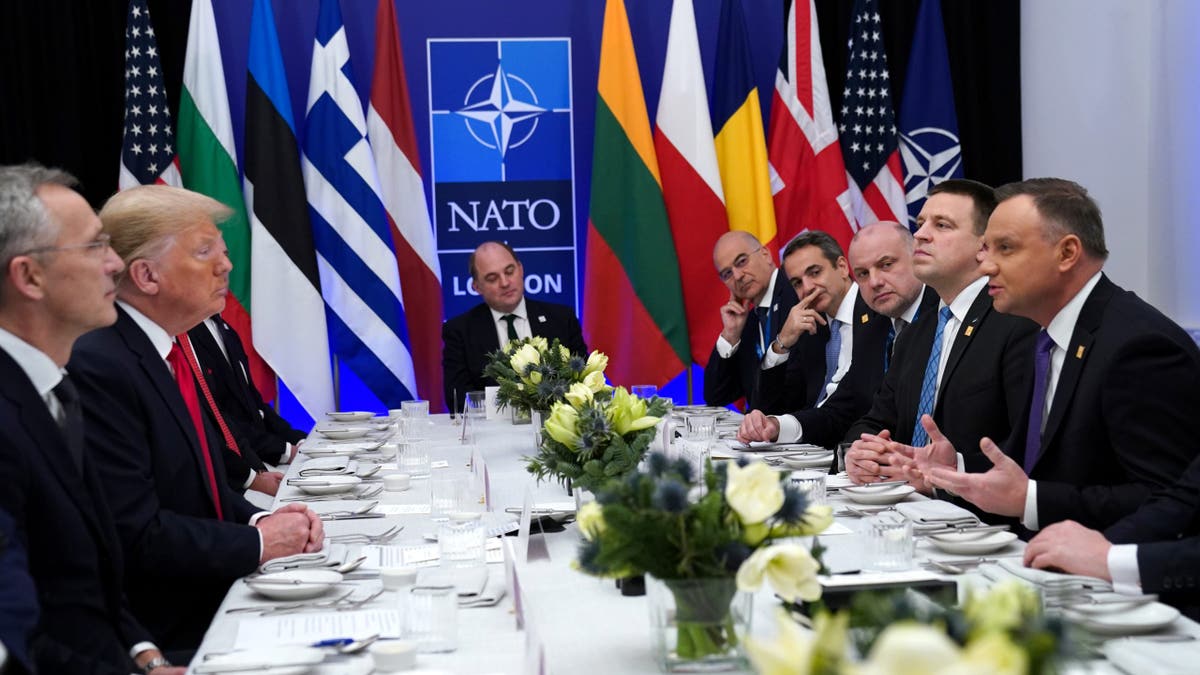
NATO Secretary General Jens Stoltenberg looks on as President Donald Trump and Poland’s President Andrzej Duda talk during a working lunch at the NATO leaders summit in Watford, Britain, on Dec. 4, 2019. (Kevin Lamarque/Reuters)
Deni said the picture today is more mixed.
«Alliance defense spending has been up… and has spiked far more after 2022,» he said, pointing to Russia’s invasion of Crimea in 2014 as a turning point.
But he cautioned that capability gains take time, noting that many improvements are still years away from full deployment.
Deni pointed to recent European purchases of U.S. systems as evidence of growing capability, noting that countries including Poland, Romania, Norway and Denmark are acquiring the F-35 fighter jet from the U.S.
«You can’t build an F-35 overnight,» he said, adding that many of these improvements will take years to fully materialize.
A NATO official told Fox News Digital the alliance «needs to move further and faster» to meet growing threats, pointing to new capability targets agreed by defense ministers in June 2025.
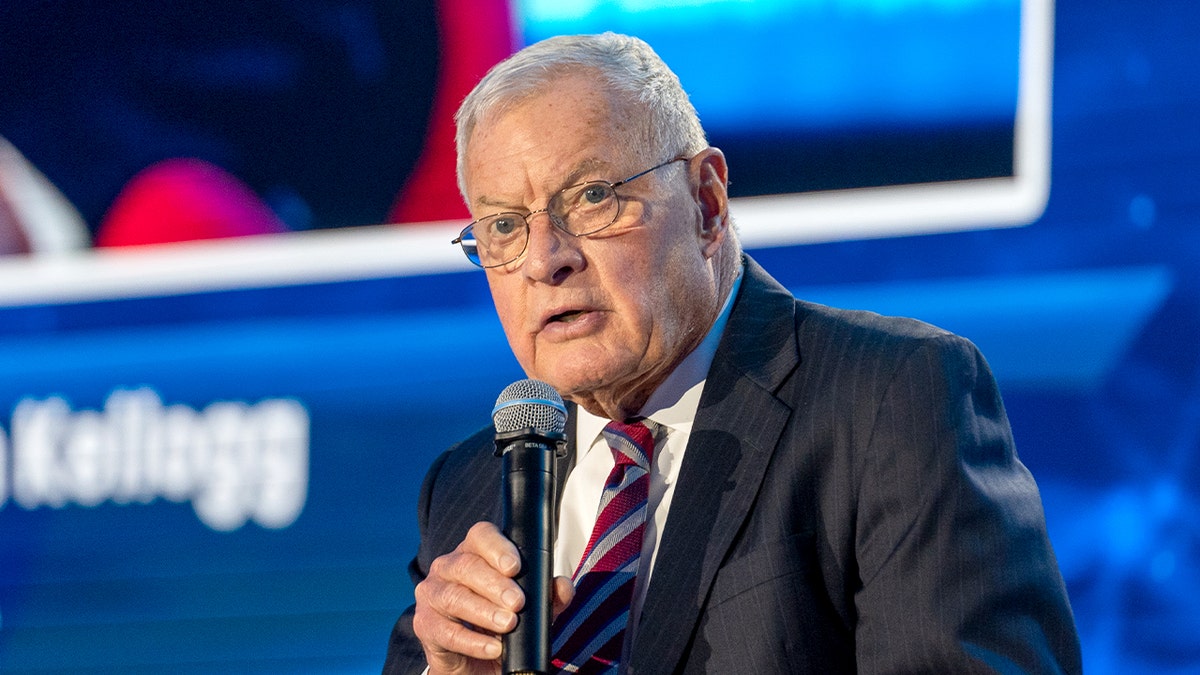
Keith Kellogg speaks during the Warsaw Security Forum 2025 on Sept. 30, 2025, in Warsaw, Poland. (Marek Antoni Iwanczuk/NurPhoto via Getty Images)
The official said priorities include air and missile defense, long-range weapons, logistics and large land forces, noting that while details remain classified, plans call for a fivefold increase in air and missile defense, «thousands more» armored vehicles and tanks, and «millions more» artillery shells. NATO also aims to double key enabling capabilities such as logistics, transportation and medical support.
The official added that allies are increasing investments in warships, aircraft, drones, long-range missiles, as well as space and cyber capabilities, while boosting readiness and modernizing command and control.
«These targets are now included in national plans,» the official said, adding that allies must demonstrate how they will meet them through sustained defense spending and capability development.
The NATO official also noted that European allies lead multinational forces across Central and Eastern Europe, while the U.S. and Canada serve as framework nations in Poland and Latvia, alongside ongoing air policing missions and NATO’s KFOR operation in Kosovo.
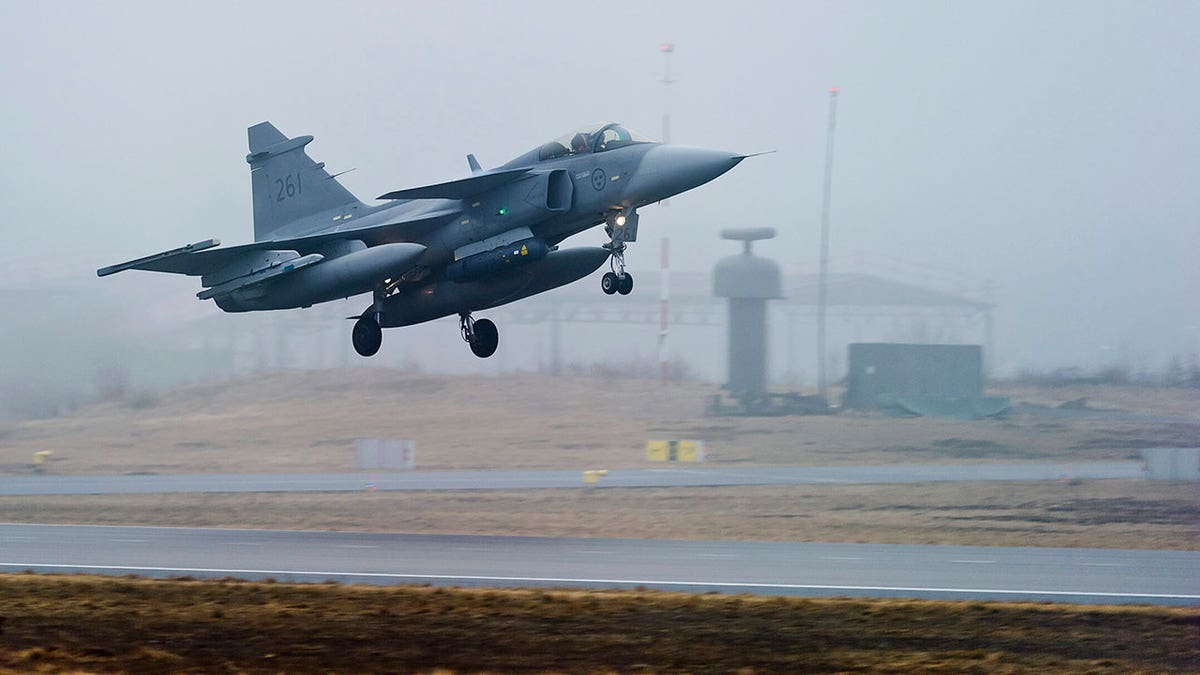
One of three Swedish Air Force JAS 39 Gripen fighter aircraft takes off from the Blekinge Wing F17, based in Kallinge southern Sweden for a base in Sardinia to join the Nato-led operation in Libya, on Saturday, April 2, 2011. As Sweden joins NATO, it bids a final farewell to more than two centuries of neutrality. (AP Photo/Scanpix/Patric Soderstrom, File)
What happens if the U.S. is stretched?
Kellogg’s warning is direct: NATO’s deterrence depends on U.S. presence.
«The one you always have to worry about… is Russia,» Kellogg, who was Trump’s special envoy for Ukraine and Russia in 2025, said.
If U.S. forces are tied down elsewhere, NATO could face serious strain — particularly in areas like intelligence and logistics.
For Kellogg, the danger is delay. «We won’t know until it happens,» he said. «And then you won’t be able to respond to it.»
Deni, however, said the alliance remains a strategic asset — not a liability.
CLICK HERE TO DOWNLOAD THE FOX NEWS APP
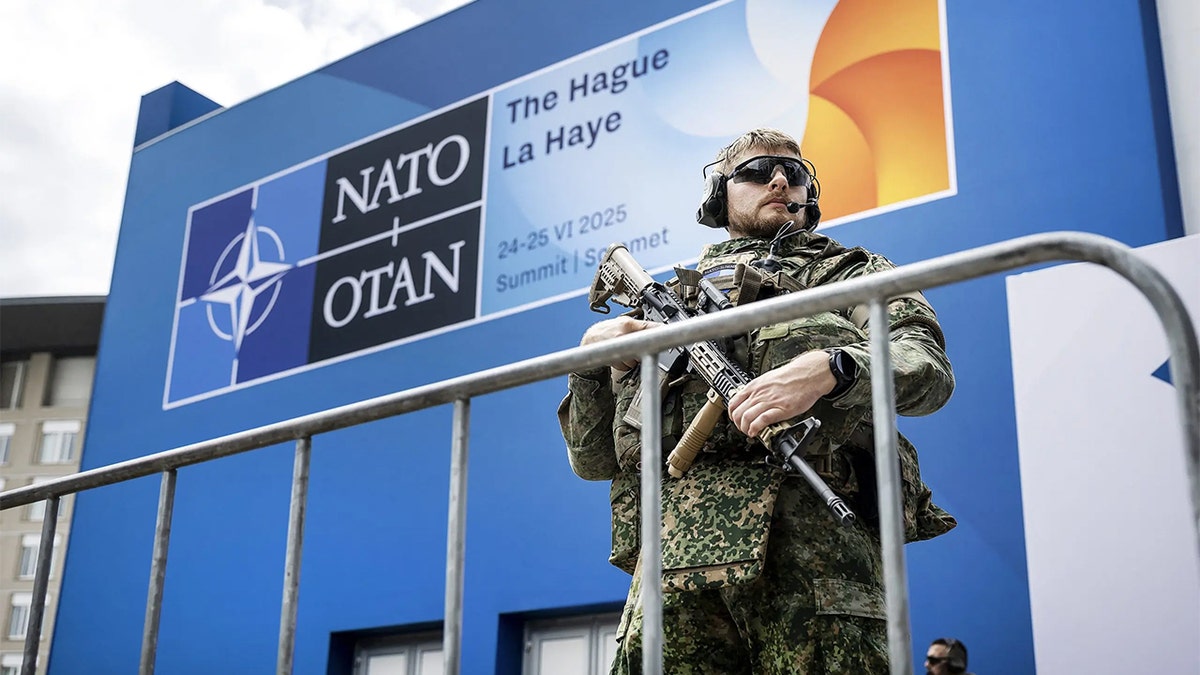
A NATO military force stands guard outside the World Forum in The Hague ahead of the two-day NATO summit on June 22, 2025. (Remko de Waal/ANP/AFP)
The question, he suggests, is not whether NATO still works. It is whether allies can adapt fast enough to keep it working.
nato, defense, national security, alliances, spending










INTERNACIONAL
Newsom blames Trump for DOJ probe, but reports say investigation predates his administration
NEWYou can now listen to Fox News articles!
California Gov. Gavin Newsom’s claims that President Donald Trump’s Justice Department launched a politically motivated «fishing expedition» against him are facing new scrutiny after multiple reports indicated key federal investigations predate Trump’s second administration.
The timeline has emerged as a central point in the dispute. While Newsom argues the current Justice Department is weaponizing the investigations against a political rival, multiple news organizations, citing sources familiar with the matter, have reported that at least some of the investigative activity began before Trump returned to the White House.
According to CalMatters, at least two criminal investigations involving Newsom’s orbit have been underway for about a year in the U.S. Attorney’s Office for the Eastern District of California. The outlet, citing a Justice Department source familiar with the matter, reported the investigations originated from whistleblowers and local complaints in Sacramento, while one inquiry involving former Newsom chief of staff Dana Williamson was opened during the Biden administration. CBS News, Axios, the Financial Times and The Guardian have also reported similar timelines, citing sources familiar with the investigations.
Newsom has maintained that the current Justice Department has expanded or politicized the investigations, even as the reported chronology has fueled questions over whether the inquiries themselves originated under Trump’s administration.
WHAT TO KNOW ABOUT THE NEWSOM-LINKED CHARITIES REPORTEDLY CAUGHT IN DOJ’S SIGHTS
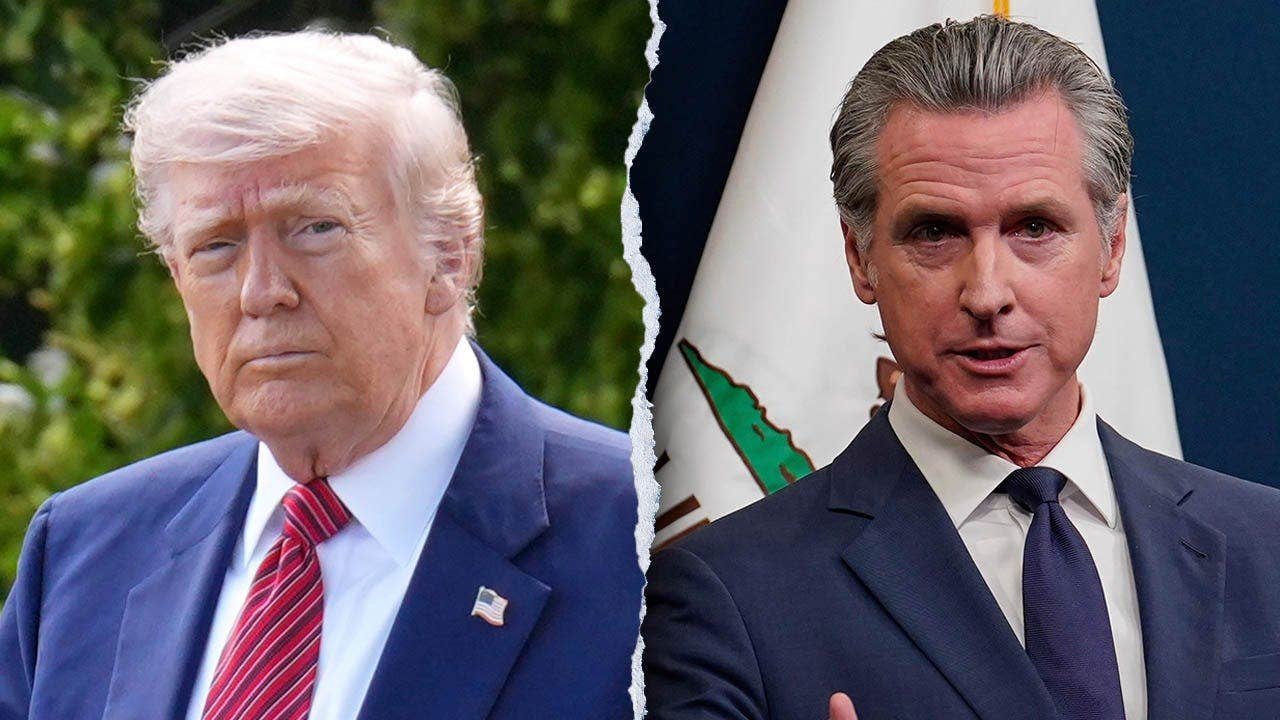
President Donald Trump and Gov. Gavin Newsom, D-Calif., have feuded throughout Trump’s second term so far. (AP Newsroom)
The outlet also reported that one investigation involving former Newsom chief of staff Dana Williamson was opened during the Biden administration. Williamson pleaded guilty earlier this year to corruption charges in a case that did not implicate Newsom. CBS News, Axios, the Financial Times and The Guardian have also reported, citing sources familiar with the investigations, that at least one federal inquiry began roughly a year ago and originated in California rather than at Justice Department headquarters in Washington.
Despite that reported timeline, Newsom has maintained that the current Justice Department is weaponizing the investigations in retaliation for his criticism of Trump and his national political profile, describing the inquiry as a politically motivated «fishing expedition.» His administration has also sought records through the Freedom of Information Act in an effort to determine who ordered or directed the current investigation.
ACTING AG TODD BLANCHE SAYS NEWSOM’S DOJ CLAIMS ARE NOT ‘GROUNDED IN FACT’
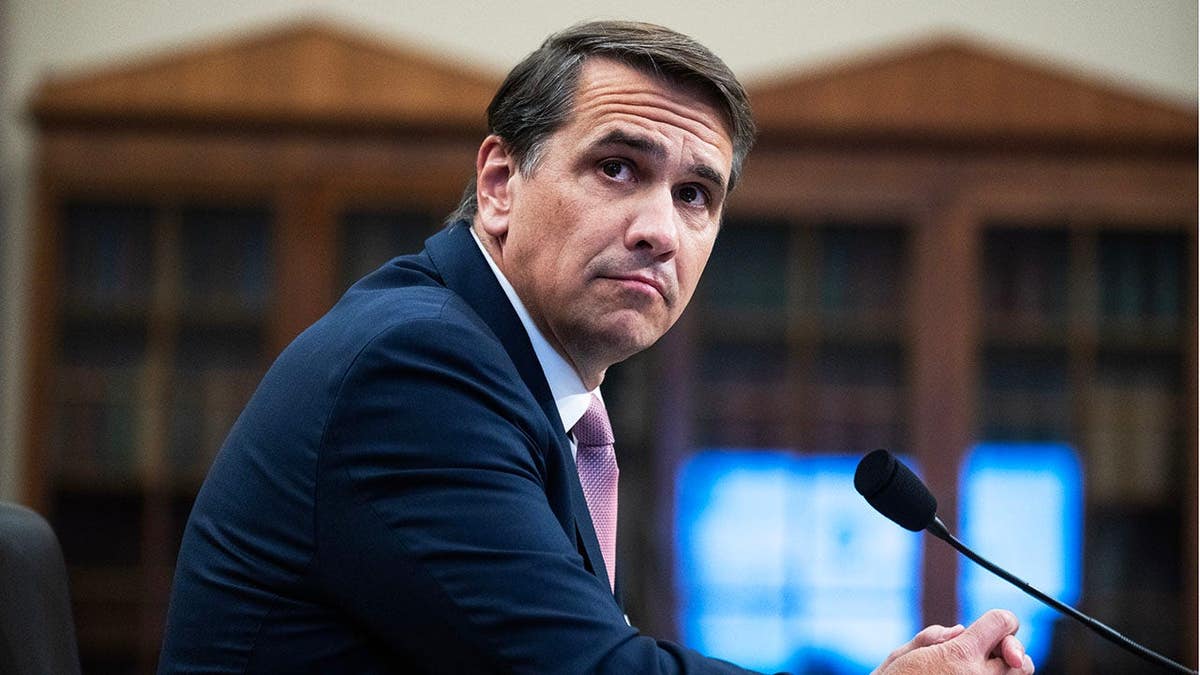
Acting Attorney General Todd Blanche has pushed back on Newsom’s claims that the DOJ’s investigations are politically motivated. (Tom Williams/CQ-Roll Call, Inc)
Acting Attorney General Todd Blanche pushed back on that characterization this week. While declining to comment on any ongoing investigations, Blanche told reporters he was «not sure [Newsom’s] words are in any way grounded in fact,» adding that the California governor «would have to address that.» Blanche did not confirm or deny whether any investigation exists.
Newsom’s office responded by mocking Blanche on social media, posting a meme captioned, «Why you always lyin,» while the governor’s press office said, «Trump goons know that it’s not a crime to lie to a reporter.»
SIGN UP TO GET THE POLITICS NEWSLETTER
According to CalMatters, Newsom’s office contends federal prosecutors expanded their inquiries after failing to build a case from the Williamson investigation, broadening their scrutiny to include Jennifer Siebel Newsom, the couple’s finances and their associates.
The outlet reported investigators have examined the first partner’s tax filings, nonprofit organizations and certain behested payments, though it did not allege those payments were unlawful.
CLICK HERE TO DOWNLOAD THE FOX NEWS APP
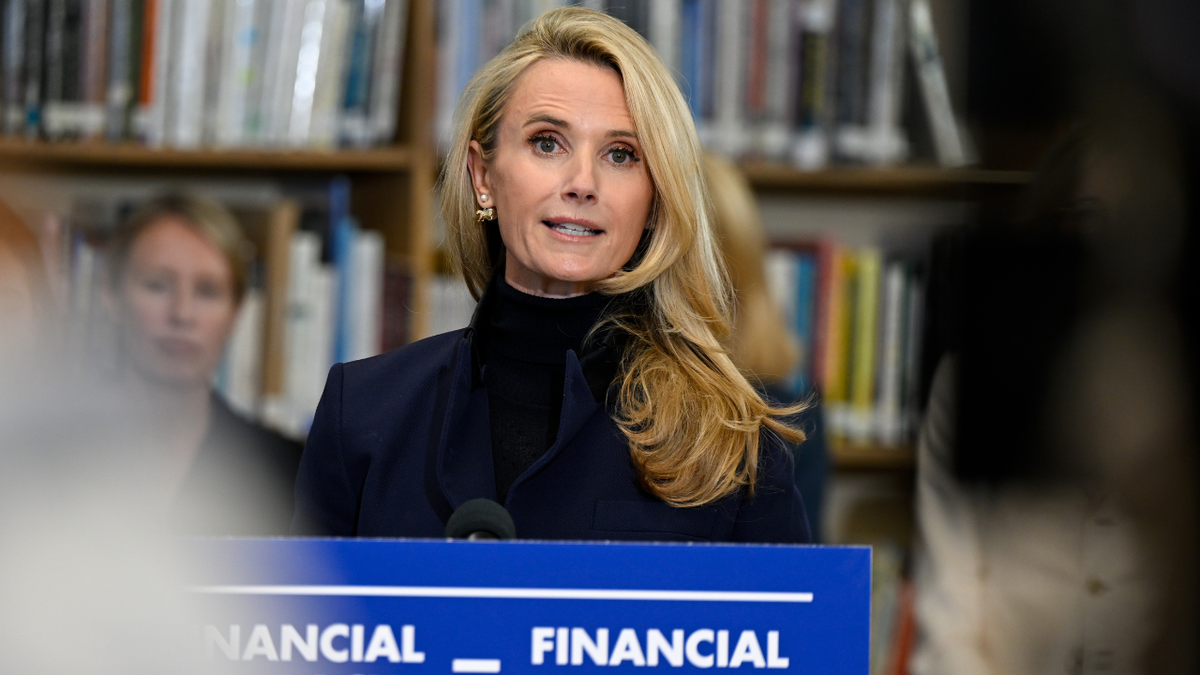
First partner Jennifer Siebel Newsom is among those whose finances and nonprofit organizations have reportedly been scrutinized in a federal investigation, according to CalMatters. (Getty Images)
Fox News Digital previously reported, citing federal sources, that investigators have opened inquiries involving Jennifer Siebel Newsom, but that Fox News had not learned of any federal investigation directly targeting Gov. Newsom himself.
The Department of Justice, the White House and Newsom’s office did not immediately respond to Fox News Digital’s request for comment.
politics, justice department, gavin newsom, donald trump

El director de la organización, Wilmer Vásquez, advirtió que este fenómeno continúa siendo una de las principales expresiones de la crisis social que enfrenta Honduras, debido a la persistente falta de oportunidades, la desigualdad estructural y la vulneración de derechos fundamentales que afectan a la niñez y adolescencia en distintas regiones del territorio nacional.
Coiproden señaló que, pese al endurecimiento de las políticas migratorias en Estados Unidos y al incremento de controles fronterizos en los últimos años, el flujo migratorio de familias hondureñas no ha disminuido de forma significativa.
De acuerdo con la organización, muchas familias continúan tomando la decisión de migrar debido a condiciones económicas adversas, la falta de empleo digno y la limitada cobertura de servicios básicos en comunidades rurales y urbanas del país.
En este contexto, la niñez se ha convertido en uno de los grupos más vulnerables dentro de los flujos migratorios, ya sea viajando sola o acompañada de sus familiares en busca de mejores condiciones de vida fuera de Honduras.
El representante de Coiproden calificó como alarmantes las cifras acumuladas desde 2014, al señalar que el impacto de la migración infantil no solo se mide en los menores deportados, sino también en aquellos que logran salir del país o que permanecen en tránsito migratorio.

Según explicó, si estos datos se registraran en países con mayores niveles de desarrollo institucional, serían considerados una emergencia nacional debido a las implicaciones sociales, económicas y humanitarias que representan.
“Si vemos estas estadísticas en un país desarrollado, estaríamos en una completa emergencia nacional”, expresó Wilmer Vásquez, al referirse a la magnitud del fenómeno migratorio infantil en Honduras.
Coiproden subrayó que la migración de niñas, niños y adolescentes no es un hecho aislado, sino el resultado de múltiples factores estructurales que afectan a la sociedad hondureña.
Entre ellos destacan la pobreza, la desigualdad social, la falta de acceso a oportunidades educativas y la ausencia de empleos dignos para los adultos responsables de los hogares, lo que obliga a muchas familias a buscar alternativas fuera del país.
La organización insistió en que estos factores se han mantenido a lo largo de los años, sin una respuesta integral suficientemente efectiva por parte del Estado para revertir la tendencia migratoria.
Vásquez reiteró la necesidad de fortalecer el sistema de protección de la niñez mediante una mayor asignación de recursos públicos y el desarrollo de políticas sociales más robustas y sostenidas en el tiempo.

En ese sentido, Coiproden planteó la importancia de reforzar programas de prevención, atención y acompañamiento a las familias en situación de vulnerabilidad, con el fin de reducir los factores que impulsan la migración irregular.
Asimismo, la organización enfatizó que es fundamental garantizar acceso a educación, salud y condiciones de vida dignas en las comunidades, para evitar que la migración sea vista como la única alternativa de desarrollo.
El director de Coiproden afirmó que la solución a esta problemática requiere una estrategia integral que involucre al Estado, la sociedad civil y la cooperación internacional, enfocada en mejorar las condiciones de vida de la población.
Advirtió que mientras persistan la pobreza, la desigualdad y la falta de oportunidades laborales, las niñas, niños y adolescentes continuarán siendo parte de los flujos migratorios que buscan llegar a otros países en busca de un futuro mejor.
Finalmente, la organización reiteró su llamado a priorizar la inversión social y a fortalecer las instituciones encargadas de la protección de la niñez, como una medida urgente para enfrentar una problemática que, según sus datos, se ha mantenido durante más de una década en Honduras.
2020,caravana de migrantes hondureños a estados unidos,crisis migratoria,deportaciones,deportados,exterior,mujer,niño
NEWYou can now listen to Fox News articles!
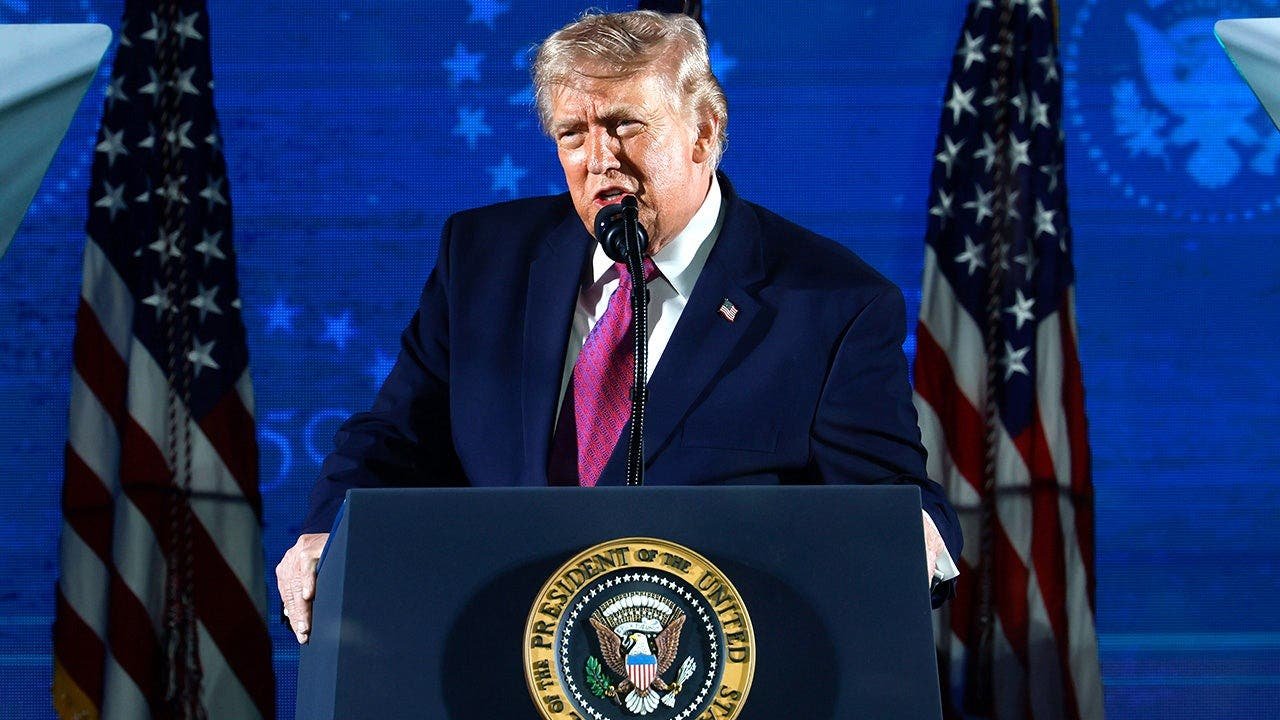
President Donald Trump delivered a 37-minute speech for America’s 250th birthday after a weather delay in the dark of night that was lit up by a Guinness world-record-setting fireworks display stretching from July 4 into July 5 at Washington, D.C.’s National Mall.
While thousands outlasted the rain and dodged nature’s thunderstorm light show, many Americans might have missed the president’s historic remarks.
Here is a recap of some of the highlights.
AMERICA’S NEXT 250 YEARS DEPEND ON PASSING FAITH AND FREEDOM TO OUR CHILDREN
President Donald Trump estimated in his speech that a crowd of 350,000 was cut to 150,000 on the Washington, D.C., National Mall for the record-setting fireworks display over the Washington Monument as part of the Salute to America 250 celebration. (Tom Williams/CQ-Roll Call, Inc)
‘No dream in history is bigger’ than the American experiment
«In this country, we could achieve the wildest and most impossible dreams, and no dream in history is bigger or more incredible than the one that started on July 4th, 1776,» Trump said. «The war for independence was launched by minutemen, farmers, blacksmiths, tradesmen who took up their muskets against the mightiest army on earth, the most powerful army and unbeatable army – until they met us.»
«No one made them do it. They fought because they knew that a free people must have a free country. Over 250 years, the world has seen the great empires, vast kingdoms, mighty nations and terrible tyrants: They came and they went, but after 2 1/2 centuries, this American republic still stands tall and strong,» the president added.
TRUMP HAILS AMERICA AS ‘MOST EXCEPTIONAL NATION EVER TO EXIST’ IN MOUNT RUSHMORE SPEECH
‘America is a nation of winners’
«Americans won the West and built the modern world, because America is a nation of winners, and today our country is winning again, and we’re winning like never before,» Trump said just before the midway point of the speech. «America is back and we want to keep America great.»
«Together, we are also reasserting the truth that American strength and power is not something to be ashamed of. It is something that we are very, very proud of,» Trump continued. «This country has been the greatest force for peace and justice on earth in the last century. We defeated tyrants, demolished evil, and saved freedom again and again and again.»
‘Nothing Americans cannot do’
«There is no challenge Americans can not overcome,» Trump said before his concluding remarks. «There is no place we cannot go. There is no goal we cannot reach. And there is nothing that Americans cannot do.»

The crowd got 37 minutes of President Donald Trump’s historic America 250 speech and 38 minutes of the largest fireworks display in world history, breaking a Guinness Book of World Records mark as planned by Trump. (Pete Kiehart/Bloomberg)
Thanking those staying into the late hours
«If you think that was easy, it wasn’t,» Trump began in an unscripted salute to the patient and devoted crowd. «And I want to thank everybody because they did the right thing. They saw lightning. And I said, ‘there’s no way; if we have to speak in front of one person at 4 in the morning, I’m going to be here.’
«There’s no way we can be deterred. And they estimated they had 375,000 people before everybody had to leave, and they now have 150,000 people. It’s the craziest thing anyone’s ever seen.
«And I want to just thank you. And I feel so badly about some people. They left it; they couldn’t get back. But, you’re very special people, and we have a very special country. Thank you very much.»
’56 patriots put everything at risk’ for ‘victory for the ages’
«They declare that all men are created equal; that they are endowed with sacred unalienable rights by the hand of our creator, and that among these are life, Liberty, and the pursuit of happiness,» Trump said, «and signing their names to the roster of freedom.»
«Those 56 patriots put everything at risk. Stepped onto the stage of destiny and seized a victory for the ages. And that’s what it was,» he said. «And this is an evening for the ages. I believe this is something very special. This is bigger than if we didn’t have the lightning blaring. We had lightning blaring. But this is bigger, little more inconvenient, but it’s bigger, I think, in its own way it’s more beautiful. From the beginning, we were a nation that live by the motto victory or death and live free or die.»
‘We will always be the best’
«God bless the immortal patriots of 1776, and long live the cause of independence,» Trump said. «May it reign forever and ever and ever. We will always be on top. We will never let our country fall. We will always be the best.»
«Our founders not only won our liberty, they secured it with the most righteous political document ever conceived: It’s called the Constitution of the United States,» Trump said. «Very special, and it’s because of their genius that we remain the finest people on the planet.»
Honoring 11 Gold Star families
«We are honored to be joined by 11 Gold Star family members,» Trump said. «The Gold Star family – that is one of the great tributes. It’s one of the great honors, a tough honor. There’s nothing tougher than that. But these are amazing people.»
Next stop, the moon, then a mission to Mars
«We’re going to be going to Mars very soon, and I think that’s something that we do have in my mind,» Trump said, hearkening to the historic John F. Kennedy going to the moon speech excerpt.
«And we’re going to do the moon and we’re going to go from there. We’re going to go to Mars, and we’re going to continue to be way ahead.»
Defeating communism: We ‘cast the hammer and sickle into oblivion’
«All these talks from the communists, they haven’t got a chance – not even a chance,» Trump said; a theme he reiterated multiple times in the speech. «We don’t want communists in our country. Never worked and it never will work.»
Communism will always be «a loser,» Trump added later.
«Our warriors did not fight communism on battlefields across the world only to have that menace rears its ugly head right back here in America. We’re not going to let it happen. We like to stop a threat like that immediately and before it begins,» Trump said. «It’s like a cancer. You got to cut it out. You got to cut it out fast.»
Trump added a warning to potential future communist opposition around the globe.
«The Stars and Stripes cast the hammer and sickle into oblivion before,» Trump said, «and we will do it again if necessary.»
«I don’t think it’s going to be necessary. I think people have learned. They’ve learned what to do and how to handle it, and we’ll get a handle it very well.»
‘Our destiny is written by God’
«We have thrived and flourished because our founders were great, our cause was just, our people are brave, our culture is exceptional, and our destiny is written by God,» Trump said near the end of the speech he apparently cut short after vowing earlier this week to deliver an hours-long address to the world.
«And as we can see here tonight, after 250 years, the spirit of 1776 still lives within us all. It still roars in the hearts of our nation’s capital. It still burns in the heart of every patriot, thunders through every city and town, and is still lights the entire world with the glow of American liberty. And there is nothing like that.»
250 and ‘just getting started’: ‘Best is yet to come’; ‘dawn of the golden age’

Fireworks over the National Mall during the ‘Freedom 250: Salute to America’ Independence Day celebration in Washington, D.C., might have extended to July 5, 2026, but President Donald Trump still made sure they went off for the thousands that waited out the thunderstorm with him Saturday night. (Mehmet Eser/Anadolu)
«At 250 years old, we may be the oldest constitutional republic on earth, but our country is just getting started because the best is yet to come: This is only the dawn of the golden age of America,» Trump said in his conclusion, leading directly into the National Mall fireworks display.
«And on this 250th 4th of July, we declare, just as they did two and a half centuries ago, that for our country and for our children and for the cause of liberty, we are going to take our country to new levels, to levels not reached,» Trump continued. «We’re going to make it bigger, better, stronger, and we’re going to love it even more.»
CLICK HERE TO DOWNLOAD THE FOX NEWS APP
«And I just want to thank you,» he added, finishing with words off the script. «The inconvenience of lightning can do that, but lightning will never stop you. And I want to thank everybody and we love you all. And it’s an honor to be your president. Thank you. God bless you all.»
america 250, donald trump, washington dc, white house, history

Del folclore familiar en Santa Fe y “Cantaniño” a los Latin Grammy: la voz argentina que emociona cantándole a Dios

¿Vuelve la mística?: tras las críticas por el “Luce” eléctrico, Ferrari lanza el “12 Cilindri Manuale”

Radiografía de la gran carrera de Colapinto en el GP de Gran Bretaña de F1: gran largada, sobrepasos y más puntos

Clara Muzzio respondió a las críticas por sus dichos sobre la ESI y ratificó su postura

Newsom blames Trump for DOJ probe, but reports say investigation predates his administration

Entre el cansancio y la felicidad, las primeras horas de Juli Puente con Serena al llegar a su hogar: “No me preparé”

En medio de su separación, Magui Bravi contó por primera vez su traumático embarazo: «El parto fue de emergencia y…»

¿Se recupera el mercado de los autos?: qué muestran los números de las cinco marcas que más 0 km venden en el país

Construir los cimientos de la Inteligencia Artificial: los desafíos de la infraestructura del futuro