INTERNACIONAL
Trump troop cuts in Europe could be blocked by Congress — here’s how he might get around it

NEWYou can now listen to Fox News articles!
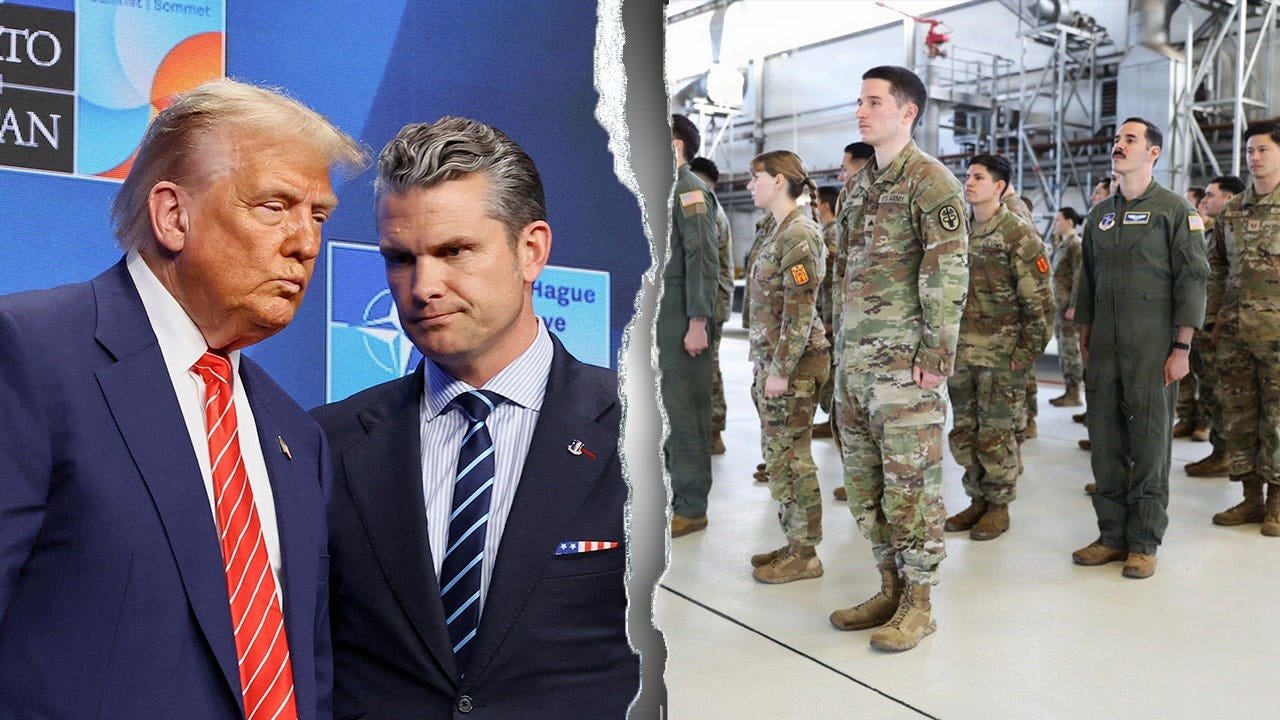
President Donald Trump’s effort to broadly pull U.S. troops from key NATO allies over resistance to the Iran war could run into new limits imposed by Congress, but the administration may have a way around them.
Trump ordered the withdrawal of 5,000 troops from Germany Friday, a drawdown which will happen over the next six to 12 months, according to Pentagon spokesperson Sean Parnell.
Lawmakers have restricted large-scale troop reductions in Europe below 76,000.
But Trump still retains broad authority as commander in chief to move forces between countries, opening the door to shifting troops away from allies like Germany, Spain or Italy without reducing the overall U.S. presence.
Pentagon orders withdrawal of 5,000 U.S. troops from Germany as Trump escalates feud with Merz
The warning follows pushback from allies including Spain and Italy, which have limited how U.S. forces can use key bases for Iran-related missions, highlighting tensions inside NATO as Washington presses partners for support during the escalating conflict.
Trump said Wednesday the U.S. is «studying and reviewing the possible reduction of troops» in Germany, comments that came after Chancellor Friedrich Merz said the U.S. was «being humiliated» by Iran.
Merz downplayed the spat between Washington and Berlin in a statement Thursday.
«On all these issues, we maintain close and trusting contact with our partners, including — and especially — those in Washington. We do so in the shared transatlantic interest. We do so with mutual respect and a fair sharing of burdens.»
German foreign minister Johann Wadephul said in his own statement: «The Ramstein Air Base serves an irreplaceable function for both the US and us.»
President Donald Trump’s effort to broadly pull U.S. troops from key NATO allies over resistance to the Iran war could run into new limits imposed by Congress, but the administration may have a way around them. (Graeme Sloan/Bloomberg via Getty Images)
Asked on Thursday whether he’d consider pulling troops out of Italy and Spain, Trump said, «Yeah, probably… Why shouldn’t I?»
The comments come as both countries have resisted U.S. requests tied to operations in Iran.
«Italy has not been of any help to us,» the president said, adding that Spain has been «horrible, absolutely horrible» and citing their refusal to allow the U.S. to use jointly operated bases for missions related to the conflict.
Any major withdrawal, however, would face hurdles in Congress.
Under the latest defense bill, the Pentagon cannot reduce U.S. troop levels in Europe below 76,000 without submitting an assessment and certifying to lawmakers that the move would not harm U.S. or NATO security interests.
«The provision does not prohibit the administration from going below 76,000, but it does establish hurdles it would have to clear,» Jeff Rathke, president of the American-German Institute at Johns Hopkins University and a former State Department official, told Fox News Digital.
Key US ally blocks airspace to military flights over Iran, escalating standoff with Trump
Congress cannot directly veto a troop withdrawal, but lawmakers can impose conditions and restrict funding, effectively slowing or blocking any significant drawdown if those requirements are not met.
The provision reflects recent concern in Congress over potential troop reductions, rather than a long-standing requirement in defense legislation. The restriction applies to total U.S. troop levels in Europe, not deployments in individual countries.
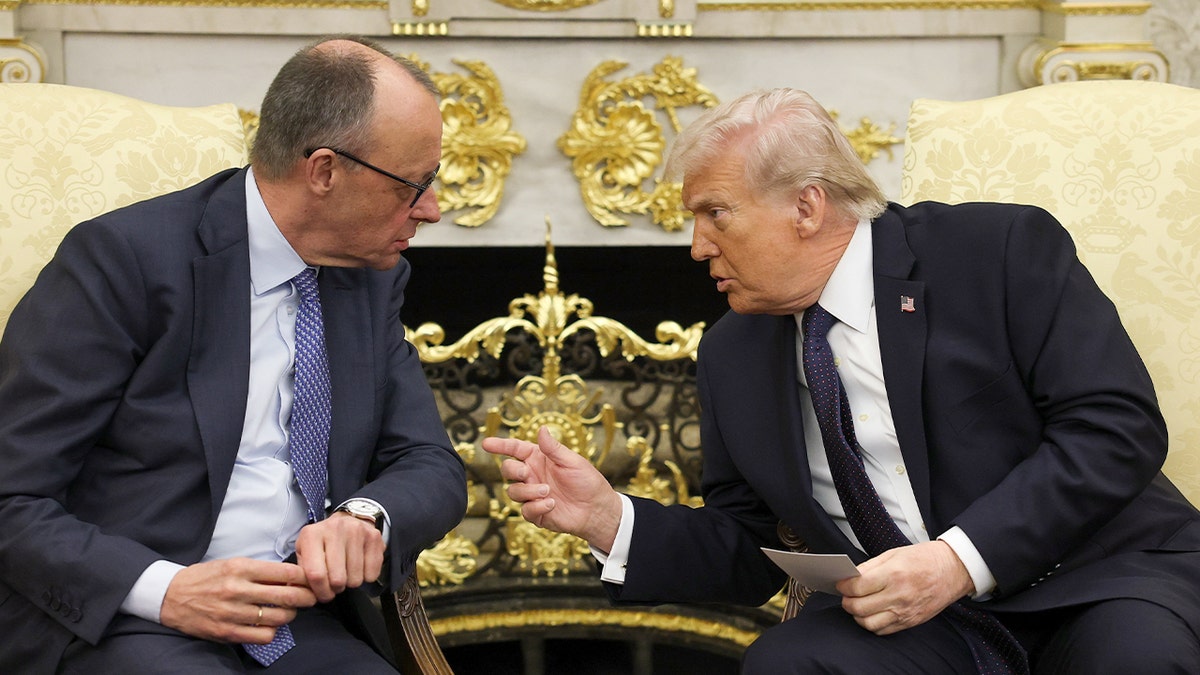
President Donald Trump and German Chancellor Friedrich Merz met in the Oval Office at the White House in Washington, D.C., on March 3, 2026, to discuss issues including recent U.S. and Israeli strikes on Iran. (Win McNamee/Getty Images)
NATO itself does not have veto power over U.S. troop deployments, which remain a national decision, though basing agreements depend on cooperation with host countries.
The U.S. currently has about 36,000 troops in Germany, about 13,000 in Italy and around 4,000 in Spain — three of the largest American military footprints in Europe.
Germany and Italy host key U.S. bases that serve as logistics hubs for operations in the Middle East, meaning any significant drawdown could complicate efforts tied to the Iran conflict itself.
That has raised the stakes for how Trump responds to allied resistance.
Seth Jones, a defense analyst at the Center for Strategic and International Studies, said the president likely has the authority to reposition or even withdraw forces, but warned that doing so raises broader questions about military strategy during an ongoing conflict.
«My issue is less the legal authority, but rather the strategic rationale behind a withdrawal — especially if it is done for political, rather than strategic, reasons,» Jones said.
He pointed to the role of key bases in Europe, including Rota in Spain, which supports rapid-response operations into North Africa, and Germany, which serves as a hub for deployments across both European and African theaters.
«The Russian threat to Eastern Europe remains serious,» Jones added, noting that some U.S. bases in Germany are positioned outside the range of certain Russian missiles and drones.
Jones also warned that relocating forces could carry significant costs and logistical challenges, adding to the complexity of any decision to scale back the U.S. presence.
The administration has pressed European allies to provide more direct support for operations tied to the Iran conflict, including broader access to bases and participation in efforts to secure key waterways such as the Strait of Hormuz.
But several countries have stopped short. Spain has imposed restrictions on how U.S. forces can use jointly operated bases, while Italy has allowed American troops to continue operating from its territory but limited how those facilities can be used for certain missions.
Germany has taken a more mixed approach, allowing operations from bases like Ramstein while publicly criticizing the administration’s strategy.
That dynamic has raised the possibility of alternatives to a full withdrawal, including shifting troops within Europe rather than reducing overall force levels.
Rathke said such a shift could avoid triggering the congressional threshold, since it applies to overall troop levels rather than deployments in specific countries.
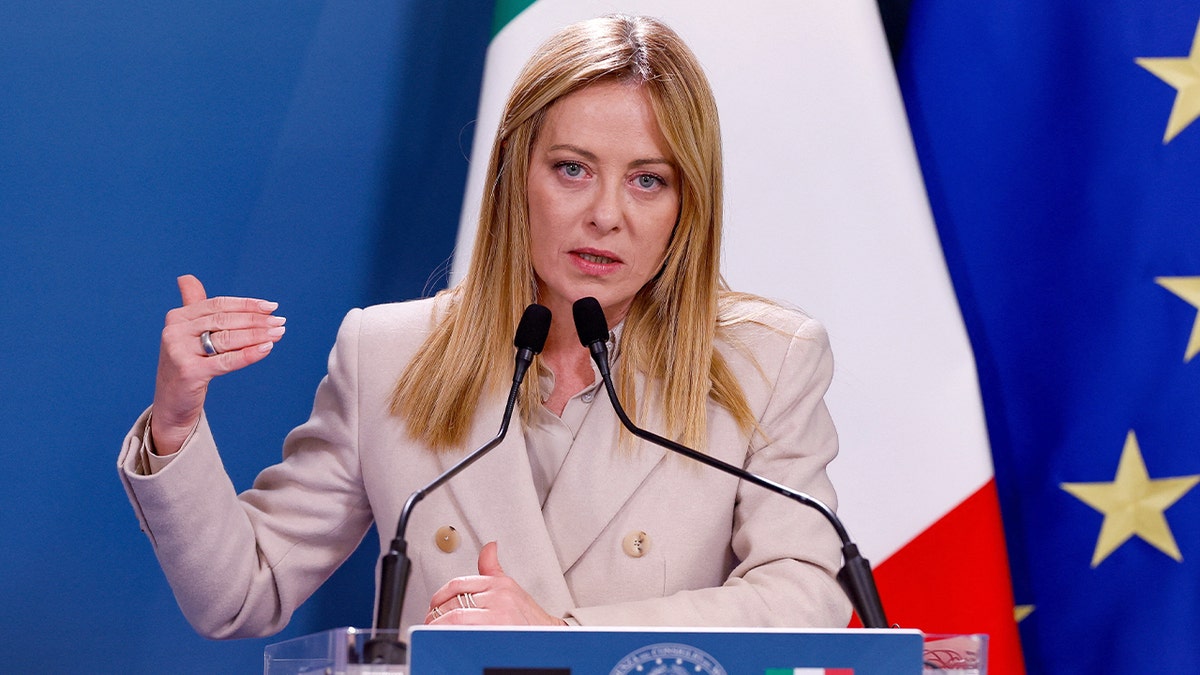
Italian Prime Minister Giorgia Meloni speaks during a joint statement at the conclusion of Italian-German government consultations in Rome on Jan. 23, 2026. (Remo Casilli/Reuters)
But he cautioned that major relocations would be difficult in practice, noting that key infrastructure — including Ramstein Air Base and the Landstuhl Regional Medical Center — cannot easily be replicated elsewhere.
«Even the most willing European country would not be able to offer that in the short term,» he said.
Even if troop levels remain above 76,000, major relocations would likely require funding and infrastructure changes that would bring Congress back into the process.
Lawmakers have stepped in before to block troop withdrawals from Europe, and a new push could trigger scrutiny on Capitol Hill, especially if it’s seen as weakening U.S. positioning during an ongoing conflict.
CLICK HERE TO DOWNLOAD THE FOX NEWS APP
A similar clash played out during Trump’s first term, when he ordered the withdrawal of roughly 12,000 U.S. troops from Germany in 2020, arguing that Berlin was not contributing enough to NATO defense. Congress imposed conditions through the annual defense bill, requiring the Pentagon to certify that any drawdown would not undermine NATO or U.S. operations. The effort ultimately stalled and was never fully implemented.
Lawmakers have not yet publicly responded to Trump’s latest comments. The White House did not return a request for comment.
nato, defense, donald trump, pentagon, war with iran






NEWYou can now listen to Fox News articles!
Twenty-five years after a generation promised to «Never Forget,» that pledge now relies on education for the more than 100 million Americans with no memory of 9/11.
The Pentagon is preparing to help address that challenge by breaking ground this weekend on a long-awaited Visitor Education Center at the only one of the three 9/11 attack sites still without a dedicated museum or education center.
The new center is intended to fill the gap that has grown more pronounced with each passing year by helping Americans who never experienced the attacks understand not only what happened on Sept. 11, 2001, but why it continues to matter.
Joseph Kornhoff, executive director of the Pentagon Memorial Fund, told Fox News Digital that nearly one-third of the country was either not alive that day or has no recollection of it and therefore lacks the «personal connection» shared by those who watched the attacks unfold.
NEW 9/11 MUSEUM EXHIBIT AIMS TO CONNECT YOUNGER AMERICANS TO THE ATTACKS THROUGH POWERFUL ARTIFACTS
Members of the military and first responders watch as an American flag is unfurled on the side of the Pentagon to mark the 25th anniversary of the September 11th terrorist attacks on September 11, 2026 in Arlington, Virginia. The United States is marking the 25th anniversary of the terrorist attacks of September 11, 2001, when a group of al-Qaeda hijackers flew airplanes into the World Trade Center, Shanksville, Pennsylvania, and the Pentagon, killing nearly 3,000 people. (Photo by Finn Gomez/Getty Images)
«That’s what we’re trying to provide with the visitor education center experience,» Kornhoff said in an interview with Fox News Digital, explaining that the goal is to give visitors a personal connection that allows them to «start to understand the gravity of that day.»
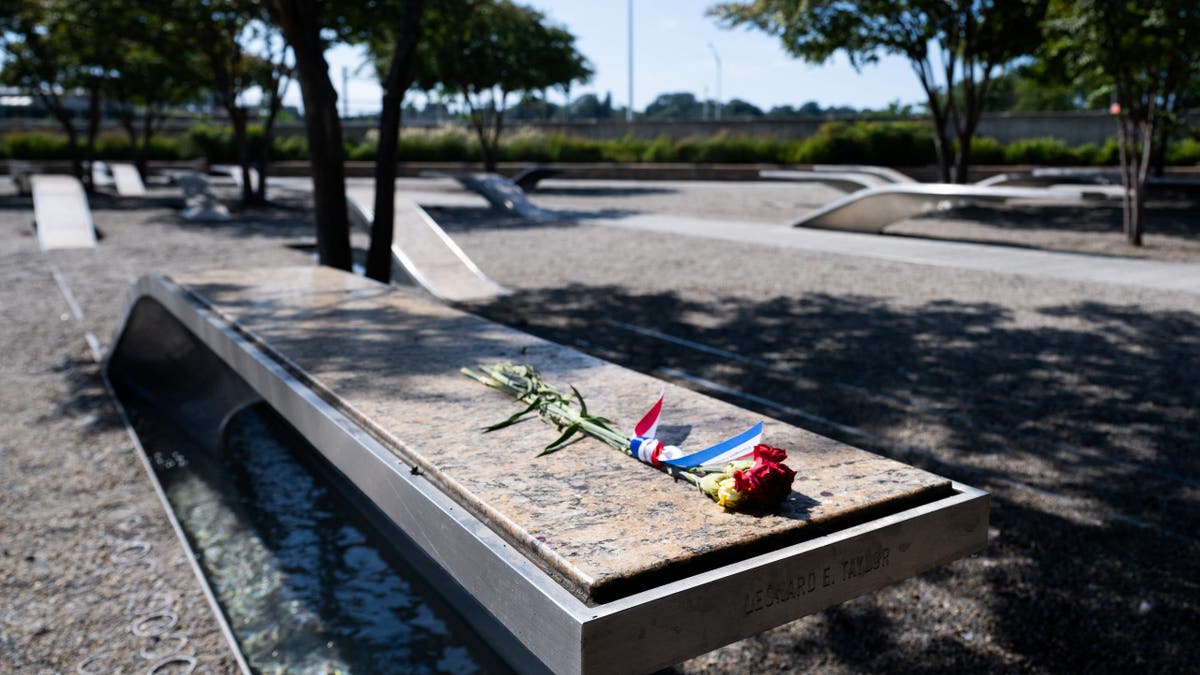
Flowers lay on a bench at the National 9/11 Pentagon Memorial, adjacent to the Pentagon, ahead of the 25th anniversary of the 9/11 attacks, in Washington, DC, on September 9, 2026. (Photo by SAUL LOEB / AFP via Getty Images)
Nearly 230 miles north, the National September 11 Memorial & Museum in New York is confronting the same generational divide.
Beth Hillman, president and CEO of the National September 11 Memorial & Museum, said the passage of time has only made the annual vow to «Never Forget» more important as the number of Americans with firsthand memories of the attacks declines.
«Many in my generation remember exactly where we were on that horrific day,» Hillman said during an Aug. 31 press preview outlining the museum’s plans for the 25th anniversary. «Yet, 100 million Americans were not even born or are too young to remember that day for themselves today.»
BROOKLYN TEACHERS WHO WITNESSED 9/11 AS CHILDREN REVEAL WHAT THEY WANT THE NEXT GENERATION TO REMEMBER
Noah Rauch, the museum’s senior vice president for education and public programs, said he has watched that transition unfold firsthand through the museum’s work with students and teachers. «I’ve seen this line creeping up between memory and history, between those who remembered the attacks and those who didn’t,» Rauch said during the Aug. 31 press event.
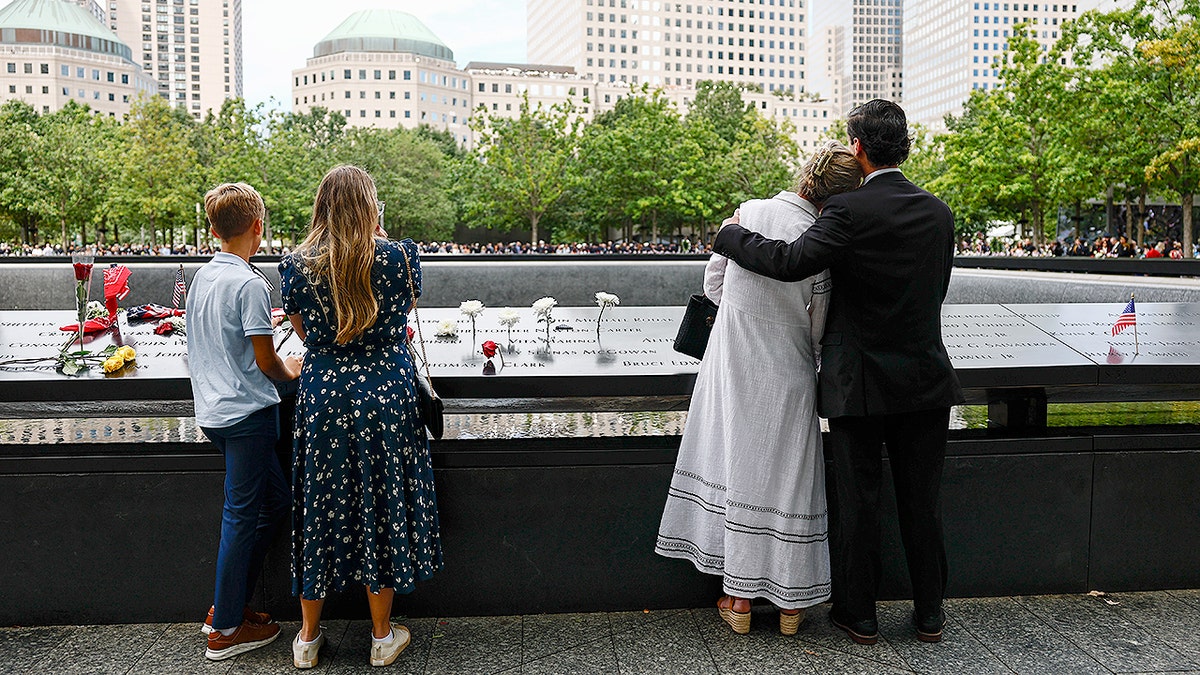
The United States is marking the 25th anniversary of the terrorist attacks of September 11, 2001, when a group of al-Qaeda hijackers flew airplanes into the World Trade Center, Shanksville, Pennsylvania, and the Pentagon, killing nearly 3,000 people. (Jeenah Moon – Pool/Getty Images)
That transition from memory to history also raises a more modern challenge. Americans too young to remember the attacks are increasingly learning about an event they never experienced firsthand, while conspiracy theories and false narratives about 9/11 run rampant online.
Kornhoff said that makes factual education increasingly important, pointing specifically to conspiracy theories surrounding the attack on the Pentagon and narratives suggesting that America «deserved 9/11.»
«That’s the need for the education center,» Kornhoff told Fox News Digital. «As a nation, we need to really take a step back, look at how we’re educating our young children to make sure that we’re providing them with the facts of the situation … and not these conspiracy theories and entertaining wild ideas that just simply are not true.»
REPORTER’S NOTEBOOK: 9/11 IS JUST A HISTORY CHAPTER FOR A NEW GENERATION OF AMERICANS

Flowers and American flags rest beside inscribed names at a reflecting pool at the National September 11 Memorial & Museum on Sept. 11, 2026, in New York City, as the nation commemorated the 25th anniversary of the 9/11 terrorist attacks. (Jeenah Moon – Pool/Getty Images)
The Pentagon center will include 10 exhibits telling the human stories of the attack, including the 184 people killed at the Pentagon and aboard American Airlines Flight 77, the first responders who rushed to the scene and the military and civilian personnel who aided the wounded.
«We are going to address the facts of the day,» Kornhoff said. «We are going to address the entire Pentagon story.»
The renewed focus on 9/11 education has also reached Capitol Hill. Reps. Elise Stefanik, R-N.Y., and Josh Gottheimer, D-N.J., introduced bipartisan legislation ahead of the 25-year anniversary, which aims to direct the Department of Education to examine how 9/11 is taught in schools nationwide and identify gaps in instruction.
Kornhoff praised the effort during his interview with Fox News Digital, saying the legislation reflects a growing recognition of the need to educate generations with no firsthand connection to the attacks.

Stainless-steel benches dedicated to victims are seen at the National 9/11 Pentagon Memorial in Washington, DC, on September 10, 2026, ahead of the 25th anniversary of the September 11 attacks. ((Photo by Alex WROBLEWSKI / AFP via Getty Images))
The Pentagon 9/11 Memorial Visitor Education Center is expected to open by the end of 2029 near the existing Pentagon 9/11 Memorial and Arlington National Cemetery in Arlington, Virginia.
The project received $12 million in federal funding this year, along with $1 million from Virginia and additional private donations raised by the Pentagon Memorial Fund. Once completed, the center is expected to include interactive exhibits, historic artifacts and firsthand accounts from survivors and victims’ families while providing visitors with additional context about the attack and its aftermath.
september 11, pentagon, politics, washington dc, historic sites, education
INTERNACIONAL
El Niño amenaza con encarecer alimentos, energía y logística en Centroamérica y República Dominicana durante 2027

El fenómeno de El Niño podría trasladar sus efectos a la economía de Centroamérica y República Dominicana, a través de un aumento en los precios de los alimentos y la electricidad, restricciones para el transporte marítimo y presiones sobre la actividad productiva.
El reporte “Perspectivas económicas de Centroamérica, Panamá y República Dominicana”, elaborado por Deloitte, advierte que el impacto más marcado puede concentrarse en 2027.
El fenómeno de El Niño comenzó oficialmente el 11 de junio de 2026. En julio, el Centro de Predicción Climática de la Administración Nacional Oceánica y Atmosférica de Estados Unidos estimó en 81% la probabilidad de que alcance una intensidad “muy fuerte” entre octubre y diciembre. Si se confirma, estaría entre los eventos más intensos registrados desde 1950.

La principal consecuencia climática prevista para la región es la sequía. La fase cálida del fenómeno ENOS, sigla de El Niño-Oscilación del Sur, suele asociarse con menores lluvias, temperaturas más altas y estrés hídrico, sobre todo en la vertiente del Pacífico y el Corredor Seco.
La menor disponibilidad de agua puede afectar tanto a la agricultura como a la generación de energía y la operación logística de Panamá.
Menor oferta de granos básicos
El reporte identifica a la producción agropecuaria como una de las primeras vías de consecuencias del fenómeno hacia los hogares.
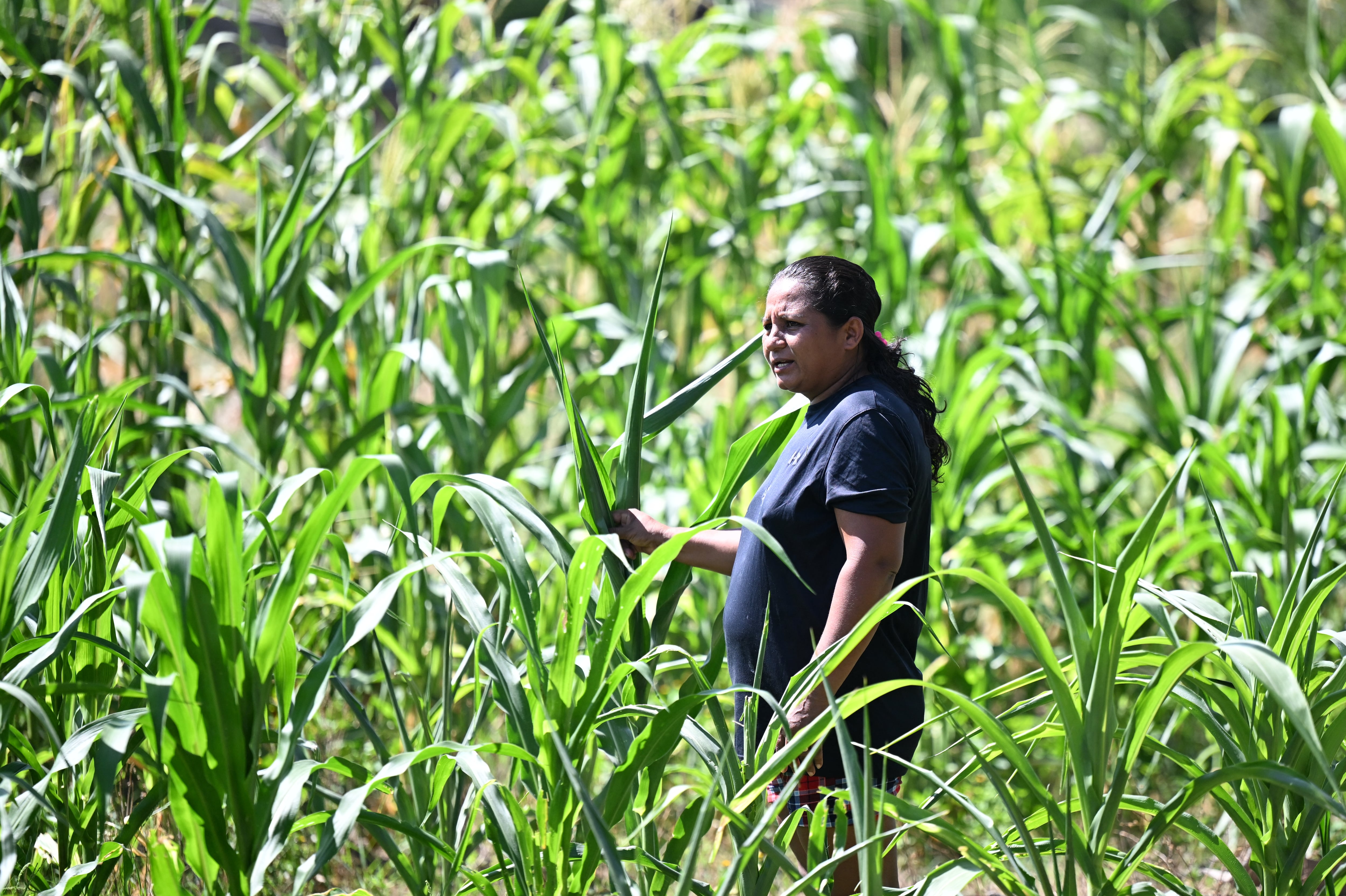
La sequía puede reducir la oferta de granos básicos en el Corredor Seco, mientras que el encarecimiento de fertilizantes y diésel puede elevar los costos de producción y trasladarse a los precios finales de los alimentos.
El impacto sobre la canasta alimentaria podría extenderse hasta 2027, de acuerdo con las proyecciones incluidas en el estudio. El café también aparece entre las actividades expuestas a los efectos del menor régimen de lluvias y las temperaturas más elevadas.
El informe incluye entre los temas a seguir la persistencia de aumentos en alimentos y energéticos, junto con la evolución del conflicto en Medio Oriente y su incidencia sobre los precios internacionales del petróleo.
La sequía amenaza la energía hidroeléctrica y la operación del Canal de Panamá
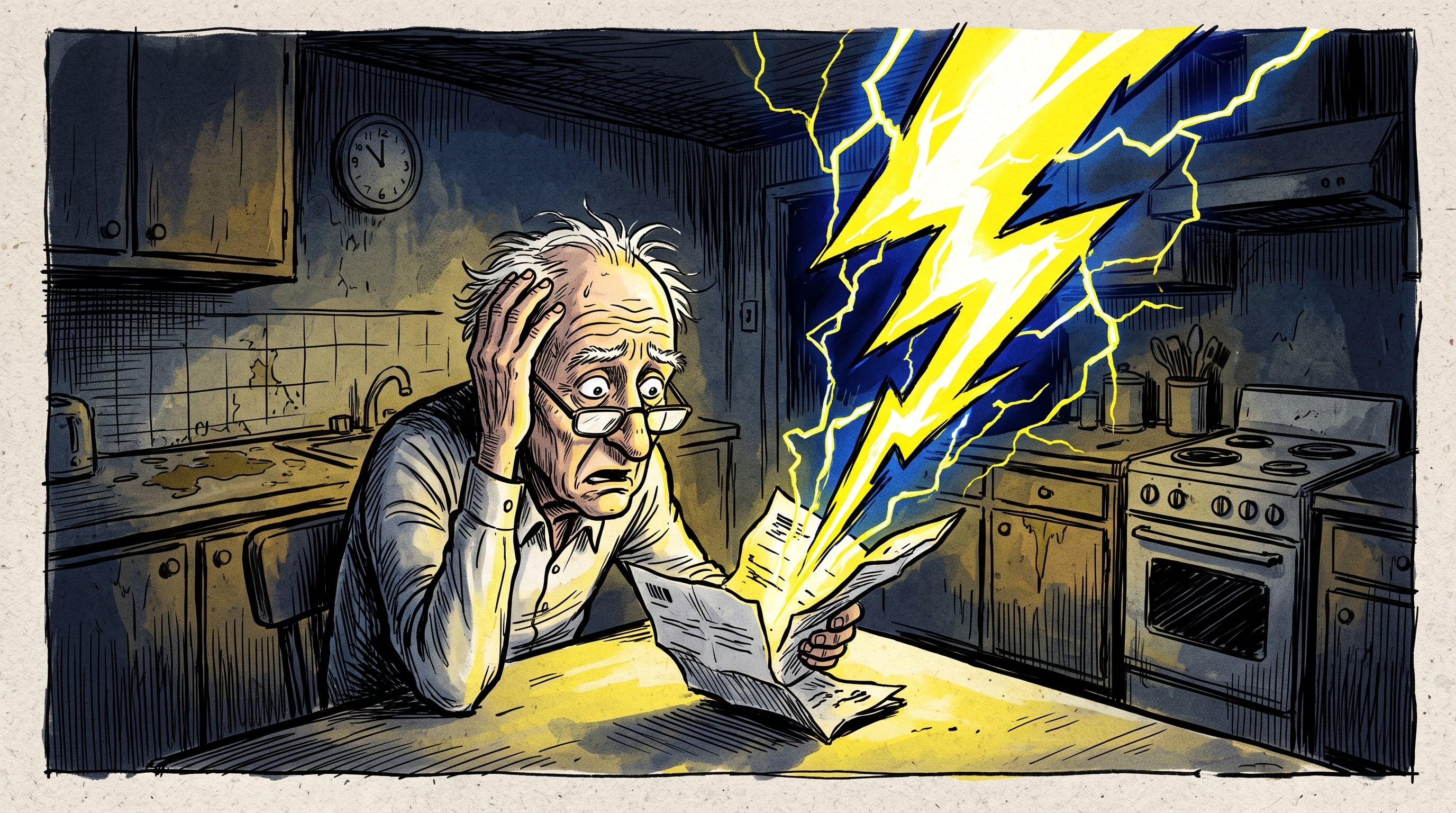
La sequía también amenaza la generación hidroeléctrica. Si caen los niveles de agua disponibles para las plantas, los países deberán compensar parte de esa producción con fuentes térmicas, que implican mayores costos por el uso de combustibles.
El documento señala que una menor generación hidroeléctrica puede presionar las tarifas eléctricas al alza. El aumento de ese costo tendría efectos sobre los presupuestos familiares y sobre empresas que dependen de electricidad para sus procesos productivos.
A la vez, los gobiernos podrían enfrentar una mayor carga fiscal si aplican subsidios energéticos o programas de apoyo para contener el impacto de las tarifas. El reporte considera esos desembolsos como uno de los factores que podrían modificar el escenario económico de la región durante 2026 y 2027.
En Panamá, las condiciones de sequía pueden afectar los niveles de agua necesarios para la operación del Canal. El análisis contempla posibles restricciones de calado y dificultades logísticas como una de las cuatro vías principales por las cuales El Niño puede repercutir en la economía regional.
Las limitaciones sobre el calado de los buques podrían incidir en la actividad del Canal de Panamá y en las cadenas de suministro. El reporte sitúa a la logística y al transporte entre los sectores que deben monitorearse ante una eventual profundización del fenómeno.
La advertencia adquiere relevancia para una economía en la que el comercio y el transporte figuran entre las actividades que lideran el crecimiento.

El reporte diferencia dos etapas. Durante 2026 prevé la consolidación del fenómeno, alertas para el sector agrícola, ajustes tarifarios y las primeras posibles restricciones al tránsito marítimo. Para 2027, en cambio, anticipa que los efectos más fuertes pueden manifestarse sobre los embalses, las cosechas y el Canal de Panamá.
En todos los casos, el documento plantea que los efectos del clima se combinarán con otros factores económicos, como la evolución de las remesas, los precios de los combustibles, el desempeño de Estados Unidos y la trayectoria de la inflación.
sequía,Canal de Panamá,agricultura,energía hidroeléctrica,transporte marítimo
INTERNACIONAL
White House unloads on violent ‘criminal alien’ nabbed after investigators uncover election offense

DETAILS: Non-citizen BUSTED over voter registration
Federal prosecutors charge a Honduran national with voter fraud in California after he allegedly registered to vote under an alias and cast ballots in multiple elections. Fox News’ Matt Finn reports on the federal indictment details, revealing the suspect received a voter registration card using a gym membership. The case highlights ongoing debates surrounding voter identification laws.
NEWYou can now listen to Fox News articles!
A Bahamian national who arrived in the U.S. during President Gerald Ford’s administration and was living with a green card while racking up a violent rap sheet before investigators found he voted illegally in the 2020 election, sparking the deportation process, officials say.
The case of Anthony Tyrone Higgs is only the latest in a slew of arrests connected to illegal votes cast in recent elections, as the Trump administration engages in a broader crackdown on election integrity-related crimes.
«This alien was a guest in our country who forfeited his right to be in the U.S. when he committed these violent crimes and voted in the 2020 election,» White House spokeswoman Lauren Bis exclusively told Fox News Digital on Friday.
ICE ARRESTS PERUVIAN NATIONAL ACCUSED OF ILLEGALLY VOTING IN 2024 ELECTION AS DHS CITES SIMILAR CASES
ICE agents assemble in Minnesota, left; Anthony Tyrone Higgs, inset right. (Charly Triballeau/Getty Images; DHS)
«Any non-citizens who vote illegally in our elections will be arrested and removed. American elections are only for Americans.»
Homeland Security Investigations (HSI), a division of DHS, confirmed in a statement that Higgs had illegally voted in the 2020 election.
FORMER KANSAS MAYOR WHO PLEADED GUILTY TO ILLEGAL VOTING TURNS HIMSELF IN TO ICE
HSI’s Atlanta office arrested Higgs in Decatur, Georgia on September 3, and he is currently in the custody of ERO, the ICE subdivision that handles migrant removal operations.
Higgs was admitted into the U.S. in October 1976 as a Lawful Permanent Resident – commonly dubbed a Green Card holder. The Trump DHS has since placed him in proceedings to revoke his immigration status due to his lengthy rap sheet.
TRUMP DOJ UNLEASHES LARGEST DENATURALIZATION EFFORT IN DEPARTMENT HISTORY — AND SAYS IT’S ‘ONLY THE BEGINNING’
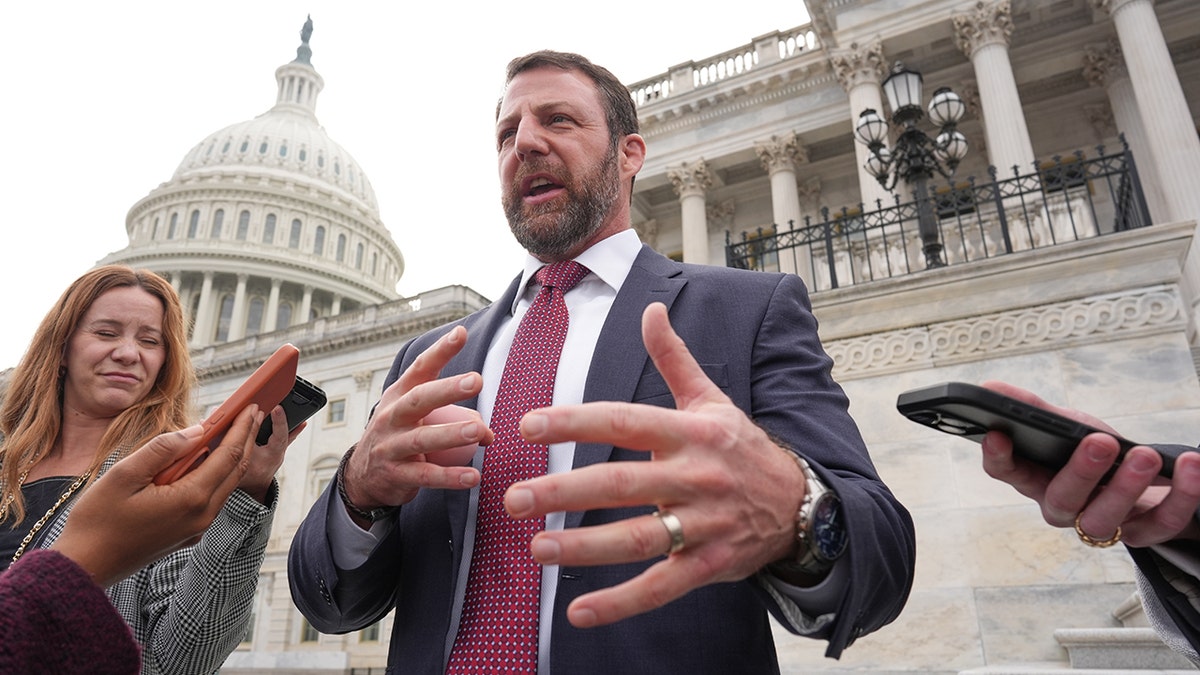
Sen. Markwayne Mullin, R-Okla., speaks to reporters at the Capitol in Washington, Thursday, March 5, 2026. (J. Scott Applewhite/AP Photo)
«This criminal alien from the Bahamas has a rap sheet for multiple violent crimes, including armed robbery, domestic violence, and assault on a police officer,» DHS Secretary Markwayne Mullin said.
«On top of all of that, he illegally voted in the 2020 election,» he added.
MORE THAN A QUARTER-MILLION NONCITIZENS MAY BE REGISTERED TO VOTE IN 4 KEY STATES, DHS ALLEGES
A Homeland Security Investigations logo is displayed ahead of Super Bowl LIX security operations in New Orleans on Feb. 5, 2025. An HSI special agent has since been indicted on multiple felony charges in Alabama. (Aaron M. Sprecher/Getty Images)
Higgs’ record also includes resisting arrest, two counts of grand larceny and two counts of possession of a weapon during a violent crime.
Of the voting-related charge, Mullin said that just one noncitizen casting a ballot is enough to cancel out an American citizen’s vote.
«Thanks to the hard work of the men and women of ICE, this criminal will be removed from our country and can never interfere in our elections again,» he continued.
DHS also provided several other recent cases of illegal immigrants or ineligible voters committing or being charged with election-related crimes.
In August, Colombian illegal immigrant Carlos Jaramillo-Grajales was sentenced to three years in prison following an ICE investigation that led to a guilty plea in a case where he was found to have committed identity theft to illegally vote in elections for more than 20 years, according to the agency.
«Federal immigration laws serve to safeguard our nation’s borders and protect the integrity of our government,» said Gregory Kehoe, U.S. Attorney for the Middle District of Florida.
«Those who seek to circumvent, exploit, or break these laws will be prosecuted fully,» he said in an August statement.
In New Jersey, a Slovakian national was found to have illegally voted in the 2022 midterms, according to HSI – which also cited the case of an Australian national accused of illegally casting ballots in both 2022 and 2024 in Louisiana.
Mauritanian national Mahady Sacko was busted by an ICE and FBI partnership in Democrat-run Philadelphia, and charged with voter fraud.
SIGN UP TO GET THE POLITICS NEWSLETTER
Sacko allegedly voted illegally multiple times going back to 2008. He was already under an order of removal, DHS said in a statement, stating that he «exhausted all appeals» and an immigration board upheld his removal order as of 2002 but he remained in the country.
Returning to the case of Higgs, Mullin added in a statement: «Thanks to the hard work of the men and women of ICE, this criminal will be removed from our country and can never interfere in our elections again.»
voter fraud concerns, deportation, illegal immigrants, migrant crime, politics, voting, immigration, donald trump, white house

¿Qué va a pasar con la nafta?: la escalada del precio global del petróleo pone en duda el alivio previsto para los surtidores locales

Nadie sabía que estaba embarazada, se lo ocultó a todos y fue mamá por primera vez los 40 años: su fortuna es de 900 millones de dólares y el papá del bebé es…

En medio de la tensión por Malvinas, el Gobierno destinará más de $300 mil millones en 2027 para la Base Naval de Ushuaia y planea terminarla en 2029

What does ‘Never Forget’ mean for a generation with no memory of 9/11?

Tienen 13, 15 y 18 años y los detuvieron mientras intentaban robar una moto: entre todos acumulan 18 antecedentes

A qué hora será la ceremonia inaugural de los Juegos Suramericanos Santa Fe 2026 y cómo verla en vivo

El día que Owen Wilson se emocionó por el abrazo que le dio Lionel Messi tras un partido

La desafiante aventura de Carolina Baldini en moto por Europa: desde Edinburgo a Liverpool en dos ruedas

Berni se diferenció de Kicillof en la aplicación de la baja de la edad de imputabilidad

Cuánto cuesta comprar una pick up en la Argentina y cuáles son los modelos más baratos en septiembre

 DEPORTE3 días ago
El día que Owen Wilson se emocionó por el abrazo que le dio Lionel Messi tras un partido
- CHIMENTOS3 días ago
La desafiante aventura de Carolina Baldini en moto por Europa: desde Edinburgo a Liverpool en dos ruedas
- POLITICA3 días ago
Berni se diferenció de Kicillof en la aplicación de la baja de la edad de imputabilidad