INTERNACIONAL
FIRST ON FOX: Top Republicans take abortion pill fight to Supreme Court, citing coercion and safety risks

NEWYou can now listen to Fox News articles!
FIRST ON FOX: More than 100 Republican lawmakers are urging the Supreme Court to reinstate abortion pill restrictions, warning current policy allowing mifepristone to be mailed without in-person oversight has led to cases of women being coerced — and in some instances allegedly forced — to take the drug.
The amicus brief, led by Sen. Bill Cassidy, R-La., Rep. Chris Smith, R-N.J., Senate Majority Leader John Thune, R-S.D., and House Speaker Mike Johnson, R-La., backs Louisiana’s legal fight to restore an in-person dispensing requirement for the drug.
At the center of the filing are allegations that loosened federal rules have enabled coercion, with lawmakers arguing the Biden-era policy «increases the risk of coercion,» referring to changes to the FDA’s Risk Evaluation and Mitigation Strategy (REMS) that removed the in-person requirement.
The brief points to several alleged cases in which abortion pills were obtained online or administered without a woman’s consent, including plaintiff Rosalie Markezich, who says her boyfriend ordered mifepristone from a California doctor and coerced her into taking it.
ABORTION PILL MIFEPRISTONE SPARKS NEW PRO-LIFE DEBATE AS SOME DOCTORS STRESS SAFETY CONCERNS
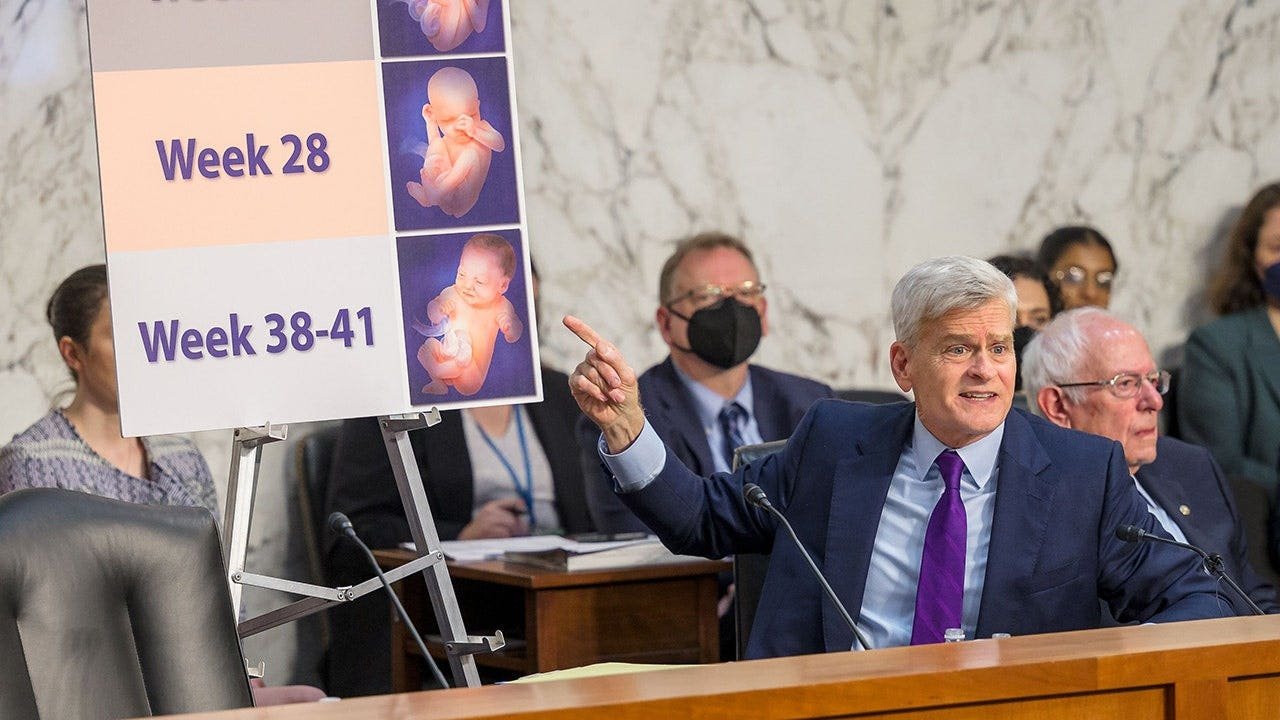
Sen. Bill Cassidy, R-La., speaks during a Senate hearing while pointing to a chart showing fetal development stages on Capitol Hill in Washington. (Courtesy U.S. Senate Photographic services)
«Had she visited a doctor in person, her boyfriend would never have been able to obtain the drugs he made [her] take,» the brief says.
Lawmakers also cite additional reported incidents, including a case in which a Louisiana mother allegedly obtained abortion pills online for her teenage daughter, leading to a medical emergency, as well as another case involving a man accused of administering the drugs to a pregnant woman without her knowledge.
Lawmakers argue such cases are more likely under a system that allows abortion pills to be prescribed online and shipped without face-to-face medical screening.
‘ABORTION PILL’ FOUND TO HAVE ‘SEVERE ADVERSE EFFECTS’ FOR 1 IN 10 WOMEN, STUDY FINDS
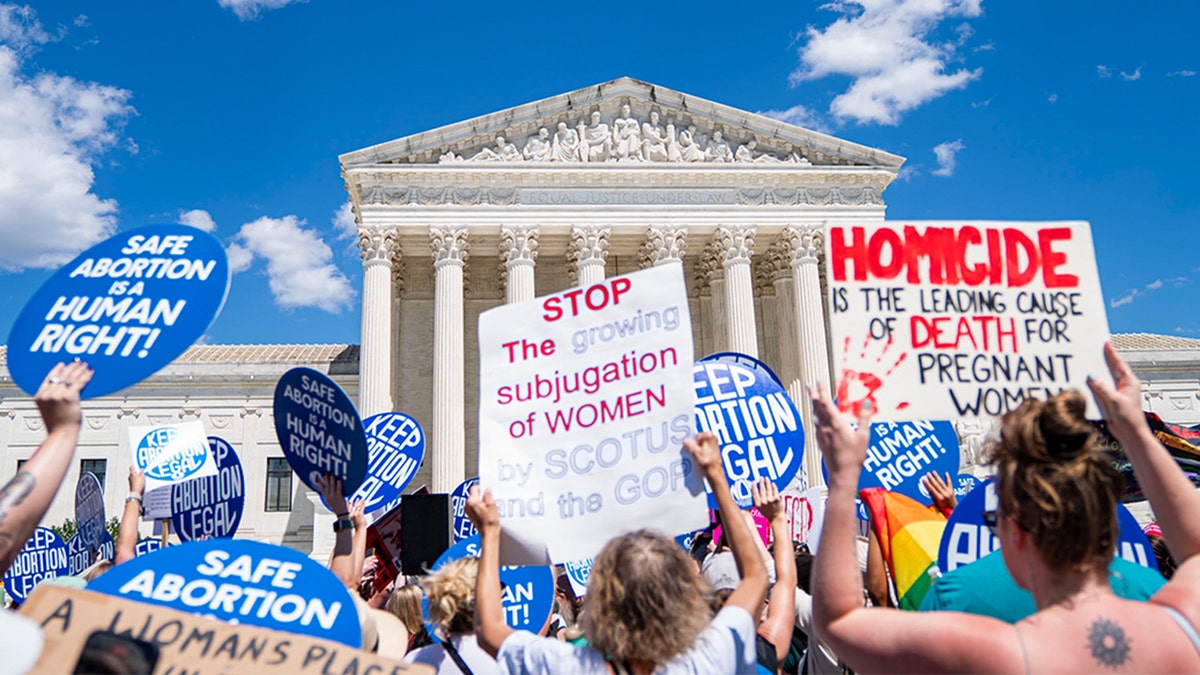
Activists for and against abortion demonstrate outside the Supreme Court building in Washington, D.C., on Jan. 24, 2024, three years after the Dobbs decision. The demonstration coincides with a landmark Texas filing seeking to prevent interstate abortion pill mailing. (Allison Robbert/The Washington Post/Getty Images)
They say the policy not only weakens safeguards but puts women at risk while removing protections designed to prevent abuse.
Cassidy said those safeguards should be restored immediately.
«Chemical abortion drugs kill innocent children and put mothers’ lives at risk,» Cassidy said. «Safeguards protecting against coercion, such as the in-person dispensing requirement, must be reinstated immediately. The Fifth Circuit got this right, and I urge the Supreme Court to affirm that decision.»
ABORTION PILL FIGHT HEADS TO SUPREME COURT AS MANUFACTURER WARNS OF ‘CHAOS’ AFTER RULING

Anti-abortion activists hold signs outside the U.S. Supreme Court in Washington, D.C., on June 24, 2022, following the overturning of Roe v. Wade. (Stefani Reynolds/AFP)
The filing comes after the 5th U.S. Circuit Court of Appeals sided with Louisiana and reinstated the in-person dispensing requirement while litigation continues.
Lawmakers argue the FDA «overstepped its authority» by allowing abortion drugs to be distributed through the mail, saying the policy conflicts with the Comstock Act, which prohibits mailing items «designed, adapted, or intended for producing abortion.»
Smith also argued the drug poses serious risks, citing claims that more than one in 10 women experience complications such as infection or hemorrhaging.
They also contend the agency relied on insufficient safety data when it removed the in-person requirement, weakening adverse-event reporting standards and then using limited data to justify expanded access.
NEW YORK GOV. HOCHUL SIGNS LAW PROTECTING ABORTION PILL PRESCRIBERS AFTER DOCTOR INDICTED IN LOUISIANA

Louisiana lawmakers approved a bill on May 23, 2024, classifying two abortion-inducing drugs as controlled and dangerous substances despite criticism from doctors about their other reproductive health uses. (Allen G. Breed/AP)
The brief further argues that eliminating in-person visits prevents doctors from screening for serious medical conditions, including ectopic pregnancies, and makes it more difficult to detect coercion or abuse.
The legal fight intensified over the weekend when mifepristone manufacturers Danco Laboratories and GenBioPro filed emergency appeals to the Supreme Court, warning the lower court ruling is already causing «immediate confusion and upheaval» across the country.
Danco argued the decision is disrupting access and forcing providers, pharmacies and patients to navigate rapidly changing rules, while GenBioPro said the order effectively eliminates mail-order access and upends a system relied on for years.
The companies are asking the justices to block the ruling while litigation continues, setting up a high-stakes legal battle that could reshape how the abortion drug is distributed nationwide.
CLICK HERE TO DOWNLOAD THE FOX NEWS APP
The Supreme Court is now weighing emergency requests from the manufacturers, which are seeking to pause the 5th Circuit’s order while the case proceeds.
The outcome could reshape access to abortion pills nationwide, determining whether they remain widely available by mail or are once again restricted to in-person medical oversight.
«There are legitimate concerns about these drugs putting women and girls at significant risk,» said Leader Thune. «I urge the Supreme Court to reinstate the safety guardrails that were in place before the Biden administration while the Department of Health and Human Services reviews these drugs.»
supreme court, abortion, republicans, womens health, senate elections














Chéjov legisló para todos los teatros del mundo menos uno. Si en el primer acto hay un rifle colgado en la pared, decía, en el tercero tiene que disparar: la economía dramática exige que el arma se justifique, que su presencia sea una promesa y no un adorno. La regla presupone algo que en los Estados Unidos nunca fue cierto: que el arma sea una excepción, un objeto que la trama debe explicar. En la literatura norteamericana el rifle no necesita colgarse en el primer acto porque ya estaba ahí antes de que se levantara el telón; antes del teatro, incluso antes del país. No es utilería: es la escenografía misma.
Entender la diferencia entre el arma como recurso narrativo y el arma como atmósfera es entender buena parte de la historia literaria de los Estados Unidos, y de paso su presente político, que sigue discutiendo en 2026 lo que no pudo resolver ni después de Columbine, ni después de Sandy Hook, ni después de Uvalde; ni para el caso el intento de magnicidio de Trump o el asesinato de Charlie Kirk, o Kennedy, o John Lennon.
En los Estados Unidos circulan más armas de fuego que personas: alrededor de ciento veinte por cada cien habitantes según el Small Arms Survey, una proporción que duplica a la del segundo país de la lista, Yemen, un país en guerra. Apenas dos o tres constituciones en el mundo reconocen algún derecho a la tenencia de armas; ninguna le da la centralidad casi litúrgica de la Segunda Enmienda, ratificada en 1791 y reinterpretada en 2008, cuando la Corte Suprema decidió en District of Columbia v. Heller que aquella frase sobre las milicias bien organizadas protegía en realidad un derecho individual.

Esa cultura no nació de la caza ni del deporte ni siquiera de la desconfianza jeffersoniana hacia el poder central, aunque todas esas cosas la adornaron después. Nació de dos empresas de despojo. Hacia el oeste, el arma fue el instrumento de la conquista territorial y del exterminio indígena; hacia adentro, fue la herramienta de las patrullas esclavistas, las milicias blancas que recorrían los caminos del sur cazando fugitivos. Las diversas teorías que intentan comprender esta cultura plantean que la Segunda Enmienda se redactó, en parte decisiva, para garantizar a los estados sureños el derecho a mantener armadas esas patrullas; como el residuo jurídico de la colonización: el ciudadano armado original no se defendía de un tirano sino que perseguía a un esclavo o desalojaba a un indio. Un eslogan publicitario de la época dorada del revólver lo dijo sin querer: “Lincoln liberó a los hombres, pero fue Sam Colt quien los hizo iguales”. El relato fundacional norteamericano es el del hombre blanco que se interna en la tierra salvaje, mata, y regresa purificado y renacido. No redimido a pesar de la violencia: redimido por ella. El arma no es un accesorio de ese relato; es la imagen de un rito sagrado.
Emily Dickinson casi no salió de su casa y jamás publicó en vida más que un puñado de poemas, buscó una figura para decir su propia vida, encontró esto: “Mi vida había sido un arma cargada”, arrinconada, hasta que el dueño pasó y la reconoció. Se ha leído ese poema como alegoría de la ira femenina, de la vocación poética, de la potencia sin destinatario; lo que importa aquí es más simple y más inquietante: en la América de 1863, hasta la interioridad de una mujer enclaustrada se pensaba a sí misma con la gramática del fusil. El arma no era un tema; era un idioma.

Las aventuras de Huckleberry Finn
eBook
En Huckleberry Finn Mark Twain cuenta la disputa entre los Grangerford y los Shepherdson, dos familias aristocráticas que se matan entre sí desde hace tanto tiempo que nadie recuerda el motivo, y que asisten juntas a la iglesia con los rifles entre las rodillas para escuchar un sermón sobre el amor fraterno. Huck anota que todos elogiaron la prédica. Unas páginas más adelante, el coronel Sherburn mata a un borracho inofensivo en plena calle y luego, solo con su escopeta, humilla desde el porche a la turba que venía a lincharlo, con un discurso sobre la cobardía del hombre promedio. Twain entendió las dos caras del asunto: el honor armado como farsa sangrienta, y el arma como la única oratoria que en ciertos lugares garantiza ser escuchada.
Con Hemingway el arma dejó de ser tema y se volvió estética. No es una metáfora fácil: la famosa economía de su prosa, la frase corta, el adjetivo suprimido, la teoría del iceberg, se formó en el mismo molde que su ética de cazador, expuesta sin pudor en Las verdes colinas de África: el tiro limpio, único, sin desperdicio, que mata bien. Escribir una frase y disparar un rifle eran para él disciplinas hermanas. Toda una generación de narradores norteamericanos aprendió a escribir así, lo que significa que aprendió, aunque no lo supiera, a escribir como se dispara.
Pero en Hemingway el arma es también, y sobre todo, una herencia, en el sentido más literal y más siniestro. Su padre, Clarence, médico de Oak Park, se mató en 1928 con un revólver que había pertenecido al abuelo; la madre le envió después el arma a Ernest por correo. Él escribió el duelo oblicuamente en Padres e hijos uno de los cuentos de Nick Adams, y pasó las tres décadas siguientes rodeado de escopetas, hasta la madrugada del 2 de julio de 1961 en Ketchum, Idaho. Habría que resistir la tentación de leer esa muerte como símbolo, porque fue antes que nada una enfermedad y una tragedia familiar que siguió cobrando, su hermana, su hermano, su nieta Margaux; pero sería deshonesto no anotar que la estadística lo acompaña: más de la mitad de las muertes por arma de fuego en los Estados Unidos no son homicidios sino suicidios, el costado del problema del que la épica no habla nunca.

Faulkner ofreció el rito contrario. En El oso, la nouvelle central de Desciende, Moisés (1942), el joven Ike McCaslin quiere ver al oso legendario del bosque grande, y no lo consigue hasta que comprende que debe desprenderse de todo: deja el rifle, después el reloj, después la brújula, y solo entonces, desnudo de técnica, el oso se le aparece. Y Faulkner la lleva hasta el final, porque Ike, años después, renuncia también a la plantación que le corresponde por herencia, al descubrir en los libros de contabilidad de la familia el incesto y la esclavitud que la fundaron. El rifle y la escritura de propiedad son, en Desciende, Moisés, la misma herencia envenenada. Ningún escritor norteamericano vio con tanta claridad que el arma del sur no apuntaba al bosque sino al pasado.
En su cuento Un buen hombre es difícil de encontrar (1953) Flannery O’Connor nos presenta a una abuela charlatana y egoísta que alcanza su único instante de gracia cuando reconoce al asesino con tres balas de por medio, y el inadaptado pronuncia entonces su veredicto atroz: “habría sido una buena mujer si hubiera tenido a alguien que le disparara cada minuto de su vida”. O’Connor explicó su método: para los duros de oído hay que gritar, y para los casi ciegos hay que dibujar figuras grandes y grotescas. En su ficción el revólver es el megáfono de Dios, el único instrumento capaz de perforar la sordera espiritual de un país lleno de sí mismo. Y tal vez sea por eso que sus cuentos siguen incomodando: sugieren que en la imaginación norteamericana ni siquiera la gracia encuentra otro vehículo que el cañón de un arma.

Y después está Cormac McCarthy. Meridiano de sangre (1985) toma la materia histórica de la expansión hacia el oeste y la devuelve a su verdad documental: la pandilla de Glanton, cazadores de cabelleras a sueldo de los gobernadores de Chihuahua y Sonora, matando indígenas por dinero y, cuando escasean, mexicanos cuyas cabelleras se les parezcan. No hay duelo al atardecer, no hay código, no hay pueblo mirando detrás de las ventanas; hay comercio. Veinte años más tarde, en No es país para viejos (2005), McCarthy remató la operación con un detalle de una crueldad perfecta: su asesino, Anton Chigurh, mata con una pistola de aire comprimido para aturdir ganado, la herramienta de los mataderos. Le niega al verdugo hasta la dignidad del revólver; las víctimas mueren como reses. Y alrededor de Chigurh, la novela despliega el paisaje real del Texas contemporáneo: todo el mundo está armado: el cazador Moss con su rifle de francotirador, los narcos con sus ametralladoras, los rancheros, los policías, y ese arsenal universal no salva absolutamente a nadie.

Charlton Heston, en la convención de la NRA del año 2000, levantó un rifle sobre su cabeza y desafió a quitárselo “de sus manos frías y muertas”. La frase se volvió consigna porque condensa el mito entero: el arma como parte del cuerpo, inseparable de la vida misma del hombre libre. Chéjov, otra vez, no sirve aquí; su regla suponía que el rifle podía descolgarse de la pared. En los Estados Unidos el tercer acto llega todos los días y el rifle sigue colgado, o mejor dicho empuñado, fundido a la mano que lo sostiene.
Lo mejor de la literatura norteamericana lleva doscientos años haciendo el trabajo lento y probablemente inútil que su política no intenta: abrir esos dedos, uno por uno, para mirar qué es lo que la mano tiene tanto miedo de soltar.
armas,armas de fuego,municiones,Estados Unidos,bandera americana,rifle,escopeta,pistola,derecho a portar armas,seguridad
INTERNACIONAL
Platner aide hit with brutal timeline check after campaign denied rape claim, then folded days later
NEWYou can now listen to Fox News articles!
A political adviser to Graham Platner’s now-defunct Senate campaign is facing scrutiny after saying the team urged him to end his candidacy «as soon» as it learned of a rape allegation — despite the campaign publicly denying the claim before Platner suspended his run two days later.
«As soon as the team became aware of the rape allegations against Graham Platner, we advised he suspend his candidacy, and in the following days worked to wind down the campaign,» Platner political adviser Morris Katz wrote on X Wednesday.
The allegation, first reported by Politico on Monday, came from Maine resident Jenny Racicot, who said Platner raped her in 2021. Platner has denied the claim, calling it false and politically motivated.
EXPLOSIVE SEXUAL ASSAULT ALLEGATION ROCKS PLATNER CAMPAIGN AHEAD OF KEY DEADLINE IN CRUCIAL SENATE RACE
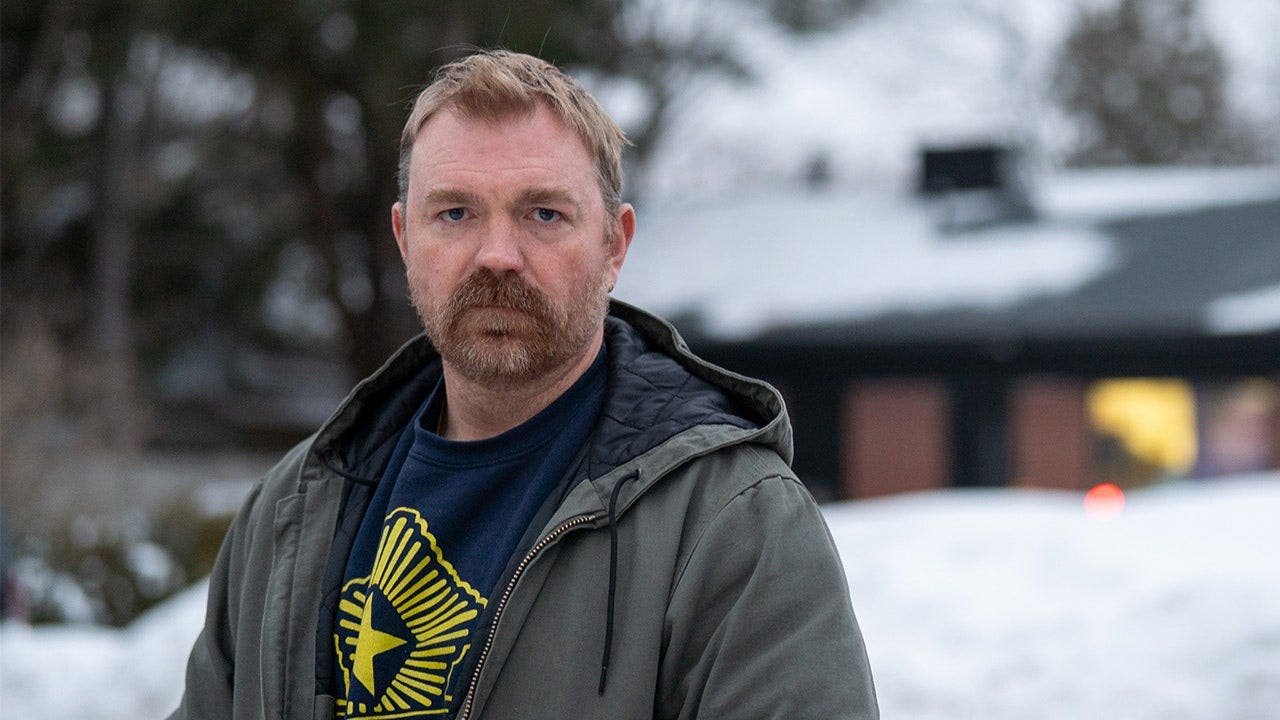
Graham Platner speaks at his Primary Election event on June 9, 2026 in Blue Hill, Maine. (CJ Gunther/Getty Images)
Katz, one of Platner’s top political advisers, faced scrutiny over the post on Thursday, including receiving an X community note for its timeline.
«When asked by CNN about Jenny Racicot’s rape allegation on July 6, Platner’s campaign denied it was true rather than immediately advising suspension, which occurred two days later,» the community note reads.
CNN’s Jake Tapper weighed in on Katz’s message, posting to X: «As soon as we asked the campaign about what Jenny Racicot told us on the record and on camera Monday, the campaign said that her assertion he had raped her was false.»
Platner responded within minutes to the Politico article, posted at 3:18 p.m. Monday, sharing a video on X at 3:29 p.m. He said his campaign was «taking time to reflect on the best path forward.»
His campaign also commented in the article, noting Platner «vigorously denies» the «very serious» allegations, while arguing critics were working to push him out of the running.
«They are also coached and coordinated by out of state establishment operatives,» the campaign told Politico on Monday «For a year, opponents of this campaign have thrown everything they can at Graham –– calling him a Nazi, a war criminal, and a communist. None of it has been true and this is no different. It is not a coincidence that this story comes a week before the ballot deadline, just as the previous false allegations came a week before the primary. Graham began this campaign to fight for a Maine where everyone is treated with dignity and where Mainers are put first, and no amount of desperate smears will stop this movement from seeing that vision through.»
PLATNER’S LATEST ACCUSER CLAIMS THE DEMOCRATIC SENATE CANDIDATE ‘ABSOLUTELY’ RAPED HER
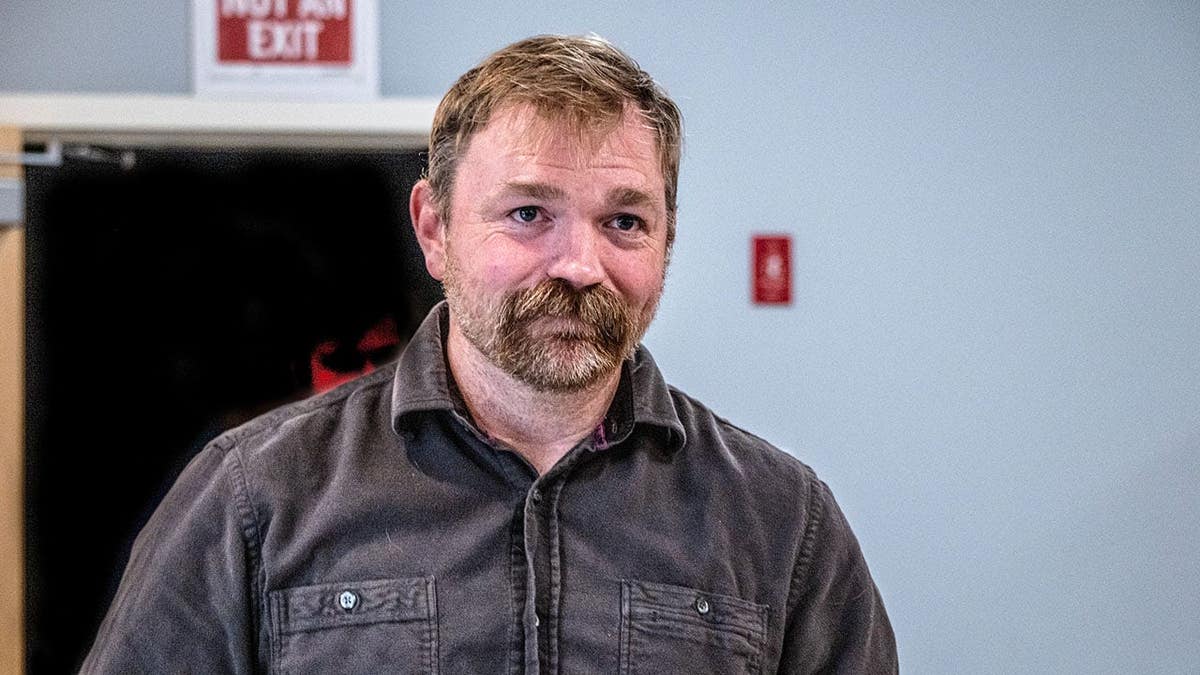
Democratic U.S. Senate candidate Graham Platner speaks to voters at a town hall at the Elks Lodge 188 on June 7, 2026 in Portland, Maine. Platner is the presumptive Democratic nominee and will face incumbent Sen. Collins (R-ME) for Maine’s U.S. Senate seat in the general election. (Photo by Laura Brett/Getty Images) (Laura Brett/Getty Images)
As calls grew for him to exit the race, Platner’s campaign announced Wednesday that he would speak later that day, but did not say what he planned to address before he posted an 11-minute recorded video on X.
In the video, Platner said the allegations were «all false,» blaming the political establishment for working against him to force him out of the race.
«Much like the news that was created the week before the primary. There is a reason that this is happening now. I only have until July 13th until I am officially the nominee. This was the last week to try to get me off of the ballot. And that’s why this is occurring,» said Platner.
He announced the suspension of his campaign in the Wedesday video.
«For the movement to continue, it can’t be me. For that reason, we are suspending campaign operations,» Platner said in a video posted to social media.
Platner officially ended his Senate campaign on Friday afternoon.
Critics on social media seized on the timeline, questioning when the campaign learned of the allegation and why Platner did not suspend his campaign until two days later.
«Important to note that Morris and his team began calling former girlfriends of Platner LAST YEAR because they knew there were issues,» wrote Republican commentator Matt Whitlock on X.
«The Democrat establishment was fully ready to make a rapist a United States Senator. They only took him out because he was going to lose,» wrote the Republicans X account.
«11 minutes and zero accountability,» wrote Democratic, pro-choice women’s PAC Emily’s List.
WHAT HAPPENS NEXT IF PLATNER DROPS OUT? HERE’S WHO COULD REPLACE HIM ON THE BALLOT AND HOW IT WOULD WORK
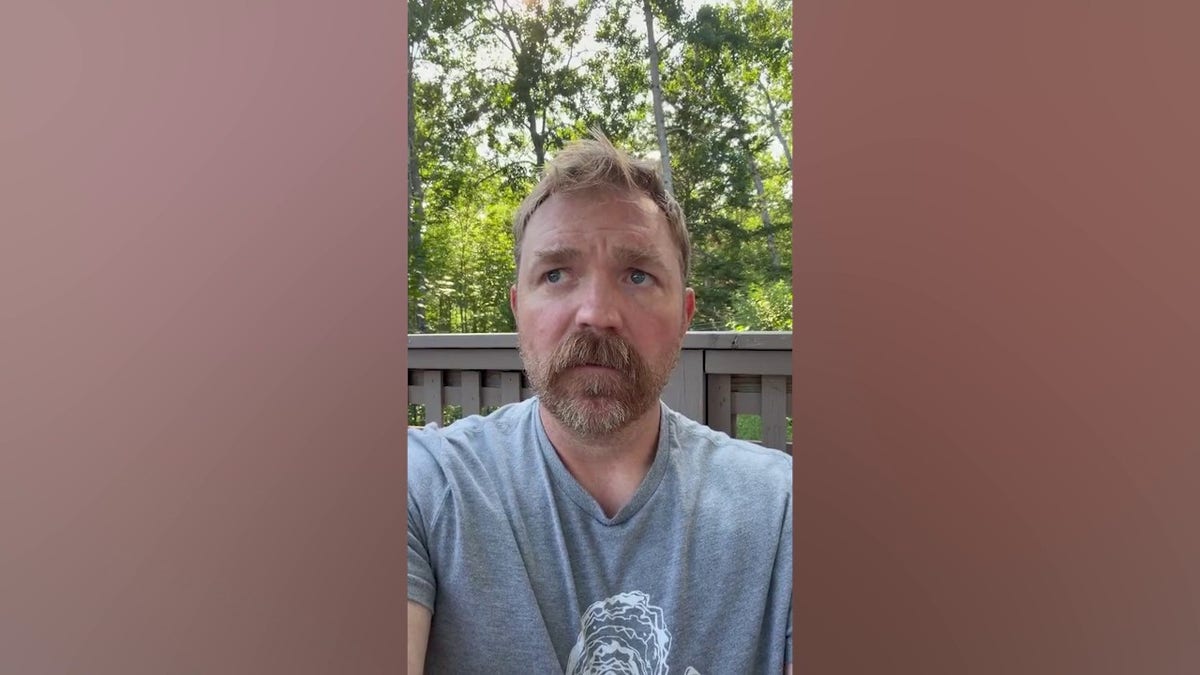
Graham Platner announced Wednesday that he is dropping out of the Maine Senate race after an ex-girlfriend accused him of rape. He denied the allegation. (Graham Platner via X)
Maine Democrats were racing a July 13 deadline for Platner to formally withdraw from the race, a step that would allow the party to select a replacement nominee by July 27 to face incumbent Republican Sen. Susan Collins.
CLICK HERE TO DOWNLOAD THE FOX NEWS APP
Fox News Digital reached out to Platner’s team and Katz for comment.
graham platner, maine, democrats elections, democratic party
INTERNACIONAL
Alemania: a dos meses de las elecciones regionales, la ultraderecha está cerca de gobernar por primera vez un estado federado
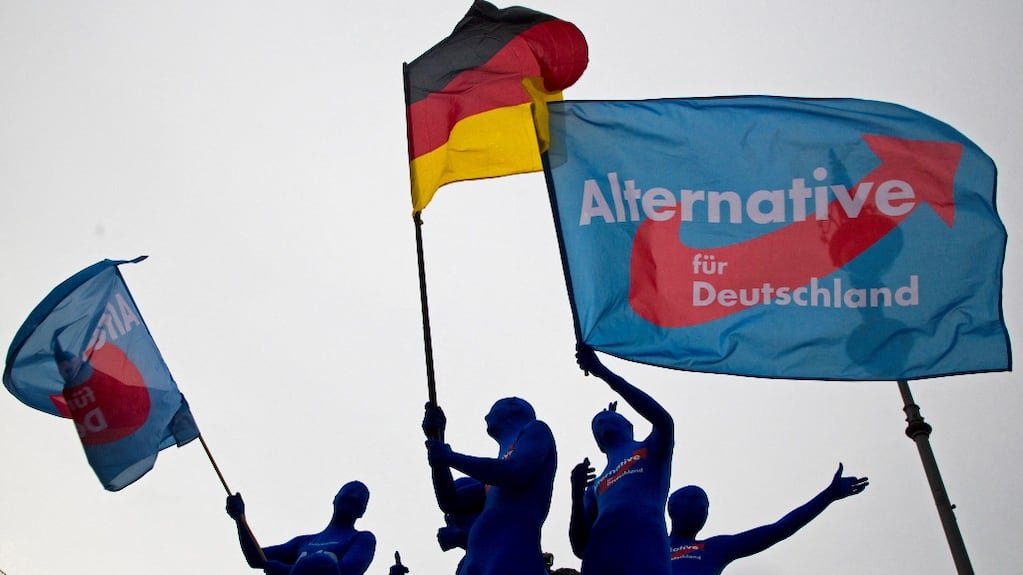
La ultraderecha alemana, a la que amplios sectores de la política tradicional vinculan con el neonazismo, es la gran favorita para ganar las elecciones regionales de septiembre y gobernar por primera vez uno de los 16 estados federados del país.
Los sondeos vaticinan un triunfo contundente de Alternativa para Alemania (AfD) en los estados de Sajonia-Anhalt y Mecklemburgo-Pomerania Occidental, ambos en el este del país, el antiguo territorio comunista hoy convertido en bastión de la derecha radical.
Hasta ahora, la AfD solo accedió a gobernar pequeños pueblos. Nunca estuvo tan cerca como ahora de apoderarse de un gran estado (provincia), a pesar de que en 2024 fue el partido más votado en el land de Turingia, también en el este. Entonces no logró formar gobierno.
Las nuevas elecciones están previstas para el 20 de septiembre. Ese día también habrá comicios en Berlín, la cosmopolita y progresista capital que hasta ahora se mantenía inexpugnable ante el avance continuo de la extrema derecha, pero que ahora observa un notable progreso de la AfD en las encuestas.
«Ahora sí vamos a estar muy cerca de tener un gobierno de la AfD en un estado federado y eso va a cambiar realmente el escenario político en Alemania», dijo a TN la dirigente alemana Svenja Blanke, exdirectora en la Argentina de la Fundación Política Friedrich Ebert (FES, vinculada al socialdemócrata SPD) y actualmente su representante en Uruguay.
El avance de la extrema derecha en la antigua Alemania Oriental
La AfD no para de crecer en el país. En las elecciones generales de 2025, fue la segunda fuerza más votada a nivel nacional solo detrás de los conservadores. Pero actualmente lidera todas las encuestas con entre un 27% y 29% de intención de voto.
“No solo en el este. También en el oeste. Se ve en las encuestas. Es probable que ganen la mayoría en Sajonia-Anhalt. También ganarían en Mecklemburgo-Pomerania Occidental, pero no con mayoría”, dijo Blanke. Los co-líderes de Alternativa para Alemania (AfD) Alice Weidel y Tino Chrupalla durante el contreso del partido en Erfurt a principios de julio (Foto: REUTERS/Karina Hessland)
La co-líder del partido, Alice Weidel, habló en el cierre del congreso federal de la agrupación celebrado a inicios de este mes en la ciudad de Erfurt, en el este del país.
“Estamos plenamente centrados en las próximas elecciones regionales de septiembre en Sajonia-Anhalt y en Mecklemburgo-Pomerania Occidental, donde pondremos a los primeros ministros. Y también en Berlín (…)”, exclamó.
Los sondeos son contundentes. El apoyo de la ultraderecha en Sajonia-Anhalt llega al 41% según algunas encuestas. En Mecklemburgo-Pomerania Occidental alcanza el 38%. Si llegan a obtener la mayoría podrá formar gobierno sin necesidad de armar una coalición.
Este es un tema clave. Los partidos tradicionales (CDU, SPD, los Verdes, los Liberales y la izquierda) sellaron un acuerdo bautizado como “cordón sanitario” para rechazar cualquier posibilidad de integrar un gobierno con la AfD. Por eso la extrema derecha no pudo gobernar en Turingia ni puede aspirar, por ahora, a integrar una alianza en el gobierno central.
Es el mismo “cordón sanitario” que le impidió a la extrema derecha francesa llegar al poder.
Pero también en Berlín el fenómeno preocupa a los partidos tradicionales, como el conservador CDU (del canciller Friedrich Merz) o la socialdemócrata SPD. Ambos partidos conforman una alianza en el gobierno central.
Leé también: Quién es Alberto Zaltzberg, el argentino que busca convertirse en el primer alcalde latino de la ciudad de Aventura en Miami-Dade
Allí, la AfD llega al 18% de respaldo en los sondeos, en un virtual empate técnico con la CDU, la SPD y los Verdes.
Por qué el apoyo a la AfD crece en la antigua Alemania Oriental
En ese escenario, la pregunta es ¿por qué la extrema derecha tiene su bastión en la antigua RDA comunista? Allí además tienen sus mayores feudos sectores neonazis no necesariamente vinculados con la AfD.
La respuesta es compleja, pero hay consenso en sostener que la reunificación alemana post caída del muro de Berlín no dio respuestas suficientes a una parte importante de alemanes del Este. De hecho, muchos de los votantes de la AfD se sienten relegados de la actual politica del gobierno alemán. Hay incluso un éxodo de votos de los tradicionales CDU y SPD a la extrema derecha.
Distintos analistas mencionan una cuota de resentimiento por las diferencias sociales y salariales persistentes entre el Este y el Oeste. Además, la inmigración es un foco de tensión. En ese contexto encuentran su caldo de cultivos sectores neonazis con o sin conexión con la AfD. En la exRDA, bajo 40 años de doctrina comunista, no hubo un ejercicio de memoria sobre el pasado nazi como sí existió en la vieja Alemania Federal.
El fenómeno migratorio es relativamente nuevo en el Este y muchos de sus habitantes perciben como una amenaza a extranjeros que llegan desde países en guerra o que sufren crisis humanitarias. Así, se ven seducidos por la narrativa radical de la AfD de “recuperar la identidad alemana” y expulsar a los inmigrantes a través de un proceso que el partido llama de “remigración” que busca que los extranjeros vuelvan a sus países de origen.
Para Blanke, si la AfD no obtiene la mayoría en Sajonia-Anhalt aún podría aspirar a formar un gobierno alternativo si se rompe el “cordón sanitario” ante el evidente peso electoral.
Además, advirtió que “el cordón sanitario ya se está rompiendo a nivel municipal, y en los Estados Federados del Este hay conversaciones entre políticos del CDU y de AfD, y eso ya muestra que en los hechos obviamente algo ya se rompió”.
Este palpable avance de la AfD a nivel nacional ha logrado incluso marcar la agenda política del país. El resultado más concreto, advirtió Blanke, es la derechización de los partidos tradicionales.
“En los últimos años la extrema derecha ha dominado la narrativa con su populismo y sus mensajes simples. Entonces, como consecuencia, todos los discursos y programas del partido conservador (CDU) y también del partido socialdemócrata (SPD) se han corrido más a la derecha. Eso es una realidad”, concluyó.
Alemania

Blindaje electoral: una por una, todas las medidas que tomó el Gobierno para intentar contener al dólar durante 2027

El mensaje de Antonela Roccuzzo después de la clasificación de Argentina a semifinales del Mundial

La fuerte caída del argentino Valentín Perrone en el Moto3 en Alemania: “Quedó en el suelo”

Los números que mira Milei para el 2027, las negociaciones subterráneas y el nuevo consenso que hay adentro del Gobierno

La gramática del fusil: en Estados Unidos las armas son parte del paisaje

Cuenta DNI y MODO, las apps que te devuelven el 100% del boleto de colectivo y subte

El boom del oro: cuánto paga el Banco Ciudad por el gramo, las trampas de los quilates

Contundente respaldo de la FIFA tras las críticas a los árbitros de Argentina-Egipto: “Las acusaciones infundadas no tienen cabida”

Operativo reelección: la situación política y financiera de los 13 mandatarios que negocian una alianza con Milei

Boca Juniors tiene cerrado a su segundo refuerzo: viene de disputar la Copa del Mundo con su selección

 POLITICA2 días ago
Hackearon a la AFA y enviaron correos con falsas denuncias sobre el arbitraje ante Egipto
- ECONOMIA3 días ago
Shutdown en Argentina: la razón detrás de la idea de Milei de avanzar con un «apagón» del Estado
- DEPORTE8 horas ago
“Hablame bien”: el tenso cruce de Lionel Messi con el árbitro en la victoria de Argentina ante Suiza en el Mundial