INTERNACIONAL
Omar camp breaks silence on fraud probe, blames Walz, Trump as new claims clash with earlier statements


NEWYou can now listen to Fox News articles!
FIRST ON FOX: Rep. Ilhan Omar, D-Minn., has not publicly or privately responded to a top investigative committee in Minnesota’s request for information on her possible ties to the massive fraud scandal, but a recent email from one of her former top staffers to the committee sheds light on how her camp may view the situation and who they blame.
«As the District Director for Congresswoman Ilhan Omar from 2019-2022, I read with interest your comments in Session Daily regarding H.R.6187 – MEALS Act,» former Omar District Director Kendal Killian wrote in an email, obtained by Fox News Digital, Wednesday afternoon to the Minnesota House Fraud Prevention and State Agency Oversight Committee Chair Kristin Robbins. The email was also sent to Rep. Dave Pinto, the lead Democrat on the committee.
Killian wrote, «If the quote is accurate, you said, ‘She passed the MEALS Act in March 2020.’ Given that you were elected in 2018, I find it surprising that I need to explain to you how a bill becomes law, but one person cannot unilaterally pass legislation.»
Republicans have long argued that the pandemic-era school meal waivers tied to the MEALS Act, sponsored by Omar, helped create the conditions that enabled the massive Feeding Our Future fraud scheme, which federal prosecutors say totaled roughly $250 million.
OMAR ACCUSED BY GOP OPPONENT OF OPENING UP THE DOOR TO MASSIVE MINNEAPOLIS FRAUD: ‘DEEP, DEEP TIES’
Rep. Ilhan Omar, D-Minn., has long been under scrutiny for allegedly marrying her Somali brother. (Daniel Heuer/Bloomberg)
Killian went on to explain to Robbins, who has previously served as a legislative director in Congress, that because Republicans controlled the Senate and the White House when the larger bill was passed, that they have «responsibility for implementation» of the legislation.
«So your characterization that Rep. Ilhan Omar passed this legislation unilaterally (and oversaw its execution) is off base,» Killian said. Killian went further in his effort to distance Omar from the legislation, claiming that the bill critics have been citing «never even passed.»
«Again, it is bizarre to have to explain this to a State Representative, but maybe you need some help,» Killian’s email says. He claimed that Robbins is suffering from «confusion,» because «similar legislative language to that in the MEALS Act was included in the Families First Coronavirus Response Act.»
ILHAN OMAR PRESSED TO EXPLAIN HOW FRAUD IN MINNESOTA GOT ‘SO OUT OF CONTROL’
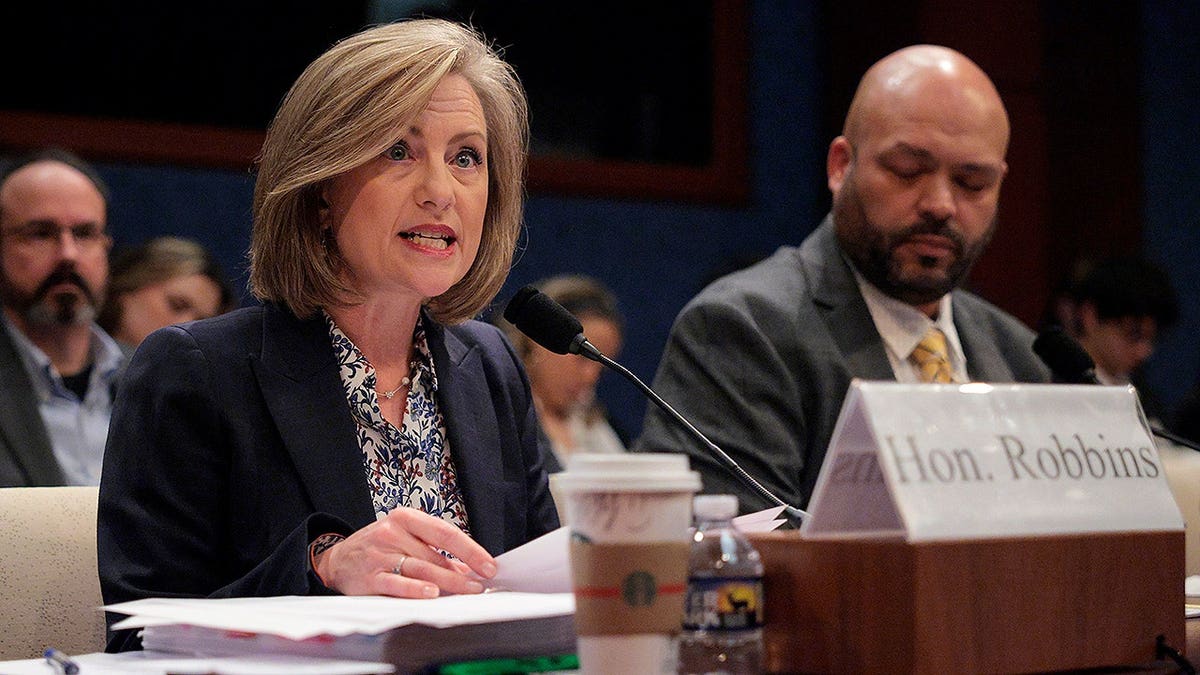
Minnesota state Rep. Kristin Robbins delivers an opening statement as she testifies alongside Minnesota State Rep. Walter Hudson during a hearing before the House Oversight and Government Reform Committee about the Trump Administration’s decision to freeze $10 billion in child care funds for families with low incomes in California, Colorado, Illinois, Minnesota and New York at the U.S. Capitol on Jan. 7, 2026, in Washington, D.C. (Chip Somodevilla/Getty Images)
«While the original Meals Act (which never passed) was more similar to universal school meals legislation Omar championed and Representative Sydney Jordan in Minnesota later shepherded, the Families First Coronavirus Response Act (supported by McConnell and signed by Trump) added waiver authority that facilitated much of the Feeding Our Future fraud,» Killian wrote. «The fraud was not committed under any bill authored by Omar, but rather under broader COVID-19 legislation and by taking advantage of USDA emergency waivers granted by the Trump administration. Those flexibilities, combined with weak oversight and rapid funding expansion, created conditions that were later exploited in the Feeding Our Future fraud scheme.»
In bold, Killian wrote that the Families First Coronavirus Response Act was not «chiefly sponsored» by Omar and «thus is grossly inaccurate to claim so» and ended the email saying that «perhaps» the committee should subpoena President Trump rather than Omar.
While the MEALS Act itself did not pass as a standalone bill, it is listed on Congress.gov as related legislation to the broader Families First Coronavirus Response Act, which became law in 2020 and included similar school meal waiver provisions. Robbins told Fox News Digital the former Omar staffer is «lying» about the impact Omar had, arguing the core purpose of the MEALS Act, expanding USDA waiver authority, was part of the broader legislation.
WHAT TO KNOW ABOUT MINNESOTA’S ‘FEEDING OUR FUTURE’ FRAUD AT THE CENTER OF TRUMP’S LATEST CRACKDOWN
«I’m talking about the MEALS Act that got incorporated in the larger coronavirus package,» Robbins explained. «In the related bills section it links to the Ilhan bill and lists it as one of the bills included in the Act, the language is identical.»
Congress.gov, the official legislative database run by the Library of Congress, lists Omar’s MEALS Act (H.R. 6187) as «related legislation» to the Families First Coronavirus Response Act (H.R. 6201).
Robbins pointed to numerous examples of Omar taking credit in messages to her constituents back in Minneapolis for the legislation that did ultimately pass and citing her MEALS Act.
WALZ ACCUSED BY JORDAN OF TRYING TO ‘HIDE BEHIND’ COURT ORDER IN FEEDING OUR FUTURE PAYMENTS
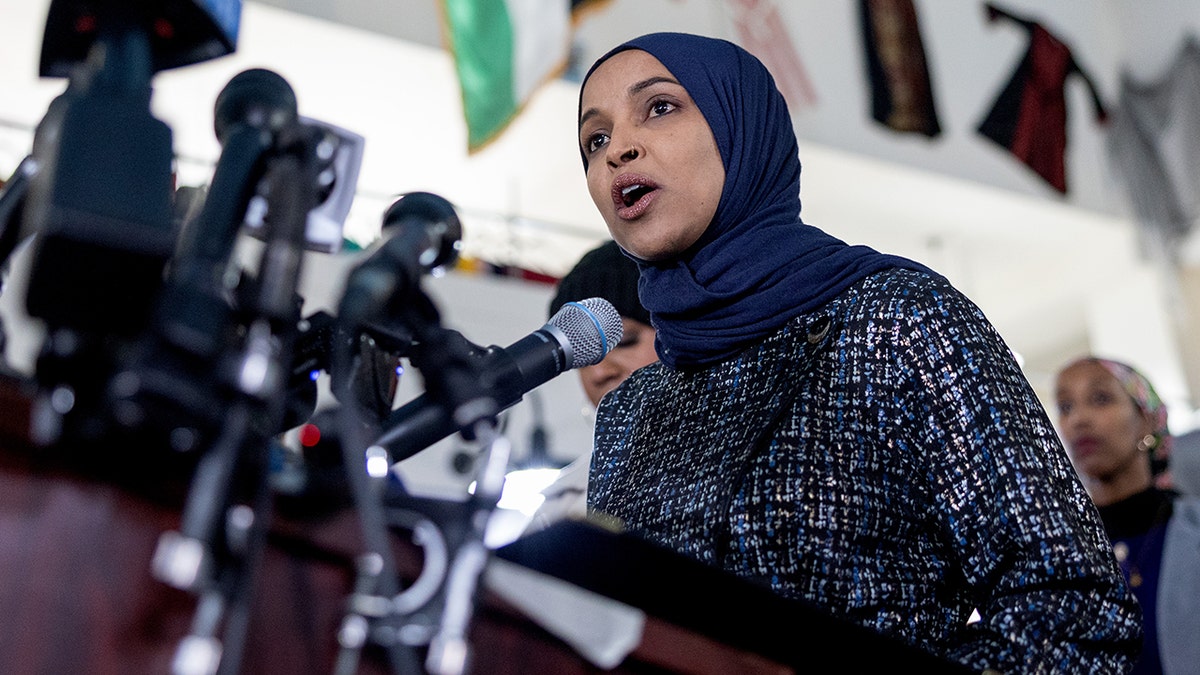
Rep. Ilhan Omar speaks at Karmel Mall in Minneapolis, Minn., on Jan. 28, 2026. (Eric Thayer / Los Angeles Times via Getty Images)
In Omar’s own September 2020 press release, she explicitly says she «passed into law this spring» the MEALS Act provisions and describes them as legislation that «directly authorized these school meal waivers.»
«Ilhan’s MEALS Act, a bill aimed at protecting students’ access to school meal benefits during school closures, was passed into law as part of the Families First Coronavirus Response Act,» Omar’s campaign website reads.
Additionally, Omar publicly pushed back after the Trump administration signaled in the summer and fall of 2020, after the legislation passed, that it would begin scaling back or letting some of the waivers expire and return programs closer to their pre-pandemic rules.
In August, she again linked the legislation she sponsored in the House to the overall situation, saying in a letter to the Trump administration, «In March, Congress authorized the use of waivers in the MEALS Act and the COVID-19 Child Nutrition Response Act in order to continue to provide school meals for children during the pandemic.»
«Absolutely not, it did help feed kids,» Omar said in December when asked if she regreted her support for the MEALS Act.
Killian’s email also directly contradicts his own words in a LinkedIn post from a year ago, reviewed by Fox News Digital, in which he characterized the significance of the legislation differently.
«When I worked in Congresswoman Ilhan Omar’s office during the pandemic, she wrote and passed the MEALS Act, a vital bill funding schools and feeding all kids,» Killian wrote.
In the same post, Killian described the bill as laying «the groundwork» for broader school meals policy, a contrast to his email to lawmakers in which he argued the legislation «never even passed» and sought to distance it from the framework later used during the pandemic.
Killian’s email to Robbins also included a P.S. with a link to the well-known Schoolhouse Rock «I’m Just a Bill» cartoon that explains to children how bills become law.
«It’s shameful,» Robbins told Fox News Digital about the tone of the email and referred to the situation as Omar’s «henchmen» coming after her.
«We have had no official response from the congresswoman, but they have a former district director, which is the most senior position, and he sent it to me and the Democrat lead on the committee,» Robbins said. «So he’s clearly wanting to have Democrats push back on me and say, ‘Robbins doesn’t know what she’s talking about, this wasn’t really Ilhan’s bill, it never passed,’ which is just BS.»
Notably, Killian’s letter does not address the specific questions the committee asked Omar in a recent letter, which the congresswoman has not responded to, related to the several connections between Omar and individuals in the Somali community charged or implicated in the case.
The committee asked Omar to turn over communications showing how she promoted expanded access to federal child nutrition programs, including emails, texts and meeting records with the Minnesota Department of Education and constituents.
The request also zeroed in on Omar’s public promotion of a Minneapolis restaurant that later became linked to the fraud scandal. Robbins cited a Somali-language TV appearance in which Omar highlighted Safari Restaurant as a meal distribution site and asked for all communications related to the video and the restaurant’s participation.
«She fought to keep the waivers in place during the time that Safari and the other fraudsters were making their money,» Robbins told Fox News Digital.
MINNESOTA’S FRAUD SCANDAL WAS ‘SHOCKINGLY EASY’ TO PULL OFF, IS LIKELY WORSE THAN REPORTED: EX PROSECUTOR
The committee is also seeking records of any contact between Omar and a long list of individuals charged or implicated in the Feeding Our Future case, including nonprofit founder Aimee Bock and dozens of alleged co-conspirators as well as information about political donations Omar received from individuals later charged in the case, requesting «any and all» communications with those donors.
In a response to Fox News Digital, Killian did not directly say whether his original email was coordinated with Rep. Omar or her office, instead describing it as his personal «perspective.» He acknowledged that «very similar language» from the MEALS Act was included in the broader coronavirus relief package that became law.
Killian also argued that responsibility for the fraud lies with those who implemented the program, placing blame on both federal and state officials, particularly Gov. Tim Walz.
MINNESOTA FRAUD COMMITTEE CHAIR CLAIMS WALZ ‘TURNED A BLIND EYE’ TO FRAUD WARNINGS FOR YEARS
«It was then overseen by the Trump USDA. And then governors like Walz. Frankly, Governor Walz…deserves the same level of scrutiny as this Fox inquiry,» Killian wrote. «At the end of the day, it was Governor Walz who [expletive] this up.»
Killian further sought to distance the legislation from the fraud itself, arguing that «no fraud took place at actual public schools» and that «the nonprofits did,» adding that «Ilhan’s bill was focused on the former.»
But the same waiver authority allowed meals to be distributed far beyond school cafeterias, including at non-school sites such as restaurants and community locations later tied to the fraud scheme, raising questions about how separate the two systems were in practice.
Killian also dismissed inconsistencies over whether the MEALS Act «passed» as a matter of «casual» or imprecise language, without directly reconciling his emailed statement that the bill «never even passed» with his prior description of Omar as having «wrote and passed» it.
Omar’s office did not respond to a request for comment from Fox News Digital.
Omar was given a deadline of May 5 to respond to the committee, which she did not meet, and has yet to give any public response.
CLICK HERE TO DOWNLOAD THE FOX NEWS APP
After Omar missed the deadline, the committee attempted to subpoena her for the, information but was blocked by Democrats on the committee in a party-line vote.
«It’s the same story every time,» Robbins posted on X after the vote. «Fraud is committed, information is suppressed, and the dysfunction continues.»
somali immigrant community, ilhan omar, minnesota fraud exposed, bills, dept of education












INTERNACIONAL
Una empresaria fingió durante años que su hija era su hermana y terminó acusada de asesinarla: el caso que conmocionó a India

Durante años, nadie puso en duda la historia que contaba Indrani Mukerjea. Era empresaria, figura conocida del ambiente mediático de India y siempre estaba presente en los eventos más exclusivos de Mumbai. Ella aseguraba que dos jóvenes que la acompañaban con frecuencia eran sus hermanos menores.
Entre ellos estaba Sheena Bora, una mujer de 24 años a quien presentaba públicamente como su hermana, aunque en realidad era su hija biológica.
En 2012, Sheena desapareció sin dejar rastros. Su entorno comenzó a buscarla, pero la explicación que recibían siempre era la misma: se había ido por decisión propia, quería empezar una nueva vida y no deseaba mantener contacto con nadie.
Durante más de tres años, esa versión fue aceptada por familiares, amigos e incluso por las autoridades. Sin embargo, en 2015 una confesión inesperada destapó uno de los casos criminales más impactantes de India y convirtió a Indrani Mukerjea en la principal acusada por el asesinato de su propia hija. Indrani Mukerjea junto a Sheena Bora, su hija, aunque ella la presentaba públicamente como su hermana. (Foto: The Indian Express)
Antes de que el caso ocupara las portadas de todos los medios, Indrani Mukerjea era considerada una mujer exitosa. Había nacido en el estado de Assam y, tras mudarse a Mumbai, construyó una carrera vinculada al mundo de los negocios y los medios de comunicación.
Su vida cambió cuando se casó con Peter Mukerjea, uno de los ejecutivos más influyentes de la televisión india. Juntos formaban una de las parejas más conocidas de la alta sociedad del país y frecuentaban empresarios, celebridades y dirigentes políticos. Sin embargo, detrás de esa imagen de éxito existía un secreto que muy pocas personas conocían.
Cuando era muy joven, Indrani había tenido dos hijos: Sheena Bora y Mikhail Bora. Según la investigación, durante años decidió ocultar ese vínculo y comenzó a presentarlos como sus hermanos menores. La versión fue aceptada por gran parte de su círculo social y se mantuvo durante décadas.

Indrani se casó con Peter Mukerjea, uno de los ejecutivos más importantes de la televisión india. (Foto: Hindustan Times)
Sheena creció creyendo que debía guardar ese secreto. Mientras construía su propia vida en Mumbai, trabajaba en una empresa y mantenía una relación con Rahul Mukerjea, hijo de Peter de un matrimonio anterior.
Ese noviazgo generó fuertes conflictos dentro de la familia. Mientras Rahul y Sheena sostenían que querían formalizar la relación, Indrani se oponía rotundamente. De acuerdo con la acusación, la posibilidad de que saliera a la luz que Sheena era en realidad su hija podía derrumbar la imagen que había construido durante años.
La desaparición
El 24 de abril de 2012 fue la última vez que Sheena Bora fue vista con vida. Según la reconstrucción realizada por la fiscalía, ese día la joven se reunió con Indrani después de recibir una invitación para cenar. Horas más tarde dejó de contestar mensajes y llamadas.
En los días siguientes comenzaron a llegar correos electrónicos y mensajes desde las cuentas de Sheena. En ellos aseguraba que había decidido mudarse, terminar su relación con Rahul y alejarse definitivamente de todos. Pero su novio nunca creyó esa explicación.
El hombre insistió durante meses en que algo extraño había pasado, ya que el contenido de los mensajes no coincidía con la forma habitual de escribir de su pareja. También sostuvo que nadie había podido volver a verla personalmente. Sheena Bora junto a su novio, Rahul Mukerjea. (Foto: The Hindu)
A pesar de sus sospechas, la desaparición no avanzó demasiado. La versión de que Sheena se había marchado voluntariamente terminó imponiéndose y el caso quedó prácticamente olvidado.
La confesión
Todo cambió en agosto de 2015, cuando la policía detuvo a Shyamvar Rai, el chofer que había trabajado para la familia Mukerjea. Inicialmente fue arrestado por otro hecho, pero durante su indagatoria realizó una confesión inesperada.
Según declaró, había participado del asesinato de Sheena Bora junto con Indrani Mukerjea y su entonces esposo, Sanjeev Khanna.
De acuerdo con su relato, aquella noche Sheena fue drogada y posteriormente estrangulada dentro de un auto. Después, el cuerpo fue trasladado hasta una zona boscosa del distrito de Raigad, a varios kilómetros de Mumbai, donde fue incendiado para intentar eliminar cualquier evidencia.

El momento de la detención del chofer cuyo testimonio provocó un giro en la investigación. (Foto: Hindustan Times)
Los investigadores comprobaron que en 2012 se habían encontrado restos óseos calcinados en ese mismo lugar, aunque en ese momento nunca habían podido ser identificados correctamente.
Tras la confesión del chofer, esos restos fueron sometidos nuevamente a distintos estudios y pasaron a ser considerados una pieza clave de la investigación.
Pocos días después de la confesión de Shyamvar Rai, Indrani Mukerjea fue detenida y acusada formalmente por homicidio, secuestro, destrucción de pruebas y conspiración criminal.
También fueron arrestados Sanjeev Khanna, segundo esposo de Indrani y señalado como uno de los participantes del crimen, y posteriormente Peter Mukerjea, acusado por los investigadores de haber tenido conocimiento del plan. Sin embargo, años después Peter obtuvo la libertad cuando la Justicia consideró que no existían pruebas suficientes para mantenerlo detenido mientras continúa el proceso.
Un juicio que todavía no terminó
La principal hipótesis sostiene que Indrani buscaba impedir que se conociera públicamente que Sheena era su hija biológica y no su hermana, un secreto que había mantenido durante años y que podía afectar tanto su imagen pública como su vida personal.
Los investigadores también analizaron posibles conflictos económicos y disputas familiares, además del rechazo que Indrani tenía hacia la relación entre Sheena y Rahul Mukerjea.

Mukerjea fue imputada por el homicidio de su hija Sheena Bora. (Foto: India TV News)
Para la fiscalía, el crimen fue cuidadosamente planificado y tuvo como objetivo silenciar definitivamente a la joven antes de que revelara la verdad sobre su vínculo familiar.
La defensa de Indrani, en cambio, negó desde el comienzo todas las acusaciones y sostuvo que las pruebas presentadas por la fiscalía no alcanzan para demostrar su responsabilidad.
Leé también: La asesinaron mientras caminaba con su hijo de dos años: el verdadero culpable fue identificado más de una década después
Desde su detención en 2015, el expediente avanzó lentamente debido a la gran cantidad de testigos y pruebas incorporadas a la causa.
En 2022, luego de pasar más de seis años en prisión preventiva, la Corte Suprema de la India le concedió la libertad bajo fianza al considerar que el juicio todavía estaba lejos de finalizar.
La decisión no implicó una absolución ni modificó los cargos en su contra. Indrani continúa imputada por el asesinato de Sheena Bora y debe presentarse ante la Justicia mientras sigue el proceso judicial.
India, desaparicion, Asesinato, Sumario
INTERNACIONAL
‘America and the world have lost a determined leader’: Tributes pour in after Sen Lindsey Graham’s death

NEWYou can now listen to Fox News articles!
Tributes poured in Sunday from President Donald Trump, congressional leaders and foreign allies after Sen. Lindsey Graham, R-S.C., died at 71 following what his office described as a «brief and sudden illness,» bringing to an end the career of one of the Senate’s most influential Republican voices.
The South Carolina Republican had served in the Senate since 2003 and became one of the GOP’s leading voices on national security and foreign policy. Once a sharp critic of Trump during the 2016 presidential campaign, Graham later emerged as one of the president’s closest allies while maintaining a prominent role on issues ranging from judicial confirmations to Ukraine, Israel and Iran.
Trump wrote on Truth Social that Graham «was always working,» and called the Palmetto State senator «a true American Patriot.»
«Lindsey will be greatly missed!!!» Trump wrote. «So sad!»
SEN. LINDSEY GRAHAM DEAD AT 71 AFTER ‘BRIEF AND SUDDEN’ ILLNESS, OFFICE SAYS
U.S. President Donald Trump (R) and U.S. Sen. Lindsey Graham (R-SC) speak to the media aboard Air Force One enroute to Washington, DC on January 04, 2026. (Joe Raedle/Getty Images)
South Carolina Governor Henry McMaster called Graham «irreplaceable» and the «fiercest of fighters for South Carolina and America.» Per South Carolina law, McMaster will appoint a temporary replacement for Graham, who was seeking a fifth term in November.
Senate Majority Leader John Thune, R-S.D., said his «heart is heavy» following Graham’s death, calling him a trusted adviser whose influence «on the federal judiciary, our national defense, and his beloved South Carolina will be felt for generations.»
Thune praised Graham as a tireless advocate for the United States and its allies, saying he believed in «the might of America to achieve good in the world» and spent his career advancing that cause.
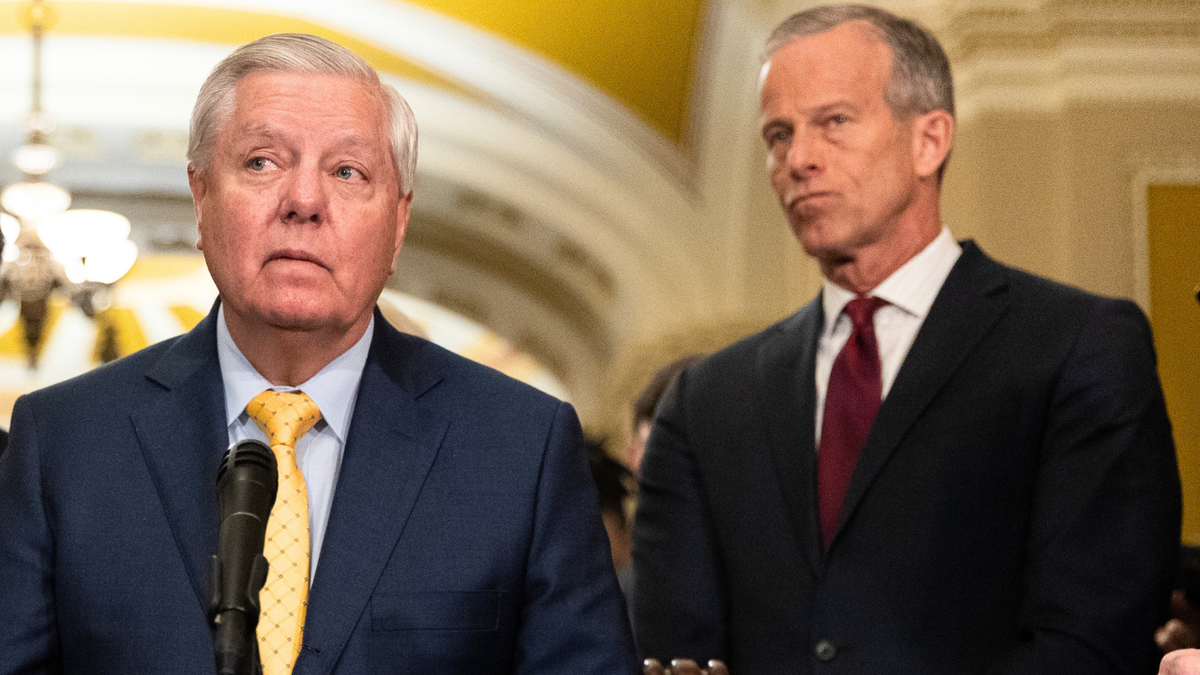
Senate Majority Leader John Thune, R-S.D., wrote on X that Graham spent his career advancing America’s interests and believed in «the might of America to achieve good in the world.» (Nathan Posner/Anadolu/Getty Images)
United States UN Amb. Mike Waltz remembered Graham not only as a senator, but as a fellow military officer. Waltz said he first met Graham when he was serving as a colonel in the Air National Guard, recalling that Graham spent his annual training deployments in Afghanistan helping train Afghan Army Judge Advocate General officers.
Waltz also praised Graham’s commitment to the U.S. military and foreign policy, saying no member of Congress traveled more extensively «from Libya to Lebanon» to meet with American troops and bring «ground truth back to legislating.»
«Rest easy, Patriot,» he wrote on X.
Graham’s death also prompted tributes from across the aisle. Sen. John Fetterman, D-Pa., remembered his Republican colleague as «kind, gracious, and thoughtful,» and an expert on foreign policy.
«Sudden and awful news about Senator Lindsey Graham,» Fetterman wrote. «The United States Senate lost a foreign policy giant.»
The outpouring of tributes quickly spread beyond Washington, with world leaders remembering Graham as one of America’s most influential voices on national security and foreign affairs.
CHAD PERGRAM BREAKS DOWN WHAT’S NEXT FOR GOP AFTER GRAHAM’S DEATH
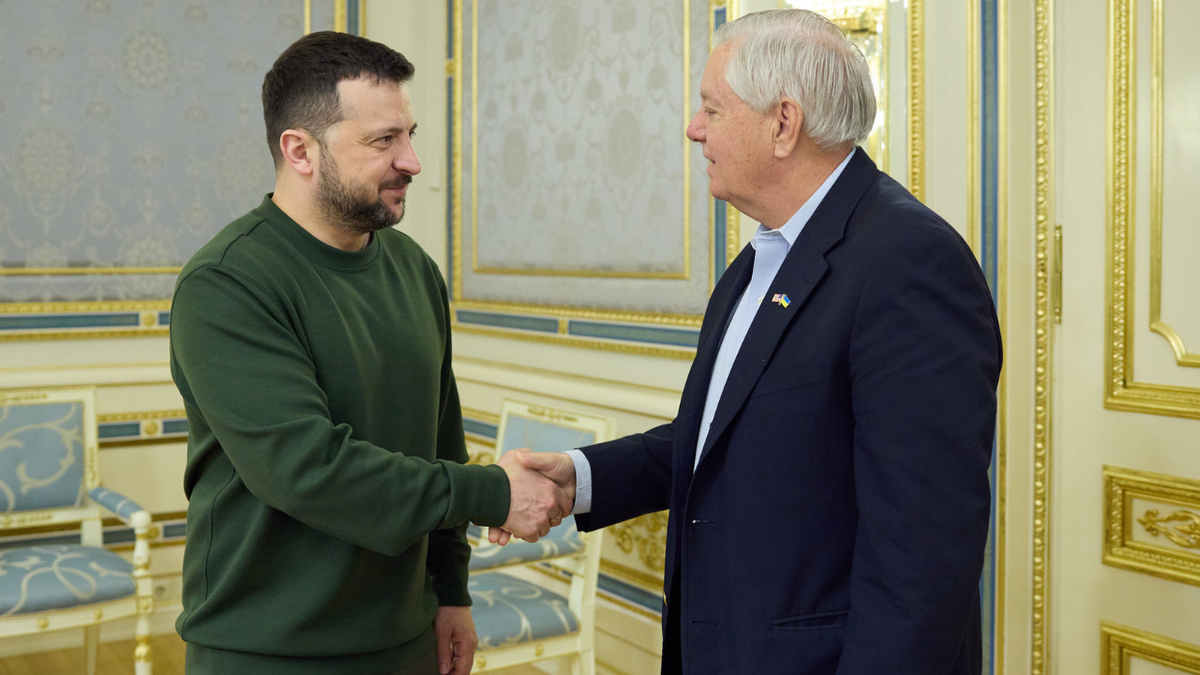
Ukrainian President Volodymyr Zelenskyy said Graham had visited Ukraine 10 times since the full-scale Russian invasion. (Ukrainian Presidency/Anadolu/Getty Images)
In one of his final overseas trips, Graham met with Ukrainian President Volodymyr Zelenskyy last week. The visit marked his 10th trip to Ukraine since Russia’s full-scale invasion, where the two, according to readouts of the meeting, discussed tougher sanctions on Russia and the country’s air defense needs.
After Graham’s death, Zelenskyy posted on X, calling him «a true defender of freedom» who stood with Ukraine «when it was most needed.» He said Graham’s bipartisan work to increase pressure on Moscow helped bring «peace closer,» adding, «America and the world have lost a determined leader.»
Other European leaders echoed those sentiments.
NATO Secretary-General Mark Rutte described Graham as «a powerful advocate for America who believed strongly in the NATO Alliance and was actively working to bring an end to Russia’s war against Ukraine.» Former NATO Secretary-General Jens Stoltenberg praised his «tireless commitment» to NATO and the trans-Atlantic bond, as well as his «staunch support» for Ukraine.
German Chancellor Friedrich Merz said Graham was «a true friend and partner of Germany in the transatlantic alliance. We stood side by side for more than four decades.»
SIGN UP TO GET THE POLITICS NEWSLETTER
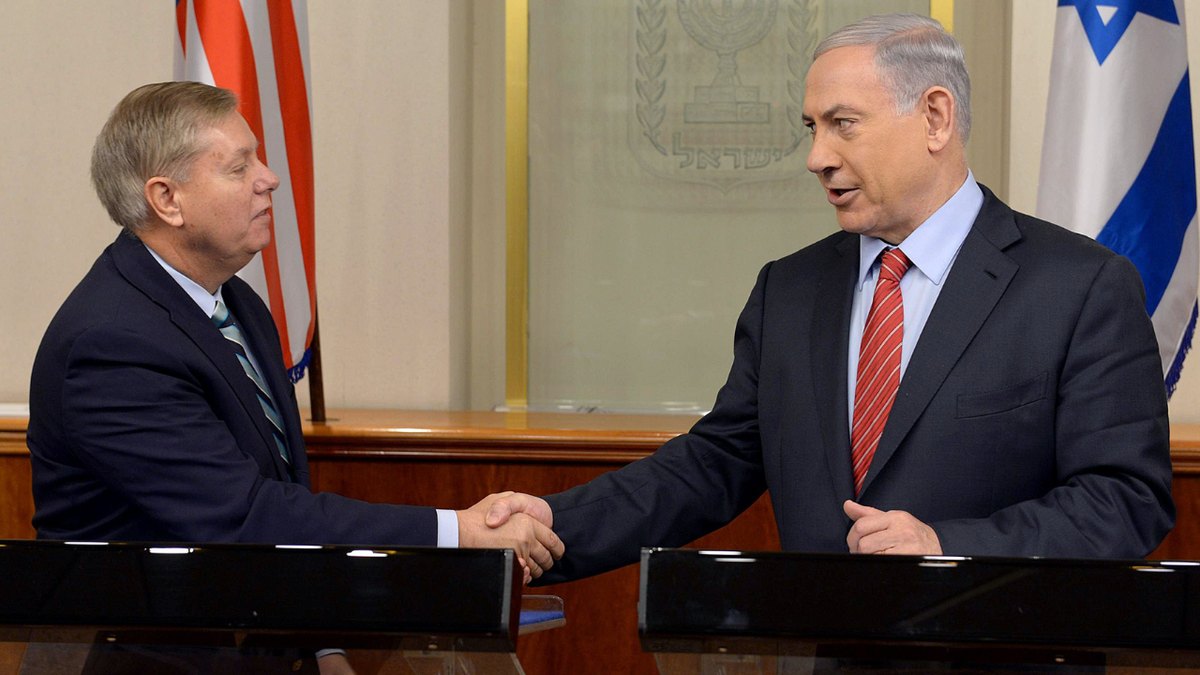
Israeli Prime Minister Benjamin Netanyahu called Graham «a great friend of Israel» and said he devoted his life to strengthening the U.S.-Israel alliance. (Israeli Prime Ministry Press Office/Anadolu Agency/Getty Images)
The tributes extended to the Middle East as well, where Graham was remembered as one of Israel’s strongest allies in Washington.
Israeli Prime Minister Benjamin Netanyahu called him «a great friend of Israel» and «a cherished friend of mine,» saying Graham understood that the security of Israel and the United States «is inseparable» and devoted his life to strengthening the alliance between the two countries.
«Israel has lost one of its greatest friends. America has lost a great patriot. I have lost a beloved friend,» Netanyahu said.
CLICK HERE TO DOWNLOAD THE FOX NEWS APP
Former Israeli Ambassador to the United States Michael Oren told The Associated Press that Graham’s death leaves Congress without one of its most steadfast pro-Israel voices at a particularly precarious moment.
«You have a few Democrats and Republicans willing to stand up in Israel’s defense, but those type of people are few, it’s not a body of people,» he said. «So when you lose someone like Lindsey Graham, it’s a diplomatic and strategic loss for the state of Israel.»
lindsey graham, politics, senate elections, republicans elections, south carolina

Chéjov legisló para todos los teatros del mundo menos uno. Si en el primer acto hay un rifle colgado en la pared, decía, en el tercero tiene que disparar: la economía dramática exige que el arma se justifique, que su presencia sea una promesa y no un adorno. La regla presupone algo que en los Estados Unidos nunca fue cierto: que el arma sea una excepción, un objeto que la trama debe explicar. En la literatura norteamericana el rifle no necesita colgarse en el primer acto porque ya estaba ahí antes de que se levantara el telón; antes del teatro, incluso antes del país. No es utilería: es la escenografía misma.
Entender la diferencia entre el arma como recurso narrativo y el arma como atmósfera es entender buena parte de la historia literaria de los Estados Unidos, y de paso su presente político, que sigue discutiendo en 2026 lo que no pudo resolver ni después de Columbine, ni después de Sandy Hook, ni después de Uvalde; ni para el caso el intento de magnicidio de Trump o el asesinato de Charlie Kirk, o Kennedy, o John Lennon.
En los Estados Unidos circulan más armas de fuego que personas: alrededor de ciento veinte por cada cien habitantes según el Small Arms Survey, una proporción que duplica a la del segundo país de la lista, Yemen, un país en guerra. Apenas dos o tres constituciones en el mundo reconocen algún derecho a la tenencia de armas; ninguna le da la centralidad casi litúrgica de la Segunda Enmienda, ratificada en 1791 y reinterpretada en 2008, cuando la Corte Suprema decidió en District of Columbia v. Heller que aquella frase sobre las milicias bien organizadas protegía en realidad un derecho individual.

Esa cultura no nació de la caza ni del deporte ni siquiera de la desconfianza jeffersoniana hacia el poder central, aunque todas esas cosas la adornaron después. Nació de dos empresas de despojo. Hacia el oeste, el arma fue el instrumento de la conquista territorial y del exterminio indígena; hacia adentro, fue la herramienta de las patrullas esclavistas, las milicias blancas que recorrían los caminos del sur cazando fugitivos. Las diversas teorías que intentan comprender esta cultura plantean que la Segunda Enmienda se redactó, en parte decisiva, para garantizar a los estados sureños el derecho a mantener armadas esas patrullas; como el residuo jurídico de la colonización: el ciudadano armado original no se defendía de un tirano sino que perseguía a un esclavo o desalojaba a un indio. Un eslogan publicitario de la época dorada del revólver lo dijo sin querer: “Lincoln liberó a los hombres, pero fue Sam Colt quien los hizo iguales”. El relato fundacional norteamericano es el del hombre blanco que se interna en la tierra salvaje, mata, y regresa purificado y renacido. No redimido a pesar de la violencia: redimido por ella. El arma no es un accesorio de ese relato; es la imagen de un rito sagrado.
Emily Dickinson casi no salió de su casa y jamás publicó en vida más que un puñado de poemas, buscó una figura para decir su propia vida, encontró esto: “Mi vida había sido un arma cargada”, arrinconada, hasta que el dueño pasó y la reconoció. Se ha leído ese poema como alegoría de la ira femenina, de la vocación poética, de la potencia sin destinatario; lo que importa aquí es más simple y más inquietante: en la América de 1863, hasta la interioridad de una mujer enclaustrada se pensaba a sí misma con la gramática del fusil. El arma no era un tema; era un idioma.

Las aventuras de Huckleberry Finn
eBook
En Huckleberry Finn Mark Twain cuenta la disputa entre los Grangerford y los Shepherdson, dos familias aristocráticas que se matan entre sí desde hace tanto tiempo que nadie recuerda el motivo, y que asisten juntas a la iglesia con los rifles entre las rodillas para escuchar un sermón sobre el amor fraterno. Huck anota que todos elogiaron la prédica. Unas páginas más adelante, el coronel Sherburn mata a un borracho inofensivo en plena calle y luego, solo con su escopeta, humilla desde el porche a la turba que venía a lincharlo, con un discurso sobre la cobardía del hombre promedio. Twain entendió las dos caras del asunto: el honor armado como farsa sangrienta, y el arma como la única oratoria que en ciertos lugares garantiza ser escuchada.
Con Hemingway el arma dejó de ser tema y se volvió estética. No es una metáfora fácil: la famosa economía de su prosa, la frase corta, el adjetivo suprimido, la teoría del iceberg, se formó en el mismo molde que su ética de cazador, expuesta sin pudor en Las verdes colinas de África: el tiro limpio, único, sin desperdicio, que mata bien. Escribir una frase y disparar un rifle eran para él disciplinas hermanas. Toda una generación de narradores norteamericanos aprendió a escribir así, lo que significa que aprendió, aunque no lo supiera, a escribir como se dispara.
Pero en Hemingway el arma es también, y sobre todo, una herencia, en el sentido más literal y más siniestro. Su padre, Clarence, médico de Oak Park, se mató en 1928 con un revólver que había pertenecido al abuelo; la madre le envió después el arma a Ernest por correo. Él escribió el duelo oblicuamente en Padres e hijos uno de los cuentos de Nick Adams, y pasó las tres décadas siguientes rodeado de escopetas, hasta la madrugada del 2 de julio de 1961 en Ketchum, Idaho. Habría que resistir la tentación de leer esa muerte como símbolo, porque fue antes que nada una enfermedad y una tragedia familiar que siguió cobrando, su hermana, su hermano, su nieta Margaux; pero sería deshonesto no anotar que la estadística lo acompaña: más de la mitad de las muertes por arma de fuego en los Estados Unidos no son homicidios sino suicidios, el costado del problema del que la épica no habla nunca.

Faulkner ofreció el rito contrario. En El oso, la nouvelle central de Desciende, Moisés (1942), el joven Ike McCaslin quiere ver al oso legendario del bosque grande, y no lo consigue hasta que comprende que debe desprenderse de todo: deja el rifle, después el reloj, después la brújula, y solo entonces, desnudo de técnica, el oso se le aparece. Y Faulkner la lleva hasta el final, porque Ike, años después, renuncia también a la plantación que le corresponde por herencia, al descubrir en los libros de contabilidad de la familia el incesto y la esclavitud que la fundaron. El rifle y la escritura de propiedad son, en Desciende, Moisés, la misma herencia envenenada. Ningún escritor norteamericano vio con tanta claridad que el arma del sur no apuntaba al bosque sino al pasado.
En su cuento Un buen hombre es difícil de encontrar (1953) Flannery O’Connor nos presenta a una abuela charlatana y egoísta que alcanza su único instante de gracia cuando reconoce al asesino con tres balas de por medio, y el inadaptado pronuncia entonces su veredicto atroz: “habría sido una buena mujer si hubiera tenido a alguien que le disparara cada minuto de su vida”. O’Connor explicó su método: para los duros de oído hay que gritar, y para los casi ciegos hay que dibujar figuras grandes y grotescas. En su ficción el revólver es el megáfono de Dios, el único instrumento capaz de perforar la sordera espiritual de un país lleno de sí mismo. Y tal vez sea por eso que sus cuentos siguen incomodando: sugieren que en la imaginación norteamericana ni siquiera la gracia encuentra otro vehículo que el cañón de un arma.

Y después está Cormac McCarthy. Meridiano de sangre (1985) toma la materia histórica de la expansión hacia el oeste y la devuelve a su verdad documental: la pandilla de Glanton, cazadores de cabelleras a sueldo de los gobernadores de Chihuahua y Sonora, matando indígenas por dinero y, cuando escasean, mexicanos cuyas cabelleras se les parezcan. No hay duelo al atardecer, no hay código, no hay pueblo mirando detrás de las ventanas; hay comercio. Veinte años más tarde, en No es país para viejos (2005), McCarthy remató la operación con un detalle de una crueldad perfecta: su asesino, Anton Chigurh, mata con una pistola de aire comprimido para aturdir ganado, la herramienta de los mataderos. Le niega al verdugo hasta la dignidad del revólver; las víctimas mueren como reses. Y alrededor de Chigurh, la novela despliega el paisaje real del Texas contemporáneo: todo el mundo está armado: el cazador Moss con su rifle de francotirador, los narcos con sus ametralladoras, los rancheros, los policías, y ese arsenal universal no salva absolutamente a nadie.

Charlton Heston, en la convención de la NRA del año 2000, levantó un rifle sobre su cabeza y desafió a quitárselo “de sus manos frías y muertas”. La frase se volvió consigna porque condensa el mito entero: el arma como parte del cuerpo, inseparable de la vida misma del hombre libre. Chéjov, otra vez, no sirve aquí; su regla suponía que el rifle podía descolgarse de la pared. En los Estados Unidos el tercer acto llega todos los días y el rifle sigue colgado, o mejor dicho empuñado, fundido a la mano que lo sostiene.
Lo mejor de la literatura norteamericana lleva doscientos años haciendo el trabajo lento y probablemente inútil que su política no intenta: abrir esos dedos, uno por uno, para mirar qué es lo que la mano tiene tanto miedo de soltar.
armas,armas de fuego,municiones,Estados Unidos,bandera americana,rifle,escopeta,pistola,derecho a portar armas,seguridad

La deuda pública entre 2001-2027

“De los mayores escándalos en la historia”: las reacciones en Noruega por el polémico gol en el triunfo de Inglaterra en el Mundial

Una empresaria fingió durante años que su hija era su hermana y terminó acusada de asesinarla: el caso que conmocionó a India

De la euforia de Milei a las críticas al jugador de Suiza que simuló una falta: las reacciones en el Gobierno tras la victoria de Argentina

‘America and the world have lost a determined leader’: Tributes pour in after Sen Lindsey Graham’s death

Clint Eastwood, sobre el papel más legendario que rechazó: "Me ofrecieron bastante dinero, pero era el trabajo de otro"

El boom del oro: cuánto paga el Banco Ciudad por el gramo, las trampas de los quilates

Contundente respaldo de la FIFA tras las críticas a los árbitros de Argentina-Egipto: “Las acusaciones infundadas no tienen cabida”

Boca Juniors tiene cerrado a su segundo refuerzo: viene de disputar la Copa del Mundo con su selección

Operativo reelección: la situación política y financiera de los 13 mandatarios que negocian una alianza con Milei

 POLITICA2 días ago
Hackearon a la AFA y enviaron correos con falsas denuncias sobre el arbitraje ante Egipto
- DEPORTE9 horas ago
“Hablame bien”: el tenso cruce de Lionel Messi con el árbitro en la victoria de Argentina ante Suiza en el Mundial
- INTERNACIONAL3 días ago
‘Preaching as resistance’: Dem minister behind Satanist wedding now linked to anti-Trump sermon guide