
INTERNACIONAL
Laura Fernández hará historia este viernes: será la segunda mujer en asumir la Presidencia de Costa Rica

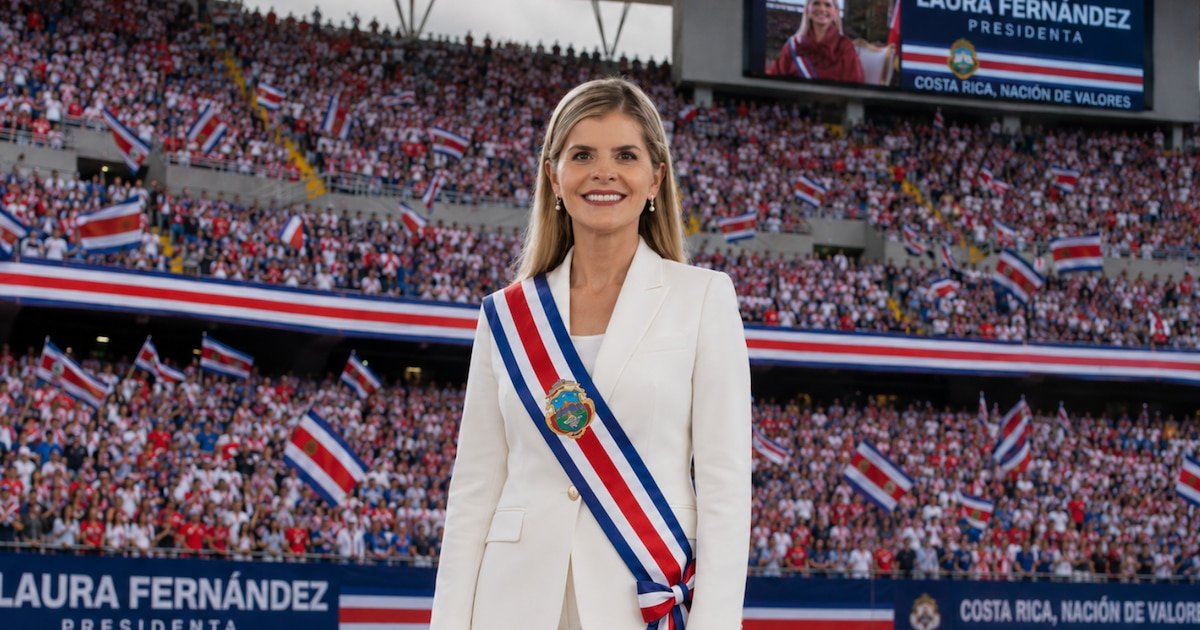
La exministra asumirá el liderazgo del país en medio de expectativa política y un hecho histórico para la representación femenina en el país centroamericano
Laura Virginia Fernández Delgado asumirá este viernes la presidencia de Costa Rica después de haber ganado las elecciones del país centroamericano con el apoyo del 48% de los votantes en febrero pasado. La politóloga de 39 años recibirá la banda presidencial de Rodrigo Chaves, a quien ella considera su ejemplo a seguir y uno de los responsables de querer tomar las riendas del país y darle al pueblo la “continuidad”.
El traspaso de poderes se llevará a cabo en el Estadio Nacional, donde según la organización, se vivirá una fiesta democrática. Presidentes, jefes de estado, ministros y embajadores acompañarán a Fernández, en uno de los momentos más importantes de su vida personal y profesional.

La llegada de Fernández a Casa Presidencial marca un hecho histórico para la nación, ya que, será la segunda ocasión en que una mujer encabece el Poder Ejecutivo. Además, la exministra de presidencia y de planificación económica se convierte en la presidente número 50 para Costa Rica.
El Estadio Nacional de Costa Rica ya recibe a los asistentes para el Traspaso de Poderes
El Estadio Nacional de Costa Rica ya abrió sus puertas para el traspaso de mando de este 8 de mayo. Las personas comienzan a ingresar al recinto para ser parte de este acto oficial, cuya ceremonia está prevista para iniciar a las 11:00 a.m. (hora de Costa Rica).

Rodrigo Chaves se despidió de la presidencia de Costa Rica entre lágrimas, mariachis y ovaciones: “No se deshicieron de mí”
El mandatario cerró su última conferencia de prensa convertido en un acto político y emocional en Casa Presidencial, rodeado de ministros, diputados oficialistas, policías, pescadores, indígenas, educadores y simpatizantes
Seguir en

El presidente de Costa Rica, Rodrigo Chaves Robles, convirtió su última conferencia de prensa en Casa Presidencial en una despedida cargada de simbolismo político, homenajes, lágrimas, música y mensajes dirigidos tanto a sus aliados como a sus adversarios.
El presidente de Panamá, José Raúl Molino, arriba a Costa Rica para participar en la toma de posesión de Laura Fernández
José Raúl Molino, presidente de Panamá, llega a Base 2 del Aeropuerto Juan Santamaría para participar del traspaso de poderes. Con su llegada se cierran las invitaciones internacionales.

Líderes y delegaciones de 71 países llegan a Costa Rica para el traspaso de mando presidencial
Representantes de alto nivel, incluidos el Rey Felipe VI de España y varios presidentes latinoamericanos, arribaron a Costa Rica para asistir a la ceremonia en la que Laura Fernández asumirá la presidencia, en un evento que reúne a delegaciones de 71 países y 18 organismos internacionales en el Estadio Nacional de San José.
Seguir en
Laura Fernández asumirá la presidencia de Costa Rica este 8 de mayo para el periodo 2026-2030, convirtiéndose en la segunda mujer en ocupar el cargo en la historia del país. La ceremonia, que se realizará en el Estadio Nacional de San José, reunirá delegaciones de 71 países y 18 organismos internacionales. Entre los asistentes destacados figuran el Rey Felipe VI de España y los presidentes de Guatemala, Honduras, Panamá, Chile, Israel y República Dominicana. Christopher Landau, vicesecretario de Estado de EE.UU., encabezará la delegación estadounidense y mantendrá encuentros con la nueva mandataria.
Simpatizantes de Laura Fernández empiezan a llegar al Estadio Nacional para participar del traspaso de poderes

A una hora de que inicien las actividades culturales previas al acto oficial del traspaso de poderes en Costa Rica, los costarricenses empiezan a llegar a las afueras del Estadio Nacional para participar del hecho histórico en que Laura Fernández se convierta en la segunda presidenta de la nación.
laura fernandez,costa rica,presidencia costa rica,rodrigo chavez,evento presidencial











INTERNACIONAL
La Premier League vive una revolución en los bancos: quiénes resisten en medio del recambio

La Premier League cierra el mercado de técnicos con una plantilla de banquillos completamente renovada. Mikel Arteta es el único superviviente de una era que ya parece lejana: el entrenador del Arsenal acumula más de seis años al frente de su club, una cifra que en el contexto actual resulta casi inverosímil.
Según informó Sports Illustrated, durante la temporada 2025-26 se registraron 11 cambios de técnico en la máxima categoría inglesa, con Nottingham Forest, Chelsea y Tottenham Hotspur entre los clubes que recurrieron a más de un reemplazante a lo largo del mismo curso.
La agitación no se detuvo con el pitido final. El verano de 2026 trajo consigo una nueva oleada de movimientos que transformó por completo el paisaje de los banquillos. Más de la mitad de los 20 clubes de la Premier League afrontarán la temporada 2026-27 con un técnico que lleva menos de dos meses en el cargo.
De acuerdo con Sports Illustrated, nueve entrenadores debutarán oficialmente con sus respectivos clubes en la primera jornada del campeonato, un récord absoluto en la historia de la competición.
El caso más llamativo entre los recién llegados es el de Xabi Alonso, quien asumió la dirección técnica de Chelsea el 1 de julio de 2026 tras su exitoso paso por el Bayer Leverkusen. En esa misma semana, Andoni Iraola —hasta entonces técnico del Bournemouth— firmó con Liverpool, mientras que Enzo Maresca dejó Chelsea para ocupar el banco del Manchester City, vacante tras la salida de Pep Guardiola después de una década en el club. Oliver Glasner tomó el mando en Nottingham Forest y Álvaro Arbeloa, exdefensa del Real Madrid y técnico sin fortuna en la misma institución madrileña, aterrizó en el Fulham el 7 de julio, la incorporación más reciente del mercado.
Otros nombramientos relevantes incluyen a Marco Rose en el Bournemouth (1 de junio), a Pierre Sage en el Crystal Palace (15 de junio) y a Gary O’Neil en el Ipswich Town (23 de junio). La única plaza vacante al cierre de este listado es la del Newcastle United, que todavía no anunció al sucesor de Eddie Howe. El medio especializado apuntó que Matthias Jaissle aparece como el candidato favorito para ocupar ese puesto.
En el tramo opuesto de la tabla figuran técnicos con mayor recorrido, pero incluso ellos representan la excepción. Michael Carrick, designado interino en el Manchester United en enero de 2026 y ratificado de forma permanente en mayo, ya figura en el top 10 con apenas 198 días en el cargo. Roberto De Zerbi, contratado por el Tottenham Hotspur en marzo, acumula 121 días. Sports Illustrated describió el dato de Carrick como “sorprendente” dentro de un panorama técnico que cambia a un ritmo sin pausa.
A continuación, el listado completo de los técnicos en activo de la Premier League, ordenados según su antigüedad al frente de cada club:
Contratado el 22 de diciembre de 2019, el técnico español es el más longevo de la división. También el más veterano de las cuatro categorías del fútbol profesional inglés. Bajo su gestión, el Arsenal conquistó la Premier League 2025-26, el primer título liguero del club en 22 años.
El técnico vasco asumió el banquillo del Aston Villa el 1 de noviembre de 2022. Con él, el club de Birmingham consolidó su regreso a la élite europea. Curiosamente, Emery ya había dirigido al Arsenal antes de que Arteta lo relevara en el cargo.
El técnico alemán llegó a Leeds United el 4 de julio de 2023. Su permanencia al frente del equipo incluyó el ascenso del club a la Premier League, donde ahora afronta una nueva temporada.
Régis Le Bris — Sunderland — 2 años y 1 mes
Incorporado el 1 de julio de 2024, el técnico francés condujo al Sunderland hasta la primera división inglesa y mantiene el cargo para la campaña 2026-27.
Fabian Hürzeler — Brighton & Hove Albion — 2 años y 1 mes
Nombrado el 2 de julio de 2024, el joven entrenador alemán continúa al frente del proyecto del Brighton, uno de los clubes más activos en el desarrollo de perfiles técnicos sin experiencia previa en la élite.

O’Neil llegó al Ipswich Town el 23 de junio de 2026 para dirigir al club en su segunda temporada consecutiva en la máxima categoría del fútbol inglés.
El italiano, extécnico del Chelsea, fue anunciado como nuevo entrenador del Manchester City el 29 de junio de 2026, con la misión de reconstruir al equipo tras la salida de Pep Guardiola.
El excentrocampista español asumió el banco del Chelsea el 1 de julio de 2026, su segundo cargo como entrenador tras su etapa en el Bayer Leverkusen.
El austríaco tomó las riendas del Nottingham Forest el 6 de julio de 2026, en la tercera contratación del club en lo que va de temporada.
El exdefensa del Real Madrid fue presentado como técnico del Fulham el 7 de julio de 2026, la última incorporación confirmada antes del inicio de la temporada.
optaUUID:57mwrh5wr8gy7obpu0kjmstg4,optaMatchId:2562269,sportradarID:sr:sport_event:61301275,Europe,Soccer,Sport
INTERNACIONAL
Top Trump ally warns super PAC bankrolled by Dem billionaire is meddling in his GOP primary
NEWYou can now listen to Fox News articles!
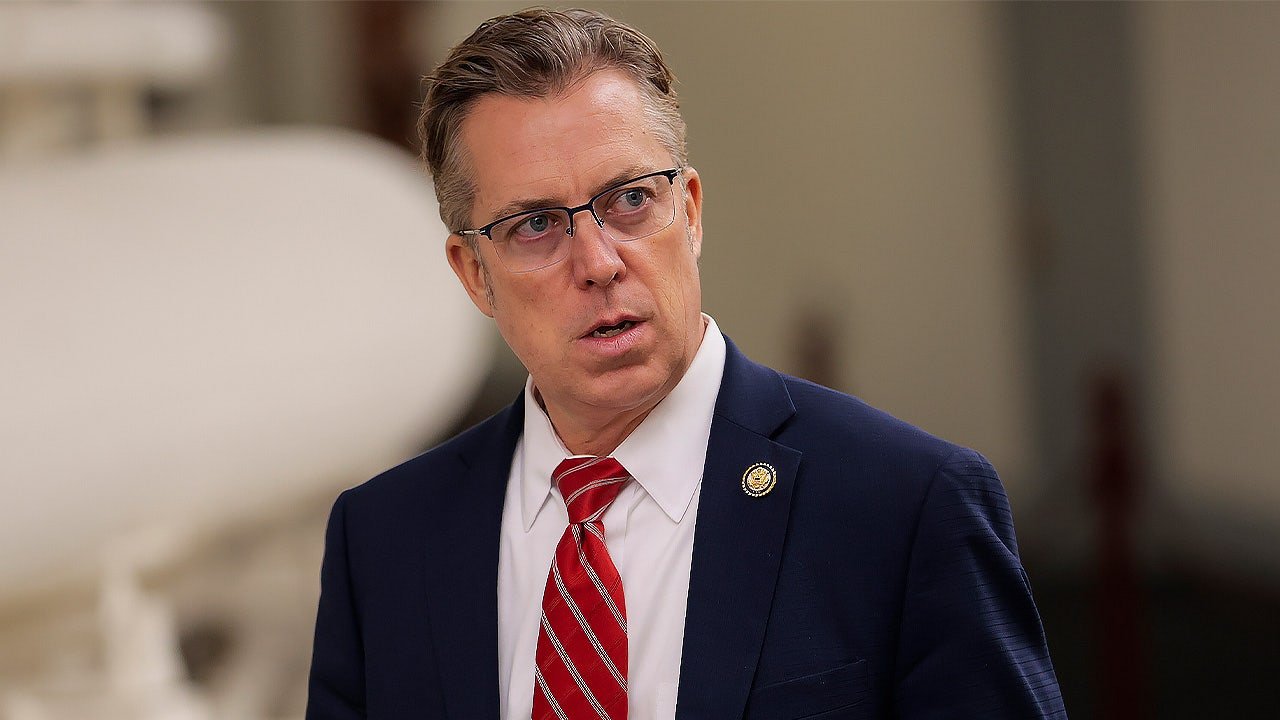
A clean energy super PAC bankrolled by a left-wing billionaire is pouring millions into an effort to unseat Rep. Andy Ogles, R-Tenn., as he wages a bid for re-election in Tennessee’s 5th Congressional District.
The Invest in Tomorrow Coalition super PAC had spent roughly $1.3 million on opposing Ogles and supporting his Republican challenger, Charlie Hatcher, Tennessee’s former commissioner of agriculture, and recently bought another $700,000 worth of ads.
The group has raised $6.7 million this year, making Ogles a sizable portion of their spending this cycle. A Fox News Digital review of FEC filings discovered that the super PAC is bankrolled by Chris Larsen, the California-based billionaire chairman of Ripple, which is described on its website as the «leading financial technology company that offers crypto solutions for businesses.»
Larsen has donated $6 million to the super PAC since Feb. 2026. His latest $5 million donation to Invest in Tomorrow Coalition PAC is his second-largest single donation after donating $5,444,975 to Future Forward PAC in 2024 to support Kamala Harris’s failed presidential campaign.
TRUMP-BACKED FIREBRAND WINS ARIZONA GOP GOVERNOR PRIMARY, SETTING UP HIGH-STAKES SHOWDOWN
Rep. Andy Ogles, R-Tenn., leaves a meeting of the House Republican Conference in the U.S. Capitol on Tuesday, July 22, 2025. (Tom Williams/CQ-Roll Call, Inc via Getty Images)
Larsen has also donated over $1 million to the Jane Fonda Climate PAC, over $1 million between the Democratic Senatorial Campaign Committee (DSCC) and Democratic Congressional Campaign Committee (DCCC) and over $300,000 supporting Rep. Nancy Pelosi, D-Calif., among other six-figure donations to top Democratic campaigns and PACs.
The way that Ogles sees it, it’s an attempt to show Republicans what happens when lawmakers attempt to scale back government investments in renewable energy sources.
«When you have a group spending roughly $2 million in a Republican primary, that tells you how much money they’re making off of government subsidies, and they’re upset that the government welfare has been taken away from them,» Ogles told Fox News Digital in an interview.
Larsen, who is an angel investor and climate philanthropist, is making «climate change his top priority,» according to an online bio.
«He founded the Larsen Lam Climate Change Foundation (since renamed as the Clean Break Fund) in 2021 to guide his climate philanthropy, and is an active early investor in numerous climate tech companies, as well as several prominent climate funds,» the bio continues. «His philanthropic priorities include the climate-driven home insurance crisis, making climate change a bipartisan issue once again, and carbon dioxide removal, among many other projects.»
Ogles, a member of the fiscally minded House Freedom Caucus, has been one of the most outspoken Republicans calling for a reversal of energy initiatives passed under President Joe Biden. Among them, Ogles has argued against clean energy subsidies in Biden’s Infrastructure and Jobs Act and the Inflation Reduction Act.
But more than that, Ogles thinks it’s his proximity to Trump that has made him a target.
«It’s because I’m close to the president. It is because I am outspoken. And quite frankly, it is because I speak plainly on these issues,» Ogles said.
Trump, who has endorsed Ogles, reaffirmed his support for the conservative firebrand ahead of the primary.
«Andy will be really enshrined as one of the best congressmen that you’ll ever see. He’s just fantastic,» Trump said. «Andy has always been there when we needed him and when I needed him. He’s been a great help. He’s been a source of inspiration to a lot of people in Congress.»
Figures who have donated to Invest in Tomorrow framed energy policy as an issue with electoral consequences, hinting that Ogles is on the wrong side of the issue.
TRUMP’S AMBITIOUS ENERGY BET COULD BE A WINNING HAND AS THE WORLD BURNS MORE OIL, GAS THAN EVER
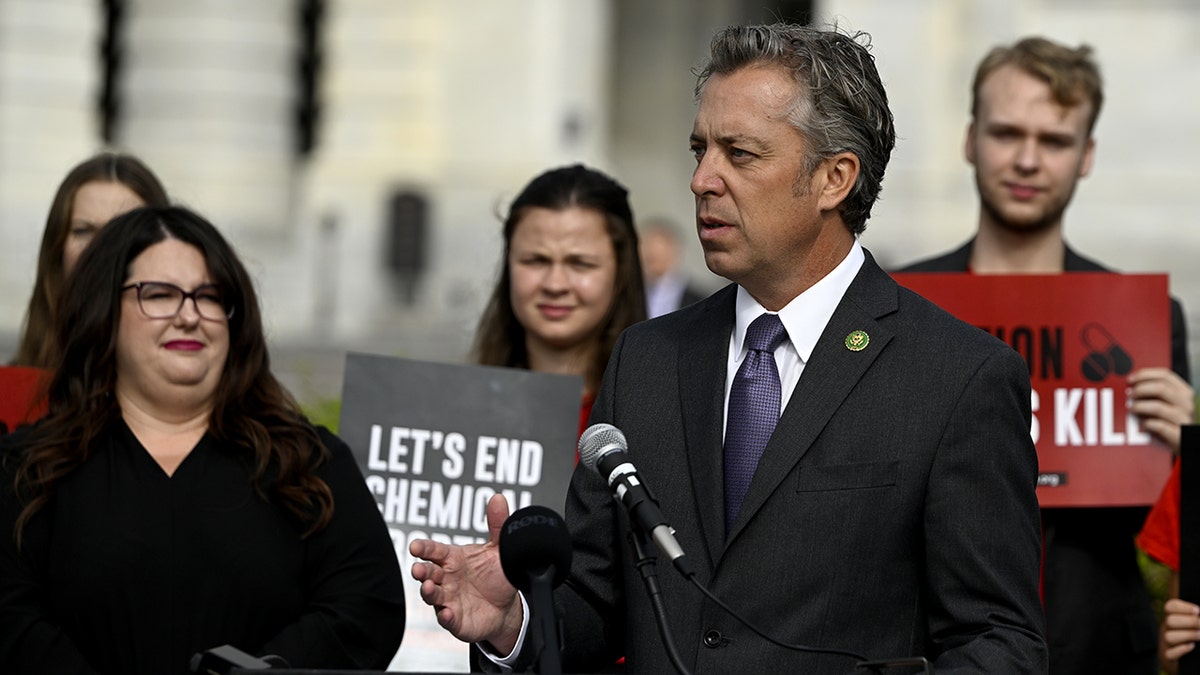
United States Representative Andy Ogles joined the news event in front of the U.S. Capital to announce The Ending Chemical Abortion Act on Capitol Hill in Washington, D.C., United States on Sept. 28, 2023. (Celal Gunes/Anadolu Agency via Getty Images)
«Our campaign is here to show that politicians who oppose clean energy do so at their own political peril. Andy Ogles is next,» Tom Matzzie, the PAC’s executive chairman, said in a statement to Axios.
Matzzie is also CEO of a solar energy company, CleanChoice Energy.
When asked about the comment, Ogles said he doesn’t think his views are at odds with the way voters see energy and has characterized the opposition spending as an attempt to buy a seat energy groups can control.
«If trying to build an energy sector that is self-reliant, because it’s a national security issue, makes me an extremist, then so be it.»
Ogles said he stands by his all-of-the-above energy stance. In his view, it’s not the government’s job to pick winners and losers in the energy market — especially in light of the country’s overspending challenges.
«I’m not against solar. We have a farm. I’ve got a big shop. You know, I’ve contemplated putting solar on my shop to help to run my farm. But I don’t want a government subsidy to make it work. I don’t need a government subsidy to pay for it,» Ogles said.
DEM SUPPORTED ‘GREEN NEW DEAL’ AFTER RECEIVING NEARLY $60K FROM ENERGY GROUPS, NOW WANTS CONGRESSIONAL SEAT
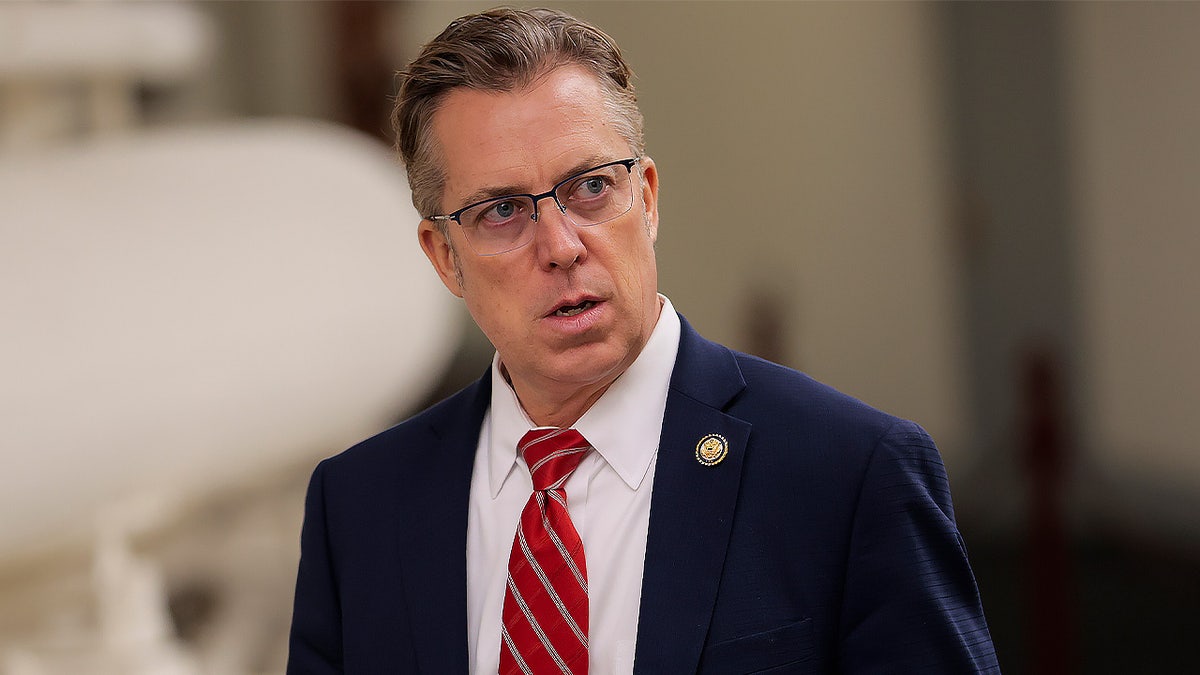
Rep. Andy Ogles walks through the U.S. Capitol in Washington, District of Columbia, on Feb. 3, 2026. (Heather Diehl/Getty Images)
«Look, at the end of the day, you know, I voted for conservative policies and that’s what America wants right now. We’re barreling towards $40 trillion in debt,» he added.
The Tennessee primary will take place on Thursday, Aug. 6.
republicans elections, politics, campaigning


¿Y si con bajar la inflación no alcanza?

La Premier League vive una revolución en los bancos: quiénes resisten en medio del recambio

Platense vs Talleres: formaciones, hora y dónde ver por tv

A pura sensualidad, el álbum de las vacaciones de Gimena Accardi en España: caminatas por la playa y relax

El Gobierno concederá más cambios para que el Senado apruebe la ley de extranjerización de tierras

Después de haberse quedado afuera del Mundial por su rotura de cruzados, Panichelli reapareció y habló de su lesión

“Vamos a acelerar con todo”: el objetivo del Gobierno por las reformas y la agenda electoral de cara al 2027

Reelecciones indefinidas: el oficialismo bonaerense niega que busque ampliar la Legislatura como parte de una reforma política para beneficiar a los intendentes

“Casta”, “parásito” y “sea democrático”: fuerte respuesta de Victoria Villarruel a Diego Santilli

Dem senator swipes credit for bill he opposed amid heated reelection bid: ‘Disturbing pattern’
-
 POLITICA1 día ago
“Vamos a acelerar con todo”: el objetivo del Gobierno por las reformas y la agenda electoral de cara al 2027
-
 POLITICA16 horas ago
Reelecciones indefinidas: el oficialismo bonaerense niega que busque ampliar la Legislatura como parte de una reforma política para beneficiar a los intendentes
-
 POLITICA3 días ago
“Casta”, “parásito” y “sea democrático”: fuerte respuesta de Victoria Villarruel a Diego Santilli