INTERNACIONAL
Regulators allow Obama-era solar plant to kill thousands of birds annually, investigation finds

NEWYou can now listen to Fox News articles!
SAN BERNARDINO, Calif. – Regulators are allowing an Obama-era «clean energy» solar plant to continue operating even as its reflected solar beams kill thousands of birds each year, with no fines or enforcement action taken since it opened, a Fox News Digital investigation has found.
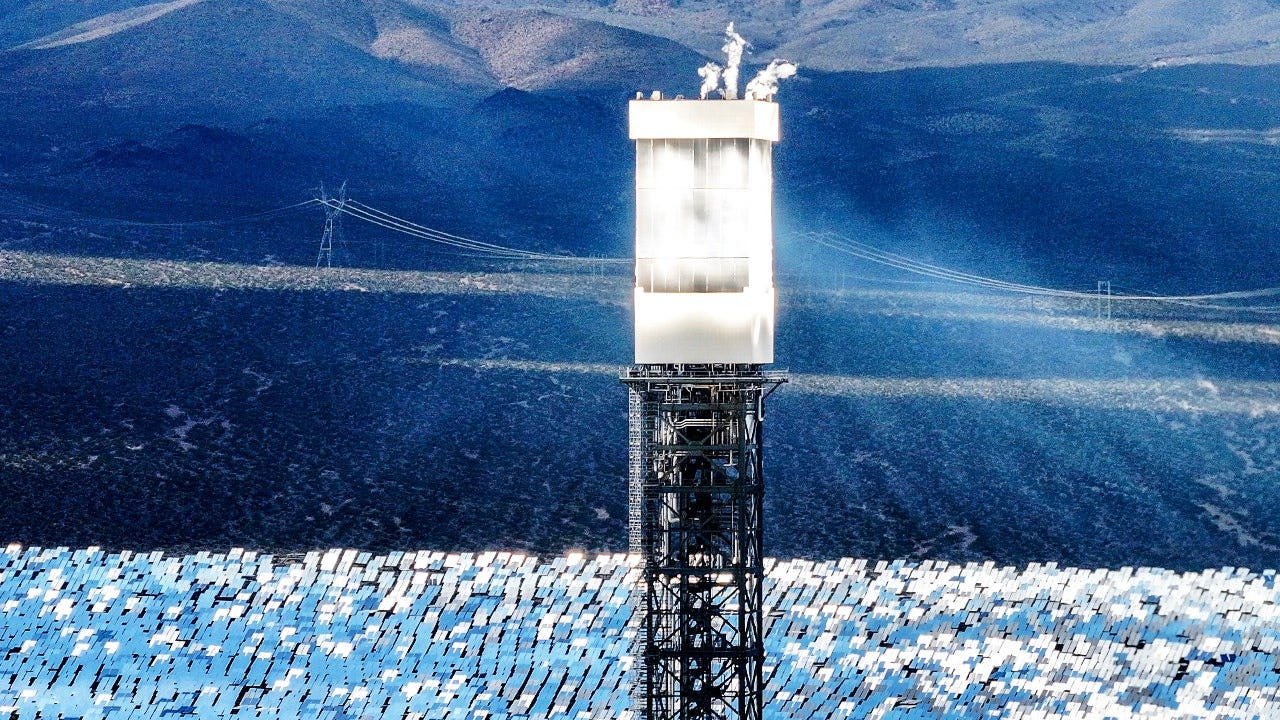
The Ivanpah Solar Power Plant, a sprawling facility built with taxpayer support in the Mojave Desert near the California–Nevada border, remains in compliance under existing regulations, even as birds are burned, injured or killed after flying through the beams which reflect sunlight onto the plant’s three central towers.
Regulators were aware of those risks before approving the project as part of a broader push to expand renewable energy. Today, it remains in compliance, meaning the wildlife deaths documented at the site fall within limits set under its environmental approvals. That framework allows the plant to continue operating even as thousands of birds are killed each year.
OBAMA-ERA ‘CLEAN ENERGY’ SOLAR POWER PLANT STILL USES FOSSIL FUELS – AND KILLS THOUSANDS OF BIRDS ANNUALLY
The Ivanpah Solar Power Facility near the California–Nevada border in the Mojave Desert. The solar thermal plant has faced scrutiny over environmental impacts, including bird deaths linked to its concentrated solar energy system. (Jeff Gritchen/MediaNews Group/Orange County Register via Getty Images)
«Staff is not aware of any formal enforcement actions or fines issued by either the U.S. Fish and Wildlife Service or the California Department of Fish and Wildlife related to avian or wildlife mortality at the Ivanpah Solar Electric Generating System,» the California Energy Commission, which oversees large energy projects in the state, told Fox News Digital.
The commission also said it knows of no special regulatory exemptions for renewable energy projects related to wildlife impacts. Instead, the project was approved as long as monitoring and mitigation requirements would be carried out, meaning some level of wildlife mortality was anticipated.
The futuristic-looking facility, known for its three large towers that glow brightly when powered on, was approved during the Obama-era push to rapidly expand renewable energy following the 2008 financial crisis — part of a broader effort to cut emissions and reduce reliance on fossil fuels in the name of climate change.
At the time, it was hailed as the future of «clean energy» technology, and the federal government provided a $539 million grant for its construction, along with a separate $1.6 billion loan.
But its technology quickly became outdated by conventional solar panels that absorb sunlight directly and convert it into electricity, making Ivanpah’s energy more expensive to produce. The plant also relies on natural gas to start up each day – producing tens of thousands of metric tons of carbon dioxide annually.
CALIFORNIA’S GREEN NEW SCAM COULD COST YOU $20,000
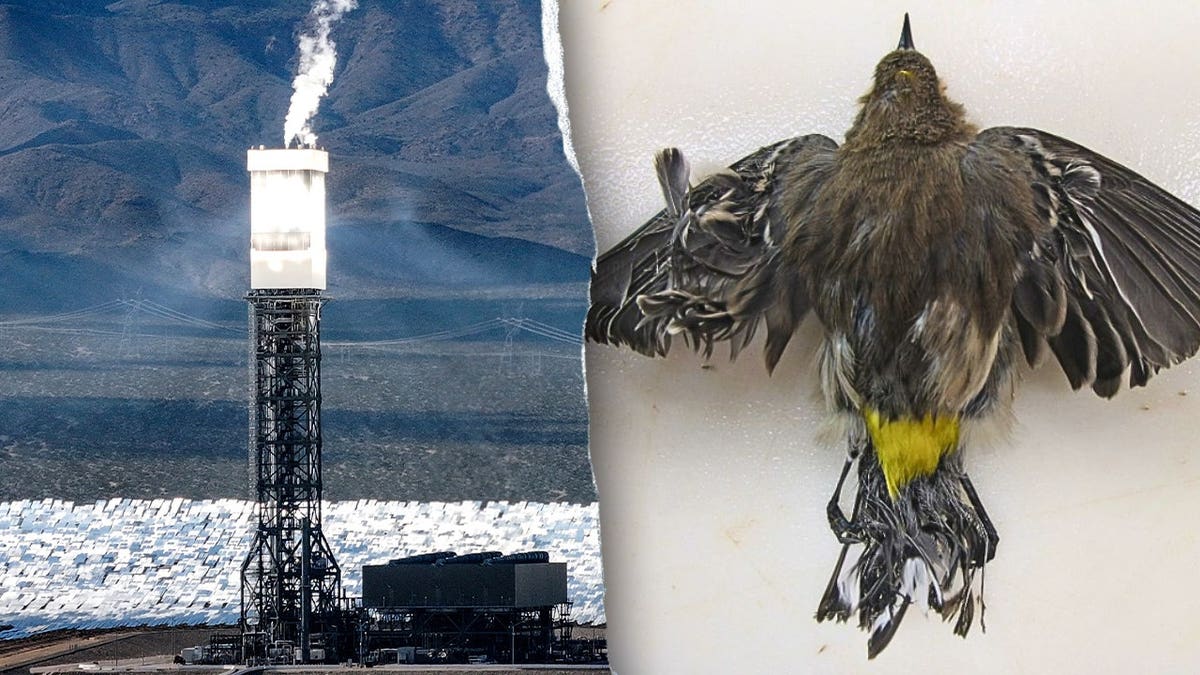
A composite image shows a tower at the Ivanpah Solar Power Plant alongside a bird found with burn injuries linked to concentrated solar heat exposure, according to federal wildlife research. (Jeff Gritchen/MediaNews Group/Orange County Register via Getty Images; U.S. Fish and Wildlife Service)
Researchers say birds are drawn to the bright towers, then fly through the plant’s concentrated solar beams — known as solar flux — where they can be injured or killed. Researchers dubbed the phenomenon «streamers,» and a video released by the U.S. Geological Survey shows a bird trailing smoke as its feathers burn. Songbirds, doves, warblers and other migratory species have been found dead at the plant.
What regulators knew before approval
Environmental reviews examined by Fox News Digital show that regulators were aware before construction that the project could kill birds, either by being burned by the plant’s concentrated sunlight or colliding with the tens of thousands of mirrors that surround the three towers like lakes. They also raised concerns about damage to the 4,000-acre physical desert habitat it was going to occupy, as well as to protected species that roam the barren terrain, such as the endangered desert tortoise, dozens of which went unaccounted for during early operations.
The project’s Final Environmental Impact Statement warned that climate efforts could come «at the expense of reducing the native biodiversity.»
Even with those warnings, regulators approved the project, allowing it to move forward on the basis that ongoing monitoring and mitigation requirements would be carried out, rather than requiring those risks to be resolved.
A 2016 congressional review raised similar concerns, finding no clear evidence that federal agencies had pursued penalties for bird deaths at Ivanpah — a pattern that appears to have continued.
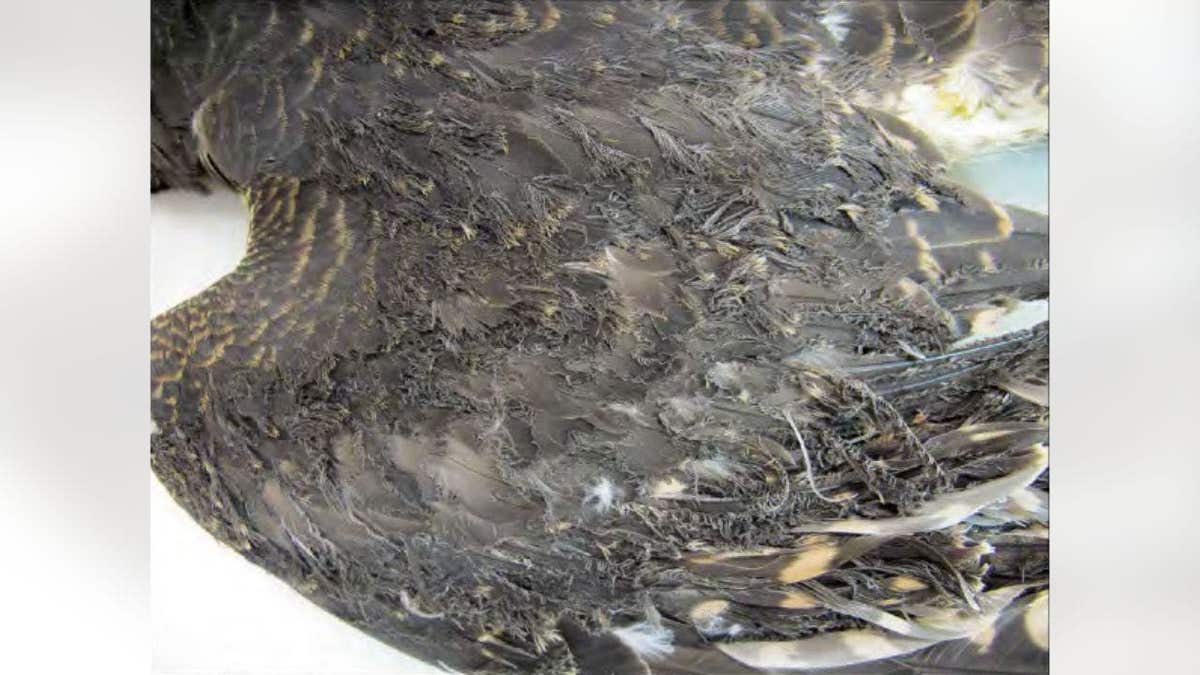
A peregrine falcon wing shows severe feather damage consistent with exposure to concentrated solar heat, according to a U.S. Fish and Wildlife Service study of the Ivanpah solar plant. (U.S. Fish and Wildlife Service)

Burned feathers from a peregrine falcon show damage patterns linked to concentrated solar beams at the Ivanpah solar plant, according to federal research. (U.S. Fish and Wildlife Service)
No fines, no enforcement
The plant is regulated under a system that tracks wildlife deaths but does not automatically trigger fines or shutdowns.
Monitoring reports show hundreds of birds are found dead at the site each year, with some estimates putting the total in the thousands.
Responsibility for enforcement is shared across multiple agencies, including the U.S. Fish and Wildlife Service, the California Department of Fish and Wildlife and the Bureau of Land Management, each of which has authority over different aspects of the project, the CEC said.
The U.S. Fish and Wildlife Service said it reviews monitoring data and provides technical input but did not indicate enforcement action tied to bird deaths at the site.
NRG Energy, which operates the facility, said in a previous statement it remains committed to providing renewable electricity but declined to provide additional comment regarding environmental issues.
CLICK HERE TO DOWNLOAD THE FOX NEWS APP
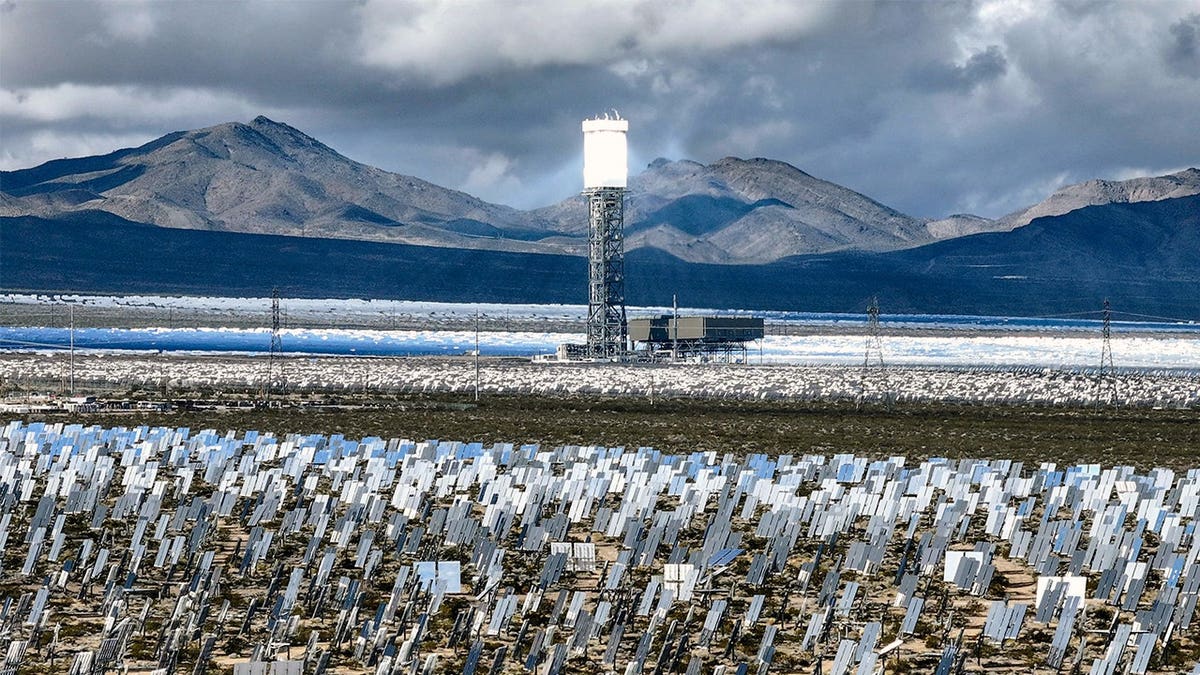
The Ivanpah Solar Power Facility operates in the Mojave Desert near the California–Nevada border, using thousands of mirrors to focus sunlight onto a central tower to generate electricity. (MediaNews Group/Orange County Register via Getty Images)
A system that allows harm
Instead of being treated like a typical environmental violation, the project is governed through a permitting system that emphasizes monitoring and mitigation rather than penalties.
In practice, that means harm can be documented without triggering enforcement action even though federal authorities have pursued penalties for bird deaths in other industries.
Under federal law, violations involving protected migratory birds can carry fines of up to $15,000 per bird.
Such prosecutions of industry have become rare in the United States, however. In 2017, the Department of the Interior reinterpreted the Migratory Bird Treaty Act to apply only to intentional killings — not «incidental» deaths caused by industrial activity such as oil pits, power lines or wind turbines. Federal courts, including the Fifth Circuit, have since reinforced that narrower reading, limiting the government’s ability to penalize companies for equipment-related bird deaths.
But even efforts to reduce harm — including deterrents, lighting changes and operational adjustments — have not eliminated the problem at Ivanpah, with monitoring reports continuing to document annual wildlife deaths.
More than a decade later, Ivanpah shows what that system looks like in practice: a project approved as clean energy that kills wildlife, relies on fossil fuels and continues operating without penalties.
WATCH: Experts weigh in on future of $2.2B Obama-era Ivanpah solar plant as regulators keep it open
This is part 3 of a series on California’s troubled Ivanpah Solar Power Plant in the Mojave Desert
Part 1 – Obama-backed $2.2B green energy ‘boondoggle’ leaves taxpayers on the hook
Part 2 – Obama-era ‘clean energy’ solar power plant still uses fossil fuels – and kills thousands of birds annually
energy, environment regulation, california, climate change environment, birds, barack obama, energy in america, controversies environment, regulation












INTERNACIONAL
El chavismo y la oposición acuerdan un plan para llamar a elecciones y «fortalecer la democracia» en Venezuela
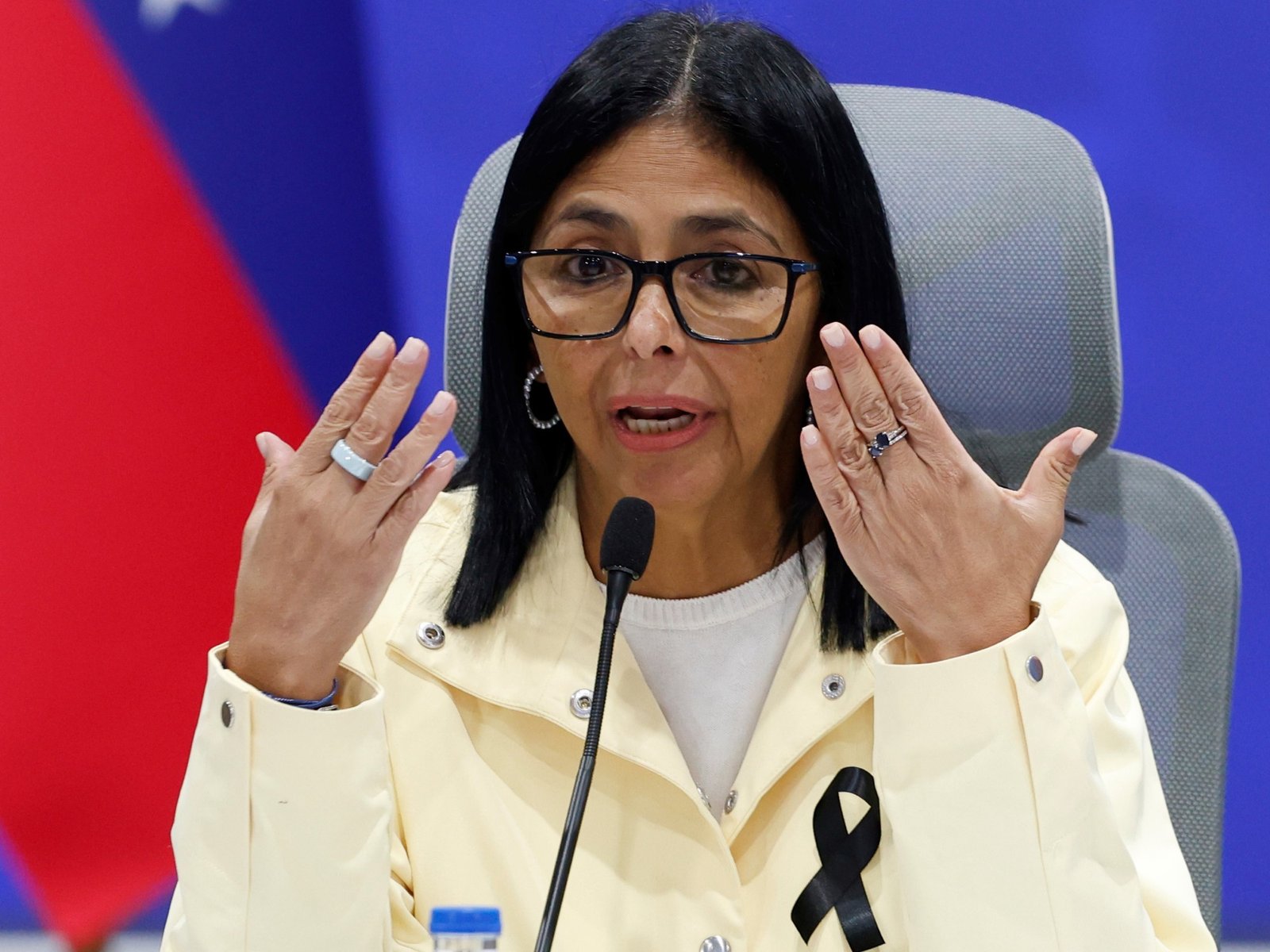
Tanto la oposición venezolana, representada en la Asamblea Nacional del 2015, como el régimen chavista de la presidente interina, Delcy Rodríguez, acordaron trabajar en conjunto con una hoja de ruta para impulsar la reinstitucionalización, las elecciones y la reconstrucción del país con la venia del gobierno de los Estados Unidos a partir del 1° de agosto.
El tema electoral es prioritario en la agenda de trabajo conjunto acordado por la oposición y el régimen de Delcy Rodríguez y no es excluyente en medio de la tragedia que vive Venezuela por el devastador terremoto que sacudió el país el pasado 24 de junio, como había pretendido su hermano Jorge Rodríguez.
Hay cuestiones sin embargo a observar. El anuncio de la hoja de ruta lo hizo la ex presidente de la Asamblea Nacional de 2015, Dinorah Figuera, amparada por Estados Unidos, quien lanzó un comunicado en el que deja claro que el trabajo conjunto con el régimen busca la reconstrucción institucional y el fortalecimiento del sistema electoral. Sucede menos de un mes después de que la Plataforma Unitaria, la mayor alianza opositora, se reuniera en Panamá y le encomendara a María Corina Machado encabezas las negociaciones con el chavista para una transición política. Esa misión, por encargo de Washington, es la que claramente está sumiendo esta otra mujer en reemplazo de Machado.
La médica Dinorah Figuera estuvo en mayo en Caracas reuniéndose con Jorge Rodríguez, hermano de la presidenta interina y titular de la Asamblea Nacional de 2026, para establecer la mesa de trabajo técnico institucional, de cara a las tres fases de “estabilización, recuperación y transición”, después que el autócrata Nicolás Maduro fuera capturado por EE.UU.
Dos días después Figuera viajó a Washington y ahora se encuentra en su residencia de Valencia en España preparando su regreso a Caracas, que se ha visto interrumpido por el doble sismo que sacudió al país a fines de junio.
COMUNICADO pic.twitter.com/60blOTh7B6
— Asamblea Nacional (@AsambleaVE) July 14, 2026
Sin embargo, publicó en su cuenta de X el comunicado oficial que dice así: «La Asamblea Nacional 2015 anuncia al país el inicio de una agenda de trabajo conjunta a partir del 1° de agosto concebida como una hoja de ruta para promover la estabilidad, la democracia y la recuperación nacional, constituyéndose como el inicio de la construcción de una nueva etapa que dará paso a una Venezuela de progreso y libertades”.
Asegura que esta agenda tendrá como prioridad “el fortalecimiento de las instituciones democráticas, del sistema electoral y el restablecimiento de las garantías para la participación política”.
Figuera es una ex militante de una fuerza venezolana de izquierda, La Causa R. De ahí luego pasó al partido socialdemócrata de Henrique Capriles, Primero Justicia, que llegó a ser la fuerza mayoritaria del país. En 2010 fue electa diputada. Cinco años después, cuando la oposición en diciembre de 2015 logró una masiva victoria legislativa. Fueron justamente esas elecciones las que le otorgaron un papel especial en el proceso político. Figuera fue nombrada presidenta del Parlamento y posteriormente el régimen, que hizo todo tipo de maniobras contra ese Poder, acuso a Figuera de usurpación de funciones y traición a la patria. La dirigente había logrado salir del país antes de esas acusaciones y se exilió en España.
Es claro que EE.UU. la elige en principio en lugar de Corina Machado, que pese a su acercamiento total a la Casa Blanca, fue caracterizada por Donald Trump como una líder carente de peso en Venezuela.
Figuera explicó su gestión en término concretos en ese sentido: “Estoy asumiendo una invitación que e hizo el Departamento de Estado”
En la propuesta de democratización, señala que la emergencia provocada por los terremotos “ha puesto de manifiesto la importancia de actuar con unidad, responsabilidad y visión de futuro”.
Considera que la respuesta de Estados Unidos “ha reafirmado que Venezuela no está sola. La ayuda humanitaria, la recuperación y la reconstrucción forman parte de un mismo esfuerzo orientado al bienestar del pueblo venezolano”.
La propuesta de la hoja de ruta opositora ha tenido diversas reacciones. En primer lugar se ha priorizado el tema electoral, subiendo al segundo escalón en las tres fases esbozadas desde el 3 de enero. Ahora la nueva agenda de las tres fases es: “La estabilidad, la democracia y la recuperación nacional”, según reza en el primer párrafo del comunicado.
EE.UU. fue también muy claro en su desinterés por una salida democrática que según los críticos de la medida, es porque implicaría un giro político que reduciría el control que Trump pretende del país.
El canciller norteamericano, Marco Rubio, compartió en las redes el comunicado de Figuera con la hoja de ruta que cambia el orden original de las tres fases, aunque no hablan del tiempo de aplicación ni del cronograma electoral.
Hace un par de días Jorge Rodríguez, dijo en una rueda de prensa que “no tenía cabeza para pensar en elecciones”, es decir, que no era momento para hablar del proceso electoral que demanda la oposición debido a la tragedia del terremoto, pero cambió de repente de actitud para apoyar el comunicado de la oposición legislativa.
INTERNACIONAL
Rusia fue acusada de difundir desinformación a favor de la extrema derecha alemana antes de las elecciones

La intensificación de la desinformación en redes sociales, detectada en las últimas semanas por activistas y organismos de inteligencia, apuntan a un intento de influir en las elecciones regionales de Alemania. Las campañas, atribuidas por varios actores a operaciones rusas, generaron inquietud entre autoridades y sectores de la sociedad civil, que advierten sobre el posible impacto en los comicios de septiembre.
En el este del país, Alternativa para Alemania (AfD) lidera las encuestas en Sajonia-Anhalt y Mecklemburgo-Pomerania Occidental, y aspira a controlar un gobierno regional por primera vez desde 1945. El avance de la formación prorrusa y antiinmigrante sería un golpe para la coalición del canciller Friedrich Merz y marcaría un hito en la política alemana.
Ante la proximidad de las elecciones, se multiplicaron las publicaciones con desinformación en plataformas como X, TikTok y Bluesky. Según grupos de monitoreo y diputados alemanes, la hipótesis central es que Rusia estaría detrás de estos ataques, empleando estrategias para beneficiar a la extrema derecha y erosionar la confianza en los partidos tradicionales.

Las sospechas de injerencia rusa en las campañas digitales fueron avaladas por legisladores y activistas, quienes señalan la aparición de cuentas falsas y la difusión de acusaciones de corrupción contra rivales de AfD y BSW, un pequeño partido de extrema izquierda también identificado como prorruso. Las operaciones utilizaron versiones falsificadas de medios reconocidos, como AFP, ARD y Deutsche Welle, para amplificar el impacto de la desinformación.
La organización Antibot4Navalny, un colectivo anónimo que lleva el nombre del opositor ruso asesinado, documentó dos campañas desde junio. “No hay otra explicación plausible”, sostuvo un activista del grupo en diálogo con la AFP, quien aseguró que las maniobras guardan similitud con la operación Matryoshka, vinculada previamente al Kremlin.
El gobierno alemán evitó pronunciarse directamente sobre la operación Matryoshka, aunque reconoció: “Las operaciones de manipulación de información… constituyeron durante mucho tiempo una amenaza diaria”. Esta postura refleja una respuesta cautelosa, en parte para no amplificar involuntariamente el alcance de las campañas de desinformación.
Konstantin von Notz, diputado de Los Verdes y vicepresidente del comité de supervisión de inteligencia, fue tajante en conversación con la AFP: “La narrativa que se difunde desde Rusia a Alemania, con un presupuesto millonario, es luego retransmitida deliberadamente por la AfD de forma selectiva”. Von Notz también criticó la falta de reacción gubernamental y exigió respuestas más contundentes ante lo que considera un peligro real.

Por su parte, la embajada rusa rechazó las acusaciones, calificándolas de “ridículas” y advirtiendo que Alemania y Europa siguen “un camino extremadamente peligroso” que perjudica a sus ciudadanos. La coalición gobernante, liderada por la CDU/CSU y el SPD, denuncia regularmente una “guerra híbrida” de Moscú, que iría más allá de la propaganda y abarcaría espionaje y sabotaje.
El servicio nacional de inteligencia (BfV) confirmó estar al tanto de la campaña digital y de sus similitudes con operaciones rusas, aunque hasta el momento no se han anunciado acciones concretas para contrarrestarla. Marc Henrichmann, presidente del comité de supervisión de inteligencia y diputado de la CDU, subrayó la necesidad de cautela: “Si al dirigir una campaña a un público específico conseguimos darle aún más publicidad, entonces, obviamente, habremos cometido un error”. Henrichmann también abogó por otorgar mayores poderes a los servicios de inteligencia para combatir el fenómeno.
Desde la AfD, la respuesta ha sido de rechazo a las acusaciones. Ulrich Siegmund, principal candidato del partido en Sajonia-Anhalt, declaró a la AFP: “Buscar un entendimiento razonable con otro país no significa que estés trabajando para conseguirlo”. El político insistió en que el interés alemán debe guiar las acciones del partido, incluyendo la defensa de la compra de energía rusa barata y la reducción del gasto en Ucrania e inmigración.

Entre los simpatizantes de la formación, la percepción de Rusia como un aliado natural es recurrente. Hans-Joachim Dietrich, camionero jubilado, expresó a la AFP: “Creo que debemos defender con más firmeza, incluso dentro de la AfD, que Rusia es nuestro aliado natural”.
Henrichmann advirtió sobre el riesgo de una “guerra cognitiva” impulsada desde Moscú, destinada a sembrar miedo y división en Alemania, especialmente en un contexto de reformas militares y apoyo a Ucrania frente a Rusia.
“No hay duda: la AfD es el portavoz del presidente ruso Vladimir Putin en Alemania y está explotando conscientemente estas narrativas”, afirmó el legislador. Sin embargo, tanto Henrichmann como activistas reconocen que, por ahora, el alcance de la campaña digital es limitado, aunque advierten que la vigilancia debe continuar y que es necesario reforzar los poderes de los servicios de inteligencia para proteger el proceso democrático.
(Con información de AFP)
Domestic,Politics,Europe,Government / Politics
INTERNACIONAL
Amy Coney Barrett recalls heartbreaking question from 12-year-old son over bulletproof vest
NEWYou can now listen to Fox News articles!
Justice Amy Coney Barrett told the House Appropriations Committee the uptick in threats waged against her and fellow Supreme Court justices have taken a toll on her children.
«They have required my children to think about and see things that children should not have to see or think about,» Barrett testified Tuesday.
Barrett shared how her security detail gave her a bulletproof vest to wear, and one day when she brought it into her bedroom, her 12-year-old son asked what it was.
«And I didn’t know how to respond because maybe I lack imagination, but I didn’t expect that performing this service was going to put me in the position of explaining to my children what a bulletproof vest was and why I had to wear one,» Barrett told the committee.
SUPREME COURT JUSTICES HEAD TO CAPITOL HILL FOR FIRST CONGRESSIONAL APPEARANCE SINCE 2019
Barrett and Justice Elena Kagan’s testimony before Congress came as the Supreme Court seeks a 10% budget increase for fiscal year 2027, with roughly $16.6 million of the $20.7 million increase dedicated to expanding security for the justices.
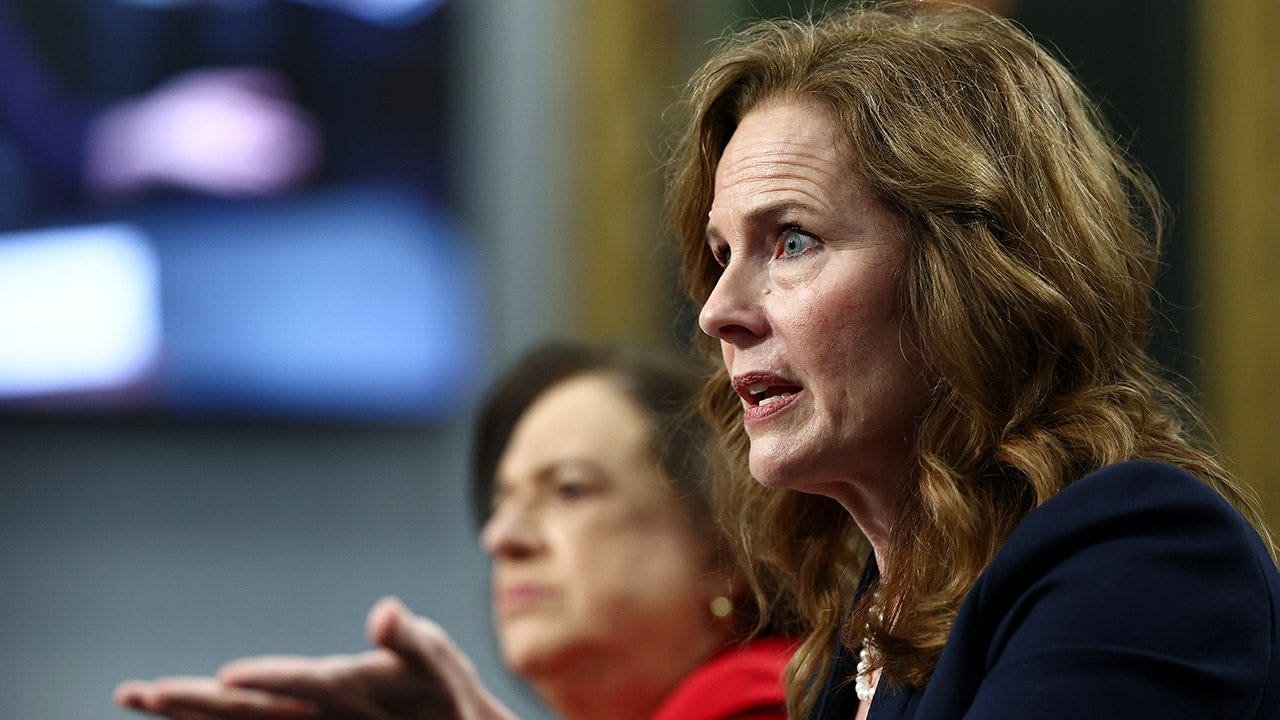
Supreme Court justices Elena Kagan and Amy Coney Barrett testify before the House Appropriations Committee on Capitol Hill July 14, 2026, in Washington. (Finn Gomez/Getty Images)
Barrett, who was the target of a swatting incident in May, recounted how her and her family’s lives drastically changed following the leaked Dobbs decision in 2022, which ruled that abortion was not a constitutional right, causing threats on her life to intensify.
In that incident, someone falsely reported gunshots at her home, Barrett testified, saying her teenage son and his friends were the first to discover the street filled with police.
AMY CONEY BARRETT DRAWS BACKLASH FROM CONSERVATIVE CRITICS WHO WANT HER TO BE A TRUMP PARTISAN
«I was very, very grateful that I had Supreme Court police outside my home because they were able to stop and meet with and explain to the county police that it had been a false alarm, and so the police did not actually attempt to enter our home,» Barrett said.
She also shared that her and other justices are receiving anonymous packages being sent in the name of Daniel Anderl, the 20-year-old son of U.S. District Court Judge Esther Salas, who was killed in 2020.
The gunman was an attorney posing as a delivery driver. Judge Salas was his target. Salas’ husband was seriously injured as well.
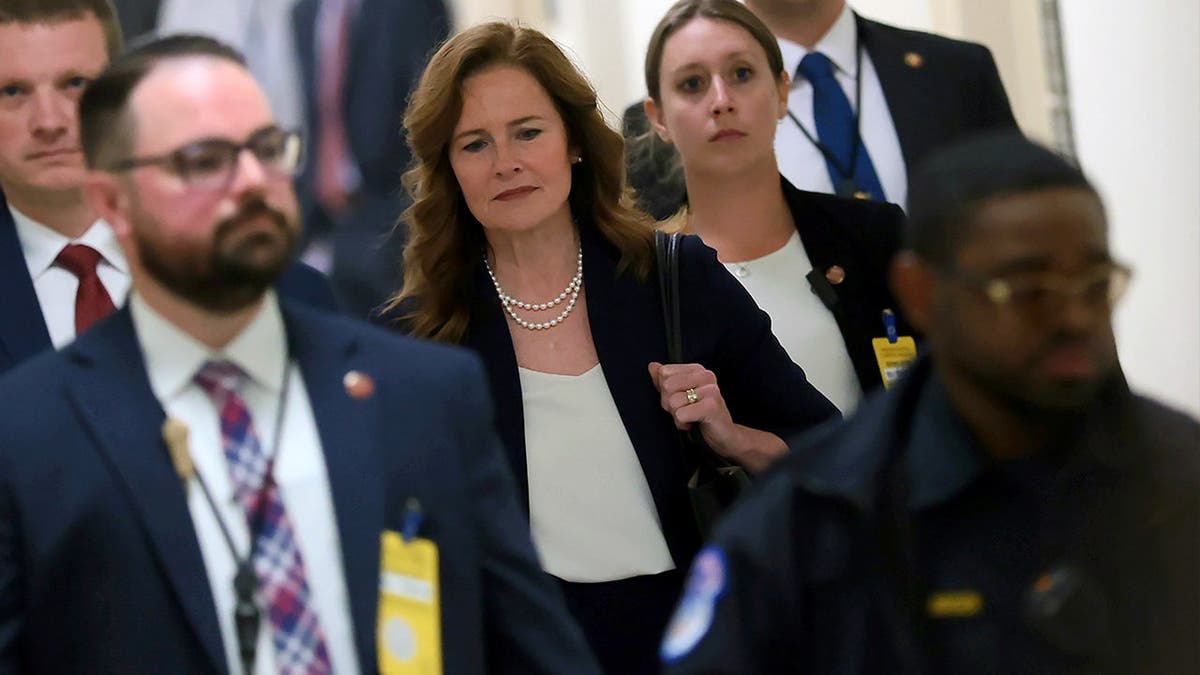
Supreme Court Justice Amy Coney Barrett arrives to testify during a House Appropriations Subcommittee on Financial Services hearing on Capitol Hill in Washington July 14, 2026. (Kent Nishimura/AFP)
MORNING GLORY: THE SUPREME COURT OFFICIALLY CLOSES THE BOOKS ON ANOTHER TERM
«I think the message on these deliveries being sent in his name is clear,» Barrett said. «As Justice Kagan said, federal judges across the country, throughout the judiciary, including the Supreme Court, continue to do their jobs without fear or favor, but the threat level is really high.»
The testimony underscored the urgency behind the Supreme Court’s push for more security funding during its first appearance before Congress since 2019.
In total, the Supreme Court is requesting roughly $89 million to cover personal security costs, which Kagan said is necessary given that the justices have experienced a 35% increase in threats just in 2026, compared to a 25% increase in threats the year prior. Kagan noted how recent growth in the budget can be entirely attributed to security expenses.
«For some of us, those threats have come very close, and all of us live with the knowledge that they may again materialize,» Kagan testified.
She recalled that when she arrived at the Supreme Court in 2010, justices did not receive around-the-clock personal protection. Instead, the court’s police primarily guarded the building, and she only had security accompanying her during work-related public events.
But Kagan said the heightened focus on justices’ security began after Justice Antonin Scalia’s death in 2016. Scalia died while on a hunting trip in Texas, where he was hours away from security personnel after declining a private security detail for the trip.
Kagan recalled that Rep. Darrell Issa, R-Calif., and the late Rep. Elijah E. Cummings, D-Md., went to Chief Justice John Roberts to push them to step up security.
«This was how the chief described it to us — they said, kind of like, ‘We think you’re crazy, you know, that you have less security than the director of the Office of Personnel Management does. And we think that you have to do better.’
CLICK HERE TO DOWNLOAD THE FOX NEWS APP
«Then, of course, the Dobbs leak happened, and that really increased the urgency of the entire thing,» Kagan said. «But we’ve been working on this now for about a decade and actually, I think, are grateful to Congress for coming to us and saying, ‘You have to up your game in this area.’»
supreme court, judiciary, federal courts, hearings house of representatives politics, national security

El chavismo y la oposición acuerdan un plan para llamar a elecciones y «fortalecer la democracia» en Venezuela

El COI recibe una denuncia contra Infantino por el ‘caso Balogun’

El Gobierno festeja la inflación, pero atiende encuestas que lo ponen al límite con la oposición

La inflación que viene: después de perforar el 2%, qué va pasar con los precios este mes

Escándalo en Francia: las despiadadas críticas a Mbappé y el equipo por la escandalosa eliminación del Mundial

Argentina-Inglaterra: la historia y el presente de un clásico especial antes de una semifinal con peso propio

El álbum de las vacaciones soñadas de Darío Barassi con su familia: “Ibiza, nos vas enamorando”

“Hablame bien”: el tenso cruce de Lionel Messi con el árbitro en la victoria de Argentina ante Suiza en el Mundial

El petróleo sube más de 3% tras la reanudación de los ataques de EEUU contra Irán y la amenaza de cierre del estrecho de Ormuz

Cámara de Comercio panameña cierra filas y llama a fortalecer la Zona Libre de Colón

 CHIMENTOS2 días ago
El álbum de las vacaciones soñadas de Darío Barassi con su familia: “Ibiza, nos vas enamorando”
- ECONOMIA2 días ago
El petróleo sube más de 3% tras la reanudación de los ataques de EEUU contra Irán y la amenaza de cierre del estrecho de Ormuz
- INTERNACIONAL3 días ago
Cámara de Comercio panameña cierra filas y llama a fortalecer la Zona Libre de Colón