INTERNACIONAL
Trump accuses Schumer of trying to ‘interfere in our elections’ with latest strategy

NEWYou can now listen to Fox News articles!
The partisan battle over midterm elections is heating up in Washington, D.C., with accusations flying that both sides are trying to rig the outcome in November.
Republicans are trying to hold on to their majority in both chambers, while Democrats are trying to pounce on sluggish legislating, infighting and rising costs in their quest to take over the House, Senate or both.
And President Donald Trump is already accusing Democrats of election interference months before Election Day.
SCHUMER, DEMS LAUNCH ‘FREE AND FAIR’ ELECTIONS TASK FORCE AS TRUMP’S SAVE AMERICA ACT STUMBLES
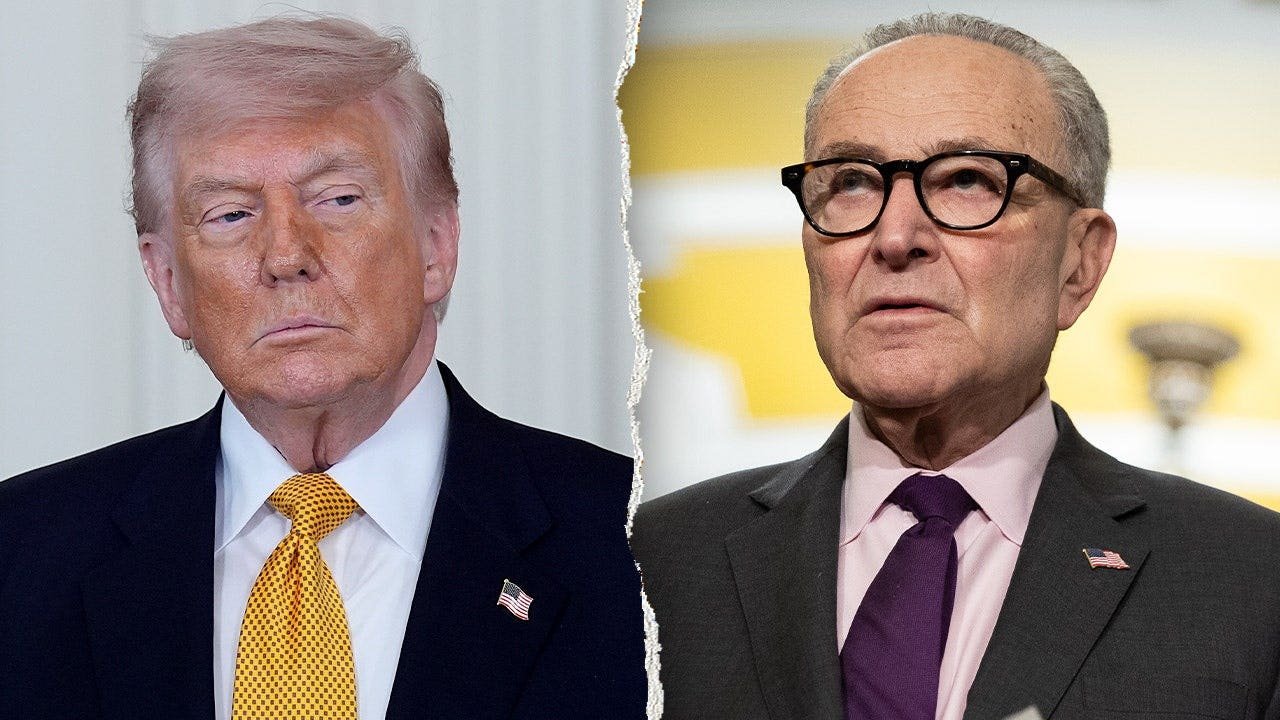
President Donald Trump accused Senate Minority Leader Chuck Schumer, D-N.Y., and Democrats of trying to «interfere in our elections» with their newly launched election integrity task force. (Yuri Gripas/Abaca/Bloomberg via Getty Images; Nathan Posner/Anadolu via Getty Images)
«The Democrats are totally unhinged, and we will not allow them to threaten the integrity of our Elections,» Trump said on Truth Social.
Senate Minority Leader Chuck Schumer, D-N.Y., and Democrats recently launched a «free and fair elections task force» that would recruit the likes of former Attorney General Eric Holder and Marc Elias, who Trump charged was «a terrible lawyer with a horrible track record.»
«Palestinian Chuck Schumer is hiring Eric Holder, famous for handing guns to Mexican cartels under the Barack Hussein Obama administration, as part of a Democrat-led ‘Election Integrity Group’ that will no doubt try to suppress Republican voters, and interfere in our Elections,» Trump said on Truth Social.
Schumer and Senate Democrats debuted the elections task force as Republicans struggle to move forward on voter ID and citizenship verification legislation, and on the heels of the Supreme Court’s redistricting decision that is expected to further crank up the redistricting arms race across the country.
REPUBLICANS FAIL TO ATTACH SAVE AMERICA ACT TO PARTY-LINE FUNDING PACKAGE

Voters arrive at a polling location at the Burton Barr Central Library on Nov. 5, 2024, in Phoenix. (Christian Petersen/Getty Images)
«Donald Trump and the Republicans realize that if the election were held fairly, that the likelihood is that they would lose, and we would win, that we would take back the House, take back the Senate,» Schumer said.
«So they are doing all kinds of nefarious things, some of them legal, some of them not so legal, to try and overturn a fair result in an election,» he continued.
Schumer described the task force’s mission as seeking out «election threats,» including actions at the administrative level by the Department of Justice (DOJ) and Department of Homeland Security (DHS), attacks on the First Amendment, foreign threats and militarization of law enforcement at the polls.
Trump countered that in the 2024 election cycle, Republicans mounted an «Election Integrity Army in every single State to preserve the sanctity of each legal vote.»
«We will be doing the same again in 2026, but it will be much bigger and stronger,» Trump said. «All Americans should have their voices be heard by casting a vote. Be assured this Election will be fair!»
Its inception is in response to what Democrats say is a «comprehensive effort» by Trump and his administration to undermine the upcoming election, particularly through efforts to pass the Safeguarding American Voter Eligibility (SAVE) America Act.
TWO DOZEN HOUSE REPUBLICANS GO TO WAR WITH SENATE GOP OVER SAVE AMERICA ACT
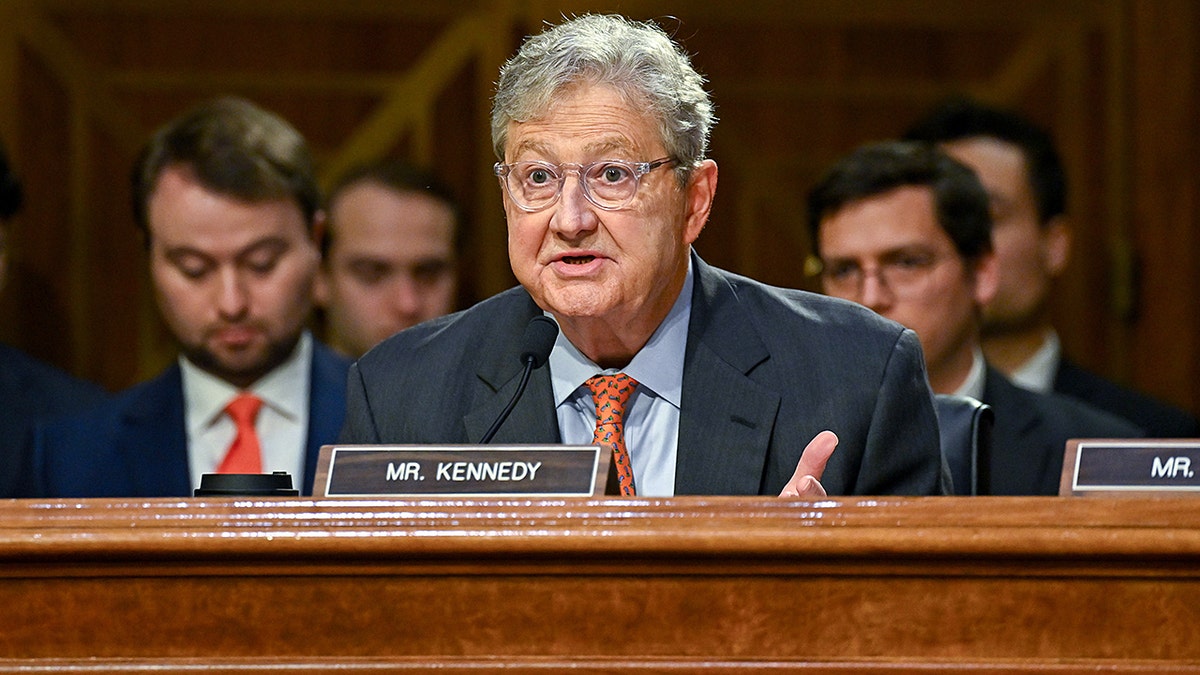
The SAVE America Act, or a version of it pushed by Sen. John Kennedy, R-La., failed last month when four Republicans joined Democrats to kill it. (Graeme Sloan/Bloomberg via Getty Images)
Trump has strongly pushed Republicans to pass the SAVE America Act, which would create federal voter ID laws, require proof of citizenship to register to vote and share information on voter rolls with DHS. Democrats say the legislation would disenfranchise millions of Americans.
But Republicans aren’t unified behind the legislation. The SAVE America Act, or a version of it pushed by Sen. John Kennedy, R-La., failed last month when four Republicans joined Democrats to kill it.
He has also called on Republicans to nationalize elections, and DHS Secretary Markwayne Mullin didn’t rule out sending federal immigration agents to polling places in the fall during his confirmation hearing earlier this year.
CLICK HERE TO DOWNLOAD THE FOX NEWS APP
It’s part of what Democrats charge is a concerted effort to tip the scales in the upcoming elections.
«Donald Trump doesn’t think he did too much in 2020 to steal the election,» Sen. Chris Murphy, D-Conn., said. «He thinks he did too little, and so that’s why you are seeing, already, a comprehensive effort to try to rig and steal the fall election.»
homeland security, democrats elections, midterm elections, republicans elections, senate elections













NEWYou can now listen to Fox News articles!
In 2015, Sen. Lindsey Graham called Donald Trump a «jackass» and warned Republicans that nominating him would be a disaster. Trump responded by reading Graham’s personal cellphone number aloud during a campaign rally, encouraging supporters to call the South Carolina senator.
Few political rivalries seemed less likely to evolve into one of Washington’s most consequential foreign policy partnerships.
Trump rose to power promising to end America’s «endless wars» and challenging decades of Republican foreign policy orthodoxy. Graham, by contrast, remained throughout his three decades in public service an unabashed advocate of projecting American power abroad.
FROM ‘DISGRACE’ TO ‘FAMILY’: TRUMP’S REMARKABLE JOURNEY WITH LINDSEY GRAHAM
Yet over the next decade, Graham became one of the few lawmakers with regular access to President Trump on questions of national security, emerging as one of the Republican Party’s most influential voices on Iran, Ukraine, Israel and NATO.
Sen. Lindsey Graham, Republican of South Carolina, speaks with reporters aboard Air Force One with President Donald Trump and Secretary of Commerce Howard Lutnick on the way back to Washington, D.C., on Jan. 4, 2026. (Jim Watson/AFP via Getty Images)
He had built his Senate career around foreign policy. While many lawmakers spent weekends back home, Graham was often overseas meeting presidents, visiting war zones and trying to broker agreements between allies and the White House.
By the end of his career, his office had become an unofficial waypoint for foreign leaders trying to understand — or influence — the Trump administration.
In interviews following the senator’s sudden death Saturday, Trump described Graham as «like a member of the family» and said he was among the final people to speak with the South Carolina Republican after he returned from Ukraine just hours before his death.
As Trump reshaped Republican foreign policy around an «America First» agenda, Graham became one of the few congressional voices with regular access to the president on questions of war and peace. He frequently pressed Trump to maintain a muscular U.S. role abroad — even as the president questioned long-standing alliances and warned against prolonged military interventions.
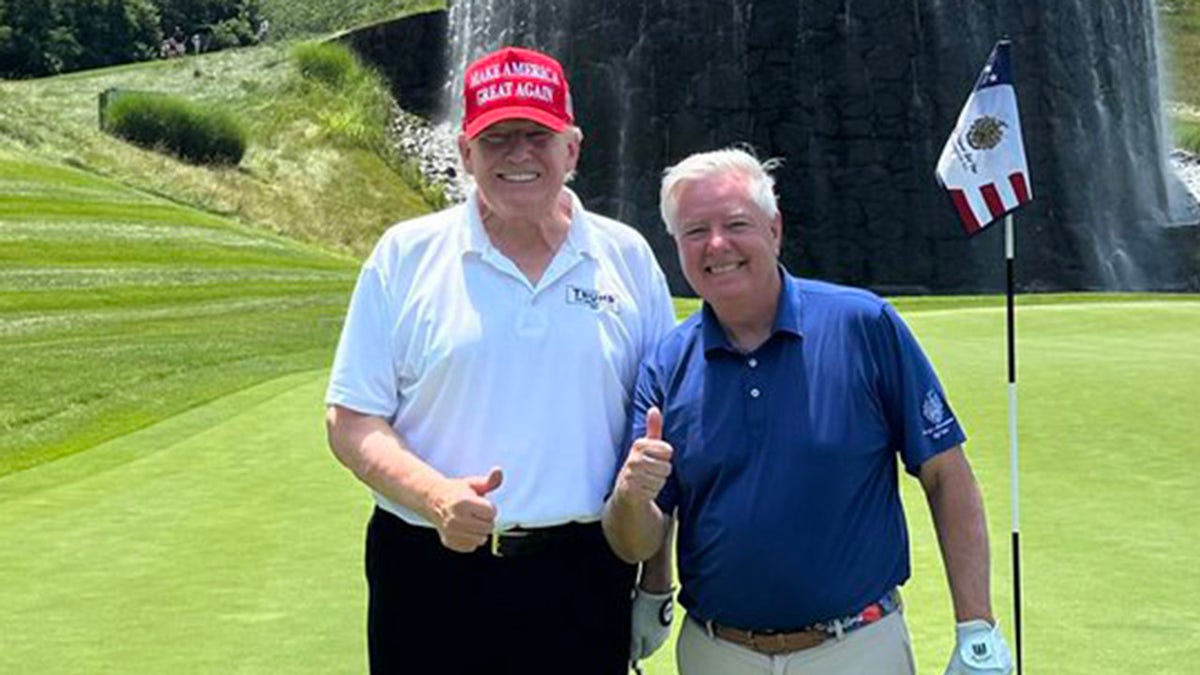
Donald Trump and Lindsey Graham pose for a picture on a golf course June 28, 2025. (Sen. Lindsey Graham via X)
Rather than becoming another Republican hawk sidelined by Trump’s ascent, Graham cultivated one of the closest working relationships with the president, giving him unusual influence as the administration navigated conflicts from Ukraine and Iran to Israel and NATO.
Whether Graham simply reinforced Trump’s instincts — or helped shape them — may become one of the defining questions of his foreign policy legacy.
GRAHAM REPORTEDLY REFUSED MEDICAL HELP BEFORE SCHEDULED TV APPEARANCE
«He would call me all the time,» Trump told Fox News Monday. «I’d say, ‘Stop calling me, Lindsey.’ It was amazing. He just never stopped. He was a worker — a total workaholic politician.»
Colleagues said Graham lived and breathed the work of the Senate, particularly serving as an informal envoy between the U.S. and allies around the world.
In the hours before his death, Graham told a confidant he wasn’t feeling well but joked he couldn’t die now because he still had work to do. He was preparing to push a long-stalled bipartisan Russia sanctions bill through the Senate, remained focused on advancing Saudi-Israel normalization and believed the Trump administration had not yet finished confronting Iran.
He had just completed his 10th trip to Ukraine, and maintained tight relationships not only with President Volodymyr Zelenskyy but also with Israeli Prime Minister Benjamin Netanyahu, NATO Secretary-General Mark Rutte, Gulf leaders and others around the world.
Graham believed that influence came from showing up, according to Jack Keane, a retired Army four-star general, the chairman of the Institute for the Study of War and Fox News Senior Strategic Analyst.
«He wasn’t interested in writing op-ed pieces or making speeches, he wanted firsthand contact with leaders of the world.» Keane, who counted Graham as a friend, told Fox News Digital. «He was interested in getting the results.»
Graham, upon being beaten by Trump in the 2016 primary, conceded that the then-real estate mogul understood the American public better than he did .
«He understood the American people better than we did, and shame on us for not doing it as effectively as him,» Graham said at the time, according to Keane.
So Graham went to work making himself useful for the president.
«Graham knew the world better than almost anyone in Washington, and he likely knew many foreign leaders better than President Trump’s own appointees,» Keane said. «He made a conscious decision to help the president by offering advice and counsel, which grew into both a personal and professional relationship.»
Graham’s worldview was shaped alongside late Sens. John McCain, R-Ariz., and Joe Lieberman, D-Conn., with whom he traveled extensively overseas. The trio —known as the «Three Amigos» — championed an interventionist Republican foreign policy rooted in American military leadership, support for democratic allies and confronting authoritarian adversaries.
Graham publicly disagreed with Trump over Iran negotiations — preferring strikes and regime change — and repeatedly pushed for a tougher line against Russia in the war on Ukraine.
Those convictions at times put him closer to traditional Republican foreign policy than to Trump’s «America First» instincts, even as he worked to remain one of the president’s closest advisors.
Trump’s approach to foreign policy often shifted between military confrontation and diplomatic restraint. Graham’s rarely did.
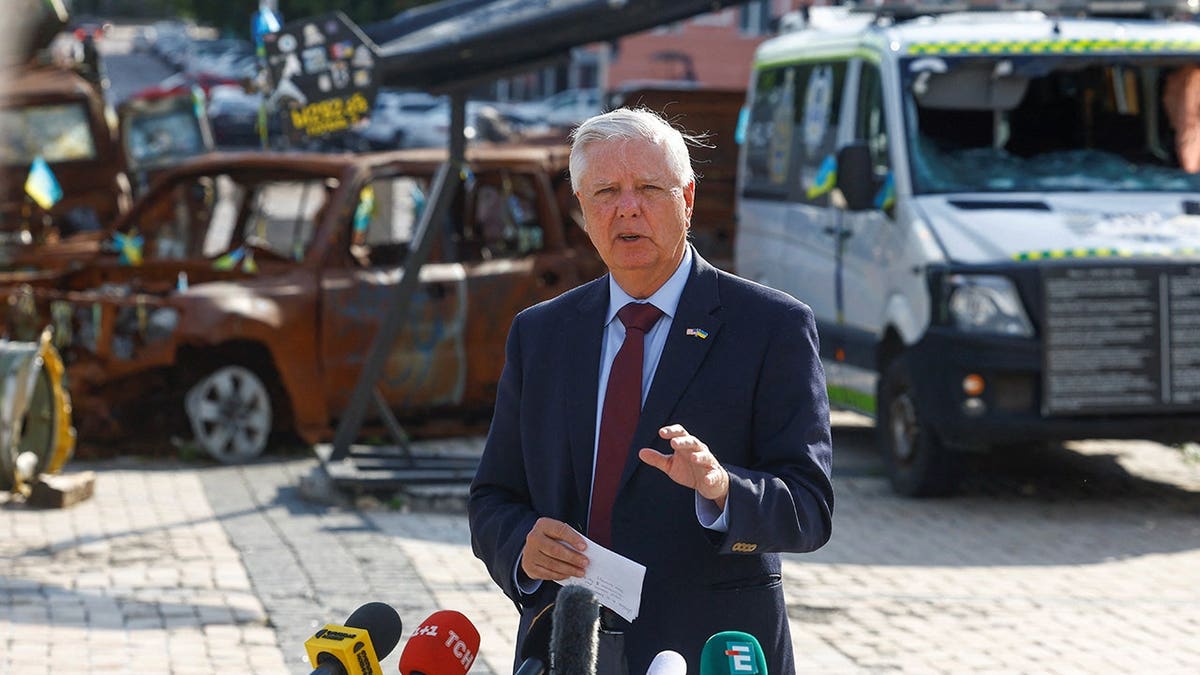
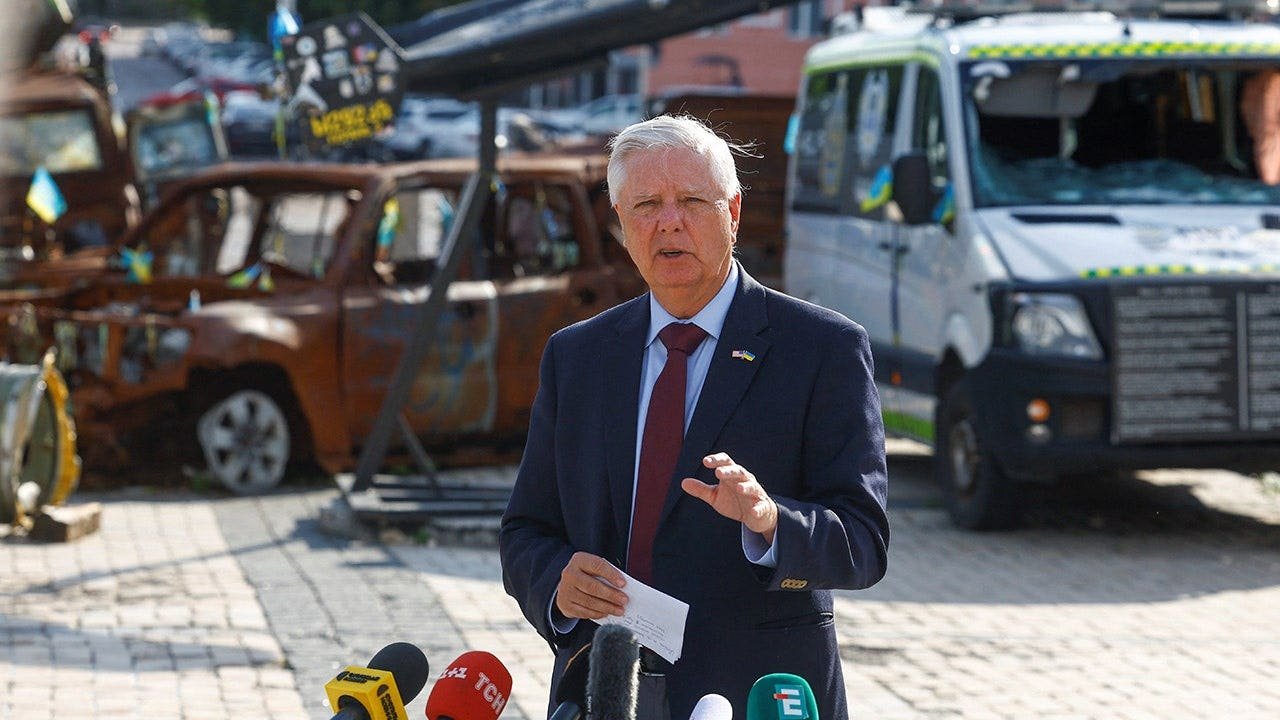
Sen. Lindsey Graham is pictured in Kyiv on June 10, one day before his passing. (Valentyn Ogirenko/Reuters)
Whenever Trump appeared to move toward a negotiated settlement with Iran, Graham followed a familiar playbook: remind the White House that Congress ultimately would have to review any lasting agreement.
After Trump announced a memorandum of understanding with Iran in June, Graham quickly argued that any lasting deal would require congressional scrutiny and even suggested Vice President JD Vance would ultimately have to defend it on Capitol Hill.
By the time of his death, Graham had fashioned exactly the role he wanted in Washington: trusted interlocutor between the White House, Congress and foreign leaders.
Sen. Amy Klobuchar, D-Minn., described Graham as having a «kid-like exuberance about his job and the responsibilities he was given.»
«Even in his sixties he would get off a plane in a foreign land with a twinkle in his eye and look at me as if to say, can you believe we are actually here and doing this?» she wrote on X.
Very rarely in life do you get to be exactly where you want to be, when you want to be there, with who you want to be with, doing precisely what you want to do — that was every moment for Lindsey,» White House deputy chief of staff Stephen Miller wrote on X.
«Lindsey was a senator’s senator. The job was everything to him. Truly did he believe in the splendor of the office and the noble lineage behind it, of which he was the worthy heir.»
Graham rarely seemed interested in winning an argument if it meant losing the president. He spent more than a year revising his long-stalled Russia sanctions legislation and negotiating with the White House as Trump pursued his own diplomatic outreach to Russian President Vladimir Putin. Only days before his death did Graham announce that he had reached an agreement with the administration to move the bill forward.
While Trump frequently questioned the value of NATO and demanded allies shoulder more of the burden, Graham viewed America’s alliances as one of its greatest strategic advantages. He generally agreed that European nations needed to spend more on defense, but argued the alliance itself remained indispensable to deterring Russia and projecting American power.
Graham’s support for Israel was equally central to his worldview. He regarded Israel as America’s closest partner in the Middle East and spent years working to strengthen ties between Israel and Arab states, viewing Saudi-Israeli normalization as a historic opportunity to reshape the region while further isolating Iran.
Graham spent a decade proving that in Washington, proximity to power could matter as much as formal authority. Without Graham in Washington, Ukraine now fears it may have lost an indispensable advocate in Washington.
«Huge and absolutely unexpected loss,» said Oleksandr Merezhko, a lawmaker with Zelenskyy’s party, told the AP. «He was truly indispensable. I even don’t know who might be as important for us now in Trump’s entourage.»
«He was the closest link between Ukraine, our president and Trump,» he added. «Our position in Trump’s entourage might be weaker.»
CLICK HERE TO DOWNLOAD THE FOX NEWS APP
It’s unclear who will be able to usher Graham’s signature Russia sanctions bill through the Senate and onto the president’s desk with the same access to both ends of Pennsylvania Avenue.
For now, the president will navigate wars in Ukraine and the Middle East without the friend who was never shy about telling him to hit harder.
lindsey graham, politics, foreign policy senate, donald trump, foreign policy
INTERNACIONAL
Francia celebra el Día de la Bastilla con un tradicional desfile militar, Zelensky como invitado de honor y un amplio respaldo a Ucrania

El presidente de Francia, Emmanuel Macron, encabeza este martes su décimo y último desfile militar por el Día de la Bastilla como jefe de Estado, con su par de Ucrania, Volodimir Zelensky, como invitado de honor y una fuerte presencia de tropas que respaldan a Kiev frente a la invasión rusa. La ceremonia también incluyó un homenaje a las víctimas del atentado terrorista de Niza, al cumplirse diez años del ataque que dejó 86 muertos.
El tradicional desfile sobre la avenida de los Campos Elíseos, que conmemora la toma de la Bastilla del 14 de julio de 1789, comenzará alrededor de las 10:00 hora local. La ceremonia reunirá a unos 500 soldados de la denominada Coalición de los Voluntarios, integrada por países que apoyan a Ucrania, además de unos 25 militares ucranianos, que desfilaron detrás de las tropas de los Estados miembros de esa alianza.
La participación de efectivos ucranianos y de países aliados se produce un día después de la reunión de los líderes de la coalición en París. Francia y el Reino Unido impulsan desde el año pasado este grupo de naciones dispuesto a participar en una eventual fuerza multinacional liderada por Europa una vez que exista un alto el fuego en Ucrania.
En la víspera del desfile, Macron pronunció su tradicional discurso ante las Fuerzas Armadas y defendió el compromiso europeo con la seguridad del continente. “El mensaje que enviamos al mundo es este: Sí, la paz es nuestro objetivo“, afirmó el mandatario.
El presidente francés agregó: «Sí, apreciamos la libertad y el Estado de derecho. Y sí, estamos preparados para luchar para defenderlos. Siempre, y al costo de sangre si fuera necesario“.

Desde el Palacio del Elíseo también destacaron el significado político del acto. Un integrante de la oficina presidencial sostuvo que el desfile representa «un poderoso símbolo de una Europa que toma conciencia de lo peligroso que es el mundo y que debe tomar su destino en sus propias manos“.
La ceremonia transcurre bajo una intensa ola de calor que afectó a gran parte de Francia. Decenas de miles de personas asistirán a las celebraciones en el centro de París, mientras un incendio forestal avanza en las afueras de la capital y las autoridades prohibieron los fuegos artificiales en varias zonas del país debido al riesgo de nuevos focos.
Además del desfile militar y del espectáculo aéreo, la jornada nacional francesa concluirá con otro acontecimiento de gran expectativa: el partido entre Francia y España por las semifinales del Mundial de fútbol. La selección francesa busca regresar a una final después de conquistar el título en 2018 y perder la definición de 2022 frente a Argentina.
Antes del encuentro deportivo, Macron dispuso realizar un minuto de silencio en memoria de las víctimas de los atentados yihadistas que golpearon al país hace una década.
El homenaje recordará el ataque ocurrido el 14 de julio de 2016 en la ciudad mediterránea de Niza, cuando un conductor embistió con un camión a la multitud que abandonaba el espectáculo de fuegos artificiales por el Día de la Bastilla. El atentado provocó 86 muertos y más de 400 heridos.
El grupo yihadista Estado Islámico reivindicó posteriormente al atacante, un ciudadano tunecino de 31 años identificado como Mohamed Lahouaiej-Bouhlel, que murió por disparos de la policía en el lugar del ataque.

El atentado de Niza ocurrió menos de un año después de los ataques coordinados del 13 de noviembre de 2015 en París y sus alrededores, que dejaron 130 muertos y constituyeron el peor ataque terrorista en tiempos de paz registrado en Francia.
La edición de este año también marca el último desfile del 14 de Julio para Macron antes del final de su segundo mandato consecutivo, el máximo permitido por la Constitución francesa. El presidente dejará el cargo el próximo año y el escenario político ya apunta a las próximas elecciones presidenciales.
En ese contexto, la líder de la derecha nacional, Marine Le Pen, mantiene su intención de competir por cuarta vez por la Presidencia, pese a una condena por malversación de fondos.
(Con información de AFP)
anniversaries,defence

Se conoció el dato más doloroso sobre la muerte de la abuela de Nico Occhiato y cómo lo atravesó: «Hace tiempo que…»

El efecto Laffer y la coparticipación federal

La insólita cifra de espectadores en un partido de Mundial: el día que (casi) nadie fue a la cancha

Outlet de Once inaugura un nuevo local con ropa desde $3.000 y amplía su oferta de descuentos

Jack Grealish, ‘cazado’ bebiendo alcohol en un estado desmejorado

Para la mayoría es el olor a estiércol, pero para ellos es «el olor a dinero»

Pablo Cervi, senador de LLA, defendió la eliminación de las PASO: “Hay que sacarle ese costo a la población”

“Hablame bien”: el tenso cruce de Lionel Messi con el árbitro en la victoria de Argentina ante Suiza en el Mundial

El álbum de las vacaciones soñadas de Darío Barassi con su familia: “Ibiza, nos vas enamorando”

Hackearon a la AFA y enviaron correos con falsas denuncias sobre el arbitraje ante Egipto

 DEPORTE2 días ago
“Hablame bien”: el tenso cruce de Lionel Messi con el árbitro en la victoria de Argentina ante Suiza en el Mundial
- CHIMENTOS2 días ago
El álbum de las vacaciones soñadas de Darío Barassi con su familia: “Ibiza, nos vas enamorando”
- ECONOMIA2 días ago
El petróleo sube más de 3% tras la reanudación de los ataques de EEUU contra Irán y la amenaza de cierre del estrecho de Ormuz