INTERNACIONAL
Democrats revolt over ‘biological’ wording in women’s history museum bill


NEWYou can now listen to Fox News articles!
House Democrats unanimously rebelled against legislation Thursday directing the construction of a new women’s history museum on the National Mall.
Democrats sought to defeat the bill after Republicans limited the institution to biological women and excluded transgender individuals.
The measure came up short in a vote of 204-216 after a handful of conservative GOP lawmakers joined Democrats in tanking the legislation that would secure a site for the forthcoming Smithsonian American Women’s History Museum on the grounds of the Mall.
The defecting Republicans objected to the measure over concerns about whether a women’s history museum was necessary and because the bill did not include protections against left-wing content from appearing in the institution,» a source familiar told Fox News Digital.
Members of the Democratic Women’s Caucus, led by Chairwoman Teresa Leger Fernandez, D-N.M., voted against bipartisan legislation securing a site for the forthcoming Smithsonian women’s history museum on the National Mall. (Kenny Holston-Pool/Getty Images)
WATCH: DEMS GO SILENT, PULL WOMEN’S MONTH RESOLUTION AFTER GOP ASKS FOR SIMPLE DEFINITION
«American women are already proudly honored across the Smithsonian—from pioneers and patriots to scientists and leaders,» the source said. «We don’t need another taxpayer-funded museum that risks becoming a shrine to abortion activists like Margaret Sanger or the latest progressive cause.»
It was not immediately clear whether Republican leadership would attempt to bring the legislation up for a vote at a later date. Eight Republicans did not vote.
Democrats’ widespread opposition to the legislation came after the Democratic Women’s Caucus issued a statement last month accusing Republicans of targeting «transgender women and girls» with an amendment defining the museum around biological women.
The female lawmakers argued the anticipated museum is long overdue, but said they could not support the legislation with the biological women language added, which many characterized as a «poison pill.»
«The Museum shall be dedicated to preserving, researching, and presenting the history, achievements and lived experiences of biological women in the United States,» the amended measure, authored by Rep. Mary Miller, R-Ill., states in part.
The museum may not depict «any biological male as female,» it continues, which codifies language in a Trump executive order issued in 2025 barring the inclusion of transgender individuals in the forthcoming museum.
«The addition of the word biological made them all run for the hills,» House Speaker Mike Johnson, R-La., said during a news conference Wednesday. «If that’s controversial in the Democratic Party, we’re in serious trouble. The party that purports to support women, demanding that the museum include biological men.»
Democrats’ decision to withdraw support for the museum measure comes as the party has continued to advocate for transgender rights despite questions over whether those views contributed to its poor performance in the 2024 election. Many Democrats also continue to face GOP scrutiny about providing a definition for «woman.»

House Speaker Mike Johnson, R-La., said the insertion of language restricting the museum to biological women made Democrats «run for the hills.» (Kevin Dietsch/Getty Images)
DEMOCRATS REFUSE TO DEFINE ‘WOMAN’ WHEN PRESSED ON CAPITOL HILL: ‘COMPLICATED QUESTION’
Democratic lawmakers also slammed amended language in the bill granting the president the authority to choose an «alternative site» within 180 days of the measure’s enactment.
«They amended the bill to give Trump and his allies unregulated power over what content and which women can be included in the museum, and the museum’s location,» Democratic Women’s Caucus Chairwoman Teresa Leger Fernandez, D-N.M., said in a joint statement earlier this week with other female Democratic lawmakers. «A museum about women, fought for and supported by women, should not be controlled by one man.»
Rep. Nicole Malliotakis, R-N.Y., the sponsor of the museum measure, accused Democrats of «hiding behind» that rationale to avoid addressing the transgender provision.
«A women’s history museum is supposed to be dedicated to women, period,» Malliotakis told Fox News. «And the fact that they’re going to pull their support after overwhelmingly co-sponsoring this bill because the word biological was inserted, to me, is ludicrous.»
«They’re going to have to explain to their voters why they believe this museum should not be built and why they believe that there should be transgender exhibits in it,» she added.
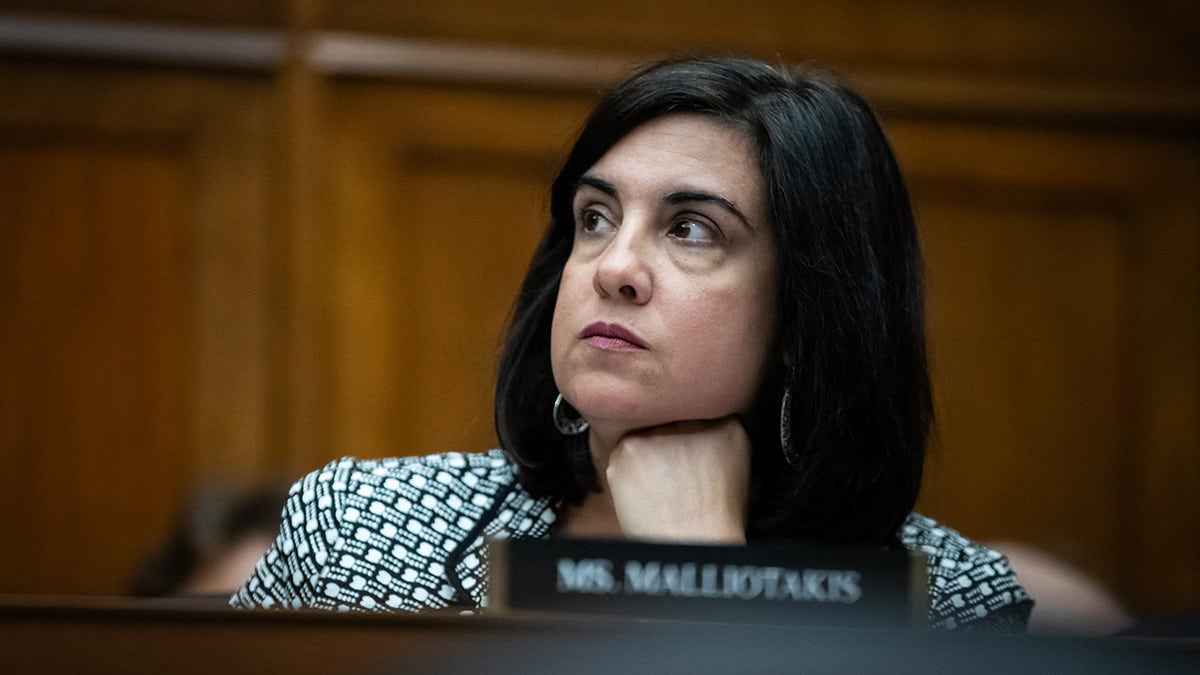
Rep. Nicole Malliotakis, R-N.Y., said Democrats should have to explain why they want transgender exhibits in the forthcoming Smithsonian women’s history museum. (Allison Bailey/Middle East Images/AFP via Getty Images)
CLICK HERE TO DOWNLOAD THE FOX NEWS APP
Congress previously authorized the women’s history museum in 2020, along with a museum for American Latinos. Some Democrats justified their opposition to the measure over objections that the women’s history museum is advancing without the planned Latino institution.
politics, republicans, congress, democrats, legislation, house of representatives













NEWYou can now listen to Fox News articles!
A Romanian F-16 fighter jet shot down a drone that entered the country’s airspace without authorization Friday, marking the first time the NATO member has intercepted and destroyed a drone inside its national airspace, authorities said.
Romanian officials have not yet identified the drone’s origin or purpose. Romania’s army chief said pilots described it as appearing to be a Shahed-type drone, Reuters reported, the Iran-designed attack drone widely used by Russia against Ukraine.
The incident carries direct implications for the U.S. and its NATO allies, as repeated airspace breaches along the alliance’s eastern flank have fueled concerns that Russia’s war in Ukraine could spill across NATO borders. Romania, which borders Ukraine, has reported dozens of drone incursions or debris incidents since Moscow launched its full-scale invasion in 2022.
Romanian Foreign Minister Oana Țoiu said the interception took place over an unpopulated area in Buzău County.
REPORT WARNS RUSSIA USING SHADOW FLEET TO PROBE NATO DRONE DEFENSES
An F-16 fighter jet takes part in the NATO Air Shielding exercise near the air base in Lask, central Poland, Oct. 12, 2022. (Radoslaw Jozwiak/AFP via Getty Images)
«Our borders and our sovereignty are non-negotiable, and our military and NATO air police will continue to monitor the land border, the Danube and the Black Sea, as our military frequently identifies risks,» Țoiu told Fox News Digital.
«The impact area and the drone debris are currently being analyzed, but the pattern is consistent with prior confirmed Russian drone flights during the numerous illegal attacks against Ukrainian civilian infrastructure on Romania’s border,» she added.
Țoiu said Romania and NATO would continue to defend allied territory.
«NATO works, and we plan to be even stronger with the decisions on air defense and budget allocation from The Hague and Ankara summits,» she said. «The path toward increased security is the path toward peace at Romania’s border. We will defend our citizens and we will continue to invest in protecting Romanian and Allied territory.»
THE TWO MOST IMPORTANT AMERICAN WEAPONS SYSTEMS NATO IS EAGER TO HAVE
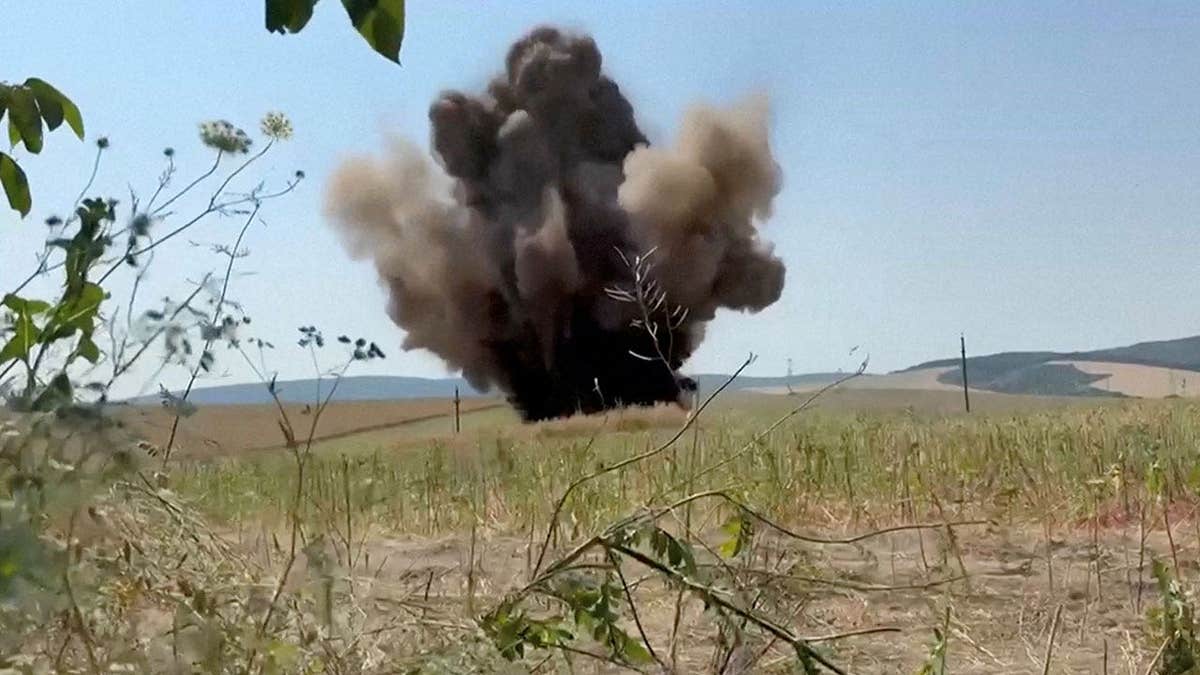
Explosion following what Romania’s defense ministry says was a detonation of Russian drone fragments found in a location given as near Rachelu village, Romania, in this screengrab taken from a handout video released June 30, 2026. (Romanian Defence Ministry/Handout via Reuters)
Țoiu previously told Fox News Digital July 2 that Russian drones had been detected inside Ukraine roughly 19 miles from Romania’s border, prompting two Royal Air Force Eurofighter Typhoon jets operating from Romania’s 86th Air Base in Fetești to scramble under NATO’s Enhanced Air Policing mission. A Romanian Air Force IAR 330 Puma helicopter was also deployed, she said at the time.
Romanian President Nicușor Dan and Defense Minister Radu Miruță reaffirmed the country’s commitment to protecting its airspace and investing in modern air-defense and anti-drone capabilities, according to Țoiu.
The incident underscores the growing danger along NATO’s eastern flank as Russia continues strikes across Ukraine and Kyiv increasingly targets Russian military and energy infrastructure deeper inside Russia.
RUSSIA UNLEASHES NEARLY 600 MISSILES AND DRONES ON KYIV IN DEADLIEST STRIKE SINCE MAY
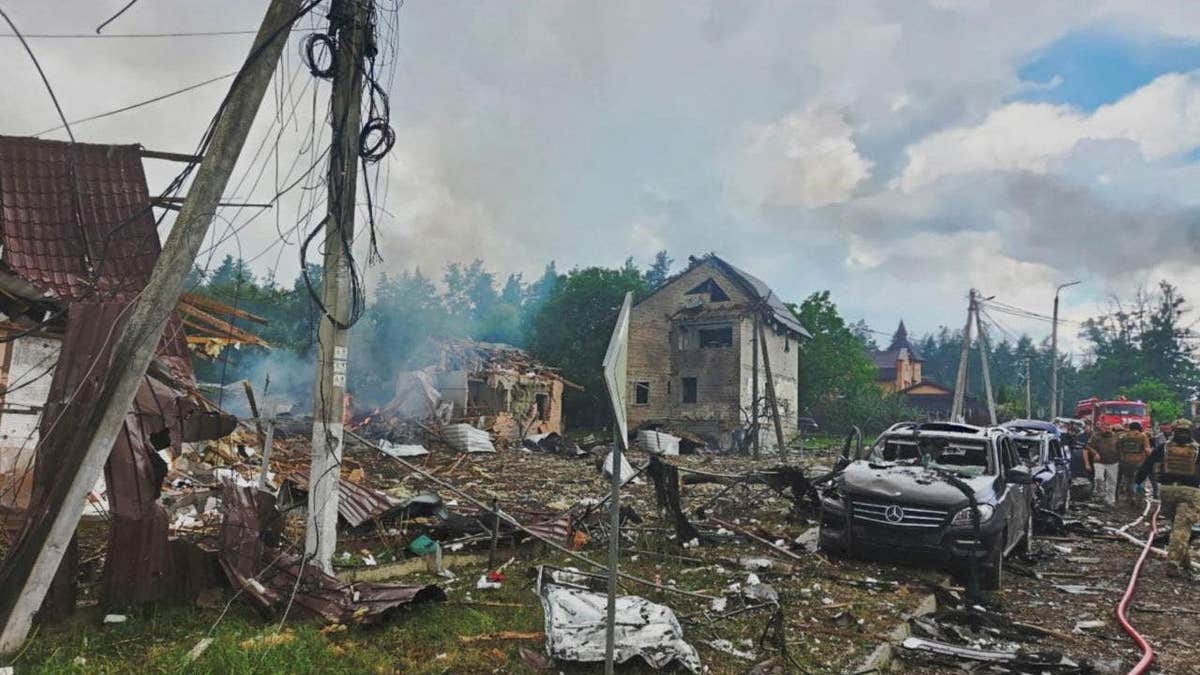
Emergency employees work at the site of a Russian missile strikes, amid Russia’s attack on Ukraine, in Kyiv region, July 24, 2026. (Press service of the State Emergency Service of Ukraine/Handout via Reuters)
The drone shootdown came as Ukraine reported deadly Russian strikes in the Kyiv region and Slovyansk.
President Volodymyr Zelenskyy said a rescue operation was underway in the Kyiv region after a Russian missile strike killed six people and wounded dozens. Reuters later reported that Ukrainian officials and industry representatives said the strike killed 10 people and injured close to 100 at a site where a defense industry event was being held.
«There were also casualties in Slovyansk following guided aerial bomb strikes,» Zelenskyy said. «Five people were killed. My condolences to their families. Nine others were injured. The Russians damaged ordinary homes, the consulate building, and vehicles.»
Latvian Foreign Minister Baiba Braže said Latvia’s honorary consulate building in Slovyansk, in Ukraine’s Donetsk Oblast, was destroyed Friday morning in a Russian attack involving a KAB-250 guided aerial bomb, according to information provided by Ukrainian authorities.
Braže said Latvia’s honorary consul, Oleksandr Pavenko, was not injured, but two consulate staff members were wounded. She informed European Union and NATO foreign ministers and international organizations about the incident, while Latvia summoned Russia’s chargé d’affaires and delivered a note of protest.
«Russia will be held accountable for this and other violations of international law,» Latvia’s Foreign Ministry said. «All war crimes committed by Russia must be thoroughly investigated, and those responsible must be brought to justice.»
Zelenskyy called the strikes «brutal attacks on civilians» and again pressed Ukraine’s partners for air-defense support.
«Interceptors for Patriot systems are the number one priority,» he said.
Ukraine also said its forces had struck one of Russia’s key military enterprises in Kirov, which Zelenskyy said supplies components for Russian aircraft and missile systems used in attacks on Ukrainian cities. Zelenskyy said Ukraine had also hit an oil facility nearly 840 miles away and that operations against Russian logistics supplying drone components, navigation equipment and military gear remained underway. Ukrainian outlet UNN reported that Zelenskyy confirmed the Kirov strike and the long-range strike on the oil facility.
CLICK HERE TO DOWNLOAD THE FOX NEWS APP
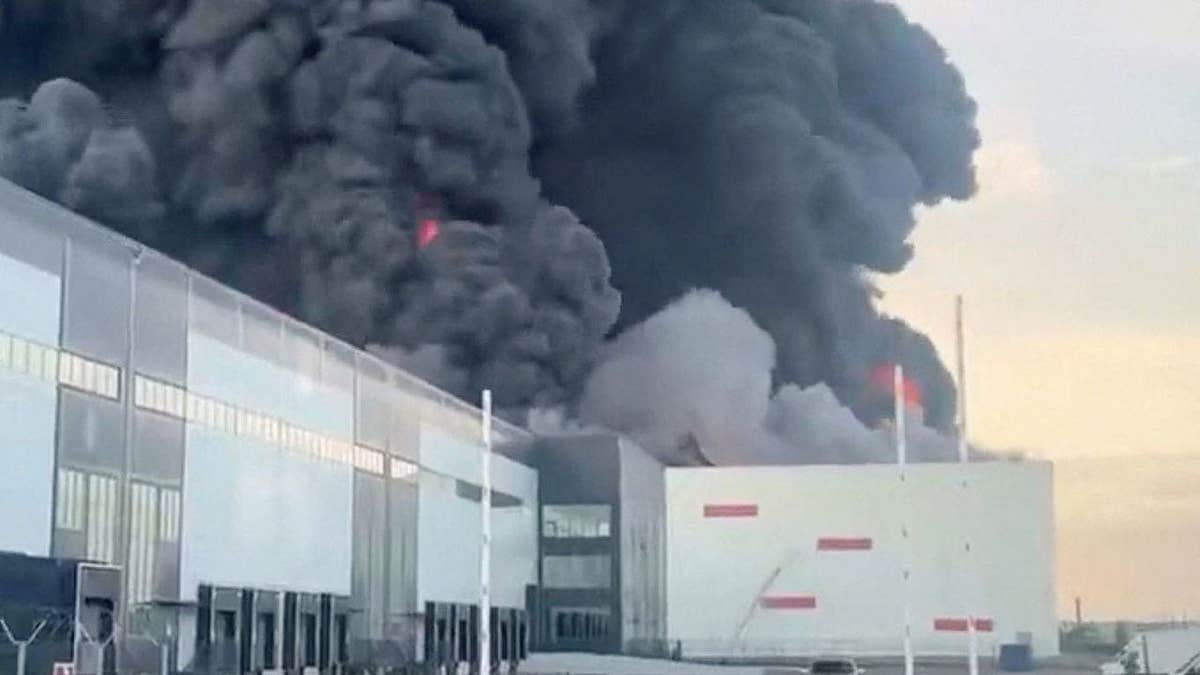
Smoke rises from Wildberries facility, from what the Ukrainian authorities say was following a drone attack, in Shushary, Pushkinsky District, St. Petersburg, Russia July 24, 2026 in this screen grab taken from a social media video. (Social media/via Reuters)
The Security Council is expected to hold an emergency meeting on Ukraine Monday at 10 a.m., as requested by Ukraine, according to a United Nations schedule viewed by Fox News Digital. The meeting comes after Kyiv has repeatedly urged the international community to respond more forcefully to Russia’s attacks on civilians and infrastructure.
The back-and-forth comes as Kyiv is trying to show battlefield momentum despite continued Russian missile and drone attacks.
Outgoing Ukrainian Commander in Chief Oleksandr Syrskyi said Ukraine had recaptured 270 square miles of territory in 2026 and was handing over to his successor «an army that is not only holding the defence but is also on the offensive,» Reuters reported Wednesday.
Fox News Digital reached out to the Russian defense ministry but didn’t receive a response in time for publication.
Reuters contributed to this report.
nato, ukraine, drones, world, air force, russia

Trump warns Iran of US retaliation
President Donald Trump delivers a strong warning to Iran, stating the U.S. will bomb bridges or power plants if Iranian forces attack ships in the Strait of Hormuz. This follows ongoing U.S. strikes on Iranian military sites.
NEWYou can now listen to Fox News articles!
Nearly five months after launching a sweeping campaign against Iran’s nuclear, missile, naval and proxy capabilities, the Trump administration is now fighting to reopen the Strait of Hormuz while negotiations have yet to produce a permanent settlement.
The administration says its renewed strikes have a clear immediate objective: «making Iran pay.» Less clear is what Iran must do to end the strikes — or what conditions would allow the U.S. to step back from a growing military commitment in the region.
President Donald Trump has threatened to expand the campaign to Iran’s nuclear sites, bridges, power plants and other infrastructure.
ARMY IDS 2 VICTIMS KILLED IN JORDAN AIR BASE ATTACK; TRUMP: IRAN WILL PAY ‘MANY TIMES OVER’
In response to questioning on the end goals in Iran, a U.S. official said: «Right now, the President is focused on making Iran pay for their violations of the MOU and their continued acts of terrorism in the Strait of Hormuz,» referring to the memorandum of understanding between Iran and the United States.
«In addition, the President will make Iran pay for the recent deaths of U.S. soldiers,» the official said.
The Trump administration says its renewed strikes have a clear immediate objective: «making Iran pay.» (Morteza Akhoundi via Getty Image)
«These devastating blows will continue until the President deems otherwise, but talks between our countries are continuing,» the official said. «President Trump has all of the cards and all options at his disposal, and Iran can never possess a nuclear weapon.»
The response defined the immediate campaign as punishment for Iran’s actions but did not identify any condition Tehran could meet to halt the strikes beyond Trump deciding that the punishment had been sufficient. Follow-up questioning by Fox News Digital went unanswered.
STEVE FORBES URGES TRUMP TO KEEP THE STRAIT OF HORMUZ OPEN AT ALL COSTS
When Trump launched its military Operation Epic Fury mission Feb. 28, the White House laid out four sweeping objectives: preventing Iran from obtaining a nuclear weapon, destroying its ballistic missiles and production capacity, annihilating its navy and severing its support for terrorist proxies.
The administration declared those military objectives achieved in April. But Iran retained enough capability to close the Strait of Hormuz, attack commercial shipping and target U.S. forces and allies across the region.
The administration’s immediate focus is now the strait. U.S. Central Command said Thursday that its latest strikes targeted Iranian maritime capabilities, coastal surveillance sites, air defenses and missile and drone facilities to degrade Tehran’s ability to attack commercial vessels.
TRUMP SEEKS $672M TO STOP IRANIAN NUKES AS NEGOTIATORS WEIGH FATE OF URANIUM STOCKPILE
Secretary of State Marco Rubio has framed the current campaign as an effort to prevent Iran from establishing a «dangerous precedent» by controlling an international waterway, while maintaining that Washington remains open to diplomacy. He said Iran must stop attacking commercial ships and reopen the strait before the United States changes its behavior.

Mourners gather around a vehicle transporting the coffin of Iran’s late Supreme Leader Ayatollah Ali Khamenei, who was killed on February 28 in Israeli and U.S. airstrikes, and coffins of his family members, on the day of his burial, in a culmination of a mass funeral, in Mashhad, Iran, July 9, 2026. (Majid Asgaripour/West Asia News Agency, via REUTERS)
«Their behavior has to change in order for ours to change,» Rubio said Sunday.
Yet recent strikes have expanded beyond Iran’s maritime capabilities to include bridges and other infrastructure as Trump continues threatening nuclear facilities, raising new questions about how the widening target set fits into the administration’s broader strategy.
Meanwhile, the final nuclear agreement envisioned under the June memorandum of understanding has not materialized, even as the White House says talks between Washington and Iran are continuing. The memorandum had envisioned an agreement within 60 days, but renewed fighting has left its timing and prospects uncertain.
Trump has continued threatening Iran’s nuclear infrastructure, including the deeply buried Pickaxe Mountain facility. But he has also appeared to soften one of the administration’s original demands, saying in June that Iran could retain some ballistic missiles in proportion to neighboring countries.
The administration has not clarified whether the original missile objective was achieved, relaxed as part of negotiations or remains part of a future settlement, nor whether ending Iran’s support for proxies remains a condition for victory.
Publicly, the renewed campaign has a clear immediate military task — protecting shipping and preventing Iran from asserting control over Hormuz — but the connection between that mission, the stalled nuclear process and Trump’s threats to widen the war remains unexplained.
Eighteen U.S. service members have been killed since the war began, while Secretary of War Pete Hegseth told lawmakers Tuesday that the campaign has cost an estimated $37.5 billion.
Retired Air Force Brig. Gen. Robert Spalding, a senior fellow at the Hudson Institute, a conservative think tank, who served as a senior strategy official in the first Trump White House, argued that the campaign can still be understood around one overriding objective.
«I think the end goal is to prevent them from having a nuclear weapon,» Spalding told Fox News Digital. «The goal is very clear. It is: How do you want to go about getting to those goals, and then what are you willing to pay to achieve them? That’s the decision that has to be made.»
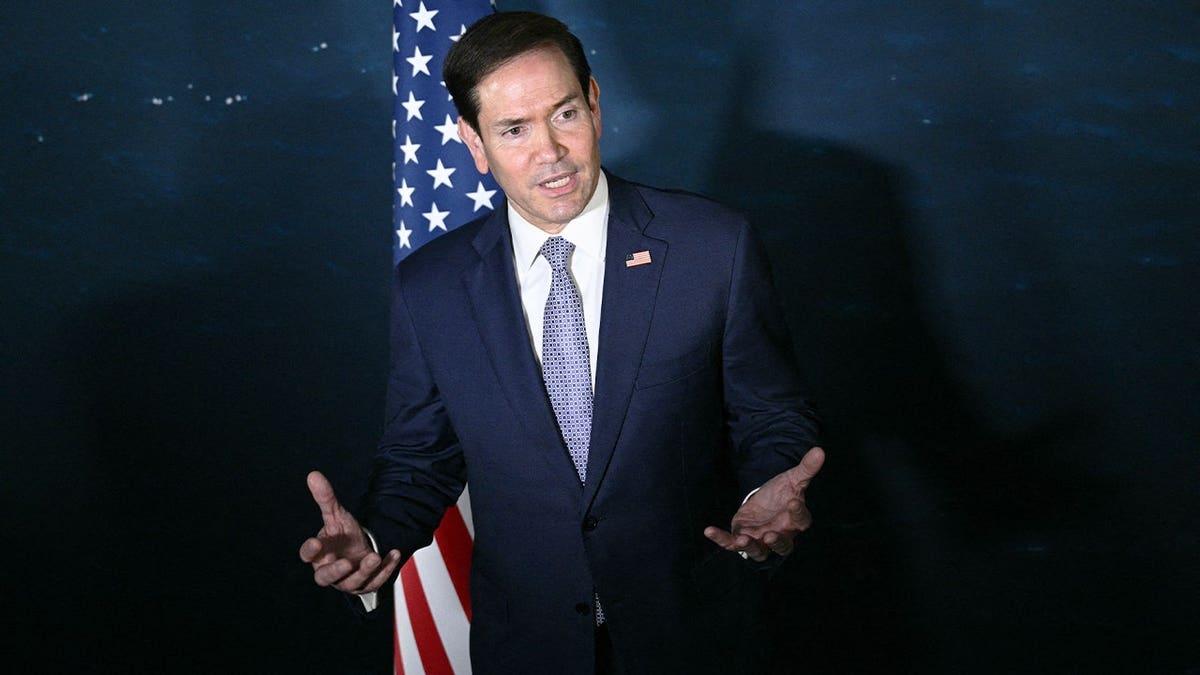
Secretary of State Marco Rubio has framed the current campaign as an effort to prevent Iran from establishing a «dangerous precedent» by controlling an international waterway, while maintaining that Washington remains open to diplomacy. (Brendan SMIALOWSKI / POOL / AFP via Getty Images)
On Hormuz, Spalding predicted that protecting commercial shipping could require prolonged U.S. presence, comparing it to Operations Northern and Southern Watch, the yearslong U.S.-led enforcement of no-fly zones over Iraq.
«I don’t think that we’re leaving the area anytime soon,» Spalding said.
He described that potential mission as «almost an airborne and seaborne occupation of the strait and the Gulf» intended to preserve the free flow of international shipping.
Such a mission could give the current strikes a defined military purpose, but it would not necessarily resolve the nuclear negotiations, eliminate Iran’s remaining leverage or produce a political settlement. It could instead leave American forces enforcing access to Hormuz for an extended period while the broader conflict remains unresolved.
Ali Vaez, Iran project director at the International Crisis Group, said the administration’s changing public emphasis reflects the absence of a coherent strategy connecting its military actions to an achievable end state.
«The administration does not seem to have a clear strategy,» Vaez told Fox News Digital. «It’s been a moving goalpost.»
Vaez also argued that the conflict has given Iran a potent new form of leverage: the demonstrated ability to choke shipping through Hormuz and impose economic pain on the United States. He described Iran’s control over the strait as a «weapon of mass destruction.»
«For more than four decades, the United States has been able to coerce the Iranian regime economically,» Vaez said. «The Iranians never had the possibility of retaliating in kind, of putting pressure on the pocketbook of every American citizen.»
The U.S. is now trying to inflict enough pain on Iran that it abandons its insistence on controlling the strait, according to Vaez. But Iran views that control as its most valuable remaining source of leverage and one it cannot surrender without weakening its position in any future negotiations, he argued.
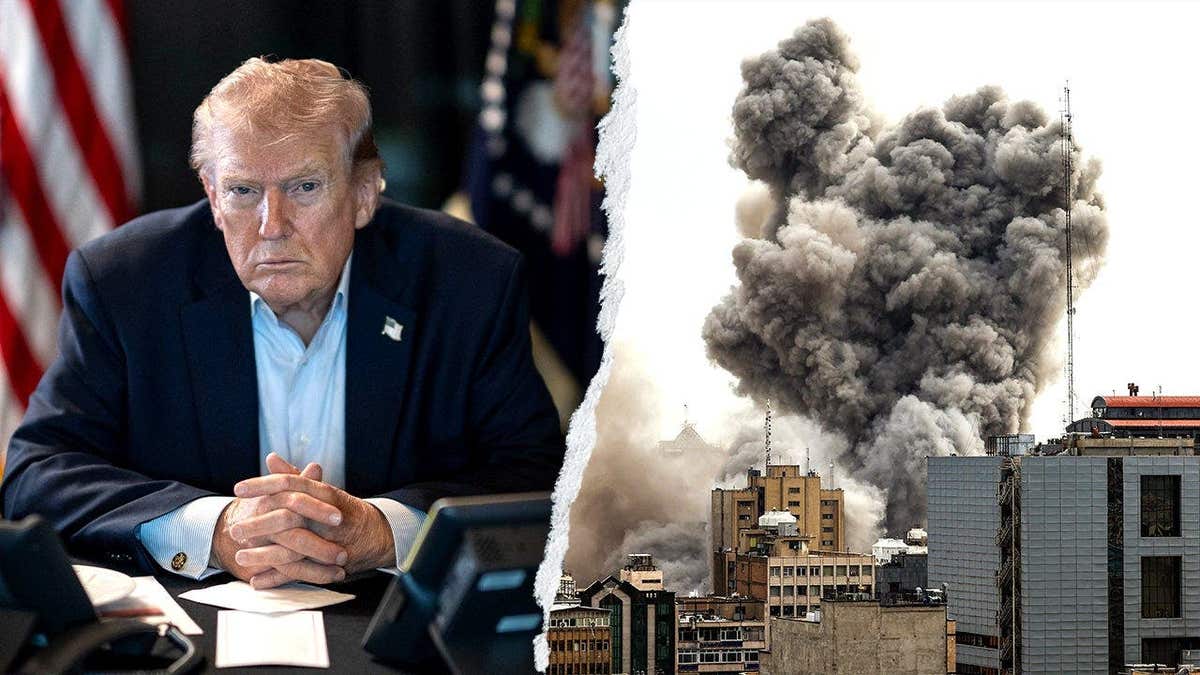
President Donald Trump confirmed the U.S. launched strikes on Iran on Saturday, Feb. 28, 2026. (The White House via X Account/Anadolu via Getty Images/Contributor/Getty Images)
«We are in a zero-sum situation,» Vaez said. «The U.S. is trying to remove a tool of leverage from the hands of the Iranians that they believe is essential to their survival.»
CLICK HERE TO DOWNLOAD THE FOX NEWS APP
Although the United States retains overwhelming military superiority, Vaez argued that neither side has been able to deliver a decisive blow. Washington can continue inflicting damage, he said, while Tehran has a greater willingness to absorb it because it views the conflict as a struggle for the regime’s survival.
«There is no military solution to resolving the problem in the strait,» Vaez said. «After much more death and destruction, I think both sides would return to the same logic that led them to agree to the MOU in the first place—which is that neither side is really able to deliver a knockout blow to the other.»
iran, war with iran, donald trump, middle east
INTERNACIONAL
Los dos mayores embalses de Estados Unidos caen a un mínimo histórico: ¿puede “El Niño” traer el agua que necesitan?
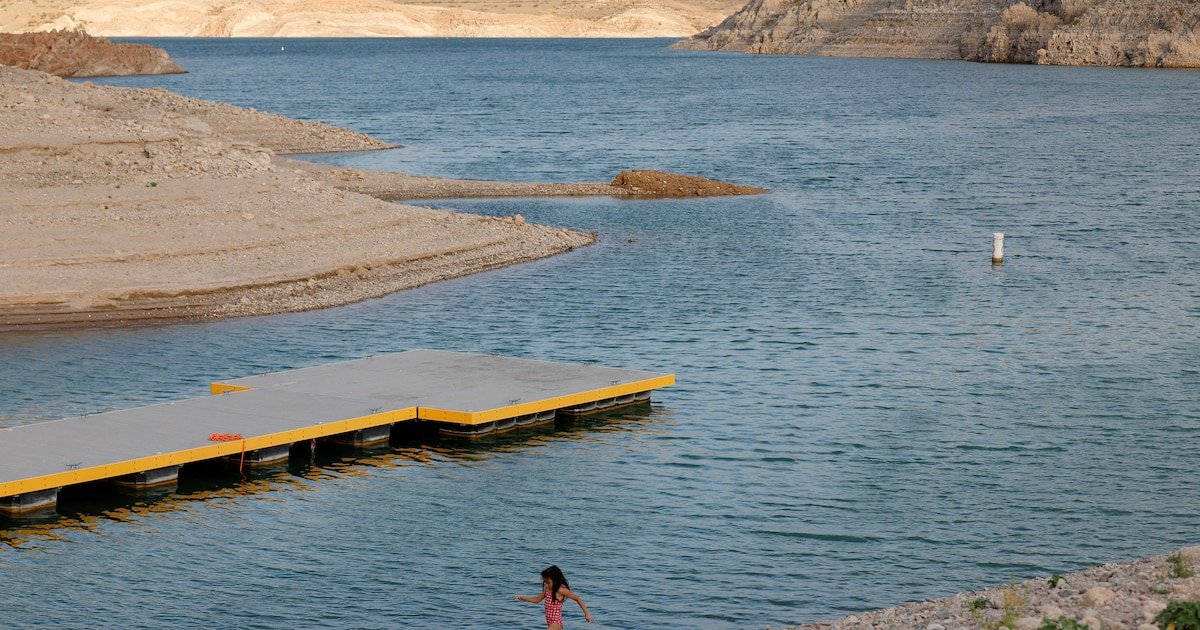
Lake Mead y Lake Powell, los principales embalses de Estados Unidos, descendieron en julio de 2026 a niveles de almacenamiento sin precedentes, impactando a cerca de 40 millones de personas en siete estados del oeste y profundizando la crisis hídrica que afecta a la región. El descenso se atribuye a la escasez de nevadas en las Montañas Rocosas y a una demanda creciente, según las autoridades del sector hídrico federal.
De acuerdo con la Oficina de Reclamación de Estados Unidos (USBR) y el Centro para Estudios del Río Colorado de la Universidad de Colorado, el 12 de julio la suma de reservas de ambos embalses cayó a 12,7 millones de acres-pie, superando el récord anterior de marzo de 2023. La USBR informó que Lake Powell descendió a 3.523 pies sobre el nivel del mar el 22 de julio, mientras que Lake Mead se ubicó justo por debajo de 1.043 pies. Estas cifras representan los valores más bajos desde 1957, cuando la represa Glen Canyon todavía no permitía la acumulación de agua en Lake Powell, según análisis recogidos por CNN y FOX Weather.
El retroceso de los embalses responde a una combinación de factores climáticos y de gestión. La cuenca del río Colorado depende en gran medida del deshielo de las Montañas Rocosas y de las precipitaciones invernales. La USBR atribuye la crisis actual a un invierno 2025-2026 con acumulación de nieve muy por debajo del promedio, lo que redujo el caudal de entrada a Lake Powell y, en consecuencia, a Lake Mead, acentuando el estrés hídrico en una zona históricamente vulnerable.
Según datos de la USBR actualizados al 19 de julio de 2026, Lake Powell se encuentra al 22% de su capacidad total, mientras que Lake Mead está al 27%. La suma de almacenamiento en el sistema del río Colorado alcanza el 33%, en comparación con el 39% registrado en la misma fecha del año anterior. Esta situación marca la menor reserva combinada desde la década de 1950.
La Universidad de Colorado precisa que la última vez que se registró un nivel similar fue en mayo de 1957, cuando toda el agua almacenada estaba en Lake Mead, ya que la represa Glen Canyon aún no comenzaba a llenar Lake Powell. De acuerdo con ABC News, “hay menos agua en los dos embalses de la que ha habido en cualquier momento desde que existe Lake Powell”, según el director del Centro para Estudios del Río Colorado de la Universidad Estatal de Utah, Jack Schmidt.

Lake Mead y Lake Powell son los pilares del sistema hídrico del oeste de Estados Unidos. Juntos abastecen de agua potable a cerca de 40 millones de personas en Arizona, California, Colorado, Nevada, Nuevo México, Utah y Wyoming, además de comunidades indígenas y regiones del norte de México, según la USBR.
El sistema del río Colorado también proporciona agua para riego agrícola y para la generación de electricidad en represas hidroeléctricas. De acuerdo con la CNN, estos embalses representan el eje de la infraestructura hídrica de la región, con una capacidad conjunta que históricamente ha permitido enfrentar sequías prolongadas.
El descenso de los niveles en Lake Mead y Lake Powell durante 2026 responde principalmente a la baja acumulación de nieve en las Montañas Rocosas y a condiciones de sequía persistente. El análisis de la USBR indica que el invierno 2025-2026 presentó precipitaciones muy por debajo de la media, lo que repercutió en la escasez de escurrimientos hacia la cuenca del río Colorado.
A este escenario se suma el incremento en la demanda de agua por el crecimiento poblacional y agrícola, así como la evaporación asociada a temperaturas elevadas. El fenómeno El Niño, aunque podría traer lluvias adicionales en el próximo invierno, no compensa la falta de precipitaciones acumuladas en los últimos años. Según la Administración Nacional Oceánica y Atmosférica (NOAA), “ni siquiera un invierno extremadamente húmedo revertiría el descenso acumulado durante los últimos 26 años en los embalses”.

El fenómeno El Niño incrementa la probabilidad de precipitaciones por encima del promedio en el oeste de Estados Unidos durante el otoño e invierno. Según el Centro de Predicción Climática de la NOAA, “California enfrentará mayores probabilidades de lluvias por una corriente en chorro del Pacífico más ancha y ondulada, capaz de impulsar más tormentas hacia la región”.
De acuerdo con FOX Weather, esto podría incrementar la acumulación de nieve en las Montañas Rocosas y, en consecuencia, el caudal de entrada a Lake Powell y Lake Mead durante la primavera de 2027. Sin embargo, tanto la USBR como la Universidad de Colorado coinciden en que se necesitarían varios inviernos excepcionales para revertir la tendencia a la baja observada desde finales de la década de 1990.
¿Qué medidas están adoptando las autoridades para enfrentar la crisis del agua?
El descenso de los niveles en Lake Powell y Lake Mead ha obligado a las autoridades federales y estatales a intensificar las políticas de conservación y reducción del consumo de agua. La USBR anunció una asignación adicional de 100 millones de dólares para programas de ahorro hídrico en los estados de la cuenca alta del Colorado, dirigidos a agricultores y ganaderos que accedan a reducir su uso de agua, según información publicada por criverwatch.org.
El informe de la USBR advierte que, de mantenerse la tendencia actual, Lake Powell podría alcanzar el umbral de “mínima reserva para generación eléctrica” durante la primavera de 2027, lo que impediría la producción hidroeléctrica en la represa de Glen Canyon. El documento también resalta la urgencia de alcanzar acuerdos interestatales para gestionar la escasez y evitar restricciones drásticas a usuarios urbanos y agrícolas.

Las autoridades de la USBR enfatizan la necesidad de cooperación entre los estados de la cuenca para asegurar el abastecimiento futuro y la sostenibilidad del sistema. El organismo federal sostiene que “la situación actual exige medidas coordinadas entre estados y usuarios para garantizar la sostenibilidad del suministro en el futuro inmediato”.
El Centro para Estudios del Río Colorado de la Universidad de Utah estima que “cada día, hasta que comience el deshielo en la primavera de 2027, es probable que se registre un nuevo mínimo histórico en la reserva total”. Las proyecciones oficiales anticipan que, salvo un cambio climático significativo, los bajos niveles persistirán hasta la primavera próxima, cuando el deshielo de las Montañas Rocosas incremente los caudales hacia los embalses.
La reducción del agua disponible en Lake Mead y Lake Powell tiene consecuencias para el abastecimiento urbano, la agricultura, la producción de energía y los ecosistemas del suroeste de Estados Unidos. El descenso de los embalses puede provocar restricciones en el suministro, incremento de costos para los usuarios y ajustes en los volúmenes de entrega a los estados y a México, de acuerdo con la información oficial de la USBR y la NOAA.
Entre los principales efectos se encuentran:
- Restricciones al uso del agua para riego agrícola.
- Reducción en la generación hidroeléctrica en las represas.
- Ajustes en los volúmenes de agua entregados a las ciudades y comunidades indígenas.
- Impacto en ecosistemas acuáticos y en la biodiversidad de la región.
La gestión coordinada de los recursos y la adaptación a escenarios de escasez prolongada serán claves para mitigar los efectos sobre la población, la economía y el medio ambiente.

Con las reservas de Lake Mead y Lake Powell en mínimos históricos, el horizonte inmediato está marcado por la incertidumbre respecto a la recuperación de los embalses. Las autoridades prevén que los niveles seguirán descendiendo hasta la primavera de 2027, cuando el deshielo de las Montañas Rocosas pueda aportar nuevos caudales. La cooperación interestatal y la adaptación de los sectores productivos y urbanos serán determinantes para afrontar la crisis del agua en el oeste de Estados Unidos, según la USBR y la Universidad de Colorado.
Domestic Politics,Environment,Natural World,Environment,North America,Government / Politics

La Casa Rosada relativizó los aranceles dispuestos por Trump y espera definiciones de EE.UU. para avanzar con el acuerdo comercial

Romanian F-16 shoots down drone after airspace breach, marking first for NATO ally

Mientras coquetea con Thiago Almada, Flamengo celebra la vuelta de Giorgian De Arrascaeta

Ley de Inocencia Fiscal limita controles de ARCA y levanta sospechas de blanqueo encubierto

Cristina Kirchner contrató al abogado de Lula da Silva para reforzar la estrategia internacional contra su condena por la causa Vialidad

Griezmann disfruta de su nueva vida mientras el Atlético sigue buscando a su sustituto

Escándalo Mundial: Las presiones secretas, la amenaza de la FIFA por Malvinas y la verdad detrás del partido contra España

Samuel L. Jackson llamó a Argentina “el país más racista del mundo”: la contundente respuesta que le dejó Bárbara Lombardo

Le ganan a la inflación: los senadores pasarán a cobrar $12 millones brutos a partir de agosto

Jorge Berredo, general retirado de las FFAA, asumió como Secretario de Seguridad en San Isidro

 DEPORTE3 días ago
Escándalo Mundial: Las presiones secretas, la amenaza de la FIFA por Malvinas y la verdad detrás del partido contra España
- POLITICA2 días ago
Jorge Berredo, general retirado de las FFAA, asumió como Secretario de Seguridad en San Isidro
- POLITICA1 día ago
Sin la anestesia mundialista, aflora la crisis del conurbano y Milei necesita reconectar con lo popular