INTERNACIONAL
Fox News Poll: Voters see welfare fraud as common, still mostly favor protecting benefits over crackdowns


NEWYou can now listen to Fox News articles!
As federal authorities continue to crack down on welfare fraud, the latest Fox News survey finds voters are concerned about program abuse, but still also want to protect access for legitimate recipients.
The survey was conducted before the Department of Justice announced charges against 15 defendants on Thursday in the ongoing Minnesota welfare fraud investigations, one of multiple inquiries into welfare abuse across the country.
A majority of registered voters, 71%, believe fraud in government welfare and social service programs is extremely or very common, and nearly half, 45%, think it has increased over the past two years. Just 19% say decreased and 35% believe it has stayed the same.
FOX NEWS POLL: 30% THINK RECENT TRUMP ASSASSINATION ATTEMPT WAS STAGED
Yet when weighing enforcement against access, voters prioritize eligible recipients: 56% say ensuring benefits for eligible people should be the higher priority, even if some fraud occurs, while 43% prioritize fraud prevention, even if some eligible people lose benefits.
«The data demonstrates what populist candidates understand intuitively,» says Republican pollster Daron Shaw, who helps conduct the Fox News Poll with Democratic partner Chris Anderson. «Voters think corruption and incompetence are rampant in government, and stories of program fraud from Minneapolis and California reinforce this notion. And articulating this belief plays well with the public. The policy implications are trickier: do you risk restricting aid to the truly vulnerable to ensure taxpayers aren’t being ripped off?»
Voters are split on who bears more responsibility for fraud: individuals misrepresenting eligibility or organizations and contractors misrepresenting costs (50% each).
FOX NEWS POLL: AS ECONOMIC PAIN DEEPENS, DISAPPROVAL OF TRUMP HITS NEW HIGH
On fraud prevention, more voters trust their state governments (60% a great deal or some confidence) than the federal government (51%).
There is notable bipartisan consensus on the existence of welfare fraud. To varying degrees, Democrats, Republicans, and independents agree fraud is common, and it has increased in recent years. But beyond that, partisan divisions become much sharper.
Majorities of Democrats are more likely to blame organizations and contractors for fraud and to prioritize ensuring eligible people receive benefits. By contrast, Republicans are more likely to blame individuals who misrepresent eligibility and favor stronger fraud prevention measures.
Independents are split on whether individuals or contractors are more responsible for fraud (50% each) but more prioritize access to benefits (57%) than fraud prevention (43%).
Confidence in state governments cuts across party lines, with majorities of Democrats (65%), independents (59%), and Republicans (56%) trusting their state to prevent fraud.
Views of the federal government are more polarized. Nearly two-thirds of Republicans (63%) express confidence in the federal government’s ability to combat fraud, compared to 42% of Democrats and 47% of independents.
Congressional Approval
Only 3 in 10 voters approve of the job Congressional Democrats (30%) and Republicans (31%) are doing.
Approval for Congressional Democrats is up 1 point since February (29%, a record low approval). Support for Congressional Republicans has fallen 5 points (36%), and much of that comes from a 10-point drop among Republican voters themselves.
Still, more Republicans approve of their lawmakers (67%) than Democrats do theirs (58%).
«Voters’ unfavorable views of Democratic lawmakers is one of the most fascinating and important factors affecting the midterms,» says Shaw. «Negative assessments of the Republicans are expected; they hold power at a time when the public mood is sour. But to capitalize on this, the Democrats must convince voters they might actually do better.»
Redistricting
Six in 10 voters are extremely or very concerned about redistricting ahead of the 2026 midterms.
More Democrats than Republicans are concerned (71% vs. 51%) and more than twice as many Democrats say they are extremely concerned (39% D vs. 15% R). Independents are split, with 50% concerned and 49% not concerned, including 22% extremely concerned.
CLICK HERE FOR CROSSTABS AND TOPLINE
The Supreme Court
Voters were also asked how they feel about increasing the number of justices on the U.S. Supreme Court and 45% favor the idea while 55% oppose it. Support is unchanged from 2022 and up from a 35% low in 2021. Overall, voters have generally opposed packing the court.
More than half of Democrats (55%) favor expanding the high court, while majorities of independents (56%) and Republicans oppose it (64%).
Conducted May 15-18, 2026, under the direction of Beacon Research (D) and Shaw & Company Research (R), this Fox News survey includes interviews with a sample of 1,002 registered voters randomly selected from a national voter file. Respondents spoke with live interviewers on landlines (109) and cellphones (635) or completed the survey online after receiving a text (258). Results based on the full sample have a margin of sampling error of ±3 percentage points. Sampling error for results among subgroups is higher. In addition to sampling error, question wording and order can influence results. Weights are generally applied to age, race, education, and area variables to ensure the demographics are representative of the registered voter population. Sources for developing weight targets include the most recent American Community Survey, Fox News Voter Analysis, and voter file data.
fox news poll, donald trump, minnesota fraud exposed, financial regulation, midterm elections, democratic party, justice department










INTERNACIONAL
El precio del barril de petróleo vuelve a subir, mientras la guerra en Medio Oriente se extiende y jaquea a la economía mundial
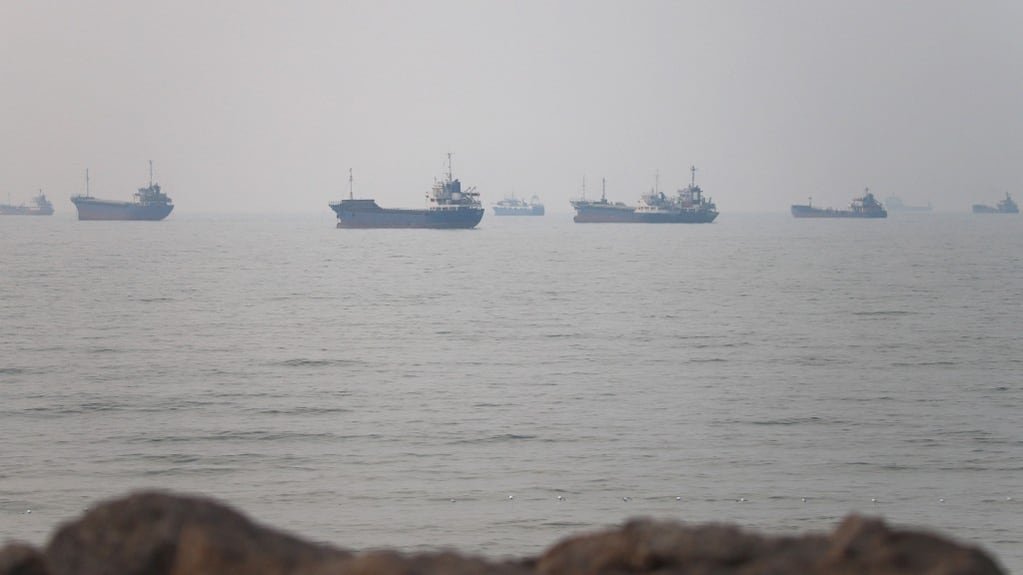
Mientras el precio del petróleo siguió subiendo en los mercados internacionales, la guerra en Medio Oriente se extiende a nuevos frentes y amenaza con repercusiones para la economía global con la ofensiva de los rebeldes de Yemen, aliados de Irán, contra buques sauditas en el mar Rojo.
En ese escenario, el presidente estadounidense, Donald Trump, amenazó con un “gran castigo militar” a Irán y a los rebeldes hutíes de Yemen si lanzan nuevos ataques.
El barril de crudo brent para entrega en septiembre subió 6 dólares en menos de 24 horas al pasar de los 94 dólares en los que cerró el miércoles a hasta los 100,69 dólares que tocó este jueves mediante un alza de más del 7,03%.
Por su parte, el West Texas Intermediate (WTI), de referencia en Estados Unidos, también subió el 4,92%, hasta los 90,95 dólares, mientras que el gas natural TTF caía un 1,3%, y el megavatio/hora tocó los 61,75 euros.
El fuerte repunte del precio del crudo se produjo después de que milicianos hutíes respaldados por Teherán reivindicaran ataques contra dos petroleros sauditas en el mar Rojo. Esta ofensiva abrió un nuevo punto de conflicto en otra importante vía comercial del crudo en el mundo cuando se entra en el decimotercer día de ofensiva de Estados Unidos contra Irán pese al acuerdo alcanzado en junio.
El caos se apodera del estrecho de Ormuz
Las hostilidades se reanudaron a principios de este mes tras un alto el fuego que duró apenas semanas, en una espiral que volvió a sumir a la región en un caos por el control del vital estrecho de Ormuz.
El conflicto se extendió al mar Rojo esta semana después de que los rebeldes de Yemen declararan un bloqueo de los puertos de Arabia Saudita y después afirmaran que atacaron a dos petroleros sauditas. Niños juegan en la playa en el estrecho de Ormuz, mientras detrás se observa una columna de humo (Foto: AP)
El secretario general de la ONU, Antonio Guterres, afirmó en una reunión del Consejo de Seguridad que la situación en Medio Oriente “está fuera de control”. “Una crisis alimenta a otra. Una escalada desencadena la siguiente”, declaró.
Mientras tanto, Jordania y Kuwait informaron haber interceptado proyectiles, mientras que el ejército de Irán y su Guardia Revolucionaria Islámica anunciaron golpes a objetivos militares estadounidenses en ambos países.
Leé también: EE.UU. y Arabia Saudita firmaron un acuerdo nuclear que incluiría el enriquecimiento de uranio: crece la preocupación en Israel
“Las represalias de las fuerzas armadas continuarán mientras sigan los ataques de Estados Unidos contra la infraestructura y las zonas costeras del país”, dijo el portavoz de las fuerzas armadas iraníes, Mohamad Akraminia, según la televisión estatal.
Ataques en el mar Rojo
Estas hostilidades se produjeron tras la duodécima noche consecutiva de ataques de Estados Unidos contra instalaciones militares de la república islámica.
El miércoles, Trump advirtió que su país bombardeará la infraestructura civil iraní cada vez que Teherán dispare contra buques en Ormuz, dada su importancia en el comercio global de hidrocarburos.
El canciller iraní, Abás Araqchi, respondió que Teherán responderá de la misma manera: “Nuestra doctrina de defensa es clara: ojo por ojo”.
Los medios estatales iraníes informaron este jueves que un ataque estadounidense mató a dos personas en Shalamcheh, en la frontera de la república islámica con Irak. También reportaron que dos misiles estadounidenses impactaron en Bushehr, sede de la única planta nuclear civil del país y blanco frecuente de Washington.
Leé también: La Justicia de EE.UU. resolvió que el juicio contra Nicolás Maduro empezará el 1 de junio de 2027
Los hutíes yemenitas afirmaron que atacaron el miércoles con misiles y drones dos petroleros sauditas en el mar Rojo, el Encelia y el Layla, y concretaron así su amenaza de bloquear a Arabia Saudita en esas aguas que sirven de vía alterna a Ormuz.
Riad confirmó que el Encelia fue alcanzado, sin hacer comentarios sobre el otro petrolero. Aún no está claro hasta qué punto los hutíes podrían implementar un bloqueo, pero la amenaza podría agravar el impacto del cierre que Irán mantiene en Ormuz.
Allí la Guardia Revolucionaria afirmó este jueves que impidió el paso a tres petroleros, mientras Washington y Teherán compiten por el control de esta ruta por la que transitaba alrededor de una quinta parte del petróleo mundial antes de la guerra.
(Con información de EFE y AFP)
Irán, Donald Trump, Petróleo
INTERNACIONAL
California mayor’s hot mic catches candid exchange after audience sends meeting off rails
NEWYou can now listen to Fox News articles!
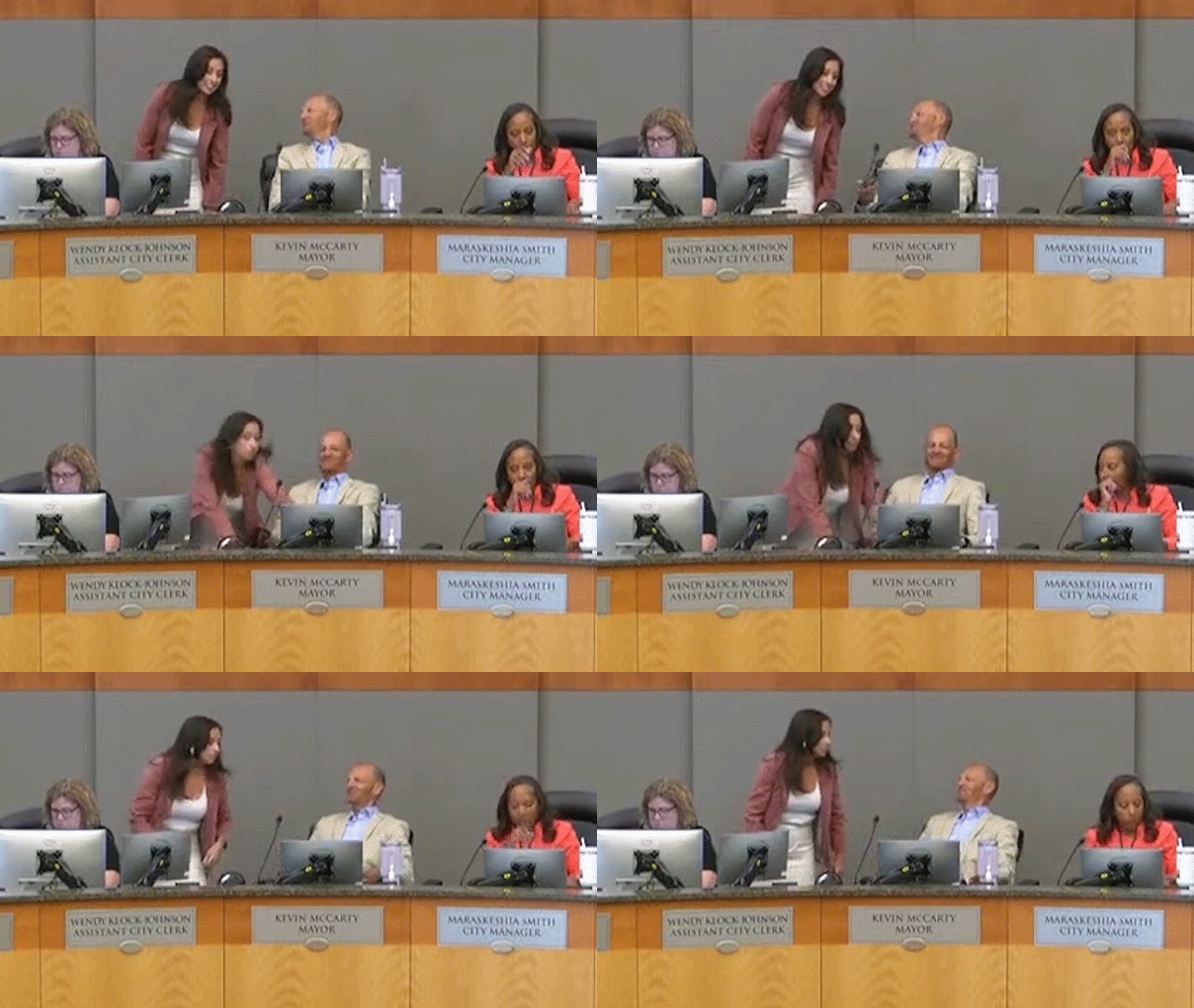
A live microphone exposed a behind-the-scenes conversation between Sacramento’s mayor and vice mayor as they discussed whether disruptive protesters could be barred from future city council meetings after a heated immigration-related debate descended into chaos.
«We should go over this disruptions thing, because if we want to ban somebody in the future, like to take them out, we have to point out specifically…» Vice Mayor Karina Talamantes is heard saying.
«I know, but the city attorney said we can’t do that,» Mayor Kevin McCarty replied.
«We did it last time,» Talamantes responded.
GOP SENATORS RALLY AROUND NEW DHS PROPOSAL TARGETING SANCTUARY CITIES: ‘SHOULD PAY A PRICE’
Mayor Kevin McCarty and Vice Mayor Karina Talamantes were caught on a live microphone discussing future meeting disruptions after the council chambers were cleared. (City of Sacramento)
«We can’t,» McCarty said, shaking his head. «I spent my first six months going over this. I wanted to give people, like, probation, like, you can’t come…»
Talamantes then appeared to realize the microphone was still live and quickly reached over to switch it off before continuing the conversation, according to the publicly available city council livestream reviewed by Fox News Digital.
The awkward exchange unfolded Tuesday after Sacramento City Council recessed and ordered the public removed from the chambers following repeated disruptions during a fiery debate over the city’s continued participation in a regional intelligence-sharing center.
The confrontation escalated after Talamantes defended accepting federal funding for the Central California Intelligence Center, or CCIC, arguing Sacramento’s sanctuary city policies and immigrant protections made the city better suited to oversee the grant than other jurisdictions.
«The city of Sacramento is a sanctuary city,» Talamantes said during the meeting. «If we don’t pass these dollars, other counties will apply for these dollars, they will get those dollars and we will have no safeguards to protect our immigrant communities here in Sacramento.»
Dozens of speakers had earlier urged the council to reject the agreement, arguing the intelligence center could facilitate information sharing with federal immigration authorities and undermine Sacramento’s sanctuary city policies.
Police officials repeatedly disputed those claims during the meeting, telling council members Sacramento does not share personal identifying information for civil immigration enforcement and complies with California’s sanctuary law, known as SB 54.
DHS LAWYER SAYS UCLA ‘UTTERLY FAILED’ TO STOP PROTEST CHAOS AT LAW SCHOOL APPEARANCE
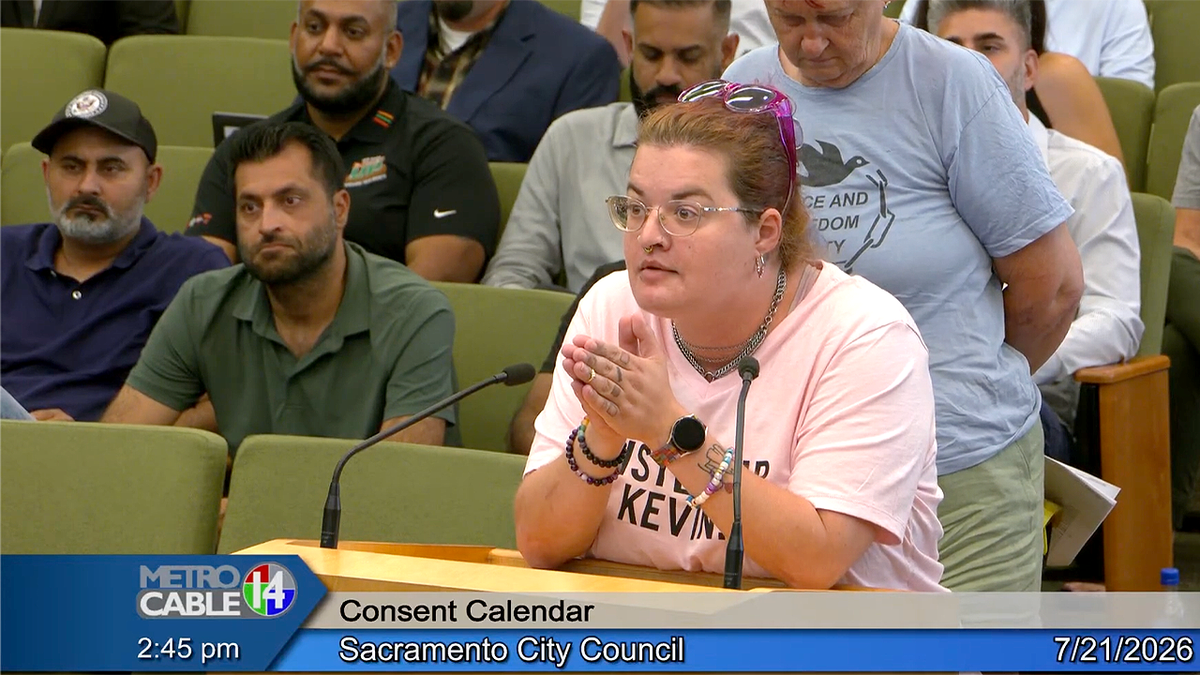
Community members urged Sacramento City Council to reject continued participation in the Central California Intelligence Center during an emotional public comment session. (City of Sacramento)
As public comment grew increasingly heated, one speaker repeatedly demanded McCarty pay attention.
«Kevin, I need your f—ing eyes. Kevin, listen to me. Stop being an a–hole, dude. Listen to your f—ing constituents,» the speaker shouted.
Following Talamantes’ remarks, another round of shouting erupted inside the council chambers.
WATCH: HEARING DERAILS AS PURPLE-HAIRED DEM POINTS FINGER, SCREAMS AT CHAIR TO PUT DHS CHIEF ‘IN HIS PLACE’
«You’re a pick-me b—-,» one attendee shouted at Talamantes, while others yelled, «Shame on you.»
McCarty responded with what he described as a «final notice.»
«This is the final notice,» the mayor said. «We’re going to continue with the deliberation, and if there’s any more outbursts, we’re gonna have to ask the audience to leave.»
Seconds later, the disruptions intensified.
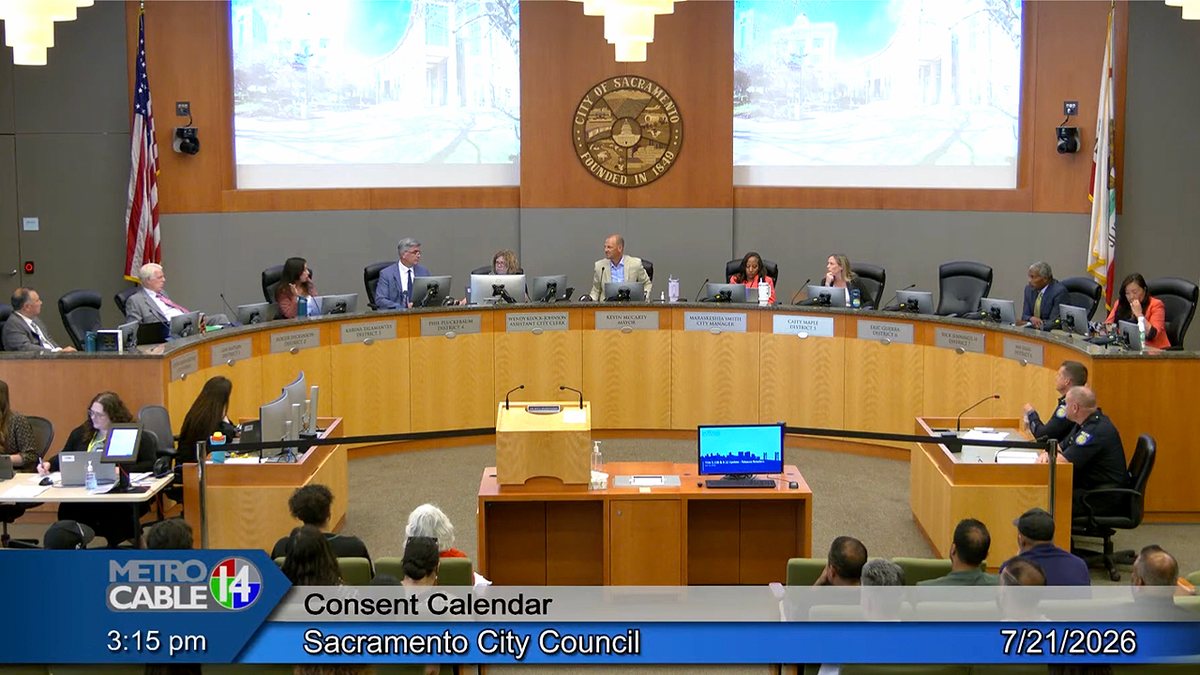
Council members debated continued participation in the Central California Intelligence Center during a meeting that later erupted into repeated disruptions. (City of Sacramento)
«You can’t do this behind closed f—ing doors!» one attendee shouted.
«We are the community,» another yelled.
«You represent us. You are our f—ing audience,» another voice exclaimed as council members attempted to continue the meeting.
Council officials then paused the meeting and cleared the chambers after repeated disruptions prevented deliberations from continuing.
Following the meeting, McCarty said the private conversation focused on existing meeting procedures, not new restrictions.
«Every Tuesday, Vice Mayor Talamantes and I are responsible for overseeing and ensuring transparent, accessible, and open Council meetings,» McCarty said in a statement to Fox News Digital.
«Unfortunately, when meetings are repeatedly disrupted, we must discuss existing policies and rules to ensure Council meetings remain effective, orderly, and respectful for both the residents in attendance and the Councilmembers. We are committed to ensuring that all members of the public can access and engage safely without distraction or intimidation.»
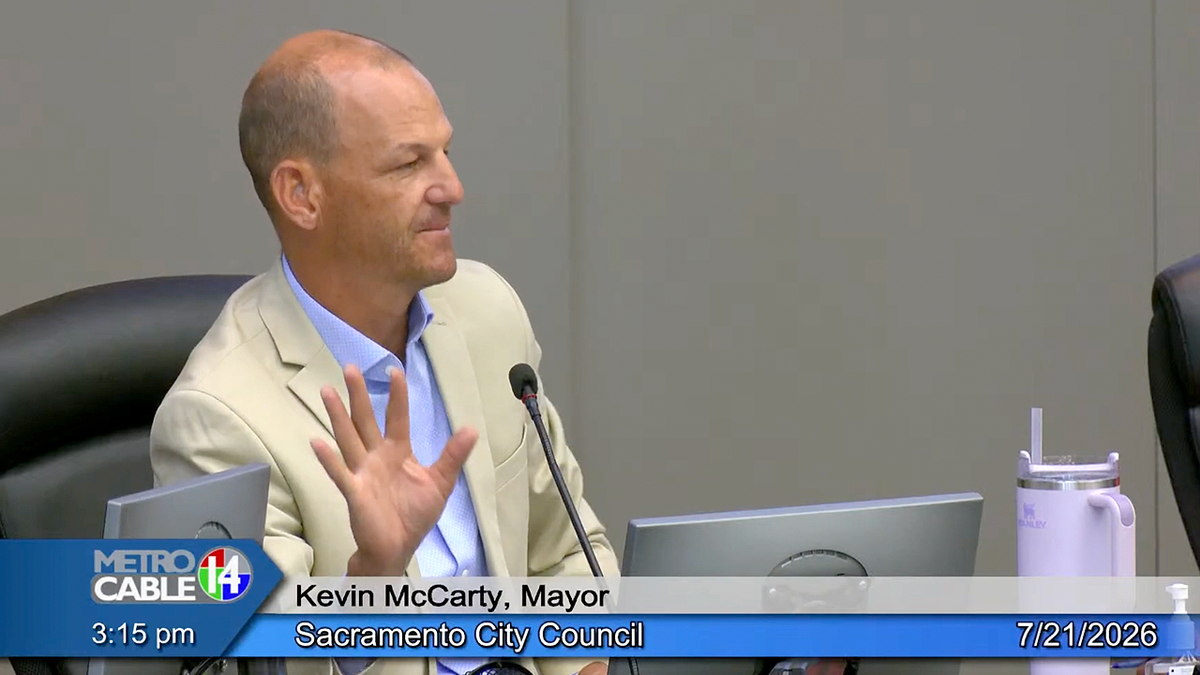
Mayor Kevin McCarty warned attendees about repeated disruptions before the council chambers were cleared and a hot-mic conversation followed. (City of Sacramento)
The Sacramento City Attorney’s Office declined to address McCarty’s reference to legal advice during the hot-mic exchange.
«The City Attorney’s Office has no comment and will not be providing comment on this matter,» the office said in a statement to Fox News Digital.
The city’s published meeting rules state that members of the public receive two minutes per agenda item and may speak on no more than four items during a meeting, limits intended to help the council conduct city business.
The hot-mic exchange quickly drew criticism from some activists, who argued Talamantes appeared interested in silencing vocal opponents.
Joshua Masias, a volunteer organizer with the Sac Immigration Committee, told The Sacramento Bee the conversation showed an authoritative approach toward members of the public.
«It’s very authoritative how she wants to use her power,» Masias told the outlet. «It stuck out to me that she was the only one to try to silence the crowd.»
Resident Leanna Hunt, one of the council’s most outspoken critics, also defended the protesters’ frustration.
CLICK HERE TO DOWNLOAD THE FOX NEWS APP
«I’m fed up,» Hunt told the Bee. «It’s not even a tactic — I’m just tired of being treated like we are an audience and that the king is deigning to see us peasants today and when the peasants are unruly, the king gets upset.»
Fox News Digital reached out to Vice Mayor Talamantes’ office, Sacramento Police Department and the Sac Immigration Committee for additional comment.
local, state and local, sanctuary cities, controversies state and local, politics
INTERNACIONAL
La capital de Guatemala entra en alerta por las protestas de transportistas y posibles bloqueos este viernes 24 de julio
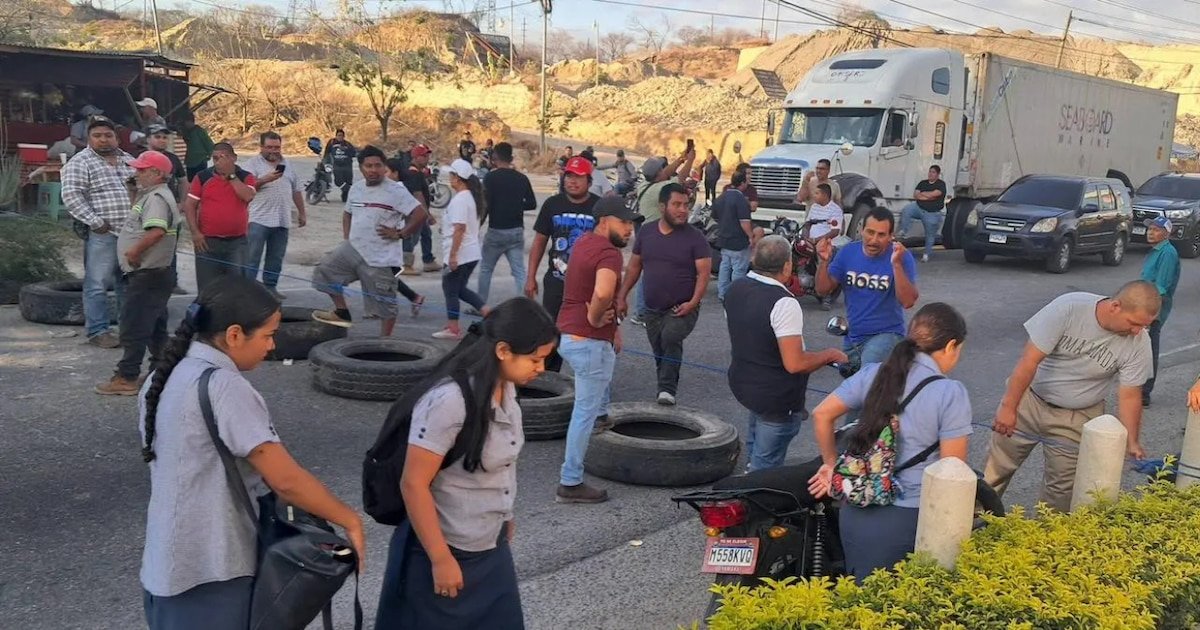
La capital de Guatemala se encuentra en alerta ante la expectativa de complicaciones de tránsito masivas para este viernes 24 de julio. Luego de que diversas asociaciones de transportistas, mototaxistas y taxistas urbanos anunciaran movilizaciones pacíficas y posibles bloqueos en los principales accesos a la metrópoli, impulsados por el descontento ante los constantes incrementos en los precios de los combustibles.
Las organizaciones convocantes han anunciado movilizaciones pacíficas y posibles bloqueos en puntos neurálgicos de la capital y sus alrededores.
Según datos de la Policía Municipal de Tránsito (PMT), se prevén concentraciones en arterias clave, entre ellas:
- La calzada Roosevelt, específicamente en el sector de Molino de las Flores
- La calzada Raúl Aguilar Batres
- La avenida Bolívar
- La calzada San Juan
- La avenida Petapa
Estas vías que unen la metrópoli con Mixco y municipios del sur del departamento. También se ha hablado de bloqueos en la Calle Martí, pero aún no existe confirmación oficial.

Aunque, en las redes sociales se ha compartido imágenes de bloqueos en puntos clave de todo el país, hasta ahora no se ha confirmado la veracidad de los mismos, ni los grupos que convocan.
La expectativa de una parálisis vial ha llevado a las autoridades a reforzar los protocolos de seguridad y a recomendar a la población tomar previsiones.
El Gobernador Departamental de Guatemala, Mauricio Benard, aseguró que las fuerzas de seguridad han sido notificadas de las convocatorias y que se mantiene un monitoreo constante para coordinar la respuesta institucional.
“Todo indica que sí habrá manifestaciones y nos estamos preparando con todos los protocolos que están establecidos. Lo que espero, sinceramente, es que no haya bloqueos. Esa situación sí genera una dificultad para toda la población, no para el Gobierno, no para el Presidente, no para un ministro, sino para toda la población“, manifestó Bernard.
El Gobernador reconoció que manifestarse es un derecho constitución, pero recordó que la libertad de locomoción, también lo es, por lo que ”los bloqueos es algo que está prohibido y se hará lo posible para que no se de».
El descontento de los transportistas gira en torno a los constantes aumentos en el precio del diésel y la gasolina, factores que reducen los márgenes de ganancia y presionan a los operadores a analizar un posible ajuste en las tarifas del transporte urbano.
Transportistas han recalcado que el costo de los insumos y repuestos también se ha disparado, aumentando la presión sobre el gremio y el bolsillo de los usuarios.
Por ahora, las autoridades de tránsito han recomendado a los ciudadanos que salgan con mayor anticipación hacia sus destinos, que consideren opciones como el teletrabajo cuando sea posible y que permanezcan atentos a los canales de información oficial.
Los conductores de taxi rechazaron que el precio del galón de gasolina en Guatemala supere los Q40 por su impacto en la rentabilidad del sector y anunciaron una caravana pacífica en la Ciudad de Guatemala para protestar por el alza de combustibles este viernes 24 de julio. (Redes Sociales)
Las asociaciones de transportistas han advertido sobre la posibilidad de extender las medidas si no obtienen una respuesta efectiva por parte del Organismo Ejecutivo. Exigen medidas concretas como un nuevo subsidio a los combustibles o la eliminación de tributos a los carburantes. En tanto, el presidente Bernardo Arévalo convocó a una conferencia de prensa para dar a conocer las acciones que se tomarán desde el Ejecutivo, luego de reuniones sostenidas con el Gabinete de Gobierno.
Guatemala,Bloqueos,Transportistas,Precio gasolina,Combustible,Caravana

El precio del barril de petróleo vuelve a subir, mientras la guerra en Medio Oriente se extiende y jaquea a la economía mundial

Bullrich acordó con Sturzenegger cambios en la ley de propiedad privada y el oficialismo busca asegurar los votos para aprobarla

La MLS investiga a Inter Miami por el fichaje de Casemiro

El plan de La Cámpora: acumula poder con el sueño de un gobierno propio

ANSES confirmó cómo quedan las jubilaciones mínima y máxima en agosto con el nuevo aumento

California mayor’s hot mic catches candid exchange after audience sends meeting off rails

Escándalo Mundial: Las presiones secretas, la amenaza de la FIFA por Malvinas y la verdad detrás del partido contra España

Sin la Copa y sin Messi en el avión, vuelve Tapia y deberá enfrentar tres frentes de tormenta tras la pausa del Mundial

Samuel L. Jackson llamó a Argentina “el país más racista del mundo”: la contundente respuesta que le dejó Bárbara Lombardo

Le ganan a la inflación: los senadores pasarán a cobrar $12 millones brutos a partir de agosto

 DEPORTE2 días ago
Escándalo Mundial: Las presiones secretas, la amenaza de la FIFA por Malvinas y la verdad detrás del partido contra España
- POLITICA1 día ago
Jorge Berredo, general retirado de las FFAA, asumió como Secretario de Seguridad en San Isidro
- POLITICA18 horas ago
Sin la anestesia mundialista, aflora la crisis del conurbano y Milei necesita reconectar con lo popular