INTERNACIONAL
Polémica en un prestigioso concurso literario: investigan si un relato ganador fue creado con IA


La preocupación por el uso cada vez más generalizado de herramientas de Inteligencia Artificial (IA) para ayudar a escribir sigue inquietando al mundo literario.
Esta semana, el Commonwealth Short Story Prize atrajo la atención de lectores que sospechaban que uno de sus relatos ganadores, “The Serpent in the Grove”, había sido escrito por inteligencia artificial. Al igual que los cinco ganadores regionales del concurso, el relato fue publicado en línea por Granta, una revista literaria británica que ha presentado trabajos de autores de renombre como Kazuo Ishiguro, Zadie Smith y Salman Rushdie.
“Hemos tomado nota de los comentarios y hemos intentado ser muy sistemáticos en nuestra comprensión de algunas de las perspectivas y tratado de mirarnos internamente para ver si creemos que nuestro proceso hasta la fecha ha sido lo suficientemente sólido”, dijo Razmi Farook, director general de la Commonwealth Foundation, que administra el premio, en una videollamada con The New York Times. “Confiamos en el rigor de nuestro proceso, pero somos conscientes de que este es un entorno tecnológico en evolución”.
Granta, que no respondió a las preguntas enviadas por el Times antes de la publicación, adoptó una postura diferente en sus múltiples declaraciones públicas.
“Le mostramos a Claude.ai el artículo y le preguntamos si fue generado por IA”, dijo en un comunicado Sigrid Rausing, editora de Granta. “La respuesta fue larga, concluyendo que ‘casi con toda seguridad no fue producida sin la ayuda de un humano’”.
Rausing añadió: “Puede ser que los jueces hayan otorgado ahora un premio a un caso de plagio de IA; aún no lo sabemos, y quizá nunca lo sepamos”.
En su sitio web, la revista publicó una declaración sobre cada uno de los cinco relatos ganadores, distanciando a sus editores del proceso de selección del concurso.
“Los editores de Granta no estuvieron involucrados con estos relatos ni en su selección, más allá de editarlos tras su recepción”, dice en parte la declaración. “La sugerencia de que los escritores han presentado material que no es auténticamente suyo es una acusación que nos tomamos en serio, pero hasta que salgan a la luz pruebas definitivas mantendremos estos relatos en nuestro sitio web”.
El autor del relato, Jamir Nazir, se describe en una biografía adjunta en el sitio web de Granta como “un prolífico poeta y autor, con libros publicados y otros de próxima publicación”. Entre las pocas obras que Nazir parece haber publicado se encuentra un poemario autopublicado, Night Moon Love: Poems for All Who Have Loved or Dreamed of Love. Nazir no respondió a una solicitud de comentarios.
El concurso de este año recibió unas 7800 candidaturas. De los cinco elegidos como ganadores regionales, uno será nombrado ganador general el 30 de junio.
Las especulaciones en torno a “The Serpent in the Grove” se produjeron a raíz de la noticia, publicada por el Times en marzo, de que Hachette Book Group interrumpía sus planes de publicar Shy Girl, una novela de terror, en Estados Unidos, y suspendía las ventas del libro en el Reino Unido. La medida se tomó tras las acusaciones generalizadas en línea de que su autora, Mia Ballard, había dependido en gran medida de la IA para escribir el libro. (Ballard declaró al Times que un conocido al que contrató para editar una versión autopublicada de Shy Girl había utilizado IA, pero que ella misma no lo había hecho).
A principios de esta semana, el Times también descubrió que el autor Steven Rosenbaum había incluido varias citas ficticias o mal atribuidas generadas por IA en su reciente libro de no ficción sobre inteligencia artificial, The Future of Truth. (En un comunicado, Rosenbaum dijo que el libro contenía “un puñado de citas atribuidas indebidamente o sintéticas” y que había iniciado su propia investigación).
Los autores han adoptado diversas posturas públicas sobre el papel de la IA en sus procesos creativos.
La autora Coral Hart, por ejemplo, ha sido abierta sobre el uso de IA para ayudarla a escribir; el año pasado autopublicó más de 200 novelas románticas, con la ayuda de Claude de Anthropic.
La autora polaca Olga Tokarczuk, ganadora del Premio Nobel, causó un pequeño revuelo en la comunidad literaria esta semana tras decirle a un público en Polonia la semana pasada que utilizó IA al escribir su última novela. Tokarczuk respondió con una declaración compartida por su editorial.
“Hago uso de la inteligencia artificial siguiendo los mismos principios que la mayoría de las personas del mundo: la considero una herramienta que permite documentar y verificar datos más rápidamente”, dijo Tokarczuk. “Ninguno de mis textos, incluida la novela que aparecerá en polaco este otoño, se ha escrito con ayuda de la inteligencia artificial, salvo para utilizarla como herramienta para una investigación preliminar más rápida”. Olga Tokarczuk, ganadora del Premio Nobel, dijo que utilizó IA para la redacción de su última novela. (Foto: EFE/Guillaume Horacjuelo).
Para las editoriales y los jurados de los premios, la IA presenta un desafío sin soluciones claras. Las acusaciones vertidas contra “The Serpent in the Grove” y otras obras han revelado lo difícil que puede ser determinar si una obra ha sido escrita por un humano.
Leé también: Las claves para entender por qué Elon Musk fue el gran perdedor en el juicio contra los creadores de ChatGPT
En los días siguientes a la publicación del relato, los lectores en las redes sociales y los foros en línea señalaron signos de tics de escritura de la IA, como el uso excesivo de metáforas y símiles; expresiones figurativas sin sentido (una línea en particular, “tenía el tipo de andar que hacía que los bancos se convirtieran en hombres”, recibió muchas críticas); y paralelismo negativo, que se conoce más comúnmente como la construcción “no X, sino Y”.
Pero estos rasgos también aparecen a menudo en la escritura humana. Para confirmar sus sospechas, algunos lectores, entre ellos el profesor de la Wharton School e investigador de IA Ethan Mollick, pasaron el relato por detectores de IA como Pangram, que sugirió que el fue 100 por ciento generado por IA.
Aun así, algunos expertos advierten de que estas herramientas no son del todo confiables.
“Los detectores de texto de IA cometen muchos errores, sobre todo en la escritura creativa que utiliza construcciones inusuales que pueden no ser las típicas en las que Pangram ha entrenado a su sistema”, dijo Nicholas Andrews, investigador principal de ciencias informáticas de la Universidad Johns Hopkins, cuyo trabajo se centra en la IA y el aprendizaje automático.
Jack Grieve, profesor de Lingüística de Corpus de la Universidad de Birmingham, señaló que, si no se controlan las variaciones de dialecto, tema, género e indicaciones, confiar en las herramientas de detección de IA puede ser arriesgado. A su juicio, escribió en un correo electrónico al Times, el relato corto no estaba ni obviamente generado por IA ni obviamente no generado por IA.
“La tecnología aún no está a la altura y, debido a sus imperfecciones, lleva a la gente a pensar que las cosas son blancas o negras cuando no lo son necesariamente”, dijo Farook. Añadió que, para las organizaciones, es importante evitar tener “una reacción impulsiva a la histeria general en torno a estos temas en este momento”.
Este es especialmente el caso, añadió Farook, debido a los riesgos que conllevan las falsas acusaciones para los escritores.
“Se trata de personas con historias personales, escritores que se enfrentan a sus propios retos personales, y la escritura es una herramienta muy vulnerable”, dijo Farook. “El premio trae a esas personas al frente. Tienen que enfrentarse a algo nuevo. A menudo son escritores inéditos, así que hay un deber de cuidado y consideración que debemos tener en cuenta”.
*Por Valeriya Safronova
The New York Times, Inteligencia artificial, Literatura









INTERNACIONAL
Indonesian passenger ship carrying 240 people loses contact in Java Sea, search underway

NEWYou can now listen to Fox News articles!
A passenger ship carrying 240 people vanished from contact in the Java Sea on Sunday local time, triggering an urgent search as Indonesian crews raced to locate the vessel.
The Virgo Transport 8 was traveling from Surabaya, East Java, to Banjarmasin on the island of Borneo when communications with the ship were lost, the Associated Press reported, citing Indonesia’s Banjarmasin Search and Rescue Office.
Authorities said the vessel was last tracked roughly 92 miles from a pier in Banjarmasin, the capital of South Kalimantan province.
MOM LOSES GRIP ON DAUGHTER AS PASSENGER FERRY CAPSIZES WITH 20 PEOPLE STILL MISSING
Authorities are searching for the Virgo Transport 8 after the passenger ship lost contact while traveling from East Java to South Kalimantan. (EyesWideOpen/Getty Images)
Search-and-rescue teams launched an operation after receiving a report that the ship had suffered a communications failure during the voyage, according to the AP.
Officials had not reported any deaths or injuries as of Sunday, and it was not immediately clear what caused the vessel to lose contact or whether weather conditions were affecting the search.
MULTIPLE RESCUED FROM PONTOON BOAT NEAR ALCATRAZ AS SEARCH CONTINUES FOR MISSING PERSONS

The Virgo Transport 8 lost contact while traveling from Surabaya to Banjarmasin, according to officials. (EyesWideOpen/Getty Images)
The Virgo Transport 8 departed Surabaya, Indonesia’s second-largest city, before losing contact while crossing the Java Sea toward South Kalimantan.
The search remains underway.
The Associated Press contributed to this report.
world, asia world regions, missing persons
INTERNACIONAL
‘Trump-level’ smackdown earns Vance roaring praise as 2028 buzz builds at GOP convention
NEWYou can now listen to Fox News articles!
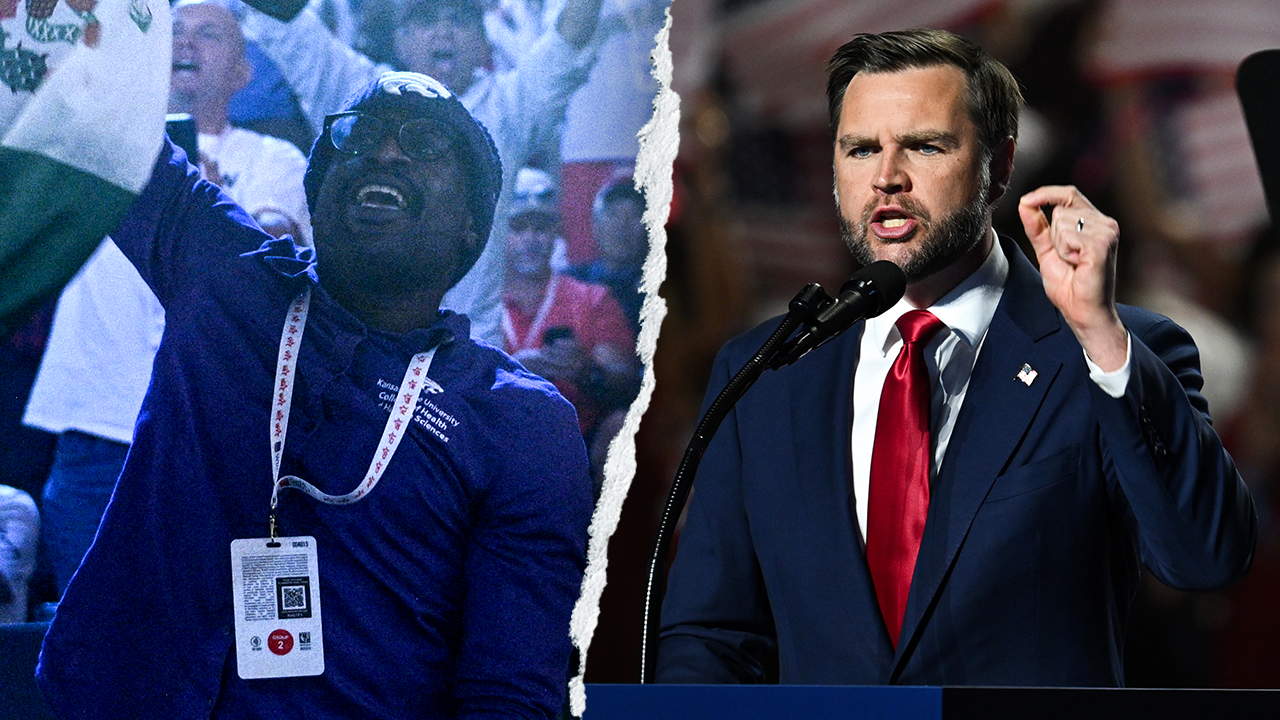
Republicans reached a consensus that Vice President JD Vance solidified his position as the presumptive 2028 presidential candidate with his «Trump-level» smackdown of a foreign flag-waving protester who disrupted his speech at the Republican National Convention.
Vance did not hesitate after a protester interrupted his primetime speech in Dallas on Thursday by waving the flags of the Palestinian Authority and Mexico. He recalled to those watching his speech on TV: «What the people at home missed is that we just had a protester interrupting us and waving the Mexican flag.»
«Well, my friend, if you love Mexico so much, get your a– over there. I’ll buy you the plane ticket,» the VP said, to which the crowd erupted into applause.
«JD Vance just MIC DROPPED a leftist heckler who interrupted him waving a Mexican flag…this place is DEAFENING,» conservative commentator Eric Daugherty wrote on X, adding, «TOTAL PANDEMONIUM.»
CROWD ERUPTS AS VANCE SMACKS DOWN PROTESTER WAVING MEXICAN FLAG: ‘GET YOUR A– OVER THERE’
A protestor throws a Mexican flag as Vice President JD Vance speaks during the second day of the Republican National Committee midterm convention at the American Airlines Center in Dallas, Texas on September 10, 2026. (Brendan SMIALOWSKI / AFP via Getty Images)
Popular conservative pundit Benny Johnson called Vance’s quick wit an «epic response.» President Donald Trump supporter and activist Scott Pressler similarly praised Vance for reacting «without missing a beat,» and called it «an iconic moment.»
«This was masterful. A Trump-level move from JD Vance,» wrote Overton, a conservative commentary and news account. «Vice President Vance perfectly handled a protestor waving a Mexican flag at the RNC in Dallas. Then he fired back with a savage one-liner that sent the American Airlines Center into absolute bedlam.»
The moment was capped off with a «USA!» chant from those in the crowd at the GOP Midterm Convention.
Students for Trump co-founder Ryan Fournier wrote, «JD Vance just absolute [sic] WIPED THE FLOOR with a leftist heckler who interrupted his rally waving a Mexican flag.»
«The crowd went completely WILD. Unbelievable energy,» wrote Fournier.
VANCE DECLARES DEMOCRATS ‘PARTY OF HATRED,’ SAYS PARTY HAS MOVED BEYOND BIG GOVERNMENT, CENSORSHIP

Vice President JD Vance introduces U.S. President Donald Trump to speak on stage on the second day of the 2026 Republican National Convention at the American Airlines Center on September 10, 2026, in Dallas, Texas. (Justin Sullivan/Getty Images)
«JD Vance just notched the most iconic moment of the RNC when he told a protester waving a Mexican flag exactly what all red blooded Americans were thinking,» wrote Turning Point USA spokesman Andrew Kolvet.
Commentator Brilyn Hollyhand put it simply, posting on X, «Yea JD for President after this.»
Vance recovered from the interruption quickly, telling the crowd, «Ladies and gentlemen, I had a whole speech written. But I think I’ve got to change it because we just discovered the symbol of the far left — an idiot waving … a Mexican flag at a protest when he should be waving the flag of the United States of America.»
«Now, we all know, of course, that as much as that person might wave around a foreign flag, he’d much rather live in Dallas, or in Cincinnati, or in any one of our great cities than Mexico,» President Donald Trump’s No. 2 continued. «But while we wave the American flag and fight for the American dream, we have to remind ourselves tonight that the good life that is the foundation of this country’s promise is not guaranteed.»
CHARLIE KIRK HONORED AT GOP CONVENTION WITH CALL TO REJECT ‘COMFORTABLE LOSING’

People hold signs on the first day of the 2026 Republican National Convention at the American Airlines Center on September 9, 2026, in Dallas, Texas. (Photo by Tasos Katopodis/Getty Images)
«Every generation of Americans has had to fight for these things when it’s our turn,» he went on.
«And this fall, the Democrats are running candidates who will tell your children what they’re allowed to say, how they’re allowed to live, and importantly, who they ought to hate, because that’s what the Democrat Party is about in 2026,» Vance continued. «It’s not about you, it’s about foreign fraudsters, and it’s about who they hate. And we got to send their a–es back in November.»
Speculation has swirled over who will be the heir to Trump’s MAGA throne in 2028. The consensus so far among Republicans appears to be split between Vance and Secretary of State Marco Rubio — but a lot could change before the next presidential election.
jd vance, republican convention, politics, dallas fort worth, texas, donald trump, us protests
NEWYou can now listen to Fox News articles!
House Homeland Security Committee Chairman Andrew Garbarino, R-N.Y., remembers exactly where he was when the World Trade Center was attacked on Sept. 11, 2001.
«I was a senior in high school. I was in Mr. Ponzi’s government class. And that’s when the first plane hit. And one of the other teachers came in and was telling Mr. Ponzi about it,» he told Fox News Digital. «We all thought it was a little plane. And then we went to the next class. And then the second plane hit, and everybody realized that stuff was wrong.»
Twenty-five years later, Garbarino leads a congressional committee that oversees a Cabinet department created explicitly after the terror attack. He’s warning that Congress needs to change how it deals with potential threats to avoid another tragedy of that scale.
«Being chairman of the committee, being a New Yorker, it’s one of those things you focus on, and you want to make sure another 9/11 doesn’t happen, and doesn’t ever happen again. And that’s my goal. That’s my priority,» he said.
House Homeland Security Committee Chairman Andrew Garbarino, R-N.Y., is sounding the alarm against congressional «complacency,» 25 years after the Sept. 11, 2001, terrorist attacks. (Newspix via Getty Images)
9/11 IS BECOMING HISTORY. MY GENERATION MUST MAKE SURE AMERICA NEVER FORGETS
«Congress is very good at being reactive… We don’t want another 9/11. So if I could leave my fingerprints on something here, it’s the fact that the focus, Congress’ focus on national security, Congress’ focus on homeland security or safety, is that we address an issue before something happens.»
HOW 9/11 TRANSFORMED SYNAGOGUE SECURITY INTO A NEW REALITY FOR THE JEWISH COMMUNITY
He said Congress needed to get into the habit of passing laws ahead of time, «instead of being like, ‘Oh my God I can’t believe this happened, how did this happen, let’s fix it now.’»
«That’s why 9/11 happened. 9/11 happened because our intelligence agencies, they were siloed, they were not sharing information. I don’t know if it was a complacency or whatever, but there were a lot of problems,» Garbarino said. «I don’t want to fall into that same complacency.»
Garbarino represents New York’s 2nd Congressional District, part of Long Island’s south shore. As a suburb of New York City, its residents are deeply attuned to that tragedy 25 years ago.
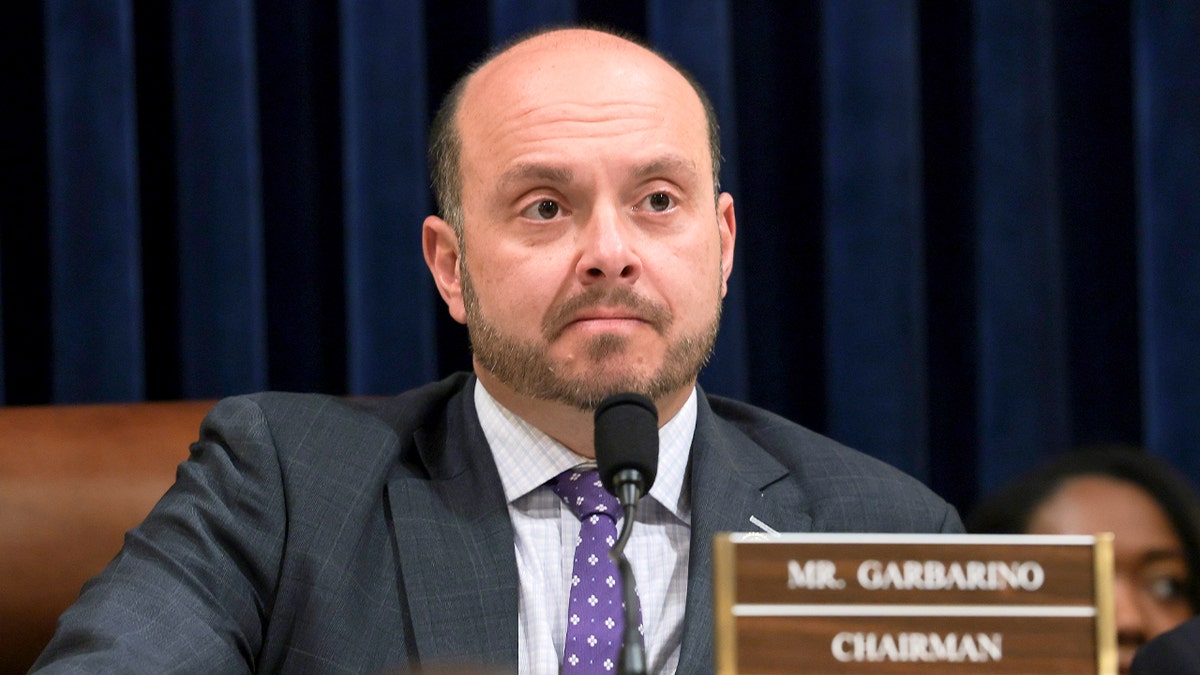
House Homeland Security Committee Chairman Rep. Andrew Garbarino presides over a hearing in the Cannon House Office Building in Washington on Dec. 11, 2025. (Anna Moneymaker/Getty Images)
«We have people that lost loved ones that day that are still dealing with it 25 years later,» Garbarino said. «So the scar is still there.»
His district and others are also still dealing with illnesses stemming from that day, including first responders who bravely rushed to the collapsing twin towers.
«There are now more people that have died from 9/11-related illnesses than died on the actual day. So it’s a day that keeps taking people away from us,» Garbarino said.
«You have firemen who, 9/11 was their first call. They were 21, 22 years old. They’re now 47… And a lot of these, some of these cancers, they take a while to take hold, and they’re now just getting sick.»
SCIENTISTS DISCOVER POSSIBLE LINK BETWEEN 9/11 AND ACCELERATED AGING

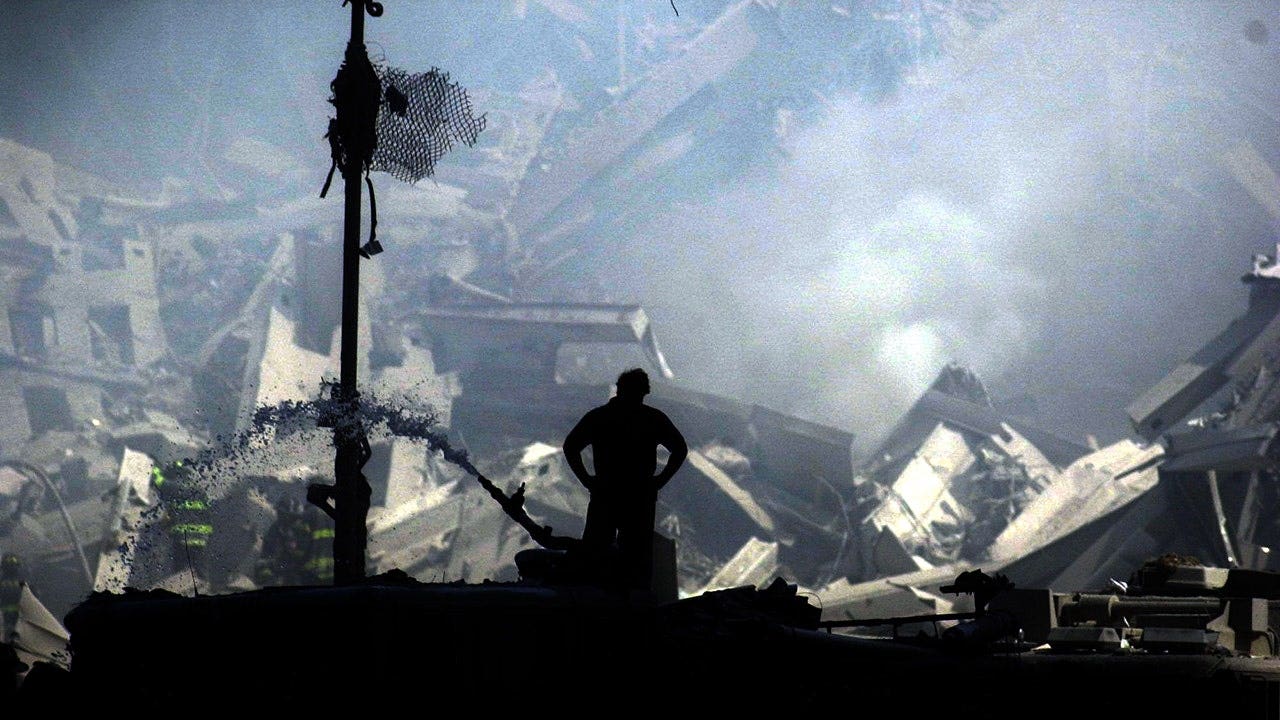
People rush away from the collapsing World Trade Center on Sept. 11, 2001, after two hijacked airplanes hit the twin towers in New York City in a terrorist attack. (Getty Images)
Earlier this year, President Donald Trump signed legislation led by Garbarino and others to address a projected funding shortfall for the World Trade Center Health Program, which helps survivors pay for their medical treatment.
He said nearly all congressional districts across the country have at least one person participating in the program, a testament to how widespread the tragedy’s effects are.
«People moved out of New York, people who came from all over the country after 9/11 to help, they all went back home, they also got sick. So this does affect the entire country,» Garbarino said.
september 11, politics, new york city, homeland security, terror

La actividad de los Juegos Suramericanos Santa Fe 2026, día 1: natación, esgrima, boxeo y las medallas que se entregarán

El Papa León XIV llamó a construir un progreso que “no deje nuevas ruinas a su paso” en un encuentro con empresarios y movimientos sociales del continente

Tarjetas versus transferencias: los pagos “cuenta a cuenta” transforman el uso del dinero en la Argentina y en la región

Hay alerta amarilla por frío extremo y nevadas para este domingo 13 de septiembre: las provincias afectadas

Tamara Paganini reveló el insólito pedido que le hizo una expareja en la intimidad: «Me encantó»

2° Congreso Internacional de Control Gubernamental: Iberoamérica debate cómo anticiparse a los errores del Estado

El día que Owen Wilson se emocionó por el abrazo que le dio Lionel Messi tras un partido

Berni se diferenció de Kicillof en la aplicación de la baja de la edad de imputabilidad

Cuánto cuesta comprar una pick up en la Argentina y cuáles son los modelos más baratos en septiembre

La desafiante aventura de Carolina Baldini en moto por Europa: desde Edinburgo a Liverpool en dos ruedas

 ECONOMIA3 días ago
Así es la primera pickup compacta nacional: diseño, cuándo empezará a venderse y el novedoso sistema híbrido que tendrá
- DEPORTE3 días ago
Alarmante frase de Pierre Gasly antes del estreno del circuito de Fórmula 1 en Madrid
- POLITICA2 días ago
“¿Dónde está Kicillof?”: Patricia Bullrich cruzó al gobernador por la inseguridad en la Provincia